Never Tour Mistakenly into an EVIL Murder Bar! “La Petite Mort” reviewed! (Unearthed Films / Blu-ray)

“La Petite Mort” is Orgasmically Gory and on Blu-ray!

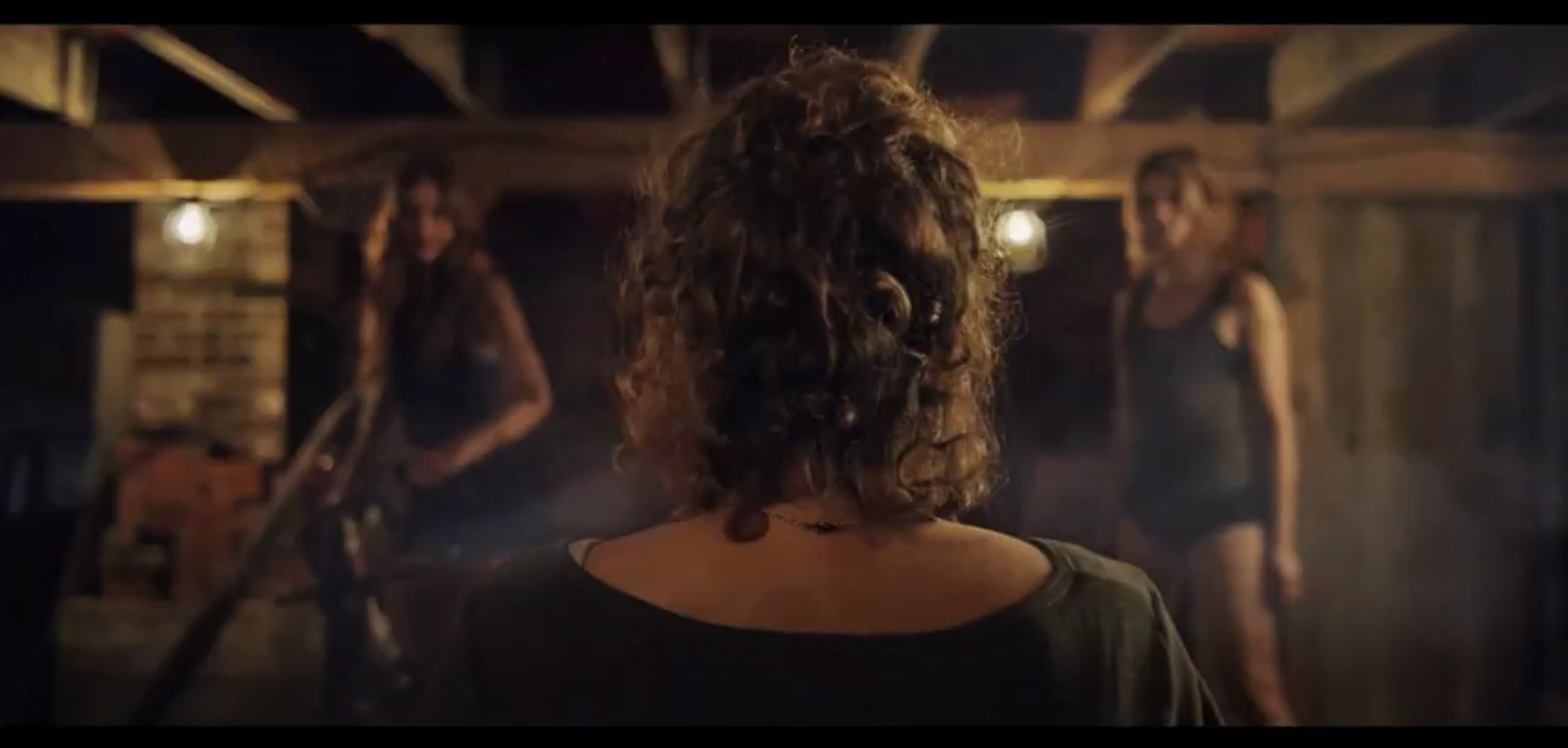
Vacationing to Mallorca should have been a relaxing getaway for Simon, his blind girlfriend Nina, and their longtime friend, Dodo, but their flight layover in Frankfurt leaves down idle town to explore the city that’s only a mere two hours from home. Tension between them begin to bubble to the surface when uncertain emotional steps to take relationships to the next level arise and they become inadvertently scammed by a local grifter. Exhaustion sets in and forces them to take refuge in a local dive bar with a specialty for S&M play. The bar is actually a front for the Maison de la Petite Mort, an underground snuff house owned a sadistic woman named Maman who livestreams kink-murders and sells hapless victims to wealthy businessmen with whimsical and perverse deviancies. The flight to Mallorca will be indefinitely delayed as the three friends are now a part of the bloody basement decor awaiting the horrors before them.

“La Petite Mort,” translated from French as literally the little death, is also known as the post-orgasmic sensation, such as a weakness or loss of conscious, that serves as an analogy to death. The phrase is also the title of the 2009 torture-gore film written-and-directed by the German-born Marcel Walz more than a decade before the formation of his now Neon Noir production company. Walz, who later in his career went on to remake the Herschel Gordon Lewis 1963 film, “Blood Feast,” blossoms as a torture porn filmmaker as Walz’s directorial catalogue contains more blood than a blood bank and often stretches the subgenre range of plot machinations from cannibals to dark web to snuff. Made on a few thousand-dollar budget and shot in a real sex club in Mannheim, Germany, “La Petite Mort” touches upon all three plot devices to create a dungeon of splatter and sadism using elements of an unsolved true crime case of a couple gruesomely murdered in an underground murder house as the narrative base. Before Neon Noir, Walz and filmmaker Michael Effenberger, director of “Tortua,” formed Matador Films that became the company behind “La Petite Mort” with Thomas Buresch (“Unrated: The Movie”) and feature actor and director of photography, Andreas Pape (“Toxic Lullaby”) producing.

Films like “La Petite Mort” is a special breed not because of the torture and gore-porn element, which can be an acquired taste for consumers with dark thoughts, fantasies, and morbid curiosities (I fall into the latter category if you’re wondering), but rather the story caters to no singular principal lead nor does is the focus on an ensemble cast.  “La Petite Mort” transitions from one group, the naïve backpacking travelers, to the S&M snuff-makers in a flip-flop of point of view and storytelling.  All the relationship complexities between the out of concern love from Simon (Andreas Pape) to his even keeled blind girlfriend, Nina (Inés Zahmoul, “La Isla”) as well as the insignificant tiffs and spats between Simon and friend Dodo (Anna Habeck, “Popular”) to see who is in Nina’s favor are quickly swept aside when the trio is trapped and tethered to the S&M spider web of Maman’s Maison de la Petite Mort.  While the three travelers produce a mild interest spun out of frivolous dramatics to the like of the normal human population and very much up played by Walz for that very purpose to produce stark contrast against what’s normal for sadomastic pleasure-seekers, Maman, the orchestrator of pain and profit, is the most earnest of principals with a crone-like presence, played inexorably and ruthless by French punk-goth singer Manoush.  The certified gypsy and former bodybuilder has made a name for herself in a plethora of extreme, Germanic horror pictures over the last decade, but “La Petite Mort” came early in Manoush’s career and is exhibits why she’s so good at horror, especially at the sadism brand.  Maman’s schadenfreude business employs two lesbian dominatrixes, Dominique and Angélique, with strong-stomachs and a healthy bloodthirst.  The beautiful femme fatales serve Maman’s unquestionably, almost mindlessly, that only glimpses into possibilities of how the two women became betrothed to do Maman’s bidding.  Annika Strauss, who’s been in the screen queen business about as long as and has starred alongside with Manoush on a number of films, is also a Marcel Walz regular casted actress who fits and transforms into just about every character under the black sun of ghoulish and macabre material thrown her way.  As Dominique, Strauss is provided more depth to why and how the brunette basket case has come under Maman’s greedy and depraved thumb as the actress shows some slither of concern for the captives while explaining she had no choice just they like them and exhibiting more reserve than her blonde counterpart Angélique (Magdalèna Kalley, “Violent Shit 4”) when the cameras are rolling.  Conversations rooted into provocative thought, sympathy, or reason are often few and far in between the constant pleas for help and the screaming matches of pelting threats.  “La Petite Mort” finalizes the cast with Martin Hentschel (“Zombie Reanimation”), Tanja Karius (“Necronos”), and Thomas Kercmar (“Space Wolf”) as Klaus der Kobold, a Napoleon-sized elitist wealthy enough to buy people’s lives and enjoy seeing them horrifically mutilated.

One scene overwhelms the diagnostic side of my brain and that is why Maman is torturing Dodo with needles as Manoush delivers a surprising genuine villainous monologue about sadomasochists being judged by normal people and how her character has a liberated, uninhibited sexuality in a moment that is a powerful argument in favor for sadomasochism to exist without shame.  Thinking about this, I’m not aware of any publicized S&M clubs, especially those that aren’t criticized for being deviant, perverse, and secular.  After that one moment of vulnerability, “La Petite Mort” turns into a choke-down bloodbath with some great and some not-so-great special effects by one of Germany’s gore film greats, Olaf Ittenbach, director and F/X artist of “Premutos:  The Fallen Angel” and “Legion of the Dead.”  Ittenbach brings me to another overwhelming scene, one that churns the contents of your stomach, involving a meat grinder, a hand, and a chalice.   “La Petite Mort” has other notable grisly moments of scalping, castrating, eye-plucking, and disemboweling, all of which are in great gooey-gory detail.  What takes away from the gore scenes is Walz fluttering effect or grindhouse-esque edited framed overlay that, in my wildest guess, is supposed to enhance the extreme acts of violence, torture, and death in conjunction with composer Michael Donner’s industrial rumble and pulsing synth score. Instead, the effect becomes nothing more than a cinematic nuisance, an eyesore that dilutes Ittenbach’s best handywork because that scalping scene is the chef’s kiss of tactual realism. Based on a true story that I can’t seem to find any record of, “La Petite Mort,” for a brief few minutes, becomes a promulgating champion for alternate sexualities and is also a showcase for Olaf Ittenbach to shock and disgust but for what the feature is worth, “La Petite Mort” offers only emptiness in both character conviction and story narrative.

A fitting entry into the shockingly weird and grotesque “Unearthed Films'” independent film catalogue, “La Petite Mort” arrives onto a high definition, 1080p Blu-ray home video. Presented in a 2.35:1 widescreen aspect ratio, Walz bookends his callous-cladded cult film with a yellowish-tan tint while the girth of the story is laced with more gel coloring under no hinderance of tint. Low lighting with low contrast markers, mixed with tropical-warm gel coloring and strobe flashing fabricates the sunless and dank murder basement but any exterior shots, even the bookend act one and act three are rendered with poor resolution for digital recording. Only a single audio track is available with a German LPCM 2.0 with burned-in English subtitles and what’s rendered is likely the best quality to get from the masters from the lossy format. Dialogue is often unrefined, and the levels vary, but for the most part clean and free from obstruction. The track has limited ambience and harps heavily on the gory moments while Michael Donner’s dark industrial score takes the brunt of the overall soundtrack. Subtitle synchronization varies as well with millisecond flashes of translations that are impossible to read or even pause perfectly on, but the translations appear flawless and consolidated from the dialect for easy reading. The Unearthed Films’ bonus content is aplenty with a new commentary and interview with director Marcel Walz. Also included is a feature-length making of “La Petite Mort” with raw handheld camcorder footage, shot by The Bad Boy character in the film, behind-the-scenes footage, and even some 16mm footage that go reel deep into the effects and life of independent filmmakers. An archived interview with special effects artist Olaf Ittenbach, deleted scenes, photo gallery, teaser trailer, official trailer, “La Petite Mort 2” trailer, and the VHS intro that’s essentially a Marcel Walz introduction of the VHS home video release round out the bonus content. The physical attributes are a clear, Blu-ray snapper case with reversible cover art with the inside sleeve containing a more graphic torture not suited for retail shelves. The region A encoded, 77-minute feature is not rated. If invested for the kills, “La Petite Mort” pleases to overindulge the desire and is a solid first torture-porn effort from a then young Marcel Walz who continues to rise in the niche market.

“La Petite Mort” is Orgasmically Gory and on Blu-ray!

Two Out-Of-Town Girls. A Town Full of Depravity. One EVIL Massacree! “Even Lambs Have Teeth” reviewed! (DVD / Syndicado)


It’s True.  “Even Lambs Have Teeth!”  Now On DVD.

Katie and her best friend Sloane volunteer to work on a countryside organic farm for a month in order to have one fabulous shopping spree weekend in New York City.  Taking Katie’s Uncle’s precautions semi-seriously, the two young women play it fast and loose while waiting for the bus that heads straight to the farm as they agree to hitch a ride with local boys, two brothers, who offer a ride instead of taking the bus.  Instead of arriving at the farm to work on the NYC trip, Katie and Sloane wake up chained to shipping containers where they’ve been incorporated into a twisted town’s sex trade systematized by the brothers, their mother, and a local shopkeeper of missing women to provide the local perverts a quality product.  Raped for days and coming to the fatal end of their use, Katie and Sloane barely escape with their lives only to turn back to reign down merciless revenge on the entire community of accomplices. 

When your parents warn to never get into a stranger’s car, this is why!  “Even Lambs Have Teeth” is the 2015 exploitation rape-revenge thriller from “Recoil” director Terry Miles looking to get his hands dirty with a script diving into the unpleasantries of a rural prostitution ring while washing his hands clean of sin with vindictive, vigilante justice antibacterial hand soap.  The Canadian horror film, which embraces a title suggesting not everything cute and fluffy is harmless, meek, and without malice, joins a slew of like-minded films of the last decade in the resurgence of the subgenre from the high profile remakes of the trailblazer rape-revenge pilots of the 1970’s, such as “The Last House on the Left” and “I Spit on your Grave,” to contemporary crafted original works from Coralie Fargeat’s “Revenge” from 2017 or Emerald Fennell’s “Promising Young Woman” from 2020 that enacts a woman’s voice on the subject matter of sexual assault and the course the victim ensues to not right a wrong but rather to satisfy an itch for six-feet-under retaliation.  Having one of, if not the, longest pre-title opening sequences ever at a staggery 23 minutes before the title comes up, “Even Lambs Have Teeth” is from the Random Bench Productions’ producing team of Braden Croft’s forgotten sasquatch flick “Feed the Gods” of Elizabeth Levine, Robin Nielsen, Adrian Salpteter, and Danielle Stott-Roy along with Gregory Chambet (Av:  The Hunt”) and Dimitri Stephanides (“Don’t Hang Up”) under the banner companies of WTFilms (“Slaxx”) and the France-based Backup Media (“Piggy”).

In order to be the sweet and promiscuous that oozes innocence and ignorance while also, on the other side of the coin, becoming the subjugated flavor of the week by exploiters craving the almighty dollar at the expense of your body, Katie and Sloane need to be a rock solid, yin and yang energy force to machinate the undoing of their captors and rapists without an ounce of empathy, compassion, and hesitation. Tiera Skovbye (“Summer of 84”) and Kirsten Prout (“Joy Ride 3: Road Kill”) put forward the right foot in Katie and Sloane’s plight and fight for not only to survive but also to make sure what happened to them never happens to any other woman misfortunately stepping one foot into a town full of tongue-lapping wolves by laying waste to the Podunk prostitution syndicate. Skovbye and Prout start invincible as if the world is their oyster that includes Prout gender reversal of stereotyped horny best friend. We don’t see that kind of confidence again in both women until after the dirty deeds are done to them by the likes of distinct, depraved men with one thing in common – their undying perversion for cargo container chained young women. These customers so to speak are played by Craig March (“Suspension”), Graem Beddoes (“Horns”), and Christian Sloane (“Black Christmas” ’06) and go through the entrepreneurship of one demented family business. Hunky bothers Jed (Garrett Black) and Lucas (Jameson Parks) lure the itching to have fun Katie and the always randy Sloane to their isolated house where their mother (Gwynyth Walsh, “The Crush”) drugs them with blueberry pie before meeting the ringleader of the bunch, the unofficial town mayor in Boris (Patrick Gilmore, “Trick ‘r Treat”) who isn’t as dippy or uncivilized in his business practices. Performances are more than solid all around for an under-the-radar Canadian tit-for-tat flip the script. The cast comes complete with Manny Jacinto, Darren Mann, Brittany Willacy, Valerie Tian, Chelah Horsdal, and Michael Karl Richards as the detective uncle.

What separates “Even Lambs Have Teeth” from the rest of the pack?  That’s the million-dollar question that helps us select a title amongst a sea of sordid rape-revengers and provides different angling lures that can draw interest and elevate beyond the material that has just been recycling the mold every so often. What generates an enjoyable watch is the well-written dialogue with witty, provocative banter from Kirsten Prout that can blush her best friend to near unbearable shame. The exchanges throughout feel fresh enough to keep our ears tuned into the action and the actors do a phenomenal job keeping up the character acts that evoke a rightfully root for or a rightfully despise against. Not everything about the characters is entirely copasetic with a wavering integrity in what they do. Katie and Sloane revenge spree buckles the knees of nearly every individual involved, reducing them down to a sniveling murderee for the sole sake of a money offering gag device. While the gag greatly points out a commonly used trope in these types of stories, there’s an immense let down with the way a group of predators go down with virtually no fight or no dignity. The starkness of the sudden turn of events might unmask who they really are on the inside, weak stomached sociopathic and chauvinistic control freaks with a hankering for either quick cash or to get their rocks off. Comparing “Even Lambs Have Teeth” with other rape-revenge flicks, the Terry Miles production is on the lighter side of explicit material, for a lack of a better way to describe. Usually, audience bear witness and endure in shared disgusts to the unspeakable acts of violence, torture, and sexual assault to not only shock the viewers but also directly force them into a role of surefire support for the woman so when she ultimately escapes and goes postal with a no holds barred policy against her violator(s), we clap and cheer for when the rusty nailed and sharp object rod is plunged in a fit of rectal sodomy retaliation. “Even Lambs Have Teeth’s” third act is the cleanest with a familiar territory of a quick and dirty barrage of brutality, an expected recourse handed down for all the pain and suffering that doesn’t stop until these hopeful girls, who are now forced to be pragmatic women, kill every last person involved.

A punishable by death dose of executions without the judge, jury, or trial in Terry Miles “Even Lambs Have Teeth,” now released on DVD home video from the once VOD emerging Syndicado who have now entered the physical release game. The single-sided, single-layered DVD5 presents the film in a widescreen 2.35:1 aspect ratio with a rather remarkable picture quality that’s able to capture the minute objects like floating dust and differentiate between assorted lighting. Skin tones appear textural and natural and the organically lit tone leaves noir at the door and the glossiness of hyperviolence unneeded as the premise itself is satisfyingly unfeigned to be dolled up as something else. The English language Dolby (though not listed as such) surround sound caters to mostly every whim with clear dialogue, good enough depth, and a soundtrack with fidelity albeit the same song stuck on repeat. What’s essentially a feature only release, bonus material only includes the theatrical trailer of the film with a final product package not terribly appealing with a colorless tawdry cover of a dirtied Tiera Skovbye and Kirsten Prout glaring stoical outward with weapons in hand. The unrated feature has a straightforward and brisk three act structure within the confines of 78 minutes. Not as vile as most but undoubtedly slimy, “Even Lambs Have Teeth” bites down hard with a respectable rape-revenge thriller in a subgenre that has yet to hit a wall.


It’s True.  “Even Lambs Have Teeth!”  Now On DVD.

The Dark One’s EVIL Sucks the Air Out of You! “Robot Holocaust” reviewed! (Ronin Flix / Blu-ray)

“Robot Holocaust” enslaves Humanity on Blu-ray!

Year 2033 – a robot rebellion turned the once convenient machines into man’s most deadly adversary.  The aftershock of war has left mankind almost extinct and most of the atmosphere uninhabitable with radiation.  The last standing metropolis on what is now known as New Terra has the only breathable environment monopolized by the tyrannical Dark One, a disembodied machine that uses human slave labor to fuel the air producing contraption for the entire city.  A motley band of heroes, led by an outsider from a wasteland tribe who can breathe the toxic air, embark on a perilous journey to the Dark One’s factory lair, evading deadly flesh-eating worms, wasteland mutants, and a ruthless robot subordinates under the command of the Dark One.   Their mission is to rescue a purloined scientist after developing a device that lets people breathe outside the Dark One’s grip of a controlled environment.

The 1980s is a goldmine for post-apocalyptic cinema that has virtually no ambit.  Whether a big Hollywood studio or a rinky-dink production, inhospitable badlands filled with cutthroat survivors and malformed beings unfortunate enough to be left alive to battle it out to the death over the Earth’s last remaining precious resources was (and to an extent, still is) a salivating story prospect with vast barren landscapes, dangers around every corner, an untamed primal violence, and a BDSM-like wardrobe that hits the suppressed kink nerve in all of us.  Tim Kincaid’s “Robot Holocaust” is right smack dab in the middle of the subgenre and plays tune to every crowd-pleasing characteristic.  The 1987 post-apocalypse actioner is written-and-directed by Kincaid who cut his teeth on gay adult films in the late 1970’s and has maintained a healthy dose of homosexual erotic and adult films throughout his career until 2017 under his pseudonym of Joe Gaga.  After complete stag only cheapies “Cellblock #9” and “…in the Name of Leather,” Kincaid received a hankering to dip his directorial toes into sci-fi and horror, beginning with the sexual assaulting alien flick “Breeders” in 1986.  “Robot Holocaust” became the filmmaker’s subsequent feature one year later, shot mostly in the abandoned Brooklyn Navy Yard buildings as well as the undeveloped then Roosevelt Island in New York City.  Presented by Wizard Video (“I Spit on Your Grave”), Tycan Entertaiment and Taryn Productions are the companies behind the film. Taryn Productions is a subsidiary created by Charles Band (“Puppet Master’) and named after his daughter Taryn. Cynthia De Paula produces the film, who she almost exclusively produces every Kincaid sci-fi horror fixation, and the film likely supported by Charles Band in an executive producer role.

“Robot Holocaust” follows the narrative of a ragtag bunch of good-guy survivors journeying to rescue a friend and take down a tyrannical overlord.  While not one role stands as a principal lead, the band of heroes is led by Neo, played by Norris Culf.  Starring in his first lead role following a couple of smalltime gigs in supporting roles in another Taryn Production, “Necropolis,” and in Tim Kincaid’s “Breeders,” Culf receives his big break as a wasteland conqueror able to breathe outside in the radioactive atmosphere.   As a leader, Culf isn’t as charismatic as Keanu Reeves’ Neo nor is he fierce enough to be intimidating; instead, Culf is quite reserved, unpowerful, and lacks coordination to pull off choreographed fight sequences with a believable plausibility.  Nyla, on the hand, is played Jennifer Delora of “Frankenhooker” and “Fright House.”  Delora, an martial arts blackbelt, brought the proper attitude to her fiercely feministic leader of the She Zone women tribe by adding the mean to Nyla’s demeanor.  The other woman of the group is Deeja, Jorn the Scientist’s daughter who terribly reliant on her father, sparking major contrast between her delicacy in daddy issues and Nyla’s hardnosed, man-hating feminism.  Nadine Hartstein and Michael Downend reconnect from their minor roles in “Necropolis” to be the daughter and father team at the core of suicide mission. More ceremonious than being an emotional wreck of being separated during the middle of a robot run world, Harstein and Downend bring little flair as they themselves often are more automaton than the automatons. Joel Von Ornsteiner (“Zombie Death House,” “Slash Dance”) had the most flair as Klyton, a pickpocketing free-thinking droid that looks like a cross between Star Wars’ C3PO and MAC from “Mac and Me.” Ornsteiner never let up or broke the eccentric droid’s light-hearted Robin to Neo’s Batman antics complete with rigid, robotic movements and a ray gun that never seems to work. One of the more painfully pressed roles is Valaria, the Dark One’s flamboyantly dressed second in command. Think “Forbidden Zone”-esque. Angelika Jager performance in cahoots with the Dark One is about as dry as toast and at odds with her own vestigial accent. Jager’s the congenial visual to her counterpart Torque’s effectual exoskeletal mechanical cover who could pass for a T-800 with the teeth replaced by dangling like Lobster antennae. Rick Gianasi, who went on to be Troma’s Sgt. Kabukiman, plays the underestimated and underrated villain, leading the way for other sidelines roles with a cast that rounds out with George Grey, Michael Azzolina, John Blaylock, and Nicholas Reiner.

As mentioned earlier, “Robot Holocaust’s” acting isn’t good.  It borders old-timey melodramatic in a proclamation sense.  There are no in-depth discussions, debates, conversing naturally, or any aspect of the dialogue having a normalcy about it as everything is vigorously proclaimed or is awkward narrated for exposition.  The other half of the problems is in direct result of Kincaid’s poorly written script that can’t capture ordinary conversation, much like those of his pornographic films, I would think. Nor could Kincaid write himself out of the erratic flippancy of some principal characters who woujld go from bad to good then from good to bad in a blink of an eye.  While the communication is about a dull as a butter knife, the costuming is where “Robot Holocaust” balances the scales with 80’s ridiculously appropriate garb of what the ruined future would sport.  A metrosexual mixture of v-neck pelt shirts of mystery animal origin and early WWF professional wrestler spandex turn the men into “Conan the Barbarian” types, to which a few other influencing aspects are pulled from the Schwarzenegger epic fantasy.  The women are equally suited but with more finesse in the way of warrior princess as well as a goddess. With a title like “Robot Holocaust,” the android designs better be spectacular and in all for its time period, Ed Fench’s designs and Valarie McNeill’s fabrications are a mixed bag of good and bad. Klyton derives too heavily from “Star Wars'” inspiration without wowing into something of the tiny production’s own while Torque radiates power and fear with a complete head-to-toe body suit of an acolyte with attitude. Both designs don’t compartmentalize by operating individual body parts, such as moving mouths or even hands for that matter, which would have nailed the robots down for a film called “Robot Holocaust.”

Ronin Flix, under the re-distribution of Scorpion Releasing and MGM, release “Robot Holocaust” on a 1080p high-definition AVC encoded Blu-ray. The hard coded region A North American release is presented in an anamorphic widescreen 1.85:1 aspect ratio from the original 35mm negative. Natural grain, a palatable and diverse color palette, and swelling textures, such as fine details in the skin, scuffed up droids, and a grimy industrial complex provides a zestier interest that parallels the languishing storyline. The English language 5.1 DTS-HD Master Audio is remarkably clean, much like the transfer, with a coextending presence of robust range, depth, and quality. The proclaiming dialogue is crystal clear, hanging on every syllable and syntax, with no issues with hissing, popping, or other flaws. Jager’s accented monologues and conversations are kitsch guilty pleasures to hear her laissez faire style and delivery. Special features include a new interview with Nyla actress Jennifer Delora touching upon little-by-little her experience with cast, crew, and overall project. There’s also the official trailer included. The physical release comes in a regular blue snapper case with one-sided grindhouse artwork of a looming Torque, an explicitly worn skull, and Angelika Jager’s Valaria with her eyes closed and slight smirk. The unrated film runs a brisk 79 minutes. The “Robot Holocaust” is only 11 years away according to the film’s timeline, but director Tim Kincaid’s future can’t help but feel like a vintage hunk of junk by the stale performances and skimpy Tarzan-like duds and getting through the brief runtime proved unfortunately challenging.

“Robot Holocaust” enslaves Humanity on Blu-ray!

Biding Time Can Be Dystopianlly EVIL and Claustrophobic. “Tin Can” reviewed! (Dread / Blu-ray)

“Tin Can” on Sale Now at Amazon.com!

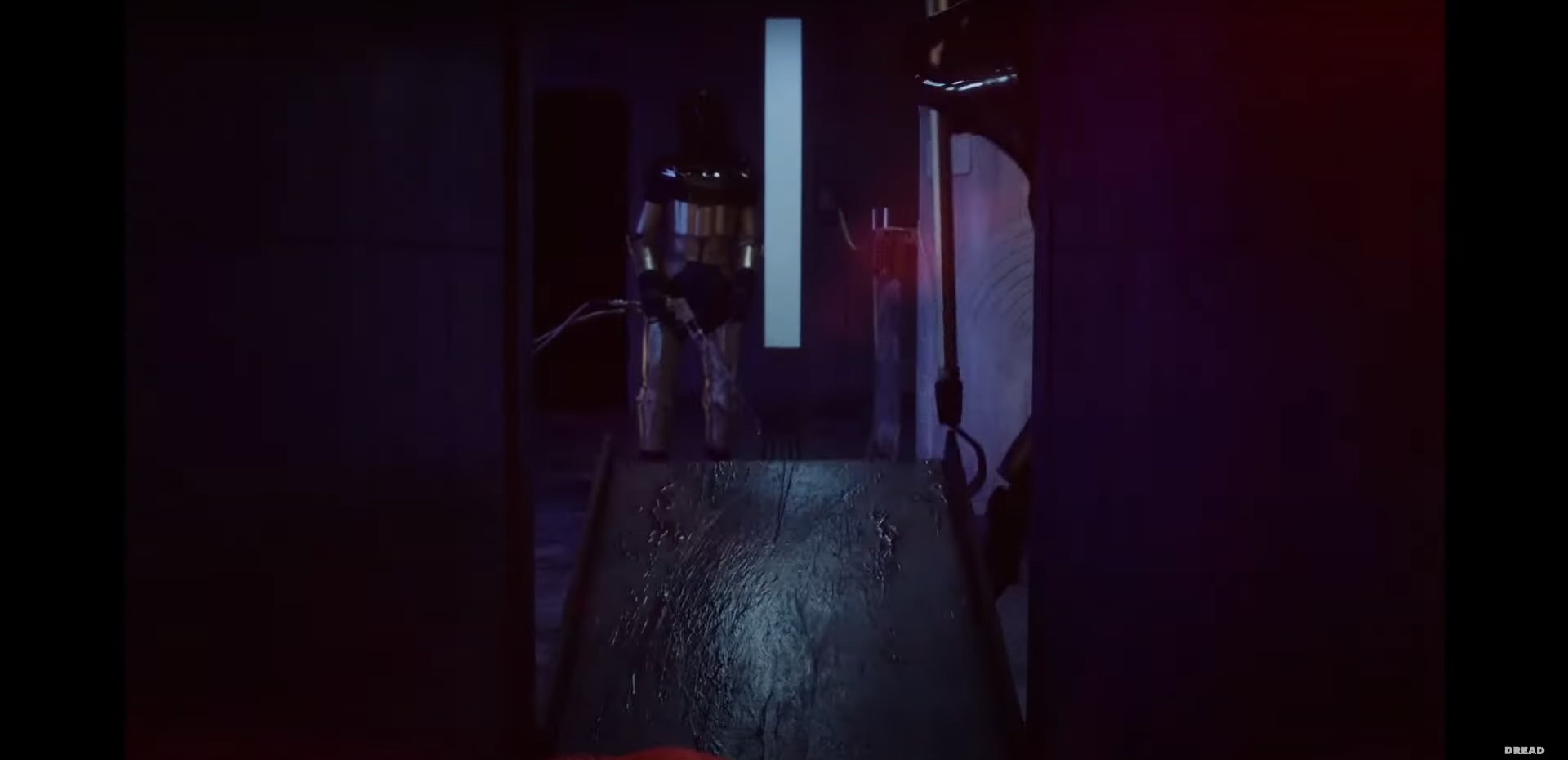
A viral fungus pandemic has plagued the world.  Fret, a parasitologist, has worked toward a cure to stop the spread of a virus that grows Clavaria-like basidiocarps from inside out the body that’ll eventually enclose the victim to death in an organic cocoon.  Before Fret can develop and distribute the recently discovered global cure for the virus, she awakes in a confined metal container constructed to suspend life duration for those who contracted the illness.  Confused and disoriented, Fret learns she’s not alone as others awake around her and able to talk with through the containers, including your infected husband John.  Unaffected by the virus and believed to be encapsulated in error, Fret works desperately on an escape from her well-intended prison in order to save humanity before it’s too late.   

By now, most of us can relate to a pandemic-driven storyline because, well, you know, COVID.  The 2020 sci-fi body horror “Tin Can” is no exception despite having been filmed prior to all the pandemic induced deaths and lockdowns.  Perhaps premise creator and director Seth A. Smith had a little foresight into coming events that inspired the Canadian project co-written with Darcy Spidle.  “Tin Can” is the fourth pen-to-paper collaboration between Smith and Spidle who previously completed two feature films (“Lowlife,” 2010 / “The Crescent,” 2017) and one short (“The Brym,” 2016) along with “The Willows,” the duo’s fourth feature film and revolving once again around preternatural events, that is currently in pre-production. For “Tin Can,” Smith and Spidle entangle a science fictional, dystopian, Hell in a handbasket world with selfish motives that outweigh saving the world. Seth A. Smith’s Nova Scotia based production company, Cut/Off/Tail Pictures, develops the story produced by company producer Nancy Ulrich and financially backed by the executive producing team of Michael Baker, Marc Savoie, Tim Lidster, and Rob Cotterill (“Possessor”).

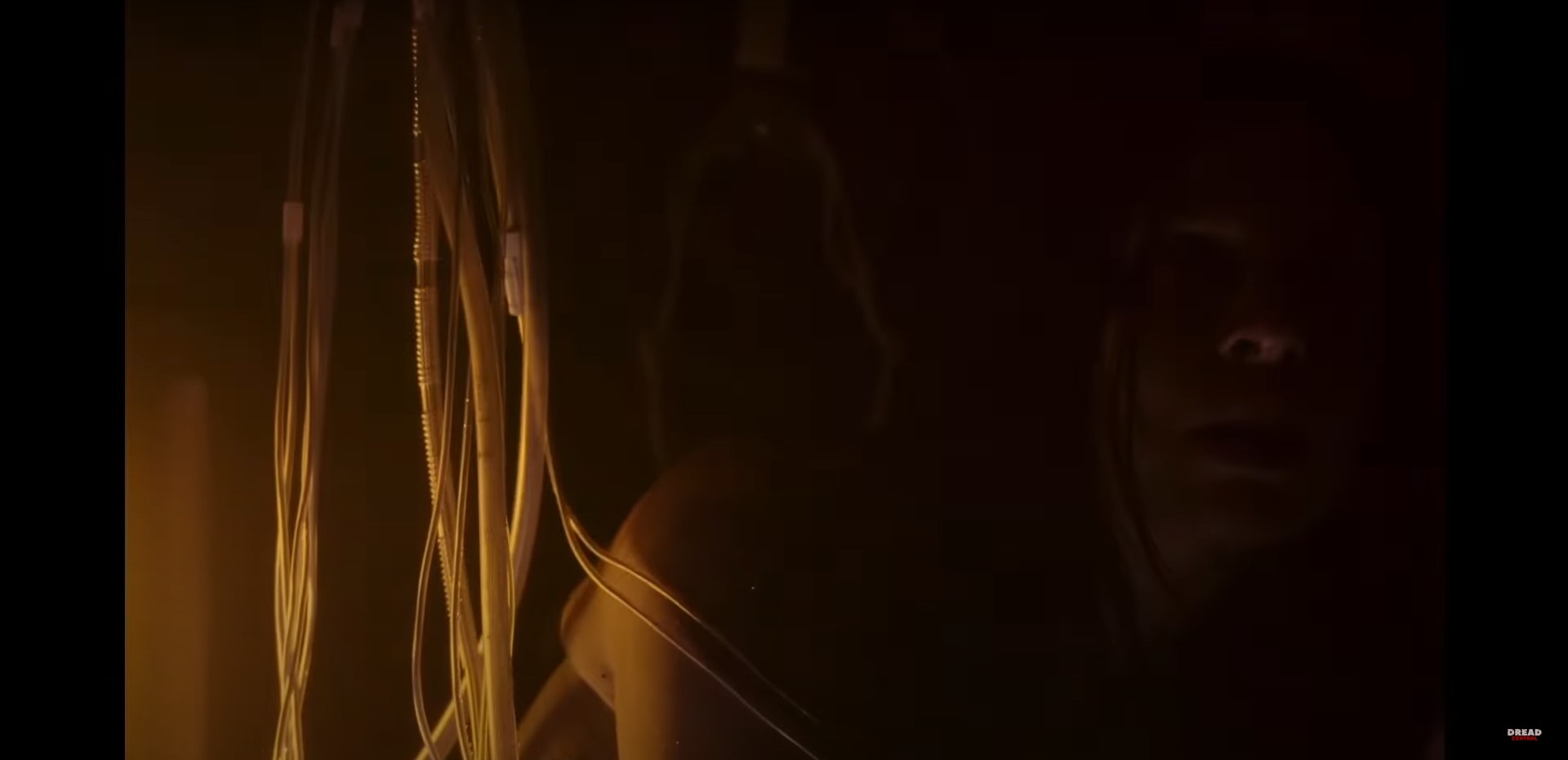
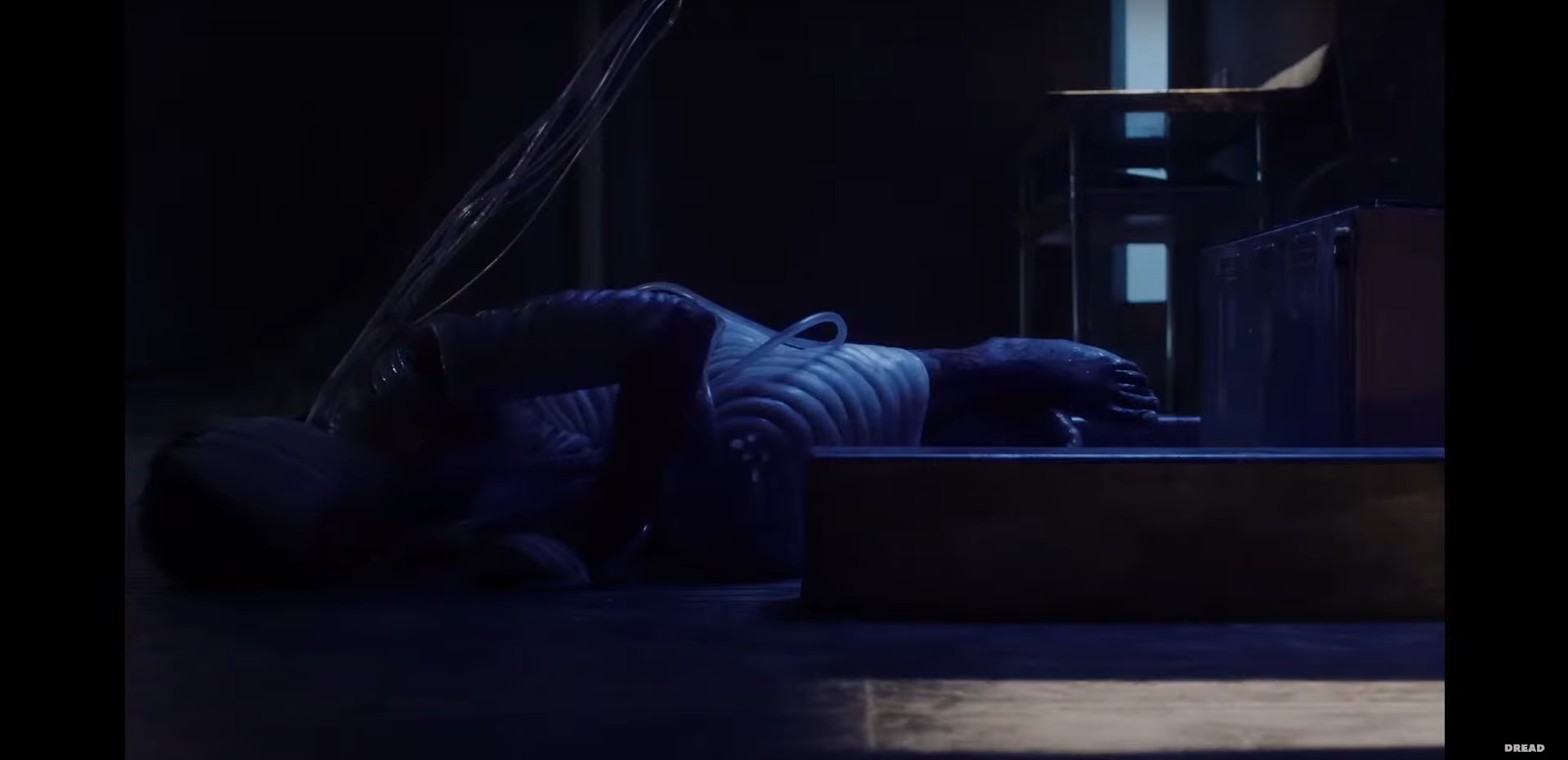
“Tin Can” might evoke a sense that one main character will be the focus point for the entire storyline, such as with “Buried” that stays put on the singular person trapped in this very tight, very claustrophobic-inducing soda can. Yet, that is not such the case with “Tin Can” that does circle around a centerpiece character in Fret (Anna Hopkins, “V/H/S/94”) but the cure-all scientist waking up in a life-extending canister while on the edge of saving mankind isn’t alone. Surrounding Fret are strangers, colleagues, and even her husband, some of whom, such as her husband, are suffering the protruding fungal fairy fingers of the virus. Anna Hopkins fields a hefty, difficult role after an initially a humble beginning as a scientist that more so-or-less feels the pangs of a low rent indie, but as Hopkins’ Fret transcends time by waking up weeks (or maybe months…years?) later, her environment becomes frantically imprisoning. The tight confines of the titular object with medical tubes dangling from the ceiling, a Tracheostomy tube down the throat, a malfunction video screen, and mysterious bars that light up one-by-one set a stronger stage for the actress to be put up against and Hopkins nails the mindset of a woman vehement and determined with escape to not only save her own life but the life of billions across the planet. In the cans beside Fret, providing Hopkins with more serve-and-volley fuel, is her husband John (Simon Mutabazi) inflicted by disease but becomes more than just a victim, Wayne (Michael Ironside, “Starship Troopers”) who I couldn’t really grasp as a component in the story as he’s like a project financier in the tin can project to save his own skin from being reskinned by fungus, Darcy (Amy Trefry) as a colleague-friend of John and Fret, Whistler (Tim Dunn, “The ABCs of Death”) who is the most interesting and weird doomsayer of the bunch, and a fist banging mute (Sara Campbell) also inflicted. For much the back-and-forth in the cannister talk, the dynamic is more of a talking head roundtable of initial discussions of popping open a small air vent so they sce outside their enclosed cell and eventually lead to more depth and deception that narrows the story with the what, when, why, and how.

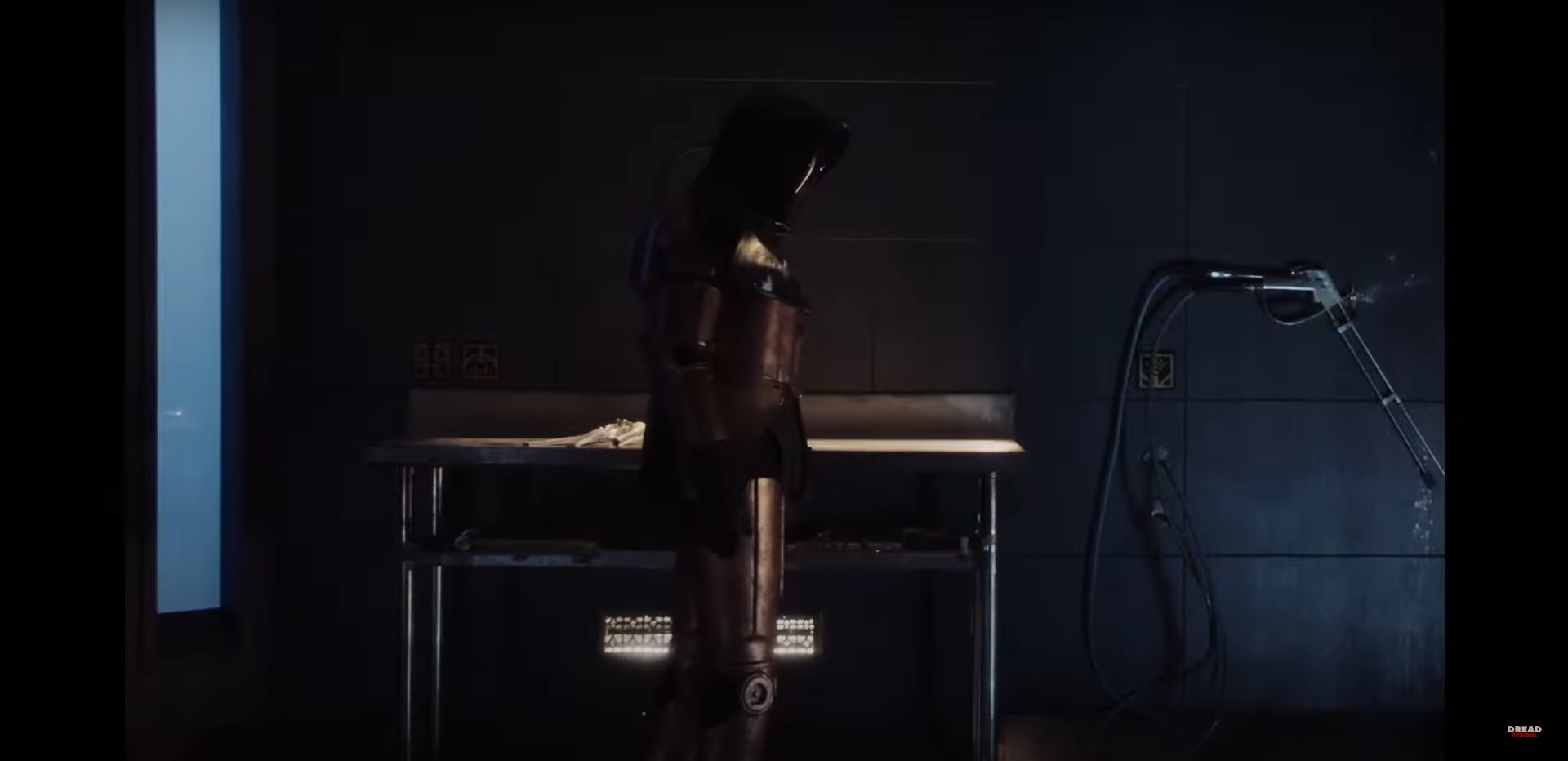
“Tin Can” aspires to be a chaptered three-act conundrum. I don’t mean that in a negative perspective. What Smith brings into existence is a polished independent film of Cronenberg-esque and has ensuing weirdness act-after-act only paralleled by the double-crossing exoneration or a retaliating impugn of keeping one alive after being severely scorned. The first act plays out like the world of today, a devastating pandemic that has ravaged the human population. The second act unsheathes the mystery of waking up inside the tin can device with people she knows and is eager to discharge herself from a capsule that’s supposed to sustain her life. Then, the third act rolls in, the third and final chapter, and time has officially been corrupted as we know it with a futuristic beings suited in various colored alloys. Alloys are definitely a theme beginning with title “Tin Can.” Fret discovers a cure for the diseases by commingling it with an alloy and each containment artificer is suited in a different metal and are credited as Copper, Gold, Silver, etc. What Smith could be suggesting is the element that could cure us could also incapacitate or, even worse, transfigure our existence with a lifesaving, yet life altering, solution to the extreme. Cinematographer Kevin Fraser industrializes the look of “Tin Can’s” existential view and is a glorious rusty bucket of a cheerless life. If Smith wanted to convey a life of nihility and automaton, Fraser nailed down the oxidation state. “Tin Can’s” a cold hard look at the cost of saving the world that, in the end, might not be worth saving.

A part of the Dread Central at home release line, “Tin Can” arrives onto a high-definition Blu-ray distributed by Epic Pictures and MVD Visual. The region free Blu-ray is presented in a throwback 3:2 with letterboxing and has a color reduction implemented to give it that demoded depiction. Image looks amazing without an inkling of any kind of compression issues especially with many of the scenes shot in darker and bleaker circumstances. Fraser delivers some awe-inspiring, creative angles that produce a how-did-they-do-that response to get a 360-degree single take of Anna Hopkins in the cannister or the rotation of a limp body on a large wheel door. The Dolby Digital 5.1 English audio mix has solid sound design as more than half of the picture is off the principals talking through their metallic cylinder containers that created a muffled depth and low range flickering in the backorder, the mechanized hum mixed with scraping metal, does wonders to sell the dystopian effect that borders steampunk. No inherent or noticeable flaws in the final product. English subtitles are available. Special features include a commentary with Seith A. Smith, The Last Bell Doe Toll – the making of “Tin Can'” exhibits the construction and creation of the displaced subsequent future, how to achieve a few of those crazy Kevin Fraser shots, and provide cast and crew interview insights, and the bonus content rounds out with two music videos – The Last Bell Does Toll and ZAUM – The Enlightenment (Part I). “Tin Can” runs at 104 minutes and is not rated. “Tin Can” is ingenious on a level many will not fully understand and, frankly, I barely can tether my impression and have it make sense, but there’s a unique ore core to this science fictional, ill-fated fantasy that can be so odd at times you can’t help but not look away.

“Tin Can” on Sale Now at Amazon.com!

The Devil Is Never Pretentious with His EVIL! “Satan’s Little Helper” reviewed! (Synapse Films / Blu-ray)

Bluray is Currently Cheaper than DVD!  Grab “Satan’s Little Helper” Fast!

Obsessed with his new video game Satan’s Little Helper, where a little boy helps the Satan dispense murderous bloody mayhem, naïve Dougie, sporting his own hot red Satan costume and mask, swears he’ll have a chance to meet Satan himself during Halloween.  Who Dougie believes he stumbles upon is the master of darkness but, in reality, the overactive and imaginative adolescent has discovered a deranged, untalkative serial killer in a Satan costume going house-to-house setting up realistic looking gruesome displays as Halloween lawn decorations.  Feeling slighted when his college-age sister comes home to Bell Island with a new boyfriend unexpectedly, an upset Dougie wants Satan to kill the boyfriend, but the killer insidiously uses the boy as a pawn and works his way into Dougie’s family home and everyone thinks it’s the new boyfriend masked as Satan to impress and please the difficult child.  Set in motion is a flight of wickedness throughout the night on the island town that’s unprepared for the chaos yet to come. 

Jeff Lieberman is already something of a cult horror director amongst fans. Having written-and-directed obscure classics “Just Before Dawn,” “Blue Sunshine,” and “Squirm” within 5 years between 1976 and 1981, Lieberman took horror by varietal storm by dipping his toes into different subgenres and doing moderately well at it., establishing a legacy with re-releases of his films into the new millennia. Though quiet for many years in the realm of horror, Lieberman makes a return with 2004’s “Satan Little Helper,” a killer horror-comedy filled with an innate fear of the unknown with what or who is truly behind that devilish mask. Lieberman wrote and directed the feature with a dark and morbid stamp perfect for the Halloween season. If you’re looking for a good Halloween movie, “Satan’s Little Helper” should be on your short list. Set on the fictional location of Bell Island, which is actually Long Island, New York, “Satan’s Little Helper” is a production of Intrinsic Value Films (“The Last Thing Mary Saw”) and the limited liability company under the alteration of the film’s title with Satan’s Little Company and is self-produced by Lieberman as well as Mickey McDonough, Isen Robbins, and Aimee Schoof with Carl Tostevin serving as executive producer. Screen Media Films waived the theatrical rights route by releasing the insta-cult film directly onto the video market.

Gracing prominently most physical releases with a sinister grin is a dialogue-less and faceless principal character, who with every centimeter of his latex teeth and showing a lackadaisical posture as he turns Bell Island upside down as his own massacring playground, is obviously the serial killer, played by Joshua Annex. Annex spin on Satan Man reaps the story’s benefits by creating a mischievous antagonist to the likes we’ve never seen on screen before despite being playing the murderer behind the mask trope. Annex might be playing Satan but the actor is not playing the titular character, or is her? The double entendre can be interpreted in two ways: the masked killer is actually Satan’s helper on Earth or Dougie, the annoyingly naive brat with an unhealthy infatuation with the Lord of Darkness. Played by a then adolescent Alexander Brickel in his debut performance, Dougie’s only kicks the hornet’s nest even more for not only the residents of Bell Island, but also for his family as the young loutish lad invites the killer his family abode under false pretenses and never revels the truth until it’s too late. Brickel is intense in an aggravating Dennis the Menace kind of way, but the act works all too well with the flanking character players who need to feed off of Dougie’s hellion deposition that all stems from wanting to marry his sister. Is there some kind of symbolism or metaphor there? Speaking of the sister, Katheryn Winnick (“Hellraiser: Hellworld,” “Polar”) levels the eccentricity with normal reactionaries as the sister Jenna. Counterbalancing to make sure her normalcies don’t overstay their welcome is the great Amanda Plummer (“Pulp Fiction,” “The Prophecy”) with sublimely odd mother that only Amanda Plummer could pull off and make it feel right. Stephen Gramham, Wass Stevens, Melisa McGregor, and Dan Ziskie round out the cast.

Perfect for the season, perfect as a cult film, perfect to just be for everyday viewing, “Satan’s Little Helper” has been kept in the shadows far too long and needs to be risen from the netherworld for all to bear witness the unsystematic carnage from someone who just wants to see the world burned. The Lieberman film intoxicates with spontaneity as you never know what to expect or happen next. The script is simple, yet smartly contrived to work as a haphazard horror with a foundation foe with no limits, no boundaries, and no motivation. There’s a relief that there’s no supernatural or actual Satanic force driving the plot and, instead, unravels in a prevailing fashion with an accepted and logical fear that the person behind the mask is not always the person you believe wearing it. While Lieberman’s script does a nice job fleshing out a feature length film where the doesn’t have one single word of dialogue, there are moments when suspicions amongst the family would have or should have come a lot sooner and that stretches the reality some, making act two gummy around the midsection when the serial killer is playing the part of Jenna’s boyfriend. Lieberman caveats Jenn and her boyfriend, Alex, as a pair of studious actors and Alex is just immersed in his role as Satan to please Dougie and while that seems very plausible, how long the act maintained its course did not. Eventually, Lieberman became wise to the Satan costume’s stagnancy and moved the character along into another facade of choice that then goes into a guess who game of deception. An aspect of the killer’s intelligence that makes the character uber-clever and that much more deadly.

“Satan’s Little Helper” is one of Synapse Film’s more contemporary releases that doesn’t require a hefty image upgrade but the new 1080p high-definition upgrade and a supplemental bonus features make this new Blu-ray release very attractive. Presented in a widescreen 1.78:1 aspect ratio, the AVC encoded Blu-ray craves out a resolute image as expected since the modern film is digitally recorded and hasn’t been affected by the wear-and-tear of age and neglect. Perhaps not as glossy as an expensive Hollywood type production with a late 90’s-early 2000s glaze, gel, or filter, “Satan’s Little Helper” keeps a more than adequate showing of details and a medley of colors amongst is more natural cinematography with a handful of night scenes shot in a day under a dark filter. Only one scene of concern stands out on the ferry pier and in what’s supposed to be a close up of Dougie’s dumbfounded face when meeting Jenna’s boyfriend for the first time has somehow turned into a blown up shot that stretches the image fuzzy and masking the delineation. The English language DTS-HD master audio shows no signs of issues with a flawless and lossless sound design. The clean and clear dialogue raises the bar on Dougie’s testy tantrums and cleans out with the ambient effects toward the killer’s actions to compensate for his lack of chit-chat. Optional English subtitles are offered on this release. Bonus features include a commentary with director Jeff Lieberman, an archival behind-the-scenes featurette, The Devil in the Details making-of featurette that goes into cast and crew interviews with Lieberman, Alexander Brickel (now older and with longer hair), director of photography Dejan Georgevich, and special effects artist Anthony Pepe, a tour of the filming locations guided by Lieberman in Mister Satan’s Neighborhood, and the promotional trailer. The physical release comes in the nifty blackout Blu-ray case with a Synapse catalogue insert in case you want to buy their releases via mailed order form. Synapse Film’s “Satan’s Little Helper” new Blu-ray comes home at the most opportune time during this 2022 Halloween season and is sure to be viewed as a delightful deluge of dark comedy carnage and destruction, some of the best attributes of any good horror film.

Bluray is Currently Cheaper than DVD!  Grab “Satan’s Little Helper” Fast!