EVIL Bigfoot is All About the Amputating and Mutilating! “Suburban Sasquatch” reviewed! (Visual Vengeance / Blu-ray)

“Suburban Sasquatch” On Sale Now at Amazon.com!

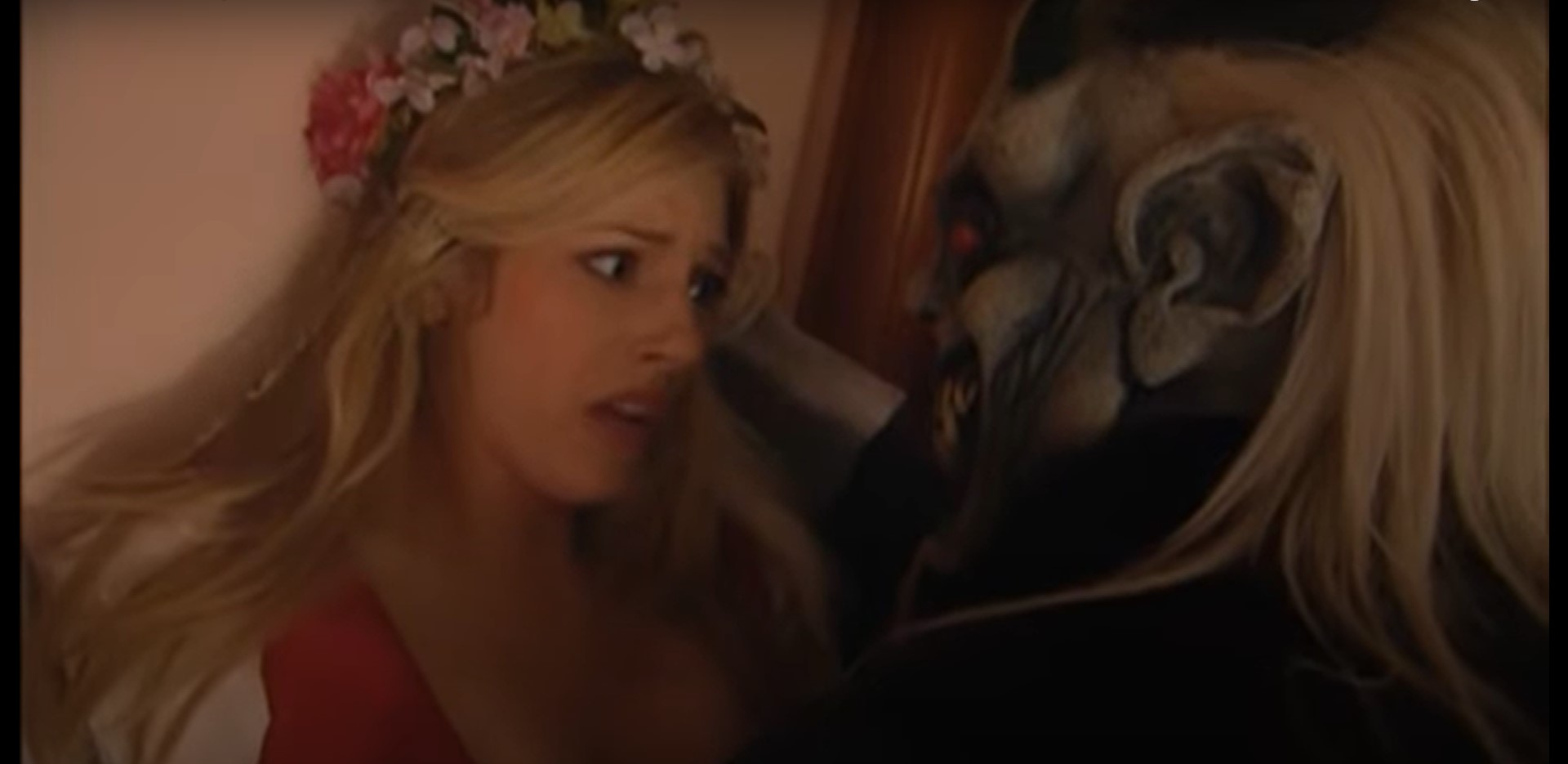
A mystical, murderous beast of lore has suddenly appeared in the woods of a small Pennsylvanian town.  Hikers, fishermen, urbanites, and even grandmothers are not safe from the carnage dished out by Bigfoot.  Sniffing around crime scenes is eager freelance reporter Rick Harlan to unearth the truth about the recent string of grisly attacks and make a name for himself as a journalist.  Harlan finds himself in the middle of a police coverup, a Native American woman-warrior, and one suburban playground where a phasing in-and-out Sasquatch can make a killing whenever and wherever.  The Native American, Talia, is destined to square off against the evilest anthropoid her tribe has ever faced, one that thirsts for blood and does the unspeakable with the women it abducts.  The story and clash of the century may be Rick and Talia’s last in this brutal man versus beast showdown. 

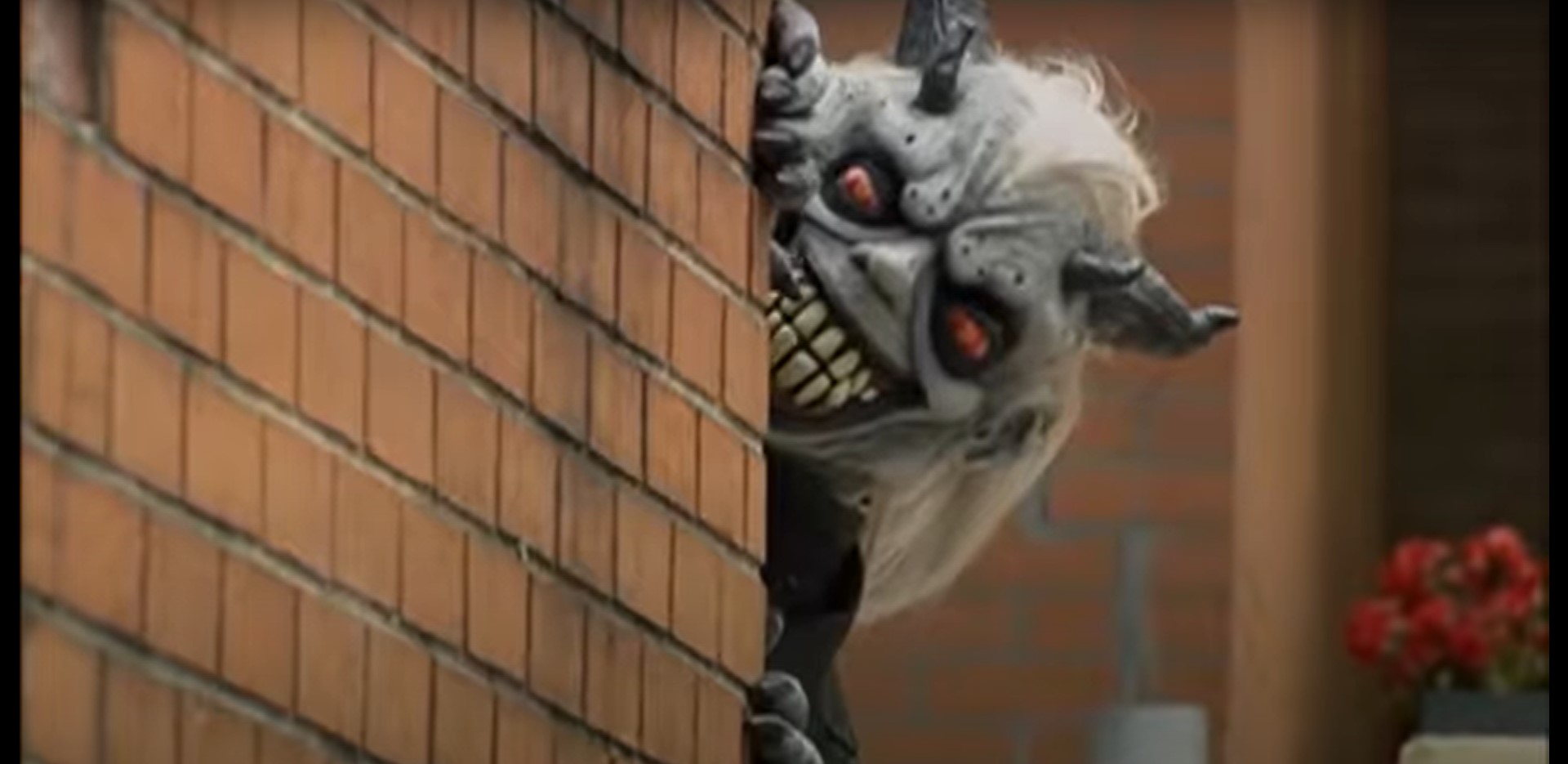
As an aficionado of the horror genre, I’m on what seems to be an eternal quest to unearth the best (I’ll even settle for just good at this point) Bigfoot/Sasquatch film that really can scare the pants off viewers while providing a good storyline and solid special effects for the hairy big guy. Is that so much to ask?  The next undertaking to flash across our eyes, like a brisk fur of man-beast in the forest thicket, is the classic SOV-shot and shamelessly spooled special effects endeavor that is “Suburban Sasquatch.” The 2004 Dave Wascavage film is the sophomore project for the writer-director, following up from his deadly fungi party comedy-horror, “Fungicide,” with a shot at the title for best-worst, or is it worst-best, Bigfoot movie in the early 2000s. Shot in my old stomping grounds of West Chester, Pennsylvania, the suburban setting is authentically captured in that piece of the Commonwealth state with sprawling neighbors that give wide berth of land between houses and plenty of parks and wooded areas to Sasquatch-suit tramps. Wascavage produces the film himself, while also wearing multiple hats in many other crew roles and creates the feature under the filmmaker’s very own Troubled Moon Films, a production company that prides itself on low-cost video production and storytelling in which Wascavage self-proclaims Z grade movie making results.

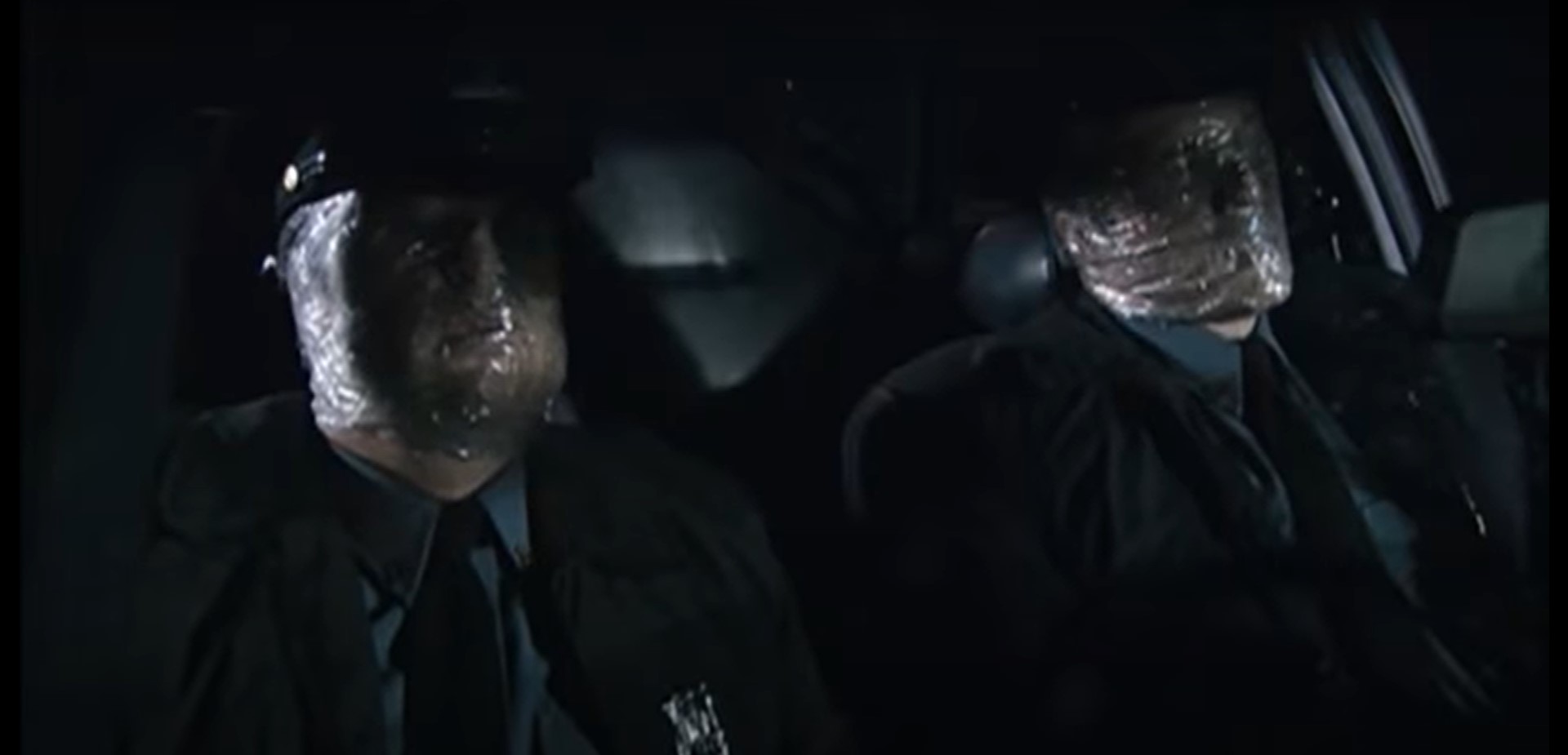
“Suburban Sasquatch” is a pendulum swing between character perspectives, disassociating any one character from being a main lead and focusing more on a group of principals that even includes the suburban sasquatch itself.  If focusing on the heroes of the story, or the hero-ish types, then Rick Harlan (Bill Ushler, “Viscera”), Talia (Sue Lynn Sanchez), and the two officers – John Rush (Dave Bonita) and Steve Parker (Juan Fernandez) – would be your best bet as the unorganized protagonists deal with the beastly menace in their own way.  The acting is forced and rigid all around but not entirely at the cast’s culpability.  The script is extremely breathy and scenes last too long by lingering exposition that resulted in the film’s too-lengthy 100-minute runtime, likely drafted as a shorter run film but dialogue was added to flesh out a full-fledged feature.  Even so, performances are blankly vanilla and, to be fair, that’s to be expected inside the low-budget market. Dave Weldon, Rush, Parker, and even director Wascavage himself enact Bigfoot’s posturing and behavior familiar to a mountainous silverback gorilla with wild cupped hands waving overhead and while this seems silly in the obviously cost-efficient makeshift suit packed with unnatural folds of the stomach, a bulging bosom, and a mouth that chews like a latex-fitted gumming grandmother, the trio make the best of Bigfoot’s monstrosity and hirsute lumbering to the point of knowing what you’re getting in a sasquatch for the rest of the film. It’s all about consistency, especially when four actors interpret the movements. Wes Miller, Dallas Quinn, Troy Stephen Sanders, Loretta Wascavage, Edward Wascavage, and David Sitborn, who I thought had the most natural dialogue in the entire story, rounds out “Suburban Sasquatch’s” mania.

Has “Suburban Sasquatch” become the Bigfoot film of my long-awaited dreams? Unfortunately, no. However, what the 2004 inexpensive picture offers is invaluable cabbalism that theorizes one reason why Bigfoot is only briefly caught out of the corner one’s eye, a peripheral phantom, with a phasing feature that allows Bigfoot to go in and out of reality. Like a good b-movie horror writer-director, Wascavage also capitalizes on the creature’s stature by not only arranging a towering comparison against his enemy and food but also by fabricating a big hairy foot, larger than man’s chest, to emphasize more on the beast’s epithet. In order to achieve the height, Wascavage uses easy, practical tricks to jumboize, such as playing with different depths, but Wascavage, in another one of his many hats, also attempts his hand at crude computer generated graphics that stretch beyond the images’ limits to achieve his desired effect. Pixelated and warped without any depth or any amount of smoothness, the cut and paste photoshopped animation is jerry-built “Monty Python” at its worst in a so bad its worth seeing phenomena and certainly priceless for internet memedom, especially when coupled with severed appendages doctored from the local Spirit Halloween flying in all different directions in a Bigfoot’s fit of animalism. A couple of slashing eviscerations, a head-popping decapitation, caricature arrows and tomahawks, attack crows, and a whole lot of thwacks summarize much of the monkey business violence “Suburban Sasquatch” unfurls and while not completely bottom-of-the-barrel terrible, translating better than most SOV post-work, this Bigfoot berserker extends the search for a better entry in the subgenre.

Much like the first three predecessors on the Wild Eye Releasing Visual Vengeance banner, “Suburban Sasquatch” receives a massive, special features loaded Blu-ray upgrade coming in catalogued at number four. Also, like the first three volumes, Visual Vengeance precautions viewers about the source material quality, an array of standard definition master tapes. The region free release is presented unrated in full-frame 1.33:1 aspect ratio and the picture quality fairs better than most SOV releases. While still heavy on the electrical interference with dancing pixels finding difficulty delineating the image, there is less tracking line obstructions and no macroblocking. Details are standard definition quality with softer details, more like smudgy, in the natural color tones and lighting. The English language lossy stereo audio mix has no punch behind unlike Bigfoot who comes out swinging like Rocky Balboa in every human encounter. I would take a wild guess and say the audio is more mono as every aspect from the dialogue to the soundtrack sounds muffled or muted, likely door to poor audio recording equipment and no boom mic, making the actors’ articulation often difficult to hear. Sound effects are the only mix that has any kind of stereo potency with an overboard variation of the impact or ambient sound that adds to “Suburban Sasquatch’s” slipshod satire. Optional English subtitles are available. But if you’re buying the release because you’re interested in the special features, then Visual Vengeance has you covered with a brand new 2021 audio commentary featuring director David Wascavage, a second commentary with Sam Panico of B&S About Movie and Bill Van Ryn of Drive-In Asylum, and a third commentary track, a RiffTrax episode special, that provides hilarious MST3K-like comedy throughout the feature. Other bonus material includes an archival behind the scenes featurette, the designing of the Bigfoot costume, outtakes, the so-called CGI making-of, an interview from David Wascavage, a behind-the-scenes image gallery, the original teaser and theatrical trailer, and other Visual Vengeance trailers. The physical release itself comes with a cardboard slipcover with artwork with new artwork, a reversible Blu-ray cover with the original artwork on the inside, a two-sided insert, retro VHS stickers, and a mini poster. All that is missing, beside the link, is the kitchen sink. To conclude, Visual Vengeance ample format and bonus material enrichment doesn’t take away from the fact that “Suburban Sasquatch” remains the trashiest sasquatchsploitation on SOV ever!

“Suburban Sasquatch” On Sale Now at Amazon.com!

Bestest EVIL in the Whole Wide World! “Clifford” reviewed! (Ronin Flix / Blu-ray)


“Clifford” is the Best Comedy of 1994 and Now on Blu-ray!

10-year-old Clifford wants to go to Dinosaur World in Los Angeles.  I mean, really, really, wants to go to Dinosaur World and will stop at nothing to get his heart’s desire, even if that means intentionally grounding his parent’s plane destined for Hawaii.  Clifford’s parents, on the verge of strangling their own relentless mischievous son, concocts a care plan that includes reaching out to Uncle Martin, an out-of-touch, workaholic, kid-adverse L.A. resident looking to impress upon longtime, child-longing girlfriend that he adores children.  It’s a win-win for everyone, even Clifford who’s chances to ride Larry the Scary Rex rollercoaster at Dinosaur World have significantly increased.  The perfect plan is swimmingly going well until Martin’s boss throws him a deadline curveball that sidelines Clifford’s theme park trip, breaking his promise to a more than impish little boy who has declared life-ruining war against the Bestest uncle in the whole wide world.

Yes, finally!  “Clifford” has arrived onto Blu-ray home video and just like that that mischievous little brat comes back into our nostalgic hearts.  The 1991-filmed, 1994-released PG-rated comedy is written by “Back to School” duo Steven Krampmann and William Porter and directed by Peter Flaherty, director of “Who’s Harry Crumb?” and Martin Short’s pseudo-late night talk show series “Primetime Glick.”  If you don’t see Krampmann or Porters’ names in the pre- and post-credits but notice Jay Dee Rock and Bobby van Hayes scrolling by than that’s because the writers used pseudonyms to quietly disown the finish final film that was embroiled in questionable approaches such as hiring Martin Short, a then 40-year-old comedian-actor, to portray a 10-year-old boy.  Yet, the bizarre comedy that has a talented cast as well as a demented and twisted side to it has gained a rather quiet cult following.  Larry Brezner (“The ‘Burbs”) and Pieter Jan Brugge (“My Demon Lover”) produces “Clifford” and is one of the last releases to trickle out from Orion Pictures before their unfortunate bankruptcy. 

Through extremely creative measures to ensure Martin Short can sell the physicality of a prepubescent boy on screen, “Clifford” is one of the former SNL performer’s best and memorable roles amongst his arsenal of personalities.  The naughtily tormenting persona with a Devil’s grin and absent eyes for sympathy brings Clifford to a level that’s analogous to a fixated horror villain setting a target goal of destruction, mayhem, and chaos. No one is safe from Clifford’s duplicitous trajectory, not even Uncle Martin played by the late, great Charles Grodin (“Midnight Run”) who provides his standard uptight and exasperated character at first but slides into a sinister nihilism when push beyond the point of return. Short and Grodin are centric to the story, phenomenal dynamically, and funny at very second despite how antiquated the content and comedy is at 30 years old. Seeing Short play a little boy doesn’t even register he’s a grown man in an adolescent role and that’s how good Martin Short can massage the material in his favor. You see Short, you see he’s a kid amongst the rest of the cast, you see his childish exploits, and, yet, none of that is troublesome, bothersome, or even a tiny bit weird as you’re drawn into an overexaggerating, yet highly relatable, parenting hardships in negotiating with out of control, scheming children and the pure, unabashed wackiness of Martin Short who, in my mind’s eye, is essentially in a step-down version of his iconic Ed Grimley personality. Bringing down Short’s antics and Grodin’s disgruntled demeanor is the measured Mary Steenburger (“Back to the Future III, “Powder”) subduing, in a good way, audiences as Uncle Martin’s lowkey love interest to bring us down from the eccentric shenanigans. The casting is overall tight on those three leads but Dabney Coleman (“Dragnet”) becomes the sleazy bigwig wedging between his employee, Uncle Martin, and Martin’s girlfriend, Richard Kind (“Stargate”) searching for patient with his insufferable Clifford, Jennifer Salvidge (“Evolution”) as Clifford’s yielding, but equally as exhausted, Clifford’s mother, and “Little Monster’s” Ben Savage as a troubled youth set to follow Clifford’s footprints.

How does “Clifford” hold up to today’s comedies? Rated PG, the 1994 film lacks the big hitting criteria that ultimately slaps stricter rating labels right onto the trailer and home video covers, that ultimately bring in audiences with sex, violence, and harsh language, but “Clifford” isn’t a kids’ film per se and subtly lands more adult oriented and sexually suggestive one-liners and scenes that wouldn’t fly by today’s standards. In fact, I personally believe the entire production would have been scrubbed if the first casting choice for a young boy was a 40-year-old man. Movies like “Clifford” are relics that should be treasured because we’ll never see comedy like this again and that’s what makes “Clifford” a part of cult cinema. “Clifford” doesn’t need itemized fixings to be a great story and to possess substance to be a phenomenal film. Instead, the idiosyncrasies of the plot and the singularity of talent glue the first draft of the inane script together in its finished product, rewinding that chunky gray and white brain matter and the bits of skin, tissue, and tufts of hair back into and onto the head after having its top blown thinking, how the hell do we pull off this script? The first two acts are character building and about the dynamics of two conflicting temperaments that ensue a series of tit-for-tat jail landing pranks and a slew of grating and passive insults, suggesting a character-driven, quirky slapstick story of growth and understanding between the two sides. However, the third act shows another, unexpected side of “Clifford” that revels in Uncle Martin’s vindictiveness after having his mind and spirit broken by a child’s chastising for breaking a promise and Flaherty goes big and berserk with the Larry the Scary Rex rollercoaster (which looks amazing to ride to this date) to which the calamity of events culminates an epiphany for one of them, abetted by the fact a run amok mechanical dinosaur nearly chomped down on a human-sized snack.

“Clifford’s” mischief and mayhem in hi-def never before has looked so good on this new U.S. release Blu-ray from Ronin Flix in association with Scorpion Releasing and MGM. The region A, 90-minute release is presented in 1080p and in an anamorphic widescreen, 1.85:1 aspect ratio, and much like the Blu-ray’s front cover of blown-up headshot closeups of Martin Short and Charles Grodin and a crumbling two-story home that’s not a component in the film, the picture quality also appears to be a bit stretched, leaving details slightly scattered and marginally pixelated. The transfer print is without a doubt clean and discernable but retains the original, untouched up MGM anterior. The English language DTS-HD Master Audio 2.0 is the only audio option that provides a good mix and balance of dialogue, chaos, and everything else in between to come together for a gratifying dual channel audio alloy. In extreme instances of bickering, high level pranking, and even the clamorous and deep dino-discharging climax, much of the details remain intact and clear without losing distinctiveness. The Ronin Flix Blu-ray is a feature only release with no software or hardware bonus content. With or without bonus features, the film itself is worth the cinematic calories as “Clifford” shines as arresting tale full of laughs, heart, and anarchy and is a hellraising life-amenity that shouldn’t be lived without.

“Clifford” is the Best Comedy of 1994 and Now on Blu-ray!

EVIL Won’t Let You Just Kill Yourself Even If You Wanted To! “Violator” reviewed! (WildEye Releasing / DVD)

“Violator” on DVD from Wild Eye Releasing and MVD Visual!

Desperate to track down her sister Naomi who becomes involved in an online social media forum about mass suicide, a woman’s investigation leads her on a train ride to a small village on the outskirts of the city.  There she meets Red Sheep, an internet handle for the mass suicide form greeter for those individuals seeking to give up their life willingly.  Returning her to the abandoned house where congregated patrons of their own demise wait for forum members from all over to gather before stepping into the afterlife, but the beneath the surface of simply drinking the Kool-Aid together is a wretched plan of death and self-inflicted suicide is not in the ill-fated stars for the group now sequestered in an isolated town. 

When the film is titled “Violator” and the very first images on the screen are flashing title cards, warning of violence and depravity from what you’re about to see, then a graphic intensity bar has been firmly set with the expectation that disturbing content is afoot.  The Japanese 2018 released horror-comedy comes from the cyborg-splattering mind of “Meatball Machine” writer-director Jun’ichi Yamamoto and is a continued part of the tokusatsu horror genre peppered with familiar Japanese motifs of mass suicide, samurai sword, oral fixations, and all with a pinch of Kabuki!  Yamamoto is no stranger to the Kabuki culture as he works in a callback scene and line from his 2008 actioner “Kabuking Z:  The Movie” into “Violator’s” evil eviscerating and executing entrapment.      

I wouldn’t call “Violator” aces in acting, but I’m not speaking to the general known fact that Japanese portrayals are often over-the-top exaggerated, and I’m referencing more toward the lack of selling the bizarre by any means possible.  The cast more than often feels like a rehearsal and robotic to the point where picking out cues can be almost a game.  Most of the cast are once overs or have a select history in the indie-tokusatsu market.  The biggest name in the film also has the shortest screen time with Nikkatsu Roman Pink film actor Shinji Kubo as the leader of the pact who lures lost souls to the abandoned house of doom.  Kubo doesn’t make or break “Violator,” but his character is pivotal in turn of events that alters the course of a few particular principals. Mai Arai plays the worried sick and searching woman tracking down her sister Naomi (Sora Kurumi) before she makes a grave suicidal mistake. Along the way, Arai’s character bumps into a mixed company of varying personalities revolving around their own death – one early 20-something young’un treats her suicide like the next cool thing, another ostentatiously can’t commit, and while another couldn’t be bothered by anything else surrounding her and plays it cool. The small village inhabitants are just as diversified and as quirky as the emotionally haphazard suicidals but with special, supernatural abilities to absolutely mess with their minds until satisfying their morbid, high-on-death munchies. Shinichi Fukazawa (“Bloody Muscle Body Builder In Hell”), Shun Kitagawa (“Prisoners of Ghostland”), Kanae Suzuki, Anna Tachibana (“Corpse Prison”), Ichiban Ujigami, and Rei Yatsuka round out “Violator’s” cast.

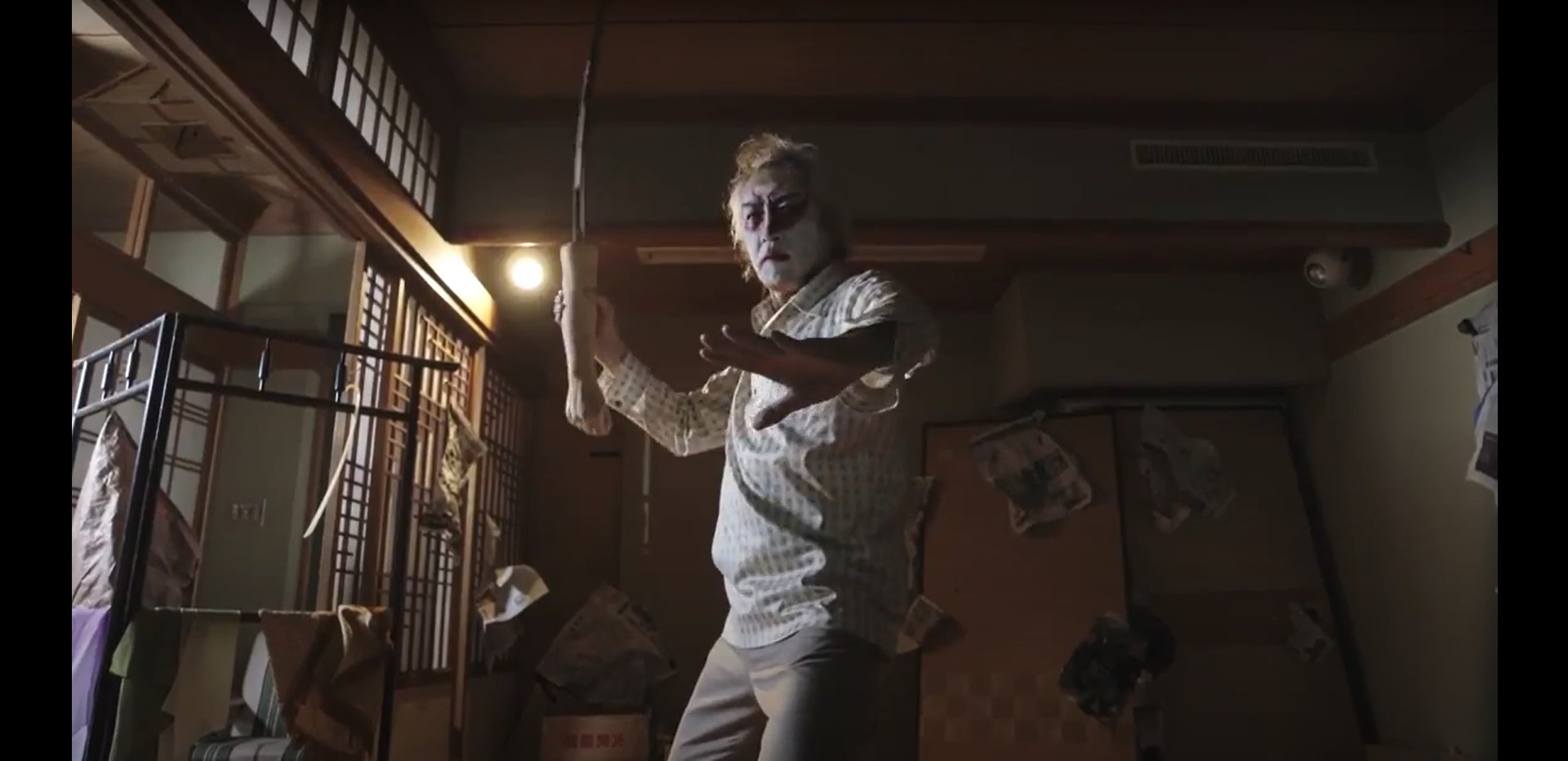
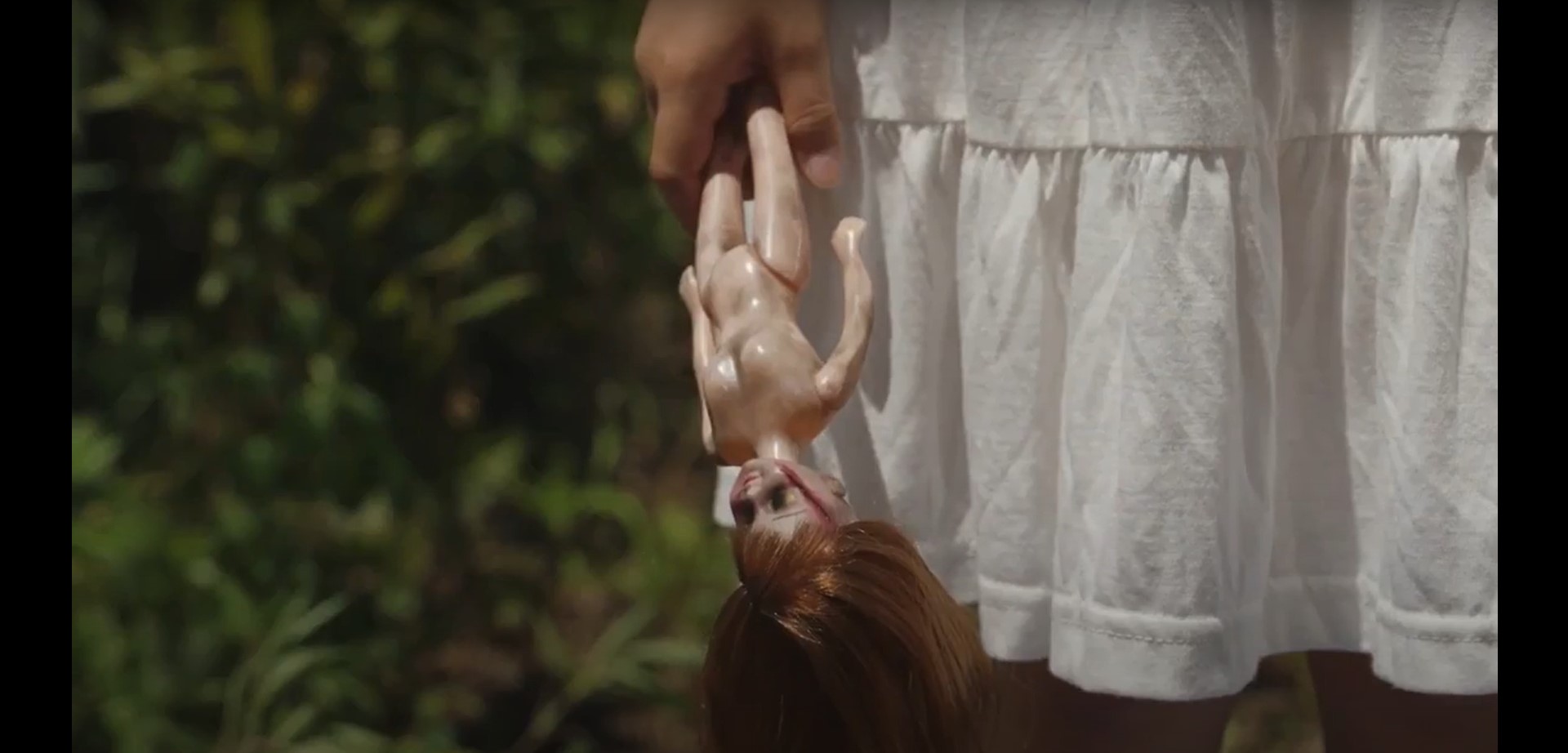
With a provocative title and a stern, flashing warning for taboo content, “Violator” starts off slow and continues so until about 3/4s into the film. Yamamoto glides not the sliced underbelly with murderous rage and profane callous through sexually and wicked means. No, Yamamoto builds each individual character, giving the what’s usually throw-away victims the time of day with a prolonged preface before their death that sets in who they are, what mindset they’re in, and, instead of just being collateral damage, what catalytic action becomes their ultimate undoing. By providing singular personalities, Yamamoto instills a breadth of subconscious care amongst the audiences that unintentionally react with the pangs of sympathy for the less naive during their demise to a straight up I’m glad they’re dead death because of their horrible unprincipled being and them dead makes the world a better place. Eventually, Yamamoto turns the keys to rev up the havoc as the death pact suicide squad disband into distinct, slasher-esque junctures to make good on the promise of building the character to give them a proper cutthroat curtain call and it’s about this time “Violator’s” pre-film turpitude caution actually applies with strange ritualistic kabuki decapitation, a virginal last-gasp cunnilingus before a protruding vaginal spear pierces through the skull, and a toy doll becomes a literal eye-opener for a suicide documentarian. Idiosyncratic in their own right, the kills are a violent spectacle that make “Violator” memorable enough to not forget it, but there’s far worse inflammatory material out there in the world of cinema that “Violator’s” handful of okay kills doesn’t exactly set off our internal omigod alarms.

“Violator” is the kind of off market brand and violence-laden film that fits like a glove with indie distributor, Wild Eye Releasing, in association with Tomcat Films (“The Amazing Bulk,” “Mansion of Blood”) and is perhaps one of the best releases out from the shlock usually produced from the latter company. With a muted colored and basic arranged DVD cover mockup that evokes every suspicion of an unauthorized release, I couldn’t love this cover any more than I already do with the promising depiction of a hysterical bloodbath and the singular moments represented in the collage of carnage and madness don’t stray away from the truth. The not rated DVD is presented in a widescreen 1.78:1 aspect ratio with a runtime of 72 minutes. DVD image quality is not terrible with a rate of decompression hovering around 6-7 Mbps, but still a little fuzzy in particular scenes with more than one character present and a in low-lit show production, that can hinder the viewing. The Japanese language PCM stereo track has no real flaw to speak of with a good synchronous English subtitle track and no detectable compression issues other than the lack of surround sound audio strength. The metal soundtrack also didn’t align, or rather clashed, with the mise-en-scene, added for just the sake of adding to make the story edgier. Bonus features include only a scene selection and trailers on a variable menu. Coy and different, “Violator” thinks outside the box with a simple supernatural revenge narrative that penetrates slowly at first but then really rams in the sudden disarray without a precautionary moment to lube up first.

“Violator” on DVD from Wild Eye Releasing and MVD Visual!

Fixing the Tracking on Those EVIL VHS Cassettes! “Snuff Tapes” reviewed! (MVDVisual / DVD)

Ready to be Recorded?  “Snuff Tapes” now available at Amazon.com!

Marcela Arkaino investigates a Talca, Chile rapist and murder who has been drugging and abducting women for years to record aberrant tapes of his cruel exploits.  Marcela takes a special eager interest in this particular assignment as she was one of those unfortunate women.  As a silver lining out of an extremely bad situation, she is one of three women left alive by her brutal sex-sadist aggressor.  As the reporter in her garners the difficult stories from the other two survivors, Cataline and Jesus, abused by the same masked man, she inches closer to his whereabouts by triangulating attacks and connecting similarities but her scouring of roadside market, unlabeled VHS tapes became the smoking gun needle in a haystack that produces not just any depraved tape of his victims but of her own ordeal, turning now an inch into a mile in finding him.  Bring the other two women into the fold, Marcela devises a plan of revenge to direct a snuff film of her own, starring their rapist and torturer.  

Hailing from Talca, Chile, the same location where the story is set, comes the shock-slamming, VHS-inspired thriller “Snuff Tapes,” aka “Cintas Tapes,” from the Chilean born independent filmmaker, Vito Garcia Viedma.  The writer-director’s prior two zombie-influenced short films, the 2012 “Bajo el sonido del tren” and the 2017 “Escape from Zombie City,” along with the criminal underbelly 2017 feature, Los culpables,” displays a course change deviation that wouldn’t prepare the average Viedma film fan for his 2020 venture into the dark underworld exploitation of indie snuff.  While the title highlights the concept around videotaping the misuse of a person’s trust and vulnerability for one’s own disturbing profit, in this case to get one’s jolly’s off, much of Viedma’s story skirts around the edge with just mentioning the nixing of captured and consumed of vivacity women, saving the story’s climax for more detailed death dealing in a vengeful perspective rather than a videotaped one. “Snuff Tapes” is created under Viedma’s ZineFilms production company in association with Cabro Chico and Trippas Productions.

“Snuff Tapes” is no “8MM” with a mega-Hollywood budget and Nic Cage doing Nic Cage antics. “Snuff Tapes” is no “Effects” with cult icons Joseph Pilato and Tom Savini helming sordid scenes from fantasy to non-fiction. “Snuff Tapes” isn’t even on the same level as “A Serbian Film” and, to be honest, I don’t think any film anytime soon will ever be on the same level as that twisted picture. What all three of those successful and notorious films have in common and what Viedma lacks in separating itself from the rest are in two very important details: a budget and an array of talent. Viedma’s film humbles in comparison with not only a microbudget but also in a cast makeup of essentially five actors with withering substance. Valentina Soto Albornoz stars as the retribution-reporter, Cataline Ibarra, who for the last decade has been piecing together clues of her kidnapper’s whereabouts by purchasing random video cassettes tapes from Talca street vendors and when Ibarra strikes gold unearthing her own ugly tape, she understandably feels overwhelmed reliving visually the nightmare and subsequently gravitates toward being hellbent for revenge. Ibarra recruits her survivor carbon copies in the tattooed Jesus Mayano (Camila Medina) and aspiring photography model Marcela Arkaino (Camila Carreno Arancibia) for a little payback, but Ibarra, aside from her good friend Esteban (Hugo Villar) providing her a PAL encoded VHS player and rewatching her tape to catch clues missed, she virtually does all the legwork in pinpointing the one responsible, drugging him, abducting him, and committing herself to the nitty-gritty, fantasy plan for whenever she got her hands on him. I’m not sure what roles or business Arkaino or Mayano actually had to just stand there moping other than maybe bear witness to the end of their lifelong torment, to see the boogeyman parish once and for all? Reinaldo Aravena plays the man behind the mask who initially puts up a strong showing as the camera operator and stud of his homemade videos but then quickly fizzles disappointingly on the opposite side of the camera due to a lack of scaled down combating in what becomes just a one-woman show without much to show for it.

Viedma paves an interesting structural path for his film, taking the audience an extended 36-minute introduction of voiced over VHS recordings of survivor stories before entering opening credits to what then becomes a dichotomy narrative between backstory and present day. This also speaks to the visual cinematography as well that jumps back and forth between being shot on the VHS’s boxed-in format (found footage) to a wider lens of the digital world, capturing past and present in two distinct formats as well as capturing the past that isn’t glossy, pretty, and is an inescapable prison where the walls, the horizontal pillars, are closing in on the world.  Appearances, no matter how apt to the subject, do not give the movie soul and “Snuff Tapes” misses that poignant shock value target with poorly written characters and a misaligned connect-the-dots investigation that doesn’t make much sense.  Ibarra examination of the evidence, or really lack thereof, points to one man, but like a cheating slacker in high school, she does not show her work to come up with that result.  Instead, she repeats, at least in a couple of instances, her gut knows she has the right man.  In Viedma’s world, a gut feeling is factual evidence for stringing someone up to face judgement.  In reality, that’s a severe boo-boo case of miscalculation that would get you jail time.  Circumstantial street justice on little-to-no proof separates the empathy from what an audience is supposed feel fired up against an unspoken truth and gives them satisfaction in a just cause to see the obliteration of scum from the face of the Earth. In the first half, “Snuff Tapes” is undeniably graphic and cuts deep with a veridical, degenerate villain, but falters with a lazy second half approach and gratuitous revenge.

MVD Visual in association with Danse Macabre and Jinga Films release “Snuff Tapes” on a North American DVD release. The region free DVD is presented in a VHS format of 1.33:1 when looking cassette camera lens with the rest of the film in a widescreen 1.85:1 aspect ratio. As expected, the VHS quality has semblance of overuse and age with a fuzzy display and muted, boxy sound. Outside of that, the picture quality is not much better in reconstituting a playback on lower end of the DVD spectrum – approx. 3-5 Mbps. Compression artefacts are heavily present with poor clarity around the edging and blacks shimmer and appear blotchy. The lossy Spanish language Dolby Digtial 5.1 Surround Sound loses some of it’s fidelity in the compression but is the overall highlight amongst the DVD’s A/V scorecard; however, the subtitle transcription is the worst I’ve seen in quite some time with duplicated segments, spelling errors, and a timing that equates to a microsecond blip of dialogue on some occasions. The release comes with another version of the film as the sole bonus feature with an entire VHS 1.33:1 (4:3) VHS Cut for an immersive effect. As always, snuff features can be difficult to digest but they are becoming more and more prevalent and popular in a highly accessible home video market and director, Vito Garcia Viedma, tries his creative hand at creating disturbing content only to defile the genre with a subpar entry sullied by deficient storytelling.

Ready to be Recorded?  “Snuff Tapes” now available at Amazon.com!

A Grand Tour of EVIL Only Costs Your Life. “The Curse of Dracula” reviewed! (MVDVisual / DVD)


Own the Curse….The Curse of Dracula on DVD at Amazon.com

Con-artist brothers Bojan and Marjan whip up a quick-cash scheme by price gouging tourists to roam the Slovenian grounds of the infamous Valburga castle, a restricted and vacant manor estate that was once owned by a ruthless inhabited, known by the people as the Baron of Blood, believed to be a cousin of the vampiric legend Count Dracula.  The lore itself would bring in lucrative customers and lucrative cash would be easily raked in or at least the brothers thought so until the types of tourists attracted to visiting Valburga castle are anything but easy targets with a pair of German alcoholic partiers looking for a good time, a sleazy Russian porn director scouting locations to shoot his two beautiful starlets, than demonists, goths in search to become vampires themselves, and Swedish demonists on the hunt for ultimate power.  Biting off more than they can chew with their new venture, Bojan and Marjan must also contend being trapped with an industrial-sized circular saw wielding maniac roaming the mazelike passageways of the castle. 

Let us preface this review with the “The Curse of Dracula” almost entirely has little to do with Count Dracula.  The original film title, “The Curse of Valburga” was altered to “The Curse of Dracula” in an appeal to a broader, Western audience who may not have a clue what or where Valburga is on a map and for those who do not know, Valburga is a quaint little settlement area in Slovenia, the birthplace of the 2019 film and the birth home of “Killbillies” writer-director Tomaz Gorkic.  Gorkic plays the Americanized game of Seven Degrees of Kevin Bacon with a story that links Count Dracula to a mysterious Baron of Blood who once resided and laid down massacring roots in Valburga, but instead of a grave tone surrounding one aristocrat’s austere penchant for sadism, “The Curse of Dracula” plays out a dark horror-comedy with a cynical sense of humor and a punk-attired killer.  Gorkic coproduces the film with fellow “Killbillies” producer Nejc Saje for 666 Productions in association with Strup Production, MB Grip, NuFrame, Supermarket Production, and Sonolab.

The opening driver of the story is setup like a buddy comedy revolving around two brothers Marjan and Brojan (Jurij Drevensek and Mark Mandic) joined by business associate Ferdo (Ziga Fodransperg) who has the keys to their castle con and when I say keys the toe castle, I mean it literally as the owner of the security company that services over the grounds.  Sifting through their snarky teasing, you get the senses the three are close despite their tough guy act and jabs at one another who leveling onto Marjan price gouging unrestricted tourism plan.  While Marjan and Brojan are seemingly being carved out as principal characters, that feeling quickly diminishes upon the arrival of the tourist group that includes Sven (Niklas Kvarforth), a Swedish neo-necromancer clandestinely on the scour for the eye of the baron – yet, we’re never told what the eye of the baron is or specifically why Sven is searching for it other than it can summon demons, connecting back to the prologue scenes of staticky, post-industrial score with him conducting satanic-like ritualistic hand movements and unheard chanting verbiage. Then, you have the Russian porn director Vasily (Luka Cimpric) with his two floozies, Dasha (Zala Djuric) and Anastasya (Sasa Pavlin Stosic) trying to make sexy-time promo happen on the Baron’s rundown manor. However, a favorite out of the bunch are the German man (Jonas Znidarsic) and wife (Tanja Ribic) who just keep pulling beer from the wife’s tiny purse – a good gag by the way – and treat the whole contention and violence as one big party. Despite all their idiosyncrasies and motives, not a single one of them are redeemable from out of their petty and conceited intentions. “The Curse of Dracula” rounds out with Katarina Stegnar, Gregor Skocir, Odina Kerec, Matevz Loboda, Neza Blazic, and Anton Antolek as a one-of-a-kind subjugator of souls with his wild circular saw blade slingshot and Nazi helmet.

Now, the title already irks me. Insinuating or, better yet, incepting an idea that hapless tourists will be become victims of Dracula’s curse was a terribly misleading campaign strategy to get the Dracula, or just simply the vampiric, fanbase to hop aboard a quick cash in on the Lord of Darkness. However, “The Curse of Valburga” is an apt title for a slasher-survival tale around the sawblade killer who hunts trespassers for his crypt-dwelling clan in the cellar. Gorkic never fleshes out the enjoyable turn of events with the mysterious group that causes all of the tourists’ troubles in full disquisition and tries to sneakily skimp by with just a rudimentary, flyby explanation that doesn’t clearly paint the picture or really denote a reason. One thing Gorkic didn’t convey confidently was the appearance of the chief who wore a MM35 or MM40 style German helmet on top of a metal and chainmail masked face and sported a cutoff sleeve shirt while flinging giant-saws from a handheld slingshot rifle. I wanted to know that guy’s backstory! Yet, each character is cut short and never massaged with arc to care about and, frankly, wanted them all to feel the serration of the saw from how terribly poor they’re written. It’s as if the characters were farmed to be massacred, having no sense of purpose to live or garner audience sympathy to overcome the struggle, and just like the characters, the story is also equally deprived of a proper concluding finale that leaves us hanging, waiting for that satisfying high-five. The script written by Gorkic might be poor in arc development, but I will say the Slovenian filmmaker does have a small taste for comedy as there are moments that will have you chuckling, especially the phone call between Sven and Gregor Skocir in what’s llike a classic Abbott and Costello dialogue gag.

If you’ve never seen Slovenian horror, then I suggest checking out the bloody chuckles of Tomas Gorkic’s “The Curse of Dracula” now available on DVD distributed by MVDVisaul in collaboration with Jinga and Danse Macabre. The poorly designed DVD cover of a wide-eyed, gaping mouth vampire with fangs drawn superimposed behind a cracked open upright coffin with dirty/bloody hands stretched straight out overtop and bats positioned adjacent to the coffin on both sides doesn’t do this story an ounce of actual justice, but the DVD is presented in a widescreen 16X9 aspect ratio with a solid 5 to 6 Mbps of data transmission, rendering the picture fair for DVD image quality. Some of the details in the background and even on the characters are not as finely crisp but the picture maintains an above adequate quality. The English, Slovenian, Swedish, Russian, and German Dolby Digital 5.1 surround sound is nicely robust but offers the same quality as there Stereo 2.0 when toggling back and forth between the two audio options and never distinguishing the difference between the two. Dialogue is clear albeit the broken English and thick accents when characters are speaking English. There are option English subtitles; however, they do contain a handful of errors and are text size is a bit small so if you have a 42″ or smaller TV, you may need to squint. The release is region free, has a runtime of 82 minutes, is unrated, and does not contain any special features or bonus scenes during or after credits. “The Curse of Dracula” is a slaughter-horse of a different color with a fascinating villain and a blindsiding coven of flesh-craving basement dwellers that pivot the narrative in a wild direction but the story lacks comprehension that results dissatisfaction.

Own the Curse….The Curse of Dracula on DVD at Amazon.com