The Death of a Daughter Leads Down to a Psychological Path of EVIL! “The Haunting of Julia” reviewed! (Imprint / Blu-ray)

Limited Edition of “The Haunting of Julia” Available at Amazon.com!

This morning was like any other as the Julia rustles up breakfast for her all-business husband Magnus and their lively vivacious daughter Kate, but when Kate violent chokes on a piece of apple and Julie performs a bloody, untried tracheotomy in a state of panic in order to save her daughter’s life, their lives are forever changed as Katie dies in Julia’s arms. For weeks, Julia’s melancholic depression commits her to hospital care. When she’s ready for release per the Doctor’s recommendation, Julia avoids returning to Magnus as their relationship was never a mutually loving one but rather a normal route connected by the presence of their daughter Kate. In order to restart her life, Julia separates from a controlling Magnus and purchases a magnificent London house only to then be plagued by ghostly occurrences she suspects is the work of her late daughter. What Julia comes to find out is the troubling history of her newfound home.
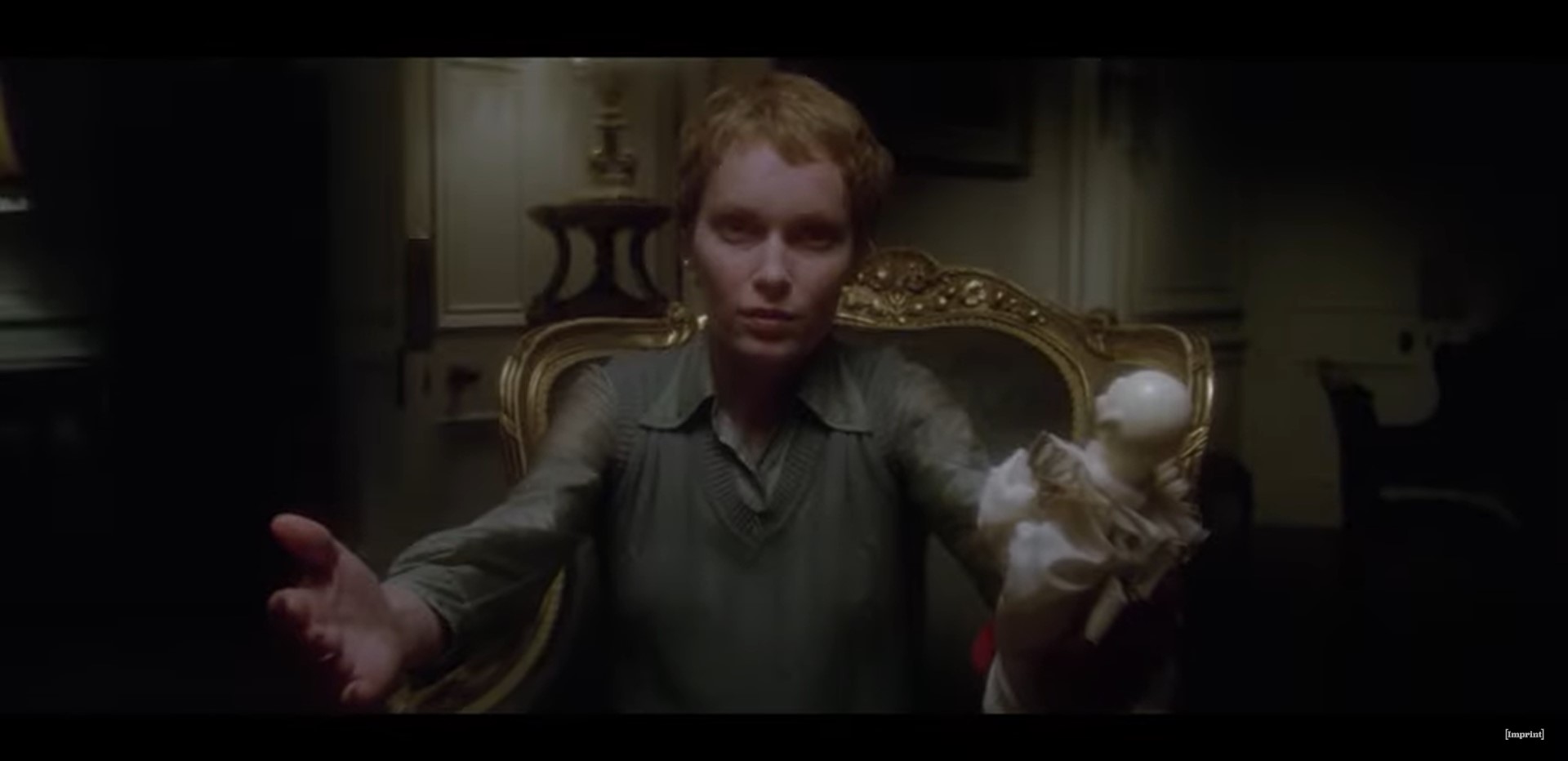
Mia Farrow solidified herself as a genre actress by starring in the archetype for films revolving around the prince of darkness, Satan, in 1968 with “Rosemary’s Baby.”  Unlikely seeing herself as a prominent woman of a notable rite horror, Farrow quickly understood her value in the genre as a complex female lead in the unsettling and gothic protuberance atmosphere style.  Nearly a decade later, Farrow stars in the Richard Loncraine directed “The Haunting of Julia,” similar only to the menacing supernatural child component but digs deeper in manipulative complacency, psychological guilt, and of that distorted reality created by the stout motherhood connection.  The “Slade of Flame” director set his sights off of Rock’N’Roll inspired dramas around the ugliness of the music industry and onto the filmic adaptation of the Peter Straub novel “Julia,” penned by the Dave Humphries and “Xtro” trilogy director Harry Bromley Davenport.  The joint United Kingdom and Canadian production, titled originally as “Full Circle” in the UK, is produced by Peter Fetterman (“The Exorcism of Hugh”), under Fetterman Productions, and Alfred Pariser (“Shivers”) of the Canadian Film Development Corporation. 
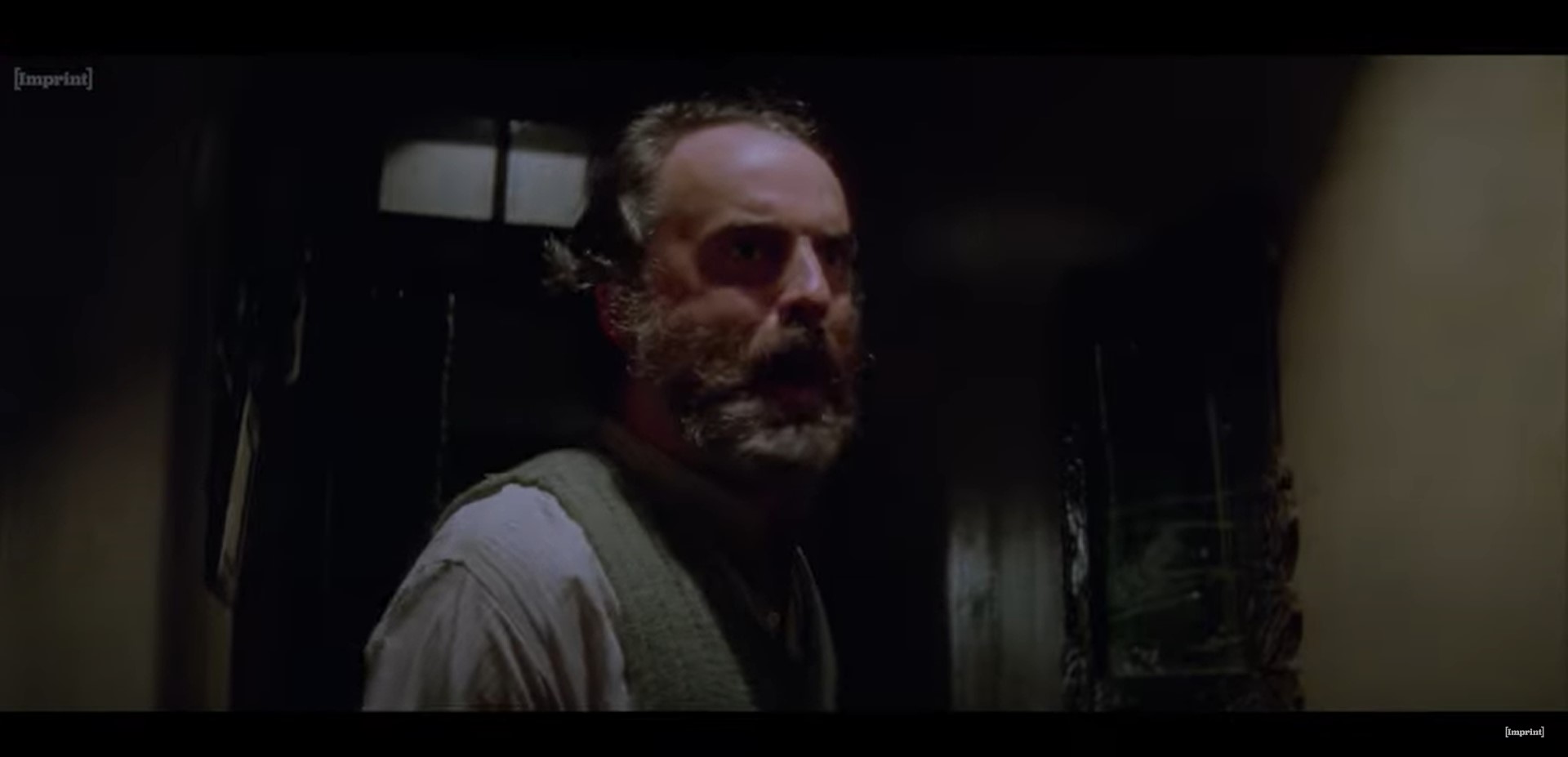
Mia Farrow’s distinct reactions and acting style very much engulfs the majority of horror experienced in “The Haunting of Julia,” as well as exhibited in “Rosemary’s Baby.”  The glassy eyed, long stares, the frightened, coiled emotions that swirl seemingly out of control, and the switch-gear ability to be strong and compliant in tense-riddled situations that just only involve herself in the scene.  While “Rosemary’s Baby’ and “The Haunting of Julia” may exact the same gothic aperture for child-themed horror and both are adapted literary works, “The Haunting of Julia” unfolds not in the anticipating of child birth but rather postmortem with the aftermath affliction of a child’s sudden and terrible demise that occurred in the frantic mother’s misguided embrace to take a knife right to her child’s jugular in hopes of dislodging an air denying obstruction.  This opening scene shocks us right into a grim framework that simultaneously divides trust and empathy for Julia as circumstances unveil what we might suspect all along, that Julia’s mental health suffered immensely.  What pushes Julia into undue stress is her controlling, dispassionate husband Magnus. Played by “Black Christmas’s” Keir Dullea.  Dullea pulls off the unsympathetic impassive father who just lost a child and can’t see the underlying psychological unrest his wife suffers.  In short, Magnus attempts to gatekeep Julia’s damaged psyche by trying to strong arm her back into normalcy, even going as far as manipulating Julia and his own sister Lily (Jill Bennett, “The Skull”) into slipping his foot into the door with a wife who fled from his grasp as soon as released from the hospital for essentially shutting down after their daughter’s death.  That toxic pressure is coupled with the seemingly unnatural incidences in her new home that clash her old life, chained to an unconsciously broken family, with her new life that seeks to decompress from a pair of diverse traumas.  “The Haunting of Julia” rounds out the cast with Tom Conti (“Blind Revenge”), Mary Morris (“Prison Without Bars”), Anna Wing (“Xtro”), Pauline Jameson (“Night Watch”), Peter Sallis (“Frankenstein:  The True Story”), Susan Porrett (“Plunkett & Macleane), Edward Hardwicke (“Venom”), and Sophie Ward (“Book of Blood”).

More or less forgotten by U.S. audiences due to no fault of the film’s own acclamatory measure or the audiences willing participation, the international produced “The Haunting of Julia” wasn’t publicized in the U.S. despite the two American leads – Mia Farrow and Keir Dullea.  Richard Loncraine’s film has incredible merit to the idea of a mother’s loss within the construct of gothic horror, which, in another aspect of unfathomable irony, resembled more closely to the American gothic style of the supernatural sequestered dark house.  Yet, this house is in London, wedged in like row homes, but as mentioned numerous times in the film, the house has distinction and grandeur that overlooks the buried ghostly history of the previous owners.  Julia absorbs the stories, filters through them, and comes to believe her own daughter is either trying to reach out to her or is hellbent on revenge for the amateur hour tracheotomy.  Loncraine does the phenomenal job of shocking our core with the early choking death scene of Julia’s daughter but once that dust settles, the pacing becomes more rhythmic to the point of building, slowly, Julia’s encounters with unknown forces that, at first, are just seemingly bizarre happenstances of left on bedroom plug-in radiators and playground visions of a girl that resembles her daughter cutting up another kid’s pet turtle.  These events play into their evident conspicuousness to push audiences deep into Julia’s mysterious milieu, officially sealing something isn’t right with the clairvoyant Ms. Flood’s scarred-screaming vision of a bloody child.  Julie become engrossed into learning the truth, eager to determine if that child is her late daughter and is fed tidbits of the house’s history that not only continues her own investigation but other research into other house tragedies that fork-split her presumptions.  As all this noise tornadoes around Julia, the stories, the occurrences, the deaths, viewers will never deduce to a reason closer to home, to Julia herself, until possibly too late at the end with a grisly open-ended finale that what Julia has been experience may have been done at her own forlorn hand. 

Atmospherically sound, undoubtedly creepy, and spearheaded by strong performances, “The Haunting of Julia” is the unspoken heroine of late 1970s supernatural horror – until now.  Imprint and Via Vision of Australia release a limited edition, high definition 1080p, 2-disc Blu-ray set with an AVC encoded BD50 of a new 4K scan transfer of the original 35mm negative. Presented in an anamorphic widescreen 2.35:1, the 4K scan is super sharp with virtually no compression issues on the formatted storage. Blacks, and negative spaces in general, are rich and void, despite Peter Hannan’s low-contrast and hazy surreal veneer that definitely plays into a psychotronic dreaminess. The resolution goes unaltered, and the natural grain maintains the original theatrical presentation for a revered 4k transfer. The English LPCM 2.0 mono track mix audibly delineates a viable one input split to make the dialogue and all other tracks comprehendible. Despite some slight here and there hissing, dialogue is amped up nicely for better resolved results that still remains mingled with the ambience in an all for one, one for all audio format. “Space Trucker’s” Colin Towns’s insidious and distinctly composed soundtrack reaches into the recesses of soul and strikes at the very nerve of fear with an unsettling score, perfectly suited for a mother drowning in the pitfalls of a supernatural sanctum. Optional English Hard-of-Hearing subtitles are available. The first disc special features include two audio commentaries – one with director Richard Loncraine and Simon Fitzjohn and the second, brand new, commentary with authors Jonathan Rigby and Kevin Lyons, new interviews with composer Colin Towns Breaking the Circle, cinematographer Peter Hannan Framing the Circle, and Hugh Harlow Joining the Circle, a new video essay by film historian Kat Ellinger Motherhood & Madness: Mia Farrow and the Female Gothic, the original trailer, and an option to play the film with either “The Haunting of Julia” or “Full Circle” opening title. The second disc is a compact disc of Colin Town’s 11-track score featuring 20 minutes of previously unheard music out of 60:52 of music. The limited-edition set comes with a neat lenticular cover on front of the hard box of what we assume is Julia’s ghost glaring at you from all angles as her eyes follow you. Inside is a clear Blu-ray snapper that’s a little thicker than your traditional snapper and comes with a built-in secondary disc holder. The cover art is simply Mia Farrow cowering outside the bathroom door but the reversible cover displays an original “Full Circle” poster as the front image. The disc arts are illustrative and compositions with the feature presentation disc the same as hard box lenticular without it being lenticular and CD pressed with Mia Farrow’s face in the background and a child’s cymbal banging toy in the foreground. Also in the hard box is a 44-page booklet feature an historical background essay by critic/writer Sean Hogan that has black and white and color photos and various poster art. The film, which comes in as Imprint catalogue # 218, runs at 97 minutes, is unrated, and, is assumed, for region A playback as it’s an Australian release – there is no indication on the package. “The Haunting of Julia” is Mia Farrow’s shining, yet lost effort post Roman Polanksi and is a remarkable look at subtle disconnection from extreme guilt when in every corner, every sign, is thought to be about your lost child.

Limited Edition of “The Haunting of Julia” Available at Amazon.com!


EVIL is Ready to Administer Your Physikill! “Puppet Master: Doktor Death” reviewed! (Full Moon Features / Blu-ray)

The Doktor Will See You Now. See You in Hell!  Blu-ray Available on Amazon.com!

The sudden death of a World War II veteran leaves the employees and residents of Shady Oak retirement home to mourn his loss to their humble community.  April, new to the Shady Oak employee family and starting her very first day in the wake of resident’s death, is tasked to assist clean out the family-less resident’s leftover belongings.  Along with a couple of other orderlies, April discovers a trunk bound with a chain lock and breaking into it proves to be a creeper endeavor when the contents of the battered chest is a single doll, dressed in a blood-stained doctor’s gown with a hideously grinning skull upon it’s shoulders.  Soon after, the handful of residents and orderlies of Shady Oak are being hunted down and the maniac-looking doll with a scalpel is suspected to be cause of the grim reaper knocking early on the retirement home attendees’ doors.

One-by-one, and slowly and surely over the decades, Full Moon continues its campaign in broadening the “Puppet Master” universe.  For 34 years and an over three dozen films, including same universe and spinoffs, “Puppet Master” has been the porcelain, wood carved, and rubber-molded face of Charles Band’s Full Moon empire.  “Puppet Master’s” legacy continues to live on animating inanimate dolls into malevolent marionettes with their strings cut.  2020 saw the release of the company’s first character standalone with the more popular, if not the poster doll, Blade in “Blade:  The Iron Cross.”  Next, the span of a year between 2021 and 2022, Baby Oopsie from the “Demonic Toys” universe became the subject of a television series compiled until a three-part TV movie released by Full Moon on Blu-ray and DVD in the last six months.  Presently, Full Moon has ventured back to the “Puppet Master” universe with their release of “Doktor Death,” officially titled “Puppet Master:  Doktor Death,” that resurrects the miniature medical murderer last seen from “Retro Puppet Master” in 1999.  Helmed by the director of “The Dead Hate the Living!” and “The Hills Run Red,” Dave Parker chapters in a darker, gorier edge to the “Puppet Master” series that makes Dr. Kevorkian look like Florence Nightengale.  “Puppet Master:  Doktor Death” is a production of William Butler’s Candy Bar Productions, produced by Butler, who directed the “Baby Oopsie” television series/movies, Charles Band, representing Full Moon distributing powers, and alongside Josh Apple, Greg Lightner, and Mikey Stice.

The non-anthropomorphic cast is about as fresh faced as they come with young actors and actresses who likely weren’t even twinkle in their parents’ eyes yet when “Puppet Master” was released.  A new generation, integrated as victims and conspirators, are folded into this new line of a “Puppet Master” offshoot, beginning with Jenny Boswell in her sophomore feature film role as Shady Oaks’ new employee, April.  Having traversed from California to a small town in the middle of nowhere to work a retirement home, April mentions her strange choice of life-changing circumstances was due in part of searching for a lost relative.  This morsel of mystery puts an enigmatic taste swirling around in our mouths, but Boswell plays the statement casually enough to not throw up warning flags in a natural delivery of her character’s new girl innocence and candor with the rest of her Shady Oak counterparts, which include a perverse man-child Flynn (Zach Zebrowski), a pay for promiscuity Jennifer (Emily Sue Bengston, “Smiley Origins”), and all-around nice guy Ryan (Chad Patterson).  Intertwined by their occupational relation are the patients, clients, or residents, if you will, of Shady Oaks that are more of an interesting, eclectic bunch than the genre trope orderlies that become run of the mill victim fodder for Doktor Death.  Rick Montgomery Hr. (“Gore Orphanage”) plays the wealthy old perv with uncontrollable pinch fingers for the female bottom, John Capocci (“Praetorian”) is an unfiltered opinionate and avid golfer, Melissa Moore (“Sorority House Massacre II”) as a painter who whips up portraits embedded in her clairvoyant visions, and Tary Lyn Bergoine as a mute kleptomaniac living in fear off an oxygen tank.  See – much more interesting and with concrete performances to express who they are precisely as individuals.  “Puppet Master:  Doktor Death” fills the cast void with Erin Eva Butcher, Asthon Wolf, wrestler Jesse Guilmette, and Bill D. Russell.

Between “Demonic Toy’s” “Baby Oopsie” and “Puppet Master’s” “Doktor Death” spinoff projects, “Doktor Death” has a tighter story and more effective gore.  Granted, “Doktor Death” only has single under-an-hour film to its name but with completed and out in the world today, “Baby Oopsie” came off the rails as the series progressed with Oopsie’s look appearing different between the opening drive and the two latter parts, the story unhinges itself with the arbitrary introduction of a fembot, and doll kills that dwindled into dullness.  So, if you’re like me and was irked and turned off by “Baby Oopsie” when it was all said and done, you are likely hesitant to jump right into Full Moon’s next departure from the foremost franchise.  Don’t.  “Puppet Master: Doktor Death” may have the same aesthetic veneer but the guts of story are better compacted to keep audiences on track and the “Doktor Death’s” malevolent malpractice renders a far better disturbing slasher.  On the flip side of that coin, most of the deaths happen offscreen.  Out of “Doktor Death’s” personal 8-kill body count, only one is visually graphic within the scene.  I would say two but the character is later found not dead but just severely injured and we’re left unresolved with their life status.  The other deaths are done offscreen and are implied, denoting signs of demise with blood splatter against the wall or glass, a bloodied club repetitively bashing into a victim just out of the frame, or bodies are misappropriated post-mortem, posed in different discoveries of death, one in a very neat, very marionette, way.  The short runtime falls in sync with the nowadays Full Moon line of quick, cheap, and dirty modern movie, but what it also does is provide quick pacing into “Doktor Death’s” acrid atrocities against the elderly and their clueless caregivers and also opens up the potential for a sequel with a revelation, open ended finale that’ll surely see the return of psychotic puppet. 

Dave Parker brings his knowledge of blood-soaked carnage and maniacal macabre to a resurrected retro puppet for “Puppet Master:  Doktor Death!”  The Doktor is in and has arrived on Blu-ray home video from Full Moon Features with an AVC encoded BD25 presented in high-definition 1080p and a widescreen aspect ratio of 1.78:1.  From my last few previous views of Full Moon productions, there hasn’t been a whole lot of effort into creating an atmosphere but this latest entry levels out what’s been missing from contemporary Full Moon Features for some time, a dark and gloomy, evocatively tropey canvas that looks past the mundane sheen of digital recorded image and into another world of terror. In regard to storage format and compression, there was anything to note that stood out with artefact reproach. The Blu-ray comes with two audio options, an English Dolby Digital stereo 2.0 mix and an English Dolby Digital 5.1. Toggling between the two audio format, not a ton of variance between them, if any at all, that has to make you wonder about the credibility of the multi-channel mix. In any case, both formats offer a well-balanced diet of dialogue, ambience, and soundtrack with dialogue in front and prominent. Range is diverse with all the squishiness of Doktor Death’s puppeteering his golems inside an internal organ orchestra. The Full Moon release offers no subtitles for SDH. Bonus features only include a Full Moon Video Zone featurette of Retro Puppet Master with Charles Band, the original trailer, and other Full Moon trailers, including “Retro Puppet Master,” “Puppet Master 3,” “Don’t Let Her In,” “Piranha Women,” “Blade: The Iron Cross,” “Weedies: Halloweed Night,” and “The Resonator.” case physicality includes a traditional Blu-ray snapper with Doktor Death predominantly taking up the entire front cover with trademark maniacal grin, glowing eyes, and double fisting hypodermic instruments – a scalpel and syringe. The Disc art is pressed with the same front image. The film comes region free, uot rated, and has a runtime of 59 minutes, confirmed against IMDB.com’s listing of 75 minutes. So, either IMDB is incorrect, or the film is heavily edited down. “Puppet Master: Doktor Death” not only expands upon the legacy of the franchise but beefs up the ancillary side puppets that didn’t receive enough screen time and with a constructed filmic narrative worthy of Full Moon’s early canon of films, going back to the Doktor is a necessary follow up.

The Doktor Will See You Now. See You in Hell!  Blu-ray Available on Amazon.com!

Romance and Chinese Boxing Don’t Equal EVIL and That’s Okay! “Gorgeous” reviewed! (88 Films / Blu-ray)

Fall in Love with “Gorgeous” on Blu-ray at Amazon.com!

Bu believes in true love.  The young Taiwanese girl, with immense positivity, travels from her small fishing village of Jibei to the big city of Hong Kong after discovering a bottle containing a romantic note floating in the sea.  When Bu is let down by the originating sender, a gay makeup artist in an attempt to use fate and fortune to bring back an ex-lover, she strikes up a friendship with him which leads to a wealthy business owner and Chinese boxing enthusiast C.N. Chan who serendipitously comes into her life.  With a well-known reputation of being a rake, Bu pretends to be a prominent ex-lover of a notorious crime boss in order to not be taken advantage of as she slowly falls for Chan’s playful charm.  A longtime rival businessman causes conflict by driving a wedge between Bu and Chan as fight training intensifies after losing to his rival’s hired professional fighter and Chan loses sight of what’s really important in life – happiness.  

International martial artists superstar Jackie Chan makes his debut on our little boutique review blog for his Hong Kong cult film, the 1999 romantic comedy with stellar fight sequences, “Gorgeous.”  “Forbidden City Cop” writer-director Vincent Kok teams up with Yiu Fai Lo and the “Rush Hour” star to pen a new kind of story for the stuntman and martial artists that would put a roundhouse kick of insecurities onto any action star’s chin.  Based on the Ivy Ho (“The Accidental Spy”) story, “Gorgeous” involves more than just punches, kicks, and high-flying antics with a comedy romance story about two very different people and perspectives finding commonality in unflinching happiness, joy, and love.  Jackie Chan does comedy very well but the comedy in “Gorgeous” is half non-physical, which the action star has mastered the craft by integrating into his physical model.  “Gorgeous” is a production of Golden Harvest Productions and is produced by Jackie Chan and then Golden Harvest president the late Raymond Chow.

Obviously, you can’t have a Jackie Chan movie without high-level martial arts action.  In the same breath, Jackie Chan wanted to give his Asian fans another movie after the tremendous success of “Rush Hour” that sent the longtime East-adored icon into global stardom.  Thus, “Gorgeous” was born, developed, and rewritten to add Jackie Chan as the lead character, playboy and business tycoon C.N. Chan, alongside costar Shu Qi of “Sex and Zen II” and “The Transporter” with Jason Statham.  As Bu, Qi develops a starry-eyed longing for unequivocal romance that you can only find in fairytales and storybooks as she is confronted by the puppy dog eyes of the local fishing boy proclaiming his love for her only to be rejected by Qi’s downplayed naivety that makes her appear to be the village simpleton.   Yet, the character is surrounded by a carefree comedic mom-and-dad of beer-drinking restaurant owners, Sung-Young Chen (“Hello Dracula”) and Elaine Jin (“The House That Never Dies”).  As a flirtatious couple of Bu’s hopeless romanticism driven by the signs and kismet and Chan’s all-business, no-play waning for a girl to be childlike to bring out the dormant happiness inside him, Jackie Chan and Shu Qi manage to never close that gap to fully immerse themselves as onscreen love interests in their 80’s structured amorous narrative and go get’em montage.   Where “Gorgeous” charisma lies is with Chan’s mano-on-mano dual with Jackie Chan’s hired member of his stuntman team, Brad Allan.  The former Australian gymnast and Chinese circus acrobat has a towering magnetism about him despite only standing 5’4” tall, shorter than Jackie Chan.  The fight sequences between the two nimble men with incredible speed and form, mirror each other with precision in their own individual styles, garner some the best one-on-one choreographed bouts ever to hit the screen and to be felt by the audiences with hard-hitting throws.  While the impact of the Chinese boxing is palpable, Chan and Allen pepper in lighter moments of great physical comedy that take the intensity down a notch in a welcoming reprieve from solemn combat.  That solemnity in Allen’s character is greatly received and adds to his magnetic appeal that doesn’t make the mercenary fighter a bad guy though hired by the antagonist (Emil Chau, “Super Cop 2”) of the story; instead, Allen’s fair without pulling punches and without dirty tricks, as he mentions to Chan to avoid, and we end up rooting for both men’s dignified square up being battled not in a square ring.  Tony Leung Chiu-wai (“Internal Affairs”), Ken Lo (“Holy Virgin vs. The Evil Dead”), Tats Lau (“Dating Death”), Richie Jen (“Tales from the Occult”), Siu Wai Cheung, and “Kung Fu Hustle’s” Stephen Chow costar.

While “Gorgeous” may not be evil in the least for our conversational liking and our in-depth coverage with its abundance of lighthearted goodness, romanticized ideals, and slapstick comedy, the turn of a century film has cult qualities with shoddy 90’s effects, intricate fight choreographies, and eclectic, eccentric performances that make the Hong Kong-Taiwan product standup and standout to be noticed.  The fight sequences alone swallow much of the attention and overwhelm a rather flimsy passionate plotline between C.N. Chan and Bu in what stirs between feels more platonic than desire.  “Gorgeous” attempts, and succeeds to a version of a successful end, a theme about positivity and happiness and how that brightness can be diminished by deceits, workaholism, and distracting contentions, sucking the joy from out of life and spitting out a solitude bitterness without any kind of understanding of how it all happened.  We see this more in the dynamics of business rivals Chan and L.W. Lo, two childhood friends driven apart by their subjective comparisons as they try to top one another, culminating from their back-and-forth to see who is the best at everything into the realization that their bond was ultimately worth more than success at material things.  This enriching theme, plus Jackie Chan’s stunt team work, pushes asides the infatuation glop of Chan and Bu’s playful childlike intimacy that just seems to slip through your fingers, unable grasp traction to be interesting enough.

“Gorgeous” receives an 88 Films’ 2K overhaul with a Blu-ray upgrade from the original film materials of the Hong Kong & International versions of the film, delivering two cuts in high definition 1080p and presented in an anamorphic widescreen 2.35:1 aspect ratio.  The AVC encoded BD50 offers plenty of room for “Gorgeous” to look, well, gorgeous on hi-def with a vibrant, spotless transfer of the 35mm shot print.   Coloring is consistently stable and rejuvenated for a fresh picture image; no one-off blips or glitches on the grading in sight on this very azure and teal toned production.  Despite holding two features and a handful of extras, the dual-layered single disc offers no hint of compression issues, creating a smooth beginning to end viewing.  The Hong Kong cut comes with a Cantonese DTS-HD 5.1 MA while the International Cut comes with the same as well as an English DTS-HD 5.1 dub track.  For authenticity purposes, the original native language is always the preferred choice and the Cantonese track on the HK cut simply shines with an orotund dialogue track, robust milieu and ambience, and a blended bubbly and businesslike score whenever the mood hits by Dan-yee Wong.  Balanced and kept in the check, neither track overtakes the other with a timely parallel consonance.  The newly translated English subtitles are paced well with error-free transcription.  Special features include Shy Guy – Andy Cheng, a member of Jackie Chan’s stunt team, discusses the rise of Brad Allen as well as note on the stunt team in general and Jackie Chan’s success at the time of “Gorgeous,” an interview with director Vincent Kok on Chan’s unfamiliar territory into romantic comedies, an archived making-of “Gorgeous” with raw and behind-the-scenes footage and interviews, “Gorgeous” music video in Cantonese and Mandarin, and the Hong Kong and International trailers.  The limited edition slipcover feature is a cardboard o-slip with illustrative art from 88 Films graphic artist Sean Longmore overtop a 2 to 3 millimeter thicker Blu-ray snapper to house the 32-page color booklet with daily set report of “The Accidental Spy” by writer Matthew Edwards and behind the-scene photos, a dual-sided mini-poster of Longmore’s slipcover art and the original poster one-sheet, a disc pressed with the image of Shu Qi smiling, and reversible cover art with the original poster one-sheet and a couple of “Gorgeous” stills joined together on one half.  Each cut is drastically different in length with the international cut heavily trimmed at 99 minutes while the HK cut keeps unedited at 2 hours.  Both features are not rated and are both have a region A and B playback with C untested.  Jackie Chan has always been a pillar of entertainment and “Gorgeous” is no exception to the rule.  88 Films refreshes the now 24-year-old film with a new, exciting transfer and physical package that commits one of the best fights in cinematic history to hi-def.

Fall in Love with “Gorgeous” on Blu-ray at Amazon.com!

Being Bored at Home Turns into an EVIL Enterprise! “Moonlighting Wives” reviewed! (Dark Force / Blu-ray)

They’re Housewives.  They’re bored.  They’re…”Moonlighting Wives.”  Now Available at Amazon.com!

Unsatisfied with her distressed husband’s meager wage as a third shift switchboard operator, Joan Rand strikes up a new Stenography business to bring in a little extra cash for the household.  When her new boss makes salacious advances toward her, she explores the opportunity of making more money than just on a stenographer’s wage.  Roping in her only contracted typist, Joan begins to bring in beautiful, bored housewives seeking to earn dough no matter how sexually scandalous and instead of perfecting their short hand skills or their ability to read back letters aloud without error, the determined entrepreneur revamps her stenographic business as a front for perfecting prostitution.  Infiltrating her way into every bar, hotel, and country club, even partnering with the country club’s golf pro, Joan’s call girl ring rides a profitable high and expands into new men-oriented territories but how long can the lucrative venture last when two vice cops are inching to bring down the elusive ring and one of her girls become scorned by the affectional eyes of love. 

Sexploitation has come a long way since 1966 when director Joe Sarno helmed the scene-efficient and bored housewife subversion “Moonlighting Wives.”  Before embarking full-fledged into the adult industry, Sarno blazed the trail for the economically friendly dicey skin flicks of the 1960s through the 1970s, retrospectively finding a cult base amongst observers and academics of subversive cinema and underground exploitation. “Bad Girls for Boys” producer Robert M. Moscow serves as associate producer on the Morgan Picture Corporation production, founded by George J. Morgan, producer of “The Thrill Killers” and “The Lemon Grove Kids Meet the Monster.”

Credited as Diane Vivienne, Tammy Latour (“The Naked Fog”) plays the business savvy Mrs. Joan Rand turning her dictation craft as a storefront for a more provocative and promiscuous profession to keep men happy and her pockets plush.   Latour’s a cool and calculating in her performance that makes Mrs. Rand a pragmatic kingpin of her quick-to-success prostitution ring but in doing so with her performance, that is much like everyone else’s in the film denoting a sign of the time period in which the story is constructed, Latour comes off extremely monotone like her large 60’s hairdo houses a little green man at the control of her cerebral center, calling out commands flatly, coldly, and without a slink of emotion behind her absent inflections or thousand yard stares.  Instead, much of the emotion, if any, is produced by her ashamed-driven to alcohol abusing husband and emotionally exploited bored housewife (Gretchen Rudolph, “The Dicktator”) brought to shambles after cheating on her husband and losing her paramour at the same time due to Rand’s scheming into the operational fold to rake in more rakes and cash.  We’re treated to Mr. Rand’s bottoming out as he’s no longer the bread winner and he’s suspicions overwhelm him to drink himself into a stupor.  The emotional pull that the Rand swindled housewife goes through is callously cut deep when her country club lover, Al Jordan (John Aristedes, “My Body Hungers”), becomes in cahoots with Mrs. Rand, taking her own as not only a business partner but a side-by-side lover, and coaxes his former mistress’s desire for him into doing naughty things with other men to keep him out of a deceived lie of debt.  A rollercoaster of fear, doubt, acceptance, and emotional evolution goes to full arc spectrum with the one cog in the machine that ends up breaking down the whole organization into a crumbling heap.  Aforesaid, the other performances don’t stray too far from Tammy Latour’s matter of fact and is more just a sign of the times in which “Moonlighting Wives” is produced, especially on a microbudget as early sexploitation couldn’t break into mainstream or even with welcoming arms in a more accepting niche public as a more right-wing, puritanical society was starting to be on the brink of uninhibited free love model.  “Moonlighting Wives” has a sexploitation friendly cast with June Roberts (“The Pink Pussy:  Where Sin Lives”), Marla Ellis (“Sin in the Suburbs”), Joe Santos (“Flesh and Lace”), and George Winship (“Teenage Gang Debs”).

How does a racy U.S. cinematic story beat the odds of staying out from the sleazy cinemas, like the sheltered exterior and tacky carpeted 42nd Street of the 1980s, and from being blackballed from the blue balled public looking for a little titillating release?  Innuendo in film became a thing of the past once the film boards ruled film nudity was no longer to be considered obscene a few years before 1960 and this opened up an opportunity for filmmakers to tap into the salacious half of the American population, experimenting with primal carnalities depictions that burrowed into the deepest of desires.  Since financing was scarce as the newly appointed sexploitation genre was too much of a risk for return, movies like “Moonlighting Wives” were made for next to nothing and director Joe Sarno quickly became quickly an expert in churning out licentious cinema commodities on a dime at the turn of the decade.  Having completed moderately successful films of this nature with “Warm Nights and Hot Pleasures” and “Pandora and the Magic Box,” Sarno built a rapport with actors and actresses who would return film-after-film.  John Aristedes, Joe Santos, June Roberts, and Tammy Latour, to name drop a few, regularly frequented Sarno’s casting call – and, hopefully, not his casting couch. Much like the rest of the lot, “Moonlighting Wives” serves as a lesson learned, a steep cost if you will, when morals mingle with perversity and blur the lines of right and wrong.  However, these types of films didn’t come tense action either, or rather much of any type of action because of it’s hand-to-mouth (or in related terms – any orifice to mouth) leanness in funds.  Sarno masters the exposition scene with what I like to label as high school sexual education discourse in where talking heads explain in detail every single action and do it in a tone that’s somewhere between mundane and deadpan.  Objectively, “Moonlighting Wives” is a cold-hard look at cause-and-effect with the loosening of standards jeopardizing what’s most dear to you after the deed is done. 

As a 2k restoration from the uncensored 35mm original negative, “Moonlighting Waves” has been paradoxically upgraded by adding back in original content that initially hit by censors with the lost nude scenes, a summation of 5 minutes’ worth of film, has be reclaimed for the Dark Force Entertainment Blu-ray release.  Yet, Dark Force’s release also competes with a Sarno double feature in “The Naked Fog” from Film Movement that was coincides with a similar market date.  Unfortunately, we’ve yet to land our hands on the Film Movement version to compare.  The Dark Force Blu-ray is AVC encoded with high definition 1080p resolution and presented in the letterboxed 1.33:1 aspect ratio. Back cover lists the ratio at 1.33:1 but also list an anamorphic widescreen and while I concur with the anamorphic lens, the presentation is firmly in a square box of 1.33:1.  Prefaced with a black title card warning regarding the additional image quality, more than just the additional footage has weathered under the test time to sometimes appearing more yellowish and with vertical scratch lines and speckled dust. For the most part, the overall image presentation makes the grade with an unimposing, yet steady color grading and most of the frames free from visual blights. If there were any digital enhancements done during the restoration, DNR appears to be the present culprit as facial features often appear too smooth for 35mm stock that should be developed with a fine layer of grain. The English 1.0 audio mix furnishes the appropriate single channel output for an exposition heavy feature. Distinct sound relativity is shot and the Stan Free score is lounge music 101 with rhythmic snare and hi-hat raps but the dialogue fairs rather strongly with forefront, clean, and clear conversing. Film historian Michael Bowen bookends a pair of included special features with an audio commentary track and an on-webcam interview discussing Sarno’s life coursing the newfound sexploitation genre pre his adult industry tenure. Also included is a deleted nude scene that involves no familiar actors from the trunk narrative in a seemingly out of place couple swap of the topless kind. I’m a little taken aback by the loss of some of the special features that were a part of the Alternative Cinema DVD release that are not present here on the Blu-ray, such as the Joe Sarno interview before his death. What’s neat about the physical features of the Dark Force release, aside from the clear Blu-ray snapper, is the retrograded, stark yellow and black, low-key cover art that builds up the hype with exclamational points about how obscene “Moonlighting Wives” is and not recommended it for the modestly shy and most prude moviegoers. The bold marketing attempt really perks up interesting in checking out the title that ultimately finishes with antiquated impressions, but the idea is neat, and the word heavy front cover is very representational of the exposition drenched dialogue in the narrative. Disc art is pressed with a wanted ad for young attractive women, which is also a nice touch. the region free release comes not rated and has a runtime of 86 minutes. Without a doubt scandalous in any decade, “Moonlighting Wives” encapsulates the seedlings of sexploitation with Joe Sarno at the helm of cultivating ripe, round melons out of barely any dirt and succeeding with a lust-heavy pursuit under a profession that now, ironically enough, only exists mainly in law-abiding courtrooms.

They’re Housewives.  They’re bored.  They’re…”Moonlighting Wives.”  Now Available at Amazon.com!

To Do EVIL, You Must Pay EVIL a Ton of Euro. “La Petit Mort 2: Nasty Tapes” reviewed! (Unearthed Films / Blu-ray)

Step Back into La Maison de “La Petit Mort” for a Sequel that’s Hard to Stomach!  

La Maison de la Petit Mort’s doors remain open under new management, continuing to serve the dark web public interest with a wide variety of snuff services.  For the right price, a fantasy-driven in-person torture show can be arranged for your liking, and one can be an commanding observer or one can get their hands dirty in participatory play where anything goes and pleasures are on-demand.  The German snuff house expands their reach to a global level with live webcam shows that can be directed by the high price paying patron and the leather-cladded vixen staff carry out their illicit instructions exactly.  A robust menu of dark pleasures, displayed on a new showreel of select gruesome services, are available at the simple transfer of a money wire or cash in hand for the depraved to make their fantasies a reality.

In 2009, German born director Marcel Walz helmed a linear, three-act narrative of tourists laid over in the big city winding up at patronizing a dark and dingy dive bar, La Maison de la Petit Mort, only to be abducted as inventoried stock for the rich to exploit in a slew of murder perversions.  Five years later in 2014, Walz returns for a sequel, “La Petit Mort 2:  Nasty Tapes,” with reprising principal actress Annika Strauss co-writing the film alongside Walz as well as stepping back into the sadistic black platform shoes of Dominique, one of the two lovely ladies with a lecherous and violent vocation.  The direct sequel that follows a day-in-a-life of the snuff house’s employees making an advert showreel does not follow suit in the way the first film was structured.  Instead of a linear, chronological narrative, “Nasty Tapes” evolves into an anthology of different kill archetypes for the marketing video. Walz’s Matador Films serves the production oversight with Harald Schmalz (“Collar”) coproducing the anthological torture porn feature.

“La Petit Mort 2: Nasty Tapes” doesn’t seen a whole lot of return on the original cast.  The tourists were all mangled, mutilated, and murdered, the original Monique bit the dust in an escape attempt, and the first Maman rode off into the sunset rich with blood money.  Instead, and among other things, “Nasty Tapes” folds a new treatment of terror with the same old eggs and flour by reinventing itself into an anthology type, introducing a new, blonde Monique (Yvonne Wölke, “Bad End”) into the batter, and disclosing the new owner of the freaky, fetish club, a feminine man by the name Monsieur Matheo Maxime (Mika Metz, “The Curse of Doctor Wolffenstein”).  Annika Strauss is the only original cast member to reprise her original role of Dominique, the brunette to Monique’s blonde and who showed slight inkling of hesitation before being summoned to torture and murder.  Strauss doesn’t buck the character trend as Dominque still displays disgust on her face when slicing a man’s facial features in a Picasso style portrait.  Yet, Dominique remains loyal to the Monsieur and to the La Maison de la Petit Mort by committing the atrocities without question, unlike the regular administrative bookkeeping and housecleaning she regularly remains vocal in opposition in what’s a slither of dark humor contrast between her gruesome work compared to mundane work.  Unlike Cyanide Savior singer Manoush, who was a very convincing merciless club owner Maman, Mike Metz plays a very different, more layered proprietor portrayed as someone who sees the work as a paycheck to fund his deepest desire – to be a beautiful woman just like his wife Jade Maxime (Micaela Schäfer, “Sky Sharks”).  That’s about the gist of complexity the sequel has to offer with much of the thinly laid foundation is bricked up by a compilation of back-to-back kill scenarios that involve some extreme genre directors as special guests, such as Uwe Boll (“House of the Dead”), Dustin Mills (“Bath Salt Zombies”), Mike Mendez (“Big Ass Spider!”), and the late Ryan Nicholson (“Gutterballs”), taking part in the clandestine, underground activities in-person or on the web.  The film fills out the cast with victims and victimizers in Armin Barwich (“The Terror Stalkers”), Bea La Bea, Babriela Wirbel (“Plastic”), Nichol Neukirch, Marc Rohnstock (“Necronos”), Thomas Pill (“Moor-Monster!”), Kai Plaumann, Markus Hettich (“No Reason”) and the twins, Barbara and Patrizia Zuchowski.

When going into a German gore film, such as “La Petit Mort 2:  Nasty Tapes,” you have to go into It having an affinity for, or at least an understanding of, complete shameless representation of torture and killing of another human being for the simple and pure joy of the act.  In other words, you have to be somewhat sick in the head.  For me, personally, the sickness is rooted out of admiration for special effects and how the F/X artist(s) can create a realistic depiction of an unofficial autopsied anatomy. Filmmaker Ryan Nicholson, who passed away in 2019 of brain cancer, not only had a role in the Marcel Walz sequel, but was also the special effects artist, following in the footsteps of one of the notable German underground special effects artists, Olaf Ittenbach (“Premutos:  The Fallen Angel”) who had done the graphic gags on the first film with head turning results.  Nicholson, with a credit list that has a foot in independent productions and more mainstream, Hollywood productions, such as “Final Destination” and the remake of “Blair Witch” from 2016, doesn’t disappoint and keeps the blood, guts, and stringy sinew seamless in a gruesome pageantry of death that rivals and continues Olaf’s original stamp.  Beyond the glossy surface of a blood glaze, “Nasty Tapes” is nothing more than a kill-after-kill anthology with no concrete premise for either of the individual slaughter vignettes.  Title cards setup the kill moments with basic victim descriptors, such as married status, age, and how much their life has been paid for, but doesn’t humanize them in the least, creating zero compassion for the unsuspecting abductee fated for something far worse than death.  Instead, Walz flips the script with more background on the clients with ipre-and-post interviews of their most intimate time at La Petit Mort.  This structure can be monotonous as there’s nothing else to look forward to or to absorb empathetically as a viewer in an anthology that simply glorifies the leisure time of an undisturbed murder.  

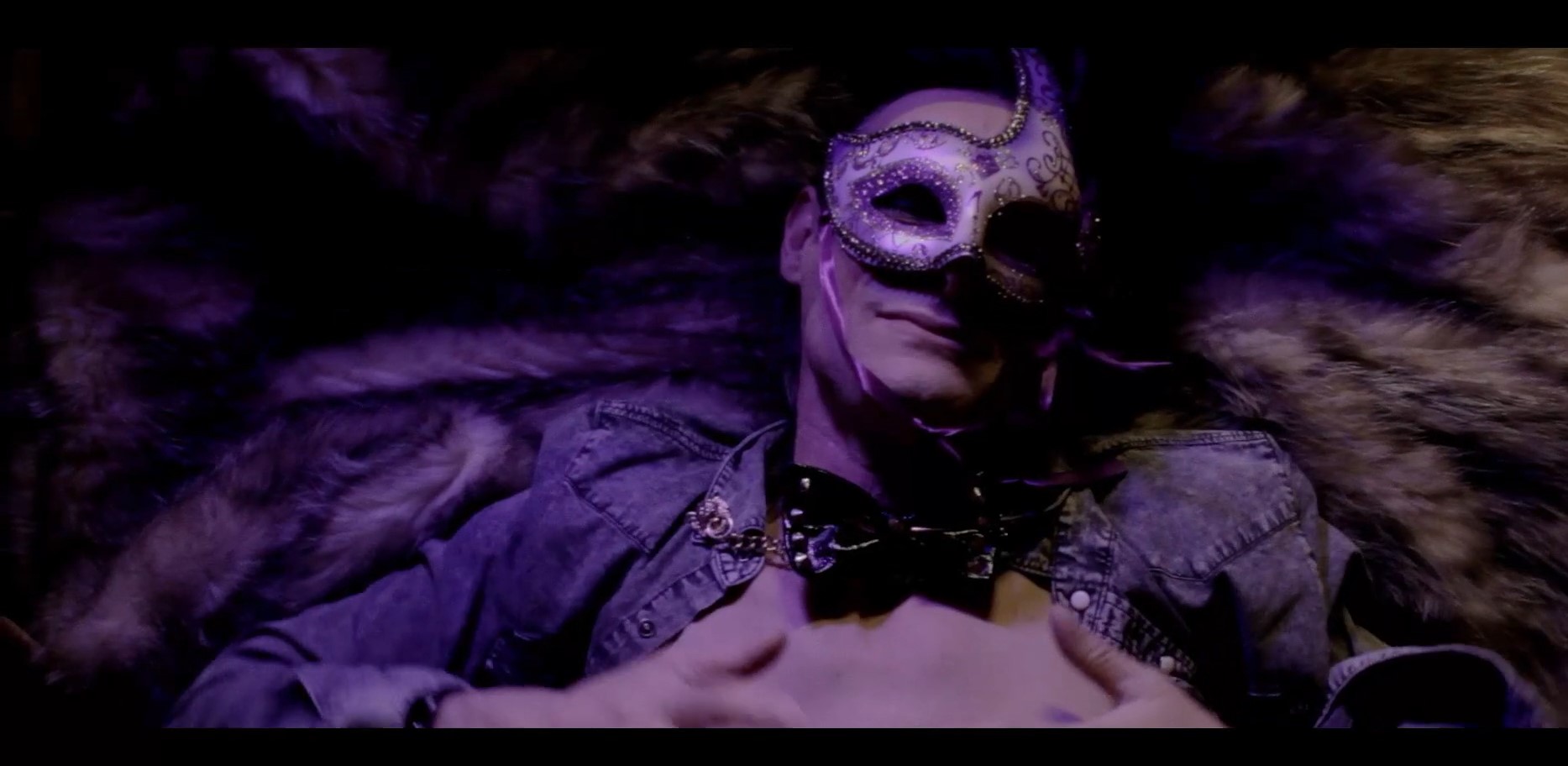
As a nail-pulling, nose-cutting, drill-holing, lip-stitching, dick-scissoring, gut-stabbing anthology, “La Petit Mort 2: Nasty Tapes” is a gory, good time and is even better now in high-definition with a 1080p Blu-ray release from Unearthed Films The AVC encoded BD25 looks as good as can expected for a shaky cam, hectically edited, and filthy dark German gore film presented in a 2.35:1 widescreen aspect ratio.  Details are oleaginous wet with blood and tissue that incongruently with the Roland Freitag’s gloomy yet suppressed cinematography and Kai E. Bogatzki discordance and chaotic editing technique that is supposed to elicit extreme shock but consequently results in a loss of the intended grisliness.  Unearthed Films‘ release exhibits no issues with compression, but the hues and tones appear to fuse in the near eliminate of some contours where there should be some.  The German-English DTS-HD 5.1 mix can be score heavy, especially a hard and energized Tekkno title credits from composer Klaus Pfreundner that’s distinctive German, but “Nasty Tapes” has profound focus on its core selling point – torture.  The very few scenes of intercut dialogue shots spliced into the client’s sociopathic session are well understood and do have prominence over the score, as well as the ambient milieu of screams and the integrated flesh destroying Foley, despite the cam-esque quality of the pseudo-testimonials.  The burned-in English subtitles under the German Language only are synced well without error and with consistently good pacing.  Disc extras include a behind-the-scenes making of cut out from the main camera, an alternate torture scene, a behind-the-scenes still gallery, a short advert of a naked woman strung up by her arms and being stapled with signs, and Unearthed Films trailers.  The Blu-ray physical features don’t stray to far from normal Unearthed Films releases with a standard Blu-ray snapper case with grisly cover art of a marred victim’s plucked out eye and a Jade Maxime holding a bone saw and wearing ripped fishnet stockings and black lingerie.  The pressed disc art has the rehashes the back cover image of Monsieur Maxime wearing a venetian mask.  The Blu-ray comes unrated, region A locked, and has a manageably sufficing runtime of 83 minutes to not overkill the overkilling.  Transparent in its surreptitious atrocities, “La Petit Mort II: Nasty Tapes” subsists as Marcel Walz charnel house of horrors with a new revamped anthology approach to razzmatazz special effects wetwork without any due remorse. 

Step Back into La Maison de “La Petit Mort” for a Sequel that’s Hard to Stomach!