EVIL Slums In The Company of Others. “Hausen” reviewed! (Sky Atlantic / Eps. 1-4 / Digital Screeners)

Jaschek moves into a property supervisor position of a slum housing complex with his 16-year-old son, Juri, after the tragic fiery death of his wife. Trying to rebuild and rebound on what’s left of his and his son’s life and waiting for the insurance money to pay out, Jascheck tends to the decrepit building maintenance and, over time, meeting the cold, strung out, and peculiar tenants while Juri attends school and becomes interested with the building’s discretionary drug pushing youths. When a young couple’s baby goes missing, the mysterious disappearance motivates Juri into an investigation, leading his curiosity to discover that the building itself, and the insidious sludge that oozes nearly from every crevice, feeds on the suffering and pain of the inhabitants.

When a black, wet stain on the wall embodies a biological presence of asexual spores and elicits the instinctual first thought of alarm sounding bells ringing to back away in your mind, this is how Till Kleinert and Anna Stoeva injects fear and biotic crud with their new horror television series, “Hausen.” It’s Bloggin’ Evil got to sample the first four episodes of the German 8-episode series that showcases director Thomas Stuber’s dank complexion of anthropomorphized leeching of the lower class, filmed partially inside an East Germany, 20 plus year abandoned hospital, once known as the GDR Hospital, located in Berlin. Kleinert is the writer and director of 2014’s “Der Samurai,” pulling from his film the lingering disembodied or dreamlike and integrating that surrealism imagery for the new series, and collaborates with first time writer, long time producer Anna Stoeva, one half of the boutique film production company, Tanuki Films. “Hausen” is a production of the Berlin-based company Lago Film, who co-coordinated the production on David Cronenberg’s “A Dangerous Method,” under department head, producer Marco Mehlitz.

“Hausen” primarily focuses around a reestablishing father and son, Jaschek and Juri, after a tragic house fire that claimed the life of Juri’s mother. The series starts off with the two driving up to the housing complex and breaking themselves right away into a runaway rundown building that needs more than just a sprucing up. “Transporter: The Series'” Charly Hübner plays the handy father, Jaschek, with non-expressive can-do attitude that becomes a block of interrelation between him and his son Juri in another unreadable performance from Tristan Göbel of Lago Film’s “Goodbye Berlin. That inexpression is the intentional tone of “Hausen’s” entire cast of tenant characters who float through a barely-living existence, most living grubbily, few living in humble comfort, but all being exploited by the organic narcotic that’s living, breathing, and striving from the inhabitant suffering. Hübner and Göbel impassively shepherd along the story along that introduces new characters into new episodes that digs deeper into the complex’s black, oozy, heart symbiotically connected to a caretaker known as Kater, the very first character Juri and Jaschek meet upon arriving at the building for the first time. The autodidact Alexander Scheer touts an unkempt, dirtied, and made to look like a complete hobo in Kater who, unlike his onscreen cohorts, vitalizes the screen with wild-eye expressions and an unsurmountable jocularity and puckish wit. The series rounds out with stars Lilith Stangenberg (“Bloodsuckers – A Marxist Vampire Comedy”), Stefan Haschke (“Krabat and the Legend of the Satanic Mill”), Daniel Sträßer, and Andrea Guo.

“Hausen’s” intended aloof pulse courses consistently throughout, at least in the first four episodes, that piece together and induce layers of grayscale personalities that have been cross affected by the building’s malevolent life force and the subjugating delinquent class that feel no need to make their surroundings better as their stuck in a vicious cycle rut of drugs and despondency. “Hausen” allegorically uses horror to intensify the already tragic aspects of corrupted ethical life choices people make when drugs are prioritized as more important than others and even their own lives. The first episode features a young couple with an infant and as they attempt to stay clean and withhold what little money saved for a new and better apartment, the building reacts by taking measures in the form of tormenting the husband’s brittle sobriety as he’s caring for the baby alone. He passes out and wakes to find the familiar narcotic he can’t seem to escape on his person. The scene mirrors good intentions of abusers who fall into withdraw with the withdraws being symbolically displayed as the building’s evil doings to keep the pain profit flowing. Overall, “Hausen” drips with underbelly exploitation that doesn’t stop with just the adverse, malignant housing as it spreads into Juri and Jaschek’s tense relationship and into the ounce of good left inside them, fleshed out in scenes that become a crossroad of choices where choice A) is to do the worst thing possible to compromise the smidgen of hope left or choice B) to reserve themselves into taking the harder, but good moral standing, road and work at rekindling a tattered bond that would go against everything the “Hausen” has thrown at them.

A skyscraper of bleak and austere horror, “Hausen” houses a slick secretion of mystery in every crevice. The Sky Germany produced horrifying mystery-thriller is now out in the UK on Sky Germany’s sister-programming, Sky Atlantic. A statically lit doom and gloom scenes never venture away from the tinted battleship gray and blue color scheme that goes hand-and-hand with a cleaned up GDR hospital shots from cinematographer, Peter Matjasko, that’s reminiscent of David Fincher films = think “Alien 3” but with way less yellows. The black sludge is a satisfying unnatural pigment of midnight black that contrasts nicely against said tinted lens coloring, providing a catheter of continuously streaming tenebrosity. We’ll have to wait and see how Juri, Jaschek, and the rest of the tenants fair in the last four episodes that shafted us with a plummeting cliffhanger midway through and, hopefully, ItsBlogginEvil.com can provide more coverage on the unnerving new television series that will put a stain your soul.

EVIL in the Family Tree Makes for a Terrifying “Reunion” reviewed! (101 Films / Digital Screener)

Recently separated from her philandering fiancé, a pregnant Ellie moves in with her estranged mother, Ivy, whose staying at Ellie’s recently-deceased grandparents family home and packing up home furnishings to put the house on the market.  Strained with going through a pregnancy alone and tirelessly working on her theoretic book of modern medicine deriving from the roots of barbaric magic and medieval practices, Ivy pledges to take care of her while providing space to let Ellie continue research work, but the house lends to the painful memories long thought suppressed in Ellie’s mind, manifesting visions of her adopted sister, Cara, who died suddenly in house when they were children.  As the visions become more prominent, stronger, and real, Ellie questions her remorseful memories and her mother’s recollection of events that sheds light on her family’s horrendous secret of anatomical science.

From the start, the realization that Jake McHaffy’s “Reunion” isn’t going to be a happy one comes as soon as Ellie crosses the threshold into her late grandparents’ home and is immediately swathed with a blanket of unsettling ambiance.  The “Wellness” and “Free the Deed” McHaffy writes-and-directs his third film with a steadfast sense of dread in the New Zealand mystery-thriller that tackles human inbred themes of long suffering guilt, prenatal anxiety, and the role of an estranged family during a time of need.  McHaffy compounds layered fears by compositing them with the confines of an old dark and creaky house witness to all the past secrets.  “Reunion” is a production from a conglomerate of New Zealand and U.S. companies that embark on independent filmmaking endeavors by Greyshack Films, the strong female character supporting Miss Conception Films, Overactive Imagination, and Water’s End Films in association with New Zealand Film Commission, MPI Media Group, and Department of Post.

“Reunion” obviously isn’t going to be your typical relative gathering shindig with your bad joke-telling uncle wisecracking over his 10th Miller Lite or a nose picking brat of a cousin cheating at horseshoes near the pit; instead, “Reunion” a tightknit cast playing the roles of mother, father, daughter, and adopted daughter drawn together not by the sake of longing for bloodline companionship but by necessity and circumstance and imploding by the unfun games of revelations hidden inside the closest deepest and darkest of descendants. “Witches of East End” stars Julia Ormond in a nearly unrecognizable far cry of her more glamourous bewitching role in Joanna Beauchamp on the FOX produced Lifetime Television series. The English actress, who hails from Surrey, assumes the matriarchal presence of a helicopter mother overextending herself beyond the limits of her control in order to seize some kind of power she once had living in the archaic house. Ormond bounces off mother-daughter indignities with her sole child, Ellie, played by Emma Draper in her first feature lead performance. Thick tension between them causes reserved friction Ormond and Draper do well to nurture throughout while a stammering posture by “Lord of the Rings” actor John Bach as the wheelchair bound infirmed father adds a whole new layer of irregular rigidity to Ellie’s nerves and to Ivy’s patience. Aside from being blood related, father, mother, and daughter also have another thing in common – present in the moment of the death of Cara (Ava Keane). Peeling back each emotion output struggles, in a good way, to grasp the character mindset made murky by uncontrollable shaking and crying, sneaking and conniving, lies and deceits, and the disillusioned rambles that vortex around the house without pure clarity. “Reunion” rounds out the cast with Nancy Brunning, Cohen Holloway, and Gina Laverty as young Ellie.

Jake McHaffy’s “Reunion” has the hairs on the back of your neck standing from beginning to end with prolonged foreboding leading up to a shocking finale.  Between the manic and enigmatic performances from Julia Ormond and Emma Draper, a chance to rekindle the past feels like a distant thought and a lost cause being blockaded by the past’s poignant trauma they share.  McHaffy isn’t hesitant about revealing a stymieing history with flashes of image splices and flashbacks cut with an antiquated VHS-style playback producing a statically charged visual incumbrance.  The stress and strain burden’s Ellie’s pregnancy, dam breaking flood of memories, her research into the occult, and the surrounding chaotic state of the house contributes to teetering mental stability creating a visceral unintelligible and augmented reality that is too real for Ellie to keep an authentic perspective and the longer she stays and the more she’s immerse into Ivy’s poisonous maternal supremacy, only fabricating a new and scary world can Ellie dig herself out of her family’s troubling past.  There’s much going on in McHaffy’s story to be bog down fully understanding what you’re seeing and trying to piece together the puzzle is nearly impossible – I, frankly, still don’t understand much of it – but the beleaguered attention of beguiling imagery and that overwhelmingly wild ending entrusts “Reunion’s” place in psychological terror. 

Modern gothic has never looked this good as “Reunion” rises to be a stalwart of horror. 101 Films and MPI Media Group has released “Reunion” digitally this month of March, one year after the start of the pandemic that has kept families away from each other and when eases of restrictions set in that’ll shorten the gap between estranged loved ones that becomes a distressing reunion in itself. Quite a masterful brush stroke from director of photography Adam Luxton building the house into the frame and framework of the story, which goes hand-and-hand with a house that’s deemed a toxic surrounding symbolized by the black sludge that drips out of the sink and into Ellie, as well as crossing video outputs and weaving them in as well. Luxton’s imagery has formulation maturity that combines hard and soft lighting, blurring, a range of depth shots, delineated night scenes, and the capitalization of utilizing the clutter of boxes and knickknacks to tell an eclectic visual odyssey culminating toward an all-consuming finale. The 95 minute runtime film is presented in a widescreen 1.85:1 aspect ratio with no bonus scenes during or after the credits. “Reunion” creeps unsuspectingly into the skin, eyes, and soul as a metastasizing slow growth of appalling family drama.

One Can’t Just Pray Away EVIL in “The Banishing” reviewed! (Shudder – Vertigo Releasing / Digital Screener)

Set in a backdrop of Great Britain on the very brink of world war against Nazi Germany in the late 1930s, a small English community has nearly lost it’s entire faith in the Catholic church after the last priest suddenly and mysteriously died.  When a young vicar is offered a generous stipend, the village parish, and a large estate by the region bishop to restore a congregational foothold, he brings with him his new wife and stepchild to make the house their home, but the house has a dark history that might have played a role in the previous vicar’s death and a lone, eccentric occultist urges the family to vacate the premises immediately before the house swallows them into grave danger at the haunted hands of sadistic monks, ghastly visions, and a tormented soul roaming the corridors. 

If the prim-and-proper social class structure of Julian Fellows’ “Downton Abbey” collided with the volatile and tormented spirits of James Wan’s “The Conjuring,” then Christopher Smith’s pre-wartime staged haunted house feature, “The Banishing,” would be the outcome.  The period piece horror marks the latest installment into the genre from the Bristol, English-born Smith who made a name for himself with 2004 dark subway corridor heartstopper, “Creep,” and went on to make cult favorites amongst genre fans with the workplace violence satire, “Severance,” and the medieval bubonic plague film, “Black Death” starring Sean Bean and Eddie Redmayne.  “The Banishing,” a term used as the practice within the supernatural ambit of dark magic to ward off negative spirits, is a UK feature co-written between David Beton, Ray Bogdanovich, and Dean Lines.  Maya Amsellem and Sharon Harel-Cohen serve as producers under the London-based WestEnd Films production banner with “The Banishing” marking their fifth completed feature film product and with the nearly worldwide distribution rights landing with AMC Network’s popular horror streaming service, Shudder, in partnership with Vertigo Releasing in the UK.

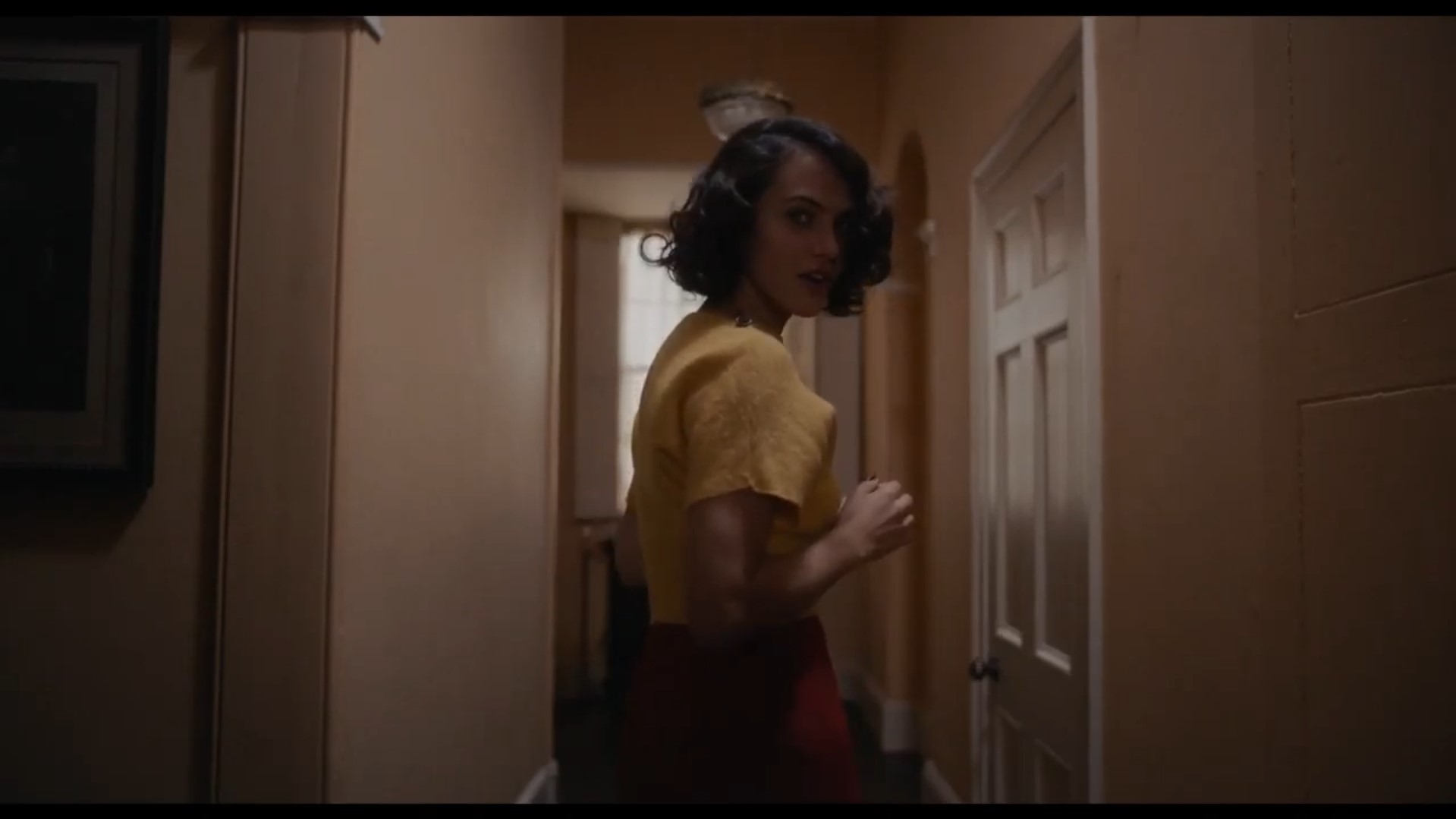
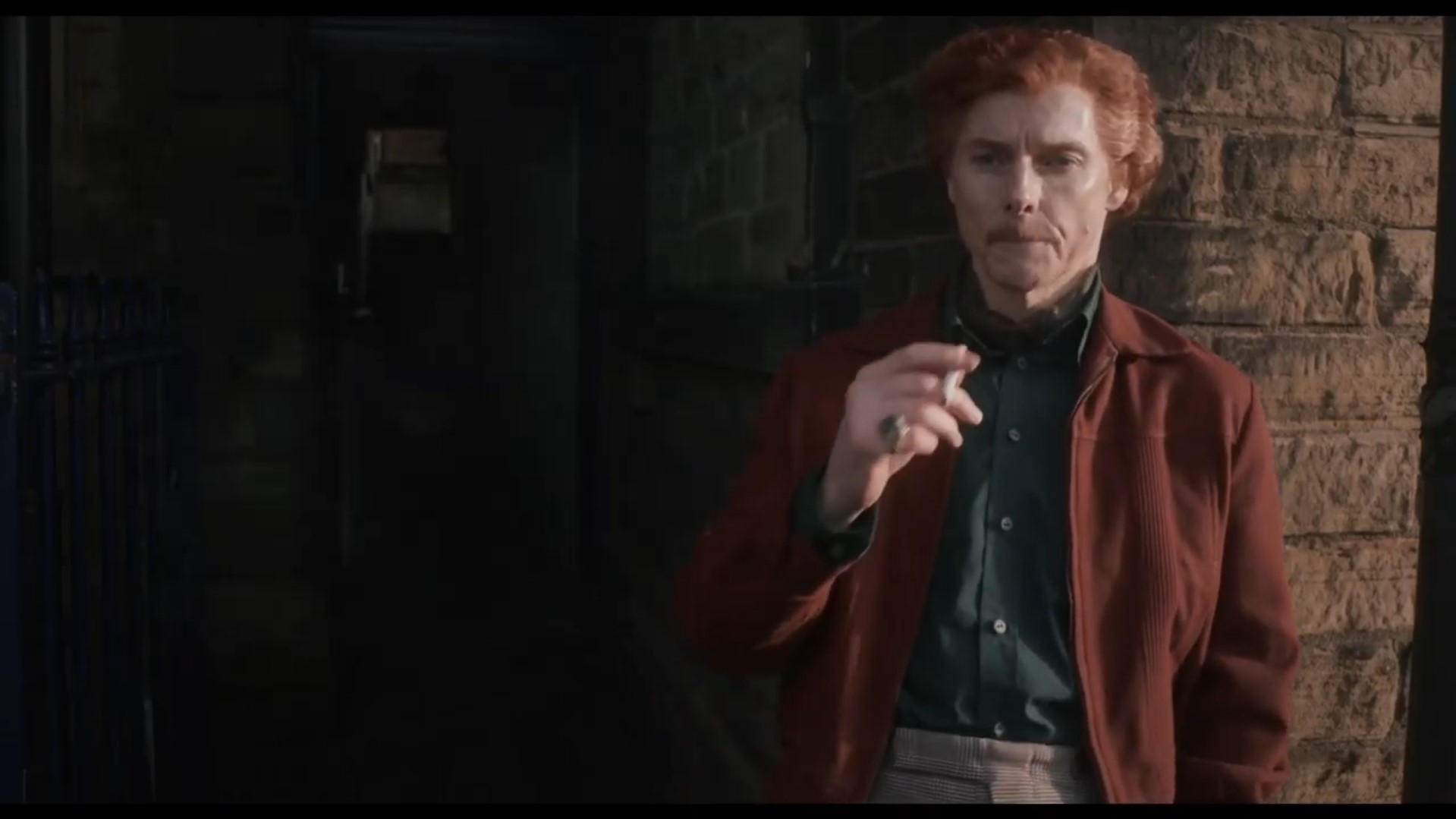
“The Banishing” revolves mainly around Marianne, the newly-wed vicar’s wife with a young girl along for the ride, played by Jessica Brown Findlay (“Downton Abbey,” “Victor Frankenstein”). Findlay endows Marianne with vitality as a woman who must meet the vicar’s standards of Godliness, but still be a strong mother to her child despite disreputable social standing. The priest Linus (Essex-born John Heffernan) lacks experience in the field of his cleric position, lending to question why the region bishop would appoint him to a muster a flock of faithful Christian followers during turbulent times. The husband and wife dynamic between Linus and Marianne is marred by dissonance backgrounds of a priest who doesn’t know to be with a woman and a woman who can’t escape her socially unflattering past. Heffernan and Findlay ignite as repellants of the same magnetic currents when the harder they try to extend their relationship, they push each other way, with Findlay giving a fervent performance. Speaking of performances, Sean Harris bares the most intriguing and rollicking local occultist. The “Mission Impossible: Fallout” actor parades around as Harry Price, a likable, straight-shooting outcast and a believer in the supernatural with extensive, and ghastly, historical knowledge on Linus and Marianne’s new home. As Price aims to extract the hapless from danger, he butts heads with a headstrong region bishop, a stern and solemn role secreted with distrust from John Lynch who has worked on a Christopher Smith film previously in “Black Death.” “The Terror” actor juxtaposes starkly against Harris as a character who dons a likeness to the clown prince of crime in costume than a dull agent man of the cloth…with secrets to uphold. “The Banishing” rounds out with a supporting cast in Adam Hugill, Jason Thorpe, Jean St. Clair, James Swanton, and Anya McKenna-Bruce as Marianne’s daughter, Adelaide.

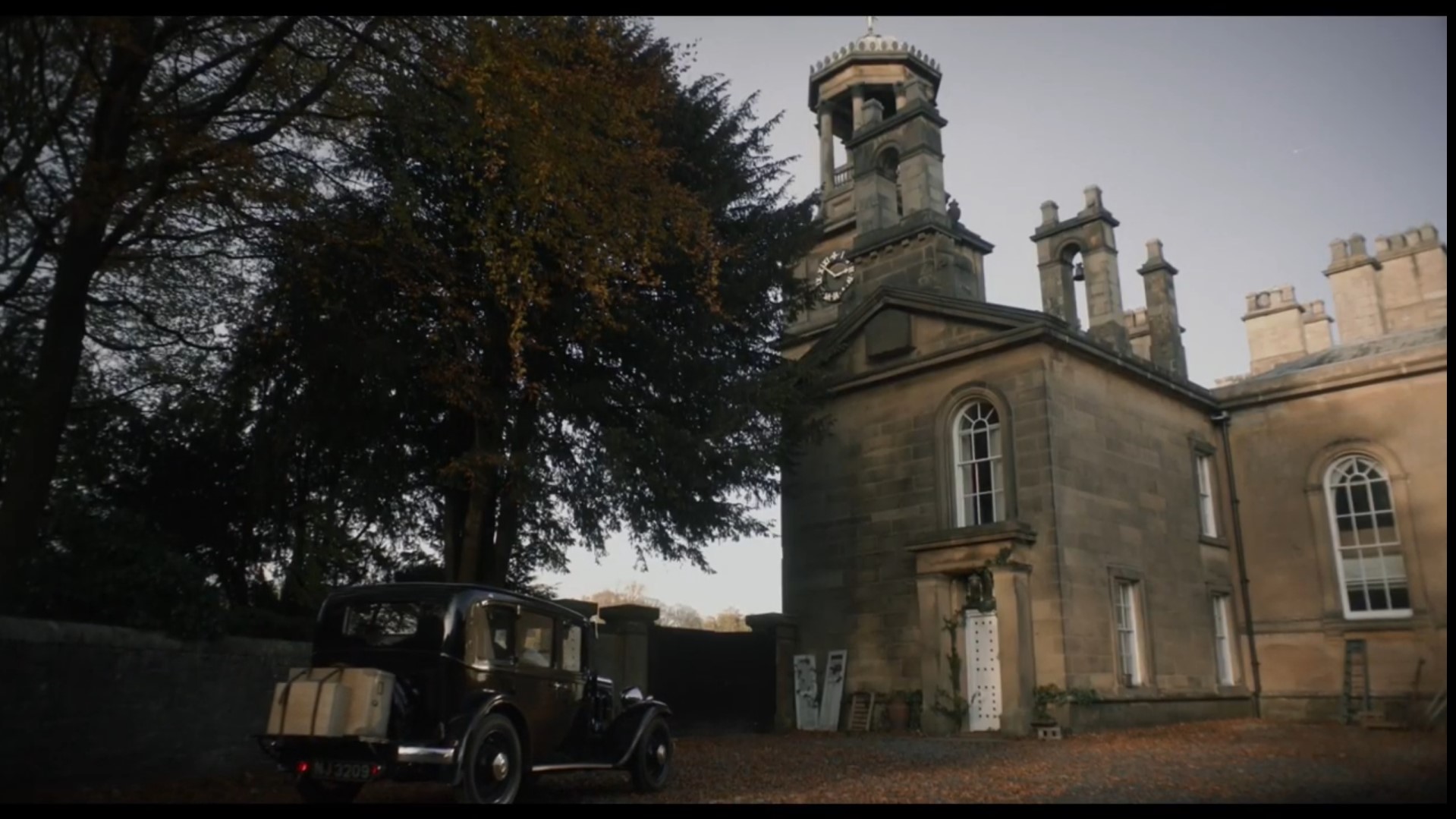
Set convincingly in a quaint, 1930s English town, Christopher Smith transports the audience back in time to the predated anxious moments before World War II that would upheave turmoil across all across Europe, but though that fretted lingering of war is set as the backdrop for “The Banishing,” and is coiled around every man who served in the first Great War that brought up more than once, the root of the narrative ultimately becomes the house Linus and Marianne have come to call their home.  Haunted house films surmise the house as a built-in principal character because of either the way the architecture affects the mental or physical wellbeing of it’s flesh and bone counterparts or if the abode is actually possessed and set to harm the inhabitants in a personification of pure evil, as such with various films of this caliber (“House,” “The Haunting,” etc,). Yet, Linus and Marianne’s estate failed to become a part of the narrative limelight despite the immense grounds that compromised of a large greenhouse and a robust library complete with fireplace and the disconcerting labyrinth of a dungeon-esque basement full of barred enclosures and close quartered corridors.  Nearly every interior shot felt like a new section of the house hat kept extending upon, what would be assumed, a grand mansion that had a longer rap sheet by reputation in being a former religious torture chamber run by sadistic monks hellbent on whipping the sin out of the mentally tormented. Smith always had an eye for the unsettling visuals and sustains that feng shui by allowing time and space to be the inner horrors of a funhouse, but doesn’t evoke clean, unadulterated terror that continues to profusely bleed into the film’s climatic cause-and-effect unraveling. There is a lack of a transformative realization and a small hurtle of sedated possession to figure out that the main presence in the house, amongst the other more malevolent presences, wants something and the characters are spoon fed each and every morsel to get them up to speed. The final scene of the bishop meeting with the Nazi regime intended to leave the story open for supernatural possibilities, but felt like a more poignant and compelling crux leading into Nazi occultism, hinted by the eccentric resident occultist Sean Harris.

Morosely dramatic and haunting, “The Banishing” is an aggressive salvo of facing shame head-on, creeping into UK cinemas and digital platforms on March 26th courtesy of Shudder and Vertigo Releasing. Director of photography Sarah Cunningham has an remarkable ability to engulf the actors in the space of the shot, making them seem diminutive to the rooms that feel like a giant hand looming overhead, and with the bare, hard lighting, the cinematography is really where “The Banishing” shines as gothic cladding without a stodgy spot to speak visible. Cunningham adds all the hallmarks of a horror film with titled angles, brilliant reds, and tight shots on tense faces to garner a more anxiety that never actually pans out by the end. The organic electro duo TOYDRUM score the 97 minute film with a single note droning hums at various pitch levels that can really get inside your head. The “Prevenge” composers set up scenes with a ill-founded fears when nothing presently visible is intended to fright. There were no bonus scenes during or after the credits, but one scene to note is Sean Harris waltzing with an uncredited woman during the opening credits that seems out of place but speaks to the aberrated decorum of his character. “The Banishing” works tirelessly to discredit shame by confronting truth and while we’re being beat over the head by the message, the overlay of horror is lost despite some brilliant and engrossing performances from Findlay and Harris who usher us through to the imperfect conclusion.

All Hail the EVIL Slumbering One! “Sacrifice” reviewed! (101 Films / Digital Screener)

Years after being quickly whisked away to America as a small child from his remote Norwegian island birthplace, Isaac returns nearly 30-years later with his new, pregnant wife, Emma, after the death of his mother leaves the empty family home in his inheritance.  With their heart set on fixing up and selling the house before the birth of their child, Isaac and Emma learn that marketing the seaside and scenic estate comes with a tragic past when the local sheriff discloses the brutal murder of Isaac’s father inside the home.  The dreadful information and the bizarre locals with their customary traditions doesn’t alarm Isaac who, instead, feels a strong connection and is drawn to staying whereas Emma, plagued by terrifying nightmares ever since stepping onto the island, is eager to sell and return to American as soon as possible, fleeing a community that worships an aquatic deity beneath the water’s surface.   

Based off dark fantasy and science fiction writer Paul Kane’s short story, “Men of the Cloth,” found in the author’s “The Colour of Madness” collective works, “Sacrifice” is an alienating folklore horror bound by the influence of a Lovecraftian core under the direction of a filmmaking due in Andy Collier and Toor Mian.  As their sophomore film as collaborating directors, following their 2017 psychological cop horror “Charismata,” Collier and Mian tackle Kane’s short story head-on by changing only a few details, such as location, family structure, and the title from formally known as Kane’s “The Colour of Madness” to “Sacrifice”, but keep rooted the foremost principles of “Men of the Cloth’s” cultish discomfort that’s greatly inspired with the otherworldly sensation of an amiss atmosphere akin to Robin Hardy’s “The Wicker Man.”  Filmed around the idyllic and mountain enclosed shore town of Bjørk, Norway and in the town of Volda, Norway, the 2020 film seeks to plop strangers into a strange land as a production of the London-based companies, Loose Canon Films and Hydra Films RKM, in association with Dread.

Over two years ago was the last time we reviewed a Barbara Crampton movie with “Death House,” that included a plethoric cast of her all-star genre brethren with Kane Hodder, Bill Moseley, Dee Wallace, and others, and, now, Crampton makes her glorious return to the Lovecraftian turf that nostalgically brings most of us horror fans back to the New York-born actress’s “From Beyond” and “Re-Animator” days.  “Sacrifice’s” Cthulhu spirit finds Crampton playing a small town Norwegian sheriff, Renate Lygard, in which Crampton, under the training of a dialect coach, surprises us with a fair Norway accent as she provides a quasi-warm hospitality set of manners upon island outliers in Isaac (Ludovic Hughes) and Emma (Sophie Stevens) Pinkman. Hughes and Stevens nudge their way into a solid man-and-wife, but their dynamic density becomes crispy at times and pale from their initial arrival soon after rustling with the natives. The lack of vitality doesn’t stem from the wedge being driven between from the lure of Isaac being called by the natural phenomena of the Northern Lights, the drunken friendly benevolence of Gunnar (Lucas Loughran) and Ledvor (Jack Kristiansen), and the full frontal skinny dipping of Renate’s beautiful daughter, Astrid, an eye-opening film introduction from Johanna Adde Dahl; instead, the Pinkman’s bond held together about as tight as using kindergarten grade craft glue that bled into the performances as well that came off stiff and unnatural. Aside from Hughes and Stevens hailing from the United Kingdom and Crampton from the U.S., the remaining cast was curtailed to Norway nationals, as such with Loughran and Kristiansen, rounding out the cast with Erik Lundan, Dag Soerlie, and Ingeborg Mork Håskjold.

“Sacrifice’s” cult mania lays on a thick coating of grass roots that really set the tone for an foreboding outcome.  An idyllic Norway fishing village propped between the eclipsing mountain range and marine inlet intrinsically obscures an already unspoken secret that’s only been rendered on the faces and actions of the residents.  At the center of village’s idiosyncrasies are the two hapless protagonists venturing into unknown territory with only an inherited house in their back pocket and a vague sense of youthful recollection; this sets up for an obvious antagonism theme of locals with a sense of xenophobic nationalism, especially against two Americans.  The initial friction opens the flood gates for cultural customaries to be weaponized against Isaac, who wants to strongly embrace his heritage, and Emma, who can’t seem to grasp the village’s peculiar beliefs and even goes as far as being naïve of and mocking the village’s traditions and deity.  The tension is compounded by the ominous presence of the labeled slumbering one, sleeping beneath the glossy surface of the inlet waves, but conjuring up tangible and intense nightmares that plague the every island inhabitant, a mystery Emma can’t explain, won’t entertain, and ignores exploring that turns Emma floundering more into Isaac’s sudden disinterest in her albeit soon-to-be-parents.  “Sacrifice’s” climatic, tell all scene harbors more secrets regarding Isaac and Emma’s purpose on the island that are to be interpreted by the audience, but don’t connect back to any string along clues leading up to a poignant and sharply-shocking ending.  Instead, “Sacrifice” acutely wraps up not only the story but also the characters like a paper wrapped fish at the fish market ready for sale without any huff about where, why, and how that particular bug-eyed fish became the gutted victim of man’s delicacy.

“Sacrifice” shores folklore horror swelled with Lovecraftian roots and is docking digitally today, March 15th, in the UK courtesy of 101 Films. The film has a runtime of 87 minutes and is presented in a widescreen 2.35:1 aspect ratio, shot on a Sony CineAlta Venice camera. Co-director Andy Collier tackles his first credit director of photography gig with interesting shots looking up through all different angles and vessels that hold water. Whether boiling eggs, taking a bath, or in small cove, Collier, and Mian, put eyes on the bottom surface, promoting all varieties of water within it a lurking presence and the imagery is done extremely well with depth and space to pull off the illusion. A fair amount of soft lighting, moments of bright primary color glow, and the specs of well-placed lighting to barely illuminate a scene is broodingly worthwhile. Tom Linden’s original score is fiercely compliment as a folklore staple, harsh-chord intensity that lingers well after the boiling blood levels drop to a mere tentacle dwelling simmer. There were no extra features or bonus scenes included with the digital screener. While the build up didn’t pay off at the bloody end, the two-tone terror of “Sacrifice” wrecks the nerves and frays warm pleasantries with wicked wallowing, slumbering, nearby in the shallows.

The Greatest Trick EVIL Ever Pulled Was Convincing Couples the Perfect Marriage Ever Existed. “Happily” reviewed! (Saban Films / Digital Screener)

Tom and Janet have been married for 14 years.  By that amount of time elapsed, marriage has moved past the honeymoon stage and settled into routine with the spark having dulled and sex life becoming nearly, if not totally, stale, but for Tom and Janet, their libidos are the equivalent to hormone-driven teenagers.  Their marriage has happily sustained over the years, never veering off course, but when a couples’ retreat invitation is rescinded by their friends because of the envied desire for each other and a mysterious man arrives at their door step next day offering a syringe injection that will cure them into a normal married couple, Tom and Janet believe they’re a part of a sick joke by one of their so-called friends, leading to a dead body, a brief case of unknown substance, and a re-invitation to the couples’ retreat where they must figure out who is and who isn’t of the four other couples are on team Tom and Janet.  Yet, the trip founded on the idea booze and relaxation turns into a disclosure of lies, secrets, and deadly disconnections. 

What’s the secret to a long lasting marriage?  Good sex, obviously.  But can an ostensibly impenetrable marriage be flawless?  That’s one of the themes writer-director BenDavid Grabinski toys with in his inaugural feature film directorial of “Happily” that disparages the unsullied union of Tom and Janet by a quartet of couples, who are also Tom and Janet’s closest friends, who aim to stick it to the happy couple because of their own marriage and life failures.  Grabinksi, creator and writer of revamped “Are You Afraid of the Dark?” television series, incorporates that element of grim tale mystery for allegorical effect into the psychology of envious, mal intent friends projecting their negativity on Tom and Janet’s positivity and love.  “Happily” is a production of the Arizona based Common Wall Media, an indie record and film production labeled owned and operated by Chuckie Duff, and, perhaps, the reason “Happily” has a killer soundtrack that includes Tim Capello “I Still Believe.”  Jack Black (“Tropic Thunder,” “Goosebumps”) also produces the film under his Electric Dynamite Productions, Inc. banner in collaboration with Indy Entertainment (“Nightmare Cinema”). 

I find extreme difficulty seeing Joel McHale in anything remotely with a serious tone for someone who grew up with the comedian during his 12 season days of E!’s spinoff of Talk Soup titled simply, The Soup.  McHale’s range as a funny man is beyond being paramount with great comic timing and able to deliver an unlimited amounts of laughs in just his mere expressions and that has translated well into his filmic career from comedies such as “Ted” to “The Happytime Murders” and even well into his more earnest and darker roles in “Deliver Us From Evil” and, his most recent release which is “Home Alone” for a more mature audiences, “Becky.”  In “Happily,” McHale plays Tom, a loving husband to wife Janet who can’t keep their hands off each other and never fight for more than half a day in what’s staunchly considered a perfectly sickening marriage by their closest friends.  One thing I’ve learned from watching Joel McHale in this role is not only can he bear the weight evenly of an emotional thriller, but the guy is jacked!  Opposite McHale is “Penny Dreadful:  City of Angels” star Kerry Bishé, matching the sexual and profound tone as the wife, Janet. Bishé takes on Janet’s ever benevolent wifedom, elevating it to a whole new level as the working spouse, ready to gratify Tom by any means possible and in any compromising position possible, who’s also served hand and foot by the same man who knows how to reciprocate at the right moment. Bishé’s a favorable compliment to McHale as a power couple daring the odds together on the same page until losing they’re way because, simply, they’re inevitably human. Tom and Janet square off against four other couples under suspicion of a suspected prank-gone-wrong after meeting with a mysterious man played by “Office Space’s” Stephen Root. Could the pranksters be the flamboyantly affluent, but unaffectionate Karen and Val (Natalie Zea of “The Following” and Paul Scheer of “Piranha 3DD”)? Could it be the uptight lesbian couple Carla and Maude (Shannon Woodward of “Westworld” and Kirby Howell-Baptiste of the upcoming “Cruella”)? Or is it the carefree Patricia and her inhospitable husband Donald (Natalie Morales of “The Santa Clara Diet” and “Mastermind’s” John Daly)? Maybe its the anger unmanaging Richard and his newfound fiancé Gretel (Breckin Meyer of “Freddy’s Dead: The Final Nightmare” and Charlyne Yi of ” Puppet Master: The Littlest Reich”)?

Grabinski forcibly shoves the happily in “Happily’s” Tom and Janet’s marriage down our throats with a diabolical lustful half-exposition, half-hanky-panky action before title sequence intro into their infinity spicy life. The couple screw like two teenage rabbits hopped up on an aphrodisiac more than a typical mundane couple of 14-years should ever seen in their union’s lifetime, but, then, Grabinski throws in the proverbial monkey wrench into the gears. The question comes up, and lingers throughout, whether Tom and Janet are inherently broken, a defect in their existential creation, and that begins to snowball down the hill of insidious thoughts as the protagonists have their idyllic marriage tainted by the hair brain idea of a stranger, carrying two syringes of an insta-fix made up of unknown, illuminating material, who beguiles them with bureaucratic niceties to lie his way into their home and tells them he works for a higher power. Is this mysterious man God? Perhaps, the Devil? Grabinski smartly keeps that little detail under wraps and, for the first half of the film, stays a mystery upon itself. In time, each couple begins to unravel cankerous secrets, all of which have been targeted at Tom and Janet for their perfection and that’s perhaps where “Happily” struggles a bit as a story as Grabinski has a rolodex of past events being flipped through a plethora of interaction exposition, leaving morsels to try and puzzle the uneasiness of the morose couples’ retreat together. The long and short of the story is that the audience will need more morsels to chew on, get the creative juices flowing, to understand character motivations because, in the end, “Happily” is one big couples therapy session of divulging secrets to wash away, more or less, soul-deteriorating sin.

Before all hope is lost between two people, an intervention is warranted, even if it’s a divine one in BenDavid Grabinski’s dark comedy “Happily” heading our way to theaters, digital, and on demand come Friday, March 19th from Saban Films. The R-rated film runs for 96 minutes is presented in a widescreen 2.39:1 aspect ratio that gets to showcase more of Adam Bricker’s luridly dreamy style. The “Starry Eyes” cinematographer instills a firm taste of precise, primary coloring tinting that evokes the intensity of the scene rather than pitching an outlined overlay on top of his soft lighting. The red “Predator”-esque vision through CCTV lens is a nice touch of also breaking up the more natural lit scenes for that ominous approach. Since “Happily” is coming to theaters, there is obviously no bonus material, but stick around for scenes during the credits and after credits. Lies, betrayals, murder, and the uncanny are soaked into “Happily’s” absorbent fibers as one of this years best dark comedies that hones in on ascertaining that nothing is perfect but the perfection that you make together.