

During a therapy session, Peter recounts the tragic last and painful moments with his distraught wife Mara before she commits suicide. Peter’s recollection is a raw and unadulterated look into the common and devastating marital strifes that plague to destroy connecting relationships and end tattered lives.

Frequent horror journalism Jerry Smith writes and directs “Love is Dead,” a short traumatic drama film stemmed from pieces of his own life brought to fruition, delivering an emotionally charged shower scene with adult stars Joanna Angel (“Evil Head,” “Re-Penetrator”) and her on-screen, off-screen lover Aaron “Small Hands” Thompson where Mara (Angel) confronts Peter (Thompson) with questioning infidelity while cornering and confining him in the shower. There’s a bit of back-and-forth that eventually lands Mara into the bargaining stages of the Kübler-Ross model, aka the five stages of grief, where she bets she can give better head than Peter’s undisclosed lover. As Mara proceeds to go downtown in an erotically uncomfortable moment of irrationality, Peter’s built up anger goes from hot-to-cold in a stinging moment of what should have been a gratifying release. Now for a side bar, being two professional adult film stars and a real life couple, the fellatio scene could have been not staged or could have been completely staged with some teasing cinematography accompanied with that familiar slurp and gag audio effect. Either way, the dynamic between the tattoo-riddled performers is fairly natural and passionate in their own Burning Angel regards, but does favor less like a ready to romp fantasy and more like a provocative insight of marital desperation and chapter ending turmoil.
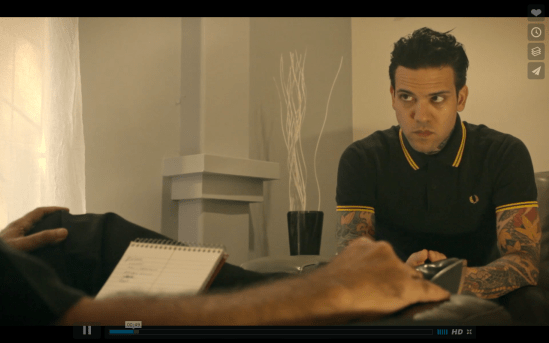
Aside from Angel and Thompson, “Insidious” actor Ruben Pla tackles the outsider character looking in through the mindset of Peter’s therapist Michael. Michael is not only rightfully and objectively cold and stern, as many therapist are groomed to be, but he’s mechanically and brutally forward, dishing out the painful truth to Peter when Peter’s inner conflict comes to the forefront on whether he could have saved Mara or not. Though minor in screen time, Pla’s role partakes as a major contribution worth the respect of the short runtime.

The 10:50 minute short is a product of the independent film studio Sickening Pictures founded by BJ Colangelo and Zach Shildwachter. “Love is Dead” can be viewed from free over at Sickening Pictures Vimeo page, but beware, the film is definitely NSFW! Check out the Jerry Smith inspired “Love is Dead” short that’s full of overwrought pain, doused in uncomfortable situational nudity, and barred with incomprehensible loss tightly bottled inside a reality-checking one-sixth of a hour.
Category Archives: Chilly Thrilly
Evil Surpasses Decades and Has Never Looked So Good! “Francesca” review!
Fifteen years after the kidnapping and disappearance of Francesca, the young daughter of renowned poet and stage performer Vittorio Visconti and his wife Nina, a string of brutal murders by a relentless psychopath links itself to the case of missing Francesca and sparks community outrage with the deaths that are connected with Dante Alighieri’s The Divine Comedy. Detectives Moretti and Succo eagerly take on the case, that’s heavy with burden, to quickly apprehend the murderer but to also solve a more than decade old missing child case. As the bodies pile up and Moretti and Succo attempt to get closer to a resolution in the midst of grave public panic, a web of past dark secrets depict a convoluted picture surrounding the private Visconti family that may or may not be directly involved in what really came of poor young Francesca.

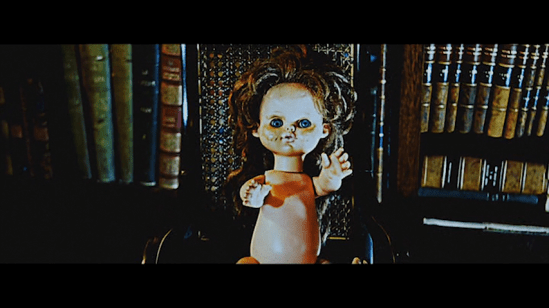
The sweet, bloody sweet giallo genre is not dead! The crime mystery thriller with shockingly grisly murders is alive and well and embodied in the soul of Luciano Onetti’s 2015 sophomore directorial that’s co-written with his brother, Nicolas Onetti. The Onetti brothers’ “Francesca” release gets a treatment deserving of kings with a gloriously and beautifully illustrated cover and inner lining that contains powerfully-packed 3-disc Blu-ray and DVD combo set distributed by the artistic gorehounds Unearthed Films and the multifaceted MVDVisual. Complete with an inscrutable and deranged killer that’s greatly diabolical in their own insane world built upon the Buenos Aires born director’s passion for Italian horror, every giallo loving attribute has been meticulously applied to “Francesca” from the shrouded killer to the use of characterizing the antagonist with simply their leather bound, throat-gripping hands high above the clicking of offbeat high heals not casted far from a creepy doll used to motif the killer’s ominous presence. Blood red violence streaks of eye disfigurements, or any facial disfigurement, throughout a script that’s much attuned to the structure and content, reigniting a flame of hope in a declining genre to which the 33-year-old Onetti appears to hold very dear to his heart.

In addition to the inner mechanisms and the ivory gears that constitutes a giallo film, Luciano Onetti takes his feature that one step further by reducing hues and adding an Italian post-production dub track, overlaying the assumptive Argentinean dialogue, to zip back to the past for a time hop location that’s purposefully set in 1970’s Rome. With props true to the time period, “Francesca” has undoubtedly a budget that delivers the malevolent charm of a Dario Argento slasher with a slightly modern taste for the Michele Soavi ghastliness, working seamlessly together to compile an apt tribute of surging giallo birthed right out of South America. “Francesca” is a stunning visual, a clear marker of filmmaking inspiration inspired by classic filmmaking that’s specific in it’s venture from familiar Italian editing techniques to capturing or creating the menace in even the most mundane of filler scenes.
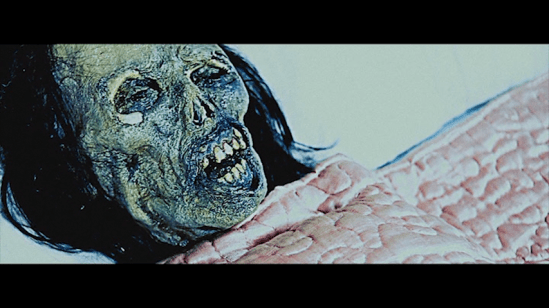
“Francesca” is certainly a film that glorifies the anti-hero with a killer wreaking havoc amongst the public’s most disparaging people who got off the hook easily. When considering the depth chart, this vigilante psychopath exploits Dante’s work as a means of justification where one’s person journey to the gates of heaven must first travel through the gates of hell, providing a similar Charon’s obol of sorts where a metaphorical coin is viewed as a bribe for the gatekeeper or ferryman of souls. Even if considered an anti-hero, the murderer still manages to appeal as the villain because so much of the story’s focus is on Moretti (Luis Emilio Rodriguez) and Succo (Gustavo Dalessanro) and both Rodriguez and Dalessanro make their first on-screen film debut, suitably connecting with “Francesca’s” elderly ambiance.

The Not Rated Unearthed Films and MVDVisual 3-Disc Blu-ray and DVD combo is 77 minutes of pure fanboy gold, presented in a widescreen 2.35:1 in a vary of purposefully pruned coloring and intended faux film stock imperfections to recreate a 1970’s Italian giallo. The Italian dialogue track doesn’t quite synch and, again, that’s deliberate to fabricate a past ideal. My only gripe with this release is with the English subtitles as there were a few issues, including some key mistakes in spelling and with the pace of the subtitle that were way too quick. That shouldn’t sway anyone from this awe-striking and gorgeous limited edition release that comes complimentary with a booklet of an in-depth review from Ultra Violent Magazine’s Art Ettinger. The third disc rounds out the release as the film’s soundtrack, scored by Luciano Onetti and his progressive rock that’s a slight modernization of the synch-prog rock of this particular genre’s decade. “Francesca” comes straight out of a forgotten 40-year time capsule, looking to violate the eyes, minds, and ears of a younger generation and stimulating the nearly flatlined Italian giallo genre.

Hurry! “Francesca” is a Limited Edition release! Won’t be around forever!

Takes Evil to Know Evil. “The Anatomy of Monsters” review!

Timid sociopath Andrew patrons alone at a low-end bar, sipping delicately on straight whiskey and waiting for the perfect opportune moment to approach the right lonely woman. Andrew is not looking for a one night stand. Andrew is on the hunt for a victim, but when the night’s odds don’t seem to be in Andrew’s favor, a lovely young woman approaches him at the tail end of the night and begins to make small talk. After a night of coincided flirting, the woman seductively invites Andrew back to her motel room for some provocative foreplay, but before Andrew can move in for the kill, he suddenly realizes that the woman might just be as more of a sociopath than he could ever imagine by turning Andrew’s moment of a gratifying kill into her tragic tale of a more experienced and assured killer.

Suspense thriller “The Anatomy of Monsters” is the sophomore film from the multitalented writer-director Byron C. Miller and stars Tabitha Bastien, Jesse Lee Keeter, and Connor Marx in a twisted narrative involving love, death, and the struggle between the two. Miller, unfortunately, wrestles to keep buoyant the scope of his story contained as scenes teeter when holding an airtight structure as Bastien’s character, Sarah, asserts her mortal coil. Her plight doesn’t grasp the attention needed to draw in an audience; instead, the back and forth between her present plea with Andrew and her past of leading a double life of affliction with whether to act on her killer instinct with the love of her life or not either passively regresses or just stands completely in place, not moving a motivational inch to take the much needed mile in making us believe in Sarah’s tragic love story and the story is actually, well, tragic by not building the passion between Sarah and Nick, played coyly by Connor Marx, as they just hunker inside Nick’s quaint apartment, affixed to his bed or couch while contemplating their instantaneous love for each other.

A part of the film’s indelicate sting comes from Tabitha Bastien’s performance. Sarah, in the very definition of the character’s persona, is a sociopath which denotes a monotonous person to be without empathy, to have an ice cold demeanor, and to be calculating in their actions. While Bastien epitomizes a sizable amount of emotionlessness, her presentation leans a bit more toward being ingeniously staged, emitting a phoniness that doesn’t naturally crossover. If I didn’t know better, I would have guessed Bastien was a T-100 cybernetic organism underneath a flesh and blood outer layer from “The Terminator’s” apocalyptic bleak future. What Bastien does attribute very well to “The Anatomy of Monsters,” aside from her mechanical display, is a pair of piercingly bright eyes set upon a unique belle face akin to that of the nice looking girl next door you peeping tom on through the cracks of your window shades. Jesse Lee Keeter opposites Bastien with a more genuine approach that favors a Michael C. Hall similarity complete with a kill kit. Keeter’s Andrew is an example of well-written hesitation, exhibiting more of a killer’s struggle to maintain a low profile whereas Sarah leaves nothing to the imagination, baring it all out on the proverbial table with the extreme potency of egocentric cockiness.
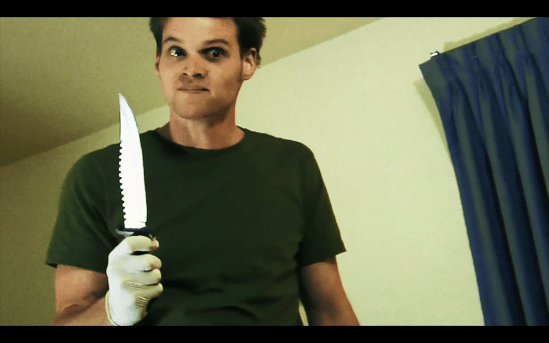
Along with Miller’s stationary script, the industrial rocker’s sporadic editing technique can be best described having a short-sighted attention span and his shaky handheld camera visually impairs the viewing pleasure of one monster’s monstrous thirst for death. “The Anatomy of Monsters” feature does play the role of being the quintessential independent product, but without stability and patience, Miller’s artistic craftsmanship suffers heavily from the technical aspects with really the only exception stemming from the minor gore scene during Andrew’s brief description of past murders, committing to a solid neck piece mock-up that realistically seeps blood in order to get the good throat slit shot.

A fond blend of John McNaughton’s “Henry: Portrait of a Serial Killer” and Showtime’s “Dexter,” “The Anatomy of Monsters” is slated for a DVD and Video on Demand release on November 15th from the Philadelphian distributor Artsploitation Films. Certainly a film that’s an attestant to an American-horror, Byron C. Miller explores the corners of the dark and deranged minds associated with serial killers while meddling through the conventional intimate affairs of the masses, spurring an atomically explosive situation from a slowly, simmering boil. Though technically unattractive with arguably underwhelming and sulky performances, suggestions of a greater notion leaves behind an everlasting scar tissue from the necessary urges and the unquenchable desires of a killer can be appreciated.

Watch The Anatomy of Monsters on Amazon Video!

A Hi-Def Murder-Mystery Evil! “Eyewitness” review!

Daryll, a New York City night shift janitor and decorated Vietnam war veteran, becomes obsessed with beautiful female reporter and wealthy socialite Tony Sokolow. When Daryll claims to be a key witness to a murder of one his business building’s high profile tenants, a once in a lifetime opportunity opens up to meet Tony when she’s assigned to cover the murder and as Daryll pours his heart out to the reporter, he’s also torn by his claim that could place his war buddy friend Aldo, a hapless former employee of the recently deceased and the prime suspect in the murder investigation, in jeopardy even more. Is Aldo the killer or is the mystery much deeper, tied to a world unforeseen by Daryll whose working in the depths of the building’s janitorial confines?
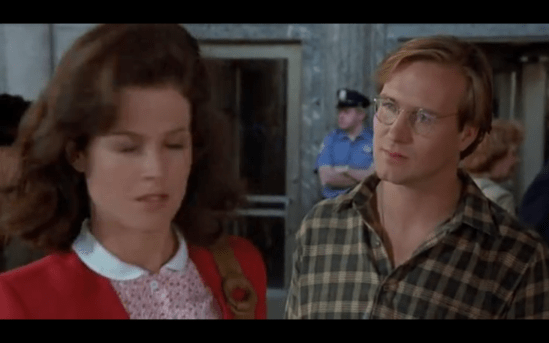
Hot off from her success from Ridley Scott’s “Alien,” Sigourney Weaver goes from sci horror-thriller to mystery-thriller and alongside her is up and coming co-star William Hurt in Peter Yates’ 1981 mystery drama “Eyewitness.” The film sparks a string of obsession suspense features that would span a decade and firmly place the genre into a popular notoriety among audiences who couldn’t get enough of the peeping tom debauchery. A hefty roster of talented actors also co-star, some on the verge of stardom to the likes of Hurt and Weaver, including Christopher Plummer (“The Sound of Music”) in the prime of his career, the crazy eyes of James Woods (John Carpenter’s “Vampires”), an un-grayed Morgan Freeman (“Se7en”), Kenneth McMillan (“Dune”), “Mission: Impossible” television series’ Steven Hill, and Pamela Reed (“Kindergarten Cop”).
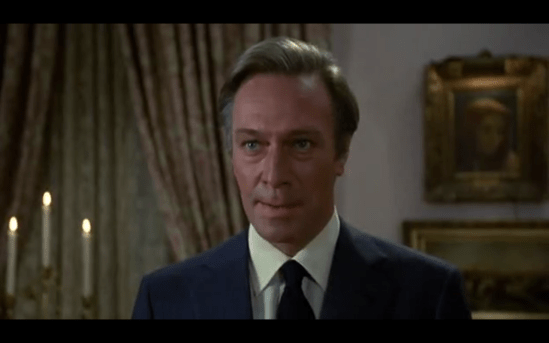
Performances all around are phenomenal as every actor and actress cultivates their character’s purpose in the story and you can surely experience the humble beginnings to some of the biggest A-list celebrities of today; however, Hurt’s performance was one of the only concerning factors. Hurt’s portraying a modest, perhaps slightly traumatized, Vietnam veteran with an afar obsession toward an attractive public figure and his presentation was overly awkward and certainly creepy too the point where I even felt embarrassed and uncomfortable. What made the situation more bizarre was the verbal and facial exchanges between Hurt and Weaver’s characters. Tony didn’t quite seem affected by the oozing creepiness this supposedly good man seeps from every pore of his skin and she, in fact, embraces his forward, if not crossing the line, affections that would certainly warrant a restraining order in today’s society. Maybe social interactions vary from generations and decades, but this type of relationship building dialogue and scenes didn’t produce the appropriate type of chemistry between Weaver and Hurt reducing the strength of their bond.

The Steve Tesich script strummed the strings reminiscent to my viewing experience of George A. Romero’s “Land of the Dead.” Yes, you read that correct – “Land of the Dead” – and what does this zombie horror film have in common with “Eyewitness?” Well, in the 2005 film about the continuous decline of humanity in a zombie apocalyptic world, Romero had written a social commentary about the separating of social classes where, even in a dying world, the rich stayed safe in their loft, sustaining an obsolete lifestyle, and the poor suffer below their feet living in the present, but in the end, anyone and everyone is fair game for being unprincipled and for the undead. Tesich’s script does the same without being lavishly upfront and without the hordes flesh eating zombies. Beneath the obvious murder mystery lies the merger of the classes as Dyrall and Tony eventually fall for each other, but their friends and family on either side condemn the relationship, making the statement numerous times that a janitor absolute can not fall for someone as wealthy as Tony. James Woods’ Aldo becomes just another example out of many where a court-martialed and discharged Marine with erratic behavior and struggling with living a middle class life becomes suspect number one in a murder case, but with a victim whose profession was international trading, the pockets might be a bit deeper and with a laundry list of ill-will individuals.

Signal One Entertainment releases “Eyewitness” in the UK for the first time on Hi-Def region B Blu-ray anywhere with a 1080p presentation in a widescreen 1.85:1 format. The video quality is far superior than, of course, it’s DVD revival with the restoration of much of the natural color tones without a hint of compression artefacts or obvious image or edging enhancements from the 35mm stock footage. The English LPCM audio 2.0 track is fair, full-bodied, and well balanced with really no issues, especially not with composer Stanley Silverman’s lively score. Signal One Entertainment certainly knows how to treat a classic film providing a slew of extra features including an audio commentary with director Peter Yates and film historian Marcus Hearn from 2005, an audio only conversation with the director along with film critic Derek Malcolm and another conversation with another film critic Quentin Faulk on a separate extra feature. Composer Stanley Silverman discusses his approach to scoring “Eyewitness” and there’s also an alternative VHS presentation of the film under one of the original titles “The Janitor.” Original trailers and TV spots round out this robust bonus feature cache. “Eyewitness” on Blu-ray is a must own with a clean and refreshing version of a this classic whodunit thriller from Signal One Entertainment!

Evil’s Calling… “Cell” review!

Clay Riddell just landed in Boston after scoring a huge deal in New York involving concepts for his graphic novel. With all the cellphone charging stations occupied, Clay calls his estranged wife from a pay phone to speak with his son, but when the landline severs communications, that’s when it started. People on their cellphones turn into Phoners, murderous maniacs who tear through anyone in a destructive path mindless insanity. Clay, in the midst of panic, bumps into subway train conductor Tom McCourt and fight their way out of the city, barely escaping with their lives. Fleeing a burning Boston overran by Phoners, Clay is determined to track down his family in New Hampshire with the help of Tom and two teens, Alice and Jordan, but the Phoners are not just absentminded anymore as individuals start to flock together exhibiting the beginning signs of their telepathic network lending to something far more sinister than just temporary mayhem.

“Cell” is the feature film adaptation to Stephen King’s novel of the same title and reunites John Cusack with Samuel L. Jackson once again since their last costarring venture of King’s book-to-silver screen production of “1408.” King shares screenplay credits with Adam Alleca, who co-penned “The Last House on the Left” remake in 2009, and with “Paranormal Activity 2” director Tod Williams at the helm. From the first inkling of a “Cell” movie, back with Eli Roth was attached, the excitement couldn’t be contained as I read the Stephen King novel and was captivated by the unique story of mixed and varied human emotions and the uncontrollable yearnings to be a part of the collective through being electronically connected that ultimately becomes mankind’s undoing.
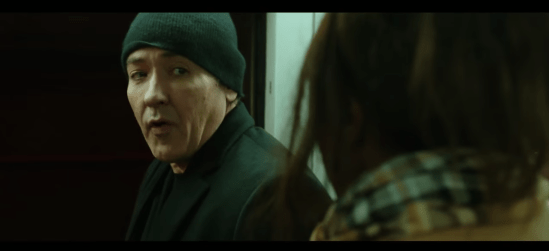
However, “Cell” was heading in the direction of certain doom from the moment Roth unattached himself from the project, sending “Cell” into the annoyance of limbo until a production company conglomerate formed to pull “Cell” from it’s stagnant state and attached Williams to direct. Yet once again, King’s beloved story goes into the throes of uncertainty with distribution after filming wraps in 2013. 2016 comes and Saban Films, along with Lionsgate , distributes “Cell” theatrically and within the home entertainment market respectively.

After all the monumental problems, I personally wanted to “Cell” to be one of the most entertaining and frightening horror films of the modern age, but as fate would have it, the Williams’ film disappoints. An film adaptation of a King novel needs more minutes to cover the story’s girth and “Cell” lacked pages of warranted minutes to be a full tell all for Clay, Tom, and the Raggedy Man. Portions of the novel were translated to the screen, but for the majority of the film, a rushed version of the story debuts to silver screen audiences that loses the book’s essence and dilutes character development, such as with Raggedy Man who has a sizable role in the book, but the character in Williams’ movie barely scratches the surface with being just a figurehead for the Phoners and not the collective’s soap box looming leader. The film started out great with intense chaos at Boston airport, pictorializing to life the Phoners from the King’s book with pinpoint precision, but from there on, the story’s time span goes vague whereas the book stretches out the length of time. Only a matter of two or three days does it seem the survivors jump from Boston, to the school, to the bar, to the story’s final location of Kashwak, but in reality terms and in the amount of devastation and character portrayal, weeks have passed.

The ending has been rewritten from a surprisingly mixed reaction to the book’s and yet, the unravelling of the finale does more than convolute matters when Clay finds his son. There lies almost a dual ending where one’s interpretation can be the film’s own storybook ending. Stephen King’s “The Mist” had an ending that, when compared to Frank Darabont’s totally new ending for the film, was totally inferior to Darabont’s and I feel like that’s the stage that was trying to bet revisited here with “Cell” and it just missed the mark completely. Not all changes are for the worst. Character Tom McCourt, whose white in book, went to Samuel L. Jackson who absolutely fits the role without question, nailing PTSD stricken McCourt with little emotion but with untapped hurt. If I ever had to choose an middle aged white actor for the role of Clay, John Cusack would be my first and only choice even before casting began for the film. I do feel like having a white Raggedy Man was purposefully steered away from social sensitivities with an antagonistic young black male in a hoodie. The cast rounds out with Isabelle Fuhrman, Owen Teague, and Stacy Keach (“Slave of the Cannibal God”).
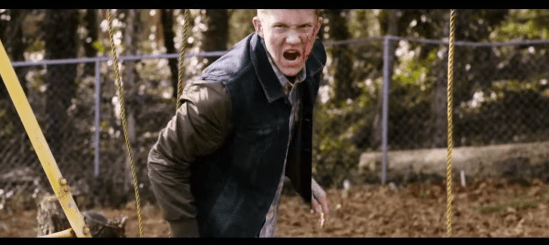
The digital visual effects were so poorly constructed and composited that I’m not surprised “Cell” didn’t have a longer theatrical run. The book had a number of jaw-dropping visuals the imagination could run with and now with seeing the depictions of those visuals on screen, they seemed seriously slapped together in such haste to where the devastating sensationalism turns inane and bland. King’s apocalyptic story warrants Hollywood scale effects, but received a few levels below that bar, failing to deliver major catastrophe on a world ending scale to the likes of “War World Z” or to cleverly style the film through a smaller medium such as George Romero accomplished with this first three “Living Dead” films.
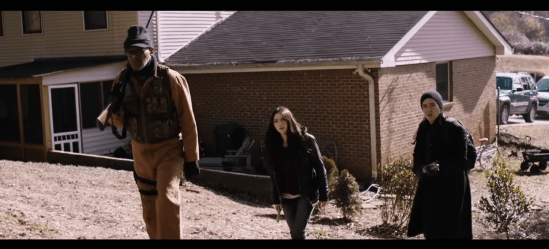
Lionsgate’s Blu-ray release is presented in widescreen 2.40:1 aspect ratio and the 1080p Hi-Def resolution becomes a disadvantage that clearly outlines the quality of the effects. The English 5.1 DTS-HD master audio is par for the course, but slightly in-and-out with dialogue that’s difficult to balance. The 98 minute feature’s bonus features includes an director’s commentary and “To Cell and Back: The Making of the Film” which is redundant if you’ve read the novel. Bottom line is if you’re fan of Stephen King’s novel, you’ll be sorely disappointed with Tod Williams’ “Cell” that’s nothing more than a long awaited entertaining rated-R apocalyptic horror with obsolete effects and with star-studded names attached to this Stephen King story adaptation.

Buy “Cell” on Amazon! Cusack and Jackson reunite!

 It's Bloggin Evil!