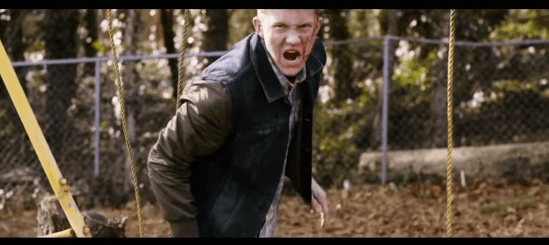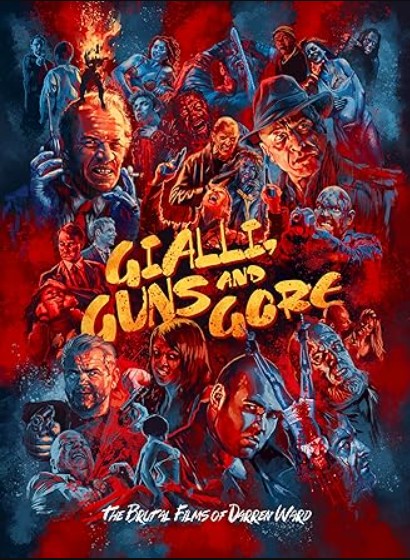
A Trio of EVIL of Italian-Inspired Violence. “Gialli, Guns, and Gore!: The Brutal Films of Darren Ward” reviewed! (Treasured Films / 3-Disc Blu-ray)

The Brutal Films of Darren Ward Are a Must See! Buy the Set Here!

Walker, a former SAS turned hitman mercenary, accepts a job by a white-collar narcotics kingpin to snuff out a rival organization for control over cocaine distribution territories only to be betrayed by his employee, targeted himself for elimination.  Going into hiding to recover after narrowly escape with injuries, Walker’s best and only friend is caught, tortured, and slaughtered to draw him out.  There’s nothing left for Walker to do other than to mercilessly wipe them off the face of the Earth.  In another thrilling tale, low-level hoodlum Mitchell steals 100K from another low-level hoodlum holding the money for a mob boss.  Planning to use the money to fund his daughter’s return from a comatose state, Mitchell must first outrun and outsmart the mob who are hunting him down, but nothing will get in the way of saving his little girl.  Lastly, Walker returns to the fold having retired permanently from the mercenary life and is now living the married life with a child on the way.  When a group of lowlife henchmen decide to joyride murder and posthumously rape his wife and leave him for dead, all Walker wants is thoughtless vengeance and he must go through an entire crime syndicate to get to those responsible for destroying all that he loves.  Unfortunately, the underlings of a ruthless Russian mob boss, who is trying to tie up loose ends before the police and investigators come after him, are protected by a small arsenal.
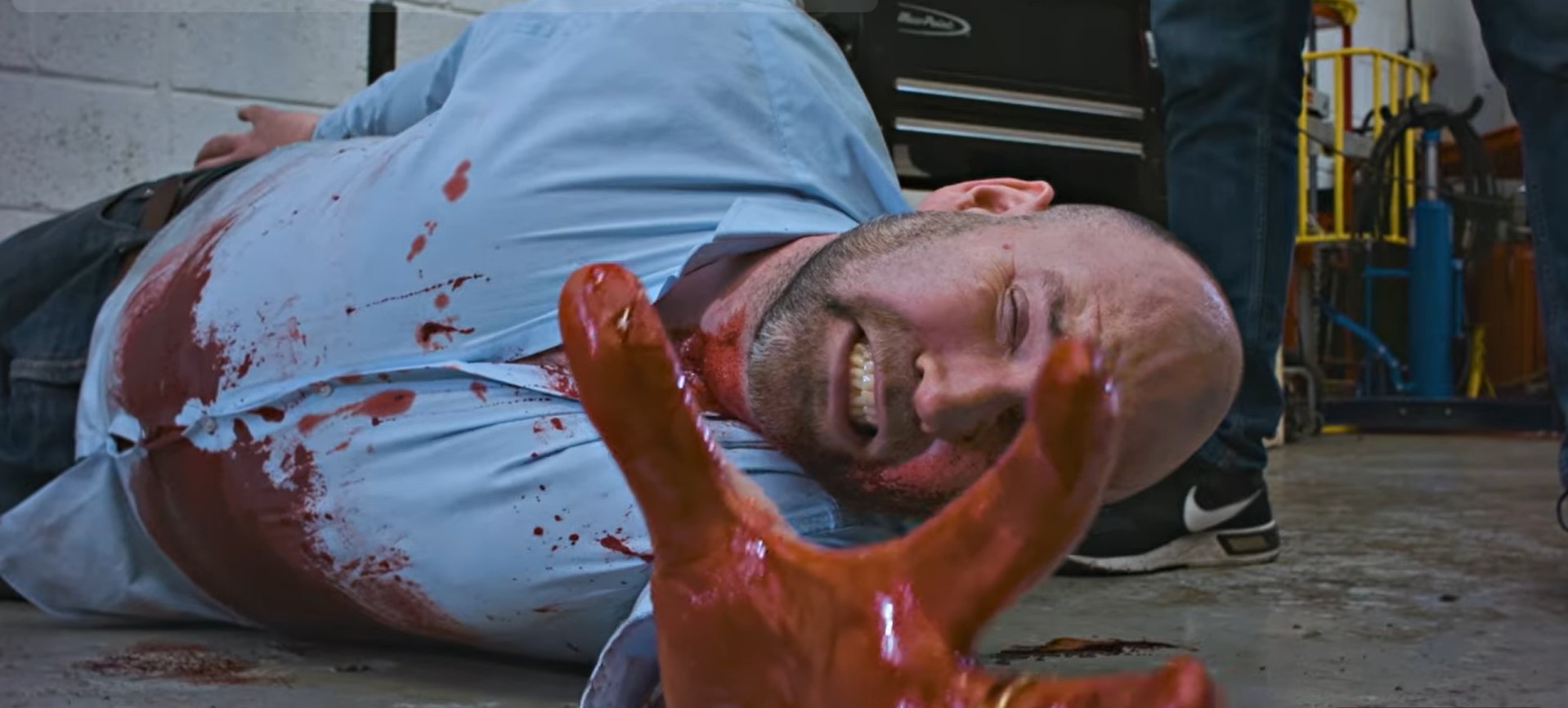
From 1997 to 2019, British filmmaker Darren Ward produced the Fury Trilogy, a 3-film series of violent crime thrillers that harked back to the days of the Italian poliziotteschi subgenre, a brutally violent series of crime thrillers released between 1960 and 1980 that saw themes of cruel hearted antagonists, a justifiable hero hellbent on revenge, and the up-close-and-personal violence and, often times, gore.  “Sudden Fury” (1997), “A Day of Violence” (2010), and “Beyond Fury” (2019) are the titles and while not all three wholeheartedly connect in the series and in story, they share the cruel characteristics and the visceral animosity that has lurked in the Italian shadows for way too long.  From Italy to the United Kingdom, Ward resurrects the short-lived classic exploitation subgenre having written-and-directed all three years over the course of 20 years, and maybe even before that as Ward wrote-and-directed the 1994 short film “Bitter Vengeance” that preluded the Fury Trilogy with a foundational base concept for subsequent feature films.  Ward produces the films under his company Giallo Films.
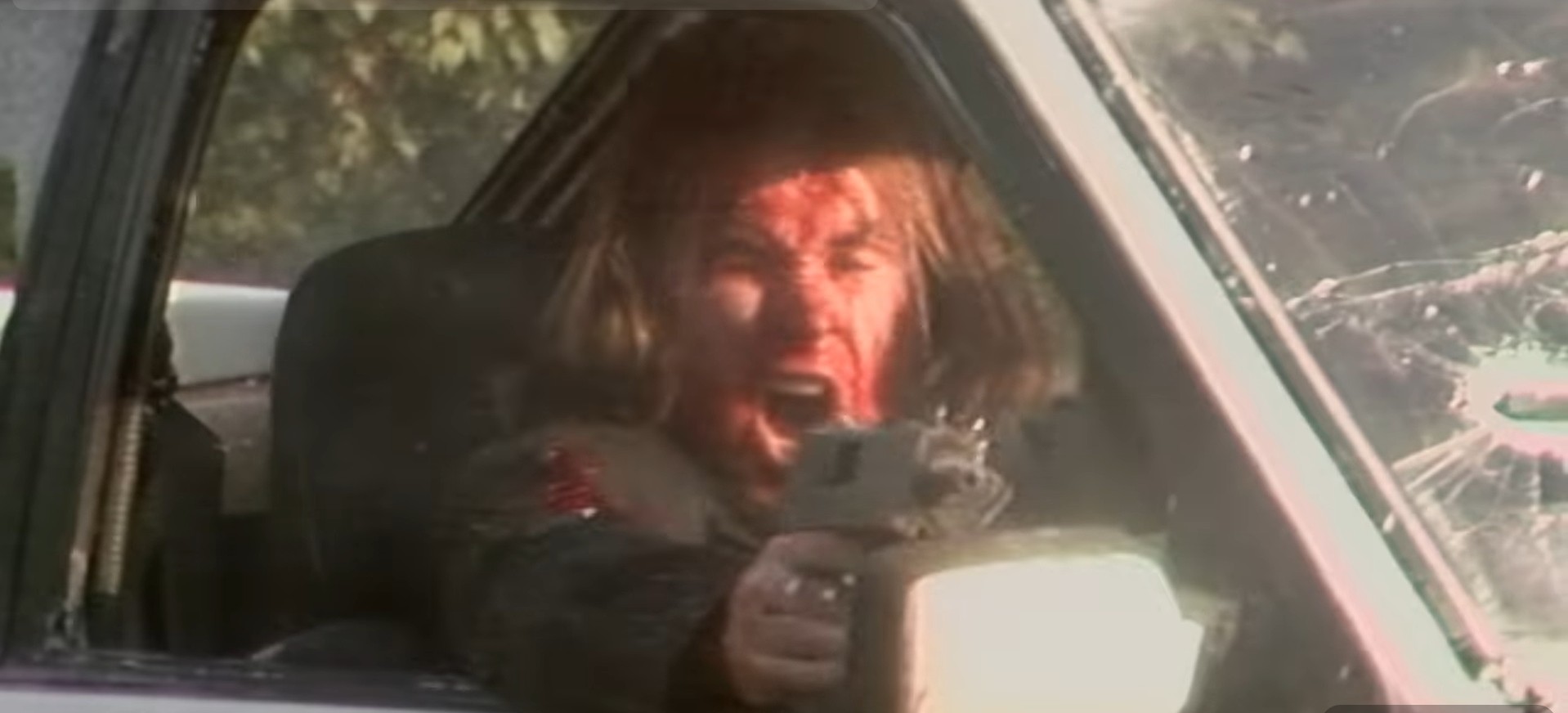
The 1997 “Sudden Fury” is a showcase of mid-90’s nostalgia propped up by vast, electric, and eccentric cast and characters that spin a web of complexity between two gangs, one hitman, and a whole lot of vengeful vendettas.  Nick Rendell plays the sought after former SAS soldier turned mercenary hitman Walker with full zeal for the 80’s action star by carrying a reputation that proceeds the character.  Rendell’s portrayal is often aloof as Walker stands in between two gangs and their lack of integrity as they squabble over the cocaine dominion, but when the last standing gang tries to hunt him down, killing his one and only friend in the process, Walker takes the fight to them guns blazing.  Rendell also carries over his performance to the 2010 film, the unconnected “A Day of Violence,” but in different shoes as Mitchell, a father, husband, and hoodlum in desperation mode and doing whatever he can to live and breathe inside the context of mob land complexity for a large sum of money.  Rendell goes form lone wolf to a man with dependent in a totally different side of character in Mitchell when compared to Walker when considering how the compassion attribute.  Now, Walker returns for “Beyond Fury” but Nick Rendell does not return to the role as the 2019 film sees Nick Roberts filling the mercenary shoes.  Also, this time around, Walker is given compassion, compassion for revenge!  In his retirement, his family is murdered arbitrarily – as if ill-fated living a previous life of violence and death – and vows revenge at his own expense to harm taking on an entire organized criminal organization, ran by the unforgiving “City of the Living Dead” and “Cannibal Ferox” actor Giovanni Lombardo Radice.  Radice is also one of the only other connective tissues between the last two films but in different roles with opposing significance with more prominence as the chief villain in “Beyond Fury” as well as Victor D. Thorn in various capacities in each three films.  Other notable cast members from across all three films include David Warbeck (“The Beyond”) in “Sudden Fury” and Dani Thompson (“Axe to Grind”) with Andy Ranger, Paul Murphy, Christopher Fosh, Steve Humprhies, Tina Barnes, Helena Martin, Tina Barnes, Joanna Finata, Harold Gasnier, Gary Baxter, Dan van Husen, Glenn Salvage.
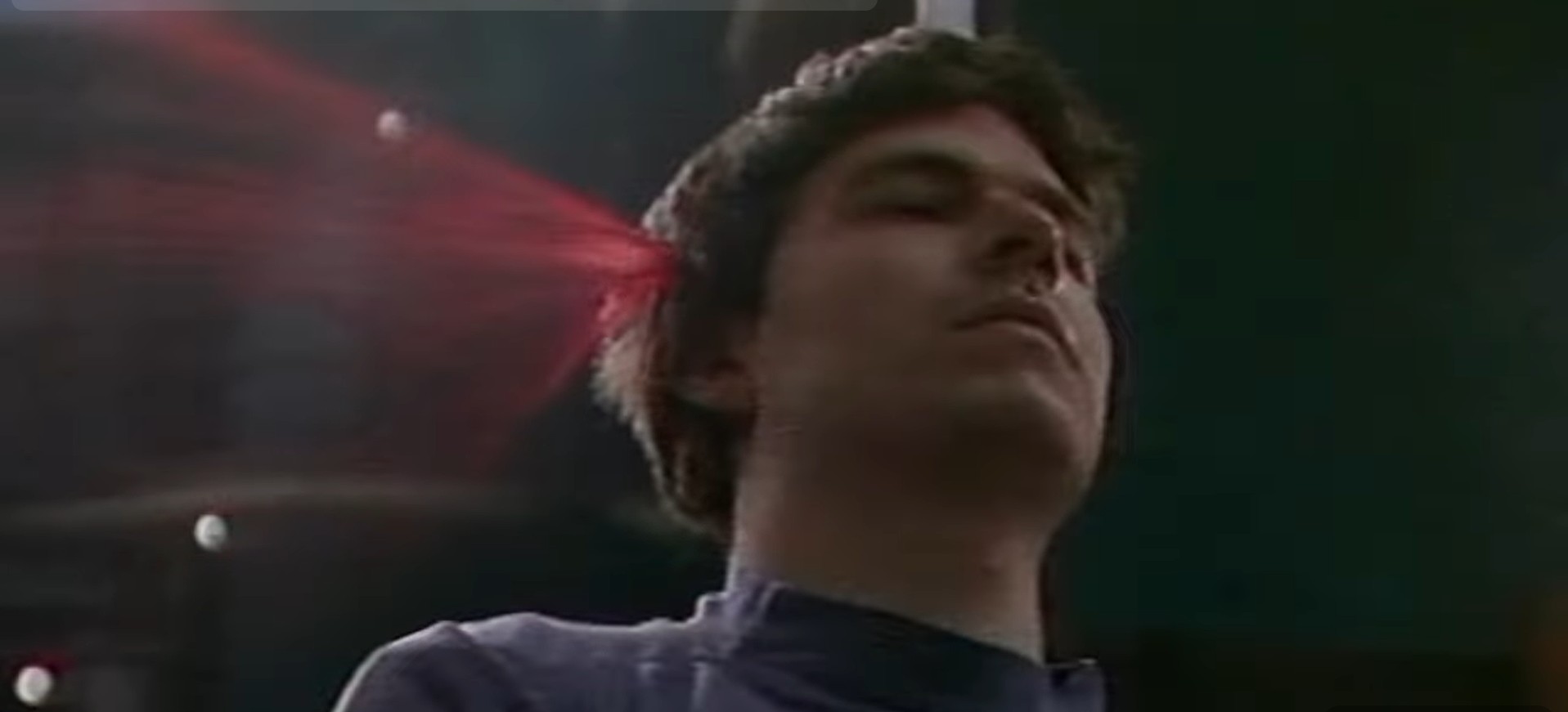
Darren Ward’s Fury Trilogy is roughly the same model copied over one another at roughly a decade and half apart, yet each individual storyline evokes a different impression as each has unique attributes.  “Sudden Fury” surrounds itself in sociopathy, drug trade, and gang war.  “A Day of Violence” has themes of devotion, parenthood, and blinding greed.  “Beyond Fury” spores retribution, justice, and loyalty.  Other than the reprisal of the Walker character in the first 1997 and last 2019 film, the real only aspects that connect the series together is the unflinching and visceral violence fueled one major motif in all of Ward’s movies, organized crime syndicates versus the single willed warrior.  Ward has no qualms with showing violence front and center in the most graphic way possible and without it being overly gratuitous or at least blending the excessive blood and gore action into the moment that it hides in plain sight.  The effects on all three films go hard under Alastair Vardy who did the SFX work on all three films.  Vardy is a major effects artist as of today, having worked on such films as “World War Z,” “Kick-Ass 2,” and last years “28 Years Later” and that speaks volumes to his dedication toward director Darren Ward and his three films produced on a lesser budget with mostly genre and cult actors.  Ward’s scripts are heavily dynamic and can become complex with betrayals, twists, and a fair amount of unpredictability in the grand schemes of either drug wars, money disputes, and damage control.  “Sudden Fury” and “Beyond Fury” has an easy, 2-part character arc for Walker but there often feels like a missing piece to his character backstory, especially when his stories are over 20 years apart and Ward doesn’t profoundly piece those missing years together with much effort.  Yet, through Ward’s camera cleverness and storytelling, there is plenty to like and easily digest through multiple camera angles of a scene, interesting shot setups, and the close and personal nature of strong violence.
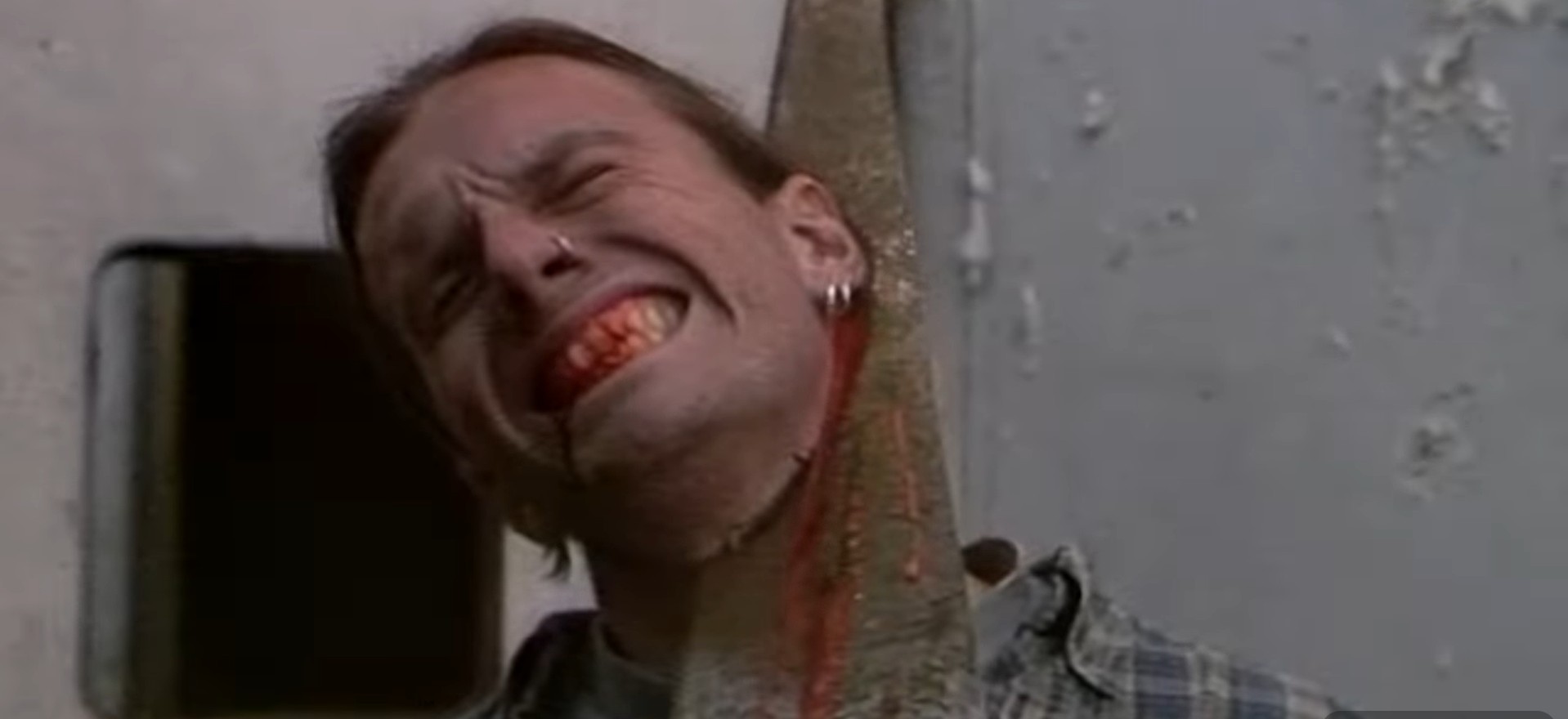
UK distributor Treasured Films rolls out the bloody red carpet for Darren Ward’s Fury Trilogy with a brand new 3-Disc Blu-ray set entitled the “Gialli, Guns and Gore” set that is region free for all to enjoy the carnage.  The limited-edition boxset comes with newly remastered and graded scans for its grand worldwide Blu-ray debut on “Sudden Fury” and UK Blu-ray debut for “A Day of Violence” and “Beyond Fury.”  “Sudden Fury” is scanned from the original SOV material and into a 720HD, leaving a lot of room for unfortunate and unable improvement but this transfer is pretty damn good that retains that shot-on-video, interlacing aesthetic and muted colors.  There are no evident issues of overly heated color tones or tracking lines from magnetic tape deterioration and presents the best possible image with soft details in a 1.33:1 aspect ratio, though the back cover states all features are in a widescreen.  “A Day of Violence” and “Beyond Fury,” having been digitally filmed over 13-years later, are in a widescreen 1.78:1 aspect ratio with cleaner image resolution that looks neat a pin with granular details surrounding skin and textures, a slight slate color grading with hues being diffused and saturated in balance, and offers a focal depth to enhance quality.  The English language audio format is an uncompressed DTS-HD Master Audio 2.0 that packs a wallop front and center.  The Fury Trilogy has immense range of gunfire, fisticuffs, explosions, and car races that run the onomatopoeia length of an action bundle with clear dialogue that’s more vital in the last two films with isolating features and more muted in the first with more integration around surrounding elements and electronic interference from the implemented equipment.  There’s not a ton of depth in either film that relies heavily on making an impact with the ultraviolence and caffeinated action in the front role of a dual channel that does have a decent separation and isolation of dialogue and action.  English subtitles are available on all three releases.  “Sudden Fury” special features include an audio commentary by Darren Ward and star Nick Rendell, a retrospective documentary Sudden Fury:  12 years On, a retrospective making-of interview with Darren Ward The Crime Trilogy:  Part 1:  Sudden Fury, deleted scenes and outtakes, a BTS special effects make-up reel, Ward’s 1994 precursing short films “Bitter Vengeance,” 1993’s “Blue Fear,” and 1992’s “Paura Il Diavolo,” an image gallery, and archived trailers.  On “A Day of Violence,” a feature length documentary of Making-Of a Day of Violence, an interview with actor Giovanni Lombardo Radice, an audio commentary with Ward and star Nick Rendell, the second Darren ward retrospective documentary on the making-of The Crime Trilogy Part 2:  A Day of ViolenceThe Crime Trilogy:  The In-Between Years looks at Darren Ward’s short film “Nightmares” from 2004, deleted scenes and outtakes, the hardcore trailer, a no-so-hardcore soft trailer, a Soprano trailer, short film “Nightmares,” an audio commentary for ”Nightmares” with Ward, and an image gallery fill out the special features for the second feature.  The third feature’s special features conclude with another audio commentary with Darren Ward and Nick Rendell, The Crime Trilogy Part 3:  Beyond Fury retrospective documentary of the making-of the film, Chainsaw Fun featurette, the Gasworks Visual Effects reel, The Crime Trilogy props used in the film tour, the Ward 2025 short film “Passion,” an audio commentary for “Passion,” trailers, and an image gallery for that short film.  While the encoded special features are impressive, the physical presence of the Treasured Films release is equally as eye-catching with a rigid slipbox containing frontal artwork by Uncle Frank Productions, three clear Blu-ray Amaray cases, each with new, reversible sleeve art for all three titles, and snug inside the slipbox with them is a 31-page booklet with color stills, release acknowledgements, and essay by Tom Lee Rutter – Furious:  The Story of the John Woo of Southampton..  All films are UK certified 18 for strong bloody violence, gore, sexual violence, very strong language, and strong sex.  The runs are as followed:  “Sudden Fury” 103 minutes, “A Day of Violence” 116 minutes, and “Beyond Fury” 117 minutes. 

Last Rites: The “Gialli, Guns, and Gore” set is Darren Ward’s unflinching frenetic violence now glorified in a beautifully curated Treasured Films package!

The Brutal Films of Darren Ward Are a Must See! Buy the Set Here!

EVIL’s All Inclusive Resort. “Paradise Z” reviewed! ((Yet) Another Distribution Company / Digital Screener)

Sylvia and Rose are living the life of harmonious luxury together on a beautiful and serene Thailand resort. There’s only one tiny problem with their first-class accommodations: the world surrounding them is overrun by a population of rabidly crazed zombies. After establishing a rigorous routine of perimeter checks and pool time, food and gas are running dangerous low to keep a secluded and safe survival lifestyle sustained, leaving them no choice but to venture out to nearby villages in search for fuel, but the smallest of sounds could invite the hungry dead to storm their idyllic retreat. No matter how careful scouring outside the gated walls of isolated tranquility, the zombies’ insidious ways infest as bad resorts guests that turn Sylvia and Rose’s make-due habitation to their prospective tomb when all routes of escape are foiled by flesh-feasting zombies. The couple must rely on each other for survival.

There’s trouble in paradise from Wych Kaosayananda’s melancholic-apocalypticism horror “Paradise Z” focusing on two young women, romantically brought together by undead circumstances, to outlive the encompassing fatalist outlook. Marketed in the United Kingdom as a “Lesbian Zombie Apocalypse Gore-fest” and having been through the wringer with title changes from the original title of “Two of Us” to “Dead Earth,” as called in the States, the uptrend to incorporate the Z in any zombie film has been a musky motif ever since Max Brooks introduced the epithet for his 2006 zombie apocalypse novel, “World War Z,” yet that doesn’t stop writers Kaosayananda and Steve Poirier in dishing out a sanguine trilogy with “Paradise Z” laying the ground work as the first installment and “The Driver,” the third installment, following suit shortly after wrapping production on “Paradise Z.” With the second film, “The Rider,” is still in pre-production and the shot films released out of sequential order, Kaosayananda’s unconventional trilogy methods caters to a seemingly budget and location ready-timeline to which characters from all three films will interconnect the dissociated titles under the filmmaker’s self-funded production company, Kaos Entertainment.

Throughout the entire 1-hour and 35-minute runtime, there are only five speaking roles with three of those roles rarely comprising of about four minutes of combined dialogue, assigning by default much of the chitchat the principle characters, Sylvia and Rose. For the first nine and half minutes, Milena Gorum and Alice Tantayanon don’t say a single word as the day’s routine of waking up, showering, topless swimming, poolside yoga, lunch, and other recreational activities dominate the setup of quietude. When Gorum (as Sylvia) and Tantayanon (Rose) do utter a few words, they’re muttered projection is nearly unintelligible with little effort into the purpose of speaking. Born in Los Angeles and now, predominately, a New York city fashion model, Gorum has come across my radar before with a bit Succubus role in the 2017, Cleopatra Films produced demonic thriller, “The Black Room,” opposite Lin Shaye, Lukas Hassel, and Natasha Henstridge and though “Paradise Z” provides Gorum with her first lead role that showcases her immense beauty but limited acting range. The same wooden expressive opinion can be said for the little known Alice Tantayanon whose pigeonholed herself into a Kaosayananda celluloid corner with her only credits being three of his films. Sylvia and Rose rarely separate from each other sides, being lovers noodled into a pot of thick zombie soup, in a rigid position of affixed dynamics difficult to gauge how either one of them is handling the situation. When a show of complexity is finally unveiled, such as when Sylvia murders in cold blood two other survivors and turns to Rose to say it’s better this way, those actions somewhere along the story from there on out should be dissected in explaining just why lacerating two men to death is a good thing. Of course, we can all assume the survival of the fittest and selfish obvious reason that two rugged men are looking for more than just a box of Twinkies and an unopened can of goulash substitute from two good-looking ladies outside the safety of their homemade stronghold; yet, doesn’t answer where the killer instincts root and Kaosayananda shelves that bit of human nature when the zombie caca spreads throughout the resort upon their return that also evaporates a steamy sex scene and inklings of frustration for their dwindling supplies and mundane routine symbolizing an inching wedge between them. “Ghost House’s” Michael S. New rounds out the cast the DJ, an on-air beacon of infected information.

An Elysian-fabricated getaway resort can be an ideal hunker down for an apocalypse of the zombie kind. Mega resorts have a large footprint that are usually gated and fenced, plenty of food and lodging to accommodate a small village, and an escape route from the beach to the open waters where we all know zombies can’t swim. That works here for “Paradise Z” and almost plays like a pillar character that embeds the women survivalists from going on walkabouts, creating a real sense of comfortable isolation and simmering paranoia of the outside world. Kaosayananda, who can’t quite get the bad taste that lingers from out his mouth with the panned Antonio Banderas and Lucy Liu starring critically slammed and chaos-riddled film “Ballistic: Ecks vs. Sever,” left himself to his own devices in trying to rebuild his career shooting in Thailand, but “Paradise Z” crumbles as a stepping stone trilogy that lacks proper severe conflict of placing the heroines into a tight, perhaps inescapable, spot. What the couple have to escape from are the wild, warm flesh-craving leftovers of a plagued mankind, springing to a sprint at the first audible or visual morsel that tickles the eardrums, but the patchwork caked-face, grayscale zombies don’t render the likes from the bygone Golden Age of Horror, or even the current Golden Age of Modern Horror for that matter, in what looks and feels like cheap knockoffs of the genuine fictional man-eaters by rouge applying professionals. What Kaosayananda has made here is a two-tone, straight-forward, out-smart the dumb zombie breed of uninspired mirth, burdening the actresses to shoulder the story on looks alone rather than include emotional depth oppressed by the Z-factor.

Spend your vacation in a halcyon “Paradise Z” exclusively releasing on UK digital platforms come the new year on January 4th from the marginalized advocating distributor (Yet) Another Distribution Company. In regards to cinematography, presented in a widescreen 2.39:1 aspect ratio, Kaosayananda safely approaches most stories set in Thailand with a warm, yellowish glaze overtop the lush tropic vegetation, but, aside from a class I rapid stream the women decide to cool off in on a whim, without weapons and, basically, in their skivvies, outside the resort walls, there’s a limit to the Thai landscapes that doesn’t reach beyond the resort perimeter sufficing to just the surrounding allure rather than cutting in scenes of breath-taking grandeur. Kaosayananda occasionally reduces the frames per second to emphasize certain scenes with slow motion, such as with Gorum and Tatayanon’s topless make out session or when the two are back-to-back unloading an unlimited amount of ammo against a rushing horde with every shot being a fatal one; the silver lining here is the scene is at least aesthetically cool to watch. However, once again, Sylvia and Rose are given winning hands to play without as much showing their cards that work backwards their highly skilled background of arms fire. With the digital screener, there were no bonus material or bonus scenes included. No need to check the yelp reviews on holiday spot as “Paradise Z” is a four star resort with one star performances battling an underwhelming, minimum gory zombie contingent without dutifully jeopardizing survivors enough for the sake of gratefully being alive.

Evil’s Calling… “Cell” review!

screen-shot-2016-10-06-at-9-04-17-pm
Clay Riddell just landed in Boston after scoring a huge deal in New York involving concepts for his graphic novel. With all the cellphone charging stations occupied, Clay calls his estranged wife from a pay phone to speak with his son, but when the landline severs communications, that’s when it started. People on their cellphones turn into Phoners, murderous maniacs who tear through anyone in a destructive path mindless insanity. Clay, in the midst of panic, bumps into subway train conductor Tom McCourt and fight their way out of the city, barely escaping with their lives. Fleeing a burning Boston overran by Phoners, Clay is determined to track down his family in New Hampshire with the help of Tom and two teens, Alice and Jordan, but the Phoners are not just absentminded anymore as individuals start to flock together exhibiting the beginning signs of their telepathic network lending to something far more sinister than just temporary mayhem.
screen-shot-2016-10-06-at-9-01-05-pm
“Cell” is the feature film adaptation to Stephen King’s novel of the same title and reunites John Cusack with Samuel L. Jackson once again since their last costarring venture of King’s book-to-silver screen production of “1408.” King shares screenplay credits with Adam Alleca, who co-penned “The Last House on the Left” remake in 2009, and with “Paranormal Activity 2” director Tod Williams at the helm. From the first inkling of a “Cell” movie, back with Eli Roth was attached, the excitement couldn’t be contained as I read the Stephen King novel and was captivated by the unique story of mixed and varied human emotions and the uncontrollable yearnings to be a part of the collective through being electronically connected that ultimately becomes mankind’s undoing.
screen-shot-2016-10-06-at-9-20-28-pm
However, “Cell” was heading in the direction of certain doom from the moment Roth unattached himself from the project, sending “Cell” into the annoyance of limbo until a production company conglomerate formed to pull “Cell” from it’s stagnant state and attached Williams to direct. Yet once again, King’s beloved story goes into the throes of uncertainty with distribution after filming wraps in 2013. 2016 comes and Saban Films, along with Lionsgate , distributes “Cell” theatrically and within the home entertainment market respectively.
screen-shot-2016-10-06-at-9-02-05-pm
After all the monumental problems, I personally wanted to “Cell” to be one of the most entertaining and frightening horror films of the modern age, but as fate would have it, the Williams’ film disappoints. An film adaptation of a King novel needs more minutes to cover the story’s girth and “Cell” lacked pages of warranted minutes to be a full tell all for Clay, Tom, and the Raggedy Man. Portions of the novel were translated to the screen, but for the majority of the film, a rushed version of the story debuts to silver screen audiences that loses the book’s essence and dilutes character development, such as with Raggedy Man who has a sizable role in the book, but the character in Williams’ movie barely scratches the surface with being just a figurehead for the Phoners and not the collective’s soap box looming leader. The film started out great with intense chaos at Boston airport, pictorializing to life the Phoners from the King’s book with pinpoint precision, but from there on, the story’s time span goes vague whereas the book stretches out the length of time. Only a matter of two or three days does it seem the survivors jump from Boston, to the school, to the bar, to the story’s final location of Kashwak, but in reality terms and in the amount of devastation and character portrayal, weeks have passed.
screen-shot-2016-10-06-at-9-03-17-pm
The ending has been rewritten from a surprisingly mixed reaction to the book’s and yet, the unravelling of the finale does more than convolute matters when Clay finds his son. There lies almost a dual ending where one’s interpretation can be the film’s own storybook ending. Stephen King’s “The Mist” had an ending that, when compared to Frank Darabont’s totally new ending for the film, was totally inferior to Darabont’s and I feel like that’s the stage that was trying to bet revisited here with “Cell” and it just missed the mark completely. Not all changes are for the worst. Character Tom McCourt, whose white in book, went to Samuel L. Jackson who absolutely fits the role without question, nailing PTSD stricken McCourt with little emotion but with untapped hurt. If I ever had to choose an middle aged white actor for the role of Clay, John Cusack would be my first and only choice even before casting began for the film. I do feel like having a white Raggedy Man was purposefully steered away from social sensitivities with an antagonistic young black male in a hoodie. The cast rounds out with Isabelle Fuhrman, Owen Teague, and Stacy Keach (“Slave of the Cannibal God”).
screen-shot-2016-10-06-at-9-01-43-pm
The digital visual effects were so poorly constructed and composited that I’m not surprised “Cell” didn’t have a longer theatrical run. The book had a number of jaw-dropping visuals the imagination could run with and now with seeing the depictions of those visuals on screen, they seemed seriously slapped together in such haste to where the devastating sensationalism turns inane and bland. King’s apocalyptic story warrants Hollywood scale effects, but received a few levels below that bar, failing to deliver major catastrophe on a world ending scale to the likes of “War World Z” or to cleverly style the film through a smaller medium such as George Romero accomplished with this first three “Living Dead” films.
screen-shot-2016-10-06-at-9-20-59-pm
Lionsgate’s Blu-ray release is presented in widescreen 2.40:1 aspect ratio and the 1080p Hi-Def resolution becomes a disadvantage that clearly outlines the quality of the effects. The English 5.1 DTS-HD master audio is par for the course, but slightly in-and-out with dialogue that’s difficult to balance. The 98 minute feature’s bonus features includes an director’s commentary and “To Cell and Back: The Making of the Film” which is redundant if you’ve read the novel. Bottom line is if you’re fan of Stephen King’s novel, you’ll be sorely disappointed with Tod Williams’ “Cell” that’s nothing more than a long awaited entertaining rated-R apocalyptic horror with obsolete effects and with star-studded names attached to this Stephen King story adaptation.

Buy “Cell” on Amazon! Cusack and Jackson reunite!