Bestiality. Borowczyk Pushes the Boundaries with EVIL Themes. “The Beast” reviewed! (Blu-ray / Umbrella Entertainment)

“The Beast” Available on Umbrella Entertainment’s Beyond Genre label at Amazom.com

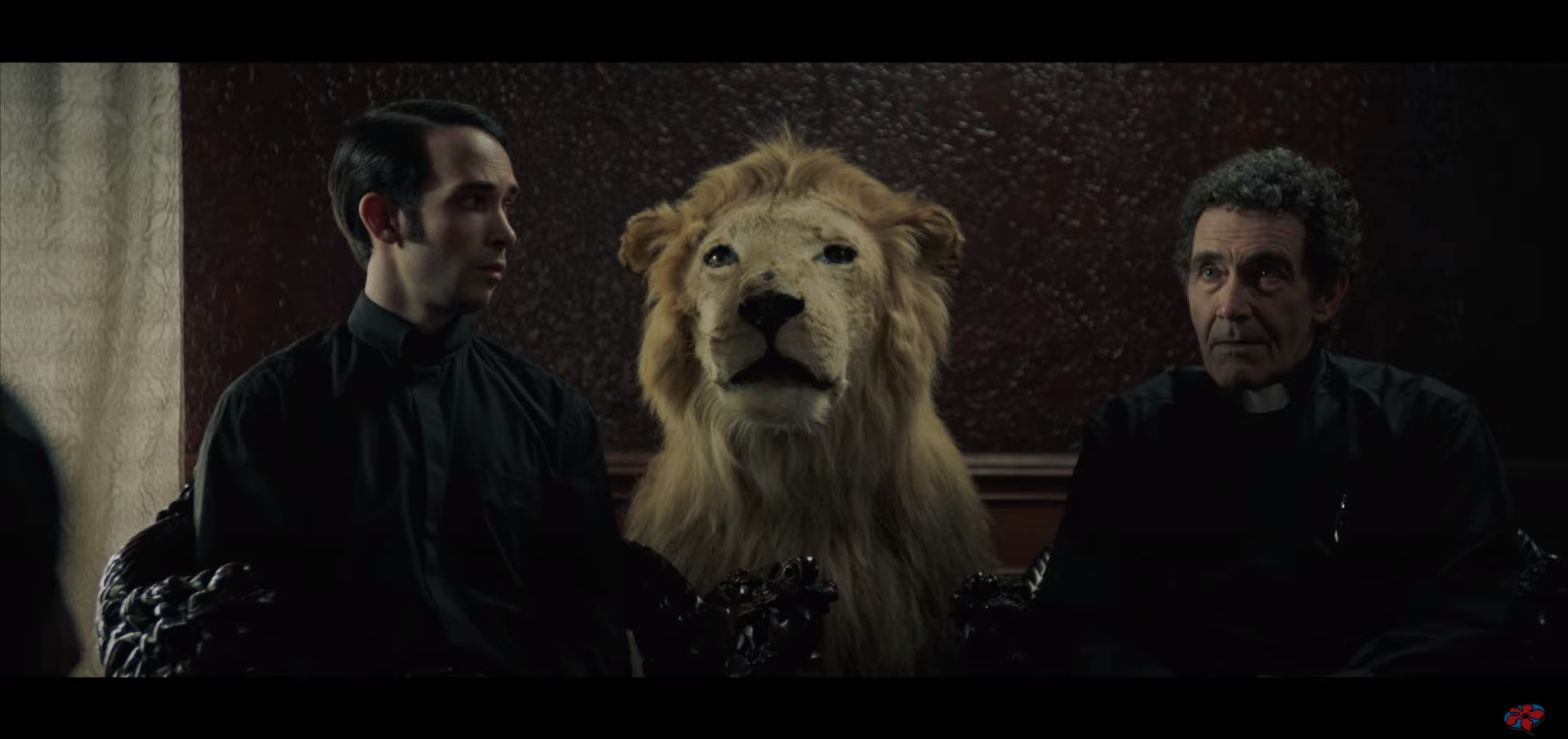
Marquis Pierre de l’Esperance, a French lord on the brink of financial ruin, is able to swing a deal before the death of the well-off English tycoon Philip Broadhurst. Under the conditions of Broadhurst’s will, his daughter Lucy must marry I’Esperance’s introverted, and equestrian obsessed son within six months after his death. Lucy, and her aunt Virginia, travel deep into the French forest to the deteriorating chateau to do a first ever meet and greet between the two soon-to-be married. Marred by centuries old local legend of a lustful beast who sexually defiled the Lady of the estate’s family lineage, I’Esperance aims to restore order by marrying into fortune and leave old cockamamie tales behind him. Yet, Lucy can’t shake vivid and stimulatingly graphic dreams of the romping woman and beast, leading to speculation whether the legends are true or not?

Certain types of filmmakers push the limits and exude their provocative talents to blur the lines between arthouse cinema and pornography. Those same filmmakers would argue that arthouse cinema and porn are, in fact, nearly one in the same if complimented with an intriguing story full of subversive subtext sure to outrage the status quo. Walerian Borowcyzk is one of those auteur artists basking in the absurdity and the arousing aspects of his films. The Polish writer and director wrote and helmed “The Beast,” aka “La Bête,” a one-part sex-comedy and one-part fantastical horror that is one-whole bizarre beyond our wildest dreams. “The Beast” was once considered to be a part of Borowcyzk’s short film collection of erotic stories known as “Immoral Tales;” however, the short film shot was scrapped from the project and then reimplemented into a full-length feature with outer rim narrative built around it’s very thematical essences of bestiality and the corruption of man due to woman’s virtue, the latter inspired by the French novella “Lokis” by Prosper Mérimée. The France originated film was produced by Anatole Dauman under the French studio, Argos Films, which produced much of Borowyczk’s work.

“The Beast’s” ensemble cast play intrinsic notes toward the fullest extent of the narrative’s shell machination as well as the saturation of eroticism from the grifting lord l’Esperance to the chateau’s only manservant, who when not answering his Lord’s beck and call, is fooling around secretively and lustfully with I’Esperance’s daughter. Veteran actor Guy Tréjan unearths the very ill-humored presence of a struggling lord seeking to reclaim fortune and glory to his estate and family. Most of the time, we feel sympathy for I’Esperance’s inability to catch a break, but on the deeper, darker scope, I’Esperance hides many truths, keeps many secrets, and even black mails his uncle, Duc Rammendelo de Balo, played by legendary actor Marcel Dalio (“Super Witch of Love Island”), making the lord a villain of his own haphazard design. I’Esperance’s nitwit and reclusive son Mathurin is played by Pierre Benedetti, who has worked with Borowcyzk later his career in “Immoral Woman.” Not much of Benedetti is profoundly showcased, leaving much of Mathurin in the dark despite being a principle figure in the plot as the husband-to-be for the aspiring romantic Lucy Broadhurst from “Le diaboliche’s” Lisbeth Hummel. Hummel, along with 1995 “Castle Freak’s” Elisabeth Kaza as Lucy’s aunt Virginia, are supposed to be affluent English women travelling to France in order to settle future marital affairs with the I’Esperances, but Hummel and Kaza have such thick accents that no matter how proper their English may be, there’s still present the French and Hungarian elocutions in their English dialogue. Hummel does capture Lucy’s free-spirited, free-form sexuality so inclined by Borowcyzk as the director envisions her as the clairvoyant trigger that unsheathes an age-old curse to light, but Hummel is not the only participant in “The Beast’s” amativeness with Hassane Fall, Pascale Rivault, Julien Hanany, and sex-symbol Sirpa Lane (“Nazi Love Camp 27,” “Papaya: Love Goddess of the Cannibals”) paving a more perverse course with illicit affairs, object sexuality, and, of course, bestiality. Though none of these aspects were more than disturbing in comparison to Roland Armontel’s version of a local priest setting an uncomfortably affectionate dynamic with two of his alter boys that Borowyczk focused and lingered on when the chief characters have left the scene.

Trying to understand Walerian Borowyczk’s “The Beast” is akin to trying to understand the wanton complexities of the human psyche. In all its whirlwind of implications, “The Beast” is heavily and artfully abstract in a non-abstaining manner as sultry desires, no matter how forbidden, are the superior playthings utilized for Borowyczk’s totality of storytelling. The uber-sexual graphic tale invests little into the imagination with vivid imagery of genitalia in all shapes and sizes in organic and mythical forms. Yes, there is a lengthy opening scene of horse copulation with emphasis on each of the bulbous male and female’s sexual organs. Yes, there is also a satirical creature chase that transforms into a frolicking romp between a human woman and a dog-bear creature with a miniature representation of an erect horse member ejaculating like a geyser without an end. The excessive vehemence towards sex is Borowyczk’s gift to the audience toward feeling a flurry of mixed emotions from being a little bit peed, to a little bit put off, to even a little bit strangely turned on all in one sitting. Though sex is unusually celebrated in “The Beast,” the beast itself is also the representation of perversion, an animalistic and libidinous savage horndog lusting after the chastity of virgin women that’s allegoric to spoiled bloodlines and cursed households in a path of ruinous destruction, especially in the downfall of a crumbling aristocracy. Borowyczk injects and interjects comedy to lighten the socially disturbing atmospherics of paraphilia and the social consequences that follow.

As part of their Worlds on Film:  Beyond Genres banner, Umbrella Entertainment releases Walerian Borowczk’s “The Beast” as volume #13 on a region free, 2K scanned Blu-ray in full 1080p High Definition.  Presented in the original aspect ratio of what once was the European theatrical standard widescreen 1.66:1 aspect ratio, the 35mm transfer provides a relatively clean viewing free of aging and blemishes albeit the innate agreement of healthy amount of grain that comes standard with celluloid film stock.  While color grading definitely looks non-existent in the release, a once over would have sharpened the image immensely from the slightly flat and natural color scheme.  The tri-lingual French, English, and Italian DTS-HD Master Audio 2.0 mono track is a compressed version from the 2015 Arrow Film’s Blu-ray release with an uncompressed LPCM 2.0 audio.  Virtually no difference in the lossless audio with also no difference in the synchronizing between visual and audio elements.  Dialogue runs smooth and clear with little-to-no hissing or pops and the same can be said about the more than adequate ambient track, the lively French Harpsichord piano soundtrack, and even the outlandish foley of beast sounds through the limited parameters of the two channeled output.  Special features pale in comparison to previous Blu releases, but are none-the-less impressive including 16mm behind-the-scenes, archival documentary footage in the making of “The Beast,” an introduction by film critic Peter Bradshaw, a featurette of Borowczyk’s beast sketches, letter of confidence to the producer, and a treatment to a potential sequel that never materialized The Frenzy of Ecstasy, an philosophical interview with the director Walerian Borowczyk, the director’s biography, a still gallery, and theatrical trailer.  Illustrator Simon Sherry designs new and exquisite cover art for the cardboard slipcover and snapcase cover that perfectly represents the tone of the story.  The cover art is also reversible with Hispanic poster art and praising critic reviews and quotes.  The release is certified R18+ for high level sexual themes and sex scenarios. “The Beast” is an upfront, artful, and confrontational film about bestiality and sexual corruption bred to challenge the formulaic narrative with a call of unbridled seduction and a flamboyant flare for a firm erect furry.

“The Beast” Available on Umbrella Entertainment’s Beyond Genre label at Amazom.com

Meir Zarchi Returns With Another Round of EVIL Exploitation! “I Spit On Your Grave Deja Vu” reviewed! (Ronin Flix / Blu-ray)

Forty long years have passed since the sexual assaulting atrocities of Johnny Stillman and his gang were committed on the young and beautiful Jennifer Hills.  Empowered by her horrific tale of survival with the release of a new tell all book of how she outwitted and took homicidal revenge on her rapists by luring them in with her sexual persuasions, Hills finds herself back in familiar terrorizing territory being kidnapped by Johnny’s devoutly vindictive widow and three living relatives of the gang that once ganged raped and brutally beat her, but she’s not alone.  Captive with her as collateral damage is her famous supermodel daughter, Christy.  Both are caught up in an eye-for-an-eye revenge plot where being lethal is the only means of survival and with a long history of resentment, rooted deep inside Johnny’s kin, fighting back will take every ounce of resilience and strength against a community of hellbent sociopaths. 

Circa 2005-2006 is around the time I first bared witness to Meir Zarchi’s 1978 controversial exploitation shocker, “I Spit on Your Grave.”  Popping in the DVD popped open my eyes to the world of graphic vengeance and the submission to primal, carnal whims inside the human-on-human violence context.  Before Zarchi’s film, which is also known as “Day of the Woman,” and even Wes Craven’s “The Last House on the Left,” this neophyte’s description and knowledge of horror was limited to the stymies of broadcast television that only aired edited and censored slashers like the “Friday the 13th” and “Halloween” series or supernatural presences of “A Nightmare on Elm Street” and “Poltergeist.”  Never has the likes of “I Spit on Your Grave” been a red pill option into the vast horror matrix for this then college kid who glazed over with the façade of sleeping through studies and worrying over trivial matters involving the opposite sex.  In a way, Zarchi was a kind of Morpheus to me when I started purchasing physical media that opened my eyes and my mind to the rape and revenge facet in horror hidden behind the commercial veil.  In 2010, a Zarchi produced reboot saw more light in the commerciality and spawned two sequels in its wake, but not until 2019 did Zarchi get back to writing and sit back in his director’s chair to helm an official, yet less commercial, sequel entitled “I Spit On Your Grave Déjà Vu” or “Day of the Woman Déjà vu” that was produced by his limited company banner, Déjà Vu LLC with son Terry Zarchi and Jan O’Connell producing.

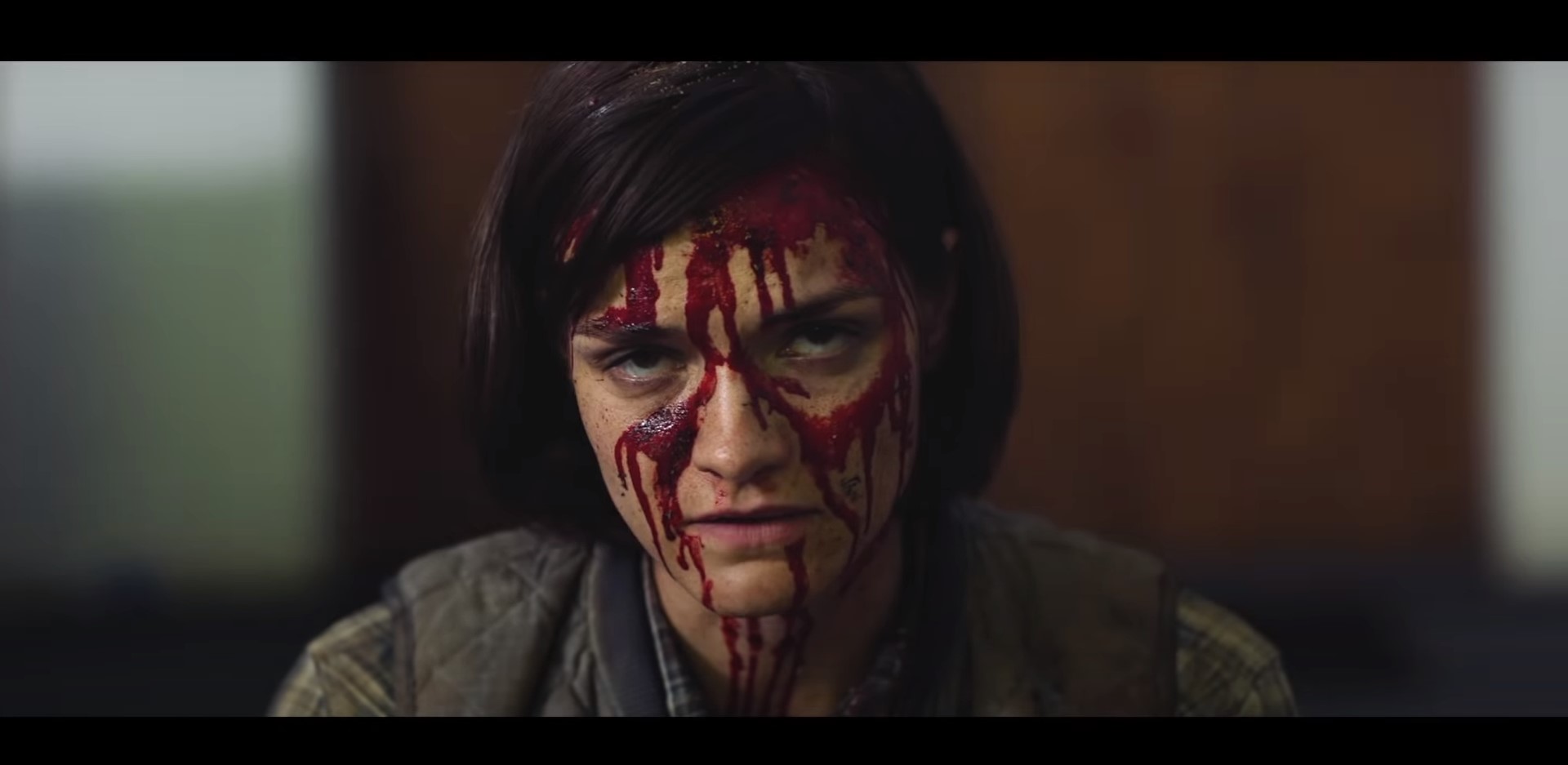
The long-awaited sequel reteamed Zarchi with original lead actress, and also ex-wife, Camille Keaton, distant relative of the famed comedy and stunt actor, Buster Keaton.  Camille Keaton, who looks phenomenal in her 70s during production, steps back into the infamous Jennifer Mills role that made her a household name amongst grindhouse-horror community.  Though completely nude for most of the 1978 film, that part of her performance takes a step back for a new actress to pave a new path in the saga.  Obscure indie scream queen Jamie Bernadette (“Axeman,” “The Bunnyman Massacre”) is ceremoniously passed the torched as the new riches to ragdoll as the Jennifer Mill’s unhappy supermodel daughter, Christy, who becomes haplessly snagged into her mother’s unforgotten past.  Bernadette offers a variable beauty and a diverse poise that doesn’t make Christy a carbon copy of Jennifer Hills, but the actresses deliver the same apathetic venom of a woman scorn.  More of a carbon copy is the four backwoods bumpkins fuming over Jennifer Mills’ vindictive dissecting of their dead relatives.  The gang is spearheaded by Beck, played by Maria Olsen who, like Bernadette, has made a name for herself in low-budget horror having roles in films such as “To Jennifer,” “Starry Eyes,” and “Gore Orphanage.”  Olsen projects Becky as the gas station attendant from Hell, someone you don’t want to interact too long with as you’re pumping gas in the middle of nowhere, but Becky is not a woman of a few words who constantly has to remind us, to the blistering point of annoying, that she must avenge her late husband’s sinful murderess.  The rest of the gang didn’t impress much after that.  Jonathan Peacy has a chance to shine from out of the extra and bit part shadows as the crazed and hyperactive Kevin, brother of Stanley from the original film, and while Peacy channels his best Al Leong look, Kevin is ultimate a big detrimental goof with small dog syndrome than actual menace.    The last two aren’t any better with a lackluster act by Jeremy Ferdman as Andy’s cousin and “Tales of Frankenstein’s” Jim Tavaré’s rather befuddling downplay of Matthew’s mentally disordered father, Herman, who teeters back and forth between morals with a jumbled underlay of piety.  There are not many sane performances in a rather loose and unbridled Zarchi follow up with a cast that rounds out with Alexandra Kenworthy, Roy Allen III, and Holgie Forrester.

Performances aside, “I Spit on Your Grave Déjà vu” is also a cacophony of yelling as the script, from paper to pronunciation, reaches top of the lung levels with every bit of dialogue from every player in this tussle of who’s right and who’s wrong when it comes down to justifications of killing.  Zarchi’s sequel lacks the tact his first film achieves so delicately with Mills post-assault softer approach to lay waste her assailants.  “Déjà vu” satisfies its own revenge kicks with little subtly in trying to be outrageous, outlandish, and off its rocker as the confrontation between Christy and the gang becomes a rancorous grudge match.  What concerns me most about “Déjà vu” is the year in which this sequel takes place.  Between the 1978 original and the 2019 follow up, 40 years have passed, but the characters don’t fit any of Father Time’s natural aging characteristics on the surface.  Becky looks okay as an early to mid-60s woman despite Maria Olsen’s actual age being early 50s at the time of filming and release.  Herman is another one that sneaks into fathomable constructs as a character living a farmer’s life in the latter half of middle age, but I question whether Kevin and Scotty were even born yet.  The two youngsters barely seem to be out of their 30s and the same can be said for Christy where much more of her life is revealed as the story progresses.   If following the script logic, I would assume the story takes place in the 90s, but certain technologic advances, like modern day touchscreen phones, suggests no earlier than late 2000s.  As a whole, time and space don’t appear to exist on any reasonable plane for the film with characters able to bump into each at random intervals despite being a densely wooded and rural location and, for all you cinematographers out there, if your location is supposed to be rural, don’t shoot in at a cemetery with a massive grave footprint with a stream of cars speeding down a busy suburban street.  You instantly lose the illusion.  Zarchi’s intentions were clear to only echo the original while allowing for individuality with a brasher onslaught of right versus wrong, eye for an eye, and misguided righteousness for injustice, but the execution crumbles with excruciating results, never reaching the same poetic justice the first film accomplishes so graphically grafted. 

As far as rape and revenge exploitation is considered, “I Spit on Your Grave Déjà vu” gets about as down and dirty and ugly as they come.  Cult movie curator, Ronin Flix, delivers the Meir Zarchi sequel onto Blu-ray home video, presented in 1080p, full high definition, with a widescreen 2.39:1 aspect ratio.  A+ for natural lighting, skin tones, and overall appeal, Pedja Radenkovic’s cinematography is about as uninspiring as they come artistically, but, as a personal preference, the shots are more organic, raw, and less distracting from the content that’s much more abrasive and interesting.  A more natural framework also more time for Russell FX’s practical effects to be showcased without enhanced imagery.  As long as the details are there (they are), no damage is concerning (there wasn’t), and the framing made sense (for the most part), “Déjà vu” can be considered a win for Radenkovic.  The English language DTS-HD 5.1 Master Audio soundtrack for “Déjà vu” is a blessing and a curse.  Dialogue clarity is excellent and there’s a wide range to exploit, forgive the punned term, each channel with great balance, but remember what I said about all the character yelling?  Also, with the higher bitrate DTS, the quality is too good for some of the applied ambient effects like the exhaust sputtering of an old Ford pickup that sounds way too fake and way too close despite its positioning in the scene. The region A, not rated Blu-ray is stored on a BD50 due in part to the film’s massive 148 runtime and the inclusion of special features that include a new audio commentary with film critic and “The Last Drive-In” host Joe Bob Briggs, select cast interviews, the making of the film, behind the scenes footage from producer Terry Zarchi, and the theatrical trailer. Is “I Spit on Your Grave Deja Vu” the long-awaited sequel to Meir Zarchi’s first film? I’d say they’re two totally different exploitation entities cut from the same cloth with ties only in names and some flashbacks alone, but both films would make for a great double bill that starts with a harrowing, nothing-to-lose, woebegone toned, revenge thriller complimented with a lukewarm and unfocused follow up to help come down off the original’s gripping ultra-violence high.

Ronin Flix’s “I Spit on Your Grave Deja Vu” Blu-ray available at Amazon.com!

EVILs Make Difficulties in Finding God. “Agnes” reviewed! (Magnet Releasing / Digital Screener)

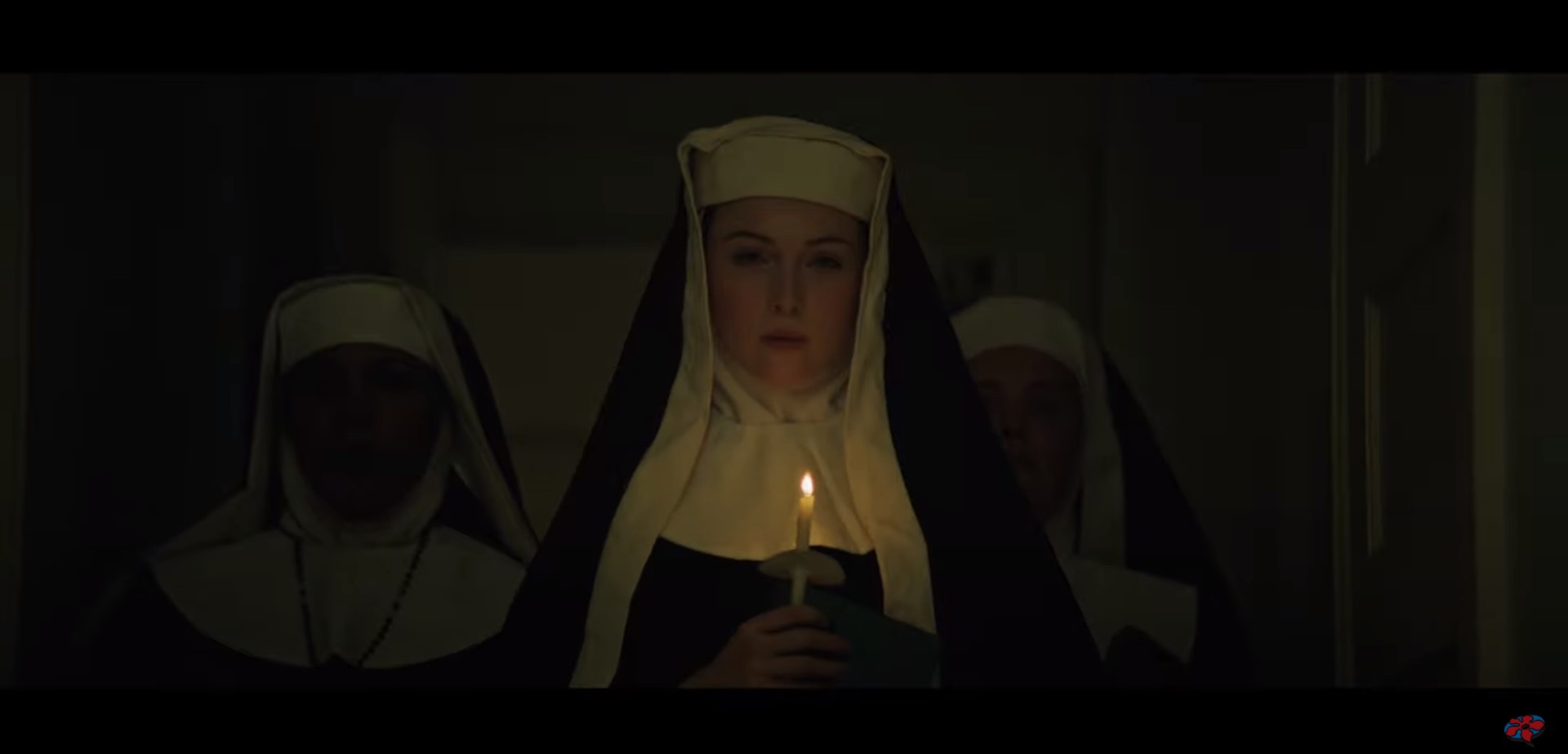
Blemished man of the cloth, Father Donaghue, and a neophyte are summoned to perform the holy rite of exorcism on a possibly possessed nun, Sister Agnes.  Disadvantaged and forced by his own scandal, Father Donaghue is ordered by the local Bishop to oversee the matter before they ship him overseas to avoid further disgrace upon the Church, but the skeptical priest, who has performed many exorcisms in the past, has never once believed he was casting out a demon but, rather, relieving a guilty, tormented soul seeking divine forgiveness.  When the priests confront Sister Agnes, the situation is violent, wily, and unlike any possession Father Donaghue has ever seen before.  The incident casts doubt over Sister Agnes’s friend and fellow nun, Sister Mary, who leaves the convent to try and live on her own and find God in the real world her own way, but a little bit of Sister Agnes has seemingly rubbed off onto her. 

You gotta have faith, sang once by pop-rocker and songwriter George Michael (and Fred Durst, if want to go that route) and though Mickey Reece’s “Agnes” doesn’t necessarily croon a rebuttal, the Oklahoma City born filmmaker surely splits hairs with a formidable blockade that advocates the crisis of faith cinematic model with layered horror.  The “Climate of the Hunter” writer-director’s latest quasi-horror-comedy and full-throttle religious drama questions the validities of finding God on a personal level with a divergently cut screenplay co-written with frequent script partner John Selvidge, whose current post-production penned time-warping horror entitled “Wait!” coming next year.   “Agnes” is filmed in the heartland of America inside Reece’s home state of central Oklahoma and is a reteaming of Mickey Reece and producer Jacob Snovel of Perm Machine with Greg Gilreath and Adam Hendricks’ Divide/Conquer (“Black Christmas” 2019 remake, “Freaky”) as the production companies and is first feature presentation for Molly C. Quinn, Matthew M. Welty, and Elan Gale’s QWGmire Productions.

One-third of the head of QWGmire is also the “Agnes” leading lady as Molly C. Quinn, who doesn’t play the titular character, plays Mary, a nun and friend of the possessed plagued Agnes (Hayley McFarland, “The Conjuring”) with a tragic background that ambiguously parallels a similar path to the mother of Jesus, also named Mary for all you non-Christians out there.  Mary is tender, quiet, and self-effacing but determined to pave her own way without the means of charity, especially those of the unsavory-favor nature, and consulting God for answers.  Quinn is perfect to shoulder Mary’s innocent disposition and does carry her naïve meekness throughout up until Mary’s gradual decline toward her faith that turns the sweet and innocent young woman into a pragmatic doubter, spurred by Agnes’ sudden otherworldly turn from devout to impiety that becomes more than what meets the eye.  However, in kicking off Reece’s film, one would have thought the exorcism of Agnes would emphasize more heavily on Father Donaghu (Ben Hall, “Minari”) and soon-to-be priest Benjamin (Jake Hororwitz, “Castle Freak” remake), but despite the involved build up of Father Donahu’s sordid past that conflicts with the Church and his struggles with the exorcism, Reece and Selvidge ultimately do, in what feels like, a pulling of the plug on a storyline that followings in the footsteps of “The Exorcist.”  That is, in my opinion, the downfall of “Agnes’” story in elimination of really interesting character arcs right in their girthy throes, leaving audiences hanging on Father Donaghu, grocer owner/low-end gangster Curly (Chris Sullivan, “This is Us” and “I Trapped the Devil”), ostentatiously swaggering Father Black (Chris Browning, “Let Me In”) and even the titular character Agnes fails to flesh out fully.  Rachel True (“The Craft”), Zandy Hartig, Bruce Davis, Chris Freihofer, Ginger Gilmartin, Mary Buss, and “Guardians of the Galaxy” and “Suicide Squad’s” Sean Gunn as a standup comedian and Mary’s love interest.

“Agnes” loosely follows a couple of Catholic patroness saints in Agnes and Mary derided in a contrary sense.  Agnes, the virgin martyr in Catholic veneration, opposes the Church in the film with flashbacks of her embracing an indulgent life along with her sexual insults that’s uncouth for the patroness saint of pure little girls.  Mary’s a little more recognizable with a previous, ambiguous account of her child’s death (aka Jesus Christ?).  Plus, there’s the religious imagery, amongst others in the film, of Mary with bleeding eyes as an analogous to the weeping statues. Reece blatantly shows most men and women of the cloth to be unorthodox Orthodox Catholics from Father Donaghu’s troubling allegations to the mocking head priests. Mother Superior throws around her superiority amongst the convent nuns and even the Bishop, who doesn’t ever say a word in his brief scene, appears smug and high and mighty with his stature, letting his assistant communicate (and excommunicate) all the ugly business. Only a non-priest, training to be ordained, in Benjamin is the only innocent, infallible Christian who captures the humble essence of God and the only one who can capable in rejuvenating Mary’s faith. “Agnes” is all about doubting faith whether be by demonic possession, the loss of a child, all forms of corruption, and more, but Mary keeps striving, struggling, and searching for that spiritual lifeline amongst seedy and unscrupulous faithless charlatans slowly poisoning her to be the same. However, the “Agnes” story divides too sharply leaving the acute crisis of faith to be nearly lost in translation and is practically a wandering spectrum of identity that’s roughly craft glued together by Reece.

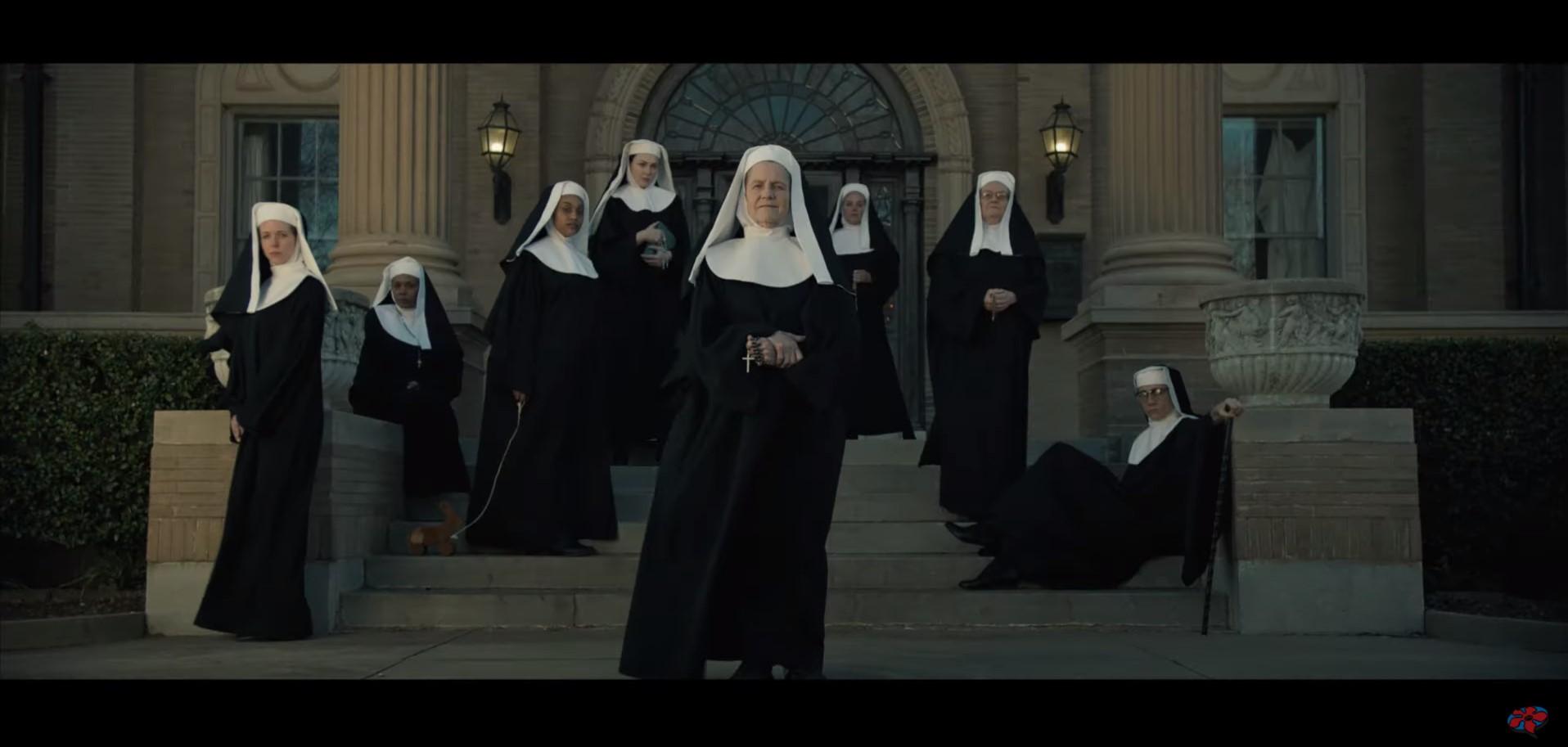
Some may see the film’s poster and excitedly expect Nunsploitation but the reality of “Agnes” digs at the hypocrisy of people and the endless search for faith. What it’s not is the sexual exploitation or sadomasochism of chaste nuns. Give Mickey Reece’s horror-comedy drama “Agnes” a faithful shot come it’s December 10th theatrical release from Magnet Releasing, a subsidiary of Magnolia Pictures. “Agnes” has a runtime of 93 minutes and presented in a 2.55:1 aspect ratio. Typical of any Mickey Reece film, his melodramatic horror-comedy fits into his oeuvre of talking head cinema so leave expectations of brooding and atmospheric milieus at the door for more realistic, down-to-Earth scenes, which is a bit surprising since the cinematographer behind “Hellraiser: Judgement” and “Children of the Corn: Runaway,” Samuel Calvin, has an eye for unhallowed aesthetics. Calvin does produce some perfectly poised shots with the flock of nuns and the ever slightly deviant angle to sharpen a scene. No bonus features were included with the digital screener nor were there any bonus scenes during or after the credits. “Agnes” floats on a haphazard timeline of dark, melodrama comedy for a desperate need of faith against the immense heartache, the crudely selfish, and the absence of morality all of which incessantly imposes upon the good to assimilate.

Those Little EVIL Buggers Ruin Everything! “Ankle Biters” reviewed! (Dark Star Pictures / Digital Screener)


Injured hockey goon Sean Chase has severe on-ice anger issues but leave from the game curbs his temper for the better after meeting an internally distraught Laura Haywood.  Enamored by the mother of four who enjoys rough sex as much as he does, Sean decides to willingly plunge into marriage by asking Laura for her hand against his friends and family passive advise him of the hefty, multi-kid baggage in Laura’s tow.  To set the romantic mood, Sean takes Laura and her young kids to his family’s lakeside cabin where all the locals know him, personally and professionally, but when the girls discover cell phone footage of Sean and Laura’s bedroom exploits and interpret them as Sean hurting their mother, they devise mischievous retribution on Sean in order to protect mommy. 

From being a bare knuckler enforcer using the rink as his boxing ring to becoming the haplessly smitten and blind to four little girls’ perception of him as the bad guy, the once penalty box denizen Sean Chase is now the penalized good guy in the Canadian dark-comedy “Ankle Biters” from writer-director Bennet De Brabandere.  Also known as “Cherrypicker,” the title used in the film, the film is Brabandere’s first feature length film based off a story by lead actor, Zion Forrest Lee (“Hit It”), who oft puts delicate notes of misperception as the main theme in his tale.  Shot primarily in the harbor village of Ontario’s Tobermory “Ankle Biters” is produced by Michael Flax of Flax Films, director Bennet De Brabandere, long time makeup artist Sean Sansom with credits from “Land of the Dead” and “eXistenZ, and special effects company, Mindwarp Productions’, Francois Dagenais (“Saw” franchise, “Chucky” SyFy series).  The film is presented in part by APL Films.

As if seeking some sort of self-punishment, story originator Zion Forrest Lee takes the form of a punching bag for four overprotective little girls; four real life sisters, in fact, played by Rosalee, Dahlia, Violet (“Bad Santa 2”), and Lily Reid, the latter Reid having played a significant role in Johannes Roberts’ recent “Resident Evil” reboot as young Claire Redfield and will be involved in another Lee and Brabandere collaboration in the upcoming apocalypse thriller, “Salvation.”  As a father of three girls myself, the Reid girls are nothing short of genuine, killing their roles with tweaked difference in each of their individual personalities as cute and morbidly curious children and siblings.  Lee offers up a rather over-the-top approach toward Chase’s Mr. Perfect in a way that doesn’t come across naturally as the performance is stuck somewhere between Phil Hartman in “Jingle All the Way” and Chevy Chase in “Christmas Vacation” (I’m in the Christmas spirit with my films, if you can’t tell) with a suave sexy toward the women who swallow it up and dorky goofball toward kids who don’t understand it. Chase’s legendary hockey status has been interweaved into the community surrounding his family’s lakeside cabin, such as the local cops with Officer Brian (Gareth Moyse), local shopkeepers like Jordy (Jordan Mills), and even other vacationers, a pair of lakeside neighbors in Anthony (Doru Bandol) and Caprice Gaddis (Maria Sant’Angelo) with their blossoming teenage daughter Matia (Matia Jackett, “Crimson Peak”). By far one of the more interesting characters, Matia doesn’t actually progress the story with her flirtatious crush on Chase as she’s used as more of a device to propel the Haywood girls into full-blown psycho-kiddies as Matia bites off more than she can chew on a what should have been a routine babysitting gig. The biggest name in the film is the “Who’s Line is it Anyway?” comic Colin Mochrie in an unfunny role as the town’s police chief. “Ankle Biters” houses many curious characters come and go, adding little to story or not adding enough, with select bit performances from Evert Houston, Michael Copeman, and Jani Lauzon amongst the Canadian cast.

Not one single member the cast had that it factor that sparks allurement, intrigue, laughter, hate, or any other kind of emotion they’re trained to extract from you or intent on to make you feel in certain crucial points in the story. As a dark comedy, “Ankle Biters” lacked, well, comedy with an overreaching and flat satire on the innocence of mistaken circumstances. When the opening credits roll with the Gary Glitter “Rock and Roll” sampling “The Hey Song,” a track used for decades at sporting events, and we’re immediately exposed to a confrontational and bearded hockey player punching the eye out of an opposing team player into the title sequence, investing myself was easy as the synch of melodious Jock Jams and brutality is promised for the horizon; however, quickly skating from the ice is our beloved bloody-knuckled goon gone in a matter of oddly edited and sequenced scenes and is rarely seen again, even in flashbacks, as we’re dumped into post-hockey career, clean shaven, and on the behavior mend of Sean Chase trying to quickly nail down a woman with four kids who obviously dislike him a whole lot. I fail to see the transition, I don’t want to see the transition, and I’m angry “Ankle Biters” ended up in this transition whereas having Chase continue to be the injured, but still a fisticuffing and bearded enforcer, going toe-to-toe with brats would have been much more (Canadian) of an amusing watch. The better side of this genre blending coin is the darkness portion that really elevates during the latter half of the lakeside trip. Dead bodies, baby spiders crawling out of an ear, open wound fractured skull, a knife to the eye are just a few of the effective practical and composite applications from Francois Dagenais’s special effects company, MindWarp Productions, that keeps the story grounded with destroying the human anatomy as well as keeping up with the human fallibly in order to not have the film fall completely on its face with everything else erroneous.

Released back in mid-November, “Ankle Biters” landed onto On Demand platforms and DVD home video courtesy of Dark Star Pictures. Even though I’m unable to fully cover the audio and video details from any digital screener, I don’t think what was provided was even a finished version of the film that came complete with top left corner running timestamps and some obvious missing special effects, such as the missing prop knife tip when removed from the eye socket and then the tip is back whole on the next shot. No information on the DVD specs was given to me either. Brabandere and Lee do tease with a follow up sequel involving the “Son of Cherrypicker,” named after the lakeside penned “Cherrypicker murders” in the film which, again, was never made a solidifying connection to other than a brief news report ticker on television. If comparing a film close to “Ankle Biters,” Peter Berg’s “Very Bad Things” fits that gruesome bill with one gross misstep in front of another that eventually culminates to a shocking and even deadlier kill or be killed ending with a grown man versus four little girls.

Watch “Ankle Biters” On Amazon Prime Video

EVIL Wants a Cuddle in “Benny Loves You” reveiwed! (Epic Pictures / DVD)


35-year old man-child Jack still lives with his parents, still plays with toys, and remains stuck in a dead-end job.  When his parents tragically die in a surprise birthday for him and his professional prospects at an all time low, Jack decides to grow up and improve his life, even if that means throwing away his favorite childhood stuffed teddy bear, Benny.   Being discarded in a blink of an eye resurrects Benny to life, seeking Jack’s affection like the good old days when Jack was a child.  There’s only one problem, Benny doesn’t want to share Jack’s love and the toy’s thirst for blood sends him into playful murderous rage against anyone or anything that comes near him.  Jack has come to terms with Benny’s intentions, even mocking up a new craze toy line inspired by Benny, but as the bodies pile up and a new woman comes into his life, Jack must confront his plushy childhood best friend to save what little of a life he has left. 

What an age us horror fans live in!  Our good guy doll Chucky makes a tremendous comeback these last couple of years with a reboot film and a new television series on SyFy!  Killer dolls are back, baby!  Joining in on the fun is another pintsized maniac with just about as much red coloring on its soft nap as Chucky’s stringy hair on top of his head and, also, sees about the same amount red when wielding a knife with homicidal intentions.  From the United Kingdom comes Karl Holt’s time to grown up or die horror-comedy “Benny Loves You.”  Holt’s a one man show in his debut feature film that he doesn’t just direct, but also is the writer, editor, cinematographer, composer, lead star, and producer of this heart-warming and heart-severing, cute and cuddly, gore show.  The 2019 released riot is an exclusive Dread Central (Dread) presented release of a joint production from Raven Banner and Darkline Entertainment.

Alongside Ken Holt as Jack, the failure to launch mid-30’s man still parent dependent, are a slew of individuals with a variety of personalities suited to Benny’s killer taste in protecting his most beloved human.  From home to the office, Benny slays through the competition in the game of life and death, starting with an indifferent bank representative, played by Greg Barnett (“Hot Property”), looking to foreclose on Jack’s family home.  Yet, Jack has seemingly always been destined for a grisly fate, just not his own, as his parents (Catriona McDonald and Greg Page) die in a “Final Destination” style accident rooted by the very theme of the story – his inability to grow up.  As when Jack and Benny’s new dynamic goes through a 180-degree positive spin on Jack improving his downtrodden life is when more unfortunate souls become ensnared in Benny’s mission.  More of the oppressive office environment, with snide performances from a pug pooch-adoring and stern boss in absolute deadpan by James Parsons and a jerk colleague in the running for a promotion played perfectly tat by George Collie.  Then there’s the love interest in Claire Cartwright (“Souljacker”) as Dawn, a toy tech engineer who finds common interests in Jack and falls for him.   Cartwright exudes pleasure seeking in an overreaching of every man’s fantasy categorized kind of gal.  Holt tries to maintain Dawn’s perfection with her own Benny-esque storyline but that never brings the character down to his level of trouble, leaving Cartwright cornered in being just a slave to Jack’s coyness instead of a sympathetic character.  Cast rounds out with Anthony Styles (“Razors: The Return of Jack the Ripper”) and Darren Benedict (“Aux”) as two oblivious cops who are actually inching closer to the truth as well as David Wayman (“Seven Devils”) as a real estate agent and Lydia Hourihan (“Inmate Zero”) as Jack’s ex-girlfriend.

While Benny may not have the massive sex appeal of a one Brad Dourif or a mega franchise with vary degrees of success, “Benny Loves You” is still a delicious small fry of the toys gone murderously wild horror-comedy subgenre that dapples into a little of everything from gratuitous gore to the heartfelt warm and fuzzies.  The blend of practical and composited computer imagery of Benny’s movements is the work of a mad genius and I’m sure we have Holt to thank for that as well under his many hats in production.  Benny strikes me more differently than the likes of “Child’s Play” or even the anthropomorphic toys of “Puppet Master” with an encompassing amount of personality.  From his cutesy voice box limited to only a handful of says like cuddle me or Ta-Da! to the way he flops around like a possessed rag doll with wide eyes and an ear-to-ear smile, Benny’s an easy villain to love and is easily able to root for when the unlikeable people of Jack’s life suddenly hem in with unforgiving, browbeating mercy, making Benny the cutest and most loveable anti-heroic punisher of the killer toy canon. Holt’s film doesn’t come out flawlessly unscathed, however, where minor issues of lightspeed pacing and choppy editing aims to get through one scene to the next leaving little to sink in when plot points, monkey wrenches, or heart-warmings transpire. Much of the background into Benny’s sudden erect to life goes unexplained but that Devil in the lack of details is better suited for a film about a discarded toy coming to life – “Toy Story” did it and look how successful Disney made that franchise – and while the whole film is fluff filmmaking at is finest, you have to find appreciation in the smallest details, especially with Holt’s forging of horror scenario tropes into embarrassing personal ordeals that don’t even involve the titular killer.

I’m sure “Benny Loves You” has already been through the toyetic process, at least on the indie production circuit, but, in any case, you can definitely own Karl Holt’s wonderfully macabre and instant cult classic on DVD home video from Epic Pictures, a Dread picture label. The not rated, region free release clocks in at 94 minutes and is presented in a widescreen 2.35:1 aspect ratio. Where Benny shines as a grisly tale of saying goodbye to your childhood stuffed friend, the clarity in the image state is not so defined with a meager detail and sharpness. Scenes with the matted CGI often appear blurry and chunky with Benny very flat in what should be his grand alive and breathing opus. The English language Dolby Digital 5.1 lossy audio too inadequate for the scope of content. Holt included a wide range of sounds, and this audio track is bridled to curb in an assortment of a blend of action, horror, and the downright awe of Benny’s cuteness. Dialogue a bit muddled but overall perceptible. So far, audio and visuals are a blinking sign to a rather cheapie DVD presentation and the lack of special features hits the last nail into the mass-produced coffin, reaffirming that the standalone movie home media is all well and alive and that’s okay with me in the case of “Benny Loves Me.” A chip off the old diabolical doll block, “Benny Loves Me” is an out of the blue hit, a real cutup, and the perfect Friday night fright to enjoy with your own personal favorite, stuffed animal buddy.

MUST OWN!  Bring Benny Home on the “Benny Loves You” DVD!