
On the streets of London’s Whitechapel district, women are afraid to walk the streets alone at night and angry mobs have begun to turn their backs on the police’s ineptness on catching a killer. Jack the Ripper is what the people of London label the maniacal murderer who, with surgical precisions, guts his victims and leaves their lifeless bodies on the dark, dank cobblestone streets. Scotland Yard Inspector O’Neill is joined by his friend and American counterpart, a New York police officer named Sam Lowry, to hunt down and stop Jack the Ripper’s killing spree. Deeper into the investigation, the officers are informed that the suspect they track would have medical background with a skilled blade hand, but even with that information, Jack the Ripper alludes authorities. Lowry’s romantic involvement with a young woman named Anne Ford, whose under the ward of the notable Dr. Tranter, might be very connective tissue between the constabularies and the secretive medical society needed to crack the case of the notorious Jack the Ripper before he strikes again!
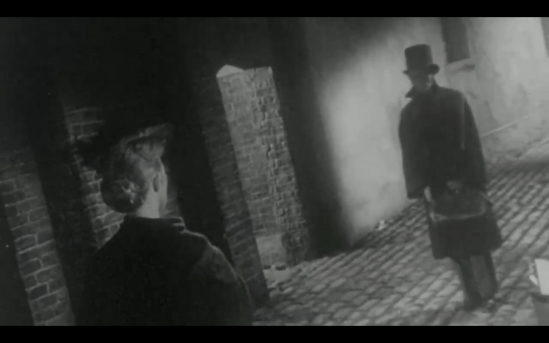
Jack the Ripper is a real and iconic villain that not only terrorized the streets of London, but had later graced the screen many times over from Bob Clack’s 1979 thriller “Murder by Decree” to the 2001 Allen and Albert Hughes gothic and graphic “From Hell,” starring Johnny Depp. Before the production of those films, before Jack the Ripper really had any kind of footprint in cinema, Robert S. Baker and Monty Berman directed the 1959 mystery-thriller “Jack the Ripper” from a screenplay by Jimmy Sangster and Peter Hammond based off the theory that Jack the Ripper had a medical practice history. Baker and Berman’s film hit the controversial market from right out of the gate with grisly and ghastly murders, for the circa 1950s, and bared topless actress frivolously to insinuate the lady drunkards, the showgirl dancers, and the lone walking women as ladies of the night. Prostitutes would have been burden the selling of an already certifiable X film from the BBFC and the MPAA. However, the filmmakers constructed alternate cuts, shorting the grisliness to just grim and sheathing bare breasts with articles of clothing in shot for shot censorship. Only on the continental, aka French, version does a truly uncut and complete film live to excite, but instead a complete feature, the unmolested scenes are only available on the bonus features of the Severin Films’ release. That’s not to say that the U.S. and British versions are a complete waste of time. The classic time is utterly timeless and gripping that offers up immense amounts of whodunit suspense, implied sensationalisms, and an adequate take on how incompetent law officials can be exhibited when politics and women are afoot. Plus, the U.S. version, bought and presented by legendary producer Joseph E. Levine, comes with a brassy score by Jimmy McHugh and Pete Rugolo. The British version, also known as more of the approved director’s cut of the film, is scored by Stanley Black.
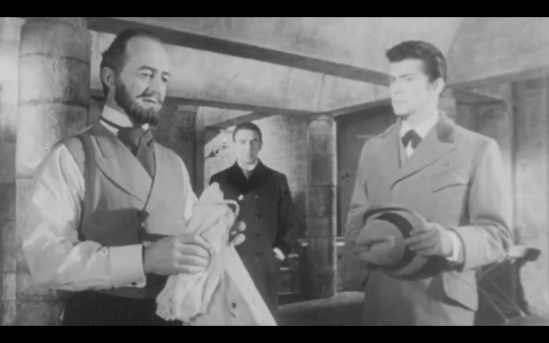
Tall, handsome, and walking into another country like he owns the land, detective Sam Lowry is introduced at about 10 minutes in, standing at a bar and reluctant to be rough and tough with a mob ready to lynch him for potentially being the Ripper because of his inquiries. Lowry’s charming persona with the women, like the bar maiden and Anne Ford, are only offset by his complete incompetence to be a police detective. Lowry does absolute zilch investigation and, instead, goes out on a date with Dr. Tranter’s niece and makes snarky comments at a merciless, ready to judge horde of scared Whitechapel residents. American hunk Lee Patterson stands out amongst the gothic rich atmosphere to the point where’s he, like his character, is an outcast and Patterson’s talents could only take him so far into a gloomy, morbid narrative that was unwilling to accept his chiseled chin and starry eyes. Eddie Byrne fit the mold better than Petterson as the Scotland Yard Inspector at rope’s end with not only Scotland Yard, but also the rest of London. As Inspector O’Niell, Byrne, who went on to star in “Island of Terror” and “Devil’s Darkness,” humbly accepts his restraint as the Irish born actor takes a wallop from all sides and still remains calm, collective, and ever present on the task at hand with a character being beat from all ends of the spectrum. Anne Ford opposites Lowry as the potential love interest who has come of age, as she notes a few times, to takeover temporary responsibilities at the hospital where her uncle performs dire surgeries. Being oppressed by her own family and seeing London being ripped a part by its own people, Anne latches onto Lowry, an outsider, to find a connection or a release from sullen cloud that hangs over Whitechapel. Unfortunately, Betty McDowall is sorely overshadowed by many of “Jack the Ripper’s” formidable characters and that Anne is not wholeheartedly written though her character is important to the story. Even the showgirls sizzle in more ways than one than does McDowall whose kept in check by Lowry, doused with someone’s problems, and only given an allusion of her worth in a moment of fright. Ewen Solon (“The Curse of the Werewolf”), John Le Mesurier (“The Jabberwocky”), Barbara Burke (“Blood of the Vampire”), Denis Shaw (“Curse of the Werewolf”), Bill Shine (“Burke & Hare”), and Anne Sharp (“Murder on the Campus”) round out the cast.
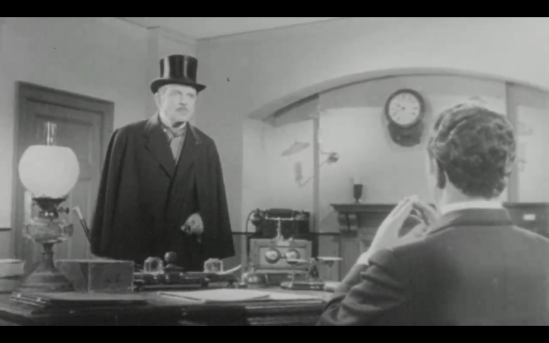
“Jack the Ripper” is a classic, literally and physically. The scaled down sets of the Whitechapel area bring to life the tenebrous soil of 19-century London. The elegantly painted backdrops of tall mast ships enshrouded by synthetic fog paint an archaic picture of how movie magic has progressed over the decades. Attention to detail in the set construction and the flavor of time period customers brought a sense of authenticity that nostalgically harps on the once was that now only exists as recorded cinema history. “Jack the Ripper” casts a forgotten beauty in the barbarism. By today’s standards, “Jack the Ripper” would be written off as banal and uninspired by critics and audiences, but if you can imagine yourself in 1959-1960, Robert Baker and Monty Berman just blew your mind with onscreen taboos and in America, Joseph Levine’s technicolor blood scene, with a duration of only a few seconds, would be the viral talk of the town.
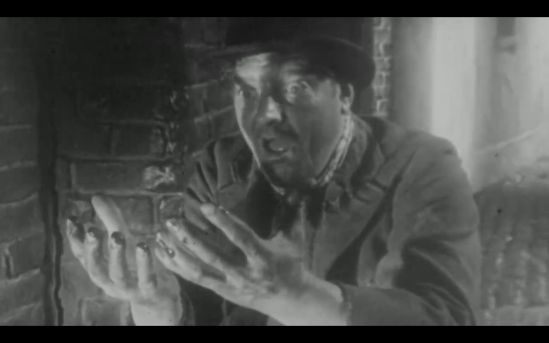
Severin Films presents “Jack the Ripper” onto a region free, 1080p Blu-ray for the very first time anywhere! Complete with two cuts of the film, the British and American version, Severin presents both in their released aspect ratios of a lossy standard 1:33:1 in the British version and 1.66:1 in the American version, both in B&W with a pop of technicolor in one scene in the American version. Severin’s transfer is perhaps the best we’ll see from an original print that’s laced with scratches, but a bit more light, or some brighter contrast, sheds some light in the inky corners while managing a rich appearance that’s not monochrome or sepia. The English 2.0 audio track maintains an equal quality with some static in dialogue and ambient tracks. Jimmy McHugh and Pete Rugolo’s brass-heavy score thunderously pack the scene that surely takes the lead amongst the tracks. Bonus features include snippets of the continental versions with the extended violence and nudity and the audio commentary with Robert S. Baker, screenwriter Jimmy Sangster, assistant director Peter Manloy is extracting and interesting helmed by horror historian Marcus Hearn. Also included is an interview with the author of “Jack the Ripper” The Murders of the Movies” Denis Meikle, “The Real Jack the Ripper” featurette, theatrical trailer, and poster and stills gallery. Exposed and disclosed, the various faces of Robert S. Baker and Monty Berman’s “Jack the Ripper” now have a hi-def upgrade and though a full continental version eludes this release, Severin provides the cliff notes in order to not overcook the same story a third time.
Category Archives: Death
Two Evil Guys Stick to the Script! “Snowflake” review!
Tan and Javid go on a killing spree in anarchy-riddled Germany after their families were killed in a house fire in which emergency services were purposefully withheld. After slaying bystanders at a diner, they happen upon a script in a stolen car; the script reads line-by-line, word-for-word on everything the two men say and do. Simultaneously, the wealthy Eliana is hunting them down, seeking revenge for the death of her parents by collaborating with her parents’ former bodyguard to hire cold-blooded serial killers to kill the men. As Tan and Javid try desperately to not follow script, the two men seemingly can’t avoid their fate along with circumventing a variety of dangerous people crossing their path. Only a couple of people from the script can possibly save them, an Angel named Snowflake, and, possibly, the screenwriter himself.

Adolfo Kolmerer’s “Snowflake” has maybe little-to-no relevance to the derogatory term commonly used by right-winged conservatives when describing the assumed liberal millennial with a heightened sense of uniqueness and having a knack of being overly offended by, well basically, everything. Kolmerer’s “Snowflake” also has no correlation with the concept of winter, snow, or even Christmas. So, the question is, what the hell is “Snowflake” about? The 2017 shocker, also known originally as Schneeflockchen in the German language, is as cold and as unique as any snowflake mother nature can cruelly reign upon down a person and methodically compounds the series of gritty events, from two sets of characters, through a head-bearing funnel that’s supernaturally poised and brutally executed. From writer Arend Remmers, the script itself is smartly constructed as a narrative character, woven to become a pivotal motivator that not only churns out characters’ supposedly ill-fated destinies, but also a metaphysically, arch-able player in the grand scheme of gruesome revenge and absolute atonement that within the bookend pages of the treatment has unorthodox religious themes and a radical, almost anti-hero like quality of rising against the powers of racially insensitive autocratic and populist agendas. The film’s location of Berlin isn’t the only thing that’s anarchical driven as Kolmere and Remmers bends cinema conventional rules to enthrall one punch to the gut movie.

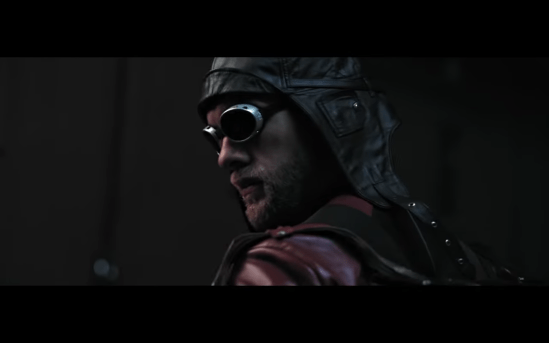
Erkan Acar and Reza Brojerdi play the brothers in arms, Tan and Javid. As they venture on nihilistically slaughtering quest to come face-to-face with their maker, Tan and Javid have nothing more to lose and Acar and Brojerdi depict themselves in that predicament while maintaining their characters’ seamless, longtime friendship, like watching two sets of personalities move as a single unit. Tan and Javid are hunted down by another character seeking vengeance for her parents are the wrong place, at the wrong time. Eliana has money, status, and all that she could ever want, but when she befriends her family’s bodyguard who is then let go from the position, she loses sight of the meaning of uncoupled protection in Berlin’s anarchy state and also loses sight of what’s truly important to her – her folks. When they’re slaughtered, Eliana, played by Xenia Assenza, is hellbent on exacting retribution. Assenza clearly proceeds with a cold, drafty personality for Eliana with unrelenting ambition. The character is scribed as ultimately over flawed if not even expressly obvious and Assenza does a fine job bubbling those flaws ever so delicately to the surface in every loss Eliana sustains. Tan, Javid, and Eliana have a very grounded reality about them when contrasted with other characters such as the superhero-esque Hyper Electro Man (Mathis Landwehr) with the steampunk power backpack of electrical power, a blind man named Fumo (Eskindir Tesfay) with fits of fury, and a madman named Caleb (“Braveheart’s” David Gant) who could very possibly be God himself. Electrifying, mysterious, and powerful can be their only descriptive adjectives that steer “Snowflake” into the graphic novel universe. David Masterson (“German Angst”), Gedeon Burkhard (“Inglourious Basterds”), Selam Tadese, Adrian Topol, Judith Hoersch, Alexander Shubert, and Antonio Wannek, Bruno Eyron, Martin Gores, Mehmek Kurtulus round out this amazing, eclectic cast.
On a single read through of the synopsis on the Artsploitation’s Blu-ray back cover, trying to process the quickly summed up tale might also quickly scorch and burn off invaluable brain cells, but “Snowflake” has an immensely alluring nature once reviewed on a second read. Might not be a tearjerking romantic comedy and can be stupendously offensive with hints of barbarism, but the fantasy element, infused with Western composition at times, is stone strong with this film that’s more than just a Tarantino or Coen brothers’ akin film as the summary impresses to potential viewers. I’d toss in their some steampunk aspects of early Terry Gilliam or the delicate fable-isms of Marc Forster. It’s also a little razor blunt like Takashi Miike and perhaps could have surrealistically lobotomized and strenuous dreamlike sequences that speak to the likes of David Lynch, in choice scenes. Adolfo Kolmerer can be considered an equivalent to not one, but all of these visual icons and mega storytelling filmmakers.

Truly unique like an ice crystal falling from the winter sky, “Snowflake” falls onto Blu-ray home video courtesy of Artsploitation Films. Presented in 1080 and in a widescreen format, “Snowflake” vividly impresses with a broad color palette and a sleek, crisp digital picture. Hyper Electro Man has vibrant electrical currents snaking around his body and arms that aren’t just blurry blobs, but maintain two-tones of color and depth. Various decrepit buildings have the details pop out to bring an anarchy German to life. The German-English-Polish Dolby Digital 5.1 audio track has range, balance, and fortitude with a clarity and prominence in all spoken dialects. English subtitles are available. Bonus features included a behind-the-scenes look at “Snowflake” that clocks in just under a hour and trailers of other Artsploitation films. “Snowflake” has an original frame that’s built to sustain the broken westernized violence and is tightly glued together with likable berserk characters and an engaging labyrinthine story that ultimately feels genuine, versatile, and thematically relevant in, nearly, a not-so-abstract vision.
Time Travel to Stop Evil via Astral Projection! “Mandao of the Dead” review!

Astral projection defined per Wikipedia: an interpretation of an out-of-body experience that assumes the existence of an “astral body” separate from the physical body and capable of traveling outside it. The otherworldly experience befalls suddenly upon Jamison Mandao, a young man living off the royalties of his late father’s flailing popular cereal brand, and his recently discovered, and also bewitching, new astral plane exploring powers land him in a macabre laced predicament with his adult squatting nephew, Jackson, and his nephew’s blood hungry, murderous ex-girlfriend, Maeve. With a little help provided by Jamison’s astral enthusiast relative, cousin Andy, and Maeve’s recent victim whose ghost is stuck in limbo, Jamison must use his astral projection to travel back in time, rearranging the series of events in order to not only appease the desperate pleads of a ghost, but to also save his daft, but good natured nephew becoming her next hapless fatality before the stroke of midnight segueing into the Day of the Dead when their chance to live again will rest in peace for eternity.
Here we go again with a time traveling genre film, the horror-comedy “Mandao of the Dead” from writer, director, and star Scott Dunn. Dunn’s sophomore feature film of 2018 dares the chances in being overly and, frankly, unnecessarily lambasted by internet trolls aiming to pick apart the film, hunting vigorously for time travel plot holes, but, and I reiterate this point again, that Dunn’s film is mainly a comedy where the laws of physics and ideas of probability have no bearing on Dunn’s grim fantasy loop. Despite the rather clichéd title suffix implying a facet from the zombie genre, “Mandao of the Dead” refers toward the post-Halloween, more traditionally Hispanic recognized Day of the Dead on November 2nd and while Dunn uses the day typically held for respect of past lives, the “Schlep” director conjures up a lively twist upon deathly circumstances that forms a cut-off date when that slither of twilight time for the dead ceases to be no more.

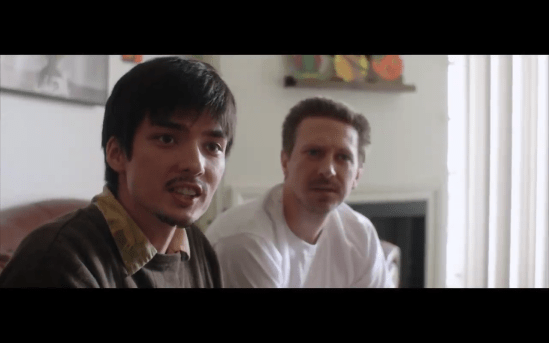
Alongside Scott Dunn as Jamison Mandao, Sean McBride buddies up as the freeloading nice nephew, Jackson. Dunn and McBride have previously worked together in Dunn’s first feature entitled Schlep and their rapport in “Mandao of the Dead” indubitably confirms a harmonious witty banter and a light-hearted dark comedy in fine, mechanical form. McBride’s spot on heartfelt halfwit Jackson nicely compliments Mandao’s knack for impatient contemplating. Throw a dude name Darth into Jamison and Jackson’s inert existence and things get dire and interesting. “2-Headed Shark Attack’s” David Gallegos isn’t portrayed as your friendly neighborhood ghost nor is he a malevolent one; instead, Darth begs for help and the cosmic universe delivers to him an astral projector and Gallego’s couldn’t be more sharply colorful with his spontaneous humor. Together, the three 30-something year-olds are pitted against the dark horse that is Maeve. Playing an incognito blood drinker, Marisa Hood has an innocence about her that renders a false sense of security and, in Jackson’s case, a pair of weak knees. Alexandre Chen, Sean Liang, and Gina Gomez round out the cast as characters finding their ways into the Day of the Dead debacle.

While we’ve seen where timelines become mangled by the interference of a time traveler and where the theme is fondled with in “Mandao of the Dead,” Dunn doesn’t over knead the narrative with it though certainly a centerpiece of the film as a whole. Mandao’s adventure with astral projection and his middling with the planes are only the beginning that have stirred a frenzy of unhappy campers in the spiritual world. The whole event of Mandao going back in time, twice, to save people is the proverbial tip of the iceberg and a welcoming taste of what’s to come from Dunn and his team. Shot in 10 days with a tight budget, Dunn, who also self-produced and edited the final product, has crystal clear storytelling abilities even with some of the rough, less glamourous edges encompassed within the world indie filmmaking. The characters are well written, from Cousin Andy, to Jackson, and to Darth, as their three various personalities colliding under a thin, blurry gothically influenced omen line.

“Mandao of the Dead” arrives onto Amazon Instant via Prime Video and presented in a widescreen, 2.35:a aspect ratio, and clocking in at a runtime of 74 minutes. No physical media specifications were provided now or for future release. With a budget around $13,000, the English stereo audio track and Panasonic GH5 image quality are finely calibrated and a flat out success for streaming platforms. No bonus features are included with this release. Vampirism, science-fiction, spirits, and astral planes, “Mandao of the Dead” is Scott Dunn’s golden genre-bending film of ghoulish and space and time continuum disproportions! So much so, a sequel has been announced, “Mandao of the Damned,” sparking a positive anticipated interest, by at least this reviewer, for the next chapter of a hapless, macabre adventures that Jay Mandao and Jackson will step into in the next astral plane!
Finding Love in the Most Evilest Ways! “Brutal” review!

One man kidnaps women, gags and bounds them inside his bleak apartment, and unleashes a fury of hate and disgust whilst searching for one woman who will understand him and his relentless, and vehement, scouring. One woman lures highly aroused men back to their apartment for what they believe will be a night of passionate embrace or of simplistic carnalities of inhibition. While the guys are thinking with the wrong head, the woman slices and dices them to a pulverized pulp of death meat and repetitively fillets their manhood postmortem without guilt. She, too, also searches for something, but is more reserved about it as she allows men to verbalize their needs and desires to her. As the two killers go through the melee day-by-day, they eventually find each other, but before realizing their compatibility, the killer inside themselves square off against each other in a one-on-one bout of maniacal mayhem that must unravel in blood before unsheathing true love.

Who knew that love could hurt so badly? Director Takashi Hirose exhibits a painful peak into two desperate swains callously searching for some understanding, some deep rooted mutual pain that plagues their own embodiment, in “Brutal,” Hirose’s 2016 feature that packs a bloody brawling wallop of the human will toward punitive punishment and desperate determination. The Japanese filmmaker also wrote and co-produced the three part chapters that segments Man, Woman, and Man and Woman into a commingled three act narrative of utter chaos that glorifies finding a soulmate in the most insane circumstances. E-Harmony. OKCupid. OnlyFarmers.com. None of these so-called matchmaker websites have the formidable fortitude to remove all the political niceties and to dig into the human psyche the way that only Takashi Hirose can to lure out and strip one person’s entire vulnerability and, essentially, the parts that makes us ultimately human into a raging, yet emotionally unstable, hapless lover.

Butch, the one and only moniker for the actor, portrays the Man who is a very strong and determined man that brings to his apartment many nice, and sometimes unsavory, attractive ladies; however, he doesn’t whip them up an aphrodisiac dinner or sweep them off their feet with a romantic Rom-Com. He likes to move the relationship along, at a hare’s pace, with getting down and dirty and in certainly not in a sexualized manner. Butch pinpoints the man’s ambitions, machine-like in his will with a hint of softness behind the eyes when plucking through the headcount of numerous women for his match. Ayano is equally compelling as Woman and though Ayano has brawnier range of comedies and dramas under her belt, she notches gore and shock as if it’s simple to get stabbed 50 times and be completely nude with unpleasant prosthetics garnishing the naughty bits of your body. Butch and Ayano are quintessential to “Brutal’s” languishing love story and present themselves with such confidence, which is made key from their previous work with Takashi Hirose – Ayano worked with Hirose in his dramatic horror short, “Bandaged” in 2011 and then Hirose worked with Butch in a 2012 zombie short entitled “Moratorium” that starred Japanese cult and former pinku actress, Asami. The film also stars Katrina Grey (“Vampire Reborn”), Takashi Nishina (“Ringu 2”), Naho Nakashima, and Nanako Ohata.

Hirose doesn’t hold back the punches. In fact, he’s added one or two more for good measures. Helmed by a three person crew and one visual effects artist, the special effects department ramps up the rampage and carnage, making poetry out of ruthless romanticism. The end result is absolutely killer with stab after stab, gore galore, and post-mutilation prosthetics of the naughty bits. Hirose steps aside for fight sequence director Satoshi Hakuzen to exalt his gift for action sequences. Having previously worked on “Resident Evil: Degeneration” and “Dead Sushi,” Hakuzen showcases his mixture of gore and shock horror and hand-to-hand combat in the smallest of quarters while still seamlessly continuing Hirose’s narrative. Yet, “Brutal” doesn’t follow much of the laws of basic human biology as when people are knifed multiple times, whether spreading punctures along the various parts of the body or more precise slices into one focused area like the crotch, they keep breathing breath and they keep moving like their Arnold Schwarzeneggers covered T-800 endoskeletons in “The Terminator” and that unfaithfulness to realism inches “Brutal” more toward a fantastical flavor.

Unearthed Films and MVDVisual present Takashi Hirose’s “Brutal” onto Blu-ray for the first time and it’s brutally honest with a phenomenally fair picture engrained from a singer layer BD and presented in 1080p with a widescreen 1.85:1 aspect ratio. Colors really match the film’s coarse tone of a desaturated hue where the blood runs like caramel colored water. Textures look fine, especially around the natural looking skin toned bodies of each person, and the no noticeable issues with compression. The Japanese language Dolby Digital 2.0 audio track fairs equally well with a prominent dialogue track and a sickening range of lacerating thrust that make wet whiff sounds of cold steel that much painful. Tatsushiro Hirose’s rock score unfortunately wanes in soundtrack behind the intensity of Man and Woman’s blood thirst for love to the point of almost non-existent. Subtitles sync up nicely to the dialogue track. Bonus features a clipped production progression of behind-the-scenes, trailers, and music videos. “Brutal” and Unearthed Films found each other, just as Man and Woman in their twisted circumstances, and present an entertaining 67 minutes that solidifies Takashi Hirose one hell of a romanticist and absolutely, 100% bestow his film a true-to-form designation.
Evil Ousts Evil in “Christmas Blood” review!

On Christmas Eve for over a Decade until 2011, a psychopath dressed as Santa Clause hunts down people on his naughty list, people whom have, at one time or another, been incarcerated. Santa’s violent kill streak ends when detective Thomas Rasch tracks puts multiple bullets into Santa after the gruesome slaughter of three people. After 6 years of imprisonment, with no sign of improvement from his holiday hallucinations, Santa escapes to continue checking and crossing those unlucky souls off his naught list, leading him to Alta, a small, quiet village in the northern most part of Norway where one woman when unpunished on his list. Unbeknownst to Santa, the woman he intends to frightfully dispatch has committed suicide, leaving behind a daughter, Julia, to oversee her mother’s home. Struggling to cope with her the loss of her mother, Julia’s college friends from all over the world embark to comfort her on Julia’s first Christmas without her mother, but the gesture of goodwill only speaks to their impending doom with a serial killer Santa ready to reign in Christmas with red blood soaked, holiday fear.

“Christmas Blood, aka “Juleblod” in the original Norwegian lingo, is Reinert Kiil’s yuletide splattering spectacular. Kiil writes and directs a new horror-holiday classic of the Norwegian variety that turns the jolly, red nose, cookie-eating fat guy into an axe wielding maniac. “Silent Night, Deadly Night.” “Black Christmas.” “Jack Frost.” “Christmas Blood” joins the high ranking level of a niche genre, the X-Mas horror genre, which doesn’t see really the light of day in conventional theaters, but home video unsheathes the new life into films one may have never heard of such as Kiil’s “Juleblod” Yet, the overall body of work for Christmas films is very black and white. They’re either overly feel good films with a blanket of pure white joy and happiness or utterly insane and soaked with the crimson interior body fluid, unless you count Die Hard or Lethal Weapon as Christmas films than one can make a case. “Christmas Blood” is certainly in that far right polar opposite of extreme violence, but is solid and engrossing, chopping body parts away with trepidation and stringed up with multi-colored lights.

Ringing in the holiday screams are young victims typically associated with familiar slasher archetypes. The “Christmas Blood” prey, typically adorned by actresses due to their ability produce toe curling, are a pact of university school friends gathered together to rally around one who has recently lost her mother to suicide. Helen Eidsvag, Haddy Jallow, Yassmine Johansen, Karoline Stemre, Kylie Stephenson, and Marte Saeteren share the limelight as unsuspecting Christmas carnage-fodder and all of the actresses hail from Norway with the exception of Kylie Stephenson, who has odd interjecting into Norwegian conversations with her Australian English dialect. Written as great friends, but also depicted as the worst of enemies as various facets of animosity slithers between them, the actresses pull off of their ill-fated character quirks well: Eidsvag as the innocent and naïve Sanne, Jallow as the drug indulgent and secret keeping black sheep Kitika, Johansen does stern and uptight girlfriend well in Katja, Stemre as a favorably licentious mute Elisabeth, Stephenson is the fun-loving non-national in Annika, and Saeteren as the heartbroken Julia with loss of her mother. I’m not sure if “Christmas Blood” would be a socially acceptable film in the States and not because of the blood-spatter blasphemy of traditional holiday and Christianity values, but because of how the one and only black character is treated throughout the narrative in a predominately white movie. Kitika has no verbal filter, smokes weed despite her host’s severe objection, slept with and was going to sleep with again her friend’s boyfriend, is kicked out into the freezing cold along with said friend’s boyfriend by the rest of her white friends, and is eventually slaughtered and stuffed into Santa’s sack. The remaining cast includes Jørgen Langhelle, Stig Henrik Hoff, Sondre Krogtoft Larsen, and Andreas Nonaas.

“Christmas Blood” is a retro-grade horror film that very merrily feels like a product of the Golden Age of slasher-survival genre from the 1980’s with a powerful and unstoppable aggressive killer, a delectable high body count, and a significant calendar date to infamously memorialize the event, similar to Friday the 13th or Halloween dates that are have been synonymous to Jason Voorhees or Michael Myers. Generally speaking, Santa’s already this jolly mystical being worshipped by all and in “Christmas Blood,” that mysticism is really exploited, but as a frightful killer Santa who is seemingly able to be in two places at once and survive a barrage of bullets. Only a couple gripes linger that don’t necessarily derail Santa’s slay-ing of bitchy former co-eds, daft police offers, or any unfortunate person in his blizzard path of butchery. For one, the wordy title card sequence explaining the background of serial Santa’s 13-year killing spree is sorely out of place and slightly kills the buzz built up initially by the gruesome opening scene that sets the morbid tone. Secondly, on the technical side, the lighting is very dim lit. The coloring scheme from the decorative bulbs is festively great and there’s also a very low-tone neon red, blue, and yellow juxtaposed against a bleak, cold setting as if walking through Amsterdam’s Red Light district at night, but with less people, more snow, and no peep shows, but the overall lighting is thin-to-damn near black at times that, shamefully, shades some of the gore work into a silhouette something and your eyes attempt to define what is being seen, but can’t definitively consume the form. Luckily, numerous gory moments make the cut in the light that include exposed entrails and some sheer brutal force with an axe to the neck and to the vagina!.

Artsploitation Films present “Christmas Blood” onto DVD this December. Presented in a widescreen 2.35:1 aspect ratio, the details are a little lost in the dim lighting as mentioned before, but the image quality looks vibrant on colorful in the mise-en-scene lighting and there are no issues with artefacts. The Norwegian Dolby Digital 5.1 surround sound track is rather pristine like a bow-wrapped present under the tinseled tennenbaum, gifted with clarity, synchronization, and no distortion in any aspect. English subtitles are available and are synched well. However, Artsploitation’s release offers no bonus materials aside from a static menu, but this Reinert Kiil’s “Christmas Blood” snarls Merry Fucking Christmas by bastardizing the popular Scandinavian folkore of the genial Saint Nick into a fierce and frightening killing machine!

