EVIL Preys on the Goodness of the Weak. “Lady Terror” reviewed! (Sector 5 Films / DVD)

“Lady Terror” is on the Prowl.  Now on DVD!  

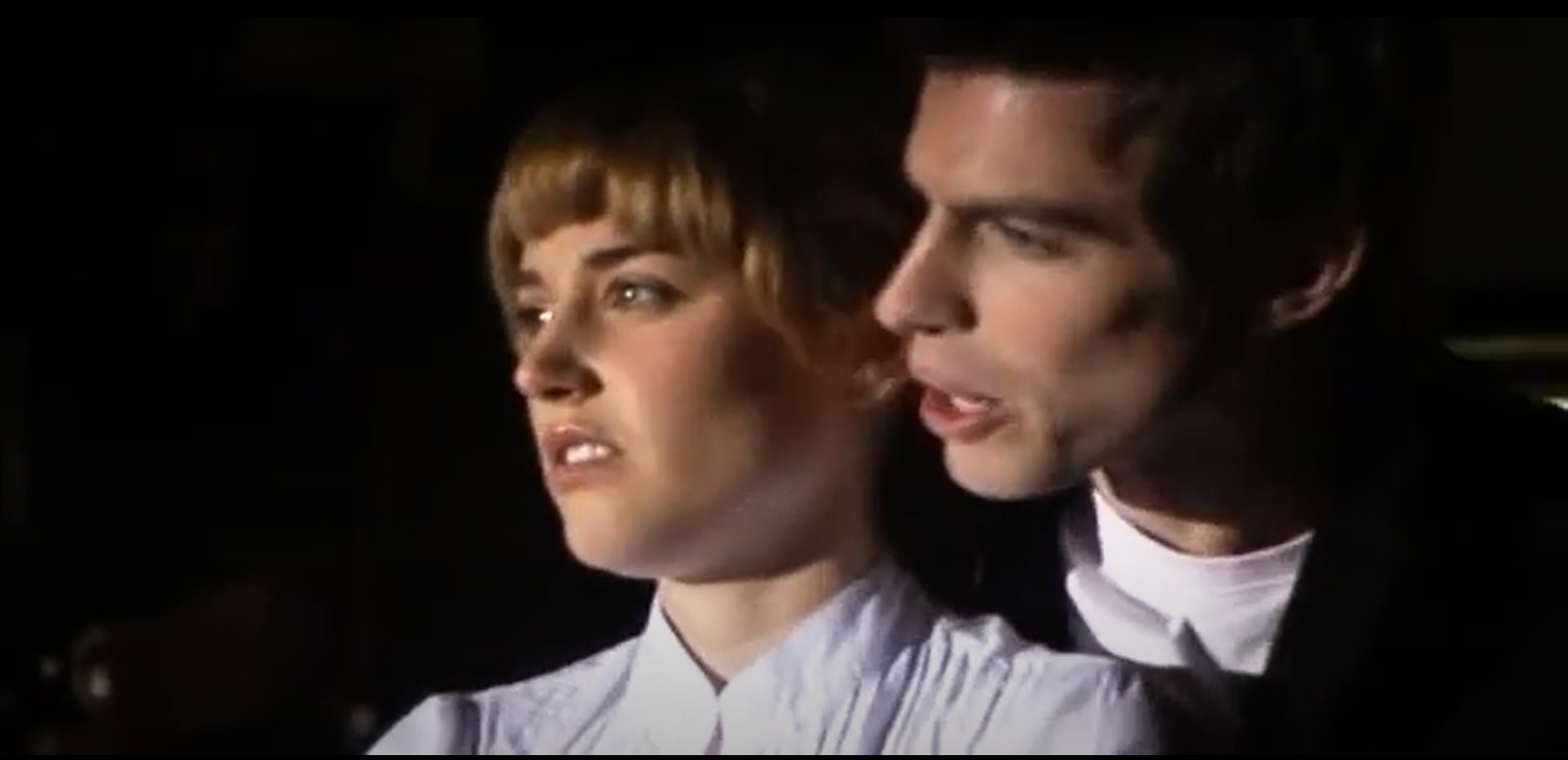
Jake Large, a shrewd personal injury lawyer, finds himself in a loveless engagement that’s full of contempt, especially with his finance who makes up excuses to not be around or intimate with him.  When Jake foils a thief’s grab and dash of Candice’s purse, the lawyer and the exotic dancer quickly fall into a relationship that rekindles Jake’s vivacity of work and life.  Breaking off the engagement to his equally two-timing finance, Jake pours every ounce of emotion into the sexually tempest romance that’s rapidly become more than just courtship when Candice suggests the murder of her frequently threatening and abusive stepfather.  Witnessing first hand some of his behavior, Jake agrees to take out her stepfather in a fiery explosion during one of his rabbit hunting trips.  When the dust settles and all seems to be going well with Candice, a watershed moment reveals Candice’s intentions are not what they seem to be and in the middle of taking the fall for everything is Jake. 

An enticingly fervid thriller, “Lady Terror” is the latest directorial from the 30-year industry producer, writer, and director, Nathan Hill.   Filmed in Melbourne, Victoria, Australia, “Lady Terror” harks back to the early 90’s erotic suspenser of sex, deceit, and murder where seduction and predatory persuasion are welded tools to accomplish unscrupulous acts.  Hill has submersed himself chiefly in low-budget genre films from his first feature, a sewer creature that craves Cartel drug pushers in the SOV shot “The Hidden” released in 1993, to more recent and gamut gorging Australian documentary pictures, such as “Bigfoot Down Under” and “Sex Down Under,” as well as keeping tethered to his horror roots with his short film work contributed to compilated anthologies in “Clownsploitation,” “Previews of Coming Attractions,” and “Schlock-O-Rama.”  Hill produces his “Lady Terror” under his company NHProductions with the Alien enthusiastic documentarian, executive producer Warren Coyle, and marks the reconnection of Hill and director of photography Dia Taylor following their debut, feature film collaboration on Hill’s “I, Portrait” and the various filmic vignettes from before. 

Not only does Hill write, direct, and produce, the filmmaker with a penchant for creating J-named characters is also the lead principal personal injury lawyer Jake Large, owner-proprietor of Large Lawyers.  Though successful in his legal craft, Jake’s has developed depression when his once endearing fiancé Celine has turned against him as she sneaks around his back with a mixed martial artist.   A loathing Celine is played severely cutting by Tritia DeViSha who has previous chemistry alongside Hill during their time on Hill’s “Revenge of the Gweilo” production and while the chemistry between their characters is palatably thick with contempt, there’s not much backstory in gain traction for sympathy, compassion, or any other emotive expression.  Jake has a single flashback of his and Celine’s happiness in simpler times during a moment of what could be regret or longing, but there’s simply not enough breadcrumbs for their history to take shape of any form.  Instead, their turmoil feeds into Jake’s unquestionable willingness to concede to a beautiful exotic dancer and damsel in distress named Candice (Phillyda Murphy).  The attention is good, the sex is good, why not just give a little back by murdering her crooked stepfather (Anton Kormoczi – who also goes by Anton Trejo because he mildly looks like Danny Trejo)?  Well, Jake’s lovestruck blindness obscures the real intent but, luckily for Jake, he has what he describes as a lucky rabbit’s foot in his secretary who aspires to be a private investigator and when she’s not punching keys, she’s clandestinely tailing Candice in a spying and snapping pictures behind trashcans and around corners caricature kind of way.  The platinum blonde and distant relative of horror maestro, Dario Argento, Simay Argento is the peripheral probing dick Ayla Harp that initially doesn’t have this close-knit relationship with her boss until the third act when she happens to take it upon herself, after examining Jake’s behavior and reading his desk notes, to snoop into his private life on his behalf.  It’s not entirely clear how she unearthed who exactly Jake became intimate with but she managed track down Candice’s exact location to snap a few black and whites.  “Lady Terror’s” remaining cast feels very much like Ayla Harp in the disconnection of each other’s narratives, ridden along in choppy succession that leaves too many plot holes to fill.  The cast rounds out with Leslie Lawrence, Anthony Cincotta, Robert Rafik Awad, Challise Free, and Adam Ramzi – the 40-year-old Melbourne actor, not the gay porn star.

Perhaps that character disconnection stems from the distracting filler from in between dialogue scenes.  A slew of these filler scenes are of Jake Large driving around town, pulling up into driveways, and entering his home, Candice’s home, or his office, eating into a runtime that could be better suited for character exploration or assembling the fragments of a deceptive thriller involving the key players.  The current design dulls the run-of-the-mill and insubstantial story with nothing new to offer audiences to facelift the core element, a rope-a-dope of relationship pretense in order to con a fall guy into another’s dirty work.  Though I know the answer in the back of my mind, a considerable amount of struggling happens in the deductive logic and complex problem solving regions of my brain for the missteps of what’s supposed to happen after Jake commits to the hit.  Ultimately, the worst outcome to happen to Jake is not what I suspected; in fact, we should be expecting a more disastrous, run-for-your-life fall from grace, but, instead, there’s no sense of urgency or consequence in the unravelling of Jake’s newfound and glorious prospects with Candice.  In fact, police presence is reduced to informing Candice her stepfather had died and that’s the extent of it, not mentioning the gunshot, a gasoline fueled explosion, or any other kind of suspicious death pursuits.  The awkwardness continues to bleed into the narrative continuity.  “Lady Terror” has a time span of at least a week or two, or longer as it’s not entirely clear, but Jake’s outfit rarely differs from the white pants, blue button-up shirt, tan sport jacket, and fedora.  The same goes with his lacy see-through topped assistant Ayla, suggesting that many of the scenes were shot on the same day or two without a wardrobe change.  When Jake does have a different outfit on, the subsequent scenes revert right back to that then by now stale getup. 

“Lady Terror” arrives onto DVD courtesy of Sector 5 Films, long overdue revisit of the distributor’s line of product since our last review from 2016.  Presented on a DVD-R, with DVD5 capacity, in a widescreen 1:78:1 aspect ratio, “Lady Terror” retains an unhewn image that appears soft, smooth, and with slight aliasing.  Overexposure wipes a fair amount of background sky, such as with approx. ten minutes into the story a plane just flies off into a bright void, but the overcast grading leaves this modern noir consistently dreary to where the only thing that stimulatingly pops is Phillyda Murphy in her skimpy intimates.  Again, there’s not a ton of landscape range, especially being set around Melbourne and not taking advantage of the city skyline or it’s Port Phillip harbor with the drone to gain urban rookery.  Sector 5 DVD’s back cover states the film has a 5.1 surround sound mix, but what my player tells me, “Lady Terror” actually comes supplied with an English Dolby Digital 2.0 mix.  The dual channel output would have been a sufficiently adequate mix albeit unpolished, echoey dialogue but for the entire length of the film, a harsh gargle undercuts the sharpness in the dialogue and the Jamie Murgatroyd (“No Such Things as Monsters”) soundtrack.  This also creates faint whispery-hissing.  There are no optional subtitles included.  Bonus features include doomsday, extraterrestrial, and anthropology hypothetical or alternative fact-doc trailers for “Occult of the Secret Universe,” “Nostradamus:  Future Revelations and Prophecy,” “Ancient Origins:  Extraordinary Evidence,” “Alien Paradox:  Legacy of the UFO,” “Demonic Aliens,” “Breaking Free of the Matrix,” “Ancient Origins:  Mankind’s Mysterious Past,” and “Elusive Bigfoot Abroad.”  The Sector 5 DVD is housed in standard black snapper with trashy romance novel resembling front cover of two who are not Nathan Hill and Phillyda Murphy in throes of passion.  The cropped top portion of the cover art that includes Murphy’s face in composited in 3 hues is also pressed onto the disc art.  The release comes not rated with an 80-minute runtime and a region 1 encoded playback.  Though performances are solid, “Lady Terror” ultimately feels underwhelming and unable to live up to the attractive title with an unadventurous noir thriller hamstrung stake to the heart from the DVD-R’s anemic technical and fidelity issues.

“Lady Terror” is on the Prowl.  Now on DVD!  

Under an Urban Club Scene, EVIL Horrors Connect Us All. “Flesh City” reviewed! (Wild Eye Releasing / DVD)

“Flesh City” Yearns for Connection on DVD!

An insomnious city pulsates with an industrial soundtrack and claws cantankerously at denizens without pity. Under one of the raging night club scenes, enamored raver Vyren follows the beautifully alluring Loquette, an inspiring electronic DJ, down into the club’s labyrinth of old stone corridors. Their coquettish play becomes the monitored study of Professor Yagov, a glowingly cadent and mad experimenter of anthropology. The two lovers are drugged and abducted by the Yogav with the intent of genetic mutating the couple’s anatomy that renders Vyren’s hand displaced with a bulbous nub and Loquette impregnated with an ingestible sludge. What becomes of their affliction insidiously infects the entire city population with a flesh tentacle curling through the city’s underground sewer and drainpipe infrastructure in what amasses to a single connection of brain-invading techno-horror.

“Flesh City” annexes our individuality for the sake of connective solidarity conveyed in an electronically infused and alternatively aesthetic experimental film from Germany’s own jack of all independent media and artistic trades, Thorsten Fleisch. The 2019 released feature is Fleisch’s first and only written-and-directed full-length film depicting his feverish analog avant-garde, reflecting the filmmaker’s menagerie of orthodox-shredding short films, video art, and written and produced music. Overseeing “Flesh City’s” cinematography and special effects, Fleisch has complete and utter autonomy of the visuals to obtain a harshly discordant image melody edited together, which Fleisch also manages, into an agglomerate of acetic aesthetics to shock and stress the audio and visual cortexes. Once under the working titles of “Berlin Blood” and “Zyntrax: Symphony of Flesh,” “Flesh City” is entirely shot in Berlin, Germany, produced by the director and United Kingdom producers Arthur Patching and Christian Serritiello, and is a feature of Fleischfilm and Tropical Grey Features.

One of the film’s coproducers and musical artists, Christian Serritiello (“Streets of East L.A.”), is at the front lines of “Flesh City’s” afterthought cast of characters with Vryen as essentially the naïve and lured-in Alice chasing the white rabbit Loquette, played by Eva Ferox (“Love Songs for Scumbags”), down the twisted rabbit hole of a cellar dwelling doctor.  I say afterthought because the characters take a backseat to Fleisch’s contortion of reality and the analogical subtext generated by Fleisch’s love for analog anomalies, using them as supporting pawns to carry out his visceral vision of vitality.  Music videos, psychedelic montages, and grotesques images of beetles absorb screen time like formless or arthropodal principals.  Even Professor Yagov (Arthur Patching”) is obscured by a rainbow shimmer, never visually seeing his face as an individual seemingly between two dimensions.  “Flesh City” is a very multiverse, multidimensional nightmare-scape of unconventional color that has culminated from Fleisch’s imaginative idiosyncrasies over the years and that’s what being intently showcased here with more evident display of a less-character driven, shapeless story within the technical aspects of the DVD release where the soundtrack drowns the dialogue into a muffled deaf tone, like any good loud music venue would subdue.  “Flesh City’s” urbanites fill out with Marilena Netzker (“Love Songs for Scumbags”), Shaun Lawton (“Possession”), Denis Lyons (“German Angst”), Anthony Straeger (“Call of the Hunter”), Maria Hengge (“Love Songs for Scumbags”), Helena Prince (“12 Theses”), and Thorsten Fleisch in a Max Headroom meets Total Request Live-like host role of Quantum 1337.

“Flesh City” will not be everyone’s approx. 90 minutes of how to spend their time choice.  The experimental film will only speak to a few select souls with a filmic affinity for Lynchian peculiarities, Terry Gilliam’s bold fantasy, David Cronenberg’s body horror, and a hellish capriccio along with an eclectic music palate for noise rock, henpecking alternative, and strident industrial bass.  I wouldn’t go as far as saying Fleisch’s film is akin to nails on a chalkboard but can be boisterously unpleasant to the ears at times while, in the same breadth, be stimulating visually, even if that stimulation may induce a photosensitive epileptic seizure.  Fleisch’s non-traditional narrative design splices in music videos from various underground and indie artists with him providing introduction as an illusionary host in a virtual world, breaking up the Vyren and Loquette’s post-punk-adelic core quandary with a teetering melodic cacophony of feedback rock electronic, a hostile rhythm, and bizarre lyrics and visuals.  Fleisch pushes the taboo envelope with not only liberal nudity, to which Germans are very at ease with their body image, but also within the unconfined stylistic creativity of multi-formats that razzle-dazzles like the innards of radiant plasma globe; the Tesla coil electrons that’s drawn to your conductive flesh won’t hurt you but provide a feeling of captivated wonder.  Yet, don’t expect to be thrilled in a traditional predator-and-prey sense as “Flesh City” appeals more to our disconnect from each other and how to reconnect must be through some kind of inclemency. 

Likely to transmit under the radar, “Flesh City’s” biomorphic body horror arrives onto unrated director’s cut DVD home video courtesy of cult and independent distributing label Wild Eye Releasing in association with Tomcat Films.  The DVD5 presents the transfer in a widescreen 2.35:1 aspect ratio with varying levels of image quality due to different types of equipment and methods used to create Fleisch’s tripped out vision that contains, but isn’t limited to, black and white, color, stylistic lighting, analog equipment, digital equipment, stock footage, and so forth.  This mishmash movie makes for divisible degrees of signal quality that can be look crystal clear in one scene and then heavy noise interference the next, but the overall clarity is remains stable without any scenes being rifted because of visual vagueness.  The audio comes in two formats:  a English Dolby Digital 5.1 surround sound and a English Dolby Digital 2.0.  Frankly, the original English dialogue track is feeble under the tremendously potent soundtrack and sound design that makes comprehending Vyren and Loquette subterranean exchanges under the industrial rumble of the score virtually impossible to discern.  Even Quantum 1337’s cyber-stutter chat softly introduces us into his world, essentially leading the blind into a mound of musical mania. Bonus features only include other Wild Eye Releasing trailers with the physical aspects of the DVD come with a misconception cover art that has a terrifying gaunt and fleshy, humanoid creature front and center, but that creature doesn’t exist in the film until maybe at the climax that’s nebulously discernible at best what viewers are supposed to see. Inside the standard DVD snapper, the disc art is pressed with the same front cover image but with no accompanying insert. The region free disc features the unrated film with a runtime of 84 minutes. “Flesh City” is a delicacy of distortion, but the Thorsten Fleisch film is an acquired taste that general audiences won’t have taste for but, then again, general audiences are not Wild Eye Releasing’s target audience, now are they?

“Flesh City” Yearns for Connection on DVD!

Amongst the EVILs of Digital, Analog Rises from the Grave! “Night of the Zodiac” reviewed! (SRS Cinema / DVD)

A Mock VHS Retro on a Mock VHS Retro DVD!  “Night of the Zodiac” from SRS Cinema!

A bizarre and grotesque dream about the once notorious Zodiac killer inspires Richard Gantz to create a movie worthy of his idol’s praise.  With little income and having just lost his girlfriend and his job, Gantz is on the brink of being homeless and unable to materialize his dream into reality until he receives a mysterious, unexpected phone call.  The Zodiac killer got wind of his project and is offering support to finance and bestow guidance to Gantz’s film as long as the struggling, yet eager, filmmaker can crack Zodiac’s cipher and stomach the enigmatic task before him.  Gifted the Zodiac’s iconic mask and murder knife, Gantz sets out to record his first kills that pays homage to his aging idol but his mentor wants him to be creative with the new chapter worthy of the Zodiac name and gathering a whole new set of slaves for his paradisal afterlife.  When Gantz hits a barrier of inspiration, he solely becomes reliant on the Zodiac’s encouragement that has become few and a far in between. 

Susana Kapostasy is who I like to label a mad genius.  Many filmmakers have attempted to create antiquated formats of yore with watered down imitations, but for the Michigan-born videographer and editor-by-trade Kapostasy, what has been a challenge to most to faithfully recreate has simply become second nature for the video production enthusiast.  Scraping up any and all elderly video camcorders she could find, the “Metal Maniac” director wrote-and-directed her sophomore feature film “Night of the Zodiac,” pulling inspiration from one of the most notorious unsolved murder cases in America by the Zodiac Killer in San Francisco.  From the West Coast to the Midwest, “Night of the Zodiac” is filmed in and around the backdropped Detroit area for the Zodiac’s next round of sliced-up slaves – only in the creative, moviemaking sense, of course.  The 2022 film has the spitting image of a 1980s/1990s SOV with ghastly, gory effects, a killer hair metal soundtrack, and video characteristics that’ll have you trying to adjust the tracking setting on your DVD/Blu-ray player.  The Johnny Braineater Production is produced by star Philip Digby with Kapostasy serving as executive producer alongside co-cinematographer Apollo David Zimmerman.

Stepping into the shoes of the infamous serial killer to embark on a theoretical continuance of the real life mass murdering character is Philip Digby.  Channeling his best Jeffrey Dahmer vibe in looks alone with a crazed and obsessive personality suited for Charles Manson, Digby plays a hodgepodge of America’s most notorious killers, adding his own flare for film into the fold to make him a full-fledged psychopath, as he internally celebrates the moniker after his disparaging roommate/Landlord (Victor-Manuel Ruiz) labels him with an ear-to-ear grin and a nearly whoopie jump for joy.  Digby’s eccentric mania thrusts us beyond a threshold we didn’t even realized we had crossed from the very first opening dream sequences of a rotting, coffin-thronged corpse oozing maggots and putrid viscera and, believe it not, my opinion is this thrust doesn’t do justice to Gantz’s character because of the lack of foundation of setting up viewers with an inbred psychosis that puts into question, how did he survive this long without killing someone before?  Dreams are power but are they powerful enough to twist a seeming normal film lover into a frantic frenzy of vile fates and videotapes?  I think only Freddy Krueger can answer that.  Gantz goes around town slaughtering people in parks, in their driveways, and even makes one very bad magician (Derek Dibella) wish he requested to hire Gantz as a videographer for a promotional video disappear as Gantz strangles him to death.  “Night of the Zodiac” completes the cast with Logan O’Donnell, Mark Polonia (director of “Splatter Farm”), Tim Ritter (director of “Truth or Dare?”), and Benjamin Linn as the voice of the Zodiac.

From the video production veneer to the set decorations and locations to the characters themselves, “Night of the Zodiac” perfectly captures SOV horror in this modern day time capsule.  Not until the credits, when I see master craftsman of SOV horror filmming, Tim Ritter and Mark Polonia, appear in the cast credits did it dawn on me that what Susana Kapostasy had accomplished was a labor of love for the niche market, resurrected four decades later and revered by horror fans who were likely still in diapers or weren’t even born yet – maybe to go as far as not even a twinkle in their parents’ eyes.  Yet, there were clues to “Night of the Zodiac’s” contemporary construction, such as the opening title which had a clean, well-polished illustration and Kapostasy’s film is very self-aware by slathering horror in every recessed corner with mountainous stacks of VHS tapes, posters, and  and often, perhaps every other scene, displayed tribute to filmmakers, like Ritter and Polonia, who were still counterparts and establishing themselves as independent videotape artists during the 80s-90s.  This self-awareness harnesses more comedic relief than horror, accentuated by Gantz’s matter-of-fact imbalance, and the humor loosens the reins on “Night of the Zodiac’s” cold cruelty a tad but what the gore spools back in audiences by spilling lots of blood. 

SRS Cinema releases “Night of the Zodiac” onto DVD with a single layer encoding and presented in a throwback letterbox 1:33:1 aspect ratio.  Kapostasy uses a slew of equipment – Cannon XL2, Sony Video 8 AF, Panasonic AG 450, JVC GY X2BU, JVC GY X3, Panasonic AG 456, Panasonic AG 196, Sony CCD FX 330, and a Sony VO 4800 U-Matic S VTR – with some be more present-time cams run through U-matic VHS playback to degrade for SOV quality.  The intentional SOV has a variety of distinct looks with distinct quirks that flexes higher magenta levels in earlier scenes as well as tracking lines and aliasing artefacts.  Detail levels also vary but the overall VHS brands generally remain the same with soft, indistinguishable contours with also a surprising amount of depth and hue range.  The English Dolby Digital 2-channel (2.0) mix can sound boxy at times and come accompanied with a piercing, underlining interference.   Telephone conversations have no distortion depth so the other person on other line sounds present in the room.   The soundtrack from Anguish, Locust Point, and the brunt of it provided by Stoker is metal madness but does overshadow the dialogue when shredding through the scenes.  Dialogue is often clear, but again, no depth and echoey.  There are no subtitles available for this release.  Bonus Features include an audio commentary by director Susana Kapostasy, star Philip Digby, and costar Victor-Manuel Ruiz that goes over a lot of technical aspects of “Night of the Zodiac’s” look and how they obtained the gore and blood for the film, a Tim Ritter conversation about how he became involved with Kapostasy’s video enthusiasm and provided analog input, a blood cannon showcase that’s instructionally descriptive as well as you’ll see Kapostasy’s foot accidently go into the 5 gallon Homer bucket, a gore score Ouija board gag, recreating the Zodiac cipher, and the trailer.  SRS Cinema’s release dons a retro VHS design front cover with an exact and beautiful illustration of Gantz’s copycat Zodiac attire with a cropped version of the front cover on the disc art inside the traditional black snapper case.  “Night of the Zodiac” has a runtime of 86 minutes, is not rated, and has an all-region NTSC playback. Difficult to immerse oneself into a half-a-century old unsolved murder while sticking to glorifying merely the guts and gore, “Night of the Zodiac” stuns more qualitatively with video techniques thought archaic and obsolete but Susana Kapostasy steadfast proves otherwise in her undying love for the flawed, yet nostalgic format.

A Mock VHS Retro on a Mock VHS Retro DVD!  “Night of the Zodiac” from SRS Cinema!

A Teacher’s Raunchy Romance is Not the Only EVIL Being Committed! “Amor Bandido” reviewed! (Cinephobia Releasing / DVD)

Forbidden Love and Severe Malefactions in “Amor Bandido” on DVD July 18th!

A remiss 16-year-old Joan is the son of a wealthy magistrate who doesn’t see eye-to-eye with his father’s wishes.  What was supposed to be the last day of school before Easter break turns into Joan’s most anxious day when he learns that his mistress, his teacher Luciana, is exiting her position at the school that very day.  Pleading to Luciana to take him with her, she reluctantly accepts his tagalong despite him being underage and her being more than double his age.  Their unlawful affair leads them to an isolated manor where they can romantically explore themselves in a paramour tour of passion.  A couple of days have past and Joan is completely smitten until Luciana’s brother arrives and the whole getaway has been a trick at Joan’s expense.  Now, the adolescent is being held captive and has to fight for his very life before he’s executed for being nothing more than a wealthy judge’s son and a naïve, jilted lover. 

More by more, news stories are printed of older women, specifically women in education, having intimate relations with a young, student boy – sometimes, another girl as well.  Men have always been the archetype of the infamously ugly term pedophilia, but women can be just as predatory despite the lack of widespread printed and televised attention.  Mostly, these new bites are mostly obscured in the newsfeed of an online aggregated newsreel, hyper-regionalized to the area where the crime was committed, but the story is nearly always the same – young (often good-looking) 20-30 year old teacher abuses young, under 18-year-old boy in the car, at her home, via text with lewd pictures, etc.  Honestly, boys have long been hot for teachers, but there is an inherent sliminess to the idea that has been rooted in steamy fantasy pubescent minds.  Iconic films like 1967 Mike Nichols’s “The Graduate” starring Dustin Hoffman aroused the notion of forbidden lust while others like George Bower’s 1983 “My Tutor” and even the more recent “No Hard Feelings” with Jennifer Lawrence, to an extent, makes light of the subject matter; however, no other filmmaker really captures the act’s grooming nature like director Daniel Werner.  Werner’s “Amor Bandido,” or “Bandit Love” depicts minor exploitation like never before with fellow screenwriter Diego Avalos in their feature film together after the production of their 2019 short, another contentious teacher-student relationship, entitled “Nadador.”  The Argentinian film is a co-production of The National Institute of Cinema and Audiovisual Arts (INCAA) and Werner Cine, produced by Werner and Nicolás Batlle.

The film opens up to Joan, a 16-year-old student with a bit of a chip on his shoulder as he glues together a volcano-like model in slapdash fashion.  Spoiled further into his innate teenage angst by his own abundance of wealth, Joan is able to get away with essentially disrespecting his empty-threatening father and boozy mother.  The extent of his entitlement spills into the classroom when learns his teacher, Ms. Luciana, is leaving the school at the end of the day and this is where we learn that Luciana and Joan have been in a forbidden affair as they meet in a storage room where she caresses his crotch as they kiss.  Though looking very much like a 16-year-old brat, Renato Quattordio is actually in his early 20s when the Buenos Aires born actor becomes passionately intertwined on screen with early 40’s actress, Romina Ricci.  The noticeable age difference places a stamp of scuzzy approval as the principals really put on a show of sensuality that defies the numerical age gap while also defining the maturity and the experience of individuals.  Quattordio hits the mark as the naïve teen eager to jump at the behest of his older, curvaceous companion.  And, boy, is Romina Ricci curvaceous, luring Joan in as the wanton teacher cautious of their alluring affair.  The erotic thriller quickly turns into a survival thriller when Joan’s eagerness to grow up comes face-to-face with Luciana’s past, embodied by Rafael Ferro (“Terror 5,” “White Coffin”) and Sergio Prina as two money greedy thugs eager to milk Joan for all that he is worth.  “Amor Bandido” rounds out with a few more bandidos in Mónica Gonzaga, Carlos Mena, Jurge Prado, and Santigao Stieben.

“Amor Bandido” is a coming-of-age tale with a pair of dichotomizing facades strung together by opposing forces in choosing between love or money.  Essentially, those two driving forces boil down to the relationship’s core and that is what director Daniel Werner simmers on, a test of idolatry strength between two people.  Werner pretenses the narrative with a forbidden love escaping to the rurality to make passionate, unjudged lust in a love context, well, at least for one of them.  The absconding is only a diversion for another unlawful act and is palpable in the undertone that something isn’t quite right with Joan and Luciana’s relationship, something that you can’t quite put your finger on and it’s not the surface fact that she’s a mid-30 something-year-old teacher screwing her 16-year-old student.  Werner leaves a breadcrumb trail of concerning clues that make sense when all is exposed but keeps those hints closed to the chest, protected to not giveaway too much until the summiting turning point of the exiting passion and entering perpetration.  Yet, despite our intuitive inklings of the funky air, the pivot still hits hard like a blindsided punch to the jaw that dislodges the mandible and rattles the teeth when the two lovebirds are struck with one payday load.  The only aspect that could be narratively tweaked is the introduction of the wounded stranger whose motives are understood but not quite absolutely clear his connections and how he became wounded in the first place with a gnarly gash on the calf that looks like a Great White shark attack had a snack on.  Digressing to figure out where he fits into it all becomes a distraction and a divergence from the main story that has now snowballed into additional but unwanted molestation, possible incest, and a ransom deal that won’t be faithfully upheld. 

“Amor Bandido” is the first feature to be covered by us courteously supplied by our friends as Cinephobia Releasing, a new distribution label from original world-searching and independent cult worshipping cinephiles of Artsploitation Films.  Coming soon to home video on July 18th, the single-layer DVD is presented in a widescreen 1.85:1 aspect ratio from a digitally recorded print and renders an expected damage and dust/dirt free picture with nature, yet smoothed out detail, skin tones and natural coloring.  There’s not a ton of visual risk here from cinematographer Manuel Rebella (“A Taste of Blood”) with the stimulation coming strictly from performances and the erotic, forbidden spirit.  The DVD5 format falls below par for darker portions within the frame that are seen with splotchy banding as well as the aforementioned smoothness around facial features.  The Spanish Dolby Digital 5.1 surround sound and a Spanish Dolby Digital 2.0 are equally comparable with the focus primarily on the dialogue and less on the sound design to warrant extra channels so both tracks output relatively the same.  There are scenes or sequences all other tracks are muted or receded to make way for a vivacious musical soundtrack to accentuate the moment.  Dialogue comes across clean and clear without any interference in the balance of the little ambience of rustling leaves, water splashing, and gun shots.  Option English subtitles are available, but I did spot a pair of typographical errors.  Bonus features include a 3-minute sale and promotional make-of with director Daniel Werner, the original trailer – separated from the bonus features on the static menu – and trailers for future Cinephobia Releasing films, such as “Sublime,” “Emmanuelle’s Revenge,” “Brightwood,” “The Latent Image,” and “The Goldsmith.”   Pressed with the cropped but same image as the front cover, the DVD comes in a standard tall snapper with the front cover sporting that crotch-fondling moment of intimacy.  The Cinephobia Releasing title comes unrated, runs at 80 minutes, and is has region 1 playback.  The coming-of-age arc prevalently scores into the naïve, angsty adolescent tale but “Amor Bandido” also suggests that maybe maturing too quickly should be left off the table, keeping fantastical temptation at bay and keeping innocence intact for kids to be kids just a few years more.

Forbidden Love and Severe Malefactions in “Amor Bandido” on DVD July 18th!

When EVIL Won’t Let Go to “Those Who Walk Away” reviewed! (VMI Releasing / DVD)

Never Abandon Your Problems.  Face Them!  “Those Who Walk Away” on DVD!

When Max could no longer stomach the sight of his mother falling deeper into severe sickness, he abandons his mother’s side after a year of care.  A year-long hiatus from dating has put a temporary halt on his love life, but as he rejoins the socializing game, he connects with Avery on an online dating app.  Avery appears to be the perfect girl:  smart, witty, and really into him.  The start of their first date is a match made in heaven until the girl too good to be true decides to drive him to a supposed haunted house for uninhibited fun when their original plans fall through.  Inside, a dilapidated abode comes with an appalling story, surrounding a malevolent urban legend spirit known as Rotcreep.  Swallowed by house’s notoriety, Max and Avery grapple with their own personal demons that have come back to haunt them and with no escape, facing the trauma is the only path toward survival.

A lot of films, past and present, are drenched dripping in the trauma theme that the subtopic has become waterlogged in the independent and mainstream scene, but has there ever been a trauma touted full length feature film that was done in one long single take?  That’s the novelty concept to proof of product feature from writer-director Robert Rippberger, a documentary filmmaker who has only recently dipped his toes into fictional storytelling.  After the 2019 unsung release of “Strive,” an urban drama of perseverance starring Danny Glover (“Predator 2”), Rippberger’s latest “Those Who Walk Away” sets two personal distresses into a prevailing evasion of death.   Rippberger’s script, cowritten with Spencer Moleda, materializes one’s own baggage being personified as waking nightmares or a manifestation of shackling malevolence, manacled by past mistakes and centrifugal hurt.  The Chillicothe, Illinois shot picture is a production of Ripberger’s own Los Angeles based SIE Films, Argentic Productions, and is in association with Slated Productions and Sandeep Sekhar Films with Rippberger, Sandeep Skehar, and Argentic’s KT Kent producing. 

At the center of the story are Max, played by “Twilight” franchise’s Booboo Stewart (no relationship to Kristen Stewart), and Avery, played by Scarlett Sperduto (“Float”), as individuals looking for love or connection having met on a dating app.  Necessary lengthy exposition provides the footing for “Those Who Walk Away’s” climatic third act, giving Max and Avery a chance to go to town on their historical credentials during the date as we learn about Max’s ill mother and his sudden departure from her around the clock care before the heartache becomes soul consuming and about Avery’s fight or flight childhood, anecdotal and accounts that are kept closer to her chest,  with her close and adored brother.  The chemistry is palpable between them with nervous conversational exchanges and teasing jocularity that makes their one long scene seem like an actual first date, completely selling the dynamics with the audience who are induced with anxious butterflies and an eagerness to connect, emotionally and sexually, on Max and Avery’s behalf.  The narrative, ultimately, has to change because “Those Who Walk Away” is not a romantic-comedy but rather a dramatic-horror.  Whereas everything seemed to go swimmingly with the two young love birds really getting into the moment, we’re suddenly engaged with a different, if not darker, tone that has come out of the swindling shadows and into the light of a dimly lit, ramshackle haunted house that is the premier first date destination experience, if you’re a sociopathic survivor that is.  “Those Who Walk Away” works with a tight, small cast that finishes off the list with Grant Morningstar, Devin Keaton, Bryson Whereas, Connor McKinley Griffin, and former professional wrestler, veteran stuntman, and veteran actor of such films as “The Mask,” “Barb Wire,” “Hot Wax Zombies on Wheels” with Nils Allen Stewart, aka The Stomper, as the Rotcreep – again, not related to Kristen Stewart, but is father of lead actor Booboo Stewart.

“Those Who Walk Away” has the concentrated acting chops to pull off the two-pronged plot and despite the obscure and incoherencies with the revelation climax, the turn of events still bids a gripping blank check on what to expect next.  Yet, the most interesting portions of the film are not those aspects that do have a degree of excellence for an indie project.  Instead, the single long take from opening-to-ending credits is a mind-blowing feat.  Unless there’s a seamless cut that I’m missing or blind to, “Those Who Walk Away” never edits or cuts away from the action that puts the actors in a position of having to perform to perfection.  Rippberger also doesn’t remain stationary to a single location for the first half of the film, coursing through the populated public park and bustling small town of Chillicothe during Max and Avery’s getting-to-know-you talk-and-walk, and as the story evolves toward more sinister circumstances in a one house setting, Rippberger can’t sit still and uses nearly every square inch of the creepy, boarded up house to his advantage, creating and changing up room interiors that fashion an illusionary creepy funhouse that Max scrambles from room-to-room avoiding Rotcreep and finding a way out of what could be perceived as Hell in a house, a metaphor for Max’s own mother-abandoning torment.  If that isn’t impressive enough, Diego Cordero’s camera handling to make the single take work isn’t bush league cinematography as having the frame trajectory move in tight, confined spaces without a bit of awkwardness, like moving from outside the car to inside the front of the cab then to the back between the driver and passenger seat while keeping characters in frame and keeping the characters acting is a tough, planned shot.  What’s also tough is achieving crisp dialogue in one take and that’s where the film falters a little with the pivotal exposition losing strength and clarity where it’s needed the most, essentially being muddled instead of meticulously articulate if actors are either not vigorously vocal enough, mic placement isn’t exact, or mic picks up other noises that scuttle overtop the dialogue.

Courtesy of VMI Releasing and MVD Visual comes a chilling crucible in “Those Who Walk Away” on DVD.  Presented in 720p on a widescreen 1.78:1 aspect ratio, the film is distributed on a DVD5 with a reasonable compression rate to keep the image sharp without a lot of addition fluff to bog down the overall compacted digital transfer.  Instances of off and on lens focus works against the long take, much like the audio, where timely is key but as far as VMI Releasing’s handling of the storage, the resolution and image quality do the work to represent the best quality possible.  Although the DVD back cover states one audio option – an English Dolby Digital 5.1 – there is a second option with a English Dolby Digital 2.0 Stereo.  Unless you’re setup with a surround sound, the stereo option will have identical dialogue and ambience noise but there is an amplified finish on the soundtrack by video game composer Dmitrii Miachin with the drawn out violins and a brooding, sonorous pitch.  Dialogue is a minorly muddle as mentioned before with the tribulations on a feature length shot but mostly clean and clear to the point of satisfaction.  Aside from the static menu’s original trailer for the film, and the illustratively ghoulish opening sequence, the DVD comes with no other bonus material.  The DVD comes in a standard DVD tall case with a front cover of a bloodied Booboo Steward looking dazed walking through fire and the same image is used for the disc art.  Psychologically scything, “Those Who Walk Away’s” fillets guilt from the bone with scene shooting originality and a cast that nails every second lapse. 

Never Abandon Your Problems.  Face Them!  “Those Who Walk Away” on DVD!