EVIL’s Always Listening in “A New World Order” reviewed! (Reel 2 Reel Films / DVD)


A.I. terminates their dependency from its creators and war has ravaged mankind as armed to the teeth, towering tripod machines and maneuverable mechanical air vessels are locked onto a search and destroy mode, targeting all human life.  To avoid and evade detection, survivors must keep quiet as the machines hunt by sound and use the limited technology available to protect themselves.  That’s how one military combat soldier has been surviving after deserting his overran and decimated post before bumping into enraged civilian resistance fighter who’s determined to strike back with a fatal blow in a heavy causality and seemingly unwinnable war against the merciless machines.  When the civilian determines a way to stop the machines with a salvaged nuclear device, the deserter must decide whether to keep meagerly living in the shadows or sacrifice everything for humanity.
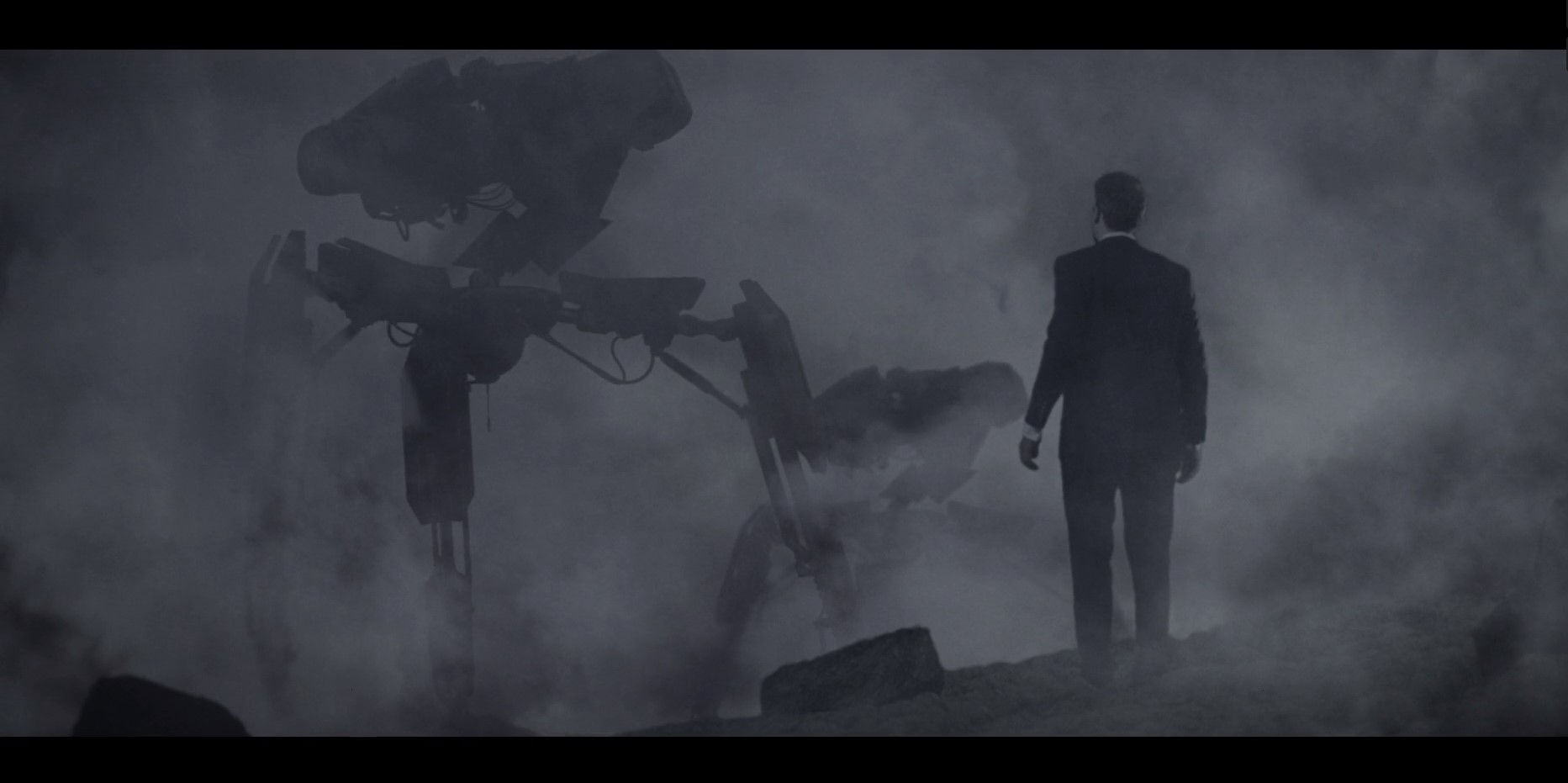
“The Terminator” meets “A Quiet Place” meets “War of the Worlds” in this German produced independent science-fiction battlefront thriller, “A New World Order,” as the Berlin born Daniel Raboldt ‘s first feature length directorial.  Raboldt pens an action heavy story with only two lines of dialogue alongside fellow short film partner, Thomas Franzen, following their developments of satirical and puppeteer-propped comedies of the web series “Tubeheads” and their short film “Furple Reign,” with Raboldt having been in the writer-director chair for both and Franzen as part of the crew on both projects with a role in the art department and constructing cinematographically shots as DoP.  Alternatively known more worldwide by the original title, “A Living Dog,” as I assume in the idiomatic expression of a dog’s life of sorrow and hunger, the Finland shot “A New World Order” is a production of Raboldt and Franzen’s Nocturnus Film that was funded by a Kickstarter campaign which raised over €12,085 by patrons from its €10,000 goal.
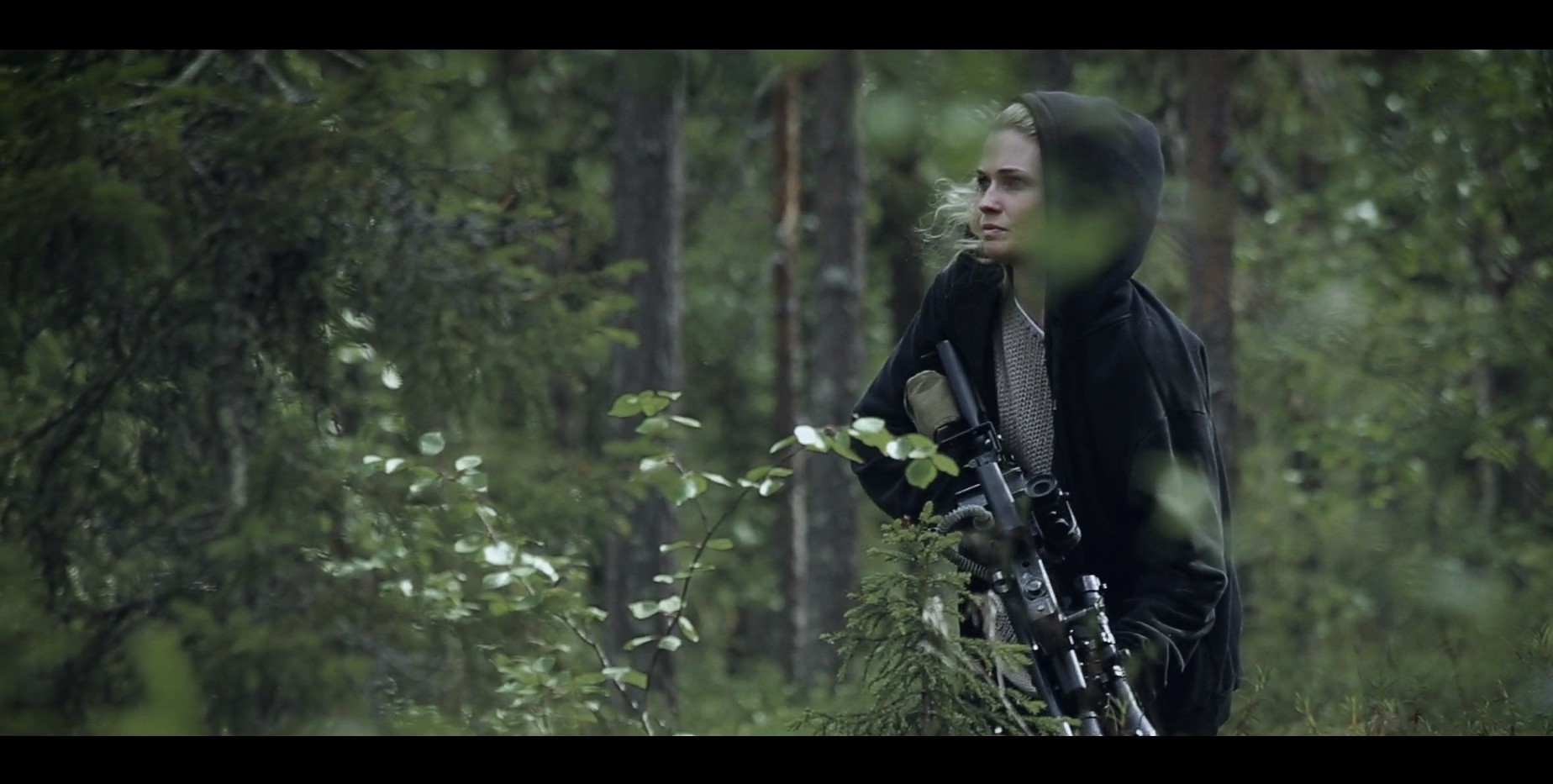
With just over €12,000, pocket change like that can’t afford you megastars Tom Cruise or Emily Blunt, but can buy superb unknowns with heart in their lead roles.  Such as the case with Stefan Ebel and Siri Nase as Tomazs and Lilja, two unlike survivors of machine dominated cataclysm with distinct positions on where they stand in their war-torn world.  There’s no short change in performances that warrant Ebel and Nase to feign the presence of large and looming cybernetic tripods that vaporize humans to dust upon sound.  “A New World Order” seems gimmicky with the absence of dialogue, but I think it’s more tricky to act against a computer generated special effect, much like Emily Blunt and John Krasinski’s inventive terror playing against actors or stuntmen in motion capturing suits.  Raboldt and his team more than likely did not have access to or have funds for motion capturing suits.  Instead, the actors engaged imagination, creativity, and relied on their experience and training, such stage crafting from Theater der Keller in Cologne where Siri Nase performed from 2007 to 2011.  Ebel makes his on screen debut by diving into the complexed Tomasz, a deserter just trying to survive over top anything else, and Tomasz comes across pitched perfectly desperate and paranoid while being borderline selfish with a sheathed good nature heart lying in wait.  Aside from bit roles of human refugees and characters in flashbacks, the two leads embody the entire cast list.  
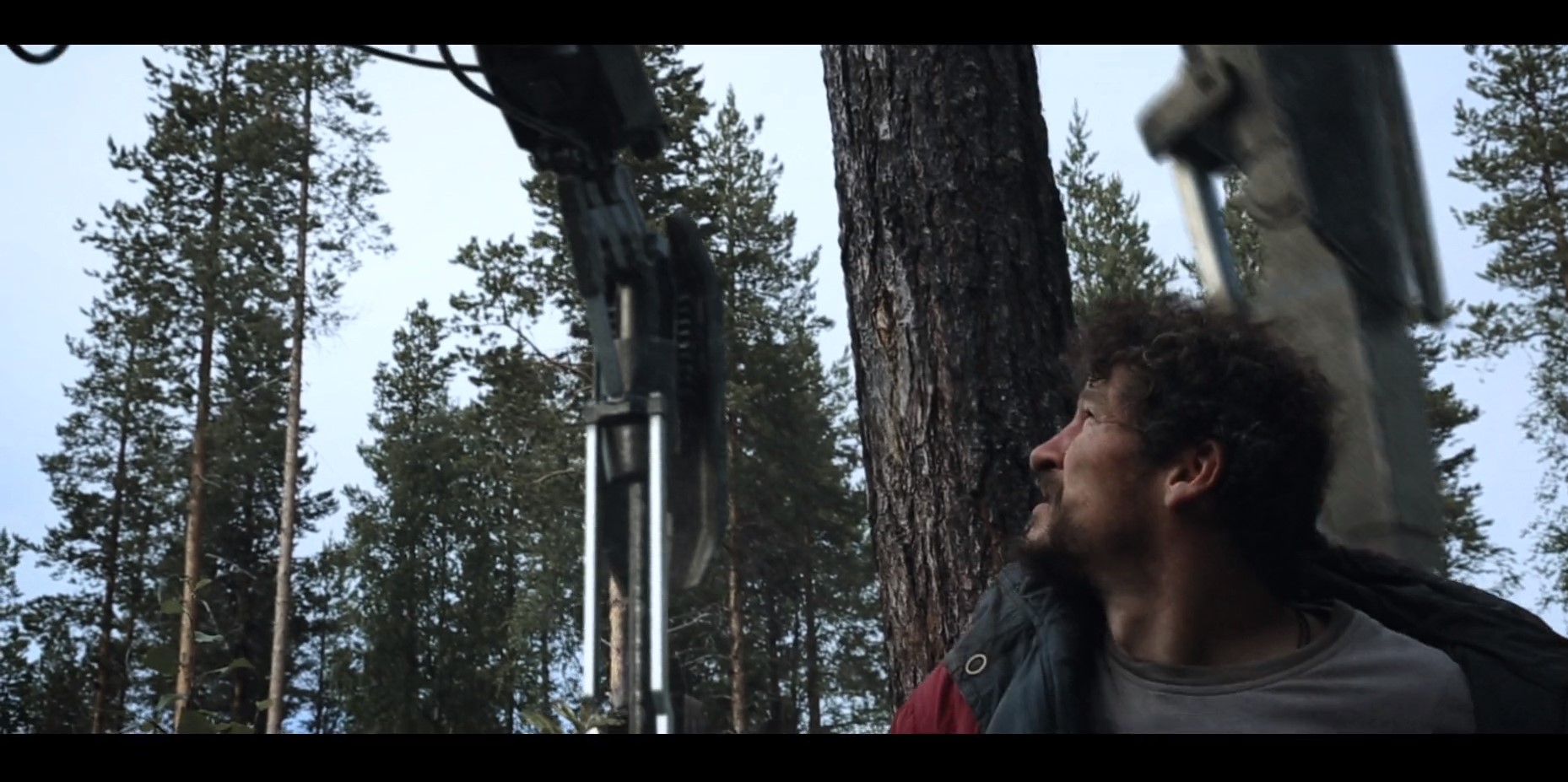
“A New World Order” derives and parallels from a variety of iconic Sci-Fi cinematic inspirations, but at the core, Raboldt courses a theme of repelling human behavioral reactions toward a major calamitic event and threat through the current wartime arterial capillaries, unclogging the blockage between Tomasz’s tail between his leg survival approach and Lilja’s reckless desperation to destroy the machines on her own to form a unity of calculated patience to not only stab revenge into the soulless machines, but also maybe, just maybe, live through obliteration.  Yet, Raboldt misses the mark slightly by having too late the characters circle back and fix what’s broken with themselves, leaving mere morsels to mend before one character’s arc ends before it can even fully begin.  There’s also the no dialogue gimmick/aspect/touch, whatever is your opinion to label it, that fails to naturally flourish because unlike “A Quiet Place” where “A New World Order” only indulges the more character-driven drama, the fiery back and forth dogfight delivers empty promises due to budget constraints, resembling more along the lines of Gareth Edwards’ “Monsters” in its distant tone with a delimited appearance, but with a film that has nearly no dialogue, the action should be guaranteed in your face, heart-racing, and on the edge of your seat to compensate. “A New World Order” whittles down the hero concept, peeling off the rotten layers that make us weak and defenseless alone, to unearth the perfect kill switch on the machines to save Earth for humanity.
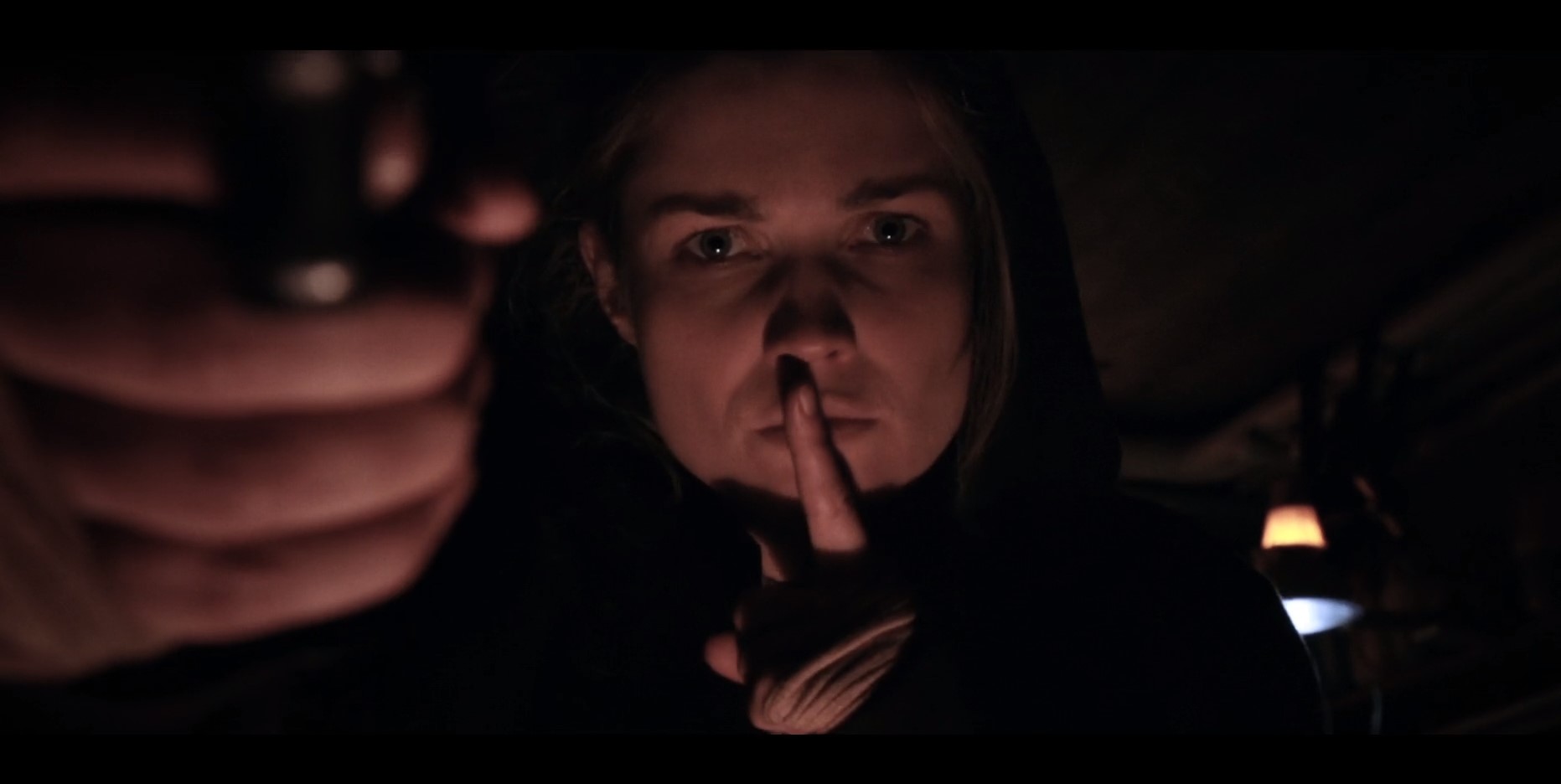
Don’t speak if you want to live in “A New World Order” now on DVD home video from Reel 2 Reel Films (R2R) in the UK. The Region 2, PAL encoded, DVD5 presents the film in an anamorphic widescreen 2:40:1 aspect ratio under a 15 rating for strong violence and bloody images. The violence is more the lasers vaporizing people to smoke in Thomas Franzen’s landscape assemblage of Finland foliage that becomes the base layer to Raboldt and his visual effects crew CGI monstrosities and rotoscoping composites that make “A New World Order” feel like a science fiction graphic novel. Blacks are starkly deep, but there’s no awestriking visual pops to really juxtapose with in a bleak color reduction to reflect bleak war. Details are not spectacular in this 720p format, but do the job in reality rather than in a rotoscope flashback. The English Language Dolby Digital stereo AC3, surround sound 5.1 mix, can kick hard when lulls in the character stories are because the kill bots has made audible contact and “A New World Order” is a LFE machine, pun intended, as the nuts and bolts hunters blare in vast quantities their resonating automaton bellow. Since this is a DVD5 with a feature running at 94 minutes, there is no room for special features to speak to, leaving just the antistatic menu and a white snapper case. “A New World Order” is a big concept on a little budget, but for director Daniel Raboldt, a new world spawns a man versus machine campaign from inspirational passions and ideas into understanding which innate reaction is an internal struggle to embrace with all that you have or to die by with little you have left.
No Sam Raimi. No Bruce Campbell. Just the EVIL! “Evil Dead Trap” reviewed (Unearthed Films / Blu-ray)


Nami, a Japanese late night show host, is seeing her ratings dipping.  Though not in danger of losing her all-female produced show, Nami decides take her team on an investigation of a mysterious snuff tape that was mailed to her specifically.  Left for her is a bread crumb trail of directions to an abandoned military base, Nami and her crew explore the campus’s rundown structure, searching for evidence, a body, a story that they can televise.  Ignoring the dangerous presence around them, they dig deeper into the dilapidating labyrinth where they horrifying discover something waiting for them laid out in a cruel plan of deadly traps with a maniac pulling at all the strings. 

Bred out of a pedigree of pinkusploitations and a nation’s crisis of identity after the Second Great War, “Evil Dead Trap” is a greatly symbolized Japanese machination tale helmed by pink film director Toshiharu Ikeda (“Sex Hunter,” “Angel Guts:  Red Porno”) and penned by an equally historical pink film screenwriter and “Angel Guts” manga series creator Takashi Ishii (“Girl and the Wooden Horse Torture,” “Angel Guts” series).  Also known under its original Japanese title, “Shiryô no wana,” as well as, and my personal favorite, “Tokyo Snuff,” in Spain, “Evil Dead Trap’s” smorgasbord of rape, torture, and gory death naturally shocked viewers upon release and continues to do so as one of J-Horror’s branched out films that segued out from the brutal and depraved pink film inspired context into the new longstanding ghost genre we’ve seen over the last few decades with “Ringu” (“The Ring”) or “Ju-on” (“The Grudge”).  The production company Joy Pack Films, behind the 1980’s obscure Japan films, such as Genji Nakamura’s “Go For Broke” and Banmel Takahashi’s “Wolf,” houses the “Evil Dead Trap” from executive producer Tadao Masumizu.

If you recognize a couple cast members, or maybe just their naked bodies, then there’s something depraved about you!  With all kidding aside, but no seriously, if Rei (Hitomi Kobayashi) or Kondo (Masahiko Abe) look familiar, then you my friend are pink film aficionados as Kobayashi has starred in “Hard Petting” and “Young Girl Story” and Abe was in these pink film hits the “Pink Curtain” trilogy and “Female College Dorm Vs Nursing School Dormitory.”  If these faces didn’t touch you in any kind of sensual way, no worries, leading lady Miyuki Ono brings the star power.  The “Black Rain’s” Ono plays Nami, a go-getter television host/personality with her sights set on ramping up her late night show’s ratings, but also sucked into the posted snuff film’s darkest allure that’s personally calling her into to a precarious story lead.   Nami could also be a homage to one of screenwriter Takashi Ishii’s manga-inspired pink films entitled “Angel Guts: Nami” and the title might not be the only aspect paid honor to with that particular Nami written with a journalistic vocation drawn into and obsessed with a serial rapist’s attacks, making a striking parallel between the two stories that are nearly a decade apart. Eriko Nakagawa and Aya Katsurgagi fill out Nami’s investigating team as Rei and Mako. As a whole, the characters lack personality; Rei and Kondo tickle with relationship woes that are snuffed out before fruition, Rie’s timid innocence barely peaks through, and Nami and Mako’s thicker bond compared to the rest of the team is squashed to smithereens way before being suckled into note worthy tragedy. This late night show team has been reduced to slasher fodder and, honestly, I’m okay with that as we’re only here for the deadly traps. Noboru Mitani, Shinsuke Shimada, and Yûji Honma, as the mystery man looking for his brother, complete “Evil Dead Traps” casting.

“Evil Dead Trap” boasts a melting pot of inspirations, a mishmash of genres, and spins a nation’s split identity variation crowned in aberration. Diversely colorful neon-hazy lighting complimented by a Goblin-esque synth-rock soundtrack from Tomohiko Kira (“Shadow of the Wraith”), Toshiharu Ikeda shadows early Dario Argento inside and outside the popularity of the Italian giallo genre as the “Evil Dead Trap” murder-mystery horrors resemble more of a westernized slasher with a killer concealed behind a mask stalking a fringed, neglected compound in a conspicuous outfit. While the killer dons no hockey mask or snug in a mechanic’s jumpsuit, an equally domicile, yet more calculated, antagonist taunts more brains than brawns, especially with the severity of traps that seemingly float from out of nowhere. The fun is chiefly in the imagination of how the trap designs operate in the void of physics of a slasher fodder film so wipe clean the Jigsaw and the “Saw” films from your mind completely and relax to enjoy the outlandish kill scenes. Some of the kills are imperialistically inspired by Imperial Japan, that is, to blend the wartime nation’s atrocities with how the proud country wants to distance itself from that old-fashion, war-criminal, stoically perverse superstratum layer, but that’s were “Evil Dead Trap” pulls for most of the juicy parts as well as supplementing with Argento lighting, some, believe it or not, “Evil Dead” elements of that menacing presence bulldozing through the spiritual world, and an divergent climatic finale stuck to the narrative body that’s akin to pulling off the head of a doll and replacing it with T-Rex head’s. The uniformity quells under the pressure of how to end Nami’s and her attacker’s coda with pageantry weirdness that’s typical status quo Japanese cinema. Lots of symbolism, little modest explanation.

Get caught in “Evil Dead Trap” now back in print and on Blu-ray courtesy of Unearthed Films, distributed by MVD Visual, as part of the extreme label’s Unearthed Classics spine #5. The Blu-ray is presented in a matted 1.66:1 aspect ratio, a format rarely used in the States but widely used in other countries. Reverting to the 1.66:1 from Synapse’s 1.85:1 crop, Unearthed Films showcases more of the European feel, heightening that colorful vibrancy of the Argento-like schemes. Image quality has peaked on this transfer with natural grain with the 35mm stock, but details are not granularly sharp in an innate flaw of the time’s equipment and lighting. Shinichi Wakasa’s unobscured practical effects heed to the details and don’t necessary suffer the wrath of miniscule soft picture qualities when you’re impaling someone or birthing a slimy evil twin…you’ll see. Add in Ikeda’s wide range of shooting techniques, you’d think you’re watching Hitchcock or Raimi and the focus really lands there with the differently camera movements and techniques. The Japanese language single channel PCM audio fastens against that robust, vigorous quality to make “Evil Dead Trap’s” diverse range and depth that much more audibly striking, but there’s a good amount of silver lining in there being no damage albeit discernable, but not intrusive static to the audio files, dialogue is unobstructed and prominent, and the stellar synth-rock soundtrack nostalgically takes you back to when you first watched “Suspiria” or “Dawn of the Dead.” English subtitles are available but display with a few second delay which can be cumbersome if trying to keep up. Special features includes three commentaries that include director Toshiharu Ikeda and special effects supervisor Shinichi Wakasa, filmmaker Kurando Mitsutake (“Gun Woman”), and James Mudge of easternKicks. Plus, a Trappings of the Dead: Reflecting on the Japanese Cult Classic retrospect analysis from a Japanese film expert, Storyboards, Behind the scenes stills, promotional artwork, trailers, and a cardboard slipcover with phenomenal artwork. Highly recommend this atypical Japanese slasher, “Evil Dead Trap,” now on Blu-ray home video!

Own “Evil Dead Trap” on Blu-ray!

The EVILs of Slasherman! “Random Acts of Violence” reviewed! (Acorn Media / Blu-ray)

Comic book writer Todd has hit a writer’s block wall on the last issue of his one-shot, popular and extremely graphic series Slasherman based off the gruesome string of I-90 murders of the late 1980s where the killer murdered and mutilated his victims without ever being caught.  Looking for inspiration to conclude his life’s work, Todd, his girlfriend, investing publisher, and assistant head out on a road trip from Toronto to America, specially through the small town of McBain where the murders took place, but when recent mutilated bodies resemble the grisly deaths inside the colorful pages of his comics, the semi-fictional Slasherman story becomes full blown reality that places him and his friends in a maniacal killer’s path whose flipping through the pages of Todd’s murder-glorifying comic for inspiration of his own. 

Like many opinionated reviews before mine, I never imagined Jay Baruchel directing a horror movie.  The long time comedic actor with solid relationships working with other high profile comedians, such as Seth Rogen, Jonah Hill, and Danny McBride in some of the best notable comedies on the side of the century, has stepped into the shadows and professing his admiration for the genre we all love – horror. Baruchel cowrites and directs his first horror film, the big screen adaptation of Justin Gray and Jimmy Palmiotti’s “Random Acts of Violence” graphic novel. Fellow collaborator on the “Goon” movies, Jesse Chabot, branches out with Baruchel on the script and the two Canadian filmmakers yield an intense meta-gore picture focusing toward themes of lopsided public perspective and the glorifying of violence on other less physical mediums. Published in 2010 under Image Comics, the Gray and Palmiotti publication supplied a wealth of visceral material that unfolded faithfully in Baruchel’s Shudder distributed film as a stylish comicbook-esque narrative under the Toronto based Elevation Pictures, Wicked Big, and Manis Film production in association with Kickstart Comics and JoBro Productions. Palmiotti and Gray also serve as executive producers.


Struggling in the search for his perfect ending to Slasherman, Todd immerses himself in a cerebral fixation that envelops him more so then he would like to think.  Todd’s played by social activist and “Cabin in the Woods” actor Jesse Williams whose character is thrust into essentially making a choice, entertain his profession that earns blood money off the backbones of the I-90’s victims or subside his eagerness to finish his graphic novel and be team victim alongside his girlfriend Kathy (“The Faculty” and 2006’s “The Texas Chainsaw Massacre: The Beginning’s” Jordana Brewster) researching a novel that gives the slain victims a voice over their killer.  Brewster hasn’t changed one bit in a role that resembles a mature version of her “The Faculty” Delilah Profitt character complete with glasses and a thirst for reporting.  As a couple, Williams and Brewster hit little on their unconditional love  that’s apparent in the film’s final scenes.  Aside from their opening segment in their Toronto flat, their road trip is filled with Kathy berates Todd at times or Todd never seeming interested in Kathy or her work that’s seen counteractive to his own.  Affection is thin between them and I’m wondering if that’s more of the script writing than a flaw on Williams and Brewster who are credibility solid in their roles.  Same can be said about Jay Baruchel’s Ezra, the indie publisher sponsoring Slasherman, as the writer-director plays little to a publisher’s position of pushing the sales and marketing envolope and appears more to just be a tagalong friend with moments of quietly hawking.  Without much competition surrounding him, Slasherman is the most interesting character of the bunch from prolific stuntman, Simon Northwood.  With a 1000 yard stare that’s more menacing inducing than stemmed by trauma, Northwood brings the graphic novel character to all his glory as an aspiring artist in a contemporary parallelism to Todd who both see one another as their muse.  Northwood’s Slasherman is silently frightening, even more scary when he has to psych himself up to kill, and brings the physical stature of an unstoppable slasher genre maniac.  No one is safe from the merciless Slasherman, including those rounding out the cast in Niamh Wilson (“Saw III”), Clark Backo, Eric Osborne (“Pyewacket”), Nia Roam (“Polar”), Aviva Mongillo, and Isaiah Rockcliffe.   

The hyper violence lands more with a firm hand making good on film title.  Baruchel doesn’t hold much, if anything, back when rectifying violence as the monolithic theme while hitting a few thought-provoking notes involving the public’s perspective on the infamous legacy of serial killers and the tragic, forgotten memory toward their victims.  Somewhere in the gutting-clutter is a message of meta-existentialism tearing between that thin line of a person’s cause and effect actions.  Without the I-90 killer, Todd would not been stimulated into creating the deeply grim anti-heroic antics of Slasherman and, visa-versa, Slasherman would not have returned, coming out from retirement, if it wasn’t for Todd’s life’s work and lack of series conclusion for the Slasherman character speaking to Slasherman’s sanguinary artistic side.  One aspect stiffly hard to place your finger on is Todd’s connection with the town of McBain.  Other than a brief voice over exchange with Ezra, who mentions Mcbain is Todd’s hometown area, not much more of that pivotal connective tissue seizes grounding Todd, but the graphic novelist experiences a multitude of images streaming through his far off gazes, thoughts, and dreams. A boy, the boy’s mother who we know to be one of Slasherman’s victims because of Kathy’s research book, and the collateral damage of some great magnitude of violence surrounding them carry little weight to Todd’s psyche when struggling to piece his visions and these people’s bloodshed moment together and one reasonable theory that might explain that disconnect on our part is partially racially motivated, a detail indicative of gross assumption but a detail that can easily deceive you if you’re not knowledgeable enough about the cast you’re watching. My two cents is not randomized at all on Jay Baruchel’s “Random Acts of Violence” as it’s a brazenly deep and vicious first attempt horror in his own manic words from the glossy, leafy pages of the same titular graphic novel to the tellies of terror now on home media release.

Classified 18 for strong bloody violence and gore, “Random Acts of Violence” hits Blu-ray media shelves courtesy of Acorn Media International. The region 2, PAL encoded single disc BD25 has a runtime of 81 minutes and is presented in a slightly cropped widescreen 2.38:1 aspect ratio. A diverse hue palette of neon extricates Baruchel’s off-brand, real-time comic layout, creating a gritty, yet vibrant world all his own in a near window-blinds noir fashion. The tinkering of tints reaches almost Italian giallo levels without playing much with lighting and fog, relying heavily on the different neon vibrancy as if a colorist was right there pigmenting each scene as it played out. The English language Dolby Digital 5.1 surround sound discerns very well across the board with robust dialogue that even with Williams’ slight lisp, every single word can be hung on. I didn’t think there was a ton of opportunity for depth and range as much of the action is in staged front side of the camera, but for what little there was, those areas saw solid, identifiable outputs. Bonus features include a zoom interview with a very animated Jay Baruchel providing the in depth inner works of the conception of his film while sporting a retro Montreal Expos ballcap, a showreel-esque promo entitled More Than Just A Scary Movie offers brief opinions, thoughts, and highlights on the film edited from longer, on-set interviews, and a look inside how to make an action scene. An on-your-toes, gut-wrenching slasher with a juicy slice of meta proves Jay Baruchel can wander into any genre and come out on top, but “Random Acts of Violence” has kinks to straighten out in this young director’s sophomore feature.

A Dilapidated Terminal Full of EVIL Spirits. What Could Go Wrong? “Prison of the Psychotic Damned” reviewed! (Wild Eye Releasing / DVD)

A pre-depression era railway terminal is now an aging and decrepit structure left to ruin in Buffalo, New York. It’s also the site where an experienced paranormal investigator, her ghost-tech guru, and three volunteers venture for exploration, hoping to uncover something spooky that goes bump in the dark because of the buildings long-marred and infamous history that includes an insane asylum, an unorthodox cattle abattoir, and many unexplained and terrible deaths throughout the decades. The deeper they dig down into the terminal’s underground corridors, the more they find themselves lost in a labyrinth amongst a taxonomic diversity of unhinged ghosts and ominous orbs. Lost and being hunted down, the ghost hunters fight for topside survival before absorbed by the terminal’s evil past.

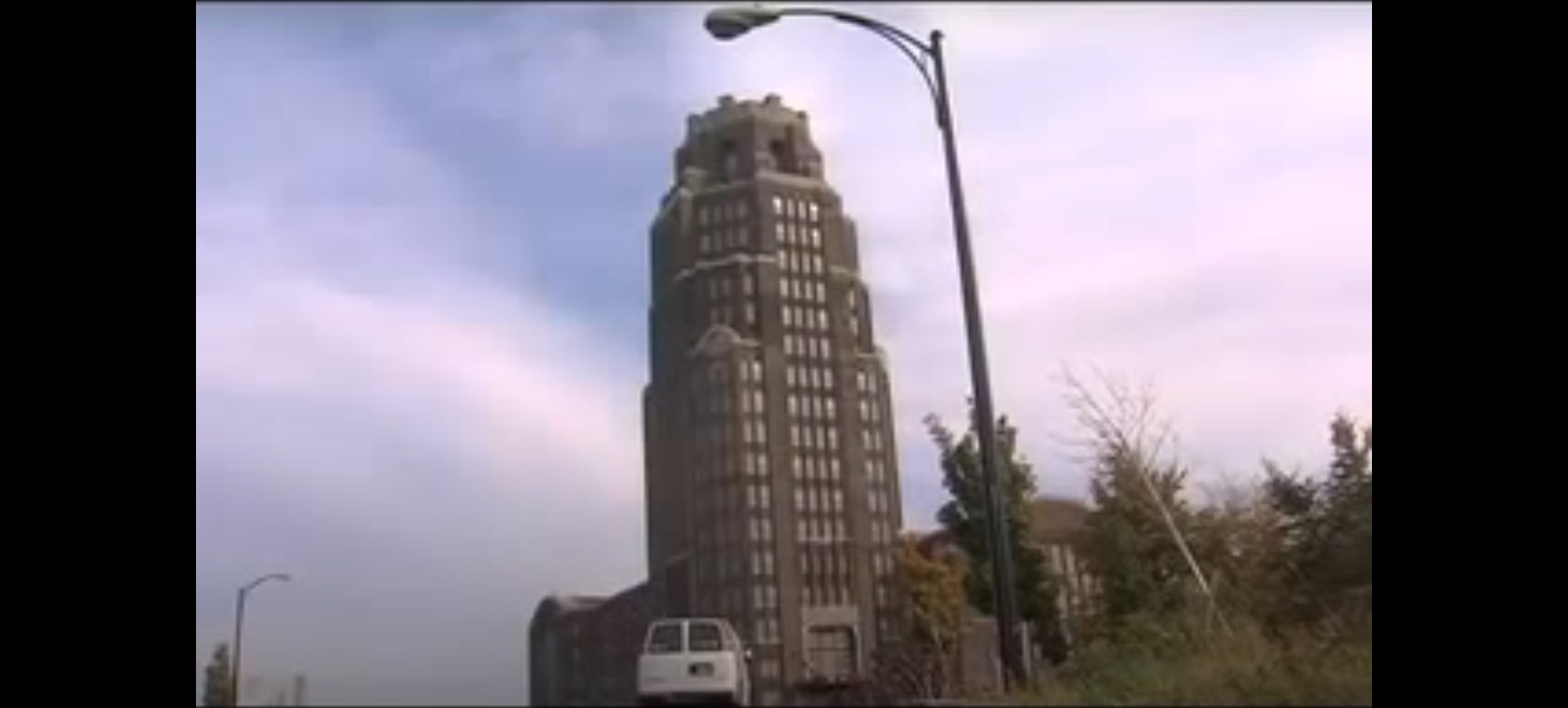
Ghost hunters investigating the eerie ambience has been a source of easy pickings for producers and filmmakers from television’s “Ghost Adventures” to the popular James Wan phenomena that is “The Conjuring” franchise based off the Ed and Lorraine Warren investigations. The then mid-30s, New England filmmaker, David “D.W.” Kann hops aboard the investigator train with his own specter-sleuthing indie film, “Prison of the Psychotic Damned,” penned by producer David R. Williams (“Frightworld”) and released in 2006.  Also known as “Prison of the Psychotic Damned:  Terminal Remix,” the once puppetry and props master, who worked on such classics as “Carnosaur 2” and “Children of the Corn III:  Urban Harvest” as well as hitting the big time with Jim Carrey’s “The Mask” and the 1995 video game adaptation, “Mortal Kombat,” showcases the historic Fellheimer & Wagner Art Deco-architecture that once stood grand inside the Buffalo Central Terminal.   Built in 1929, the 15-story building has been abandoned since 1979 and left for the whim of vandals until its sloth restoration in the 2000’s that even saw paranormal activity themed reality shows take a crack of discovering spirits beyond the grave.  “Prison of the Psychotic Damned” also is an imprisonment of psychotic fraud as David R. Williams was arrested and convicted of embezzlement of his then employer’s capital back in 2010 to fund his schlock ventures under his production company, Red Scream Films, including this film but that didn’t stop Williams who went on to continue producing and directing long after his short stint in the slammer. 

About as volatile as Mount Vesuvius wiping out Pompeii in 79 A.D. are the five, dynamically counterpoised ghost hunters driving toward their insensible doom at the Central Terminal.  Spearheading the venture is the most experienced investigator Rayna (Susan Andriensen, “The Blood Shed”) with the intention of reviving her dwindling career before becoming defunded by the grant investors.  Rayna is joined by her longtime tech assistant Jason (James Vaughn) looking to capture something, anything, supernatural with his homemade psychokinetic-detecting gear as he innocently enough flirts with the snarky unwilling participant Kansas (Melantha Blackthorne, “Bloody Slumber Party”) who finds herself on the brink of losing her funded wayward lifestyle if she doesn’t join Rayna’s expedition per her moneybag father’s direction.  The relation between Rayna and Kansas is being step daughters, but that connection isn’t made entirely clear with only one brief exchange regarding Kansas’s forced attendance.  While Kansas disparages much of the investigation, and many of its participants, she’s joined by fellow volunteers Nessie (Noel Francomano, “Kottentail”) and Aurora (Nemesis 5:  The New Model’s Daiane Azura, credited as Demona Bast) in their respective roles of Rayna’s geeky fanatic and go-to psychic.  The one aspect that really kills these characters (pen intended) for me, and probably the audiences, is the consistent, continuous, ceaseless contentiousness between them with a slew of nitpicking, name-calling, and verbal and physical abuse that makes you wonder why should we even care for a bunch of people who can’t get along.  Brief moments of reasoning flash between them that could end up turning the dynamic around, but the fleeting qualities subside to blunt anger and hate to the point they’re bashing each other’s heads with bricks and leaving each other to fend for themselves against a horde of surgery-conducting ghost-zombies with revoked medical licenses, played by Kidtee Hello, Terry Kimmel, Michael Ciesla, Kelly Budniewski, and Jessica Grangler rounding out the remaining cast list. 

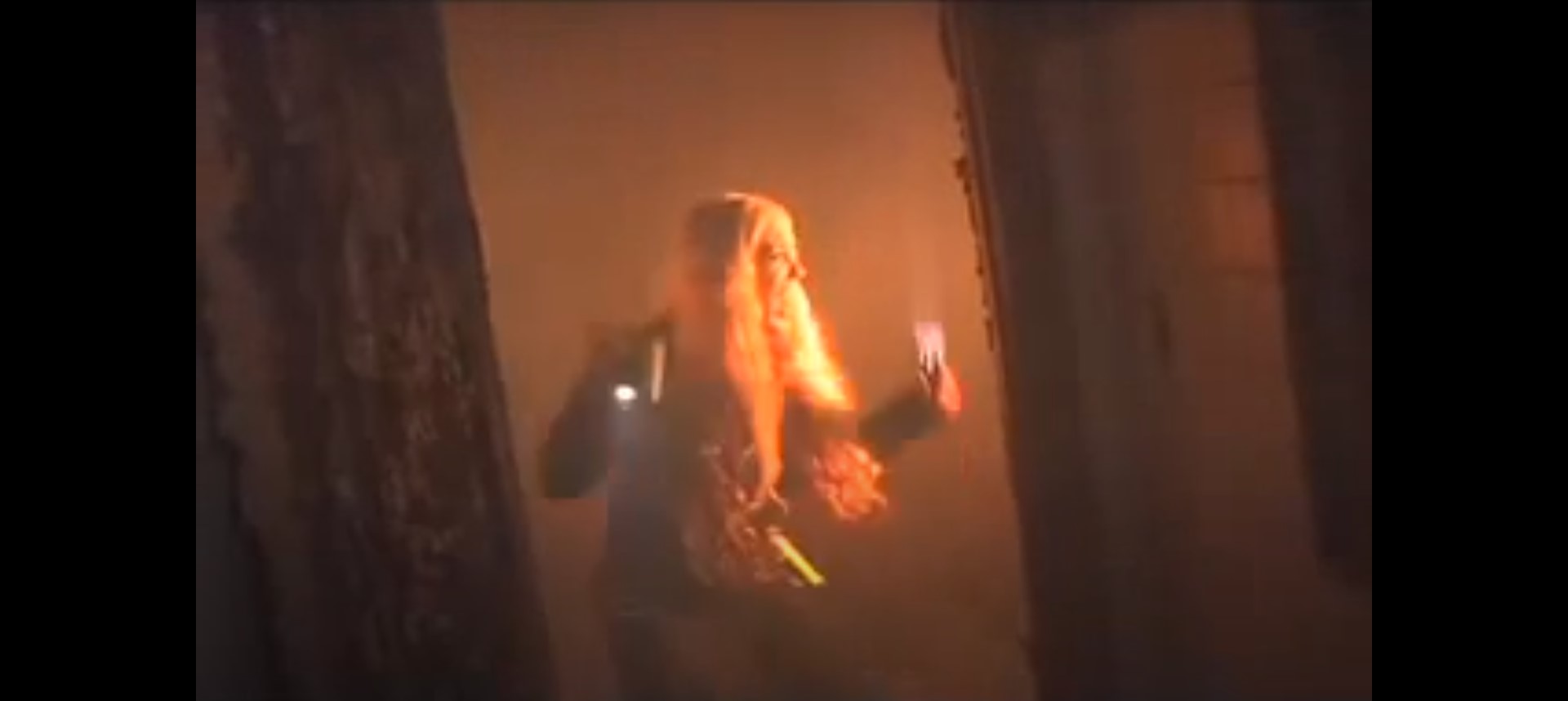
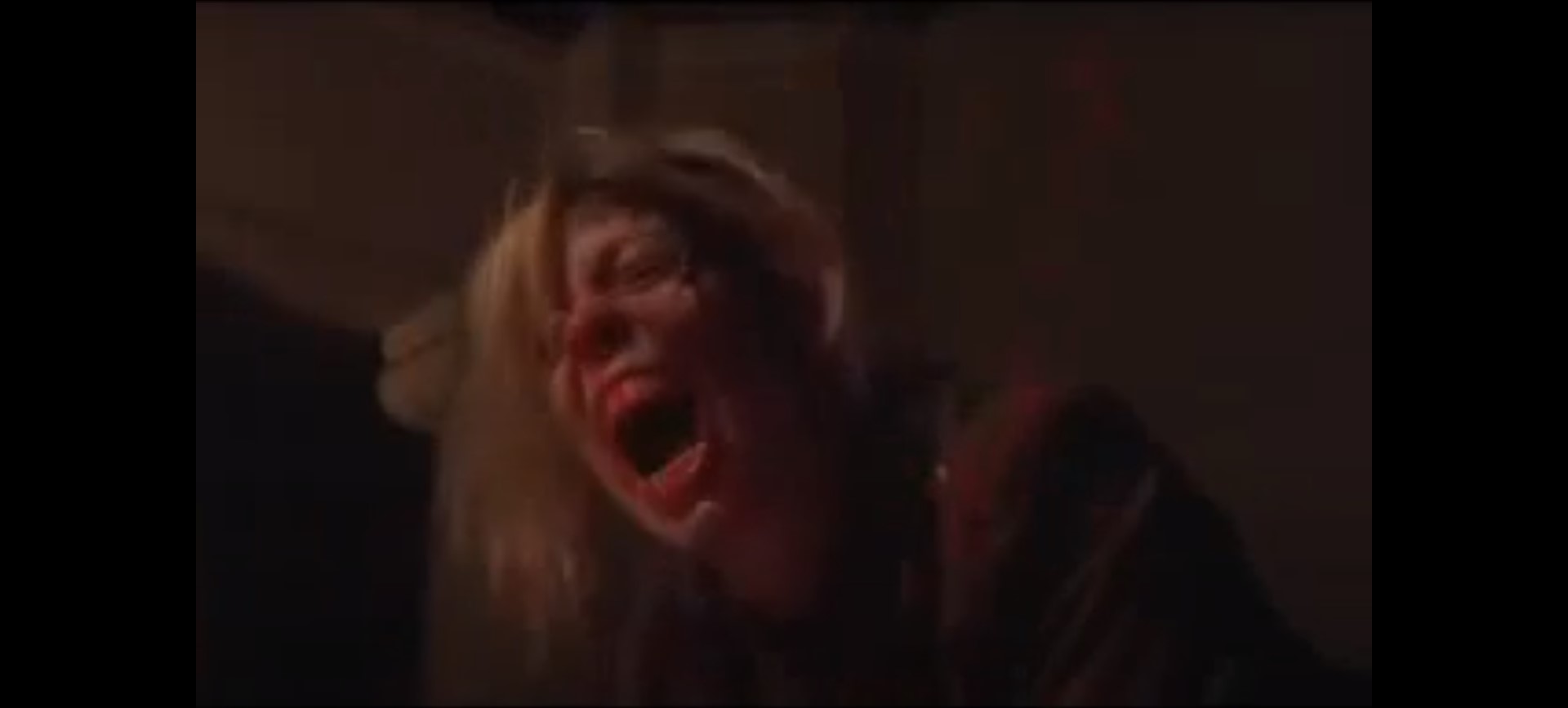
In what feels like the distant cousin, watered down version of “House on Haunted Hill” lite, Kann’s lowbrow, Digital8 shot film is a talkative spew of exposition that lends itself to pretentious prologue surrounding Kansas’s opening scenes of self-mutilation and prosaic nudity as if she’s on an unidentified narcotic.  What’s more confusing about the out of context opening scenes is we don’t really know it is Kansas alone in her apparent apartment.  The film begins with a woman slashing her wrist and licking the blood from her wound, before two medically masked men rush through apartment door and whisk her away.  Next scene, the same woman is back in perhaps her same dingy, dim lit apartment, but this time she’s spouting out philosophy and exposing her breasts by ripping her cheap cotton, tight white top before getting into a warm, steamy bath to stare at the candles at the other end of the tub.  Next thing we know post title creds, we’re riding in a van with the five paranormal investigators and Kansas, sitting in the back seat with Nessie and Aurora, doesn’t even look like the person we saw in the prologue as her hair is put up tight in a bun and she outfits more makeup and gothic drapery.  Once Rayna and Kansas have a sidebar chat and Kansas’s hair progressively loosens and falls, the pieces begin to fit together that Kansas’s disturbed impulses has forced her father’s hand to pair his errant daughter with Rayna for some extracurricular activities that maybe will do her some good…?  Ghost hunting must be the new vogue therapy the kids are into these days, or at least back in 2006.  Structurally, “Prison of the Psychotic Damned” runs faithfully the same obscured narrative course with Rayne expiating mouthfuls of the Terminal’s anecdotal infamy to build a dark dome above the longstanding history, but we rarely see any of the said mythos come for blood and get punted random glowing orbs, creepy doll room, and gloppy possession in return.  Along the way, Kann finds some ways to expose all but one of the actresses’ breasts in a gratuitous-laden attempt to advert our attention from the misaligned components like the story or the performances that just consist of ball-breaking personalities becoming trapped underground with killer spooks and have to duck and dodge the malevolent spirits to survive.  Though the gory bits sate nicely and David Williams erratic editing of eerie filler shots of the Terminal and surrounding area renders like a formidable damaged homemade movie on screen, “Prison of the Psychotic Damned” ultimately boils down to just more of the same rebranded indie slop we’ve all seen before.

Wild Eye’s DVD is released under the indie company’s Raw & Extreme sublabel and is the third physical release of “Prison of the Psychotic Damned” behind the cheap York Home Entertainment DVD and the SRS Cinema limited edition Blu-ray that was released approx. 2 years ago.  The DVD back cover lists the region free film as a widescreen presented transfer, unrated, and clocking in a 100 minutes.  Producer David R. Williams once noted that the surviving master transfer of a flood that destroyed nearly all material is the best there ever will be and with many dark areas shot on a Digital8 camcorder, the presentation is practically raw footage switching back and forth between digital third person and POV with ghosting and soft details amid the thick grain that collaborates the fact of a cruddy transfer. The lossy English 2.0 stereo sound mix toggles with the ears about as much as you have to toggle with the volume. From dialogue to score, insipid flat audio mix universally stiffens the Terminal urban legends Rayna rambles on about as well as extinguishing the score to a putter of insignificant industrial tones with a bookend and backup soundtrack by The Voodoo Dollies and actress Demona Bast serenating with the gothic-vamp vocals with Sonic 14 on an outro track. Among a static menu with scene selection, only Wild Eye trailers are included with the release. Buried beneath the torment of deranged souls, “Prison of the Psychotic Damned” sequesters itself from originality and from graspable, relatable, or even likeable characters in a vanilla story with decent gore effects.

Own “Prison of the Psychotic Damned” on DVD from Wild Eye!

Be Creative, Be EVIL! “Scare Me” reviewed! (Acorn Media / Blu-ray)

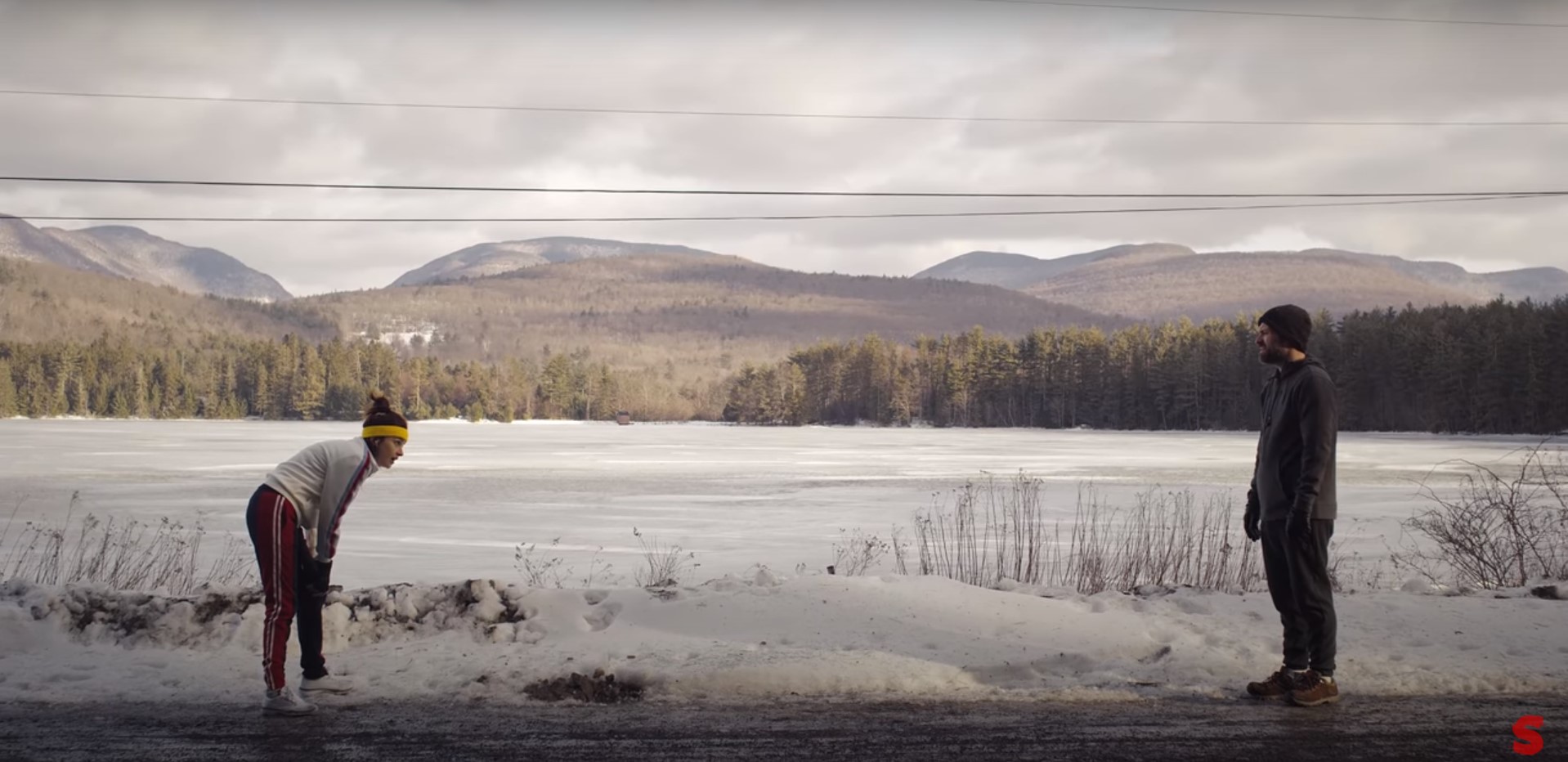
The down on luck Fred and a celebrated Fanny are both horror writers. Well, sort of. You see, Fred is an aspiring horror writer with unpretentious stories acted out by his creativity whereas Fanny is the hot, popular artist who just came out with an acclaimed novel everybody is talking about, even Fred. When their paths cross on a remote, snowy getaway during power outage, they consolidate to one cabin to stave off boredom by telling each other off the cuff scary stories, acting out every minor detail to flesh out the macabre tidbits in order for a good scare. As the night carries on and the stories become more involved, Fred’s night has been a rare highlight in recent days and now that day is on the brink of breaking, Fred has one more emotionally-driven scary story to tell the weary Fanny.

You wanna see something really scary? No, not the line from that wraparound story with Dan Aykroyd and Albert Brooks driving late a night in “The Twilight Zone: The Movie,” but rather really see a scary story come to life before your eyes with enthusiastic performances between two horror writers? Josh Ruben’s “Scare Me” does just that with the filmmakers’ 2020 horror-comedy hit. Ruben, whose latest comedy genre film, “Werewolves Within,” has been a critic success, writes and directs a petite cast packing a powerful punch pitched perfectly more so than this mouthful attempt at an awfully awkward alliteration. “Scare Me” is also produced by Ruben along with Alex Bach and Daniel Powell under a conglomerate of productions companies including Artists First (“Hell Baby”), Last Rodeo Studios (“Save Yourselves!), and Bach and Powell’s Irony Point with Shudder distributing.

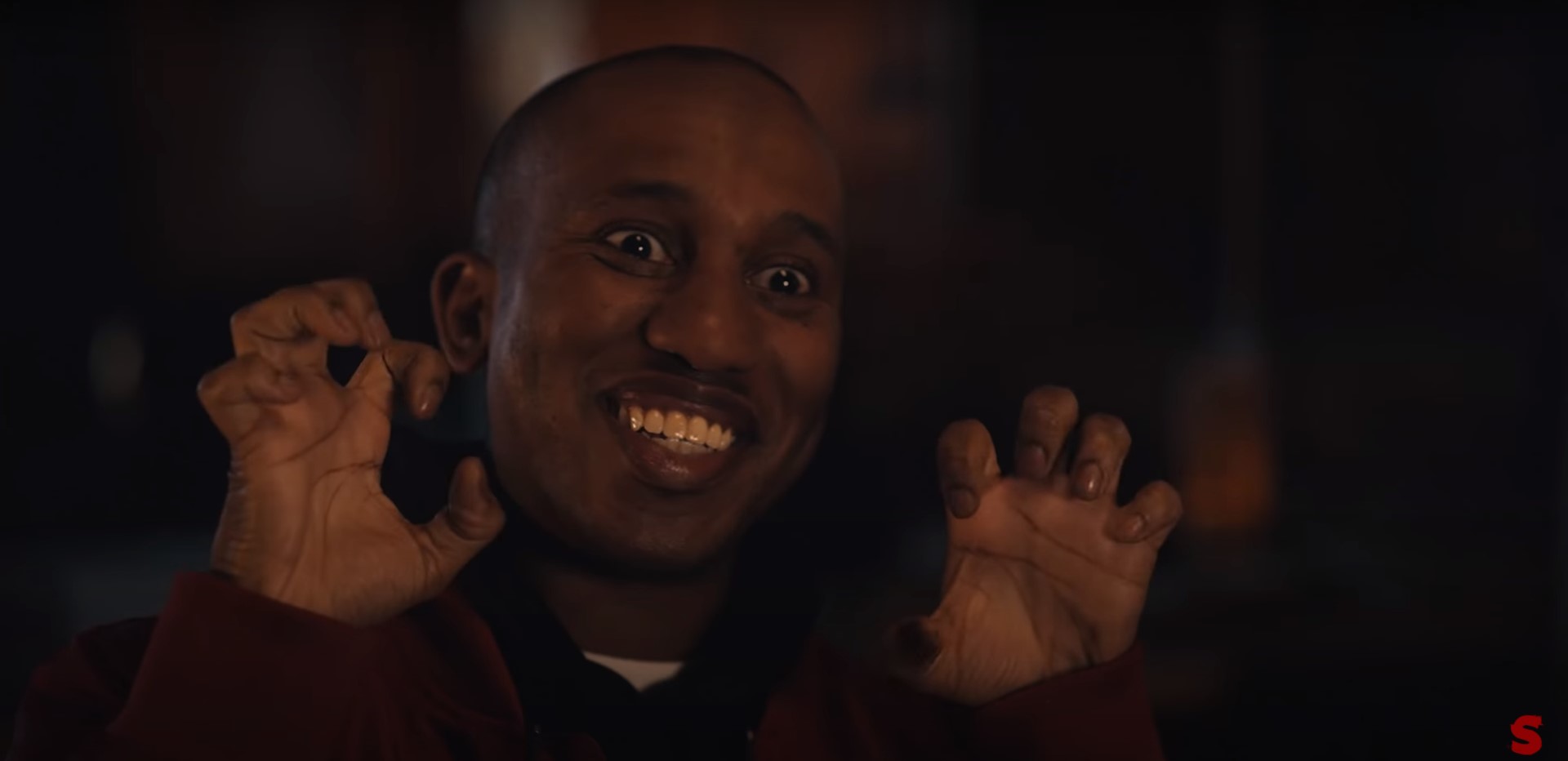
Ruben not only writes, directs, and produces his film, he also co-stars as Fred. With this Andy Serkis like looks, motions, and vocal talents, Ruben is a master at amplifying impressions and slapstick from the beginning as Fred using his unrestraint, and probably unstable, imagination to try and write a bestselling horror novel to help him get out of a life funk. Then, their is Aya Cash, who I have personally adored since her villainous role on Prime Video’s “The Boys.” Much like that role’s personality of the super-sadist Storm Front, Cash just dons snarky assertive woman to perfection as she continues the trend by embodying bestselling new age novelist Fanny with such. Fanny downright emancipates…I mean, emasculates…Fred at every chance and at every step along the way despite her warming up to Fred’s kooky lackadaisical first impressions with a side dish of caution for those who yearn for story ideas. Ruben and Cash bounce incredibly well off each other to the point of credibility between the dynamic and the dynamic is far from being a romantic love interest but more so an unlikely best friend; a best friend who constantly proclaims white male privilege whenever the opportunity presents itself. The funnies also keep on coming, especially mixed into the dialogue details, that are sharpened by Ruben and Cash’s timing and delivery telling their individual stories and the reactions each have during them, but then blend into that batter of bust-a-gut with comedian and “Vampires vs. the Bronx” actor Chris Redd, consider your every funny bone in your body rigged for explosion with the trio’s insanely charismatic skits and a musical number about a Devil possessed pop star to die for. Bringing up the rear of the comedic cast is “Key and Peele” writer Rebecca Drysdale.

If you had told me that “Scare Me’s” premise was two writers telling each other scary stories during a power outage, the film would have been near the forgotten bottom of my must-watch list with the inane dancing of “Orgy of the Dead” and the prosaic “Paranormal Activity 4.” After watching the film, all I have to say is this, Mr. Ruben, please accept my heartfelt apology for manifesting one single brain cell of doubt as “Scare Me” is the five-star movie everybody needs to see. I am not worthy. The idea behind the movie is simple, yet novel, that never ceases to peak as Ruben’s film perpetuates a steady incline of sharp-witty dialogue, an involved and spot-on sound design to create the stories’ allusions, and a trope-less ending that fits “Scare Me’s” unique, unbridles nature without being a grandiose end-all finale. Without the punctuating special effects, Ruben definitely curved a workaround with smart dialogue, entertaining writing, and with a cast who couldn’t sell the idea any better. The work lies severely on the shoulders of Cash, Redd, and Ruben and without them, “Scare Me” would probably been acerbically be retitled as “Bore Me” under the breath of many frustrated genre fans. Also, just because there isn’t knock-your-socks-off special effects, that doesn’t mean there was zilch as Fred, Fanny, and Carol (Redd) enact each stories, a slither of their dread-addicted imaginations comes to fruition like window glimpses into their minds and, damn, they can really sell their fear-stroking dark fantasies by telling classic tale spinoffs that could parallel cult favorites, many that were namedropped throughout the 104 minute runtime. “Scare Me” is without a doubt pure love of the genre and a tinseling homage to the macabre.

Better late than never, they say, in viewing Josh Ruben’s bewitching “Scare Me” on UK Blu-ray distributed by Acorn Media International. The region 2, PAL encoded BD25 presents the film in 1080p on a streaming platform dictated 2:1 aspect ratio. Aside from the bookend snowy landscapes and exteriors, much of the setting is located inside the compact two story cabin in the woods in which cinematographer Brandon H. Banks breaks into his debut feature with getting the precise angles to reassure and reaffirm Fred and Fanny’s telling of scary stories. As far as visuals go, the digital recording compression seems to hold up on the BD25 while still flaunting a good amount of bonus material and an English language Dolby Digital 5.1 surround sound. No issues here with the audio with phenomenally clarity in the diversity of sound bites and in dialogue even with Ruben and Cash’s modifying their voices for story characters. There isn’t a lot of actions to hone on and rein in the depth, but with this type of story inside, as aforementioned, a compact cabin, depth won’t make or break the audio report card. Special features include a director and cinematographer commentary, short interviews with the Ruben and Cash that run through their favorites things inside the horror genre, a behind the scenes photo gallery, a Make Cool Shit Podcast, outtakes, and “Feel the Music, Feel the Light” music video. I’m always up for a good tale of Fright and “Scare Me” slashes all the boxes with a traditional layout themed by envy and has a cast that illuminates each and every scene with funnies and fear.