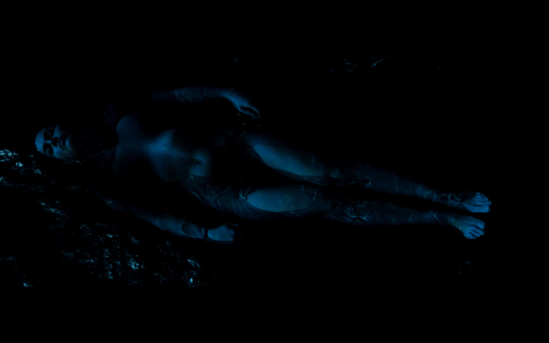
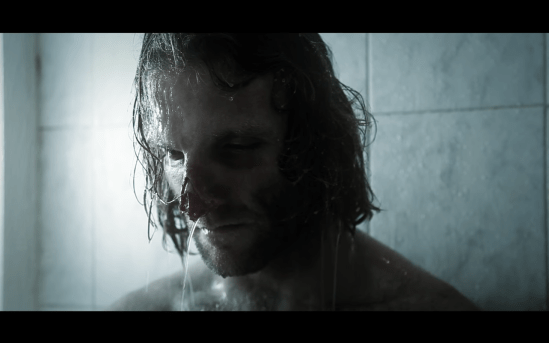
“Krokodil is a homemade drug. It combines codeine, lighter fluids, gasoline, paint thinner, alcohol, and other ingredients.” This fast growing Russian street drug gnaws along the inner layers of one man’s insides and clawing its way out. Also, the drug deteriorates his mental stability, invigorating extreme hallucinations from his damaged cerebral equilibrium and manifesting faux body images of himself as well as inviting humanoid demons into his tattered reality. The powerful opioid, if fabricated haphazardly, induces prolonged and deathly ill effects, both physical and mental, and as his body has survived in a post-nuclear world, his mind is as much of a ramshackle as the rest of the world is in ruin. As he spirals down, out of control, through the opioid rabbit hole, he becomes only a shell of himself, transforming into the purest toxicity of the drug that creates alligator scale-like sores over portions of his body.
The need to put the definition of Krokodil” first and foremost, in front of the plot summary above, felt necessary. Director Domiziano Christopharo made it essential to do the same prior to the credits of his 2012 film “Red Krokodil.” To the average joe, the very mention of “krokodil” means nothing other than a seemingly skewed, alternate version of the English word crocodile, but the gore and shock director, best known for his debut work “House of Flesh Mannequins,” wanted the background behind the street drug to sink in, to be injected, to be snorted, and to be smoked before audiences continue with their trip through the breakup of the body. Based off a script written by Francesco Scardone, the Italian director had set the stage with his grippingly ghastly tale telling talents toward the dominion of body horror combined with ample psychological manipulation from substance abuse and while Christopharo is no David Cronenberg, the eclectic filmmaker cycles the story through a poetic flow with mostly an off-screen monologue approach that gives glimpses of a degenerative mindset.
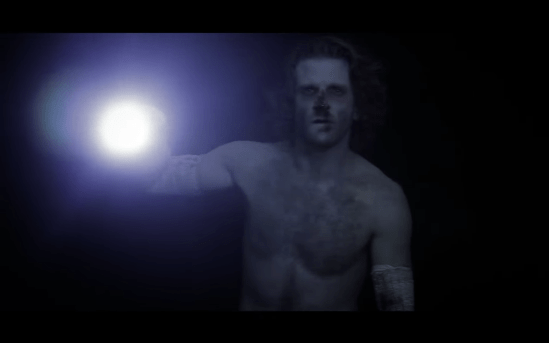
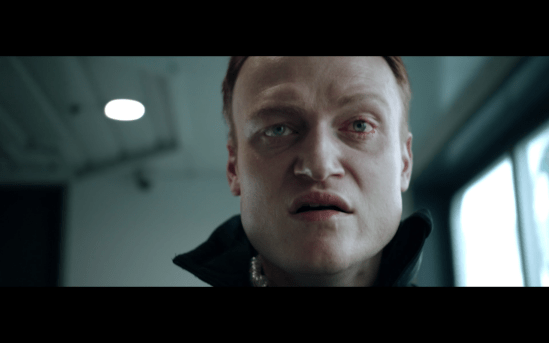
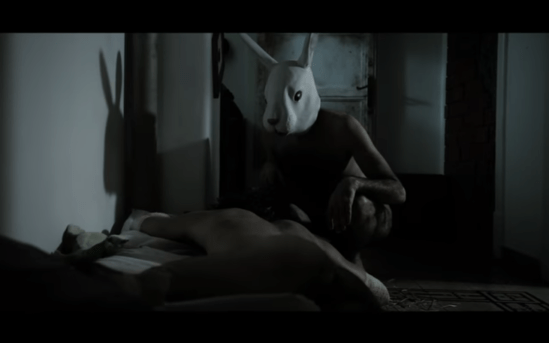
Co-producer of the film, Brock Madson, also stars as the withering drug addict. There are hints Madson plays the character named Arthur, but the film only credits the character as simply him, and theoretically, that’s proportionate to the storyline staged as a post-apocalyptic world where it’s just him, ensnared and isolated. The role’s non-verbal role leaves Madson to go full-throttle in physicality with a semi-to-fully nude performance and he maintains an animated disconcerting fear and aloof glee whenever the moods start to swing. For most of the duration, Madson is solo, but a couple of minor characters, fabricated by his addiction, freakishly gloom over him. Viktor Karam, as the Bunny Man, and Valerio Cassa, as the Monster, positions themselves as enduring internal calamities that plague the Madson’s character.
“Red Krokodil” is laced with themes and symbolism, especially in a religious sense with the resurrection of Jesus Christ that parallels the trials and tribulations of the addict, mainly with going through the withdrawals. In order to save himself to be reborn, he must first sacrifice himself and Madson literally dons the crown of thorns and self-inflicts a stake through his feet. However, this self-crucification is all in his head, but when he awakes he’s able to ignore the heavily influential calls of the krokodil. Christapharo had kept the addicts apartment a dull, colorless prison, growing with filth and decay, but once the addict has saved himself, the room brightens, the outside sky has illuminated, and the near-death abuser has a little life left to be jovial, but to keep the grim themed tone against this man’s struggle to live through strife, Christapharo invokes false hope that ultimately becomes the addict’s concreted freedom from it all. The addict’s inner monologue goes through the steps how recovery, rekindling good memories from the past and wanting to not feel himself as it’s painful to feel your own skin be on fire from the corrosive drug, but rather be a personification of the wind, sun, water, or the grass, an element of the film that touches upon how humans mistreat the Earth much like they mistreat their bodies.
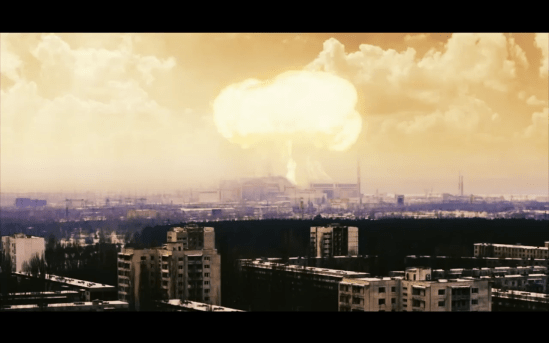
Unearthed Films and MVDVisual present “Red Krokodil” on a director’s cut, high definition, 1080p Blu-ray. Sporting a macabre, yet gorgeously illustrated cover, the release also has the same attributes in the image quality presented in a widescreen 1.85:1 aspect ratio. Like most film distributed by Unearthed Films, the grime and the disgusting reign as supreme and “Red Krokodil” has ample muck with bleeding orifices and an unappetizing uncleanliness about it, but the picture quality is clean and detailed with very little electrical interference. Color palettes, when the addict dreams to escape to nature, is a potent reminder that “Red Krokodil” isn’t just transmitting two-toned, gray and black, scale and displays exquisite landscapes. Even the computer generated Chernobyl like waste land of a city going up in an atomic fashion is well done with only a slightly glossy feel. The Dolby Digital 2.0 track broods with the ideal amount of LFE from composer Alexander Cimini that’s not acutely jarring, but still manages to showcase the detriment. Bonus material includes an alternate musical ending, deleted scenes, photo gallery, the CGI test of the nuclear explosion, teaser trailer, two theatrical trailers, and Unearthed Films tailer reels. “Red Krokodil” is a total out of body experience. Overwhelmingly brutal with muscular and mental breakdown, director Domiziano Christapharo’s indie picture of ill-effects of drug abuse has done what “Requiem for a Dream” has done for the mainstream with the matter-of-fact implication that manufactured street drugs are the purest evil that we could voluntarily do to sabotage ourselves.
Category Archives: Evil Reviews
Evil Surgical Nightmares…on Repeat! “Inoperable” review!

From being stuck in stand still Floridian hurricane traffic to waking up in a hospital without any recollection of how she got there, Amy Barrett finds herself in a seemingly evacuated sanitarium on the verge of being hit by a category 5 hurricane. When she finally makes contact with the limited hospital staff, Amy discovers that the staff are not in the position to help, but desire to perform unnecessary surgeries. Then, she finds herself in traffic again. Then, she wakes up in hospital…again. Amy, and other patients, find themselves trapped in a nightmare loop forged by the powers of the massive hurricane. Before the storm passes over, Amy must find a way to end the corkscrew of timelines that propel her limbo hell or else she will be trapped in the hospital forever.

To the O.R. stat! From writer-director Christopher Lawrence Chapman comes “Inoperable,” the horror equivalent to Bill Murray’s exceptional dark comedy “Groundhog Day.” As Chapman’s sophomore directorial, first in the realm of horror, the director takes “Inoperable” to rebrand the quantum paradoxical plight by introducing a medical butchers with hours upon hours, days upon days, years upon years of experience with exploratory surgery and ghastly invasion procedures. Behind the wormhole of terror script with Chapman is co-writer, the b-horror screenwriter, Jeff Miller whose extensive credits include “Axe Giant: The Wrath of Paul Bunyan” and “Jolly Roger: Massacre at Cutter’s Cove.” In this go-around, Miller explores the space-time-continuum, or does he, with Amy reliving the same moment, experienced slightly differently, in an endless loop of grisliness.

Starring in “Inoperable” is the “Halloween’s” franchise third favorite star, behind Jamie Lee Curtis and Donald Pleseance, being Danielle Harris (“Halloween 4,” “Halloween 5,” and Rob Zombie’s “Halloween” remakes). Harris keeps and maintains the tension, supplementing an increasing annoying and frustrating tone with each and every reset, and does superbly in extended takes running through the hospital’s dark corridors. Amy’s center storied character really puts Harris to work on her ability to flex in sequentially illogical scenes that go in various tangents and come to a dead halt in the end, flipping the script that forces the modern day scream queen to relive some of those killer “Halloween” moments. Harris is accompanied by Katie Keene and Jeff Denton, both whom worked with Chapman previously on the clownsploitation slasher “ClownTown.” Keene and Denton’s characters are also caught up in the same situation as a Denton plays a beefy good looking cop named Ryan who brings in a witness, Keene’s JenArdsen, a dolled up blonde who while in his custody, to the hospital following a multi-vehicle pile up; the very exact incident Amy in which Amy was involved. The two fall for each other more and more with each and every restart and that pain coldly passes over when to bare witness to each other’s demise over and over again is disturbingly twisted. Rounding out the cast is Chris Hahn “Axe Giant: The Wrath of Paul Bunyan”), Cher Hubsher (“The Amityville Terror”), Michelle Marin (“Bloody 27”), Philip Schene, and Crystal Cordero.

The trio of resetters formulate a wildly speculated theory that a nearby military compound, experimenting in spatial physics, was ravaged by the hurricane that oozed out their experiments that disrupted timelines, affecting this particular hospital, and the only way to escape the madness is by displacing the same energy that was put into it; so for example, since Ryan and JenArdsen arrived together, they would have to escape together. As long as Amy doesn’t die, every trapped soul is eligible for escape. Wait, what? Like aforementioned, Amy is the centerpiece to the puzzle and the whole entire situation actually revolves around Amy, intentional or not. Even though clues try to put a monkey wrench in that notion, the story always seems to revert back to Amy much like the loop she’s caught in. That in itself is the biggest hint of all that funnels to a underwhelming ending in null and voids the rest of the story.

ITN Distribution presents “Inoperable” onto DVD and VOD. The DVD is presented in a widescreen to “preserve the aspect ratio of its original exhibition” and, yes, this was done so. Nothing too particularly to note about the image quality being a modern release, but the color palette is balanced and vivid. The English language 5.1 Dolby Digital track has some good range and clear dialogue that effective communicate all theories and explanations on why this is happen to Amy, Ryan, and JenArdsen. Extras are slim that include a cast and crew commentary and the theatrical trailer. The Zorya Films and Millman Productions’ “Inoperable” is open heart surgery gory and is unique in a deadfall environment that’s sublimely refreshing for the over saturated genre, but culminates flaccidly with a conventional finale too predictable for comfort.
A Lone Woman Takes On Three Evil Poachers in “Fair Game” review!

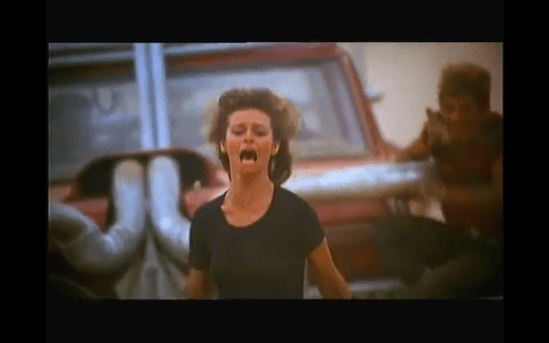
Jessica is a caretaker for a wildlife sanctuary located in the Australian outback. Her day-to-day challenges consist of refilling drinking water trowels in the midst of the heat and herding wandering animals away from a treacherous sinkhole with the help of faithful sheep dog, but Jessica’s way of life, and the lives of the sanctuary animals, becomes threated by three maniacal game poachers. Behind the wheel of a menacing modified truck, the poachers toy with the young woman: slaughtering the protected inhabited animals, destroying structures in her compound, and playing psychological games to mentally and physically break her will. When enough is enough, Jessica, whose nearly lost all that she has, decides to fight back against the well-armed and aggressive hunters that take their dangerous, back-and-forth game to a whole new life and death level.

Mario Andreacchio’s exploitation gem “Fair Game” makes a grand Blu-ray debut onto Umbrella Entertainment’s Ozploitation Classics collection line. Penned by screenwriter Rob George and headlined by the Brisbane beauty Cassandra Delaney, “Fair Game” is a lavishly brutal film about one isolated woman’s plight to righteously defend what’s hers at any cost against a blitzkrieg of assaults from three nasty, but very different, personalities. What’s utterly fantastic about Andreacchio’s film is the cinematography from the late “The Lord of the Rings: The Fellowship of the Ring” Oscar winner Andrew Lesnie. Lesnie, who worked on “Dark Age” that was also released on Blu-ray by Umbrella Entertainment, had a knack for vast landscapes and the director of photography made the already arid outback seem physically monstrous, especially during long shots of Cassandra Delaney running for her life through rocky, dusty terrain. There’s a stark contrast between his day approach and his night scenes that air a soft blue and white glow on the backdrop horizon, a familiar motif typically showcased in horror films, that immensely deepens the chase and stylizes the visual ambiance.

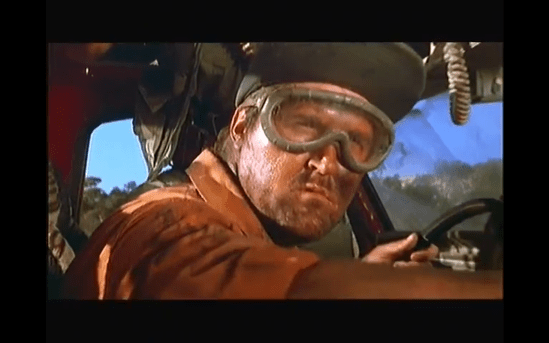
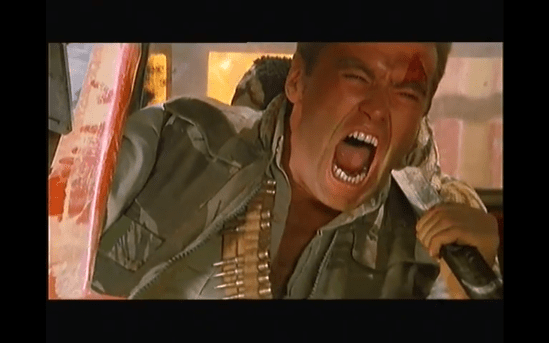
Cassandra Delaney stars as sanctuary overseer Jessica. The demanding role pits Delaney against the terrain elements as well as the three poachers in David Sanford, Garry Who, and Peter Ford as Sunny the trio’s relentless leader. Whereas Jessica’s as pure as they come, being an animal savior and contributor to the community with Delaney selling that to the fullest extent even when she’s pissed off and being a stoic like Sarah Connor, the antagonist are about as rotten as festering, worm-riddled apple with each actor portraying a very different type of character. David Sanford’s Ringo is an acrobatic young man with a punk rock look and attitude overlaying his athletic tone, marking him the versatile go-getter. Garry Who’s Sparks is a potbelly grease monkey and as the lone designated pit crew of his posse, Who enables the slightest probably of being the most sensible of the three thugs but still meager and mean when pushed by Ringo and Sunny. Sunny denotes himself the pit boss, an elite outback tracker with narcissistic tendencies in believing he’s invincible, and Ford’s hard nose and stern take on Sunny is pinpoint precision at it’s deadliest.

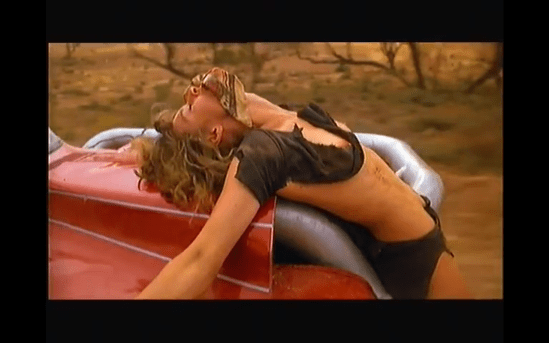
To be all fair about “Fair Game” reasonability, the big question that surfaces after viewing the film is who is the most certifiable between Jessica and Sunny’s gang of hoodlums. The answer to that riddle is ultimately Jessica. Though that might seem like a radical answer, Jessica is, by far, the craziest person with a severe death wish. Whenever Jessica retaliates against the poachers, the three inevitably response with something much worse. Here are some examples: Jessica dumps flour onto Ringo’s face and slaps a vegetarian bumper sticker on their truck that causes the ruffians to quietly invade her compound and take pictures of her while she sleeps naked, Jessica causes a small avalanche to temporarily trap them in a small cave and Sunny’s hoodlums respond by shooting her horse dead, and Jessica welds their assault rifles together in a heap of twisted metal and the poachers tie her half naked body to the hood of their truck and drive around until she passes out. The spat between them overwhelming seemed one sided, as Sunny as his hounds play with their live food before biting down hard to snap it’s neck, but made for kickass exploitation that echos genre classics such as “I Spit On Your Grave.”

Umbrella Entertainment releases 1986’s “Fair Game” onto high definition, 1080p Blu-ray with an all new transfer from a newly restored 2k master. Presented with a widescreen aspect ratio of 1.85:1, the transfer looks impeccable. The palette coloring isn’t vivid, but not surprising since the film is set in the arid outback with nothing but brown on top of brown or yellow on top of brown; however skin tones and the fine details are evidently splendid in Andrew Lesnie’s mise-en-scenes. There’s expected noise through out with some minor vertical scratches, especially earlier in some day time sequences and in the longer shots, but the restored transfer bares a cleaner and fresher take on the 30 year old plus film. The English 2.0 DTS-HD Master Audio track is a lossless transfer that reinvigorates the menacing aspects of the back-and-forth contest, an example would be the monster-like, if not personified, truck that rumbles and roars when trekking and chasing across the outback. Also enhance is the soundtrack that’s a concussed epiphany of acute and rough synthesized and blunt off key tones and melodies meshed together to form a mesmerizing score from composer Ashley Irwin. The release also contains a slew of special features including audio commentary by director Mario Andreacchio and screenwriter Rob George, an extended interview with Cassandra Delaney, a segment about “Fair Game’s” set location, A couple of local TV spots from 1985, a behind the scenes with Dean Bennett, the theatrical trailer, image gallery of still scenes and rare production and promotional materials, an animated storyboard, and five of Mario Andreachio’s short films. Whew. Talk about your full loaded package. “Fair Game” is the epitome of ozploitation with lucrative degenerate characters and a fair amount of gratuitous nudity that goes without being overly sleazy and downright violent like most collaborators in the subgenre. Packed with vicious machinery and a wicked sense of mind games, “Fair Game,” hands down, one of the best in the world of Australian cult cinema.
When You Hear Evil, Do You Get Involved? “The Neighbor” review!

Mike, a mild mannered, middle-aged man, notices a young couple moving into the vacant house next door. His mundane marriage roots out a curiosity infatuation with Jenna, a young and beautiful woman, next moving in. Jenna and her husband Scott, a fast talking exotic car salesman, have recently only have been married for the short time of four months and Mike feels something isn’t quite normal with Scott when he witnesses and overhears violent behavior from his new neighbor toward his wife. Concerned for her wellbeing, Mike, at first, attempts to interject the best way he can without over stepping his bounds by offering to assist with Jenna’s work-in- progress garden or just chatting over the yard dividing wall when Scott isn’t around, but when he assumes things become physically abusive between them, Mike is forced to do more than just mind his own business at the request of his wife and friends. Is Mike willing to risk everything, such as his long term marriage, in order to help a complete and total stranger he barely knows?

“The Neighbor” is a dramatic thriller from the 2011 crime drama “Catch .44” writer-director Aaron Harvey co-written with first time writer, long time editor, Richard Byard. Harvey and Byard attempt to explore the very common situation of what do you do when you’re exposed to marital violence and how much involvement one should put themselves into assisting the battered party. In short, you’re morally obliged to dial call 9-1-1 and report spousal abuse, but to ensure entertainment value for us viewers, the filmmakers pen Mike as something far worse – a concerned spectator. Instead, Mike wallows about by attending to his garden, working on his technical writing from home, or slicing tomatoes in the kitchen all the while being a part of the problem of the domestic violence next door and it’s not as if the violence is even in question as Jenna flat out tells Mike that Scott has a behavior problem whenever he drinks too much. Right then and there, Mike should be ringing the police the next moment a flare up occurs. Mike is the epitomized reason audiences would be vacuumed into the story as each and every one of us could potentially be a passive Mike in a similar situation.

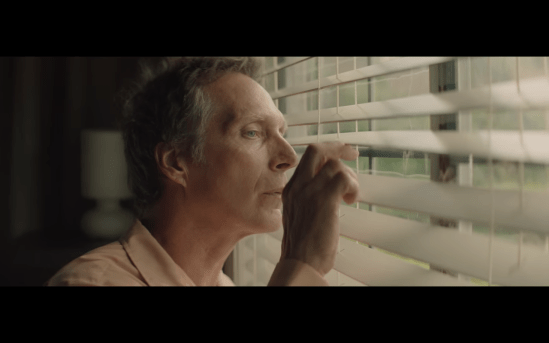
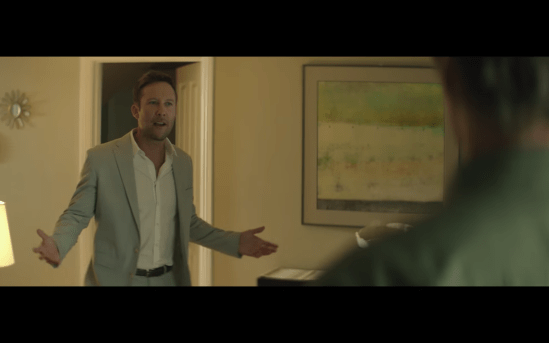
One of the more underrated actors in the industry today, William Fichtner, steps into the comfy slippers of the garden trowel wielding Mike. The “Armageddon” and “Drive Angry” Fichtner’s chiseled and unique facial features typically casts him as hard nose characters – military types, villains, etc., – but “The Neighbor” offers Fichnter a chance to play normalcy. However, Fichtner’s approach to a house husband bears an uncanny resemblance to Michael Myers from John Carpenter’s “Halloween.” With stiff, straight arms by his sides, soulless eyes, and an absent personality, Mike has the gait and the expressions of the William Shatner masked psychopath that’s churns out an awkward performance that blurs the character’s intentions between either being righteous and obsessed. The good looking couple next door are played by Australian born Jessica McNamme and Michael Rosenbaum, also of “Catch .44.” Rosenbaum plays an impeccable dick so well there’s a surefire chance that his character, the fast talking exotic car salesman, will be disliked and as a stark contrast, Namee’s channels a sweet disposition that surfaces the question, why these two are even together? Yet, the Jenna wish-washy stance with Scott makes her frustrating which Mike takes with an astonishing grain of salt. Jean Louisa Kelly, Colin Woodell, and Erich Anderson “Friday the 13th: The Final Chapter” costar.

With a solid cast with a few quirks, “The Neighbor,” under the directorial eye of Aaron Harvey, should have shaped up to be an apprehensive, nail-biting thriller. Instead, some aspects of the Harvey’s film didn’t feel right. For instance, Lisa (Jean Louisa Kelly) and Mike’s marriage was never rocky; the union might have been stagnant from just the day-in-day-out repetitiveness and the longevity of knowing someone from an extended period of time, but there’s a scene when Lisa abruptly decides to throw Mike out of their house. The moment is so random and so unexpected the momentum and the weight of the story changes, pivoting too acutely to compute why Lisa would doghouse Mike over his justifiable concerns over Jenna’s safety without prior marital complexities between them. The entire film almost feels like it’s from Mike’s perspective as everyone, from his friends to his wife and son, seem to unacknowledged his presence whereas Jenna brightens, smiles, and welcomes him in conversation, advice, and even a little intimacy, but that may or may not have transpired.

The Michael Bruce Pictures and Blood Moon Creative produced “The Neighbor” is currently in select theaters from Vertical Entertainment. With a runtime of 105 minutes, “The Neighbor” will drag out under an engaging plot that ultimately goes sluggish at the tail end and even though brilliant and colorful in his prior work, Fichtner is a complete shell of his former characters as a expressionless zombie softly hellbent on saving a train wreck of a young woman from her volatile husband. Overall, “The Neighbor” falls flat to technically write how to right a situation without being caught in the middle of the situation.