Limited Edition EVIL to the Extreme! “August Underground” reviewed! (Unearthed Films / DVD/Blu-ray Combo)

Limited Edition “August Underground” Ready to be Received! 

A young farm owner invites his quirky, video-taping friend into the soiled and confined basement of his home where he keeps a nude, young woman gagged and rope bound to a chair, previously been tortured, and covered in her own blood and filth.  Both feeling giddy with excitement over their new plaything, the two sociopaths revel inflicting more torment and pain on the woman while her boyfriend’s mutilated and dead corpse is being dismembered in the next room.  When their basement plaything expires after days of neglect, the two joy killers hit the New Jersey and Pennsylvania turnpikes and backroads to continue a merciless killing spree of whomever stands in their path.  Convenient store clerks, hitchhikers, prostitutes, even their tattoo artist and his twin comic book enthusiastic brother are not safe from their chockful of callous carnage and every moment is recorded via videotape for reliving the moment in posterity. 

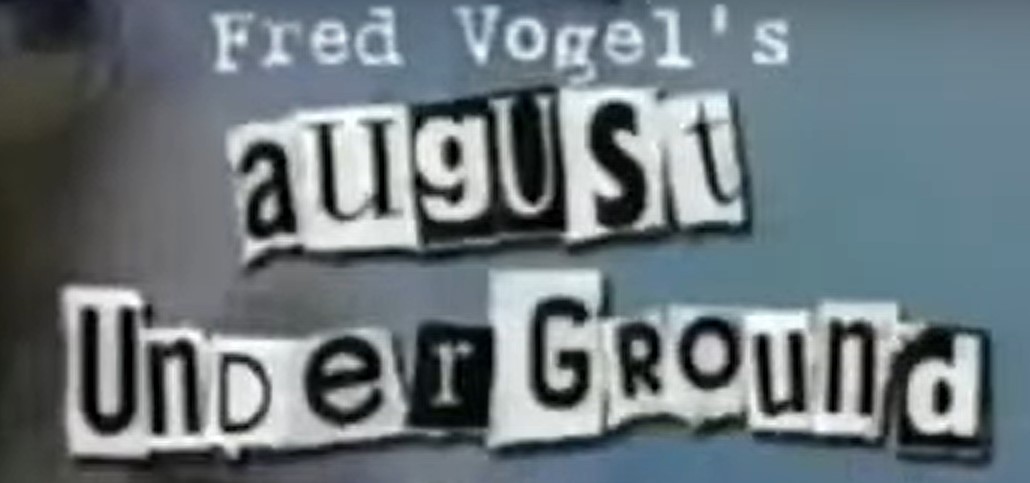
As far as underground horror goes, Fred Vogel’s “August Underground” is about as extreme and underground as they come and still be recognizable amongst the most casual of horror fandom.  Vogel’s inaugural written-and-directed, pitilessly violent, exploitation begins a direct-to-video trilogy of torture-on-tape with SOV quality, imparting grisly shudders to the unfathomable amount of blank-labeled VHS cassettes through man’s stowage, collecting dust bunnies and remaining unseen over the years to the horrors the magnetic tape just might behold.  What “August Underground” essentially boils down to is a raw day-to-day look of two maniacal serial killers on a free-for-all of a butcher’s market, the shooting locations stretch from the recesses of Vogel’s hometown of Warren, New Jersey and all the way to the surrounding back roads and isolated areas of Pittsburgh, Pennsylvania.  Self-produced by Fred Vogel and co-producer John A. Wisniewski, “August Underground” set inaugural voyage on the blood red sea for Vogel’s Toe Tag Productions in 2001.
There is a severe lack of story for Vogel’s debut and that’s no oversight or a sign of omission of a subconscious creativity.  Most normal, everyday people video-record with the intent on not making a feature-length film but rather to capture memories and store them away for another day.  Vogel strives for that realism here where a plot is, for lack of a better word, pointless for the depicted atrocities where the sole purposes is to exhibit dementedness and insanity.  The same can be said about the cast of nameless characters.  The freeform recording does not spout off introductions or make references to monikers to, again, portray as much as organic conversation or realism as possible to further skewer an already gore and violence skewed imagination into thinking what we’re seeing is authentic and inconclusive of its entertainment purpose.  Fred Vogel, under his so-called porno stage name of Peter Mountain, plays the main principal dressed in arrogance and apathy as he’s recorded in a thumbed selection of runtime filmed by an equally bad-natured, sociopathic friend behind the camera, played by a post-release distancing actor under the pseudonym of Allen Peters.  The two complement each other in a Beavis and Butthead friendship kind of way with Vogel in synch with his character’s bloodlust as well as the burly bulk while camera buddy perversely watches, giggling to his friends’ blood shedding exploits.  Their relationship feels like a lonesome outlet to do harm and senseless killing makes the connection firmer, more enjoyable, in the easiest opportunities of a rural area where bored people do evil just to pass the time.  Vogel sets up a series of scenarios rather than plotting acts of a linear story in what becomes an anthology of anarchy that has us climbing down the manhole of maniacal mischief.  Mania is soaked into every inch of “August Underground” and that fits snug and makes warm the scattered story into a much more coagulated coherency.  “August Underground” rounds out the victims, I mean cast, with AnnMarie Reveruzzi, Erika Risovich, Randi Stubbs, Aaron LaBonte, Ben LaBtone, Victoria Jones, Alexis Iris, Stephen Vogel, Dan Friedman, Casey Eganey, Kyle Dealman, and Andy Lauer.
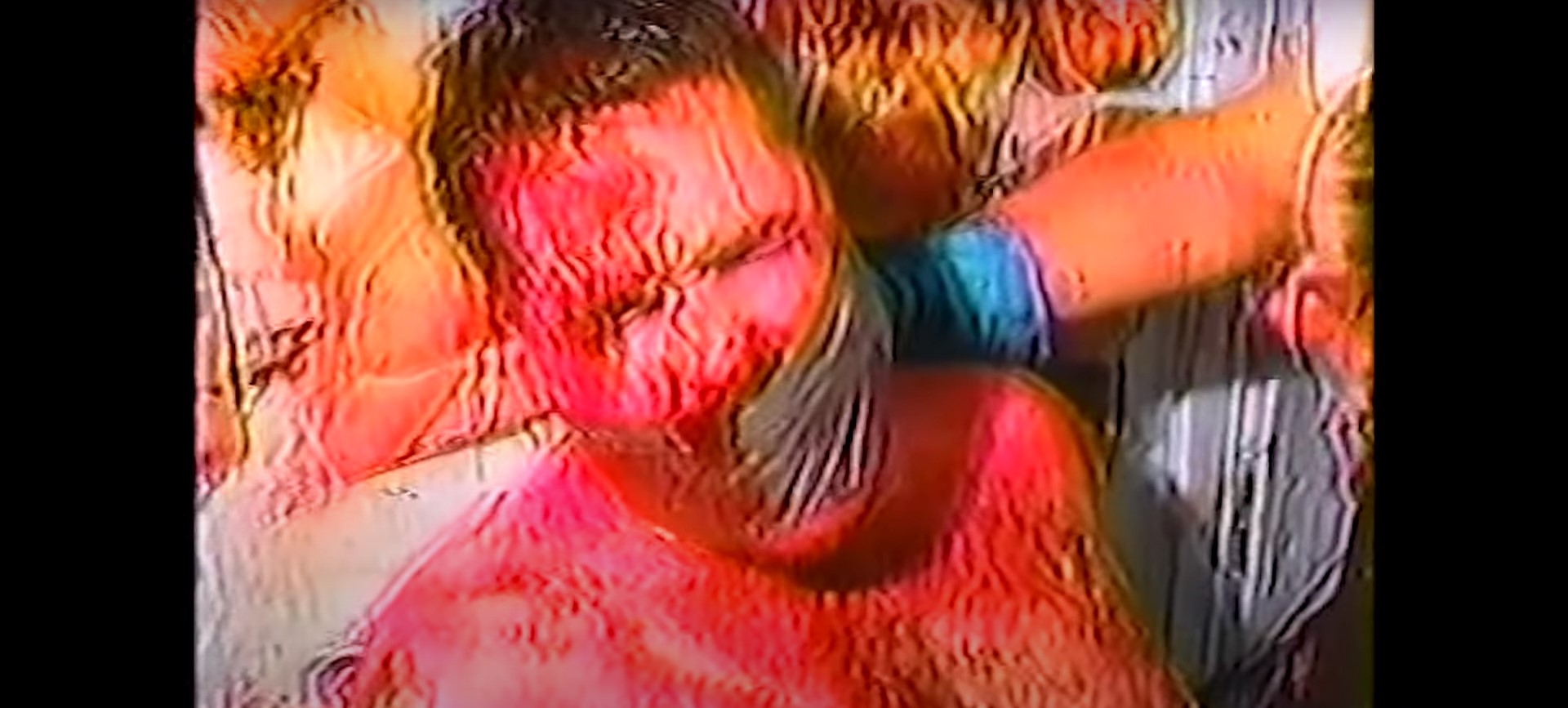
“August Underground” is ugly, nasty, grimy, sordid, perverse, tasteless, callous, and not shot with technical or detailed perfection.  “August Underground” is also unique, bold, unafraid, successful, gory, realistic, practical, and not shot with technical or detailed perfection that’s actually, in its own way, gorgeous.  “August Underground” is all those things and more with its rough-and-ready, extreme exploitation that will be polarizing amongst horror fans and not be a film for everyone’s taste or collection.  Frankly, there are worse underground and extreme horror films out there in the world, but “August Underground,” through the disgusting trices of dismemberment, force feeding of feces, and vomit inducing snuff, has somehow ,at least in this reviewer’s humble opinion, who like in a Dr. Seuss line, has been here, there, and everywhere within the horror spectrum, slipped through the veil of obscurity, having a foot well positioned in the land of the universal acknowledgement where many genre fans putter around with the same old formulas.  The depth of this story is so shallow that digging any deeper into the themes and the possibilities isn’t necessary with its home-made movie facade of people joyfully torturing and killing people being already horrific enough. 
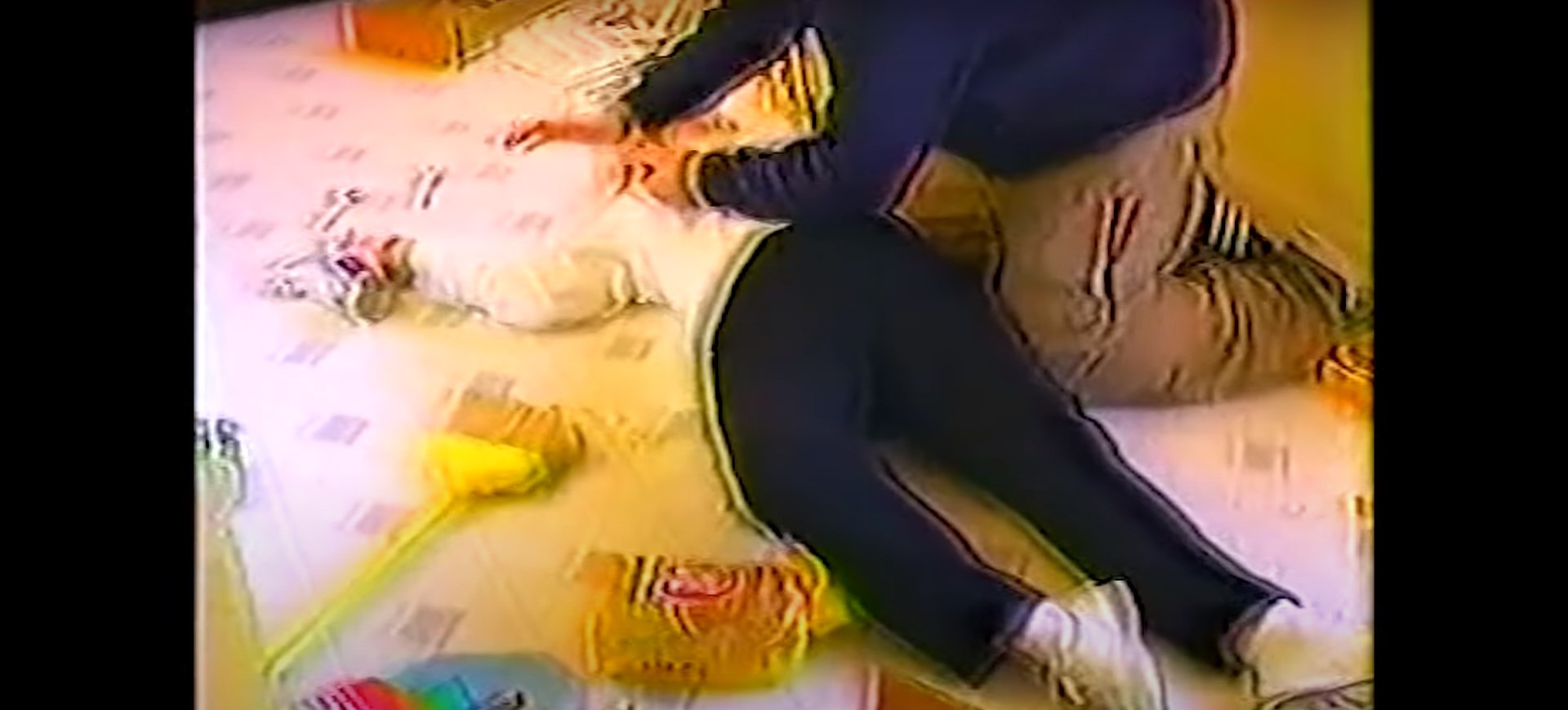
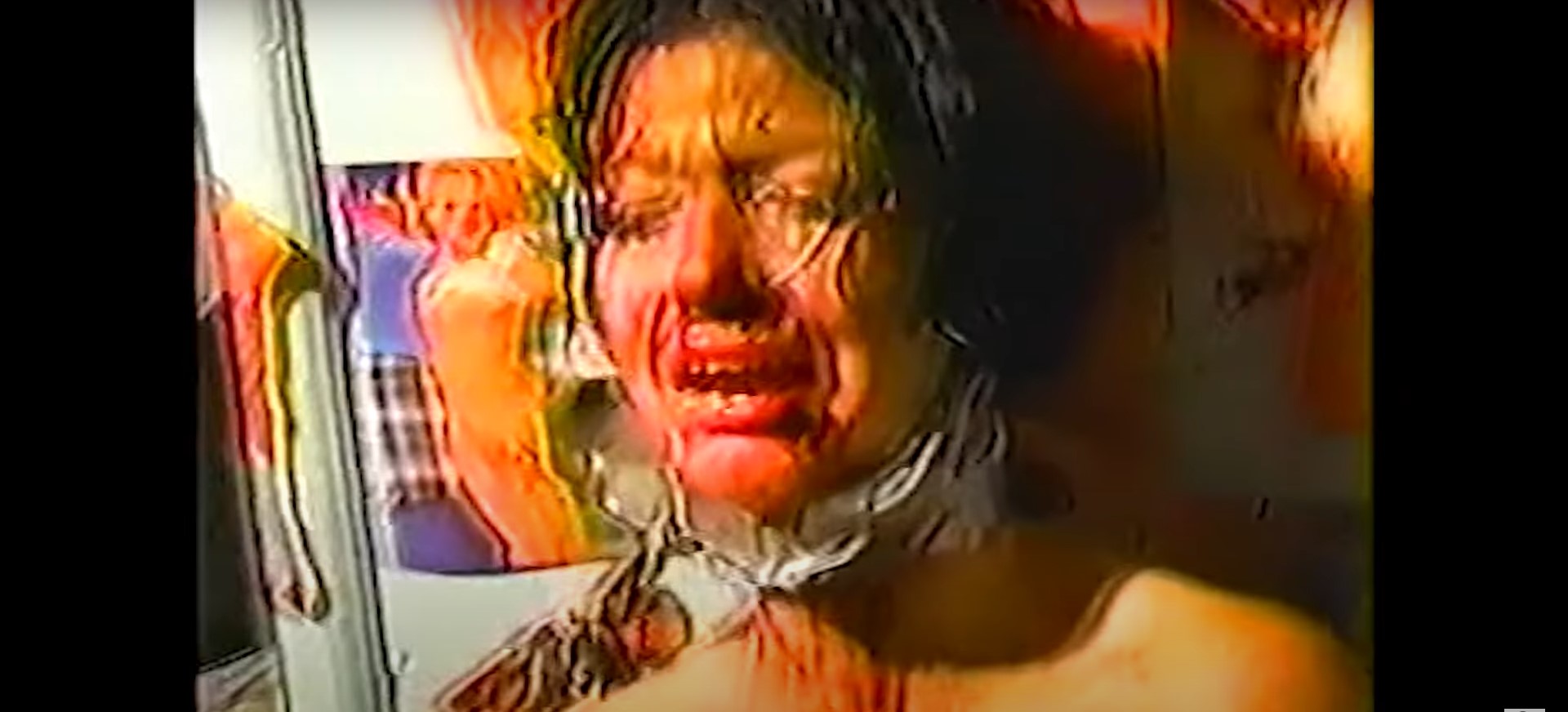
For certain to go out of stock and out of print into physical release obscurity once again, Unearthed Films’ limited-edition collector’s edition of “August Underground” is the 2-disc DVD/Blu-ray combo set to act on right now. The AVC encoded, high definition 1080p, BD50 comes from a MiniDV print, often considered the transitional format from analog and to digital in a tape format with lossy compression. Presented in the original aspect ratio of 1.33:1 aspect ratio, don’t expect image quality to be pristinely detailed and sharp as the MiniDV maxes out at 720p resulting in both, standard and Hi-Def formats, having indistinguishable presentations. Resembling the amateur, at-home movie, scaled down tape quality renders ghosting which shapes and details are bleary and the coloring resembles ember or incandescent with a warm, red-and-yellow layer. What we don’t see much of is a ton of tracking, static, or a ton of noticeable interlace but blacks can be prominently spotty with the horizontal bars. The lossless on-board MiniDV English audio is a PCM 2.0 that doesn’t extend beyond the limits of the camera’s microphone, but the clarity fairs well with clean and commanding dialogue with a natural range between the proximitous cameraman and his killing machine star of a friend in front of the camera. Also, equally interchangeable between the physical formats with what’s made to be a rough recording, discernible differences are minute at best. The Blu-ray and DVD have many of the same special features with the Blu-ray containing a few more frills over its format counterpart with a new Dave Parker interviewing Fred Vogel as well as a separate interview with Vogel and Mike Watt of Rue Morgue Magazine, another new interview with Fred Vogel from Severed Cinema Revisiting Infamy. The formats shared bonus content includes never before seen and new material, such as the original screener version of the film that comes with watermark and a slightly different color grading, a new audio commentary by Fred Vogel and Ultra Violent Magazine’s creator Art Ettinger, a new 10 questions with Fred Vogel answering some of the longstanding queries surrounding the film’s realism achievements and behind-the-scenes permissions and achievements, and a new Toe Tag Masterclass that compares storyboards with the screen version. Archived bonus content include audio commentary with Vogel and actors-producers-brothers Aaron and Ben LaBonte, another commentary track with Fred Vogel alone, an audio commentary by the witty, giggly “Killer,” Hammer to the Head closer look at “August Underground,” on location behind-the scenes, a behind-the-brutality of the film, outsiders’ perspective take in a Too Real for Comfort discussion, an introduction by director Fred Vogel, photo gallery, and trailers. The limited-edition collector’s set comes with a cardboard slipcover with a blurry, interlaced still of Vogel’s character wrapping a forearm around a gagged-girl’s throat while peering into the camera, but it’s the clear snapper case’s front cover that’s more developed with a graphic pencil-graphite illustration of the same slipcover image with more visible mutilated skin and visual weapon of human body destruction. Front cover is also reversible with an interlacing black-and-white image of the main killer. Both discs also sport two different art presses with the Blu-ray mirroring the slipcover image while the DVD has nearly the identical position of killer and victim but with a whole new victim. The region A locked edition has a digestible 70-minute runtime and is, of course, not rated. I would never say Unearthed Films has been diluting their pool of extreme underground gore and guts horror, but their “August Underground” release puts the brazen company back on the mondo-macabre map with definitely a too real for comfort twisted depravity and an au naturel sense of debauchery.

Limited Edition “August Underground” Ready to be Received! 

DCU Can’t Handle this EVIL! “Swamp Thing” reviewed! (MVD Visual / 4K & Blu-ray)

“Swamp Thing” on 4k / Blu-ray Combo!  Now Available on Amazon.com!

A top-secret government project in the Louisiana swamps concern the combination of aggressive animal genes into plant DNA to result in creating super food for the potential famine and overpopulated future.  Agent Alice Cable becomes assigned to the project when her predecessor is unexpectedly devoured by a gator and becomes acquainted with the passionate head scientist, Dr. Alec Holland.  However, the government isn’t the only interested party in obtaining a formula when a faction of cutthroat mercenaries invade the swampy compound in the name of Arcane, a mastermind sociopath looking to hold the fate of the world in his hands.  Storming the compound with force, all the government agents are slaughtered except for Cable who managed to escape while Dr. Holland suffers a tragic accident of combusting with his volatile formula during the attack.  Believed to be dead, Dr. Holland returns transformed into a half-man, half-vegetal thing with superhuman abilities.  Now, Arcane is after him with Cable trapped in the middle. 

Having success in the grisly rape-revengers and mutant-cannibals section of his career in the 1970s, Wes Craven tussled with creating and securing another hit film to pay the ever mounting bills.  Before “A Nightmare on the Elm Street,” one of two biggest titles that have gone synonymous with the director’s name, the other being “Scream,” Craven dived into a DC Universe project before the DC Universe ever existed as such with the script adaptation and the helming of “Swamp Thing,” a vegetational anthropomorphic superhero inhabiting elemental powers, such as regrowth and superhuman strength.  What Craven originally scripted may not have been the same as the finished product on screen but the 1982 captured audiences attention and created lifelong fans of an underappreciated hero still germane to what is now a large universe of revitalized superheroes films and television shows.  Film in and around Charleston, South Carolina in the Cypress Gardens doubling as deep South everglades, “Swamp Thing” is produced by long time DC films coproducers Benjamin Meiniker and Michael E. Uslan as their first DC superhero venture as a Melinker-Uslan production and distributed by Embassy Pictures and United Artists.

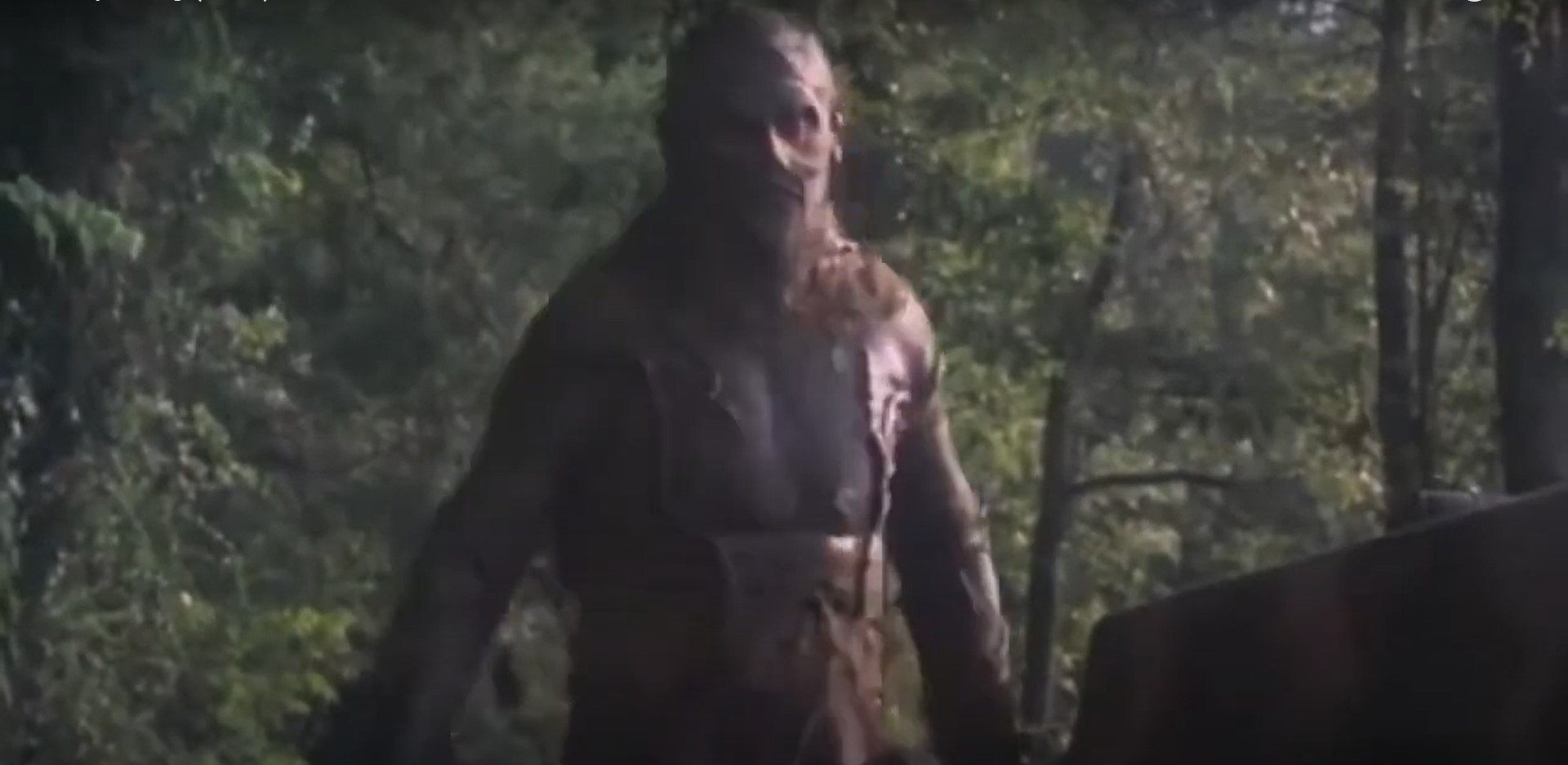
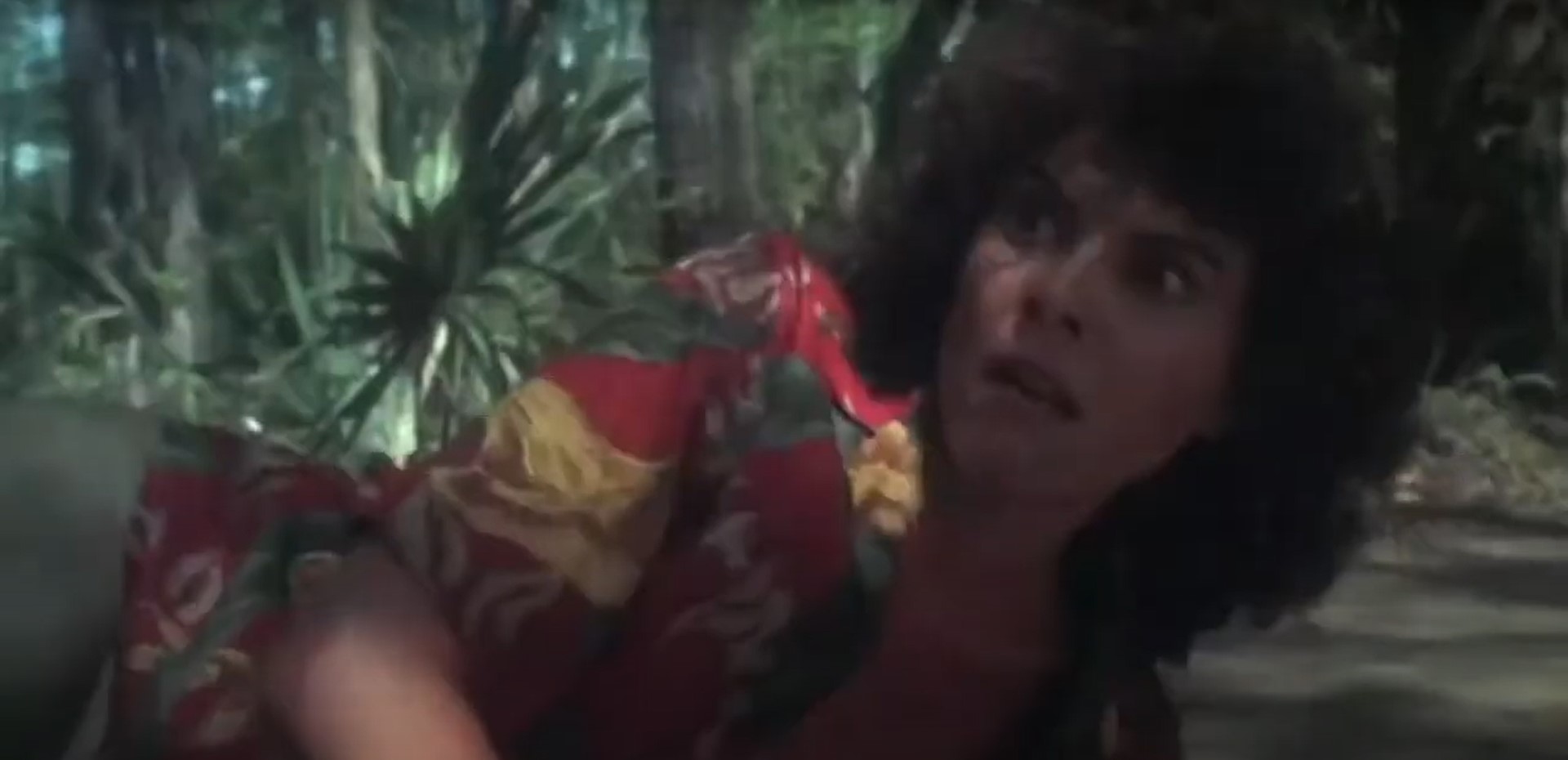
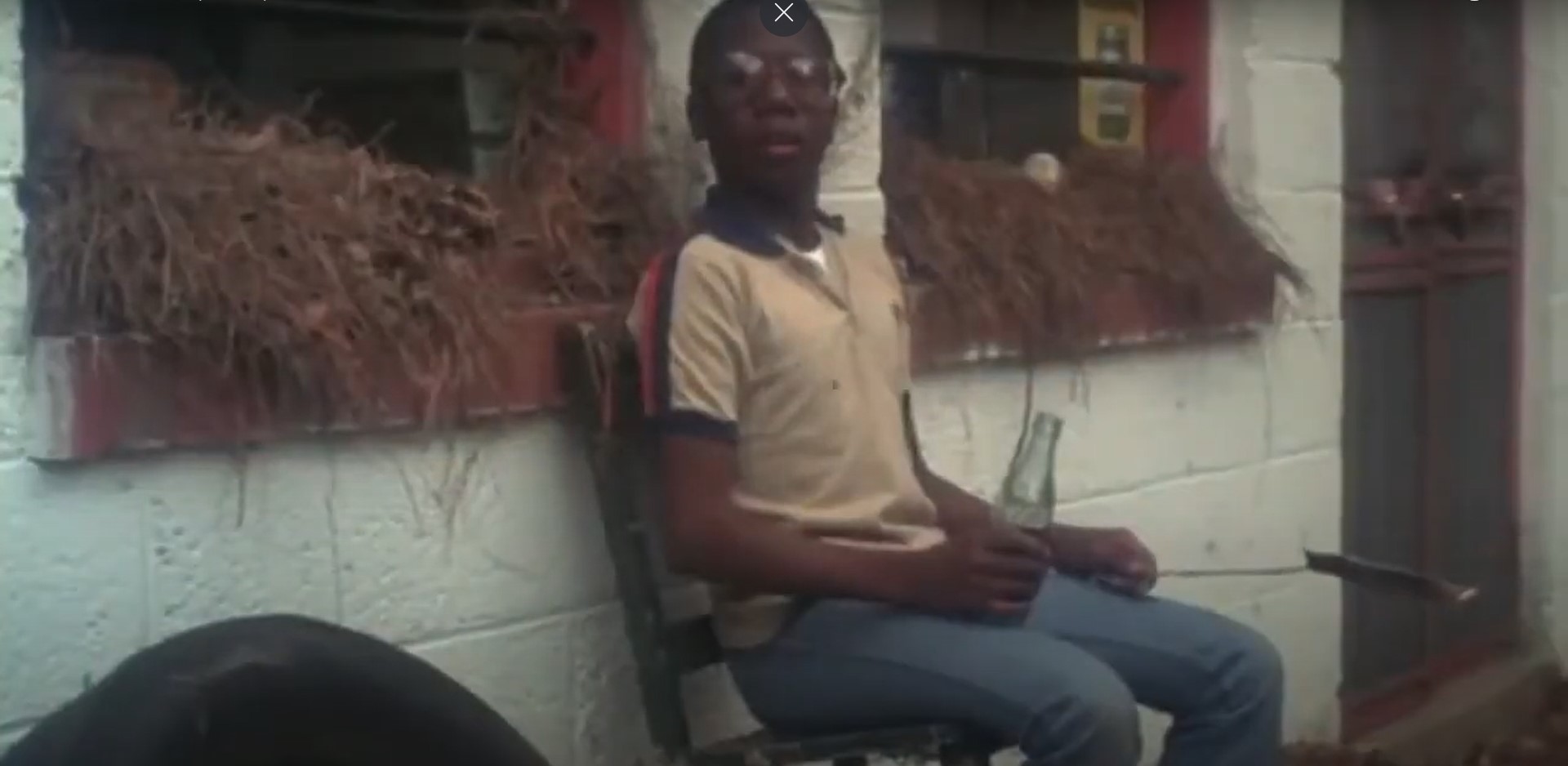
The question of who would bring this monolithic human-hydrangea?  Answer:  Dick Durock.  The 6’5” former Marine Durock was not afraid to jump into character skin, no matter how hairy, tight, or otherwise uncomfortable it might have been.  Durock may not have been the face of Dr. Alec Holland, played by genre cult actor Ray Wise (“Robocop,” “Twin Peaks”) before succumbing to transformational injury and rebirth, but the Indiana born actor certainly became the face of “Swamp Thing” throughout a decade with the sequel and the subsequent television show.  Durock captures not only the strength but also the humanity of the superhero in this origin story, a feat hard to accomplish for a man in a skin-clinging green and bulky suit.  Not to diminish Ray Wise’s performance by any means as the charismatic Wise is charming, passionate, and invested into making his Dr. Jekyll jive with the soon permanent Mr. Hyde to come, but as titular principal, Durock becomes the face of foliage on steroids.  Before solidifying herself as a scream queen, a young Adrienne Barbeau would have more difficulty in her Alice Cable role reflected in having some kind of feelings for essentially the same character in two versions played by different actors.  Yet, Barbeau beats the buggy Carolina heat as well as the differentiate obstacles by being a kickass government agent able to handle herself around the frighteningly new swamp creature and Arcane’s goon squad.  Before he was a James Bond villain in “Octopussy,” Louise Jordan donned the arrogancy of a tyrannical thinker yearning for the unique powers of others.  Jordan’s quite pretentious as the unrelentless Arcane and that makes the actor be the quintessential antagonist but I would not say his performance places his character in complete rivalry as “Swamp Thing’s” archnemesis.  Something is missing from their dynamics within their broad encounters that make the struggle appear impersonal and distant.  Even when Arcane ingests the formula and turns into a werewolf-like beast and the two superpowers clash, I wouldn’t label their conflict personally intertwined.  Perhaps Alec Holland and Alice Cable’s pre-mutation passion wasn’t strong enough or Swamp Thing’s deep-seeded desire for Alice wasn’t rooted well that makes Arcane just whither like a sun-beaten plant without water.  Another character that’s beaten into the ground is Ferret played by David Hess (“The Last House on the Left”) as head mercenary without any real power or absolute authority over his men, turning Hess more into like Tracey Walter in Tim Burton’s “Batman” but not as cool or as likeable.  “Swamp Thing” cast rounds out with Nicholas Worth (“Darkman”), Don Knight (“Death in Space”), Nannette Brown (“My Boyfriend’s Back”), Al Ruban (“1,000 Shapes of a Female”), Mimi Craven (“Last Gasp”), Karen Price, and Reggie Batts as the unlikely best child character in all of the film as an interesting and lone gas station attendant with hilarious, deadpan wisecracks. 

“Swamp Thing” may not be the first comic book superhero to be pulled from the DC lined colorfully illustrated and action-packed pages and adapted to the big screen but what separates the mucky-dwelling plant hero from the other is he’s cape-less, without ray guns and jetpacks, and appears as a monstrous humanoid rather than a regarded normal looking servant of justice as with Superman, Batman, or Wonder Woman.  “Swamp Thing” intrigues viewers with their own internal conflict stemmed from a foundationally laid idea that mutant creatures or unnatural monsters are inherently bad guys.  “Swamp Thing” becomes a part of that trailblazing group of grotesque good guys with hearts of gold.  Yes, the 1982 feature hasn’t held up over time with some of the low on the totem pole creatures suits and makeup I’ve seen, even with the agreeable Swamp Thing suit showing the rubbery creases and fold overs when Dirk Durock has to hold an object; however, to balance out the cut-rate features, special features picks up the tab with stunt boat chases, invisible pull wires, and a man set on fire that’s intense.  With a slashed budget, Wes Craven scripts on the fly to churn out a watered down but still flavorful cinematic origin story that’s full of heart and humanity and partly carried by the sweat and endurances of an eclectic cast and a handful of popcorn action patches.

“Swamp Thing” emerges from out of the muck yet again and onto a 2-Disc 4K/Blu-ray combo set from MVD Visual’s Rewind Collection label, specially marked as the first release on the LaserVision Collection.  The restored 4K UHD Dolby Vision is presented in 2160p and in a 1.85:1 widescreen aspect ratio on a BD100 while the Blu-ray is presented in 1080p high definition with the same aspect ratio on a BD50.  Each format presents two cuts of the film – a PG version and an international Unrated version – both of which have collated from various cuts of the film, resulting in some impressively rich grading that offers refreshed saturation levels of a lusher swamp environment.  More of that richness is conveyed through the UHD with providing deeper tones to make the swamps isolate and swallow characters while also have a sense of being alive amongst the hazy, knee-high fog, opaque waters, and thick vegetation.  Black levels look fine with the amount of grain that can vary from scene-to-scene but not compression issues to talk about on both spectacular approached formats.  The 4K offers a remastered DTS-HD MA 2.0 mono, which is same as on the Blu-ray, that unjustly limits “Swamp Thing’s” audible potential.  Dialogue has some deficiency projecting with all the tracks transmitting through a single channel that’ll force the up arrow on the volume setting or require a punchy soundbar or headphones to get to a clearer understanding of what characters are conversing.  The intrinsic ambience would have been better suited for multi-channel network to extract everything the swampy milieu had to offer, plus punchier fights, but if not an audiophile, these tracks will ultimately sate a viewer’s goal.  Range decently enough limps through despite the surround sound as we receive enough explosions and barrages of bullets to check that box, but depth struggles through the audio layers.  Both formats also include a Spanish language mono track and optional English subtitles.  Special features vary across the two releases with the UHD having limited extras due to storage but what is included is the PG version, the Unrated International version that includes Adrienne Barbeau’s topless scenes, an archive commentary with writer-director Wes Craven moderated by commentary director Sean Clark on both versions of the film, commentary with makeup artist William Munns moderated by Michael Felsher of the commentary/documentary conducting Red Shirt Pictures, also on both versions.  The Blu-ray contains the same extras above plus another Red Shirt Pictures’ interview with Adrienne Barbeau Tales from the Swamp, an interview with Reggie Batts Hey Jude, a discussion with Len Wein, the creator of “Swamp Thing,” the featurette Swamp Screen:  Designing DC’s Main Monster, the featurette From Krug to Comics:  How the Mainstream Shaped a Radical Genre Voice, photo galleries, and theatrical trailer. This must-own set, that caters to paying homage to the Laserdisc, comes retail green 4K Ultra HD snapper that in holds the 4K and Blu-ray on each side of the interior wall. The exterior features an illustrated encirclement of the main players – Dirk Durock and Andrienne Barbeau in comic character – on a single-sided front cover, sheathed inside a cardboard O-slip cover with the same cover art. Both disc presses also represent the original Laserdisc art. The insert contains a folded mini poster of the slipcover design. Two version, one release headline both the 91-minute PG and 93-minute Unrated version of the film with the entire package region locked in A. I may have finally watched Wes Craven’s “Swamp Thing,” but I won’t be the last as I highly recommend this stellar launch into ultra high-definition territory with the original quagmire superhero.

“Swamp Thing” on 4k / Blu-ray Combo!  Now Available on Amazon.com!

Death Penalized EVIL Returns to Wreak Havoc on Young Women. “The Stay Awake” reviewed! (Cheezy Movies / DVD)

Can You Keep Your Eyes Open at “The Stay Awake?”  On DVD now!

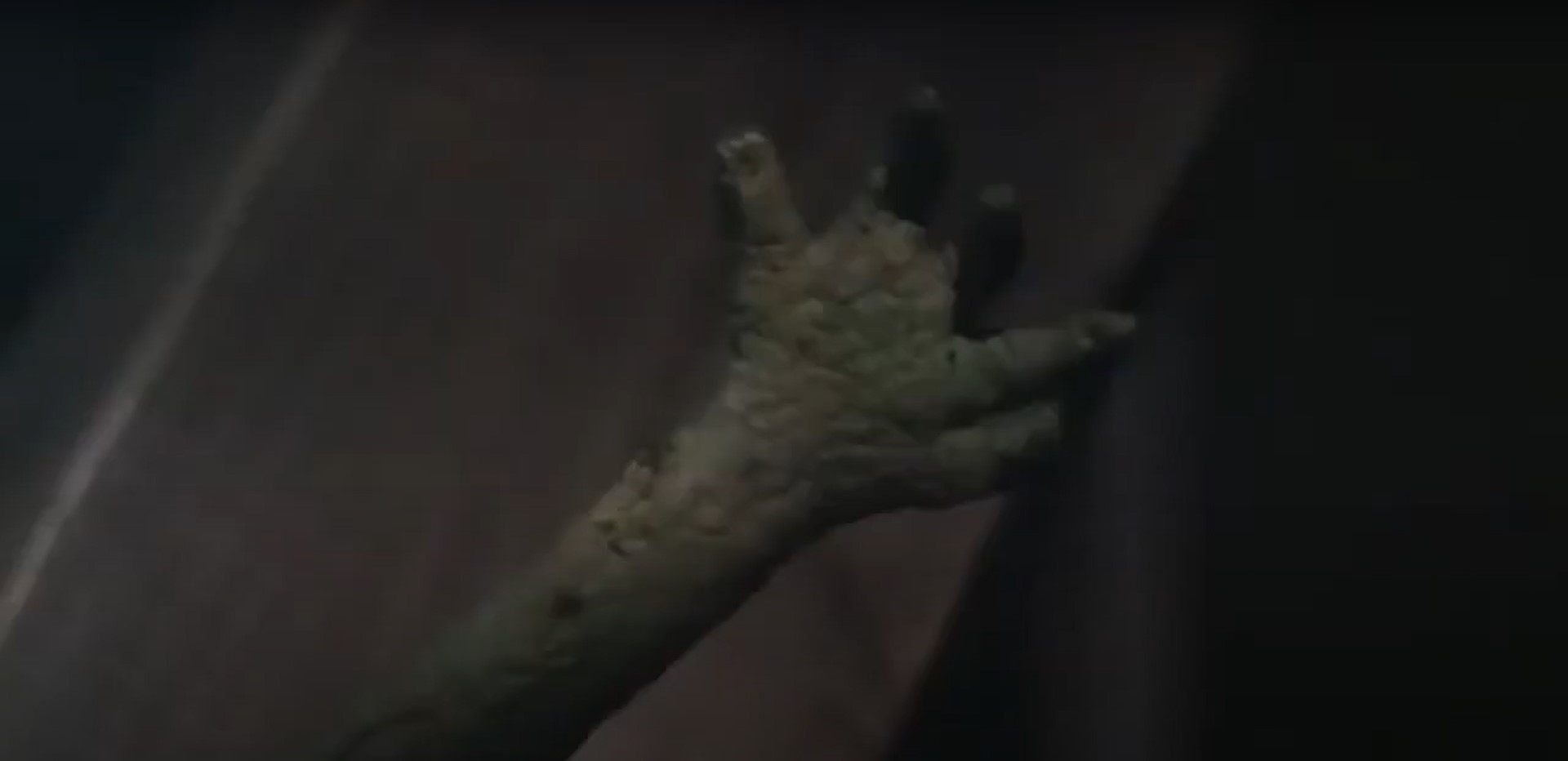
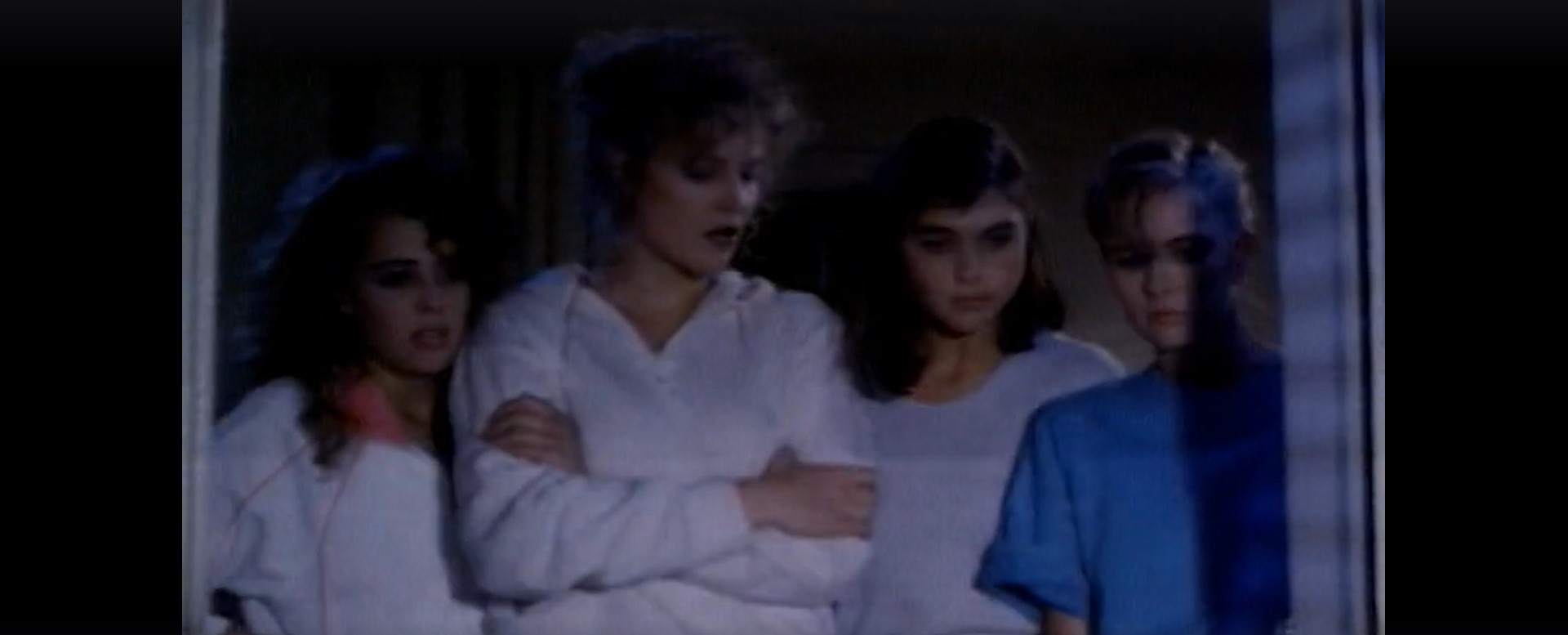
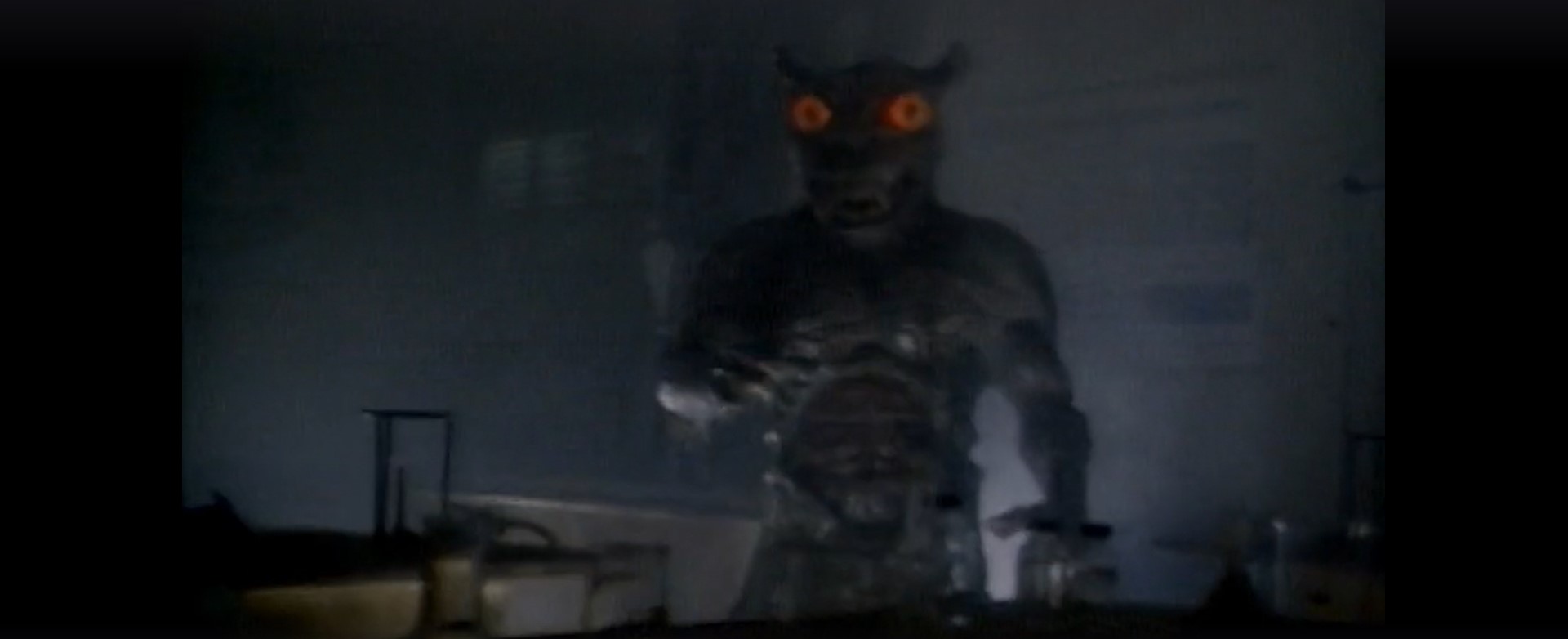
America, 1969. William John Brown brutally slays and sexually assaults 11 women. Before a judge, the serial killer is sentenced to death by gas chamber where his last words proclaim him as the Angel of Darkness sent Earthbound to ravage women. Nearly 20-years later in 1988, the St. Mary’s School for Girls in Europe is holding a stay awake event where a handful of students and one chaperone stay up the entire night as a fundraiser for their school. Dark and nearly vacant, the school basks in an eerie haven for the murderous William John Brown’s returning spirit seeking new souls of the softer sex. Determined to protect the girls at all costs, chaperone Trish Walton will not stop protecting the frightened girls until the entity is destroyed but when the ethereal malevolent spirit takes shape of a monstrous rodent with outstretching attack tentacles and psychokinetic glowing eyes, chances of survival are bleak.

Malevolent forces crossing oceans to death grip the innocent are films that are few and far in between as most transatlantic terror usually stays put, regionalized and localized to keep an authentic aural blend of superstition and history. Director John Bernard attempts to go against the grain with a small crowd of filmmakers who either overcame the parochial provenance and succeeded tenfold or became lost in foreign land narrative and failed miserably.  Bernard and, assumed brother, Johan Bernard co-write “The Stay Awake,” a South African mixed lot of horror elements brewed together into a supernatural schlocker that’s one-half dark and stormy night, gloomy Church Gothicism and one-half final girl survival slasher but equal parts outlandishly overexerted ghost thriller stretching across multiple continents.  “The Stay Awake” is a product of Heyns Film & Television Productions, produced by Thys Heyns of South African action-thriller flicks, as well as produced by Paul Raleigh, the producer of the “From Dusk Till Dawn” and the notable Millennium Films cofounder Avi Lerner, of “American Ninja” and “The Expendables” franchises, in one of his earliest credits from 1988.

Though the story begins in America and mostly takes place in Europe, the cast is comprised of mostly South Africans trying to pass their accents for British English that is more like a rotating centrifuge of South African sub-accents.  Shirley Jane Harris (“The Most Dangerous Woman Alive”) spearheads the cast of principals with an extremely proclaiming protagonist, delivering lines with flatfeet and flat inflection that makes her one of the more forgettable final girls.  Her foe compares just as bland with a grunting, bodiless entity floating through corridors and hiding behind indoor plants (why would an imperceptible spirit need to hide behind anything at all?) before manifesting into what looks like a giant, big-eyed, and built on steroids rodent that then shows the William John Brown (Lindsay Reardon, “The Masque of the Red Death”) in side profile speaking in omnipresent and menacingly through the beast to taunt his prey.  The script allows just enough the group of young, private school girls to standout cliquishly, contain an ounce of contempt for each other, and underpin some form of individualism to make them retain some interest in their wellbeing.  However, most of the buildup that’s created to antagonize or unify between their personalities ultimately fizzle out into resembling something along the lines of kowtowing sheep or lemmings in more ways than one.  “The Stay Awake” caffeinates with a sizeable cast including Tanay Gordon (“Hellgate”), Jayne Hutton, Michelle Carey, Maxine John (“Howling IV: The Original Nightmare”), Hellie Oeschger, Joanna Rowlands (“Armageddon: The Final Challenge”) as the damsels, Bart Fouche (“Monster Hunter”), Clinton Ephron, Warren Du Preez, and Pierre Jacobs as the imposing boys, and Ken Marshall (“Return of the Family Man”) as the school’s night caretaker.

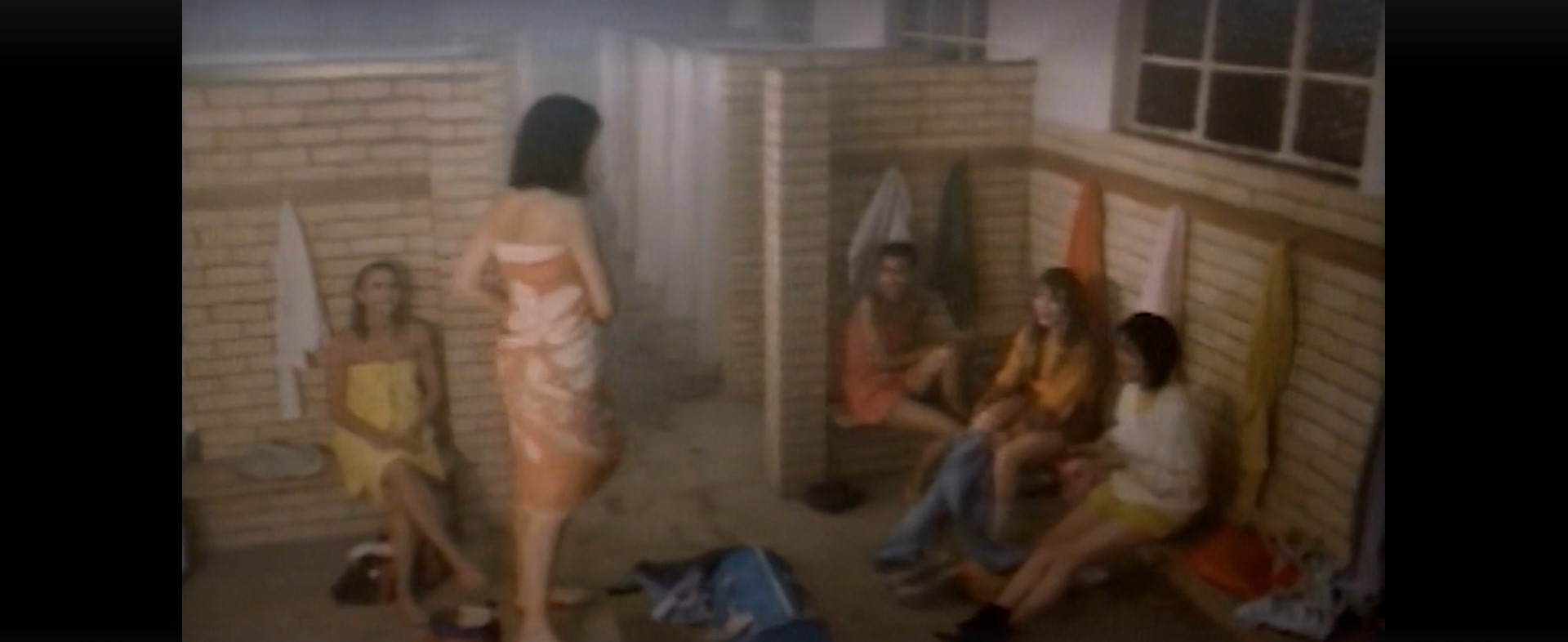
John and Johan Bernard’s logline for “The Stay Awake” likely looked appealing on paper but a full story treatment begs to differ with an inscrutable concept from start-to-finish.  “The Stay Awake” wades in generalities, oversimplifying locations and periods such as “America, 1969” and “Europe, 1988.”  The setup meat in between the disjointed times periods sets up a standard yet effective backstory for the killer, William John Brown, with a Judge’s voiceover of all his brutal transgressions, flashbacks of his victims at the death scene, and a slow walk down the corridor to the gas chamber that clearly denote him as the villain but then accentuates his supernatural supervillainy with a demonic voice screaming his return before the gas engulfs him.  However, why move from America to Europe and why in the span of 19 years does an unexplained possessed version of William John Brown return and select a group of religious school girls while his previous victims look to be a pact of randoms from off the street?  From the start, “The Stay Awake” has little to stay our fictional plausibility.  Couple the perplexation with dry performances, a possibly Hell originated monstrous, burning eyes rat creature, and the gratuitous horror nudity rug being pulled from under our feet as the schoolgirls tease with a shower scene only to be shown showering with towels wrapped around them and what has looked to be a promising possession of perpetual pandemonium  has quickly turned into a deflated disappointment with the only really good thing to come out of the film is the stationary man in a creature suit rat monster built like a bodybuilder.

“The Stay Awake” arrives onto DVD distributed by Cheezy Movies in a direct rip of the standard definitional 480i VHS transfer with a letterbox 1.33:1 aspect ratio.  Don’t expect a detailed transfer in a jittery and smoothed over standard definition that’s covered in a harsh blue tinted lens, but the condition of the interlaced video is surprisingly close to being damage free in a well-cared for print.  However, delph and range is difficult to determine due to the obvious lack of delineation but mostly because of the blue tint, poorly lit scenes, and contrast levels that make this presentation nearly pitch-black unwatchable in corridors, classrooms, and in the room of the like, but darkness is seriously enhanced and meshed together by Bernard stylistic choices of backlighting characters or using soft light to center the focus to offer a darkened horror picture. An English Dolby Digital 2.0 stereo serves as the only audio option which differentiates the soundtrack from the rest of the tracks.  Dialogue mostly separates itself to the top of the audio dogpile but is also well imbedded into the other track fighting to be heard that renders the dialogue dull and flat behind a wall of constant and diffused feedback static.  There’s also hissing at the tail end of sentences and faint crackling throughout.  Subtitles are not available.  The only extras on the static menu are back-to-back, quasi-grindhouse style trailers for two Cheezy Movies distributed titles of the blaxploitation “The Man from Harlem” and a “Dirty-Dozen”-esque “Commandoes.”  The physical aspects include a standard black DVD snapper with a rather enticing original title being sandwich with the demon’s glowing eyes on top and four schoolgirls ready to fight at the bottom.  The disk art is the same image except the four schoolgirls are cropped out and an unfortunate placement on the “The” from the title finds it punched out by the disc center/disc lock to just reveal “Stay Awake.”  The rated-R DVD has a region free playback and a runtime of 85 minutes.  “The Stay Awake” has all the indications of a cheap imitation on an established horror formula and this particular physical release doesn’t help the feature’s cause with an extremely dark and nebulous image to match its narrative.

Can You Keep Your Eyes Open at “The Stay Awake?”  On DVD now!

https://vimeo.com/814964711

Ever Get the Feeling that Your Downhill Relationship is an Endless EVIL Loop? “Brightwood” reviewed! (Cinephobia Releasing / DVD)

“Brightwood” available on DVD August 22nd!  

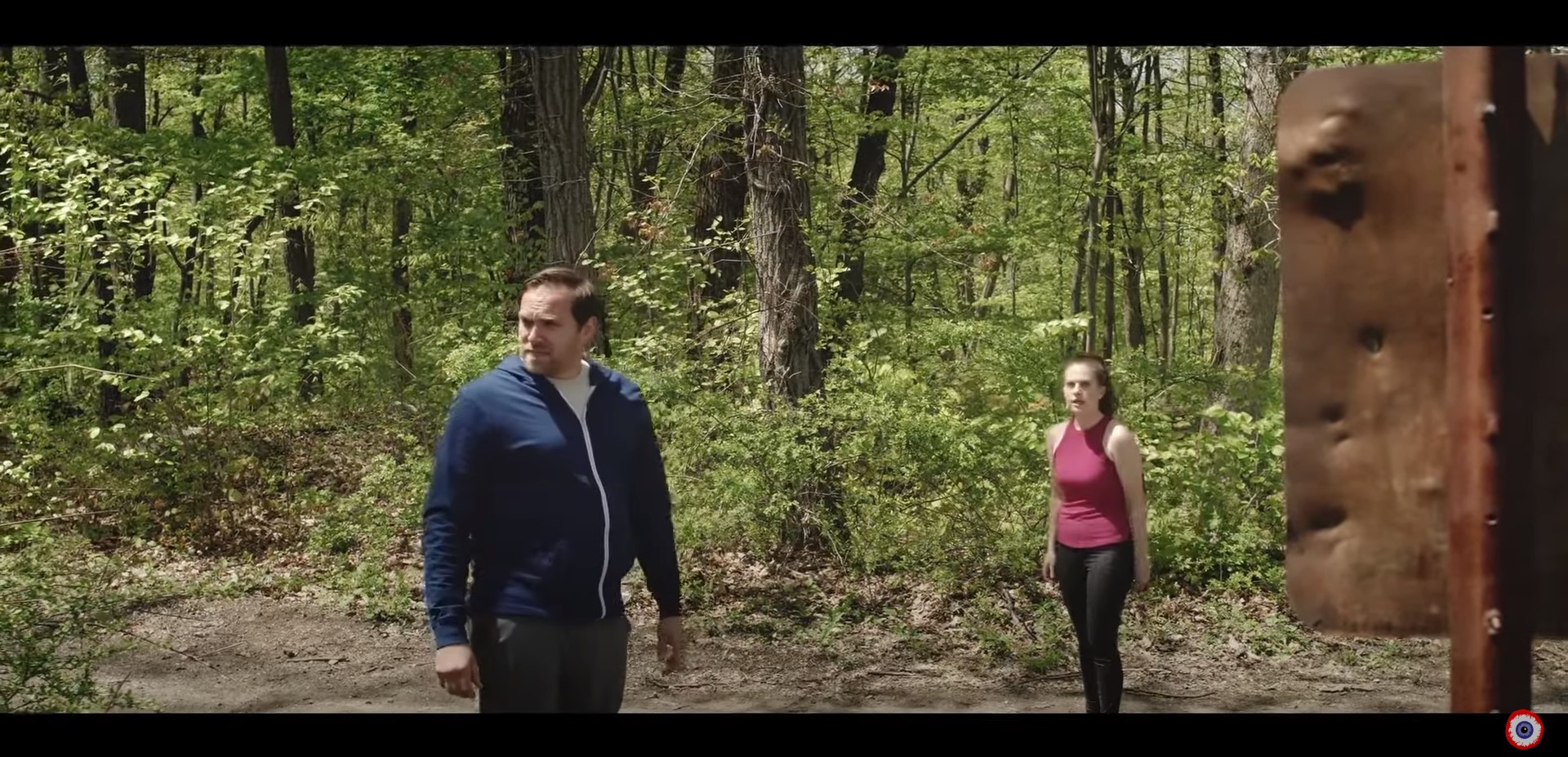
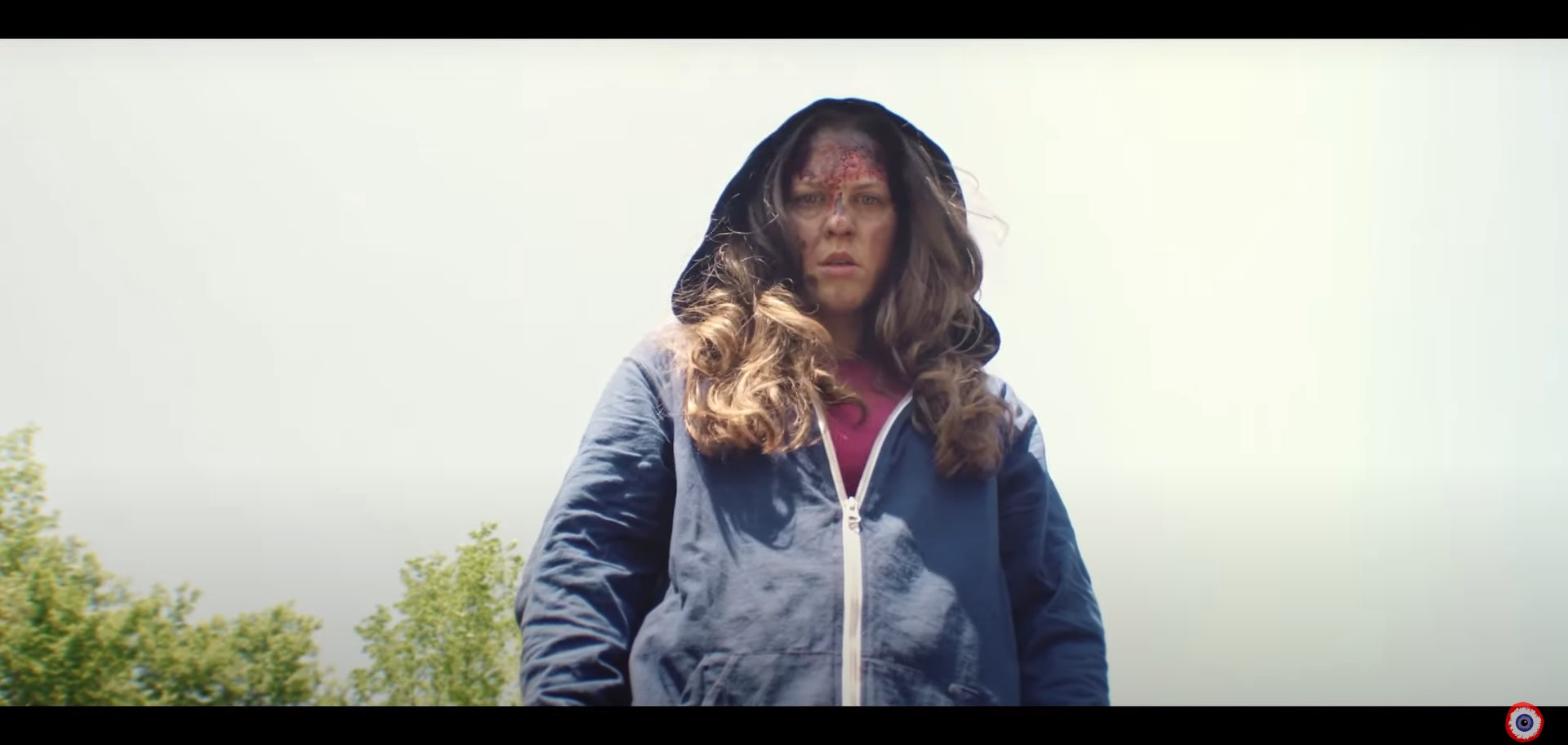
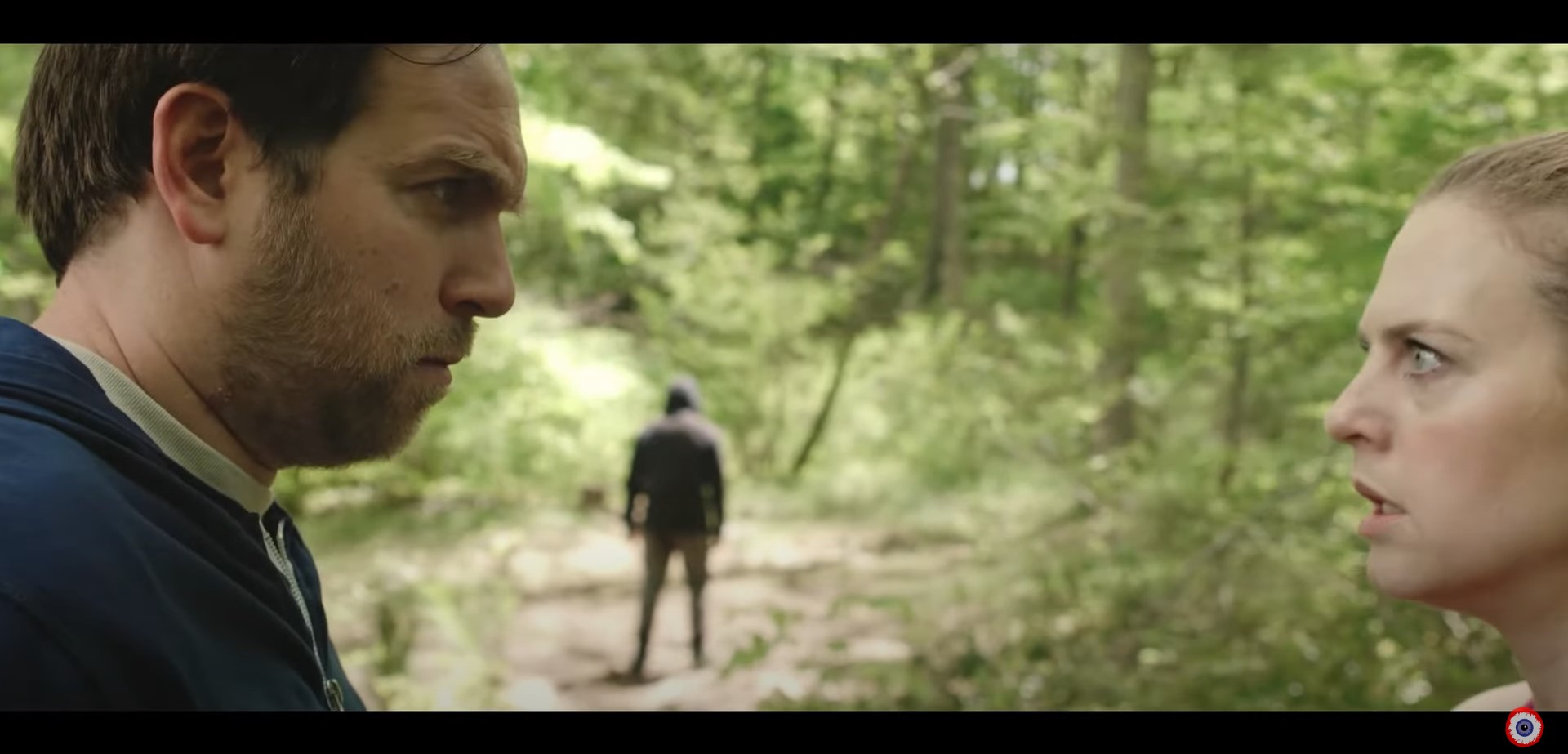
Jen and Dan have been a couple for a long time.  A stupid long time.  Such a long time, Jen has come to loathe Dan for everything he is worth.  On the other hand, Dan self-deprecates himself into submission despite his love for Jen, even a loveless, spit firing Jen.  When the two go for a run, hashing out the contentious night before, Jen heads for the pond to run laps around Dan in avoidance.  Having circled around a few times, Jen realizes the once exit trail from the pond, the trail she run through to the pond, is now no longer visible.  Perplexed, she voices her concern to Dan who also can’t seem to find the exit trail and every attempt to navigate through the surrounding forest reverts in them being brought back to the pond.  With no way to escape a dead cell service zone, the couple realize their not alone when they come across different versions of themselves stuck on a time loop from the very beginning moment the quarreling couple first ran onto the pond circuit to the future, disheveled versions that no longer have humanity.

Strained relationships and cosmic horror go hand-in-hand.  Or, at least, sometimes they feel like they do with an endless and revolving stagnation of being one with another as the hatred for the other and the fear of being alone cancel out any promise of an amiable or favorable solution.  Instead, staying put seems safe albeit the loop around effect of revising old and reoccurring snags that keep the relationship stale and hopeless instead of moving forward.  That’s possibly how writer-director Dane Elcar sees the suffocating time warping scenario playout symbolized in his debut cosmic horror feature “Brightwood.”  Based off and remade from Elcar’s 2018 20-minute short film entitled “The Pond,” anxiety riddles an already one-sided contempt couple who can’t find the path out of not only the pond but also their relationship in the thriller that’s peppered with dark comedy.  The 2022 feature, filmed around Egbert Lake in New Jersey, is produced by the director as well as star Max Woertendyke under Noble Gas Media productions presented by Media Moove and the LLC, Pond Pictures. 

“Brightwood” has a whopping cast of two and, honestly, the story doesn’t require the need for more and the principals, who may be better described as neutral characters or possibly as far as anti-protagonists, run the gamut of moral principles depending on which in-time version of them we’re witnessing.  Dana Berger and Max Woertendyke play the beleaguered and one-sided cantankerous couple Jen and Dan who are unable to escape the mysterious circumstances of being trapped around and forced to endured permanent residence at the trail that encircles a nearby pond.   The couple’s relationship dilemma relates irreconciled differences once adoring lovers cross beyond into when the romance goes stale.  Jen notes this by saying how she hates Dan’s smell as if it just lingers in her nasal cavity.  Hate is sowed deep after years of living with the person she has come to despise because of Dan’s lack of gumption to be anything but mediocre.  Like a puppy trying to keep up with an odiously pissed off owner, Dan mostly fears losing the one woman who likely puts up with his inadequacies.  Berger and Woertendyke really do nail the exposition history while feeding into these dynamics to setup their characters’ climatic, life-altering stuck in an invisible cosmic cage.  Stuck, the word that best describes both a worn-out relationship and the unnatural situation they’re in.  Jen and Dan are stuck together, possibly forever, to work out couple complications or to give up and just terminate it all.  The actors tap into that cathartic back-and-forth by giving a range of therapeutic emotion performances that purges truth and guilt from their characters, like any relationship would in order to grow and/or move forward.

“Brightwood” is one diabolical tale of torment of being indefinitely stuck in relationship Hell.  Analogies and metaphors compile along the way in a parallel stream of unfavorable situations.  To add more layers, Dane Elcar throws them for a loop, literally.  Jen and Dan are copied over-and-over again in a replay of moments and time and each time they’re copied, new developments emerge in the time loop that were different from before, ascertained by previous versions of themselves.  Conceptionally, the idea has it’s convoluted moments in trying to make the characters appear derived from a particular staring point and interact with each other in various behavioral outcomes, but this particular subtenant, niche layer of the cosmic horror genre is innately difficult to represent but a moderate degree of success can be conveyed or extracted depending on how much you’re willing to be opened minded, or stretched the limits of reasonability, or just don’t plain give a damn about it making sense.  Films like Justin Benson and Aaron Moorhead’s saturated cosmic horror “The Endless” or not-so-cosmic but tantamount to the concept is George Moïse’s “Counter Clockwise” are examples that work and work well to entertain a coherency and a consistency of repeated time.  If expecting a flashy and full-fledged effects driven feature, “Brightwood” is the opposite with a low-key approach that relies on staggering scenes to eventually overlap them, keeping the common core element of the pond as a center focus and turning it instantly in our minds as an undercurrent source of evil despite’s its serenity and idyllic nature.  Little do we know, our instincts might be more on point than lead to believe.

Psychotic endlessness is synonymous with loveless relationships in Dan Elcar’s “Brightwood” available on the 3rd DVD distributed by Cinephobia Releasing come August 22nd.  The single layer, interlaced DVD is presented in a widescreen 2.35:1 aspect ratio.  Image quality on the release displays a subtle overexposure, shot mostly with natural daylight, and desaturated video image not terribly rich with coloring.  Basic detail renders over nicely, exhibiting fair delineating and depth within a nature coloring scheme that micro blends characters into the foliage and mirror pond landscape.  Minor aliasing shows within the frame but the overall compression artefacts end there, decoding data at the higher end of where DVD’s can perform around 7-8 Mbps. “Brightwood” comes equipped with two English audio options – Dolby Digital Stereo 2.0 and a Dolby Digital 5.1 Surround Sound.   Between the tracks, dialogue transcends the others in a very line heavy narrative to push the small cast along but there’s a suffice amount of leaf rustling and trail running ambience and range to expand the sound into the back channels.  Jason Cooks composed score a lightly melodious score mixed with harsh tones to keep viewers edgy with suspense.  English subtitles are available.  Bonus features include a feature commentary from director Dane Elcar and stars Max Woertendyke and Dana Berger, 11-minutes of deleted scenes, the original 17-minute short “The Pond,” and Cinephobia Releasing trailers.  The standard DVD sports “Brightwood” poster art with no insert on the inside and the disc art the same as the poster with release spec, which are a not rated feature and a runtime of 84 minutes with an unlisted regionality of region 1 playback.  “Brightwood” endures the subgenre’s stumbling blocks with concentrated acting stability and synergy between the 100% invested Dana Berger and Max Woertendyke who could literally perpetuate Dane Elcar’s vision endlessly.

“Brightwood” available on DVD August 22nd!  

House Music is EVIL’s Jam! “Rave” reviewed! (Scream Team Releasing / Blu-ray)

Get High and Get Pumped for “Rave” on Blu-ray.

Free flowing Mimmi and her timid pal Lina are invited to an underground night club for one more illegal rave party before the building is vacated for unlawful occupation.  As the two dance the night away, Lina becomes steadily ill and as she tries for the bathroom, she begins to bleed from her skin.  Other rave goers begin to feel the same effects, spewing blood, dripping skin, and a melting away existence while the strobe lights unceasingly flicker and the deep house music pulsates into a fixed one-note bass.  Mimmi and another friend escape the party before even the first signs of the illness, hiding away to do a line cocaine, but when they’re followed by those turned into slow walking bags of oozing flesh, no longer resembling something human, her friend is brutal killed and she barely eludes the ill-fated ravers, becoming trapped inside by those liquifying creatures and a pair of masked individuals seemingly unaffected by what’s occurring around them.

Often times there comes a film that sneaks under the radar and may warrant a second watch for it to sink under the skin or into the recesses the brain’s grey matter.  For writer-director Nils Alatalo, his Swedish melt horror “Rave” is the epitome of context.  The 2020 released independent production, known as “Svartklubb” in the Swedish language, is Alatalo’s debut feature that catapults the filmmaker into the same melt movie categories held in reverence by fans of “Body Melt” or “Street Trash” while kissing the outer edges of vintage and cult iconic eurotrash from the 80’s.  “Rave” will be our consecutive watch, analyze, and review into body horror, following the more gore-gorging merge of man and machine of Davide Pesca’s “Re-Flesh” released last year.  “Rave” proclaims a more stylized and abstruse approach compared to Pesca’s grossly unconcealed transgressions of the body.  Haveri Film is the production company behind “Rave.”

“Rave” asynchronously follows two central characters beginning with the rave-reserved and dry-hesitant Lina before a switcheroo into dipping into the carefree, go-with-the-flow, drug-positive Mimmi.  Played correspondingly by Tuva Jagell (“Girls Lost”) and Isabelle Grill (“Midsommar”), the main principals are a dichotomizing pair of personalities mutually connected to each other by friendship and though Alatalo ultimately decides not to fully explore the intimacies of a cherished bond in post-climax, there’s certainly a relatability audiences will be able to understand amongst their own friendship terms, such as seemingly tired of the meekness or revel in being the dominating friend, as being fostered with empowerment, or on the opposite side of the spectrum, needing a friend to take charge, provide reassures, and be a beacon of exuberance.   However, all the letting go on inhibitions come at a cost, a deadly one at that, and when they essentially are the peak of being identical for perhaps the first time in their lives together, the closeness of Lina and Mimmi become mortally unraveled by what could be described as pure, unadulterated Hell.  What also unravels is their friendship in the midst of drugs coursing through their bloodstream and their minds have shutoff with the trance rhythm of the house music, both aspects of which put up walls to deflect the danger from within and around them, making them clueless to the clues.  Jagell and Grill’s performances have more physical importance than whatever come be extracted from their slim dialogue written for the characters and the two young actresses convert themselves into the roles of psychedelic terror. “Rave’s” partygoers round out with Victor Iván, Sophie Lücke, Ebba Gangoura, Sebastian Norén, Christer Wahlberg, and Celina Braute.

“Rave” is a flash of brilliance tightly confined and bottlenecked to not be bigger than needed by squeezing to contain its claustrophobic purgatory that’s wrapped like a nightmare on molly.  “Rave” is also not a straightforward line of coke, glow sticks, and fleshy fluid fiends within what is an ambiguous narrative that requires an open mind to its reverence for elder Euro horror.  That’s what I suspect Alatalo was shooting for here, an immense adoration and respect for European horror peppered with inspirations from American filmmakers as well.  Soft brilliance of Dario Armento lighting, silhouette eeriness of Lamberto Bava cinematography, and the slow bloodletting of Lucio Fulci’s gore represent the best qualities of same continental yore while including a John Carpenter story-ingrained synth score and paying homage to American melt horror filmmakers, such as J. Michael Muro, Gregory Lamberson, and Philip Brophy to name a few, with his own rendition of what it means to have skin slink and blood secrete from inside the body out.  While the first viewing doesn’t quite stimulate immediately the senses with its slow burn dread, ambiguous cause and effect, and dialogue adverse script, “Rave” glues itself to the psyche and lingers in that cranial netherworld that nags and gnaws at the subconscious and does it enough that a second viewing becomes necessary.  Instantly, piecing together the puzzle through a second visual overlay can jumpstart the engines on what exactly we’re witnessing – Alatalo’s patience with the structure, meticulous details in the scene, and admiration for the genre.  “Rave” is also an indie picture on a budget but considering the composition of the final product, “Rave” strongly accomplishes a persistent uneasiness without exposition that parallels subtle strikes of sharp, startling dread only seen by a handful of filmmakers.    

A whole new version of neon dead arrives onto a special edition Blu-ray of Nils Alatalo’s “Rave” from Scream Team Releasing.  The AVC encoded, 1080p high definition, BD25 presents the film in a widescreen 1:78:1 aspect ratio, scaled down from the original aspect ratio of Univision 2.00:1 causing some minor compressed looking scenes.  Not to be deterred, the range of scene setups under the cinematography trio of Jakob Ivar Ekvall, Amelia Finngåård, and Gustav Råström offer an eclectic mix often in the humblest of fashions, such as using just a camera flashlight in a windowless room or the red and blue neon lighting through fog machine.  Silhouettes delineate nicely on screen with the use of backlighting and camera angles.  Framing is a hit or miss coupled with energetic editing, but the overall atmosphere is agreeably chafed with tension.  Minor banding and some aliasing creep out as artifact side effects of a dark-laden story with some of the quicker moments evading the slimy-secretors through the building trying to keep up through the decoding of data.  The compression issues are not terribly invasive during viewing, but they are annoying consistent and notifiable.  The Swedish uncompressed LPCM 5.1 surround mix has lossless binding and sounds really good environmentally albeit many of the tracks are done in post, such as some of the exterior dialogues, which sound natural but softer in the scene, and the itemized milieu ambience.  The Joakim Martinsson and Christer Wahlberg house music and soundtrack are the real victors here integrated into “Rave’s” overall sound design of having the discordant industrial rhythms and irregularities become an antagonistic competitor breathing through the back and side channels, reminiscent of how intrinsic Giuliano Sorgini’s score heightened the intensity of the impending zombie attack.  English subtitles are optionally available.  Bonus features include an English commentary by director Nils Alatalo providing insight on nearly every shot, a soundtrack featurette alternating between Joakim Martinsson and Christer Wahlberg discussing and sample their individualized tracks, a making of montage with soundtrack only, and the film’s trailer.  The physical characteristics of the release contain a beautifully macabre composite in neon coloring and lace slipped into a standard Blu-ray snapper with latch.  Front cover is reversible with a more disheveled and strung-out Isabelle Grill looking blankly upward, which has a variation of her facial posture on the factory-distributed cover.  Disc art contains one of the gloppy ghouls bathed in red with a black background.  “Rave” release comes region free, not rated, and has a runtime of a brisk 72 minutes.  A slow burn melt movie capturing the essence of “Rave” to the grave.

Get High and Get Pumped for “Rave” on Blu-ray.