A young group of phony ghost ass kickers who call themselves Paranormal Activity Security Squad, aka P.A.S.S., setup a reality show to earn quick cash from gullible callers. When the calls for help trickle into their call center, aka their garage, P.A.S.S. eagerly answers the call, but they become intertwined into the sinister plot orchestrated by a real nasty demon named Vladimir Van Housin. Now, they must obtain the assistance of a slightly unorthodox, if not totally narcissistic, sorcerer, a brutishly strong Asian man-child, and the loyalty to each other to stop the powerful Van Housin demon from entering their world, tilting their very existence.
“P.A.S.S.” is either the prime candidate for the schlock of Troma or needs to be seriously considered by Jonathan Turell, CEO of The Criterion Collection, for upscaled distribution with all the bells and whistles. To be honest, my initial thought was another stupid horror-comedy with bathroom jokes while camera focusing a lot on Katie Heidy’s Wrench character’s cleavage. Lots of cleavage I can deal with, but when Rigan Machado’s dimwit character dumps a log out of his brown soaked whitey-tighties and then proceeds to pick it up and eat it, I nearly gave up on P.A.S.S….and eating anything…ever. But I continued to watch. And watch. And watch. And the more I watched, the more I witnessed untapped creativity and enigmatic entertainment that kept me enthralled to the cliffhanging end.
Among nearly all the other credits for P.A.S.S., writer, director, and star Alex Wraith has astronomical vision, using his galactic gonads to implement slight rotoscope technology and practical specials effects that develop a wicked comic world of insane determination. “P.A.S.S.” breaks all the laws of filmmaking. When a film attempts to homage an untouchable classic, in this case Ivan Reitman’s “Ghostbusters,” the project nearly gets blacklisted by fans. If you don’t believe me then check out the critical responses to this year’s “Ghostbusters” remake. Wraith’s film incorporate’s the humorously stiff commercial, the transformed hearse, and a team of four amateurs that all attach itself to the beloved Bill Murray comedy while also adding in public domain footage of retro horror from “Night of the Living Dead” to Ted Browning’s “Dracula” in the montage introduction and seriously ripping Star Wars. Wraith and some of his cast aren’t exactly newbies to the Hollywood game with Wraith having minor roles in “Savages” and “Taken 3,” and Sean Stone in also “Savages” and “Wall Street.” Katie Heidy and Jean-Claude Van Damme’s daughter, Bianca Bridgitte Van Damme, bring the squad’s, if not the movie’s overall, sex appeal while Dale C. Reeves portrays an awesome antagonistic spawned from hell demon who can’t be defeated and who also looks like Darth Maul. Don’t miss appearances by Dawna Lee Heising and “Amateur Pornstar Killer” director Shane Ryan!
Aforementioned, the rotoscope and practical effects are not top shelf material, but achieve a otherworldly sensation and set the tone for the film’s kooky and demented nature. Wraith loved to overuse the lens flare which works favorably for the world he was trying to create. Also, at some point in time in the duration, I felt as if I was inside the video game series “Twisted Metal.” Perhaps because three of our heros were pitted against a evil clowned-faced giant reeking havoc in an alternative universe. I truly believe this piece of work is a look into the warped mind of some very open minded individuals who eager seek to spill their madness onto paper and onto the big screen.
“P.A.S.S.” feels rightfully inexpensive due to Wraith and his team’s self funding, but the finished product reveals a smartly written script and some superb editing that keep the laughs rolling and the craziness fresh, turning up the intensity dial to beyond the max! I’m unable to critique the entire package as I was handed a screener link to review and I believe “P.A.S.S. has yet to find home distribution, but the handheld camera footage for the squad’s reality show looks amazing even if purposefully hectic at times and the audio is equally as clear and as balanced. Check out “Paranormal Activity Security Squad” wherever the film ends up and, I promise you, this film kicks not only demon ass, but the ass of many independent movies.
CLICK ABOVE IMAGE to Buy P.A.S.S. from Amazon for only $0.99!
Recently engaged lovers Daniel and Mina take a trip to visit Daniel’s brother. When they stop to take in one of California’s breathtaking beaches, two vicious bikers, looking for kicks, intrude on the lovebird’s romantic getaway, looking to rape Mina but ending up mercilessly murdering Daniel. Mina’s grief turns the distraught lover into a vengeful bitch, taking the lives of all salacious and beastly men who wish to exploit Mina’s virginal beauty. Meanwhile, Daniel’s brother, a praised police detective, personally takes on the case despite his Captain’s insistence of not getting to close due to his personal connection. The detective tracks down the drug dealer Black Pepper, the head of a notorious biker gang connected to the slaying of his brother, that results in an all out war!
“Dangerous Men” is an action film you hate to love, being so bad it’s good. The film was the non-aborted child of Iranian born, U.S. bound director John Rad, a pseudo name, who had a life-long vision from way back in 1979 to put an eternal awesomeness on the big silver screen and, in one way or another, completed that feat no matter how long the creative process. Only 26 years stood in between John Rad and his masterpiece “Dangerous Men” from being completed and theatrically released to the public, but, low and behold, “Dangerous Men” didn’t succeed into billions or even millions of box office dollars; instead, Rad’s film gained popularity in its notoriety, gaining almost instantly cult status through a niche group of garbage cinema aficionados. By the grace of the provocative arthouse film brew masters at Drafthouse Films and their continuous begging toward Rad’s daughter, “Dangerous Men” redefines the term guilty pleasure.
But what makes “Dangerous Men” so irresistibly appealing? Is it that fact that Iranian born Peter Palian from “Samurai Cop” fame is the most experienced crew member on John Rad’s amateurish, if not solo performing, team? To properly answer that conundrum-filled riddle, looking at what makes “Dangerous Men” so standardly terrible would ultimately lead to the answer. For one, a prominent lead character doesn’t exist in a plot that can’t focus due in part of the two decades the film was shot that resulted in the actors or actresses not being available or unwilling to complete Rad’s work. Various characters, like Mina (Melody Wiggins) or the cop brother (Dutch Van Delsem), come and go in their respective, decade housed plot paths and like one of Drafthouse Films’s bonus features makes light, the film ends on a still frame of characters who have had less than half an hour of screen time. Secondly, the amateur acting in exposition, the cut and dry editing, and the cartoonish foley, by the also writer-director John Rad, hones straight toward gut-punching you to explode into outrageous, painful laughter. “Dangerous Men” is a serious film that’s full of wacky action and some great moments of exploitation, especially scenes involving women knees, but when all the punching and exasperating is of the identical sound bite, like in a “Street Fighter” video game, taking Rad’s film seriously is hard to fathom. Thirdly, the longevity of filming created many production goofs that mistakenly implied the decade. From props, to haircuts, and to clothes, hints of years were obvious to the naked eye. Lastly, a title like “Dangerous Men” should end on an detonative high note; instead, falls just short of a chuckle and a “WTF.”
“Dangerous Men” snuggly finds a spot within the realm of other bad movies not to be missed. “Troll 2,” “Silent Night, Deadly NIght 2” with the infamous garbage day line, “Leonard Part 6,” and “Jaws: The Revenge” would gladly welcome “Dangerous Men” with open arms as a peer in preposterousness. With a little over a measly $2,300 in ticket sales on opening weekend from a film that probably cost John Rad thousands upon thousands of dollars to produce and a whole hell of a lot of time to construct, “Dangerous Men” is most likely an action-packed feature you’ve never, ever heard of before. One positive remark is the soundtrack, which is also composed by John Rad, was, in my humble opinion, swanky and, well, rad – a true testament to the era and the best effort for such bad film. Unfortunately, John Rad never saw his film blossom as he died soon after the release of his masterpiece, sometime mysteriously between 2005 and 2007.
Drafthouse Films, in association with MVDVisual distribution, courteously releases “Dangerous Men” on a sleek not rated two-disc, 1080p 1.85:1 widescreen Blu-ray and DVD set which has a region free presentation that still manages to hold in the cigarette burns and the faded coloring in a sort of time capsule from the 80’s and 90’s. The original print looks to have been kept in good condition for an easy upgradeable and cleanable transfer. The Dolby Digital mono stereo mix is fairly clean aside from some misaligned dialogue tracks with the video and the prevalence of background noise in certain scenes of poor record quality such as the Daniel and Mina restaurant scene. Drafthouse Films doesn’t discriminate amongst the quality of their releases when considering the bonus features. A 16 page booklet featuring documented full-length interviews with director John Rad, audio commentary featuring “Destroy All Movies” authors Zack Carlson and Bryan Connolly, “That’s So Rad,” an epigram stemmed from this film, is an original documentary about the film and its initial 2005 release, an interview with cinematographer Peter Palian, Rare footage of John Rad’s appearance on local access television, and the original theatrical trailer. Quite the laundry list of extras! “Dangerous Men” is so spectacularly unspeakable and trashy it shouldn’t go unseen for absolutely anything, not even for the birth of your first born child!
From the demented minds of Brian Dorton and Douglas Conner, “The Horror Network” anthology has set sail on it’s first volume maiden voyage, shipping five petrifying and on the edge of your seat horror shorts right to your television set. Stories so darkly atmospheric and spine tingling that leaving the lights off while watching would be a horrible mistake. Each tale tells a different kind evil including demented demons, child stalking predators, family abusers, and a sadistic plaster saint. Certainly not intended for the faint of heart or the easily offended for each episode turns up the intensity, the fear, and the scares. Leave the lights on, take a blanket to hide under, and make sure you grab a couch partner to watch with you and then ask yourself, are you ready to tune into “The Horror Network?”
“3:00 A.M.”
A young woman named Georgia drives through the English countryside to get away for a few days. When she arrives at her remote farm house, a strange sense of foreboding overcomes her and weird, sporadic noises emit from all around her throughout the day and into the night. When the digital clock nearly reaches 3:00 A.M., she hears a concerning noise from downstairs and when she investigates, a ghostly presence lies in wait.
Before the anthology’s credits even begin to roll, the Lee Mathews directed film “3:00 A.M.” will for damn sure kickstart anybody’s heart. The atmosphere is violently tense when Georgia explores the strange occurrences downstairs and even before the night falls. Initially, the main focus kind of misguides you through much of, what were led to believe to be is, Georgia’s imagination from the one after the other false jump scares: a branch scratching at a window, a cat jumping out of the shadows, a jack in a box toy. Okay, maybe that last one is a bit obvious and not so much a surprising jump scare, but the toy does tie into the story near the end, giving the toy a reason to exist and a hint of menacing. Many of the jump scares are accompanied by screeching sound effects, like fingernails across a chalkboard, which would make any poor soul, who fears the dark and supernatural, jump out of their skin.
“3:00 A.M.” is a good introductory 10 minute short that sets the tone for the four other films in tow; a tone with a subtle message that insinuates the maturity of this anthology. Despite being a little redundant with the classical jump scares, especially with the cheesy jack in the box jump scare that could be seen coming from miles away, for director Lee Mathews, with “3:00 A.M.” being the only credit to his name, creating a nail biting short of that magnitude is fairly impressive and inviting.
“Edward”
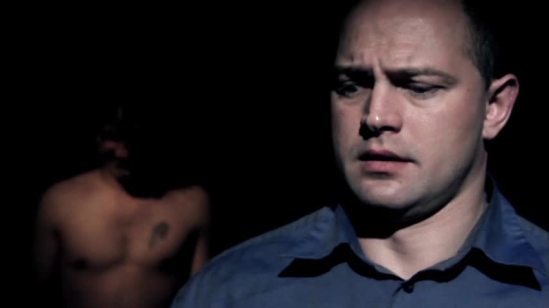
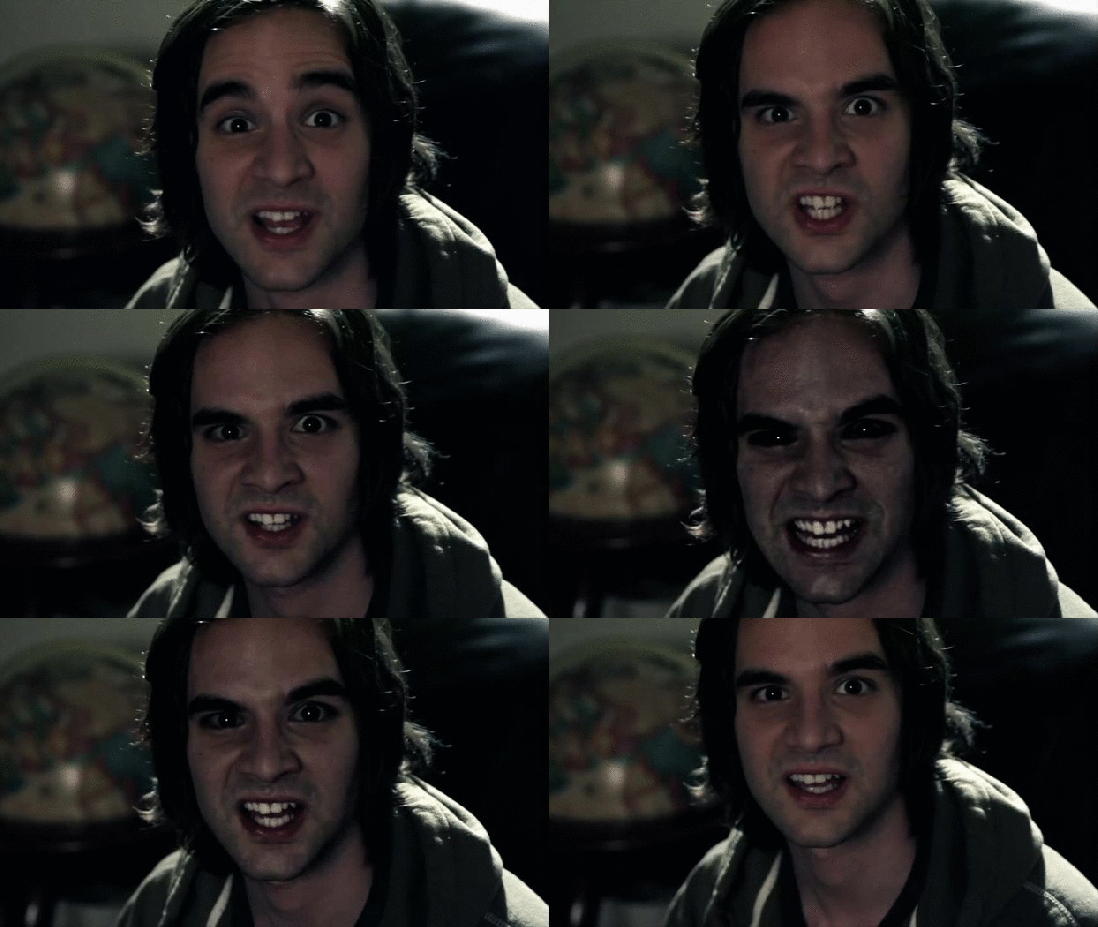
Hal has mental problems. He can’t sleep. He can’t stop sleepwalking. He can’t seem to stop dreaming about death. Psychiatrist Dr. Aleksey is determined to root out Hal’s issues, but when Hal informs him about the news of a school friend named Alice being murdered, the good doctor decides to put Hal under hypnosis and determine just what’s going on in Hal’s mind. Under the semiconscious state, Hal recounts his last dream and sleepwalking incident where he describes in detail a man coming into his room from outside his window. The man has Hal follow him into Alice’s room, the same Alice Hal said was brutally murdered prior to going under hypnosis. When Dr. Aleksey discovers the truth about what happened to Alice, Hal’s hidden inner demon named Edward reveals himself, leaving Dr. Aleksey at wits end in trying to cure the incurably evil.
“Edward” is a gothic tale that isn’t too overly gothic in setting onscreen. The ominous presence, whether through the acting of Hal played eerily and perfectly by Nick Frangione or the chilling atmosphere, remains always present in the confined space of Dr. Aleksey’s office. The “Edward” short is a stray genre short from director Joseph Graham, a San Francisco based director who has been credited in directing feature films about homosexuality and the cultural-based stigmas – reminds me a little of the work helmed by Gus Van Sant. Graham’s “Edward” has an pitch black aura that seeks to let loose the horror-elements, yearning to be freed, because everything about the story of “Edward” is well told and well shot, as if you yourself were standing in the room with Hal and Dr. Aleksey, experiencing the fate of both men. However, Dr. Aleksey’s fate could have, and probably should have, contained more exposition, especially when the doctor arrives back home to his wife and sleeping child.
“The Quiet”
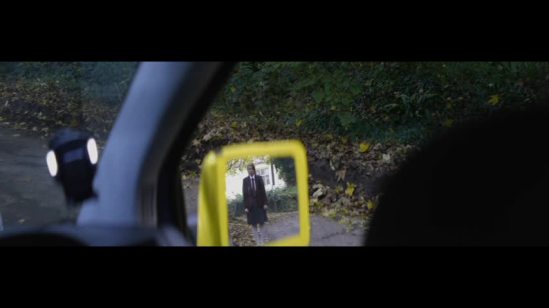
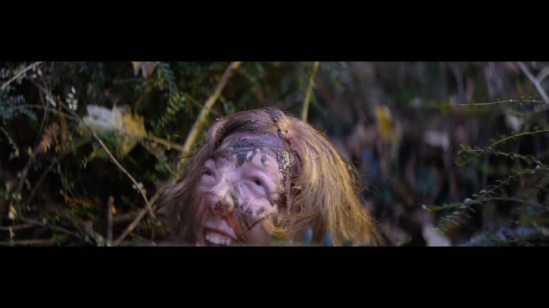
Alice, a partially deaf young school girl who particularly loves the quiet instead of using her hearing aid which eventually to taking the brunt of the cruel jokes from her classmates, rides the bus home from school. When she’s being dropped off at her remote stop, she forgets her cellphone on the bus. With her mother no where in sight, Alice decides to walk home alone, but when a suspicious blue van seems to be stalking her, she makes a break for the woods where she unfortunately loses her hearing aid. Lost in woods and unable to hear good, a cat and mouse game ensues between her and the man with the blue van whose on her closing in on her.
Unlike “Edward” where dialogue catapults the film into a tension-filled frenzy, “The Quiet” lives up to the title with the duration containing no dialogue until the twist ending. The built-in weakness of our protagonist Alice and the constant bullying of her helps the audience sympathize with her character more, making Alice a relatable person rather than a whimsical character everyone wishes instant death upon. The story has a strong beginning, continuing to build once the blue van man is introduced, but there are moments of unclarity that create more confusion than add value to the story; for example, the scenes of a padded room, a tortured little girl’s doll, and someone whispering, “I’ll love you forever,” don’t seem to connect up or match with the rest of the story, making the scenes seem out of place and unnecessary. The twist ending also becomes mysterious and diluted when were giving more information about the man in the blue van, but his intentions still aren’t made crystal clear, leaving way too much to the imagination and not in a good artistic way. Imwiththemproductions is behind the production of “The Quiet,” that’s supposedly based on a true story about a young girl being kidnapped when walking home with friends, and has a runtime of 21 minutes.
“Merry Little Christmas”
Christina and her mother Lola have lived many years with the scars bestowed upon them by Christina’s father, Lola’s husband. On the Eve of Christmas many years back, Christina’s strikes Lola unprovoked, continuously beating her, slashing her face with a straight edge razor, stabbing her, and raping her. Christina’s inner struggle constantly fights to restrain her internal, monstrous-illustrated hatred and self-destructiveness while Lola’s alcoholism and self-inflicted cutting addiction amplifies every Christmas Eve and this year, the mother and daughter grapple on keeping it together for one more year, but that battle will be lost in a fierce tragedy when they receive a phone call from the man who hurt scarred them for life.
“Merry Little Christmas” is the 20 minute Ignacio Martin Lerma and Manuel Marin visually graphic directed film from Spain. Surprising and suspenseful, “Merry Little Christmas” isn’t your old fashion gay and jolly-filled holiday film where Saint Nick brings all little boy and girls toys. No. In fact, Christmas is defined as a terrible point in time for Christina and Lola, a time when pain and fear are symbolic for tis the season. Lerma and Marin deconstruct the mother and daughter down to reveal their complexity and they’re characters are filled with various demons that become flesh in Christina’s mind when their abuser makes an unexpected phone call. A bravo should be awarded to Blanca Rivera for her bathtub scene, exploring her cutting addiction as well as attempting to learn to lover her body fully in the nude. The demon special effects are downright nasty, frightening and fantastic from “[REC] 2” and “[REC] 3” special effects guru Juan Olmo and the Doug Jones of Spain actor Javier Botet portraying the Demonio, or Demon. “Merry Little Christmas” is callous and cold without any remorse and no apology is needed for the cynicism or the brutally that it portrays.
“The Deviant One”
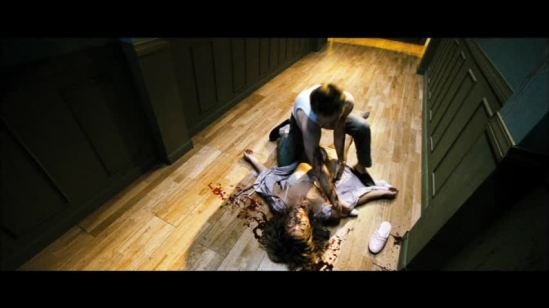
A young man becomes the victim of a suburban sexual sadist who lives a facade life of scripture and holiness. The atrocities committed might be the misinterpretations of the good Lord’s holy book and no one is safe from the deviant’s hungry claws and thirst for sexual and murderous gratification.
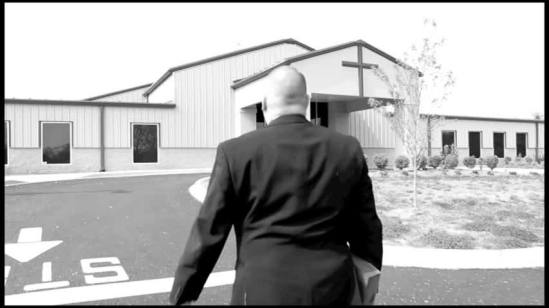
Perhaps my least favorite short from “The Horror Network” anthology, “The Deviant One” is helmed by the anthology’s co-creator Brian Dorton who also starred as the deviant neighborhood sadist. In the 8 minute black and white story of a young man’s death, body desecration, and body disposal, a lack of story glorifies the private life, but just doesn’t tell the tale fully of the deviant’s public church-going life. While the deviant walks up to a church, I wanted scenes of him standing at the pulpit, in front of shoulder-to-shoulder filled pews, opening the bible, and reading from the book, preaching his version of the scripture upon those ears listening. An opportunity was missed to strike at the heart of church hidden hypocrisy. On a positive note, Dorton, as the deviant, plays and looks the part so uncomfortably well that it’ll be hard to distinguish his off-camera self from his on-screen character.
“The Horror Network” material is nitty gritty with loads of passion behind the camera and from the crew of all the shorts. One of my favorite anthology releases of 2015 from Wild Eye Releasing. The DVD contains shorts that were shot in various formats and aspects ratios so I won’t be too harsh on the quality of the picture, but I will say that the noticeable posterization in “The Deviant One” and “Edward” stood out from the rest. The audio tracks do need fine tuning as there was some faint, but obvious feedback and the dialogue tracks were slightly overpowered by the soundtracks. The extras include an extended cut of Dorton’s “The Deviant One” which contains dialogue and additional scenes of Dorton, but the short works better without the clunky, kindergarden dialogue and Dorton’s testicles as he makes love to a severed head – yup, testicles. An image gallery and trailers for the shorts round out the rest of the bonus material. The DVD art, from “Merry Little Christmas’s” demons, amazingly exhibits and sells this release and stays true to form from the disturbing short. I expect volume two to exceed the fear bar!
Based on the true story of serial killers Leonard Lake and Charlie Ng, director Jeffery Frentzen (Black Dahlia) chronicles the speculated portions of Lake’s and Ng’s homicidal and psychopathic murders. Their murderous spree involved kidnapping young women, enslaving them, and eventually murdering them while also targeting their own relatives and friends, and even seizing the opportunities to abduct whole families. After Lake served in the Marine Corps, he met Charlie Ng and by the 1980s, the two men had constructed an isolated house where innocent people were brought to be tortured, ransomed, and eventually their demise at the hands of their materialistic and deviant captors.
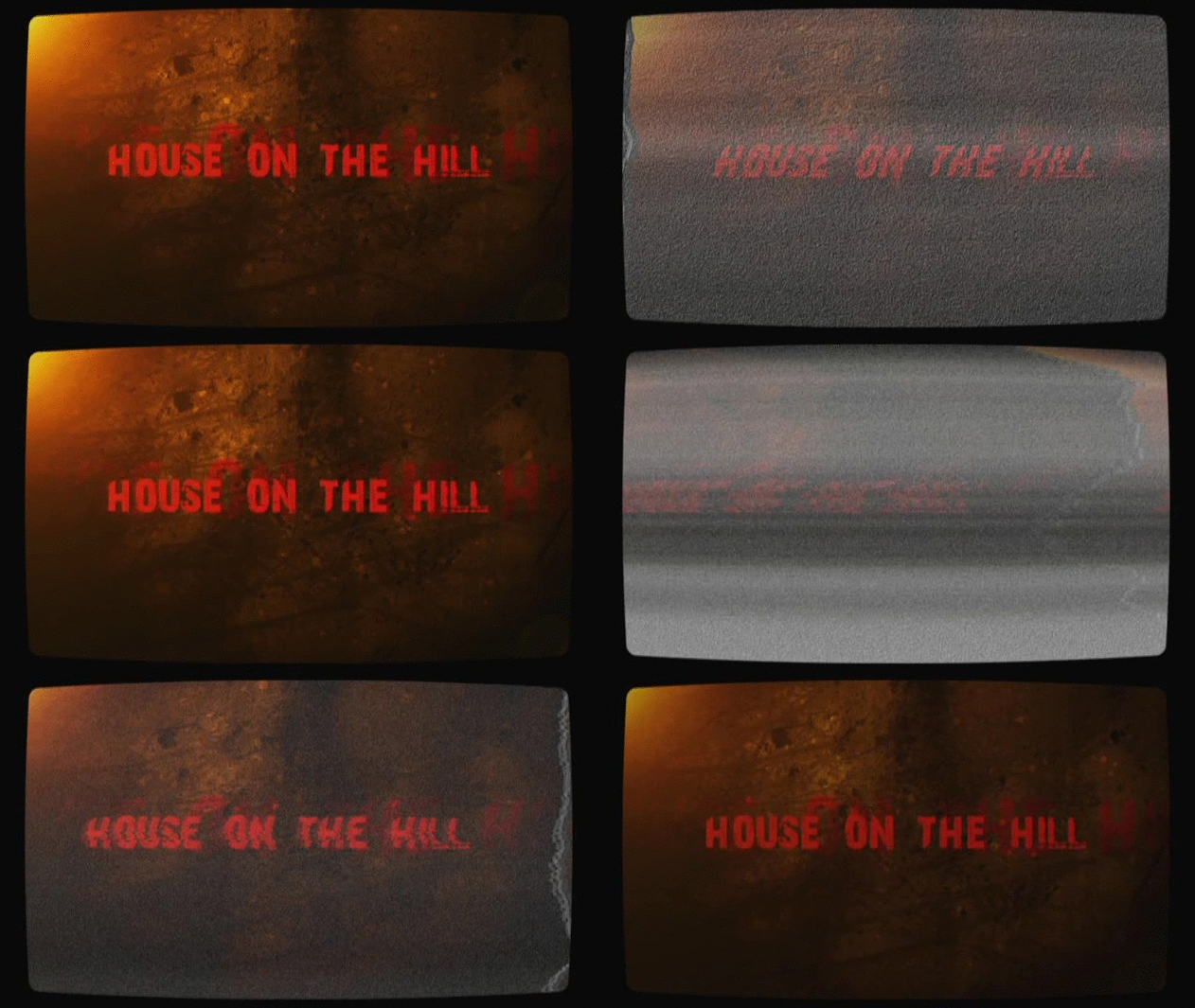
“House on the Hill” is the Jeffery Frentzen directed and co-written with Nicole Marie Polec film that semi-documents the tragic events of Leonard Lake’s and Charlie Ng’s serial killing spree of the 1980s and incorporates actual footage of Leonard Lake speaking about his disturbing views on the world such as enslaving women and being prepared for the inevitable world apocalypse. Most of Frentzen’s movie is embellished as, like the majority of serial killer documentaries, most of what is unknown of Lake will never see the light of truth of what really happened on his ranch. The legend behind Lake and Ng states that there could have been as few as 11 murders or as high as 25; Frentzen attempts to showcase the latter by adding many fictional victims into his film to be representatives to those unknown victims who were never discovered or whose bones were severely untraceable.
However, some of the facts that are true, that we do know about Lake, didn’t quite make the cut because of Frentzen’s x, y, or z reasons. In the film, Lake’s wife is named Cat played by Rachel Devlin (Zombie Nation), but in reality Lake’s wife name was Claralyn Balazs aka “Cricket.” If Lake’s wife name is clear, why go with “Cat?” Also, Lake had constructed a bunker in the backyard of his ranch, but “House on the Hill” has a separate, well-locked shed in the backyard. Simultaneously, Frentzen’s movie has consistent filming errors that even the untrained eye can catch. Continuity glitches that are obvious (Naidra Dawn Thomson’s bra strap is in various positions between takes on a particular scene) and obvious props that are in more need of a convincing sell from the actors and to be well edited to not give the impression of false intentions. Lastly, the overly generic title doesn’t specifically speak much upon Leonard Lake and his accomplice Charlie Ng. “House on the Hill” title has no curb appeal and no real bite to entice viewership.
What I did find pleasurable about “House on the Hill” was the leads’ acting. Canadian actor Stephen A.F. Day and first feature film actor Sam Leung do an above mediocre performance of Leonard Lake and Charlie Ng. They manage to show and sell having no empathy when committing terrible acts, managing the ability to embody the evil within a killer on screen. Barring Frentzen’s epileptic editing and use of tints, lenses, and over exposers, I still was able to see the good in Day’s and Leung’s performances without the editing hoopla that attempted to make the events more dramatic, shocking, and traumatizing.
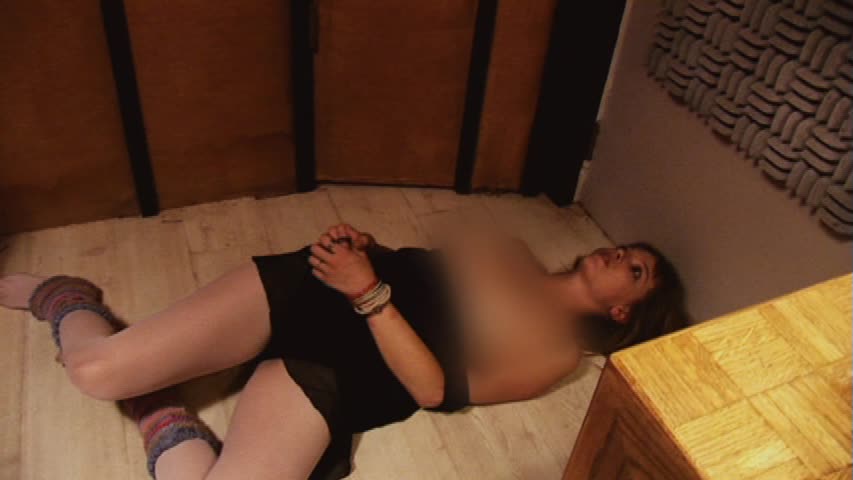
I’m a little disappointed in the distribution of this film. Not only does the jejune title leave a bleak taste, but the DVD cover doesn’t quite represent what is being sold here. On the cover, there is a dirt pathway leading up to a two story, mansion-like structure sitting on top of a hill and seemingly decayed and abandoned. On the DVD backside, a meathook pops right out at you along with a female victim strung up by her arms, screaming toward to the sky. Meathook does not make a credited or on screen appearance nor does the house in the film look like the mansion on the DVD cover. What is even more disappointing, and what I have to comes to term with every now and then, is the heavily edited cut in which “House on the Hill” was released. The DVD cover states, “Warning Explicit Content,” and does show some intense moments containing blood and torture with implied rape. ‘Some’ being the key word because I’ve seen more explicit content on the local evening news. This might be due in part of the post-production censorship which most noticeably focuses on covering up any and all nude scenes. Olivia Parrish’s topless scene was crudely censored by being blurred out and awkwardly cropped to show a low-resolution image, a forced zoom in, of her neck up as she’s being molested. The same cropping censorship goes against Laura Hofritcher’s topless scene as well during her torturous scene.
The North 40 Production film and MVD and ITN distribution DVD release doesn’t score to well for this reviewer. I’m able to look past the editing techniques, post-production effects, and unbalanced audio, but being a writer and a firm patron of freedom of speech, the censorship of the nudity and potentially the bloodletting has my blood boiling. However, even though Leonard Lake and Charlie Ng may have not been extensively covered on the silver screen or on entertainment television, I am glad Frentzen told partial of the notorious story and was able to tell his rendition of the unknown accounts.
A determined doctor pledges revenge after his wife fell victim to a crazy, sadistic, cannibalistic, sex-fiend killer. Known by only the Mastermind, his quest lures him to buy a junkie from an underground trafficking organization and trains her, without given her a choice, to be an lethal assassin. The Mastermind teaches her hand-to-hand combat, how to handle a handgun, and even how to survive surgical procedures in order to have the mechanical parts of a handgun implanted into various portions of her body and then abstract the bulky pieces when the time is right. The dastardly plan for assassination comes to fruition when the Mastermind’s target makes his rounds at a necrophilia and cannibalistic business called “The Room” where Gun Woman feigns her death to infiltrate and carry out the hit.
“Gun Woman” is an insane Japanese action-thriller concept from the mind of a relatively new director Kurando Mitsutake. From this reviewer’s point of view, Mitsutake’s film is much more tame compared to the other numerous Japanese’s extreme and unthinkable plot lines. Basically, the Japan film industry produces three solid genres that hover around outside the realm of their mega-popular Japanese Adult Video and Pinku markets: Dramatic noris involving a various range of characters from gangsters to samurais, the Americanized popular ghost films such as Ringu or Ju-on, and the outrageous, ultra-violent films, spreading amongst various sub-genres from action to horror. “Gun Woman” suits the latter category with it’s necrophilia, super-soaking blood, rape and torture, cannibalism, and the odd jobs of the reproductive body parts. Remember when I said that “Gun Woman” is the fairly tame?
The Maxam produced film stars the ever gorgeous actress Asami of “Machine Girl” fame. You may remember my last Asami film review for the Pink Eiga released “Prison Girls” starring the once former JAV actress turned phenomenal B-movie heroine. Asami’s uncanny ability to conform to any role heightens the film’s viewing and enjoyable factors and “Gun Woman” is the epitome of B-movie schlock, almost as if her role as Gun Woman was made just for Asami. Alongside Asami are Kairi Narita as the Mastermind and Noriaki Kamata as the heinous sex-fiend only known as Hamazaki’s son. Narita towers over Asami with a strong muscular face, proving to be a powerhouse character even though the Mastermind character is partially crippled. Kamata possesses such a freaky super thin, yet muscular build with defined facial features that his role as a necrophiliac, a cannibal, and a rapist-murderer wouldn’t be so far from the truth if bumping into Kamata randomly on the street.
While Asami’s character might be the heroine of the film, “Gun Woman” surely feels like an anti-woman film. Many of the female roles, no matter how minor, are subjected to some sort of abuse. Hamazaki’s son rapes and strangles various American women while also raping and killing the Mastermind’s wife. The Mastermind himself kidnaps an innocent woman and uses her as a tool to create a lethal weapon in Asami. Even Hamazaki’s female body guard doesn’t get a chance to have one line in the entire film, does really nothing at all, and ultimately meets her end and I can’t help but wonder why even have this character at all if the character serves so little a purpose? Like I aforementioned, Asami might be this kick-ass, gun-toting, deadly femme-fatal, but her mission for revenge isn’t even her mission for revenge; its the Mastermind’s and he’s using her, a junkie bought off a secret organization, with given a single choice: to either kill for him or die.
“Gun Woman” markets itself as a “no-holds-barred revenge flick” and has all the makings of a cult film. Blood gushes out of gaping wounds, intense fight and gun scenes, and naked women galore grace the film’s entire presence. However, “Gun Woman’s” enticing premise isn’t without major flaws including obvious plot holes, inaccurate medical procedures, and some unbalanced acting from not the Japanese, but from the English speaking Anglo-Saxons driving the car during the outer-story. Hey, this is the movie industry where anything can happen as long as someone can think of whatever it is up and as long as someone can construct it as well. The whole premise behind the film is bogus in reality and Asami’s character might as well be a part of the IMF because her mission is impossible. To provide an example, nobody could withstand having three parts of a firearm surgically implanted into their body and then live 22 minutes later after removing the said parts by reopening the wounds to assassinate everybody in “The Room.” Other factors are involved when contemplating blood loss and time such as what if Asami is additionally injured resulting in blood loss? What if her pulse rate increases during heart-pounding scenarios causing a faster blood flow?
Show business is all smoke screens, lengthy mirrors, and customized misdirection and Mitsutake’s “Gun Woman” certainly provides just that while pushing the boundaries of taboo subjects and being, what I consider, a chauvinistic perspective against women. If a viewer wishes to suspend disbelief for 87 minutes, witness a bloody-stellar end game, and see their fair share of naked and abused women, then “Gun Woman” would be right up their mentally deranged alley. The Scream Factor (Shout Factory) Blu-ray release is presented with little digital noise interference in a 1080p High-Definition widescreen 1.78:1 aspect ration with DTS-HD Master Audio 5.1 mix with English subtitles available. I’m not sold on the Scream Factory Blu-ray cover of a closeup of Asami’s face and holding two smoking sidearms in a criss-cross way (think Kate Beckinsail on the “Underworld Evolution” DVD). This doesn’t actually represent the movie as she never really garnishes two handguns. Other releases are more accurate with a naked and bloodied Asami, aiming one handgun. Still, the release is solid and I wouldn’t discourage anybody, especially Asami fans, of a good time.














 It's Bloggin Evil!