Isolated Between Mountains, EVIL Rises Out of the Refuge. “Lycan Colony” reviewed! (Visual Vengeance / Blu-ray)

“Lycan Colony” available on Blui-ray Collector’s Edition!

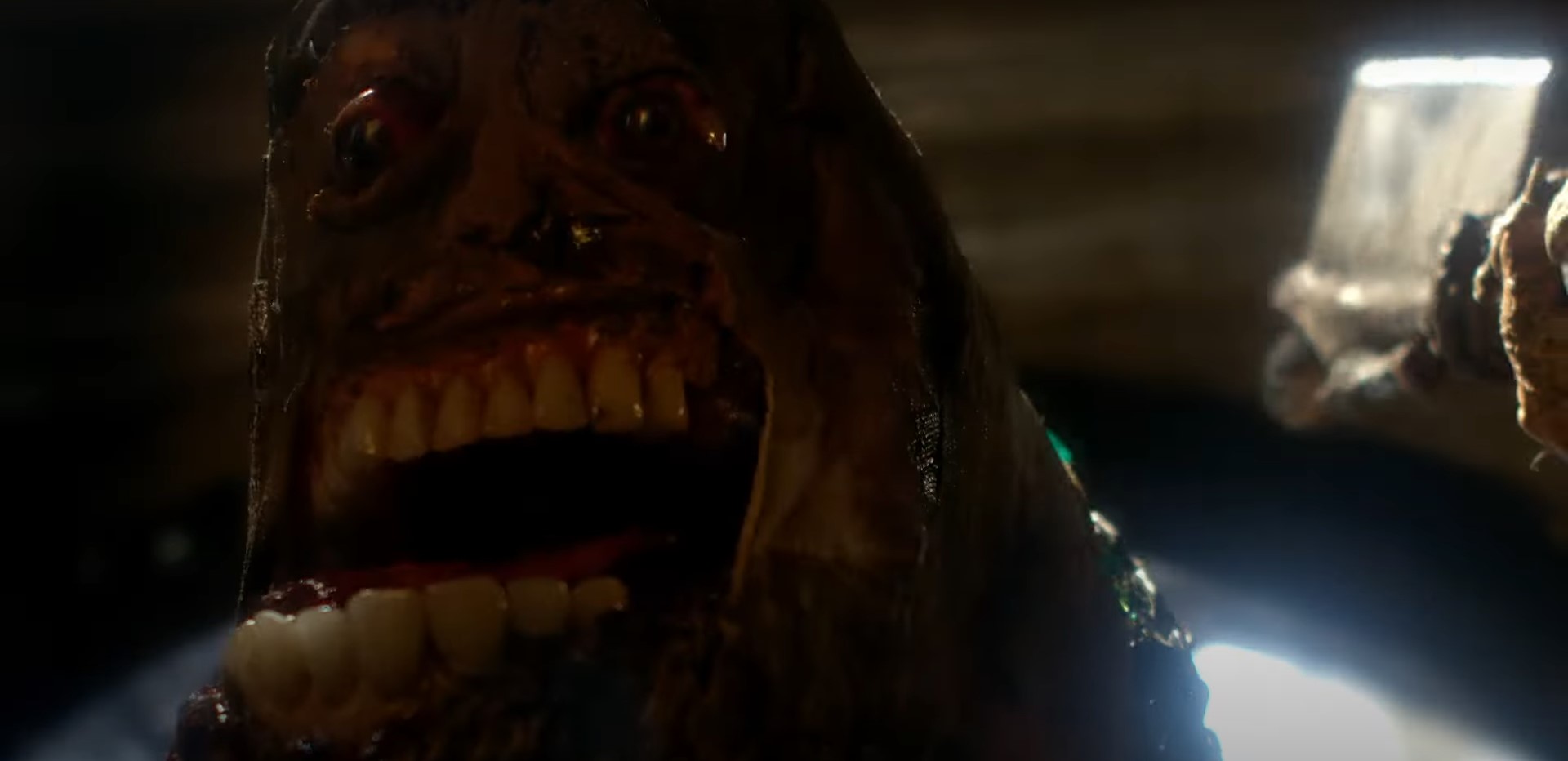
A big city surgeon on the mend of an alcohol problem and two siblings searching for their father who disappeared in the mountains hunting a mysterious big game find themselves in a small town inhabited by an ancient werewolf tribe.  Mostly seeking a peaceful way of life, many of the werewolves have tamed their inner beast to live normally isolated from their human neighbors to avoid bad blood and fear-driven conflict, but a rogue faction of werewolves has tasted human flesh, transfixing them with an insatiable need to hunt and feed on human outsiders who have uncovered the small town’s truth.  On the verge of the Equinox where every lycanthrope resident will transform into the primal versions of the beast, a select few have been able to conquer not losing their humanity as they team up with trapped, arsenal-ready humans and the eldest werewolf who is half witch to squash the evil werewolf population for good. 
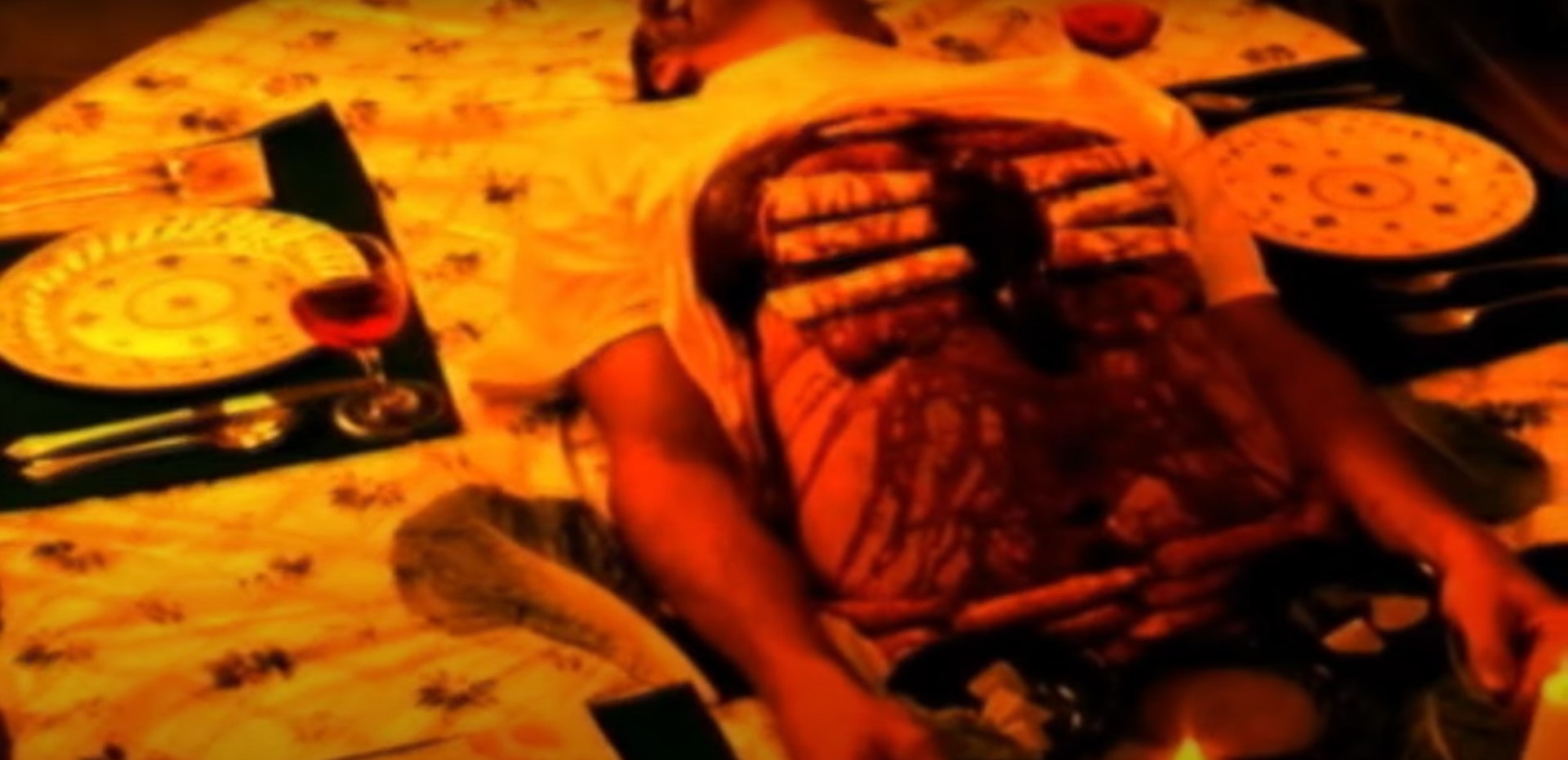
In the rural areas of New Hampshire 2006, Rob Roy tries his creative hand at making a movie, writing a script ingrained with his personal affinity for fantasy and werewolves, with the action-packed, shot-on-MiniDV camcorder thriller “Lycan Colony.”  Roy’s first attempt is ambitious to say in the least with a vim and vigor narrative with a visual and practical effects heavy ornament that Roy single-handily constructs all himself learning all the tricks to the trade as he goes.  What ultimately results is initially a colossal flop of technical mishandlings, bad acting, and rushed final products, but in recent years nearly two-decades later, “Lycan Colony” has been revived with a second chance by fans of the so bad, it’s good sect who, like the evil werewolves in the film, have tasted blood and want more.  Rob Roy self produces the film under his Wits’-End Entertainment company.
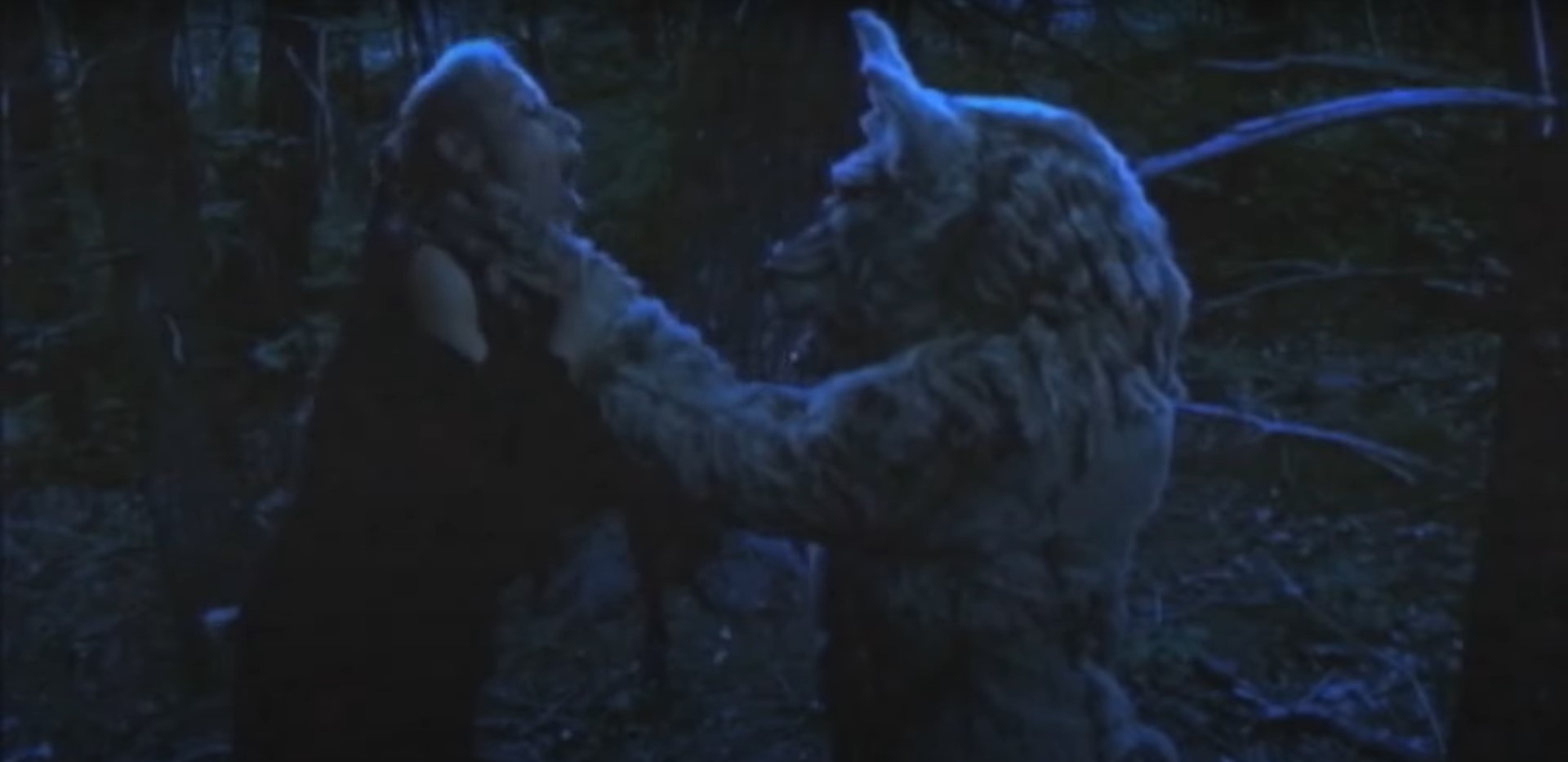
In producing a movie yourself, with your time, money, equipment, and the little know-how of the process, Rob Roy casts mostly family, friends, and newcomers in his New England werewolf film.  Both of the director’s sons make it into the picture with the older Ryan playing the mistakenly werewolf bitten teenage son of Dr. Dan (Bill Sykes), the surgeon, and Roy’s youngest, Jacob, as a presumed pup running for his life from hunter Sgt. Roger Allen (Paul Henry) as we see in the preface opening.  Though an important piece to some aspects of the story, such as Stewart’s creaturized adolescent transfiguration to help Dr. Dan and wife Sandy (Kadrolsha Ona Carole, “Attack of the Killer Chickens: The Movie”) understand and cope with their now lycanthropic son, Roy’s boys are not the centralized characters as the narrative awkwardly pivots from building up Dr. Dan’s choppy family dynamics and his alcoholic mishap substory to more nondescript kickass and chew bubblegum action of good versus evil as the missing Sgt. Roger Allen’s offspring, the commando-suited daughter Russ (Gretchen Weisiger) and the bad werewolf killed yet risen to the ranks of being a good lycanthrope Doug (Bill Finley), team up with the eldest wolf-witch  and spiritual liberated Athena (Kristi Lynn, “Hypnagogic”) and David (Sean Burgoyne) who can control his beast side with hero pose mediation and tribal chants.  As you can tell, it all becomes disturbingly clear as mud on what exactly we’re bearing witness to, but the “Lycan Colony” burghers flesh out with Sophia Wong, Steve Pascucci, and Libby Collins.

There’s nothing inherently wrong with Rob Roy’s good wolf pitted against bad wolf with man trapped in the middle story.  Throw in some subtle themes of alcoholism juxtaposition where the mountain water tames the beast with hints of silver nitrate and Dr. Dan’s post-career predicament that sends him to AA meetings and also themes of puberty or some kind of other rite of hormonal passage and “Lycan Colony” can work as an action-fantasy with a strong horror element.  The problem lies in the ambitious undertaking for a first-time filmmaker with more gung-ho carpe diem than actual experience and Roy will be the first one to tell you, as heard in bonus content interviews, his goal is to go big and not limit himself with a tightknit narrative with little-to-no special effects.  To the detriment of “Lycan Colony” however, that mentality of thinking took a three-month shooting-script down to a mere three weeks, rushing the final product to the point of using a blue screen for the nearly the entire third act in a real shoddy piece of VFX compositing.  Transpiring on screen resembles similar to the early days of 2D fighting video games with its mix of antiquated motion capturing technology, practical effects, and digital matte but while those traits appear raw, lifelike, and add that certain je ne sais quoi that makes it so attractive, for “Lycan Colony,” the effect miscarries for its time in what is a laughable imbrication.  For some, “Lycan Colony’s” campy crust will be a holy grail to obtain; one could compare Roy’s film to Dave Wascavage’s “Suburban Sasquatch,” another Visual Vengeance, early 2000s, revived flick that had similar rough-cut visuals.  For others, like me, what comedy rises to surface is digestible, the rest of the movie might make you sheepishly queasy. 
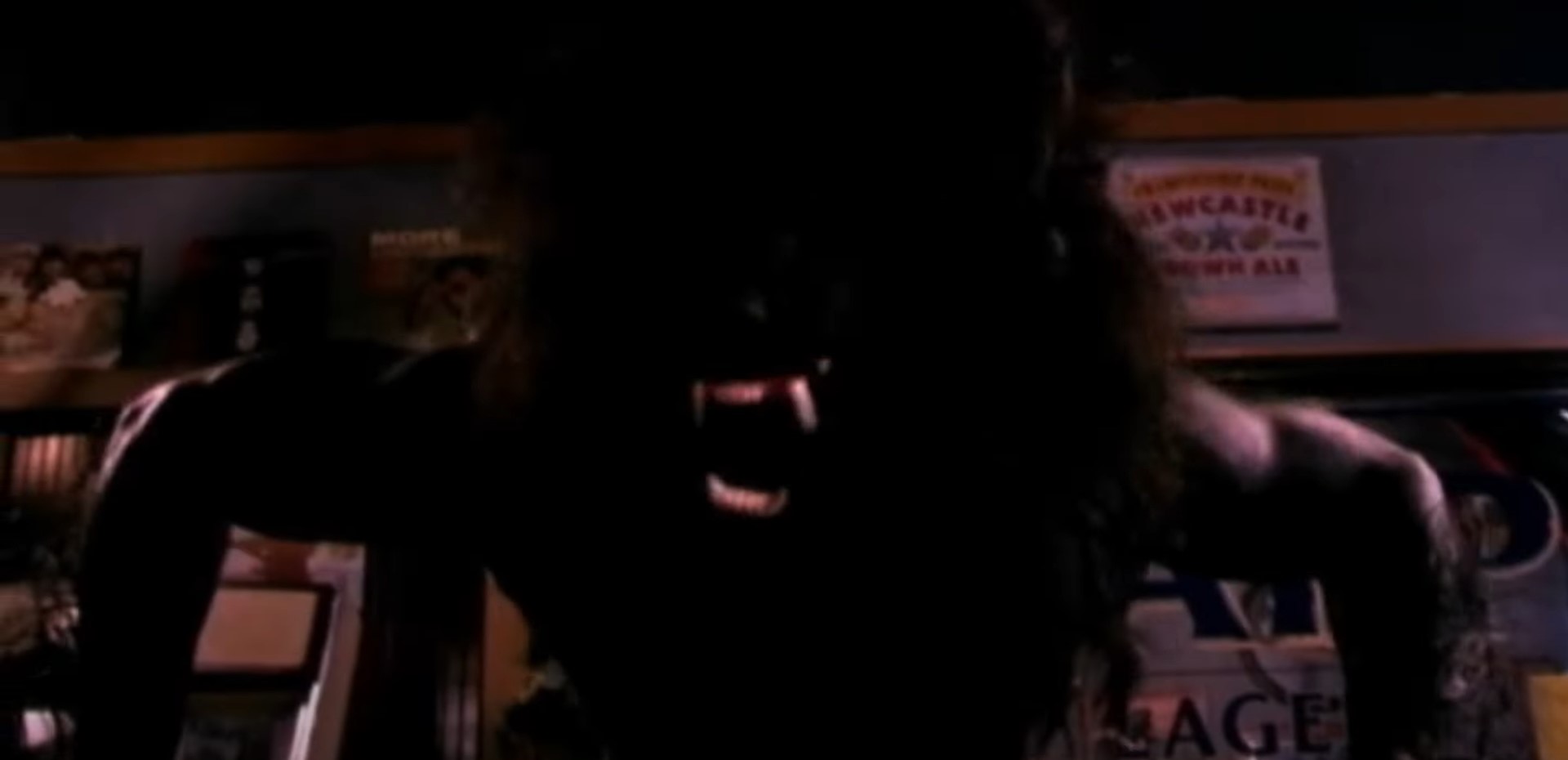
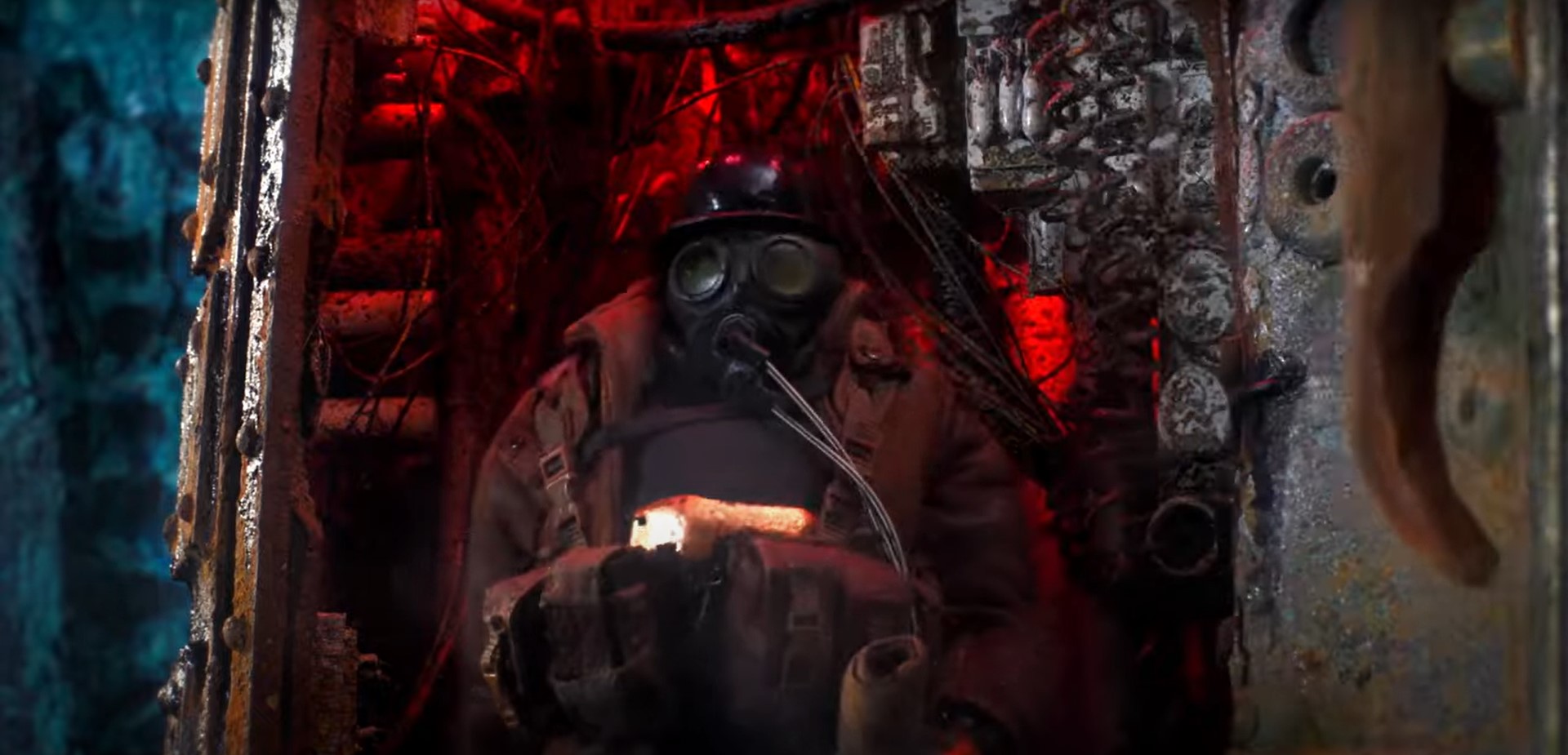
For the first time on Blu-ray, “Lycan Colony” has become a part of the Wild Eye Releasing’s Visual Vengeance tribe.  The AVC encoded, 1080i upscaled, BD50 is presented in a full frame 1.33:1 aspect ratio, sourced from an original tape shot on a Panasonic DVX100 MiniDV at 24fps.  Safe to say nothing will outshine celluloid, millimeter film or even today’s digital cameras as that period of time where videotape made a stand offered a rival format with cheaper costs and comparable picture quality; yet videotape, as with “Lycan Colony,” squeezes the resolution combined with matted visual effects, making inaccurately distanced composite look even more compressed.  Details suffer through the compression of MiniDV’s interference noise, undersaturation, and vertical tape impression lines seared into a few frames.  The undersaturation lies the biggest concern leaving behind darker tones that keep the image popping with color, rendering the entire scheme more overcast even when not exposed to rough gel lens which is used quite often in various Crayola hues.  The English lossy Dolby Digital stereo 2.0 has enough strength to get around and get through with a tenuous dialogue track complicated by the not truest of fidelities on likely the onboard camera mic and by the boxy echoes of a blue screen stage, likely Roy’s garage.  Stock file notes give the full body suited lycanthropes enough growling canine bite and the gunshots are awarded cacophonous explosivity, solidifying a decent range of sound, but there are missed or asynchronized effects against the action with brief seconds of delayed catchup or just plain omission.  Boxy areas eradicate the depth, especially in the whole third act when the last battle is held in the woods but is mainly a blue screened forest, so the compounding loss of milieu affects atmospheric track greatly.  Visual Vengeance’s track record on delivering new special features has not gone unnoticed and the trend continues with “Lycan Colony” with a new interview with director Rob Roy.  Also included are two commentary tracks:  one with director Rob Roy and a second with B&S About Movies’s Sam Panico and Drive-in Asylum’s Bill Van Ryn.  A second version of the film is a full Rifftrax version, a blooper reel, the “Lycan Colony” music video, original trailer, and the Visual Vengeance trailer round out the release’s ancillaries.  The colorful Stephen Gammell-esque, presumably pastel, front cover illustration greatly over exceeds expectations but is nonetheless phenomenal full-moon imagery on the cardboard slipcover and also dichotomizes the style on the translucent Amaray Blu-ray case’s cover art depicting a scene from the film of a hungry wolf behind the alcohol-decked bar.  And also true to Visual Vengeance, the release is jammed-packed with inner goodies, such as a New Hampshire Forest Scent air freshener, retro VHS Sticker sleeve, a 3-page pamphlet with essay from Sam Panico with color picture, and a folded mini-poster of the Blu-ray cover art.  Not also to neglect to mention is the reversible cover art with the original one sheet art.  The Visual Vengeance release comes region free, unrated, and has a runtime of 90-minutes. I’m extremely happy for the appreciation and newfound love director and enjoyer all-things-werewolf-fantasy Rob Roy is receiving for his resuscitated escapism but, for me, “Lycan Colony’s” jerry-built and doesn’t come anywhere close relieving the so good, it’s bad itch in Roy’s filmmaking first pass done on the cuff. 
“Lycan Colony” available on Blui-ray Collector’s Edition!

EVIL Knocks, A Child Listens. “Cobweb” reviewed! (Lionsgate / Blu-ray)

“Cobweb” on Blu-ray at Amazon.com!

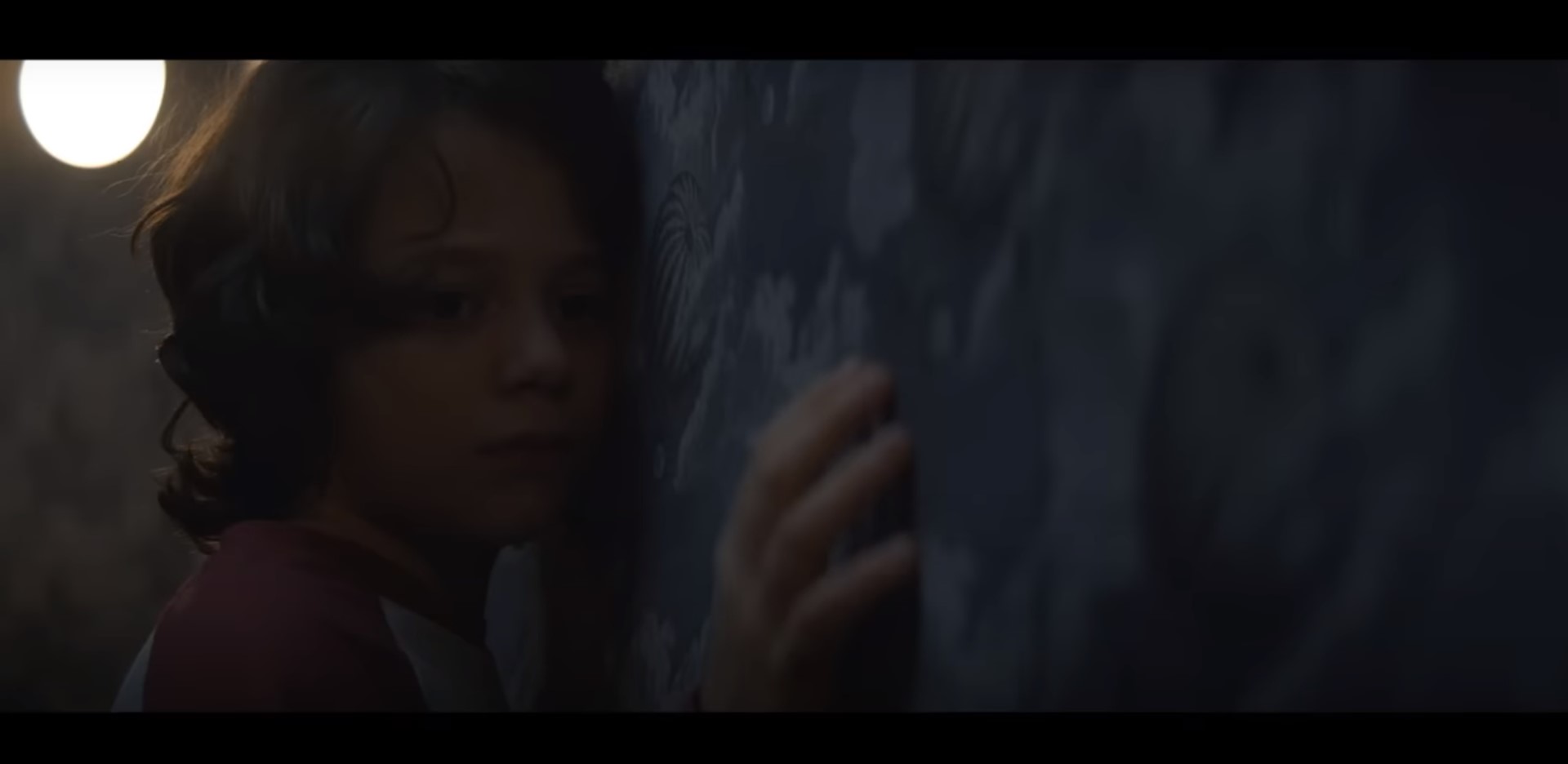
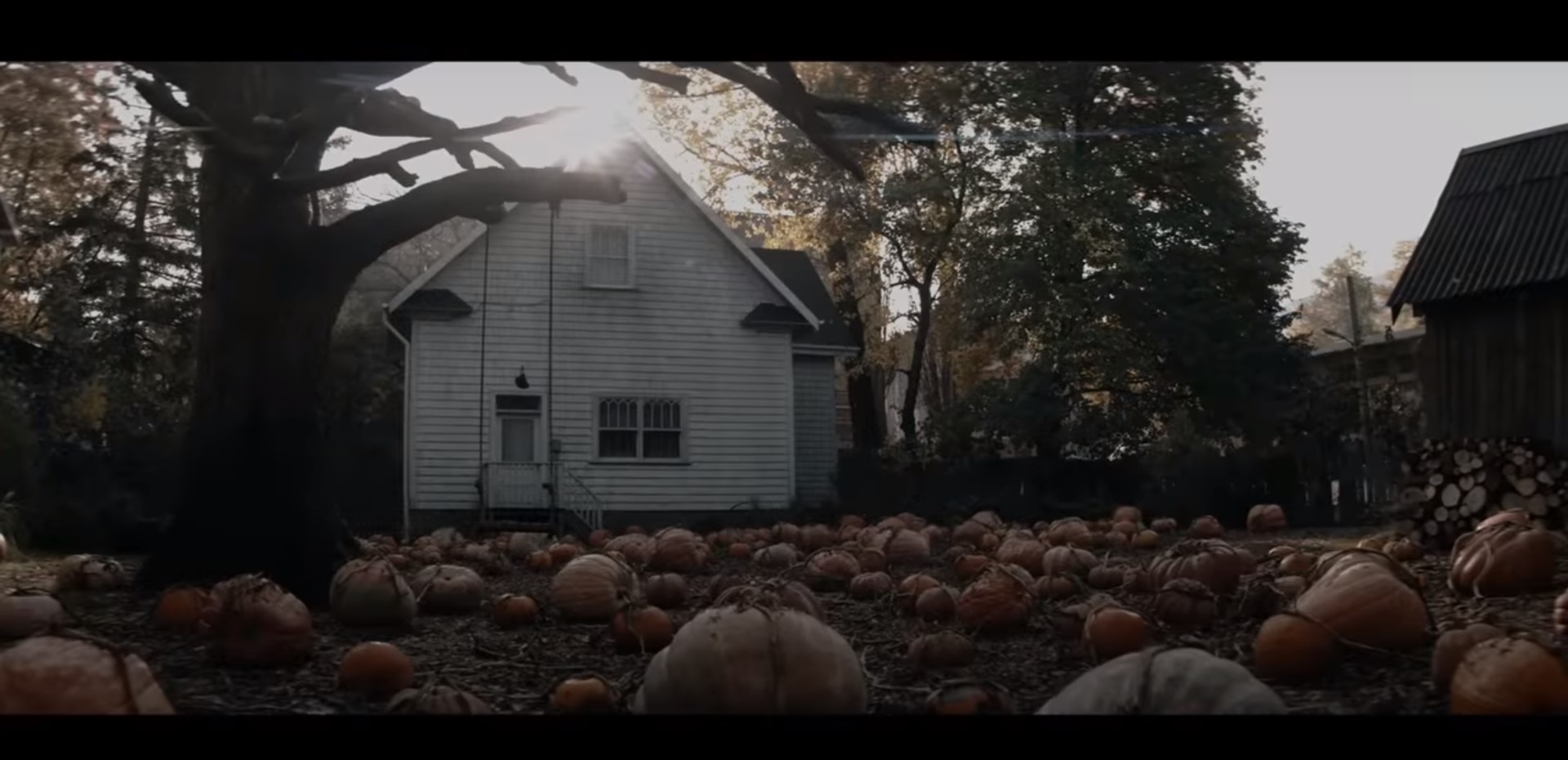
Eight-year-old Peter isn’t allowed out on the forthcoming Halloween night.  Frightened by a neighborhood girl who went missing years ago, his strict parents keep a very close eye on their only son who’s social life has been squashed like one of the rotten pumpkins growing in his family’s backyard patch.  Relentlessly bullied and severely sheltered at home, Peter spends most of his time isolated from others until he hears knocking from the inside of his wall in the middle of the night.  Frightened at first in hearing the ensuing young girl’s whispering voice behind the wall, Peter’s loneliness entices a friendly, conversational voice after his parents dismiss the occurrence as Peter’s overactive imagination.  As the two talk through the nights, Peter learns the mysterious voice behind the wall is a terrible secret his parents have been hiding since before Peter was born, but the truth is much more darker and scarier than Peter could ever over imagine.  

Following the success of his written-and-directed 2019 French horror series “Marianne” on Netflix, surrounding the manifesting nightmares of a young writer who returns to her home town, director Samuel Bodin dives right into the spooky season with a Halloween-themed dysfunctional family horror feature that metaphors helicopter parenting as a harmful detriment that eats itself from within the nuclear structure.  The French director builds his vision off the back of the creepy children subgenre and off of the script by Chris Thomas Devlin, an American screenwriter behind the 2022 direct from the original sequel, “Texas Chainsaw Massacre,” that happens to be another Netflix debut release.  Devlin trades in rip-roaring chainsaws for rickety old houses lined with gaudy, antiquated-pattern wallpaper in this what’s-behind-the-walls thriller, produced by the Seth Rogen and Evan Goldberg company Point Grey Pictures (Amazon’s “The Boy’s” and “Invincible”) with Josh Fagen alongside producers Roy Lee (“Barbarian,” “It”) and Andrew Childs of Nu Boyana Productions and Vertigo Entertainment with Lionsgate distributing. 

Ironically at the center of attention is the loneliest boy Peter casted with UK child actor Woody Norman (“The Small Hand,” “The Last Voyage of the Demeter”) to ensure Peter’s anemic spirit with a head full of shoulder length brown hair, downcast eyes, and melancholic demeanor. Yet, like most child dependent horror schemes, Normal can thrust out a gutsy sprint to survive and save the day against not only his oddly adjusted parents who quarterly channel the onscreen unionization of Wendy Robie and Evertt McGill in fiercely fearful “The People Under the Stair’s,” but also something far more secretive and far more sinister.  Anthony Starr, who has worked with Seth Rogen’s Point Grey Productions in “The Boy’s,” is aptly a father suppressing to fold and diminuendo his son’s curiosity and venture with scary stories of disappearing children and a stern childrearing with a sinister smile only Anthony Starr can produce.  Then, there’s Lizzy Caplan as the austere-dressed matron with a retractable badge for her small set of keys, which are an underemphasized plot device for all the doors in the house, both unconcealed and concealed.  I struggled with Caplan’s mother that borders being simplistically prose, like speaking in a fairytale without the elegance of being a dainty princess or the maniacal barbs of an evil sorceress.  The “Cloverfield” actress’s take on how a reticent mother is overly proper and out of place even in this tale that stretches the imagination and even beyond the film’s other flawed portions, which lead me into Cleopatra Coleman’s benignant substitute teacher Ms. Divine, a name not abashed in its metaphorical properties.  Ms. Divine overreaches herself secondary educational authority by interjecting her nosiness into what she mistakenly thinks is Peter’s subconscious cry for help.  The “Infinity Pool” actress goes unnecessarily lone wolf into the lion’s den that would make any parent understandably concerned and angry whether hiding something or not.  “Cobweb’s” cast fills out with Jay Rincon and Gary Busey (“Predator 2”) and Stephanie Sampson’s (“Sharknado 4:  The 4th Awakens”) preteen son Luke Busey who I must say is the spitting image of his father. 

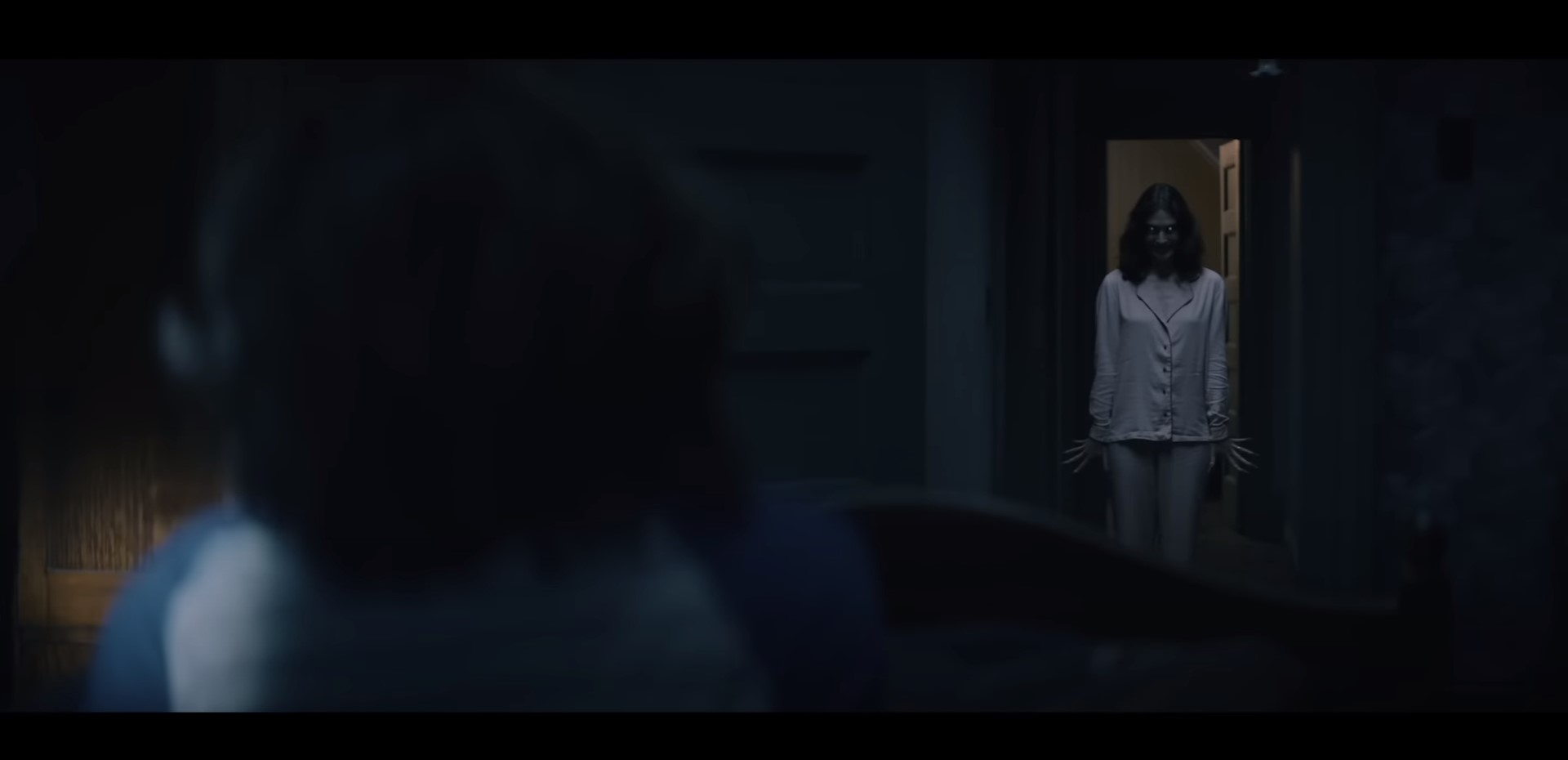
Funny and coincidently enough, this is my second Grey Point Production film watched back-to-back with “Teenage Mutant Ninja Turtles: Mutant Mayhem,” “Cobweb” is not children’s film but resembles more like a Grimm fairytale with elements pulled from various volumes, some from more popular stories such as the long locks of Rapunzel or the pretense of a wolf in planned deceit of the eager youth, and the film certainly embodies the charmingly dark and rustic patina of such tales.  From the words on a page to the visual effects of the screen, “Cobweb” introduces us to a new kind of terror co-bred out of bigotry and fear of a polar difference so severe, so monstrous, that it warrants a shameful imprisonment and a simultaneous misappropriation of tutelage of starkly unalike children because, as parents, we can have this innate fear for ourselves being replaced with the creation transcending the creator threat.  Pour these twisted tales and themes together into a cauldron of storytelling and we can easily overlook how flawed “Cobweb” can appear on the surface, as if to say the story’s phantasmal qualities exempt narrative structural norms.  “Cobweb” has repetitive use of the imagination as an excuse for Peter’s hearing something, someone beyond walls or could even stretch to the parent’s feigning ignorance or diverting tactics as part of making believe whatever they’re secretly hiding doesn’t exist.  Aside from the title, other allusions to an arachnid theme suggests Peter might have an overactive power of invention, integrating his already schoolyard bullied mind and body to form an embodiment of fear. His rigid parents mixed with an overwhelming fear of spiders creates, or wills, a person or creature of shared relations, someone he can converse with quietly and share his concerns but, in the same breath, be frightened of when out from the wall.  Peter has the same reaction between the spider that crawls on his desk in the class and see the wall dweller’s floating out from a hole in a wall, signifying a one-in-the-same fear.  When inevitably revealed, the creature skulks with the movement of an eight-legged arthropod, has hair like a large, draping web, a face with bulging eyes and fangs, lives within and between walls, and has tiny spiders crawling through its hair.  Intense and portentous, “Cobweb’s” creepy-crawlies are sure to be hair-raising with a shocking turn of events.

Become caught up in Lionsgate’s release of “Cobweb” on the Blu-ray + Digital release. The AVC encoded, high-definition 1080p, BD50 has a Mbps decode rate of low 30s and presented in a 2.39:1 widescreen aspect ratio. Centered around the Fall season, “The Transporter’s” Philip Lazano’s cinematography lives in the dichotomy of shadows and a cool blue-green grading. Exteriors look potently seasonal in a dreary-overcast kind of way that fits “Cobweb’s” austere approach to an atypical straightforwardness in such a dark fairytale theme. Unostentatious, Lazano does a remarkable job with shadows, and dim lighting in general, to convey just enough to make the creature’s skuttling a double dose of undetectable dread before you know what hits you. The main audio option is an English DTS-DS 5.1 master audio with Spanish and French Dolby Digital 5.1 alternatives. Again, the skuttling around the house, the faint scraping of dry, old hair on the wood floors, the creaks, oh the creaks, of every inch of that house make “Cobweb” cue every traditional trope of audible terror right to your sensory receptors. Dialogue is clean, clear, and prominent with the only issue being the behind the wall speak that renders more like whispering in the same room than a muffled subdued voice as the layered dialogue overlap in volume. English subtitles are optionally available. Special features are not in-depth with a to the point featurettes with Becoming the Girl that express Bodin’s vision of the person behind the wall and contortionist Aleksandra Dragova’s efforts to bring that vision to life, Through the Eyes of a Child focuses on a small child in a bigger, uglier world through one-sided interviews with the cast and director and how those differences translates an uneasiness not only with the child but also the viewers who are engrossed by the contras, and A Primal Fear rounds out the specials with underlining fears of creaky house sounds, amongst other combined sounds, and how they’re arranged into a design that innate scare us. Physical aspects of the release come in a traditional Blu-ray amaray case housed with a beautifully composition shot that immediately grabs the eyes on a sturdy O-slipcover laced with a slight embossed spine title. Disc art goes for the less is more visage of a blueberry blue background with white font “Cobweb” at the top. In the insert slot is the digital copy waiting for you to either download and discard the physical release (which I hope you don’t) or neglect for way longer than the expired date allows. “Cobweb” is rated R for horror violence and some language, has a runtime of 88 minutes, and is region locked on A. Lionsgate has distributed the boogeyman, or in this case, the boogeywoman in the fretfully concentrated “Cobweb” that turns every scurry or scratch behind your own walls worth your undivided attention.

“Cobweb” on Blu-ray at Amazon.com!

Under an Urban Club Scene, EVIL Horrors Connect Us All. “Flesh City” reviewed! (Wild Eye Releasing / DVD)

“Flesh City” Yearns for Connection on DVD!

An insomnious city pulsates with an industrial soundtrack and claws cantankerously at denizens without pity. Under one of the raging night club scenes, enamored raver Vyren follows the beautifully alluring Loquette, an inspiring electronic DJ, down into the club’s labyrinth of old stone corridors. Their coquettish play becomes the monitored study of Professor Yagov, a glowingly cadent and mad experimenter of anthropology. The two lovers are drugged and abducted by the Yogav with the intent of genetic mutating the couple’s anatomy that renders Vyren’s hand displaced with a bulbous nub and Loquette impregnated with an ingestible sludge. What becomes of their affliction insidiously infects the entire city population with a flesh tentacle curling through the city’s underground sewer and drainpipe infrastructure in what amasses to a single connection of brain-invading techno-horror.

“Flesh City” annexes our individuality for the sake of connective solidarity conveyed in an electronically infused and alternatively aesthetic experimental film from Germany’s own jack of all independent media and artistic trades, Thorsten Fleisch. The 2019 released feature is Fleisch’s first and only written-and-directed full-length film depicting his feverish analog avant-garde, reflecting the filmmaker’s menagerie of orthodox-shredding short films, video art, and written and produced music. Overseeing “Flesh City’s” cinematography and special effects, Fleisch has complete and utter autonomy of the visuals to obtain a harshly discordant image melody edited together, which Fleisch also manages, into an agglomerate of acetic aesthetics to shock and stress the audio and visual cortexes. Once under the working titles of “Berlin Blood” and “Zyntrax: Symphony of Flesh,” “Flesh City” is entirely shot in Berlin, Germany, produced by the director and United Kingdom producers Arthur Patching and Christian Serritiello, and is a feature of Fleischfilm and Tropical Grey Features.

One of the film’s coproducers and musical artists, Christian Serritiello (“Streets of East L.A.”), is at the front lines of “Flesh City’s” afterthought cast of characters with Vryen as essentially the naïve and lured-in Alice chasing the white rabbit Loquette, played by Eva Ferox (“Love Songs for Scumbags”), down the twisted rabbit hole of a cellar dwelling doctor.  I say afterthought because the characters take a backseat to Fleisch’s contortion of reality and the analogical subtext generated by Fleisch’s love for analog anomalies, using them as supporting pawns to carry out his visceral vision of vitality.  Music videos, psychedelic montages, and grotesques images of beetles absorb screen time like formless or arthropodal principals.  Even Professor Yagov (Arthur Patching”) is obscured by a rainbow shimmer, never visually seeing his face as an individual seemingly between two dimensions.  “Flesh City” is a very multiverse, multidimensional nightmare-scape of unconventional color that has culminated from Fleisch’s imaginative idiosyncrasies over the years and that’s what being intently showcased here with more evident display of a less-character driven, shapeless story within the technical aspects of the DVD release where the soundtrack drowns the dialogue into a muffled deaf tone, like any good loud music venue would subdue.  “Flesh City’s” urbanites fill out with Marilena Netzker (“Love Songs for Scumbags”), Shaun Lawton (“Possession”), Denis Lyons (“German Angst”), Anthony Straeger (“Call of the Hunter”), Maria Hengge (“Love Songs for Scumbags”), Helena Prince (“12 Theses”), and Thorsten Fleisch in a Max Headroom meets Total Request Live-like host role of Quantum 1337.

“Flesh City” will not be everyone’s approx. 90 minutes of how to spend their time choice.  The experimental film will only speak to a few select souls with a filmic affinity for Lynchian peculiarities, Terry Gilliam’s bold fantasy, David Cronenberg’s body horror, and a hellish capriccio along with an eclectic music palate for noise rock, henpecking alternative, and strident industrial bass.  I wouldn’t go as far as saying Fleisch’s film is akin to nails on a chalkboard but can be boisterously unpleasant to the ears at times while, in the same breadth, be stimulating visually, even if that stimulation may induce a photosensitive epileptic seizure.  Fleisch’s non-traditional narrative design splices in music videos from various underground and indie artists with him providing introduction as an illusionary host in a virtual world, breaking up the Vyren and Loquette’s post-punk-adelic core quandary with a teetering melodic cacophony of feedback rock electronic, a hostile rhythm, and bizarre lyrics and visuals.  Fleisch pushes the taboo envelope with not only liberal nudity, to which Germans are very at ease with their body image, but also within the unconfined stylistic creativity of multi-formats that razzle-dazzles like the innards of radiant plasma globe; the Tesla coil electrons that’s drawn to your conductive flesh won’t hurt you but provide a feeling of captivated wonder.  Yet, don’t expect to be thrilled in a traditional predator-and-prey sense as “Flesh City” appeals more to our disconnect from each other and how to reconnect must be through some kind of inclemency. 

Likely to transmit under the radar, “Flesh City’s” biomorphic body horror arrives onto unrated director’s cut DVD home video courtesy of cult and independent distributing label Wild Eye Releasing in association with Tomcat Films.  The DVD5 presents the transfer in a widescreen 2.35:1 aspect ratio with varying levels of image quality due to different types of equipment and methods used to create Fleisch’s tripped out vision that contains, but isn’t limited to, black and white, color, stylistic lighting, analog equipment, digital equipment, stock footage, and so forth.  This mishmash movie makes for divisible degrees of signal quality that can be look crystal clear in one scene and then heavy noise interference the next, but the overall clarity is remains stable without any scenes being rifted because of visual vagueness.  The audio comes in two formats:  a English Dolby Digital 5.1 surround sound and a English Dolby Digital 2.0.  Frankly, the original English dialogue track is feeble under the tremendously potent soundtrack and sound design that makes comprehending Vyren and Loquette subterranean exchanges under the industrial rumble of the score virtually impossible to discern.  Even Quantum 1337’s cyber-stutter chat softly introduces us into his world, essentially leading the blind into a mound of musical mania. Bonus features only include other Wild Eye Releasing trailers with the physical aspects of the DVD come with a misconception cover art that has a terrifying gaunt and fleshy, humanoid creature front and center, but that creature doesn’t exist in the film until maybe at the climax that’s nebulously discernible at best what viewers are supposed to see. Inside the standard DVD snapper, the disc art is pressed with the same front cover image but with no accompanying insert. The region free disc features the unrated film with a runtime of 84 minutes. “Flesh City” is a delicacy of distortion, but the Thorsten Fleisch film is an acquired taste that general audiences won’t have taste for but, then again, general audiences are not Wild Eye Releasing’s target audience, now are they?

“Flesh City” Yearns for Connection on DVD!

A Stop-Motion EVILscape of Totalitarian Hell! “Mad God” reviewed! (Acorn Media International / Blu-ray)

Descending from above into the depths of grotesque terror and suffering, The Assassin steps out of the drop pod with a gas mask, industrial armor, a suitcase, and a crumbling map.  Bearing witness to the surrounding horrors – cruel experimentations, enslaved beasts, tortured manufactured slave laborers, dog-eat-dog atrocities – The Assassin sallies forth, descending deeper into the primordial pit.  The missioned at hand is to set an explosive charge that will eradicate out the ruinous, oppressive filth that aims to corrupt the everything, but there the darkness won’t be so easily wiped away and The Assassin must stay in the shadows and out of sight or else become a tortured fixture in the fray. 

“Mad God?”  More like mad genius!  Phil Tippett’s 34-year, stop-motion, pet-project “Mad God” is the purest Hell I’ve ever seen.  Tippet, famed stop-motion and puppeteer effects artist responsible for the iconic visual effects and stop motion work in fan films such as the original “Star Wars” saga and the “Robocop” franchise as well as cult favorites “Howard the Duck,” “Piranha” and “House II:  The Second Story,” started “Mad God” in 1987 that become more of an ambitious project than originally thought and once the 1993 saw a computer generated effects revolution with a little prehistoric dino-disaster film called “Jurassic Park”, a film Tippett also did work on as dinosaur movement consulting supervisor because of his expertise on the short “Prehistoric Beasts,” the gifted animator had shelved “Mad God” for about 20 years with the though a newer, shiner, computer-driven animation would be the next best thing studios would ardently desire. This two-decade span gave Tippett time to outline objectives and really expand upon ideas of how “Mad God” should look and feel when conveyed. Tippett co-produces the film with Jack Morrissey under Tippett Studios and presented by IFC Midnight and AMC’s Shudder.

Just because “Mad God” is dialogue-less doesn’t make the “Mad God” voiceless. All around, in every scene, is a disturbing commentary or an unhinged metaphor bred mostly out of the animatable inanimate, but there are some live action performances weaved into the mad tapestry of monstrous titans and despot of cruelty. The most clearly discernible face of the lot comes from a director, “Repo Man” and “Sid and Nancy” director Alex Cox to be more exact. Cox plays the long nailed and regime-driven “Last Man,” representing divine leadership of a modest, dieselpunk heaven above a more organic and grotesque hell-type world. Only on screen for perhaps a total of 5-to-10 minutes, Cox grunts and gestures with precision articulation to give off a fair and just ruler impression. Niketa Roman plays the next real person to have some substantial screen time. Less of an actress and more of an animator by trade, with credits including “Blade II,” “Jurassic World,” and “Star Wars: Episode IX – The Rise of Skywalker,” Roman finds an expressive talent in her striking, heavily made-up eyes overtop a surgical mask and gown when whisking away one of the Assassin’s souls to be studied and experimented on by a broodingly ethereal entity. Other micro-performances include minor roles of tortured monkeys, various iron-cladded Assassins, witches, and gnomes from Satish Ratakonda, Harper Gibbons, Arnie Hain, David Laur, Chris Morley, Anthony Ruivivar, Tucker Gibbons, Tom Gibbons, Hans Brekke, and Jake Freytag.

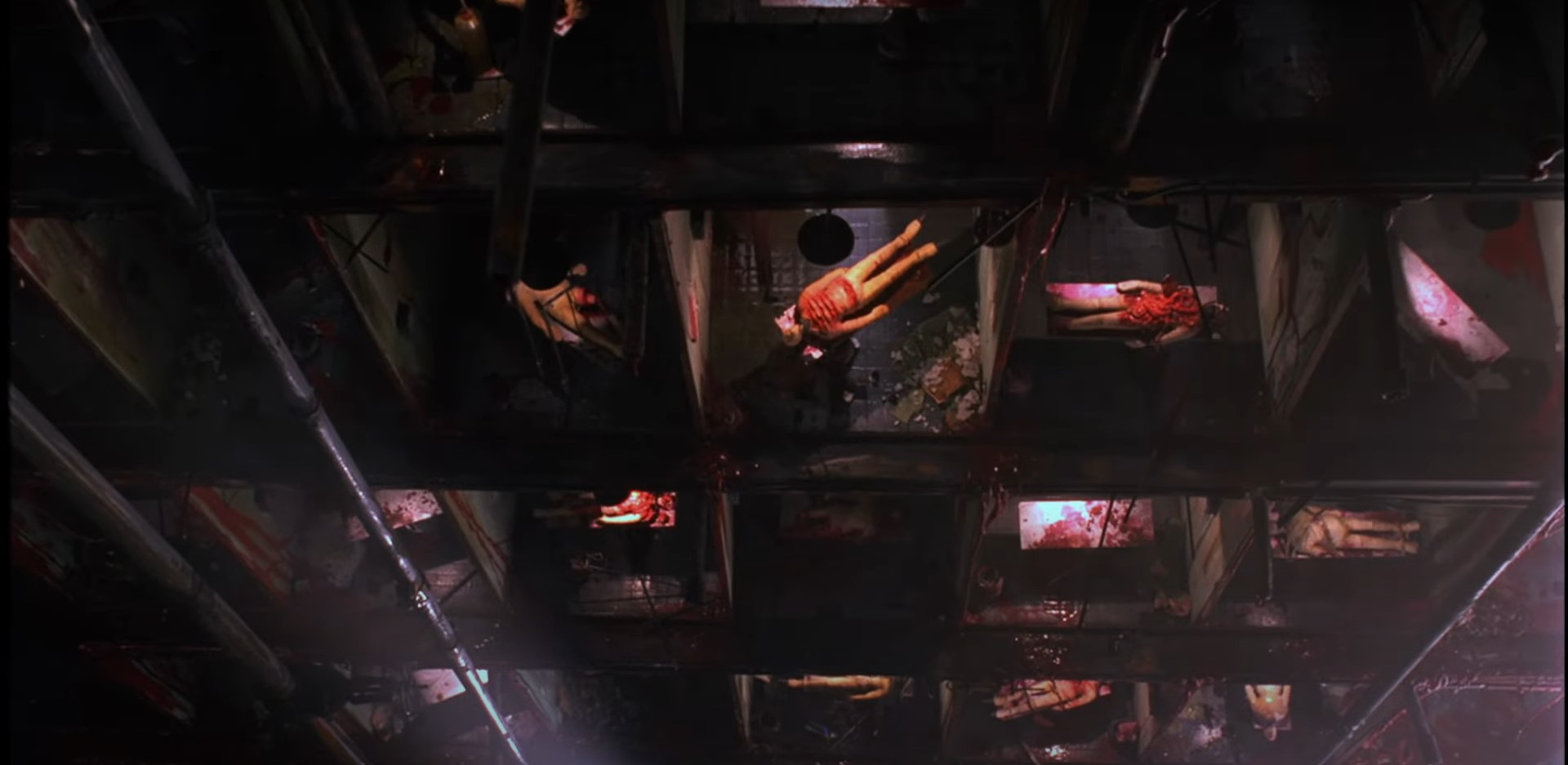
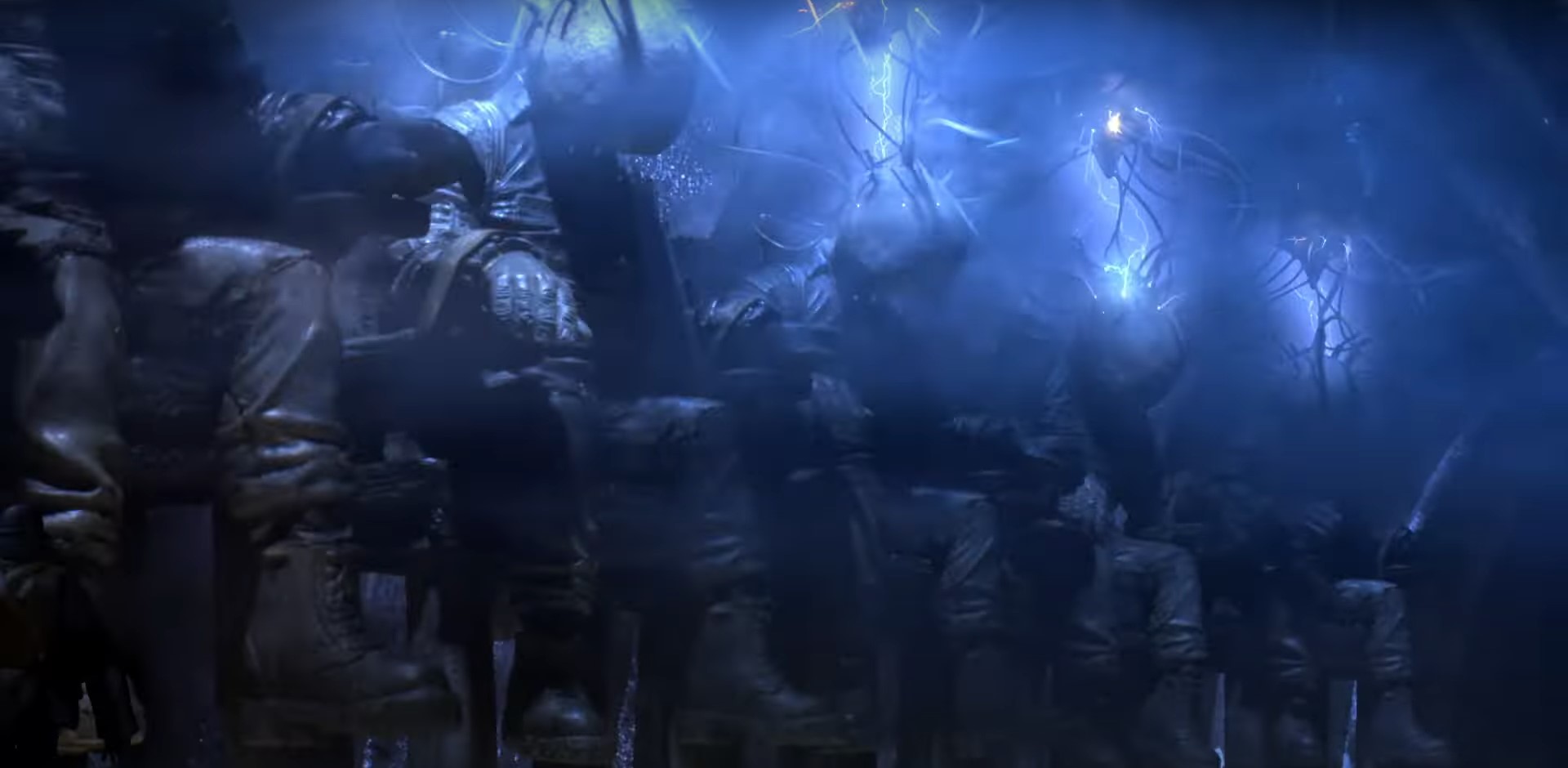
“Mad God’s” possibilities and interpretations are endless. Phil Tippett pulls from a motley of inspiration that includes, but is not limited to the fantastical, sometimes hellish, paintings of Hieronymus Bosch, the wacky, often gonzo animation of Tex Avery, the stop-motion titans of Nathan Juran’s “The 7 Voyages of Sinbad, and Dante’s Inferno. The mind is a deranged and wonderful creator of the macabre and of the aberrant and as a receiving device, the mind can also, if opened up enough, accept such visceral visuals of bowel fluids being jettisoned out by electric shock and into the mouth of an organic machine that manufactures fibrous, lumbering humanoids for slave labor. Like lemmings in a way, these exploited shadows of human beings will succumb under their own demise or at the gnarled and unforgiving hands of their master’s gargoyleish work-whippers. “Mad God’s” eye for detail is greatly disturbing to see cities in monolithic cities and cultures in ruins, the composite depth between foreground and background action in one scene reminds me a lot of older works like “The Neverending Story” or “Clash of the Titans” that create a vast scale with smaller objects, and the playful irony of a nightmare netherworld being commanded over by a baby’s babble doesn’t nearly seem to a stretch from the truth. As the multiple Assassins trek through the chaos and the insanity, an overwhelming sense of life is meaningless scores the landscape as there isn’t an ounce of compassion or empathy to be had or displayed for any of the malformed creatures and wretched humans. A laborer is crushed by a stone – no biggie. A cute and cuddle animal is attacked and whisked away for food storage – all in the day of cruelty. A man is stripped of his armored gear, injected with a mysterious substance, and prepped for exploratory surgery – all for show in front of a live clapping and cheering audience. The only compassion I can make sense is the Assassin’s mission to blow up this God-forsaken world of eternal suffering to restart the heart. Madness grinds bones, fillets spirits, and crushes souls in Phil Tippet’s Godless underworld and can haunt you even while you’re awake.

A surreal stop-motion wonder and excruciation, “Mad God” brings all the horrors of the subconscious mind to the surface with a high-definition, 1080p Blu-ray. The region 2, PAL encoded release from UK distributor Acorn Media International presents Tippet’s tour de force in a widescreen 1.78:1 aspect ratio and the image is purposefully varied to exhibit different strokes of craft as students would assist Tippet with contrastive topographies to carve out an apocalypse-riddled world that’s in a state of a violet retrogression. Tippet and Tippet Studio visual effects artist, Chris Morley, pivot to “Mad God’s” cinematography appearance with brooding, darker tones that illuminate and are erratically sparked with warm neon glows or brilliant voltage streaming through highly conductive bodies. Some earlier scenes from the late 80’s have natural grain from the 35mm stock and then later, more recent scenes have a cleaner, sleeker look with the digital recording. The Dolby Digital 5.1 surround sound mix has an all-embracing range, mostly with sudden and alarming blazons of guttural roars, unnerving baby babble, elongated zaps and shocks, and the indistinct yips and yaps of a mad world, that sustains on a line of being lesser than crisp, which might be contributed to the inexact capture of depth as sometimes all sounds casts like from inside the reverberations of a fishbowl. Descriptive SDH subtitles are available. Bonus features include audio commentary with Phil Tippett and “Pan’s Labyrinth’s” Guillermo del Toro, cast & crew commentary, an interview with Phil Tippett, “Mad God’s” various painter, cartoonist, animator, and psychology inspirations, the making-of “Mad God,” Maya Tippett’s Worse than the Demon – Phil Tippet’s daughter’s 12-minute thesis documentary of her father’s 34-year passion project journey, Academy of Art & “Mad God,” a behind-the-scenes montage, and a behind-the-scenes photo gallery. “Mad God” has a runtime of 84 minutes and is UK certified 18 for strong violence and gore. A motion picture diorama of Phil Tippett’s neoteric psyche, “Mad God” is wrath wrapped in heart and soul, two descriptors not topmost on the surface but are meticulously integrated into every frame of pain, suffering, and despair.

EVIL Moves in When Sister Goes Missing! “Sister Tempest” reviewed (Darkside Releasing / Blu-ray)


“Sister Tempest” – on Blu-ray home video at Amazon.com

Private school art teacher Anne Hutchinson faces an alien tribunal on the set of circumstances surrounding the sudden disappearance of her younger sister.  Anecdotally going through the chapters of her life, beginning with her parents perishing when the sisters were young into growing up in a confrontation household between the sisters’ warring personalities to Anne’s desperate search for her younger sister after an ugly fight one night.  Still reeling from the abrupt disappearance, a new student joins her class that ensues a sudden fascination from Anne.  When the student shows up one night at Anne’s house, unloading woes of being kicked out of school due to lack of funds, Anne offers sympathy and suggests staying in her sister’s room that’s now been vacant for some time, but Anne’s new roommate hides a secret as she must feed on raw meat to combat of a body-covering boil sprouting illness.  Little does the art teacher know that there’s a connection between her sister’s disappearance and her former blood-thirsty pupil that will shock her very core.

What happens when a promise to another person can’t be kept because that person’s will and commitment is so strong it’s becomes a severe fault?  From an not from this world alien perspective, the contradictory and irrational nature of humankind has a profoundly illogical pattern to it that bears hardly any understanding to an unlike mind.  There’s fragility to interpersonal relationships and to the people devoted to those relationships that force unforeseen, sometimes fatal, consequences when expected coherency and harmony turns into irrational chaos from seemingly arbitrary means.  This is how Joe Badon’s genre-bending “Sister Tempest” expresses that conundrum of curious conscious with a surrealistic sci-fi-horror-drama that teeters on the edge of deadpan.  The 2020 released “Sister Tempest” is the second written-and-directed feature film from Badon, following his 2017 experimental horror “The God Inside My Ear,” which falls upon similar “Sister Tempest” lines of emotionally distress-induced bale.  Filmed in New Orleans, Louisiana, “Sister Tempest” is a produced by Badon, editor/sound designer Joseph Estrade, Dustin Rosemark (“Inferno”) and cinematographer Daniel Waghorne with visual effects artist Clint Carney (screener of “Dry Blood”) and Miles Hendler serving as executive producers.

After a series of prefacing introductory and non-linear story scenes, Anne Hutchinson, a debut feature role for New Orleans based actress Kali Russell, sits in negative space wearing an orange jumpsuit and being introduced to her alien tribunal council.  Dazed and confused, but not totally in shock and frightened about being in the presence of otherworldly extraterrestrials, Anne recounts events surrounding the disappearance of her sister, played by Holly Bonney (“Bird’s Eye).  As sisters, a defined line between the older responsible and the younger immature is contentiously formed between Anne and Karen as they deviate from earlier promises after their parents’ untimely death to take care of each other.  Through Anne’s retelling of her life, her mother, though hard and disciplined, had a conditioning care that burdened the eldest child with a sense of duty and care at a young age and this really is no different from most firstborns who shoulders already a ton of responsibility regardless in taking on even more when the parents are no longer around.  You love them to death is great idiom that rings true in Badon’s subversive-cinema standards tale when the sisters can’t see eye-to-eye on matters and there’s a loss of connection, accountability, and gratitude that the audience can relate to.  For much of the picture, Holly Bonney takes a backseat to Kali Russell’s spiraling disconnect that affects her relationship with love interest Jeffrey the Janitor (Alex Stage, “Eat Brains Love”) and new life-entangling pupil Ginger (Linnea Gregg).  The latter Greg played character has a little more layers to peel back that involves directly with Anne.  Ginger’s is venom in disguise as vampire of sorts who requires raw meat and to keep her human appearance intact.  There’s a representational duality in Ginger, reflecting both a monstrous quality and a sweet innocence that ties into Anne personally and into the search for the sister.  “Sister Tempest” rounds out the cast with Clint Carney (“Dry Blood”), Lucas Boffin (“Return to Sender”), Andre LaSalle (“The God Inside My Ear”), Cami Roebuck (“Children of Sin”), and Sarah Rochis.

“Sister Tempest” has a foundational design we’ve all likely seen before with breaking points, dualities, and downhill-racing mystery unfathomable to the naked eye, but the Josh Badon story inexplicitly feels different from the others.  Perhaps because of Badon’s unconventional storytelling style that throws the normal perceptions for a loop, literally and figuratively, with a 50’s-ish callback to science fiction films or its glamour of 70’s-ish British horror in color and macabre or an unsane mixture of both. I’m not going to sugar coat “Sister Tempest” as an easy to follow, low-hanging fruit film that simple, straight-forward, and is everybody’s cup of tea. That would be a waste of peddle spiel. There’s a zaniness quality that can’t be ignored that surrounds the principal Anne character as if she’s experiencing an ersatz world normally. Some would say that Anne’s caught in a maelstrom, or tempest, of unclear thought and her ordeal is catalytically charged by the work and the love that is poured into her sister’s wellbeing only to be thrown back into her face. Badon has a flair for the unusual, an eye for the odd, and can extravasate an uneasy air from a capsule of seemingly randomized happenstance and beyond the already preternatural events to aggregating the wayward tension.

“Sister Tempest” is the very definition of independent movies with a take it or leave it spellbinding archetype that’s unlike anything ever seen before. You can bear witness to Joe Badon’s mesmeric madness and melancholy with a brand-new Blu-ray from Darkside Releasing. Presented in two aspect ratio formats, a 2.39:1 and 1.33:1, the screen really runs the side-to-side gamut. Image quality shows zero sign of issues from the high-definition digital video, shot on a 4K black magic pocket cinema camera. The blacks are deep and rich as well as the coloring through Daniel Waghorne’s versatile cinematography involving gel lighting, color reduction, and spotlighting. The English language 5.1 surround sound shows no sign of slowing down this A/V wonder with clean and lively multi-audio tracks that come through every channel definitively. Bonus material includes an audio commentary with the director, produces, and actors, a blooper reel, a deleted scene, and trailers for Darkside releasing surreal and giallo films. “Sister Tempest” Lynchian style is not going to please the masses, but it’s certainly the wildest ride in the theme park of contemporary indie cinema.

“Sister Tempest” – on Blu-ray home video at Amazon.com