Prancing Forest EVIL Will Seduce You to Death! “Devil Times Two” reviewed! (SRS Cinema / DVD)

“Devil Times Two” on DVD from SRS Cinema

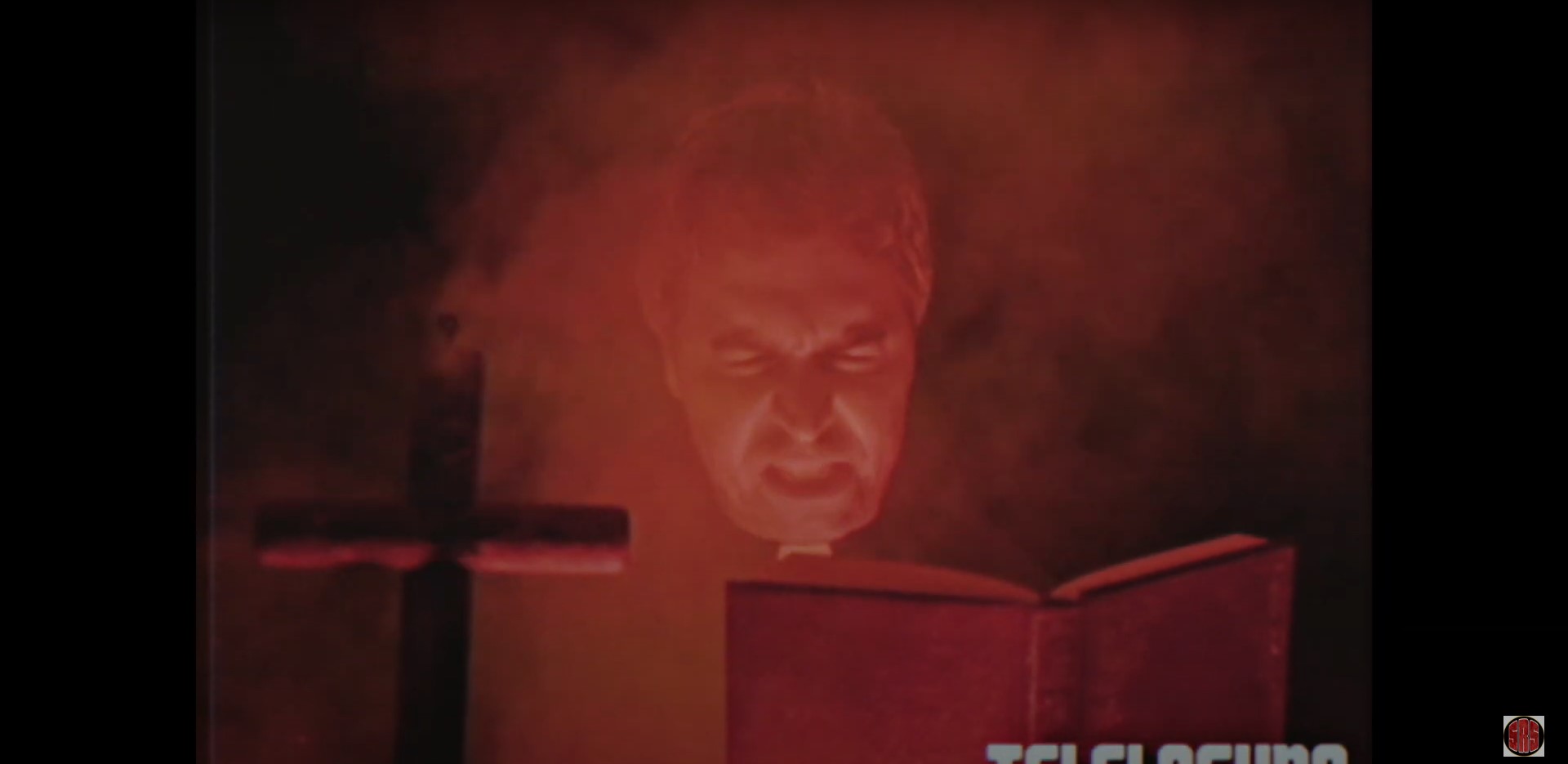
A forest encircled convent hidden away from the Milan population undertakes an occult responsibility to keep bloodthirsty and callous demons from entering the human world.  On the verge of retiring, Father Ernesto Taro, a once formidable force for good who exorcised a powerful demon decades ago that cost the lives of many in his fellow cohort except for Mother Dolores, takes on a younger understudy to be his replacement, the ambitious Father Chuck Bennet.  Father Taro and Bennet were summoned by Mother Dolores when grisly body of a young hiker is discovered.  A pair of former Nazi sadists turned Netherworld demons come to Father Bennet in a vision and are suspected to be the carnage culprits.  Souls are at stake and the world is on the brink of falling into darkness as the Returnees are only the right hand of a more profound evil itching for complete and utter omnipotence. 

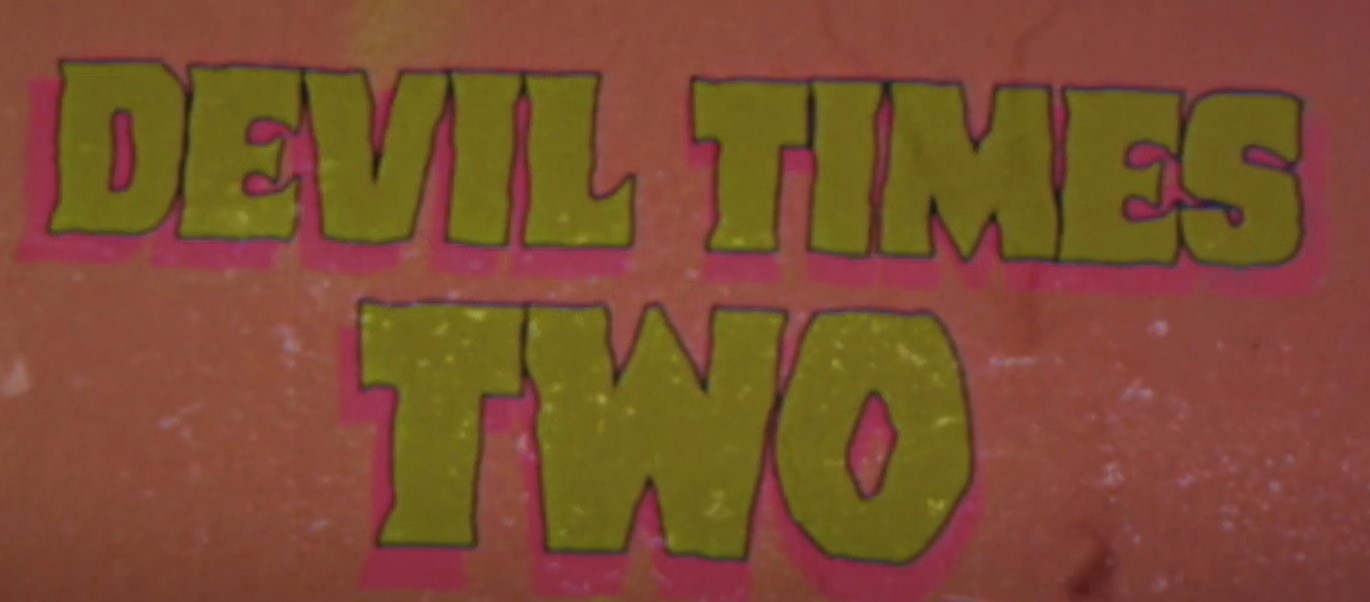
“Devil Times Two” is an Italian-made, demonology-contextualized horror from Italy writer-director Paolo del Fiol.  Having purveyed grindhouse horror in anthological means with previous films “Connections” and “Sangue Misto,,” del Fiol branches out into his solo feature-length narrative set in the 1970s as a faux lost film recovered onto VHS from the only known syndicate televised program on Telelaguna to account the terrible tale full of profane hostilities, sexual stimulating supremacy, and, of course, gore in the interlacing recognition between the popular devil, demon, or hell on Earth inspired movies and the obscenities connected to eurotrash and sleaze movement of the 70s topped a hint of Japanese adulation, a motif heavily sprinkled into the film carried over from the director’s previous work as well.  Underscored by the tagline Quado le Tenebre escono al Bosco, or When Darkness comes out of the Woods, “Devil Time Two” once again pits religious good versus irreligious evil in this Himechan Movie Production self-produced by Paolo del Fiol.

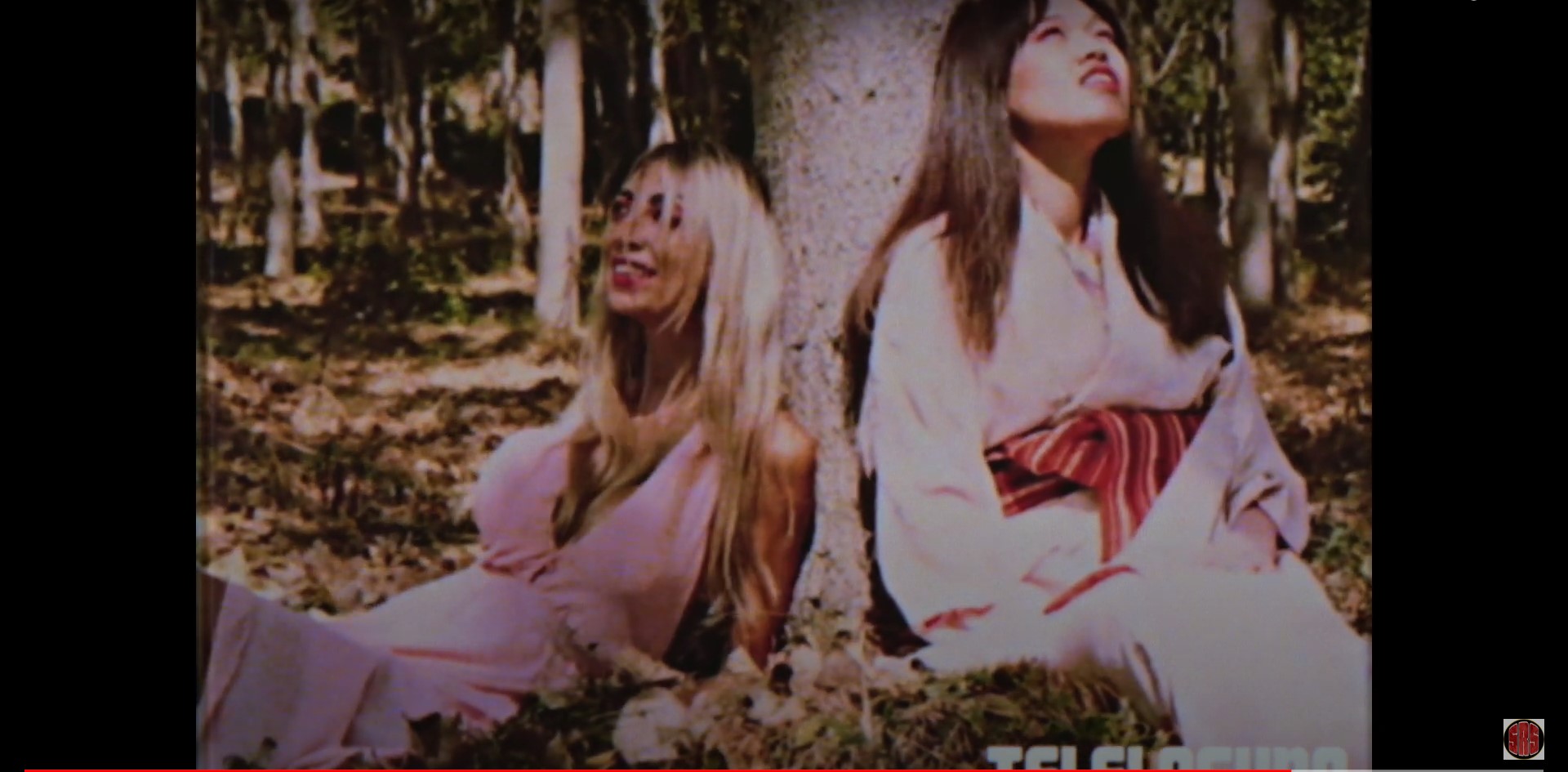
Characterized as the titular pair, Returnees Jasmine and Umeko are the ethereally evil duet of diabolical detriment who seemingly float in and out of the material world as alluring succubi, seducing prey into their web of demonic lust and languish.  Some turn up grotesquely inside out while some others disappear, saved for later for special ritualistic planning.  Erika Saccà, an Italian fitness instructor in her debut role, plays the blonde Returnee Jasmine in a sleeveless, lowcut gown and with nearly ever kill, exposes and massages her augmented bosom with underboob scarring in a change to showoff her toned physique, and Reiko Nagoshi (“Re-Flesh”) wears a kimono without any unveiling of skin but does a bit of thrust-damage on her quarry that initially and inexplicable appears to be a strange phenomena when everyone in the scene is a woman but becomes apparent there’s something unholy and very “War of the World’s” alien under that traditional Japanese garb.  Saccà and Nagoshi wear many hats in this product but also don’t have the dialogue to hoist their demonesses higher.  The dialogue is left with the trio of convent gatekeepers in Father Taro (Enrico Luly), Father Bennet (Paolo Salvadeo, “Occultus”), and Mother Dolores (Amira Lucrezia Lamour, “Re-Flesh”) in what becomes a deeper understanding of their backstories around Father Taro’s deadly bittersweet exorcism decades ago, his on the sly and subtle affection for Mother Dolores, and Father Bennet’s questionable rise to supersede Father Taro, laying a foundation of doubt within the current gatekeeper.  While I like the contrasting dynamics of the two factions within the cast, I found the discourse overly bulk and tedium between the trio of piety that strung on scenes way too long with way too much talk that it ultimately suppresses the pacing when every little detail has been uncovered and explained. All the casted bits in between are slaughter fodder with Denise Brambillasca, Alessandro Carnevale Pellino (“The Wicked Gift”), and Martina Vuotti in non-defying death roles.

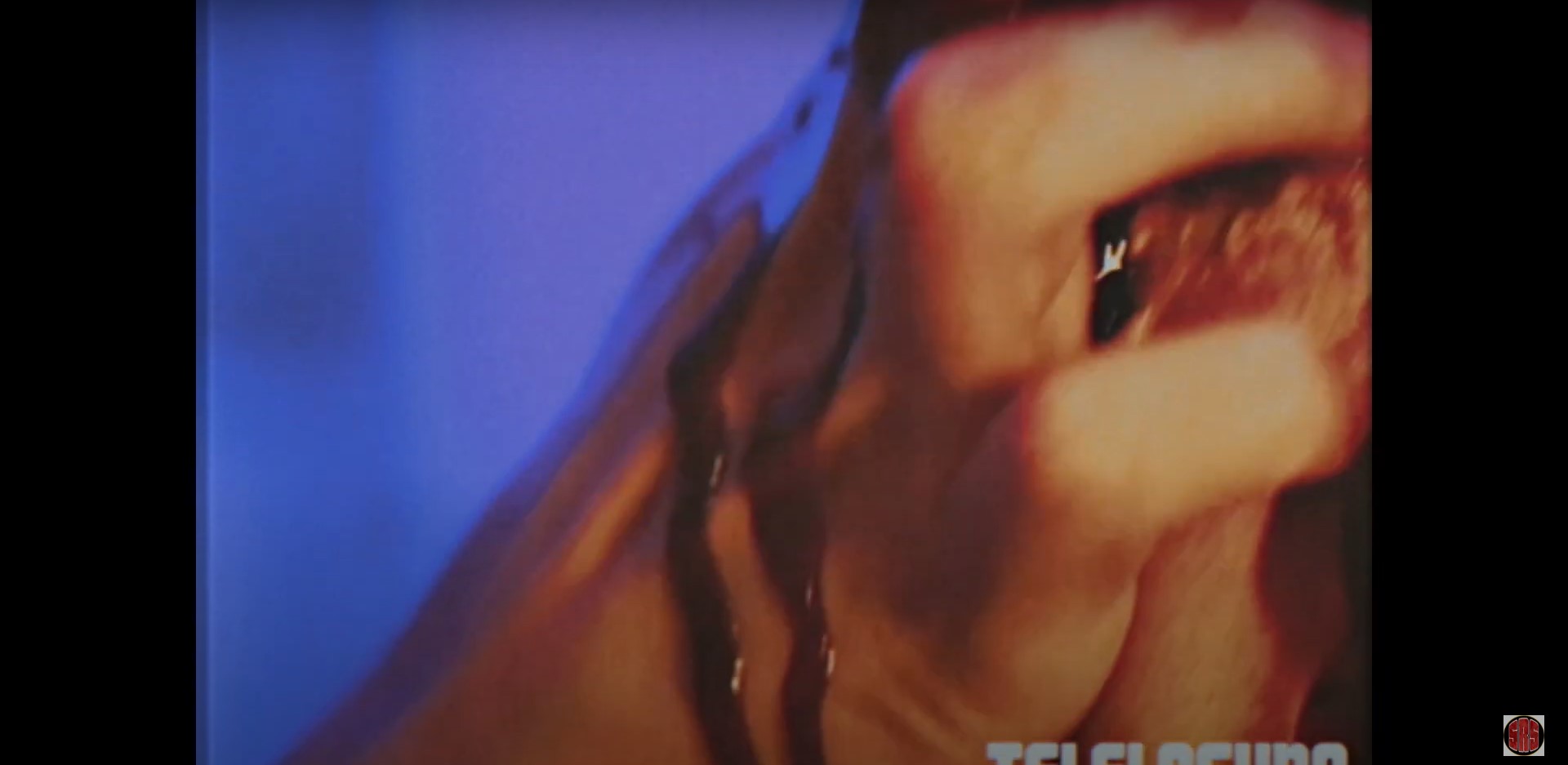
Paolo del Fiol’s unaccompanied and independent deluge of demonian debut has doses of phantasmagorical imagery sublet by its more shocking and odd immolation of incognizant individuals unlucky enough to cross paths with the Returnees. Likely to have never seen, Fiol’s film very similarly compares to James Sizemore’s “The Demon Rook” by creating unique mythos not reliant on a religious bedrock and use independency as an advantage for showcasing practical makeup and effects and while “The Demon Rook” would overwhelm with prosthetic made-up characters, “Demon Times Two” focuses attention more on the guts of the matter, the gore, but though not pernicious enough to the story, the eyeball sucking, throat lacerating, or intestine exposing bloodshed is prosaic panoply that won’t outshine in the sea of subgenre synonyms. Aforementioned dialogue scenes can be a slog to get through with many exchanges overstaying its course between the pious gatekeepers, especially between Father Taro and Dorlores, and that hurts the pacing to pick up the gore more frequently for more potency. Instead, exchanges are more elucidations that go around-and-around to where we’re lost on the mounting reveal of the Returnees’ mission and master which turns out to be visually more stimulating and visceral in the last ten minutes than in the first 100 minutes of runtime. The backlot lore is Fiol’s greatest achievement simulating a 70’s style grainy movie caveated as only broadcasted once on December 8th, 1983 (a few days before this reviewer’s birthday) and never seen again until it’s VHS recording is recovered.

Under a pretense of being a buried lost film, under the tribute of a grainy and scratched psychotronic celluloid, and under the falsity of genuine huge knockers, “Devil Times Two” is twice baked into a classic contemporary dish served by SRS Cinema on DVD. Arriving on the SRS Cinema: Extreme and Unrated Nightmare Fuel label, “Devil Times Two” is nothing short of being a modern-day emulator of once was with suitable grain overlay, a hazy, if not washed, overcast grading, and trope-laden atmospherics with dense fog, unnerving dissonances within earshot, and blood brilliantly cut with pseudo Telelagua commercial programming of brief adverts until returning to regular scheduled programed checked in and out by a gondola and it’s gondolier in dusk silhouette. Presented in a pillar box 1.33:1 aspect ratio, the fuzzy and non-delineated details are not a punch to the salient gut as the intent here is to be obscure, opaque, and ominous in nature and in technique bathed in 480p. The Italian PCM is the exact recreation of a time period post-dubbing with the actors re-dialoguing their performances as it was common practice in most motion picture industries, especially Europe, at the time. ADR is clear but not necessarily clean to recreate that shushing and crackling of an older recording. The subtitles are also forced or burned into the film with the sole Italian audio option. Bonus content includes what is called Backstage, a raw filming look into the production shoots and behind-the-scenes footage with no real direction or cosmetics, a photo gallery, a trailer with English subtitles, and other SRS Cinema released trailers. The SRS Cinema DVD front cover resembles mock-70’s, thick-red font with a bare woman’s back dressed in a painted Satanic symbol within the border of a VHS-esque rental casing with rental stickers. Inside the amaray case is a pressed disc with an extreme close up and crop of the same front cover with no insert in the adjacent slot. Pacing burdens this release, especially in its near 2-hour runtime with a clock-in at 114 minutes which is approx. 24-minutes too long in my opinion and the film comes not rated and has region free playback. No matter how much arcane the content is, or how grotesque the horror show, or how much perversity and skin can be unclothed, “Devil Times Two” has difficulty retaining a flow of fascination in a rather windbag approach to a rather devilishly good salvo construction.

“Devil Times Two” on DVD from SRS Cinema

EVIL Says Talk to the Hand. “Talk to Me” reviewed! (Lionsgate / Blu-ray)

“Talk to Me” on Blu-ray/DVD/Digital!

The two-year anniversary of the death is a solemn time for Mia to mourn the hard loss of her beloved mother who took her own life, or at least that is what her father tells her.  Feeling uneasy by her father’s account that circulates doubt uncontrollably, Mia pries her way into her best friend Jade’s family for comfort and becomes equally amiably with Jade’s younger brother, Riley, as like another sister.  When social acquaintances post viral videos of peers supposedly being possessed by an embalmed hand of a psychic for party games, Mia is eager to participate.  All is fun and games with the dead inhabiting and speaking through the hand holder for a limited time until Riley’s spirt takes a violent turn, leaving the boy severely injured and in a comatose state after exhibiting Mia’s mother possessing him.  Obsessed to speak again with late mother, Mia uses the hand to talk to the dead and learns Riley’s soul is stuck on the other side and being tortured by the countless, malign spirits. 

Grief can be so powerfully self-destructive that holding an embalmed hand, becoming connected with the grotesque spirit, and letting the shadow world possess you can be addictive and even as far as a parlor game to pursue answers or a desperate release from suffering.  The 2022, breakout Australian production “Talk to Me” explores that forced hand of grief, literally, with a socially pressuring aspect that can be contagiously engrossing and collaterally harmful if unchecked.  The Southern Australian-born brothers Danny and Michael Philippou come out swinging on their debut feature-length film penned by Danny alongside Bill Hinzman based on a concept by “Bluey” executive producer of all people, Daley Pearson.  “Talk to Me” is a coproduction between The South Australian Corporation, Screen Australia, Head Gear Films, and Causeway Films with Christopher Seeto (“The Flood”), Samantha Jennings (“Cargo”), and Kristina Ceyton (“The Babadook”) producing.  The film is released theatrically by A24.

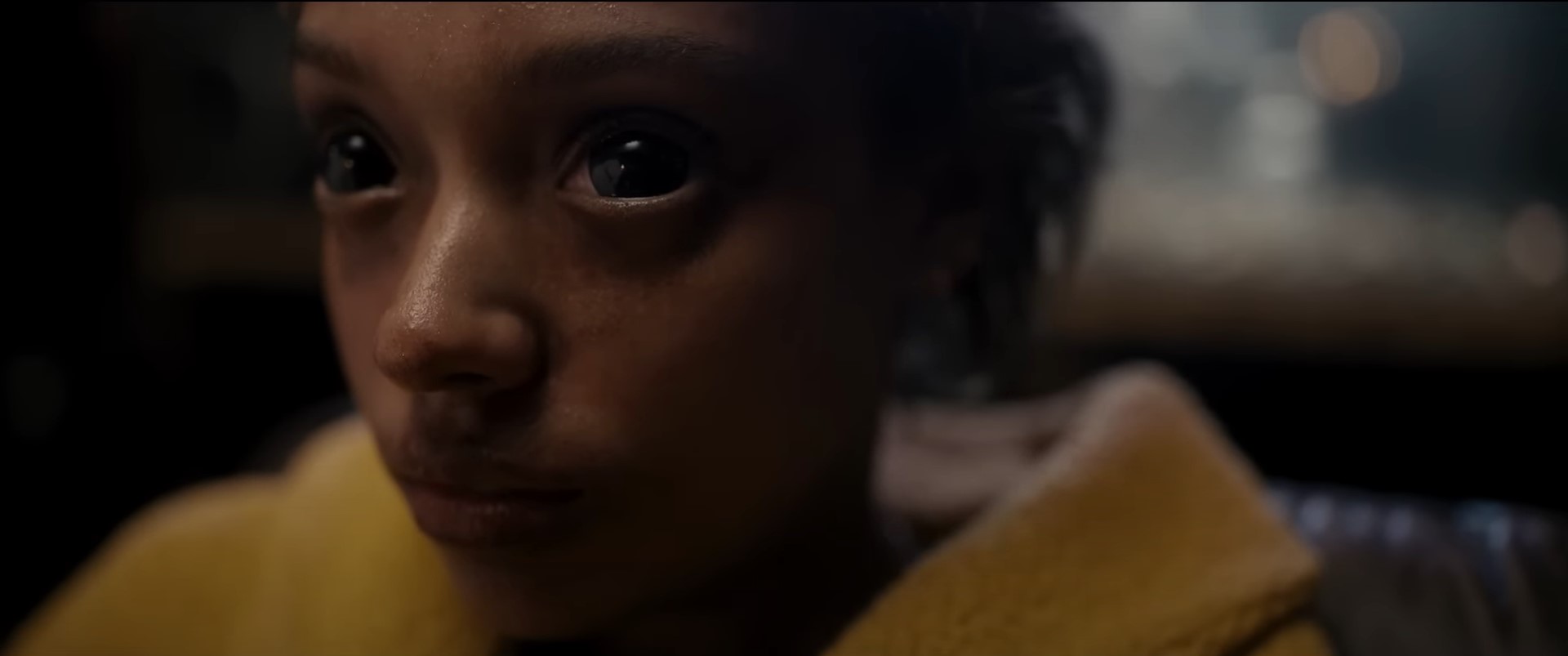
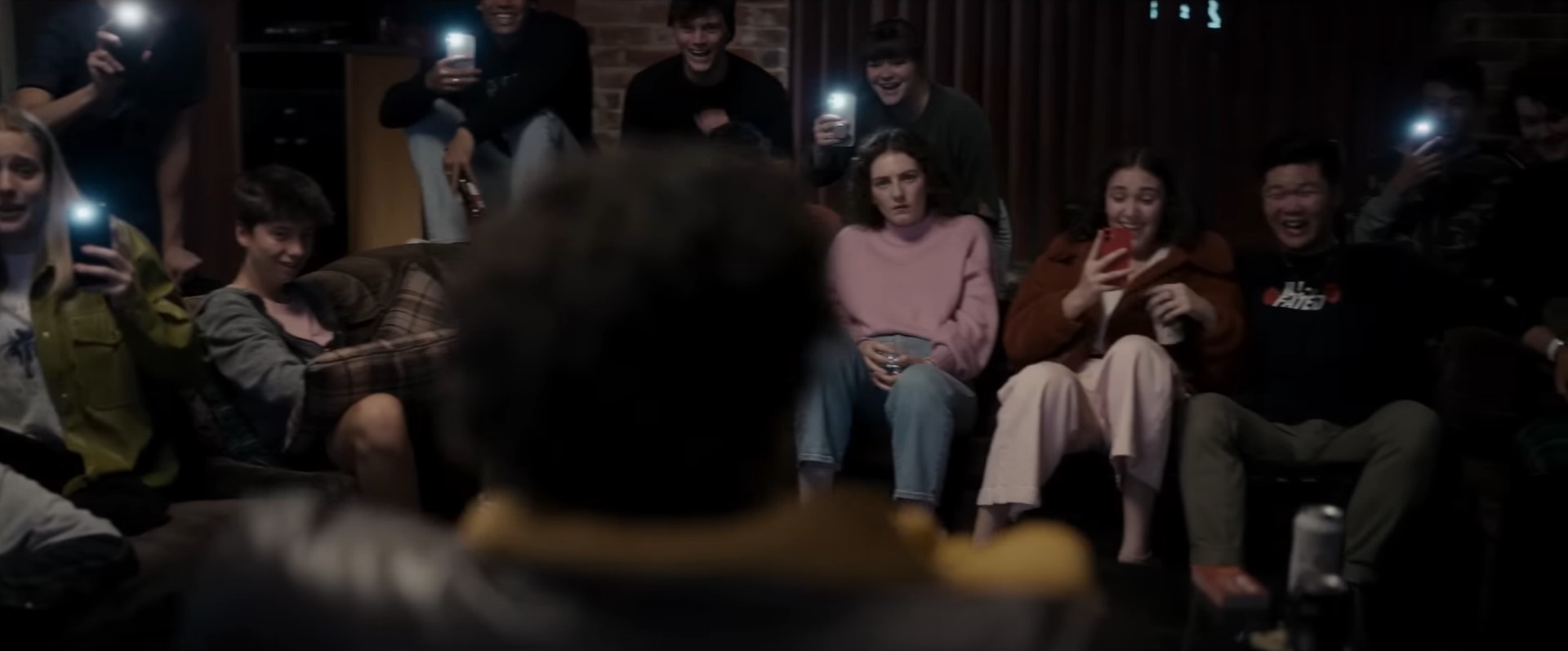
“Talk to Me” opening with a young, shoulder length haired man desperately searching for his younger brother through a sea of people at a house party.  The scene sets the film’s take-no-prisoners tone with begins with compassion as the older brother comes to the rescue of his disturbed, shirtless kin, trying to display the flashlight gleaming phone camera sharks who smell viral video blood in the water, when in a surprising turn of events the younger brother stabs his sibling before ramming the chef knife into his own skull.  “Talk to Me” segues into the cast of teenage characters, spanning the age spectrum of 14 to 20, letting us know right off the bat that youths are on the chopping block and no one will be safe.  The mostly untried cast pulls through with a trypanosome performance that gets under your skin, festering in its linger.  Sophie Wilde helms being the principal lead Mia still shell shocked by the sudden death of her twinning mother two years after later.  Suspicious of her father’s role in the death, Mia escapes and integrates herself into best friend Jade’s family, a role resting in between two uncomfortable rocks of being the new girl beside Mia’s onetime ex.  Alexandra Jensen as Jade floats carefully portraying Mia’s friend and a pursuant tiptoe toward the relationship with Daniel (Otis Dhanji) that passively irks Mia in the form of playful jokes, side glares, and inner demons becoming fruition ones expressing desires.  Sophie Wilde, on the other hand, spans the gamut with a flip of a switch soul spectrum polarized by spirit madness, grief over loss, and a fallback friendship.  When Wilde turns on the darkest light of possession, when her character lets the spirit into her body, the disheveled whole of Mia lives up to the actress’s surname becoming an uninhibited periapt for the spirit within that lusts over the youngest in the room, Riley (Joe Bird), for his childlike purity and when the spirits have control of over his soul in what is an orgasmic suffering that neither is parlous fun or exciting.  “Talk to Me’s” cast rounds out with Zoe Terakes, Chris Alosio, Marcus Johnson, Alexandria Steffensen, Ari McCarthy, and “Homeland’s” Miranda Otto. 

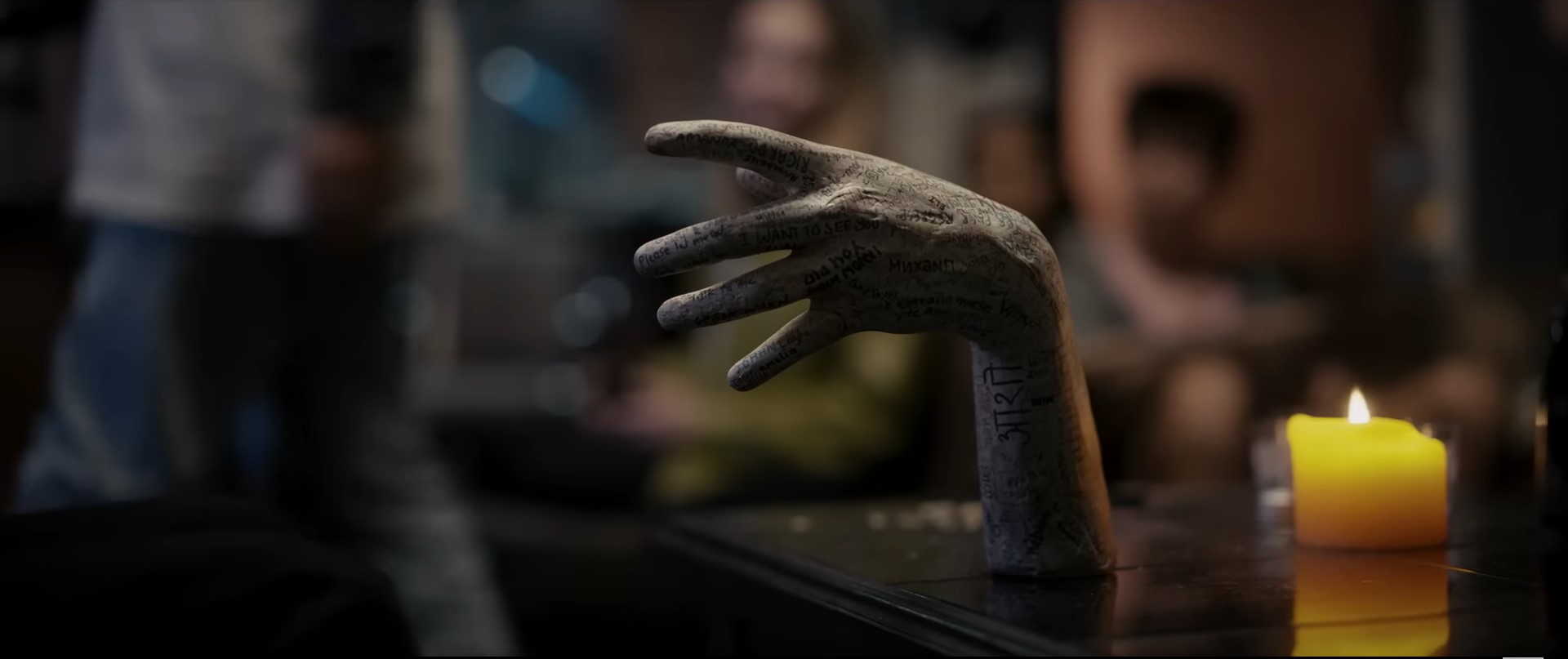
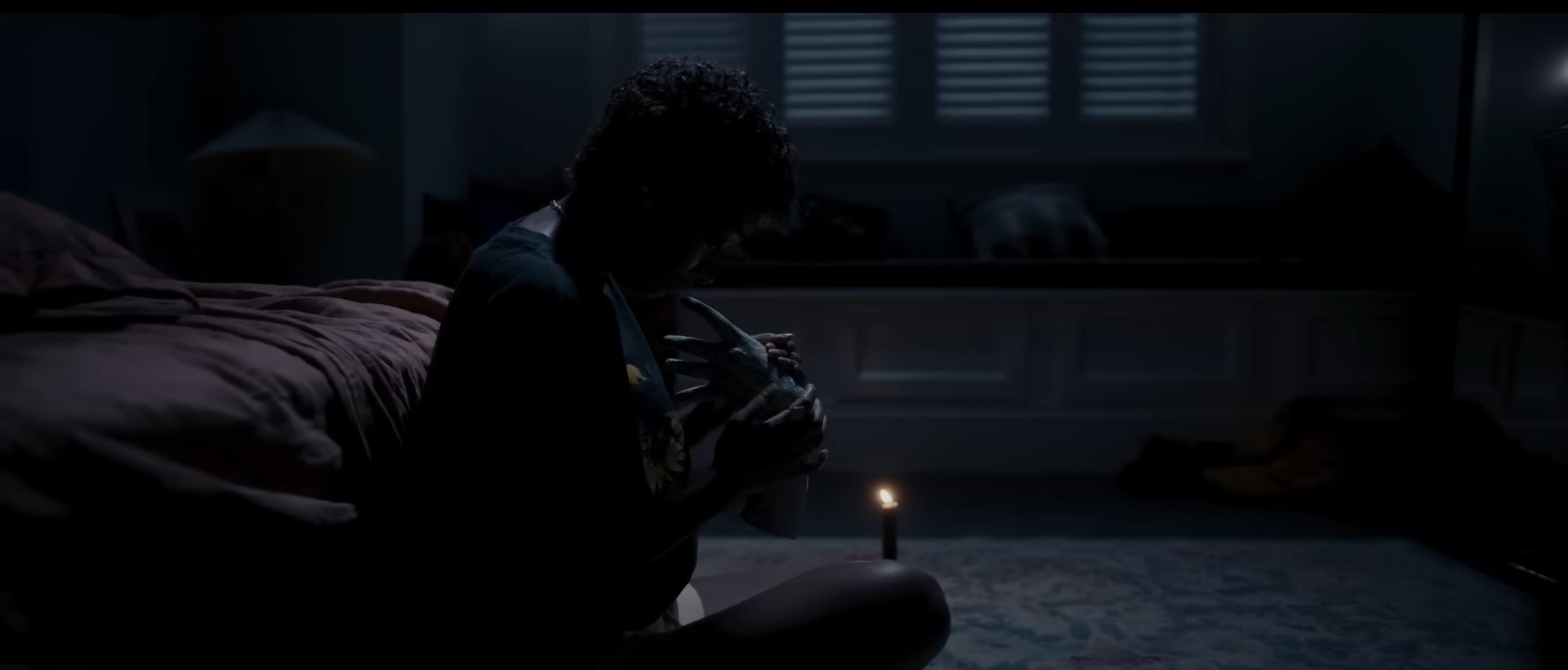
“Talk to Me” is an original byproduct stemmed from the cursed fetish genre.  The inexplicable mummified hand with unknown origins, thought to be once the hand of a medium, falls into the hands of a difference kind of representation.  Not to be bestowed conventional tropes like an inanimate object to be feared, the mirror in “Oculus” comes to mind or the cenobite unleashing puzzle box of “Hellraiser,” the persevered curled open hand doesn’t hold that sort of malevolent power, at first.  Despite its powerful connection to the purgatorial other side with frightening results of classic possession cases – levitation, catatonia, dissociative profanity and behavior, etc. –  these more-or-less new generational children treat something they don’t completely understand, such as ancient, mystical artifacts and in this case, human remains to be exact, without respect and humility, using the hand as if an additive drug, parlor game, or write to go viral amongst peers.  Directors Danny and Michael Philippou use the peer-pressuring viral video social commentary of their film as a sensationalized stern warning that has equal cause-and-effect results.  Ostentatiously showcasing more of the adolescent revelry spree rather than the mangled, decaying, and water-bloated entities in front of them or recklessly inhabiting their bodies once let corporeally inside.  For someone like the character Mia who continues to process close loss and has troubling thoughts, or maybe even delusions, regarding her father’s role in her mother’s untimely demise, she yearns for answers and when Mia receives a glimpse into what she believes is her kindred spirit mother through the vessel that is her friend Riely, aching impulses take over already crumbling judgements and she goes down the rabbit hole despite the consequences to herself, to her father, and to her adopted family.

Get a grip and take “Talk to Me’s” hand to experience the possessively powerful Philippou brothers’ debut film on a Lionsgate 2-disc Blu-ray/DVD/Digital release.  The AVC encoded, 1080p high-definition, BD50 and the MPEG-2 encoded, upscaled standard definition, DVD are presented in a 2.39:1 widescreen aspect ratio.  What’s achieved out of the Aaron McLisky’s through-the-looking-glass visual vignette is focus driven, claustrophobic, and engaging to be present of a reality teetering the line between two worlds.  Details inarguably shine, casting a great deal of deep shadows within the hard lighting to set the ominous tone.  Skin textures gleam within the light as well as coarse change with the vapid and pale makeup adjustments of the dead-entered body or even when we do brief see a condemned soul, the greatly applied contusions, decay, or bloating is reflected with great care from the infinite image detail.  The release has an English Dolby Atomos output reaching the difficult crevices of the inaudible dark holes and exposing them to immense carousal and haunting zeal that makes the experience more palpable. Dialogue renders nicely through albeit a heavy-handed score that relentlessly attempts to knock down the channel-leveled door and a strong Australian accent on most of the cast may sway those who don’t have a keen and distinct diverse ear away from the film or may find discerning a challenge to channel from beginning-to-end. While most of the camera’s frame stays in medium closeup to closeup, McLisky’s able to find depth where advantageous to bring a creep building dark cloud after Mia’s one minute over willing but felt forced possession participation. English SDH and Spanish subtitles are optionally available. Special features include an audio commentary with brothers Philippou, a featurette with the cast and crew in their experience and thoughts on the film, entitled In the Grip of Terror, deleted scenes, and theatrical trailer. Behind a rigid O-slipcover imaged with the centerpiece un-ensepulchered, plaster anoint, and sanskrit-esque-ladened hand upright and in the forefront with phone flashlights dully lit in the background. The typical Blu-ray snapper houses the same slipcover image slipped in between the plastic sheeting whilst the two discs are held on snapper locks on each side of the interior accompanied by an insert for the digital download. Both discs are pressed with the same font and coloring on in reverse with a baby blue stark against white. The 95-minute minute feature is region A locked and is rated R for strong bloody violence, some sexual material, and language. “Talk to Me” is utterly and terrifyingly fresh and freakish in more so with the naturality toward the touching and the facetious ways with an embalmed hand that’s a one-way personal radio to the dead as a means to be engaged in popular, peer-pressuring social activity and as something to prove with reckless naivety.

“Talk to Me” on Blu-ray/DVD/Digital!

EVIL Has an Eye On You! “The Goldsmith” reveiwed! (Cinephobia Releasing / DVD)

“The Goldsmith” on DVD From Cinephobia Releasing!

Childhood friends and career criminals Stefano, Arianna, and Roberto plan their next heist of an elderly couple.  Suspecting the older husband to be a jeweler with a hidden lab stashed with product, the trio work off a plan based off a third party’s overheard intel that the house is well worth the score.  Successfully penetrating the home’s security system, securing the elderly couple, and discovering the jeweler’s hidden cache of priceless jewelries, the felonious friends believe they hit big in their home invasion scheme until the lab door suddenly closes behind them and they find themselves at the mercy of the old man, free from his confines and divulging intimate knowledge about each one of them over a videocam feed peering inside the lab.  Trapped, relationship destroying secrets are revealed by their seasoned captor who has something more odiously consequential in store for them than just letting their skeletons out of the closet.

The age-old idiom of to have a heart of gold, used to describe person’s generous nature, does not apply to Italian director Vincenzo Ricchiuto’s 2022 home invasion and survival thriller “The Goldsmith” where the absence of generosity gives way to greed, treachery, and one jeweler’s search to see inner beauty.  Known in Italy as L’orafo in the production’s native tongue, the writer-director’s debut feature tackling both sides of the creative spectrum in writing and helming is co-written alongside Germano Tarricone, co-writer of Italian horror thrillers “Eaters “and “In The Box.”  Together, “The Goldsmith” does play on the idiom more than meets the eye with the immeasurable principal characters that twist to knife harder in their gutting revelation or deceitful explanation.  From production companies Almost Famous Productions, Minerva Films, DEA Films (“The Perfect Husband”), and in association with Hurricane Studios, “The Goldsmith” is executively produced by Tarricone and the Ted Nicolauo directed “The Etruscan Mask” producer, Antonio Guadalopi.

The intimate casting provides a tight story primarily set at the older couple’s home with brief secondary story parallel and flashback sets confined to a mechanic shop, outside a bowling alley, and inside a nightclub.  The three thick as thieves are the nervously confident Stefano (Mike Cimini), his oversexed girlfriend Arianna (Tania Bambaci, “The Perfect Husband”), and the careless drug addict Roberto (Gianluca Vannuci, “Lui non esiste”) who become ensnared by an enigmatic goldsmith (Giuseppe Pambieri, “Yellow Emanuelle”) and his wife (Stefania Casini, “Suspira” ’77).  Cimini, Bambaci, and Vannuci favor ruffian routine but their performances are undercut by the script’s lack of development between Stefano and Arianna’s reclined relationship and the significance of why Stefano did a heist job on his own without his crew that seemingly had some unclear intensity in the backdrop on why he had to go at it alone.  The confusion of the first fib explanation from Stefano is quickly swept under the rug by the second bombshell that involves Arianna and Roberto, one that clearly overshadows Stefano’s deceit tenfold with its more transparent and personal complexion, and Arianna’s fib is more he-said, she-said that throws more shade toward the triangle-friendship as lie-after-lie quickly devolves an already brittle relationship into a flatlining hate to where they turn on each other, or at least two of them do.  The more interesting characters of the bunch are definitely the older couple with ulterior motives, luring bad people into their home just to trick them into being a part something far more sinister for their health.  Pambieri and Casini show their veteranized chops, delivering distinct lines within their distinct character voices and mannerisms but working together as a unit in a deranged, but endearing dispositioned husband and wife, especially Casini with her semi-handicapped character’s lady of the house demeanor that wears a crooked smile underneath.  “The Goldsmith” rounds out with Andrea Porti, Matteo Silvestri, and Antonio Cortese.

“The Goldsmith” might be inherently wealthy with its immeasurable karat of everyone is a villain in the story but the story itself isn’t as rich with its struggling with poor development to connect the pieces together in a coherent way.   In the overall picture from a high-level perspective, the basics of the acts are evident to where we’re setup with these three criminals looting a home, they find themselves in a pickle with a couple not as enfeebled as described, and with the second and most rising threat plot point being the goldsmith’s eye on the prize for his captives.  Yet, the ancillary scenes muddle up the support.  Point in case, the opening scene of the three hoodlums running from a dressed down priest, and the only reason we know it’s a priest is because the actor is listed as such in the credits.  The scene doesn’t explain much other than the troubled youngsters have presumably stolen a cross and have murdered the priest after a length chase on foot, setting up Stefano, Arianna, and Roberto as the antihero principals but the scene impresses more importance, like a moment to refer back to yet that moment never resurfaces into the grand scheme of the narrative.  Other similar instances rear-up throughout, questioning the motivations and the associations often left unsatisfactory by absence of valuable fill-gap material.  “The Goldsmith’s” themes of honor among thieves and attempting to see the good within come over clearly through a blanket of dark iniquities on both ends, leaving no good feelings for any of the antiheroic roles that flipflop for higher ground in this Italian-made home invasion thriller. 

Coming in as release number six on the spine for Cinephobia Releasing, “The Goldsmith” comes to DVD for the first time in North America. The MPEG-2 compression encoded DVD is presented in a widescreen 2.39:1 aspect ratio. Unfortunately, the Cinephobia release has a substantial artefact issue with the higher information rate on format’s compression encoder, resulting in a contouring blob during the first act’s darker scenes. The front and center macro-blocking ring produces a lighter shadow that becomes more of a visual obstacle to see past. Once the compression levels out, we do see some seesawing delineation details in a rather hard-lit, noir-lite cinematography from Francesco Collinelli (“Demon’s Twilight”), but the majority of details come through nicely, especially on skin textures and tones. The Italian Dolby Digital 5.1 surround sound offers forefront dialogue with cleanness and clearness. No apparent issues with the digital recording as the sound design forks up good depth between medium and closeup scenes and through the video-com as well as a selective range with some of the gorier moments with squishy-scoops and hammer-bashes. English subtitles are available with good pacing and a flawless, accurate translation from what I can tell as I don’t understand or speak Italian but understand the roots of Latin-based language. Bonus features a feature-length behind-the-scenes raw footage of the principal photography and trailers for Cinephobia Releasing films, such as “Brightwood,” “Emanuelle’s Revenge,” “The Human Trap,” and “Amor Bandido.” Physical features include a standard DVD amaray case with the titular character in a dark black and gold yellow closeup one-sided front cover, peering into the metaphorical windows of your soul with the jeweler’s head mounted magnifying specs in an eerie image of individuality prospecting. Inside there is no insert included and the disc art is a downscaled version of the front cover image with title underneath on top of a black background. The 89-minute film is not rated and though not listed on the back cover, playback is suspected to be region 1 locked. “The Goldsmith” aims to pull the wool over one’s eyes, or more accurately, replace the eyes altogether, with the deluding lustrousness of a home invasion thriller turned into an eyeful scoop of insanity.

“The Goldsmith” on DVD From Cinephobia Releasing!

Five Men. Two Women. What EVILs Could Be Committed? “The Last Island” reviewed! (Cult Epics / Blu-ray)

“The Last Island” is Man’s Last Hope!  Now on Blu-ray!

The horrible, mangled wreckage of a commercial plane crash on a deserted tropical island only leaves seven survives – five men and two women.  Burning what’s left of the remaining passengers, salvaging through baggage, and setting forth a plan of survival until their hopefully imminent rescue,  the survivors lean on each other and on hope for only temporary residence on the idyllic island.  With a working radio only picking up static on every channel, a mysterious boat carrying a charred body to shore, and other clues that suggest the world may have just gone through a nuclear disaster, the possibility of never leaving the island seems very real despite their best efforts to the contrary.  Fear of being the last humans on Earth takes hold and for the species to survive, the idea of procreation insidiously warps their already traumatized principles.  Two women survived the crash but with one being an old woman, the younger fair of the sex becomes the object of necessity between the men of varying sexual orientation, beliefs, and ethics. 

Director Marleen Gorris helms another powerfully provoking and feminist perspective, gender divisive drama, but her 1990 released third feature, “The Last Island,” is quite different from her previous two films that have established her with such labels as a feminist filmmaker and the more preposterously perception of being a man-hater.  The differences are stark within the Netherland born Gorris’s penned script and directorial.  Unlike “A Question of Silence” and “Broken Mirrors,” “The Last Island” isn’t casted with frequent Netherland actresses of previous collaborations with this particular film seeing more native English speakers from the U.K. and Canada.  A large scale production also distances the previous handful of dressed interiors with exterior foliage, day-glow lighting, and a giant plane prop that elevate the tensions of exposition.  “Amsterdamned” and “The Lift” director Dick Maas along with colleague Laurens Geels produce “The Last Island” under Maas and Geels cofounded Dutch production company First Floor Features as one of their many English-run films. 

“The Last Island” had a cast that brimmed with over-spilling success having just come off acclaimed features within the last decade.  Paul Freeman was the first villainous face against one of America’s most beloved archeological heroes as Belloq in “The Raiders of the Lost Ark,”  Freeman pivots nearly a decade later in another strong, affluent role but as an older gay man with a taste for grooming younger men.  Freeman plays the Scottish born Sean, a seemingly ally to the one child-bearing able woman on the island but his own gender is turned against him with his need to live and his need to be in power to sustain the human race.  Opposite Freeman, and eyed as more of the principal character, is the lesser known Shelagh McLeod (“The Sleep of Death”) who is given a voice of reason, voice of choice, and voice of justifiable resistance against a crumbling male majority.  McLeod completely stands rivaling against a formidable Freeman without the backstory of ethical waning and as the well-rounded Joanna, she finds herself in opposition of other eclectic group of men with extreme strengths and flaws.  Pierre (Mark Berman, “Tom et Lola”) is a brilliant scientist but a craven coward, Nick (Kenneth Colley, “Star Wars:  Episode V – The Empire Strikes Back”) has military arms training for hunting but is a bigoted, pious fanatic, Frank (Mark Hembrow, “Out of Body”) is strong and compassionate but indecisive and insecure, and Jack (Ian Tracey, “The Keeper”) is the epitome of youth but is arrogant and motivated by sex.   Morris is able to turn each of the salient men seem small and insignificant beside Joanna steadfast candor.  Then there’s Mrs. Godame, the seemingly most insignificant character who is actually the most complex out of them all.  Age is just a number but the way Morris writes the old woman makes subtle suggestion that she might be more of a higher power than what she appears to be on the surface.  One suggest is hidden in plain sight right in the old woman’s name, Godame, and if you split the syllables, God and Dame equals Woman God.  “Willow’s” Patricia Hayes dons a charitable, mother-like performance providing hints of being the abstention Almighty by ending many sentences to the others with my child, knowledgeable in wisdom and in parable, trying to guide with conversation and compassion, and we’re even introduced to Mrs. Godame lying on the beach, arms stretched, and perceived from a top view as if in a crucifix position.

Religious imagery and metaphors run beyond the subtext of Mrs. Godame.  The world has seemingly destroyed itself from what is suspected to be a nuclear war and thrusts a reasonable suggestion that the age of apocalypse is nigh.  Man and woman are stranded on an island that’s been referenced as paradise on more than one occasion and Eden, a garden where the first man and woman lived, was known for its abundance of natural beauty and paradisal qualities.  Other aspects from the story of Adam and Eve and the Garden of Eden are also present, such as the forbidden (poisonous) fruit and the snake that bites one of survivors.  Joanna can be said to be the forbidden fruit as well in a reversal of the theological tale where man is tempted by the forbidden fruit, tries to take a bite, and is cursed by removal innocence and bliss and replaced with sin, misery, and, eventually, death, more specifically, death of the human race.  Morris blends these elements smoothly into the conspicuous concept, leaving a very few mysterious metaphors left unresolved by the natural consequence of the characters, and ending on a note of ambiguousness hopelessness because is Joanna pregnant or not – we’re neither informed by the story or Mrs. Godame herself with another imparting and inconclusive turn of phrase that bestows a classic curtain fall on the unforeseeable future of the survivors. 

Cult Epics releases “The Last Island” on an AVC encoded, high-definition 1080p, BD50 presenting the new 2K transfer and restoration scan from the original 35mm print in a widescreen aspect ratio of 1.85:1. An opening preface notes that the restoration done was done on the only working English-language 35mm print known available, accompanied by evident dirt and scratch imperfections. Comprehensively, the restored print is beautifully vibrant with popping tropical frondescence and a deep blue sky. Much of the imperfections come early on, during the aftermath of the crash, where faint but evident scratches are noticeable, dust specks can be visible but insubstantial, and with the only real blight being a rip-split frame that flashes a horizontal tear across the screen. Details are sharper than expected with a nice delineation in the space between, skin textures, amongst other tactile elements such as trees, the plane, and the sandy setting, don’t wash out under the brilliant sun that lights up everything, and black levels keep inky inside the naturally adequate grain. Though a Dutch production, the dialogue track is all in English with a DTS-HD 2.0 master audio. Also available is a LPCM 2.0 stereo. Even-keeled throughout the picture’s entirely, never did the levels intertwine or lose strength in what’s a satisfactory arranged overlayed soundtrack in suitable company with Boudewijn Tarenskeen’s grave dramatic score. Optional English subtitles are available. Special features include an audio commentary by film historian Peter Verstraten who returns for another Cult Epics release, an audio-less, raw footage behind-the-scenes of certain production creations such as the plane setting and certain dynamic scenes mantled with diverse song tracks, an archive interview with Politica columnist Annemarie Grewel, the original theatrical trailer, promotional still gallery, and trailers. Also include but not in special features is a Dick Mass audio-only introduction at the play film selection. The clear Blu-ray amary case sports the original composition “The Last Island” one-sheet of wrecked plane and stranded survivors. On the cover’s reverse side is a full spread of the cast in one of the more memorable, heartbreaking scenes. There is no insert included inside and the disc art has the same rendered front cover art. Clocking in at 101 minutes, this Blu-ray has region free playback and is not rated. Gorris’s eye for upending men rationales to use against them tears into the very fabric of their misguided intentions as the prospect of end of the world comes down to one, single-minded thought – to procreate when facing extinction and the only way to do that is a man’s way.

“The Last Island” is Man’s Last Hope!  Now on Blu-ray!

A Thousand EVIL Little Legs Wriggle Inside You! “Creepy-Crawly” reviewed! (Well Go USA / Blu-ray)

Get Wigged Out by “Creepy Crawly” on Blu-ray!

During the COVID lockdown, a group of tourists are confined to a quarantine appointed hotel in a Thailand city. Fielded by skeleton hospitality, the hotel aims to make the tourists comfortable as possible with the limited number of staff and security on hand. Though frustrated and displaced, the quarantined few feel ultimately satisfied by their popup accommodates spearheaded by the Thai government. However, one amongst the staff and tourists is a shapeshifting monster of local legends, jumping from body to body in hopes to find a person with unique blood in order to survive for eternity. Forcibly detained by a sleazy and easily persuadable hotel manager, Leo, Fame, and their families hardly trust anyone, even themselves, as a hidden creature invades a new host to become closer to living forever. It’s true shape like a centipede, the creature summons its smaller, poisonous brethren to wreak havoc inside every crevasse of an inescapable shelter.

Tapping into the same slithery vein as “Night of the Creeps,” “Invasion of the Body Snatchers,” or even “Slither” itself, co-writers-and directors Chalit Krileadmongkon and Pakphum Wongjinda channel their inner spirit animal, the thousand-legged wriggler, back to their home country of Thailand for a new creature feature sure to have your skin recoil with formication.  Also co-written alongside, Charoen Kaithitisuwan, “Creepy Crawly,” or better known in Thailand as “The One Hundred,” is the second feature for Krileadmongkon behind another unearthing creature construction in “The Beast Below” that was released the same year as “Creepy Crawly.”  For Wongjinda, the 2022 released film marks the 9th feature in the filmmaker’s 20+ year-long career who began in 2001 with a script surrounding a feminist ghost killing men victims in “Body Jumper.  “Wongjinda has been once around the horror subgenre carousel to now collaborate with the fresh perspective and ideas from the up-and-coming Krielandmongkon to extend Thai’s catalogue of cinematic chills and thrills.  Neramitnung Film and Fatcat Studios serve as production studios with producers Natchanok Kamonrattananan, Punyanet Tanaprapass (“The Beast Below”), and Kamonwan Kanaraksunti. 

Perhaps better if told in the perspective of an ensemble cast, “Creepy Crawly” reduces is principal character pool to just two, a hot-headed Taekwondo champion named Leo and a social media influencer aptly named Famed.  The two cross paths while being COVID quarantined, sharing a smoke in the stairwell while sharing breaking the hotel rules of remaining locked in their rooms.  There’s not much in the way of connection between the two characters, played by one half of the Golf & Mike musical group Mike Angelo (“The Misfits”) and the mixed heritage of English, Chinese, and Thai actress Chanya McClory, as the progressive action teases something more than just stairwell strangers as Leo frequently comes to Fame’s aid whenever he his sixth sense senses danger.  Both principals carry collateral damage weight with family members also being in quarantine with them; Fame has her brother and social media partner Fiew (Benjamin Joseph Varney, “The Promise”) while Leo has a slightly more extensive circle and greater family drama with sister Lena (Kulteera Yordchang) and their mute, widowed father (Paramej Joiam, “407 Dark Flight 3D”) to which with the latter Leo has an aversion in connecting with periodical flashbacks of Leo and Lena’s dying mother and somehow, which is revealed later, their father is to blame.  This creates more of an arc for Leo with an imbalanced, shared protagonist lead with Fame who we don’t get to know as intimately other than she has an incurable blood disorder that could be fatal if not treated with meds.  “Creepy Crawly’s” cast is beautifully eclectic, and I don’t mean with appearances but rather their interesting, robust with personal motivations, and not terribly dull or overtly bland with performances from Wanpiya Omsinnopphakul, Chanidapa Pongsilpipat, Sita Chutipaworakarn, Chutaporn Chaikawin, and David Asavanond as the slimy hotel owner.

As I sit down to gather my thoughts about this review squirming with venomous centipedes, a house centipede, or what we like to call in our house a thousand-legger, steps hundreds of feet-over-feet on the wall in front of me. Talk about good timing, bad omens, or just a straight up coinkydink when a cousin of the deadly antagonist you just bore witness in a film crawls up the wall in front of you. Despite the inspiration that scuttles in front of me, “Creepy Crawly” has a more fantastically gigantesque infestation. The story has a COVID-19 backdrop and is supposedly based off the story of Battambang told by King Chulalongkorn, aka King Rama V. I, unfortunately, can’t elaborate much about the story as I couldn’t dig up anything that closely resembles the analogy between a centipede invasion and a French conflict. Or are the centipedes a metaphor for the European encroachment? Or are they a metaphor for the COVID pathogen that’s hidden amongst the atypical carriers? Either way, “Creepy Crawly” is visual effects driven with a crevasse-trenched and many-moving-leg scaled arthropod with a pincher-laden head but before the monstrosity makes face, the mega-centipede can hop from body to body, able to protrude tentacled pinchers like spears, impaling victims as well as transposing itself into another body before sucking and skinning the host dry of life and flesh – very reminiscent of an Edgar suit. The jutting spears from the host never harms the body, alloying to-and-fro the skin, and clothing, in a compatibility of supernaturality that fits the folklore mold explained during the opening credits. That’s where I imagine the lore ends and the exoskeleton evil begins as we’re sucked into Leo’s daddy issues, the hotel manager’s self-preservation, and Fame’s bad blood that’s good for the big bad bug. Though Leo’s emotional pull the right heart chords and the hotel manager selfishness and greed adds tension and conflict to an already imposing no way-out scenario, the blood disorder plot device is skimmed to be barely tolerable without diving into the science of why a 10-foot centipede can survive on a compromised blood.

As far as COVID-theme foreign productions, “Creepy Crawlers” checks out as a roach motel monster movie from Well Go USA Entertainment. The distribution company’s Blu-ray is an AVC encoded, 1080p high-definition, and presented in a 2.39:1 aspect ratio. Visual effects conducted by Thailand’s Matchmove team have remarkable detail in the composited scenes with the exception of one latter scene that compromises the blacks of reality to a darker shade of gray or blue when overlaying it with the digitally added creature. Details are generally delineated nicely, color grading pops natural tones, and the BD25 offers sufficient space to suppress compression artefacts. The Thai DTS-HD 5.1 Master Audio with optional English subtitles greatly exudes the centipede click-marching and pinch clips to effectuate an army of killer scurrying arthropods swarming onto, into confined quarters and those suspected of sickness, COVID-19 to be exact. Dialogue cleanly renders, especially between the majority of Thai and the medley of minority languages, such as Chinese and English. Bonus features are limited to just Well Go USA previews/trailers in what has become another barebones release for the company. The Blu-ray comes in a standard amary case with snapper with fantastically to truth image of the creature on the front cover while the inside has a paper advert for three Well Go USA films with the disc art displays warm shades red and yellow in what is a very culturally appropriated Thai coloring. “Creepy Crawly” scritch-scratches the lousy sensation of a buggy creature feature with loads of action that tries to add and induce more into the narrative beyond what’s innately there and that can be a great repellant to this wecl invasive species of Thai genre films.

Get Wigged Out by “Creepy Crawly” on Blu-ray!