A Cop, a Paranormal Investigator, and a Priest Walk Into an EVIL Extermination Plan! “Belzebuth” reviewed!


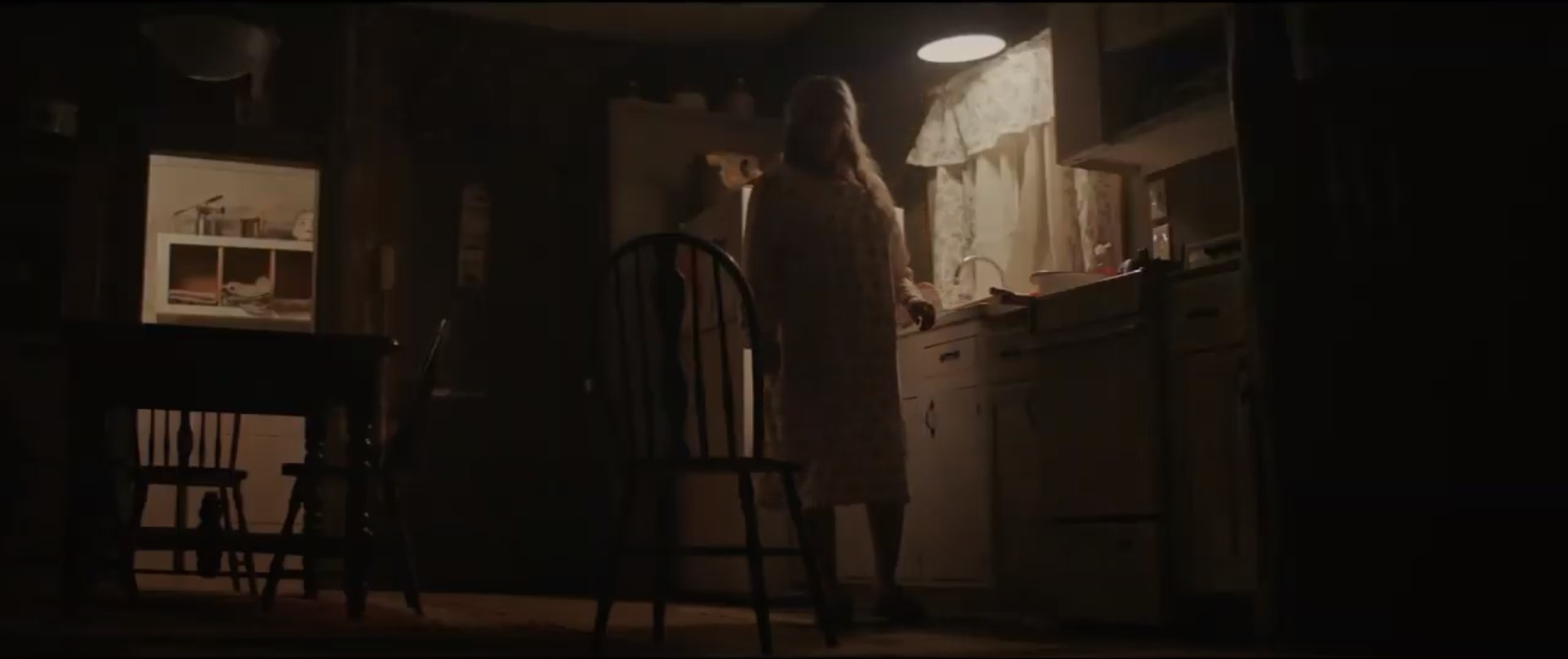
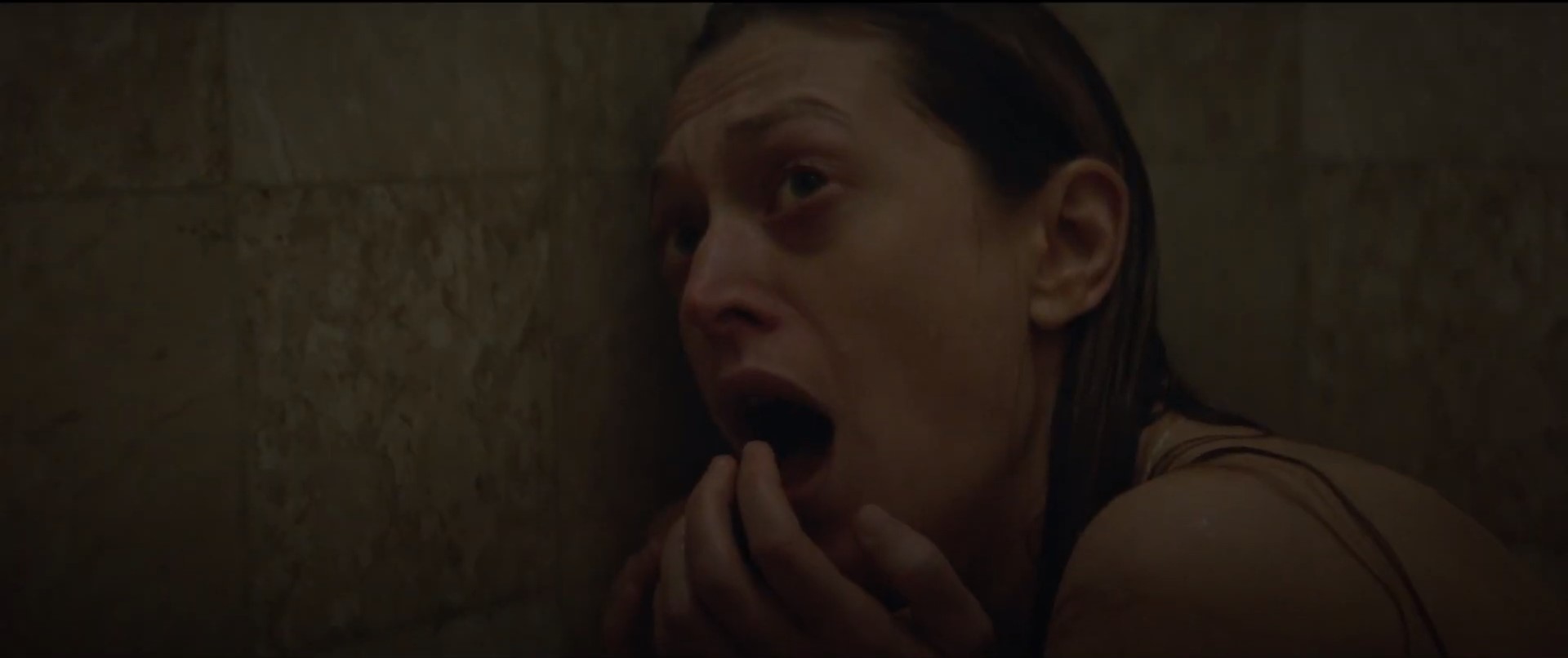
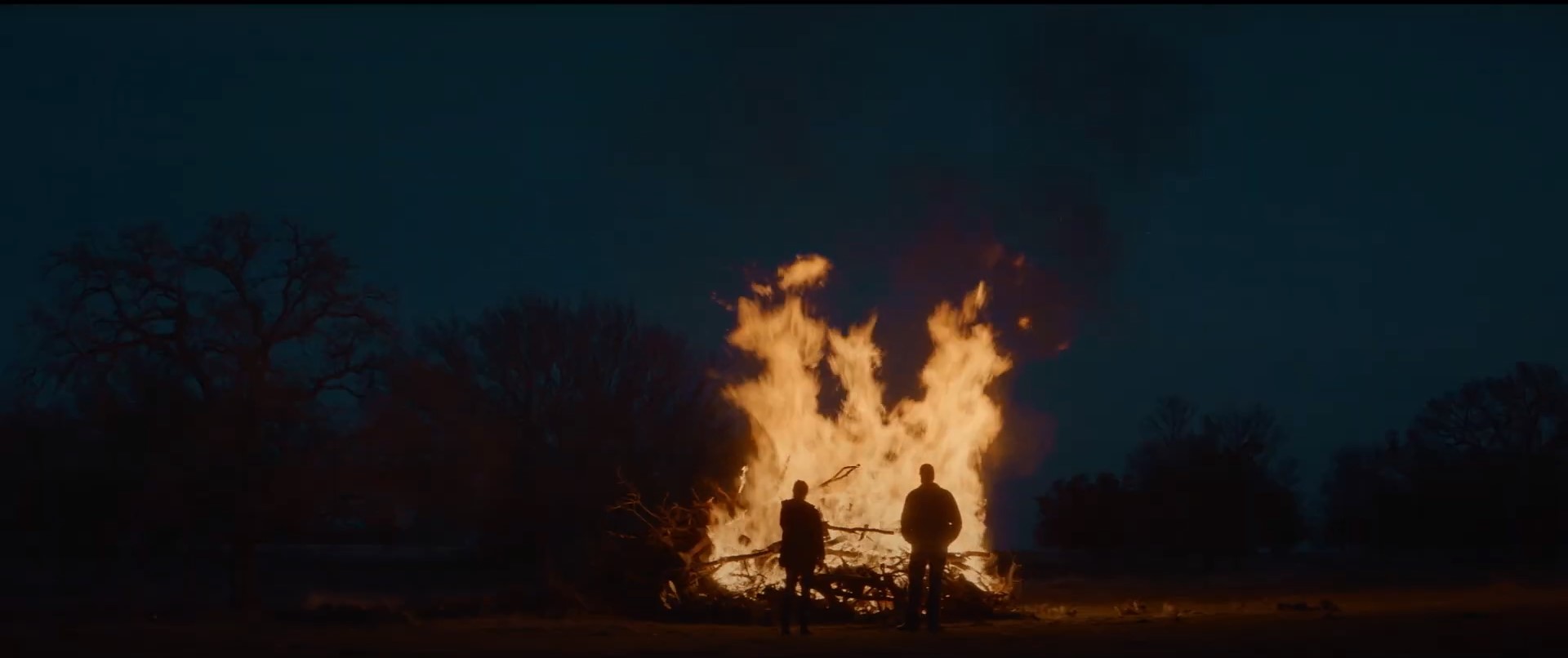
The joy of a new baby is cut short for Detective Ritter who bares the tragedy of his little boy viciously killed in a massacre of nursey infants by a psychotic nurse before taking her own life.  Five years later, and losing not only his child but also his wife to severe depression, a disheveled Ritter is called in to investigate a mass murder involving a 12 year old boy slaughtering young children in a preschool classroom.  To him, the two events don’t spark similarities, but to a paranormal investigating Catholic priest, Ritter’s tragedy and the events in the classroom are linked by the unorthodox priest’s examination.  All the evidence points to an excommunicated Catholic priest practicing demonology that sends the two men down a path of unholy darkness in a series of murderous catastrophes influenced by the rebirth of the Messiah.

When the first scenes from “Belzebuth” open with a maternity ward nurse stabbing with vigorous force every single infant child in their crib with a scalpel, you know nothing wholesome is sacred and everyone is fair game in what is to be a grim story of infinite barbarity and darkness.  “Belzebuth” falls in the line of fire of Mexico City born writer-director Emilio Portes with an augmented, dark humored social commentary loaded with evil entities and grimace-laden gore.  The “Meet the Head of Juan Pérez” filmmaker cowrites “Belzebuth’s” irrational rational for the unfortunate real world trend of mass murders and touches upon, sensationally, the evolution of Catholicism extremities to battle evil in the world with first time feature length film screenwriter Luis Carlos Fuentes.   The Mexico/American film is produced by Rodrigo Herranz, Michelle Couttolenc, and Jaime Basksht, with Ana Hernandez as executive producer and Pastorela Peliculas in cooperation with patriotic promotion from the Instituto Mexicano de Cinematografia, aka IMCINE, serving as the production companies.

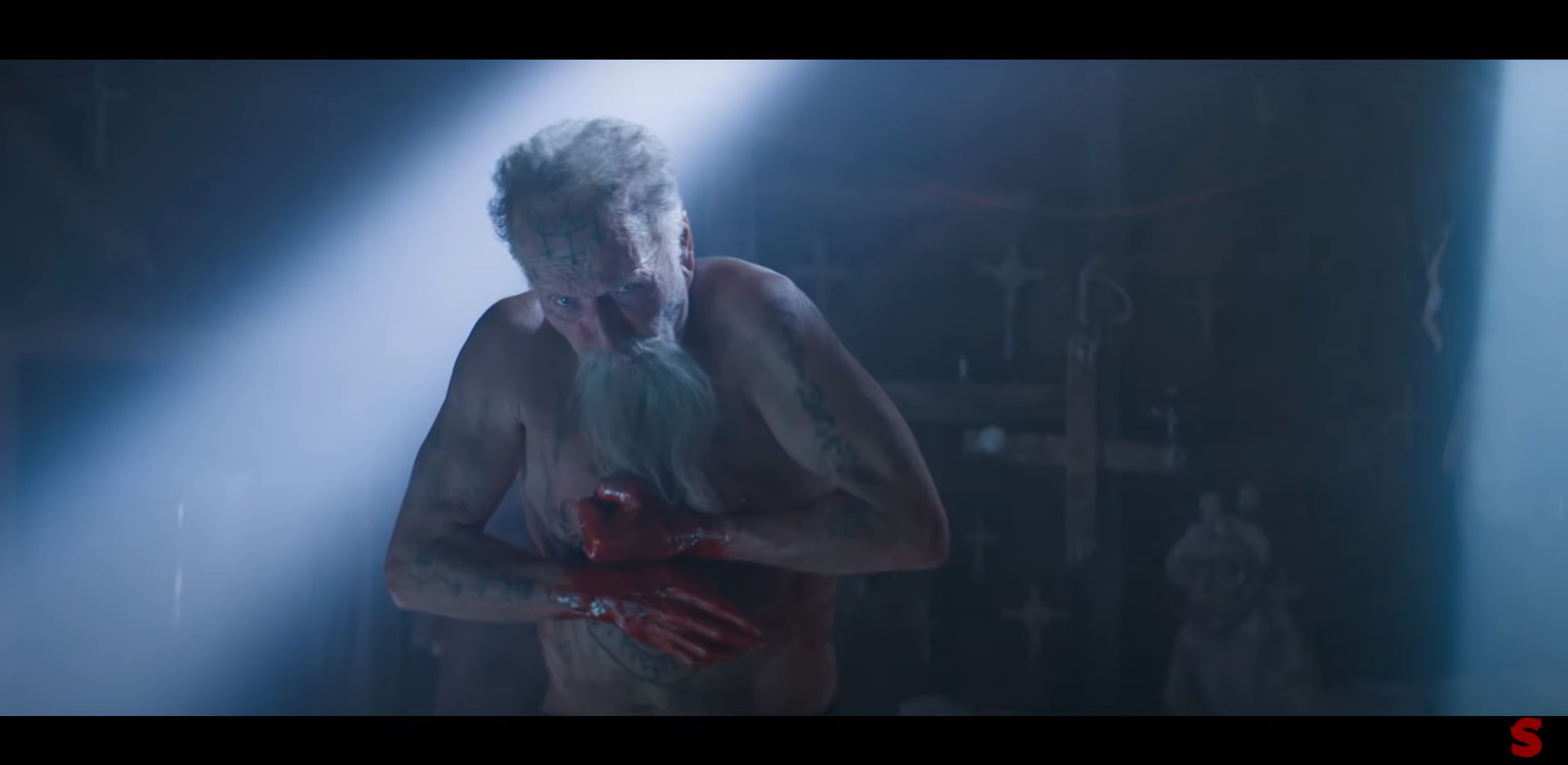
If you Google Mexican actors, the power of artificial intelligence and ignorant manual input couldn’t separate Mexico form any other Latin American country as the powerhouse search engine provided me results like Danny Trejo, John Leguizamo, Jennifer Lopez, Javier Bardem, and Penélope Cruz.  Now, while I respect each and every one of these performers who provide a variety of lush character and emotional erudition to each of their roles, not one of them is born in Mexico.  Some that listed do not even share the same heritage.  But do you know what the most astonishing, most outrageous, and most shameful aspect of my search was this?  The Tepic, Nayarit, Mexico born Joaquín Cosio was not among the top 50 results.  From captivating television with Guillermo del Toro small screen adaptation of vampiric apocalypse of “The Strain” and the intense drug-fueled drama of “Narcos: Mexico” to his Hollywood presence in the star-studded, James Gunn directed “Suicide Squad” to his humbler beginnings that includes Bond, James Bond, in “Quantum of Solace,” Cosio’s a strong and versatile candidate for intense thrillers and “Belzebuth” is right in the actor’s wheelhouse as a downhearted Detective Rigger with a short fuse.  As a supernatural skeptic, Ritter’s forced into confronting his past demons with the demons of the present by tracking down rogue priest Vasilio Canetti (Tobin Bell, “Saw” franchise) with the help of Father Ivan Franco (Tate Ellington, “Sinister 2”) of the Paranormal Forensic Department, which sounds kind of silly because Franco’s squad is an extension of the Church.  Bell brings his delightful deadpan bedside manner as the excommunicated priest in guerilla warfare with a determined, demonic evil trying to massacre as many children as possible to find the reincarnated Messiah in what would be the Third Coming as the Second had come and failed during the Crusades.  Bell is the yin to Cosio’s yang until circumstances rear-end last ditch efforts and all Hell breaks loose in a drug smugglers’ tunnel.  Aida López, José Sefami, Yunuen Pardo, and Liam Villa round out the cast.
If possession-fueled carnage and the antiheroic archetype weaponizing demonology for good tickles all the right places, “Belzebuth” can be the feather tickler of dreams.  Fans of Clive Barker’s “Lord of Illusions,” Peter Hyams’ “End of Days,” and the graphic novel “Constantine” can indulge into Portes’ explicit nihilism and lack of public conviction in religion in the director’s allegoric telling of something really big and really satanical happening right under people’s noses while a small motely crew of conversant peons try to stop a wall of Deviltry.  Portes also consistently touches upon Mexico’s unsystematic corruption, even among Ritter and other protect and serve officers, and the once firm-handed political system of the Institute Revolutionary Party (PRI) as potential cause for all the suffering enacted demon-rooted abscessations.  The mentioning of drug cartels pop up frequently, too, symbolizing the seemingly random acts of violence are just never just random acts, but an perpetrated hit on a human target much like the cartels’ unsavory methods to either take out competition, eliminate obstacles, or to silence whistleblowers.  Portes does a phenomenal job using his film as an allegory in making a political statement but lacks balance in favoring gore over profile with some characters who rather feel written in just for the sake of a broader English audience.  Father Ivan Franco is such character with interesting combinational vocations as a paranormal investigator and a holy man of the cloth.  Yet Franco, who wields a gun and has supercool video and audio recording specs, spearheads a larger suborganization shielded away from the public eye and, unfortunately, the viewer eye that never feels like a cog in the entire “Belzebuth” machine.  Franco and his team of spook-sleuths, who, by the way, vanish completely from his side early into the investigation, supposedly follow and investigate peculiar tragedies connected to misaligned presences leaving spiritual residue on the real world plane, but how his team comes about connecting the dots exclusively to just the first two tragedies, five years separated, is a bit of stretch and a letdown in fabricated continuity and weight behind Franco’s existence to be involved.  Pockets of plot holes pop up here and there on other facets but generally speaking, “Belzebuth” works black magically as a spiritually and culturally vivisecting detective thriller.
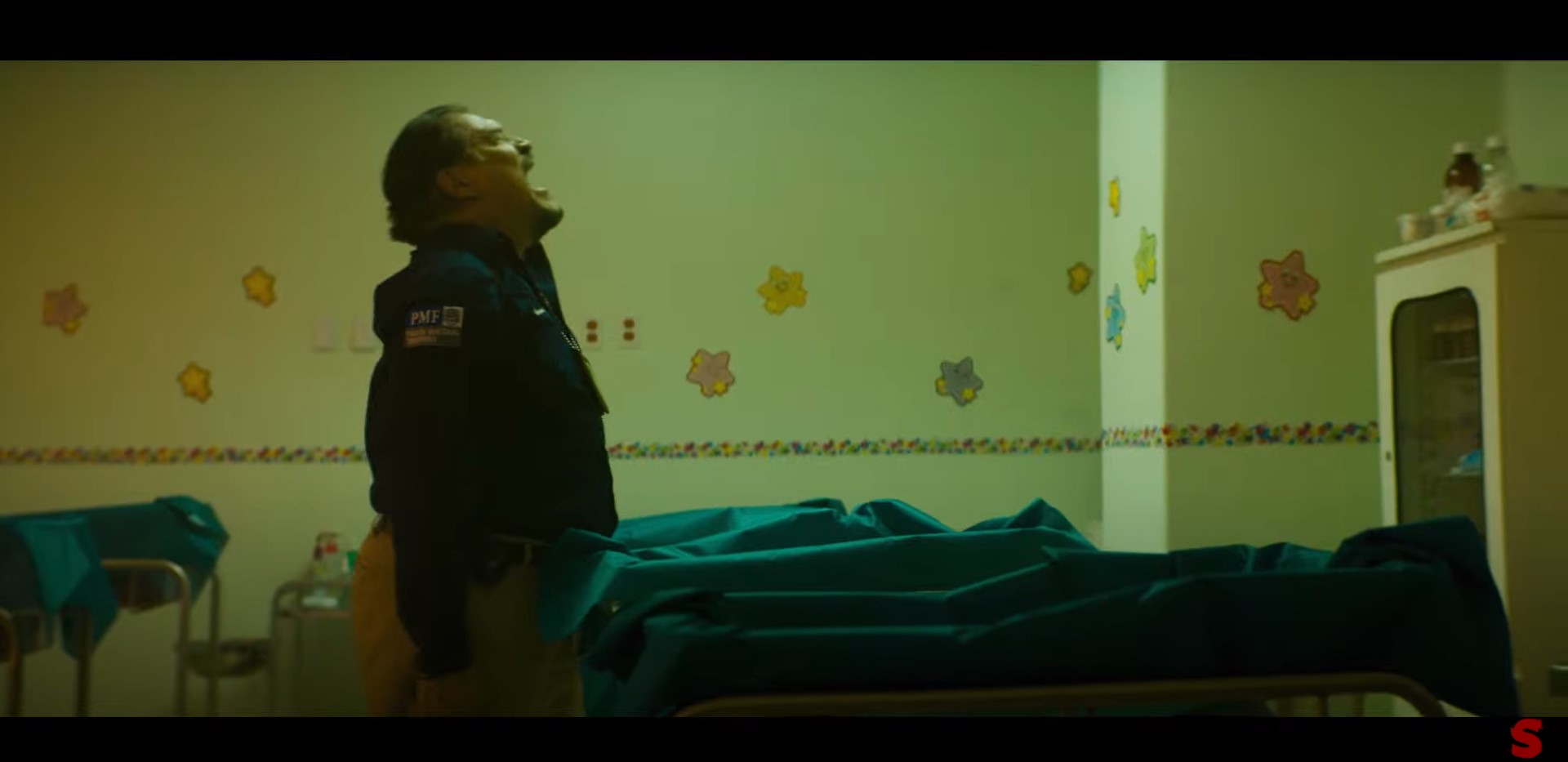
The Shudder original 2017 release, “Belzebuth,” scares up onto an UK Blu-ray release from Acorn Media International. The region 2, PAL encoded, single layer BD25 presents the film in a widescreen, 2.35:1 aspect ratio, with a runtime of 109 minutes.  Ramon Orozco’s cinematography flashes with a gorgeous red and blue color palate that fits the iniquitous tone and adds an ethereal, hazy backlighting to only enhance the tone to more sinister levels.  Acorn’s Blu-ray sharpens Orozco’s already byzantine schemes that enriches the details in the skin as well as a the sacred relic artifact-cladded locations that become claustrophobic and entombing.  Even Juan Martínez Espín visual special effects casts a solid effort of barely a smooth surface computer generated phoniness, especially in one crucifying scene of psychological torment.  You’ll know it when you see it.  “Belzebuth’s” powerful Dolby Surround 7.1 audio track is an assault on the eardrums of the best kind with a husky, industrial melodic soundtrack and hefty sound design with accompanying diverse range and proper depth that could be described as literally placing every creak, stab, and cackling laugh sound right into the darkest corners of your ears.    An unfortunate surprise about the Acorn release is that there are no special features aside from the animated menu that is essentially chaotic “Belzebuth’s” trailer plastered with menu options.  Possession films tend to stale at a dime of dozen, but Emilio Portes’s freshly terrifying “Belzebuth” entertains and scares to the very last morsel.
No Sam Raimi. No Bruce Campbell. Just the EVIL! “Evil Dead Trap” reviewed (Unearthed Films / Blu-ray)


Nami, a Japanese late night show host, is seeing her ratings dipping.  Though not in danger of losing her all-female produced show, Nami decides take her team on an investigation of a mysterious snuff tape that was mailed to her specifically.  Left for her is a bread crumb trail of directions to an abandoned military base, Nami and her crew explore the campus’s rundown structure, searching for evidence, a body, a story that they can televise.  Ignoring the dangerous presence around them, they dig deeper into the dilapidating labyrinth where they horrifying discover something waiting for them laid out in a cruel plan of deadly traps with a maniac pulling at all the strings. 

Bred out of a pedigree of pinkusploitations and a nation’s crisis of identity after the Second Great War, “Evil Dead Trap” is a greatly symbolized Japanese machination tale helmed by pink film director Toshiharu Ikeda (“Sex Hunter,” “Angel Guts:  Red Porno”) and penned by an equally historical pink film screenwriter and “Angel Guts” manga series creator Takashi Ishii (“Girl and the Wooden Horse Torture,” “Angel Guts” series).  Also known under its original Japanese title, “Shiryô no wana,” as well as, and my personal favorite, “Tokyo Snuff,” in Spain, “Evil Dead Trap’s” smorgasbord of rape, torture, and gory death naturally shocked viewers upon release and continues to do so as one of J-Horror’s branched out films that segued out from the brutal and depraved pink film inspired context into the new longstanding ghost genre we’ve seen over the last few decades with “Ringu” (“The Ring”) or “Ju-on” (“The Grudge”).  The production company Joy Pack Films, behind the 1980’s obscure Japan films, such as Genji Nakamura’s “Go For Broke” and Banmel Takahashi’s “Wolf,” houses the “Evil Dead Trap” from executive producer Tadao Masumizu.

If you recognize a couple cast members, or maybe just their naked bodies, then there’s something depraved about you!  With all kidding aside, but no seriously, if Rei (Hitomi Kobayashi) or Kondo (Masahiko Abe) look familiar, then you my friend are pink film aficionados as Kobayashi has starred in “Hard Petting” and “Young Girl Story” and Abe was in these pink film hits the “Pink Curtain” trilogy and “Female College Dorm Vs Nursing School Dormitory.”  If these faces didn’t touch you in any kind of sensual way, no worries, leading lady Miyuki Ono brings the star power.  The “Black Rain’s” Ono plays Nami, a go-getter television host/personality with her sights set on ramping up her late night show’s ratings, but also sucked into the posted snuff film’s darkest allure that’s personally calling her into to a precarious story lead.   Nami could also be a homage to one of screenwriter Takashi Ishii’s manga-inspired pink films entitled “Angel Guts: Nami” and the title might not be the only aspect paid honor to with that particular Nami written with a journalistic vocation drawn into and obsessed with a serial rapist’s attacks, making a striking parallel between the two stories that are nearly a decade apart. Eriko Nakagawa and Aya Katsurgagi fill out Nami’s investigating team as Rei and Mako. As a whole, the characters lack personality; Rei and Kondo tickle with relationship woes that are snuffed out before fruition, Rie’s timid innocence barely peaks through, and Nami and Mako’s thicker bond compared to the rest of the team is squashed to smithereens way before being suckled into note worthy tragedy. This late night show team has been reduced to slasher fodder and, honestly, I’m okay with that as we’re only here for the deadly traps. Noboru Mitani, Shinsuke Shimada, and Yûji Honma, as the mystery man looking for his brother, complete “Evil Dead Traps” casting.

“Evil Dead Trap” boasts a melting pot of inspirations, a mishmash of genres, and spins a nation’s split identity variation crowned in aberration. Diversely colorful neon-hazy lighting complimented by a Goblin-esque synth-rock soundtrack from Tomohiko Kira (“Shadow of the Wraith”), Toshiharu Ikeda shadows early Dario Argento inside and outside the popularity of the Italian giallo genre as the “Evil Dead Trap” murder-mystery horrors resemble more of a westernized slasher with a killer concealed behind a mask stalking a fringed, neglected compound in a conspicuous outfit. While the killer dons no hockey mask or snug in a mechanic’s jumpsuit, an equally domicile, yet more calculated, antagonist taunts more brains than brawns, especially with the severity of traps that seemingly float from out of nowhere. The fun is chiefly in the imagination of how the trap designs operate in the void of physics of a slasher fodder film so wipe clean the Jigsaw and the “Saw” films from your mind completely and relax to enjoy the outlandish kill scenes. Some of the kills are imperialistically inspired by Imperial Japan, that is, to blend the wartime nation’s atrocities with how the proud country wants to distance itself from that old-fashion, war-criminal, stoically perverse superstratum layer, but that’s were “Evil Dead Trap” pulls for most of the juicy parts as well as supplementing with Argento lighting, some, believe it or not, “Evil Dead” elements of that menacing presence bulldozing through the spiritual world, and an divergent climatic finale stuck to the narrative body that’s akin to pulling off the head of a doll and replacing it with T-Rex head’s. The uniformity quells under the pressure of how to end Nami’s and her attacker’s coda with pageantry weirdness that’s typical status quo Japanese cinema. Lots of symbolism, little modest explanation.

Get caught in “Evil Dead Trap” now back in print and on Blu-ray courtesy of Unearthed Films, distributed by MVD Visual, as part of the extreme label’s Unearthed Classics spine #5. The Blu-ray is presented in a matted 1.66:1 aspect ratio, a format rarely used in the States but widely used in other countries. Reverting to the 1.66:1 from Synapse’s 1.85:1 crop, Unearthed Films showcases more of the European feel, heightening that colorful vibrancy of the Argento-like schemes. Image quality has peaked on this transfer with natural grain with the 35mm stock, but details are not granularly sharp in an innate flaw of the time’s equipment and lighting. Shinichi Wakasa’s unobscured practical effects heed to the details and don’t necessary suffer the wrath of miniscule soft picture qualities when you’re impaling someone or birthing a slimy evil twin…you’ll see. Add in Ikeda’s wide range of shooting techniques, you’d think you’re watching Hitchcock or Raimi and the focus really lands there with the differently camera movements and techniques. The Japanese language single channel PCM audio fastens against that robust, vigorous quality to make “Evil Dead Trap’s” diverse range and depth that much more audibly striking, but there’s a good amount of silver lining in there being no damage albeit discernable, but not intrusive static to the audio files, dialogue is unobstructed and prominent, and the stellar synth-rock soundtrack nostalgically takes you back to when you first watched “Suspiria” or “Dawn of the Dead.” English subtitles are available but display with a few second delay which can be cumbersome if trying to keep up. Special features includes three commentaries that include director Toshiharu Ikeda and special effects supervisor Shinichi Wakasa, filmmaker Kurando Mitsutake (“Gun Woman”), and James Mudge of easternKicks. Plus, a Trappings of the Dead: Reflecting on the Japanese Cult Classic retrospect analysis from a Japanese film expert, Storyboards, Behind the scenes stills, promotional artwork, trailers, and a cardboard slipcover with phenomenal artwork. Highly recommend this atypical Japanese slasher, “Evil Dead Trap,” now on Blu-ray home video!

Own “Evil Dead Trap” on Blu-ray!

The EVILs of Slasherman! “Random Acts of Violence” reviewed! (Acorn Media / Blu-ray)

Comic book writer Todd has hit a writer’s block wall on the last issue of his one-shot, popular and extremely graphic series Slasherman based off the gruesome string of I-90 murders of the late 1980s where the killer murdered and mutilated his victims without ever being caught.  Looking for inspiration to conclude his life’s work, Todd, his girlfriend, investing publisher, and assistant head out on a road trip from Toronto to America, specially through the small town of McBain where the murders took place, but when recent mutilated bodies resemble the grisly deaths inside the colorful pages of his comics, the semi-fictional Slasherman story becomes full blown reality that places him and his friends in a maniacal killer’s path whose flipping through the pages of Todd’s murder-glorifying comic for inspiration of his own. 

Like many opinionated reviews before mine, I never imagined Jay Baruchel directing a horror movie.  The long time comedic actor with solid relationships working with other high profile comedians, such as Seth Rogen, Jonah Hill, and Danny McBride in some of the best notable comedies on the side of the century, has stepped into the shadows and professing his admiration for the genre we all love – horror. Baruchel cowrites and directs his first horror film, the big screen adaptation of Justin Gray and Jimmy Palmiotti’s “Random Acts of Violence” graphic novel. Fellow collaborator on the “Goon” movies, Jesse Chabot, branches out with Baruchel on the script and the two Canadian filmmakers yield an intense meta-gore picture focusing toward themes of lopsided public perspective and the glorifying of violence on other less physical mediums. Published in 2010 under Image Comics, the Gray and Palmiotti publication supplied a wealth of visceral material that unfolded faithfully in Baruchel’s Shudder distributed film as a stylish comicbook-esque narrative under the Toronto based Elevation Pictures, Wicked Big, and Manis Film production in association with Kickstart Comics and JoBro Productions. Palmiotti and Gray also serve as executive producers.


Struggling in the search for his perfect ending to Slasherman, Todd immerses himself in a cerebral fixation that envelops him more so then he would like to think.  Todd’s played by social activist and “Cabin in the Woods” actor Jesse Williams whose character is thrust into essentially making a choice, entertain his profession that earns blood money off the backbones of the I-90’s victims or subside his eagerness to finish his graphic novel and be team victim alongside his girlfriend Kathy (“The Faculty” and 2006’s “The Texas Chainsaw Massacre: The Beginning’s” Jordana Brewster) researching a novel that gives the slain victims a voice over their killer.  Brewster hasn’t changed one bit in a role that resembles a mature version of her “The Faculty” Delilah Profitt character complete with glasses and a thirst for reporting.  As a couple, Williams and Brewster hit little on their unconditional love  that’s apparent in the film’s final scenes.  Aside from their opening segment in their Toronto flat, their road trip is filled with Kathy berates Todd at times or Todd never seeming interested in Kathy or her work that’s seen counteractive to his own.  Affection is thin between them and I’m wondering if that’s more of the script writing than a flaw on Williams and Brewster who are credibility solid in their roles.  Same can be said about Jay Baruchel’s Ezra, the indie publisher sponsoring Slasherman, as the writer-director plays little to a publisher’s position of pushing the sales and marketing envolope and appears more to just be a tagalong friend with moments of quietly hawking.  Without much competition surrounding him, Slasherman is the most interesting character of the bunch from prolific stuntman, Simon Northwood.  With a 1000 yard stare that’s more menacing inducing than stemmed by trauma, Northwood brings the graphic novel character to all his glory as an aspiring artist in a contemporary parallelism to Todd who both see one another as their muse.  Northwood’s Slasherman is silently frightening, even more scary when he has to psych himself up to kill, and brings the physical stature of an unstoppable slasher genre maniac.  No one is safe from the merciless Slasherman, including those rounding out the cast in Niamh Wilson (“Saw III”), Clark Backo, Eric Osborne (“Pyewacket”), Nia Roam (“Polar”), Aviva Mongillo, and Isaiah Rockcliffe.   

The hyper violence lands more with a firm hand making good on film title.  Baruchel doesn’t hold much, if anything, back when rectifying violence as the monolithic theme while hitting a few thought-provoking notes involving the public’s perspective on the infamous legacy of serial killers and the tragic, forgotten memory toward their victims.  Somewhere in the gutting-clutter is a message of meta-existentialism tearing between that thin line of a person’s cause and effect actions.  Without the I-90 killer, Todd would not been stimulated into creating the deeply grim anti-heroic antics of Slasherman and, visa-versa, Slasherman would not have returned, coming out from retirement, if it wasn’t for Todd’s life’s work and lack of series conclusion for the Slasherman character speaking to Slasherman’s sanguinary artistic side.  One aspect stiffly hard to place your finger on is Todd’s connection with the town of McBain.  Other than a brief voice over exchange with Ezra, who mentions Mcbain is Todd’s hometown area, not much more of that pivotal connective tissue seizes grounding Todd, but the graphic novelist experiences a multitude of images streaming through his far off gazes, thoughts, and dreams. A boy, the boy’s mother who we know to be one of Slasherman’s victims because of Kathy’s research book, and the collateral damage of some great magnitude of violence surrounding them carry little weight to Todd’s psyche when struggling to piece his visions and these people’s bloodshed moment together and one reasonable theory that might explain that disconnect on our part is partially racially motivated, a detail indicative of gross assumption but a detail that can easily deceive you if you’re not knowledgeable enough about the cast you’re watching. My two cents is not randomized at all on Jay Baruchel’s “Random Acts of Violence” as it’s a brazenly deep and vicious first attempt horror in his own manic words from the glossy, leafy pages of the same titular graphic novel to the tellies of terror now on home media release.

Classified 18 for strong bloody violence and gore, “Random Acts of Violence” hits Blu-ray media shelves courtesy of Acorn Media International. The region 2, PAL encoded single disc BD25 has a runtime of 81 minutes and is presented in a slightly cropped widescreen 2.38:1 aspect ratio. A diverse hue palette of neon extricates Baruchel’s off-brand, real-time comic layout, creating a gritty, yet vibrant world all his own in a near window-blinds noir fashion. The tinkering of tints reaches almost Italian giallo levels without playing much with lighting and fog, relying heavily on the different neon vibrancy as if a colorist was right there pigmenting each scene as it played out. The English language Dolby Digital 5.1 surround sound discerns very well across the board with robust dialogue that even with Williams’ slight lisp, every single word can be hung on. I didn’t think there was a ton of opportunity for depth and range as much of the action is in staged front side of the camera, but for what little there was, those areas saw solid, identifiable outputs. Bonus features include a zoom interview with a very animated Jay Baruchel providing the in depth inner works of the conception of his film while sporting a retro Montreal Expos ballcap, a showreel-esque promo entitled More Than Just A Scary Movie offers brief opinions, thoughts, and highlights on the film edited from longer, on-set interviews, and a look inside how to make an action scene. An on-your-toes, gut-wrenching slasher with a juicy slice of meta proves Jay Baruchel can wander into any genre and come out on top, but “Random Acts of Violence” has kinks to straighten out in this young director’s sophomore feature.

Mar and Scar is EVIL’s Sullied Handiwork and is Also Its Undoing! “Hanger” reviewed (Blu-ray / Unearthed Films)

Pimp Leroy likes money.  He likes money so much he stop anything and anyone from coming in between him and cold hard cash.  When Rose, his star prostitute, becomes knocked up and she carries the baby into the later terms, Leroy sees that baby as just another obstacle keeping him from dollar signs and performs a back alley abortion on Rose that results in her death and the newborn mauled by the close hanger used to pull him out.   Fast forward 18 years later, the disfigured boy Hanger, named after tool used to extract him from the womb, falls under the wing of his supposed father, one of Rose’s more admirer, only known as The John, and together they seek revenge for Rose.  In the meantime, Hanger is secured a job at the local recycling center where he is befriend by fellow outcast Russell and as The John ignites war against Leroy that spills into every prostituted infested corner of the streets and into the recycler center.

First off…Man, do I miss Ryan Nicholson.  Secondly, “Hanger” is one of the most depraved films I’ve seen in a long time.  Probably the most depraved amongst the credits of the “Gutterballs” and “Collar” writer-director who has left his mark on the sometimes bland indie horror scene with the craziest content that has become the epitomizing taste of Unearthed Films.  Nicholson cowrote the vulgar comedy-exploitation with Patrick Coble in their second feature story collaboration following their 2004 work on the Nicholson brutal rape-and-revenge directed tale “Torched.”  Rape and revenge, plus a whole lot of sleazy, scuzzy, and sordidness, doesn’t buck the Canadian filmmaker into doing something more political correct as the auteur is too well versed into capturing the base layer muck under his Plotdigger Films production banner in Vancouver, British Columbia  “Hanger” is financially produced by Nicholson and Coble and along with Wolfgang Hinz, Stephanie Jennings, and Michelle Grady.

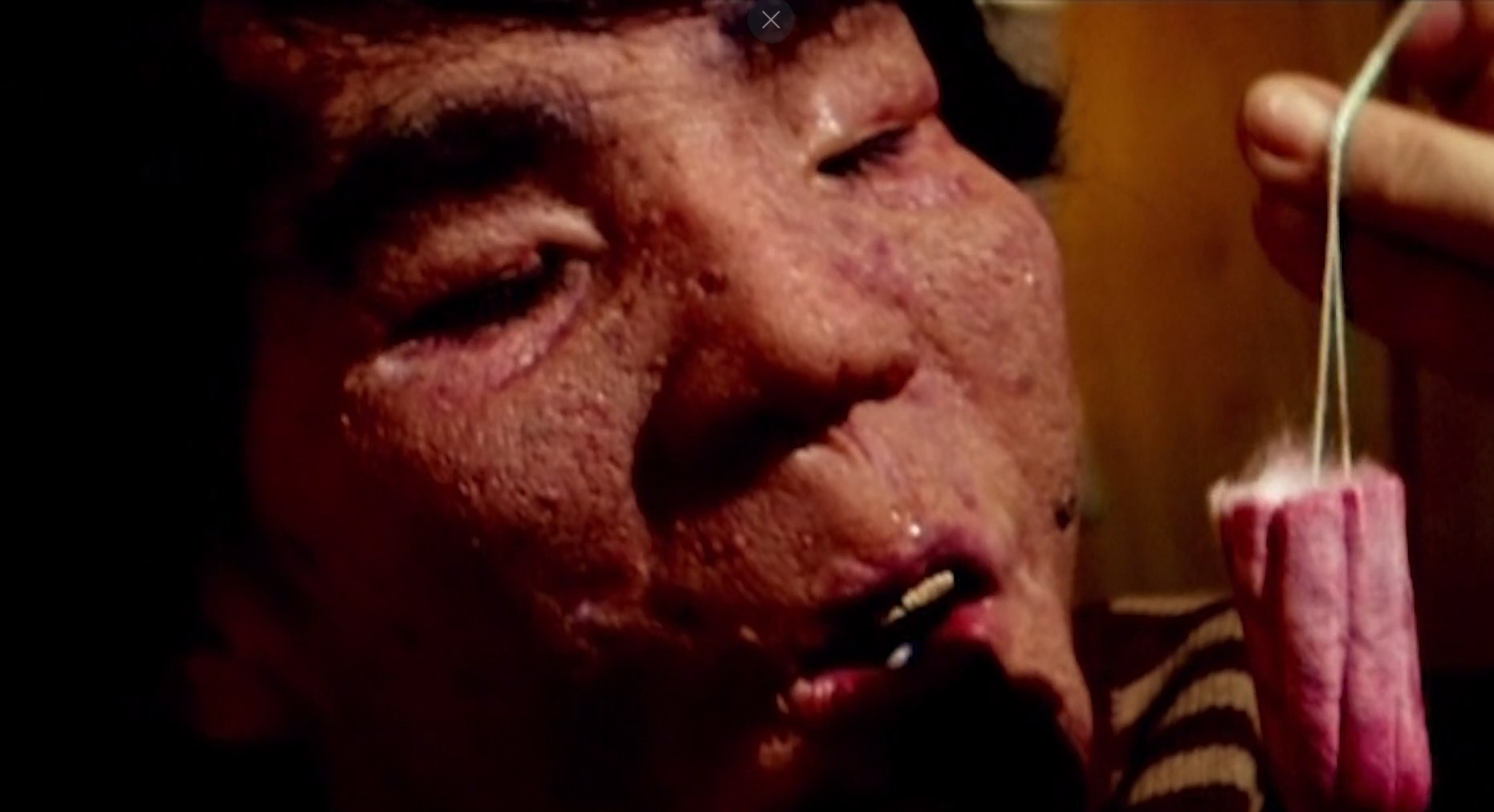
Needing no stamp of approval, “Hanger” would not have been as unpleasantly intoxicating if it wasn’t for the cast.  Each and every character beneath “Dick Tracy”-like prosthetics come to life with their own identifiable quirks and putrid personalities with perhaps the headliner in the tamest role being played by genre icon and scream queen Debbie Rochon (“Tromeo and Juliet,” “Model Hunger”).  Troma’s most famous gal isn’t the only Troma-head to be in Nicholson’s film with a guest appearance by Troma co-founder Lloyd Kaufman as Melvina the Tranny who has her willy kissed the stove-top burner.  I know what you’re thinking – Rochon and Kaufman is in anything is a must-see film!  I couldn’t agree more, but “Hanger” really lives and breathes on the more prosthetic-heavy performances of Nathan Dashwood, Wade Gibb, Dan Ellis, and, especially, Alastair Gamble as Phil.  Also known as Philthy, Phil is also a recycler on the look out for unemptied beer bottles for any kind of alcohol fix he can get his filthy hands on and Gamble really develops the ins-and-outs of the character’s mannerism and style and the “Gutterballs” actor does the role so well that Phil will forever be imprinted into your cerebral character catalogue for the rest of time.  I also couldn’t get enough of Wade Gibb’s Russell who gives the ethnic Chinese man a high-pitched voice and an insatiable hankering for porn and bad jokes.  Russel also has a penchant for trashed picked used tampons the administrative secretary at his job bins when she’s cycling through and after her late night self-pleasures, Russell can’t help but to blather on and on about her to his new friend Hanger, play with domicile explosiveness like TNT by “They Came From the Attic’s” Nathan Dashwood.  Candice Le (who is an uncanny Laura Prepon lookalike), Nadia Grey, Stephanie Walker, Rochelle Lynn-Jones, Susan Arum, Michelle Grady, and Dan Ellis who stars as Rose’s revenger-advocate, The John.

Ryan Nicholson passed away come two years ago come October due to brain cancer. From that condemned mind came some of the most vividly depraved characters, gratuitous gravities, and sweet, lip-smacking gore that just rolls into the place. “Hanger” is no exception; in fact, “Hanger” is probably Nicholson’s magnum opus considering all of the aforementioned descriptors. Obviously, pleasantries is not in Nicholson’s vocabulary with a storyboard progression rock hard on revenge, sex, and a recycling center full of a variety of perversions. Nicholson had a knack for obtaining real locations without having to build sets, one of his more cost-efficiency attributes to appreciate, and the recycling center where Russel, Hanger, and Phil worked was an actual true business, but the way Nicholson shoots the scenes, and with the other exteriors, is masterful in only allowing the audience to see what he wants you to see. Background details are tenebrously obscured as he highlights the basic necessities to convey what to focus on in relation to the characters. These characters are terribly invasive to the point where you can almost smell how they look and the need for a shower after some of their atrocities is well justified as this fetish theme of unsolicited bodily insertions goes over and beyond the borders of comfort. I still can’t get Alastair Gamble’s Phil out of my head. Rubber dicks, fart jokes, racist obscenities, trannies, voyeurism, masturbations, mutilation -“Hanger” has a lot of sin to be unapologetic for as it reeks lowlife war to the max. If desiring a little extra something-something, the Unearthed Films release comes complete with a second version of the film, XXX-rated cut, that’s not available on previous North American releases, such as with Vicious Circle unrated release. Where “Hanger” stumbles is with the narrative that divides like a cell into two rather different narratives after the initial coat hanger botched abortion. Though The John talks a good game and amps Hanger up for vengeance, the ex-military prostitute connoisseur goes for Leroy alone while Hanger and Russell burgeon their unusual friendship with trash-picking tampon diving and just hanging out. With the narrative more so focused on the latter, don’t expect “Hanger” to be round-the-clock carnage from start to finish.

Continuing their distribution of all Nicholson’s Plotdigger Films, Inc. catalogue, Unearthed Films 2-disc collector’s edition Blu-ray of “Hanger” is a must own and a must see for any fans of Unearthed Films’ gory longstanding pedigree and of Ryan Nicholson.  A warning about ghosting and compression artefacts precedes the film that is presented in a widescreen 16:9 aspect ratio, informing views of the unstable picture quality due to the nature of the recording equipment, but for the most part, the worst ghosting and compression issues are in the first scenes of the motel with Debbie Rochon and Lloyd Kaufman.  The controlled contrasting, comprised of limited lighting, a reduction in color, and perfect shadow placement, adds another flavor to “Hanger’s” squalid and vulgar character exteriors by accenting scenes with a post-apocalypse or slum living discomfort.  Details can get a very graphic, explicit, and fleshy as prosthetic organs ride that ambiguous seesaw and the prosthetics overall are extremely unique and memorable under the creative eye of Life to Death FX artist Michelle Grady.  The English language Dolby Digital 5.1 sound mix has ample fidelity despite the self-manipulation of voices and appropriations of cultural accents.  Dialogue is clean and prominently lucid.  Personally, the soundtrack is not particularly my favorite of a compilation of heavy rock and hardcore bands, such as Bison, Nomeansno, Spread Eagle, and Grass City and The Invasives, but do fit right into Nicholson’s scheme and personality.  The 2-disc set comes jampacked with over 16-hours of extras including a commentary with director Ryan Nicholson, Behind the Stoma:  The Making and Taking of Hanger with cast and crew interviews, a video diary-esque of Lloyd Kaufman’s single-day shoot entitled Enough Dope to Hang Yourself With:  On the Set with Lloyd Kaufman, a blooper reel, deleted and additional scenes, photo galley, Debbie “Rose” Rochon’s simulated sex tape “Black on White Bred” with pimp Ronald Patrick “Leroy” Thompson, the Colostomy Bag Edition aka the XXX-rated version of the film, trailer, and a second disc that’s nothing but outtakes.  The scene in the Colostomy Bag Edition, I believe, is just a minor penetrating cut-in scene more than likely not related to any of the actresses in the cast.  The Unearthed Films release is not rated and clocks in at 90 minutes (regular edition) and 91 minutes (Colostomy Bag Edition). The characters alone are worth “Hanger’s” price of admission but Unearthed Films delivers a sweet, comprehensive 2-disc collector’s set for this gore-soaked and grotesque little film.

A Must Own 2-Disc Collector’s Edition of Ryan Nicholson’s “Hanger” Available at Amazon

The Devil’s Tongue is a Powerful, Influencing EVIL. “The Dark and The Wicked” reviewed! (Acorn Media / Blu-ray)


Siblings Louise and Michael Straker return home to their farmland house when their terminally ill father becomes bedridden.  A long time alone and isolated before her children arrived, Virginia provided suitable care for their father up until the voices started.  Lurking in between the shadows around the rural home, a menacing presence wedges itself into an already splintered family spirit as the harbinger of death coming for their father’s soul.  The influence of voices and grim visions tatter Louise and Michael resolve, testing their unconditional love for family and moral obligations, but evil can be very persuasive the closer their father comes to his end. 

The battle grounds of losing oneself during the verge of loss has commonly been a recurrent topic amongst indie films.  For filmmaker Bryan Bertino, the concept feels deeply personal.  “The Strangers” and “Monster” writer-director’s latest discomforting horror film, “The Dark and the Wicked,” uses Devil speak in mass, detrimental volumes as an allegoric device for the internal deconstruction of family, capitalizing for his tale the use of his family’s rural Texas farm house written as a threatening locale of isolation and the tenebrous unknown.  “The Dark and the Wicked’s” paganistic undertones heavily perceive a dissipating family structure’s disconnect from not only God but from the community who has been all but absent from coming to the fictional Straker family aid.  The 2020 released film is produced by Bertino’s production company, Unbroken Pictures, alongside Shotgun Shack Pictures (“Hurt”), Traveling Picture Show Company (“The Blackcoat’s Daughter’), and in association with Inwood Road Films.

To play characters accustomed to the rural lands of the Texas outskirts, “The Dark and the Wicked” required a range submerged with leisurely movements, a Lonestar draw, and to, of course, look good in plaid and Wrangler jeans.  The cast that emerged was nothing short of spectacularly precise in fabricating the lives of remote lives rural Texans, opening with a Texas-born Julie Oliver-Touchstone (“Bounded by Evil”) sewing dresses in the barn, tending the farm’s goats, and chopping produced in her white nightgown as who will be the catalytic mother, Virginia Straker, that passes not only the 24-hour hospice care to her children but also all the beneath the light misery that drives her terrified.  The girth of the story revolves around, Louise, “The Umbrella Academy’s” Marin Ireland, and Michael, Michael Abbot Jr. from the upcoming “Hell House,” as sister and brother who return back home upon the news of their bedridden father (Michael Zagst).  At this point in the story, where we meet Louise and Michael for the first time, a shrouded background puts a delectable side dish of mystery into making them initially interesting, but over the course of the 96 minute runtime, the enigma dissolves around why Louise no longer works from the Postal Service and what’s stringently being shied away from the thick layered division between the siblings from being close to one another.  The impending standoffish goes unspoken, never comes to a head between them as like the unfolding of “The Strangers” where Liv Tyler and Scott Speedman unravel and expose their marital struggles with the invisible wall between them before, and even in the midst of, being terrorized.  There’s something there that isn’t being part of the exposition or coming back around when the Devil comes really calling for their father’s doomed soul.  Instead, Ireland and Abbot simply assimilate well enough into their falling into farm life dynamics as the sister who must shoulder the responsibility of hospice care and the brother overseeing what could be considered man’s work of handling the duties of raising livestock.   We also get some messed up supporting second fiddlers to execute Satan’s handywork with performances Lynn Andrews, Tom Nowicki (“Conjurer”), Mindy Raymond (“Bigfoot Wars”), and “The Walking Dead’s” Xander Berkeley channeling his best Julian Beck’s Kane performance as a sinister Priest making a house call.

Bryan Bertino has a stillness about his films. Their creepily quiet, stirred in a somber stew of macabre, and utterly deranged in a nihilist coating. What appeals to me about “The Dark and the Wicked,” as well as “The Strangers,” is Bertino’s gift to deliver powerful fatalist realism. His stories couple earthly family drama with otherworldly malevolence stemmed from the deeper affects of prolonged relationship breakdowns that literally assigns a demonizing blame on the supernatural for people’s own crumbling failings. Another aspect is the godless presence wholeheartedly felt throughout from the Straker’s loud and proud proclamation of atheism to the lack of religious artifacts. Michael nearly tosses the priest out of his keester just for making checking and noting his mother’s recent unbeknownst connection to God to which Michael took great offense. This leads into the Straker’s lack of community connection as they seemingly are adverse or are agonized by those who wish to help and those who rather seem them burn under the guise of the malice presence. Goats are thematically prevalent to the story, especially when the shadowy Wicked hides amongst the herd, like a wolf in sheep’s clothing. Goats are often associated with Pagan beliefs, such as with the deity Baphomet, and the evils marked upon them by cultures all around the world and by having the Straker farm be a goat farm is more than just coincidence. “The Dark and the Wicked” brings chaos and confusion much like any circumstances where one or both parents die and all the burdens, all the consequences, and all the pure emotional baggage that comes with death is passed to the children whether the Devil is involved or not. When broken down rudimentary that decline of hope and overwhelming grief can cause a great amount of destruction for any family and even extend to friends with suicide being heavily portrayed in the film. Bertino masterfully touches upon every collateral damage output leaving no one spared from death’s, the Devil’s, hopeless hold on them.

Filled with frightening imagery, plenty of toe-curling suspense, and a loud silence of utter despondency, “The Dark and the Wicked” is a must own for any horror fan and, luckily for you, Acorn Media International just released the Bryan Bertino film on Blu-ray in the UK in alliance with horror’s favorite streaming service, Shudder. Listed as region 2, but more accurately a region B in Blu-ray format, the PAL encoded release is presented in a widescreen 2.39:1 aspect ratio. If there was one word to describe the comprehensive picture that word would be dark. Bertino maintains an eclipsing cinematography through hard lighting, matted lifeless colors, and a reduction tint to give it that extra gloomy blackness. Cinematographer Tristan Nyby’s first collaboration with Bertino is also the first debut into the genre field and Nyby comes out on top with an ability to show just enough, whether through shallow focus or obscured wide shots to always keep the depth and range of the unknown factor alive and frightening. In regards to the Blu-ray quality, “The Dark and the Wicked” has little to offer in details not because of the lack there of but because much of the film is shot in the dark, a fine midnight black with little-to-no wish or noise, and dim lighting . Facial details do appear slightly soft as you can’t make out the blemishes or even skin pores, but the intentional flat coloring steers much of that away from the senses. The English language DTS-HD Master Audio 5.1 surround sound is a boost of jumpscare ambient effects. The range and depth finely pitch the position of well-timed scares, especially when the strung together bottles, glasses, and cans rattle in a discordance. Dialogue has lossy muster that makes discerning characters’, especially Michael or his mother, Virginia’s, Southern draw. English subtitles are optional. Special features include only a Fantasia Q&A with actors Merin Ireland and Michael Abbott Jr that dive into their characters quite a bit and into Bertino’s morose mindset. Bleak and genuinely personal on a whole other level, “The Dark and the Wicked” is quintessential truth when talking about the Bryan Bertino Americana horror film and, believe you me, expect more devilish descriptors that’ll shock you.