EVIL is Only in Your Nightmares. Or is it? “Retribution” reviewed! (Severin / Blu-ray)

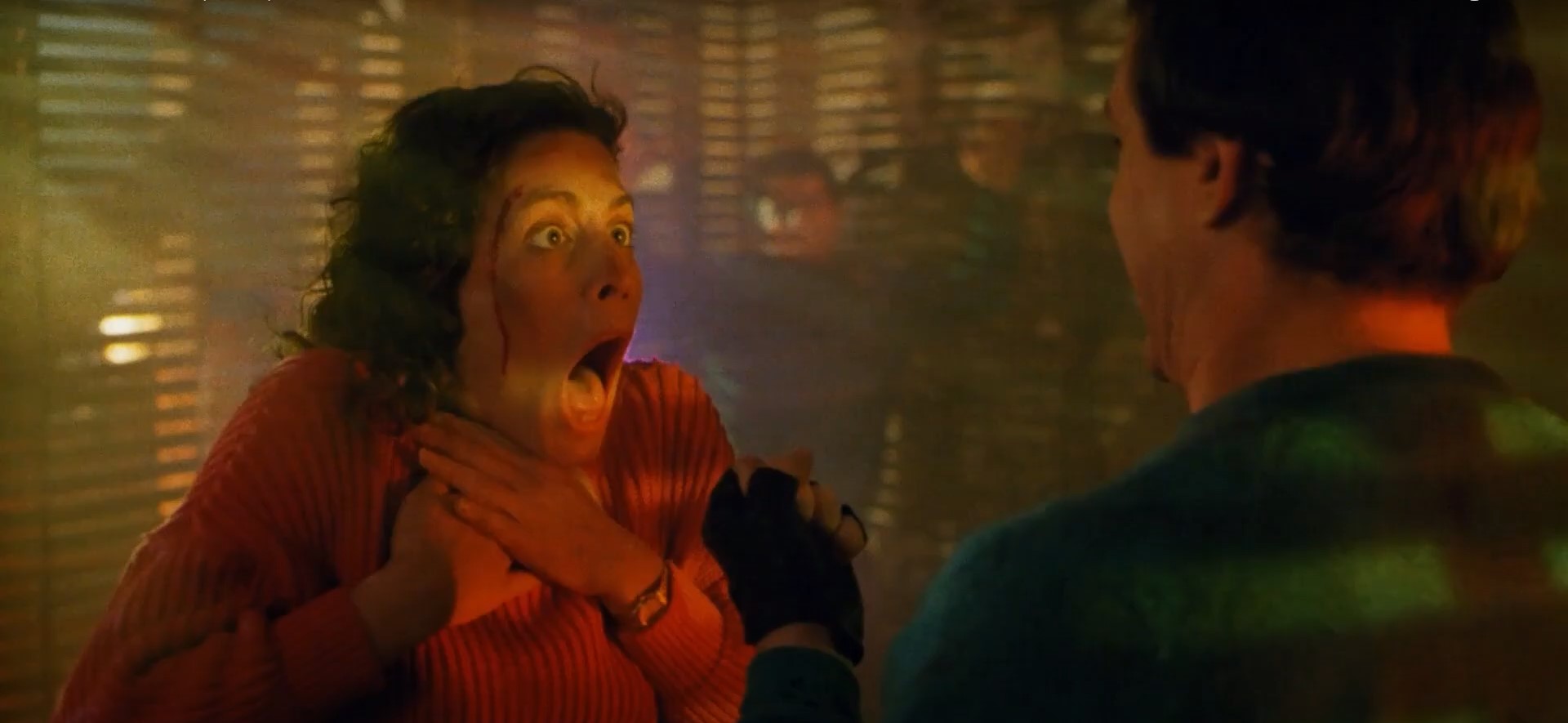
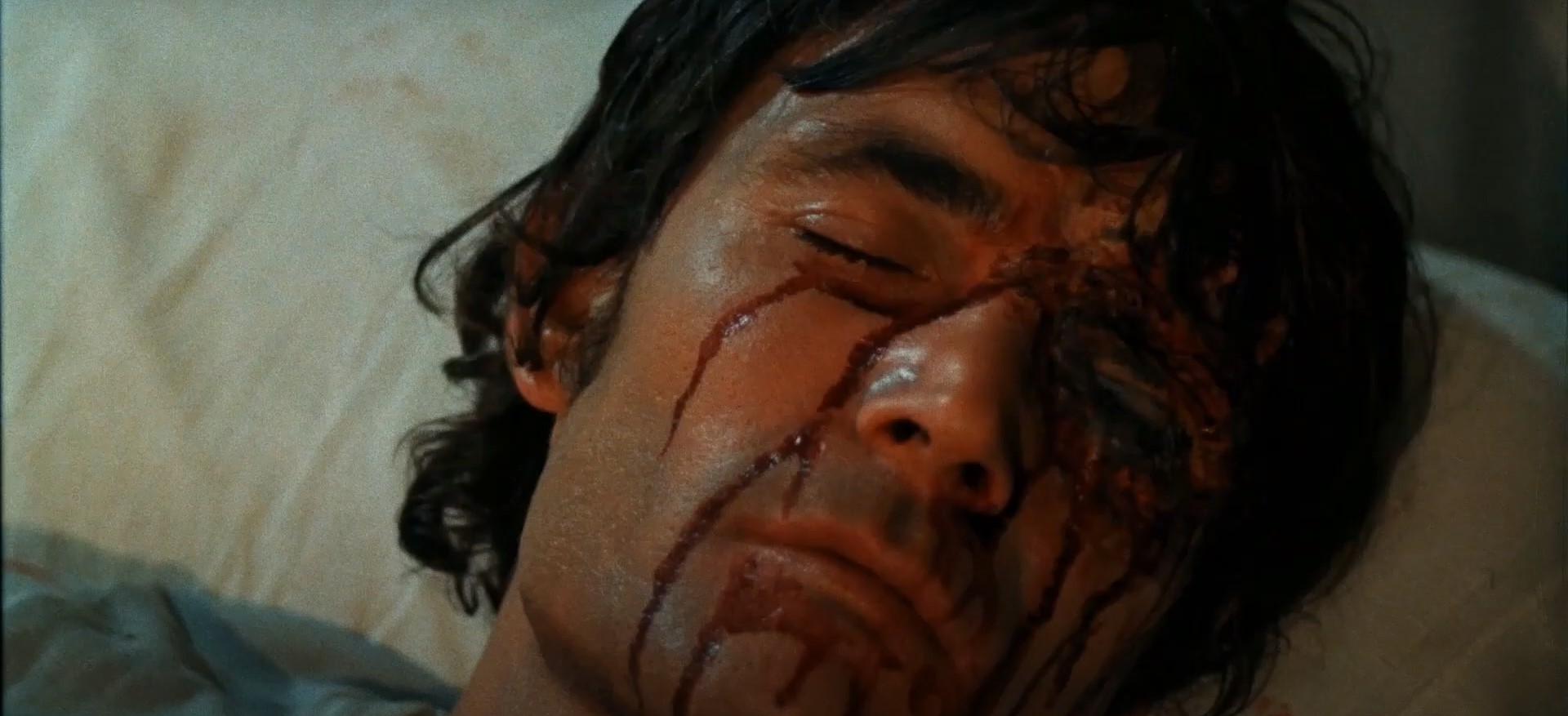
Severely depressed artist George Miller attempts suicide by jumping off from his apartment building.  During the exact same time, a low-end gangster is brutally killed by cruel loan sharks.  Being both born on Aril 1st and dying at the same time, the tortured spirit of the gangster possesses the meek artist’s body right before being resuscitated by EMTs.  After a long recovery filled with horrific nightmares, the affable artist returns to his apartment building where he’s welcomed by fellow tenants and an overly warm landlord.  Still plagued by nightmares that have seeped into his awake conscious state, George medicates himself to sleep but the nightmares continue as he sees himself using psychokinetic powers to kill random individuals with extreme malice.  The nightmares are so real he wakes up in a sweaty panic to find out that that exact person was killed the night before the very way it played in his dreams.  When George realizes the gangster has inhabited his body for revenge, he and his friends take measures to put an end to the vindictive carnage. 

Santa Maria.  Mother of God.  Help me!!!  That phrase, attached to the very last seconds before a gruesome death and announced blankly from fiery, dagger eyes, has forever been seared into the recessed corners of my eardrums as the death cry that echoes throughout Guy Magar’s 1987 gory and visceral possession identity crisis, “Retribution.”  Magar’s ultra-violent and super-chromatic film is the filmmaker’s grand inaugural entrance as a full-length director following up behind a string of director chaired television episodes, including episodes from “The A-Team,” “Blue Thunder,” and “The Powers of Matthew Star” that regularly contained quickly charged, action packed sequences.  The Egyptian-born director translates those intense moments of frenzied disturbance into his mean-spirited and unforgiving vindicator of a script cowritten with then first time screenwriter, Lee Wasserman.  Shot in Los Angeles, “Retribution” is a virtual tour of the city, using the streets of L.A. and real locations, such as the Don Hotel for George’s residence and the nearby House of Neon Art, as a lively, eclectic, and wallet-saving convenient giftwrap for the film’s Dr. Jekyll and Mr. Hyde complexion that feels totally normal compared to L.A.’s divergent glamour.  Magar and Wasserman produce the film with Renegade and Unicorn Motion Pictures serving as the production companies and presented by Taurus Entertainment, formerly connected with United Artists. 

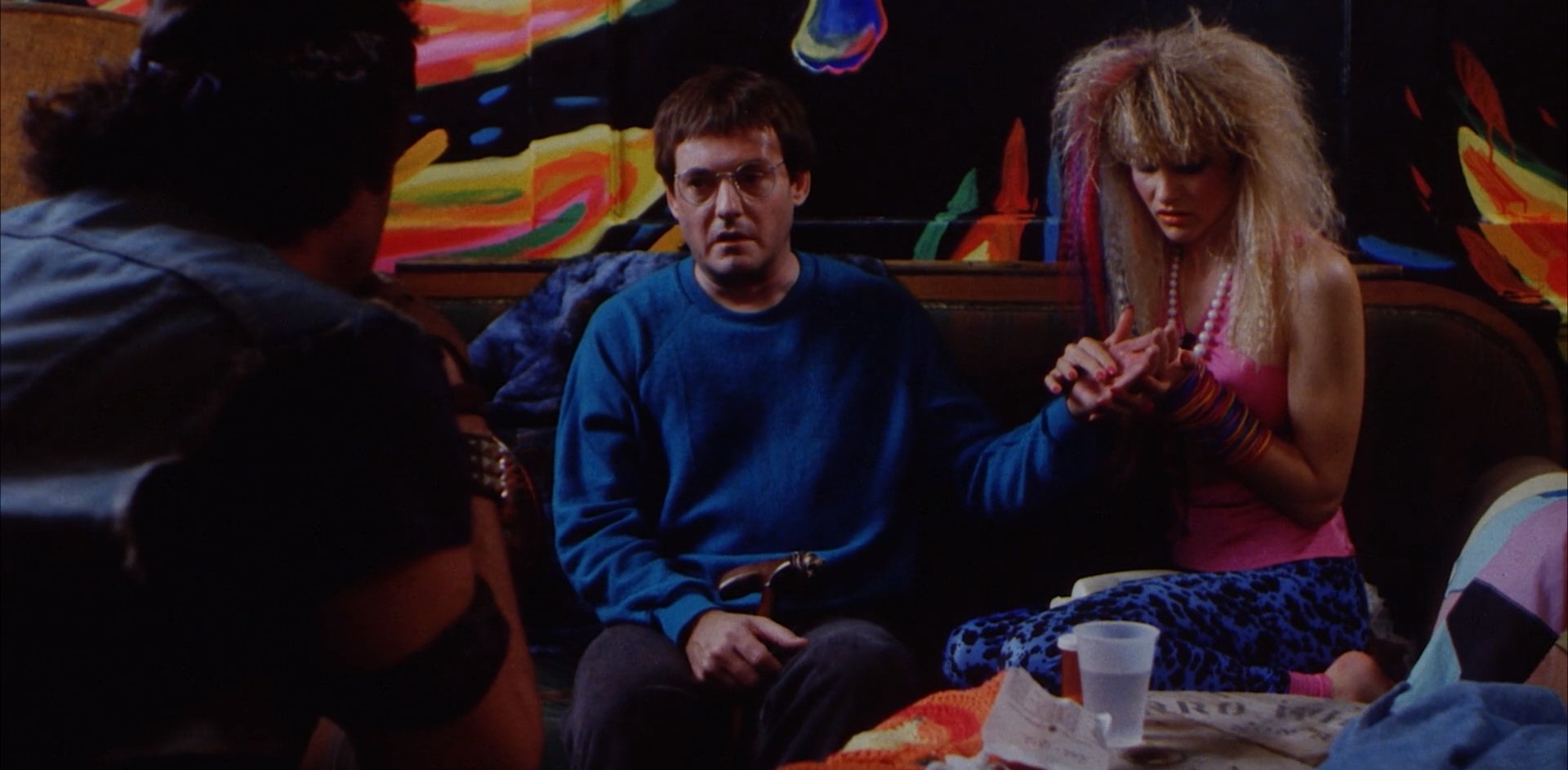
There are probably many actors that could been imagined for the role of George Miller, the suicidal artist plagued with visions of him committing murder, but it’s hard to imagine that venomous stare of complete satisfaction in madness spread across the face of anyone else other than Dennis Lipscomb.  No disrespect to the “Eyes of Fire” and “Wargames” actor but Lipscomb isn’t a chiseled-jawed and muscular leading man; in fact, Lipscomb is quite the opposite, but his range into mild-manner, all around nice guy George Miller into the lust for hatred and murderous revenge George Miller hangs on with complete chasmic permanence.  However, George’s love interest with the street working prostitute and fellow Don Hotel resident, Angel (Suzanne Snyder, “Return of the Living Dead II,” “Killer Klowns from Outer Space”), hardly ever seems natural in not only in the characters’ surreal age-yawning dalliance but also the chemistry looks and feels flat between Lipscomb and Snyder.  Magar and Wesserman neglect diving more into that bond between them but their enamored gleamy eyes for one another is apparent and strong without the context to back it up.  “The Dungeonmaster’s” Leslie Wing also is placed as a George Miller sympathetic advocate in her role as hospital psychologist Dr. Jennifer Curtis, but Dr. Curtis has more background to contend with in comparison to the suddenly conjured fondness from Angel as Curtis is a mental health professional caring for a suicidal patient from at his rock bottom worst to a complete positive turnaround in his mental transformation.  Curtis has more skin in the game with George’s supposed delusions of actually killing people in his nightmares as she defends not only George’s unique supernatural circumstances, but, in a way, herself as a licensed medical profession following HIPAA laws.  “Retribution” holds many dear and unforgettable characters that essentially captures the entire 1980’s spectrum of personalities and, even for a brief scene, the cast gives each role their all, including performances from Susan Peretz (“Dog Day Afternoon”), Clare Peck (“Teen Wolf”), Chris Caputo (“Ghost Warrior”), Danny Daniels (“Voodoo Blood Bath”), Ralph Manza (“Godzilla”), George Murdock (“The Sword and the Sorcerer”), Mike Muscat (“Hunter’s Blood”), and Hoyt Axton who doesn’t stray too far from his good intentions, but naïve, father role in “Gremlins” to being a detective tracking down suspect George Miller. 

I’m in total awe of Guy Magar’s “Retribution.” That opening scene of the suicide attempt with Alan Howarth’s building tension score drops not a single piece of dialogue yet opens with a gripping life and death situation, musically synced to progress toward a harrowing climax, and every frame is dripping with vintage 80’s appeal. Magar definitely knew what strings to pull to get the blood pumping, to get you excited, and to drop an excellent mystery right in the lap, or the middle of the street in this case with George Miller’s body after it flops off the car it just smashed onto. From that point on, “Retribution” peddles forward following the recovery, recouping, and ruination of George Miller’s life at the unseen hands of an exploiting, malevolent spirit that seeks to track down the top-tiered gangsters that shot and burned him alive and exact his own brand of harsh psychokinetic justice. Does it matter how George and this gangster, both born on the same day and both nearly died at the same time, came to fuse transcendently together? Don’t worry. Magar didn’t think it was important either and he’s right! “Retribution” snags all the attention for the sole purpose of the ride and that ride being a beautiful, color-coded daymare. The one aspect that ultimately retracts the buzzing high, stemmed from most 80’s films, is the sluggish love interest subplot between George and Angel stutter stepping into an awkward phase of interactions that hard stops much of core plot and though the plot is neurotically nonsensical to begin with, George and Angel’s desires for each other are about as cringeworthy as they come. Stick with the gore by honing in on Miller’s subconscious alter ego of a gangster serving his killers their just desserts via Kevin Yagher (“Nightmare on Elm Street 2: Freddy’s Revenge”) and his highly effective special effects on a low end budget that, along with a brilliant showing of cinematography by Gary Thieltges, tips into the categorical likes of “The Evil Dead” or “The Exorcist.”

“Retribution” delivers a fervency unlike ever seen in one of the utmost, must-see, shamefully overlooked horrors films of the 80’s.  Now, with a deserved boost and in style, “Retribution” gets the royal restoration treatment with a jammed-packed and sleek 3-disc Blu-ray set from Severin Films and distributed by MVD Visual.  Disc one’s theatrical cut, clocking in at 107 minutes, comes from the recently discovered 35mm pre-print elements, shot on an Arriflex 35 BL3 per IMDB, and has been digitally scanned in 2K, presenting the region free film in 1080p Full High Definition inside the original widescreen 1:85:1 aspect ratio.  “Retribution’s” image pleasingly pops with fine delineating attention to the details that reach out to the point where they’re nearly tactile textures.  Every single setup of Robb Wilson King’s production designs are rich to begin with but are even figuratively injected with a smoother compression growth enhancing hormone, adding more layers of surface level details that personify and personalize the space.  Magar’s chromatically fluorescent vision is a literal tilt-a-whirl palette blast of phantasmagoria.  Disc tow is the extended Dutch video version that adds back in the extended seconds on the longer, gorier kill scenes.  The English language DTS-HD Master Audio 2.0 is the sole mix on the release and, honestly, sates the need with the dual channels.  You obviously don’t get the surround sound, which considering this release would have been ideal, but the stereo mix, as well as the dialogue track, is still full-bodied, identifiable, and spotless of blemishes.  John Carpenter understudy Alan Howarth scores his solo synth-laden story on tenterhooks with a tinge of a Miami Vice theme as well as setting tonal moods that add depth to character layers.  If you want the entire OST, you’re in luck!  The third disc is a compact disc of the entire soundtrack.  Special features includes over two hours of content with Severin exclusive looking back at the experiences with the late director Guy Magar and the ins-and-outs of making “Retribution” interviews with co-writer Les Wasserman Writing Wrongs, actress Leslie Wing Shock Therapy, actress Suzanne Snyder Angel’s Heart, actor Mike Muscat Santa Maria, Mother of God, Help Me!, soundtrack composer Alan Howarth Settling the Score, special effects artist John Eggett Visions of Vengeance, artist Barry Fahr The Art of Getting Even, production designer Robb Wilson King Living in Oblivion.  Other special features include Guy Magar’s student film “Bingo,” stills and poster galley, and the theatrical trailer all packaged under a cardboard slipcover and a reversible snap case cover. Severin Film’s “Retribution” release is a triumph, a proper regenerarcy of revenge cinema, with all the gory details being the star of the show.

Own this Amazing 3-Disc set of “Retribution” from Severin Films!

A Career Boost Too EVIL to Ride. “Star Vehicle” reviewed! (Unearthed Films / Digital Screener)

For super movie aficionado and independent film production driver Donald Cardini, film crew after film crew treat him with very little worth.  Full of creatively complimenting movie ideas and brandishing a go-getter attitude, nothing will stop the driver’s own creative outlet.  When his favorite scream queen, Reversa Red, is involved in his next gig, Cardini’s creative juices bubble to the surface as he personally drives her to and from the set, sparking a connection with the actress who values his input, but the threat of a Reversa Red stalker places Cardini on edge and the rest of the film crew continues to ceaseless disparage him.  Pushed over the edge into madness, the violence prone driver hijacks those belittling him, along with Reverse Red, to an isolated location where he can shoot his own snuff movie, a one of a kind production starring his favorite actress.

You might have read on how much I’ve given my two cents praise toward the late Ryan Nicholson in previous reviews of “Hanger,” “Live Feed,” and “Gutterballs.”  Those trio of pictures are stuffed with gratuitous violence and nudity, wealthy in rich, colorful characters, and are just the epitome of gonzo-grindhouse cinema from the multi-talented filmmaker from our Canadian neighbor.  “Star Vehicle” rides that same bonkers high-speed train full of Nicholson-ism and topics too crass for comfort, but even with all the similar vulgarity and depravity that makes Nicholson so ghastly loveable and even with a few of the same actors from previous works, “Star Vehicle” regresses technically into a lesser shell when compared to the aforementioned films above.  The 2010 exploitation-slasher, alternatively known as “Bleeding Lady,” is executive produced by former model Charie Van Dyke under her New Image Entertainment production banner and Nicholson’s company, Plotdigger Films.

At the tip of the spear is the non-titular “Hanger” front man Dan Ellis in the role of the abrasive Donald Cardini.  Instead of wearing face-altering prosthetics and aviator shades that made his The John character in “Hanger” an antiheroic and perverse veteran of the armed services unforgettable, Ellis steps down into a leaner version of psychotic foreplay by providing his “Star Vehicle” appearance with an all-natural tough guy stern and smirk look under a permed beard and atop hair while seamlessly plotting the same amoral atrocities.  Crazy suits the actor with wild eyes complimenting his grave unsympathetic hand, an act of situational severity that comes more naturally to Ellis when interacting with other castmates as urges begin to take over and all hell breaks loose, leaving not a single other to rival his Donald Cardini wanton killer.  Unlike Ellis, the other characters are not as colorfully mad or interesting and that’s terribly atypical of a Nicholson film who had the ability to craft diabolically perverted and warped behaviors.  I was expecting a punchier leading lady opposite of Ellis with Sindy Faraguna.  Playing a genre scream queen doted on by Cardini with every film she touches, Faraguna inevitably descends into the final girl trope without deserving one ounce of landing in such a fortunate position for the simple fact that her captor really doesn’t wish to hurt her; instead, Cardini exploits her to convince others of his movie-making-macabre magic while Faraguna just screams Reversa Red’s head off for the plot-digging finale that’s more cacophonously raspy in determination than a bloodcurdling cry of terror.  Tangled up in a mix is plot twist and subplot involving a Reversa Red stalker who, as we know how these dropped tidbits of information circle back around eventually, should have determined the fate of our leads but this, too, lands wobbly at best, crusted over by an energetic-drained letdown of corrosion-covered aggressive conduct.  “Star Vehicle” rounds out the cast with Nathan Durec (“Famine”), Nick Windebank, Mike Le, Paiage Farbacher, Erindera Farga, Matthew Janega, Kris Michalesk, and Gary Starkell who also seems to windup playing some version of a homeless man – see “Collar” and “Bad Building.”

“Star Vehicle,” an industry term, defines as a film or television show specifically written and/or created to showcase the talents of a specific entertainer to increase their fame and recognition.  Nicholson sardonically uses that concept as Cardini kills his way to make it happen for his primo starlet Reversa Red, but also Nicholson literally, in a subtle Nicholson-ludicrous manner, has Cardini driving Reversa Red to and from filming sets in his beat up 2000’s Ford Windstar mini-van.   The latter, along with the entire essence of “Star Vehicle,” is essentially a jab to the guerilla style nature of indie movie filmmaking.  A few characters note how producers skimp with the budget, Cardini snarks about his cracked windshield production won’t pay for, and the caliber of the cast comes under indirect fire when one of starlets mechanically delivers her lines like a stiff automaton are just a handful of instances Nicholson mocks in his knock against indie production idiosyncrasies. Where “Star Vehicles” becomes a lemon is with the slapdash editing and the clunky story that tiptoes onto non-linear ground, bashfully uncertain going back into previous events for exposition sake was actually necessary. What’s brought to light with Reversa Red’s stalker and their involvement treads flimsily to an ultimate twist gum up by “Star Vehicle’s” curbed devices. By adding the break down by throwing a monkey wrench in the already galumphing development, the main antagonist, Cardini, can never regain that vice gripping potency touted earlier. Gory as it may be like any Nicholson splatterfest, “Star Vehicle” loses drive to make the finish line but still purrs like a bloodhungry beast.

This October, Unearthed Films releases Ryan Nicholson’s “Star Vehicle” onto Blu-ray and DVD. Unrated and stuff with extras, the sixth Nicholson film to be resurrected for Unearthed Films’ catalogue is presented a widescreen 1.78:1 aspect ratio BD50 and DVD9 with a runtime of 76 minutes on both formats while the Blu-ray is encoded with region A and the DVD with region 1. Extras include a whopping amount with a little more bonus material on the Blu-ray. Blu-ray includes commentary with director Ryan Nicholson and lead Dan Ellis, Left Coast TV present “On the Set with Star Vehicle,” Behind the Wheel of Bleeding Lady, Making “Star Vehicle,” Makeup Students and Acting Students, deleted scenes, alternating opening, Splatterfest! at the Plaza, Nicholson’s 2013 feature “Dead Nude Girls,” photo gallery and trailer while the DVD sports the same content minus the second feature, “Dead Nude Girls.” I can’t relay my thoughts on either the A/V nor the special features since only a digital screener of the film was provided. Don’t be afraid of the clunker comments and opinions, hop in and take a ride with Ryan Nicholson’s “Star Vehicle,” a gory dauntless joyride sped to lampoon it’s own indie outlet with a meta-plot and a tank full of carnage fuel.

“Star Vehicle” available on Blu-ray and DVD.  Click to Purchase at Amazon.com

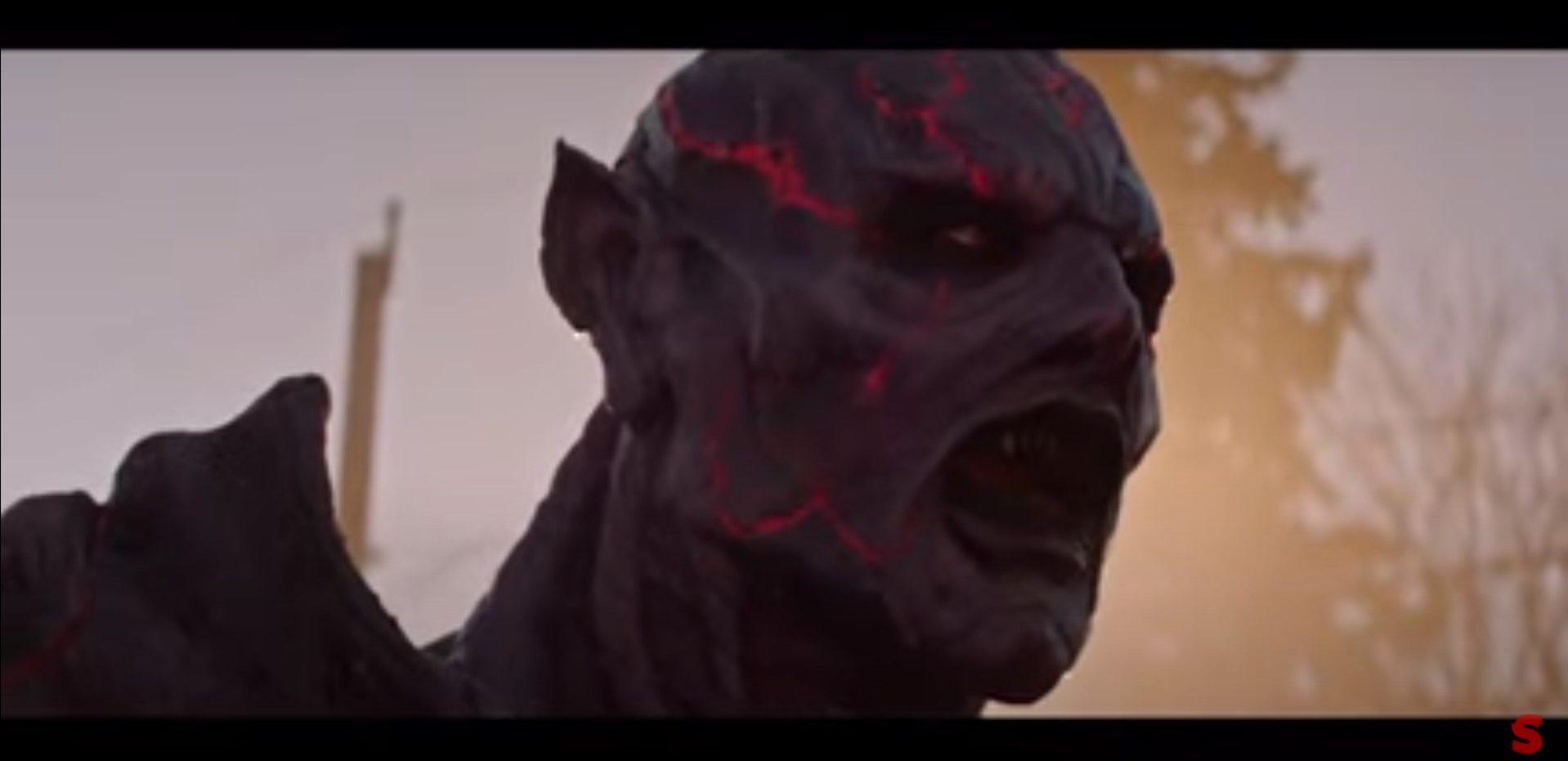
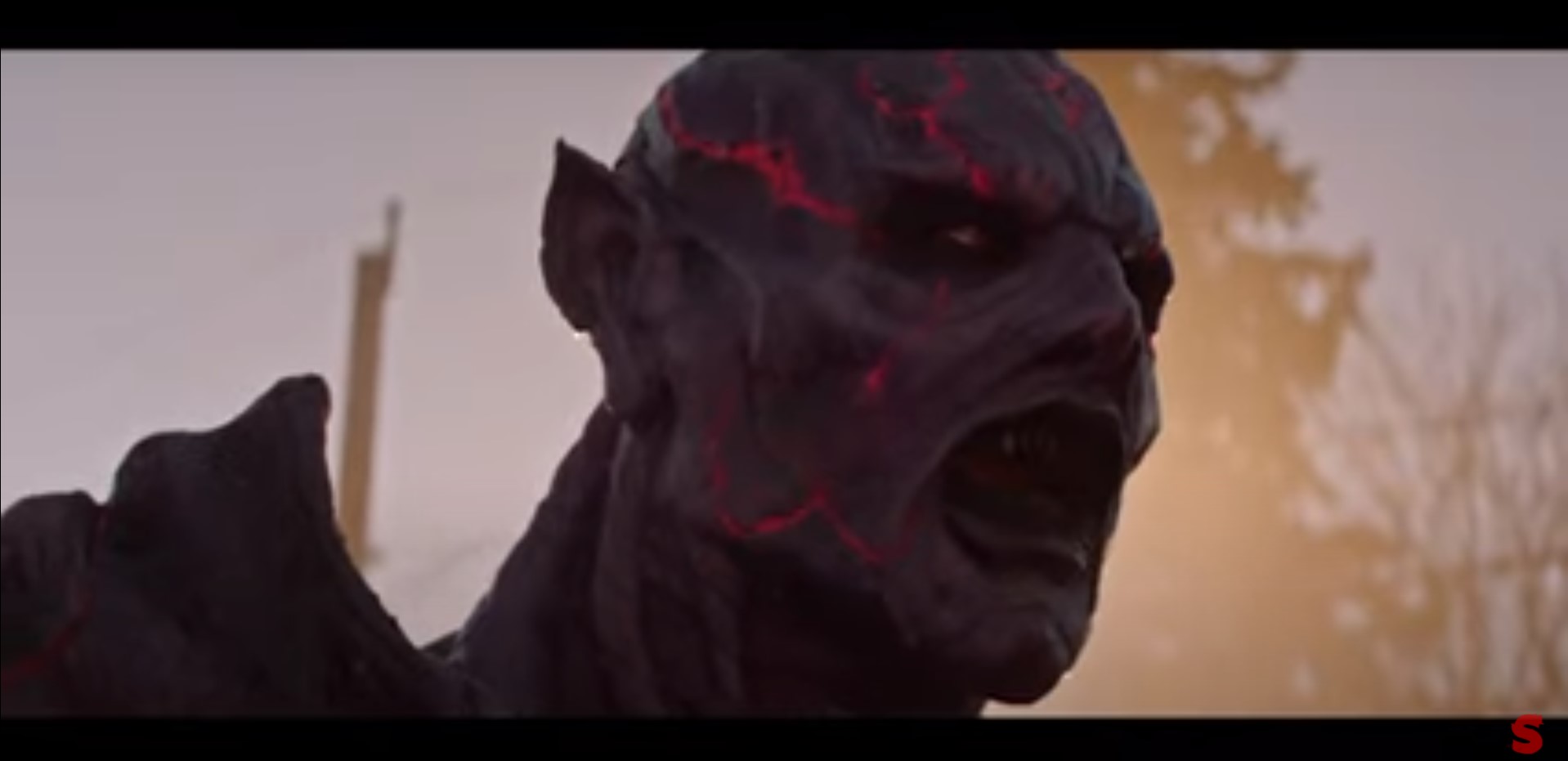
The Most EVIL Being in the Galaxy Doesn’t Stand A Chance Against Little Mimi. “Psycho Goreman” reviewed! (Acorn Media International / Blu-ray)

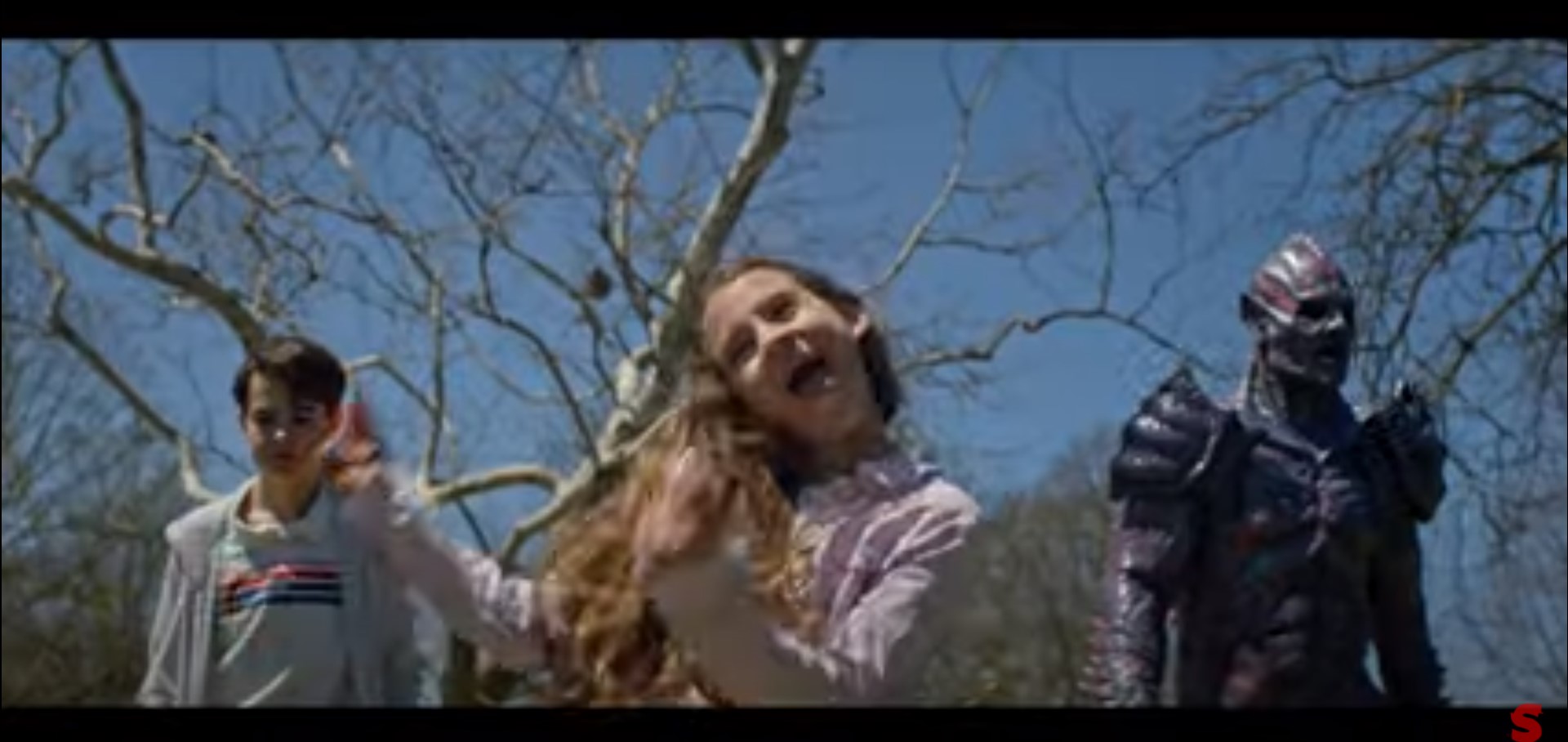
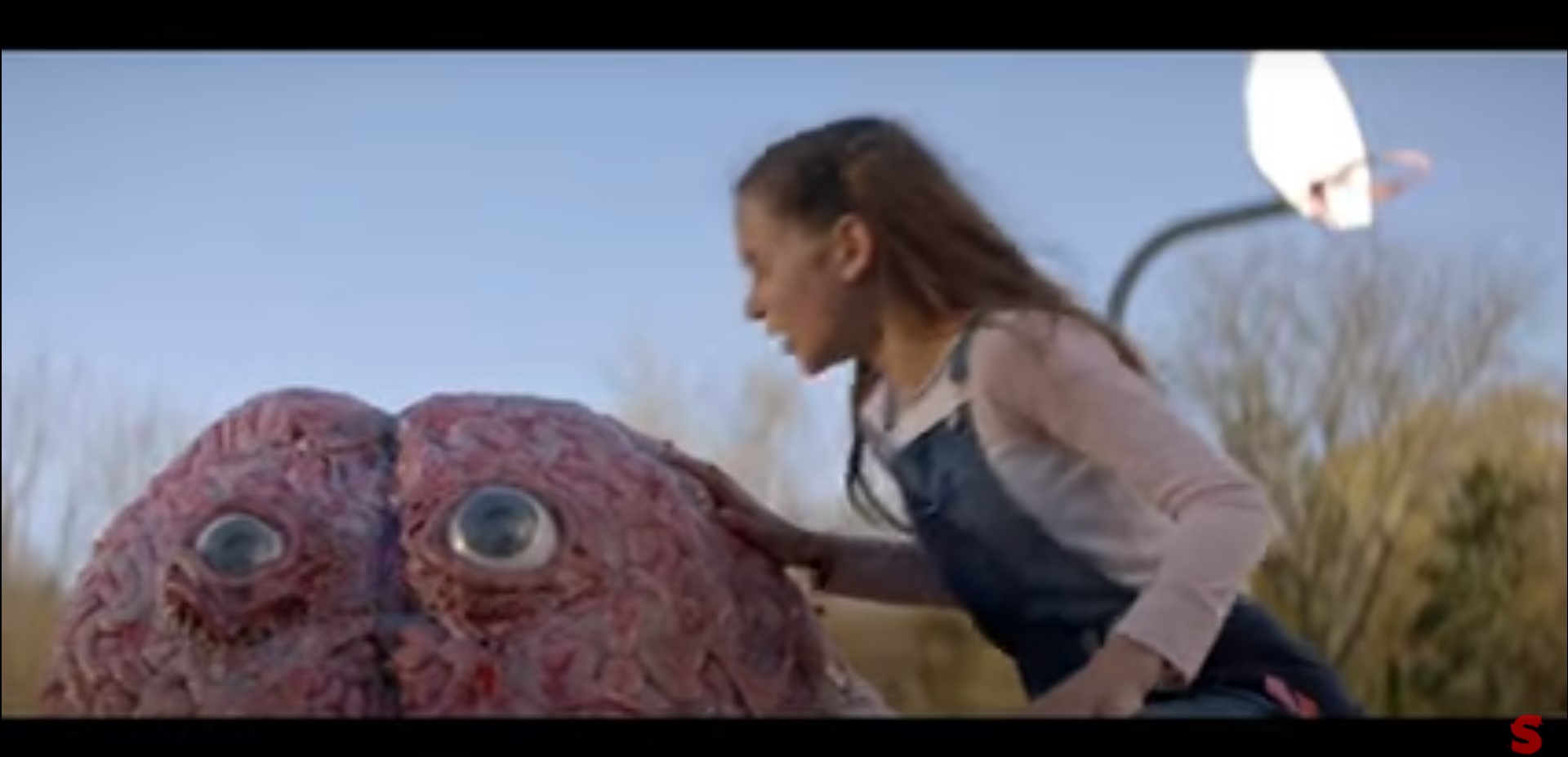
Brother and Sister, Luke and Mimi, discover a gem that unimprisons a dark alien warlord destined to destroy worlds.  The gem and the being are one, connected by the ancient forces powering the talisman, and whoever wields it can control the evil one.  Fortunately for now, the gem is in young Mimi’s possession.  The bossy and sassy preteen sees the alien, dubbed Psycho Goreman, as a new friend and toy, gallivanting around town catering to every Mimi whims.  Lightyears away on a distant planet, a council comprised with the forces of good, who banished Psycho Goreman to eternal banishment and imprisonment, learn of their once terrorizing tormentor having escaped his confines.  Leader of the council, an elysian warrior named Pandora, vows to track down their adversary and put an end to his existence, bringing a destructive showdown of good versus evil in Mimi and Luke’s small-town. 

The anomalous mind of filmmaker Steven Kostanski is vacillatingly distinctive and churning adulation for the late 1980’s to early 1990’s high camp, metal-infused horror films that heavily inspired him.  His latest written and directed Sci-Fi horror-comedy, “Psycho Goreman,” fits perfectly into Kostanski’s brand of stupidity, nonsensical, animation-saturated, bizarro reality horror that has made us, or at least me, fall heads over heels for his previous credits, such as “Manborg” and the “W is for Wish” segment of “The ABCs of Death 2.”  Kostanski is also a special effects guru having worked delivering gruesome terror and insane imagination skills to the big and small screen, but makeup FX artist takes a backseat to his employer, the Ontario-based MastersFX managed by Todd Masters, and they grab the reins by providing a slew of mixed bag practical and visual effects and animation styles that is a time warp back to the tangibly ridiculous and forged every follicle freakshow horror and science fiction celluloid from 30 some odd years ago.  “Psycho Gorman,” or “PG” for short, is a production of the pseudonym Crazy Ball Productions, as in the Crazy Ball game Mimi and Luke play, and Raven Banner, presented as an exclusive acquisition by RLJ Entertainment and Shudder.

To make something as ridiculous as PG to work, you need a colorful, wildcard cast to pull off every microfiber of manic personalities you can muster and sticking out with the wildest personality is not the titular character who is neither the brightest highlight nor the leader of the pack.  That spot was filled far before PG makes an unearthing introduction by the film’s smallest, youngest, and most delightfully sarcastic and ostentation lead in newcomer Nita-Josee Hanna as Mimi, who’s roughhouse and snarky sassiness goes unparalleled even up against the Arch Duke of Nightmares.  The dynamic plays on that whimsical idea of little girls with big personalities can be the center of attention.  In this case, Mimi requires the world, no, the universe to revolve around her ultra-spoiled nurturing.  Her possession of the gem gives her unlimited power with her possession of PG, played by undoubtedly hot and bothered by the latex suit, but otherwise good sport, Matthew Ninaber (“Transference”).  Hanna and Ninaber are an absolute joy to watch together with their contrasting comedic deliveries:  Hanna’s aggressive flamboyance compared to Ninaber’s subtle and solemn stewing.  Then there’s Mimi’s brother Luke, played by Owen Myre, who will have a role in the upcoming “Terrifier” sequel and one of the film’s running jokes is PG can never remember Luke’s name.  That lack of standout presence for Myre’s character is quite literal and not because Myre’s performance is forgettable and a complete wash (in fact, Myre is fantastic is the meek, submissive older brother), but between Mimi and PG, those overwhelming characters totally consume much of the attention.  Adam Brooks (“Manborg,” “Father’s Day”) and Alexis Kara Hancey fill in as Mimi and Luke’s lackadaisical father and frustrated mother while Kristen MacCulloch (“Motherly) suits up as the PG’s holier-than-thou arch nemesis, Pandora, in Templar species form while Roxine Latoya Plummer blends in with the rest of the population with Pandora’s human form.  “Pscyho Goreman” rounds out with Alex Chung, Scout Flint, Robert Homer, Conor Sweeney, Matthew Kennedy, Asuka Kurosawaw, and Scott Flint.

“Psycho Goreman” necessarily fills a pivotal void.  Most genre films aim to pass along a message, sometimes important to the filmmakers, to convey a lesson, an idea, a political or social protest, or to spark awareness on an issue, but with Steven Kostanski, watching his work is like taking a vacation with an immense clearing of any and all undercurrents and obvious messages for pure, unadulterated, frequently mindless entertainment that just looks cool.  Underneath the composited animation and practical effect layers is an anything goes, no strings attached, brutally-caked, dopamine drip that causes glossy-eyes and a warm wash over of all the senses.  Side effects I can definitely live with and be refreshed by when needing a break from reality.  The amount of space medieval practical effects alone makes “Psycho Goreman” feel like “He-Man and the Masters of the Universe” and while that Gary Goddard 1987 science-fiction fantasy starring Dolph Lundgren, perhaps, heavily inspires Kostanski’s intergalactic battle-royale on Earth, the story mirrors much to the tune of “Suburban Commando” with Hulk Hogan.  Hear me out.  Rogue-vigilante, played by Hogan, crashes into Earth where he winds up with the unsuspecting Wilcox family who melts the big, bad commando’s heart and simultaneously fix, mostly unwittingly, what’s broken with the family while alien bounty hunters track him down.  “Psycho Goreman” is the same storyline with less gore; hell, “PG” is even kid dialogue friendly.  If you know “Suburban Commando,” you know, and now you can’t unsee it! 

As part of Acorn Media International’s RLJ Entertainment and Shudder exclusive line, “Psycho Goreman” is destined for darkness onto Blu-ray home video with over 2 hours of special feature content.  The UK region 2, PAL encoded, BD50 is presented in a widescreen 2.39:1 aspect ratio with a runtime of 96 minutes.  Nothing noteworthy to terribly point out from the digital picture shot on an ARRI Alexa Mini with Angenieux Optimo Lens that produces a spherical image you’ll optically notice that seemingly has a rounded surface to bring wide framed objects closer together.  Kostanski utilizes a blend of stop-motion and green screen with seamless results and even though slightly on the caricature side of alien landscape and creature production, everything befits “Psycho Goreman’s” extensive universe.  The English language DTS-HD Master Audio 5.1 has excellent acoustical output in a vast array of vocal timbres and epic ambiance on and off of Earth.  Dialogue is clean and prominent on both the actors and voice actors with the latter sometimes, unfortunately, masked by the voice manipulator.  The Blu-ray release packs a punch with over 2 hours of special features including a director’s commentary, interviews with cast and crew including Steven Kostanski, Nina-Josee Hanna, Owne Myre, Adam Brooks, Alexis Hancy and Matthew Ninabar, different fight chirography records from location and in practice at a martial arts studio, behind the scenes featurettes with character backstories, a trading card gallery, concept art, a behind-the-scenes photo gallery, and the animation creation.  “Psycho Goreman” is rated 15 for strong bloody violence, gore, and injury detail.  Sit back, relax, and let Steven Kostanski speak to your childhood senses with his adult antihero, “Psycho Goreman.” 

Own “Psycho Goreman” on UK Blu-ray (Region 2)

One EVIL Deed Doesn’t Correct The First EVIL Deed! “Cannibal Man” reviewed (Severin / Blu-ray)

Marcos, a middle-aged abattoir worker, resists the pleas of Paula, his young girlfriend, to confess their self-defense killing of a taxi driver.  When Paula decides she’s inform the police without him, Marcos strangles her and stows her body in the bedroom of his outworn house.  The killing continues when loved ones come poking around to find answers about the disappearance or discover the macabre scene in Marcos bedroom.  Bodies pile up, the smell reaches decaying levels, and Marcos is plagued with nervous guilt.  Every day using his meat clever, he chops up bits and pieces of each victim and takes them to the slaughterhouse processing to rid the evidence and the smell, but no matter how many body parts he unburdens or how much fragrance he sprays, the sweet smell of death sticks with him. 

If someone would have said to me – you need to see a flick from Spanish director Eloy de la Iglesia – would you have ever guessed my first stop would be with his 1972 “The Cannibal Man” shocker?  To get to know a filmmaker’s directorial style and personal themes, the most gruesome horror can sometimes be a reflection into the soul of full disclosure because life, as most of us know from our own personal accounts, demons, and happenstances, can be ugly, nasty and unfair and can be cathartically expressed through film by a wretched shell navigating an undercurrent message to others.  That’s how Eloy de la Iglesia’s “The Cannibal Man” speaks to me.  Also known as “La semana del asesino,” or “The Week of the Killer,” as well as “The Apartment on the 13th Floor,” don’t expect an archetypical slasher and cannibal framework from this picture with many names.  “The Cannibal Man” is no “Texas Chainsaw Massacre” or similar to that of “Wrong Turn” as the film stands alone, conveyed as unsurmountable struggles of renewing oneself, a social commentary of class structures, and, also, dabbles in homosexuality suggestion.  Executive producer José Truchado, who also produced “Hundra” and had bit roles in Jesús Franco’s “The Mistress of Dr. Jykell” and “Killer Tongue,” finances the film under his self-titled production company and presented by Atlas International Film (“The Blind Dead Collection”).

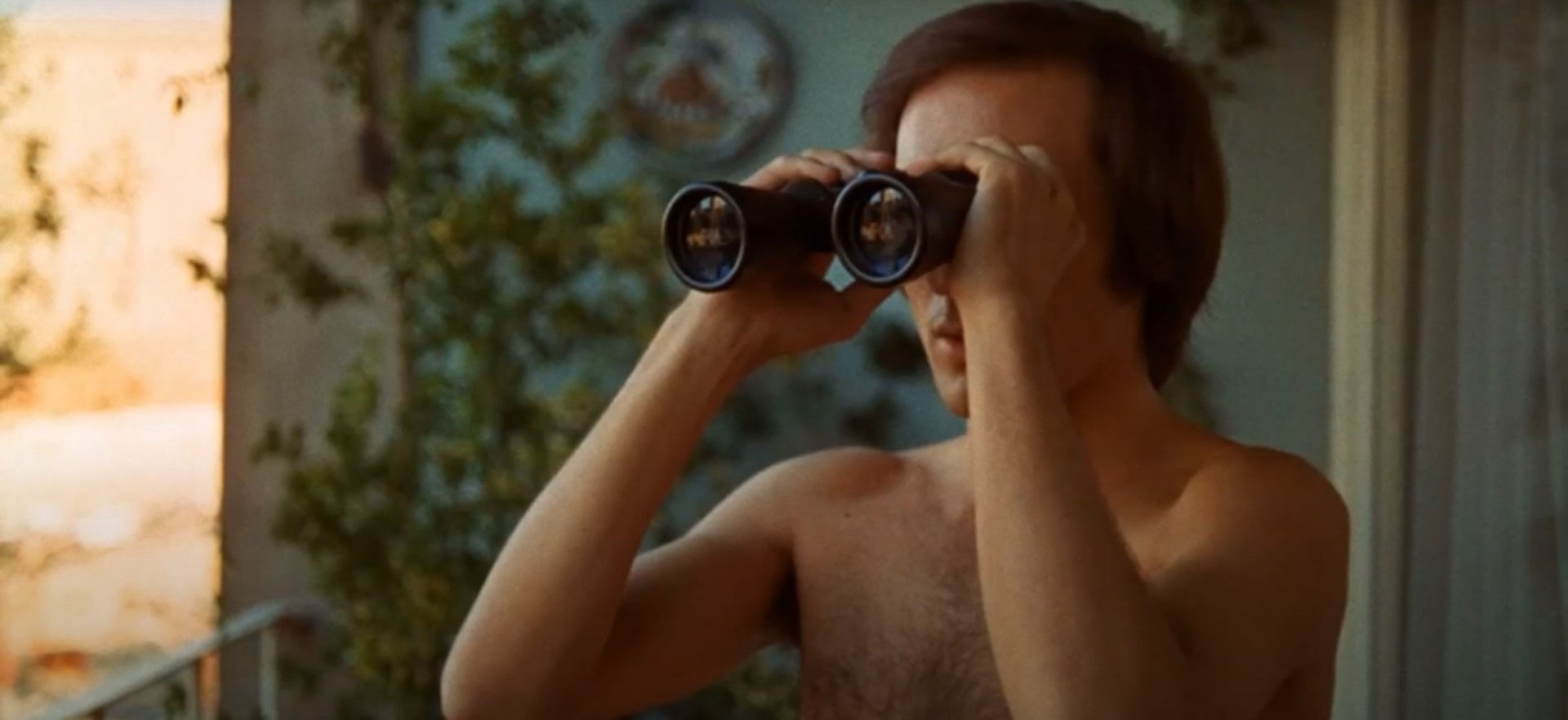
Looking to separate himself from strapping hunk typecasting and to show the world he can do more than just romantic comedies and action, the Madrid born Vincente Parra undertook a massive risk with the lead role Marcos, a meat processing factory worker in his, presumably, late 30’s to early 40’s with little education and social status who’s keeping company with a younger woman still living with and under the rules of her parents.  Let’s not to forget to mention Marcos’s grisly acts of murder and the homosexuality suggestions during his middle of the night rendezvouses with new best bud and neighbor Néstor (Eusebio Poncela, “The Death of the Scorpion).  Nothing sexual happens but the innuendo is there as, aside from his dog, the single bachelor Néstor often invites a tense Marcos out for a late night café visit, an afterhours swim at the local late night pool, and up to his swanky apartment where Néstor often watches Marcos from his high-rise balcony through Marcos’s makeshift skylight with binoculars.  Iglesia, who is gay, puts his own spin on the characters to allude to, and often over played as well, the two men as equally interested parties without ever having to speak a single word or make visible a single touch that would confirm otherwise.  Parra and Poncela couldn’t have acted better a disinterested-interested pair full of sexual tension and naïve foreplay.  Aside from the significant love interest characters from Vicky Lagos, who plays local waitress, Rosa, at the eatery Marcos patrons and “Night of the Walking Dead’s” Emma Cohen, Marcos’s girlfriend Paula, no other character have reoccurring scenes and are simply drafted as what should be major roles in the story to then be cut down by Marcos’s undervaluing psychopathy.  Charly Bravo, Fernando Sánchez Polack, Goyo Lebrero, and Lola Herrera fill in the rest of the cast list.

Strike out the slasher category for “The Cannibal Man” as Iglesia offers more than just a mindless, demented, hack’em up killer.  Behind Marcos brown eyes lies a reason of cold truth about his place in the world as a man who is ultimately and foremost stuck.  Stuck at a dead-end job.  Suck in his relationship with Paula.  Hell, Marco is even stuck living in a small bygone bungalow sticking out like a sore thumb right in the middle of new and wealthy high rise buildings.  He’s unskilled and uneducated, living in his brother’s house, and with no end to his personal wedging between his lackluster coursed life and his own short failings as a man until all that mediocre and mundane misery begins to ooze and shape into the one thing he tries to control – murder.  Even murder starts to spin out of control and heavy, burdensome guilt sets as seen in scenes with Néstor who’s choice of words perk up Marcos’s jumpy ears with fear of being caught.  Iglesia is a master at scene compositions that use audio cues, along with a jarring, tonal reversing soundtrack, to accentuate Marcos’s ascending paranoia as well as accentuating the scenes of the more period radical grasping social commentary on homosexuality and the unthinkable back-to-back-to-back-to-back murders.  Editor José Luis Matesanz also slyly cuts transitional scenes together in a stunningly seamless and crafty way that resemble close to Robert Wise (“Citizen Kane,” “The Andromeda Strain”) with harsh cuts that form a directional track and utilizes semi-abstract panning and reverse panning to fill in less significant gaps between the action.  Don’t expect a large amount of cannibalism in the story either.  Marcos isn’t gnawing on bones or baking a flesh brisket; instead, his act of cannibalism falls upon irony in that the bodies he tries to purge from his home ends up coming back to haunt him in more ways than one. 

If you love obscure, foreign horror that sustains a fresh packaged air about it, in story and in a remastered transfer, I highly recommend checking out Severin’s newly scanned, region free Blu-day distributed by MVD Visual.   The BD50 comes with two versions of the film, the 98-minute international cut and the 107-minute Spanish version extended cut, newly scanned from the original 35mm negatives for the first time.  Both transfers have excellent picture quality, some of the best I’ve ever seen come out of Severin, presented in 1080p in a widescreen 1:85:1 aspect ratio.  Not a lot of age wear and tear on the either transfer with each cut having only minor and light scratches scarcely throughout.  There’s sufficient, natural grain in both versions, but the extended cut’s grain flattens up, looking coarser, in the extra scenes.  Coloring grade is gorgeous with natural looking skin tones and you can see the details were refined and redefined.  Both versions come with an English dub and Spanish language DTS-HD Master Audio 2.0 track with some back-and-forth forced English dub in those coarser grained scenes that make the flow unsettling.  Both versions render hearty range and fidelity with a strong dialogue track that syncs well with the option English subtitles, but slightly off sync with image unity.  Underneath the double-sided cardboard sleeve, Severin’s special features include Cinema at the Margins – a Stephen Thrower (author of “Beyond Terror: The Films of Lucio Fulci”) and Dr. Shelagh Rowan-Legg (author of “The Spanish Fantastic: Contemporary Filmmaking in Horror, Fantasy and Sci-fi” on director Eloy de la Iglesia, The Sleazy and the Strange – interview with Spanish film scholar Carlos Aguilar on director Eloy del la Iglesia, deleted scenes, and trailer.  An engrossing bodega of vile Euro horror is what “The Cannibal Man” presents as a first-rate cutthroat thriller from the shamefully underrated filmmaker, Eloy de la Iglesia.

Own “The Cannibal Man” on Blu-ray!  Buy at Amazon.com

A Cop, a Paranormal Investigator, and a Priest Walk Into an EVIL Extermination Plan! “Belzebuth” reviewed!


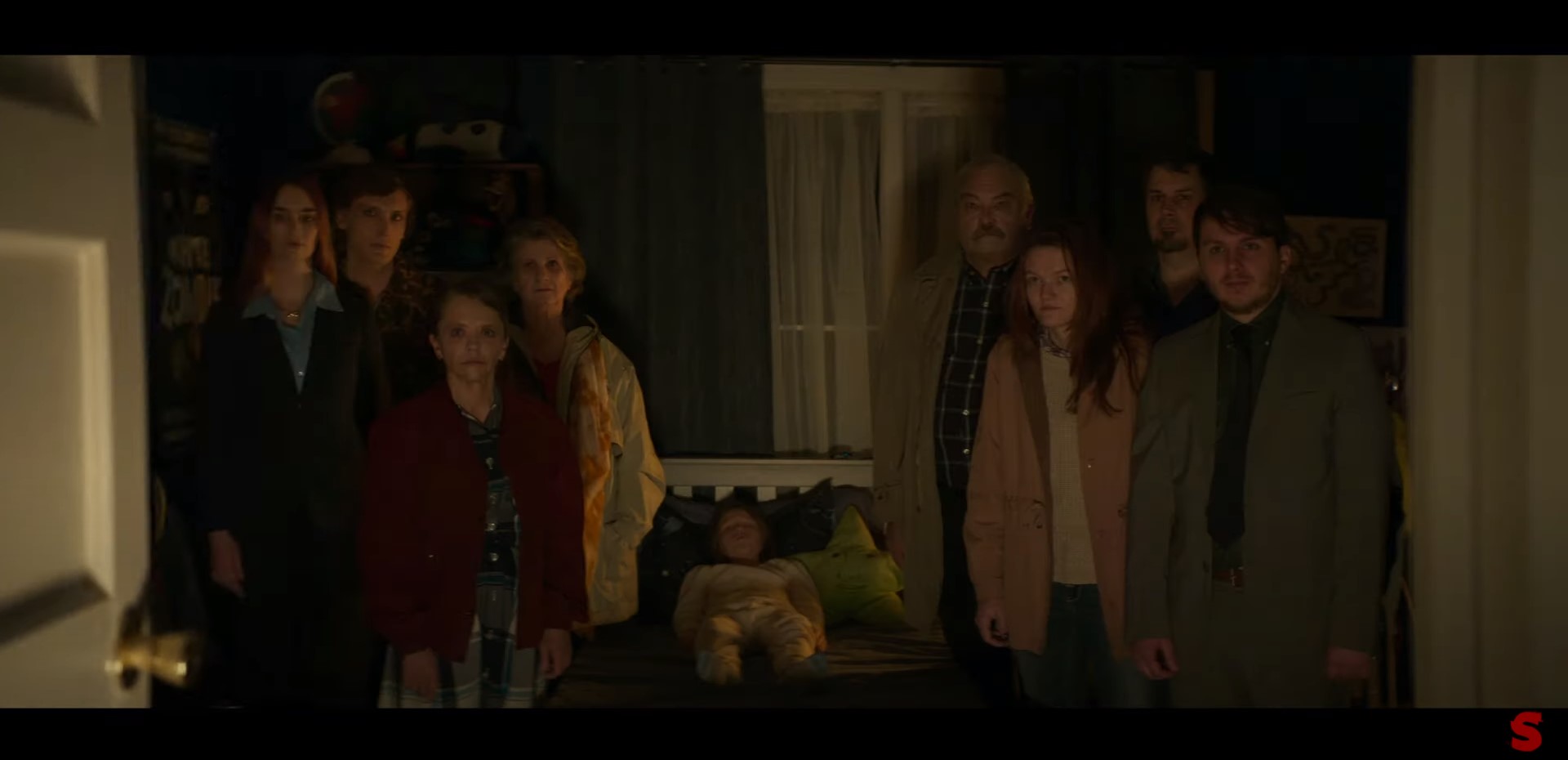
The joy of a new baby is cut short for Detective Ritter who bares the tragedy of his little boy viciously killed in a massacre of nursey infants by a psychotic nurse before taking her own life.  Five years later, and losing not only his child but also his wife to severe depression, a disheveled Ritter is called in to investigate a mass murder involving a 12 year old boy slaughtering young children in a preschool classroom.  To him, the two events don’t spark similarities, but to a paranormal investigating Catholic priest, Ritter’s tragedy and the events in the classroom are linked by the unorthodox priest’s examination.  All the evidence points to an excommunicated Catholic priest practicing demonology that sends the two men down a path of unholy darkness in a series of murderous catastrophes influenced by the rebirth of the Messiah.

When the first scenes from “Belzebuth” open with a maternity ward nurse stabbing with vigorous force every single infant child in their crib with a scalpel, you know nothing wholesome is sacred and everyone is fair game in what is to be a grim story of infinite barbarity and darkness.  “Belzebuth” falls in the line of fire of Mexico City born writer-director Emilio Portes with an augmented, dark humored social commentary loaded with evil entities and grimace-laden gore.  The “Meet the Head of Juan Pérez” filmmaker cowrites “Belzebuth’s” irrational rational for the unfortunate real world trend of mass murders and touches upon, sensationally, the evolution of Catholicism extremities to battle evil in the world with first time feature length film screenwriter Luis Carlos Fuentes.   The Mexico/American film is produced by Rodrigo Herranz, Michelle Couttolenc, and Jaime Basksht, with Ana Hernandez as executive producer and Pastorela Peliculas in cooperation with patriotic promotion from the Instituto Mexicano de Cinematografia, aka IMCINE, serving as the production companies.

If you Google Mexican actors, the power of artificial intelligence and ignorant manual input couldn’t separate Mexico form any other Latin American country as the powerhouse search engine provided me results like Danny Trejo, John Leguizamo, Jennifer Lopez, Javier Bardem, and Penélope Cruz.  Now, while I respect each and every one of these performers who provide a variety of lush character and emotional erudition to each of their roles, not one of them is born in Mexico.  Some that listed do not even share the same heritage.  But do you know what the most astonishing, most outrageous, and most shameful aspect of my search was this?  The Tepic, Nayarit, Mexico born Joaquín Cosio was not among the top 50 results.  From captivating television with Guillermo del Toro small screen adaptation of vampiric apocalypse of “The Strain” and the intense drug-fueled drama of “Narcos: Mexico” to his Hollywood presence in the star-studded, James Gunn directed “Suicide Squad” to his humbler beginnings that includes Bond, James Bond, in “Quantum of Solace,” Cosio’s a strong and versatile candidate for intense thrillers and “Belzebuth” is right in the actor’s wheelhouse as a downhearted Detective Rigger with a short fuse.  As a supernatural skeptic, Ritter’s forced into confronting his past demons with the demons of the present by tracking down rogue priest Vasilio Canetti (Tobin Bell, “Saw” franchise) with the help of Father Ivan Franco (Tate Ellington, “Sinister 2”) of the Paranormal Forensic Department, which sounds kind of silly because Franco’s squad is an extension of the Church.  Bell brings his delightful deadpan bedside manner as the excommunicated priest in guerilla warfare with a determined, demonic evil trying to massacre as many children as possible to find the reincarnated Messiah in what would be the Third Coming as the Second had come and failed during the Crusades.  Bell is the yin to Cosio’s yang until circumstances rear-end last ditch efforts and all Hell breaks loose in a drug smugglers’ tunnel.  Aida López, José Sefami, Yunuen Pardo, and Liam Villa round out the cast.

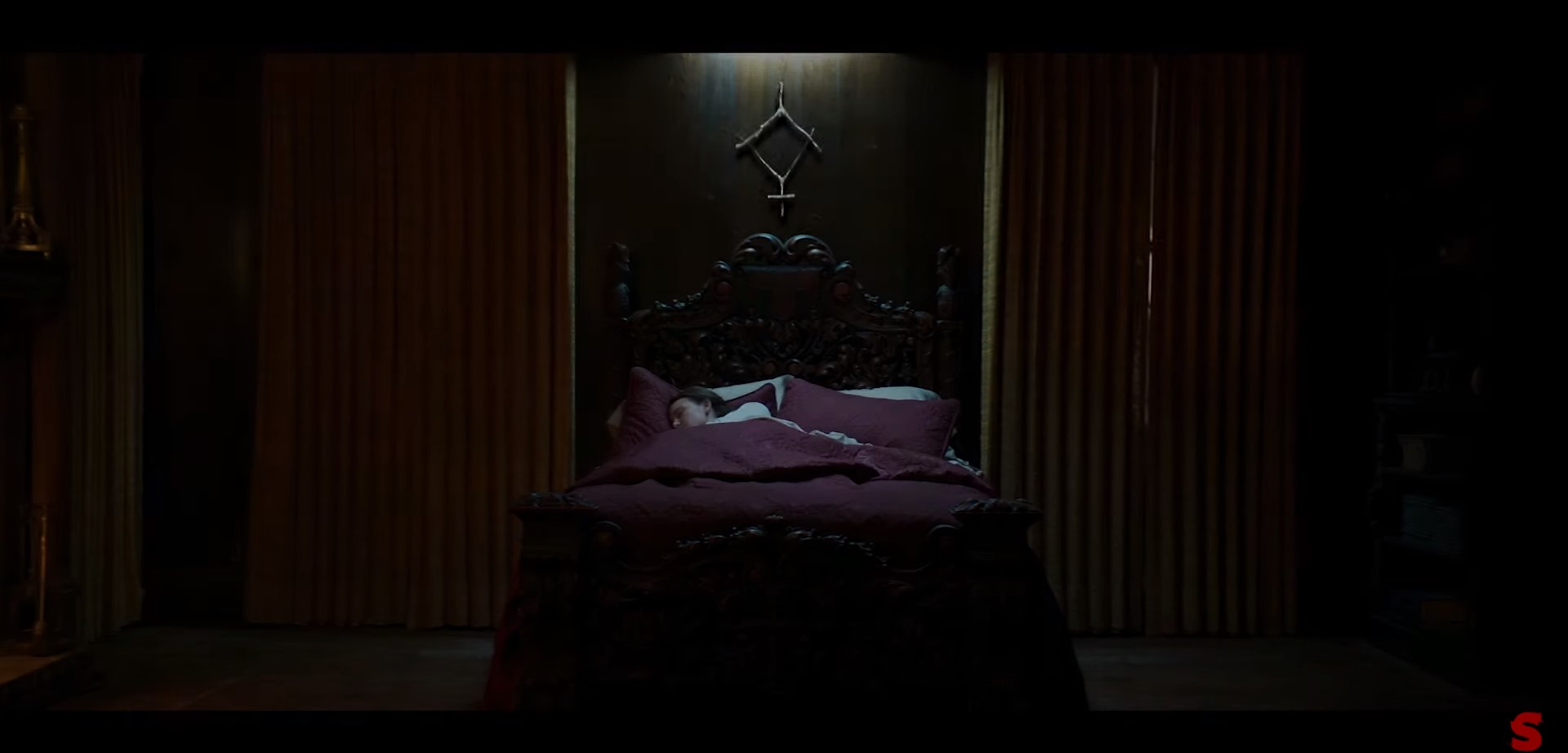
If possession-fueled carnage and the antiheroic archetype weaponizing demonology for good tickles all the right places, “Belzebuth” can be the feather tickler of dreams.  Fans of Clive Barker’s “Lord of Illusions,” Peter Hyams’ “End of Days,” and the graphic novel “Constantine” can indulge into Portes’ explicit nihilism and lack of public conviction in religion in the director’s allegoric telling of something really big and really satanical happening right under people’s noses while a small motely crew of conversant peons try to stop a wall of Deviltry.  Portes also consistently touches upon Mexico’s unsystematic corruption, even among Ritter and other protect and serve officers, and the once firm-handed political system of the Institute Revolutionary Party (PRI) as potential cause for all the suffering enacted demon-rooted abscessations.  The mentioning of drug cartels pop up frequently, too, symbolizing the seemingly random acts of violence are just never just random acts, but an perpetrated hit on a human target much like the cartels’ unsavory methods to either take out competition, eliminate obstacles, or to silence whistleblowers.  Portes does a phenomenal job using his film as an allegory in making a political statement but lacks balance in favoring gore over profile with some characters who rather feel written in just for the sake of a broader English audience.  Father Ivan Franco is such character with interesting combinational vocations as a paranormal investigator and a holy man of the cloth.  Yet Franco, who wields a gun and has supercool video and audio recording specs, spearheads a larger suborganization shielded away from the public eye and, unfortunately, the viewer eye that never feels like a cog in the entire “Belzebuth” machine.  Franco and his team of spook-sleuths, who, by the way, vanish completely from his side early into the investigation, supposedly follow and investigate peculiar tragedies connected to misaligned presences leaving spiritual residue on the real world plane, but how his team comes about connecting the dots exclusively to just the first two tragedies, five years separated, is a bit of stretch and a letdown in fabricated continuity and weight behind Franco’s existence to be involved.  Pockets of plot holes pop up here and there on other facets but generally speaking, “Belzebuth” works black magically as a spiritually and culturally vivisecting detective thriller.

The Shudder original 2017 release, “Belzebuth,” scares up onto an UK Blu-ray release from Acorn Media International. The region 2, PAL encoded, single layer BD25 presents the film in a widescreen, 2.35:1 aspect ratio, with a runtime of 109 minutes.  Ramon Orozco’s cinematography flashes with a gorgeous red and blue color palate that fits the iniquitous tone and adds an ethereal, hazy backlighting to only enhance the tone to more sinister levels.  Acorn’s Blu-ray sharpens Orozco’s already byzantine schemes that enriches the details in the skin as well as a the sacred relic artifact-cladded locations that become claustrophobic and entombing.  Even Juan Martínez Espín visual special effects casts a solid effort of barely a smooth surface computer generated phoniness, especially in one crucifying scene of psychological torment.  You’ll know it when you see it.  “Belzebuth’s” powerful Dolby Surround 7.1 audio track is an assault on the eardrums of the best kind with a husky, industrial melodic soundtrack and hefty sound design with accompanying diverse range and proper depth that could be described as literally placing every creak, stab, and cackling laugh sound right into the darkest corners of your ears.    An unfortunate surprise about the Acorn release is that there are no special features aside from the animated menu that is essentially chaotic “Belzebuth’s” trailer plastered with menu options.  Possession films tend to stale at a dime of dozen, but Emilio Portes’s freshly terrifying “Belzebuth” entertains and scares to the very last morsel.