The sleepy town of Havenwood becomes rocked by the mass murder of some of the town’s most prominent residents attending a joyous celebration. When two local cops, James Fincher and Walter Cobb, first arrive to investigate the horrendous massacre scene, Fincher comes face-to-face with the maniacal killer known by the moniker of The Ripper and barely survives the night. Ten years later, a string of new murders fall upon young high school girls of Havenwood and Detective Fincher starts to piece together that The Ripper might back. To unravel why The Ripper’s ten year hiatus, Fincher must look into his and Havenwood’s past in order to find the answer and stop The Ripper from killing.
“Blood Slaughter Massacre” is a nostalgia driven slasher film with a convoluted and murky plot, but the Manny Serrano directed film manages to rejuvenate the 80’s unstoppable killing machine character in The Ripper. Heavily inspired by the John Carpenter “Halloween” franchise when considering the gloomy atmosphere of the town and Michael Myers-esque antagonist, “Blood Slaughter Massacre” originality is certainly unoriginal, yet there’s something to be said about enjoying someone’s, like Serrano’s, tribute or admiration work that sparks a bit of excitement and allows entertainment to be let in to the soul, especially in the third act when The Ripper’s homicidal chaos ensues and he lays waste to teenagers left and right. Also, the title lacks creativity and doesn’t help build a case of separating itself from the pack. Maybe, a simple title such as “The Ripper” would have honed into that old saying “less is more.”

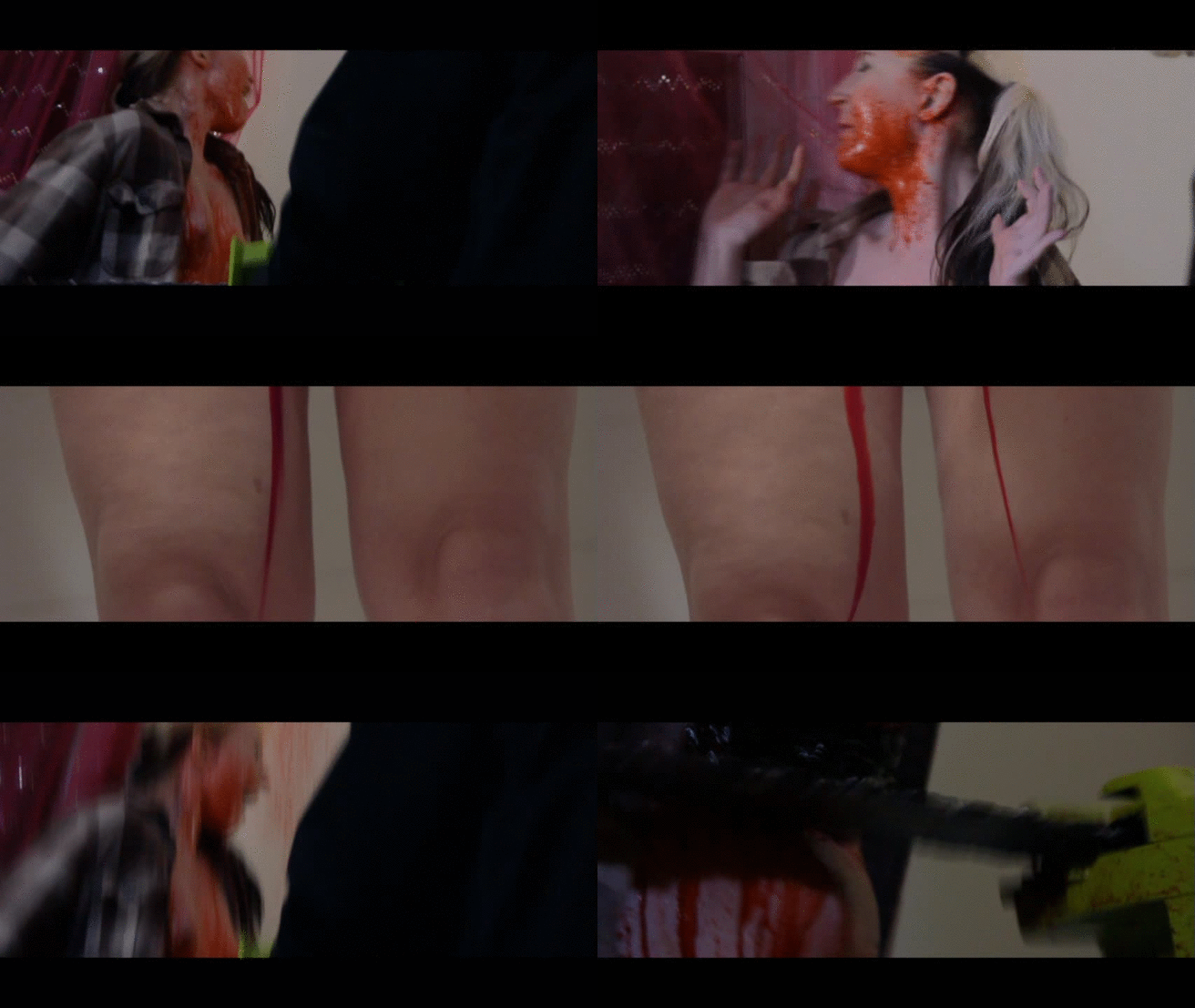
However, the blood and gore effects have sheer bite. The impressive effects for the budget give The Ripper character that desired aggressive murderer persona, warning all to stay the hell out of his way. Blood flies and flesh shreds created by buckets of bloods and well edited scenes. To showcase such effects you need a pile of bodies and “Blood Slaughter Massacre” piles high the corpses. With great kills, you need a great killer and the film’s “Shish-Kabober,” The Ripper, is a memorable slasher which can only be described as a giant fellow with an old man clown mask that displays no emotion in the hollow eyes, show’s no mercy when hovering above an easy kill, and owns a supernatural ability to be at the right place at the right time, ready to stick his blade right in the heart of his prey.

The rest of the characters didn’t stand out above The Ripper and emitted low caliber dialogue and persona all around. The acting becomes terribly melodramatic within serious and tense-filled toned scenes. Matt Cody as Fincher tried to embody a Donald Pleasence Dr. Loomis character, but Cody came off a bit to desperate in comparison and Fincher’s isn’t a strong male character able to pull off cutting down the brutal legacy that is so natural to The Ripper. The female characters with exploitive nudity, even if only for a few minutes, had more practicability because, while over stating the obvious, “Blood Slaughter Massacre” is a horror slasher movie making nudity a natural being or even a minor, disposable character. Also, many of the characters show up just to be filler for The Ripper to rip apart. Not a terrible thing, but it’s difficult to care about certain characters without being able to develop into a character we care about and in the end, all underdeveloped fillers must be six feet under ground in five or more pieces.
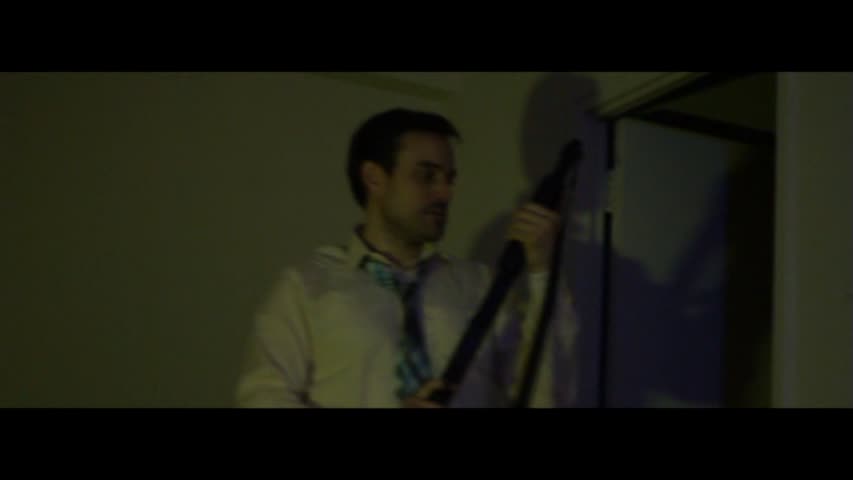
Technically, Serrano’s films suffers major obstacles. Scenes annoying go overboard on the grayscale with a heavy gray tint switching back-and-forth from scene to scene taking away the little coloring the film had and creating a haze blanket of the mise-en-scene as if in a dream. Continuously going in and out of focus and slight blotchy posterizing are also problematic during darker. Dark scenes and day scenes also suffer from heavy digital interference. The unbalanced audio in the 2.0 stereo mix doesn’t channel the dialogue very well, making it secondary to more inaudible parts of the film. What I can positively comment on about the DVD is the detailed cover art of The Ripper. The retro 1980s or early 1990’s feel of Wild Eye Releasing’s DVD release cover shows great promise for a film that flounders during the first two acts.
Category Archives: Horror Inspirations
Earn Your Evil Badge at Fat Camp! “Camp Massacre” review!

Ten overly obese contestants compete on a boot camp type reality show to lose the extra pounds and have a chance at winning one million dollars in prize money. With intense health-crazed coaches, a strict unconventional exercise regiment, and a low-carb diet on the menu, things couldn’t be worse for the over weight competitors until people started to disappear and end up being murdered. Shedding the weight was literately the case as one-by-one a contestant’s eviscerated remains were discovered. Now the competition’s stakes have intensified and death is lurking around every corner. And we all thought fat shaming was worst that could happen to the weight challenged…

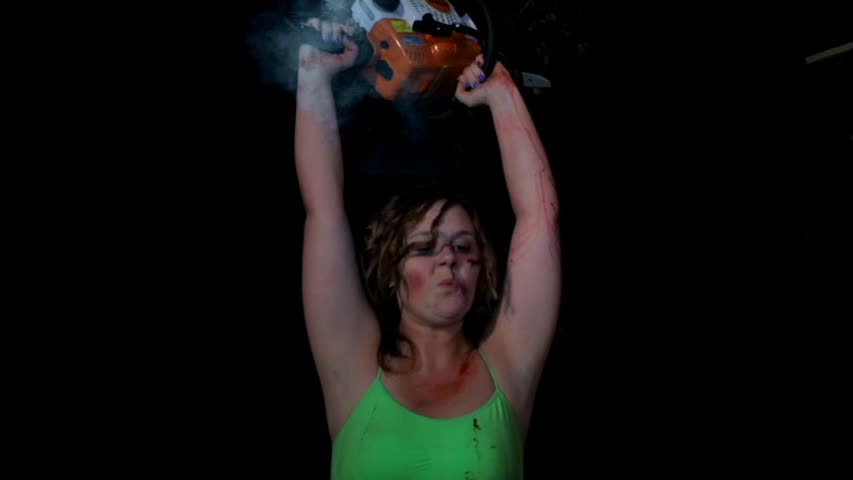
“Camp Massacre,” “Massacre Camp,” “Summer Camp Massacre,” Klown Kamp Massacre.” No matter how you jumble up these specific words, a generic title is still a generic title and the title “Camp Massacre” puts a pre-viewing damper on a long night of film watching along with a cover splayed with a former porn starlet and Charlie Sheen ex-“goddess” Bree Olson, semi-retired wrestler Al Snow, and, well, some unknown hot brunette chick with a bloodied chainsaw who doesn’t appear to be a part of the cast. Going into “Camp Massacre” knowing that this title considers itself a horror-comedy had helped push myself into popping in the disc and pressing the play button or else this title might still be collecting cobwebs on the nightstand.

The opening scene introduces the viewers to two young and attractive women and one large, unattractive woman in a hotel room discussing plans on what they’ll do tonight on a foreign island land which is undisclosed to us – looked like Key West, honestly. One of the women pondering going out on a night on the town is Bree Olson and before you know, Olson is fully and gratuitously nude in a sensual, extended shower scene and you all know what happens if you show your skin too soon in a horror movie! This ambiguously set and gratuitously shot segment proceeds into the main title and credits that slide right into the meat of the film that seemingly almost has nothing to do with the opener. The introductory scene barely hangs on even with the finale connection, but this thin connection creates an out of place awkward sequence that stands out like a sore thumb.

Connectivity and longevity of story remembrance sums up co-directors Daniel Emery Taylor and Jim O’Rear’s experience in filmmaking. The two filmmakers also produce and star in this collaborated effort to bring comedy and horror to a Biggest Loser reality show parody and to homage their love for certain horror icons. The hot topic of obesity is currently in a state of widespread prevalence making “Camp Massacre” relevant to the world’s personal and social problems that the media hops on, but the real question is did directors Taylor and O’Rear succeed in making a good comedic and horrifying quasi-film out of movie about obesity? That conclusion is all in the eye of the beholder and all in the interpretation of the viewer.

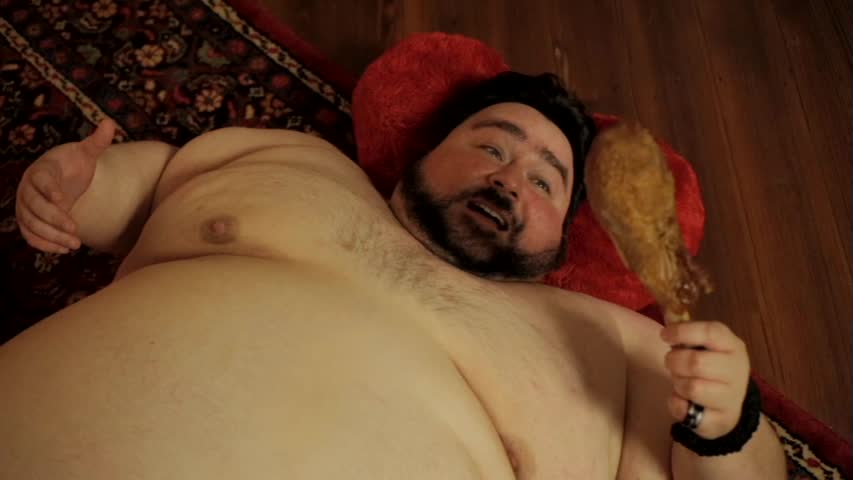
Is “Camp Massacre” a horror film? Yes. Is “Camp Massacre” a comedy movie? Yes. Is “Camp Massacre” a good horror-comedy? On a scale from one to ten, with ten being the highest – a three. Let me explain; the killer is written as a chubby villain with a “Six Pack, Abs” red apron and a Kentucky Fried Chicken family bucket on his head for a mask. If the killer’s looks intended to be a hoot, then there was a monumental failure. The killer’s arsenal is a collection of obviously off-colored prop knives and machetes that could be considered costume jewelry or packaged costume outfit accessories for party goers. The death effects are a bag of cheap tricks which are not sold convincingly and don’t bring the blood in which “Massacre” implies. The one single element going for “Camp Massacre” being a horror film – or even within the standards of a comedy – is the amount of nudity. Bree Olson, Megan Hunt, Amy Boyatt, and even Taylor’s wife, Ami Taylor, succumb to the conventions of a campy horror film and reveal the goods for the world to bear-witness. My only question is, where was Ava Cronin’s nude scene?

As far as the comedy side of this horror-comedy, “Camp Massacre” delivers on some levels mostly hanging around on a slapstick and immaturity elements. Daniel Emery Taylor’s character Greg paired with T.J. Moreschi’s Andy couldn’t ask for a better coupling as a budding duo who compliment each other’s wits with different character personalities. Add in a self absorbed narcissist body guard (who on the DVD cover looks like a coach with a whistle and clipboard) character named Ritz played by the bulky wrestler Al Snow and you’ll get a chuckle or two out of this feature. Ritz delivers quirky quips like “everything is good on top of a Ritz” during the scenes right moment. However, much of the comedy misses the mark and also just comes off as saying a lot of “fucks” in the dialogue which becomes stale after a first twenty. Simply put, the comedy is overly clichéd, but can still give you a half-assed tickling.

I’m not overtly excited about “Camp Massacre’s” characters either. Greg, Andy, and Ritz are fine and I’m found the homosexual Jarrod and the hispanic Josue to be entertaining. The rest of the cast seemed a bit tired. Actor William S. Tolliver was either sitting or laying flat the whole movie which was probably due to his weight, but the character became old as Tolliver didn’t express much versatility for an immobile character. Darc Ness, played by Ernest Douglas Nichols, didn’t bring the Goth attitude I had hoped. The character mixed Goth and serenity blending the persona into a off-key concoction. Most of the cast have worked with Taylor and O’Rear and have become their own heavy set version of entourage. What the film needed was more Michael Myers portrayer Dick Warlock, but that’s neither here nor there.

The MVDVisual DVD dons a 1.78:1 widescreen transfer that looks decent except for a bit of posterizing after the opening credits in the darker scenes. The Dolby Digital 2.0 mix does well channeling and prioritizing the dialogue, but some production issues weigh heavy on an uneven mic placements causing slight interference from scene to scene. For disc extras, there is solely the movie’s trailer. Overall, “Camp Massacre” doesn’t deserve to be completely passed over, but I wouldn’t expect instantaneous cult status or life changing acting nor an outer-body experience in filmmaking. Instead, take “Camp Massacre” for what it’s worth; a bunch of fat guys at boot camp being stalked by a bucket head killer with Al Snow and lots of nudity. Where can you go wrong with all that?
Cross-Dressing, Katana Wielding Evil! “Der Samurai” review!
In a small German village, Jakob, a police officer, encounters a blonde cross-dresser wielding a samurai sword who reeks havoc throughout the village. Before Jakob can make an arrest, the decapitating murderer quickly vanishes and reappears during random points of the night. Jakob soon realizes that this cross-dresser killer has more in store for Jakob who, before the strange encounter, struggled to remain above the water living in a town that doesn’t seem to want him there. Does this dangerous individual hold to key to the answers of Jakob’s questions or is he just a mental head case wielding a katana for the fun of it?

“Der Samurai” is certainly an interesting piece of German cinema that’s difficult to follow, but if you dig deep and look closely into the bones of the film, a glimpse into the personal life of our hero Jakob and his conquering of personal struggles is clear to the mind’s eye through the interpretation of writer and director Till Kleinert in his sophomore film. Jakob, portrayed by Michel Diercks, doesn’t quite fit in in his small hometown village; he has no outside life as he spends his every waking moment taking care of his grandmother when not on official police duty, his boss is constantly degrading him, and the town doesn’t respect his job given authority. While he struggles through these life issues, his work obsession becomes with a wolf that has been sited in the village. Since nothing ever happens his his small village, the wolf is the most interesting thing ever to happen as far as crime goes.

The wolf is hardly seen throughout the movie except for a few brief sightings and up until near the end and the reason for that is the katana wielding, cross-dressing maniac Jakob happens upon. The cross-dressing psychopath, played by Pit Bukowski, is a representation of the wolf and the wolf represents the epic struggle in Jakob’s pitiful life. If he can overcome the epic struggle, then he’ll be free of all the insecurities that have burdened to him and dished out by his insincere village folk. However, the quest to best the manic isn’t going to be easy and will be bloody.

With a title like “Der Samurai,” there will be blood, but the production crew had to use cheap tricks to make the realistic violence work and work well. These cheap tricks were very well done and certainly didn’t look phony or cheesy on screen. The effects are also very experimental and up for interpretation. At one point when a character is decapitated, a spectacular display of blood and fireworks skyrocket out of the neck as a sort of spirtual release for the poor headless character. Experimental and up for interpretation, just like the androgynous character that Pit Bukowski portrays. What kind of sexual desires are being explored here between Jakob and the maniac? At first, I thought maybe Jakob was the maniac due to his boss questioning Jakob on the phone that he might be dressed up and wielding a katana and when his grandmother, in a frightened state, claims that the person tending to her was not her grandson when clearly it was Jakob tending to her. This all changes when other police officers and town folk also see the cross-dresser, putting to defunct the speculation that Jakob was this cross-dresser.

Artsploitation Films brings to Blu-ray home video “Der Samurai” and we’re lucking to have a film like this to be available now in America. However, the 1080p widescreen 1.85:1 transfer isn’t up to the Blu-ray quality one would think. There lies a lot of grainy noise interference, perhaps to the low lighting provided for the film as much of duration is shot in the dark. Didn’t look like to me that there was any digital noise reduction used to smooth out the specks. The Dolby Digital 5.1 German dialogue with English subtitles is flawless and all the subtitles sync up well with the characters’ dialogue. Bonus features include a commentary with director Till Kleinert and Producer Linus de Paoli, a theatrical trailer, and a behind the scene featurette that is actually worth looking into as much of the background and backstory is explained. I’d recommend this German horror to all to experience and, to put the cherry on top, you’ll get to see an erect penis! Enjoy!
Craving an Evil Appetite! “Frankenstein’s Hungry Dead” review!
A group of mischievous and detention bound high-schoolers are handed two choices: either spend the day in a classroom after school or take an educational trip to a wax museum in Salem. Instead of spending the entire day in a classroom, a trip to a wax museum seemed to be the lesser of two evils. Little do the hooligans know that the museum’s curator Charles Frank is the relative of the infamous Dr. Victor Frankenstein and Charles Frank, a pseudo name for Frankenstein, has continued the ghoulish work his elder kin started long ago. Trapped inside Frankenstein’s wax museum of horrors, the high-schoolers are pitted against Frankenstein’s flesh eating creations with no way out. What was suppose to be a fun and devious night of intercourse and dancing turns into a bloody-blood bath of unspeakable horror.

This isn’t my first rodeo with director Richard Griffin’s work. The last It’s Bloggin’ Evil Griffin review, “Sins of Dracula,” didn’t strike the right key notes and became only a shell of a honoring horror film. “Frankenstein’s Hungry Dead,” also known as Dr. Frankenstein’s Wax Museum of the Hungry Dead,” was made a year earlier than “Sins of Dracula” and reminds me more of a true Griffin film. At first, I was afraid “Frankenstein’s Hungry Dead” would dull the mood as rebellious youth have yet again landed themselves into a death trap and this scenario just seems to be regurgitated over and over again in horror cinema. Eventually, and to my surprise, Griffin digs and builds out of that redundant hole and still manages to display his ever long homage to horror and horror icons comically. The thing about Griffin is is that he relies on mashing many genres together. For example, “Frankenstein’s Hungry Dead” is a mesh of Frankenstein, the Romero zombie genre, and a little bit of naziploitation to give the film some flavor. Second and third act strengthen the film’s roots and the comedy really pops during these acts making the film comical and gross at the same time.
Another conventional Griffin film schtick is the long-winded dialogue. I tend to get breathless just listening to the dump truck loads of exposition that seamlessly spew out of the actors’ mouths. The dialogue to death ratio just doesn’t add up and this film does get a bit talkative with a script that doesn’t quite measure up to Shakespearian work. The dialogue tends to be juvenile and obvious in a sense that every scene is laid out by description. Unless you’re Michael Thurber playing Dr. Frankenstein, there lies no reason behind other characters to have more scripted lines than there are end credits.

Speaking of Michael Thurber, Thurber has cemented himself as part of Griffin’s entourage a long with others who are also casted in this film: Johnny Sederquist, Jesse Dufault, and Jamie Lyn Bagley. However, Thurber’s versatility seems quite amazing. My first experience with Thurber was as a hard nose cop hellbent on vengeance in “Murder University” and I think he’s the best part of Griffin’s films. Thurber’s portrayal of Charles Frank combines a “Young Frankenstein’s” Inspector Kemp with a long lost, and black sheep, cousin of Hammer Horror legend Peter Cushion. Johnny Sederquiest and Jesse Default are starting to grow on me more and more with their acting styles. Their outrageous over acting is childish but hypnotically effective in humor. Bagley has been the more serious actor of the bunch, staying away from the horribly cliched parts and sticking with simple, easy to miss characters such as her breakout role as nerd girl heroine Katherine.

Overall, “Frankenstein’s Hungry Dead” is less about Frankenstein’s creature and more about the creation of flesh eating zombies and reaping hell upon meddling teenagers. Certainly a different take on the mad scientist genre and the Frankenstein legacy, but Griffin does mix things up for not necessarily the worst and I’m sure Mary Shelley would agree, if not really mind at all. The MVD and Wild Eye DVD release distributes a fairly standard unrated package that doesn’t disappoint and would be a winner in anybody’s B-movie collection.

The Mold Knows Evil. The Mold Knows! “Motivational Growth” review!
Ian Foliver is a pessimistic, depressed, and reclusive young man with a touch of agoraphobia. When his best friend, an old Commodore tube Television named Kent, bites the bullet with a busted boob-tube tube in his unkept apartment, Ian determines that life is no longer worth living because that television named Kent was his only friend, his only ray of daily sunshine and that life-worthy activity had just suddenly died. Feeling that life is no longer worth living, Ian gathers up household chemical products and decides to gas himself to death in his bathtub, but when trying to clog the bathroom air vent, he slips and falls landing on his head. When he wakes up, Ian is face-to-face with a growth of conversing mold. The Mold, as it refers to itself, wants to help Ian – clean up his apartment, shave and bathe, and attract the attention of his attractive next door neighbor who Ian stalks and ogles daily through his front door peephole. In return for this helpful motivation to live, The Mold demands that Ian follows The Mold’s precise instructions which might not be as helpful as Ian first thought.

The Don Thacker directed dark comedy is a surreal voyage into the internal life struggle of Ian Folivar, played beautifully by Adrian DiGiovanni, who directs his own downward situation making the audience part of Ian’s life. Ian is a character that is aware of his flaws but can’t accept his life and his analysis is that “life is shit” and is dangerous so shutting himself in his small apartment fairs way better than living the conventional life. “Motivational Growth” shares commonalities with prior cult favorites; one of those favorites is the Peter Hyams directed and John Ritter starring film “Stay Tuned” to where Ian becomes sucked into eccentric television programs he was viewing before Kent blew a fuse. Also, another cult favorite film, Don Coscarelli’s “John Dies at the End,” which shares that wacky fantastics of dark and ironic situations. All three of these dark comedy romps are in a small, rare genre group that dares to be different and do well at it.

The Mold is an unique, life-like creation of filth that can actually make you feel the fungi-filled griminess lying within between the nooks, crannies, and crevices of your body. A job well done by Thacker and his The Mold puppetry team led by special effects supervisor Steve Tolin of TolinFX. They really did an amazing job creating a practical effect living-being that works in sync with the iconic voice of Jeffrey Combs whose voice fits as The Mold’s persona – confident and inspirational with a hint of cynicism. The interactions between Ian and The Mold becomes symbiotic where Ian needs The Mold to rejuvenate his depressed life back to order and back to the land of the living while The Mold needs Ian to fulfill it’s inauspicious desires for Ian’s “well-being.” When Adrian DiGiovanni interacts with The Mold, he’s interacting with an actual character in the room and not a hokey-hapless effect. You have to hand it to DiGiovanni in forming a believable dialogue and relationship between himself and an inanimate object such as the lowest scum, excuse me – fungus, on Earth.

What I adore about “Motivational Growth’s” plot is the mysterious time period that it’s set in as many references point to the late 1980’s to the early 1990’s with the video game imagery, the television personalities, and the hairdos and clothing lines of characters in Kent’s hosted top shows Ian mindlessly views. Ian, himself, is stuck in time not knowing what a Plasma TV was which would fall right in line with the time frame above since Plasma’s didn’t start rolling around until the mid 90’s. I also like the peculiar characters Ian encounters even though his setting his solely set in his cramped apartment. Box the Ox, played by the intimidating Pete Giovagnoli, pinpoints his character perfectly as a seemingly overbearing, yet somewhat absent and simple minded, landlord who threatens Ian with off-the-wall metaphors, thus making him fun to watch and see how Ian attempts to interact with Box until Box cuts him off all the time even if Ian is provoked with a question by Box the Ox. Ken Brown as Plasmoday is by far my favorite. With a creepy face and creepy mannerisms, Plasmoday had too short of a role and I thought he would make a return to Ian’s abode to lick his TV again, but in the character’s short amount of screen time, Brown is able to up-play the oddity that embodies Plasmoday with such passion that it’s hard not to love the character.
“Motivational Growth” molds itself into greatness amongst cult movies. The nitty-gritty portions are grossly stimulating and will sure to have you jump in the shower for a quick rinse. Whether or not Ian is suffering from brain trauma, purgatory, or just to awake to a nightmare scenario, the story is left open for interpretation, giving the audience a chance to determine the ending for themselves which is always fun in my little black book. The MVD Blu-ray is spectacular technically. Super clear with no disturbances in the transfer. The Hi-resolution downplays the obvious practical effects on The Mold but that only brings more charm to the film. The sound is clear and the extras are plentiful. I’d suggest “Motivational Growth” to anyone – even to a neat freak with cleanliness issues.