Nab’em, Chop’em, and Feed’em to the EVIL Ox! “Butchers” reviewed! (Breaking Glass Pictures / Digital Screener)

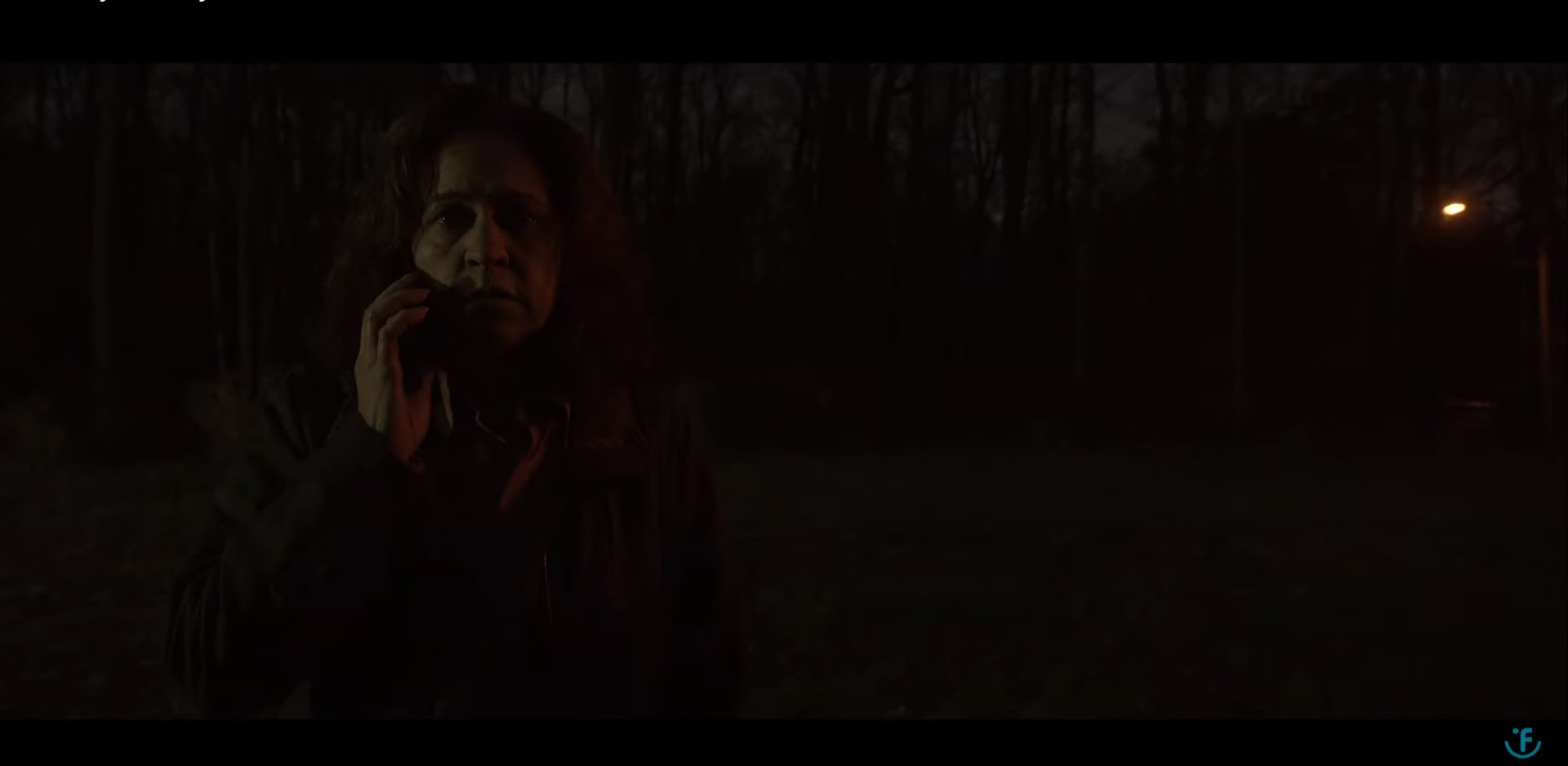
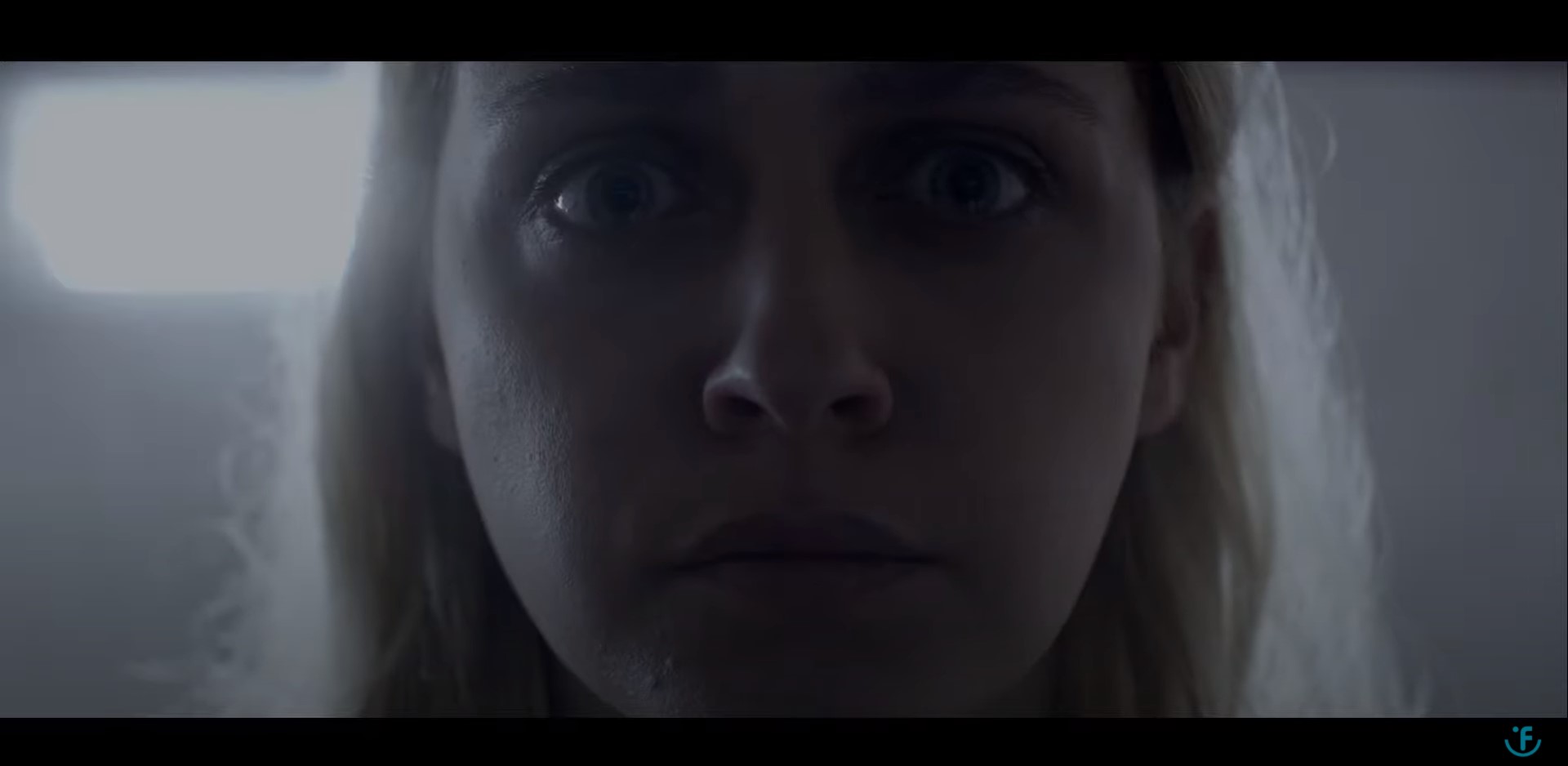
After the death of their firm handed, elderly mother, brothers Owen and Oswald Watson remain isolated in the boondocks, off the beaten path to nowhere, to live in their rundown family home, like the generations before them, to do the one thing they desire and born to do – abduct stranded motorists, kill the men, and imprison away the women for their sadistic and misogynistic pleasures.  After breaking down passing through on a rural bypass, four young friends find themselves fighting for their very lives against a pair of siblings with a deep rooted heritage of experienced violence to show for it, but when one of the brothers starts to become even more unhinged than normal, the remaining survivors seek to take advantage of the situation to escape, but their captors know the woods inside and out.

Everyone believes Canadians are overly nice and well-mannered.  Our considerate neighbors of the North withstand the plethora of static noise from the turbulent South, willing to forget and forgive in a moments notice with nothing more than a smile and slap across the back, but has anyone ever bare witness to Adrian Langley’s dog-gonna-hunt, exploitation film, “Butchers,” hailing from Ottawa, Ontario?  The 2020 survival horror thriller displays the unseen dark side of Canadian’s grinning and friendly façade and, boy, does it familiarize and rival some of the similar backwoods doggedness we’ve seen in the last quarter century.  The film is written and directed by Langley and co-written with Daniel Weissenberger (“Come True”) in the intent of being a gritty, hillbilly-gone-wild hoedown with butcher blade sharpness.  Langley’s cinematic shiplap usually provides hard to swallow and violent themed content set to put one on tenterhooks established from his string of unflinching crime dramas (“A Violent State,” “Crook”) when the director is not moonlighting as a made-for-television PG-rated filmmaker for the holidays (“Candy Cane Christmas,” “Homemade Christmas”).  Christmas is long gone and a long way off and no amount of jovial spirit can guarantee a happy ending in “Butchers,” a production of Langley’s Unit XIX Films and Nicolás Onetti, producer and filmmaker behind retro-manufactured giallo horror “Abrakadabra” and “Francesca,” attached under his production banner, Black Mandala.” 

Principal characters are essentially the entire cast, small in size but pack a punch with their performances.  Starting off with the brothers, Owen and Oswald Watson, whose story begins during the snow and icy-filled heart of the winter months with them standing graveside, freshly filled with the remains of their mother, well before the hapless four protagonists breakdown in the summer’s heat.  The Watson boys story arc from second fiddle to top brass in a brief moment of background with the death of their mother as they quickly set to work pouncing on a young couple and exploiting the chained up and captive wife/girlfriend for carnal pleasure while abiding by a certain set of harshly punishable rules.  Television’s “Age of the Living Dead’s” Simon Phillips and Michael Swatton reteam in their respective roles of Owen and Oswald who are very much human characters with carefully planned and executed uncontrollable urges, callous whims, and fallible actions, sullied by a mixture of mental disease and rotten nurturing.  Philips is terrifying as in the intellectual brother, with his sophisticated word hole, very willing to get his hands dirty as the more perverse of the two brothers, but his relationship is on the rocks with his unstable brother, Oswald, as Swatton channels the internal family quibbling mindset of Leatherface from the “Texas Chainsaw Massacre” franchise with the exception of the crossdressing obsession and the iconic, rip-roaring chainsaw.  Oswald instead wields a custom butcher’s knife with jagged shark life teeth as he manically runs through the forest hunting down the four youngsters played by Julie Mainville (“Ghastlies”), James Gerald Hicks (“Killer Mom”), and “The Nights Before Christmas’s Anne-Carolyne Binette and Frederik Storm.  With these lambs for the slaughter characters, this is where Adrian Langley succumbs to tropes that instill a misplaced sense of courage, uncontrollable and shallow horniness, and a turmoil amongst friends to be the divisive factor leading of their fate.  “Butchers” rounds out the cast with Jonathan Largy, Samantha De Benedet, Blake Canning, and Nick Allan as uncle Willard. 

“Butchers” does have blatant derivative bones underneath a body that echoes the frameworks of pioneered films from the aforementioned “Texas Chains Massacre” to more recently “Wrong Turn,” the original film series formed in 2003 about inbred, cannibalistic mountain people.  These powerhouse of unpretentious and bloodthirsty franchises inspired much of what you’ll experience in Langley’s homage of a cyclical subgenre; yet, the filmmaker’s tale of two brothers with a bloodletting scheme of their own doesn’t lend itself as being a hack work nor does the story render like an atrocious carbon copy but, rather, “Butchers” lives in a moment of simple, matter of fact craziness living in the dark corners of the seemingly innocuous world.  Owen paints a near perfect picture of the one in a million chance that people, like his hapless captives, fall into the position they’re in, sophisticatedly monologuing with intent to his bound prey in a pair of scenes that slice a thinly opened gap of possibility and that, right there, is scary.  “Butchers” builds no momentum, but, instead, goes right for the throat straight from the get-go as Langley reinforces the attitude that this can happen to anyone by not getting too familiar with characters in their backstories.  In order to establish a pattern of action and to lay foundations in who we should and shouldn’t root for when things go to hell, virtue-less unfaithfulness becomes a promising wedge that doesn’t necessarily cause descension in the ranks of survival, but paves a trope-laden path of who will ultimately perish.

Backcountry exploitation might have seem to have run it’s course. I mean, really, how many times can crazy deformed cannibals wreak gut-spilling havoc on the naïve outlanders to their idyllic provinces? For me, as many time as it damn well pleases, especially when fundamentally satisfying as Adrian Langley’s “Butchers,” distributed by Breaking Glass Pictures and now available streaming on Prime Video. “Butchers” will be available on DVD at a to be announced date. Langley, wearing multiple of hats in the spirit of indie productions, dons the director of photography bowler hat…well, I don’t really know what hat the DOP would wear, but we’ll represent the position with a bowler for now due to the deluxe sophistication the bowler implies while still sustaining a classic touch and that’s how I see Langley’s clean and competent cinematography style whose able to frame scenes that force audiences to be a part of the action . As soon as a character turns to speak to another character or when a car hood slams, an effective rush of adrenaline courses through the veins when out of nowhere one of the brothers pop onto the widescreen 2.35:1 aspect ratio presented screen. “Butchers” come with no bonus material after a 92 minute runtime, but a single scene lingers during the credits that, again, harps back to a certain dancing killing machine from the original “Texas Chainsaw Massacre.” May not be an original concept, but “Butchers” can still castrate the soul with an exploitatively merciless family tree sowed with perversion and bloodlust.

Rent or Own “Butchers” on Amazon Prime Video! Click the Poster to Watch!

Classy Brothel Girls Bring Dirty EVIL Secrets to “Madame Claude” reviewed! (Cult Epics / Blu-ray)

A high end Paris brothel ran by the influential Madame Claude sends the most beautiful and sophistical women to wealthy and powerful dignitaries all over the world to satisfy their most sexual desires.  Her lucrative business becomes a governmental target seeking to collect back taxes on the illicit business.  However, the French government is the least of her worries when a playboy-aspiring rake and amateur photographer snaps photos of Madame Claude’s clients in compromising situations that can be ruinous to their status.  The CIA becomes involved when unscrupulous business dealings involving an American and Japanese companies connect to Madame Claude and her potentially persuasive young women after rumored photographs put the Madame Claude in the middle.  Two governments, big businesses, a jet setting brothel, wealthy socialites and a nosy photographer become involved in lies, secrets, and the potential for murder.

Part biography, part fiction, “Madame Claude,” also known as “The French Girl,” is the 1977 released erotic and political thriller based off the real Madame Claude, Fernande Grudet, as her life of prostitution management and scrutiny unfolded before the public eyes in the mid 1970’s.  Erotically and elegantly sexy with gorgeous women groomed into lust and ensnared into the lion’s den of exchanging powers, “Madame Claude” became the third film from the immensely successful erotic French director, Just Jaeckin, following 1974’s “Emmanuelle” and 1975’s “The Story of O.”  Jaeckin, pressured by his financiers to continue his success in the highly sought eroticism, returns to the randy genre, but this time with a story to his liking, one that is embroiled in the background of a bribery scandal involving aerospace company, Lockheed, at the heart of it. From a script by crime-action writer André G. Brunelin, based off the book of memories of Madame Claude by Jacques Quiorez, Jaeckin splices visual elements of each story together to form not only an arousing sexual lamination but also a cloak-and-dagger tenser of a film. Shot primarily in Paris, with minor shoots in the Bahamas and Washington, D.C., especially the scenes on the faux White House, “Madame Claude” is a production of Orphée Arts of Paris with Claire Duval on as executive producer.

While the titular character is the obvious centerpiece, Jaeckin mingles the characters around each other in a game of espionage chess toward the endgame of checkmate. Keystone to everyone’s problems is Madame Claude, played by renowned French actress and early onscreen sex object, Françoise Fabian, who previously had roles in the paranormal pubescent horror, “Expulsion of the Devil,” a more comedy-friendly brothel film, “Holiday Hookers,” and among many other films predating 1977, but not until later in Fabian’s career did show rocket to success, playing older, more aligned, women that strongly championed feminism, such as portraying “Madame Claude” who used sex as a means to gain control and power of men, and pushed it to the brink of the era’s cinematic limits. “Horsehead’s’ Murray Head plays the photographer schmo, David Evans, making Madame Claude’s life complicated. An about town ladies man, Evans goes to each of Claude’s girls one-by-one and, for some reason or another, they invite the handsomely charming, but brutish, amateur porn photographer into their bedrooms, sleeping his way into blackmail scheme that will bring down the most powerful brothel head in all of Paris while also lining his pocket with not only money but power among the socialites who treat him like the village idiot. Head’s nails down the fast-and-loose aspect of Evan’s personality that treats his stratagem like a game he’s already won, but when the government agencies come knocking on doors, Head about faces Evan’s waggish incompetence to a frightened man looking around every corner for danger. It’s wonderful to see Head interact with Klaus Kinski (“Nosferatu the Vampire”) and Marc Michel as a ridiculed subordinate in an examination of social status as Kinski and Michel flaunt expensive taste and lavish orgies in lieu of decency, but it’s Murray Head, playing the fool with cemented proof that would put all them of into shame, as the aspirer to their life of luxuries. The beautiful Dayle Haddon (“Cyborg”), Vibeke Knudsen-Bergeron (“Spermula”), and Ylva Setterborg stun in just a handful of the very elegant, and very naked, women acting as Madame Claude’s international bound employees. Other cast of characters in “Madame Claude’s” game of lies and spies include Robert Webber (“Death Steps in the Dark”), Jean Gaven (“The Story of O”), François Perrot, André Falcon, and Maurice Renot.

Following his films “Emmanuelle” and “The Story of O,” Jaeckin’s “Madame Claude” strays into an atypical kind of formulaic eroticism downplaying the sexual excursions and discoveries for a more typical crime drama affair. Jaeckin’s directorial abilities can take you on an exotic tour around the world and onto the fleshy planes of some of the most gorgeous and provocative women to ever grace the screen. Yet, “Madame Claude” trims substantially the skin with a more precise execution to be more of an oil lubricating the machine rather than the gear that actually operates the mechanism to entail sex as a misused tool for motivation and bribery. These scenes of fleeting eroticism outright shine Just Jaeckin’s proclivities with mirrored reflections and becoming lost in the entanglement of sexually enflamed bodies and these scenes outright shine Jaeckin’s intent on delivering a corkscrew crime drama with double-dealings, wiretapping, and counterintelligence gathering as what unfolds isn’t clearly delineated between Madame Claude, David Evans, the French and U.S. Governments and the Lockheed scandal that actually becomes sidetracked at times by the infiltrated sex-training of Madame Claude business as the brothel head has to train an alternative misfit new girl and send her to the Bahamas work trip shortly after a quick one-night-stand initiation with one of the Madame’s trusted former beaus. We wholeheartedly become more intrigued and fascinated with Madame Claude’s feminist principles, recruiting subjugated women to use their sexuality to dominate and become wealthy in the process. In more than one scene, Madame Claude flaunts self-admiration in transforming star-crossed girls into young women fortune bound with their promiscuous ways. Madame Claude’s murky backstory caresses her complexities of anti-man without detail delving into the turning point catalyst that made her become who she became to be, an affluent Madame, other than a seemingly emotionally and controllably invalidating romantic experience with a long time friend and business companion, Pierre (Maurice Renot).

Cult Epics sustains another forgotten classic into a celebrated Blu-ray release with a new 4K HD transfer of “Madame Claude” from the original 35mm negative, supervised by the original cinematographer, Robert Fraisse. Housed on a BD50, the region free release maintains the impeccable coloring under Fraisse’s soft glow with no cropping or undue enhances that tries to put out fire with gasoline and, aside from a discolored yellow-greenish, translucent stripe, perhaps a loose film roll, during the opening scene, the image quality is clean and pleasing in it’s natural 35mm grain. The English and French language audio tracks come with three options: LPCM 2.0 mono, DTS-HD Master Audio 2.0 mono, and a Dolby Digital 2.0 Stereo. The DTS-HD Master Audio had the highest marks, slightly topping Dolby Digital stereo with a little more gusto in the pipes. Audible dialogue is clean and forefront, but the engineered dubbing laid over Murray Head and, even, the self-dubbing of Dayle Haddon can be off-putting at times when actors’ voices seem to not be sharing the same vocal space with others on screen. French composer Serge Gainsbourg’s lounge, yé-yé score tuned into that erotic soufflé of light and airy pop music that can be often dreamy with singsongy female vocals, complimenting the softer, sexier side of Jaeckin’s film while also playing into period melodies of the 1970’s. Cult Epics always has down right with resurrecting obscure erotica for not only quality sake but also to arm the hell out of the releases with bonus material. Included with “Madame Claude” is an audio commentary by Jeremy Richey (author of the upcoming book entitled Sylvia Kristel: from Emmanuelle to Chabrol), a high definition, Nico B. produced interview with director Just Jaeckin from 2020, the vintage French theatrical trailer, a promotional photo gallery, and Cult Epics previews. Not the most sensual film shot by the renowned maestro of venereal visuals, Just Jaeckin explores his versatility by acclimatizing familiarity with new horizons surrounding brothel delights with shadow games and the new 4K Blu-ray from Cult Epics is the one, and only, way to experience it all in “Madame Claude.”

Cult Epic’s “Madame Claude” on Blu-ray. Available at Amazon – click the poster!


EVIL is in the Waiting Room. “Host” reviewed! (Second Sight Films / Blu-ray Screener)

Six friends, locked down due to COVID-19 quarantine restrictions, hold a séance with a medium over a video chat platform.  With some skeptical of the astral plane practice and connivingly mock the ritual without aware of the consequences, they unwittingly call forth a false spirit under the guise of their seemingly harmless mockery.  In short, a malevolent demon crosses over their spiritual internet connection plane, attaching itself to their domicile surroundings.  Unable to break the connection to the spirit world, surviving a night that was supposed to shoulder quarantine boredom with excitement and booze has beleaguered the friends with a night of undisclosed deadly terror.

When online game night during quarantine life goes horribly wrong in Rob Savage’s “Host.”  The UK bred survival tech-horror is the sophomore feature length film from Savage who co-wrote the cast sundered script with Gemma Hurley and Jed Shepherd, who has previously collaborated with Savage on the director’s short films, “Salt” and “Dawn of the Deaf.”  “Host” plays into being a film of the moment, shot entirely over the pandemic lockdown with unconventional production direction conducted through video chat platforms with each actor pent-up performing in their own personal abode and being subjected to wear multiple crew hats to avoid spreading COVID-19 from face-to-face interactions.  Despite the severe limited enforced by the threat of infection and the local governmental mandates, the film received hefty financial backing from horror’s most prolific streaming service Shudder after director Rob Savage pulls off a video chat prank with colleagues and friends of him checking out a mysterious sound in his antic and seamlessly interlacing a jump scare clip from Jaume Balagueró and Paco Plaza’s “REC” that scared the bejesus out of the unsuspecting participants to his prank.  “Host” is a production of Shadowhouse Films. 

“Host” stars five real life friends, aspiring actresses in the London area looking for work that has become frighteningly scarce in the pandemic’s wake, and they’re joined by a sixth, the outlier male to join the virtual hangout session.  To add authenticity to the circumstances, each actress has their parent-given (or stage-made?) names incorporated into the film, heightening the illusion of a friend being ripped apart by a demonic entity, especially if a sly Rob Savage redacts much of the script to keep his actors in the dark in certain scenes to garner real reactions.  Haley Bishop, who has worked previously with Savage on “Dawn of the Dead,” spearheads the nighttime gathering for a little séance fun, to stave boredom with her closest friends, with prearranged invitations to Jemma Moore (“Doom:  Annihiliation”), Emma Louise Webb, Radina Drandova, Caroline Ward, and Edward Linard, who is the only one of the six not to use his actual name and goes by Teddy.  Each character provides a slight unique viewpoint that integrates into the story nicely, such as Jemme’s jokester and cavalier attitude, Caroline’s bracing for the supernatural consequences, Radina’s distracted relationship troubles, and Teddy’s wild and carefree persona.  “Host” rounds out with minor co-stars enveloped into the séance chaos, including Alan Emrys, Patrick Ward, Jinny Lofthouse, and “Double Date’s” James Swanton as the malevolent spirit.

Cyber and social media horror has no leverage to be groundbreaking horror anymore as a handful of these subgenre jaunts slip into our visual feeds every year in the last decade and “Host,” on the surface, might perpetuate the long line of outputted tech horror in an overcrowded market.  However, “Host” has a beauty about it that doesn’t reach into capitalistic territories like the ill-conceived “Corona Zombies” from Full Moon or the Michael Bay-produced “Songbird” about sustaining love in the time of dystopian pandemic and, instead, redefines how tech horror not only uses innovated methods in creating movies during lockdown but how the knuckle white and teeth chattering terror is perceived in the reinvention of the ominous presence that has found its way through the fiber optic cables and into our cyber lives not in the context of a social media obsessed society but in a quarantine-forced one that brings a whole unique set of isolation fears and complications.  While the characters try to form a much desired human interaction the best way that they can through internet video chats, they’re also connected by the spiritual circle that has engulfed the apart, but together, connection, sparking a palpable atmosphere of mass fear together.  Audiences will be pulled into this fear being visually privy to Haley desktop screen, that’s not quite tipping into the found footage field, as she helms control of the video chat that quickly spirals into a Zoom-screen of death as one-by-one each friend succumbs to the unwittily summoned demon.  Rob Savage has reformed the tech horror genre much like George Romero had revamped the zombie on not so much a social commentary level, but vitalizing new life into it, making “Host” a game-changer in horror. 

While I wasn’t lucky enough to review Second Sight Film’s Limited Edition Blu-ray Boxset of Rob Savage’s “Host,” dropping today, February 22nd in the United Kingdom, housed in a rigid slipcase with illustrated artwork from Thomas Walker with an original story outline booklet, new essays from Ella Kemp and Rich Johnson, and 6 collectible art cards inside, I was graciously provided a BD-R that included the film as well as the bonus content.  The region B, PAL encoded, just under an hour runtime film, clocking at 57 minutes, is nearly shot entirely on Zoom that melds in the position of negative space inside tightly confined camera optics and plays right into the hands of dark spots that the optics can’t entirely define, leaving the space void in a blanket of inky black.  From video to audio, the sound design meshes the natural auditory blights that would conventionally spoil audio tracks for the sound department, but Savage and Calum Sample found the mic static or the distorted or near cancelation of sound during a high pitched screams added elements of grounded fear rooted by technology to where people can relate to when having their own video chat technical difficulties during meetings or such while also playing into the theme with funny face filters, augmented backgrounds, and the bells and whistles of the platform. Second Sight’s slew of special features for this limited edition boxset includes exclusive commentaries with director Rob Savage, producer Douglas Cox, and the cast, cast interviews about their individual takes on the film, a behind-the-scenes feature, Rob Savage’s group prank video that sowed the seed for the film, the same prank done on a single individual, Kate, Rob Savage’s short films – “Dawn of the Deaf” and “Salt,” the actual Séance held by the cast, crew, and a real life medium, a British Film Institute Q&A with the director, Gemma Hurley, Jed Shepherd, Douglas Cox, Haley Bishop, Brenna Rangott, and Caroline Ward, and an evolution of horror interview with cast and crew. The best horror movie of 2020 now has the best release of 2021 from Second Sight Films; “Host” logons to be the heart clutching video call from hell.

Own “Host” on Limited Edition Blu-ray Boxset from Second Sight Films by clicking the poster!

Love. A Complicated EVIL. “Me You Madness” reviewed! (STX Entertainment / Digital Screener)

Catherine Black, a materialistic and narcissistic hedge fund businesswoman, prides herself on expensive fashion, a healthy appetite for wealth, and a keen appreciation for 80’s music.  There’s also one little other aspect of Catherine’s life that excites her immensely, she’s a total sociopathic serial killer and cannibal who gets off on inviting the detrimental to society to her Malibu home for the slaughter.  When petty thief Tyler thinks he’s pulling a fast one over the megalomaniac by casing her lavish home full of luxurious jewelry, cars, and décor, he’s actually walked into a trap set by murderess.  Toying with her prey before springing her trap, a typically emotionally detached and cold Catherine begins to feel something for not only Tyler’s ruggedly handsome looks but also for his down to Earth knowledge of the world around him, but upon his discovery of her freezer full of preserved dismembered body parts, a love and hate cat-and-mouse game ensues as Catherine and Tyler battle it out between either their individual survival or to pursue the sensation of madly falling for each other. 

A hyperbolic whirlwind in how opposites attract to the new wave tune of an 80’s soundtrack with a glitzy siding of the modern macabre, “You Me Madness” visually defines the coined idiom to be crazy in love.   The debut dark comedy of 2016’s remake of “Cabin Fever” and “The Midnight Man’s” actress, Louise Linton, introduces the Scotland native not only as a director, but also as a screenwriter, penning “You Me Madness’s” unflinching admiration to homage music, films, and their clichés and incorporate them into a fiercely funny comedy that sows unusual seeds of love.  Shot primarily on location in Malibu, set atop of a promontory in and around the sleek modern Ed Niles’ glass-and-steel architecture of the marvelous Henman House, that lists with a hefty price tag of nearly ten million dollars in today’s housing market, and has been the backdrop as Johnny Rico’s family home in Paul Veerhoven’s 1997 authoritarian war on the bugs, “Starship Troopers.”  Linton’s Stormchaser Films serves as the production company with financial backing from Christopher Rush Harrington (“Dead of Winter”), Jijo Reed (“Deadly Famous”), and Christelle Zeinoun.

If I didn’t know any better, I would say “Me You Madness” is the riley, subconscious projection of Louise Linton who not only directs and writes the film but also leaps into to the star role as the self-absorbed Catherine Black.  It is my opinion that Linton’s desire to be a filmmaker stems from her love of moves, especially from the 1970s and 1980s, from the slew of references deliberately spoken throughout to either bring attention about and to avoid the overused tropes all together or a story structure style to galvanize the, sometimes historically ridiculous, long lineage of serial franchises like with “Texas Chainsaw Massacre” when Catherine wields a chainsaw and stops to quickly turn toward the camera to harp about the series longevity.  But, in any case, Linton is wonderful as the powerful corporate sociopath saturated in elegance and is near impervious in breaking her principles about stylish perceptions whether be her designer made outfits during kill mode or keeping red wine, and blood, of her Italian-purchased sofa…or is it a couch?  Linton is opposite the sweet, yet skillfully crafty, innocence radiated from Ed Westwick as conman Tyler Jones.  The British born actor steps into an entirely lighthearted, yet dark, role that’s undoubtedly different from his previous cache of disconsolate films of “Children of Men” or “S. Darko,” the sequel to “Donnie Darko,” with stories of gut-wrenching dread and a general sense of uneasiness throughout.  Despite having a black-comedy tone, “You Me Madness” evokes Westwick to gleam with hopeless love for a smart and beautiful woman undeterred by her then wanting to then needing to kill him because he knows too much about he in spite of her feelings for him.  As you see, the coupling dynamic in this Catherine Black and Tyler Jones show is tremendously complex and both actors are able to reach that level of radical commitment of killer zany passion but only to a limited extent.  Linton terribly overshadows Westwick’s dry, almost deadpan, manner that leaves Tyler feeling unworthy of pursuit because here you have this beautifully intelligent and aggressively possessive woman with Linton’s grand presence coming to life on screen over everyone, and everything, in the film and in strolls a rather silent and express soft Westwick that doesn’t quite fit the bill. 

What I found to be thoughtful and carefully worked was Catherine Black’s image from the male perspective.  Like I said, Catherine is a power-hungry, manipulative, and material-driven narcissist but also beautiful, elegant, and well-versed at stratagem, but this larger-than-life character isn’t demeaning to women as a whole nor is she degraded by the, essentially, the one man in this story with her.  Most rape-revenge or women with a cause narratives inflict a barrage of choice nasty descriptors, such as cunt or bitch, toward the heroine or anti-heroine because she’s battling back against the man or men who’ve wronged her or a loved one. Linton further moves away from the odious layers of destruction lamina by stylishly beefing up the neon effervesce exterior and glam lifestyles of the rich and famous hyperextended upon with a love of an 80’s music soundtrack complete with 80’s arbitrary dancing with Ed Westwick jumping, kicking, swaying, and hypersexualizing dance moves around the Black’s house to the omnipresent soundtrack that includes bands Yello, New Order, The Pointer Sisters, A-Ha, The OJ’s, and Thompson Twins just to name a few. Linton also adds a meta touch where the main characters can turn and narrate directly at the audience to narrate their thoughts.  The unlikely of couples Tyler and Catherine have a relationship that’s being sewn together during their deadly love skirmish right before our eyes as the Catherine led audiences with a narrative disclosure of her confined world seeps into Tyler’s unguarded bubble to the point where he can now turn to the camera and speak to the audience that forms a stronger bond between them.  Yet, “Me You Madness” doesn’t quite have that perfectly coursed transition from enemies to lovers with a story that starts to become lost in itself from being built up strongly by Linton establishing, overtly, Catherine Black’s dark lifestyle choices and the kill scenario plot on this street smart thief to then watering down Catherine’s intense resolute that peters into a shoulder shrug of giving up and in to Tyler after a ferociously hellbent to cut his throat and Hannibal Lector him for dinner.

“Me You Madness” starts off hungry like a wolf film that gets physical with a smooth criminal but turns into a total eclipse of the heart that’s addicted to love and is never gonna give you up!  “Me You Madness” hits video on demand services Valentine’s weekend, releasing February 12th, distributed by STX Entertainment (“Hardcore Henry,” “The Boy”). The 97 minute duration is a celebration of enriched love more powerful than money, fancy things, and diabolical desires while also contributing playful banter and dazzling with the overkill of a voluptuary femme fatale. Ray Peschke’s cinematography grasps the “Miami Vice” vibe. Peschke’s can be on both sides of the coin with a sterilizing bright white of elegance to then flip around into a drug-fueled, kind of smoky robust color variant scene chosen carefully from a broad palette to accentuate the mood. Obviously, going full neon is important too and with Catherine’s dark room spin class, you get that rich fluorescent coloring when all riders are adorned in wearable glowsticks and a neon light illuminates their light colored clothing. Since “Me You Madness” is a brand new film opening right into the video on demand market, there were no bonus materials with the feature nor were there any extra scenes mid-or-after credits. Often wordy to be an adjunct of pop culture name-dropping, “Me You Madness” still renders as a beautifully shot, sybaritic-inclined film that slightly misses the intended mark of connection and love, but does take us out of our dreams and down the lane of playful nostalgia and frivolous fun.


Watch “Me You Madness” on Prime Video! Click the poster to watch!

Time Travel to Stop EVIL via Astral Projection: Part II! “Mandao Returns” reviewed! (Indie Rights / Digital Screener)

With his powerful ability to astral project, along with the help of a motley entourage of friends and family, Jay Mandao saved multiple lives, some who are close to him, from his blood thirsty ex-girlfriend on Halloween night.  Two months later, days before Christmas, and now living in the scheming medium Cousin Andy’s townhome after his unrelated cousin Jackson set fire to his apartment, Mandao and Jackson float through life, sleeping in Cousin Andy’s living room and barely off the royalties of Mandoa’s father breakfast cereal line.   Dreams of his father, Raymond Mandoa, urging him to stop astral projecting as dark entities will discover him are reluctantly ignored when Cousin Andy connives a get-rich-quick opportunity to contact the recently deceased Aura Garcia, a well-known B-movie actress having died a few nights ago after a drug overdose, but as soon as the spiritual and time planes are disturbed, sinister plans of murder, from the living and the dead, deck the halls with a blood red Christmas.  

Mandao is back!  Or rather returns in a new scouring the astral plane misadventure entitled “Mandao Returns.”  When we last reviewed the Scott Dunn 2019 comedy-horror sleeper hit, “Mandao of the Dead,” an open ending left us salivating with a possible sequel under, what we know now to be a working title, “Mandao of the Damned” that promised exploring the nonphysical and paranormal realm’s mysteries and secrets that threatened Jay Mandao’s whole grain boxed-in existence, at least according to Mandao’s father, Raymond with a foreboding sign of inexplicable things to come.  The Kickstarter.com, crowdfunded modern cult favorite raised more than $26,000, doubling the first film’s budget, from approx. 250+ generous likeminded supporters within two weeks time that brought back four core characters essential to “Mandao of the Dead’s” grim, but lighthearted success to battle half-cocked the supernatural forces of evil.  Instead of a blood drinking cultist, a by-midnight death ceremony concretes stardom and greatness, but not if Jay Mandao has something to say about it.  “Mandao Returns” is a production of Scott Dunn’s Dunnit Films and distributed by Indie Rights.

Returning, obviously as stated in the title, to ensure the safety and well-being of those who incessantly annoy yet deep down care for him on a daily level is the hapless Jay Mandao, the titular hero played by writer, director, and story creator, Scott Dunn, along with Dunn’s wife, Gina Gomez Dunn, who steps back into a co-producer role for the sequel as well as stepping back into the shrewdly wild shoes of Fer, a close but no cigar Mandao love interest continuing to become mixed up in Mandao’s spiritual shenanigans while being a private driver for the Uber-equivalent Bum Rides.  Though blood is thicker than water, Mandao’s cousin-by-marriage Jackson oozes with dense innocence as Sean McBride reprises the daft role to another perfect tune of witless naivety.  Together, Mandao and Jackson arouse a likeable dynamic duo that becomes the keystone to both films’ success because without McBride’s timely childlike disposition, Mandao would just be a snippy and angsty loner and without Dunn’s subtly serious tone, Jackson would overrun the comedy-horror with one-sided gullibility.  With any sequel aiming to top its predecessor, the buddy comedy needed to be bigger and by adding the fourth returning character, Cousin Andy, as an important ingredient to the mix, Sean Liang adds a grounding hoodwinking conspirator that thrusts Mandao and Jackson into action on the astral plane field when the no-good antagonist, Aura Garcia, played by newcomer Jenny Lorenzo, becomes scorned in the spiritual world and takes heinous vengeance that not only involves Mandao, Cousin Andy, Jackson, and Fer, but also Garcia’s talent manager, Ted (Jim O’Doherty), in a sacrificial ritual gone terribly wrong. 

“Mandao Returns” is a smartly written script from creator Scott Dunn whose able to mold fallibly fascinating characters into unlikely heroes juxtaposed against a monumental occurrence much greater than themselves with the vast possibilities in the spacetime continuum.  Of course, the cinema flair to decorate the otherworldly dimensions with accessible ease and gloomy aesthetics faces speculation of existential questions of mindpower and life after death and the challenges the mechanics of the theory of metaphysics, but all that abstract mumbo-jumbo is pushed aside in order to make the “Mandao” films entertaining and for a good reason because when the script has colorful characters and a working narrative, “Mandao Returns” allows audiences to turn off rationality for approx. 71 minutes to enjoy a modestly produced Sci-fi comedy-thriller with a cast accurately in sync with each other’s methods.  The one thing I will say about “Mandao Returns” that I found to be a sore spot, despite still immensely enjoying, is that the story echoes eerily to “Mandao of the Dead.”  With a slight tweak to Mandao’s astral projection powers and trading in a different breed of villain, from point A to point B, from dynamics to outcome, everything seemed nearly identical to “Mandao of the Dead’s” narrative, delivering nothing distinctively new to the table to elevate the character’s fate and circumstances into unique, un-before-seen horizons.  Dunn comes close to challenging and upgrading the prior narrative by hinting something lurking within the spirit world was on the verge of closing in on Jay Mandao if he continues blindly using astral projection by the forewarning words of his father, Raymond Mandao, but slips out of that digressional stream to pit Mandao versus greenhorn cult acolytes looking for glam and glory by way of the gory and that, done in the Dunnit Films’ essence, is okay too.

As a quirky, out-of-body sci-fi thriller experience, “Mandao Returns” succeeds in succeeding as the sequel that brings the thrills and the laughter of far-fetched heroes ready to tear into the fabric of time to stop evil once again. The film comes to you from distributor Indie Rights and is available now streaming only on Amazon Prime so get your pandemic pants on aka comfy, stretchy pants, grab some movie style popcorn, and recline back to watch “Mandao Returns.” Experience the vibrant and wraithy-visioned glow cinematography of A.J. Young, returning from “Mandao of the Dead” as well as Dunn’s first film “Schlep” and another camping trip horror film, “Camp 139.” Young stays true to the films atmospherics with hard lighting a variety of hues and creating a story through the presence of shadows, working movie magic creating an opulent visual experience when really only working with about 25 grand. There were no bonus features nor extended credit scenes with this digital screener. One day, I’d like to see Scott Dunn and his Dunnit Films team work with a good chunk of budget cash and push the limits beyond the simplicities of the “Mandao” films, but until then, “Mandao Returns’ is disseminated with a whimsical awareness and fervent macabre that’s intent to please.

Watch “Mandao Returns” on Prime Video. Click the Poster!