Feminism Fights EVIL The Only Way Possible in “Broken Mirrors” reviewed! (Cult Epics / Blu-ray)

The Best Depiction of the Unpleasant Side of Brothels.  “Broken Mirrors” on Blu-ray.

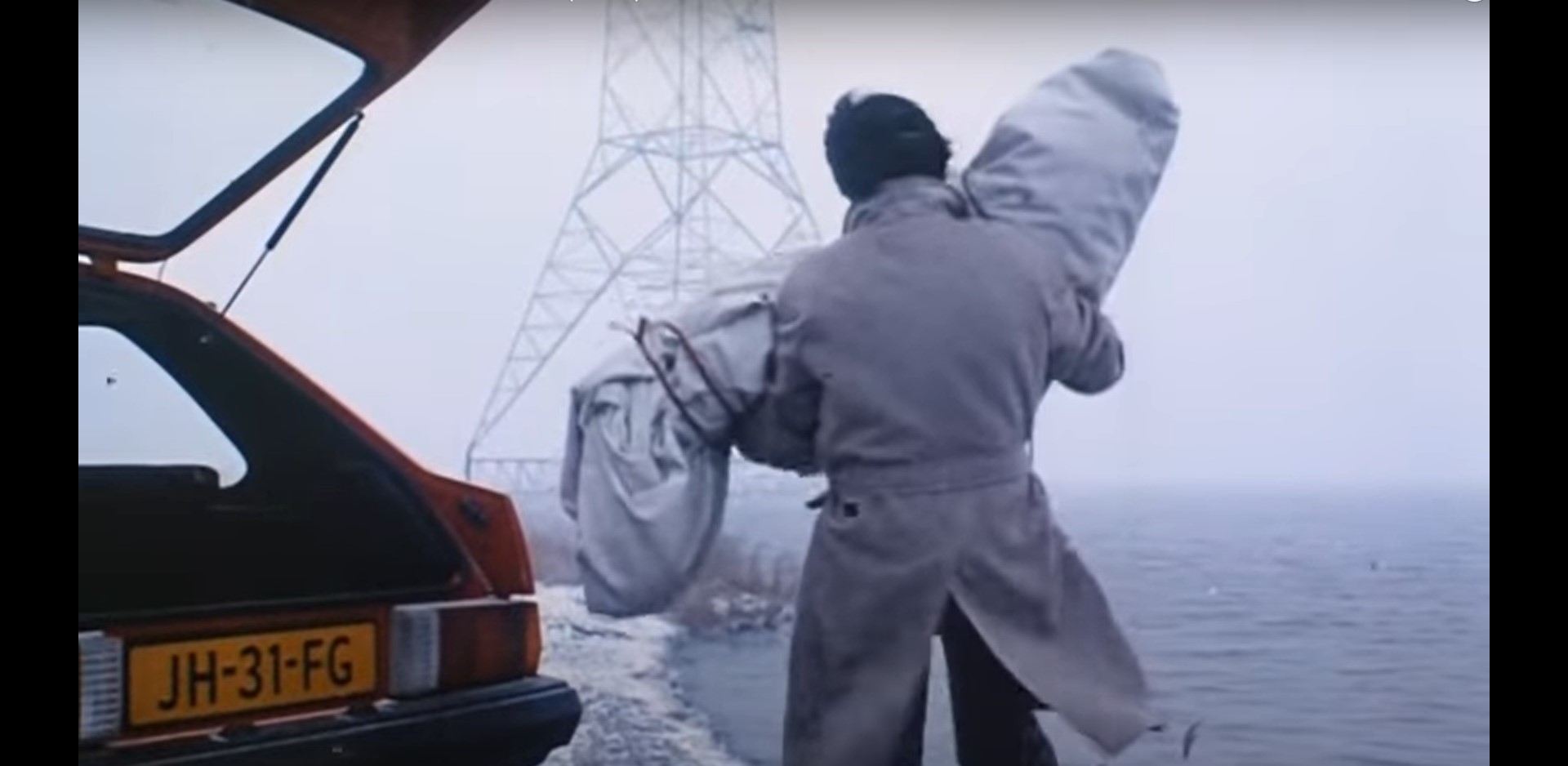
An Amsterdam brothel Happy House Club clings to the good girls that remain employed to pleasure the reprobate and insensitive johns that visit.  Dora, a virtual working girl lifer, brings in new blood, Diane, a young mother desperate in need of financial support because of her drug addicted husband.  Night after night, customers select through the ever-growing service list the club’s owner deems profitable while the women and the matron manager naively cope with a profession that’s quick, easy cash.  They create a process, a standard of procedure so to speak, that tries to make the work that much less degrading but with each client, a little piece of their humanity is chipped away.  Simultaneously, a methodical serial killer abducts the women he previously surveillances from off the street, chains them to a bed in a remote room, takes snapshots of them in confinement, and slowly starves them to death, which could last months.  The two stories are intertwined and connected by a gender dominance disease in which a slow resistance begins to build to an explosive head.
The unofficial sobriquet of the Queen of Feminism Marleen Gorris had made a name for herself as a staunch supporter of feminism and lesbianism with her controversial and provocative films.  Her acclaimed 1982 debut written-and-directed “A Question of Silence” show oppressed gender solidarity and mutiny against a systematically enslaved masculine society.  Continuing her crusade against the patriarchal grain, Gorris followed up “A Question of Silence” with another powerfully messaged, social commentary film that, again, places women emotions and safety under the unyielding thumb of men two years later with “Broken Mirrors.”  Natively known in the Netherlands as “Gebroken Spiegels,” the film marks the return of select cast from her inaugural feature, marshalling in a new narrative in the neo-feminism cinema under the returning production company Sigma Film Productions with producer Matthijs van Heijningen (“A Woman Like Eve,” “The Cool Lakes of Death.”).

As mentioned, a pair of actresses have carried over from “A Question of Silence” to maintain a principal performance in “Broken Mirrors,” beginning with Henriëtte Tol who played the outwitting secretary in Gorri’s debut returns as a woman working in Amsterdam’s red-light district as a seasoned employee of the Happy House Club.  Tol ups the ferocity levels of her previous performance while still maintaining a gradually steady sex appeal.  Another returning actress who nearly didn’t have any dialogue in her previous role as a mother without a voice is Edda Barends now in a character that can’t stop screaming for her life as the latest abductee chained to a cruddy bed in a cruddy room with a coming-and-going, polaroid-enthused sociopath. In Barends starkly different rage against the man machine archetype, the actress finds herself discomposed in the face man she can’t understand but eventually recognizes his nasty need and withdraws it.  Both women excel beyond the unsavory current conditions and transfer the power that’s been dangling over their heads into themselves.  Newcomer Diane, played by Lineke Rijxman, becomes the key to initiate the unraveling of power of a man-owned brothel that subjugates women not as mere employees of a man-owned business but as nothing more than moneymaking ass-shakers and back-layers.  Rijxman puts in the work of having her character be resilient at work and at home as she juggles a wide variety of disgusting clients to please their whims while coming home to deal with a junkie husband’s mess.  As the story progresses and the women fall deeper under life’s heel, Dora and Diane spark what begins as a mutual friendship that slips gradually into sexual tension, giving them more assurances when they need it the most as the brothel parties become bigger and more intense.  The parallel story runs along the same oppressive path but in unconventional, unlawful, and inhuman way with the kidnap and starvation torture of a young mother.  Eddie Brugman is also a returning “A Question of Silence” actor who now finds himself in the shoes of Jean-Pierre, a mild-manner husband and by all rights societally normal seemingly man who visits the brothel for a quickie, easy money as Francine (Marijke Veugelers) would proclaim, but his dark hobby is to snatch unsuspecting women for his own perverse pleasure of watching and hearing them plea for their lives.  By the end of both stories, connected by Jean-Pierre and who finds himself at the end of the disappointing stick for his kicks, crafts more than one way to not give in and to stand up against male malarkey and nastiness.  The cast rounds out with Carla Hardy, Coby Stunnenberg, Anke van ‘t Hof, Elja Pelgrom, Hedda Oledzky, Arline Renfurm, Johan Leysen, Wim Wama, and Elsje de Wiljn.
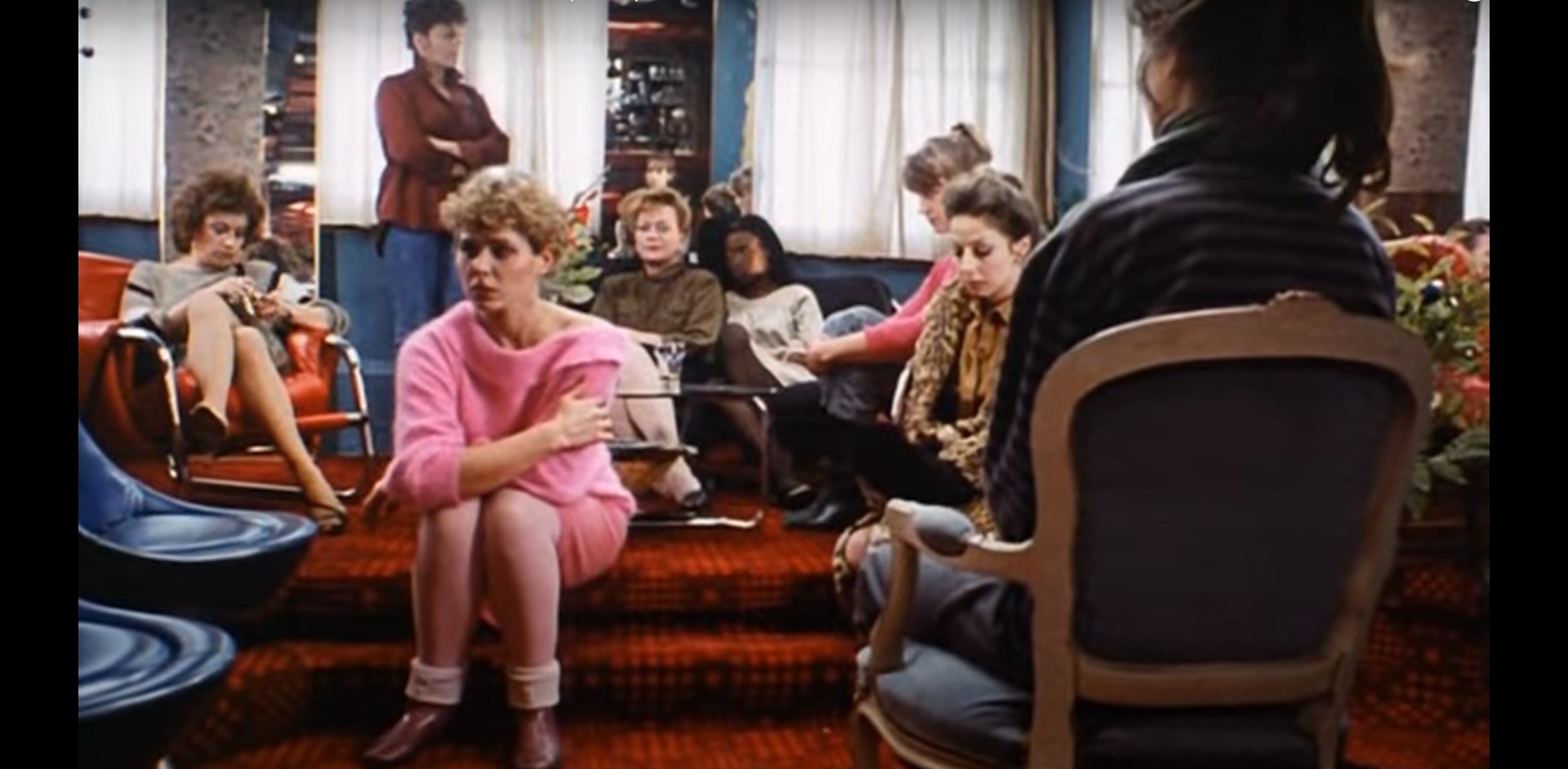
Not only is “Broken Mirrors” another contentious and provocative incendiary story that wedges apart men and women, with the latter being victimized and justified in their actions, but Marleen Gorris also directs one hell of a boiling point intertwining between parallelisms that almost have no link to each other until the reveal.  Gorris doesn’t necessarily employ red herrings to keep audiences guessing but rather keep the killer obscure, as all that we are exposed to see is from behind the man, who doesn’t speak much either and if he does speak, his responses are to the point with as little descriptors and adjectives as possible.  Not only is the editing between simultaneous stories organic but also the other editing techniques that materialize the characters’ emotional decaying befit the mostly linear structure, such as with the student party montage at the brothel that does a roundtable of individualized scenarios between the women and their slimeball clients in an emotionally painful grin-and-bear it series that culminates to which one character best describes the ordeal as feeling like a human lavatory.  The feeling is very much mutual with viewers as well, like a used wet nap to scrub off a soul staining filth covering head to toe, as Gorris represents a thematic exactitude of fiercely dividing feminism that would define her career. A clear understanding of how brothels operate is greatly depicted with that flimsy layer of excitement and efficiency to mask the ugliness underneath.
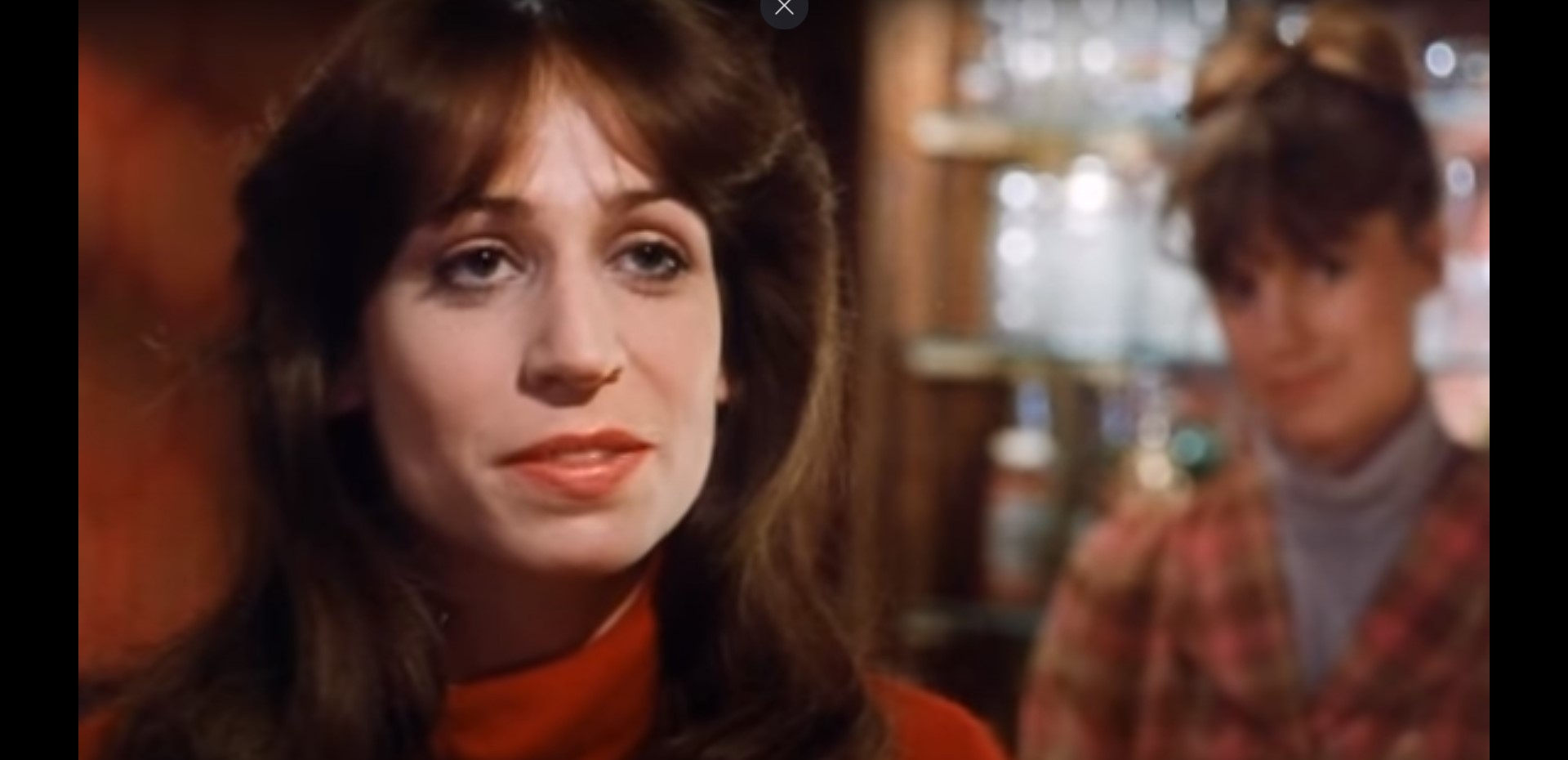
“Broken Mirrors” arrives on a Blu-ray home video from Cult Epics and, once again, resurrects and restores a pièce de résistance of Netherland celluloid. The new 4K high-definition transfer from the original 35mm negative is presented in European widescreen 1.66:1 aspect ratio on an AVC encoded, 1080p, BD50. 35mm print looks none worse the wear over the course of father time with a mint print. Restored color graded has freshened up the natural print palette of the brothel story while the kidnapper’s tale sustains a grayscale to bisect the narrative and the delineation for both presents a palatable depth. The aplenty natural grain doesn’t swarm and takeover the higher pixelations to award us with a satisfying vintage image that now enriched without any smoothing enhancements nor any compression issues to note. The Danish language release comes with two audio tracks: A DTS-HD MA 2.0 Mono and a LPCM 2.0 Mono. “Broken Mirrors” fair well from both dual channel formats with the DTS-HD aggrandizing the Lodewijk de Boer razor synth score with intent that in itself is a character. Comparatively elsewhere, the two outputs offer little differences and sate with forefront dialogue, balanced in front an equally balanced ambient track. Optional error-free English subtitles are available with haste text to keep up with the fast-paced Dutch. Special features include an audio commentary by Leiden University film scholar Peter Verstraten, an archived 1984 interview with U.S. sex worker and activist Margo St. James with Cinema 3 host Adriaan van Dis, a promotional still gallery, and trailers. The Cult Epics Blu-ray comes in a clear, traditional snapper sporting the film’s most iconic and titular moment, displayed also on the disc art, while the reverse side of the cover depicts a still image of Carla Hardy. The region free Blu runs at a not rated 110 minutes. A good double bill against “A Question of Silence,” “Broken Mirrors” makes for a morosely on the trot sister feature in more ways than one to further a Marleen Gorris artfully aired agenda.

The Best Depiction of the Unpleasant Side of Brothels.  “Broken Mirrors” on Blu-ray.

A Family of EVIL Walks, Talks, and Comes in a Putrid Shade of Blue! “Super Z” reviewed! (Synergetic / DVD)

“Super Z” Has Bites and Baffoonery!  Amazon.com Has it on DVD!

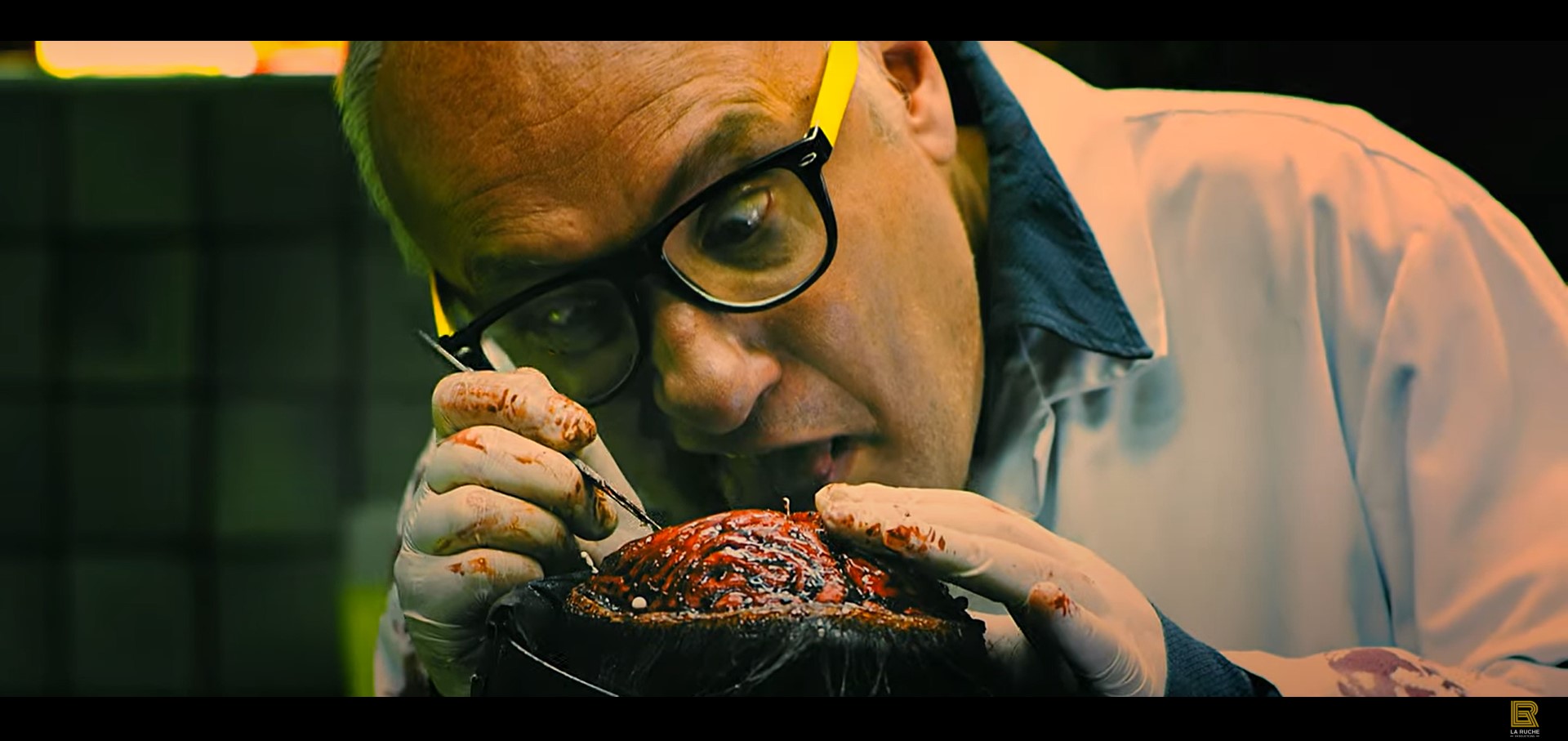
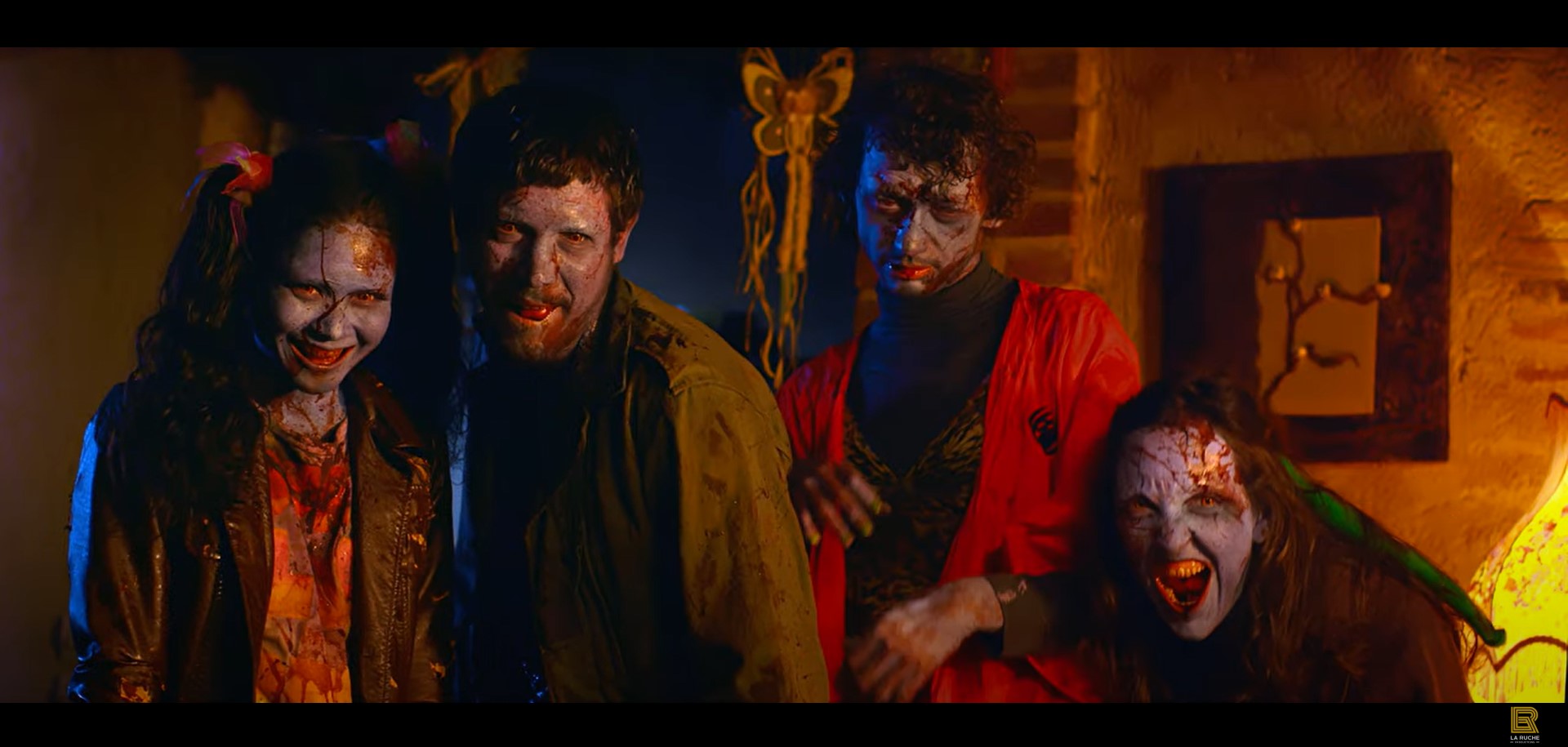
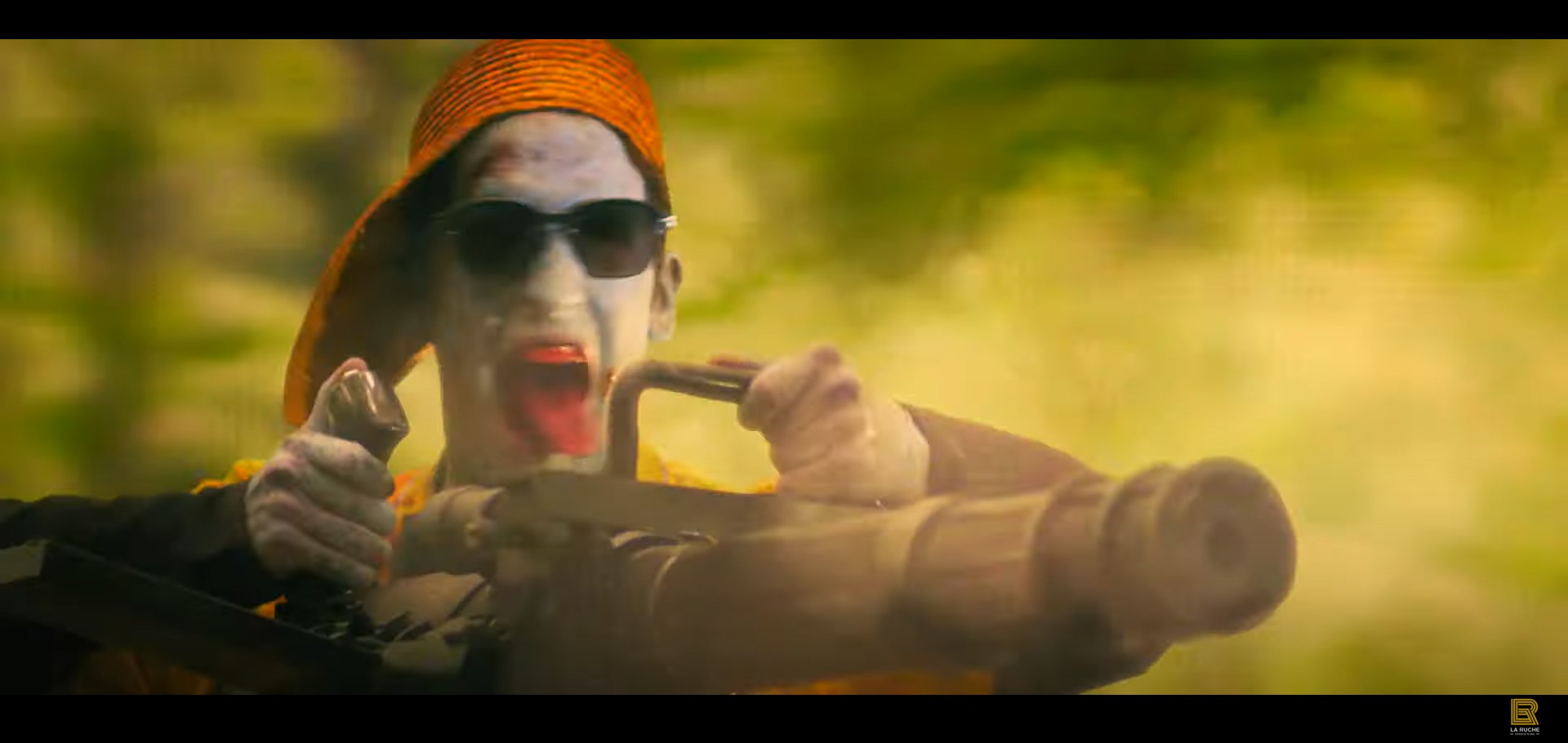
A genetically produced, made-to-order zombie foursome are grown in a private laboratory and continue to be experimented on by a greedy CEO and his team of mad scientists from conception to create a group of governable, intelligent, and unstoppable do-bidders.  The latest batch of untested cultivating serum provides the four with the ability to think and talk, the only severe drawback side-effect is the  foulmouthed and uncivilized behavior makes them spitefully aggressive.  Able to speak for the first time, the zombies are actually a family of four and are able to use their undead abilities to escape with their undead lives to plot a revenge on all of humankind for all the cruelty brought down upon the zombie gene.  Feasting on a nearby couple to stave their hunger and infecting the couple’s white-boy rapper son to join the family as one of their own, a male heir of sorts amongst two older sister siblings, the now nuclear zombie family forages for human flesh while turning a rundown cabin in the woods into a place they can call home and plan their worldwide retribution, but as mother and father work on their relationship issues, a son finding love to become a man, and two sisters with an uncontrollable bloodlust, the impatient CEO hires mercenaries to hunt them down as retrievable property.

Who better to create an absurd, over-the-top zombie comedy than the people of France, the national birthplace of the absurdism philosophy.  That is what the gonzo-gory “Super Z” reflects, a heightened realization of life and intelligence after many years of being a docile dead becomes the basis for French writer-directors Julien de Volte and Arnaud Tabarly in their first feature length film.  Grossly saturated with explicit pejoratives, zany antics, and is hairbrained on a level I never would have thought could be achieved, “Super Z,” short for Super Zombie, is based off the filmmakers’ 17-minute 2014 short film “The Foodies” and now in 2022, the film unlocks yet again a very seldomly explored narrative that walks the same flip-the-script lines on taking the George Romero-style zombie perspective, such as with 2007’s “Aaah! Zombies!!” or 2013’s “Warm Bodies,” and laces it with an unrestrainable absurdist style.  To be honest, “Super Z” will repel the majority of audiences who can’t embrace its border crossing childishness and cartoon consorting pursuance.   Following the success of the short film, Tabarly and Volte’s Orléans, France based La Ruche Productions is the production company’s first feature film outside the regular shorts and documentaries accomplished by the company and is produced Laura Townsend.

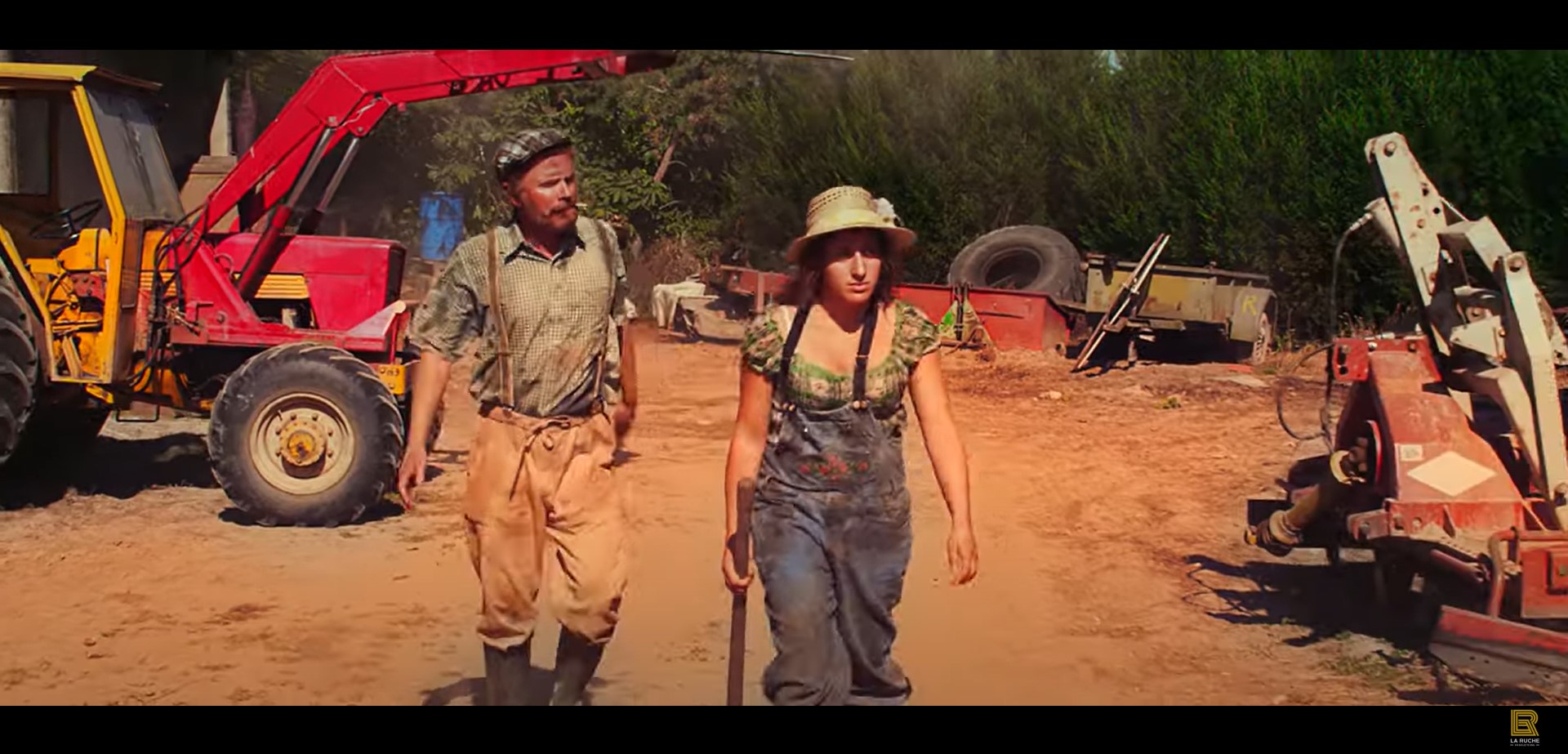
The story engrosses us into the ebb and flows of family dynamics, but not just any kind of family dynamics as it’s made up of genetically modified zombies.  Yet, Arnaud Tarably and Julien de Volte don’t divide the extremities of the living and dead too far apart.  Family dinners are still held together around the table, the purpose of existence within the fragile relationship construct comes into question quite about between father and mother, and even a teenage boy coming into manhood when washed over with an overpowering smitten sensation at first sight of a farm girl are all the things the zombie family experience making a life away from human interaction with the only human interacting being the one where the zombies have the upper hand as well as the severed torsos, the castrated genital organs, or the decapitated heads as a full table spread with dad’s special gravy (aka blood) as the secret sauce.  While their performances won’t win any kind of awards, at all, I do believe “High Lane’s” Johan Libéreau as the father Gertre and “Savage State’s” Julien Courbey as the mother Stephana cater to the bloody nub of gnarly passion between two also covered in filth and body fluid zombies lovingly trying to protect their unique family at a normalized primal cost and formulate a monumental revenge against humans.  One question that rises out of Gertre and Stephana’s relationship is is Stephana supposed to be a man actor playing a woman character assigned gender by genetic disposition or a zombified gay man in transition?  It’s never clear but it also doesn’t really matter as it adds to Stephana idiosyncratic comedy as she removes a female corpses breast to sew to her own chest but also pees blood standing up!  It becomes just a curiosity that arises but the crux of the character is nailed down by Courbey who shows a sensitive and savage side being a cabin-wife to three children and providing for Gertre’s quest to queen her zombie world domination.  Gertre and Stephana’s children are played by returning “The Foodies” actors Fabien Ara as the baby boy Yvon and Florence Bebic-Veruin as sister Georgette with the addition of Audrey Giacomini being adopted into the ferociously multifaceted family cast as the second sister Marcelline.  Ara and Bebic-Veruin reprise their colorfully blue necrotic-skinned and blood-red splattered characters as squabbling siblings as the babied Yvon is coddled to the point of seeking love in a local farmer’s verbally abused but carefree and nearly toothless daughter Augustine, another reprised performance by Marion Mezadorian who was also a farm gal in “The Foodies.”  “Super Z” fills out the cast with lots of zombie fodder but also includes Jean-François arises, (“Time Demon”), Ludovic Schoendoerffer (“Crime Scenes”), Jacques Boudet (“Dracula and Son”), Laurent Bouhnik, and Jo Prestia of “Irreversible” as the mercenary’s very much alive cousin and the zombie family’s bodiless uncle!  Wait, and you’ll see what I mean.

“Super Z” will not sate everyone’s thirst of comedy nor will be gripping horror, but the French absurdist film will quench with gore galore with a setup that’s real light on its feet, swiftly making haste through a narrative that if you blink or didn’t hear a certain part of the dialogue, or read the subtitles if you don’t understand French, than you’re left holding the bag trying to play catchup on what the hell is going on.  Not your fault by any means as “Super Z” goes at a super breakneck speed that aggressively aggregates zombie intelligence, a laboratory escape, a zombie-turned-son, and a quiet, secluded abode to make camp all within the first 15 minutes or so.  From there, we ease into the zombie family country life, getting to understand their troubles, their ambitions, and their family squabbles more-and-more while father and his daughters hunt down bypassing humans with a machete and make a smorgasbord of homecooked organs, blood, and flesh out of them that is fit for an undead king while the wife cooks the food and showers the biologically unrelated brat with pet names and adorable little hairdos to much of his disgust.  Zany can’t describe “Super Z’s” overzealous rubbish yet within that zany overzealous rubbish, a thin stream of guilty pleasures can result in keeping attentions from pressing the off button and burning the disc to a crisp.  “Super Z” is not a too terrible horror-comedy as long as understanding the premised background helps focus on the filmmakers’ key conveyances within an absurdist designed paradigm that just happens to have lots of blood and guts. 

If the zombie subgenre was becoming too stale as week old bread, then “Super Z” keeps the rotting bags of walking meat fresh with a managing ménage of the uncouth undead. Synergetic distribution goes international with domestic releases with “Super Z” on DVD. The Smart-Ass Zombies are presented in a widescreen 2.39:1 aspect ratio with a picture quality that renders clean just like many modern-day digital models. The Synergetic DVD has consistent Mbps decoding reliability on the DVD5, decoding at a rate of 8.9 Mbps with hardly a blip on compression. In regard to the coloring, the zombie family’s forest background pops with lush greenery that becomes invariably evident in other mise-en-scene aspects as a higher contrast delineation defines the boundaries super well, materializing emerging imagery with deep shadows and a vibrantly eclectic color palette resembling near comic book visuals that luckily absorb Cyril Féron’s cut-and-paste visual effects into the crass configuration. The French Stereo 2.0 offers free from nuisance tracks but definitely output in a two-dimensional standard that, since there’s more range than one might expect, softens the punch of this madcap zombie mayhem to a par mix that works well enough. The zombified autotune adds a layer of obstruction over the dialogue track but if reading the burned in English subtitles, then there’s nothing lost in that respect. The entire mix is an overall healthy dose of ambient bustle, sprightly dialogue, and lots of buffoonery snaking in between. The Synergetic DVD doesn’t support bonus material with only the feature and a chapter selection on the main menu but there is an after credits stinger of a cow and a severed head that attempts one last quick chuckle out of the viewer. Supporting all region codes, the DVD has a runtime of 80 minutes and is seemingly unrated, there is no stated rating on the back cover. Speaking of which, Synergetic DVD covers skirt the cost with slapdash compositions an eighth grader learning AutoCAD could have completed for a solid C+. The mustard yellow with black, nearly indistinct, vignettes don’t provide any kind of appetizing stimulation and, oppositely, can snuff out any sort of enthusiasm toward checking this French absurdist piece out, but don’t let the lackadaisical cover art dishearten a peak into what could be a considerably wild and gory experience. Just be warned that “Super Z” isn’t for everyone and everyone isn’t for “Super Z” living on a different, bizarro plane of existence.

“Super Z” Has Bites and Baffoonery!  Amazon.com Has it on DVD!

EVIL Told You Not to the First Time! “Don’t Fuck in the Woods 2” reviewed! (Wild Eye Releasing / Blu-ray)

“Don’t Fuck in the Woods 2” on a Special Edition Blu-ray!  Purchase Your Copy Here!

Beginning where the last film left off, alien attack survivor Jane, bruised and bloody, stumbles into the under-renovation Pine Hills Summer Camp where a group of newly hired and horny camp counselors, a nurse chaperone, and a handy-man ex-con spruce up the place.  Jane is met with hostility when sounding off about monsters and death, but when the Pine Hills staff realize that a few of their friends are missing and haven’t checked in, Jane’s story is beginning to resonate and take traction.  Out in the woods, the rape-impregnated sperm of the monster are parasitic and seek out human hosts to infect with raging hormones and adrenaline, transforming hosts into razor-sharp teethed, superhuman mutants hellbent on procreation of a new monster.  The invading parasites turn the isolated camp into a slaughter yard of bloodshed and chaos and it’s up to the remaining survivors to nut up and put violent stop to an alien’s insidious carnage. 

Well, by God, Shawn Burkett did it!  The director made a sequel to his straight-forward, out-of-nowhere, 2016 indie hit “Don’t Fuck in the Woods,” directly following up from where the first film left us off with a lone survivor having just blown up a sex-crazed, blood-lusting alien creature who clawed, tore, and banged his way through a bunch of naked women and some off-color guys doing the dirty in the woods.  The first film made such a splash of interest with the provocative and often controversial title as well as being one of the most pirated movie in the last decade due to said title, The Ohio-born Burket began to formulate the next step of “Don’t Fuck in the Woods 2” with a story co-written with one of the sequel’s principal stars, Cheyenne Gordon, writer of the Tory Jones directed films “The Wicked One” and “They See You.”  The enticingly crass, but greatly adored and sought after title aims to be gorier and even more nudity-laden as the first film with the story situated at an actual family-owned campground, Hannon’s Camp America, in College Corner, Ohio.  Shot in the Summer of 2019, the pre-pandemic film, “Don’t Fuck in the Woods 2,” is a production of Concept Media, Studio 605, Rising Fire Films, Taintbad Productions, and Head on a Stick Productions with Burkett producing and John Lepper (aka Johnny Macabre, executive producer of “Smoke and Mirrors:  The Story of Tom Savini” and “The VelociPastor”) as executive producer.

Though the sequel does not mark the return of the voluptuously captivating adult actress Nadia White, as her character (spoiler alert) was ripped apart by the creature (end spoiler alert), the sequel casts a whole new lot of ladies willing to let Mr. Skin archive and immortalize all their bare body parts forever…or at least until the servers crash, the internet dies, or the world ends.  It’s not like eternity or anything.  The one returning principal to return is the first film’s sole survivor, Jane, and returning to fill her blood-soaked shoes is Brittany Blanton that has officially solidified the Houston, Texas native as a scream queen, franchise final girl, and an overall badass slayer of otherworldly creatures.  Blanton is just one of several actresses to play into the popular campy motif and titular theme of open sexuality and nudity as a formulaic no-no in horror films.  B-to-Z horror movie regulars, starting with “RIP:  Rest in Pieces’” Kenzie Phillips, “Model Hunger’s” Kaylee Williams, “Slaughterhouse Slumber Party’s” Kayla Elizabeth, “5G Zombies’” Julie Anne Prescott, “Blood Moon River’s” Cara McConnell, and Nessa Moore, who I suspect used a body double for her bare all scene, follow suit (birthday suit that is) playing chopping block babes abreast of their outcome.  Burkett doesn’t completely make void his sequel of complex human emotions, supplying bitter love triangles, an oversexualized third wheel, and two more adult-ish characters running from their unpleasant past,  One of those two is ex-con Gil (co-writer Cheyenne Gordon) forced into a corner as the camp’s handyman while attempting to turn his life around for the better but finding the path to redemption difficult when being harassed and threatened by corrupt law enforcement officer.  Already down in the dumps being judged and juried by fellow campers and law enforcement, Gil is sympathetic role that earns his keep when going toe-to-toe with mutation spawn.  Mark Justice (“Atomic Shark”), Jason Crowe (“Dead Moon Rising”), Tom Komisar (“Slaughterhouse:  House of Whores 2.5), Alex Gottmann, and returning from the first film for a brief but memorable scene is Brandy Mason completes the cast. 

No contextual messages. No metaphors. No symbolizing themes. “Don’t Fuck in the Woods 2” pumps you full of the same obligatory creature feature construct as the first, those who have sex, get murdered….horribly. The only slight difference this time around is director Shawn Burkett gets himself out of the man-in-a-monster suit element and into a state of possession as the cast of characters become heinous hosts to parasitic alien slugs, essentially turning people on themselves in a battle to the death. The concept brings a new angle to the series to build upon the creature’s never say die multi-nefarious abilities that keeps it returning, in one form or another, from the grave. Blood runs rampant with the special effects team implementation of a blood gun into their bag of tricks that soaks the cast in more than one scene, but I would say between the two films, both are equally matched in blood shedding as the sequel, that doesn’t see the return of the first film’s SFX artist Deryk Wehrly but hires the 2016 film’s producer, Rob Collins to fill that void, doesn’t surpass the antecedent’s practical butchery. Looking through a technical critical lens, the indie feature has noticeable issues with crew mistakes, such as shadows of the boom operator in the frame, and scenes that hit the cutting room floor would have shed light on a few second and third act scenes that ended up not keeping the story smooth in a logical sense; one of the bigger scenes in question is one two large arms break through a wall and grab Gib from behind. The arrangement of character positions didn’t quite work out and the feature’s after credits bonus scene cements that misalignment even more. “Don’t Fuck in the Woods 2” might have filmic gaffe (there might be a cream for that) but what started as a straight-shooting, sex and slaughter, potboiler has become Shawn Burkett’s undeniable magnum opus and he’s only just beginning.

Wild Eye Releasing camp on one of the most campiness horror to date with “Don’t Fuck in the Woods 2” on a special edition Blu-ray release. Presented in high definition, 1080p, the transfer is exhibited with widescreen 2.35:1 aspect ratio. First thing I noticed about the independent film and distributor release is there are virtually no issues with compression. The black areas remain deep and inky, hues naturally come across without any fluctuation, and there are no visible banding or artefact issues. In comparison to the first film, the sequel is quite brighter with more lighting available and Burkett isn’t too heavy on gels or tints unless in slug-vision mode with a tinge of low opacity fuchsia. The release comes with a lossy English 2.0 stereo mix that’s every bit languid as it sounds with current releases. Dialogue is clean and clear of damage and interference but is too underweight for full-bodied effect. Sound design offers arm’s length depth but is ample in range with slimy sluggy-ness slithering about and skirmish associated hubbubs to make the action excitable. Optional English subtitles are available. The special features include a behind-the-scenes featurette that gives a walking tour of the Hannon’s family camp shooting location building-by-building, blooper reel which can be seen during the end credits, two deleted scenes, the original producer trailer, Wild Eye Releasing trailers, and a feature length documentary “What Happens in the Woods: The Story of Don’t Fuck in the Woods” that digs deep not only into the genesis of “Don’t Fuck in the Woods,” but also into the personal strifes of Burkett and how the story’s title was turbulent, controversial, and heated from the beginning but became a wildly great success that spurred greenlights for future sequels, such as the after credit scene that may or may not involve space and/or time travel! The clear Blu-ray snapper with latch has physical special features that include a folded-mini poster insert, reversable cover art with a composited image on the front and a bloodied Brittany Blanton screengrab snippet on the opposite, and cardboard slipcover with a mashup character collage on the front. The brisk 81-minute runtime compacts the blood and boobs in this region free, unrated disc. Shawn Burkett teases fans with a third picture that’ll surely bring the wanton woods into the world of tomorrow but, for now, bask in “Don’t Fuck in the Woods 2” unfettered maverick success.

“Don’t Fuck in the Woods 2” on a Special Edition Blu-ray!  Purchase Your Copy Here!

This Relationship is a Complicated EVIL! “Blood-Red Ox” reviewed! (Breaking Glass Pictures / DVD)

Purchase “Blood-Red Ox” on DVD home video!

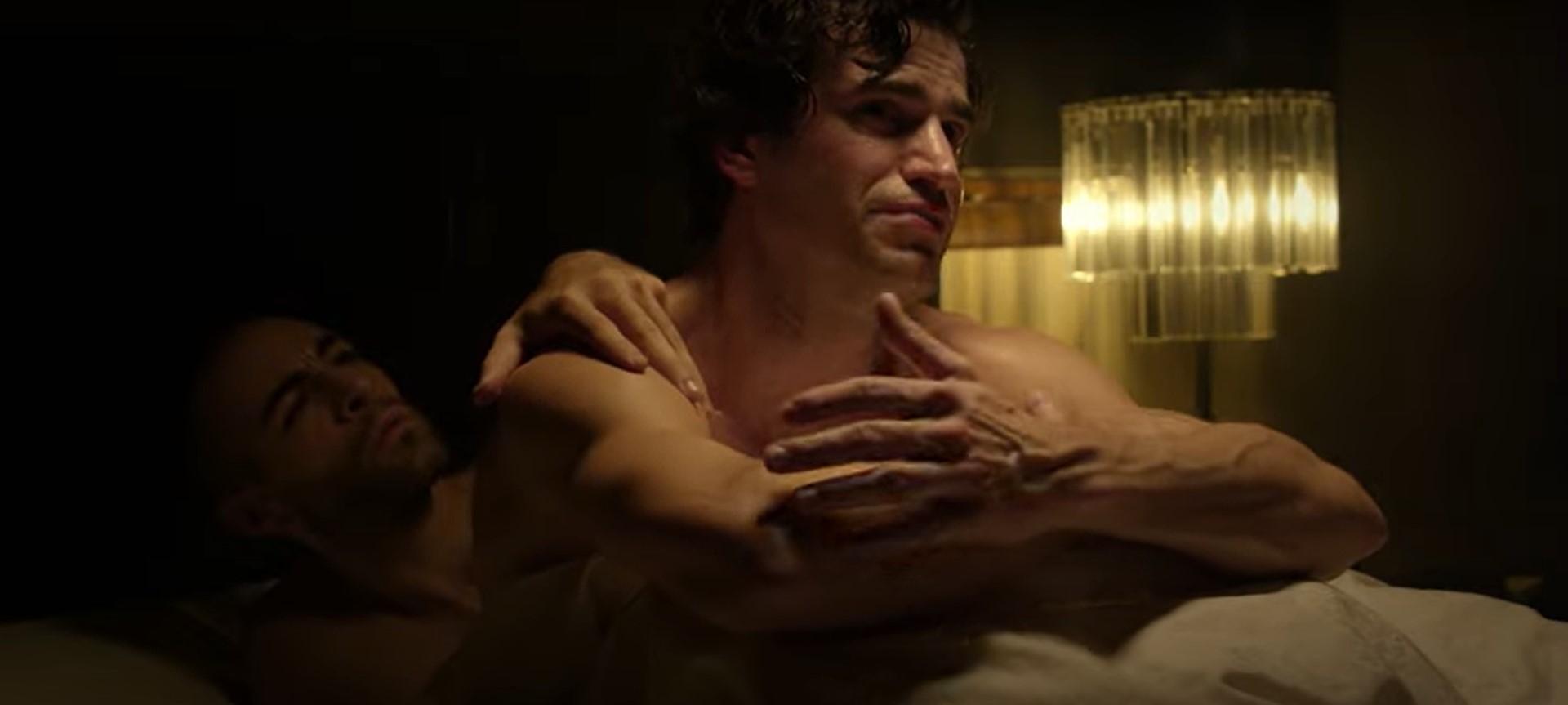
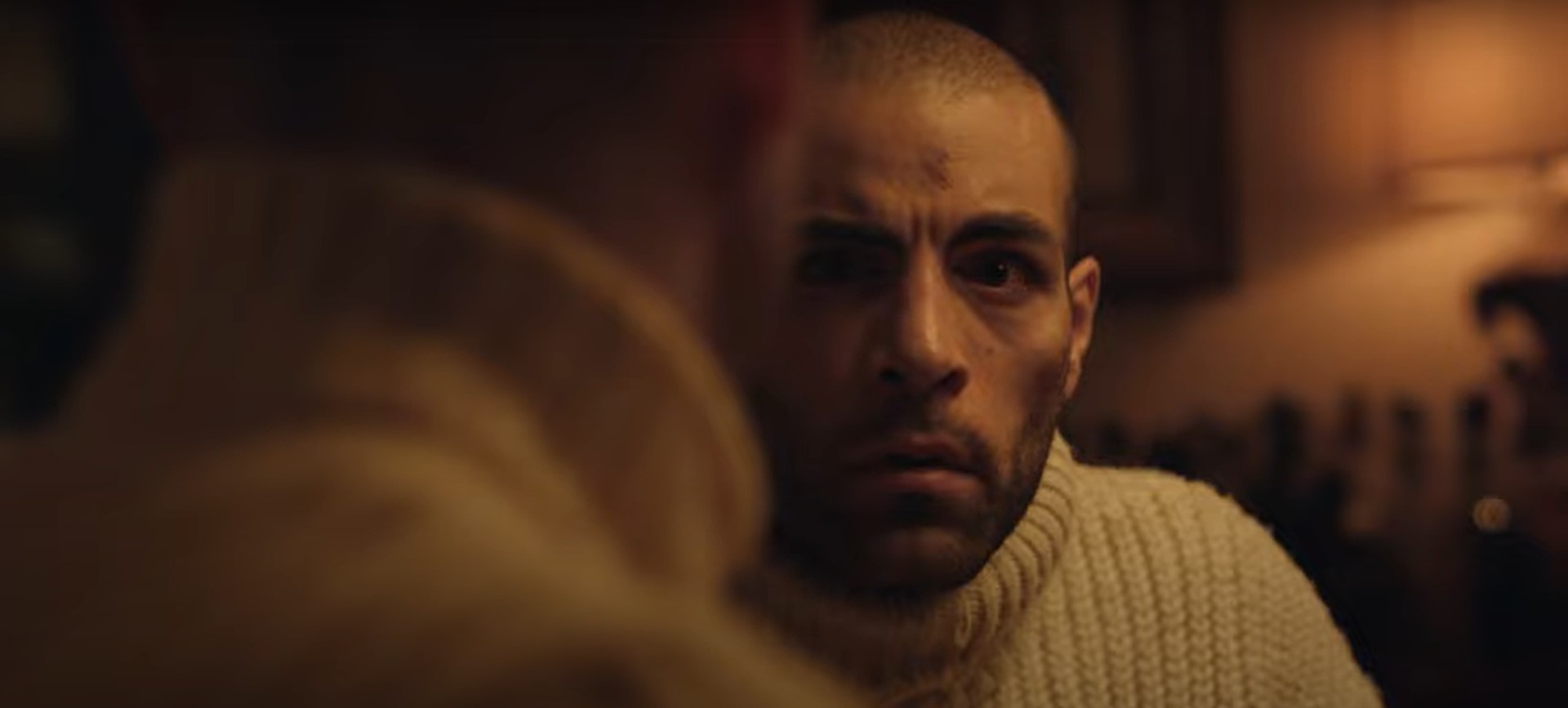
Writer Amir and his boyfriend Amat, whom have a hot-and-cold, off-and-on relationship, travel down to Bolivia on behalf of Amir’s friend seeking an expose on protecting the local endangered rainforest from land developers.  Upon arriving and settling into Amir’s friend’s childhood home set on the outskirts of town, Amat begins to experience reoccurring vivid nightmares that used to plague him prior to meeting Amir.  Disorienting, blood-soaked, and with a vicious-looking therianthropic beast – half-ox and half-human, Amat slowly begins to lose memories and even the memory of Amir fades.  Amir struggles to reconnect with Amat who’s continues his spiraling decent into paranoia and also struggles with juggling timelines as events of the past and present intersect in a surreal pattern of irrepressible madness.

For someone like me who has married into a Bolivian family and culture, you would think I would have been exposed to the entire cache of Bolivian cinema that could utilize the Earth-centric culture, a rich yet tumultuous history, and the vast number of landscapes that stretch from the Andes Mountains to the lush Rainforests to the desert plateaus.  However, the Bolivian film industry is microscopically small, and I’ve only ever experienced two Bolivian produced films in my 10+ years of marriage and my 39+ years of living on this Earth.  Both from 2021, the first was Kiro Russo’s “El Gran Movimient” aka “The Great Movement” about the destructive city life and how an unprincipled young man is saved by connecting himself back to mother earth by way of a Brujo, a male witchcraft practitioner living disconnected from modern society and living off the land.  The second was this film we’re about to cover, “Blood-Red Ox,” that was written and directed by Rodrigo Bellott, co-written alongside Nate Atkins (“Sinister Savior”).  Bellott bounces between native Bolivia and New York, having graduated from Ithaca College, and regularly uses the two locations in a broader sense in his films.  Bellott is also a part of the queer community and reflects a queer theme in much of his repertoire, including “Blood-Red Ox” where the two central characters are gay men in a relationship.  “Blood-Red Ox” is a production of Narrative Engineer, presented by Media Luna New Films, and is produced by Bellott, Andrea Componovo, Rodrigo A. Orozco, Kaolin Bass, and Yasser Casal Moreno with Nate Akins and Bernardo Ratto serving as executive producers.

Lebanese American Mazin Akar stars in his breakout feature length film as journalist Amir whose been called to write a story about the threat of an oil company deforesting and disrupting one of Bolivia’s natural and beautiful preservations, the rainforest.  Akar is accompanied by producer Kaolin Bass in what would be Bass’s debut feature film as well, playing Amir’s complicated love interest Amat.  Akar and Bass make a handsome couple, natural in on screen affections, and there’s a fair amount passion, compassion, and cathartic emotions to understand not only their love for each other, but also their surface issues of trust.  Bass provides an engaging performance as lover moving backwards in time in regard to his relationship with Amir while Amir remains the constant, stuck in the now but disoriented by his consciousness of Amat’s seemingly erratic actions but not conscious of the settings and timeframes that change and only noticeably by the audience.  All the while, Amir is encountering Bolivian and New York-based characters, some strange to them, some with changing personas, and others not terrifyingly abstract, such as the ox-headed naked man huffing and puffing like an ox.  Side principals Amancaya (Andrea Camponovo, “The Shades”), Amaru (Vitorio Lema) and Amro (Julián Mercado) have a parallel story of their own that becomes shadowed by Amir and Amat’s, leaving the story imbalanced by its perhaps narrowed focus on the queer aspect that relates better to Bellott, which the director had mentioned that “Blood-Red Ox” is a personal story to him in other articles.  Performances are raw with intimate and bold love scenes as well as makeup heavy and continuity intense details that really impress from the actors that requires of them full or partial nudity and to be able to be in the mindset of a swirling narrative.  If you haven’t noticed by now, all the character names begin with A that’s either a fun little characteristic or a far more trouble clue about characters as the cast rounds with Miguel Michel, Ana Dominguez, Idalmis Garcia, Shawn Brown, Toto Vaca, and Mary Ellen Liepins.

Atmospheric, surrealistic, and elevated horror, Bellot’s “Blood-Red Ox” feels like a labyrinth of the mind that’s partly eco-horror with the motifs of a looming ox figure reoccurring in and out of reality and the backdrop of Tarija’s rainforest threatened by industrial outsiders.  In 2017, Tarija suffered a large-scale forest fire that resulted in 3 deaths. many injured, and severe loss of ecosystem crucial vegetation, a fact that was incorporated into the dialogue and becoming the very foundation for the story built around it with a subtle theme of dependency that translates to the Amir and Amat relationship and we can see how that is all folded together when the finale reveals the truth. Before then, the seemingly straightforward mystery narrative following a rocky-at-best same-sex couple deep diving into the South American jungle, surrounded by unfriendly, perhaps slightly appalled locals that are either wary about outsiders or, what’s typical of South American culture, troubled to see two men in a relationship because of the male-dominated society. Much of the reactions are indirect and ambiguous but there, a hidden jab against noticed only by those being pelted by side-eyed glances, disapproval gestures, or curled lips of disgust. Bellott doesn’t chiefly focus on this nagging undertone but rather takes the narrative off road onto rocky, perilous terrain that increasingly becomes abstract and is riddled with conundrums. Timelines cross over one another as we’re teleported seamlessly, effortlessly back and forth between upstate New York and the colonialized-esque villas and mountain country of Tarija, Boliva. Bellott deconstructs Amir and Amat’s relationship by keeping Amir constant in the current and Amat moving backwards in time, creating friction as well as non-linear disorder leading to something just isn’t right with the whole situation. “Blood-Red Ox” descends into a lurid state that works until Bellott’s envoi of explanation that splits the story unevenly and without sensical justification as the story becomes too wrapped up and complicated where a less is more philosophy would have perfectly sufficed.

Provocative and boundary-pushing independent home release film distributor, Breaking Glass Pictures, strikes a deal with Media Luna New Films to release “Blood-Red Ox” onto DVD.  Presented in an unmated 1.78:1 aspect ratio, the wall-to-wall image is hotly lit gel and tinted for most of the fever dreams and hallucinations with the ox-irritating color – a deep shade of red or otherwise known as oxblood red.  However, there are obvious compression issues with fanned out dithered banding on the primary color and on certain negative spaces.  The feature, shot in 2K on a RED camera, is housed on a DVD5 and while a quite few scenes appear unfazed with measured detail, a DVD 9 would have better suited to render the sizeable color use and enhanced the textures, such as a skin to which there is plenty of in the film.  With any digital recording, the transfer is free from any kind of deterioration, wear, age, and other miscellaneous plights.  The audio is track is a lossy Spanish/English Stereo 2.0.  For a dual channel audio output, the result is reasonable enough with the ancillary ambience and dialogue is clear and clean.  The English subtitles are synched well and flawless up until one spelling error late in third act.  There are no bonus features included with this release and there are no bonus scenes during or after the credits. The physical DVD comes in a standard snapper case with a composite of the two principal men embracing each other from one scene with a large, augmented ox head with glowing red eyes and smoke coming out from the side looming above. Locked in a region 1 code, the DVD runtime is 94 minutes and is not rated. “Blood-Red Ox” can be labeled many things – a mental health story, a queer story, an eco-activist story, an avant-garde psychological thriller story – but what the film really symbolizes is the constant day-to-day struggle, in the thick of surrounding horrors, to live a normal life.

“Blood-Red Ox” on DVD home video!

A Snapshot Celebration, Averting the EVILs of Typecasting, for the Iconic Actress “Sylvia Kristel: The 1970s Collection” reviewed! (Cult Epics / Blu-ray)

The “Sylvia Kristel:  1970s Collection” Available on Blu-ray and DVD at Amazon.com!  Currently on Sale!

Sylvia Kristel.  A name that is synonymous to eroticism.  Kristel paved the way in mainstreaming seductive romances of softcore exploits, helping to elevate the provocative genre out of the depths of sleaze and into a more exotic trashy novel for the big screen.   In her titular role in the “Emmanuelle” franchise coursed an arousing path of sexual freedom, uninhibition, and became the sumptuous and worldly window in private fantasies. Playing the role for nearly two decades didn’t stop Kristel from other high profile and lucrative projects with an array of filmmakers as well as her roles pre-“Emmanuelle” that molded the Netherlands actress into a sexual icon rather than object of male fantasies. Cult Epics acquires four films – “Playing with Fire,” “Pastorale 1943,” “Mysteries,” and “Julia” – that even though didn’t have Kristel set as a principal lead still showcased her range within the constraints of a minor, but certainly not insignificant, performance.

“Playing With Fire”

In a madcap Paris where sex trafficking is something of a sport, a wealthy French banker learns his daughter has been kidnap and threatened to be tricked out or burned alive if the kidnappers’ ransom isn’t paid.  Quickly learning that another woman has been mistaken for his daughter, a wave of relief bestows him to be cautious about future attempts on his daughter’s safety.  The banker hires a private detective to protect his loveliest of assets, offering to escort her to a local safehouse with the promise of sanctuary, but the P.I. is operating incognito being really one of the leaders of a surreal and lavish brothel who now has the banker’s beautiful daughter in his possession.  Or is it her who possesses him? 

Unlike any other exploitation-comedy you’ve likely ever seen, the 1975 released “Playing with Fire,” aka “Le jeu avec le feu,” is a wacky deep-dive of surrealistic sex trafficking from French writer-director Alain Robbe-Grillet whose obsession with prostitution rings and other filmic eroticism pursuits extends back within a decade later with “L’Immortelle,” aka “The Immortal One,” and “Successive Slidings of Pleasure.”  A French production of Arcadie Productions, Madeleine Films, and Cinecompany, “Playing with Fire” masters the avant-garde art of making light of a grim topic that results in a pull of emotions.  Robbe-Grillet draws out the shocking aspects of sex slavery while also encouraging a smirk or a chuckle at the whimsical characters and shooting techniques weaved throughout a burlesque narrative.  Robbe-Grillet also plays with the theme of dualities with a number of the principal characters having two or more versions of themselves:  Philippe Noriet plays not only the banker father Georges de Saxe but also a voiceless sleaze erotically interacting with the banker’s daughter in a very Freudian concept between father-daughter relations.  His daughter, Carolina (Anicée Alvina), disguises herself as the thin-mustached private detective to thwart future any attempt at an abduction and there’s also the identity mishap with the similar looking woman mistakenly kidnapped by the ringleader.  Leading us into Jean-Louis Trintignant as the ringleader Franz constantly in a revolving door switch-a-roo façade into the private detective.  The presence of duality doesn’t stop being a present throughout, continuing with the banker’s butler who is also a whorehouse patron without affirmation that they’re the one and same person.  Before their illegal banishment in the mid-20th century, Brothels were widely dispersed throughout Paris, but not until the Nazi occupation absorbed the houses of ill-repute that seared a bad taste of deviant humiliation and sordid disgust into the mouths’ of the French populace and Robbe-Grillet taps into that once time of unrest by splicing in a pair of isolating scenes of goose-stepping Nazi soldiers with one of the moments garmenting Anicée Alvina in uniform and marching in the ranks, suggesting a more sinister subplot afoot in the storyline.  Kristel plays one of the women snatched by Trintignant’s efficiently devious Franz with virtual a voiceless performance in what’s only a symbol of strength and beauty that sets perversion ablaze as she’s taken through the motions of essentially onboarding her into slavery whoredom. “Playing With Fire” can be at times difficult to keep up with the Alice in Wonderland-like surrealism and the character dualism but persists unwaveringly with a multi-faceted narration of deceit, eroticism, and comedy full of perversions and random outbursts akin to satirical skits that make this film unpredictable yet enjoyable to behold.

Pastorale 1943

During the Nazi occupation of the Netherlands, a quaint Dutch farming village lives day-to-day alongside soldiers and German sympathizers known as National Socialists (NSB) to the Nazis, traitors to their fellow Dutch countrymen.  When the Nazis learn of and round up all the dissidents and Jewish heritage people living in hiding on an adjacent, ferryboat island, a small band of unorganized resistant fighters determine the local pharmacist, a NSB member, to be the Nazi collaborator responsible for the treacherous leaking of information because his son impregnates an island village girl, teetering toward the fascist movement when mocked by her peers for her involvement with the pharmacist’s son.  Inexperienced in the execution of traitors, the bungling resistance fighters learn just how difficult planning a murder can be when their scheme falls apart in a small village where everybody knows everybody.

On this second of four Sylvia Kristel features is the Spieghel Filmproductiemaatschaappij of “Pastorale 1943” which makes more prominent the Nazi regime, is set with a backdrop of a Nazi occupied Netherland town and has a cameo role of young and dashing Rutger Hauer (“Blind Fury,” “The Hitcher”).  Netherland writer-director Wim Verstappen, whose had a few titles released previously from Cult Epics, such as “Obsessions” and “Blue Movie,” develops a script out of the World War II drama novel from author Simon Vestdijk with black comedic undertones and a tinge of corrosive sexuality and released the film in 1978.  Pastorale, or Pastoral, refers to the typically calm and idyllic country life which the complete opposite in 1943 Netherlands with all of Europe and East Asia engulfed in war; however, this story takes place in its own corner of the world with a mini, damn near microscopic, war waged between the Nazis occupation along with domestic NSB collaborators and the inhabitants resisting against the encroaching fascism that has plagued revenue crops and instilled an authoritarian culture, such as mandating the teaching of the German language to students in Dutch schools. Kristel’s involvement with Verstappen’s “Pastorale 1943” is about as much as her involvement in “Playing With Fire” with a minor role that’s still a keystone piece to the narrative. She plays Miep Algera, a local schoolteacher disparaged by her neighbors and colleagues for having romantic relations with a Nazi officer, but has she really fallen for the officer or is she secretly conducting counterintelligence for the resistance? “Pastorale 1943’s” two-part story plays heavily embroiling and embroidering characters in the first half to the point of instituting a cornerstone character but when the narrative pivots, to the darker side of implied Nazi exterminations and the fumbling through the execution of a rightfully innocent man, Verstappen homes in on Frederik de Groot as the artist Johan Schults whose Germanic surname causes him much strife amongst his Dutch brethren but to prove himself, Schults takes charge, along with an equally green execution squad of resistance politicians, to murder the NSB collaborator, a local pharmacist Poerstamper (Bernard Droog). The Academy Award submitted “Pastorale 1943” can be light and funny then turn quickly on a dime into wartime darkness and director Wim Verstappen’s vision pops with epic World War II fascism atrocities, confined to one part of the world and without the explicit voyeurism of genocide.

“Mysteries”

After the strange suicidal death of a man named Karlson, Johan Nagel arrives to the coastal town where the death occurred.  Immediately, Nagel stands out from the supercilious eccentric residents with his mustard yellow suit and fur coat, dispensing small cigars and money to everyone and every service as if they were infinite, and exhibits his own brand of strange behavior, especially with amorous feelings between two women and an unlikely friendship with a dwarf who has accepted his neighbors’ belittling jabs for humorous pleasure.  As his behavior declines, Nagel’s presence unravels the coiled, seemingly impenetrable, barriers around his friends, his enemies, and his romantic pursuits that reshape their properties for the better at the dangers of his own sanity and life.

Finally, we’re at a point in the Sylvia Kristel collection where the titular star is in a lead role with this demolition of concrete idiosyncratic personalities melodrama entitled “Mysteries” from Dutch filmmaker Paul de Lussanet, based off a novel “Mysterier” by Knut Hamsun, with Sigma Film Productions as the production company.  Kristel plays the steely Dany Kielland who becomes the infatuation of Nagel in an oppositional performance beautifully deranged and conducted by Rutger Hauer.  The hot-and-cold and on the brink of frustration relationship between Kielland and Nagel is as resolved as an unfinished breakfast left to waste and void of complete nutrition as both characters digest morsels of desire only to explode in a frenzy of loathsome disgust in an unsavory, brittle dynamic only Hauer and Kristel could produce on screen.  The other love interest involved, yet hardly feels as such until the last half hour, is an aged and more humble Martha Gude portrayed by “Last Night in Soho” British actress Rita Tushingham complete with a poor-looking frosty-colored wig.  Kielland and Gude represent the two-side of society – rich and poor respectively – stuck mastering a stanch stance of an indeterminate state that Nagel barrels into and knocks down the status quo, like a bowling ball to ten pins, for the better of the coastal town.  None of what Nagel does seemingly makes any sense and that’s very true to Hamsun’s novel in the unconventional, and probably unintentional, methods of Nagel’s erratic influence.  “Time Bandit’s” David Rappaport debuts in his first feature film as Grogard, an achondroplasia character bulled by most of the town’s residents due to his disorder.  Grogard anecdotally tells the story as “Mysteries” narrator, as if reading straight from Hamsun’s novel, the recollection of Nagel’s dichotomic behavior and, at the same time, Nagel also being a mentor, protector, and a friend that pained Grogard to watch his friend whither to death in fit of emotional exhaustion.  “Mysteries” borders arthouse cinema, adaptive faithfulness, and pristine melodramatic performance that sound good in theory but not always translate well to the screen, leaving more of a perplexing impression on the whole purpose of rendering Knut Hamsun’s novel into film in the first place.

“Julia”

Every year, Patrick departs his boarding school for a short holiday with his father and relatives at his grandmother’s idyllic lakeside house.  While riding the train en route to his grandmother’s, he encounters an older, yet beautiful, blonde woman inside the passenger carriage car and before he can firm up courage to act upon his sexual brimming hormones, the blonde is swept up by an older gentleman right from under his nose.  Come to find out, the blonde woman is actually his father’s girlfriend in a completely open relationship when it boils down to sex.  Anxious about his own insecure sexual appetite, Patrick finds himself surrounded by the perversions of his family and friends, leaving the young man hesitant and nearly impotent in bedding the woman he actually cares about, a longtime friend Julia who lives next door to his grandmother.

On the heels of “Emmanuelle,” Sylvia Kristel follows up with another licentious freedom film in Sigi Rothemund’s “Julia.” Also known as “Summer Girl” or “Die Nichte der O,” the German production from the Lisa-Film company is the earliest film on the 1970s collection with a release in 1974 and is the only other screenplay on the collection next to “Playing with Fire” that is not adapted from literature. Instead, “Julia” is a wild romp ride of young sexual exploration and the anxieties that accompany it from an outlandish and witty script by Wolfgang Bauer. “Julia” might not be based off a book, but the story is certainly an unapologetically open book about the insignificance of virginity, polyamorous affairs, lesbianism, voyeurism, and the sexual rite of passage into adulthood with the young and naive principal Patrick, or Pauli as credited, played by the late Ekkehardt Belle who passed away in January of this year. Opposite Belle, Sylvia Kristel obviously dons the titular role of Julia. Inexplicably voluptuously different from the other three films on the collection, Kristel radiates a sexual aurora perhaps infected by proxy of its release soon after “Emmanuelle” as Kristel obvious branches out to more sensible dramatic roles rather than the decor of a German sex comedy such as “Julia” that galvanized by its free-for-all eccentric caricatures including an operatic, overweight, and perverse uncle Uncle Alex (Peter Berling, “When Women Were Called Virgins”), a highly aggressive lesbian in Aunt Myriam (Gisela Hahn, “Devil Hunter”), the house maid Silvana who Myrian seduces with whipped cream and has piano-top sex (Christine Glasner), and his polyamorous father Ralph (Jean-Claude Bouillion, “The Sextorvert”) and girlfriend Yvonne (Teri Tordai, “She Lost Her…You Know What”). Comparatively flimsy next to “Emmanuelle” as a sexual journey and coming of age film but “Julia” is a hot-to-trot sex comedy with funny bits as well as sultry naught bits too.

Beautifully curated for the first time ever release in the United States of all four films is Cult Epics’ “Sylvia Kristel: 1970s Collection” on Blu-ray and DVD. The 4-disc, uncut Blu-ray, which was provided for coverage, is region free, limited to 2500 copies, and perfectly packaging to extol praise upon the robust early career of Sylvia Kristel. Presented in European widescreen 1:66:1 (with the exception of “Playing with Fire” which is displayed in an anamorphic 2:35:1), each film is newly scanned in 2K from the original 35mm elements as well as been restored. Transfers for the most part are exquisitely pristine, each harboring their own mise-en-scene mélange, but some are better than others with “Mysteries” sitting at the bottom rung of showing slightly a few more scratches and one-or-two single frame damages that flame up through the reel briefly. “Julia” also has minor scratches, but that’s really the extent of the issues with the image quality on this restored visual released with a rich color palette and textures redefined for a better palpability. Compression issues are virtually non-existent and there are no tinkering enhancements or cropping used to skirt transfer limitations. I am in awe of the audio output of the 1920kps bitrate, transmitting the highest audio quality possible for each release through either DTS-HD Master Audio 2.0 or a LCPM 2.0. Dialogue clarity comes through cleanly with French in “Playing with Fire,” Dutch and German in “Pastorale 1943,” and German in “Julia.” “Mysteries” sounds a bit muddle sometimes due to the consistently background popping interference, but the Dutch language still pulls through strongly and discernibly. Each film comes with optional English subtitles. Special features are aplenty with audio commentaries by Tim Lucas, Jeremy Richey, and Peter W. Verstraten, new and vintage interviews and promotional footage with cast and crew on ‘Playing with Fire,” “Pastorale 1943,” and “Mysteries,” a poster and still gallery on each release, and original theatrical trailers. Outside the disc contents, the collection’s rugged cardboard boxset housing unit consists of a 4-disc snapper case with vintage-still collage cover art, a 40-page illustrated booklet with color pictures and an essay on all four films written by Jeremy Richey, and a cover art poster by Gilles Vranckx. Total runtime is 429 minutes, enough to get your Syliva Kristel fill and then want more…much more. The “Sylvia Kristel: 1970s Collection” lauds the actress’s versatility of performances and ability to work with any director from any country and fans who love “Emmanuelle,” or of just Kristel, will undoubtedly fall in love with this Cult Epics comprehensive look at the Dutch icon’s outermost filmography.

The “Sylvia Kristel:  1970s Collection” Available on Blu-ray and DVD at Amazon.com!  Currently on Sale!