EVIL Manga to EVIL Movie! “Liverleaf” reviewed! (SRS Cinema / DVD)

“LIverleaf” Pushes Through the Bleak to Shine. On DVD Now!

The move from Tokyo to a dwindling rural town hasn’t been easy for middle schooler Haruka.  Most of her classmates have grown up with each other and formed vicious cliques that bully her relentless during and after school.  Mitsuru Abu, a photography enthusiast and Haruka’s classmate is also an outsider but has family ties to the area, is about her only friend and whom she finds attractive.  Upon returning home after spending the day together, Haruka finds her family home engulfed in flames, her mother and father dead, and her little sister severely burned over her entire body.  The loss of her family, her only emotional support, mentally compromises Haruka’s self-control and sends her spiraling into a revenge fueled murdering spree, targeting her bullying classmates who had a hand in the inferno of her family home.  The root of malevolence is not as it appears on the surface, and it will be up to Haruka to kill her way in finding the truth and reveal the secrets.

Adapted from the popular manga series, “Misu Misō,” written by Oshikiri Rensuke, the film version incorporates the indelicate dramas of being a school age teen in while reproducing faithfully the graphic gore, violence, and disturbing nature of character of the series in great detail.  Titled “Liverleaf,” as in the resilient, mountainous found three-lobe leafed flower that resembles the human liver and can withstand harsh winter conditions, is helmed by “Let’s Make the Teacher Have a Miscarriage Club” director Eisuke Naitô and penned by Miako Tadano of “The World of Kanako,” another manga-based film adaptation.  The 2018 film, which can be described as a revenge-drama with particle elements of horror, is shot in one of the snow-covered foothills of Japan’s mountain regions and is produced by Shigeto Arai (“We Are Little Zombies”) under the production banners of the Nikkatsu Corp. and the L’espace Film Co.

Anna Yamada is in the lead role that’s very familiar and culturally significant to Japanese cinema.  A scorn-born femme fatale that’s merciless and personnel, the kind of role that Quentin Tarantino exacted in his tribute to Asian revenge narrative with “Kill Bill,” starring Uma Thurman, hunting down the offending party and dispatching the scum from the Earth in a one-by-one fashion.  The “Suicide Forest Village” actress Yamada headlined “Liverleaf” as mid-to-late teen portraying the manga series’ preteen or early teenage girl Haruka Nozaki.  She isn’t the only nearly adult woman to play a teen in the throes of hormones, peer pressures, and angsty conditions sideswiped by wickedness and a taste for dominance as the whole student body pretends to be a youthful waste in a snowy, mountainside village on the verge of collapse.  Howling Village’s Rinka Ôtani, as Taeko Oguro, stands out with her bright orange hair and a sense of indifferent authority being the supposed head of the gaggle of bullying girls.  “Liverleaf” is Ôtani debut picture and Ôtani would eventually reteam with Yamada on “Suicide Forest Village,” but their first dichotomized performance as protagonist and antagonists brings a palpable tension to the screen.  Throw a boy both girls stoically can’t admit with a lot of expression and that pressure pot grows into an ugly shape of jealousy spurred love triangle.  Mitsuru Aibe is tall, handsome, kind, and a photography buff always looking for the raw and beautiful moment to capture on film.  Played by Hiroya Shimizu, “The World of Kanako” and “Sadako” actor instills that hope for the future and a glance of stability amongst the opposing craziness that has ensued between the rebirthed revenger Nozaki and the horrible highschoolers now fearing for their lives because of their responsible part for the monster they’ve created but does he really provide a safer, greener pasture Nozaki needs to return to once her retribution is complete?  Kenshin Endô, Masato Endô, Reiko Kataoka, Seina Nakata, Arisa Sakura, Aki Moita, Minoir Terada, Kazuki Ôtomo, and ReRena Ôtsuka are cast in one messed up and depressive high school student body that ends in a blizzard of bloodshed.

One thing about “Liverleaf,” if looking at and considering all the components of the feature as a whole, to take away from the adaptation is how Eisuke Naitô facsimiles the plot points of a manga series or, in more general terms, Naitô” has plucked the rudimentary concepts straight from any regular extreme manga series, not just from Oshikiri Rensuke’s Misu Misō.  Yet, “Misu Misō” is very faithfully extracted from the illustrated pages for live action execution down to many of the details with very few changes to the story’s original design. Gore has an extreme graphic nature juxtaposed against the snow, contrasting in homage to those historical revenge genre films set in the same harsh, white blanket, and like all the heroines, or anti-heroines, Haruka Nozaki speaks her soul in her outfit, dressed in a continuously deepening red after each gruesome dispatch of her classmates.  This saturation into crimson extends into this belief that Nozaki is bordering being supernatural, like most condemned women done wrong, who somehow find the superhuman strength, endurance, know-how, and resilience in their own disdain for blood and violence to slay beyond their normal means without batting an eyelash.  “Liverleaf” is not the chippiest of narratives with a coursing core of grim doom and gloom through a quickly dilapidating little town with an austere school, junk pits, and modest structures that inhabit indifferent teachers, brooding teens, and a mental illness that ranges from inherent sociopathy to social sociopathy of peer pressures and bullying. 

SRS Cinema brings manga pen and paper to the big screen with their unrated DVD release of the film adaptation titled “Liverleaf.”  The MPEG2 encoded, upscaled 1080p, DVD9 release is presented in a 1.78:1 aspect ratio.  “Liverleaf” stands out unusual from the other SRS releases, a company that prides itself on standard definition 480 and 720 resolutions and compressing features and their special features onto a packed DVD5 that creates eye artefacts on already low budget, commercial grade, inexperienced film.  Instead, “Liverleaf” has punchier colors and distinction on that segregates the austere from the vibrancy and the extra space helps allow for this decoding to be as smooth as possible on what some may now consider an antiquated format.  Decoding at a higher range of 7-9Mbps, compression imprudence doesn’t show itself here with a clean picture that retians inky voids, charted snow mounds and footprints in a white sheet of snow, and the colors and details on objects that natural enlarge themselves when in contrast, such as Nozaki’s red jacket or the red, orange, and yellow glow of house flames against the night sky.  The Japanese LPCM 2.0 stereo renders a clean mix of dialogue, ambience, and soundtrack.  Dialogue’s clean, crisp, and clearly upfront of a subdued diegetic sound mixed from the boom mic or from post and a Hisashi Arita soundtrack that scores Japanese revenge in non-traditional Japanese notes.  Post mix and action does create some separation that uncouples the visual onomatopoeia of the activity but remains negligible throughout.  The burned-in English subtitles synch well and are error-free.  Extras include a featurette from Manga to Movie that goes into the history of manga and the adaptation concept which most thought the film couldn’t be adapted, Elijah Thomas supplements with his own thoughts and opinions on “Liverleaf” as well as another featurette titled Liverleaf’s Obsession that looks at the character’s dangerous obsessive qualities, the trailer, a Oshikiri Rensuke, biography The Comically Twisted Mind of Oshikiri Rensuke with narrator voiceover going into the writer’s family history and “Misu Misō” genesis, the trailer, and talent files on Anna Yamada, Eisuke Naito, Hiroya Shimizu, Miako Tadano, and Rinka Otani.  These features house behind a static menu, that only has a play option alongside the extras, with a neat art illustration of a murderously ominous Naruka Nozaki.  The cover art hints at the film’s stark contrast aesthetics with a Naruka Nozaki wrapped her red coat and jetblack hair sprawled out on the white snow.  The Amaray does not come with a reversible cover nor any tangible extras inside.  DVD has region A only playback and has a runtime of 114 minutes. 

Last Rites: “Liverleaf” is a surprising, better-than-no budget teen revenge thriller that deals with obsession, depression, and a consternation that Haruka’s tragic journey through the pits of a lowly high school hierarchy will only get worse before it gets better.
“LIverleaf” Pushes Through the Bleak to Shine. On DVD Now!

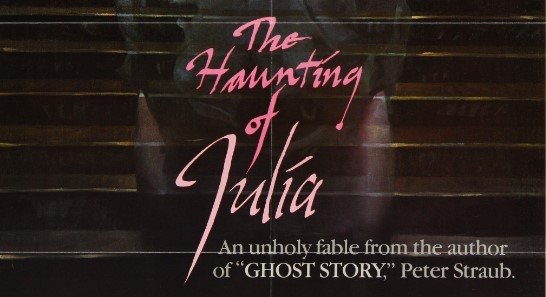
The Death of a Daughter Leads Down to a Psychological Path of EVIL! “The Haunting of Julia” reviewed! (Imprint / Blu-ray)

Limited Edition of “The Haunting of Julia” Available at Amazon.com!

This morning was like any other as the Julia rustles up breakfast for her all-business husband Magnus and their lively vivacious daughter Kate, but when Kate violent chokes on a piece of apple and Julie performs a bloody, untried tracheotomy in a state of panic in order to save her daughter’s life, their lives are forever changed as Katie dies in Julia’s arms. For weeks, Julia’s melancholic depression commits her to hospital care. When she’s ready for release per the Doctor’s recommendation, Julia avoids returning to Magnus as their relationship was never a mutually loving one but rather a normal route connected by the presence of their daughter Kate. In order to restart her life, Julia separates from a controlling Magnus and purchases a magnificent London house only to then be plagued by ghostly occurrences she suspects is the work of her late daughter. What Julia comes to find out is the troubling history of her newfound home.

Mia Farrow solidified herself as a genre actress by starring in the archetype for films revolving around the prince of darkness, Satan, in 1968 with “Rosemary’s Baby.”  Unlikely seeing herself as a prominent woman of a notable rite horror, Farrow quickly understood her value in the genre as a complex female lead in the unsettling and gothic protuberance atmosphere style.  Nearly a decade later, Farrow stars in the Richard Loncraine directed “The Haunting of Julia,” similar only to the menacing supernatural child component but digs deeper in manipulative complacency, psychological guilt, and of that distorted reality created by the stout motherhood connection.  The “Slade of Flame” director set his sights off of Rock’N’Roll inspired dramas around the ugliness of the music industry and onto the filmic adaptation of the Peter Straub novel “Julia,” penned by the Dave Humphries and “Xtro” trilogy director Harry Bromley Davenport.  The joint United Kingdom and Canadian production, titled originally as “Full Circle” in the UK, is produced by Peter Fetterman (“The Exorcism of Hugh”), under Fetterman Productions, and Alfred Pariser (“Shivers”) of the Canadian Film Development Corporation. 

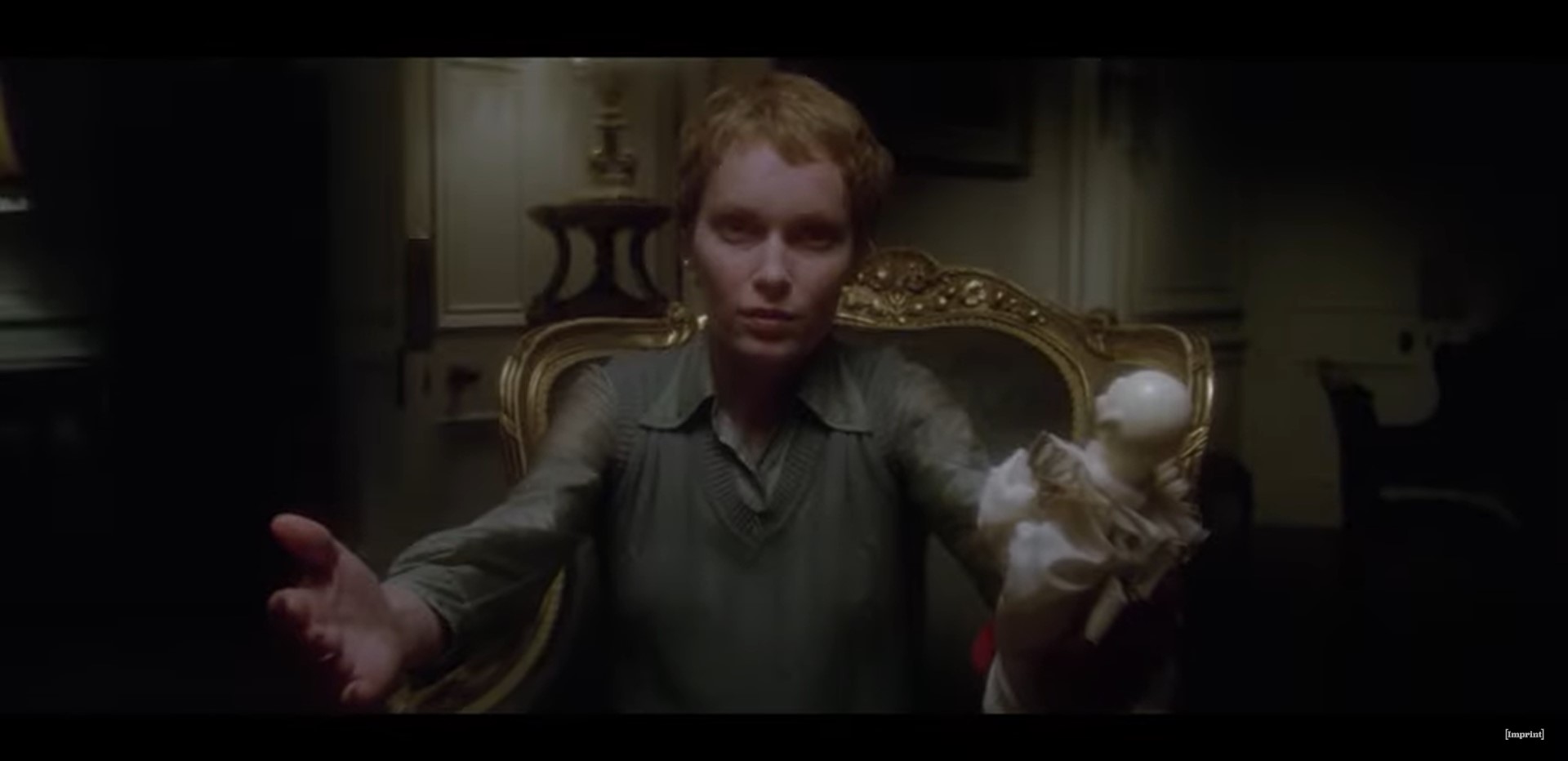
Mia Farrow’s distinct reactions and acting style very much engulfs the majority of horror experienced in “The Haunting of Julia,” as well as exhibited in “Rosemary’s Baby.”  The glassy eyed, long stares, the frightened, coiled emotions that swirl seemingly out of control, and the switch-gear ability to be strong and compliant in tense-riddled situations that just only involve herself in the scene.  While “Rosemary’s Baby’ and “The Haunting of Julia” may exact the same gothic aperture for child-themed horror and both are adapted literary works, “The Haunting of Julia” unfolds not in the anticipating of child birth but rather postmortem with the aftermath affliction of a child’s sudden and terrible demise that occurred in the frantic mother’s misguided embrace to take a knife right to her child’s jugular in hopes of dislodging an air denying obstruction.  This opening scene shocks us right into a grim framework that simultaneously divides trust and empathy for Julia as circumstances unveil what we might suspect all along, that Julia’s mental health suffered immensely.  What pushes Julia into undue stress is her controlling, dispassionate husband Magnus. Played by “Black Christmas’s” Keir Dullea.  Dullea pulls off the unsympathetic impassive father who just lost a child and can’t see the underlying psychological unrest his wife suffers.  In short, Magnus attempts to gatekeep Julia’s damaged psyche by trying to strong arm her back into normalcy, even going as far as manipulating Julia and his own sister Lily (Jill Bennett, “The Skull”) into slipping his foot into the door with a wife who fled from his grasp as soon as released from the hospital for essentially shutting down after their daughter’s death.  That toxic pressure is coupled with the seemingly unnatural incidences in her new home that clash her old life, chained to an unconsciously broken family, with her new life that seeks to decompress from a pair of diverse traumas.  “The Haunting of Julia” rounds out the cast with Tom Conti (“Blind Revenge”), Mary Morris (“Prison Without Bars”), Anna Wing (“Xtro”), Pauline Jameson (“Night Watch”), Peter Sallis (“Frankenstein:  The True Story”), Susan Porrett (“Plunkett & Macleane), Edward Hardwicke (“Venom”), and Sophie Ward (“Book of Blood”).

More or less forgotten by U.S. audiences due to no fault of the film’s own acclamatory measure or the audiences willing participation, the international produced “The Haunting of Julia” wasn’t publicized in the U.S. despite the two American leads – Mia Farrow and Keir Dullea.  Richard Loncraine’s film has incredible merit to the idea of a mother’s loss within the construct of gothic horror, which, in another aspect of unfathomable irony, resembled more closely to the American gothic style of the supernatural sequestered dark house.  Yet, this house is in London, wedged in like row homes, but as mentioned numerous times in the film, the house has distinction and grandeur that overlooks the buried ghostly history of the previous owners.  Julia absorbs the stories, filters through them, and comes to believe her own daughter is either trying to reach out to her or is hellbent on revenge for the amateur hour tracheotomy.  Loncraine does the phenomenal job of shocking our core with the early choking death scene of Julia’s daughter but once that dust settles, the pacing becomes more rhythmic to the point of building, slowly, Julia’s encounters with unknown forces that, at first, are just seemingly bizarre happenstances of left on bedroom plug-in radiators and playground visions of a girl that resembles her daughter cutting up another kid’s pet turtle.  These events play into their evident conspicuousness to push audiences deep into Julia’s mysterious milieu, officially sealing something isn’t right with the clairvoyant Ms. Flood’s scarred-screaming vision of a bloody child.  Julie become engrossed into learning the truth, eager to determine if that child is her late daughter and is fed tidbits of the house’s history that not only continues her own investigation but other research into other house tragedies that fork-split her presumptions.  As all this noise tornadoes around Julia, the stories, the occurrences, the deaths, viewers will never deduce to a reason closer to home, to Julia herself, until possibly too late at the end with a grisly open-ended finale that what Julia has been experience may have been done at her own forlorn hand. 

Atmospherically sound, undoubtedly creepy, and spearheaded by strong performances, “The Haunting of Julia” is the unspoken heroine of late 1970s supernatural horror – until now.  Imprint and Via Vision of Australia release a limited edition, high definition 1080p, 2-disc Blu-ray set with an AVC encoded BD50 of a new 4K scan transfer of the original 35mm negative. Presented in an anamorphic widescreen 2.35:1, the 4K scan is super sharp with virtually no compression issues on the formatted storage. Blacks, and negative spaces in general, are rich and void, despite Peter Hannan’s low-contrast and hazy surreal veneer that definitely plays into a psychotronic dreaminess. The resolution goes unaltered, and the natural grain maintains the original theatrical presentation for a revered 4k transfer. The English LPCM 2.0 mono track mix audibly delineates a viable one input split to make the dialogue and all other tracks comprehendible. Despite some slight here and there hissing, dialogue is amped up nicely for better resolved results that still remains mingled with the ambience in an all for one, one for all audio format. “Space Trucker’s” Colin Towns’s insidious and distinctly composed soundtrack reaches into the recesses of soul and strikes at the very nerve of fear with an unsettling score, perfectly suited for a mother drowning in the pitfalls of a supernatural sanctum. Optional English Hard-of-Hearing subtitles are available. The first disc special features include two audio commentaries – one with director Richard Loncraine and Simon Fitzjohn and the second, brand new, commentary with authors Jonathan Rigby and Kevin Lyons, new interviews with composer Colin Towns Breaking the Circle, cinematographer Peter Hannan Framing the Circle, and Hugh Harlow Joining the Circle, a new video essay by film historian Kat Ellinger Motherhood & Madness: Mia Farrow and the Female Gothic, the original trailer, and an option to play the film with either “The Haunting of Julia” or “Full Circle” opening title. The second disc is a compact disc of Colin Town’s 11-track score featuring 20 minutes of previously unheard music out of 60:52 of music. The limited-edition set comes with a neat lenticular cover on front of the hard box of what we assume is Julia’s ghost glaring at you from all angles as her eyes follow you. Inside is a clear Blu-ray snapper that’s a little thicker than your traditional snapper and comes with a built-in secondary disc holder. The cover art is simply Mia Farrow cowering outside the bathroom door but the reversible cover displays an original “Full Circle” poster as the front image. The disc arts are illustrative and compositions with the feature presentation disc the same as hard box lenticular without it being lenticular and CD pressed with Mia Farrow’s face in the background and a child’s cymbal banging toy in the foreground. Also in the hard box is a 44-page booklet feature an historical background essay by critic/writer Sean Hogan that has black and white and color photos and various poster art. The film, which comes in as Imprint catalogue # 218, runs at 97 minutes, is unrated, and, is assumed, for region A playback as it’s an Australian release – there is no indication on the package. “The Haunting of Julia” is Mia Farrow’s shining, yet lost effort post Roman Polanksi and is a remarkable look at subtle disconnection from extreme guilt when in every corner, every sign, is thought to be about your lost child.

Limited Edition of “The Haunting of Julia” Available at Amazon.com!


The Doctor’s Out. EVIL Will Make this “House Call!” reviewed! (Wild Eye Releasing / DVD)

“House Call” on DVD home video and Available to Purchase at Amazon!  Click the Cover Art to Buy.

Eager to prove to her parents she is responsible and old enough to undertake the babysitting duties of her little brother all by herself, 16-year-old Miriam is reluctant to phone her parents when little brother Vince becomes highly feverish in fear that they will take away future responsibility opportunities.  Instead, Miriam makes a late-night call to the family’s primary physician and begs for a discreet house call.  Hours go by and Miriam becomes increasingly concerned about Vince, but when the doctor is found dead on her doorstep, her brother’s welfare acutely alters from his feverish illness to the maniacs outside looking to score big on the family home.  The night turns into a fight for survival as the home alone siblings must outwit two murderous thieves who have their lustful eye on the teenage Miriam as well. 

Based off the novella of the same title from horror writer Ty Schwamberger, “House Call” is the first Schwarmberger piece to be adapted and completed into a full-length feature film.  The 2013 production’s script is adapted by Shannon Casto and while the credits list accompanying partner Michelle Henderson as the director, IMDB lists Casto as co-director the film. Both have worked alongside each other between 2005-2013 under their House, Texas-based independent film production company, Little Oak Film Group, which has churned out modest range of low-budget horror with “Sinner,” “Gut Instincts,” and “Protégé” to note as a select few.  Their joined by Parrish Randall as the third wheel in the director’s chair, – again, a credit that IMDB list but the film doesn’t but wouldn’t surprise me knowing a little more history between the trio.  “The Quick and the Undead”-starring and “Slaughter House”-directing Randall essentially helped segue Casto and Henderson into their own production company having the aspiring filmmaking duo under his wing in various crew and cast capacities as the owner of PRP Motion Pictures.  The Little Oak Film Group cofounders serve as executive producers on this self-made, little-known home invasion, survival thriller. 

Parrish Randall not only serves as co-director and provides the foundational support Casto and Henderson used to jumpstart their careers as filmmakers, but the platinum blond actor with dark facial hair from Groesbeck, Texas is also one of the lead principal characters, playing the nefariously nurtured John who has ambitions to live up to his mentor’s unfettered insanity and depravity.  Randall evokes his lite version of Bill Mosely’s Otis Driftwood without the full support of the deranged family.  There are inarguably many issues with how John is portrayed with an overflowing amount of dialogue despite Randall stealing the story with a magnetic presence on screen.  John’s expositional to a fault and is continuously repeating the same dialogue over-and-over, such as pointing out and elucidating again-and-again that Rock is his mentor.  Rock, played by Bill Dubois (“His Will Be Done”), features in a flashback of a cowardly John aiding and abetting Rock in the murder-robbery of a young couple and Rock is supposedly grooming pupil the way of psychopathy, but there really is not clear instruction from Rock other than provoke gun-drawn offices while your partner flees for his feared life. Now, after that character defining moment, John has become Rock incarnate and has also taken a student under his wing to invade, rob, rape, and murder in the family home of Miriam, played by Rachel Paul in her debut lead role, and Vince, played by Vincent Galyean. “House Call” deploys not only neighborhood disturbances but also disturbing undertones of the rape and murder of children as Miriam is 16 years old and Vince is ballpark 6-9 years of age. As kids under distress, tonal precision might not be Paul and Galyean strong suit, but their cues of delivery are on point where often times child actors tend to be forced or uncertain in conviction to sell the act. “House Call” rounds out the cast with James McCreight (“The Caretaker”), Troy Reynolds, Paul Moomey, Alison Esparza, Roger Dunn, Kristopher Smith, Chelsea Turcheck, Chi and the most experience and credited actor on set, Joe Grisaffi (“Doll Factory,” “Axe Murdering with Hackley”), as the creepy-glaring neighbor, Mr. Henderson, with the receding hair line and large hair.

While many issues come to the front of the mind regarding “House Call’s” poor longevity status, to be retained as a solid source of entertainment, and to be a total thrill at the edge of your seat home invasion horror film, the one major issue that egregiously needs mentioning is the lack stimulus surrounding John’s gut-stirring need to be as brutal as possible at this specific spot. Unlike Bryan Bertino’s “The Strangers” where the masked intruders mark their presence as simply just because, “House Call” drops the ball on even the most basic of unscrupulous principles amongst the villains. In fact, the flash back with mentor Rock puts John into a completely different, greatly sympathetic, and concerned light without ever exhibiting that epiphany of realization into becoming the crime’s worst-of-the-worst. John also mentions on multiple occasions how the scoped-out house is full of the nicer things, but once we’re inside, it’s all upper-middle class, mediocre monied valuables that don’t justify the cause. An implied reason for John’s obsession for pillaging is to solely have his way with teenage Miriam who, in another over explained bit of exposition, saw her outside washing down the family roadster. What’s baffling about his Miriam anecdote is that we the scene played out live as in a flashback sans the moment John set eyes on Miriam. Instead, we’re treated to the introduction of creepy neighbor Mr. Hendersen who gives Miriam an up-and-down once over and the scene is definitely more piquant than John’s drive by but misses a crucial plot point that drives the story to the moment of John’s and his accomplice’s introduction. Perhaps, the flashback serves to misdirect Mr. Henderson’s sleaze toward a pre-judgy determination that flips the script later in the last act. “House Call” doesn’t quite nail where it wants to be emotionally with lightly peppered comedy, oversalted exposition, and a sepulchral tone of child rape and murder that yearns to break the surface of its under seasoned bake.

In what’s likely interchangeable functions between Michelle Henderson, Shannon Casto, and Parrish Randall to oversee this adapted film to completion, as aspect that can be easily assessed when seeing their names credited multiple times under various roles, one thing is for certain – “House Call” is the epitome of independent horror moviemaking spirit. It all culminates to this point, an at home DVD release that can now stretch across the global in a region free decoding format. Wild Eye Releasing, in association with TomCat Films, presents “House Call” onto an unrated DVD with a widescreen 1.78:1 aspect ratio. A modern day, handheld SOV film, “House Call” crusts over with numerous blocks of noise interference, details are lost in the inferior resolution, the contrast between blacks and adjacent hues mesh together without firm delineation of objects, and the color palette, which is really the only thing good about the presentation’s lossy source material, has a handful of moments of vibrancy but for the most part is flat. The English language Stereo 2.0 audio mix has better integrity in reproduction. Slightly boxy through the two-channel output but dialogue remains clear and clean without crackling, popping, or hissing and has a meager but manageable, successful depth with no real range to note. Wild Eye’s standard releases normally go big on the bonus features and “House Call” is no exception to the route with only a handful of Wild Eye preview trailers of other films and I still applaud the distributor’s trailer creator because that craftsman (or craftswoman) can splice-to-sell a D-grade movie in under a minute. Release’s physical appearance comes in a standard black DVD snapper with a tenebrous cover art of a man silhouette front facing an every-room-lit stately manor and holding an axe by the side. A bit misleading but the gist of the story is there. Repeatability on the Ty Schwamberger adapted novella is time better served reading, or re-reading, the author’s original story as “House Call” is a 70-minute busy signal that will fail to connect with audiences.

“House Call” on DVD home video and Available to Purchase at Amazon!  Click the Cover Art to Buy.

The Clap is the Real Evil Here. “Quiet Days in Clichy” reviewed! (Blue Underground / 4K Ultra HD and Blu-ray)

“Quiet Days in Clichy” 4K Ultra HD and Blu-ray Combo Set Available Now!

Joey and Carl are two broke writers living the coquet bachelor life in a small Paris, France apartment where they have a revolving door of transient sexual encounters with various women.  Despite being writer poor and hungry for most of the time, Joey and Carl happily lead a charmed life of meaningless moments.  Doesn’t matter to them how or from who they contracted a sexual transmitted disease.  Doesn’t matter to them how they pay for their carnal escapades.  And, mostly, doesn’t matter to them the age of the women they sleep with as long as it doesn’t cause them trouble.  The woes of everyday life do not stop the roommates from enjoying night clubs, traveling abroad, and the simple, bodily pleasures of French women.

In the same preface vein as Jens Jørgen Thorsen adaptively written-and-directed “Quiet Days in Clichy,” some readers may find the following material offensive, revolting, and not up to the universal moral standard – especially more so in the politically awareness of contemporary times.  Based off the novel of the same title from American writer Henry Miller, who was seen as an intellectual surrealist enlightened by the chauvinistic viewpoints on women and sex, the Danish, 1970-released blue film, “Quiet Days in Clichy,” resembles something of a semi-biographical depiction of Miller’s own personal non-fictional experiences as a proofreader in Paris during the 1930s, but updated to more contemporary times in the 1960s with genre designation that’s more of sex comedy than bio documentary.  The novel, which was banned in the United States for many years, focuses on the frivolous joys of simple pleasures that superseded the life sustaining necessities, such as food or money for food and become something of a blend between Miller’s explicit anecdotes and some wishful fantasy.  Shot on location in the small outer rim Paris neighborhood in Clichy, “Quiet Days in Clichy,” also known in the U.S. as the “Not So Quiet Days” or “Stille dage i Clichy” in the Norse Danish tongue, is produced by comedy producers Klaus Pagh and Henrik Sandberg.

A full skin, hang loose, and complete sexist semblance is no easy task and yet the two principal Dane actors Paul Valjean and Wayne Rodda, as Joey and Carl, are not the best looking in the men gene pool. “Quiet Days in Clichy” marks Valjean and Rodda’s one and only leading roles in their shrimpy career and while their performances paint the characters as apathetic womanizers, they still render a dopey slack-jawed dialogue as if delightful halfwits, a description not terrible too far off from the roles their portraying. The story substantially surrounds around Joey more frequently in what is an uneven dynamic development of the buddy comedy system to undercut Carl nearly completely out of the picture if no half-naked women are in the scene. Perhaps because Paul Valjean, or at least Valjean made up in Joey’s balding hair line and spectacles, looks a lot like the adapted story’s novelist author, Henry Miller. Again, this film is a semi-biographical onset of one man’s intellectual philosophy on sex and nihilism. There’s even a bit of nonchalant pedophilia as Carl takes a dunce young girl, Colette (Elsebeth Reingaard) at the ripe age of 14 off the street and keeps her as a sexual pet who keeps the house tidy in nothing more than a shirt and the way Thorsen depicts the introduction and the proceedings of keeping her around feels rather normalizing and whimsical despite Carl practically shoving her pubescence right in our faces with repetitive noting the illegality of underage exploitation and trouble that comes with it as long as the law doesn’t finds out. Even when the roommates are found out and confronts sans police, Joey and Carl’s punishment is nothing more than a stern warning from Colette’s mother. A plethora of women cross the screen and round out “Quiet Days in Clichy’s” menagerie of lewd and sensual women with roles by Ulla Koppel, Susanne Krage, Avi Sagild, Lisbet Lindquist, and Anne Kehler.

Henry Miller may have been something of a surrealist author, Jens Jørgen Thorsen was also something of a surrealist director that approached the adaptation with the knowledge the content would offend likely most people who find cavalier sex and arrogance to be offense.  “Quiet Days in Clichy” is certainly obscene with wanton waywardness.  Thorsen has a way of telling the lewd and crude story from the philanderer’s perspective that construes a routine day-and-a-life and everyone appears okay with what would usually be a Molotov cocktail exploding self-spiraling madness.  Instead, Thorsen paints a happy-go-lucky portrait of Joey (and Carl too) with aimless ambivalence and does so with frenzied edited scenes that trims out frames and you still get the gist of sequential events by letting your brain connect the dots.  The same cerebral interpretation also takes place during the photograph montage of Joey and Carl’s trip to the small country of Luxembourg in a flurry of images that tell a sequential ordered story of their whirlwind trip filled with seeing the sights, causing some mischief, and, of course, flirting with the local women.  Thorsen also showcases ground level Paris to the fullest with mom-and-pop storefronts, open aired dining, the widened trafficked lanes, and the night club scenes complete with featuring American Jazz saxophonist Ben Webster scoring a subdued hot number while Joey and Carl become handsy and indulge in covert public exhibition with the female patrons at a small-time cabaret club.  Miller’s adapted work is a philosophy of sexual freedom that takes precedent over personal welfare is akin to self-torpedoing with still a starry-eyed and goofy grin expression.

Stylistically, even though this Thorsen sex comedy is labeled a blue film by subgenre the film actually is voided color all around with a black and white cinematography approach by Jesper Høm that looks super slick with a well-preserved transfer in a slight low contrast on the new Blue Underground 2-disc 4K Ultra HD and Blu-ray set. The brand-new restoration on a 66GB, double layer, release comes scanned in 4K 16-bit from recently discovered uncut and uncensored original fine-grain negative that absolutely is very fine indeed! The black and white picture is presented in a European widescreen standard of a 1.66:1 aspect ratio and barely shows signs of age with an anti-wear, which makes me suspect there might have been some cleanup work. There’s clearly some DNR use to smooth out the grain, but this effort also clears up the black and white picture very nicely, resulting in a solid contrast that favors the lower said a tad. The 4K Ultra HD and Blu-ray process mid-to-high 30s Mbps with no pacing issues to the frame rate. Both come with new rescored English 1.0 audio mixes with the 4K Ultra HD sporting a Dolby Vision HDR while the Blu-ray’s DTS-HD Master Audio presents an equally clean file. Both offer quality audio designs that are free from undercutting distortions, such as a cracking, popping, hissing, etc, and are greatly robust with the Dolby Vision eking out a little fuller bodied product. One gripe I have is that Blue Underground doesn’t translate the French-speaking ancillary roles that become lost to conversation if one does not know the tongue, but the English subtitles are free from error and synch up well without any delay or being too quick. French subtitles are also included. Bonus features include new deleted scenes and new theatrical trailer on both discs. The Blu-ray also includes the Songs of Clichy – a 2002 interview with soundtrack composure Country Joe McDonald speaking about one note role of just scoring the film and coming to terms with his unaware sexism, Dirty Blooks, Dirty Movies, Barney Rosset on Henry Miller – an interview with Henry Miller’s editor and publisher that touched upon the mad, chauvinistic genius and perversions of the blacklisted author, Midnight Blue – an archival second interview with Barney Rosset, new poster and still gallery, a new Henry Miller book cover gallery of the title, and new scanned court documents when America seized the film upon entry into the country and the legal fight that ensued to obtain it back. The physical release comes with a not safe for work cardboard slipcover with imprinted frames from scenes while the blacked out 4K and Blu-ray snapper case comes with original artwork of one of the more memorable scenes. The release comes not rated with a runtime of 91 minutes. “Quiet Days in Clichy” lead to more rambunctious nights in the Paris suburb of debauchery and Blue Underground preserves the perverse with a higher quality of lower standards in a beauty of a release.

“Quiet Days in Clichy” 4K Ultra HD and Blu-ray Combo Set Available Now!

A Single Spool of Film Can Make the Filmmakers EVIL Enough to Murder. “Naked Over the Fence” reviewed! (Cult Epics / Blu-ray)

“Naked Over the Fence” on 2-Disc Blu-ray and CD set!

Rick, who runs an arcade business and is a pigeon enthusiastic with a dovecote on his building’s rooftop, attends his friend’s Karate competition with another good friend, a schoolteacher and his tenant, Penny.  Learning that his Karate friend, Ed Swaan, has developed a romantic relationship with Netherland pop-singer Lilly Marischka and will have a small role in an upcoming movie with the star, shooting in building adjacent to Swaan’s Karate studio, Rick doesn’t think twice about it until Penny catches glimpse of naked photography happening in the very same building.  Rick is sent that night to investigate, and witnesses Ed and Lily uncomfortably being persuaded to take part in a private viewing porno and nearly escape with their lives when they rescind their participation and are chased by two low-life goon twins.  Ed and Lily’s nudie film now threatens them with scandal and as Rick pokes his nose into the production team’s business, innocent lives pay the price to keep the film in the blackmailing and profit seeking hands of the filmmakers. 

A cult comedy-thriller for the ages, “Naked over the Fence,” aka “Naakt over de schutting,” is a murder-mystery monkeying with spirited jest from the Amsterdam-born filmmaker Frans Weisz. The screenplay treatment comes from Weisz familiar writers Rob du Mee and the late Rinus Ferdinandusse, who penned the novel of the same Netherland title from which the story was adapted and who had passed away back in July of this year. Both writers have worked with the director on respective projects, such as “The Burglar” and “A Gangstergirl” before “Naked Over the Fence.” Set in and amongst the close quartered housing of Amsterdam and along the river of the Amstel, Weisz very much incorporates the intertwining the compact of the brick-and-mortar and the expanse of a widened landscape flow of the surroundings into tongue-and-cheek situational micro comedies that sometimes has you forget your watching a rather cynical and entangling murder mystery involving shady pornography, blackmail, and murderous foul play. Parkfilm and Cinécentrum N.V. are the production companies behind the film with Rob du Mee producing and Gerrit Visscher as associate producer.

Initial previewing presumptions about “Naked Over the Fence” might fall along the lines of being a highly erotic comedy because of not only the film’s suggestive title and the half-naked actors halfway over a fence on one of the original poster artworks, but also the fact that Sylvia Kristel as one of the principal stars.  Kristel is far and wide known for her continuous provocative performances as the lusciously licentious title character in the erotically charged “Emmanuelle” mega-series that has expanded decades since the 1970s.  “Naked Over the Fence” is not that kind of movie.  Not even close.  There are moments of skin, conservatively from Kristel, and subtle and not so subtle scenes of sensuality coursed throughout but the Weisz film notes as one of the Netherlands’ actress’s first films of her career before “Emmanuelle,” exploring her range as a scared pop singer backed against into a career stemmed quid pro quo before becoming an embedded typecast of the erotic genre. Kristel perfectly complements as a beautiful, delicate, yet reserved in strength starlet alongside arcade owner and staunch friend Rick (Rijk de Gooyer, “Rufus”) and her new beau, a large karate dojo owner Ed (Jon Bluming, Paul Verhoeven’s “Turkish Delight”). As much as an odd couple as they’re describe, Gooyer and Bluming are greatly well-received on screen as a dynamic duo attempting to outwit shady porno makers, blackmailers, and merciless murderers as if the contest to the film reel is a game with that swashbuckling, self-assured attitude as two amateur sleuths. The one character I thought was a little out of place was Penny, played by Jennifer Willems as a schoolteacher renting a room in Rick’s arcade building but is also a good friend of both men. Penny feels solely like an object used to force the hands of Rick and Jon when trouble arises and never actually does any leg work in tracking down the film reel. Willem performs to the best of her extent in a role that doesn’t obtain much action until the unique action chase at the end. Willem, Gooyer, and Bluming have all worked with previously with director Frans Weisz on “The Burglar,” alleviating beforehand any undue first meet jitters and that translate tremendously on screen. “Naked Over the Fence” has an ensemble cast of color characters, each one more interesting than the next, that include Jerome Reehuis, Tom Lensink, Adèle Bloemendaal, Jerry Brouer, and mustache and curly perm identical twins Lodewijk and Hans Sijses as a pair of cronies.

“Naked Over the Fence” might be a pulp novel coursing loosely as a glib tongue in cheek but the complexities the film assume merits cult-worthy cachet. The adaptational flow of a novel story, its wildly entertaining and diverse performances, and its bold direction deserve accolades upon its accolades. The very beginning sets the tenor of the film on the Amsterdam rooftop with tracking shots that are simply amazing, smooth, and precise toward the working up of Rick waiting for his named pigeon friends to return, the Ferenc Kálmán-Gáll cinematography and Ton Ruys editing is remarkably accomplished as the intercut composite between Rick peeping through the fence and the boiling-to-conflict back-and-forth conversing of the pre-setup porn scene that lead up to the film’s title of Ed and Lily hopping climbing over 6 to 7 ft wooden fence is tip-top execution, and the extended tram chase is unlike anything I’ve ever experienced in a bird-dog chain of scenes as the two trams zip down the engrooved track lines on the streets of Amsterdam while making it whimsical and parlous with excitement. there’s real production money financially backing the uncontained and mutable story and it shows right from the get-go to the very end with only a handful of key instances where the digression of the certain level of high-dollar antics can only be done at a lower quality and that drags down Weisz’ flair quite a bit. An enjoyable romp of Dutch cinema, “Naked Over the Fence” ossifies friendship, loyalty, and morality over the forces of tit-for-tat evil.

Proudly continuing their restored release of Sylvia Kristel films, Cult Epics presents “Naked Over the Fence” onto a 2-disc, region free Blu-ray home video set with a newly restored high definition 4K transfer from the original negative. Virtually unscathed by time, the original negative beams with vitality in its showcased 1.37:1 aspect ratio, upgraded into an improved compression rate to hold all its detailed wonders for the full 91-minute runtime. The stable picture and natural, unwavering coloring persists with a consistent color palette. Other than complimentary natural grain of the stock, there’s no obvious instances to fault the image quality that’s above exemplary. The Dutch language tracks come with two audio options: a LPCM 2.0 and a DTS-HD Master Audio 2.0. Both render audibly clear and emphatically enough with the DTS providing a little ambient and dialogue boost with a cleaner track of the dub Dutch language. English subtitles are included and don’t have an apparent errors and synchs well with the pace. Special features include an audio commentary by biographer Harry Hosman, a 15-minute behind-the-scenes featurette of unpolished footage of scene takes and director Frans Weisz at work with his cast, a 2014 Dutch audio interview with Frans Weisz that includes English subtitles, an interview with composer Ruud Bos from 2015 that includes performances with the B-Movie Orchestra, a promotional gallery, Sylvia Kristel trailers, and a 2nd disc, included only in limited edition, 1000 copy sets, of the exclusive compact disc Soundtrack by composer Round Bos. The physical bonus material with the limited-edition release is cardboard slipcover and a reversible cover art that includes the original poster art and a list of the score’s 16 composed track list. I adore the quirkiness and relish in the story’s transgressional diegesis and now with this stellar new and improved Blu-ray release of the Netherlands’ “Naked Over the Fence,” the perfect movie does exist.

“Naked Over the Fence” on 2-Disc Blu-ray and CD set!