Curse EVIL Curses! “Baphomet” reviewed! (Blu-ray / Cleopatra Entertainment)


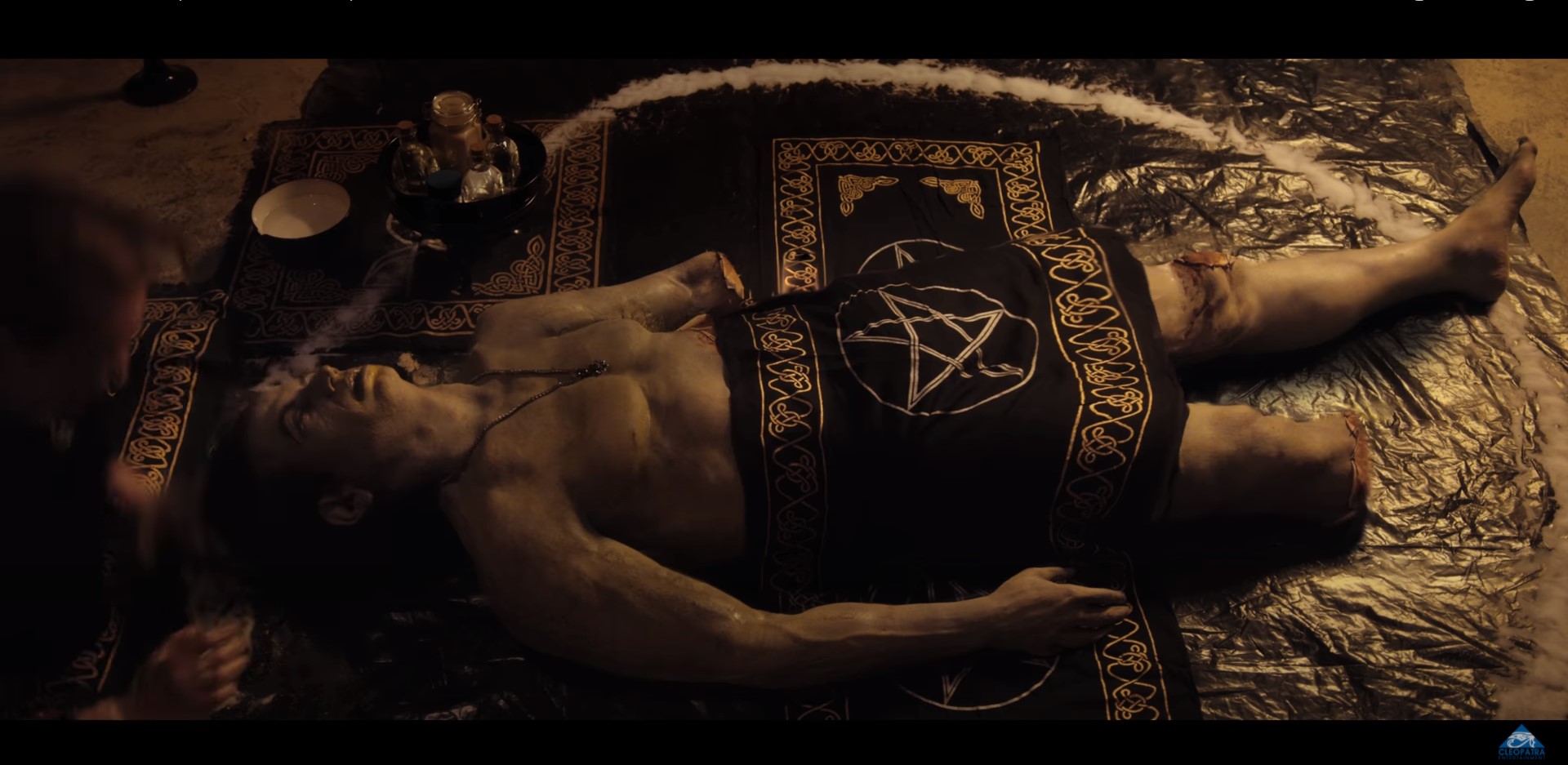
Jacob Richardson, a Napa Valley landowner, and his wife are jubilantly excited about becoming grandparents with the eager arrival of their daughter’s child.  Still months before the actual delivery date, their daughter vacations with him while her husband works a few more days in Malibu before joining her but gruesomely dies in an apparent shark attack.  His sudden death isn’t just a stroke of horrible luck, but a devil worshipping cult’s curse bestowed upon the unsuspecting family after the rightfully stubborn Richardson refuses to sell his vast property to a shady businessman the day before.  One-by-one members of his family fall victim to a series of accidental and unexpected tragedies that leave his daughter, having dreamt the cult responsible for the black cloud that has been afflicting her family, desperate to try anything, even if that means making contact with a benevolent white witch to resurrect her shark bait dead husband.  The cult still wants their land and for the Richardson family, only Jacob, his daughter, her resurrected husband, and the white witch stand against an army of Satanists besieging upon the family home to awake a slumbering dark force. 
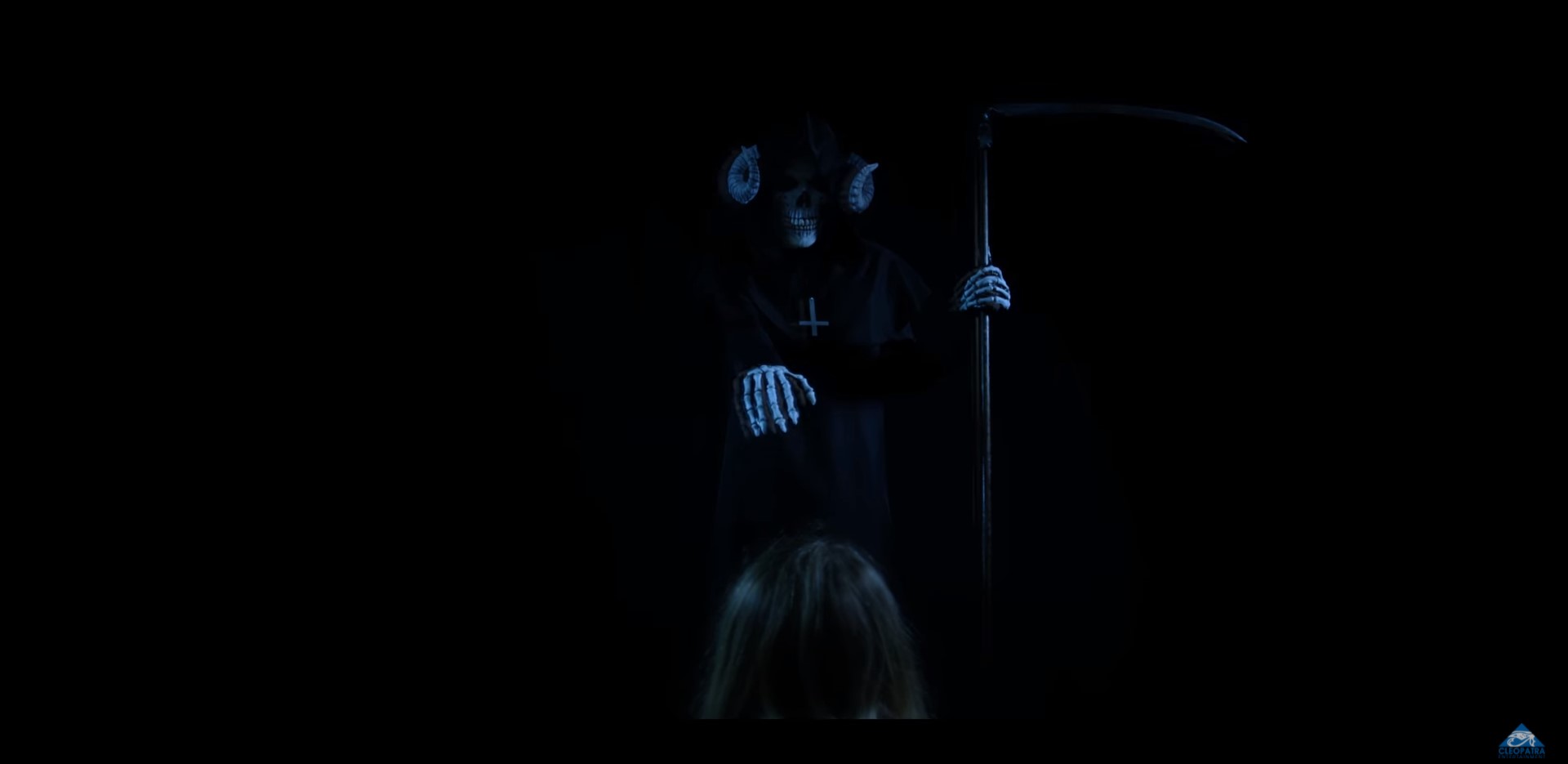
You know you’re watching a Cleopatra Entertainment distributed release when the plot revolves around a Satanic or demonic annihilator, as such with “The 27 Club,” “The Black Room,” “Devil’s Domain,” “Devil’s Revenge,” and maybe even a tiny bit from Glenn Danzig’s strange comic book adapted anthological tapestry, “Verotika.”  Matthan Harris’s 2021 released “Baphomet” walks along the same lines with the titled gnostic and pagan deity made infamous by the worshipped practices of The Knights of Templar acolytes.  “Baphomet” is “The Inflicted” director’s sophomore feature in which he’s written to remain in the horror ranks as an aggressive occult summoning of an evil presence to walk the Earth.  Shot in various California and Texas locations, the moneybag company behind “The Velicpastor” and “Don’t Fuck In the Woods,” Cyfuno Films L.L.C., collaborates supportively Matthan Harris’s formed Incisive Pictures production company to deliver a trackless, unmapped, and unholy “Baphomet” to the home video market with Harris producing alongside executive producers Grant Gilmore, John Lepper, and Cyfuno Films’ Adam and Chase Whitton.

We’re initially introduced to Giovanni Lombardo Radice sermonizing as the paganized pastor and cult leader Henrik Brandr before they slice open a naked woman wrists and drink her blood from a single chalice.  Right from the get-go, “Baphomet” hits us with the 80’s circa Italian star power of the “Cannibal Ferox” and “StageFright” actor.  The blood trickles down from there once we’re introduced to the Richardson family, headed by the patriarchal Jacob Richardson in “Mother’s Boys” Colin Ward.  Ward’s a convincing father figure, rugged and surly in showing off his rough and tough cowboy swagger, yet also sensitively compassionate in a broad range of acting experience.   However, that’s about as far as Jacob Richardson impresses as the character levels out, sulking over the loss of his son-in-law Mark Neville (Matthan Harris), wife Elena (Ivy Opdyke) and daughter’s unborn baby after his force to be reckoned with verbal encounter with one of the cult leaders offering him a lump sum of moolah for his land; instead, Richardson’s daughter, Rebecca Neville (Rebecca Weaver) takes a family first lead by engine searching and watching video tutorials on the nature of black and white witches.  After easily tracking down and skyping with witch expert played by Dani Filth, lead vocalist of metal band Cradle of Filth, a obsessed Rebecca becomes hellbent on resurrecting her Great White shark masticated husband, Mark, with the help of good witch Marybeth (Charlotte Bjornbk, “Cannibal Corpse Killers”) and this is where things go awry for the narrative.  Only a self-absorbed director would kill himself off extravagantly in character, saw fit to be resurrected for the sole purpose of love, and then become the ultimate hero of the story that leaves his wife and father-in-law in glory’s dust trail. “Baphomet” supporting roles from Gerardo Davila (“Ticked Off Trannies With Knives”), Stephen Brodie (“Puppet Master: The Littlest Reich”), and Nick Perry as the cult-sought demon.

Filled with blood sacrifices, family curses, killer sharks, and a pitiless grey demon, certain viewpoints embody that very black magic archetype of the historical devil dealings engrained into “Baphomet, but what specifically the Harris brings to the obscure budget horror smorgasbord is a platter of tasteless derivativity and bland storytelling, flavored with peppered gore granules and a pinch of pop culture icons. “The film opens engagingly enough with spilling the blood of a fully naked woman so everyone can play pass the cup of virgin blood in order to appease their dark lord and then we’re firmly segued into the happiness of the Richardson family until Jacob Richardson declines a money offer for his land. Spilling blood into the ocean and leaving dead, crucified birds on the porch enacts a deadly curse that sends sharks and snakes into a murderous rage. Up to this point, Harris has control of the story with some decent editing work and effective bitesize prosthetics to actually descend hell’s wrath upon an ingenious family. I could even look past the wild and impetuous decision to resurrect the dead boyfriend after his fatal encounter with a Great White, but when the third act’s last stand against cult comes knocking at the door, the script chokes on a grotesque amount of happenstance and exposition. For example, when the sheriff and deputies arrive at the Richardson house on Jacob Richardson’s whim that the cult might be outside their doorstep, one of his deputies randomly pulls out of a bag of large scale dynamite his cousin uses on at a jobsite, thinking the ACME-sized TNT would come in handy. Mark also decides to blow his undead cover, exposing himself to the officers in a screw-it moment of “yeah, I don’t care.” Soon after, a “Harry Potter and the Deathly Hallows Part II” battle ensues between the deluging cult and the defending Richardsons/Officers and many main characters parish during the skirmish fruitlessly and effortlessly to the point where they might as well have been non-essential to the story supporting parts. Also – the lack of considerable screen time of Baphomet and the demon child lays waste to a perfectly good title, in my humble opinion.
Perhaps one of the few Cleopatra Entertainment, a subsidiary banner of Cleopatra Records, to not be accompanied with a soundtrack compact disc with the Blu-ray, distributed by MVD Visual. The single disc BD-25 release is perhaps one of the few trimmer releases from Cleopatra Entertainment and is presented in HD 1080p in a widescreen 2.37:1 aspect ratio. Generally speaking, the music mogul company has continuously be consistent on their video and audio Blu-ray releases. The details are rather defined looking and sharp with blacks, and there are many black scenes, noticeably inky without that dim lit tinge of gray. Some of the underwater sequences and the video chat calls with Dani Filth are murky and at a lower rate than due to Filth filming his scenes literally from the UK on a video call for most of film. Two English language audio options are available – a Dolby Digital 5.1 surround sound mix and a Stereo 2.0. Flipping back and forth between the two option, the devil is in the file track details but both mixes sound frightfully the same down to the climatic explosions. Bravo on the depth and range that captures rightfully the echoes of high vaulted ceilings and the positioning of characters. Dialogue is clearly present and mostly natural with aside from Gerardo Davila, the Sheriff in the film, in what discerns to be a soundstage track layover of his dialogue. When he speaks, Gerardo doesn’t seem to be sharing the same dialogue space with his costars in an unnatural vocal delivery of his role. While there is no soundtrack disc to rock to, the hefty bonus material is a shocker with deleted and extended scenes, outtakes, a music video ‘Shellshock” from Tank featuring Dani Filth, behind the scenes pictures, Dani Filth backstage interview, Jason Millet’s storyboards, and a teaser trailer. Tickled me unimpressed by Matthan Harris’ “Baphomet” that hinges on uninspired cult creed. For me, special effects wins top prize and a giant handful of bonus material is the only thing that arises out of “Baphomet” from the wells of damnation.

“Baphomet” is on Blu-ray at Amazon.com

Do You Know Why EVIL is Fun the Life of the Party? Because He’s a Fungi! “Gaia” reviewed! (Decal / Digital Screener)


Checking and repairing motion capturing surveillance cameras in one of the last untouched forests in the world, a park ranger becomes severely injured while tracking a downed drone.  She finds herself in the company of a nature survivalist, a father and son, living outside the means of the modern world and becoming acolytes to waking entity underneath the forest ground, sprouting up and assimilating the living organisms topside, including people, into spore-growth mutated creatures.  Despite the father and son’s devotion to the being, essentially integrating themselves seemingly uninfected by the airborne spores, they avoid the blind drones who hunt by sound and the survivalist know most of the tricks in the book to dodge their incessant wrath, but the ranger brings new dangers to their sanctuary forest home being an outside influence on the son who takes a keen fascination to her beauty as well as instill in him an interest beyond the edge of the wilderness.  Battling two fronts and keep his devotion to the ancient being, the father must do anything in his power to avoid the corruption of his son even if that means making a sacrificial pact with his God. 

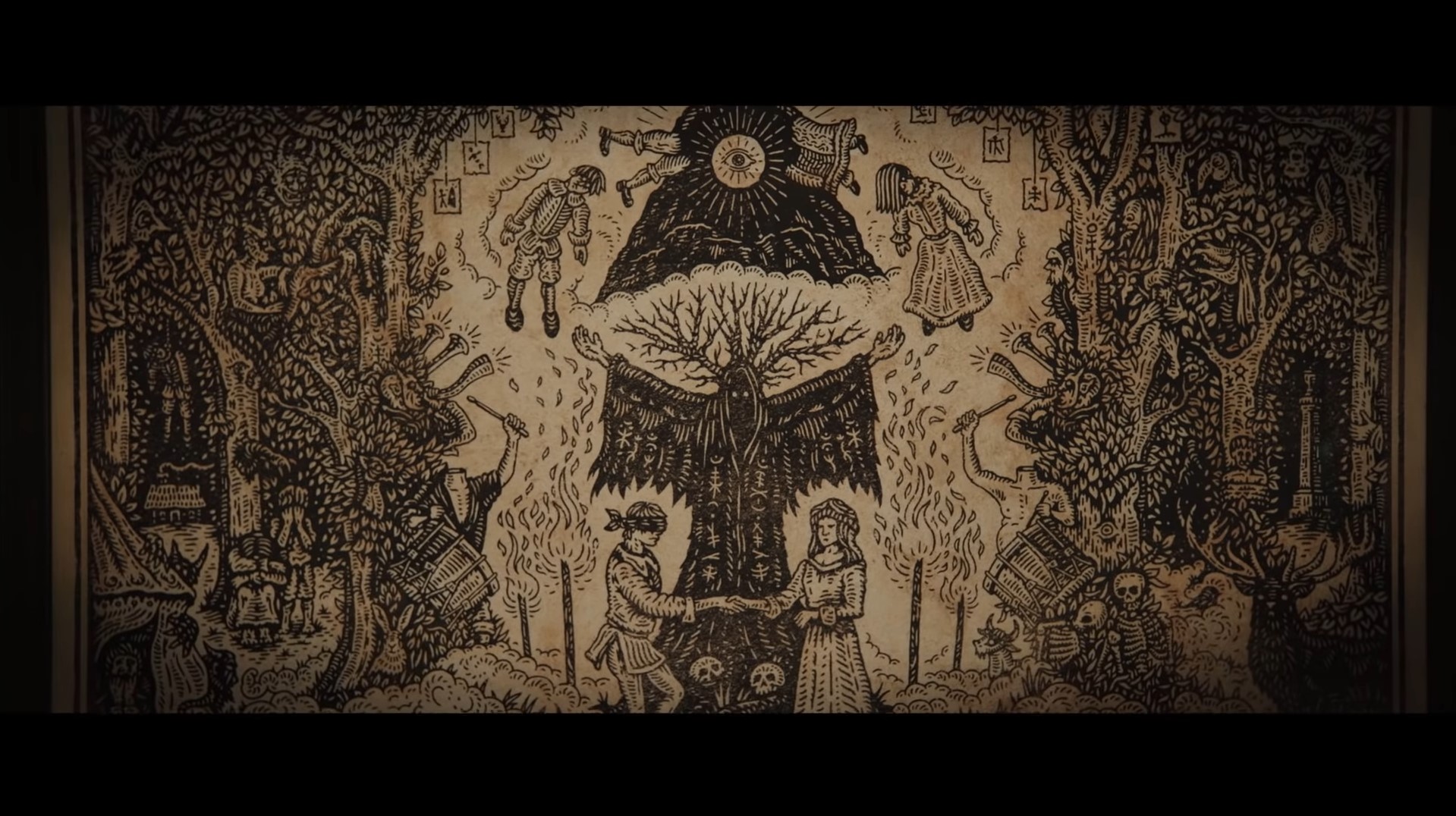
If you dug unearthing Ben Wheatley’s “In the Earth” that released earlier this year, then travel from the United Kingdom to South Africa and definitely follow up with another subterranean deity at the crust of breaking through to our plane of existence with Jaco Bouwer’s nature versus man, out of body experience, thriller “Gaia.”  “Gaia,” from Greek mythology is one of the primordial deities of Earth, plays on themes of youth into adulthood, the parental struggles of children leaving home, and the dangers of a forgotten and neglected nature from a script from South American screenwriter Tertius Kapp, collaborating once again with Bouwer after their work in their respective roles on the crime horror series “Die Spreeus.”  Filmed in the Tsitsikamma forest of South Africa, “Gaia” is a production of the new Film Initiative Africa company in partnership with kykNet Films.

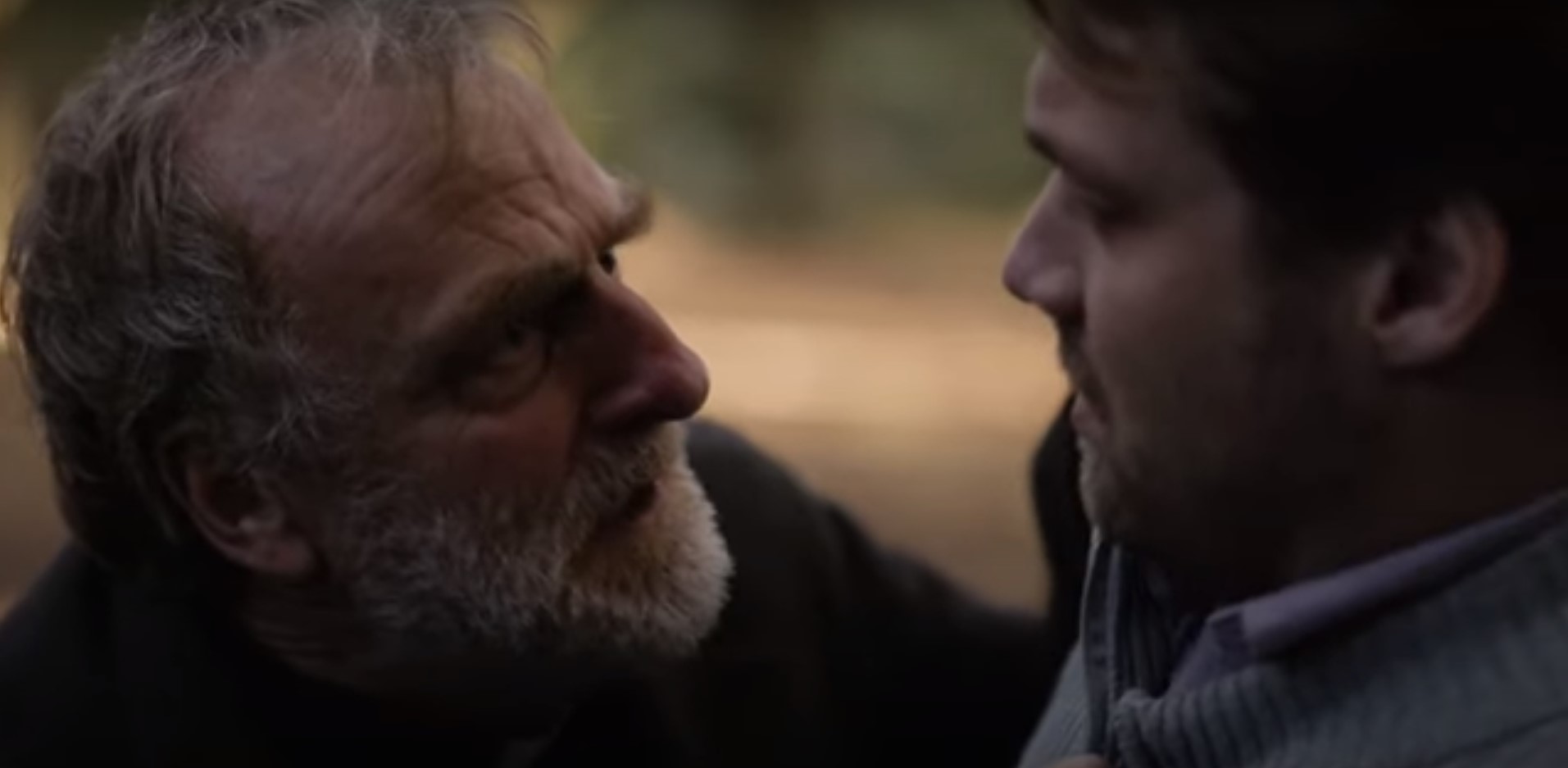
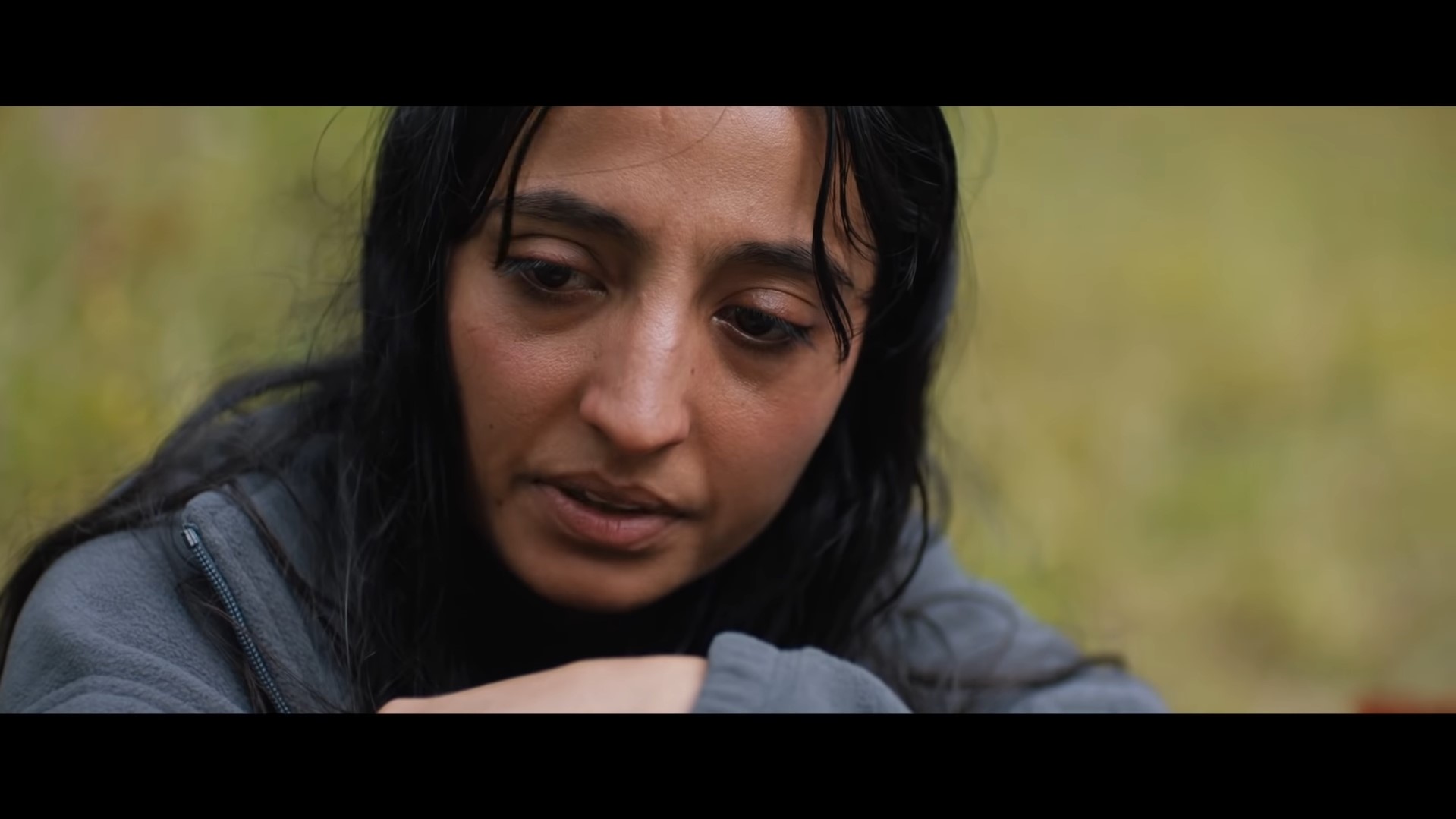
With only less than a handful of actors, four to be exact, the characters are quickly overshadowed and swallowed by the dense growth of an uncultivated forest.  Couple that with an insidious fungi that unhurriedly alters the exposed with toadstools and mushrooms shoots growing from the inside out onto their skin and face until they’re a part of the forest or a syncytial creature and you have an isolating setting of dichotomized terror between the beauty of nature’s miracle and it frighteningly growing right on your forehead. The story opens with park rangers Gabi (“Die Spreeus'” Monique Rockman) and her more playfully cautious partner Winston (Anthony Oseyeme, South African television’s “The Dead Places”) kayaking down river with Gabi using a drone to scout the forest ahead. Eventually, Gabi and Winston become separated because Gabi feels compelled to track down the downed drone alone and Winston bumbles the his watertight inappropriate walkie-talkie right into the river, making it useless and easily setting up obstacles to make reinstating their partnership extremely difficult in a forest that’s literally trying to eat them so to speak. This is where Gabi encounters the austere father and son living on dogma Gabi has yet to be schooled until the pundit father, Berend (“Blood Drive’s” Carel Nel), educates her on him and his son vocation, the forest deity, and, eventually, her own fate. Berend’s son Stefan (Alex van Dyk) is a child raised in the thicket, lamed by his father about the outside world because of his own insecurities. Nel and van Dyk are charismatically mysterious snaking themselves through the woods as one unit and ping well of each other in silent action as they collect spores and set primitive traps. Only when Gabi becomes an inadvertent wedge that lights a small flame of interest under Stefan, who’s at the edge of adulthood as a young man with hormones and a sense of wonder, does Nel and van Dyk begin to dissolve the father and son union that turns into a love triangle, of sorts, to which no parent will ever win when it comes to new and shiny objects and a sexual drive bigger than any spirit dwelling forest.

“Gaia’s” disturbing and omnipresent world imagery creates thought-provoking allegory of nature fighting back against the rapid infestation known as people.  As mankind creeps closer to the borders of naturally preserved habitats, singeing ancient ecosystems with deforestation and various grades of Earth withering pollution, the idea that a planet has a champion of defense, eager to rid the land of detrimental flesh and bone with a fungus cleanse, in an unseen mythological terrestrial being personified as this worshipped-by-few deity is great creative story telling. Paralleling the concept is a secondary of dynamics, the growth of life within the destruction of life. Stefan is nothing more than a boy without knowledge beyond the forest limits until he meets an resident of that outside world with the power to influence and we all know beautiful women have this mystifying power of young men. While Berend sees corruption, a tainting of purity that is his son, Gabi depicts more than just an aesthetic influencer and good-doer eager to save a boy from an unadorned existence, she is also the full-bodied, well-endowed representation of everything persuasive to impressionable minds. Bouwer works the characters interactions inside an imagery soup that bob with meat chunks, that gleam off the edges of rigid noodles, under a milky broth that looks so unnatural that only nature can be the very architect of it’s organic design. The hallucinations, the nightmares, the floating, hazy spores douse the senses, the psyche, with undiluted uneasiness and that’s Bouwer’s defining moment with a trip down a rabbit hole made with cautionary tale fibers too unreal and fantastical to forget.

Part ecological horror, part posture on pollution, and part Biblical narrative with The Binding of Isaac, “Gaia’s” value is as immensely somber as it is scary. “Gaia” is planned to be unearthed to the public exclusively in theaters on June 18th and everywhere digitally one week later, June 25th, as the inaugural feature from the new distribution company, Decal. Jorrie van der Walt’s eye for contrast and distressing imagery is enriching to a soul hungry for the subtle and striking caliginous brink of apocalypses. Bordering pure performance art tinged with intense closeups, Walt easily interchanges the grand forest presence with tight personal trepidation as if nothing else in the world was as important as that exact moment, as you’ll see in the screenshots. The digital effects coupled with the makeup work tilts more to a less textured desire, but integrates well enough into the madness of phantasmagoria. “Gaia” is beautifully shot, edited, acted, written, and directed as a pondering piece for the reality of Anthropocene principles rooted by elemental horror.

A Diary Full of EVIL Secrets. “The Darkness” reviewed! (Reel2Reel / Digital Screener)

David inherits his ailing grandmother’s countryside cottage and holidays with his novelist girlfriend, Lisa, who seeks a little refuge to inspire her next big bestseller.  As soon as they arrive and Lisa discovers an old storage chest in the attic, Lisa’s is pulled by a call of a supernatural entity that lures her outside to an unmarked grave, an ominous cave suspected with evil fairies, and a diary that tells the horrifying accounts of a murdered woman.  Their time at the cottage take a toll on Lisa who’s strange behavior places concern on David.  An ostracized priest forewarns possession, death, and the stakes if Lisa remains in the area that’s haunted with witches, ghosts, changelings, and betrayers. 

Originally titled “Dorcha,” an Irish term for dark, and then rebranded as “The Darkness” for the remainder of the English speaking residents of the world, the 2021 released multifaced specter and fairy Irish folklore spectacle is the directorial debut of Tharun Mohan, a current producer for the 2021 United Kingdom vampire versus human boiling point coexistence television series, “Age of the Living Dead,” co-starring our good genre loving friend and actor, Bill Oberst Jr.  While Bill Oberst Jr. is not a part of “The Darkness” (my apologies if I gave a sense of false hope), Mohan, from off the pages of his screenplay, aspires to illuminate Irish mythology as an alluring gothic horror mixture of mystery with fear sans the more popular little green men defending pots of gold.  The self-produced film under the Tharun Productions is the banner’s first feature with Aoun Khan, Neenu Mathai, Anoop Pillai, and Monique R. White serving as executive producers.

While we don’t get Bill Oberst Jr. (still hurts), we do get someone just as good with “The House of Bly Manor’s” Amelia Eve!  The UK actress headlines “The Darkness” in the role of Lisa, the struggling novelist looking for a slice of inspiration but instead receives the whole pie of possession.  Eve lives it up as an entity puppeteering her youthful outer shell in the filth and muck, stuffing her face with all the food in the cottage, and, at times, imitating an urbanity style of death.  Meanwhile, her boyfriend David (Cyril Blake) would have probably unintentionally babe’d her to death if she wasn’t already being haunted by a vindictive Victorian spirit.  “The Darkness” is Blake’s introductory role into feature films and the 36 year old, South Yorkshire actor can’t quite capture sincerity when it comes to his girlfriend’s unusual behavior.  David also just wanders to-and-fro around town in an aloof manner for more than just one reason until things become dire with Lisa and  then is that only when he’s starts to get really involved and attempt to fix whatever’s afflicting  Lisa, even if he has to entertain an informed, but shunned, eccentric priest (John Sudgen) with tea and biscuits in order to get just what the hell is going on.  A number of side characters pop up with an inclining of importance, such as the nosy waitress (Marian Elizabeth), a powerful witch (Gillian Kirkpatrick), and a determined historian (Mary Drake), but fall short of any real significance by fluttering in with just enough motivational tidbits and then flutter out of the scene and let the principle characters work out the rest.  “The Darkness” is a dual timeline narrative with the current story focusing on Lisa’s bubbling black enchantment slowly taking over her body with the backbone base layer account of events providing a tell-all mystery driving Lisa mad with a menacing spirit.  Occurring around a few decades ago before Lisa and David arrive, Niav O’Connor (Katherine Harthshorne) mysteriously disappears from her husband Bryan (Adam Bond), but much of this is revealed through the Lisa’s obsessive reading of Niav’s diary which begs the question, how did Niav write her demise in the diary pages if she was already dead?

And that last sentiment ultimately describes Mohan’s film, as an unfocused and trite expression of amateur storytelling.  There’s difficulty in trying to nail down, or taking a stab at anything as the saying goes, in the “The Darkness’” many moving parts and many fiends in the off shoots Mohan tries to tie in from all various directions.  Even in the film’s final scenes, Mohan had to pen in one more twist that corrodes even further the integrity of a much desired narrative about Irish mythologies and the malevolencies that spur them. Myths are the heart of “The Darkness,” more specifically with the changelings who are fairies that replace real people, and Niav and Bryan O’Connor’s ghastly tale echoes the non-fictional account of Bridget Cleary, an Irish wife murdered by her husband under the suspicion that his wife was a changeling. Connections made between the past and present are roughly tied together at best with only Niav’s unearthed and charmed diary serving as a conduit to possess Lisa’s curious id. The pursuit of revenge for her untimely demise falls upon… well, that part of the story is undoubtedly vague as Niav seems to be resurrecting from the grave, so to speak, to reveal dubious secrets held by relatives from the lineage of her husband Bryan and cling her spiteful lifeforce to that bloodline and haunt O’Connor descendants like a severe post traumatic stress disorder; yet the vapid ending doesn’t justify the means, falling short the buildup of the hallmarks of folklore horror in witches, changelings, fairies, dark arts priests, and ghosts with anything but spectacular.

No cheap thrills, no gore, no nudity. “The Darkness” relies heavily on the suspense of the gothic tale itself to drawn in and spook audiences as the Mohan film creeps onto digital streaming services and video on demand this month, May 3rd, from the fresh-faced independent UK distribution label, Reel2Reel. The production value on “The Darkness” catches the passing aesthetically expensive eye while still being an economically financed and that’s a big credit to director of photography, Ariel Artur, getting the artistic shots that displays time and patience in getting the minor key angles right to at least extract a gripping moment of apprehension, resembling 60’s and 70’s European horror to likes of Hammer Horror or Amicus in appearance alone. As far as bonus scenes during or after the credits, there are none. As a starting line feature, “The Darkness” is not terrible. Let’s be clear on this as Tharun Mohan understand the fundamentals of filmmaking with sound positioning of characters in scenes, a superb, expensive look on a value size budget, and the Amalie Eve’s crazed performance is a thrill in itself, but envisioning the structure still remains behind the blinders, leaving “the Darkness” just an aimless shot in the dark.

Transcend This Life With an EVIL Elixir! “At Night Come Wolves” reviewed! (Gravitas Ventures / Digital Screener)


Leah has tirelessly tried everything to please her misogynic and negative husband Daniel, even going as far as dressing up in a skimpy and sexy Wonder Woman outfit and serving him his cake in more ways than one.  Yet, nothing seems to be chipper his spirit as he barrages her with meanspirited down talk that disparages her in every possible way.  Fed up with it all and hightailing their home before she does something rash, Leah drives aimlessly to get away from him and winds up, out of gas, at a diner where she meets Mary May, an acolyte to cultist Davey Stone who believes an elixir made from a forgotten, thought extinct, plant will transcend their existence beyond the cruel world of the now.  What the elixir actually does is something far more horrifying.

Verbal abusers, cult leaders, murders.  The crazy doesn’t stop there in Thomas J. Marine’s debut feature film, “At Night Comes Wolves,” landing it’s anti-sexism and anti-misogynistic messages upon the world on digital platforms this month.  Marine comprises his three short 2015 through 2017 films – “Paris, My Love,” “The Call to Future,” and “Object in Reality” – together with central narrative to bring new life into each one of his projects and also create something new from half the work being already filmed years earlier. Marine, or TJ as credited, writes a genre abstract story out of the pieces he tries to puzzle together, wildly cutting and pasting his shorts together as he continuously self-funds that extends into the filler narrative of his 2021 film under his own copyright, leaving “At Night Come Wolves” as a piece of true work from an auteur.

Beyond the first scene of a bound woman to a chair, bleeding from her hungry eyes and mouth, “At Night Comes Wolves” opens with Leah, “On-Site’s” Gabi Alves in her sophomore feature film, coming under hellfire from her loathing husband Daniel (Jacob Allen Weldy). Alves comes off with the submissive, will-do-anything to be a pleasing wife starkly contrasted against Weldy’s take-it-all and give nothing sexist persona; however, their relationship strays into Daniel’s bizarre sexual fetishes and watching his sexually objectified wife become the plaything for another man, a black man to be specific. The scene is brief, but powerful, perhaps the most powerful 10 seconds in the entire film that could have been, or rather should have been, the very principal theme of “At Night Comes Wolves'” subjugating prejudice roots. Instead, Leah throws in the towel and deadheads to nowheresville, serendipitously running into cult acolyte Mary May (Sarah Serio) and cult leader Davey Stone (Vladimir Noel). Stone’s fancies himself as an alchemy enthusiast, mixing his vintage bottled potions of unmarked substances that produce a variety of outcomes, usually ones Stone doesn’t expect and that thinly becomes the plot point genesis of Marine’s shorts. The entire dynamic becomes a glass ceiling as the story kind of just ceases to make logical sense when Leah deliveres Stone and Mary May to Daniel in a reconnect from the past of bad blood crossing paths again and along for the ride is Daniel acolyte Susanne (Colleen Elizabeth Miller “Leaf Blower Massacre 2”) whose down to drink Daniel’s demented womanizing Kool-Aid. Joe Bongiovanni, Myles Forster, Madeleine Heil and Byron Reo are sprinkled into servitude of “At Night Comes Wolves'” contorted three prong story.

Marine might repurposed his shorts into a Frankenstein feature to resuscitate new life into his lifeless projects, but the concept of regurgitating material itself isn’t totally unheard of while also being not widely popular amongst the mainstream crowd and even well-backed, risk-taking B movies due to the innate choppiness consequence.  Whether the restructure comes in the form of a web episodes strung together as in Nicholas Tana’s “Hell’s Kitty” or from lengthy shorts of one continuous story as with Joe Lujan’s “Rust” being a prime example of his short films, “Rust” and “Rust 2,” having been meld together years later, the narrative planes always seem and feel fragmented and staggered to the point where convincing audiences of a seamless story becomes a blurred line of why even try as filming styles, crews, actors, and even equipment change over time and “At Night Comes Wolves” suffers from that very incoherency with an intended non-linear storyline inelegantly sewn together by backtracking segues. Marine has two, if not three, very different ideas floating around his feature with one being very poignant, another identifying ideological radicalism with sexism undertones, and the other being just for the hell of a horrific good time with the undead. Of course, you don’t ever see the finale coming because, let’s face it, there’s never an established clean and clear objective in the narrative that floats in time and space. Hell, I don’t even know if it’s supposed to be partly a comedy or not with the incorporated park ranger scenes with Joe Bongiovanni and Vladimir Noel that are offbeat funny. This is the hand Marine dealt himself and it wasn’t a pretty one, yet somehow his ambition made a semi-intelligible presentation of a cult group toppling another more depreciating cult group before transcending into the seedlings of the apocalypse. And all I can do by the end of the movie is ask myself, what the hell did I just watch?

Don’t let this review scare the preeminent pants off of you from checking out and judging for yourself TJ Marine’s 2015, 2017, or, maybe, 2021 released films within a film as “At Night Comes Wolves” hit digital platforms this month of April, including iTunes, Google Play, Fandago as well as available on cable and satellite VOD services. Clocking in at 77 minutes, the unrated “At Night Comes Wolves” is out now released by worldwide film distributor Gravitas Ventures.  Aside from that singular moment of marital dysphoria that leads into an uncomfortably potent fetish of sexual desires and some witty repartee between a pair of colorful characters, TJ Marine’s reworked story might actually weaken the mystifying intrigue of his shorts as he plucks holes and fills gaps with new footage in a forced teetering of trying to make a comprehensible notch in the movie market.

Rent or Own “At Night Comes Wolves” at Amazon.com!

Unleashed, Nature Inspires the EVIL in All of Us! “In The Earth” reviewed (Neon / Digital Screener)

A deadly virus has ravaged the world, placing the inhabitants on a high alert edge of incessant sanitation and relentless paranoia. Martin, a scientist from the city, ventures to an ecological nature preserve to convey equipment for tests being conducted deep in the forest. Park Ranger, Alma, guides him on a two day trek toward a camp in total isolation supervised by Dr. Olivia Wendle, but during the second day of the journey, Martin and Alma are attacked in the middle of the night, left with no gear and a vague sense of what happened. The virus has yet to stake a claim on those living within the woods, but another malicious-driven presence, entombed by superstition and mental manipulation, enacts the forest to come alive around them, forcing them into a direction that presents a summoning of nature’s folkloric revenant.

COVID-19 has brought a tremendous amount of sorrow and an unforgiving plight upon the world, but for a few filmmakers, a global pandemic has been a source of inspiration that been a silver lining amongst the Earth’s population upheaval. Director Ben Wheatley tapped into that filament, you could say ,with his man versus nature mystery horror “In The Earth.” The filmmaker of “U is for Unearthed” short from the “ABCs of Death” and soon-to-be helming the follow up big screen sequel to novelist’s Steve Alten’s widely popular monster shark book series with “Meg 2: The Trench,” Wheatley writes and directs a quarantine start-to-finish feature that also incorporates the pandemic into the story, much to the same likes as Rob Savage’s “Host” that uses the virus as a means to drive the characters into doing something they normally wouldn’t be doing. The UK production is from Wheatley’s founded Rook Films and Neon, who last co-produced Brandon Cronenberg’s violent sci-fi thriller, “Possessor.”

With the pandemic resulting quarantine and a story set in the thicket of woods, “In The Earth” is innately slim around the casting waistline that concentrates the performance zest amongst a few, beginning with the introduction of Martin the scientist walking up to the sentry lodge located at the forest edge. Played by Joel Fry (“Game of Thrones”), the London born actor must endure as a hapless city boy taking woodland shots on the chin without much complaint, but definitely a grimace, a whimper, and a pass out. Guiding Martin through the woods is Alma, a seasoned park ranger under the eye of “Midsommar’s” Ellora Torchia who balances out her travel companion’s near ill-equipped, yet hazardously attempting, roughing the outdoors. Martin and Alma are nearly mirrored by the only other two people they come across in the forest – Zach and Dr. Wendle. Yet, Zach and Dr. Wendle’s similarities channel through how they instrument a link to the forest being, known as Parnag Fegg, that calls them to release it from the timber and foliage prison. Zach (Reece Shearsmith of “Shaun of the Dead”) honors Parnag Fegg with ritualistic images and symbols while Dr. Wendle (Hayley Squires) uses a combination of technological lights and experimental music to speak with the powerfully alluring presence. Shearsmith is devilishly certifiable with Squires backing up his character craziness with her own version that never places Martin and Alma into a safe haven’s circle. “In The Earth” rounds out the cast with Mark Monero and John Hollingworth.

“In The Earth’s” binary coding of nature versus urban, plus sublets of traditions versus technology, runs as a seamless motif to a bigger theme that nature has a global network web of personified communication and reason. I imagine Wheatley succeeded in what M. Night Shyamalan tried to accomplish in the Mark Walhberg’s headlining “The Happening” with bringing nature to the forefront stand against man who continuously seeks to destroy themselves and the world, forcing nature’s hand to take drastic measures, but Wheatley’s film more so tells not the story of a worldwide assault on mankind but rather as the resurrection of a single entity, an archaic necromancer of local legend, eager to walk the Earth once again after being driven to disembody their spirit to the forest. “In The Earth” also provokes a literal meaning toward an age old saying of “nature calling” by using the aforesaid network to unconsciously lure specific individuals into the woods and gather near a gateway relic or stone,. This act of intention calls for a sacrifice of purity and so one of the four individuals – Alma, Martin, Zach, and Olivia – will involuntary be the vessel of Parnag Fegg’s return while the others, under the persuasion of forest spirit, due it’s song-and-dance bidding. Ben Wheatley taps into a very John Carpenter archetype of people on the cusp of unleashing certain doom upon the world, invoking not only a spirit but also that very sense of last stand against damnation as epitomized in “The Thing” and “The Prince of Darkness.” “In The Earth,” however, isn’t so easy to see the forest through the trees with an first act setup that zips through the situation that leads Martin and Alma trekking through the woods and Parnag Fegg is only briefly dappled to be a dangled carrot for bigger things to come.

A chiseled, fey story with a dark, ominous cloud of impending doom lingering overhead, “In The Earth” is transcendence horror at it’s finest. Neon is set to release the R-rated, 107 minute film, “In The Earth,” in theaters on April 30th. The scaled down budget didn’t hinder Wheatley’s grand platform and with Nick Gillespie’s sophomore credit as feature film cinematographer, the playbook was unwritten for Gillespie to rework how to shoot a film under the confines of a pandemic with limited cast, a living forest, and still maintain safe social distant practices under strict mandated guidelines. Gillespie formulated wide-angles to capture an expanse of trees diminutively enshrouding the characters, almost like the forest was going to gulp them at any moment. A composition of artful imagery compiled together in a collage of intoxicating colors and feverish styles interprets nothing concrete in the heroines journey of an nearly unknowable presence only knowledgeable by world of mouth, leaving also the audience induced with a psychedelic vision at the whims of Wheatley’s direction. There were no bonus scenes during or after the credits and the perfunctory ending opens the door for interpretation that can be more impacting than a firm resolution. Born and bred from the depths of the coronavirus pandemic, “In The Earth” dispatches a diversion from the immediate, the real world, and the tumult of a virus with a bewilderingly diversion of troubling folk horror sown directly into Mother Nature herself.