

Top law enforcement agents, Boon and Novak, achieve special access through steep sacrifice during job assignments and are permitted to tour their upcoming placement in the highly exclusive Death House, the ultimate maximum and multi-level penitentiary home to the nastiest criminals known to society and the deadly threat to mankind in a metaphysical way. Death Houses uses virtual reality to keep inmates stimulated to the point of calm submission as well as drugging the homeless and the unwanted to supply killers with victims upon victims in an their personalized virtual surroundings, but when an outsider uses an EMP to knock out all power within the facility, the cages are open and the ruthless animals are free to overrun, beating to death the guards and staff. Boon and Novak must fight their way to the bottom level that hold the Five Evils, criminals with grotesque supernatural abilities and a wickedly grisly past, where the two agents believe the Evils are their best hope for survial against a Five Evils acolyte named Sieg and his faithful jailhouse followers.

Considered as “The Expandables” of horror, “Death House” had gained almost instant fandom solely from the long-list of horror icons in the cast. Director B. Harrison Smith (“Camp Dread”) re-writes most of Gunnar Hansen’s original “Death House” story produced by Cleopatra Entertainment and Entertainment Factory. Cleopatra Entertainment is more notably a music label that has delved into films the last few years and, in my opinion, haven’t faired positively in the horror genre, but “The Texas Chainsaw Massacre” star fought tooth and nail to try and get his script off the ground, even in the face of death. “Death House” saw release after Hansen’s death, but from interviews with the filmmakers, Smith had almost totally revamped the original treatment, leaving The Evil’s at Hansen’s request if his script was to be entirely cleaned. Shot right in this reviewer’s backyard of Philadelphia, Pennsylvania at the historic Eastern State Penitentiary, the defunct prison is an ideal location as the “Death House” due in part to John Haviland’s separate cell design and gritty appeal that was once of the home of Al Capone, but more of the focus is on the interior than exterior with green scenes and Los Angeles shots constructing the story-lined scenes.

Like aforementioned, “Death House” has been called the “The Expendables” of horror. An immense, if not soaked, cast of horror fan favorites are peppered about around the main characters of Agent Boon and Novak. “Sushi Girl” and “Zombeavers” star Courtney Palm embodies the Agent Boon character with G-man toughness, but finds difficulty leaving that b-horror mentality with shakiness in working climatic scenes. Palm’s also roped into doing an extremely gratuitous shower scene with Cody Longo (“Piranha 3D”) as Agent Novak. Novak’s a hotshot and Longo has the looks and the talent to out perform his character, but Smith’s script doesn’t do justice to either Boon or Novak’s character that blatantly underwhelms their performances with cameo star power and a shoddy narrative. Dee Wallace (“Cujo”), Barbara Crampton {“Re-Animator”), and Kane Hodder (“Jason Goes to Hell”) have prominent roles that are pertinent to the story and are enjoyable to see them in more of a supporting capacity. Andrenne Barbeau {“The Fog”), Sid Haig (“The Devil’s Rejects”), Vernon Wells (“The Road Warrior”), Bill Moseley {“The Devil’s Rejects”), Lloyd Kaufman (Mr. Troma), Michael Berryman (“The Hills Have Eyes”), Tony Todd (“Candyman”), Sean Whalen (“The People Under the Stairs”), Debbie Rochon (“Killer Rack”), Bill Oberst Jr. (“Deadly Revisions”), Felissa Rosa (“Sleepaway Camp”), Danny Trejo (“Machete”), Tiffany Shepis (“Abominable”), Brinke Stevens (“The Slumber Party Massacre”), Camille Keaton (“I Spit On Your Grave”), Gunnar Hansen (“The Texas Chainsaw Massacre), and R.A. Mihailoff (“Leatherface: Texas Chainsaw Massacre”). Whew. Rounding out the remaining cast is Lindsay Harley (“Nightmare Nurse”), Vincent M. Ward (“The Walking Dead”), and Bernhard Forcher.

While the genre star-studded ensemble cast is a wet dream for horror fans, “Death House” fails in numerous filmmaking categories with the first being the most important, the script. Smith’s re-work of Hansen’s original story requires another drastic once-over, or two, as the final result attempts to push, stuff, and cram 100 lbs of multi-subgenre elements into a 10 lb, inflexible bag, cramping the ambitious project with dis-connective storyline tissue braced together with shoddy visual effects, like the two agents free-falling down a bottomless elevator shaft and able to precisely shoot their targets on each level. The overall result of “Death House” just endures an unfinished varnish and seems slapped together with pre-schooler glue and claggy spit. Singular moments surface as diamond specks amongst cubic zirconias, like the Mortal Kombat fatality-esque practical effects, but are too far and in between to muster up an enjoyable film. The Five Evils definitely and desperately needed more presence in the story instead of just flexing the talking heads muscle; well, the only two Evils to say anything at all were Bill Moseley and Vernon Wells. The Five Evils didn’t quite have that oomph to be a force to be dealt with as Gold-described beings who philosophical interpretations on the concept of good and evil.

Cleopatra Entertainment and MVDVisual present B. Harrison Smith’s long-anticipated “Death House” onto DVD home video. The unrated, all-region DVD is presented in a widescreen format that displays some frayed flaws like contrast; there’s way too much inky black in the dark scenes and little-to-no definition in more visible sequences. The compression suffers from blotchy artefacts at times too and lacks hues, which works with the gritty tone inside the Eastern State Penitentiary’s decomposing walls of rubble and decay. Visual effects are glossy with virtually no textures to give detail or, essentially, life amongst the continuous death. Bonus features include multiple interviews with director B. Harrison Smith, Courtney Palm, and more. Also included is a behind-the-scenes feather, a gallery slideshow, and theatrical trailer. Despite being true to the title and highly anticipated since it’s inception into the public market, “Death House” ultimately disappointments as an unfurnished mess enlisted with big names in the horror domain that’ll unfairly sell the film on it’s own, but all-star cameos won’t establish “Death House” as a solidified cult favorite, being unfortunately one of the biggest release flops of 2018.
Category Archives: occult
An Evil Stare Conjures a Peeping Tom! “Butterfly Kisses” review!
Struggling filmmaker Gavin York discovers a stowed away box full of film cassettes in his in-law’s basement. As York delves into the tapes, he becomes obsessed with the tapes’ contents involving two film students documenting the evoking of localized folklore phantom, known as Peeping Tom, as their thesis. Capturing Peeping Tom on their camera acting as a human lens, the two students can’t escape the malevolent presence that gets closer and closer to their reality with every shutting off the camera. York, himself, is also being documented by a group of filmmakers, attempting to capture the far-fetched story of Gavin’s unravelling of the historic legend as well as to turn a profit in revealing that Peeping Tom does, in fact, exist. The two tales of filmmakers ride a distressing parallel that spirals them into ghastly obsession and forces them to never, ever blink again!

“Butterfly Kisses” is the 2018 supernatural faux-documentary from writer-director Erik Kristopher Myers. The “Roulette” filmmaker finds inspiration in Ellicott City, Maryland’s, very own, staring contest champion in Peeping Tom; a 16th century labeled example of a Flickergeist, a shadowy image just on the edge of the peripheral vision, and Peeping Tom also goes by the monikers Blink Man or The Tunnel Man. “Butterfly Kisses” title comes as when Peeping Tom gets closer with every blink of an eyelid, his victim will need to painfully keep their peepers open for as long as they can, but when Peeping Tom is so close, close proximity to the face, flutter’s his eyelashes against her eyes forcing one to blink and succumb to his deadly motives. With Myers’ film, a little bit of this reviewer wanted to see Peeping Tom actually deliver the act of butterfly kisses upon a victim before mangling the poor soul into oblivion.

While both documentaries involve shedding light onto the exposure of a Flickergeist, the narrative harshly shines more of the starlight onto the characters making these films. Gavin York is essentially dissected while he being self-absorbed in himself and his dollar signs he thinks his project is worth to the word. Seth Adam Kallick does Gavin well though perhaps slightly overselling the performance; however, there never was a deeper rabbit hole for York to escape from, leaving not a lot of range for Kallick and his character to arc. York studies and analyzes the original thesis film spearheaded by Sophia Crane, played by Rachel Armiger, and her cameraman Feldman, played by Reed DeLisle. The dynamics are fine between Armiger and DeLisle whom poke the bees nest of folklore legends, but moments to reflect their humanity, why should we care about these two characters as people from abandoned or forgotten footage, didn’t quite translate. Rounding out the cast Erik Kristopher Myers, Matt Lake (Author of the “Weird” state book series), and Eileen del Valle.

The documentary inside a documentary is like looking into a mirror that’s facing another mirror, ping-ponging back and forth between parallel stories that are only set a part bestowed year their recorded while peppering Peeping Tom true to form, as a flicker of a shadowy figure. Myers does his due diligence in editing these two films together, meshing appropriately the intertwining, sometimes combating, docs to find common ground in a linear story. Sometimes the realism just didn’t hit the mark and creating that casual dialect or the valueless moments didn’t blossom, staying focus more on the task at hand. Also, this narrative has been told and rehashed before in some way, shape, or form, whether hunting the legend of Bigfoot or summoning the Slender Man, finding separation between Myer’s film and those other project proves difficult. What’s enjoyable about “Butterfly Kisses” are the welcoming jump scares and while only a couple of jump scares make the cut, the two are well-timed, well-scored, and well-placed to send a shockwave through out the nervous system. Even I jumped on these scenes.

Four-Fingered Films presents Erik Kristopher Myers’ “Butterfly Kisses,” a supernatural documentary that explores a national, Great Depression-born, folklore bred in Maryland and depicts a contagious obsession of stubbornness and worth. Unfortunately, an online screener was provided for this critique so the audio and video aspects will not be reviewed. There were also no bonus material with this screener. “Butterfly Kisses” is a quasi-found footage spook show surrounding another of America’s frightful urban myths, granting Peeping Tom more staying power just inside the corner of our peripheral vision, but the film doesn’t quite highlight and tour the reason or the rhyme to Flickergeist’s true power. Myers chose to detail the downward spiral of those consumed by the sight of his very questionable existence in more than one profitable fashion and that can be more frightening than the realism of a ghoul.
Evil Wants Your Children! “Slender Man” review

A Massachusetts foursome of girls, Wren, Chloe, Hallie, and Katie, invoke the summoning of an internet lore named Slender Man after watching an instructional online video on how to evoke his presence to reality. After the video completes and the girls dismissively chalk this activity up as hoax-filled rubbish, an embattled and disconnected Katie vanishes a few weeks later during a school sanctioned field trip to a historical graveyard, thrusting the remaining three friends into investigating her abrupt disappearance all the while they each experience an ominous figure haunting them in and out of consciousness. As the continue to look for Katie, Slender Man keeps popping up into the findings. Wren’s convinced, after suffering from terrifying visions, that Slender Man wants the four who’ve contacted him and when her friends dismiss Wren’s frantic ravings, she employs Hallie’s sister, Lizzie, to assist in stopping Slender Man. All of reality is being skewed while Slender Man hunts them down one-by-one and if they’re not taken, those left in Slender Man’s wake will forever be deranged with madness.

Straight from it’s internet meme playbook origins comes the constructed next chapter in “Slender Man’s” mythology from the “I’ll Always Know What You Did Last Summer” director Sylvain White and written by David Birke (“Elle”) that feels very familiar to “The Ring” premise. Based of the mythos created by Victor Surge, aka Eric Knudsen, “Slender Man” fruition onto the Hollywood scene finds a home under Sony’s Screen Gems division, the same division that delivered the Paul W.S. Anderson “Resident Evil” franchise. While not a mega-glossy action horror piece for Sony and Screen Gems, White’s take on one of the internet’s most popular and mysterious spawns revels in it’s own crowd funded supernatural element and White is the grand puppeteer behind the scenes piecing the material together that builds upon, and extends, “Slender Man” canon into film and video visuals. “Slender Man” provides the character flesh, extenuating doubt where special effects can make monolith his presence of inception and flourish from imagination to terrifying reality. If looking outside the box, “Slender Man” could also be translated into symbolism for the online predatory habits men take towards young, sometimes teenage and impressionable girls. There in lies references to this notion with such in Katie, who is a runaway teenage girl with a fixation toward an obscured man from the internet, aka Slender Man, and also Hallie’s vivid nightmares of being pregnant with the very Lovecraftian-esque spawn of Slender Man as tentacles shoot out from her large, protruding stomach. Yes, she’s a high school girl…

“Slender Man” centers around a four female, high school age characters: Chloe, Katie, Wren, and Hallie. The latter being the leader, Hallie, played by Julie Goldani Telles, is an unwavering non-believer of Slender Man, contributing her visions and feelings as some sort of coming of age Freudian bizarro show. The now 23-year old Telles convinces to pull off a well adjusted teenage girl spiraling into Slender Man’s otherworldly oblivion and absolutely turns the corner when younger sister Lizzie, Taylor Richardson, becomes an unwitting participate. Hallie almost comes toe-to-toe with her confident and frantic friend Wren, a character bestowed to Joey King of “Quarantine” and “White House Down.” King’s townboy-ish approach has served well to keep her character apart in order to not clash with other warring personalities. Yet, there’s not a whole lot interesting aspects associated with the other two characters, Chloe and Katie. If audiences were expected to be concerned for Katie, then Annalise Basso needed her character to have more screen time. The “Ouija: Origin of Evil” actress barely had a handful scenes to try to convey a poignant life with an alcoholic father before she’s whisked away to never been seen again. Chloe had a slight more substance as means to exhibit the result of not being taken by Slender Man; “Chilling Adventures of Sabrina’s” Jaz Sinclair didn’t really add any pizzaz to her poorly written flat character.

Though Slender Man’s origins surpasses being a byproduct of an internet meme and becomes woven into a lore of all it’s own through a global, technological network, the very fabric “Slender Man’s” tech horror theme had laid a negligent foundation. Viewers without a hint of Slender Man knowledge will find the connection between the shadowy figure that stalks and kidnaps children and the domain from which it was born, witnessing the technology used in the film being wielded as a tool of evil rather than a conduit of to connect two worlds. What works for Sylvain White is his knack for shaping Slender Man into physicality in an applauding effort that combines chilling atmospherics, well timed visual and audio cues, above decent special effects, and the crunchy, contorted body of Javier Botet as the Slender Man. We’ve covered Botet before in “Insidious: The Last Key” as the antagonistic KeyFace creature. KeyFace and Slender Man, two similar but still vastly different villains, wouldn’t be as influential or be brought to such a horrifying fruition if Botet was not behind the mask and it’s because of Botet’s blessing, but also a curse, Marfan Syndrome physique that he’s able to accomplish a wide range of distorted and malformed characters.

Sony Pictures presents “Slender Man” onto HD 1080p Blu-ray under the Screen Gems label. The Blu-ray is presented in widescreen of the film’s original aspect ratio, 2.39:1. “Slender Man” doesn’t sell itself as high performance, resulting in more details in the range of textures rather than relying on a clean, finished look. Colors are remain behind a cloak of darker shades to pull of gloomy atmospherics, but do brighten when the scene calls for it. The digital film looks great, if not fairly standard, for movies of today. The English DTS-HD Master Audio 5.1 track is quite high performance, like revving an engine on an imported roadster. Slender Man comes with his own cache of audio tinglers to send chills up your spin and invoke cold sweats. Every branch breaking ambiance and desperate and exasperated breath being took by the teen girls aligns cleanly and nicely with the visual representations. Dialogue is lossless and prevalent as well as being integrated seamlessly during more active sequences in a well balanced fit all with range and depth. Thin extras do put a damper on the release with a bland featurette entitled “Summoning ‘Slender Man:’ Meet the Cast.” The featurette doesn’t do much more than give the actors’ and White’s opinion of their characters and Slender Man. The shame of it is that the internet is a vast place of information and knowledge and, yet, the featurette doesn’t knick the surface of who and what is Slender Man. Plus, if remembering correctly, there are scenes omitted from this release; more intense and bloodshed scenes that would have granted a more adult friendly rating. This release doesn’t offer up two versions of the film. Despite embodying a rehashed, bi-annual story of supernatural and psychological tech horror of the PG-13 variety, “Slender Man” endures through with a sliver of appreciation for the easily missed facets that work as a positive in Sylvain White’s 2018 film, such as bleak atmospheric qualities and Javier Botet’s performance, but the diluted final product, released on Blu-ray, benches what could have an at home video entertainment home run for Sony Pictures.
Evil That Shall Not Be Named! “The Unnamable” review!
Miskatonic University students Howard Damon and Randolph Carter investigate the disappearance of a missing friend last seen making good a dare to stay the night in a century-old, dilapidated house, right in the middle of a cemetery and with the caveat of a ghastly, creature legend. In the same instance, two colligate hunks try to fraternize with two freshman women within the dark and gloomy walls that seem to reposition themselves into an unescapable maze. Lurking through the inky corridors, an ancient and horrifying beast, thirsty for blood and hungry for flesh, continues to roam freely in the house, unleashed from it’s confined room a century ago, and hunting the students down one-by-one. Their only hope to get out alive is Howard’s haphazard bravery and Carter’s unrivaled intelligence that aim to rescue survivors and decipher the house’s resident Necronomicon to defeat an evil monster’s night of carnage.

Campy, brazen, and inspired, Jean-Paul Ouellette’s 1988 “The Unnamable” is every bit of an 80’s teen comedy rolled up into a bona fide ball of barbed madness shrouded with heaps of highly anticipated mystery. Unravels like a truly classic H.P Lovecraft story, Ouellette, who also penned the script, shows great patient to give the monster a grand finale revealing that leaves the characters left standing face-to-face with the fear that’s been stalking them. While “The Unnamable” strays away from more of Lovecraft’s prolific Cthulhu literary works, the story is drive by the theme of the unknown that partially, if not all, gives Ouellette motivation to not put the monster on full display. The fact that “The Unnamable” is also gory retells the tales of how horror used to be pure gold back in the Golden Age of the genre despite budget restraints and executive naivety in the audience ratings game.

“The Unnamable” finds their unlikely star for the unassertive character in Howard Damon. Soulcalibur series voice actor, Charles Klausmeyer, lands the role as his sophomore film about 8 years after Vanna White’s “Gypsy Angels.” Klausmeyer’s surefooted unsureness and comical desperation of Howard Damon makes him a likable character, likable enough to be opposite whatever has been locked away from over a century. Damn finds an arrogant cohort in Randolph Carter, a conceited fellow freshman whose a bit of a know-it-all, well versed by Mark Kinsey Stephenson. Stephenson, or rather his character, reminds me of a babyface John Glover (“Gremlins 2” and “Scrooged”). A pair of love switcheroo love interests in Alexandra Durrell, in her sole credited performance, and Laura Albert, who went from nude supporting roles to being one of the top stunt women in Hollywood, fair well as the standoffish and damsel-in-distress opposite the vibrant and lively Damon and Carter. Rounding out the remainder of the cast is Blane Wheatley, Eben Ham, Colin Cox, and Katrin Alexandre who did an impeccable gesticulation performance of the creature.

Ouellette story isn’t all that complex; a group of young students are trapped inside the black heart of a folklore notorious cemetery house. However, the breakneck narrative certainly needed something more extensive to the creature’s confinement and unholy backdrop, warranted to fulfill just what the hell these kids were getting into. The house has been doused with shielding dark magic, a fact barely mentioned until the final moments of the monster’s exposition, unveiled through the pages of the Necronomicon which becomes weaponized by quick study Carter. Spells and passages envelope the monster within the house’s old bones, like a prison cell constructed of two-by-fours, wood panelling, and asphalt shingles. While the story could have opened up more in that regard, the lack of dark mysticism doesn’t uproot an entertaining creature feature strongly braced with gory, character demising allegories, and peppered with misogynistic innuendos and campy skirmishes with the damned.
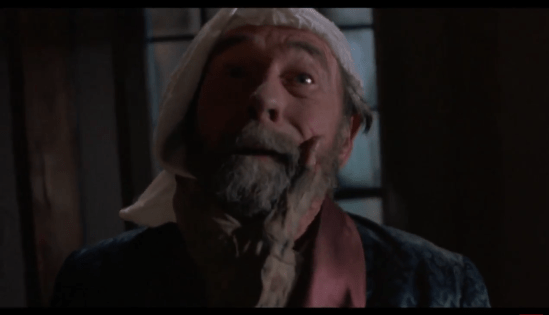
Unearthed Films and MVDVisual proudly present “The Unnamed” as part of their sub-label entitled Unearthed Classics and lands onto 1080p Blu-ray home video. Horror fans will thoroughly enjoy the newly restored 4k transfer presented in widescreen, 1.85:1 aspect ratio and the image quality is remarkably detailed with absent compression artifacts and edging enhancements. Skin tones look natural during outside shots while a blue tint, overlaying a dark backdrop, inside the rickety house isn’t overexposed and makes for quite the grim atmosphere. The English 5.1 Surround Sound DTS-HD, 2.0 PCM, audio track was resonating with a range of ambient sounds; however, an unfortunate mishap of ambient duplication followings about half a second from the initial sound. The dialogue track and soundtrack are no affected by this issue and the dialogue is clear in the forefront, not terrible interfered by the technical boo-boo. The extras are packed with audio commentary with Charles Klausmeyer, Mark Stephenson, Laura Albert, Eben Ham, Camille Calvet, and R. Christopher Biggs. There’s also a video interviews with actors Charles Klausmeyer, Mark Stephenson, Laura Albert, Mark Parra, R. Christopher Biggs, Camille Calvet, and Eben Ham, a vintage audio track, photo gallery, and trailers. The Blu-ray comes in a limited edition slip cover with the beautifully illustrated gothic-esque poster from Tongdee Panumas courtesy of the M. Wright Collection. “The Unnamable” was endangered; a potentially lost classic that quickly went to being out of print as soon as it was released onto DVD in Europe and never actually saw the digital upgrade light of day Stateside from it’s VHS predecessor. Luckily for us fans, Unearthed Films, living up to label moniker, unearths “The Unnamable” from the depths of obsolete format hell, revamping for a new generation of horror fans and re-transfixing fans who once thought Jean-Paul Ouellette’s film would never, ever see a glorious rebirth.
The Evils of a Transgendered Occultist! “Miss Leslie’s Dolls” review

On a dark and stormy night after a school football game, a teacher and three students take shelter at a cottage adjacent to a cemetery. If the cottage wasn’t creepy enough, the sole occupant owner surpassed the bar. She calls herself Miss Leslie, a middle aged woman with an ill-fated story of her friend and mother’s fiery demise from long past and a quirky penchant for making life-size female dolls that set inside an illuminating shrine. Though they feel uneasy about the creepy surroundings, the visitors stay and get cozy, especially with each other, but Miss Leslie has ulterior, deranged motives. Her dolls are not just lifelike, they once were vibrant lives of women Miss Leslie sorely wanted to inhabit their feminine confines of youth and beauty from over the years, but now they are an undecomposable shells, encase in Miss Leslie’s special doll making brew to timelessly capture their lovely physiques. They are also beautiful, yet painful reminders of her failed attempts to transfer her essence into their adolescent bodies.

Every so often you come across a film with a gigantically absurd hard shell cover with the gooey insides of eye-rolling cheesiness and you just have to ask yourself, how in the world did something like this ever come to fruition!? Yet, somehow, someway, these productions of an oddball variety always have an intense allure about them and end up being just one of the coolest rarities to grace the glazed-over irises. Joseph Prieto’s “Miss Leslie’s Dolls” is the epitome of this very phenomena. “Miss Leslie’s Dolls” is an exploitation, nearly softcore porn, horror with a deranged killers with severe mental issues that range from communication with dead to, what can be now construed as antiquated, complications of gender identity. One of the last directed films from Prieto, who also helmed “Shanty Tramp” and “Savages from Hell,” also penned the screenplay alongside longtime collaborator and producer Ralph Remy Jr. The script reads like an insatiable bedside thriller novel, an object of complete obsession through the entirety and well long after being completed; “Miss Leslie’s Dolls’” has a rich gothic lining, a strong sexual appetite, and a timely LGTB subject that involves debate on mental illness or inherited gender orientation.

Not many actors performed in drag. Sure, there was Jack Lemmon and Tony Curtis in “Some Like It Hot” and there was even Anthony Perkins from “Psycho,” who some might go as far as saying that “Miss Leslie’s Dolls” might draw inspiration from with the whole mother fixation, but only a small faction of fans, especially in the genre, might know Salvador Ugarte. The Cuban born Ugarte has great poise as a woman imprisoned in a man’s body. Miss Leslie just isn’t a deranged killer in drag; the character has deep rooted issues stemming out of not only being a woman embodied incorrectly, but also seeded by an engulfing obsession with capturing beauty to obtain it for herself, an addition from a result of a permanent scarring left behind by Miss Leslie’s homicidal rampage in the character’s history. Ugarte has the mannerisms and the gait down so unerringly that’s the performance is downright creepy, but there was one aspect of womanhood that Ugarte’s masculinity couldn’t mask: his voice. The actor is horrendously dubbed, adding charm to the bizarre concept. Ugarte’s joined by “Little Laura and Big John’s” Terri Juston, Marchelle Bichette (“The Gruesome Twosome”), Kitty Lewis, and Charles Pitts of “Supervixens.”

Contrary to the above, “Miss Leslie’s Dolls” has some drawback. Though the characters might be entertaining and interesting, especially with the Bourbon obsessed and hot for teacher Roy and his terrible gangster accent or the fact that Ms. Alma Frost is a smoking hot, twenty-something year old prude teacher to her pupils who are practically the same age as her, they’re washed over with an aloof mentality, consequently looking past or just blatantly oblivious to Miss Leslie’s obvious male features, her inauspicious ramblings, and the fact she has a shrine of creepy and realistic dolls of women that fill the room with the smell like rot and death. Perhaps too busy running through the cemetery at night in skimpy bedroom garments. Yes, this does happen. On top of that, Miss Leslie harness of occult powers goes relatively unexplored, yet very much utilized as an important portion of the film near the last act. Despite being passively mentioned and rather undercut from more than most of the film, Miss Leslie’s occult mischief is plucked right from left field to further the enigmatic aurora of Prieto’s mystical exploitation.

Network proudly presents “Miss Leslie’s Dolls” on an UK 1080p Hi-Definition, region free Blu-ray home video, remastered from the original film elements once thought to be have been forever lost. The newly scanned transfer came from a surviving print and presented in the film’s original theatrical aspect ratio of 1.85:1. The restoration included detailed grain management, the automated and manual removal of dirt and damage, and the correction of major color instability, warp, and density fluctuations. (In full disclosure, Network sent me a DVD-R screener and that is what the following critique is based off of) Though in some frames there flares up some instability, from my perspective, the first act and half really came out well with the vivid, yet natural, coloring. However, once inside Miss Leslie’s basement, woozy blotchy moments of Leslie fiddling around makes the particular scene a bit off putting. The stereo mono track is fair for the 1973 film that has it’s share of distortions and editing pop faux pas, but the dialogue is fiercely prominent, despite the inherent awfully laid dub track, and equally well balanced with ambient tracks. There were no bonus material on the release. Transvestitism horror is quite a rare experience that always has a lasting impression, cerebrally popping visuals of grim visions commingling with the blood, the viscera, and the other supplementary violence. “Miss Leslie’s Dolls” deserved this Blu-ray release and Network did right by Prieto’s obscure grindhouse feature that will sear into your skull.
 It's Bloggin Evil!