

In 1978 Chile, a powerful political extremist exploits the Chilean army to conduct and carrier out the physical and sexual abuse against the people of Chile, including forcing his own son, Juan, to have sex with his tortured mother and executing her right in front of him while in the fornicating act. Juan’s father continues to further the abuse with fear, terror, and misogynistic berates until he’s finally fatally coup. Fast forward to 2011, Juan’s an unstoppable madman as he terrorizes the locals over the years without authoritative regulation and also four female outsiders on holiday for a girls’ weekend. Juan and his son force their way into their residence, tyrannizing, raping, and even killing one of them before leaving his cruel mark in his wake, but with the help of a local officer, the remaining three survivors seeks to make sure Juan, and his equally screwed up family, never harm anyone again. However, Juan is prepared, held up inside a compound subterfuge, well-armed and well-unhinged.

Perhaps based loosely off the atrocities of of former Chilean President Augusto Pinochet in the 1970’s, Artsploitation Films’ distributed “Trauma” goes to the unapologetic extreme, building upon an already unsavory narrative into the bred morbid disposition of the human psyche. Written and directed by “Zombie Dawn’s” Lucio A. Rojas, “Trauma” is a cold, blunt object with a razor sharp bite and has a penchant for the twisted. The Chilean director’s film isn’t the only game in the market of extreme movies, but does manage to create a motive of separation between most with the offending character experiencing traumatic corruption by someone close; in this case, Juan’s father 40-years earlier by oppressing the boy through physical pain and scrambling his son’s mental state by removing any humility, compassion, and reasoning that manufactures the perfect ruthless butcher. Pinochet used his military power to be a lethal strong hand when desired; Rojas spices it up by adding forced incest, rape-after-rape, and implementing a subconscious malevolency.

“Trauma” stars “To Kill A Man’s” Daniel Antivilo as the despicable Juan. Antivilo is patient and soft in his approach to a deranged character that doesn’t display that wild abandonment in psychotics. Juan goes on to slowly terrorize four lovely outsiders from the city in Andrea (Catalina Martin), Camila (Macarena Carrere), Julia (Ximena del Solar of “Perfidy,” another Rojas film), and Magdalena (Dominga Bofill). The four actresses offer up different character perspectives and personality that should divide the dynamic or, at least, complicate it; there’s a strong sense of lesbianism between them, even exhibiting traits in those who don’t identify as such. Antivilo macho savagery pitted against the four stunning, but strong women does create a black and white, stark-producing character placement. Outside that dynamic, one character has no dialogue and, yet, manages to high level physical role that’s barbaric, humiliating, and spacey and that role is inside of Juan’s schizoid son, Mario, is donned by Felipe Rios who has the strung out appearance of a long, drawn out face and muscularly thin. Eduardo Paxeco, Claudio Riveros, and Florencia Heredia round out the cast.

Rojas does a beautiful job in the juxtaposition department, paralleling the bleak, grimy, and yet agreeable life of Juan and his equally as certifiable family next to the full of life and vigor in the unsuspecting women that Rojas’ introduces off with Camila and Julia engaging in a steamy girl-on-girl love making scene that doesn’t leave much to the imagination and, then, slides into their instant road trip the day after. Rojas had built up Juan’s pain and suffering toward being molded into a monster whereas the women fly by the seat of their pants, churning out memorable moments in a flash whereas Juan’s unfortunate course was a slow burn throughout his long, hard life. The parallelism flips from Juan to the women up until the moment their lives intertwine and this is where things get messy with Roja’s script. Between Julia, Camila, Magda, and Andre, three of whom are related, tension builds as Julia plays the flirtatious and brazen field between hooking up with the cousins as stroppy Andrea steams in a passive stew on the sideline. This subplot never goes explored, going uncooked right in the middle of a hot flame where passions and couples’ plights evolve the story. The abrupt presence of Juan puts a cease and desist on any other subplot that ultimate funnels “Trauma” to be a rape-revenge flick with a graphic content.

Artsploitation Films continues to distribute internationally provocative films that always delight as well as disgust (in a good way). With Lucio A. Roja’s 2017 film, “Trauma”, casualties pile high and damage control is non-existent, fitting the Philadelphian-based company’s axiom that presents the film onto a high-definition Blu-ray. With a widescreen, aspect ratio 2.35:1, the image quality is quite good. Details are very promising here and really need to be with the gore. The face explosion and the jaw unhinging deaths are certainly not stodgy as the scene on these moments linger more than most would, soaking up the full effect of the viscous covered chunks out from the face crater by a high caliber handgun is a thing of beauty. The Spanish 5.1 surround sound syncs up well in all aspects from dialogue to ambiance. English subtitles are available and line up well enough though speedy at times. Dialogue is clear and present, Ignacio Redard score is heard, and no signs of any kind of distortions or other issues. Bonus features are limited to just the theatrical trailer. “Trauma” might have vastly skewed the actual events the film is based off of to pen a story, but what a gorgeously gory-filled and exploitively-charged narrative that can be a tell all for the cause and effect of political extremism at it’s worse. Director Lucio A. Rojas puts Chile on the controversial and extreme horror map.
Category Archives: psychological horror
An Evil Stare Conjures a Peeping Tom! “Butterfly Kisses” review!
Struggling filmmaker Gavin York discovers a stowed away box full of film cassettes in his in-law’s basement. As York delves into the tapes, he becomes obsessed with the tapes’ contents involving two film students documenting the evoking of localized folklore phantom, known as Peeping Tom, as their thesis. Capturing Peeping Tom on their camera acting as a human lens, the two students can’t escape the malevolent presence that gets closer and closer to their reality with every shutting off the camera. York, himself, is also being documented by a group of filmmakers, attempting to capture the far-fetched story of Gavin’s unravelling of the historic legend as well as to turn a profit in revealing that Peeping Tom does, in fact, exist. The two tales of filmmakers ride a distressing parallel that spirals them into ghastly obsession and forces them to never, ever blink again!

“Butterfly Kisses” is the 2018 supernatural faux-documentary from writer-director Erik Kristopher Myers. The “Roulette” filmmaker finds inspiration in Ellicott City, Maryland’s, very own, staring contest champion in Peeping Tom; a 16th century labeled example of a Flickergeist, a shadowy image just on the edge of the peripheral vision, and Peeping Tom also goes by the monikers Blink Man or The Tunnel Man. “Butterfly Kisses” title comes as when Peeping Tom gets closer with every blink of an eyelid, his victim will need to painfully keep their peepers open for as long as they can, but when Peeping Tom is so close, close proximity to the face, flutter’s his eyelashes against her eyes forcing one to blink and succumb to his deadly motives. With Myers’ film, a little bit of this reviewer wanted to see Peeping Tom actually deliver the act of butterfly kisses upon a victim before mangling the poor soul into oblivion.

While both documentaries involve shedding light onto the exposure of a Flickergeist, the narrative harshly shines more of the starlight onto the characters making these films. Gavin York is essentially dissected while he being self-absorbed in himself and his dollar signs he thinks his project is worth to the word. Seth Adam Kallick does Gavin well though perhaps slightly overselling the performance; however, there never was a deeper rabbit hole for York to escape from, leaving not a lot of range for Kallick and his character to arc. York studies and analyzes the original thesis film spearheaded by Sophia Crane, played by Rachel Armiger, and her cameraman Feldman, played by Reed DeLisle. The dynamics are fine between Armiger and DeLisle whom poke the bees nest of folklore legends, but moments to reflect their humanity, why should we care about these two characters as people from abandoned or forgotten footage, didn’t quite translate. Rounding out the cast Erik Kristopher Myers, Matt Lake (Author of the “Weird” state book series), and Eileen del Valle.

The documentary inside a documentary is like looking into a mirror that’s facing another mirror, ping-ponging back and forth between parallel stories that are only set a part bestowed year their recorded while peppering Peeping Tom true to form, as a flicker of a shadowy figure. Myers does his due diligence in editing these two films together, meshing appropriately the intertwining, sometimes combating, docs to find common ground in a linear story. Sometimes the realism just didn’t hit the mark and creating that casual dialect or the valueless moments didn’t blossom, staying focus more on the task at hand. Also, this narrative has been told and rehashed before in some way, shape, or form, whether hunting the legend of Bigfoot or summoning the Slender Man, finding separation between Myer’s film and those other project proves difficult. What’s enjoyable about “Butterfly Kisses” are the welcoming jump scares and while only a couple of jump scares make the cut, the two are well-timed, well-scored, and well-placed to send a shockwave through out the nervous system. Even I jumped on these scenes.

Four-Fingered Films presents Erik Kristopher Myers’ “Butterfly Kisses,” a supernatural documentary that explores a national, Great Depression-born, folklore bred in Maryland and depicts a contagious obsession of stubbornness and worth. Unfortunately, an online screener was provided for this critique so the audio and video aspects will not be reviewed. There were also no bonus material with this screener. “Butterfly Kisses” is a quasi-found footage spook show surrounding another of America’s frightful urban myths, granting Peeping Tom more staying power just inside the corner of our peripheral vision, but the film doesn’t quite highlight and tour the reason or the rhyme to Flickergeist’s true power. Myers chose to detail the downward spiral of those consumed by the sight of his very questionable existence in more than one profitable fashion and that can be more frightening than the realism of a ghoul.
Evil Wants Your Children! “Slender Man” review

A Massachusetts foursome of girls, Wren, Chloe, Hallie, and Katie, invoke the summoning of an internet lore named Slender Man after watching an instructional online video on how to evoke his presence to reality. After the video completes and the girls dismissively chalk this activity up as hoax-filled rubbish, an embattled and disconnected Katie vanishes a few weeks later during a school sanctioned field trip to a historical graveyard, thrusting the remaining three friends into investigating her abrupt disappearance all the while they each experience an ominous figure haunting them in and out of consciousness. As the continue to look for Katie, Slender Man keeps popping up into the findings. Wren’s convinced, after suffering from terrifying visions, that Slender Man wants the four who’ve contacted him and when her friends dismiss Wren’s frantic ravings, she employs Hallie’s sister, Lizzie, to assist in stopping Slender Man. All of reality is being skewed while Slender Man hunts them down one-by-one and if they’re not taken, those left in Slender Man’s wake will forever be deranged with madness.

Straight from it’s internet meme playbook origins comes the constructed next chapter in “Slender Man’s” mythology from the “I’ll Always Know What You Did Last Summer” director Sylvain White and written by David Birke (“Elle”) that feels very familiar to “The Ring” premise. Based of the mythos created by Victor Surge, aka Eric Knudsen, “Slender Man” fruition onto the Hollywood scene finds a home under Sony’s Screen Gems division, the same division that delivered the Paul W.S. Anderson “Resident Evil” franchise. While not a mega-glossy action horror piece for Sony and Screen Gems, White’s take on one of the internet’s most popular and mysterious spawns revels in it’s own crowd funded supernatural element and White is the grand puppeteer behind the scenes piecing the material together that builds upon, and extends, “Slender Man” canon into film and video visuals. “Slender Man” provides the character flesh, extenuating doubt where special effects can make monolith his presence of inception and flourish from imagination to terrifying reality. If looking outside the box, “Slender Man” could also be translated into symbolism for the online predatory habits men take towards young, sometimes teenage and impressionable girls. There in lies references to this notion with such in Katie, who is a runaway teenage girl with a fixation toward an obscured man from the internet, aka Slender Man, and also Hallie’s vivid nightmares of being pregnant with the very Lovecraftian-esque spawn of Slender Man as tentacles shoot out from her large, protruding stomach. Yes, she’s a high school girl…

“Slender Man” centers around a four female, high school age characters: Chloe, Katie, Wren, and Hallie. The latter being the leader, Hallie, played by Julie Goldani Telles, is an unwavering non-believer of Slender Man, contributing her visions and feelings as some sort of coming of age Freudian bizarro show. The now 23-year old Telles convinces to pull off a well adjusted teenage girl spiraling into Slender Man’s otherworldly oblivion and absolutely turns the corner when younger sister Lizzie, Taylor Richardson, becomes an unwitting participate. Hallie almost comes toe-to-toe with her confident and frantic friend Wren, a character bestowed to Joey King of “Quarantine” and “White House Down.” King’s townboy-ish approach has served well to keep her character apart in order to not clash with other warring personalities. Yet, there’s not a whole lot interesting aspects associated with the other two characters, Chloe and Katie. If audiences were expected to be concerned for Katie, then Annalise Basso needed her character to have more screen time. The “Ouija: Origin of Evil” actress barely had a handful scenes to try to convey a poignant life with an alcoholic father before she’s whisked away to never been seen again. Chloe had a slight more substance as means to exhibit the result of not being taken by Slender Man; “Chilling Adventures of Sabrina’s” Jaz Sinclair didn’t really add any pizzaz to her poorly written flat character.

Though Slender Man’s origins surpasses being a byproduct of an internet meme and becomes woven into a lore of all it’s own through a global, technological network, the very fabric “Slender Man’s” tech horror theme had laid a negligent foundation. Viewers without a hint of Slender Man knowledge will find the connection between the shadowy figure that stalks and kidnaps children and the domain from which it was born, witnessing the technology used in the film being wielded as a tool of evil rather than a conduit of to connect two worlds. What works for Sylvain White is his knack for shaping Slender Man into physicality in an applauding effort that combines chilling atmospherics, well timed visual and audio cues, above decent special effects, and the crunchy, contorted body of Javier Botet as the Slender Man. We’ve covered Botet before in “Insidious: The Last Key” as the antagonistic KeyFace creature. KeyFace and Slender Man, two similar but still vastly different villains, wouldn’t be as influential or be brought to such a horrifying fruition if Botet was not behind the mask and it’s because of Botet’s blessing, but also a curse, Marfan Syndrome physique that he’s able to accomplish a wide range of distorted and malformed characters.

Sony Pictures presents “Slender Man” onto HD 1080p Blu-ray under the Screen Gems label. The Blu-ray is presented in widescreen of the film’s original aspect ratio, 2.39:1. “Slender Man” doesn’t sell itself as high performance, resulting in more details in the range of textures rather than relying on a clean, finished look. Colors are remain behind a cloak of darker shades to pull of gloomy atmospherics, but do brighten when the scene calls for it. The digital film looks great, if not fairly standard, for movies of today. The English DTS-HD Master Audio 5.1 track is quite high performance, like revving an engine on an imported roadster. Slender Man comes with his own cache of audio tinglers to send chills up your spin and invoke cold sweats. Every branch breaking ambiance and desperate and exasperated breath being took by the teen girls aligns cleanly and nicely with the visual representations. Dialogue is lossless and prevalent as well as being integrated seamlessly during more active sequences in a well balanced fit all with range and depth. Thin extras do put a damper on the release with a bland featurette entitled “Summoning ‘Slender Man:’ Meet the Cast.” The featurette doesn’t do much more than give the actors’ and White’s opinion of their characters and Slender Man. The shame of it is that the internet is a vast place of information and knowledge and, yet, the featurette doesn’t knick the surface of who and what is Slender Man. Plus, if remembering correctly, there are scenes omitted from this release; more intense and bloodshed scenes that would have granted a more adult friendly rating. This release doesn’t offer up two versions of the film. Despite embodying a rehashed, bi-annual story of supernatural and psychological tech horror of the PG-13 variety, “Slender Man” endures through with a sliver of appreciation for the easily missed facets that work as a positive in Sylvain White’s 2018 film, such as bleak atmospheric qualities and Javier Botet’s performance, but the diluted final product, released on Blu-ray, benches what could have an at home video entertainment home run for Sony Pictures.
A Plethura of Evil! “It Lives” review!
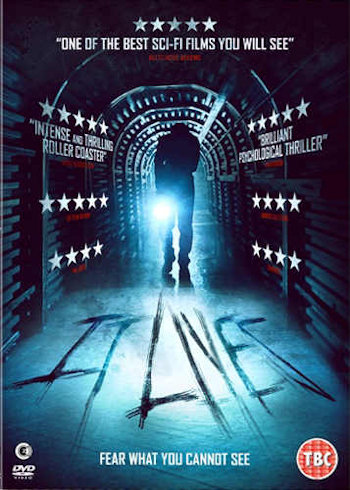
In the year 2024, the world’s superpowers are on the edge of nuclear warfare as Earth’s resources are dwindling at a rapid pace. A halt in knife edge conflict and the construction of temporary peace, known as the RAND Treaty, allowed nations to build underground, sustainable bunkers for a restarter population. Plethura 04, one of these bunkers, is being monitored, maintained, and prepped by Roy, an labeled “undertaker” scientist, whose setting the stage for a group of survivors known as Priority One, but when the sudden fallout alarm blares, Plethura is locked down early, trapping Roy alone in a cavernous and cold bunker alone with the exception of an A.I. program that Roy named Arthur. As time passes, Roy sanity comes into question; so much so, that Roy believes that Plethura might just be a drill simulation. Also, is there really something in the bunker with him? Is Arthur trying to confuse him? Questions, isolation, and terror seep into Roy’s mind, perhaps, or perhaps not, manifesting a lurking presence.

“Its Alive,” also known as “Twenty Twenty-Four” is the intense psychological thriller from the United Kingdom. Written and directed by first timer Richard Mundy, “It Lives” is helmed in the same vein as “Buried” with a solo performer in an isolation crisis. Produced by Ripsaw Pictures and Entity Film Company, the feature has some production power behind it that makes the indie film seem to have a fluffier value than its actual worth and garnishes a cherished and chilling atmospheric cinematography by Nick Barker. A real sense of a cold cleanroom can be just as frightening as a filthy slaughterhouse and the Mundy-Barker team hone in on that very concept, performing a bariatric surgery on the heaviness and the plentiful of the up top, outside world and reducing it to a few corridors, a couple of living chambers, and beast-like belly of a generator room. The filmmakers fabricate isolation and the perception of isolation well with a tremendous set up of the scenario: the preparation and the sudden, unexpected calamity of a nuclear fallout.
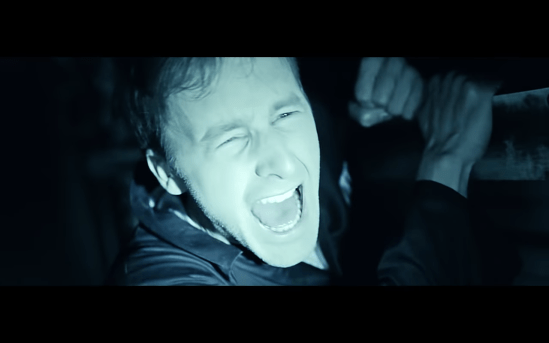
Actor Andrew Kinsler has the toughest job in the world, acting without feeding off the energy and the lines of other fellow actors. Kinsler goes at the role alone as Roy, a scientist prepping Plethura 04 for the arrival of Priority One survivors and knowing that he will die when he trades spaces with the group as he has to go topside. That’s notion, of having to sacrifice yourself for strangers, is a deep concept. Its easier to sacrifice oneself for the sake of those you love and care for, but complete strangers is pure mental mayhem, especially when all the work of getting the bunker ready was done by Roy. Kinsler keeps up the part of coping with his mortality, accepting it, and then being crushed by it when the world ends at the blink of an eye. Questioning everything as he immerses deeper into isolation, Kinsler relies more on the artificial intelligence to be a companion, despite seemingly being annoyed by the very lack its thirst for human complexities.

Many popcorn viewers don’t care for an open book ending films where the personal interpretation opens up a vast range of theories. “It Lives” is one of those films. Most certainly a disturbing psychological thriller, the story perpetually has Roy second guessing every anomaly that spooks him, even to the extend of thinking a computer program has infiltrated his subconscious with trickery and confusion tactics. Then, the ending smacks you right in the face and then smacks you again with a three finale questions: Was it a dream? Was it madness? Or was it all real? Christopher Nolan similarly put the fate of “Inception’s” Cobb into the hands of audiences when he spins a toy top to see if he was still in inception or if he was in reality. If continuously in motion, that would signify Cobb’s in a fantasy world, but Cobb’s spin is cut short with a cut to black, begging the answer of whether his happy ending was true or a inceptive pipe dream. Roy’s scenario is a lot darker and, if not, deeper that’s challenged by an internal struggle of self-preservation. Has Roy become a fixture of the cleanroom aspect? Has he become a cold figment of accepting his fate and has suppressed his emotion about it to the boiling point that his subconscious is fighting for his own survival? “It Lives” is an exceptionally juicy psychological film worth exploring.

Second Sight presents “It Lives” onto DVD home video this July 30th! Since the screener was a DVD-R, a full assessment of the audio and video aspects will not be covered. There were also no bonus material on the disc. What I can say is that Harry Kirby’s score is the utmost jarring; reminds me of Mark Korven’s unsettling and unique unmelodious score in “The Witch.” As part sci-fi and part horror, the surface level narrative is sheer terror and fear. Below surface, the wicked and frightful stir an embattling vortex of arguments in the grossest of grotesque forms, aka a complete mind destabilization. “It Lives” has indie roots that spread wide and fierce, shredding through temporal lobes like soft butter and delivering one hell of a terrifying psychological horror.
Evil’s Eager to Loop You In! “The Endless” review!
Brothers Justin and Aaron struggle to maintain a normal and fruitful life outside Camp Arcadia, the UFO death cult camp they fled as young men. When Aaron feels empty, poor, and hungry as a cleaning serviceman on the brink of poverty and social misfortune, he convinces his older brother to take him back to the camp for one day. Once they’ve arrived, the two felt as if nothing has changed, even the cultists haven’t aged in the decade they were gone. Aaron seeks to reintegrate during his time at the camp while Justin is eager to vacate the premises pronto, but an otherworldly phenomenon promises answers to Justin and Aaron’s perceptions of their former cult and leaves questions to the unexplainable events that surround the camp site. The brothers must solve the mystery before being ensnared by the phenomena that lurks all around them with an ever present eye.

“The Endless” is the 2017 science fiction horror film from a pair of directors, Justin Benson and Aaron Moorhead, who helmed a segment in the anthology, “V/H/S Viral.” The duo also star as the leads in the film as Justin and Aaron. Benson penned the film’ script that has grand originality and fosters an underlying Lovecraftian concept and despite the limited budget, “The Endless” has favorable special effects of mind-boggling proportions incorporated with a splash of mildly dark humor in this blithe fantasy horror. Reminiscent of such other off-the-wall commingling genre films such as Don Coscarelli’s “John Dies at the End” or Madellaine Paxson’s “Blood Punch,” where the supernatural and bizarre collide and the characters are equally demented for a pinch of extra pizazz.
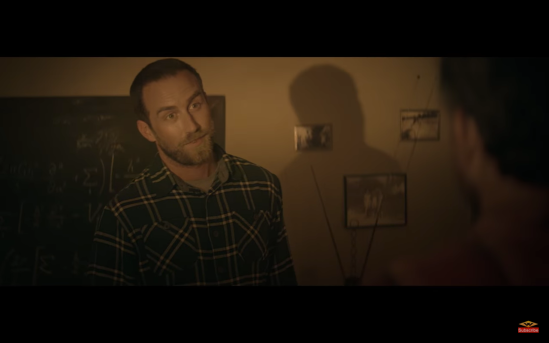
Benson and Moorhead may be the stars of “The Endless” and essentially are the epicenter of the entire premise, but their characters wouldn’t be aptly as important if it wasn’t for the cast that supported them. One of the actors is Tate Ellington (“Sinister 2”) as the unofficial camp leader Hal with the gift of gab and just as mysterious as the camp itself. Ellington’s one of many of the camp so called UFO Death Cult characters that make the story really stick out as odd as there’s Lew Temple (“The Walking Dead”) too. A very unshaven and unkempt Temple weighs the look of an Civil War soldier in Tim and Tim’s distant expressionless is very much Temple’s bread and butter. Rivaling the unnerving silence of Lew Temple is “Alien: Covenant’s” Callie Hernandez. As Anna, Hernandez plays the girl next door, flirting with Aaron with trivial matter that toys Aaron’s inherent innocence. The rest of the cast includes Emily Montague (“Fright Night” remake), James Jordan, Kira Powell, Peter Ciella, and David Lawson Jr. as Smiling Dave.

“The Endless” could be said to have a slew of metaphors and symbolism, even the older brother Justin frustratingly points out how camp leader Hal always speaks in metaphors. So, what is causing all the weird and terrifying atmospherics at Camp Arcadia? Arcadia ends up being an oxymoron as the camp is not harmonious or a utopia as believed, but rather a coiled purgatory with an ominous presence thats ever present. Don’t know what’s watching, where it came from, or what it wants, but it’s driven fear of the unknown as noted during the title card epilogue of a quote. What we do know is this presence, this thing, is massive, looming over the hills and in the depths of a nearby lake; the thing is very Lovecraftian in proportion to what that means. Hell, even the quote I mentioned earlier about fear of the unknown is pulled from H.P. Lovecraft himself – “The oldest and strongest emotion of mankind is fear, and the oldest and strongest kind of fear is fear of the unknown.” The brother symbolism fear for they have fear of the outside world and fear of their unforeseen and possibly poverish future, but once Justin and Aaron come to terms with ending being at odds with each other, the brothers know they can conquer whatever comes at them together.
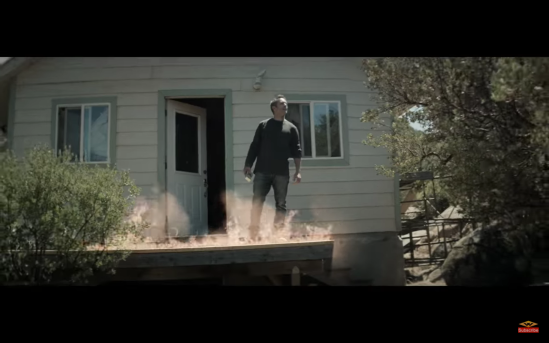
Well Go USA Entertainment presents Snowfort, Love & Death, and Pffaf & Pfaff productions’ “The Endless” onto Blu-ray home video. The single disc BD-50 has a widescreen 16:9 aspect ratio. Image presentation has fair natural tones with a set of a rather light yellowish tint during desert sequences. Color palette is enriched especially when the inexplicable does come ahead; moments of heavy tinting, such as a heavy red flare, inexplicably stand out. Blotching, DNR, or banding are an issue here, leaving the details considerably intact in a plenty of the duration. The English DTS-HD Master Audio 5.1 surround sound has not gaffs about it. The plentiful dialogue is clearly present to get the full story told, ambient and phenomena effects proportionally ranged and appropriate, and the soundtrack supports to dialogue and story with the amount of depth. Overall, the tracks are consistent throughout. Bonus features include an audio commentary with directors and producers, a 30+ minute make of segment, a behind the scenes featurette, deleted scenes, Visual effects breakdown, a “Ridiculous Extras” featurette that includes casting, and trailers. Don’t let the peppered black comedy in “The Endless” fool you; Justin Benson and Aaron Moorhead have constructed an original sci-fi horror that shells out an unsettling ambiguity of a modern and universal fear too invasive to try and stop the perpetual replaying of attempting to know the unknown.

Purchase “The Endless” on Blu-ray!


