Do EVIL, Get Dead! “A Day of Judgment” reviewed! (Severin Films / Blu-ray)


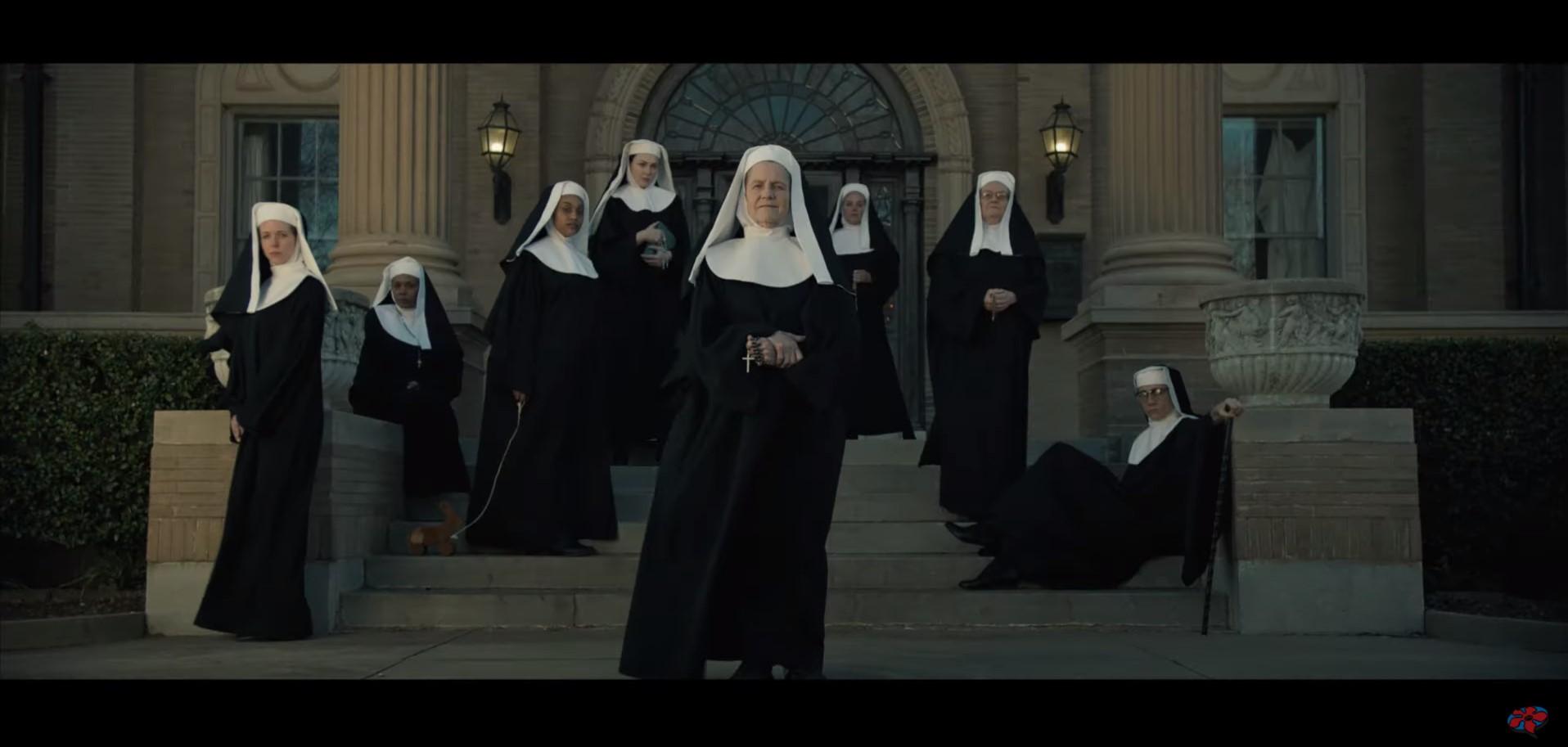
1930s rural America – the dejected town priest resigns his congregational duties after failing the local townsfolk who have all but returned to the Church and reclaim their faith in the savior lord Jesus Christ and God.  On his exit of the town’s border, the priest crosses paths with a shadowy figure riding an austere wagon and holding a scythe.  A town full of heartless schemers, adulterers, swindlers, and murders have their unforgiving stories told that leave their fellow townsfolk, their friends, and even their families left suffering in their wake.  The shadowy figure tracks each sinning stray down to face retributing judgment.  The righteous and terrible punishments send the unsavable souls to an eternal existence in Hell.
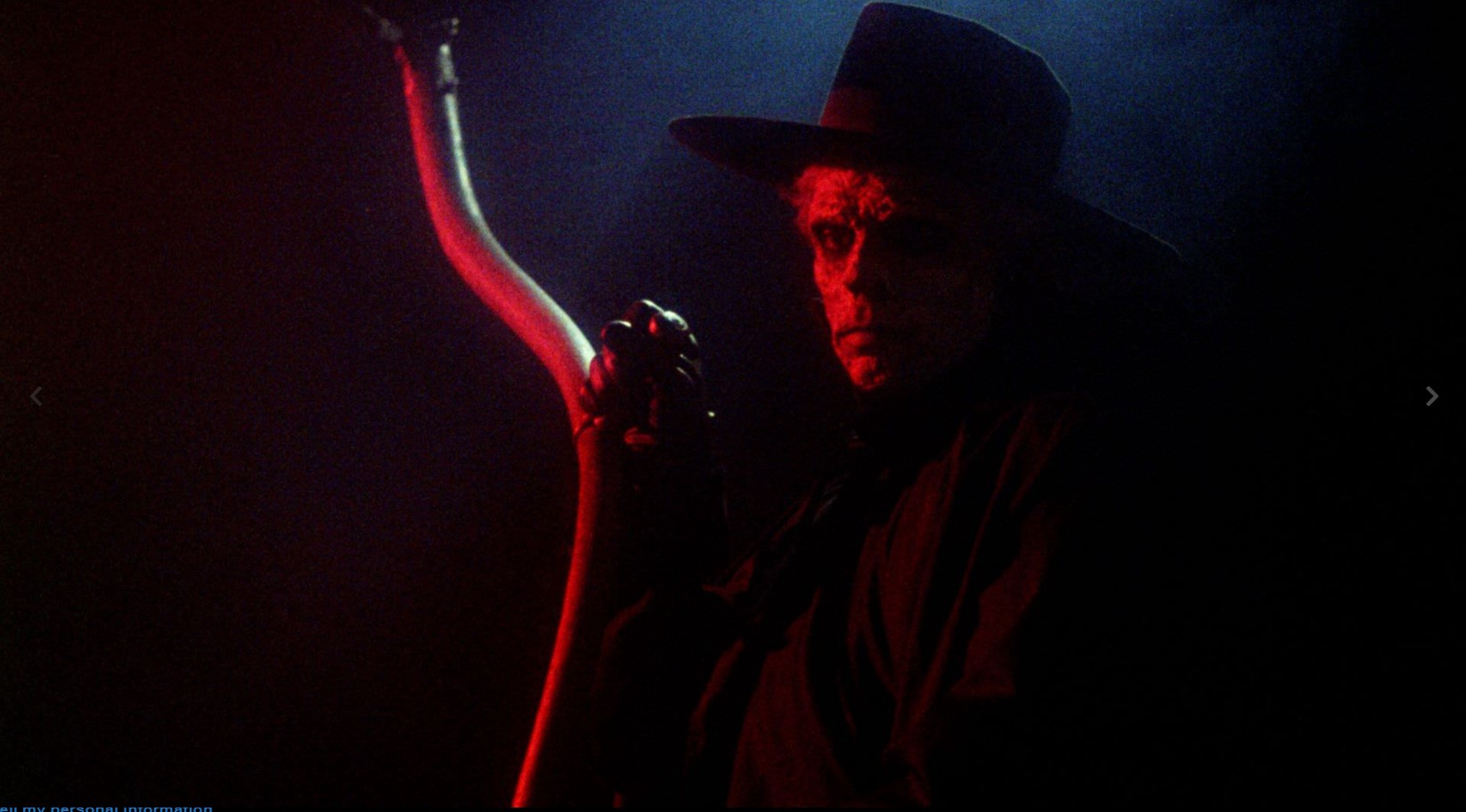
The Grim Reaper cometh. Screen cap courtesy of Severin.

What was once considered to be a Christian-centric educational project had turned into a Christian-centric damnation of horrors in the quasi-anthology “The Day of Judgment,” where the sinners of sin town deviate from the Godfearing path and into a vat of immorality and ungodly aberration.  “The Day of Judgment,” occasionally under the U.S. bootleg title of “Stormbringer,” is the one and only directorial from C.D.H Reynolds (aka Charles Reynolds), an academic educator turned briefly to film working under the legendary, North Carolina based Earl Owensby Studios that produced the 1981 released film.  The script is penned by Owensby Studios’ regular writer, Thom McIntyre, who inked the film between a pair of genre credits, including the incarcerated grindhouse actioner “Seabo,” also known as “Buckstone County Prison” a few years earlier and a snippy flick of a pack killer Rottweilers terrorizing a mountain resort in “Dogs of Hell” a couple of years later.   Owensby, obviously in regard to his own studio work, took part as the fire and brimstone tale’s producer along with associate producer and longtime “Power Ranger” director Worth Keeter curating the final touches as the creative architect of the script’s grimmest portions or more line as the assistant director of adding the bleaker, bloodier fates of the sinners.
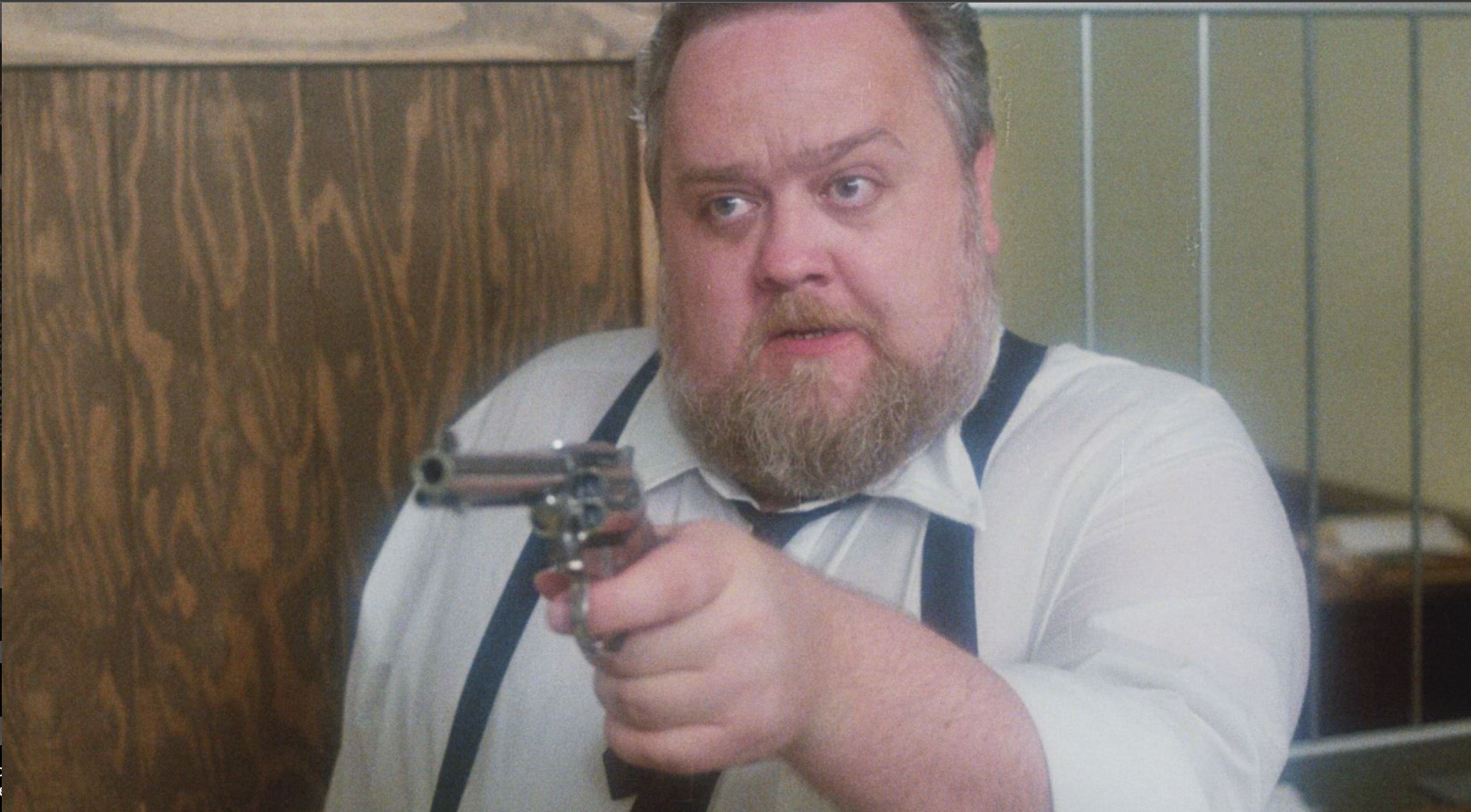
William T. Hicks. Screen cap courtesy of Severin.

“A Day of Judgment” has a non-linear anthology-like structure that swings back and forth between different character scenarios of wickedness.  You may meet one character at the very beginning of the story and don’t meet them again, until you’re already through having sent a good chunk, if not all, of the sinners to Hell in a handbasket.  But McIntyre hones in well on setting up nicely each character’s backstory, those who the priest crosses paths with as he exits the town and delivering their ultimate demise (with an assistant from Worth Keeter’s gloomier approach).  The director himself Charles Reynolds plays the crestfallen Reverend Cage in a classic expository preacher riding out of town and crossing paths with soon-to-be-troublesome townies in William T. Hicks (“Death Screams”) as a greedy and heartless bank owner, Careyanne Sutton and Larry Sprinkle (“Trick or Treat”) as man slaughtering, pretense adulterers. Toby Wallace as the hometown disparaging mechanic scheming to steal the family business out from his parents noses to sell, Helene Tryon (“Dogs of Hell”) as the frettingly kook and paranoid old lady poisoning the local children’s pet goat, and Brownlee Davis (“Wolfman” ’79) as the delusional and disgruntled former employee of his best friend looking for a finality in revenge.  “A Day of Judgment” had this weirdly transitional acting style for an 80’s released horror that resembled the Golden Age of cinema through the 1950s and 1960s where everything is loud and pronounced without much reflection, pause, or change in tone.  Though the style sticks out like a sore thumb, perhaps Reynolds made a shallow attempt to recapture the 1930s as which the narrative period is set.  The acting isn’t terrible but is more staged and reactionary to the course of events.  The cast rounds out with Carlton Bortell, Richard Dedmon, Inga Dennis, Denise Myers, Jerry Rushing, Harris Bloodworth and Fred Roland.
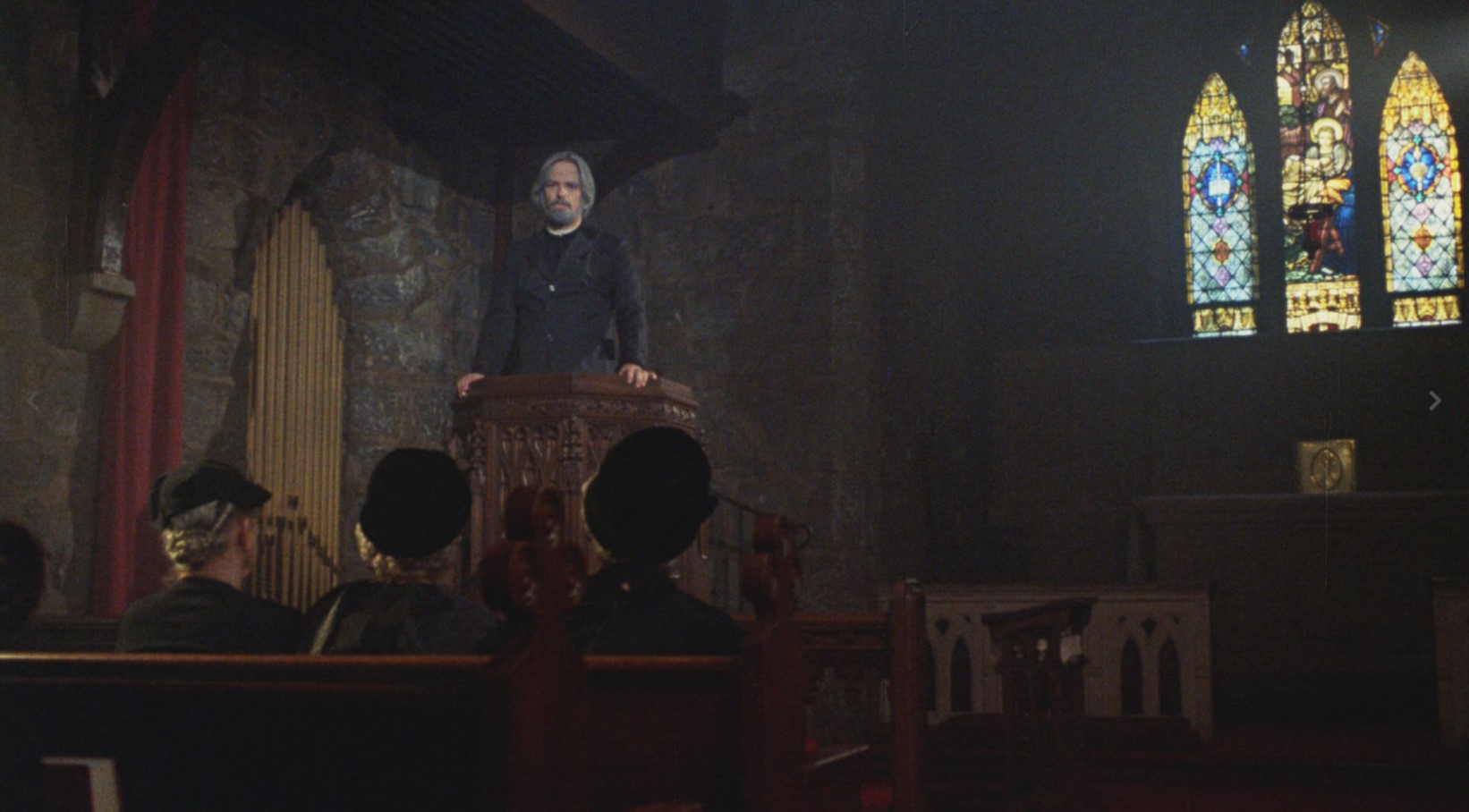
C.D.H. Reynolds as Reverend Cage. Screen cap courtesy of Severin.

Earl Owensby produced films were not known to be big box office hits as they coursed the grindhouse, drive-in theater circuits with relatively unknown talent nearly strict to the back pockets of the Owensby Studios and still meeting profitable margins on low budgets.  “The Day of Judgment,” which doesn’t feel like a grindhouse film, carried meager success by way of production design and wardrobes alone.  Give credit where credit is due with an Owensby film that can dole out a variety of era appropriate automotive roadsters and specific period garments for the illusion.  Some sets are dressed scarcer than others with lots of blank spaces and sparse knickknacks to build upon the 1930’s décor but the overall impression is quite effective, transporting one out of the 80’s and into the depression era the narrative frequently suggests.  I also favored the non-linear anthology of individual hell bound circumstances as that structure rendered “A Day of Judgment” as a whole rather than a pie sliced into six-even segments with a common core connection that, at times with other films, individual stories can feel untethered to the main theme.  In today’s times, “A Day of Judgment” is severely antiquated but the more “bleaker” character demises often landed with underripe special effects and a fair amount of cheesiness that’s a Loony-Toons illustrated representation of Hell that looks more like Wile E. Coyote’s Southwest American desert home.  I was anxiously awaiting the beep-beep of Roadrunner, speeding across the screen, and the drop an ACME anvil on top of the sinners’ melons. 
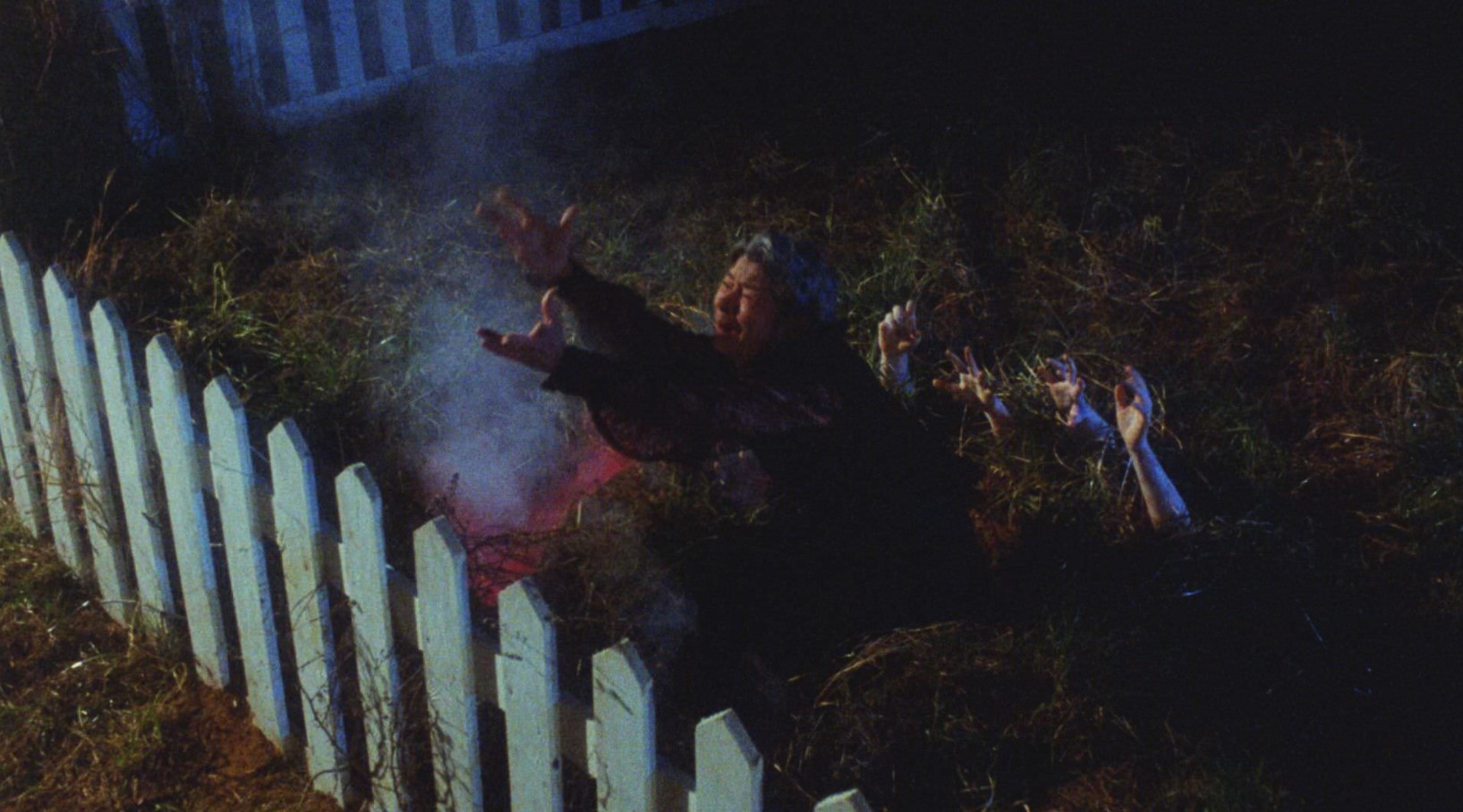
Helene Tryon being dragged to Hell. Screen cap courtesy of Severin.

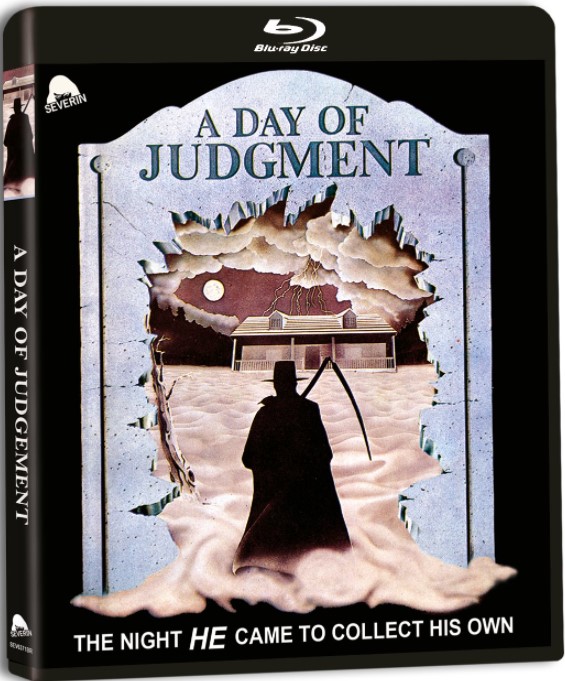
The overall message in “A Day of Judgment” is clear that sin and crime doesn’t pay, and the wrath of God’s retribution will come down hard in the form of a scythe.  Severin Films presents up a new Blu-ray, scanned in 2K of the original interpositive print now in full 1080p HD resolution of the widescreen 1.85:1 aspect ratio. Preserved pristine and having virtually no wear from age, “A Day of Judgment” is an amazing picture to behold for its first Blu-ray release with heightened resolution that extricates more details than possible than any other release can provide, especially when those other releases are the official VHS and DVD bootlegs. Here the color grading excellently pops with deeper hues of prime colors to provide more life into the death that’s onscreen. One thing to note about the release is the immense phosphorescence glow around whites and other lighter colors that can be eye-catchingly distracting when a piece of white paper becomes the main focus due to a conspicuous radiance. Other than that, the picture is clean, the grain is healthy, and no obvious signs of alterations to enhance the visual spectrum. The English language mono audio track, though emitting crystal clarity without any audio blemishes, is not terribly clear on whether Severin went with Dolby Digital or the DTS-HD. Other listings on the web offer up “A Day of Judgment” with a dual channel DTS-HD Master Audio while the back cover displays the Dolby Digital logo with a detached written description as a mono track, which coincides with Severin’s official site. With the film’s outmoded ingrained technology, Dolby Digital would be, to me, the obvious format that produces higher quality sound using a lower bitrate. Special features include a pair of new Severin exclusive interviews with British author Stephen Thrower of “Nightmare USA” in The Atheist’s Sins and snippet interviews from Worth Keeter and Thom McIntyre in Tales of Judgment. Final spec notes on the Blu-ray are a region free coding and has a runtime of 97 minutes. Stuck in stasis of prim and conservatism, “A Day of Judgment” has become this oddball labeled slasher of the 80s era that aimed to explore new and unusual stories and techniques on every avenue, but still leaves this impression of Bible-thumping Christian values that serve as a stern warning for all ye sinners!

“A Day of Judgment” on Blu-ray and DVD from Severin Films.  Click Here to Purchase at Amazon.com

EVILs Make Difficulties in Finding God. “Agnes” reviewed! (Magnet Releasing / Digital Screener)

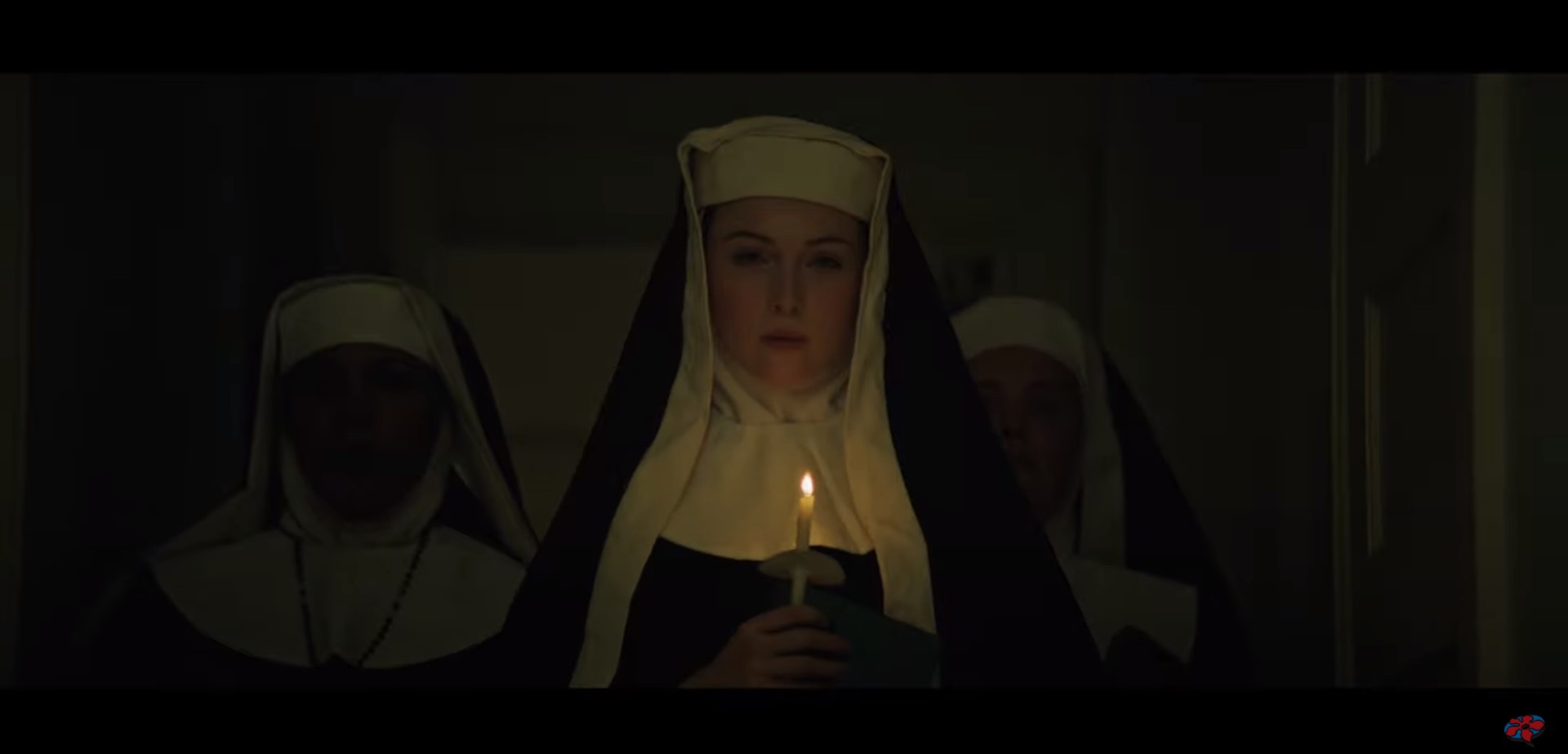
Blemished man of the cloth, Father Donaghue, and a neophyte are summoned to perform the holy rite of exorcism on a possibly possessed nun, Sister Agnes.  Disadvantaged and forced by his own scandal, Father Donaghue is ordered by the local Bishop to oversee the matter before they ship him overseas to avoid further disgrace upon the Church, but the skeptical priest, who has performed many exorcisms in the past, has never once believed he was casting out a demon but, rather, relieving a guilty, tormented soul seeking divine forgiveness.  When the priests confront Sister Agnes, the situation is violent, wily, and unlike any possession Father Donaghue has ever seen before.  The incident casts doubt over Sister Agnes’s friend and fellow nun, Sister Mary, who leaves the convent to try and live on her own and find God in the real world her own way, but a little bit of Sister Agnes has seemingly rubbed off onto her. 

You gotta have faith, sang once by pop-rocker and songwriter George Michael (and Fred Durst, if want to go that route) and though Mickey Reece’s “Agnes” doesn’t necessarily croon a rebuttal, the Oklahoma City born filmmaker surely splits hairs with a formidable blockade that advocates the crisis of faith cinematic model with layered horror.  The “Climate of the Hunter” writer-director’s latest quasi-horror-comedy and full-throttle religious drama questions the validities of finding God on a personal level with a divergently cut screenplay co-written with frequent script partner John Selvidge, whose current post-production penned time-warping horror entitled “Wait!” coming next year.   “Agnes” is filmed in the heartland of America inside Reece’s home state of central Oklahoma and is a reteaming of Mickey Reece and producer Jacob Snovel of Perm Machine with Greg Gilreath and Adam Hendricks’ Divide/Conquer (“Black Christmas” 2019 remake, “Freaky”) as the production companies and is first feature presentation for Molly C. Quinn, Matthew M. Welty, and Elan Gale’s QWGmire Productions.

One-third of the head of QWGmire is also the “Agnes” leading lady as Molly C. Quinn, who doesn’t play the titular character, plays Mary, a nun and friend of the possessed plagued Agnes (Hayley McFarland, “The Conjuring”) with a tragic background that ambiguously parallels a similar path to the mother of Jesus, also named Mary for all you non-Christians out there.  Mary is tender, quiet, and self-effacing but determined to pave her own way without the means of charity, especially those of the unsavory-favor nature, and consulting God for answers.  Quinn is perfect to shoulder Mary’s innocent disposition and does carry her naïve meekness throughout up until Mary’s gradual decline toward her faith that turns the sweet and innocent young woman into a pragmatic doubter, spurred by Agnes’ sudden otherworldly turn from devout to impiety that becomes more than what meets the eye.  However, in kicking off Reece’s film, one would have thought the exorcism of Agnes would emphasize more heavily on Father Donaghu (Ben Hall, “Minari”) and soon-to-be priest Benjamin (Jake Hororwitz, “Castle Freak” remake), but despite the involved build up of Father Donahu’s sordid past that conflicts with the Church and his struggles with the exorcism, Reece and Selvidge ultimately do, in what feels like, a pulling of the plug on a storyline that followings in the footsteps of “The Exorcist.”  That is, in my opinion, the downfall of “Agnes’” story in elimination of really interesting character arcs right in their girthy throes, leaving audiences hanging on Father Donaghu, grocer owner/low-end gangster Curly (Chris Sullivan, “This is Us” and “I Trapped the Devil”), ostentatiously swaggering Father Black (Chris Browning, “Let Me In”) and even the titular character Agnes fails to flesh out fully.  Rachel True (“The Craft”), Zandy Hartig, Bruce Davis, Chris Freihofer, Ginger Gilmartin, Mary Buss, and “Guardians of the Galaxy” and “Suicide Squad’s” Sean Gunn as a standup comedian and Mary’s love interest.

“Agnes” loosely follows a couple of Catholic patroness saints in Agnes and Mary derided in a contrary sense.  Agnes, the virgin martyr in Catholic veneration, opposes the Church in the film with flashbacks of her embracing an indulgent life along with her sexual insults that’s uncouth for the patroness saint of pure little girls.  Mary’s a little more recognizable with a previous, ambiguous account of her child’s death (aka Jesus Christ?).  Plus, there’s the religious imagery, amongst others in the film, of Mary with bleeding eyes as an analogous to the weeping statues. Reece blatantly shows most men and women of the cloth to be unorthodox Orthodox Catholics from Father Donaghu’s troubling allegations to the mocking head priests. Mother Superior throws around her superiority amongst the convent nuns and even the Bishop, who doesn’t ever say a word in his brief scene, appears smug and high and mighty with his stature, letting his assistant communicate (and excommunicate) all the ugly business. Only a non-priest, training to be ordained, in Benjamin is the only innocent, infallible Christian who captures the humble essence of God and the only one who can capable in rejuvenating Mary’s faith. “Agnes” is all about doubting faith whether be by demonic possession, the loss of a child, all forms of corruption, and more, but Mary keeps striving, struggling, and searching for that spiritual lifeline amongst seedy and unscrupulous faithless charlatans slowly poisoning her to be the same. However, the “Agnes” story divides too sharply leaving the acute crisis of faith to be nearly lost in translation and is practically a wandering spectrum of identity that’s roughly craft glued together by Reece.

Some may see the film’s poster and excitedly expect Nunsploitation but the reality of “Agnes” digs at the hypocrisy of people and the endless search for faith. What it’s not is the sexual exploitation or sadomasochism of chaste nuns. Give Mickey Reece’s horror-comedy drama “Agnes” a faithful shot come it’s December 10th theatrical release from Magnet Releasing, a subsidiary of Magnolia Pictures. “Agnes” has a runtime of 93 minutes and presented in a 2.55:1 aspect ratio. Typical of any Mickey Reece film, his melodramatic horror-comedy fits into his oeuvre of talking head cinema so leave expectations of brooding and atmospheric milieus at the door for more realistic, down-to-Earth scenes, which is a bit surprising since the cinematographer behind “Hellraiser: Judgement” and “Children of the Corn: Runaway,” Samuel Calvin, has an eye for unhallowed aesthetics. Calvin does produce some perfectly poised shots with the flock of nuns and the ever slightly deviant angle to sharpen a scene. No bonus features were included with the digital screener nor were there any bonus scenes during or after the credits. “Agnes” floats on a haphazard timeline of dark, melodrama comedy for a desperate need of faith against the immense heartache, the crudely selfish, and the absence of morality all of which incessantly imposes upon the good to assimilate.

A Cop, a Paranormal Investigator, and a Priest Walk Into an EVIL Extermination Plan! “Belzebuth” reviewed!


The joy of a new baby is cut short for Detective Ritter who bares the tragedy of his little boy viciously killed in a massacre of nursey infants by a psychotic nurse before taking her own life.  Five years later, and losing not only his child but also his wife to severe depression, a disheveled Ritter is called in to investigate a mass murder involving a 12 year old boy slaughtering young children in a preschool classroom.  To him, the two events don’t spark similarities, but to a paranormal investigating Catholic priest, Ritter’s tragedy and the events in the classroom are linked by the unorthodox priest’s examination.  All the evidence points to an excommunicated Catholic priest practicing demonology that sends the two men down a path of unholy darkness in a series of murderous catastrophes influenced by the rebirth of the Messiah.

When the first scenes from “Belzebuth” open with a maternity ward nurse stabbing with vigorous force every single infant child in their crib with a scalpel, you know nothing wholesome is sacred and everyone is fair game in what is to be a grim story of infinite barbarity and darkness.  “Belzebuth” falls in the line of fire of Mexico City born writer-director Emilio Portes with an augmented, dark humored social commentary loaded with evil entities and grimace-laden gore.  The “Meet the Head of Juan Pérez” filmmaker cowrites “Belzebuth’s” irrational rational for the unfortunate real world trend of mass murders and touches upon, sensationally, the evolution of Catholicism extremities to battle evil in the world with first time feature length film screenwriter Luis Carlos Fuentes.   The Mexico/American film is produced by Rodrigo Herranz, Michelle Couttolenc, and Jaime Basksht, with Ana Hernandez as executive producer and Pastorela Peliculas in cooperation with patriotic promotion from the Instituto Mexicano de Cinematografia, aka IMCINE, serving as the production companies.

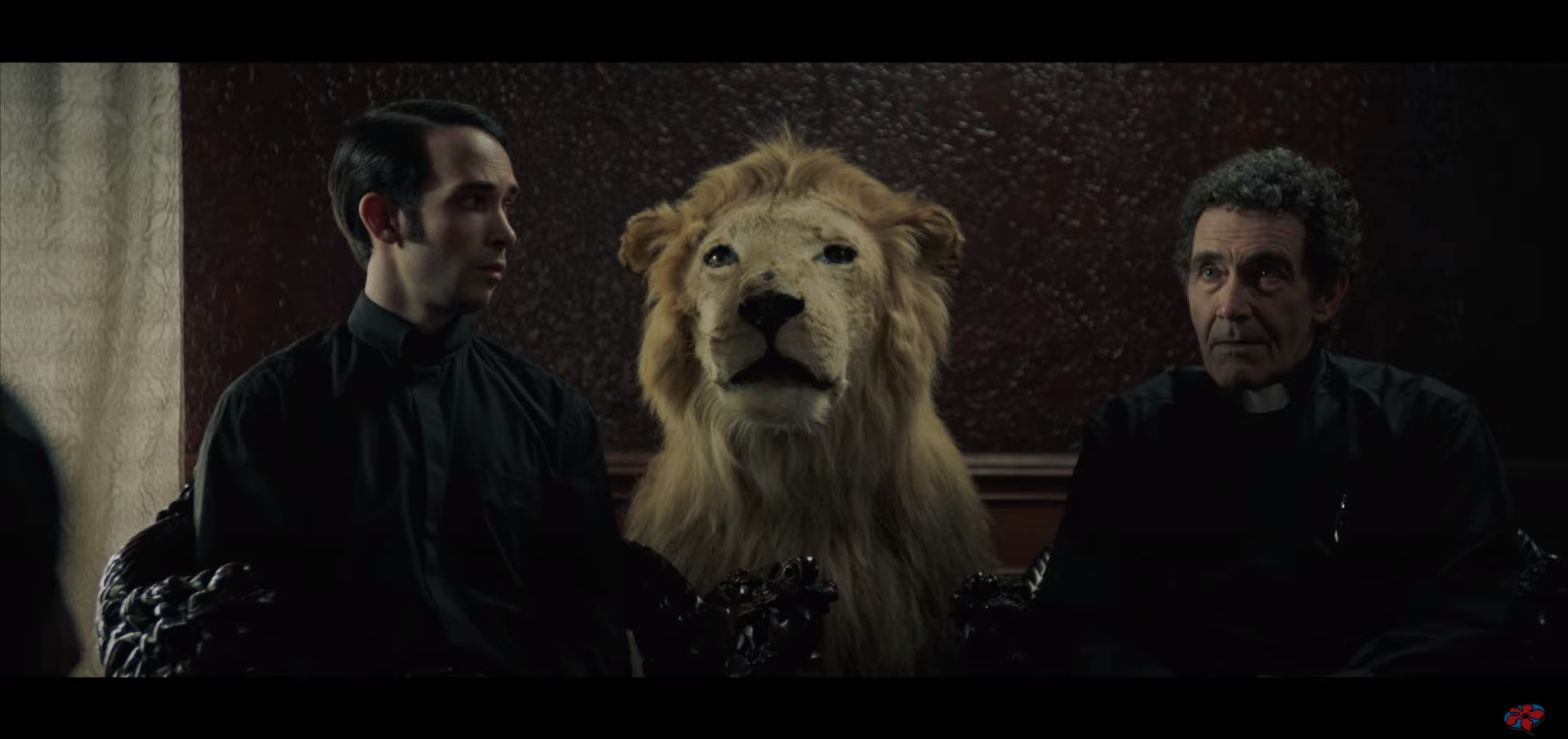
If you Google Mexican actors, the power of artificial intelligence and ignorant manual input couldn’t separate Mexico form any other Latin American country as the powerhouse search engine provided me results like Danny Trejo, John Leguizamo, Jennifer Lopez, Javier Bardem, and Penélope Cruz.  Now, while I respect each and every one of these performers who provide a variety of lush character and emotional erudition to each of their roles, not one of them is born in Mexico.  Some that listed do not even share the same heritage.  But do you know what the most astonishing, most outrageous, and most shameful aspect of my search was this?  The Tepic, Nayarit, Mexico born Joaquín Cosio was not among the top 50 results.  From captivating television with Guillermo del Toro small screen adaptation of vampiric apocalypse of “The Strain” and the intense drug-fueled drama of “Narcos: Mexico” to his Hollywood presence in the star-studded, James Gunn directed “Suicide Squad” to his humbler beginnings that includes Bond, James Bond, in “Quantum of Solace,” Cosio’s a strong and versatile candidate for intense thrillers and “Belzebuth” is right in the actor’s wheelhouse as a downhearted Detective Rigger with a short fuse.  As a supernatural skeptic, Ritter’s forced into confronting his past demons with the demons of the present by tracking down rogue priest Vasilio Canetti (Tobin Bell, “Saw” franchise) with the help of Father Ivan Franco (Tate Ellington, “Sinister 2”) of the Paranormal Forensic Department, which sounds kind of silly because Franco’s squad is an extension of the Church.  Bell brings his delightful deadpan bedside manner as the excommunicated priest in guerilla warfare with a determined, demonic evil trying to massacre as many children as possible to find the reincarnated Messiah in what would be the Third Coming as the Second had come and failed during the Crusades.  Bell is the yin to Cosio’s yang until circumstances rear-end last ditch efforts and all Hell breaks loose in a drug smugglers’ tunnel.  Aida López, José Sefami, Yunuen Pardo, and Liam Villa round out the cast.

If possession-fueled carnage and the antiheroic archetype weaponizing demonology for good tickles all the right places, “Belzebuth” can be the feather tickler of dreams.  Fans of Clive Barker’s “Lord of Illusions,” Peter Hyams’ “End of Days,” and the graphic novel “Constantine” can indulge into Portes’ explicit nihilism and lack of public conviction in religion in the director’s allegoric telling of something really big and really satanical happening right under people’s noses while a small motely crew of conversant peons try to stop a wall of Deviltry.  Portes also consistently touches upon Mexico’s unsystematic corruption, even among Ritter and other protect and serve officers, and the once firm-handed political system of the Institute Revolutionary Party (PRI) as potential cause for all the suffering enacted demon-rooted abscessations.  The mentioning of drug cartels pop up frequently, too, symbolizing the seemingly random acts of violence are just never just random acts, but an perpetrated hit on a human target much like the cartels’ unsavory methods to either take out competition, eliminate obstacles, or to silence whistleblowers.  Portes does a phenomenal job using his film as an allegory in making a political statement but lacks balance in favoring gore over profile with some characters who rather feel written in just for the sake of a broader English audience.  Father Ivan Franco is such character with interesting combinational vocations as a paranormal investigator and a holy man of the cloth.  Yet Franco, who wields a gun and has supercool video and audio recording specs, spearheads a larger suborganization shielded away from the public eye and, unfortunately, the viewer eye that never feels like a cog in the entire “Belzebuth” machine.  Franco and his team of spook-sleuths, who, by the way, vanish completely from his side early into the investigation, supposedly follow and investigate peculiar tragedies connected to misaligned presences leaving spiritual residue on the real world plane, but how his team comes about connecting the dots exclusively to just the first two tragedies, five years separated, is a bit of stretch and a letdown in fabricated continuity and weight behind Franco’s existence to be involved.  Pockets of plot holes pop up here and there on other facets but generally speaking, “Belzebuth” works black magically as a spiritually and culturally vivisecting detective thriller.

The Shudder original 2017 release, “Belzebuth,” scares up onto an UK Blu-ray release from Acorn Media International. The region 2, PAL encoded, single layer BD25 presents the film in a widescreen, 2.35:1 aspect ratio, with a runtime of 109 minutes.  Ramon Orozco’s cinematography flashes with a gorgeous red and blue color palate that fits the iniquitous tone and adds an ethereal, hazy backlighting to only enhance the tone to more sinister levels.  Acorn’s Blu-ray sharpens Orozco’s already byzantine schemes that enriches the details in the skin as well as a the sacred relic artifact-cladded locations that become claustrophobic and entombing.  Even Juan Martínez Espín visual special effects casts a solid effort of barely a smooth surface computer generated phoniness, especially in one crucifying scene of psychological torment.  You’ll know it when you see it.  “Belzebuth’s” powerful Dolby Surround 7.1 audio track is an assault on the eardrums of the best kind with a husky, industrial melodic soundtrack and hefty sound design with accompanying diverse range and proper depth that could be described as literally placing every creak, stab, and cackling laugh sound right into the darkest corners of your ears.    An unfortunate surprise about the Acorn release is that there are no special features aside from the animated menu that is essentially chaotic “Belzebuth’s” trailer plastered with menu options.  Possession films tend to stale at a dime of dozen, but Emilio Portes’s freshly terrifying “Belzebuth” entertains and scares to the very last morsel.

HELLelujah! God Does Not Deliver Us From EVIL! “We Still Say Grace” reviewed! (101 Films / Digital Screener)


A family living in deliberate solitude looks to God to provide them with everything they need to sustain.  Harold’s two teenage daughters have never experienced beyond the 14 acres of land their father and mother own, but the youngest, Maggie, can’t help but think of the wonders outside her father’s god-fearing, draconian sheltering.   When three teenage boys travelling to California suddenly break down on Harold’s remote land, an eager Maggie can’t wait to taste a mere glimpse of their perception of the outside world.  Being a good Christian man, Harold welcomes the hapless travelers into his home and convinces them to follow the rules and stay the night, but the boys’ seemingly happenstance car troubles is manipulated into an unavoidable sign of God’s will, or at least so in Harold’s eyes, and he decides to carry out a predetermined family suicide pact for him and his family to be welcomed into the gates of Heaven.

The one think learned, or maybe had shed more light on, out of this pandemic is the unstable relationship people have with God.  Religious extremist have weaponized the Powerful and Almighty against every day people like you and myself with contentious, hate-filled vocabulary such as damnation, burning, hell, etc., for those who do not seek his glory the way asininely seek it.  “We Still Say Grace” epitomizes that very lifestyle of devout fanaticism that has also been highlighted with buffoonery as the very same people who verbally condemn others usually don’t walk-the-walk but only talk-the-talk or are a charlatan involved in a more sinister plan.  “The Lodge’s” Brad Helmink and John Rauschelbach write and direct the film that has become their second feature horror film produced by the filmmakers under their Brothers Shamus Pictures, Mark Sonoda of Dauntless Studios, Room in the Sky Films, and Lexicon Entertainment. 

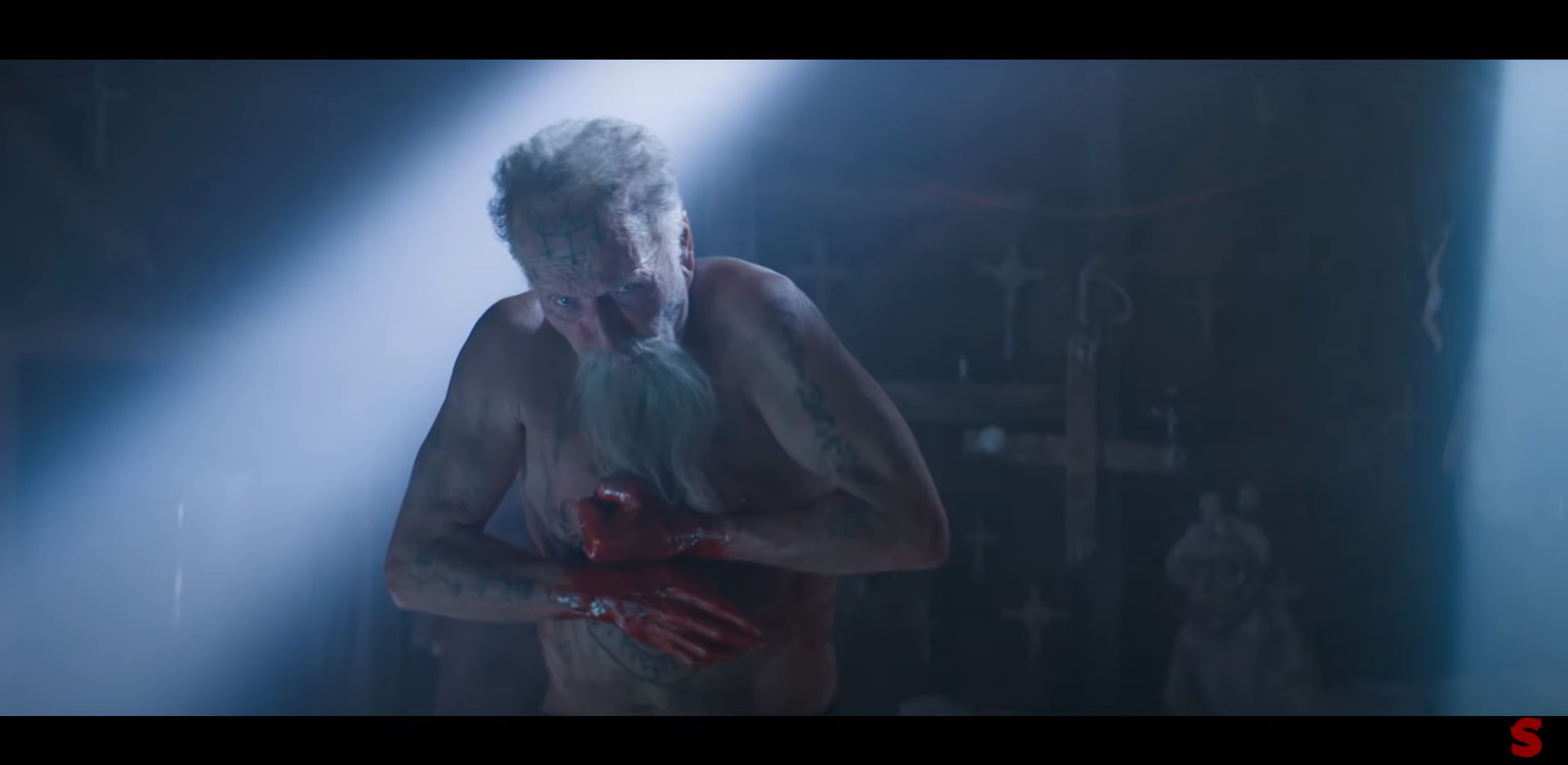
Now, I’m not a religious man or spread the word of the divine in my reviews, but God love Bruce Davison as the “Dahmer” and “X-Men” actor is a silver fox crazy man of God living rurally with his wife and two teenage daughters.  Davison relentlessly rallies Harold’s madness and is having a good old time performing as a man with a hidden agenda.  Harold is an intriguing character with little-to-no information about the character’s background or reasoning for being unreasonable, but that doesn’t seem to faze the legendary actor who had cut his teeth into horror 50 years ago as the original rat-speaking avenger, “Willard,” as Davion trots down a path of deceitful radicalism and manipulative exploitation.  Those he unscrupulously cons with pious smoke and mirrors are his own family in wife Betty (Arianne Zucker, “Days of Our Lives” daytime soap opera), Sarah (Rita Volk), and Maggie (Holly Taylor, FX’s “The Americans”).  As a viewer who is currently, at this very moment, chin deep in catching up on FX’s Cold War espionage thriller series of Soviet spies living as ordinary Americans in Washington, D.C. as they carry out missions in the name of Communism, I found difficult in separating Holly Taylor from her the 2018 series that ended its successful run in 2018 when she was a teenager.  Taylor’s roll in “We Still Say Grace” typecast the actress as another teen though having filmed the movie as a young adult woman, but the lighting is different and I don’t mean in a literal illuminating sense.  Taylor steps out from “The Americans’” 80’s setting and into, what I presume, is the 1990’s based off some wardrobe choices, car models, and the time frames that fit into those constructs and while she still has this inkling of suspicion that her parents are up to something, a parallel that has carried over, there hasn’t been this much ill-fitting reverence of a man hellbent on belting those he breaks bread with on a daily basis.  There is hesitancy and fear in Taylor eyes and that’s breaks up her from a reoccurring teenager role.  When the three teens (Dallas Hart, Frankie Wolf, and Xavier J. Watson) show up at the front door, that’s when things go, more than usual for Maggie, terribly awry. 

Aside from Bruce Davison, the other performances muster little faith in their roles with overplayed tropes, especially the stranded teens who could be plucked out as the Three Stooges of horror they’re so easily identifiable across the genre.  The premise itself isn’t exactly novel of a Bible thumping person teaching and preaching self-sacrifice, aka suicide, as a way to transcend beyond the heathens of this Earth but marketable and attainable as a small independent production with a California desert location, minor but effective special effects, and a handful of actors where much of the money is spent on talent.  “We Still Say Grace” is structurally very loose with character development and plot points, leaking continues dribbles of minor shifts that never patch themselves up on the backend.  For example, Harold’s not the black and white evangelical nut he seems to be but that is where his arc pauses and doesn’t backtrack into reasoning.   Helmink and Rauschelbach do better on the scene setups and interiors that make Harold uncomfortably fearsome and hostile in any context as he sometimes looms in the shadows of his farm chic house or toys with people, even his own family, like rats in a maze as he guides them along to their doom.

Premiering for the first time in the UK courtesy of 101 Films, “We Still Say Grace’s” penitent themed horror-thriller releases digitally this month of May.  As for the imagery presentation, and take this with a grain of salt with any digitally released film, the nearly 94 minute runtime seems to be filmed with a sun derived dust and light haze that I would compare the appearance more akin to trying to look through the bottom of a hard water stained glass.  Under the cinematography of Douglas Quill, the haziness plays into the rustic and dusty atmospherics that give age to the story and Quill frames Harold as a dominant and isolated figure, especially amongst the holy trinity ablaze in human flesh, as if he was the sole antagonist against the world.  The moment for shattered lives remains intent on the very edge of our corneas with the holy hell of “We Still Say Grace’s” patience brittle villain ready to gaslight and sacrifice anyone resisting against the grain of God’s good graces.