EVIL Says Lights Out! “The Power” reviewed (Acorn Media International / Blu-ray)


East London, January 1974 – a young nurse starts her first day at a stringent hospital during a political war between the government and mining union workers.  Resulting form the conflict is a nightly shutdown of electricity across the entire country.  As the hospital falls into darkness, the young nurse is forced to work the nightshift at the behest of the hospital’s stern matron, ordering her care for the unresponsive in the intensive care unit that’s receiving a limited feed of generator power.  Afraid of the dark, the nurse finds herself short of pleasant company who are knowledgeable of her sordid past, making her feel more alone in an already isolating and gloomy environment.  When she feels an aggressive presence surrounding her, watching her every movement, and even possessing her for short periods of time, dark hospital secrets come to light and her past connects her to be the key to it all.

Partially based off the 1974 Three-Day Week measure implemented on January 1st to battle inflation and avoid an economic collapse in the UK, Corinna Faith’s things that go bump in the dark ghostly feature, “The Power,” pulls inspiration from the government versus trade union war political contest as a backdrop set for the Shudder exclusive release.  To briefly catch inform you, part of the plan was to have Britain’s private sector pay was capped and bonuses eliminated to cutoff high rate inflation, infuriating much of the coal mining industry who were responsible for a good percentage of fueling much of Britain’s energy at that time.  During the month of January 1974, nightly blackouts were issued for all commercial use to conserve coal stocks.  Inspired by this short-lived UK struggle, the 2021 English film became the sophomore written and directed project for Faith, but is chiefly her breakout film following the over a decade and half, father and son Irish drama, “Ashes,” released in 2005.  “The Power” has topical supremacy with a strong parallel of, as the title suggests, power and a delicate allegorical presence of women taking back control of their lives after being suppressed by wicked and disregarding men and their collaborators.  Conglomerating production companies are behind Corinna Faith’s “The Power,” including “Cargo’s” Head Gear Films and Kreo Films, the prolific British Film Institute, Stigma Films (“Double Date”), and Air Street Films.
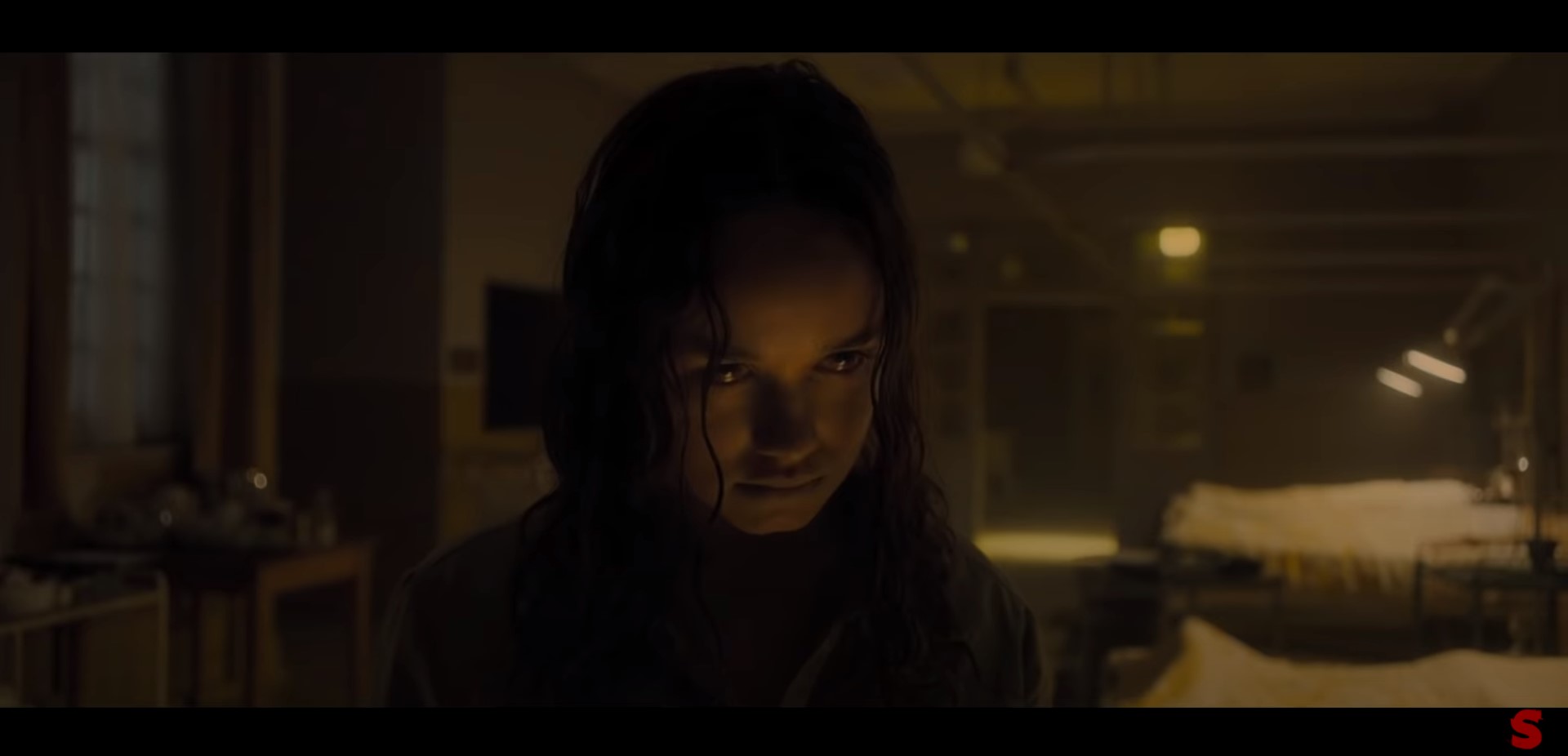
Starring in her first lead role, Rose Williams plays the mild-mannered and meek young nurse, Val, with an enigmatic and subversive past that has seemingly caused some controversary at a private school.  Williams turns on the docile humility, laying on thick Val’s readiness to submit to any command without contest despite the young nurses visible cues of uneasiness and bumbling hesitation.  Val’s qualities purposefully pose her mindset molded by a system she has shunned her for an unspeakable act that’s skirted around persistently throughout the story.  Faith really puts emphasis on having Val feeling extremely isolated and alone in the old, dark hospital with antagonist characters who some are familiar with Val and others who are new faces to the young nurse, but still exude an uncomfortable impression, such as the strict matron nurse (Diveen Henry, “Black Mirror”) and bizarrely skeevy maintenance man Neville (Theo Barklem-Biggs, “Make Up”).  Even a familiar face in fellow nurse Babs (Emma Rigby, “Demons Never Die”) strives to make her not forget about her unpleasant past.  Only in foreigner child, a patient named Saba, an introductory performance by Shakira Rahman, Val discovers a kindred spirit of an equally alone and frightened prisoner of the hospital.  For the two sole apprehensive souls, I really couldn’t pinpoint the trembling fear in their eyes or understand how they’re not crippled by the immense inky blackness that seems to engulf everything and everyone with an enshrouding sinister presence.  Gbemisola Ikumelo, Charlie Carrick, Sarah Hoare, and Clara Read make up the remaining cast.
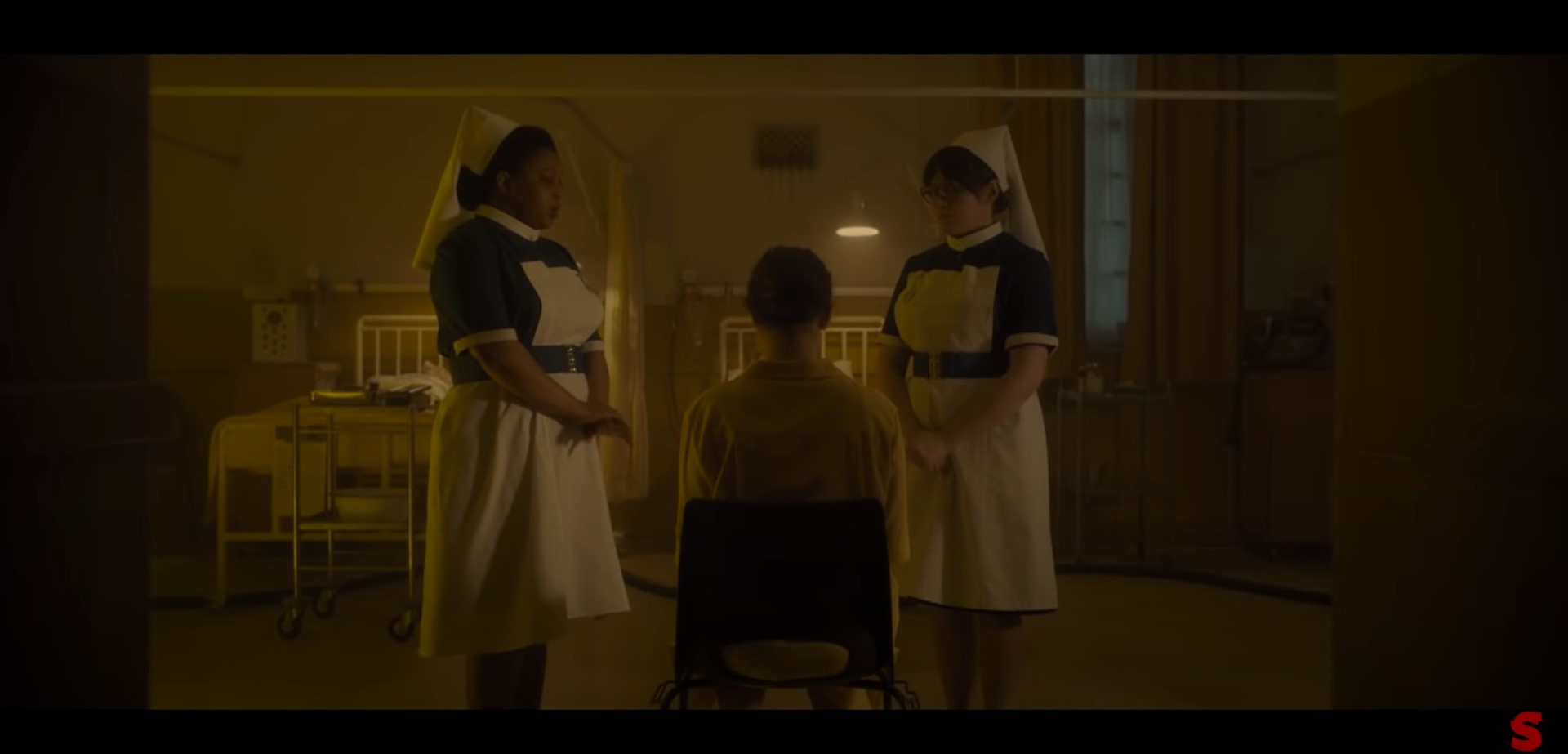
The electricity backout is merely more for harrowing effect, creating lifeless atmospheres of bleak corridors and dank basements that swallow securities with meticulous ease, but “The Power” is more than just a lights out, afraid of the dark, paranormal picture as Faith pens a parallel theme that fashions the title in double entendre stitches.  Audiences are not immediately privy to the backstory that disturbs Val to the core as she finds consternation in the dark’s unknown possibilities.  This we can clearly see in her scattered imaged nightmares and her reluctance to forcibly work the night shift with little-to-no illumination.  As the story unravels, Faith drops breadcrumb hints and misdirection indicators that not only reveal more into Val’s background but also the background of Saba’s and the presence that is targeting them both in playful manner as if an invisible “Jaws” shark was tugging and pulling in all different directions in the tightly confined hospital setting, leading up to what and whose power truly presides over them.  Dark becomes light in the water shedding moment that defines Val’s lightning rod purpose in being a ragdoll puppet for a ghost’s whims and while the story successfully builds up to that climatic moment with blank eye possessions and unconscious grim mischief told in reverse order, “The Power” ultimately tapers off with a finale that falls apart on the precipice of something significantly special for the voices of traumatized women everywhere in recovering the power over themselves.  Though abundant with tension-filled jump scare frights during the puzzling mystery, the horror element also suffers a misaligning derailment in the end with a happy-go-lucky procession of no longer being afraid of the dark, dropping the bulk of scares like a sack of unwanted potatoes no longer ripe for a tasty reward.
Still, “The Power” is a single-setting period horror with potent scares along with an even more compelling subtext significance. The region 2, PAL encoded, 83 minute feature is presented in a widescreen 2.35:1 aspect ratio on a single disc BD25 with a 15 rating for strong supernatural threat, violence, child sexual abuse, and sexual threat. Perfectly capturing the precise black levels, the Blu-ray renders a nice clean and detailed image, leaving the negative space viscerally agitating while waiting for something to pop out of the dark. The color is reduced, and slightly flat, to de-age the filmic look for a 1970’s bleaker of cold, sterile atmospherics. The Dolby Digital 5.1 surround sound mix is a chocked full of robust fidelity. The jump scare ambience and short flash of up-tempo works along with the rest of the solemn score. Where “The Power” lacks is with the dialogue and not within the confines of prominence; instead, capturing the dialect cleanly was challenge to undertake as most of the cast mumbles through most of the Liverpool-esque dialect and dialogue. Special features on the release include an audio commentary with director Corinna Faith and Rose Williams and a behind-the-scenes still gallery. A feminist noteworthy horror, “The Power” connotes powerful and uncomfortable contexts that’ll surely make you squirm far more violently than being alone in the ill-boding dark.
Be Creative, Be EVIL! “Scare Me” reviewed! (Acorn Media / Blu-ray)

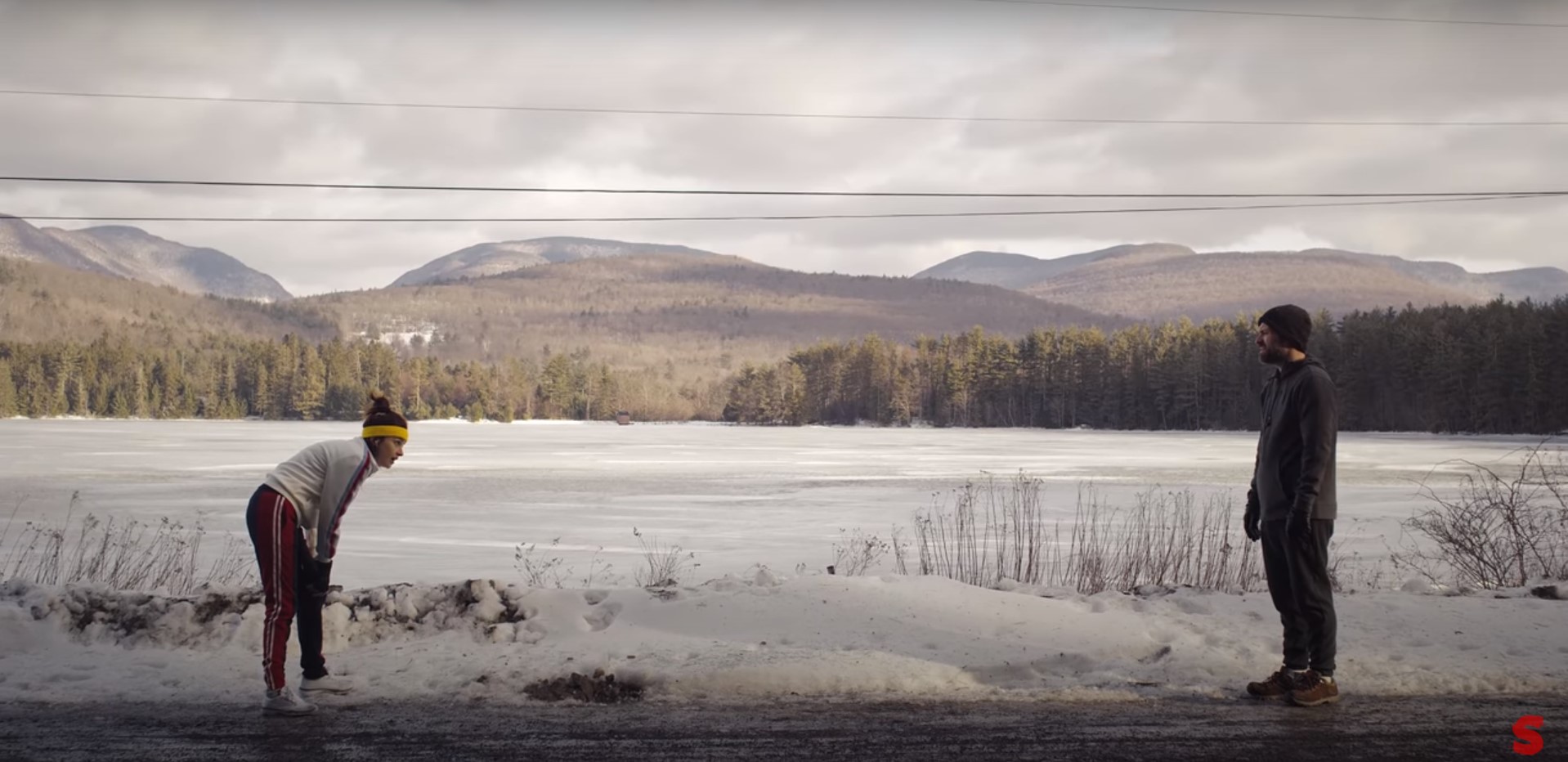
The down on luck Fred and a celebrated Fanny are both horror writers. Well, sort of. You see, Fred is an aspiring horror writer with unpretentious stories acted out by his creativity whereas Fanny is the hot, popular artist who just came out with an acclaimed novel everybody is talking about, even Fred. When their paths cross on a remote, snowy getaway during power outage, they consolidate to one cabin to stave off boredom by telling each other off the cuff scary stories, acting out every minor detail to flesh out the macabre tidbits in order for a good scare. As the night carries on and the stories become more involved, Fred’s night has been a rare highlight in recent days and now that day is on the brink of breaking, Fred has one more emotionally-driven scary story to tell the weary Fanny.

You wanna see something really scary? No, not the line from that wraparound story with Dan Aykroyd and Albert Brooks driving late a night in “The Twilight Zone: The Movie,” but rather really see a scary story come to life before your eyes with enthusiastic performances between two horror writers? Josh Ruben’s “Scare Me” does just that with the filmmakers’ 2020 horror-comedy hit. Ruben, whose latest comedy genre film, “Werewolves Within,” has been a critic success, writes and directs a petite cast packing a powerful punch pitched perfectly more so than this mouthful attempt at an awfully awkward alliteration. “Scare Me” is also produced by Ruben along with Alex Bach and Daniel Powell under a conglomerate of productions companies including Artists First (“Hell Baby”), Last Rodeo Studios (“Save Yourselves!), and Bach and Powell’s Irony Point with Shudder distributing.

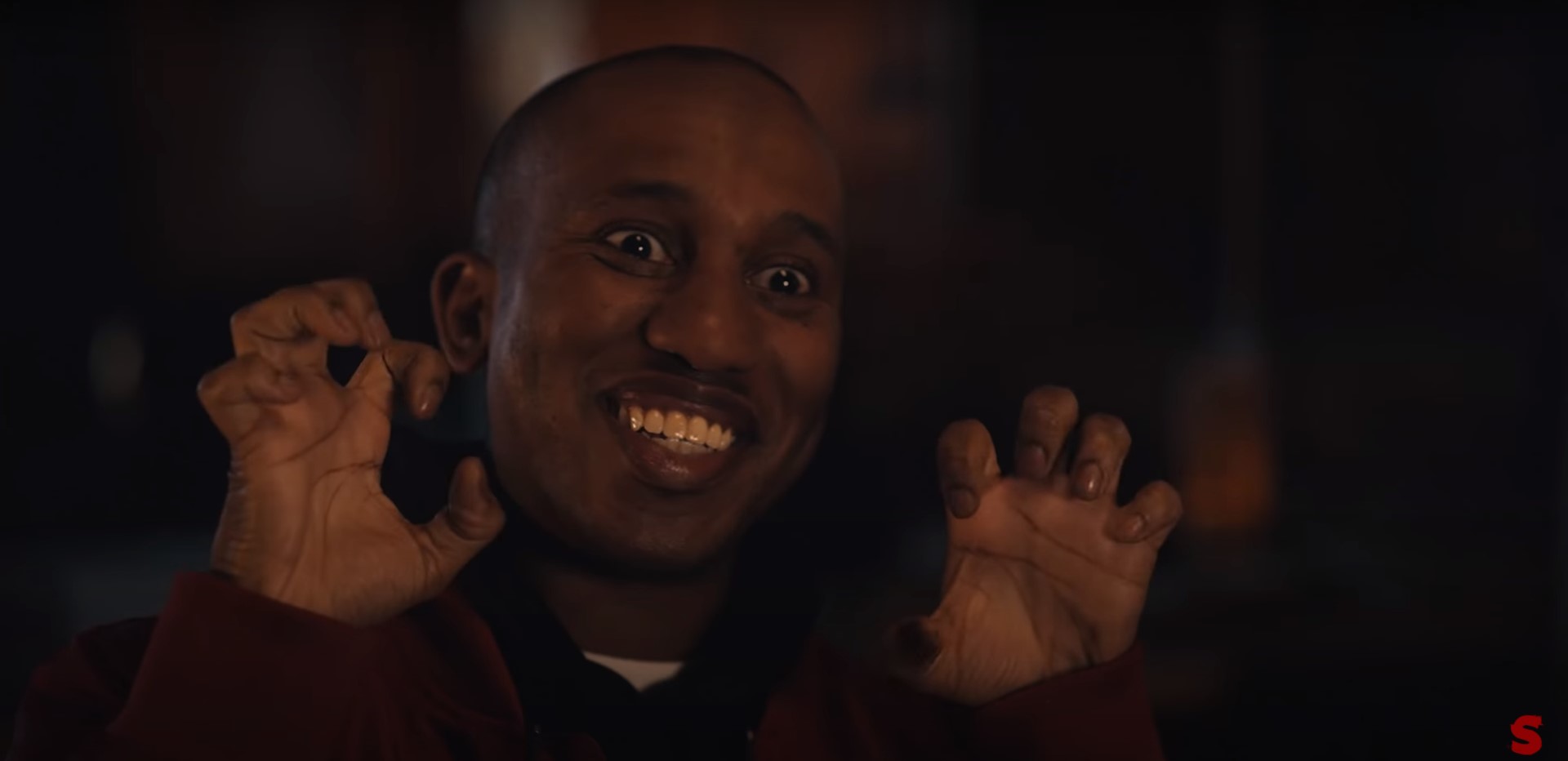
Ruben not only writes, directs, and produces his film, he also co-stars as Fred. With this Andy Serkis like looks, motions, and vocal talents, Ruben is a master at amplifying impressions and slapstick from the beginning as Fred using his unrestraint, and probably unstable, imagination to try and write a bestselling horror novel to help him get out of a life funk. Then, their is Aya Cash, who I have personally adored since her villainous role on Prime Video’s “The Boys.” Much like that role’s personality of the super-sadist Storm Front, Cash just dons snarky assertive woman to perfection as she continues the trend by embodying bestselling new age novelist Fanny with such. Fanny downright emancipates…I mean, emasculates…Fred at every chance and at every step along the way despite her warming up to Fred’s kooky lackadaisical first impressions with a side dish of caution for those who yearn for story ideas. Ruben and Cash bounce incredibly well off each other to the point of credibility between the dynamic and the dynamic is far from being a romantic love interest but more so an unlikely best friend; a best friend who constantly proclaims white male privilege whenever the opportunity presents itself. The funnies also keep on coming, especially mixed into the dialogue details, that are sharpened by Ruben and Cash’s timing and delivery telling their individual stories and the reactions each have during them, but then blend into that batter of bust-a-gut with comedian and “Vampires vs. the Bronx” actor Chris Redd, consider your every funny bone in your body rigged for explosion with the trio’s insanely charismatic skits and a musical number about a Devil possessed pop star to die for. Bringing up the rear of the comedic cast is “Key and Peele” writer Rebecca Drysdale.

If you had told me that “Scare Me’s” premise was two writers telling each other scary stories during a power outage, the film would have been near the forgotten bottom of my must-watch list with the inane dancing of “Orgy of the Dead” and the prosaic “Paranormal Activity 4.” After watching the film, all I have to say is this, Mr. Ruben, please accept my heartfelt apology for manifesting one single brain cell of doubt as “Scare Me” is the five-star movie everybody needs to see. I am not worthy. The idea behind the movie is simple, yet novel, that never ceases to peak as Ruben’s film perpetuates a steady incline of sharp-witty dialogue, an involved and spot-on sound design to create the stories’ allusions, and a trope-less ending that fits “Scare Me’s” unique, unbridles nature without being a grandiose end-all finale. Without the punctuating special effects, Ruben definitely curved a workaround with smart dialogue, entertaining writing, and with a cast who couldn’t sell the idea any better. The work lies severely on the shoulders of Cash, Redd, and Ruben and without them, “Scare Me” would probably been acerbically be retitled as “Bore Me” under the breath of many frustrated genre fans. Also, just because there isn’t knock-your-socks-off special effects, that doesn’t mean there was zilch as Fred, Fanny, and Carol (Redd) enact each stories, a slither of their dread-addicted imaginations comes to fruition like window glimpses into their minds and, damn, they can really sell their fear-stroking dark fantasies by telling classic tale spinoffs that could parallel cult favorites, many that were namedropped throughout the 104 minute runtime. “Scare Me” is without a doubt pure love of the genre and a tinseling homage to the macabre.

Better late than never, they say, in viewing Josh Ruben’s bewitching “Scare Me” on UK Blu-ray distributed by Acorn Media International. The region 2, PAL encoded BD25 presents the film in 1080p on a streaming platform dictated 2:1 aspect ratio. Aside from the bookend snowy landscapes and exteriors, much of the setting is located inside the compact two story cabin in the woods in which cinematographer Brandon H. Banks breaks into his debut feature with getting the precise angles to reassure and reaffirm Fred and Fanny’s telling of scary stories. As far as visuals go, the digital recording compression seems to hold up on the BD25 while still flaunting a good amount of bonus material and an English language Dolby Digital 5.1 surround sound. No issues here with the audio with phenomenally clarity in the diversity of sound bites and in dialogue even with Ruben and Cash’s modifying their voices for story characters. There isn’t a lot of actions to hone on and rein in the depth, but with this type of story inside, as aforementioned, a compact cabin, depth won’t make or break the audio report card. Special features include a director and cinematographer commentary, short interviews with the Ruben and Cash that run through their favorites things inside the horror genre, a behind the scenes photo gallery, a Make Cool Shit Podcast, outtakes, and “Feel the Music, Feel the Light” music video. I’m always up for a good tale of Fright and “Scare Me” slashes all the boxes with a traditional layout themed by envy and has a cast that illuminates each and every scene with funnies and fear.

EVIL Should Have Never Pissed Off One Uncontrollable, Raging Chick! “Jolt” reviewed! (Amazon Studios / Digital Screener)


Intermittent Explosive Disorder.  It’s an unstable condition Lindy Lewis has lived with her entire life where the little annoyance can set her into a murderous rage.  High levels of cortisone give her extra stamina, increased strength, and an endless stream of undaunted courage.  Mix all of that with her antisocial behavior and a variety of special, military grade, skillsets, Lindy can be one of the most deadliest humans if you happen to piss her off.  To control her temperament, an unorthodox psychiatrist designs an self-inducing electroshock harness that provides Lindy at jolt of electricity to snap her out of a potential bloodthirsty rampage, but when she finally finds a man pleasing in every way , a man who can keep the volatile emotions at bay, his sudden murder sends her into a vindictive slaughter of anyone involved with his death. 

“Shoot’em Up” meets “Crank” in Tanya Wexler’s unbridled tempest, “Jolt, that features an eclectically (and electrifying) international cast dropped into a graphic novel noir of femme fatales and organized crime.  The “Relative Evil,” aka “Ball in the House,” Wexler directs the 2021 released revenge narrative from a vivacious script penned by Scott Wascha as the writer’s debut feature length credit.  Filmed oversees in Bulgaria, “Jolt” is a melting pot of explosions, street fighting, and Hell hath no fury like a woman scorn under the production banner of Avi Lerner’s typically entertaining, yet hit-or-miss Millennium Films in collaboration with Busted Shark Productions, Eclectic Pictures, Nu Boyana Film Studios, and the “2001 Maniacs” series’ Christa Campbell and Lati Grobman company, Campbell-Grobman Films.

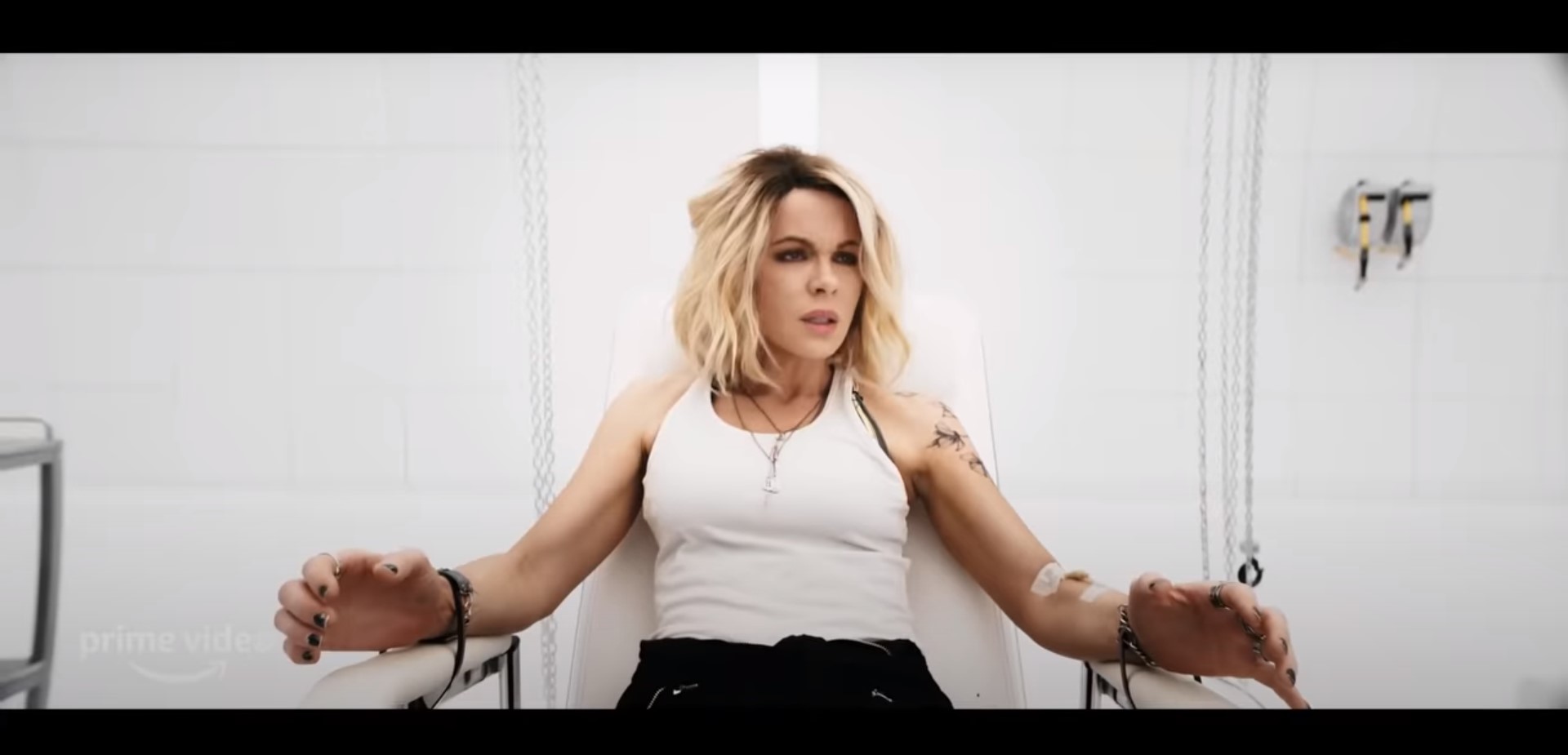
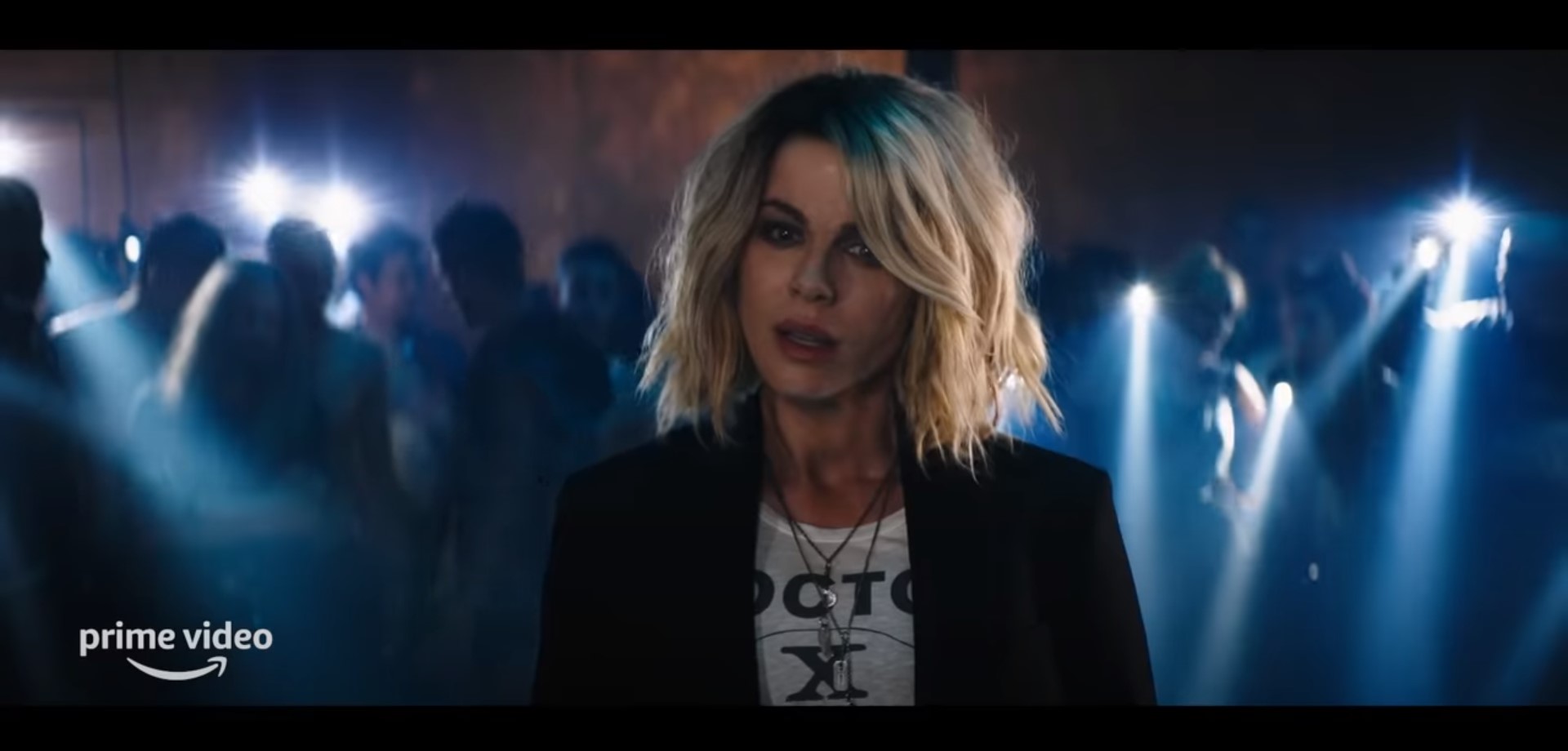
As if she never stopped playing the sleek vampiric werewolf huntress, Selene, of the “Underworld” franchise, Kate Beckinsale is stunning.  And I don’t just mean her timeless and ageless beauty as the English actress, who is living her best life at the latter half of her 40’s, proves that age is just a number in executing a physically demanding role with nearly every scene involving stunt work.  Unlike the gun-toting Selene, Lindy Lewis prefers her bareknuckle combat and a car battery alligator clipped to an old man’s genitals to get what she’s after.  Beckinsale plays the role beautifully equipped with a sharp, snarky tongue that’s pretty damn funny, well-timed, and consistently befitting to the Lindy’s personality.  “Jolt” has many colorful characters played by interestingly elected actors.  “Suicide Squad’s” Captain Boomerang himself, Jai Courtney, finds himself as the unlikely sedative lover, Justin, to counteract Lindy’s explosiveness.  The Australian actor, who is more than a decade junior to Beckinsale, fills in “Jolt’s” ranks alongside the gruffy-raspy voiced Argus Filtch, I mean David Bradley (“Harry Potter” franchise), as the top-tiered bad guy who stamp-approved the hit on Justin.  Along the way, a pair of tenacious detectives pursue the wrongly accused Lindy as a welcoming pair polarized on how to bring in their suspect that isn’t based off corruption with “Orange as the New Black’s” Laverne Cox as the by-the-book cop and “Snakes on a Plane’s” Bobby Cannavale as a cop with a softer side for the pursued.  “Jolt” rounds out with Ori Pfeffer (“Shallow Ground”), Sophie Sanderson, Susan Sarandon (“The Rocky Horror Picture Show”) in a minor role, and versatile Stanley Tucci (“The Lovely Bones”) as the electroshock harness inventor and psychiatrist, Dr. Munchin.

While it sounds like I’m singing high praises for Wexler’s film that does indeed have an amazing cast, quick wit performances, can be funny, and great action, I find “Jolt” to be lacking that little Je Ne Sais Quoi as the French would say.  Maybe the breakneck speed story that follows an illogical and nonsensical means of progression overloads the system to where you fry out your organic circuit boards trying to keep up with Lindy’s investigative warpath.  Aside from the fact that figuring out what happened to poor Justin is no mystery, an overexploited trope spanning from every era of cinema, our heroine also nonchalantly strolls right into the middle of crowded street fights, police stations, and in and out of explosions with every aspect of her hell hath no fury like a woman scorned purpose seeming too easy without anything rewarding stemming from difficulty that surrounded her, leaving no tension to salivating over or achieve relief from her impossible no way out scenarios.  Even when Lindy is easily captured, tied to a torture chair, and still mouthing off to her captor, the bad guys still let her go…on purpose!  (enter mind blowing up here)  Speaking of things going boom, the limited visual effects work renders like a cheaply made for television spectacular, especially with the explosive finale ofan inferior inferno ball of combustion and flames composited over top the endgame skyscraper locale.  I have never loved and hated a film as much as I do “Jolt” and will have to wait until the – assumed – pipelined sequel to break this torment of indecision.

What might be considered to be vague and entertaining euphemism for addiction, “Jolt’ is high powered narcotics injected right into the sensory nervous system.  The Millennium Films feature will broadband across Amazon’s Prime Video streaming service on July 23rd under the Amazon Studio’s banner.  “Krampus” director of photography, Jules O’Loughlin, brings a chic and symmetrical contemporary noir to the look, using a not so severe fisheye lens to emphasize centered characters while wrapping the fluorescently lit background ever so slightly around them. Best scene is the torch lit brawl, tinted in a blue-purple shade, that makes for a simple yet grander cockfight. The steadycam work anchors down more of the fast paced punch’em, kick’em fight sequences which is a credit to O’Loughlin in making the scenes work for the audiences instead of the audience working to make out the scenes. Dominic Lewis caters the soundtrack’s pulsing electro score that does the trick by keeping up with the whiplash pacing, but barely sneaks in there as Lindy’s anthem to clean house. “Jolt” leaves Lindy’s book entirely unfinished with a well-knowledgeable human wrangler in Susan Sarandon to segue audiences into a possible sequel that will start off looking not too promising for our asskickin’ heroine. While there are no post-credit scenes, there is a slightly humorous, slightly minor character fulfilling bonus scene to looking for mid-credits. “Jolt” needs a little jolt itself in some areas of considerable concern, but the fast paced action doesn’t bore, the clever wit has endless sardonic charm, and there’s a little something for everyone to enjoy.

Watch “Jolt” on Prime Video coming July 23rd!  Dropping This Thursday!

First There Was a Good Guy Doll. Then, There Was a Turkey. Now, EVIL Comes In the Form of a “Killer Piñata” reviewed! (Darkside Releasing / Blu-ray)

A father purchases 3 piñatas for his young child’s birthday party the day before going on a weekend getaway.  His college age eldest child, Lindsay, stays behind to have a night of drinking with her best friends, one of them being her ex-boyfriend who hasn’t figured out that her romantic interests no longer lay with the entire male sex.   With the pink piñata done in at the party and the other Captain American-resembling one bashed to smithereens by Linday’s friend, the surviving donkey piñata, possessed with the bullied and vindictive soul of a piñata factory worker, is fueled by bloodthirsty vengeance and on a campaign of death as one-by-one Lori’s friends fall casualty at the paper macheted hooves of the candy-filled sinister piñata and it’s up to Lindsay and a hook for a hand, old Latina piñata shopkeeper to stop the carnage.

I, personally, never whacked a sweet-treated stuff piñata on a joyous, celebratory occasion in my 37 years of growing up (in retrospect, my childhood didn’t seem very fun) and after watching Stephen Tramontana’s farcical horror-comedy, “Killer Piñata,” the 2015 release, receiving an enhance 2021 Blu-ray director’s cut, has now instilled a crippling fear of the inanimate that secures the fact that I, and probably my kids and my kids’ kids, will never take a baseball to those cute little piñatas ever!  With a penchant for the worst-of-the-worst horror movies and being an acolyte of the Jordan Downey’s brazen killer holiday turkey masterpiece, “ThanksKilling,” Tramontana, along with his entrepreneurial cohorts who started out in the healthcare field and have turned into amateur B-horror filmmakers, helms his crowdfunded sophomore feature, but first donkey piñata bloodbath, and co-wrote alongside fellow screenwriters Nick Weeks and Megan Macmanus who spun a wild fantasy into cinematic reality.  The 8 day shoot around Chicago’s Logan Square employs Tramontana’s investment partners Jennifer Kunkel as producer and Paul Summers as cinematographer, editor, and score artist under their pun of a production banner, Angry Mule.

“Killer Piñata” casts Chicago regional actors who thought starring in a film about a murderous piñata would be a once in a lifetime opportunity as well as a challenge to broaden their craft by working with puppets and, boy, were they right!  Stage actress Eliza-Jane Morris stars as Lindsay, battling not only a party donkey figure but also her sexual preference ignorant ex-boyfriend, Scott (Billy Chengary).  Much as Lindsay in herself is a trope of what is known as the final girl in horror, the script is riddled with trope characters just to make it abundantly clear “Killer Piñata” means funny business. Scott is the clingy, insecure ex who can’t see between his legs why Lindsay is no longer interested. His pal, Chad (Nate Bryan), resides on the opposite side of the spectrum as the confidently shameless, hypersexualized, and vain best friend who is equally matched in being confidently shameless, hypersexualized, and not terribly vain with Lindsay’s bestie, Rosetta (Lindsay Ashcroft). Martin (Daniel Hawkes) rounds out the group of the ill-fated soirée as Rosetta’s much hated bothersome cousin who is perhaps the only character out of the five to feel any morsel of pity for as he’s incessantly bludgeoned by insults, especially by his own Rosetta, and doesn’t have a single clue what’s in store for him. The most seasoned talent on set played a fiesta Latina shopkeeper with a “I Know What You Did Last Summer” hook for a hand; “High on the Hog” and “Asylum of Fear’s” Joette Waters gives an over-the-top Dr. Loomis performance. Cast rounds out with a fair amount of bit roles from Elvis Garcia, Sheila Guerrero-Edmiston, Steven James Price, and Elias Acevedo who all indulge in the nonsense of a superficial inanimate villain horror.

A piñata running rampant in a suburb home with poisonous candy being expelled from it’s paper and cardboard rectum and able to mechanize corpses like in Gundam with a simple transfer of hoof-to-spine energy awards Tramontana and his thinking outside the box team a 9×9 baking dish full of creative brownie points. “Killer Piñata” can also be funny indicative to all by the nonsensical title and if you’re not stiff as a board in the humor department, you’ll find one scene to be unsettling shocking with a lingering piñata blowjob death that’s literally jaw-dropper and a teary eyeful. While the film is by no means an in earnest attempt at a serious plot, continuity mistakes, in scene goofs, minor equipment quality issues, and narrative pacing drag down Tramontana’s quaint pintsize slasher and even drags a little more apathetically with tired jokes, farting gags, and formulaic routines albeit some okay puns and a smirk inducing making weapons montage. Not until around the plot point of the third act is when the death scenes start to hit the fan, briefly hovering up to the “ThanksKilling” gore-and-gags level, splattering the blood splatter here and there while the first two acts barely register on the oh, damn Geiger counter in what’s an interior imbalance of how to set the tone of a killer piñata video diagram.

Only five years after the initial release of “Killer Piñata,” Darkside Releasing proudly releases an enhanced Blu-ray director’s cut of the film that saw an overhaul and rejuvenation on the color grading, a brand new sound mix, and a quicker pacing, which I still think could have been tweaked better.  Presented not rated in a widescreen, 1.85:1 aspect ratio, with a runtime of 84 minutes (originally 87 minutes but trimmed in the new director’s cut for pacing), there is some early on banding in the opening shot’s blue sky over Chicago, but for an indie production on a budget less than 5k, or now maybe more with a facelift in the new release, the coloring has a brighter glow and is not as flat some of the original footage appeared. The anecdotal animation nicely becomes an intermission to the story and a change of pace in the par quality with simple, but well illustrated, sketch animated backstory.  I never knew the original score, but the Paul Summers pulsating electro-club rescore homages the works “Killer Piñata” is inspired by with an upbeat soundtrack mingled with a traditional minor key soundboard.  Special features includes a new audio commentary, a recollection of pre-, post-, and during production in “A Look Back at Killer Piñata,” a reason why we never saw a sequel follow up title “Whatever Happened to Killer Piñata 2?,” the making of featurette with a few key scenes, and bloopers & deleted scenes.  Stay put after the credits for a bonus scene that aims to piece together things for the potential sequel director Stephen Tramontana promises.  The future for “Killer Piñata” is not yet certain and I firmly believe, in what I consider to be the promising next steps for the murderous inorganic party-pooper, is that the genre needs and should receive a crossover of Turkie vs Piñata in a showdown of the possessed puppets or in an egregious alliance to take a good chunk of mankind’s population down a peg!

Take a Whack at the Killer Piñata Director’s Cut on Blu-ray!


Being Slobby Drunk Doesn’t Excuse EVIL Deeds. “Promising Young Woman” reviewed! (Focus Features / Digital Screener)

On a weekly basis, Cassandra hits the night clubs and drinks herself into a stupor.  A male “Good Samaritan” will come over to assess her well being only to be selfishly determinedly for her to return to his place for a nightcap.  When on the verge of passing out or too immersed in drunken lethargy, the man makes his move with uninvited, unwanted show of handsy affection.  That’s when Cassandra springs her trap.  Feigning inebriation, the clearheaded Cassandra rouses a sobering, befuddled moment of blank expression, misplaced justification, and anger when the man’s seemingly easy lay catches them in an unsolicited sexual violation.  Her traumatizing past has molded her to become very good at pretending to be vulnerable until hearing a familiar name of a man, long thought to be out of the country, sends Cassandra down an itemized path of vengeance that not only includes ruining the life of the source of her unorthodox, yet necessary, campaign but also clump in every facet associated in with his shining existence.

If you needed a slap across the face in order to reassert yourself from the painful numbness of incessant news stories of young women being the vilified victims of sexual assault then “Promising Young Woman” is a stinging hot whack of four fingers, a thumb, and an open palm of wake the hell up!  From Emerald Fennel in her debut written and directed full length feature film comes a blunt narrative of systemic injustice involving rape and the social delusions stemmed out of grades of maturity, lengths of time, and levels of alcoholic drinking.  Coming off fresh from her recent role on Netflix’s period biographical drama, “The Crown,” Fennel draws motivation for her black comedic thriller from the infamous Brock Turner case of sexual assault on Chanel Miller that turned into a conviction judgement with abhorrent caveat in his early release for good behavior that the white, educated, star athlete’s life shouldn’t be destroyed because he’s a promising young man [sic].  “Promising Young Woman” targets every broken system that is meant to protect violated women despite their socializing determined conscious or unconscious state of affairs and has some mega star powers producing the social commentary material in such with “Suicide Squad” and “Bombshell” star, Margot Robbie, under her co-founded LuckyChap Entertainment along with the film’s star, Carey Mulligan, as executive producer. FilmNation Entertainment’s Glen Basner and Ben Browning fully finance the first real award contender of a 2021 release.

“Promising Young Woman” has an all-star, diverse class of actors surrounding principle lead, “Drive’s” Carey Mulligan as the methodically standoffish Cassandra, caught in a web of denial, self-depreciation, and straight up ignorance of the hurt caused directly and indirectly to whichever means to satisfy their own different shades of gray conscious. Mulligan is terrific as a coarse character rare to be juxtaposed against a veneer of bubble-gum chic with a reserved demeanor outside her burning the midnight oil working hours and coming out like a ferocious grizzly bear when calling out club scouting douchebags on their objectionable behavior. When Cassandra crosses paths with Ryan, comedian and “Eighth Grade” writer and director, Bo Burnham, Mulligan’s range is tested to take that disinterested and glassy eyed crusader and turn to a state of daily conformist complacency, the very dangerous thing Cassandra seeks to rectify one man after another, that slips Cassandra out temporary from her anti-heroine role until her dolled up, doughy eyes snap toward the camera and into a kill mode that goes straight for the pervert’s throat. An inclusive cast speaks volumes on not only how “Promising Young Woman” incorporates different ethnic and genre backgrounds and ages, but also doesn’t throw man to completely under the bus as Satan’s puppet on Earth with performances from Laverne Cox (“Orange is the New Back”), Alfred Molina (“Spider-Man 2”), Jennifer Coolidge (“American Pie”), Clancy Brown (“Starship Troopers”), Adam Brody (“Jennifer’s Body”), Christopher Mintz-Plasse (“Kick-Ass”), Alison Brie (“Scream 4”), Connie Britton (“American Horror Story”), and Molly Shannon (“Hotel Transylvania”).

“Promising Young Woman” wields a powerful theme to shed a brilliant light on everything that is fragmented with the way sexual assault accusations, trials, and punishments are handled.  The film also probes deep into the soul in how people who are not directly affected digest sexual assault but become accomplice in proximity in a range exhibited from complete, unnerving guilt to locking away the events in their mind in order to forget.  Fennel plausibly fashions a motif of passing judgement from assailant to victim while chiseling out the flawed logic in each deplorable excuse as to why a University Dean, a defense lawyer, and a good friend could cold-heartedly denounce, and frankly not lift one single finger threaded with moral fiber about, a young woman’s accusations.  The unpleasantry core of “Promising Young Woman’s” topical subject is nestled inside a sparklingly and colorful cladded showcase, housing an energetic and upbeat arrangement around a dark tone that, in a way, reflects the pretense goggles most see through to avoid any responsibility or conflict.   Empathy never seems to run it’s course as Fennel treads without fear on a mission to take back the blasted to smithereens dignity by deconstructing and exposing every unjust particle in this atypical rape-revenge thriller robust with heart paraded on by an ugly truth.

Remember when I said this film is a slap in the face wake up call? It’s more of a gut check, a conversation starter, and a watershed moment rolled up into one and now “Promising Young Woman” will land right into all the living room smart television sets in America with a Friday, January 15th VOD release from Focus Feature films. The rated R, 113 minute runtime release presented in a 2.39:1 aspect ratio will available for a 48-hour rental on Amazon Prime, Apple TV, Vudu, Fandango, and Google Play, but if you don’t want to wait and want to brave a pandemic climate, select theaters have showings available. Benjamin Kracun’s camerawork, shot on an Arri Alexa, offers a lush and delicate milieu surrounding Cassandra who, with a Panavision lens, gleams in the scene and the soundtrack, comprised of early 2000’s pop inspired from Spice Girls, Paris Hilton, and even a strained violin rendition of a Britney Spears track, cues moments of levity before annihilating the live of the blank conscious. As far as special features go, there were no bonus materials or scenes included. “Promising Young Woman” revamps the way women approach vigilante justice with a candy coated shell and the maestro behind it all, Emerald Fennel, aims to redact or nullify the expression promising young man to no longer be a part of the conversation.

Pre-order “Promising Young Woman” on Blu-ray or DVD. Watch it on VOD come January 15th