EVIL’s on the Shallow End of “Deep Space” reviewed! (Scorpion Releasing / Blu-ray)

“Deep Space” Invades Blu-ray on Amazon.com!

A government funded space craft containing a monstrous biological weapon crashes to Earth.  The organic creature is genetically coded to be a killing machine with a craving for eating it’s enemy and, now, it’s loose in the city and not responding to the scientists’ command self-destruct codes.  Tough and obstinate cop Ian McLemore and his partner, Jerry Merris, are ordered ot investigate the crash site before government agents take control of the case, even removing a pair of strange organic pods with them for further examination.  When a couple of close colleagues are shred to pieces at the hands of the creature, McLemore will stop at nothing to figure out what’s wreaking havoc in his city and blow it away.  

1988 – a weird, yet greatly satisfying transitional period of fading 80’s horror into nipping at the insanity of 90’s brazen prosthetic creature effects right before the turn of the computer generated decade.  Granted, Fred Olen Ray’s Sci-Fi horror “Deep Space,” which is ironically set on Earth, is very much an enamored 1980’s horror, but the Olen Ray film is where you can kind of see the turning of change on the horizon when the story’s ideas become too grandiose for tangibility alone, no matter how much us fans love to see practical effects over CGI.  The script, cowritten between Olen Ray and T.L. Lankford (“Hollywood Chainsaw Hookers,” “Fatal Passion”), is massive more expensive than anything the filmmaker’s had previously done and with a $2 million budget, “Deep Space” gets a giant explosion, high speed car scenes and wreckage, the iconic face and voice of Charles Napier, a Xenomorph-like creature, and a ultra-bloody chainsaw scene that could give “Evil Dead’s” Ash Williams a run for his money.  “Deep Space” is a production of Trans World Entertainment (no, not the same monikered company that sunk money into the bleeding financially physical media brick and mortar outlets like FYE, Camelot Music, or Suncoast) and shot in Los Angeles under producers Olen Ray, Alan Amiel (“Inner Sanctum”), and Herb Linsey (“Neon Maniacs”) with Yoram Pelman (“Commando Squad”) as executive producer.

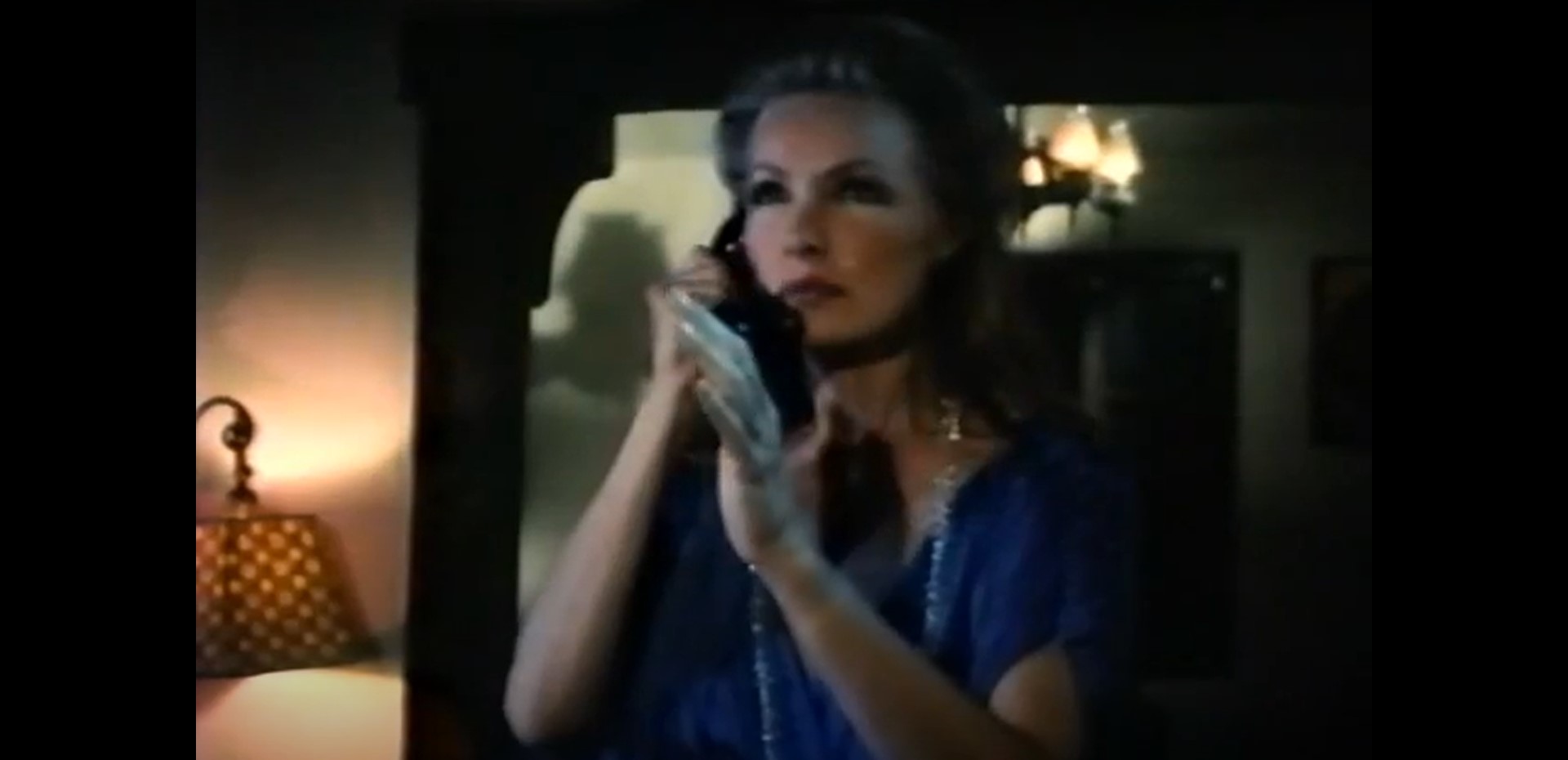
At the center of the chaos is Ian McLemore, a hardnose and stubborn, harmlessly sarcastic detective who goes against the authoritative grain and cuts through bureaucratic tape to get the job done.  Playing McLemore is the unmistakable Charles Napier.  The “Rambo:  First Blood Part II” and “The Silence of the Lambs” actor, who is about as legendary as they come in supporting roles, lands his own lead man role with his own buxom beauty romantic leading lady in Ann Turkel {“Humanoids from the Deep”), as a new, but experienced, cop, Carla Sandbourn, on the L.A. force.  Experiencing Napier as an attractive male lead was a little more off-putting that initially thought.  The veteran actor, who began a career in the movie picture industry in his early 30s which was later than most of his counterparts, is hovering around early 50s in this role, middle of the ground with his physical appearance, and has a masculine square chin akin to Ron Pearlman with matching hair color to the “Hellboy” actor.  At an age gap of approx. 10 years between them at the time of filming, Napier and Turkel make their courtship appear easy; in fact, almost too easy as Turkel’s drops her shirt at the mere sight of McLemore dressed as a Scotsman blowing away at bagpipes for a gag effect in sleeping with him.  Both Napier and Sandbourn are charming enough to pull off a love affair without causing too much of a they’re so old stir.  “Serenity’s” Ron Glass plays the casual with the flow Partner Jerry Merris, “The Inglorious Bastards’” Bo Svenson is full of patience as the McLemore insubordination absorbing Captain Robertson, and the original Catwoman herself, from the Adam West “Batman” television series, Julie Newmar as a psychic who can clairvoyantly see the creature’s murderous mayhem.

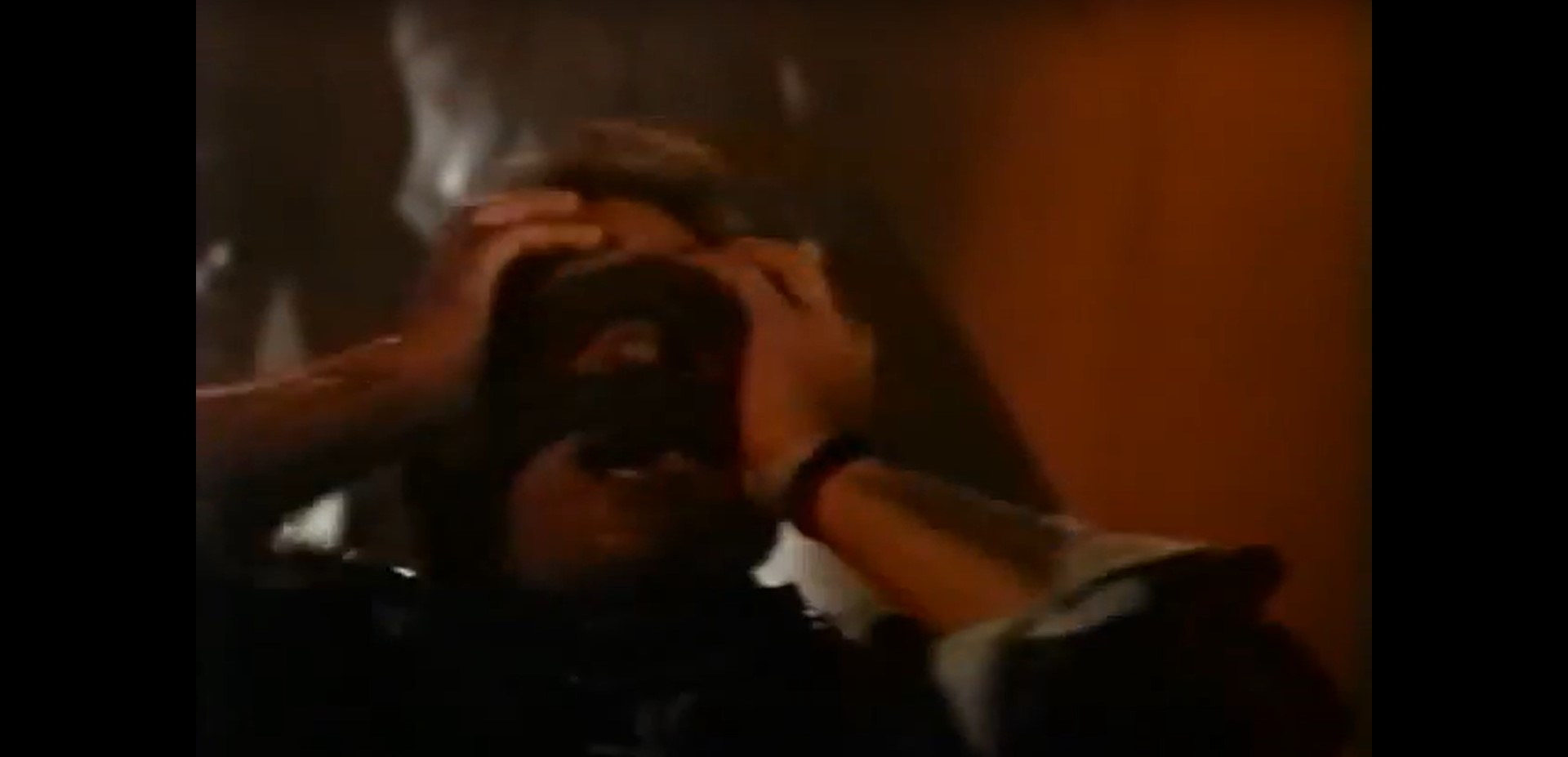
The fact that “Deep Space” doesn’t take place at all in space is innately tongue in cheek to begin with, but that brand of flippancy courses through the film’s veins despite the blood splattering and semi-serious veneer, weaving between an action-horror and a horror-comedy during the entire 90-minutes.  Some of the comedy is intention, such as McLemore’s husky wit and sarcasm, but there’s also the extremely foggy campy side to this gem.  Some of these elements include the creature being hinted as a genetically mutated cockroach or the left field use of Julie Newmar’s psychic abilities that are randomly injected the storyline for the sole purpose of forewarning McLemore over the telephone rather being an intrinsic piece to stopping the creature.  The creature carnage would undoubtedly be investigated and exterminated without the psychic’s help, making her character farcical in futility.  “Deep Space” also pulls a little inspiration from “Alien,” maybe even the sequel, “Aliens,” with a toothy, long-headed, and eyeless black organism that resembles much like a Xenomorph or the Xenomorph queen and there’s also a near shot-for-shot sequence of a security guard whistling to and trying to persuade a cat to come to him while the monster rises from behind and strikes a fatal blow.  The scene is very reminiscent of Harry Dean Stanton’s death in “Alien.”  Being campy has it’s highlights but never can fully overshadow scenes that erect suspense or are saturated with gore which “Deep Space” has both with a combination of editing and piercingly sharp sound design and a rip-roaring, blood-splattering chainsaw kill that’s leaves that good metallic taste in your mouth.

There’s no escaping the blood-hungry tentacles of the “Deep Space” monster coming at you in a brand new 2018 high-definition master Blu-ray from Scorpion Releasing, leased from MGM, and distributed by Ronin Flix and MVD Visual. The hard-locked region A Blu-ray is presented in an anamorphic widescreen 1.85:1 aspect ratio and is rated R. Fred Olen Ray knew how to develop an eerie, twirling fog and wind atmosphere and this master crisps up that iconic trope image. Textural details and natural-appearing skin colors are delineated nicely throughout as you can make out every little blemish and hair on a shirtless Charles Napier as well as really getting into the slimy orifices of the creature and having a sense of its viscosity with a decisive sheen. Black areas are inky and dense with the right amount of grain in the overall picture and no obvious signs of image posterization, retaining the natural shadowing, along with no cropping or border enhancements. The English language DTS-HD master audio stereo finds common quality ground with a tidy dialogue track that does Napier’s resonating and recognizable jest justice. However, there is some hissing early on into the film, especially in the lab scenes in the contentious dialogue between the military general and the lead scientist. Omar Tal’s sound design proves vital to the story that relies on the screeching, the scuttling, the whooshing of tentacles, and the booming roars of the creatures, coinciding appropriately with Alan Oldfield and Robert O. Ragland’s rather run of the mill serrated and discordant electronic score. What “Deep Space” Blu-ray lacks is robust extras with only an audio commentary with director Fred Olen Ray and a scene selection index. “Deep Space” ages about as well as you expect over the last 35 years, but this Fred Olen Ray creature feature relic becomes rightfully preserved for being quintessential B-movie verve that no longer seems to exist in today’s age and also the fact that Charles Napier wears a kilt.

***Stills do not represent or were captured from the Blu-ray release

“Deep Space” Invades Blu-ray on Amazon.com!

Hear That? That’s EVIL Bamboolzing You! “Ultrasound” reviewed! (Magnet Releasing / Digital Screener)


Driving home from a wedding reception, Glenn’s car suffers a flat tire in the pouring rain.  He finds refuge in the home of married couple, Art and Cyndi, with an extended offer to him to wait out the rain and spend the night, spending the night in bed with Cyndi at the pleading request of Art.    The next morning, Glenn wakes up and Art and Cyndi are gone.  Months later, Art shows up at Glenn’s apartment and shows him a videotape of a pregnant Cyndi.  Unable to make sense how of his role within Art and Cyndi’s lives, Glenn agrees to meet with Cyndi to discuss future plans and wind up a romantic relationship, but when they suddenly wake up in a hospital and kept separated, they believe they lost the baby as well as the use of Glenn’s legs due to an assumed accident.  What unfolds for the couple from then on is bizarre reality that doesn’t make much sense with only a few familiar chords being struck in their mind and every step of their life is being controlled by manipulators with various agendas. 

A gyrating wool over the eyes suspense thriller is set to release this Friday, March 11th. That film is “Ultrasound,” the first feature film helmed by Rob Schroeder, the producer of “Sun Choke” and “Beyond the Gates,” both films starring Barbara Crampton.  Unfortunately, “Ultrasound” doesn’t star the iconic scream queen but the Conor Stechschulte script, based off the Stechschute’s erotic psychological graphic novel series, “Generous Bosom,” produces the high intense frequencies from off the illustrated pages and into the subjected characters and audiences with disorienting loops of truths and falsities.  The U.S. production is a product of the Los Angeles based Lodger Films, cofounded by Schroeder and Georg Kallert, and with co-producers Brock Bodell and Spencer Jazewski.

“Ultrasound’s” narrative is a latticework of character arcs divided into two stories that only merge when Glenn and Cyndi are involved in an unusual (some could say almost magical) scheme connived by hypnotist The Amazing Art, played with sure hand nervousness by Bob Stephenson (“Lady Bird”) whose very good at the soft touch of persuasion with his innocent demeanor.  Stephenson works tirelessly his Jedi mind tricks on Glenn, “My Friend Dahmer’s” Vincent Kartheiser, and Cyndi, “Phoenix Forgotten’s” Chelsea Lopez. Kartheiser and Lopez relish in their own deceptions as two strangers being joined by unintended, radical means to fulfill not one but two devious plans. Between political scandal coverups and government sanctioned alternative military tactics, Chris Gartin (“Tremors II: Aftershocks”) and Tunde Adebimpe (“She Dies Tomorrow”) couldn’t be any more different in character engrained into their repelling tangential tales sourced from the same spoiled spring but both actors root deep into the same antithesis garden as a pair of well-informed and completely in control power hungry and idealistic men in idol roles, driving Schroeder’s message right into the heart of public figure facade versus public figure character and both Gartin and Adebimpe nurture that perspective all too well. Then, you throw in a monkey wrench named Breeda Wool (“Mr. Mercedes“) into the well-oiled machine of exploitation to be the controlled outlier only to have the veil lifted for truth. Wool, probably not intendedly punned toward “Ultrasound’s” theme of pulling the wool over one’s eyes or a wolf in sheep’s clothing, casts rightful doubt as Shannon, an innocent associate being kept in the dark, much like Cyndi and Glenn. While the cast is great in roles, none of them stand out in a singular performance and are all a cog in Schroeder’s contrivance. “Ultrasound’s” cast fills in with Megan Fox lookalike Rainey Qualley (“Shut In”), Porter Duong, and Mark Burnham who dons the fleshy mask of Leatherface in this year’s Netflix original and legacy sequel “Texas Chainsaw Massacre.”

Tapping from the same virtual reality vein of Christopher Nolan and David Cronenberg, the idiosyncrasies of perception are no longer our own as audio, visual, and thoughts become the duped fool in “Ultrasound’s” underhanded exploitation.  The concept, high in twist and turns working backwards to unfold what befuddles the hapless into a life believed depressingly real, parallelly touches upon the real-life issue of sleight of hand corruption and scandal.  Because this person is an upstanding politician with a beautiful family or this other person has an advanced medical degree and is respected in the science community, we are supposed to take them at their word when in actuality, they’re pulling the metaphorical rug from under our sensorial feet to the extreme point where everything they have said and done that has crumbled down to a lie has a flummoxing and deafening aftershock effect that almost can’t be believed.  The two-tale narrative connects with Art and his mismanaging of one plan that tosses his subjects into the hands of another group for what’s to become of Glenn and Cyndi and that transfer, much like the disintegrating hypnosis effect at times, is not tight enough and becomes lost in translation inside Schroeder’s illusive imagery and harsh editing to keep in story in line until a point.  “Ultrasound” plagues with hot, intense colors under a low-key lighting, like a deep blue or an intense red, to often relay reality outside the confines of normality.  Even though the word “Ultrasound” revolves around the manipulative use of ultrasonic frequencies, I do find the irony in Stechschulte’s story that at the center of much of the tumultuous misperception, there’s a baby often represented as there or not there depending on how we should perceive the characters and it’s like the filmmakers wanted to plug in, perhaps, the nuisances with scanning technology or dip their toes into body horror with body image.

“Ultrasound” is a great low-level, high-tech Sci-fi brainteaser ready to mess with your mind being released this Friday, March 11th, in theaters and on demand from Magnet Releasing, a subsidiary label of Magnolia Pictures that offers innovative tales of horror and science fiction from new, creative filmmaking talent.  Since a digital screener was provided, we will not delve into any audio or video evaluations, but Mathew Rudenberg, whose worked in the past with Schroeder as DP on “Sun Choke,” has come a long way since his image work on the 2008 alien-driven-zombie film “Evilution” with keeping the frame tight during medium and closeup shots to never expose to much at one time, leaving a little to imagination when the time comes to open up the room, so to speak.  Zak Engel’s analogue and digital synth-score with tangible instrumental highlights from Piano and violin and Bob Borito’s dial and knob sound design swishing static and low-frequency humming sends this soundtrack into a futuristic guise on contemporary grounds that insidiously works into the grand scheme low-tech yet terrifying Sci-Fi. The 103-minute film does not include any bonus scenes during or after the credits. I keep throwing around key descriptors like low-tech for “Ultrasound” and by no means do mean that as a criticism as I speak about the simplest of tech, the original mechanism, of our body and our sensory nodes that receives data input, processes it, and transmits signals to our outputting areas and “Ultrasound” looks at disrupting the supply of data and, just like in today’s pandemic and war climate, a break in the chain can cause unforeseen turmoil that upends lives when cranked up.

The Most EVIL Being in the Galaxy Doesn’t Stand A Chance Against Little Mimi. “Psycho Goreman” reviewed! (Acorn Media International / Blu-ray)

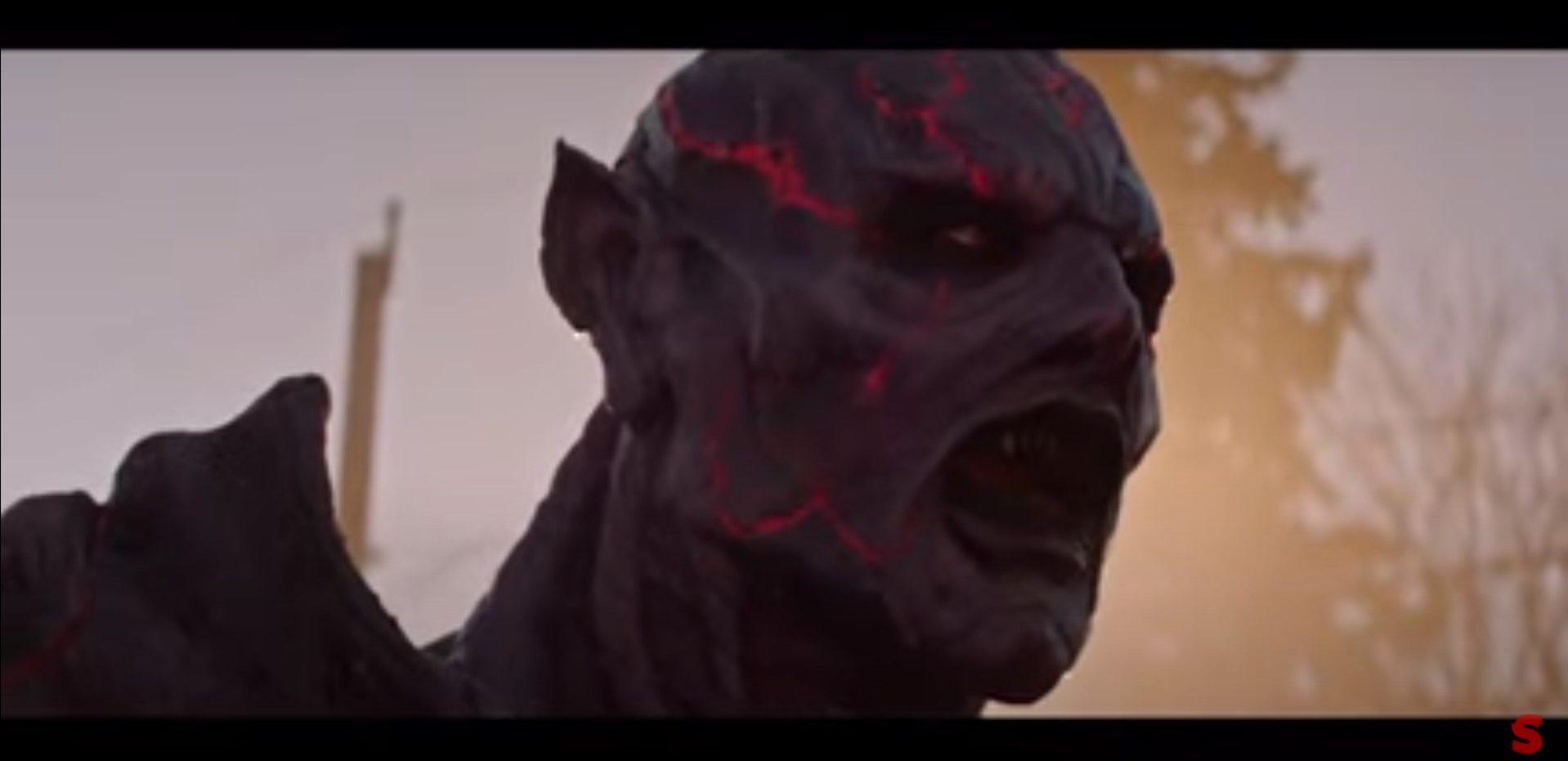
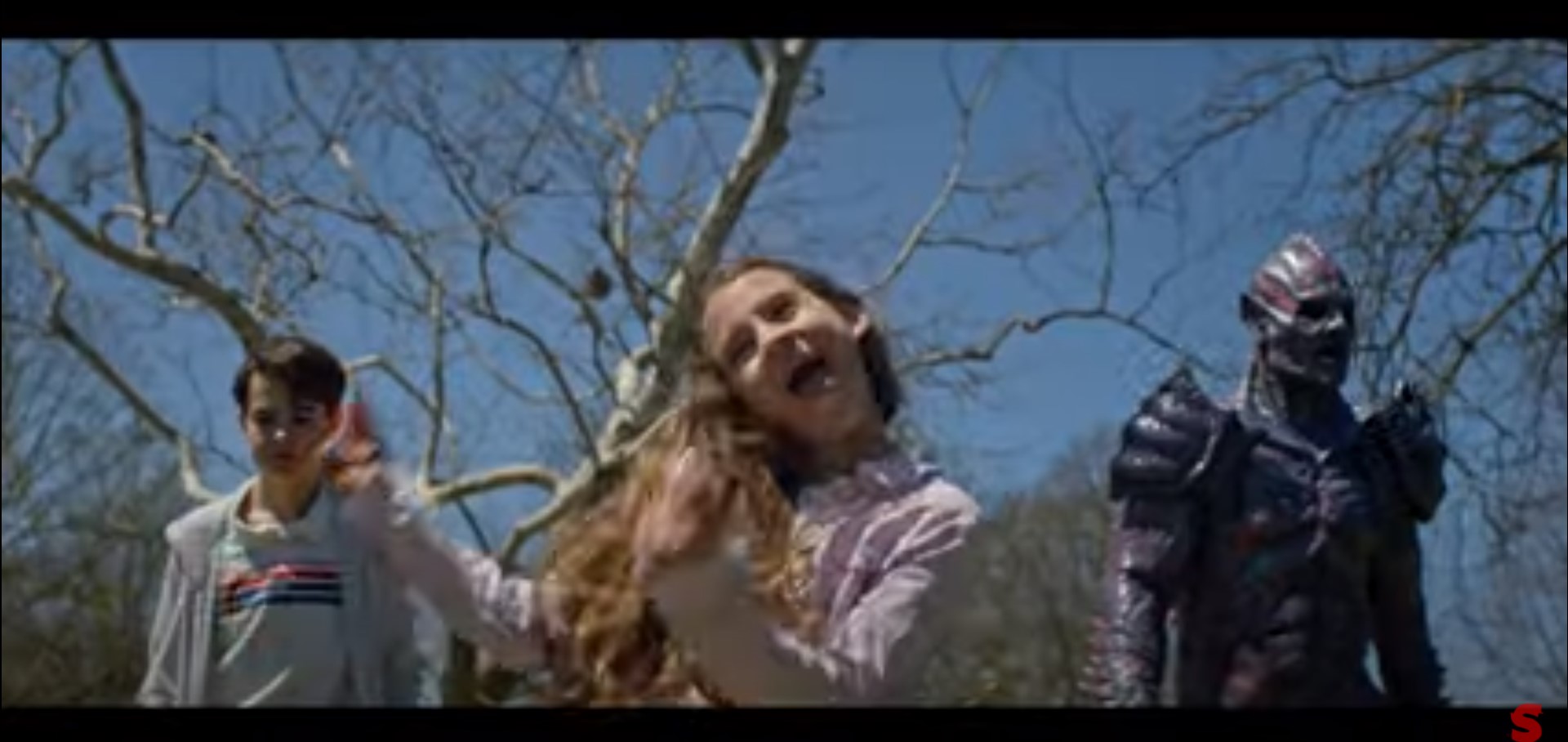
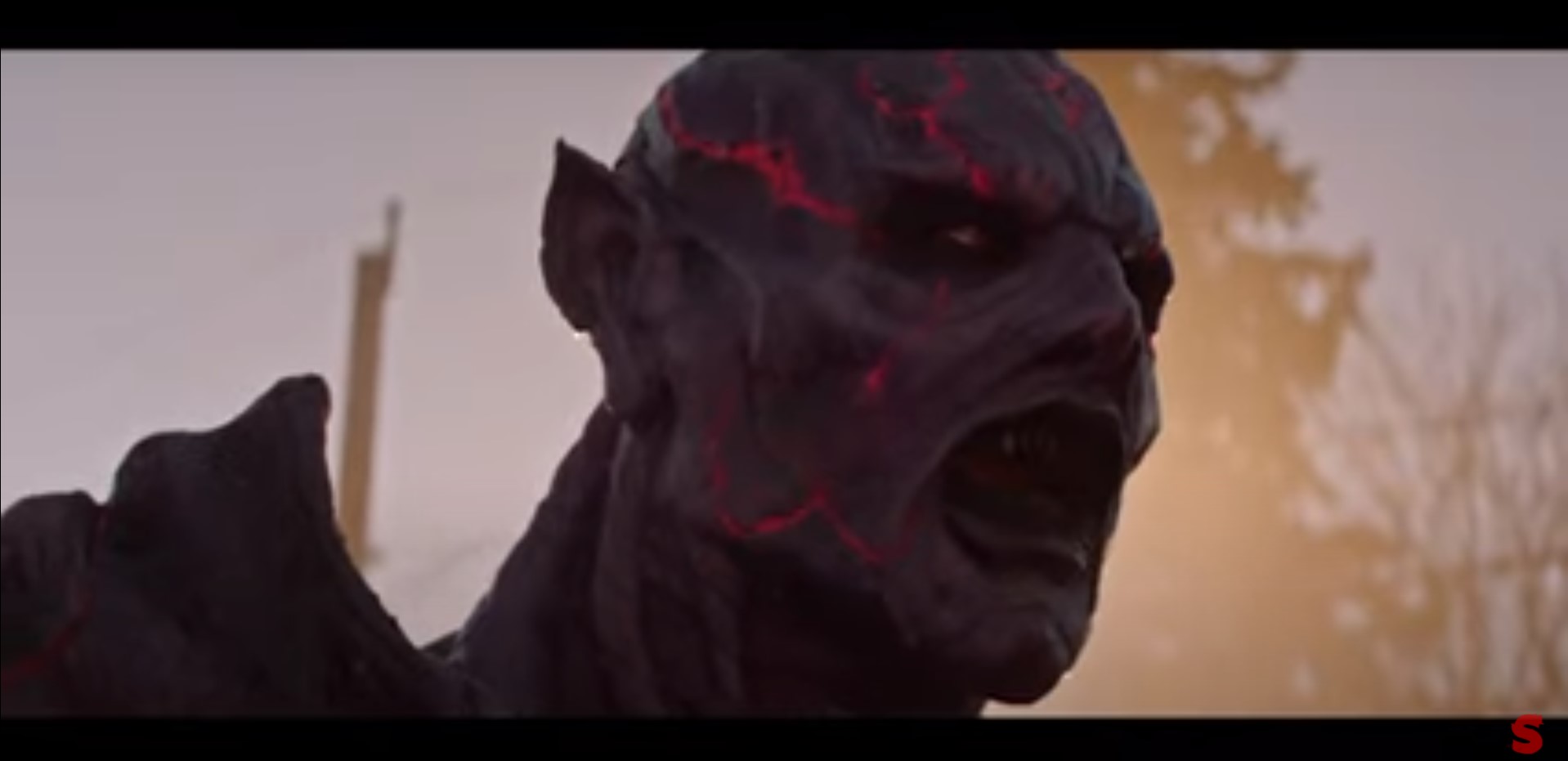
Brother and Sister, Luke and Mimi, discover a gem that unimprisons a dark alien warlord destined to destroy worlds.  The gem and the being are one, connected by the ancient forces powering the talisman, and whoever wields it can control the evil one.  Fortunately for now, the gem is in young Mimi’s possession.  The bossy and sassy preteen sees the alien, dubbed Psycho Goreman, as a new friend and toy, gallivanting around town catering to every Mimi whims.  Lightyears away on a distant planet, a council comprised with the forces of good, who banished Psycho Goreman to eternal banishment and imprisonment, learn of their once terrorizing tormentor having escaped his confines.  Leader of the council, an elysian warrior named Pandora, vows to track down their adversary and put an end to his existence, bringing a destructive showdown of good versus evil in Mimi and Luke’s small-town. 

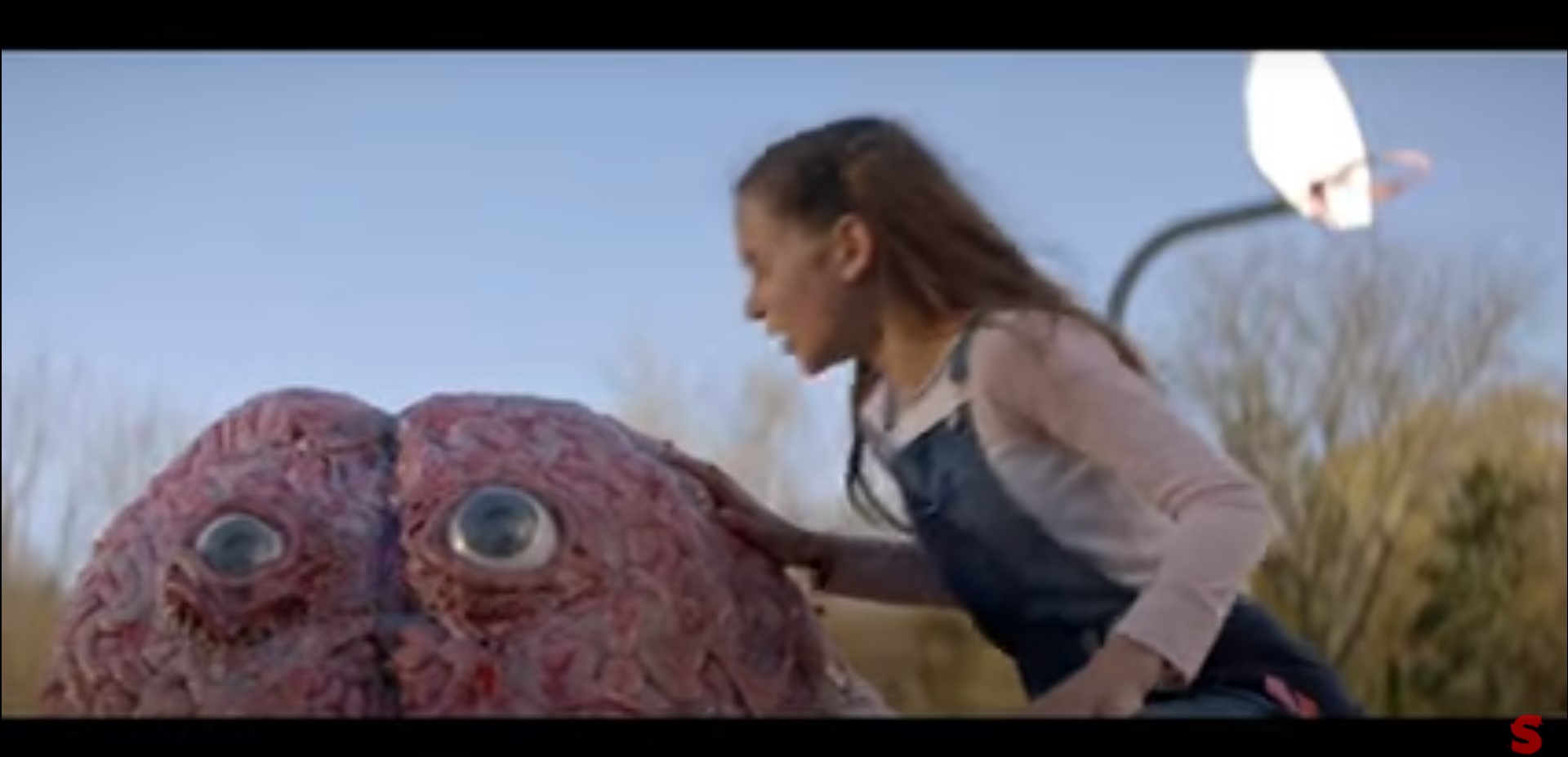
The anomalous mind of filmmaker Steven Kostanski is vacillatingly distinctive and churning adulation for the late 1980’s to early 1990’s high camp, metal-infused horror films that heavily inspired him.  His latest written and directed Sci-Fi horror-comedy, “Psycho Goreman,” fits perfectly into Kostanski’s brand of stupidity, nonsensical, animation-saturated, bizarro reality horror that has made us, or at least me, fall heads over heels for his previous credits, such as “Manborg” and the “W is for Wish” segment of “The ABCs of Death 2.”  Kostanski is also a special effects guru having worked delivering gruesome terror and insane imagination skills to the big and small screen, but makeup FX artist takes a backseat to his employer, the Ontario-based MastersFX managed by Todd Masters, and they grab the reins by providing a slew of mixed bag practical and visual effects and animation styles that is a time warp back to the tangibly ridiculous and forged every follicle freakshow horror and science fiction celluloid from 30 some odd years ago.  “Psycho Gorman,” or “PG” for short, is a production of the pseudonym Crazy Ball Productions, as in the Crazy Ball game Mimi and Luke play, and Raven Banner, presented as an exclusive acquisition by RLJ Entertainment and Shudder.

To make something as ridiculous as PG to work, you need a colorful, wildcard cast to pull off every microfiber of manic personalities you can muster and sticking out with the wildest personality is not the titular character who is neither the brightest highlight nor the leader of the pack.  That spot was filled far before PG makes an unearthing introduction by the film’s smallest, youngest, and most delightfully sarcastic and ostentation lead in newcomer Nita-Josee Hanna as Mimi, who’s roughhouse and snarky sassiness goes unparalleled even up against the Arch Duke of Nightmares.  The dynamic plays on that whimsical idea of little girls with big personalities can be the center of attention.  In this case, Mimi requires the world, no, the universe to revolve around her ultra-spoiled nurturing.  Her possession of the gem gives her unlimited power with her possession of PG, played by undoubtedly hot and bothered by the latex suit, but otherwise good sport, Matthew Ninaber (“Transference”).  Hanna and Ninaber are an absolute joy to watch together with their contrasting comedic deliveries:  Hanna’s aggressive flamboyance compared to Ninaber’s subtle and solemn stewing.  Then there’s Mimi’s brother Luke, played by Owen Myre, who will have a role in the upcoming “Terrifier” sequel and one of the film’s running jokes is PG can never remember Luke’s name.  That lack of standout presence for Myre’s character is quite literal and not because Myre’s performance is forgettable and a complete wash (in fact, Myre is fantastic is the meek, submissive older brother), but between Mimi and PG, those overwhelming characters totally consume much of the attention.  Adam Brooks (“Manborg,” “Father’s Day”) and Alexis Kara Hancey fill in as Mimi and Luke’s lackadaisical father and frustrated mother while Kristen MacCulloch (“Motherly) suits up as the PG’s holier-than-thou arch nemesis, Pandora, in Templar species form while Roxine Latoya Plummer blends in with the rest of the population with Pandora’s human form.  “Pscyho Goreman” rounds out with Alex Chung, Scout Flint, Robert Homer, Conor Sweeney, Matthew Kennedy, Asuka Kurosawaw, and Scott Flint.

“Psycho Goreman” necessarily fills a pivotal void.  Most genre films aim to pass along a message, sometimes important to the filmmakers, to convey a lesson, an idea, a political or social protest, or to spark awareness on an issue, but with Steven Kostanski, watching his work is like taking a vacation with an immense clearing of any and all undercurrents and obvious messages for pure, unadulterated, frequently mindless entertainment that just looks cool.  Underneath the composited animation and practical effect layers is an anything goes, no strings attached, brutally-caked, dopamine drip that causes glossy-eyes and a warm wash over of all the senses.  Side effects I can definitely live with and be refreshed by when needing a break from reality.  The amount of space medieval practical effects alone makes “Psycho Goreman” feel like “He-Man and the Masters of the Universe” and while that Gary Goddard 1987 science-fiction fantasy starring Dolph Lundgren, perhaps, heavily inspires Kostanski’s intergalactic battle-royale on Earth, the story mirrors much to the tune of “Suburban Commando” with Hulk Hogan.  Hear me out.  Rogue-vigilante, played by Hogan, crashes into Earth where he winds up with the unsuspecting Wilcox family who melts the big, bad commando’s heart and simultaneously fix, mostly unwittingly, what’s broken with the family while alien bounty hunters track him down.  “Psycho Goreman” is the same storyline with less gore; hell, “PG” is even kid dialogue friendly.  If you know “Suburban Commando,” you know, and now you can’t unsee it! 

As part of Acorn Media International’s RLJ Entertainment and Shudder exclusive line, “Psycho Goreman” is destined for darkness onto Blu-ray home video with over 2 hours of special feature content.  The UK region 2, PAL encoded, BD50 is presented in a widescreen 2.39:1 aspect ratio with a runtime of 96 minutes.  Nothing noteworthy to terribly point out from the digital picture shot on an ARRI Alexa Mini with Angenieux Optimo Lens that produces a spherical image you’ll optically notice that seemingly has a rounded surface to bring wide framed objects closer together.  Kostanski utilizes a blend of stop-motion and green screen with seamless results and even though slightly on the caricature side of alien landscape and creature production, everything befits “Psycho Goreman’s” extensive universe.  The English language DTS-HD Master Audio 5.1 has excellent acoustical output in a vast array of vocal timbres and epic ambiance on and off of Earth.  Dialogue is clean and prominent on both the actors and voice actors with the latter sometimes, unfortunately, masked by the voice manipulator.  The Blu-ray release packs a punch with over 2 hours of special features including a director’s commentary, interviews with cast and crew including Steven Kostanski, Nina-Josee Hanna, Owne Myre, Adam Brooks, Alexis Hancy and Matthew Ninabar, different fight chirography records from location and in practice at a martial arts studio, behind the scenes featurettes with character backstories, a trading card gallery, concept art, a behind-the-scenes photo gallery, and the animation creation.  “Psycho Goreman” is rated 15 for strong bloody violence, gore, and injury detail.  Sit back, relax, and let Steven Kostanski speak to your childhood senses with his adult antihero, “Psycho Goreman.” 

Own “Psycho Goreman” on UK Blu-ray (Region 2)

EVIL is All in Your Head! “Implanted” reviewed! (Gravitas Ventures / Digital Screener)

Year 2023.  After a devastated global pandemic, health companies engineered an experimental personal diagnostic nanochip called LEXX that is surgically implanted into the a human’s spine.  For Sarah, a woman down on her luck living homelessly after being let go from her job and struggling to cope with her mother’s early stages of dementia, quick cash is essential for survival and this experimental program, that uses advanced AI technology, tempts a desperate Sarah into participating in human trial runs.  Initial implementation serves Sarah with quick vitals and healthy lifestyle recommendations articulated by an artificial voice in her mind, but when the AI has other plans for Sarah, such ordering the assassinations of the health startup’s top leadership and destroying all evidence of the program, Sarah has to either obey every lethal command or fight against the insidious tech that has complete control over her pain sensors as well as her mother’s life.

COVID-19 has been the baseline culprit for millions of deaths worldwide.  The impact of the pandemic has inspired filmmakers to a creative outlet of churning out stories surrounding a lifechanging and devasting virus.  Some are ridiculous, off-color, cash grabbers – “Corona Zombies” comes to mind – but there are a few out there that challenge the gratuitous advantage-taking by folding in more substance into the story.  Fabien Dufils attempts to go above and beyond the here and now with a post-pandemic, self-containing thriller entitled “Implanted” and is the first written and directed non-made for television feature length independent film for the once music video director set in the urban jungle of New York City.  “Implanted” spins A.I. tech horror with the whooshing fast track of the health care system to eagerly push experimental drugs, in this case a clinical artificial intelligent grafting, upon the desperate, often marginalized, public.  There’s also an allegorical smidgen of mental illness thrown in there as well.  Dufils co-writes the script with fellow Belgium screenwriter David Bourgie under Dufils’ Mad Street Pictures production company.

Making her lead performance debut, mentally wrestling an invasive cybernetic nanochip, is Michelle Girolami who also serves as associate producer.  We all have that little voice inside our heads, telling us what do and think to an inevitably end of accordance with that ever so delicate whisper of persuasion and that’s how Girolami has seemingly approached this role with that little suggestive presence cranked up to the level of full-fledged chaos on two-legs.   Girolami ultimately is a reverse mech with all the cold puppeteering directed shots directed by programmed software and so much of the actress’s performance is solo, feigning responses to a bodiless voice and reacting to pain generated from within whenever she doesn’t comply to the relentless LEXX.  Unable to bounce dialogue and reactions off of others can be a tough sell for most actors, but Girolami really slathers it on thick the vein-popping strain of integrated torture.  Opposite Sarah is Carl (Ivo Velon, “Salt”), another hapless experiment participant forced into assassination servitude, but Carl’s purpose isn’t exactly crystal clear.  His LEXX unit shepherds him down a collision path with Sarah, but the two separate LEXX units have no shared intentions and while that’s wonderfully niche to provide individual A.I. with their own personal liberties and schemes, Carl just wanders the city, sometimes murdering the program’s top leadership or doing something polar opposite of Sarah with no substantial collusion about their subversive attacks.  The what could have been interesting cat-and-mouse game tapers off and the story leads into more of characters trying to regain back their autonomy and this is where Dufils’ narrative shines using LEXX as a symbol for mental disorders and how those impoverished or distressed are struggling to cope can lose themselves and give in to the internalized madness slipping outward.  Parallelly, Sarah’s mother (Susan O’Doherty) suffers from dementia that reinforces the theme.  Martin Ewens, Shirley Huang, Sunny Koll, John Long, and David Dotterer wrap up the cast list.

“Implanted’s” sci-fi concept can be described as if Amazon’s Alexa, with all the internet connections and text-to-speech bells and whistles, suddenly became murderously woke inside your cerebral cortex.  “Implanted” relays humanity’s lopsided dependency on advanced technology that continues to make us even more less connected to each other and the possibility of a machine takeover just that more feasible.  However, much like when a software program crashes, a malfunctioning script error ravages the narrative for not being tight enough, leaving unaccompanied loose ends as devices that fail to progress the story along stemmed by sudden drop off character development and unknown, speculation at best, motivations.  There’s also no discernable backstory to the why LEXX’s A.I. has snafued.  At least with “Terminator,” Kyle Reese provides exposition about Skynet’s sudden upheaval and domination over the human race whereas “Implanted” dives into none of that rich framework and tossing it aside for the sake of just tormenting Sarah into being a killer pawn, moving her across the NYC chessboard with the intent of taking down the king, queen, and knights of LEXX’s program.  To what ends?  Explanation on the specified targeting isn’t made entirely clear as programmers to CEOs are solely liquidated for just being involved.  

“Implanted” is a warzone for headspace and there can be only one victor in this psychological, sci-fi thriller released now, digitally, from Gravitas Ventures.   The unrated, 93 minute film also showcases the various hats of director Fabien Dufils with one being cinematographer.  Dufils captures obscure, slightly neglected, areas of New York City that’s becomes refreshing to consume because even though the Big Apple is well known for glass and steel skyscrapers, the undergrowth locations ground “Implanted” as relatable without the monolithic structures and hustle and bustle tropes.  In juxtaposition to the down-to-Earth background, the decision to sprinkle in visual effect blood splatter taints “Implanted’s” realism.  Though not gory by any means, digitally added blood can’t be cleansed from the physical veneer and being an indie feature, I would have though a run to corner store for a bit of red food coloring would have been a cost saving measure.  “Implanted” adds another layer to the man versus machine subgenre with tinges of mental illness and too reliant on tech themes but undoubtedly leaves gaps in the narrative coding, racking strenuous mental effort without the egregious assistance of an A.I. nanochip.

Rats! EVIL Got Out! “The Mutation” reviewed (Uncork’d Entertainment / Digital Screener)

Three detectives and a zoologist and his assistant don’t exactly know what they’re hunting down. An unknown animal has brutally killed two people, including the scientist experimenting on it after breaking loose from his lab. Keeping close tabs on the scientist’s wife who’s eager for revenge, the investigators discover through DNA residue and a first hand attack that an uranium mutated lab rat, now the size of a human, is the responsible culprit terrorizing the city. Behind every dumpster, lurking in the sewers could be the giant, killer rat hungry for a next meal and it’s up to the desperate detectives and the zoologist to stop the creature before devouring the city whole.

Giant, mutant Rats!  The antisocial Willard isn’t back to his own vengeful tricks again nor has Bruno Mattei risen from his Eurotrash grave to resurrect a rodent-infested sequel to “Nights of Terror.”  No, this scuttling little creature feature isn’t so little in Scott Jeffrey’s 2021, man-in-a-body-suit terrorizing schlocker “The Mutation.”  Last time we covered a Scott Jeffrey written and directed project, the modern day serial B-horror director was breaking hearts (well, more like, puncturing them really) with his Valentine’s Day massacre slasher “Cupid” that saw the winged and chubby, love-matching cherub be only a figment of fables and myths as, in reality, Cupid’s broken, maligned heart aims to sever relationships, and sever heads, with his deadly bow and arrow and ninja star-like greeting cards.  Giant rats don’t need a holiday to wreak havoc in this United Kingdom independent film production from Scott Jeffrey’s own Jagged Edge Productions.

Battling against the rat’s superior stealth and strength is a cast of Jeffrey film regulars beginning with lead Ricardo Freitas as the zoologist Allen Marsh.  The upcoming “Conjuring The Plastic Surgeon 2” actor reteams alongside fellow “Bats” costar Amanda-Jade Tyler, who plays a medical doctor hellbent on exterminating an adversary fed up being a lab rat.  Other than their word, Freitas and Tyler exhibit little of their vocations and with “The Mutation’s” limited budget, to expect a hospital or zoo setting shouldn’t be on the realistic table, but aside from a little backstory about Marsh’s team work and a flimsy explanation of genetic manipulation testing, the characters’ poor technical knowledge, compounded by a lack of thespian vigor, ultimately becomes clear that what should be a rich in trait zoologist Allen Marsh and Dr. Linda Rowe are nothing more than a pair of regular commoners caught in in the middle of an investigation.  Megan Purvis (“It Came From Below), Andrew Rolfe (“Amityville Scarecrow”), and Jamie Robertson (“Conjuring the Genie”) spearhead the investigation as a hapless trio of officiating authority bumbling through the case.  I can literally see the figurative question marks over top of the actors’ heads, unable to detach and discern their character confusion about a humanoid rat terrorizing the city and their actual confusion about how to portray cops on a case.  Rounding out the cast of character is Sarah T. Cohen (“Hotel Inferno III: The Castle of Screams”), Abi Casson Thompson (“Cupid”), Nick Danan, and “A Werewolf in England’s” Derek Nelson who goes from a canine howling at the moon to an upright, human life-size rodent snapping necks at a posh restaurant in “The Mutation.”

Yes.  You read that last bit correctly.  Forget the transmission black plague that killed multi-millions of people, those rats are wimpy mice compared to a killer rat that understands how to meticulously break a human cervical vertebrae with uranium produced opposing thumbs.  The mutation not only granted the rat unnaturally large mass and superhuman strength but also instill lethal ninja abilities as the all hell breaks loose restaurant scene is pure rat-cheesy carnage.  Much of “The Mutation” is heavily moist in campy bog, hobbling on a fine line of either being intentional or unintentional with spotty dense character moments played off earnestly, such as Marsh looking directly into a lab ring light after turning it on himself and exclaiming, “god damn,” as he recoils from the blinding brightness is the most stupidly funny part of the film.  My guess is if “The Mutation” wields a man running around in a scruffy and latex snarly rat costume offing city denizens then more than likely the campy category is the former with a misguided sincere shot at adding gravity to the narrative.  Though overflowing with an abundance of bottom-barrel scenarios and inscrutable character head scratching, “The Mutation” does have select satisfying moments of post-mutilation gore and a neo-monstrous CGI rat briefly holding all the cards in the finale. From my little time with the filmmaker, Scott Jeffrey makes good with palpable bloodshed and kitsch visual effects, but the stale white bread acting pitches up a conspicuously lopsided crushing blow that can’t be ignored.

If you suffer from Musophobia then “The Mutation” is great cathartic exposure therapy, gnawing at the flesh and bone and toward DVD home video and Digital platforms today, October 5th, courtesy of Uncork’d Entertainment. Since a digital screen was provided for review coverage, the DVD home video release’s A/V aspects will not be analyzed in this critique; however, as far as the film’s appearance goes, Charles Jeffrey’s cinematography saturates our hairy rat-agonist in blue hues during more personal kill moments, but the backlighting is terrific, almost channel an 80’s slasher-esque of backlit vibrancy, when the man-rat is nothing but a silhouette perched on top of a trash dumpster. Classy. Yet, typical of many low-budget films, “The Mutation” is mostly otherwise softly lit that beams and ricochets lighting right off the skin, creating an overly polished varnish no self-respecting scummy rat would be caught dead in, and really could have benefit toning down the washout blue tint that steals from the details and the impact of earlier scenes. Specs are limited with no information on the DVD nor the rating or bonus content. With a creature that resembles more like a long-tailed gremlin than an oversized disease carrying rat, that’s the least of “The Mutation’s” troubles as Scott Jeffrey’s radioactive-rodent creature feature can’t find it’s four-legged footing with a languid cast and a disheveled script that gore alone can’t rescue.