Rock And Roll is the EVIL’s Music! “Dark Roads 79” reviewed! (Terror Films / Digital Screener)


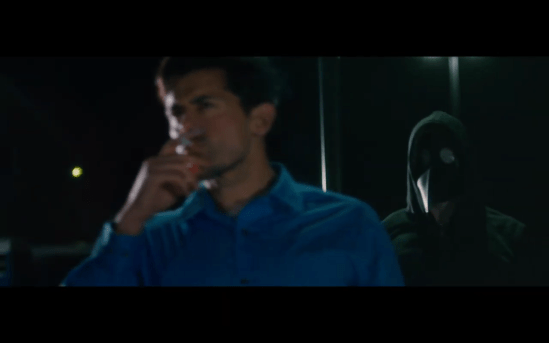
Frontman Bobby Gray and his Southern rock band, Dark Roads, were supposed to be next big hit next to The Rolling Stones, but there fame and fortune started dwindling after some short-lived success. Barely surviving on a here-and-there gig in 1979, Dark Roads manager, Grace King, secures a secluded cabin in the woods for them to find their new sound before being dropped by their record label. Along with their female companions, chatty coach driver, their sensible roadie named Cash, and a handful of some hallucinogenic drugs, the trouble band members continue to squabble amongst themselves, especially more so against the vain and alcoholic Bobby Gray. Gray holds a terrible secret from his bandmates, a secret involving a pact he made with the Devil ten years ago and, now, the debt is due, placing the entire group in mortal danger…the price for fame and fortune.

Based loosely surrounding the tragic circumstances of the infamous 27 Club mythos, a moniker given for a collection of up and coming talented musicians who die unexpectedly and prematurely at the ripe young age of 27, “Dark Roads 79” incorporates into the fold the legendary tale of Blues musician, a 27 club victim named Robert (Bobby) Leroy Johnson, who sold his soul to the devil at a Georgia crossroads during midnight for to be the greatest blues musician, or so the story is told. The 2017 film is the fifth macabre picture from writer-director Chase Smith who co-wrote the film with documentarian filmmaker, Richard Krevolin, who no doubt kept the script on a historical accuracy path, as much as one supernatural storyline can stay on. “Dark Roads 79” is a production from Smith’s Georgia based independent filmmaking company, Spirit World Productions, and brought to viewers by “Old 37” executive producer “Jason Anderson” and co-executive producer Nicholas Frank Auger.

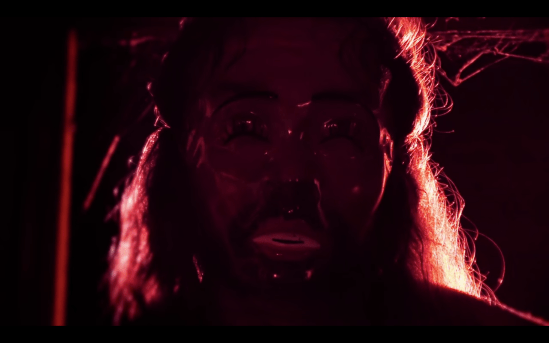
Already donning many hats, Chase Smith slips on one more broad brim and trashy cowboy mesh hat with Ian Cash, the level-headed, good natured roadie with a voice like an angel, but built like a Mack truck. Cash serves as narrator who sets up the story that swerves across the dotted line into spoiler territory just a tad, but Cash becomes the vehicle that brings the viewers up to speed on the legend of Bobby Johnson and the rise and fall of the Dark Roads, like a cowboy quick connect in case you needed help in establishing that Dark Roads’ success hinges on a fatal pact with the Devil himself. While Cash may seem like the focal point of the story, there’s a split with lead singer Bobby Gray (David A. Flannery, co-star from a few of the homoerotic thriller series “1313”) whose vanity flushes Dark Roads’s stardom down the toilet. Cash and Gray go toe-to-toe many times and Smith’s emits formidable tough guy appearance on screen while Flannery impresses with a complete loathsome veneer. Neither Smith or Flannery make top bill however as long as “Devil’s Rejects” Bill Moseley has a show stealing bit role as the wicked tongue Christian, Caretaker Williams. Moseley’s short, catchy tune of “Boys and Girls they’ll make some noise. They’ll all be burning in Hell” is a classic, archetypal Bill Moseley character idiosyncrasy. Though Moseley’s scenes are short, they’re definitely sweet and rememberable. “Dark Roads 79” rounds out with “Creature Feature’s” Austin Freeman, Lance Paul, Libby Blanton, and Chance Kelley alongside April Bogenshutz (“Attack of the Morningside Monster”), Jessica Sonneborn (“Never Open the Door”), Jennifer Masty (“Rabid”), Eddie George, Ramona Mallory (“Piranha Sharks”), and co-writer Richard Krevolin as the bands’ chatty driver, Thomas ‘Motormouth’ Jones.

“Dark Roads 79” is categorically a a mystery slasher with a supernatural edge that tinkers with blending lore and the theme of lost good times and friendships despite how unfriendly and uncouth they might be, but Smith and Krevolin purely tiptoe around the keynote of terrible, yet sense of family, camaraderie, failing to capture the coherency of the melancholic essence due to loss and despair built upon years of cathartic criticism, distrust, loathing, and continuous bickering between best buds. In fact, the band and it’s entourage displayed little love if it wasn’t under the influence of some drug, but we must remember that the narrative is told through the perspective of roadie Ian Cash who believed in the band, and, in so, believed in each band member albeit their merciless fair share of busting his balls. The editing, cuts, and transitions are, perhaps, some of the most interesting with “Star Wars”-like wipe transitions that effectively heightened as a hallmark of the swanky 1970s era and the emotion-extracting lingering shots, such as with the handheld super 8 cam that roams the room of an abiding jovial moment in time, capture more of the tender times between the group of bitter and weary druggies, alcoholics, and vain temperaments. Unfortunately, the positives do not outweigh the negatives with a scatterbrained and predictable story that comes off as another failed spawn of the 27 Club urban legend and shaves off the emotional baggage with cheap kills and too many unfulfilling characters.
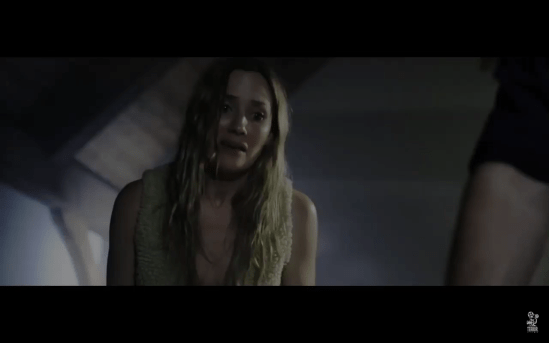
Make a pact with the Devil himself by watching Chase Smith’s “Dark Roads 79” that’ll debut on stage with a wide digital release by the end of May from genre distributor, Terror Films. No set date has been announced. The film will be hosted on multiple digital platforms, such as TUBI TV, Google Play, Prime Video, ITunes, and various other streaming options. Since “Dark Roads 79” will be a digital release, the video and audio specifications will not be reviewed as it’ll be different for all personal devices, but I will note that some minor portions of the dialogue elements were echoey at times. The original soundtrack has strength behind it with Southern Rock tracks by Black Mountain Shine, Mark Cook, Benton Blount, and HK Jenkins, who composes the single “The Road You’re Going Down,” written by Chase Smith, for the film’s official music video. There were no bonus features with the digital screener. “Dark Roads 79” has the necessary ingredients of a backwoods-frat party gone awry slasher except with Southern Rock, but this Georgia based production is tuneless and tone deaf as it stutters through the Devil’s network of deadly deals.

EVIL is a Slice of Deep Dish Hell in “Creepy Tales of Pizza and Gore” reviewed! (Bayview Entertainment / Screener)


Pizza, that delicious concoction of bread, marinara, cheese, and your topping of choice kneaded and pieced together in a gooey circular of staple culinary awesomeness, has somehow found its way baked into an Italian-sans-meatball horror anthology that promises an equally saucy taste of crusted blood red gore. Five varied, harried tales of horror molded into a gruesome and terrifying VHS-style that will send chills down your spine as you swallow your first piping hot bite of pizza will either have you hungry for more or hurling out your pepperonis. These tales of macabre include the cursed audio tracks of a deadly screaming ghost, the grisly torture and murder in the name of Satan, the tragic and supernatural deaths of two ill-fated lovers, a wooded creature stalking stranded motorists, and a VHS tape that seeks revenge on its former, ungrateful owner.

Let’s take our time traveling machine back to 2014 where Italian filmmaker, Lorenzo Fassina, releases his second feature directorial film behind the horror-comedy, “Anamnesi Mutante,” transmitting by way of a five tale anthology humorously entitled “Creepy Tales of Pizza and Gore;” the titles of the shorts are “Screaming Ghost,” “Devil of the Night,” “Alone in the House,” “Wood,” and “Killer Tape.” Co-directed with producer Marco Giangiarelli, The Milan born Fassina’s background also includes being a director of a collection of short films and music videos for bands that include Italian metal bands Cripple Bastards and Viscera///, similar music scores the anthology. The eclectic tales that greatly homage horror of the 80’s that include rich in color film titles and poignant atmosphere audio mixes, each have a runtime average of approx. 10 minutes long, and offer a mixed macabre of subgenre goodness from technological horror to inanimate object horror besieged with an interlacing host, a faceless, demon-like presenter with much to say, much like the Crypt Keeper. My apologies in advance as the screener that was provided didn’t have subtitles so the host’s soliloquy goes mostly misunderstood, but by the way of editing and how the syntax is structured, one would assume the ghoulish emcee sets up the pizza eaters with the next short video nasty. “Creepy Tales of Pizza and Gore” is produced by Fassina’s indie company, DirtyTape.

Most of us in the States more than likely won’t find any familiar faces inside the confines of these five tales and, know what? That’s okay! Aside from our hell bound host, there’s not a lick of dialogue spoken, but the capability to connect with the characters and the capacity to understand the story without words is as transparent as crystal clear waters of the Venice canals. An assemble of facial and eye expressions and a well edited together script and structure by Fassina for each short provides a sustainable and a sufficient menacing mixed bag of mouthwatering horror. The largely novice cast has either worked on previous projects with Fassina before or are an unknown delight to us viewers and cast list includes Sara Antonicelli, Beatrice Cartoni, Jonathan Farlotta, Jacopo Grandi, Francesco Marra, Tommaso Meledina, Alessandro Melito, Riccardo Tiberi, and Bunny Roberts with a cherry on top topless scene for good measure.

I’m not a terribly big fan of anthologies. Yes, I enjoy “Creepshow 2,” like every other horror fanatic smuck, and I do revel in the grave zest of the low-budget spectrum, especially with compilations from directors of the “HI-8”, aka “Horror Independent 8,” that featured the bloodbath films of some 80s/90’s SOV prodigies in Ron Bonk, Donald Farmer, Tim Ritter, and Marcus Koch, but most anthologies find their unsuccessful way right toward the trash bin, condensed to third-rate releases with little-to-no marketing and hardly any surplus material in the special feature department. “Creepy Tales of Pizza and Gore” may be a foreign anthology barely making an insignificant speck in the cinema market, but certainly shouldn’t be overlooked as the derived golden age of an immensely beloved straight-to-VHS horror courses through the veins of Fassina’s reverencing anthology. The stories garnish b-reel content, but not necessarily effortless or incompetent in substance and range from serious, to tongue-in-cheek, and out right absurdity, with the latter stories being the weaker links. In all, it’s a fun and entertainment horror show from our Italian friends.

“Creepy Tales of Pizza and Gore is delivered fresh and blood warm onto DVD home video courtesy of the New Jersey based distributor, Bayview Entertainment. As aforementioned, Bayview Entertainment publicity provided a streaming screening link so the audio and video aspects will not be critique for this review, but the DVD specs include a single disc, Anamorphic widescreen presentation, with an unrated rating on an Italian language anthology that, supposedly, has English subtitles – my screener did not have subtitles. Bayview Entertainment’s DVD casing resembles entirely like a VHS-cassette with faux movie rental stickers stuck on the outer plastic. The packaging is a nice and warranted touch to a VHS-homaging anthology. There were no special features included with the screener or released in the press release. Chow down on night with “Creepy Tales of Pizza and Gore;” a validating horror anthology worthy of time and effort and reaffirming the faith in anthologies once again with wild, imaginative macabre ambitions without the stiffening efforts of pushy financiers calling behind-the-wheel shots.

“Creepy Tales of Pizza and Gore” won’t disappoint! Buy here on Amazon.com

EVIL Watches from the Shadows. “The Lurker” reviewed! (Indican Pictures / Screener)


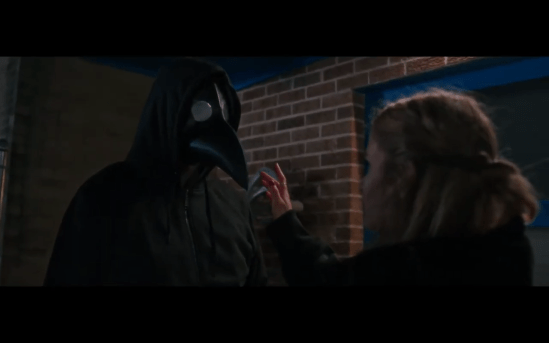
A gruesome murder has brought a looming shadow over a high school. However, the shadow is not great enough to thwart the spirits of a group of thespian high school seniors in the throes of their last Shakespearian performances of the year of Romeo and Juliet. Determined to excel, the peer admired Taylor Wilson keeps her college acceptance hopes high on her well-received nightly performances as Juliet, but when a terrible secret involving Taylor begins to circulate through the school body, friendship and enemy ties begin become taut with tension. Simultaneously, those with knowledge of Taylor’s secret are being killed off one-by-one by a deranged killer in a black, long nose masquerade mask.

“The Lurker” is a 2019 American slasher film from the first attempt at horror-director Eric Liberacki, whose legs have been grounded in short film cinematography work over the past 2010 decade with “The Pale Man” being his sole feature length credit. Liberacki’s sophomore directorial is written by the “The Pale Man” screenwriter and short film director, John Lerchen, who’s scribes the slasher version of HBO’s “Big Little Lies” starring hormone-driven and backstabbing high school seniors on a thespian high. “The Lurker” re-imagines the high school dramatics to further dig into taboo subtexts worthy of a Jerry Springer talk show episode and interweaves a non-linear narrative, filled with flashback mystery, due suspicion, and the utmost desire to know what secret Taylor Wilson is being exploited against her preservability. “The Lurker” is a joint venture between John Lerchen’s production company, Forever Safe Productions, and Silva Shots.

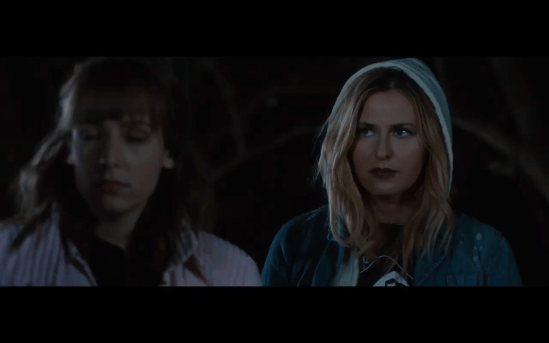
One thing, right off the bat, that heedlessly seems erroneous for the story is casting Scout Taylor-Compton in the lead role of Taylor Wilson. And here’s why. From 2007 to 2019, the now 30-year-old actress has played a high school student in Rob Zombie’s remake of “Halloween” and in “The Lurker.” While Taylor-Compton is a natural beauty who seemingly defies all physics of aging and her performance is solid, the once Laurie Strode portraying actress from Long Beach, California emits a now mature glow in life and rehashing another character in a high school slasher is ultimately beneath and behind her. Aside from her counterpart co-star Michael Emery being roughly the same age, the rest of Taylor Wilson’s entourage are in their internship-status, post-college years of the early 20s, including Kali Skatchke, Casey Tutton, Isabel Thompson, Emmaline Skillicorn, and Marissa Banker. Juxtaposing against a young cast, as a sort of out with the old and in with new or to brighten with short strands of genre highlights, is the minor roles and cameos of recognizable faces and film royalty, such as Ari Lehman (“Friday the 13th), Naomi Grossman (“American Horror Story: Asylum”), and, most surprisingly, Domenica Cameron-Scorsese, the daughter of Martin Scorsese, playing Taylor’s mother. The cast rounds out with Charles Johnston, Rikki Lee Travolta, Eddie Huchro, Bruce Spielbauer, Roy Rainey, Josh Morris, and Walter S. Bernard.

“The Lurker” has textbook aspects going for it in the case of an above par production value of fancy editing and set locations, a cache of young and seasoned talented actors, and a story with a twist ending, but that nagging itch gnawing from the back of my skull, slowly inching one molecule at a time, toward the core of my brain informs me that the Liberacki’s slasher misses the intended mark if only by a fingertip attached to a severed pinky. The story tries to sell an alternate version of itself that becomes inane from predictability at the very starting gate and continues trucking an exemplum despite giving away too much, too early. Surrounding the conundrum of calamity building to the potential proverb of shit hitting the fan is a paradigmatic slasher flick with a masked killer murdering toward the technique of a final girl narrative. Yet, “The Lurker’s” kills weren’t terribly flashy and were really met with an uninspired creativity to assist in drawing and sustaining captivation of a ruthless assailant over an abundance the teenage melodramatics, which essentially ran amok. We really shouldn’t have been surprised at the narrative’s untroubled tone because the first kill in the opening scene was inside the school and the school was open the very next day; in today’s day and age, school would have been closed for the rest of the week, if not the rest of the academic year, for bereavement and investigation.

Come down with a serious case of stage fright with “The Lurker” coming to DVD home video and now out on various digital platforms, including renting and buying options on Amazon, distributed by Indican Pictures. The visual and audio review portion for this release will not be covered since a screener copy was provided; however, the DVD will be presented in the original widescreen presentation of an aspect ratio of 2.39:1. With a check disc, there were also no bonus material to review as well as no bonus material before the credits and before or after the credits. John Lerchen and Eric Liberacki’s first crack at full length horror is a win in my book with a complex web streamed of lies, deceits, and snuff, but, with a little fine tuning, “The Lurker” could have sheered to a bigger, better 80 minutes.

Rent or Buy “The Lurker” on Prime Video!!!

Beware EVIL’s Lair! “Rust” reviewed! (Wild Eye Releasing / DVD)


Hotel Fear is a dilapidated shell of a once thriving horror attraction with labyrinths chockful of replica grisly terrors. Isolated in a rural area outside Las Vegas, Hotel Fear becomes the meetup place for best friends Heather and Morgan who drive to the forlorn theme park to unite with a couple of male friends. However, Hotel Fear houses a notorious urban legend that includes the deranged killer, Travis McLennan, a barbaric, cannibalistic madman who abducts young women for his pleasure. When Morgan is captured and Heather barely escapes with her life, it’s up to a battered and traumatized Heather to return with the police to rescue Morgan from the merciless grips of Travis McLennan.

Can “Rust” be the next much-admired slasher franchise this side of the last ten decade? That’s what will be discussed when analyzing Joe Lujan’s written and directed “Rust,” a survival-slasher surrounding a mute-masked killer named Travis McLennan, birthed by a nefarious anecdotal urban legend of a unhinged boy who murdered his parents and wears his father’s face. Lujan, whose become something of a low-budget horror factory filmmaker with short and feature film credits including “It Followed Me,” “Atelophobia,” and their respective sequels, helms what could be the director’s bread and butter legacy that crosses “The Texas Chainsaw Massacre” with some aspects from a Rob Zombie filmmaking handbook. What makes “Rust” unique, or at least in the Wild Eye Releasing DVD, is the feature is comprised of two short films, “Rust” and “Rust 2,” spliced together to make a full length film that would ignite the fervor for third entry, “Rust 3” in 2020 currently in post-production, and all produced by Lujan’s production company, Carcass Films.

Typically, popular slasher will center mostly around the chased protagonists that naturally produces an ominous villain, examples would be Alice in “Friday the 13th,” Laurie Strobe in “Halloween,” Nancy Thompson in “A Nightmare on Elm Street, but “Rust” shares the focal responsibilities between protagonist duo of Heather and Morgan and an antagonist duo of Travis McLennan and his Stockholm syndrome sex slave, Valkyrie. Not only do we wonder about the bloody-cladded rooms of Hotel Hell with Heather and Morgan, but also see some dynamics and curiosities from their stalker. “Hot Tub Party Massacre’s” Corey Taylor and “Afflict’s” Taylor Kilgore become the besties Heather and Morgan and are staple actors in Lujan’s ensemble cache he’s collaborated extensively throughout his career. As an exposed midriff Kilgore loses out on Morgan’s weak character development that’s nothing more than an elevated whimper, Corey Taylor by default lifts up to be a quasi-strong female lead, but neither actress steps into that final girl role and are extremely overshadowed by Morlon Greenwood’s towering-might that converts to being the black-hearted killer Travis McLennan. The Jamaican born, former NFL linebacker has that “See No Evil,” Kane-like violence that bears an austere ravager who would make anybody crap their pants when going into full-throttle chase mode with machete in hand. Lindsey Cruz (“Meathook Massacre 4”), Raul Limon (“The Immortal Wars”), Isaac Rhino (“Blood Runs Thick”), Meek Ruiz, Paul Tumpson, Nycolle Buss, Lordis DePiazza, Brittany Enos, and Brittany Hoza round out the cast.

So, does “Rust” make for good silver screen slashery? One would need to snake between the rough McLennan backstory that doesn’t clearly sink in, the whimsical premise of a teen meet-up and wander through an abandoned horror theme attraction, and the hollow characters to declare that “Rust” doesn’t make the cut across the throat. Finding reasons to be concerned for characters was at a great time nil because of their bland design with nothing to strive or live for in a complete and total arc-less folly of development. Perhaps the purest form of a slasher is in Travis McLennan’s brutality which warrants some positive lighting as a more machine than man killer, wearing a fleshy mask skinned from his father, as he hoards young women for his unknown kicks, but whether the funds weren’t in the budget or an artistic preference was applied, all the kills were mostly done off-screen and implied. There were a couple of knife blows to the head and the neck areas that barely had discernible quality that subjected no veering of the eyes or garnished any dread into the full brunt of the kill blow. Lujan pens an obscured rape scene that has more oomph than the killing itself. We’ve seen box store horror films with scream attractions before, such as like “Hell Fest,” and even some enticing independent ventures, such as “Talon Falls,” both of which have filled the need for urban myth, meta-horror – horror actually happening in a horror theme park – but most of these films don’t pan out as expected and “Rust” simply falls into that latter unfortunate category.

Right on the coattails of a third film comes “Rust” onto DVD home video courtesy of Wild Eye Releasing that’s presented not rated and in a full frame 16:9 aspect ratio that’s varies in quality being two shorts combined into one. “Rust” first half suffers from an extremely low bitrate so much so that you can see pinpoint each frame. The coloring is faded beyond the brown on a Las Vegas desert and, at times, difficult to discern exactly what’s happening mise-en-scene, especially in the darker scenes as you can see in the screencaps. The second half fairs better with a higher bitrate, smoother frame transitions, and a cleaner, less muddle twitching inside the frame. The English language dual channel stereo sound mix also splits the difference, most notably with a shield and muffled dialogue track being drowned out by ambient and the Eric Dryer’s score, a score that’s possibly a highlight in “Rust’s” legacy. Again, audio regains some control over the levels, providing more efficient range and depth but still can’t overcome of the powerful score. Bonus features include an interview with Joe Lujan about the fabrication from beginning to end of “Rust,” the original Rust 1 and 2 shorts, and Wild Eye Releasing trailers. One bonus I was vying for was the Eric Dryer score, but no such luck. “Rust” might be more of tetanus hazard than a budding slasher ripe for the viewing, but director Joe Lujan has the potential if the filmmaker can chug foward gaining experience along the way and, perhaps, recap his Travis McLennan nightmare on a bigger, badder scale with a sharper machete.

“Rust” is included with Prime Video!


“Rust available on DVD”

The Analogies of the EVIL that Plagues Us. “Hole” reviewed! (Wild Eye Releasing / DVD)


Three peoples’ lives become coiled around the unfortunate state of death with each experiencing individual variations of the concept. The recently released convicted felon, Ed Kunkle, faces reality on the brink of insanity as his past demons vilify his temperament in the direction of total carnage. Befriended by Kunkle is Eve Adams, a single mother who struggles to cope with her infant son’s untimely murder that happened right under her watch. Assigned to the Adams Boy’s case is detective Bodie Jameson who struggles with own malevolent urges brought upon by the unsurmountable cases of grisly homicides that come cross his desk while he also tracks down a child killer. Their differences connect them, looking into their future to rediscover the past that molded their disheveled lives into fateful affairs with death.

Over the course of three years between 2007 to 2010, auteur filmmaker Joaquin Montalvan directed and assembled a gritty glimpse into the grubby windows of condemned souls with the 2010 released “Hole,” produced by his own independent production company, Sledgehammer Films, and co-written with his longtime collaborator and wife in life, Eunice Font. “Hole” is Montalvan’s third horror feature following 2002’s beleaguered with loneliness thriller “Adagio” and psychological horror, “Mobius,” which was released the year prior in 2009, plus also behind a string of documentaries. Montalvan’s an optically surreal storyteller basking in a rich and unorthodox story and color palette that revives originality bobbing in an heaving ocean of lemming horror.

“Hole” is comprised of showcasing three stories from three tormented lives. One of those lives, the mentally unfit Ed Kunkel, gorges on being the centric force that thrives the other two into a descendant hell. The late Paul E. Respass tunes into Kunkel’s manic polarity as a person who can be extremely mild mannered and pleasant then explode with caustic abrasiveness and ugly torture. Respass’s shoulder length, wavy hair, graying goatee, and iron contoured face gives him a Charles Manson appearance that goes good with crazy. Behind closed doors Repass’s Kunkle breaks with sanity slaughtering his mother lookalikes as a result of mommy issues, but when conversing with Eve Adams, Kunkle’s maintains an upright keeled temper. Teem Lucas, who like Respass has worked with Montalvan previous, subdues the abnormal imbalance with a normal person’s reactionary response to loss and heartache when Eve Adams copes with the murder of her young child. In the middle these two extremities, detective Bodie Jameson’s work seeps into his psyche, fluctuating between irrational and rational thoughts. Another actor in Montalvan’s corral, Jim Barile, who looks more like a 70’s hippie than a detective, has the hardest performance of them all of slipping into a terrifying unknown mindset while maintaining status quo in work and romantic relationships. Barile’s role isn’t well recieved, flying mainly under the radar with an underperformed and pointless conclusion to detective Jameson right and wrong affliction. Charlotte Bjornbak (“Camera Obscura”), Katherine Norland (“Cannibal Corpse Killers”), Alina Bolshakova (“Dead End Falls”), Dennis Haggard (“Cannibal Corpse Killers), Theresa Holly (“Legend of the Hillbilly Butcher”), Micki Quance, Gavin Graham, and Char Frost (“Someone’s Knocking at the Door”) co-star.

Right away, a strong sense of resemblance washed over me when viewing “Hole.” The lead actor, Paul Respass, and the overall texture felt already acquainted with my visual cortex nerves. My suspicions were justified and my sanity was cleared as I have seen “Hole” before in a later film entitled “Legend of the Hillbilly Butcher,” another Joaquin Montalvan flick featuring Respass as a delusional manic. Yet, “Hole” is one of those films that after the credits role, hasty judgements should be chewed on, reflected upon, and recollected for a second analysis. Hell, you might as well just re-watch it all over. The thing with Montalvan is is that his brand has trademark cognizance on such a level that even if “Hole,” released in 2010, and “Legend of the Hillbilly Butcher,” released in 2014, instinctually ride the same wave, they ultimately compare as individual projects with a distinct personality and artistic flair. For instance, “Legend of the Hillbilly Butcher” denotes more of an homage to early exploitation films and “Hole” puts more stake into societal system failures, even if borrowing from the likes of Ed Gein with the killer wearing a flesh mask and sewing up a fleshy garment. Both films hark about mental illness, but one glorifies the act for the sheer sake of carnage fun and the other considers it a collateral damaging symptom of a broken justice structure. Another difference to note is “Hole’s” three-way non-linear narrative that moves like the Wonkavator from “Charlie and the Chocolate Factory” in every way imaginable and can be daunting to keep up.

Out of the depths of obscurity comes “Hole” distributed on DVD home video by MVDVisual and Wild Eye Releasing under the Raw and Extreme banner. Presented in a widescreen, 1.78:1 aspect ratio, Montalvan and his D.P. R.T. Norland, brightly bedazzling with every shade of matte box and some slow motion, play the field utilizing various techniques to tap into Ed Kunkle’s disorienting madness. Using backdrops like the ghost town of Bodie and the spiritual sanctuary (or bohemian commune) of Salvation Mountain, Montalvan’s able to cast an aberrant vision out inside an independent means. There are some points of posterization, details are softer than desired, and blacks lose composition with blocky noise so there are some drawbacks to the encoding. The English language dual channel audio mix pairs about the same as the video with spliced competing facets that tend to offer come-and-go range and depth. Scream queen moments go into feedback mode during Ed Kunkle’s kill mode, losing the ideal quality via unsound mic placement. Dialoge is okay being on the softer side with some background noise being flowing in and out between the audio edits, emitting a static effect around the dialogue and then cut out when not the actors are not speaking. The bonus features are aplenty and informative with a Montalvan commentary track, an extensive mack of documentary that fine combs every pore of the film that includes interviews with cast and crew, Ed’s Journal segment conversing about the backstory on Ed Kunkle’s perverse family and killed friends portraits and souvenirs, as well as trailers. Bloodhounds will want more from Ed Kunkle’s shed of horrors, but what director Joaquin Montalvan has fashioned threads madness with a neglected mental heath system while polishing a a shiny three prong, moviegoer narrative with blood, body parts, and butchery.