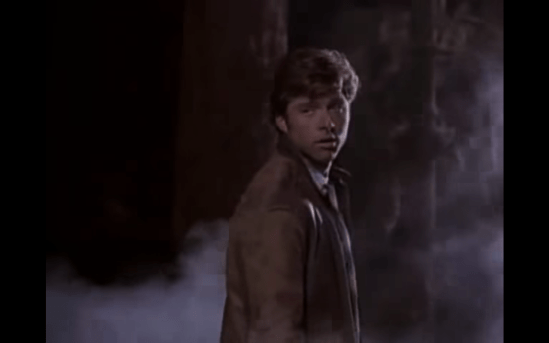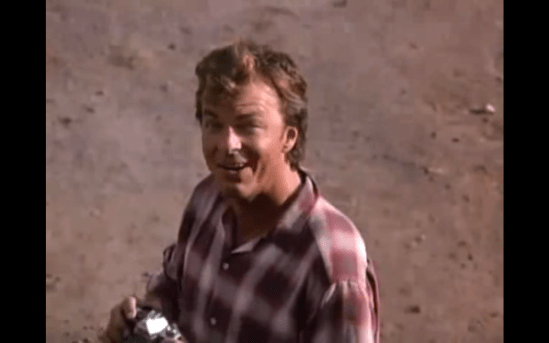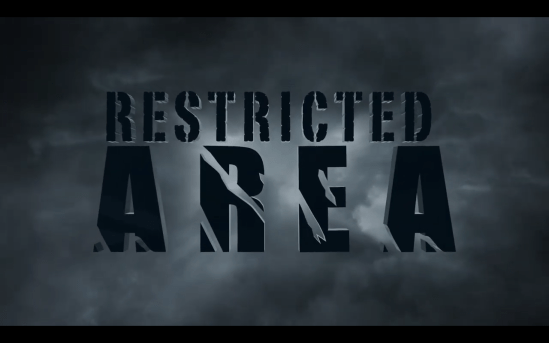
Four blue-collar friends are being laid off from their steel mill jobs; family generations are engrained with the blood and sweet of the mill, but the somber moment is humbling and harsh when responsibilities come to collect. They decided to throw one last hurrah, a boozy camping trip into the rocky wilderness, before life hits them hard. The calm and tranquil getaway turns deadly when acolytes of Unionology, a cult secluded to the restricted areas, sets sights on trespassing campers with the four friends right in the middle of the hunt. After teaming up with another hiker and the disappearance of one of the friends, a fight for survival ensues against armed masked men and an unhinged cult leader along the mountainside where it’s not only man versus nature, it’s also man versus man.

The great outdoors continues to be synonymous with a hot spot for murder, mayhem, and overall doom and gloom in Christopher M. Don’s debut backwoods cult thriller of survival entitled “Restricted Area.” Dons pens as his second script behind the savagery, snowy slopes of his ski-sploitation horror, “Minutes to Midnight,” where masked men with a cryptic agenda hunt down patrons of a ski lodge set upon a mountain. Don must have an fondness for producing screenplays where masked killers stalk in wilderness elements as “Minutes to Midnight” plot is essentially the same as “Restricted Area” without the sound-damping snow. Produced by Gear Up Productions, which I assume is Christopher Don’s company, climbs very little up to being a modest budget feature and retains around camping along the super low financial terrain based off the already exaggerated beliefs of Scientology that, if at all, lightly treads to more escalating and thrilling heights.

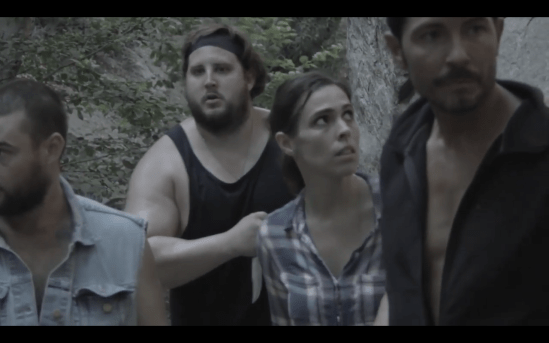
With being an indie feature on a microbudget, Don implements his cast to being his actors as well, including himself as Cody, the nearly silent onscreen brother to his real life brother, Robert Don, as the film’s lead, Tyler. Tyler’s a rough and tough steel mill worker with his biceps bulging from his sleeveless, black puffer jacket and hunting knife strapped to his waist side, but as far as depth goes, Tyler lacks significant worth from little backstory and no character arc. Whatever Tyler does isn’t exactly bursting with energy by Robert Don’s deadpan manner. Who recoils from inexpressiveness is West Murphy playing Axel, the goofy and boastful friend whose really blowhard, and though Murphy sprinkles flavoring upon and around most of the monotonically adrift slop, Axel’s one-trick pony can’t even offer much else to the story, not even a glorious death that would be redeeming for such droll stereotypes. “Restricted Area” houses random entries and exits of characters that can make viewers anxious, concerned, and down right frustrated with the arbitrary fates of Harold (“Big Bad Bugs’” Phillip Andrew Botello) who disappears with only a little sliver of where he might be in the closing scene and the blank white masked cultist with a machete who leaves more intrigue of a boss level villain than is actually divulged in the story. Paige Lindsay Betts, Ross Britz (“Ozark Sharks”), Emily Gardt (“Satan’s Seven”), Nicholas Cole (“Stripped”), Randy Wayne, Gus Moore, Wilmer Hernandez, and schlock horror internet pundits and, Shawn C. Phillips and Danny Filaccio fill out the cast list.
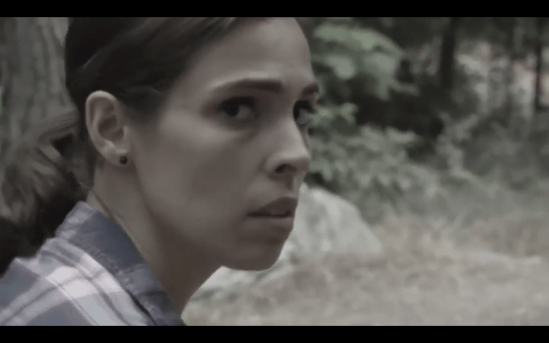
“Restricted Area” already has a zillion things going against the meek and humble feature albeit the aforesaid above from the mishandling of characters, but the bearings, picked from the litter of many categories, never comes into focal clarity and shimmy their way to eek by toward a rather enigmatic end. Out of the 112 minute runtime, Christopher Don’s screenplay couldn’t consists of more than 60 to 70 pages of dialogue and scenes with the remaining footage for the feature being supplemented with overkilled filler scenes of Tyler and his band of survivalists wandering around an idyllic traipse, dysfunctional and unnecessary segue edits repeat nearly themselves and just extend into filler scenes themselves, and the bombardment of landscapes – lots and lots of landscapes. There was even one faux pas of a wooded mountainside that was shamelessly shot straight from a magazine advertisement with the advertised site text very visible in the scene. There’s also a scene with a real rattlesnake that, by chance, wandered into production and Don decided misplace this miracle amongst inside another wandering group montage. To continue on the script, the convoluted nature of the cult wanted to kill a young boy becomes lost as this boy comes and goes as he pleases, pleading without any dire sense of urgency for Tyler to save his life. Yet, this dubious boy never seems to be frightened, frantic, or even in cahoots when considering the cult’s dastardly plan to end his time on this Earth.
ITN Distribution and Mill Creek Entertainment’s call to the wild is a survivalist nightmare in Christopher Don’s “Restricted Area,” pitching a tent into the DVD market with a home video release. The DVD is presented in a widescreen 1.78:1 aspect ratio on a single layer, region one disc. Perhaps one of the worst presentations I’ve seen lately with the low bit rate, big compression artifact issues that denounces detail clarity right from the get-go, settling into a fuzzy and blotchy 112 minute, from start-to-finish, runtime. The color palette doesn’t pop either inside the parameters of a faded natural scheme that bares no attempt to use any shade of tint to offer more than just the bare minimum to survive. The English language Dolby Digital stereo dual channel mix plays the same rugged tune with lossy quality in dialogue, ambience, and Michael Levinson’s synthy soundtrack, which is perhaps one of the film’s few highlights in lieu of his debut. Still, a harsh feedback echo on the dialogue dampens the authenticity of the ordeal and poor mic placement dilutes the fidelity even more. Optional English SDH is available. Bonus features includes an audio commentary, trailer, and a quaint blooper and outtake reel. “Restricted Area” doesn’t have the authority required to be a gouging survival horror as all sides of the cinematic terrain are too rough for an visual and audio trek and the script lays to waste with drone dispositions and careless considerations that needs to be post noted and restricted from itself.
Category Archives: Trailers
Evocation of EVIL in “The Girl In the Crawlspace” reviewed! (ITN Distribution / DVD)

Jill escapes from the grip of a kidnapping-serial killer who kept her confined in a crawlspace under the house. Her courage brings lethal justice to the captor when the local marshal shoots and kills him upon confrontation. Jill struggles to reintegrate back into her local community in the aftermath, sleeping unconfined in the outdoors and withdrawing herself for social interaction, including from her weekly role playing game with friends. When Kristen moves back into her hometown from college, she aims to set up her therapy practice to assist families impacted by the serial killer as well as Jill by special request from the marshal, but Kristen’s rocky relationship with her substance abusive, off-Hollywood screenwriting husband on the mend drags out Jill’s much needed treatment. With Jill and Kristen preoccupied, they’re oblivious to the concealed threat that plots the next terrorizing exploit of kidnapping and tormenting young, beautiful women.

From under the grubby wooden floorboards to the strategic folding table of a role playing game, “The Girl in the Crawlspace” is the Midwest direct-to-video suspense thriller that tackles post-traumatic stress and marital strife while submersed in a looming trail left by a notorious mass murderer, written and helmed by first time director John Oak Dalton. Dalton, who has penned several low-budget grindhouse titles over the last decade and half, including titles such as “Among Us,” “Sex Machine,” and “Jurassic Prey,” returns once again to the genre with the repercussions of Podunk psychopath upon small town America, filmed in Indiana and release in 2018 hitting the ground running with film festival circuits. Indie filmmaker Henrique Couto, schlock horror director of “Scarewaves” and “Marty Jenkins and the Vampire Bitches,” signs on as producer, stepping back from his usual productional duties, and letting an occasional collaborator Dalton to completely engulf himself as the omnipotent auteur. Midwest Film Ventures serves as the production company, shot in Farmland, Indiana.

Erin R. Ryan has continuously sustained a low level hover on the indie horror radar after taking her in Dustin Mill’s “Bath Salt Zombies,” based on the Miami incident based on a naked man eating someone’s face induced by being high on bath salts, and the gooey-gory body horror, “Skinless,” that’s also a Mills production. Ryan expands her portfolio outside physical horror with Jill, a traumatized recluse derived from her abduction and torture, as a subdued component that’s contrary to previous roles, but Ryan capitalizes the opportunity of a scared kitten, recoiling from public gatherings, and slowly and silently emerging back into society while recalling chilling moments as the story progresses. However, there’s difficult pinpointing the head lead as the protagonist roles are shared between Ryan and depicted married couple, a pair of more Henrique Couto casted actors, in Joni Durian and John Bradley Hambrick as Kristen and her husband, John. Between the three, chemistry clicks better than cooking meth in a chemist’s unsanctioned laboratory and offer ample contention without the attending killer’s presence hanging over the whole town’s head. Rounding out the remaining cast is Chelsi Kern (“Scarecrow Count”), Joe Kidd (“Ouija Room”), Jeff Kirkendall (“Sharkenstein”), Clifford Lowe (“Scarecrow County”), and re-introducing Tom Cherry as the good old boy town officer, Marshal Woody.

With a title like “The Girl in the Crawlspace,” I would be remiss if I didn’t say there were some expectations of bodily torture, psychological terror, and teeth-clinching tension when sitting down to watch. The hype was high considering the post-after-post amount of positivity for “The Girl in the Crawlspace” on my Twitter feed. The catchy name and optimistic comments provided real temptation, but Dalton steers in another direction, the what follows in the state of everlasting shock and the reliving of moments seared into your psyche. The direction wasn’t as expected, but that’s necessary a bad thing. “The Girl in the Crawlspace” is exposition heavy with considerable amount of movie referencing peppered with some current event topics, such as the brief mentioning of killing of migrant children, throughout and continuously wanders off point, strolling more into Kristen and John’s crumbling marriage. Jill, the supposed centerpiece of the story, feels more like an afterthought, despite being the “girl” in “The Girl in the Crawlspace.” The cantankerous marriage supposedly jeopardizes those personally involved in Jill’s well-being as John exploits Jill’s idiosyncratic experiences from being a captive by turning them into inspirational junk food for his fading screenwriting career, but the catalyst incident doesn’t stick, becoming more of a weak opening for a more pronounced return of Jill’s haunting past.

From ITN Distribution and Mill Creek Entertainment, “The Girl in the Crawlspace” lands onto a not rated DVD home video release. The single layer DVD is presented in a full frame widescreen of an 1.78:1 aspect ratio. In a framing sense, Henrique Couto’s cinematography distinctly places small town in a spectrum view that highlights the soybean fields and farms, the rustic brick infrastructures, and the simplicities of a relaxed, old-fashioned town, using some drone shots to expose the green belt greenery. For an indie feature, the agreeable bitrate has a frank, clear image despite some consistent overexposure that softens details, especially on faces in the outside scenes. The Dolby Digital stereo 2.0 mix has also agreeable dual channel output. Some of the dialogue scenes suffer through an echo, but for the majority, the lines have clarity and unobstructed by ambient layers or the soundtrack. The depth discloses some distant ambiguities, such as in a train shot that’s not rendered in the background as it should, but the amount of range is palatable. English SHD subtitles are available. The only bonus features available on the release are the theatrical trailer and an commentary with producer Henrique Couto and director John Oak Dalton regarding their history together and going through the shot techniques as well as touching upon the actors. The road to recovery is paved in nightmares, psychological terror, and Midwest psychopaths in “The Girl in the Crawlspace,” but pitches away from the principal concern that turns second fiddle to one struggling screenwriter’s difficult assimilation into rural life while simultaneously rethreading a floundering livelihood and a tattered marriage.
All a Broken Family Needs to Mend is a Demented EVIL Backpacker! “Mind Games” reviewed! (MVD: Rewind Collection / Blu-ray)
On the surface, the Lunds are picturesque of everything that represents the perfect family. Under the surface, Rita and Dana Lund can barely skim the surface with their marriage dangerously ebb and flowing toward sharp, jagged rocks. In an effort to save their relationship, they take their preteen son on a RV camping trip along the coast line of California to try and rekindle their affection for one another. In one of their trip’s initial stops, a hitchhiker named Eric befriends Dana and the boy; they’re fondness for the charismatic and young Eric is so great that he’s invited to ride along with the family on their vacation. Rita’s suspicions of Eric are blinded by her immense loathing for Dana, suppressing Eric’s true maniacal, psychopathic behavior as he infiltrates the Lunds to conduct his only psychological behavior experiments by shifting the boy’s jovial persona, exploiting Rita’s sexual regression, and further alienate Dana from his family.

As if a fable that warns the dangers of picking up hitchhikers no matter how friendly and beautiful they appear to be, “Mind Games” dug into the psyche and had continued the trend of violently unstable roadside travelers that yearn to harm the hospitable, the compassionate, and just the plain old lonely. In Bob Yari’s first of two directorial efforts, the 1989 “Mind Games,” also once titled as “Easy Prey” is a thriller from the mind of screenwriter Kenneth Dorward and co-produced by screen actress turned financier Mary Apick, teaming up with Bob Yari after their work together on the sovereign nation standoff drama, “Checkpoint,” under the MTA/Persik Production Company banner. As the idyllic project for a low-budget thriller with a limited cast and barely any special effects required, “Mind Games” wound up being the first entry for the MTA/Persik affair that sought to stir conjugal strifes with outsider influence and how sometimes the grass is not always greener on the other side.

For an independent film with such a small, sharpened cast, well known actors from the 80’s step into the humblings of lesser grandeur, starting with Maxwell Caulfield. The young, promising star from the sequel to John Travolta’s “Grease” had his career nearly derailed with the critically panned big budget “Grease 2”, but luckily for horror genre fans, the English born actor channeled his talents toward such films as “Waxwork II” and “Sundown: The Vampire in Retreat.” Yet, “Mind Games” was essentially his second break into the film business that opened doors for the former titles and being the unhinged hitchhiker Eric couriered a necessary change from his stage performance to his ability to be warped-minded person looking through the eyes of a totally different and charmed individual. The role absolutely challenges the actor who, from analyzing his performance across the screen, finds breaking in the role more difficult than presumed. Edward Albert is a name you might not remember, but his face will strike some chords as “The Galaxy of Terror” actor steps into the self-deprecating husband role of Dana. Dana is just one of those individuals worth slapping across the face to wake them up and Albert amplifies his unintentional waning from his wife and child with such dismissal and disassociation, I, myself, found Dana’s lack of courage to be unsettling, but his rouse-less attribute fades slowly into man searching, if not clinging, for what’s left of his life. Caught between Eric’s snarky sensationalism and Dana’s lofty air is Dana’s angst wife, Rita, played by “Shadowzone’s” Shawn Weatherly. The blonde hair, blue eyed former Baywatch beach lifeguard sure knows how to be a wild card, an unknown friend or foe in this mental game of chess, as Rita staggers between hating to being extremely amicable with her husband, Dana. This is where Dana and Rita’s son, Kevin, fits in as the deciding factor pending the successfulness of Eric’s testing. Matt Norero didn’t have nearly the extensive career as his co-stars, but deliveries some great, if not zealous, scenes and cold-hearted glares that break up the sometimes monotonous tone of “Mind Games” would routinely find itself stuck.

To frankly put it, “Mind Games” bares the prosaic essence of a run of the mill thriller with a thin strip of riveting tension to cling onto. The film impresses comparably with a cheap suspense novels you’ll find multiple copies of collecting dust bunnies on Dollar Tree shelves where the paperwork backs lavished in a cheap bait title and cover art only provides a quarter of the entertainment value of its marketed worth. However, for a low budget production, Yari manages to pull off impressive aerial shots, eerie dim lit atmospherics of a fog machine heavy night scenes, and tack on flashes of so bad, it’s good meme worthy moments – i.e. the garbage day kill scene in “Silent Night, Deadly Night: Part 2” to reference what I mean. The score is conducted by “Night of the Comet” composer David Richard Campbell with an uncharacteristic upbeat and happy-go-lucky number weaving in and out of the film’s storyline, and coarsely out of place during the RV stop-a-long montage that proceeds after setting up Dana and Rita’s turbulent marriage and Eric’s understated malevolencies, but rather speaks to the overall spirit of the film that’s a rated-R labeled PG-13 thriller, hard on the language, but soft on the violence with more of an implied application of offscreen kills and virtually no blood from an anemic plotline.

Still, “Mind Games” can be considered a cauldron of cynicism and now that the release receives the royal treatment with a full HD, 1080p special collector’s edition Blu-ray from MVD’s Rewind Collection label spine #21. The retrograde cardboard slipcover harnesses a powering transfer that supplies vitality into the well-preserved 35mm source material and presents a 1.78:1 aspect ratio. Perhaps the best this transfer looks to date, a plush matte that’s pleasing and without the drab bleakness that typically coincides. Natural grain remains upon a softer side delineation that’s not heftily indistinct and, in fact, adds to the glow of the product’s decade. The English LPCM 2.0 stereo audio mix has inviting qualities, but taper more on the lossy side of the spectrum. The soundtrack is powerful, especially on “The Writing on the Wall” single by Raven Kane. Dialogue is clear and untarnished, the range is adequate, and the depth is sound. No audio or video hiccups or blights to note nor any dubious enhancements detected. Option English subtitles are available. Special features are aplenty including a new MVD exclusive, retrospective look at the Making of Mind Games that clocks in at 108 minutes of interviews with director Bob Yari, producer Mary Apick, and stars Maxwell Caulfield, Shawn Weatherly, and Matt Norero. Also included a featurette on the producing career of Bob Yari who helmed award winning films such as “Crash,” and concludes with the original theatrical trailer, a reversible sleeve with alternate art, and a collectible mini-poster in the insert slot. “Mind Games'” message to the world is never knowing how good you have something until nearly being ripped from your hands. Director Bob Yari finagles the point across with an unexceptional joyride, but a solid first film from an indie startup hungry enough to take a chance on a practical psychological thriller.
EVIL’s a Face-Off to the Death! “Guns Akimbo” reviewed! (Saban Films / Screener)

Miles, a thirtysomething video game developer, remains stuck in an unfulfilling and lonely existence where being an internet troll gives him his only taste of dominance over those who normally succeed above him in all other life aspects. When he pokes and prods a popular and sadistic underground death match known as Schism, the virally trending sensation sweeping the internet nation comes knocking at his apartment door to officially install him into the next melee bout. With guns crudely surgically bolted to both hands, Miles, whose used to running from just about everything, now has to nut up against Schism’s most prolific killer, Nix, and save his kidnapped ex-girlfriend from the deviants behind the game.

Social commentary runs amok in this grisly balls to the wall, gunplay stimulating action-comedy, “Guns Akimbo,” from the New Zealander, “Deathgasm” writer-director Jason Lei Howden. Trading in doom metal horror for a crass bullet ruckus, Howden barrels down with an on fleek supercharged story like a runaway freight train or a 6,000 round per minute minigun, shredding through a high body count like in a high occupancy round of a first person shooter. Under the production wing of Occupant Entertainment and distributed by Saban Films, who released films such as “The Girl with All the Gifts” and Rob Zombie’s “31” and “3 From Hell”, “Guns Akimbo’s” edgy dystopian air gangling along nerdy humor scraps “Robocop” utilitarian veneer for a fresh coat of millennial trivialities, fleshing out, in a ream of firepower, relevant societal topics and facing their adversarial shades head on in a barrage of blood soaked bullets.

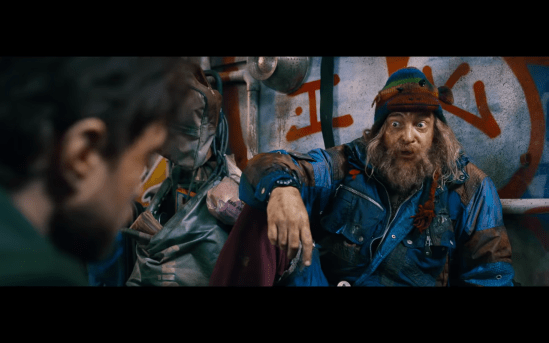
Spearheading “Guns Akimbo” is Daniel Radcliffe, who seemingly continues to distance himself from the world of wizardry of “Harry Potter” and focusing his current career on off-Hollywood and chic films that has gained Radcliffe a cult following alongside his cache of wizards and witches fandom. Feeling content stagnant, Miles lounges comfortably in the power of being a keyboard warrior and Radcliffe leads the non-exuberant charge until pushes comes to guns bolted to my and someone is trying to kill me-shove. Opposite Radcliffe is Samara Weaving as a brashly confident and hard-hitting character of familiar skin that’s similar to her Melanie Cross role in Joe Lynch’s “Mayhem.” Instead of being a mild-mannered woman infected to be a savage, floor-clearing combat artist, Weaving bares no dissuasion embodying another uncaged killer becoming the nitty-gritty, tattooed, and uncouth Nix, hard-nosed with violent tendencies stemmed by the fiery murder of her family. Together, Weaving and Radcliffe make engaging adversaries and friendlies who both end up on working on themselves while working with each other in a do-or-die game. Ned Dennehy plays the creator of Schism and overall bad guy Riktor. The Irish actor, who recently had a role in Nicholas Cage’s “Mandy,” finds himself just as tatted up as Nix, waving a nihilistic-revolutionist banner like its something to be proud of, but despite Dennehy’s best efforts in alleviating his cynical nature with a few sarcastic quips, Riktor comes off as bland and unfulfilled as a story’s aortic villain; instead, I found myself more curious about his fascinating short-lived henchmen played by Mark Rowley as a Zangief Street Fighter doppelganger, Racheal Ofori shelling out with double barrels, and Set Sjöstrand as a gimp mask wearing Fuckface. The international cast rounds out with Natasha Liu Bordizzo (“Hotel Mumbai”), a once in a lifetime hilarious homeless man act by funny man Rhys Darby, Grant Bowler, and Edwin Wright (“Turbo Kid”).

“Guns Akimbo” could have been pulled straight from the crimson flashy illustrated pages of a popular graphic novel and, most definitely, would have worked as one too, soon to come for sure, but as a feature film is concerned, as fun as Howden drapers it with explosions, expletives, and executions, “Guns Akimbo” ultimately shakes at the knees with acute breakneck, 24-hour speed that clocks in at a 95 minute runtime. While that’s the standard runtime of choice for movies, average around 90 to 100 minutes, consequences from flying through backstories (Miles, Schism, Riktor, Nix) in a blink of an eye at the story’s expense to hastily push for gun blazing glory puts all the pressure on the viewer to keep up. The story’s non-linear moments also factor into being an onerous barrier for audiences which are shiplapped together egregiously just for the sake of going against the atypical plot structure design and interspersed with flash backs and wishful thinking near death pipe dreams all jam and crammed packed into the sardine can that is the very eye-candy combat of “Guns Akimbo.” Yet, enough time was mustered for symbolism where Miles finds himself ensnared in the sticky negativity that is the social media sludge, fueled by the sadistic voyeurs enjoying the show in a violence-porn tapestry. From troll to titan, Miles rises as the unlikely gladiator presence in Schism, pushing him toward being a viral sensation from which he can’t escape despite the lack of enthusiasm to anything related to Schism and his skyrocketing social media status. The whole showdown thrusts him into controlling his own life whether he likes it or not, a kick in the ass for a lack of a better phrase, to get him motivated.

Come February 28th, Saban Films’ “Gun Akimbo,” produced by Occupant Films’ Joe Neurauter, Felipe Marino, and New Zealand film producer Tom Hern, will go full blown trigger happy into select theaters, on demand, and on digital. Since this movie is yet to be officially released, is a screener, and doesn’t have a home video release just quite yet, there will be no audio and video critique portion of this review nor were there bonus material. There have been many great dual wielding action heros in our lifetime, including John Weston from “Equilibrium,” Selene from “Underworld,” and even that Counter-Strike terrorist avatar with the option to wield Dual Berettas. Now, we have Miles from “Guns Akimbo,” an immense ball of New Zealand vitality, un-tapered exploitation, and twofold in gun fun.
Adolescence isn’t Innocence. Adolescence is Evil! “We” reviewed! (Artsploitation Films / Blu-ray)

Four teenage boys and four teenage girls decide one summer to live free, without inhibition, and to make as much money as possible. Discovering an abandoned caravan in the middle of nowhere, they set up their home away from home where doing what they want, and who they want, becomes a way of life. Sexual freedom and adolescent independency quickly leads the friends down a path of miscreant wandering and sordid pornography and prostitution. When one of the teens accidently dies, four accounts of what happened are told aloud to the court and with each version, the truth becomes indistinct amongst the slander, exploitative sex work, and their anarchist ways that surround a seemingly corrupt politician.

Debased youth bored with the common fabrics of society stitch their own downfall into extreme moral degeneration in Rene Eller’s 2018 dramatic-thriller from the Netherlands entitled “We.” Also known as “Wij” in the Belgium tongue, Eller tackles the cinematic adaptation of an Elvis Peeters’ novel of the same name from 2009 with not only directing a compelling and frightening image of idle hand youth, but the filmmaker’s also credited as penning the non-linear script told in four chapters that highlight four out of the eight teens’ versions of events and how that fateful summer not only saw their ethics become shattered, but also their close-knit friendships. Eller also co-produces the film, working alongside production companies Pragma Pictures and New Amsterdam Film Company.

“We” consists of a young cast, in age and in experience, bred from the Netherlands and though virtually credit-less, powerful performances from the lot all around that touch not only the venereal stimulators, but also reaches the twisted knot inside the gut of how being human equals being depraved. The four chapters begin with Simone, a young man smitten by the Femke (Salomé van Grunsven) who becomes a catalyst for the trial, played by an Anton Yelchin lookalike, Tijmen Govaerts. Govaerts gleams in Simon’s adolescent jubilee of love, sex, and carefree attitude. His story is followed by Maxime Jacobs’ Ruth, a 16-year-old who can’t seem to step beyond the line into total reckless abandonment, Yet, Ruth’s game for risky her own body to gain approval from her friends and for her shadowed love for Simon. Jacobs gapped teeth act as imperfect perfection upon her slumping figure sheathed in plaid, screaming purity inside her outcast shell, but Jacobs proves she can be more naughty in her character than that of her co-stars. Liesl’s third chapter paints a more grotesque picture of her friends summer. Pauline Casteleyn acts in the role of Liesl, an aspiring artist with that tough inner and outer shell Ruth aspires to but ultimately lacks. Casteleyn can cast a deadpan stare with the best of them that offers more of a chilling vibe off of Liesl, but neither of these roles could outwit, out-dominate Thomas. Aimé Claeys concludes the fourth chapter as the ringleader of the friends, or, more accurate, as the pimp and the kingpin. Thomas’ manipulate hand fosters questions about his past left purposefully open for a subjective opinion on whether his actions were that of his own boredom or being pushed to his limit by external forces. “We” rounds out with Friso van der Werf, Folkert Verdoorn, Laura Drosopoulos, Lieselot Siddiki, Gaia Sofia Cozijn, and Tom Van Bauwel.

Let me start off by saying that when the teens’ entrepreneur pornography ambitions comes to fruition, these reviewers’ eyes widened at the surprising site of explicit penetrations and fellatios; however, the unexpected hardcore isn’t the act of our already very naked actors who probably stood out for stand-ins as the story leads the friends to think of using masks for anonymity and all explicit scenes of sex involve masked performers or implied scenes are angled just right from the cruel and smart tactics of Rene Eller and cinematographer Maxime Desmet. “We’s” unreserved sexual boot up the censorship’s tight behind is this junkie’s drug of choice that gets the blood pumping in all the right places; yet, “We” garnishes a heavy topical subject serrated with generational and societal gaps of corrosive virtue and speaks in volumes of what entitlement entails for a body of minors spoiled by the very community that either nurtured or tormented them and then, finally, turn on them all, parental or not, with harsh repudiation. As a sincere compliment to director Rene Eller, “We” belongs in the maladjusted family tree that also bears the rotten teenage fruit of Larry Clarks’ “Kids” and Catherine Hardwicke’s “Thirteen” and harks back to the Golden Age of Dutch Cinema with the Dutch Sex Wave from the 1970’s which produced controversial erotica with “Blue Movie” and “My Nights with Susan, Sandra, Olga and Julie” from Scorpio Films. “We” has a friendly look and feel of a 70’s film despite modern devices, making the resemblance to the Golden Age that much striking.

From the Netherlands’ festival circuit comes the highly engrossing, explicit drama “We,” distributed stateside by the Philadelphia based Artsploitation Films onto an unrated director’s edition Blu-ray home video release. Presented on BD-25 in full HD and in a widescreen, 2.65:1 aspect ratio, impressive textures flourish every inch of skin of the actors and in the panning ariel shots, which are, at times, hard to obtain. Despite some early on aliasing during the opening scene and a bit of warm washed coloring that doesn’t pop with a colorful hue range, I’ve still become satisfied with the end result that sells the illusion of Summer (you can see the hot breath during some outdoor scenes), the immense use of natural lightening, and the skin tones announce a fresh feel for the flesh aplenty. The Dutch language DTS-HD Master Audio mix holds nothing to ill speak of with a rendered clear dialogue, ample range and depth, and subtitles that sync fine with clear delineation and no mistakes. Other than a static menu, the only other bonus on this feature is the explicit reversible Blu-ray cover that displays the bare ass(ets) of half the cast from one particular scene. There’s also the PG cover that you’ll see below to not offend any sensitive souls. Coinciding with being a great story, “We” is also an important film of human callousness hidden within the prospect of free love, an age-old infiltration and exploitation concept captured by Rene Eller’s subversive eye and Elvis Peeters sage mind.