Evil’s Hairy, Foul-Smelling, and Big! “Stomping Ground” review!

StompingGround_Poster

Chicago based Ben and Annie travel to Annie’s small southern hometown in North Carolina over Thanksgiving weekend. Annie reunites with high school friends Paul and Jed, who have stuck with their southern roots and tease Ben for his sheltered city life. Ben discovers more about Annie’s past through her friends such as her and Paul being at one point in time an item in high school, her being a wild party animal, and that she actually believes in Bigfoot. Jed and Paul invite Annie and Ben to a deep woods camping trip where Bigfoot has been believed to be looming about; Ben doesn’t believe in Annie’s Bigfoot obsession, but tags along to keep Paul from purposely undermining their relationship in order too get close to his at one time girlfriend. When the four go deeper into the woods, attempting ddto meet up with a couple of other friends, they soon realize something is wrong and something has been following and toying with them, but is it really Bigfoot?

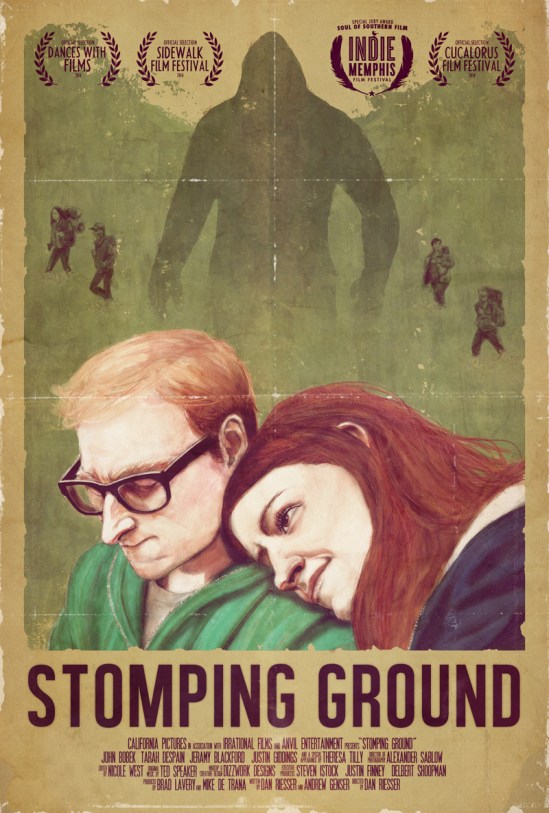
Finally, a well-made simplistic, yet terrifying story about the legendary Bigfoot that isn’t disgustingly mishandled when interpreted to the big screen. Cautiously optimistic with each Bigfoot inspired film, I’m always to be horribly let down by the sheer lack of monstrous intensity, heartfelt passion, and distinctive effects the big and iconic cryptozoological creature has been displayed over the years, or even decades in fact. I did think the William Dear family-friendly “Harry and the Henderson’s” would be the sole king of the Sasquatchsploitation genre, but here, right before me, under the careful and patient eye of director Dan Riesser is “Stomping Ground.” “Stomping Ground” is one part comedy, one part melodrama, and one part thriller rolled up into a three act film school archetype that gets it’s dirty sasquatch-ian claws into the viewer’s attention from start to finish.

SG10
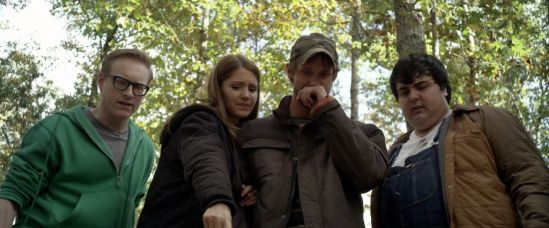
The Riesser and Andrew Genser collaborated script strongly develops the four main characters in Ben, Annie, Paul and Jed. Ben is a complete fish out of water, seeking eagerly to fit into Annie’s southern habitat and be one with it’s rowdy and rugged natives, but can’t seem to grasp, what he considers, the oddball behavior of those living below the northern hemisphere. Annie is a girl with an elusive past, according to Ben, by not letting Ben into who she formerly was, a Bigfoot believing, let-loose party girl with a love for the ourdoors, until old habits start to emerge externally in her return back home. Knowing this about Annie and with a strong attraction to his former fling, Paul seeks to disintegrate Ben and Annie’s city-living relationship, cutting their opposite-attraction bind, and get her back at whatever means possible. Jed opposites life long friend Annie where he lives for the freedom of the sticks while never letting go the cockeyed belief that Bigfoot roams the local woods. John Bobeck as Ben, Jeramy Blackford as Paul, Tarah DeSpain as Annie, and Justin Giddings as Jed deserve a round of applause for believing, and showcasing those beliefs, in their characters because if there wasn’t such a heavy character development in the first two acts of “Stomping Ground,” there might not have been such a desire to give two-shits about any of the characters, placing them in the neutrality column.
SG15
Usually with any film about the big, hairy myth, the Bigfoot effects are either jerry-built or heavily CGI dependent that reveal more of a glossy feel aftertaste than a mangy, gritty animalistic and realistic one. Not many effects were used up until when the Bigfoot made an appearance so I wasn’t quite sure what to expect and, like I aforementioned, I’m always cautiously optimistic. When Bigfoot made the on screen debut in full visibility, the matted hair, begrimed skin, tall and broad stature, and an effects accomplished atrocious face was all combined to structure a well-crafted, finely-detailed animal that could pass for a real life Bigfoot sighting without a doubt. Though the scenes are brief and obscured at points, “Stomping Ground” has a Bigfoot contender that’ll top the makeshift giant gorilla suits some actors are placed into with very little touchups and the digitally implemented gargantuan that’s over exaggerate in appearance and abilities of the Bigfoot in those other films.

I wouldn’t be doing my job if I didn’t have a gripe or two about every film I review and there are a couple of issues that deserve expressing here, even if “Stomping Ground” is an independent favorite. Shot on location in North Carolina, the woods felt more like a national park than uncharted territory as a few trail markers were seen on trees and though not necessarily expressed that the woods were uncharted, wouldn’t that still leave the question why Bigfoot has been so elusive? Yes, a few background hints were dropped in the beginning about sightings, but nothing major really split the hairs to make North Carolina the Bigfoot sighting capital of the world. The circle seemed kind of small to just the group of three – Annie, Jed, and possibly Paul. Also, the film’s ending was a bit undercooked, leaving up the air the fate status of Ben and Annie and also of the Bigfoot too. The abrupt finale emerged right when the story was becoming more and more captivating and now I feel unquenched, I feel betrayed, and I feel unsatisfied with our character’s conclusions.
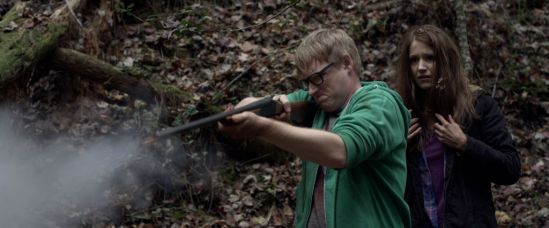
SG20
Anvil Entertainment and Irrational Films co-produced the project with independent distributor BrinkVision, who also distributed the praised “Evilution,” releasing the DVD and streaming Video On-Demand on March 8th. Don’t also miss the Theresa Tilly cameo, one of original ladies of Sam Raimi’s “The Evil Dead,” as she’s cast as Annie’s mother. Though we received only a streaming copy for review, “Stomping Ground” does include other extras such as audio commentary by writer-director Dan Riesser and Stars John Bobek and Tarah DeSpain, behind the scenes featurette, deleted scenes, and the film’s theatrical trailer. We can’t comment on the video or audio quality due in part to the streaming screener copy, but the our overall impression of the film’s quality is above par as no technical errors were discovered or noticeable. Its good to have Bigfoot looking good back on the screen again.
Evil Entraps With Many Questions. “Riddle Room” review!

Screen shot 2016-02-18 at 10.57.52 PM
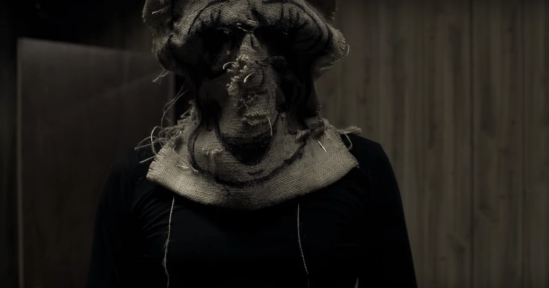
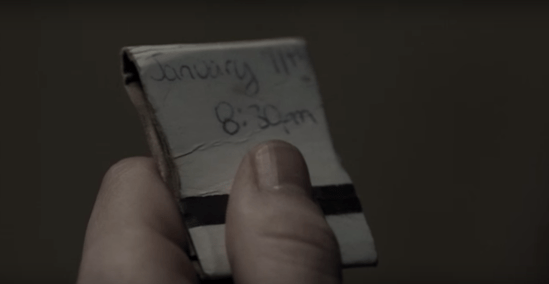
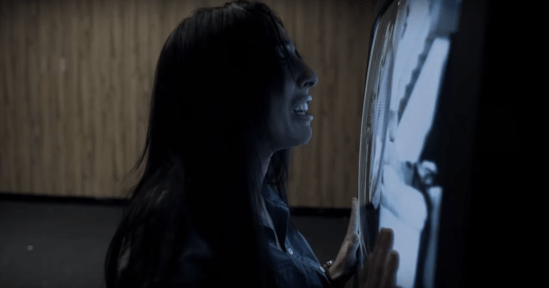
Associate professor Dr. Emily Burns is forced by two masked men into a small square shaped room, confined by four faux wood paneled walls and layered with a thin tattered carpet.  Oblivious to the reason behind her sudden captivity, Emily frantically searches the room, desperately searching for clues for a potential escape and potentially why she’s been locked away.  Emily also realizes she’s suffering from incapacitating headaches, fragmented memories, and she discovers has a musket size growth on the back of her neck.  Her masked captors visit her often, inquiring about the date January 11th and if she’s able to complete her mentor’s work, but Emily can’t put the pieces together; she has to puzzle together the clues she discovers in the bleak room that might be her only way to truly understand her situation.
Screen shot 2016-02-18 at 10.57.30 PM
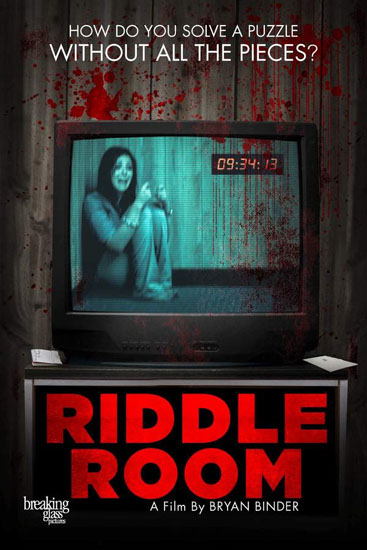
“Riddle Room” (also known as “Breakaway”) is a mystery thriller based on the clue finding, puzzle solving, race against the clock room escape concepts that are highly popular usually associated with team building exercises or a fun thing to do on any given night. Director Bryan Binder keeps the air enigmatic and unloads a blindside ending that’s a rare and unique quality for a director’s freshman feature film. The characters are with attributes of shapeshifting intrigues that aid in the mysteries or the riddles, if you will. The “Riddle Room” has everything a traditional live escape room would be fitted with: clues placed in all parts of the room, a sense of tremendous urgency, and even a countdown timer. Yet, the pressure isn’t necessarily transferred onto the captivated viewer; instead, Dr. Emily Burns puzzling predicament enthralls much of the story’s fascination.
Screen shot 2016-02-18 at 10.57.06 PM
Marisa Stober is cast as the lead character Dr. Emily Burns, who majorly is the film’s lone wolf actress, and she attempts to put Emily in a completely complexing situation, but doesn’t quite sell her solitary performance as she leads Emily along with such ease through the room’s clues and is able to easily get the quick upper hand on her captors. However, the ease in both areas might be contributed to film’s surprising, if yet impractical, twist finale, which only makes for a good movie night and not a nonfictional masterpiece. Binder wrote the screenplay as well that’s needs some fine tune polishing. Between Emily’s fragmented memory moments and when Emily’s entire story comes together at the end, some questions about Emily’s status and her arrival to the situation still go unanswered.
Screen shot 2016-02-18 at 10.59.09 PM
Breaking Glass Pictures and Vicious Circle Films distributes the first film under the Three Ring Entertainment produced credit onto DVD this February. The video quality is presented in a widescreen 16:9 aspect ratio on a dual layer compressed disc, which is kind of odd since the film is roughly 80 minutes and not very effects heavy, and is fairly clean with vivid coloring and natural tones. There’s slight selective aliasing moments on the faux wood paneled room, but doesn’t hinder the film’s overall video quality. From an audio standpoint, the English Dolby Digital 5.1 is noticeably unbalanced with much of Stober’s dialogue, specifically whispering, going unheard or lost within the Henrik Åström soundtrack. The comprehensibility from Emily’s masked captor’s monotoned produced voice puts Stober’s dialogue tracks to shame. The special features are nicely abundant with cast and crew interviews, behind the scenes featurette, cast auditions, investor scene, a bonus trailer, and a making of the “Experiment.”
riddleroom
“Riddle Room” doesn’t have any thrill shortcomings, leaving the story’s beginning and end open to focus primarily on Emily’s high strung bewilderment. Even though the ending falls a bit flat, I suspect that Bryan Binder is an upcoming writer-director to keep an eye. I’d like to see a follow up sequel to “Riddle Room” under the same cast and crew to continue the development of Dr. Emily Burns, to get her status update, and to understand more of the plight. A companion piece would nicely complete Binder’s seemingly unfinished “Riddle Room” narrative, but as a standalone feature, satisfaction comes easy enough through what’s already written and recorded for this 2016 film.

Dark. Alone. Evil, Deformed Children. “Confined” review!

Screen shot 2016-02-04 at 6.50.26 PM
Julia Streak begins a nightshift security position at a grand and abandoned apartment complex in the city. The job is her last chance to prove that she can take care of her daughter, Clara, after a bout with a psychotic illness. Paired up with Cooper, a wheelchair bound antisocial security guard whose been overseeing the estate since the beginning, Streak and Cooper begin their first shift on the job together in the dark and elaborately minacious building. When Streak discovers and opens up a mysterious locked door that leads to a subterranean maze of disheveled and vacant rooms void of security cameras. What Streak discovers will force her to battle with her own inner demons and struggle with a maddening presence that truly terrifies her.

“Confined,” the UK title of the American 2015 film, “The Abandoned,” is the debut directorial of NYU Tisch School of the Arts graduate Eytan Rockaway and penned by Ido Fluk. The cast is blend of well-known veteran actors with lesser-knowns who’ve been in the industry for a number of years. “The Lost Boys” and “Sleepers” star Jason Patric co-headlines as the crippled Cooper and he stars alongside Louisa Krause, an actress observed more frequently in independent features, as the disturbed and desperate Julia Streak. Then there is low and raspy voiced actor Mark Margolis, better known for his Emmy nominated role in “Breaking Bad” or, as I remember him from, as the merciless landlord from the first “Ace Ventura: Pet Detective” film. Margolis dons an excellent creepy homeless man looking for a place to crash during a deathly cold and rainy night. To round out the cast is the authoritative appearance of Ezra Knight, whose seen more video game and television show work than his share of feature films.
Screen shot 2016-02-04 at 6.54.20 PM
Rockaway’s directing style works mediocrely with the story’s threatening nature, establishing a catacomb-like surrounding in Julia Streak’s discovery during “Confined’s” second act, but compared to the setup of characters in the beginning, Rockaway has an inconsistency. Rockaway flourishes better with his use of angles, his ability to frame medium and close up shots, and his eye for soft color tones, that when all combined, setup for an effective foreboding mood. The second act takes a on another role that diminishes the first act’s sheer mysticism and menacing structures of the Julia character and her motivation for this newfound position as a security guard. Even though the darker scenes add fear to any horror movie, the darker scenes in this particular semi-supernatural feature are a technical mishap that become more of a hinderance to the story than being a horrific bonus.
Screen shot 2016-02-04 at 7.08.34 PM
The story doesn’t exactly come through in the end either. The Fluk and Rockaway rendition of one woman’s disturbing breakthrough attempts to enter the challenging and conflicted mind of a person dealing with real and hidden demons, but falls annoyingly flat, not really delivering that “ah ha” moment or twist at the end. An experiment wash came over the last fifteen minutes or so when Cooper and Streak are in the dreadful basement, fighting off the presence in the old upscale apartment complex. The U.S. title, “The Abandoned,” fits more appropriately to the story than does “Confined” as abandoned is a double, if not triple, entrendre with the apartment building being abandoned, the abandonment with the basement presences, and with Streaks own issue with abandonment. Confined is far from being a terrible title, as I do believe confined has it’s own underlining meanings in the film, but just not as provocative.

By far, Jason Patric’s character, Cooper, adds a little liveliness to the feature. I’ve never experienced Patric’s ability to be on the level of cold and sarcastic. Truly a treat up until the story’s momentum changes that focuses more on Streak. Louisa Krause didn’t transcend enough belief in Julia Streak. I thought her performance was overly stale and her character was also poorly written to the point where I thought Julia Streak should have characterized as a 13-year-old girl. Streak is suppose to be a strong, feminine character and that does come through at certain points, even if those points during the film seem pointless, unnatural, and meaningless. Yet, Streak, for a kick boxer and as a mother fighting for her daughter, is fairly weak, whimpering at times during peril. She also doesn’t follow the job’s guidelines, showing that the job she needs to be there for her daughter is not necessarily important enough to keep.
Screen shot 2016-02-04 at 7.55.07 PM
“Confined” is a release of the UK distributed 101 Films and was produced by the rather young production company C Plus Pictures here in the States. 101 Films graciously provided me with an online screener, so I can’t comment on the bonus features or the audio or video quality. “Confined” has its own demons in the form of plot holes and some unfinished revisions, but has more life by means of the more experienced actors in Patric and Margolis. Check out the atmospheric “Confined” for yourself and maybe your interpretation would be more open minded than my confined outlook that abandoned all hope near the finale for this feature.

Evil Medical Technicians. “Old 37” review!

14412
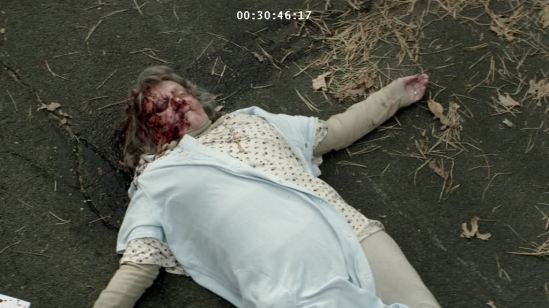
Under the sadistic thumb of their ruthless father, two physically and mentally abused brothers as children follow in their father’s footsteps in adulthood, falsely portraying to be EMT’s in old ambulance 37 and slaughtering those who desperately need medical attention on an infamous and isolated stretch of road. When the brothers’ loving mother becomes the victim of a hit and run by a group of young teens, the brothers’ quest to kill gets personal. Unbeknownst to them as the brothers’ targeted prey, the arrogant and rowdy teens live their complex and immature lives, overflowing with trivial matters such as fast cars, dating, and cosmetic surgeries.
vlcsnap-2016-01-18-19h06m49s251
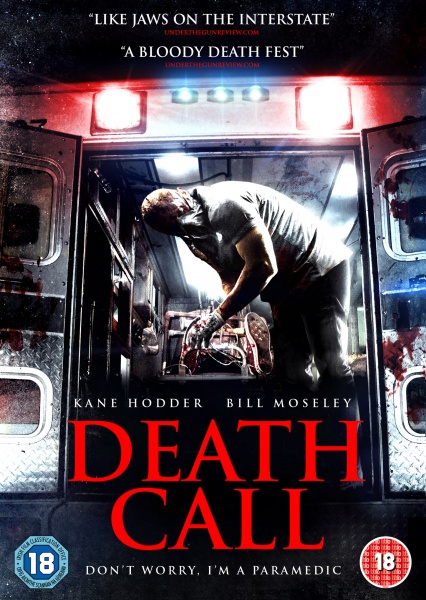
“Old 37” (aka “Ambulance 37” or aka “Death Call”) wrecks before reaching the finish line. Bittersweetly, the story by Paul Travers, written also by Paul Travers and Joe Landes, is an interesting concept of life savers taking lives and, interestingly enough, a similar idea was in the news recently where a supposed unmarked cop cart pulls over young women, but the driver is actually a cunning rapist instead of an actual officer of the law. “Old 37” is essentially art mimicking real life.  We feel safe when an emergency civil servant or agent is present or tells us not to worry, as exhibited in “Old 37.”  “Don’t worry, I’m a paramedic,” says one of the demented brothers.
vlcsnap-2016-01-18-19h16m41s31
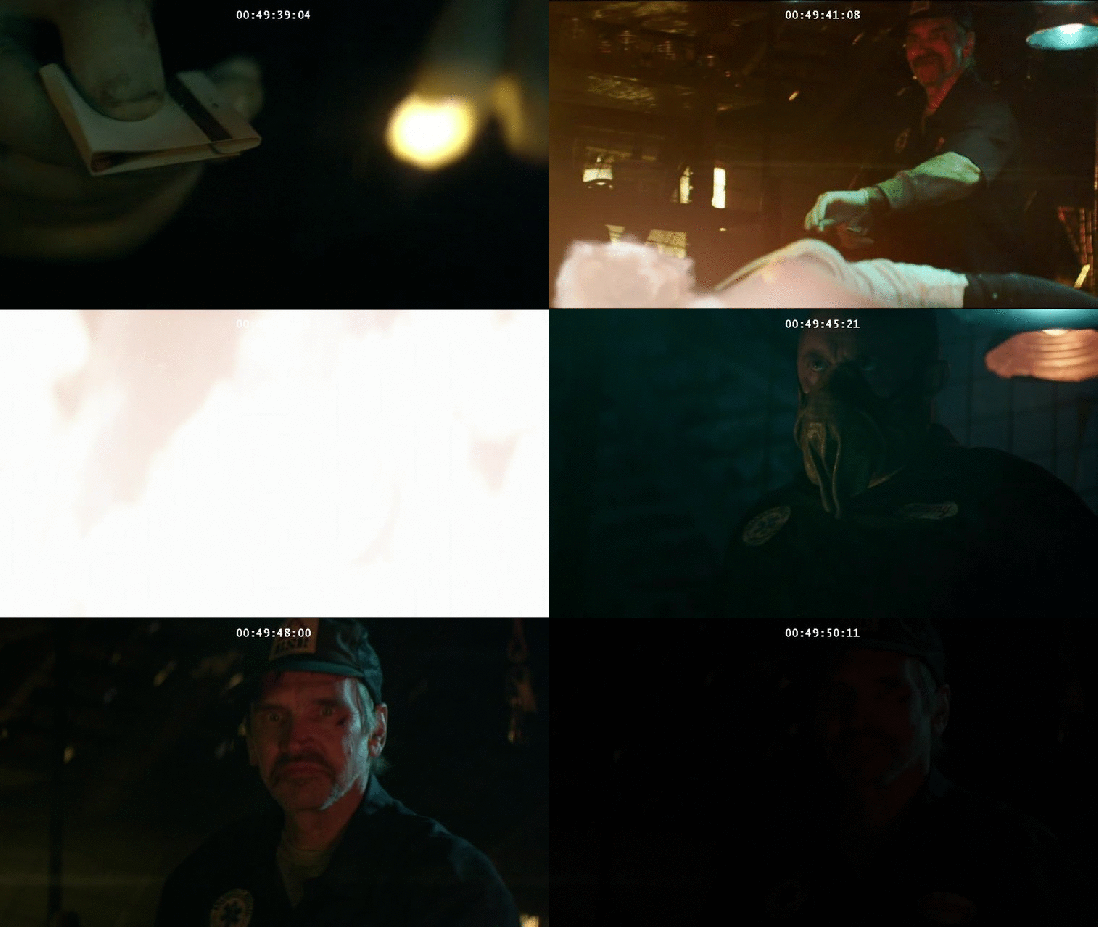
“Old 37” greatly has much going for the Three Point Capital funded movie.  Three Point Capital has backed many other notable films such as “Insidious:  Chapter 2,” “Nightcrawler,” and Kevin Smith’s “Red State.”  Partnered up with Joe Dante’s “Burying the Ex’s” post-production company Siren Digital, the two companies had the mucho dinero to sleekly design, which it does, and to hire a moderately formidable cast, which they do.  Kane Hodder and Bill Moseley headline, being the pair of horror icons forced to be reckoned with, and slide into the shoes of the two ambulance driving, bloodthirsty brothers, intercepting 911 calls via their scanner for victims.  Hodder hasn’t lost that Jason Voorhees gait and menacing body motions and Moseley, without even trying, has the uncanny ability to sinister up an entertaining and terrifying persona. Together on screen, a powerhouse of an unimaginable magnitude as they are, hands down, the highlight of “Old 37.”
output_wTBXrG
With high-end production value and two of probably the most prolific names in horror attached, what could go wrong? Well, the first wrong is “Old 37” is mostly an unfunny teen comedy rather than a horror movie. It’s more “She’s All That,” than “Scream.” It’s more “American Pie,” than “I Know What You Did Last Summer.” It’s more “10 Things I Hate About You,” than…you get the picture. Horror didn’t surface into full eligibility until about the last 20 minutes with the archetypical final girl chase finale and even then was the horror story still underdeveloped. The teen characters’s lives are too complex as they take over the story, including one awkward, self-loathing lead character, Samantha, eager to fit in (even though she does), eager to look beautiful (which she already does), and eager to obtain breast augmentation (though she doesn’t need them). The breast enhancement scenes drastically change the direction of the film, throwing me for a serious loop for various reasons: Samantha gets the okay right away when she asks her mother for new breasts, she gets new breasts in a matter of days, and she isn’t sore or in pain directly after receiving them. Time is an illusion when two the contrasts display Samantha throughout going forward from the entire beginning to end process for new flesh pillows while one of her crude friends gets murdered. Something doesn’t add up.
vlcsnap-2016-01-18-19h24m45s1
Special effects guy Pete Gerner and his talented crew do blood spattering justice with the sanguinary written murders and while I feel the brutality and the blood is amongst the film’s aurora, the gooey gory scenes are quickly edited, taking away the time to where we can’t fully appreciate, fully engulf, nor fully digest the “I Sell The Dead” Gerner effects. The final nail in the coffin is director Alan Smithee. If you Google Alan Smithee, results will show that Alan Smithee is a pseudonym used by directors who want to disown a project. Christian Winters removed his name from “Old 37” because he thought his control over the film wasn’t his anymore. And that’s fairly accurate as “Old 37” seems and feels incomplete, much like Rob Schmidt’s 2011 unfinished debacle “Bad Meat,” directed under his pseudonym Lulu Jarmen, and just like “Bad Meat,” “Old 37” has the potential, the substance, and the talent to what could have been a solid horror narrative.

Overall, “Old 37” has the financial backing, has some serious blood that made the cut, has a great soundtrack assortment, and has motherfuckin’ Bill Moseley and Kane Hodder. What the disowned film lacks is a well-written narrative, contains poorly written and idiotic teenage characters, and needs a director with an eye for direction instead of a producer with greedy big pockets. “Old 37,” under the name “Death Call,” will be hitting DVD shelves from UK distributor High Fliers films. If you’re a fan of Hodder and Moseley, but don’t expect a typical horror movie as this film goes through multiple genre transitions and doesn’t settle just on one at any point. There is one delicate scene of Olivia Alexander which I’m sure will be pleasing to any viewer.

#Programming_Evil. “Nightmare_Code” review!

output_CIyNHS
Brilliant programmer Brett Desmond has been hired at a tech start-up to quickly complete the groundbreaking coding of a previous programmer Foster Cotten who went on a murderous rampage at the start-up’s tenth floor office right before killing himself. Desmond, struggling with the federal government breathing down his and his family’s necks due in part of him leaking sensitive classified material, works night and day and around the clock to crack Cotten’s code for ROPER, a behavior recognition program. A small work group remains with Desmond during the day, but at night, Desmond sleeps at the office, working aggressively to make the deadline and get his life back in order. The further Desmond or anyone else becomes familiar with the code, the code starts to modify their behavior, twisting their thoughts, and succumbing them to it’s will of the dead programmer.
vlcsnap-2016-01-17-20h28m17s239
From time to time again, the film industry on the subject of pioneer technology relays information upon the fears and consequences of intertwining arrogant brilliancy and controversial technology. From the genres of cyber punk to Sci-Fi horror, decades old films such as the virtual reality plotted “The Lawnmower Man” and “Virtuosity” to the more recent “Transcendence,” transferring consciousness into the machine, have been outspoken against the use of behavior modification and recognition programs. The idea behind the notion can said that the person envisioning the possibilities of such software will become obsessed, power hungry, or vengeful if the creation is taken away from them to which all three can be attributed to director Mark Netter’s 2014 film “Nightmare Code.”
vlcsnap-2016-01-17-20h24m11s79
Shot entirely through a surveillance-like setup and notebook web cams, “Nightmare Code,” for most of the duration, is viewed through four screens as like security footage. Netter and cinematographer Robert Fernandez designed this structure not for the sole purpose of a novelty exhibition, but to also confine characters in a small box coded by technology, as explained in an DVD’s bonus featurette, and creating a sense of isolation and distant connections that make the life of a programmer very lonely and depressing which develops in the characters very thoroughly. The story is told through the virtual eyes of ROPER, using it’s self-awareness and advanced modules to voyeuristically watch the small group of programmers and manically motivate their actions by use of altered video projections. ROPER also accesses the past, filling in the gaps that only the infamous story of the genius Foster Cotton can fill, and by accessing the past, the dead programmer’s coding can be understood for it’s malevolent behavior modification.
vlcsnap-2016-01-17-20h28m42s232
“Nightmare Code” is complimented by an underrated cast whom work well together through the smaller ROPER displays in the small screen film industry. Andrew J. West, better known for his role as the Terminus cannibal Gareth on “The Walking Dead,” takes on the protagonist role of Brett Desmond who battles legal and family trouble and West epitomizes isolation by effectively taking a man with a moral conscious in leaking immoral government information and leading him down a path of legal morality, but at the same time, being unfaithful, deceitful, and prone to corruption. He becomes pitted against antagonist Foster Cotton, played by veteran actor and long time supporting actor Googy Gress, notably recognized as a NASA mission controller from Ron Howard’s “Apollo 13.” The two foes never have screen time together as their stories live separate lives, tangled by their connection to ROPER, and so without that nourishment from the other actor, West and Gress use their talents to virtually interact with one another, developing a realistic struggling relationship that isn’t really there. The characters that surround Desmond and Cotton are negatively affected by both main characters and Mei Melançon’s supporting character Nora Huntsman figures into that coded nightmare as she becomes affectionate with Desmond. Even though he’s married, Nora feels the urge to fulfill her needs after separating herself from addictions: gaming, abusive boyfriend, and drugs. Melançon, who had portrayed a minor role as a major character, Psylocke, in the mutant world of “X-Men: The Last Stand,” had another hugely important role as a side dish techie lover, but her role doesn’t seem very present and that might because of the editing technique to create the dooming cyber vision.
vlcsnap-2016-01-17-20h27m50s226
Netter’s resulting editing style inefficiently told the story, I thought. We’re well aware that ROPER can mislead the performance buggy human race, but ROPER, in my mind, wasn’t responsible for some of the delayed or fast forwarded actions of the characters seen through the security footage as it stylishly seemed unimportantly and pointless. Luckily, these particular editing moments are far and few in between and don’t exactly hinder the narrative. What does hinder the narrative are the quick, considerably choppy, edited scenes. Netter creates long, sometimes drawn out, scenes to convey the office solitude, but then transitions to the numerous and quickly implemented scenes that spawn a constant stop and go narrative that loses the ominous factor. The longer scenes tend to generate gloom, dread, and despair. Supporting characters become underdeveloped in the quickly edited in scenes, affecting not only life recovering Nora, but also the rest of Desmond’s team – Louis, Kevin, and Ray – who become the underdeveloped characters and they are worthless to the viewer, essentially. Still, check out the Tonya Kay scenes as you might care about hers.
vlcsnap-2016-01-17-20h37m45s27
The Indie Rights Inc. produced film and MVD distributed release has a clean and sleek 1.78:1 anamorphic widescreen presentation. Colors seem balanced and bright. There lies some minor noise, but that only adds to the security cam charm. The Dolby Digital 5.1 audio is clean and balanced in all channels and douses with Ari Balouzian’s synth soundtrack that embarks to terrorize. Balouzian’s score reminds me of Ennio Morricone’s “The Thing” theme, developing a soundtrack character that contributes to the intensity of “Nightmare Code.” Extras includes the film with commentary and a handful of featurettes explaining briefly the characters, the production, and the fear on the technology horizon. Mark Netter, along with the cast and crew, has good source material here and though this sort of tech horror isn’t exactly novel, “Nightmare Code” is fiercely entertaining and forebodingly frightening on a low-budget, startup scale.