The Body Must Go Through an EVILution to Survive! “Crimes of the Future” reviewed! (Second Sight / 4K-Blu-ray)

“Crimes of the Future” 4K UHD/Blu-ray Set is the New Sex!  

Physical pain no longer resides in the human body, infection has all but been inexplicably eradicated, and new organs spontaneously appear, mutating their bodies and humanity into grotesque performance artist and back alley surgical pleasure seekers.  Saul Tenser and his partner Caprice showcase the new organ oddities with surgical art of removing the organ in front of sensually aroused and curiously stimulated spectators.  When an admirer offers an idea for a show, an autopsy of his recently deceased son he promises will be full of surprises, the artists dig into what could be a spectacular operational observation for shocking advant-garde art, but the deeper they dig the more than realize their own bodies might be evolving to a synthetic-laden environment and there are those working in favor and against what it means to be considered human in the New Vice Unit, at the National Organ Registration Office, and clandestinely, behind-the-scenes of the corporation Lifeform. 
David Cronenberg is known for pushing provocation in style and in substance.  His latest dystopian picture “Crimes of the Future” continues the provoking, controversial trend in his verve of body horror that has collectively corroborated Cronenberg as the face of the biologically integrating subgenre.  Cronenberg writes and directs the quasi remake of his 1970 feature of the same title with modern day effects as well as providing new reconstructive surgery on the story surrounding the man who grows new organs just to have them cut out shortly after.  Cronenberg tackles themes of human physiological evolution in a plastic consumed and destroyed environment and the evolution of performance art as it relates to sex or stimulation while also dipping his toes into the darker side of control with organization entities that either become an obstacle or a complete antagonist of corruption within a commercial corporation sense or a threadbare government agency that attempts to control and police a person’s own body and life.  Shot entirely in Athens, Greece under local production company Argonauts Productions, as one of man of the companies backing the 2022 feature, “Crimes of the Future is also funded by the capital investment company Ingenious Media (“Guns Akimbo”) and the Canadian governmentally funded Téléfilm Canada (“Ginger Snaps”) with Serendipity Point Films, Crave, and Rocket Science to name a select few in the co-productions.

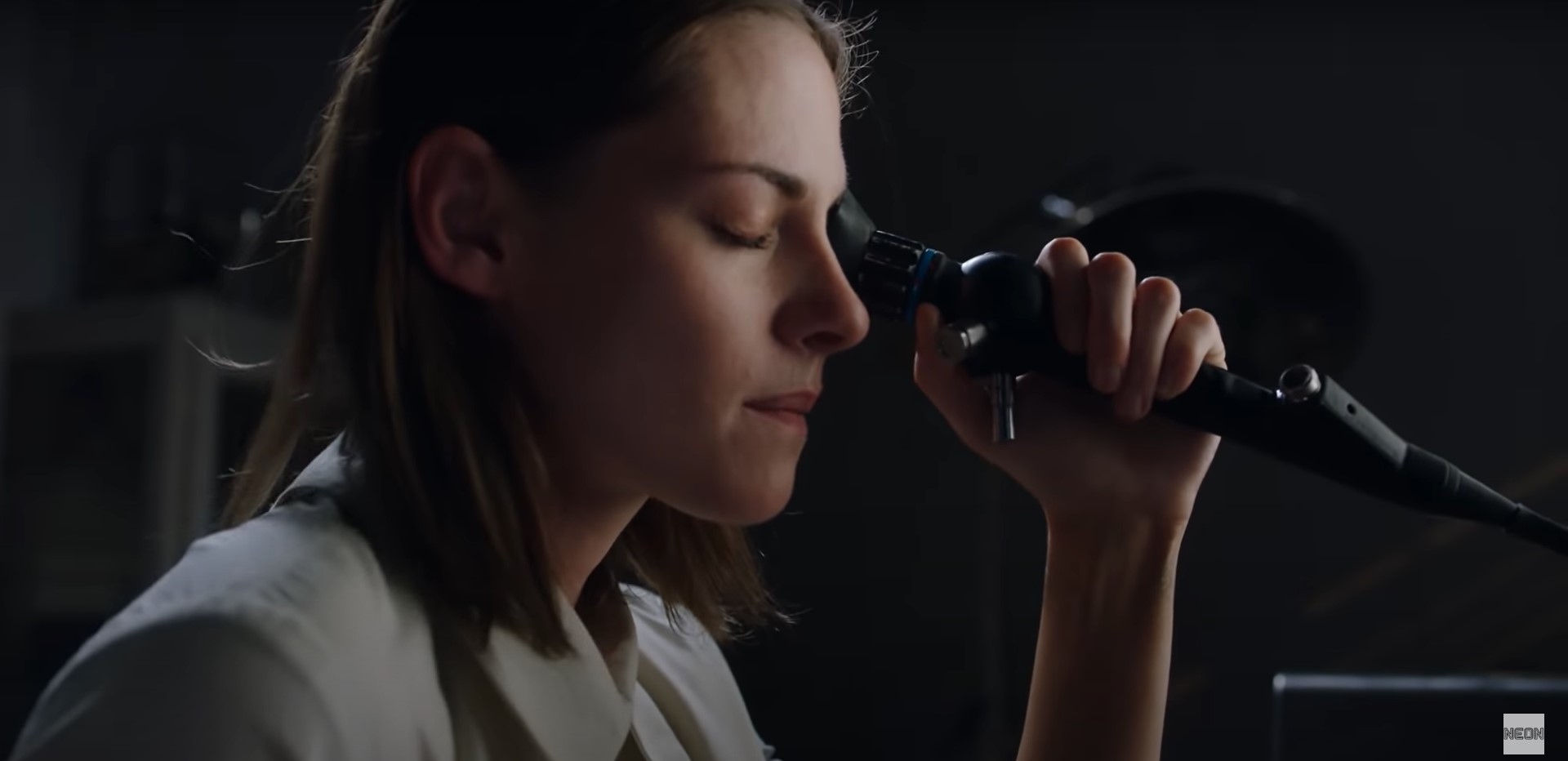
Marking his fourth collaboration with the director, Viggo Mortensen (“Eastern Promises,” “A Dangerous Method”) handles the fame of Saul Tenser, the subject of performance art with a knack for spontaneously growing new organs, or tumors, nearly at will and having them removed during surgical exposition at the hands of his intimate partner Caprice, quizzically seduced by the performance from “Blue is the Warmest Colour” and “Spectre’s” Léa Seydoux. Mortensen plays into Tenser’s will to remain what the institutes define has human only to become conflicted with the investigation into the prospect of rib-splitting a deceased young boy that sends Tenser into what-if territory. Scott Speedman (“The Strangers”) is the cause-driven father of the expired boy and Speedman sustains the character with his usual calm, soft-spoken demeanor which didn’t quite feel passionate enough for a neo-rebel against a society against what he stands for, what he is, and what he thinks everyone should relinquish to – to let the organs grow and flourish. Instead, the New Vice Unit Agent (Welket Bungué), the National Organ Registry’s bureaucrats, the excitable Whippet (Don McKellar, “eXistenZ”) and odd yet attractive Timlin (Kristen Stewart, ‘Underwater”), and an unscrupulous corporation looking to stop the spread of evolution insurgence for capital sustainability. Full of complex characters and neoteric performances, “Crimes of the Future” leaves a lasting impression, makes you stop and think, and indulges in the possibilities of the future with the help of a supporting cast that rounds out with Nadia Litz, Tanaya Beatty, Lihi Kornowski, and Yorgos Pirpassopoulos.
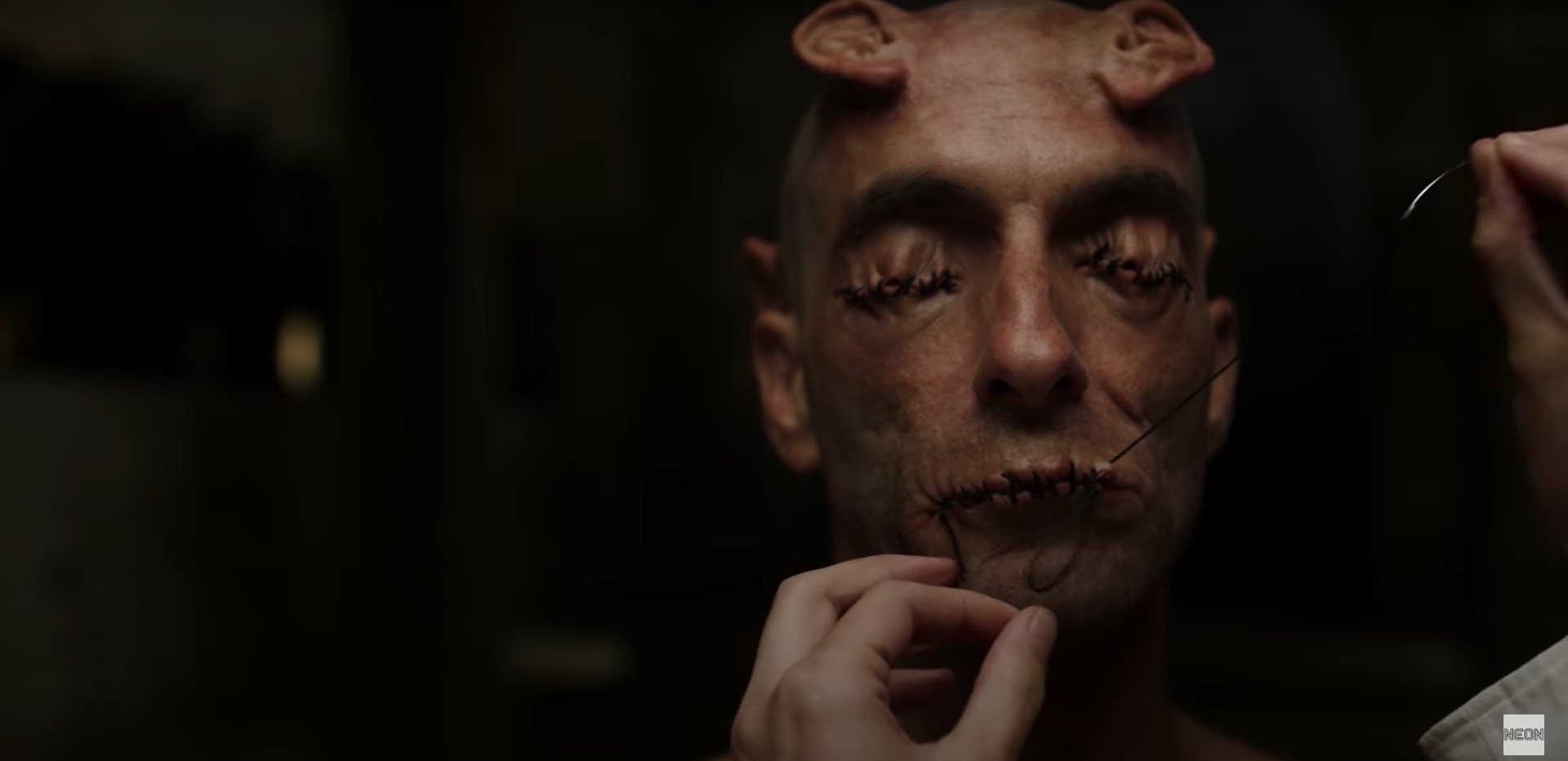
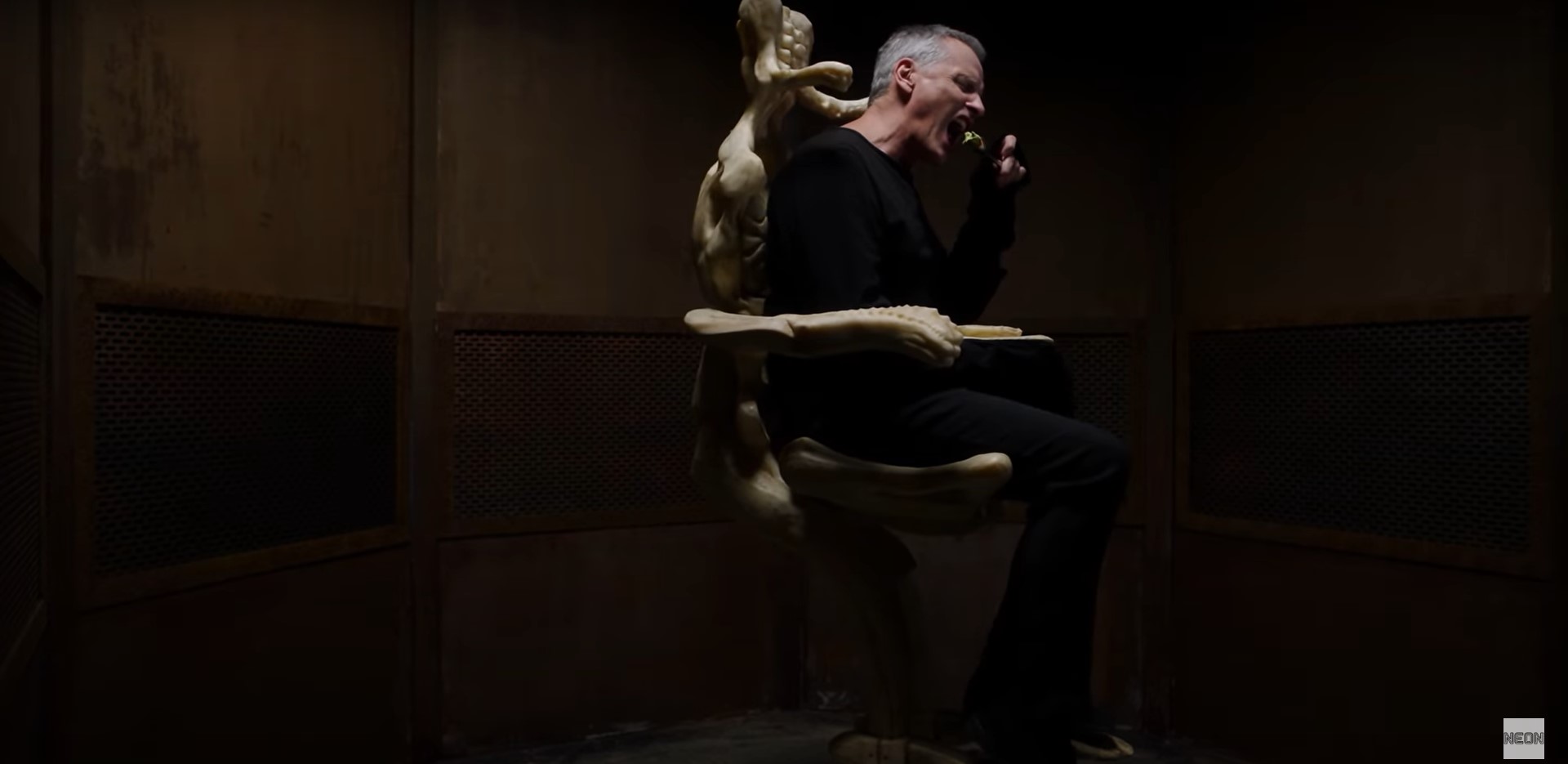
My official opinion about Cronenberg’s “Crimes of the Future” is that many viewers won’t see the multifaceted sides of what the writer-director is trying to convey.  What will be seen is the grunting organic bed that tilts back-and-forth, the fleshy and clunky moving digestive assistance chair that also has low guttural sounds, a dancing man sewn with many human ears, people being sliced open and enjoying it, and a dystopian future where suffering is not a main element.  People will see surface level abnormalities and gore and not understand the layers of a hard-pressed evolution in stagnation by unknown fear and extreme prejudice that runs rampant throughout Cronenberg’s underlying implication of an adaptation and updated normalcy inside a synthetic world.  “Crimes of the Future” is grotesquely beautiful in the depiction of not only how human culture and arts have morbidly progressed by the elimination of pain and by the advancement of technology only to be harshly juxtaposed against the grimy, gritty, and dilapidated habitation where infection feels high risk and imminent, but also in the corruptibility of the human condition that isn’t a naturally biological one like growing spontaneous organs.  Instead, the two bureaucrats of the National Organ Registry are supposed to be hardliners, rule followers, and thorough with their newfangled profession in the everchanging, unexplored future of the human physiology but are seduced by the intimacy of surgery, comparing it to sex with a high addiction rate.  The two agents are constantly breaking government policies and rules in order to be close to the dazzling aciurgy considered artful and alluring like a beauty pageant for the celebration of one’s innards.  Cronenberg also adds the caveat of corporate greed into the folds and flaps of “Crimes of the Future’s” dash of commercial retail that can be fleeting if not paying attention.  The threat of evolution aims to put body mechanism-correcting bed and chairs out of business and so a concealed aim to lobotomize that particular information permanently creeps up onto the narrative in some of the more frightening and gruesome scenes of smothering the risk it can spread like theater fire panic.  “Crimes of the Future” is an eye opening epiphany of everlasting ecological entrapment and the only way to survive is becoming accustomed to the taste of waste in order to be free of it.
If “Crimes of the Future” isn’t already remarkable enough in the wake of David Cronenberg returning to the body horror heir class, Second Sight stuns us with an impressive collector’s set from the UK. The 2-disc 4K UHD and Blu-ray set exhibits the film in a widescreen 1.85:1 with both formats decoding at an average bitrate of 23Mbps. The 4K UHD Dolby Vision comes in a HDR10 2160p while the High-Definition Blu-ray comes in a 1080p. Douglas Koch’s umbrageous urban bathed in greens and yellows and all the colors in between starkly hard lighting against softer details on the visual effects. Most details are lost in the tenebrous and decaying background of age worn and spartan warehouses with little-to-no wide longshots other than the opening of an overturned cruise ship in one of the very few daylight scenes, but the extreme contouring lucidly delineates the shapes around people and objects. Both formats include an English DTS-HD 5.1 Master Audio, providing a coherent and even robust dialogue through much of the Mortensen’s Tenser throaty rasp, Stewart’s Timlin robotic inflections, and Speedman’s Lang soft and breathy speech. “Crimes of the Future” is not volatile and full of action in what’s more a slow noir progression, focusing in on intimacy of dialogue, the proximate ambience, and Howard Shore’s (“Lord of the Rings”) neo-space opera and synth score. English subtitles are available for the hearing impaired. Second Sight puts heart and soul into every release when not only considering A/V but also special features and limited-edition contents. Special features include multiple succinct Second Sight produced interviews with director David Cronenberg and stars Viggo Mortensen, Léa Seydoux, and Kristen Stewart regarding “Crimes of the Future’s” broad vision. An extended interview with Don McKellar dives into his relationship with David Cronenberg from over the years plus his role as the National Organ Registry agent, plus additional crew interviews with producer Robert Lantos, cinematographer Douglas Koch, and editor Christopher Donaldson. Famed film journalist Leigh Singer provides a video essay New Flesh, Future Crimes: The Body and David Cronenberg, a making of featurette, production design materials that go deep into the austere and spartan look of Greece-turned-dystopian future, and a short film “The Death of David Cronenberg by Cronenberg and his daughter, Caitlyn. The physical features are a whole other beast within a rigid slipcase with new artwork by Marko Maney of a pitchy Saul Tenser relaxed in his orchid bed with tentacles while the back reads in stacked words, Body is Reality, glowing inside an old tube television. Both discs are held in an insert jewel amary case with its own Maney artwork of extracted organs in the same color scheme as the slipcase. Alongside the casing, there are 6 collectible art carts, a 120-page color book with production designs, location setups, and new essays by Reyna Cervantes, Tim Coleman, Joel Harley, Rich Johnson, Mikel J. Koven, Phil Nobile Jr., Ian Schultz, and Hannah Strong. “Crimes of the Future” is certified 18 for strong gory images and sex reference and runs 107 minutes on both formats with the Blu-ray locked in B region while the 4K UHD is listed as region free. Plausibly absurd, “Crimes of the Future” imparts far-fetched and dark humored science fiction, but if plants and animals biologically adapt to new or changing environments in order to survive, director David Cronenberg sees the future and renders a concept that, on a second sight thought, may be existentially key.

“Crimes of the Future” 4K UHD/Blu-ray Set is the New Sex!  

A Thousand EVIL Little Legs Wriggle Inside You! “Creepy-Crawly” reviewed! (Well Go USA / Blu-ray)

Get Wigged Out by “Creepy Crawly” on Blu-ray!

During the COVID lockdown, a group of tourists are confined to a quarantine appointed hotel in a Thailand city. Fielded by skeleton hospitality, the hotel aims to make the tourists comfortable as possible with the limited number of staff and security on hand. Though frustrated and displaced, the quarantined few feel ultimately satisfied by their popup accommodates spearheaded by the Thai government. However, one amongst the staff and tourists is a shapeshifting monster of local legends, jumping from body to body in hopes to find a person with unique blood in order to survive for eternity. Forcibly detained by a sleazy and easily persuadable hotel manager, Leo, Fame, and their families hardly trust anyone, even themselves, as a hidden creature invades a new host to become closer to living forever. It’s true shape like a centipede, the creature summons its smaller, poisonous brethren to wreak havoc inside every crevasse of an inescapable shelter.

Tapping into the same slithery vein as “Night of the Creeps,” “Invasion of the Body Snatchers,” or even “Slither” itself, co-writers-and directors Chalit Krileadmongkon and Pakphum Wongjinda channel their inner spirit animal, the thousand-legged wriggler, back to their home country of Thailand for a new creature feature sure to have your skin recoil with formication.  Also co-written alongside, Charoen Kaithitisuwan, “Creepy Crawly,” or better known in Thailand as “The One Hundred,” is the second feature for Krileadmongkon behind another unearthing creature construction in “The Beast Below” that was released the same year as “Creepy Crawly.”  For Wongjinda, the 2022 released film marks the 9th feature in the filmmaker’s 20+ year-long career who began in 2001 with a script surrounding a feminist ghost killing men victims in “Body Jumper.  “Wongjinda has been once around the horror subgenre carousel to now collaborate with the fresh perspective and ideas from the up-and-coming Krielandmongkon to extend Thai’s catalogue of cinematic chills and thrills.  Neramitnung Film and Fatcat Studios serve as production studios with producers Natchanok Kamonrattananan, Punyanet Tanaprapass (“The Beast Below”), and Kamonwan Kanaraksunti. 

Perhaps better if told in the perspective of an ensemble cast, “Creepy Crawly” reduces is principal character pool to just two, a hot-headed Taekwondo champion named Leo and a social media influencer aptly named Famed.  The two cross paths while being COVID quarantined, sharing a smoke in the stairwell while sharing breaking the hotel rules of remaining locked in their rooms.  There’s not much in the way of connection between the two characters, played by one half of the Golf & Mike musical group Mike Angelo (“The Misfits”) and the mixed heritage of English, Chinese, and Thai actress Chanya McClory, as the progressive action teases something more than just stairwell strangers as Leo frequently comes to Fame’s aid whenever he his sixth sense senses danger.  Both principals carry collateral damage weight with family members also being in quarantine with them; Fame has her brother and social media partner Fiew (Benjamin Joseph Varney, “The Promise”) while Leo has a slightly more extensive circle and greater family drama with sister Lena (Kulteera Yordchang) and their mute, widowed father (Paramej Joiam, “407 Dark Flight 3D”) to which with the latter Leo has an aversion in connecting with periodical flashbacks of Leo and Lena’s dying mother and somehow, which is revealed later, their father is to blame.  This creates more of an arc for Leo with an imbalanced, shared protagonist lead with Fame who we don’t get to know as intimately other than she has an incurable blood disorder that could be fatal if not treated with meds.  “Creepy Crawly’s” cast is beautifully eclectic, and I don’t mean with appearances but rather their interesting, robust with personal motivations, and not terribly dull or overtly bland with performances from Wanpiya Omsinnopphakul, Chanidapa Pongsilpipat, Sita Chutipaworakarn, Chutaporn Chaikawin, and David Asavanond as the slimy hotel owner.

As I sit down to gather my thoughts about this review squirming with venomous centipedes, a house centipede, or what we like to call in our house a thousand-legger, steps hundreds of feet-over-feet on the wall in front of me. Talk about good timing, bad omens, or just a straight up coinkydink when a cousin of the deadly antagonist you just bore witness in a film crawls up the wall in front of you. Despite the inspiration that scuttles in front of me, “Creepy Crawly” has a more fantastically gigantesque infestation. The story has a COVID-19 backdrop and is supposedly based off the story of Battambang told by King Chulalongkorn, aka King Rama V. I, unfortunately, can’t elaborate much about the story as I couldn’t dig up anything that closely resembles the analogy between a centipede invasion and a French conflict. Or are the centipedes a metaphor for the European encroachment? Or are they a metaphor for the COVID pathogen that’s hidden amongst the atypical carriers? Either way, “Creepy Crawly” is visual effects driven with a crevasse-trenched and many-moving-leg scaled arthropod with a pincher-laden head but before the monstrosity makes face, the mega-centipede can hop from body to body, able to protrude tentacled pinchers like spears, impaling victims as well as transposing itself into another body before sucking and skinning the host dry of life and flesh – very reminiscent of an Edgar suit. The jutting spears from the host never harms the body, alloying to-and-fro the skin, and clothing, in a compatibility of supernaturality that fits the folklore mold explained during the opening credits. That’s where I imagine the lore ends and the exoskeleton evil begins as we’re sucked into Leo’s daddy issues, the hotel manager’s self-preservation, and Fame’s bad blood that’s good for the big bad bug. Though Leo’s emotional pull the right heart chords and the hotel manager selfishness and greed adds tension and conflict to an already imposing no way-out scenario, the blood disorder plot device is skimmed to be barely tolerable without diving into the science of why a 10-foot centipede can survive on a compromised blood.

As far as COVID-theme foreign productions, “Creepy Crawlers” checks out as a roach motel monster movie from Well Go USA Entertainment. The distribution company’s Blu-ray is an AVC encoded, 1080p high-definition, and presented in a 2.39:1 aspect ratio. Visual effects conducted by Thailand’s Matchmove team have remarkable detail in the composited scenes with the exception of one latter scene that compromises the blacks of reality to a darker shade of gray or blue when overlaying it with the digitally added creature. Details are generally delineated nicely, color grading pops natural tones, and the BD25 offers sufficient space to suppress compression artefacts. The Thai DTS-HD 5.1 Master Audio with optional English subtitles greatly exudes the centipede click-marching and pinch clips to effectuate an army of killer scurrying arthropods swarming onto, into confined quarters and those suspected of sickness, COVID-19 to be exact. Dialogue cleanly renders, especially between the majority of Thai and the medley of minority languages, such as Chinese and English. Bonus features are limited to just Well Go USA previews/trailers in what has become another barebones release for the company. The Blu-ray comes in a standard amary case with snapper with fantastically to truth image of the creature on the front cover while the inside has a paper advert for three Well Go USA films with the disc art displays warm shades red and yellow in what is a very culturally appropriated Thai coloring. “Creepy Crawly” scritch-scratches the lousy sensation of a buggy creature feature with loads of action that tries to add and induce more into the narrative beyond what’s innately there and that can be a great repellant to this wecl invasive species of Thai genre films.

Get Wigged Out by “Creepy Crawly” on Blu-ray!

When There is EVIL in the Seoul! “Gangnam Zombie” reviewed! (Well Go USA Entertainment / Blu-ray)

Well Go USA’s “Gangnam Zombie” on Blu-ray Hi-Def!

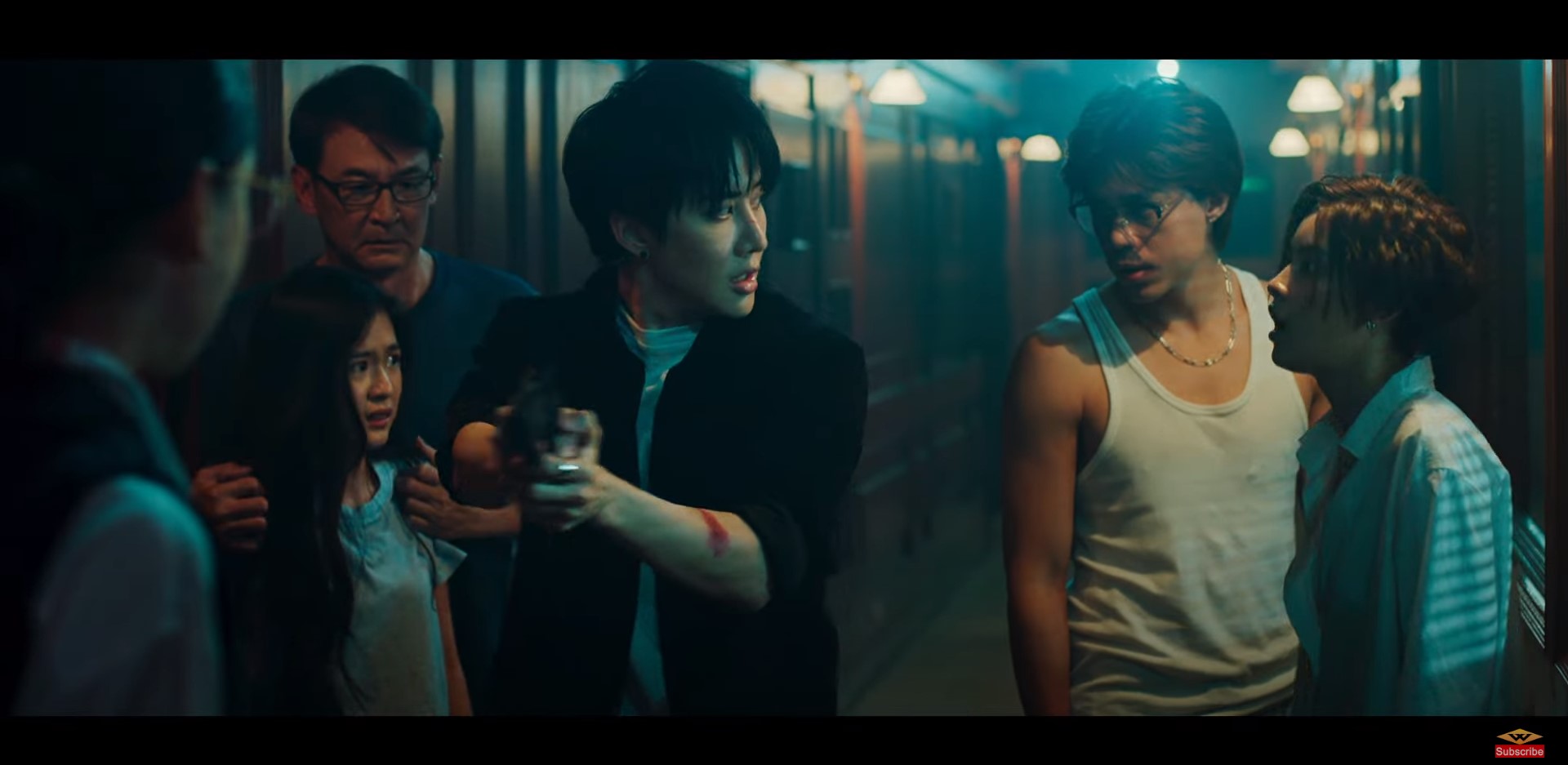
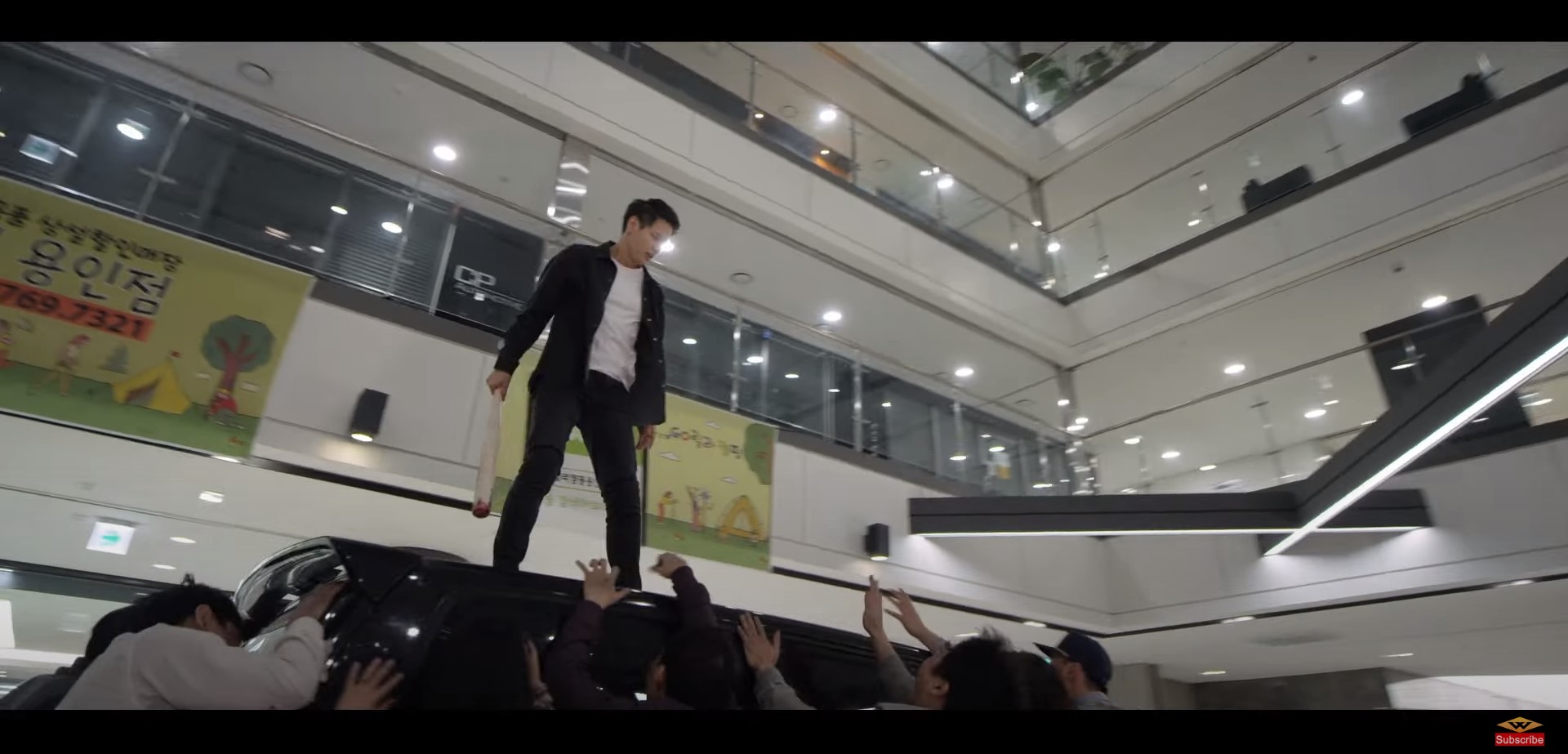
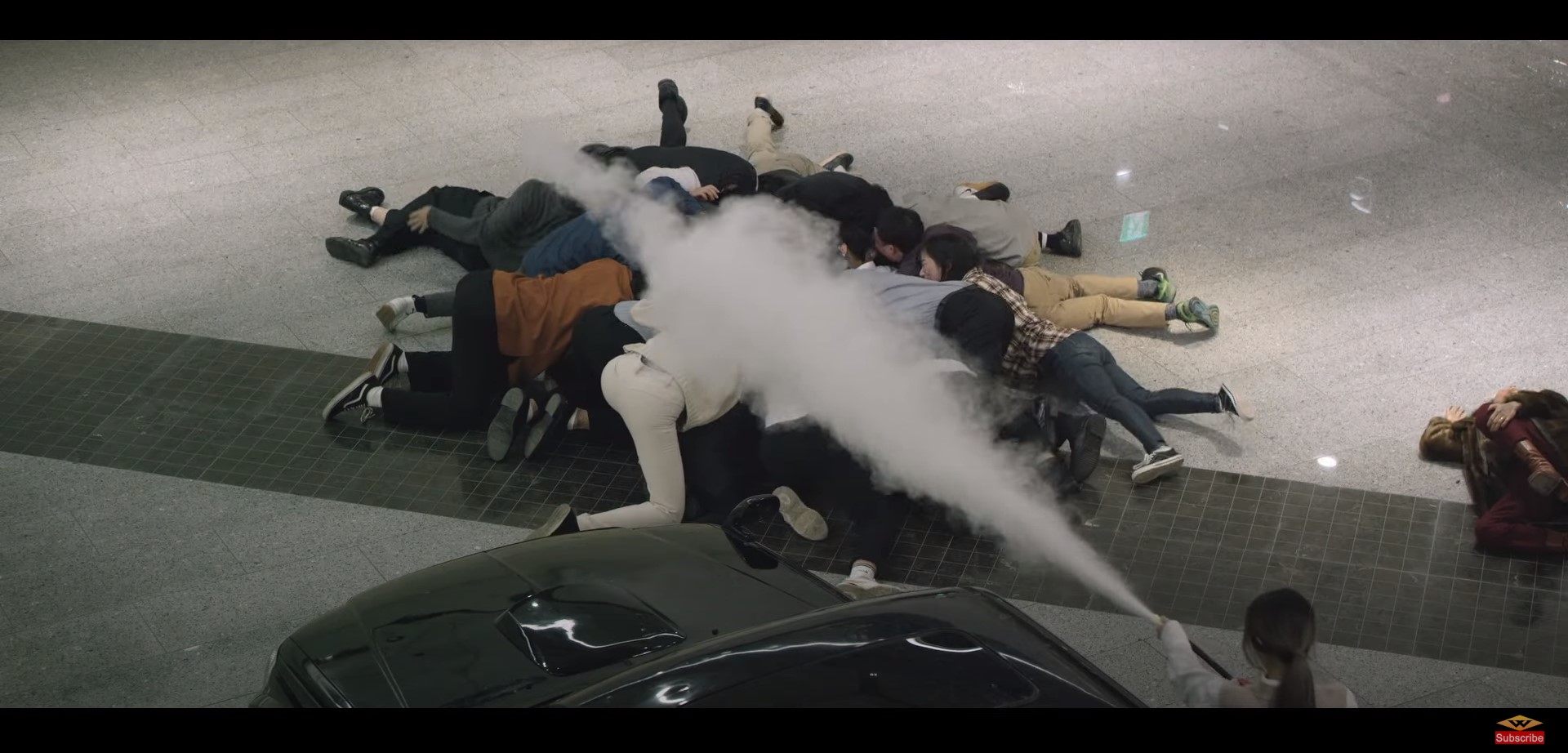
In the Gangnam district of Seoul, South Korea, former backup to the national taekwondo team Hyeon-seok works underpaid and unhappily for a smalltime viral video streaming company.  His colleague and crush, Min-jeong, is a content editor constantly being hit on by the knavish company owner.  Unhappy at their jobs, the two miserably plug away while avoiding the elephants in the room until an infected, flesh-eating man walks into their office rental building, biting and infected the surrounding professionals that turn the place of business into a place of horror and survival.  With the doors chained shut and no way to call for help, Hyeon-seok, Min-jeong, their small band of coworkers, and the building’s landlady react antagonistically against the quickly devolving situation that seeks to sink its teeth into them.  The upstanding Hyeon-seok does the only thing he knows how, to fight his way out while protecting Min-jeong from a mass army of blood-stained teeth.

In the wake of the popular successful running and rampaging outbreak spread of zombie-madness in “Train to Busan,” the 2016 all-aboard the zombie train thriller not only blazed the rails with a hyper-intense, body-over-body, dog-eat-dog infected film confined to the cramped aisles of linked train cars but it also set the tone for years to come with imitators to rake in the cash of the outbreak breakout success.  Though the concept is nothing new, South Korea has adopted the fast-running infected flesh-eater and shaped it with mass affect with newer entries being submitted every year since the release of “Train to Busan.”  “Rodeukil” director Soon Sung Lee has helmed one of those new entries with “Gangnam Zombie,” a far more contained zombie burst confined to a mall-like office building set in the heart of the Gangnam district, hence the title.  “Gangnam Zombie” is a self-produced production of Soon Sung Lee in association with JNC Media Group and Joy N Cinema with co-producer Choe Gwang-rae.

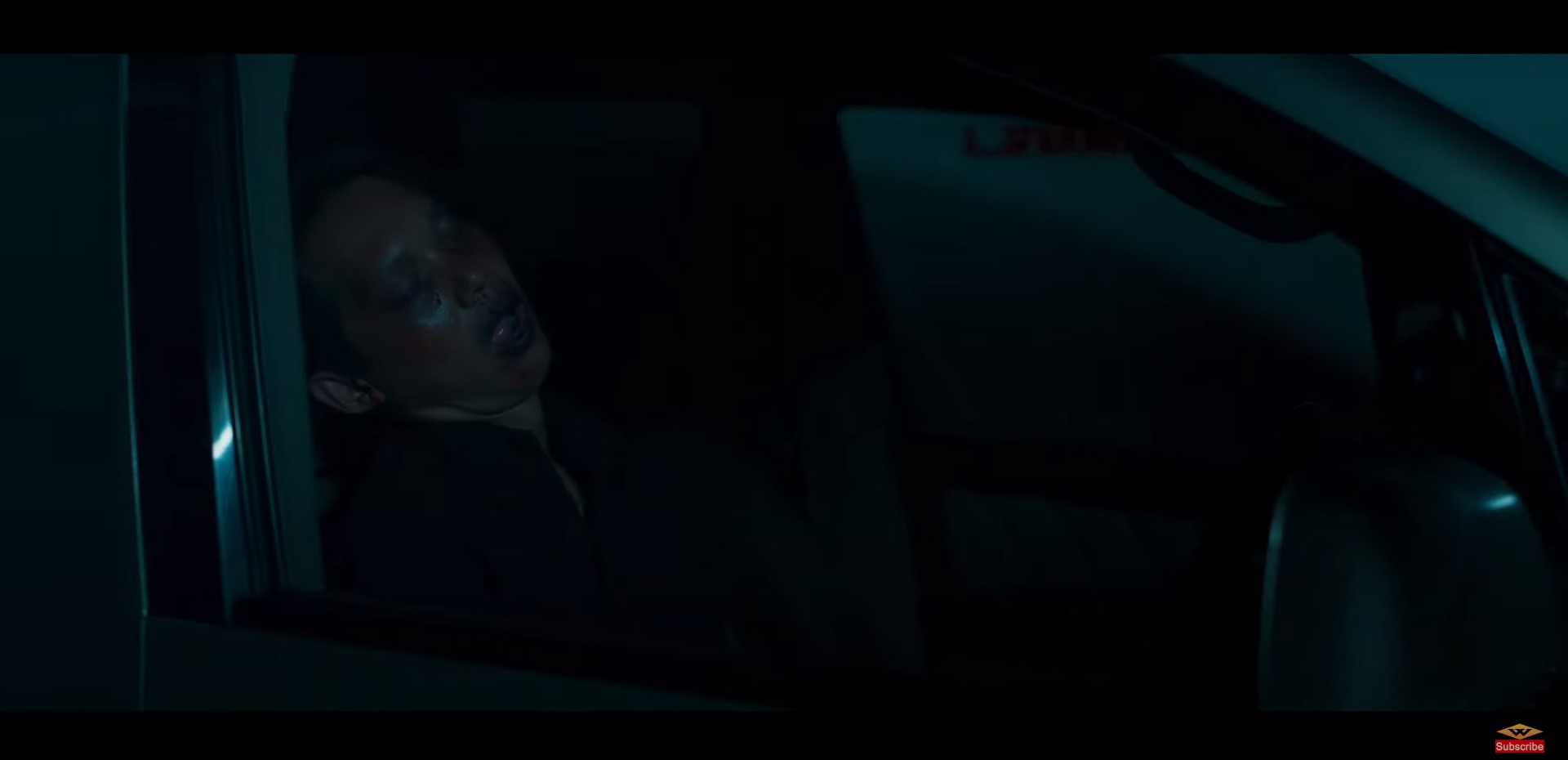
The aphorism less is more can be applied to many things and many situations, often generally true, much like overthinking a simple problem.  For the cast buildup of Soon Sung Lee’s “Gangnam Zombie,” the saying torpedoes any kind of chance connecting with the chaos-engrossed characters.  Opening to Cho Kyoung-hoon and his partner’s breaking and entering of a shipping container full of boxes of I-don’t-know-what, objectively were lost to the here and why this crime becomes not only ground zero for the epidemic, Cho Kyoung-hoon’s Wang-I is attacked by a container-hitching infected cat of all things, but also the motivation for their transgressions of thievery.  I honestly could not tell you what was being hijacked from the container boxes; to me, the contents appeared to be COVID-19 test kits which would make sense since “Gangnam Zombie” forces the paralleling global epidemic done our visual esophagus with a cat instead of a bat.  After dispatching his partner with a bite to the neck, in what is a very vampiric method I might add, Wang-I wanders his dazed self into the city of Seoul, especially the Gangnam district, where he steals red meat from a grocer and stumbles with a self-image conflict into Hyeon-seok and Min-jeong’s office building.  Indiscriminately unhappy with their jobs with a mild sense of attraction between them, the characters are played by Ji Il-ju and Park Ji-yeon who can’t really get into the tumultuously thrown together chemistry needed to make their emotionally pulling tug work with viewers.  The supposed coupling actors’ scenes feel one-sided with Park Ji-yeon in a defensively scared and uncertain shoes but very much guarded against Ji Il-ju who can wear his heart on his sleeve as he roundhouses zombie extras left and right.  Cho Kyoung-hoon feels more enthused in his black-eyed, rabid-smile zombie mode while still able to grasp his humanity with close-quarters hand-to-hand, an enthusiasm not really shared by the others when faced with ground zero apocalypse that doesn’t quiver under one-liners and vapid, vacuous vernacular and vigor.  Min Choi, Tu-in Tak, and Yi-joo Jung round out the cast.

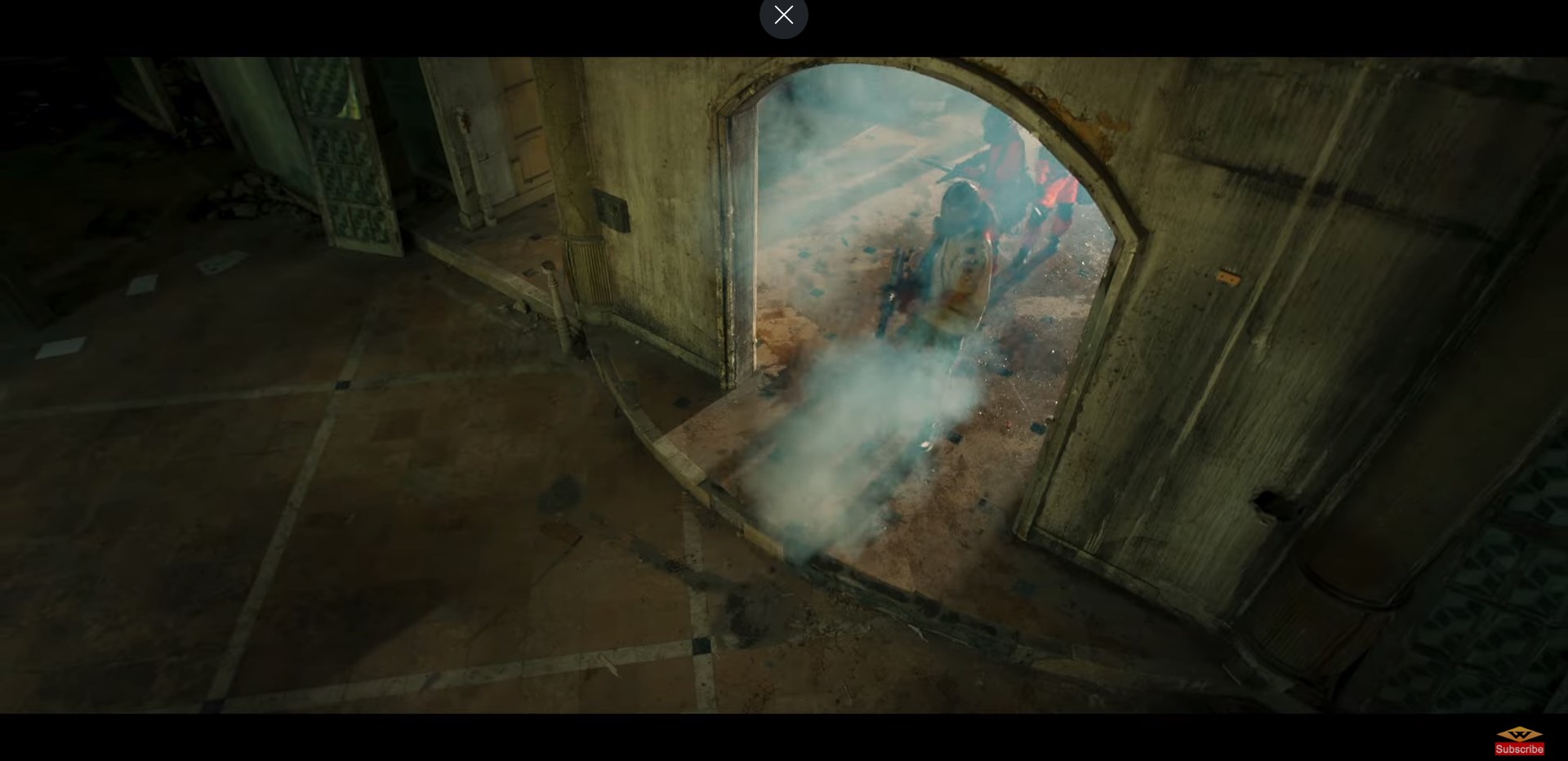
“Gangnam Zombie” falls into the cheap-thrills trap of comparing itself the deadly strain of COVID-19 not because of the cat and bat reference above but because the opening title sequence hammers in a quick recap of the epidemic era in massive overload of visuals with the occasional infected person flashing into frame.  Though not mentioned once of COVID into the dialogue, a tumbling of slowly progressing confusion settles itself inside the narrative of what director Soon Sung Lee is trying to convey comparing COVID to chaotic cannibalism.  The exploit is egregiously akin to Full Moon’s capitalizing indecorous “Corona Zombies.”  The two not only share germs but also share essentially the same title and are both more comedic and lighter, shadowing over and taking away any intensity it intended in this more comedy-horror than horror-comedy.  Zombie carnage is laid waste to bad continuity editing as we see some of the same zombies looking down one hallway and then in the next scene and in a different hallway there is the same infected head, zombies inexplicably rolling on the floor into frame, zombies sneaking up behind people only to hesitate an attack with more of an intent to scare them when the chased turns around, and the infected are not brainlessly dulled and have the ability, or at least only one of them has the ability, to fight back with blocks and other defensive and offensive moves.  “Gangnam Zombie” milks the stouter predecessors with a haphazardly duck taped lesser vessel to slog forward what other South Korean filmmakers have previously perpetuated so well in the subgenre.

On Blu-ray now from Well Go USA Entertainment is “Gangnam Zombie” with an AVC encoded, 1080 hi-def, BD25, presented in a listed widescreen 1.78:1 aspect ratio that works well in the compressed environment of the office building. Exterior scenes of the city, overall general landscape, suggest a wider aspect ratio, perhaps a 2.35:1 to capture more the of the urban landscape. Speaking of the office building, the well-lit environment provides less complexities on the digital image with the same gray, steel, and translucent facing in most of the scenes. Varying saturations of red diverse the blood shading around the body and face with darker tints often looking like motor oil to match the midnight irises. Details in the digital age rarely see a loss of face with natural skin tones, to the minute details of reflective surfaces, and a properly sterile office space. The only audio track built into the release is a Korean DTS-HD 5.1 master audio that’s balanced appropriately with forefront dialogue and a backseat generic soundtrack mix of heavy metal and crescendo builds. The zombie grunts, groans, and roars tear into the channels, nicely through the backend channels, but with cacophonous irritation at times. There’s decent secondary sound design with the baseball bat being hit across infected faces and the floor, despite revealing its rubbery bounce, and Ji Il-joo kick and punch melodies. Sometimes a hit-or-miss with bonus features on the international releases, this particular Well Go USA release comes bare bones with no special features on the software. The hardware, aka physical features, is also not terribly spectacular with a standard Blu-ray casing with a sketch and paint cover that’s slightly misleading where our protagonist will be when the outbreak breaks. Unlatching the case reveals an advert insert for three Well Go USA distributed films, likely rotational with different features, with a unique fascination disc press art of rope tied radio with outstand hands and fingers appearing to grab the bottom of it. It’s a Blu-ray opening enigma viewers will have watch the feature to understand. Clocking in at 82 minutes, “Gangnam Zombie” is region A locked and is not rated. The bite marks of “Gangnam Zombie” are a familiar pang and now nearly a decade after a formidable Korean zombie subgenre began, we’ve become too desensitized for hackneyed carbon copies.

Well Go USA’s “Gangnam Zombie” on Blu-ray Hi-Def!

Magnetism Will Separate the EVIL from the Rest of You! “Black Circle” reviewed! (Synapse Films / Blu-ray)

Cosmic horror is the “Black Circle.”  2-Disc Blu-ray/CD on Amazon!

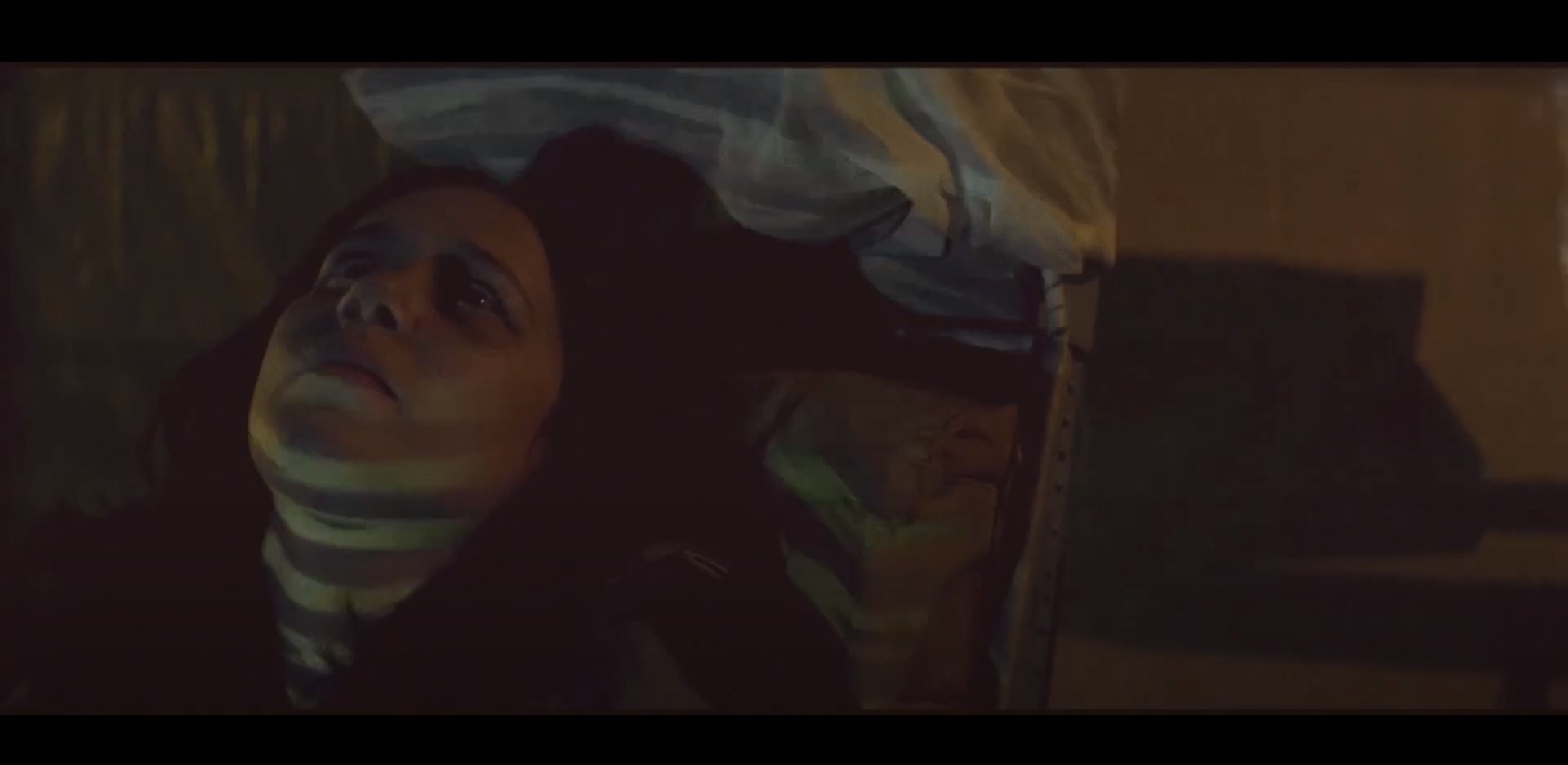
After Isa manages to clean up her life and obtain a upper management job, she’s eager to share her tremendous focus secret with sister Celeste, a university student hitting a mental wall with an important term paper.  Isa says the key to her success came after cleaning out the belongings of their grandmother’s deceased cousin, where she unearthed a record LP on magnetism produced decades ago by a master of the craft.  Celeste is instructed to listen to the LP’s backside right before going to sleep with the promise of her life changing for the better.  After setting the needle, Celeste wakes up next morning feeling unburdened by the challenges ahead and is able to knock out her paper in one day, but she senses another presence following her, watching her, and having vivid dreams of a monstrous double of herself from being inside what the LP calls the black circle.  Shortly after, Isa has disappeared, exiting her new job with erratic and paranoid behavior, only to resurface on Celeste’s doorstop ranting about LP’s frighteningly powerful suggestion and that she’s being followed by someone driving her car.  The sisters track down Lena, creator of the LP and master of magnetism, where they also meet a pair of young psychics who explain the unforeseen, accidental harmful side effects of the LP she thought were all destroyed.  Lena agrees to save the sisters who are faced with losing themselves from themselves. 

Hypnotism has diminutively entranced storytelling, scratching only a limited surface of films with only a few being widely known, such has “Office Space,” “Stir of Echoes,” or “The Cabinet of Dr. Caligari” to name a select few recognizable titles.  To further hypnotism into obscurity, a similar spellbinding field is introduced by filmmaker Adrian Garcia Bogliano.  The Spanish writer-and-director of “Here Comes the Devil” and “Come Play with Me” chills us with a cosmically laced and existentialism albatross with his 2018 “Black Circle.”  The Swedish production, natively titled “Svart cirkel,” pulls loose inspiration from the often-controversial works of German physician Franz Anton Mesmer, as in mesmerize, who first coined animal magnetism as an invisible force within the human body that can be manipulated by skilled magnetizer.  “Black Circle” is produced by Bo and Rickard Gramfors and Bogliano’s longtime collaborator Andrea Quiroz within a conglomerate of production companies that include Klubb Super 8, Njuta Films, Salto de Fe Films, and Evilinski Productions.

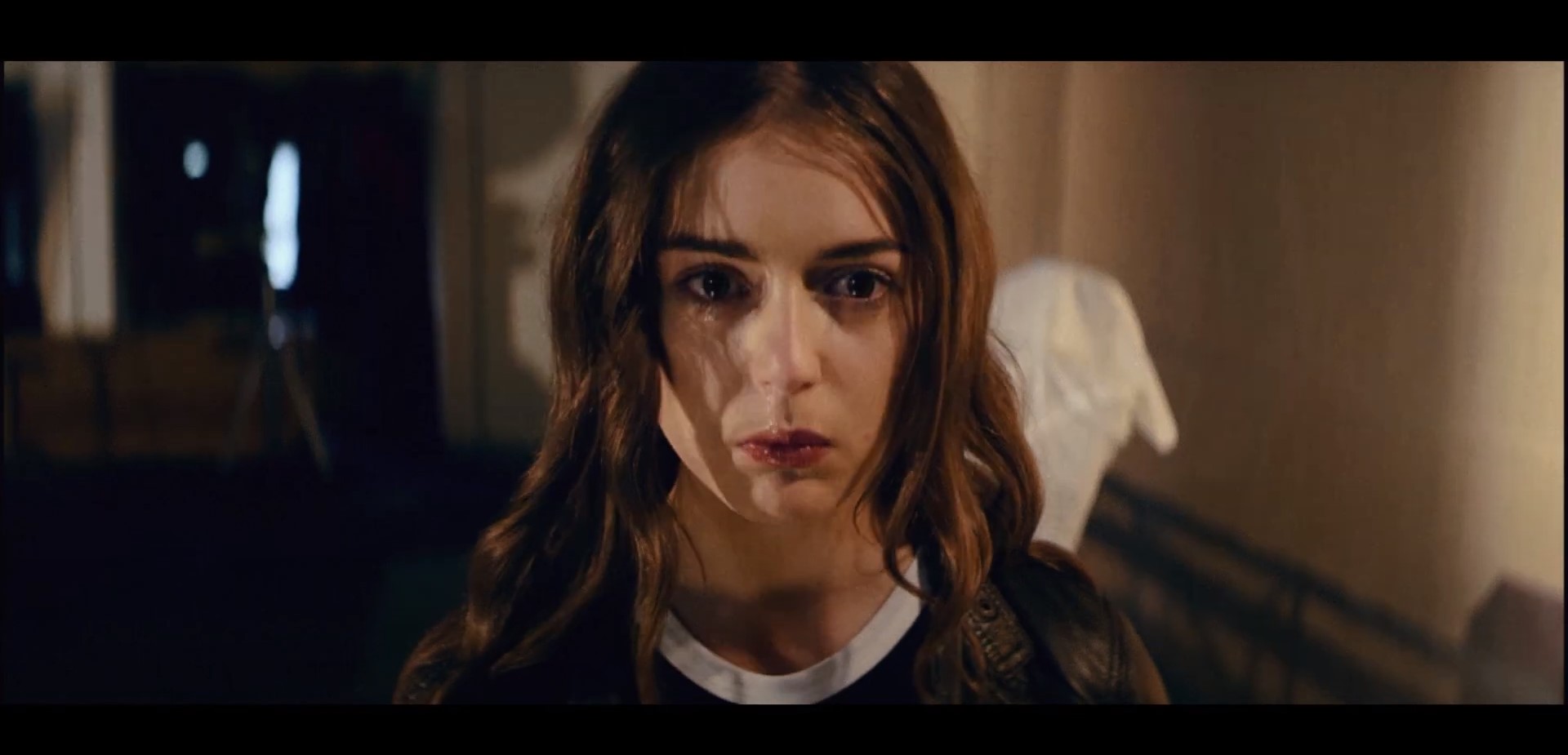
Felice Jankell (“The Bunker Game”) and Erica Midfjäll play the two sisters, Celeste and Isa, embroiled in magnetism bad luck happening up on an old of circ 1970s-1980s LP in today’s age.  There’s quite a bit of tension between the two sisters who are not conjoined at the hip like most close-in-age siblings as they battle their own personal demons that are only talked about rather than exhibited.  Yet, we get the sense of their daily struggles through Jankell’s body language for Celeste and the recollecting conversations both sisters have regarding Isa’s troubles keeping glued together and those existential problems are what connects them, or rather what connect us all as sentient beings, making the characters relatable.  Isa exposes Celeste to the LP in hopes to help Celese regain control over her life but what ensues is not only a weight lifted off her capacity to overcome but also an underlining fear of being followed, watched, and frightened by grotesque dreams of herself in a monstrous form.  At this point, Isa and Celeste are experience parallel psychosis spurred by the record that leads them, and us, to the headliner of film, genre icon Christina Lindberg   The once sweet-faced Swedish brunette, who once donned an eyepatch and took a shotgun to her rapists in the role of Madeleine in “Thriller:  A Cruel Picture” and who once debuted as a 16-year-old virginial maiden in the sexploitation “Maid in Sweden,” has now grown up to become a woman basking in the essence of power and control at all times with Lena, a magnetism expert attempting to rectify unintended mistakes distributing a soul separating, charmed-grooved vinyl from decades earlier.  Lena has rich history that’s dropped in segments from the moment she’s introduced on screen, almost immediately displaying her limitless power on two young, intrusive psychics (Johan Palm and Hanna Asp) who enter her home by the summoning Supreme, an exterior planed creature who supervises the psychic realm.  Performances are incredible skintight as actor brings an elevated show for their individual role, including the rest of the supporting cast in Hans Sandqvist, Iwa Boman, Inger Nilsson, and Erica Midfjäll’s twin sister, Hanna, to sell the “Black Circle’s” premise and promise more convincingly terrifying.

If you were forced to only see one indie contemporary release this year, “Black Circle’ should be it.  Bogliano’s “Black Circle” doesn’t dazzle with a ton of effects nor is production value or exotic and grand set locations applied to lure in viewers, but what Bogliano does do well, and what ultimately instills a fascinating story, is the well-written script, character developments, and the subtle effects that bore a fear of the unknown dread persistently and consistently throughout.  Bogliano delivers a unique story sold on the rarity of proto-hypnosis with a premise fashioned around the development of his own mythos of psychic realm rules and beings. Best part about Bogliano’s piece of the macrocosmos is the way he chapters the narrative, ushering viewers gently and with explanation inside a context construction that uses phantasmagorical visuals and voice over narration to interpret magnetism jargon or to provide inside to setup the next chapter. This processing style of breaking up the acts accentuates, or offsets, the rather raw Dario Goldgel cinematography of the reality story, turning “Black Circle” in pedagogic inside into the basis of the wildly scrutinized, often criticized, hypnosis. What’s also neat about “Black Circle’s” story is the lack of a clearcut antagonist. Neither Lena, the two psychics, or even the monolithic, fazing Supreme serve as opposition against the two sisters but, in a twist of the tale, the sisters are actually their own worst enemies with doppelganger trouble in what afflicts us all at one point or another – existence. Yes, “Black Circle” is about the existential encounter that relates to good and evil, a theme of duality done without a tale of twins (or if you want to get technical, “Black Circle” was casted with a set of twins) and involves more with a separation of, what the story calls, an ethereal double that will eventually absorb itself into being the stronger, dominant replacement if the magnetism vinyl continues to be listened to in enough times it will weaken the original, strengthen the evil carbon copy, and there will be no going back.

Become entranced by Adrian Garcia Bagliano’s “Black Circle” now available on a Synapse high-definition Bluray release. The AVC encoded, 1080p, dual-layered BD50, presented in a 2.40:1 to really grab the space of tighter quarters and lengthen the berth, has less transfer complications than let’s say most of Synapse’s catalogue. The digitally recorded video doesn’t require as much remastering as a decades old production on celluloid or videotape, but the narrative does feign video degradation or aging in the more elucidation scenes on magnetism 101. Details are fine and textured, blacks are especially inky and void-encompassing, and no signs of compressions issues with a bitrate average around low-to-mid 30s. The light sepia grading envelopes a welcoming, steely coldness around the characters and their astral plight. The Blu-ray comes with a Swedish DTS-HD 5.1 surround sound mix and an English dub Dolby Digital 2.0. With being reliant on pulsing waves to match the hypnotic scheme, the backdropped soundtrack adds to the unsettling pensiveness, like the metallic hum of a tuning fork, that never protrudes outright and even into the character’s dialogue space. Not a ton of spacing depth between dialogue and ambient but enough to sate directional awareness and atmosphere. English subtitles are optionally available. Bonus features include an audio commentary with the director, two individual interviews with director Andrea Garcia Bogliano and star Christina Lindberg, both in fluid English, an Inside Black Circle behind the scenes featurette, a still gallery, and the original teaser trailer. Synapse’s release is actually a 2-disc set containing a CD of producer Rickard Gamfors score. Inside the black Blu-ray casing, a red and black insert card with the three faces of main principal characters, the sisters and Lena, in linear composition overtop the black circle with the title underneath. On the backside, the complete 18-piece CD track list complete with instrument and mixing acknowledgements. Also in the insert liner is a 2023 Synapse product catalogue. Front cover art has retro appeal with a black background emphasizing the perfect spiral red and black circle being touched by disembodied and flat matted red hands. The disc itself mirrors the front cover’s spiral but sheens like a vinyl LP but in red and black alternate rings. Dread the duplication, fear the far-side of yourself, when becoming magnetized by magnetism of the underutilized genre that knows no limits and has a plethora of petrifying possibilities inside the “Black Circle.”

Cosmic horror is the “Black Circle.”  2-Disc Blu-ray/CD on Amazon!

Staying in the Closet Can Lead to an EVIL Series of Events! “The Latent Image” reviewed! (Cinephobia Releasing / DVD)

Out today on DVD “The Latent Image” from Cinesphobia Releasing!

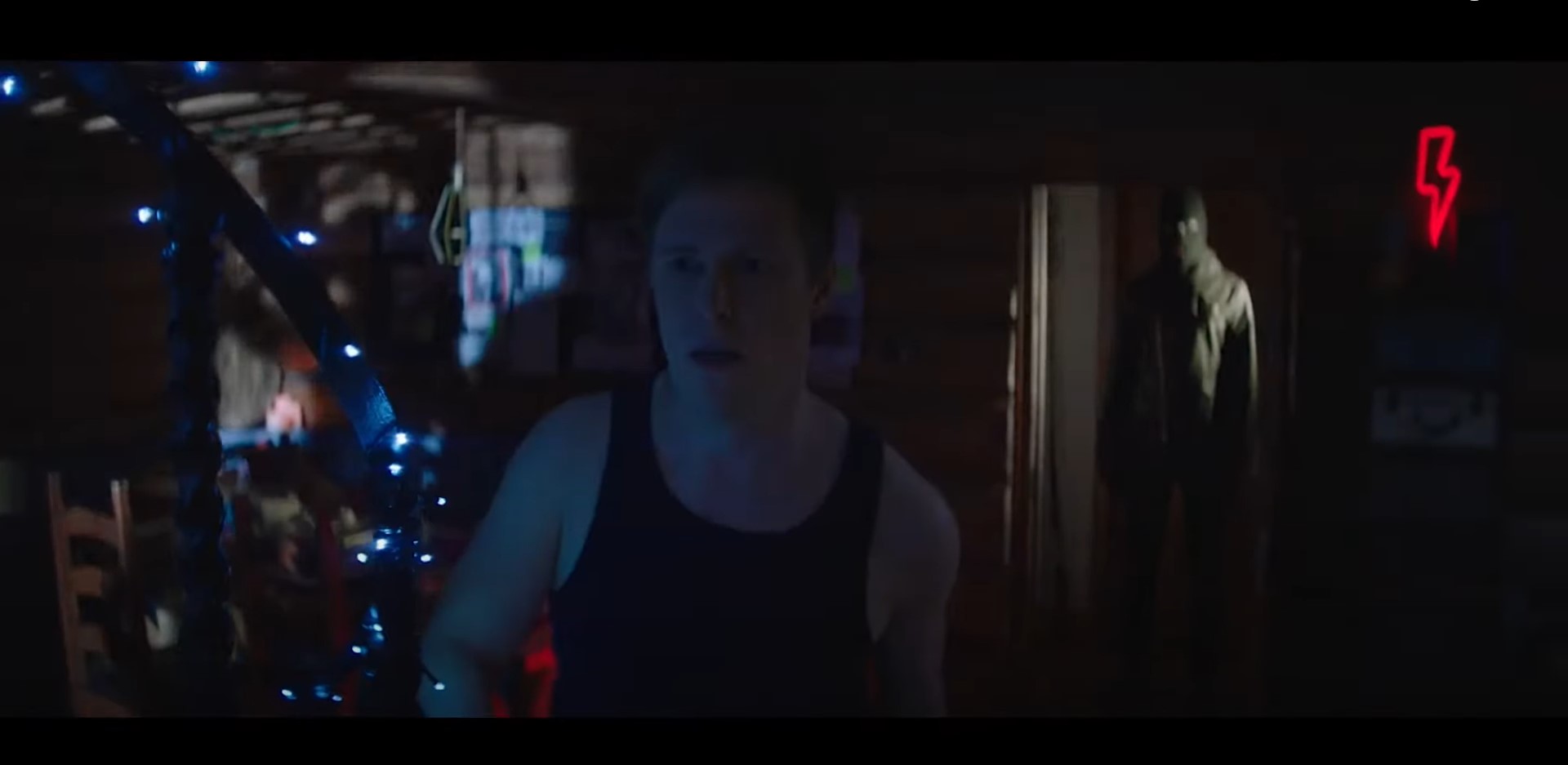
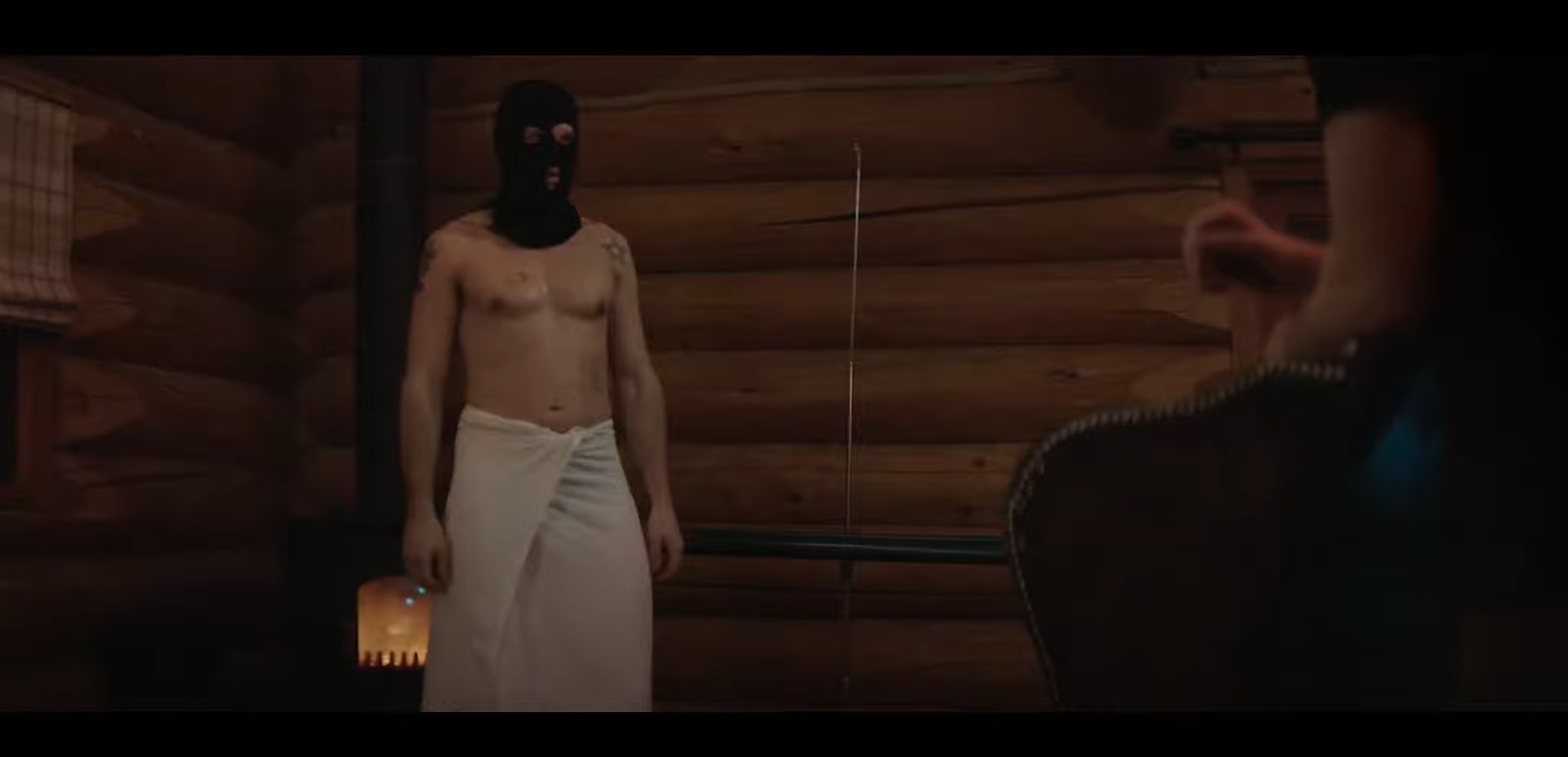
An aspiring novelist isolates himself in a secluded cabin to write his work-on-progress thriller without distractions, especially avoiding he contentious ones with his longtime boyfriend. Working through the night hours on the precipice of a storm, a mystery man drifts into the cabin, injured and claiming car trouble. After letting him stay the night on the couch and knowing he should ask the drifter to leave, the man’s rough allure instills deep desiring dark fantasies to bubble up to the surface that result in keeping his lingering presence around while also the experience doubles as subject inspiration for his novel. Yet, there’s something off about his unexpected and unusual visitor that lends to curiosity into what’s being hidden or being unsaid. The drifter’s trunk becomes an object of obsession that turns into wild speculation. Fear and fantasy collide into an explosive and destructive cat-and-mouse game of downlow and deadly secrets.

Based on the 2019 short film of the same title, writer-director Alexander McGregor Birrell (“Braincell,” “Sleepaway Slasher”), alongside co-writer and star Joshua Tonks, return to “The Latent Image” for a 2022 full script treatment to flesh out a fleshy grass isn’t always greener on the other side homoerotic thriller.  “The Latent Image” is Birrell’s third feature length film of essentially is Joshua Tonks inaugural writing and producing credit into the United Kingdom production that clashes tantalizing and dangerous one-time temptations with the safety and security of routine and longevity woven out of being inside a complicated gay relationship that stings with old systematic-induced worries and consequences.  Latent Image defines as an exposed picture or film not yet developed and Birrell and Tonks use that to purposely shield viewers from the utmost truth until the petrifying picture is clear.  Latent Image LLC in association with the queer community storytelling serving June Gloom Productions are the picture’s production handlers with the latter company’s Brandon Kirby and Michael Varrati as executive producers and Tonks and Birrell co-producing their debut feature collaboration.

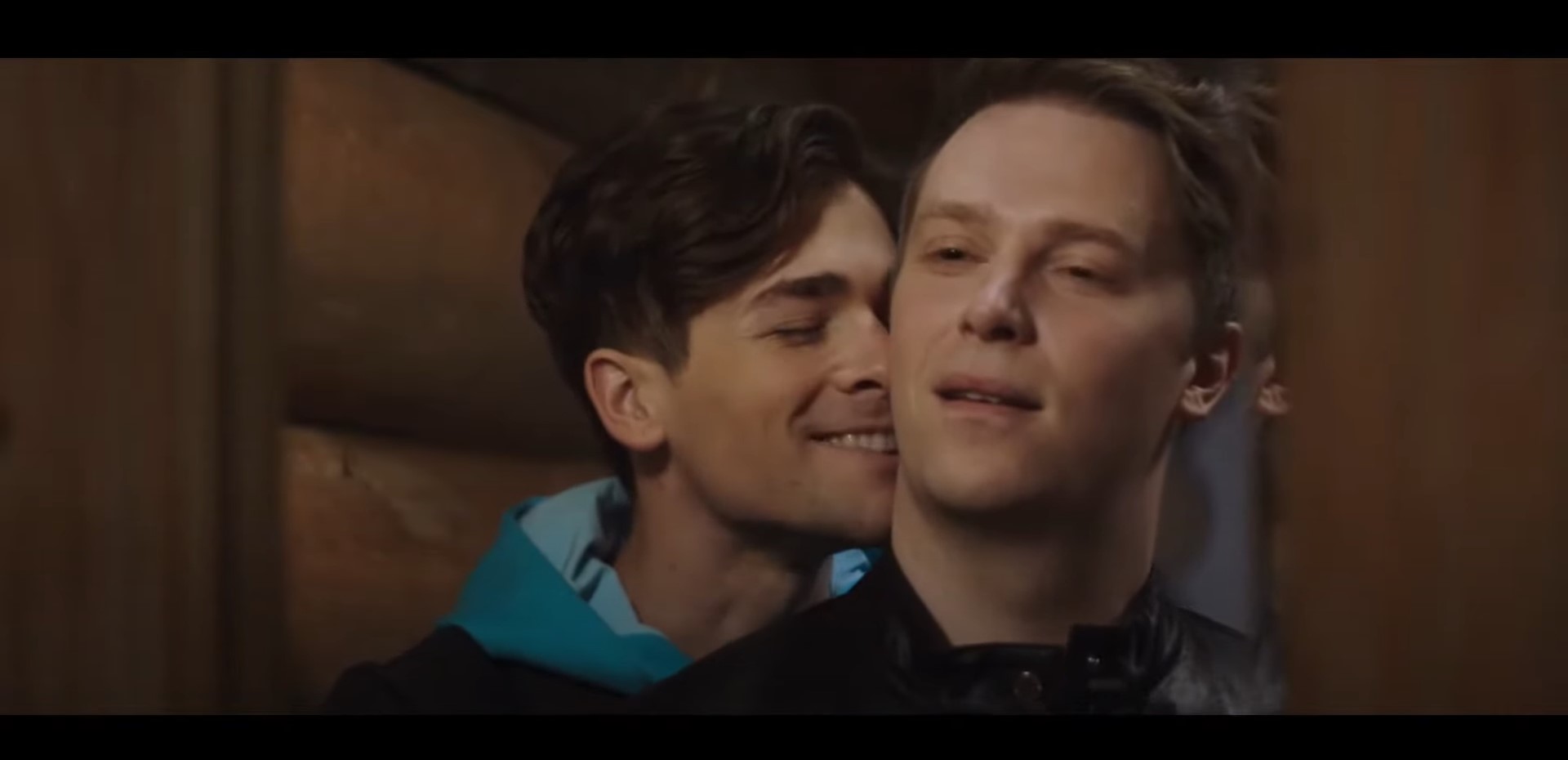
Being Joshua Tonks’s grandstand into his first feature production and as the lead character, the British-born, Vancouver film school-trained actor reprises his short film part with only two significant differences:  one being a principal name change from Robert to Ben and the other in providing Ben with more substantial backstory in the form of reveries or creative abstractions of a linear trickster narrative.  Ben’s old school, a reflection seen through his love for old photography without a display screen, his typewriting of the novel, and filming on celluloid film stock with a Super 8 camera.  This affinity for the antiquated matches his sexual stigmas, a flaw that shepherds in more harm than good.  Tonks readily handles Ben’s technological quirks as well as deepen his character’s philandering fantasy life with sexual daydream and night terror trances of being pursued, abused, and enjoying it.  Tonks works off the more indelicate stranger-danger of fellow Vancouver film school graduate Jay Clift.  Long hair, leather jacket, rugged approach, Clift in the role simply known as The Man portrays patience as weapon to wield to win over the quasi confidence and trust of the lonely and relationship confused novelist with an active imagination, a deadly combination to be caught with your pants down.  Clift becomes the character interloper in Ben’s life in more ways than one, some more subtle than others, and equivocally provides baited lure to either seduce the novelists or setup him for a fate far worse.  To complicate matters, Ben’s boyfriend, who he has a current agitated relationship with and viewers will initially think is safe and cozy back at their abode, will eventually enter the picture with newcomer William Tippery in the role to complete the all-male, three-man cast.

“The Latent Image” plotline doesn’t justify Birrell’s picture as anything else but another stranger showing up at cabin in the woods thriller.  However, beyond the shallows of the film’s surface level tension are deeper waters surrounding Ben’s parting of pathways.  The novelist not only struggles to conjure up a decent spinetingling narrative, but he also struggles personally with an uncertainty of where he fits into his relationship with at-home boyfriend Jamie and with this new, dark fella wandering into the cabin in rake portance.  From the beginning, Birrell and Tonks often visits Ben’s unconscious chimera but also often feels very real in its merge of reality and fantasy of what Ben’s sometimes wishes would happen, but don’t expect this thriller to be a based in psychosis.  “The Latent Image” is not a mental health movie of one man’s isolation snaps his baseline reality.  That would have overdone, overcooked, and overserved with stale bread and flat soda.  What “The Latent Image” taps into is not the age-old tale of a drifter’s in doubt motivations but rather a fear of being found out or fear of oneself when they themselves are unsure of who they are as a person and that can be a scary thought to let the imagination run wild. 

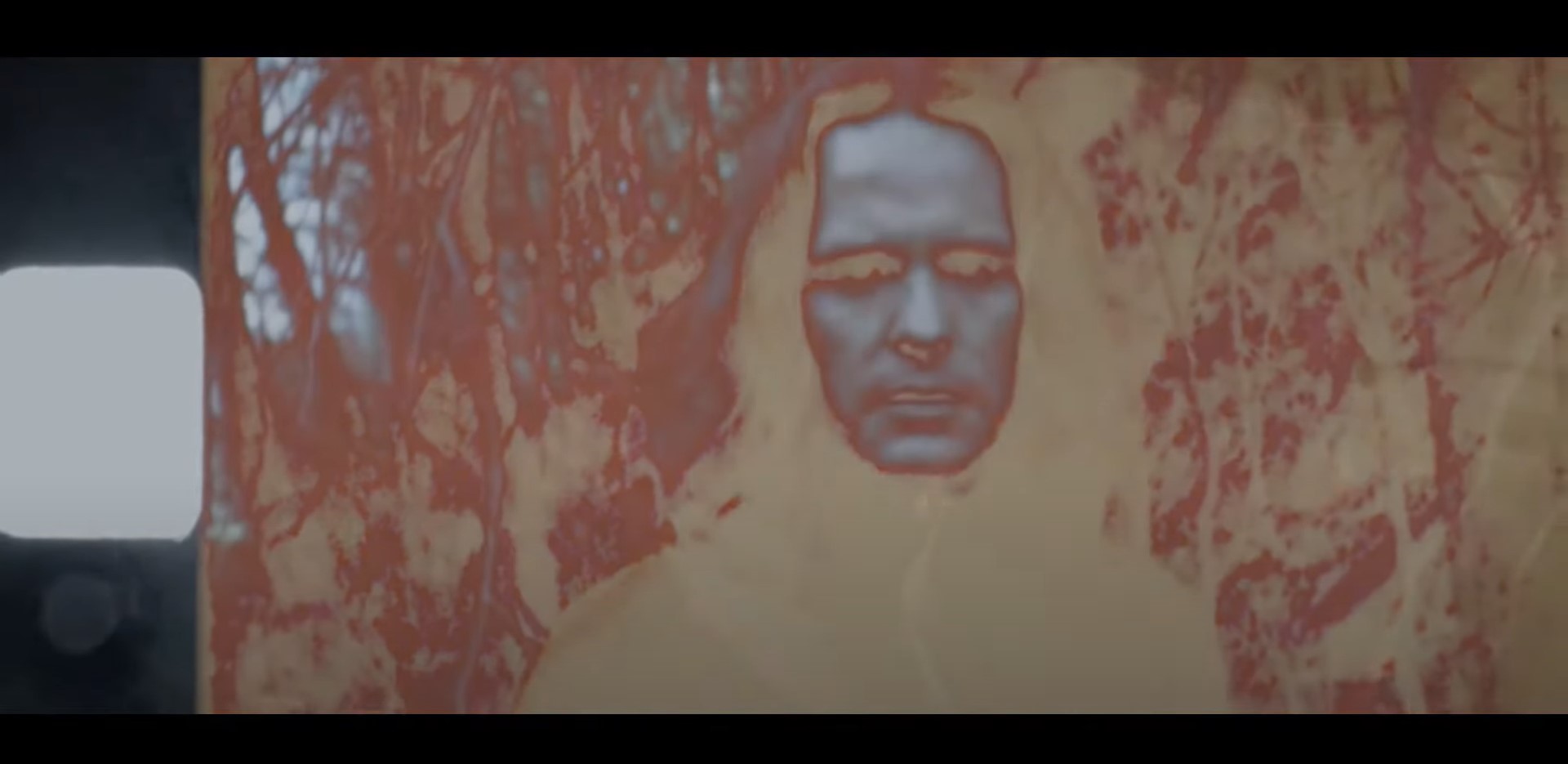
“The Latent Image” lands a debut distribution deal with the Philadelphia based Cinephobia Releasing.  The single layer DVD, arriving on retail shelves September 12th, is a compressed MPEG presented in anamorphic widescreen 2.39:1 aspect ratio.  Between the use of anamorphic lens, split lens, Super 8 reverse stock, and a ton of mood lighting, “The Latent Image” really pops cinematically with a variety of visuals and looks that can induce a breadth of emotions.  For a DVD presentation in an age where Hi-Def continues to the upward climb, the Cinephobia Releasing has tremendous sharpness and detail inside and out of the fuzzy warmth and often the vividly brilliant, focused lighting that induce back and front shadowing, decoding at average of 8 to 9 Mbps that eliminates any prospect of compression complications.  The English audio options include a Dolby Digital 5.1 surround sound and a Dolby Digital 2.0.  The 5.1 trumps the 2.0 In offering much environmental elements of rustled foliage and depth of character actions.  Dialogue conveys strongly, securing its spot Infront of the other tracks where depth allows.  English optional closed caption subtitles are available in the setup menu.  Special features include an audio commentary with director Alexander McGregor Birrell and stars Joshua Tonks and William Tippery going over their mindset of the characters, background, and visual and stylistic choices in an enlightening discourse, the 2019 short film “The Latent Image,” the audio commentary for the short featuring just Birrell, and other Cinephobia Releasing trailers.  The 83-minute film is released not rated and has region 1 layback, untested for other regions.  Well executed indie suspenser with a subtext clout to one’s essential nature and a smartly planned story has exposed “The Latent Image” as impressively top-notch and worth seeing. 

Out today on DVD “The Latent Image” from Cinesphobia Releasing!