A Dilapidated Terminal Full of EVIL Spirits. What Could Go Wrong? “Prison of the Psychotic Damned” reviewed! (Wild Eye Releasing / DVD)

A pre-depression era railway terminal is now an aging and decrepit structure left to ruin in Buffalo, New York. It’s also the site where an experienced paranormal investigator, her ghost-tech guru, and three volunteers venture for exploration, hoping to uncover something spooky that goes bump in the dark because of the buildings long-marred and infamous history that includes an insane asylum, an unorthodox cattle abattoir, and many unexplained and terrible deaths throughout the decades. The deeper they dig down into the terminal’s underground corridors, the more they find themselves lost in a labyrinth amongst a taxonomic diversity of unhinged ghosts and ominous orbs. Lost and being hunted down, the ghost hunters fight for topside survival before absorbed by the terminal’s evil past.
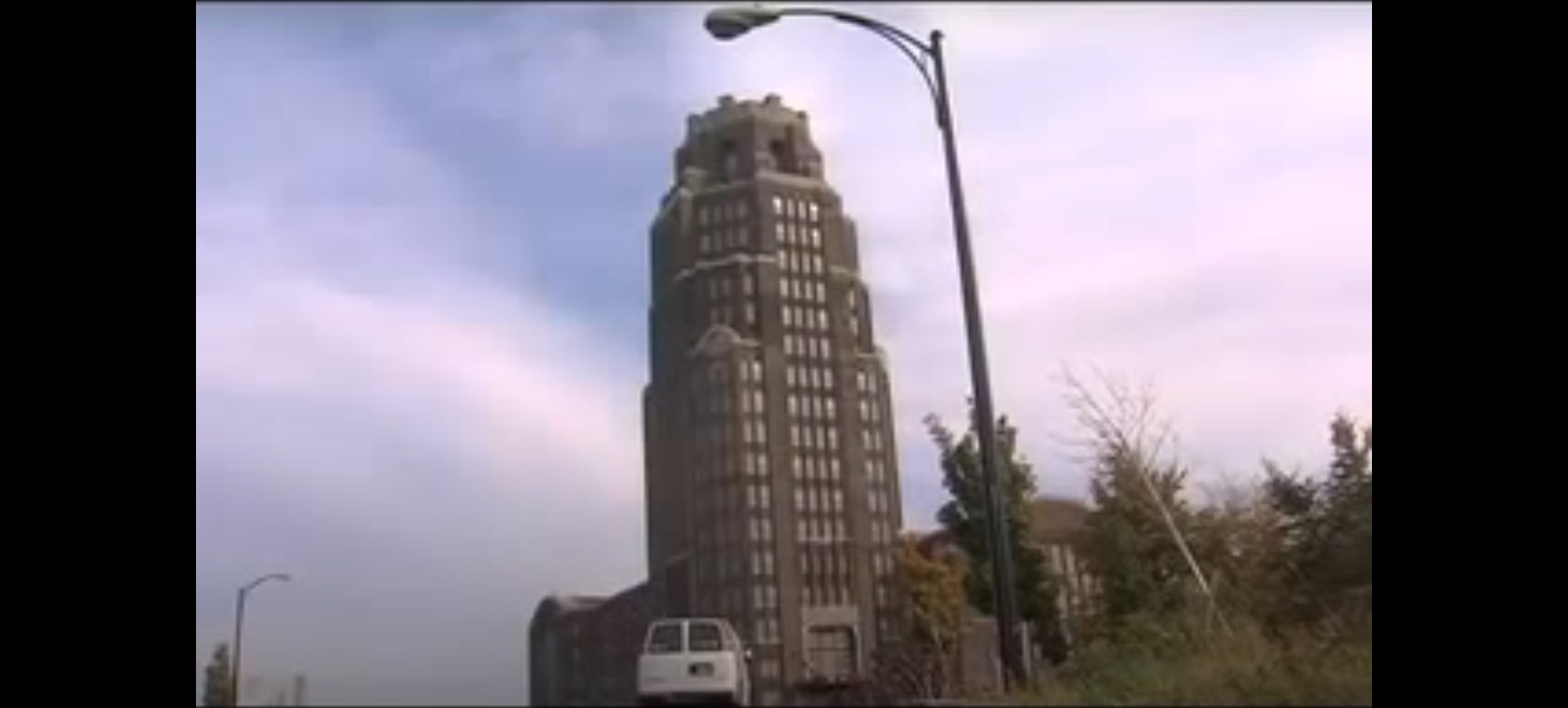
Ghost hunters investigating the eerie ambience has been a source of easy pickings for producers and filmmakers from television’s “Ghost Adventures” to the popular James Wan phenomena that is “The Conjuring” franchise based off the Ed and Lorraine Warren investigations. The then mid-30s, New England filmmaker, David “D.W.” Kann hops aboard the investigator train with his own specter-sleuthing indie film, “Prison of the Psychotic Damned,” penned by producer David R. Williams (“Frightworld”) and released in 2006.  Also known as “Prison of the Psychotic Damned:  Terminal Remix,” the once puppetry and props master, who worked on such classics as “Carnosaur 2” and “Children of the Corn III:  Urban Harvest” as well as hitting the big time with Jim Carrey’s “The Mask” and the 1995 video game adaptation, “Mortal Kombat,” showcases the historic Fellheimer & Wagner Art Deco-architecture that once stood grand inside the Buffalo Central Terminal.   Built in 1929, the 15-story building has been abandoned since 1979 and left for the whim of vandals until its sloth restoration in the 2000’s that even saw paranormal activity themed reality shows take a crack of discovering spirits beyond the grave.  “Prison of the Psychotic Damned” also is an imprisonment of psychotic fraud as David R. Williams was arrested and convicted of embezzlement of his then employer’s capital back in 2010 to fund his schlock ventures under his production company, Red Scream Films, including this film but that didn’t stop Williams who went on to continue producing and directing long after his short stint in the slammer. 
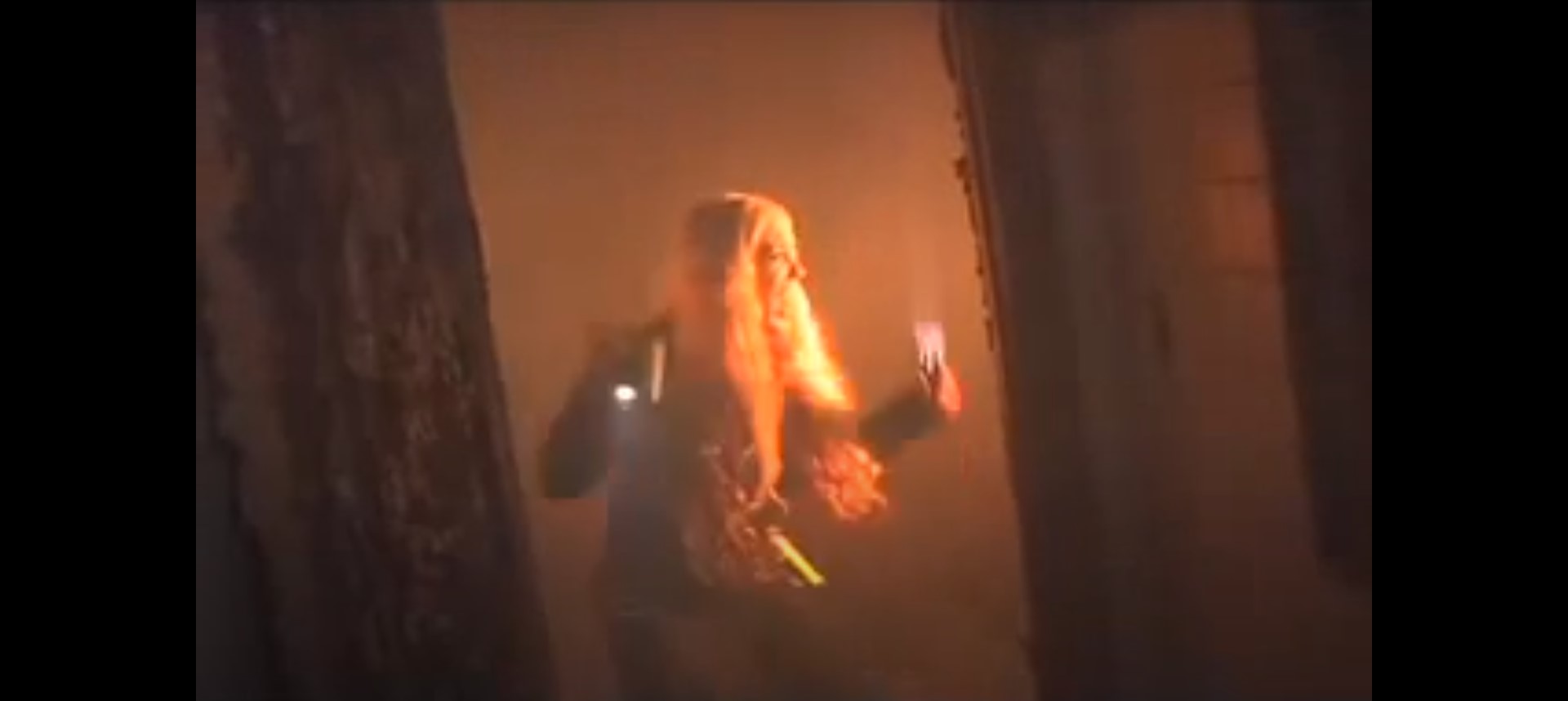
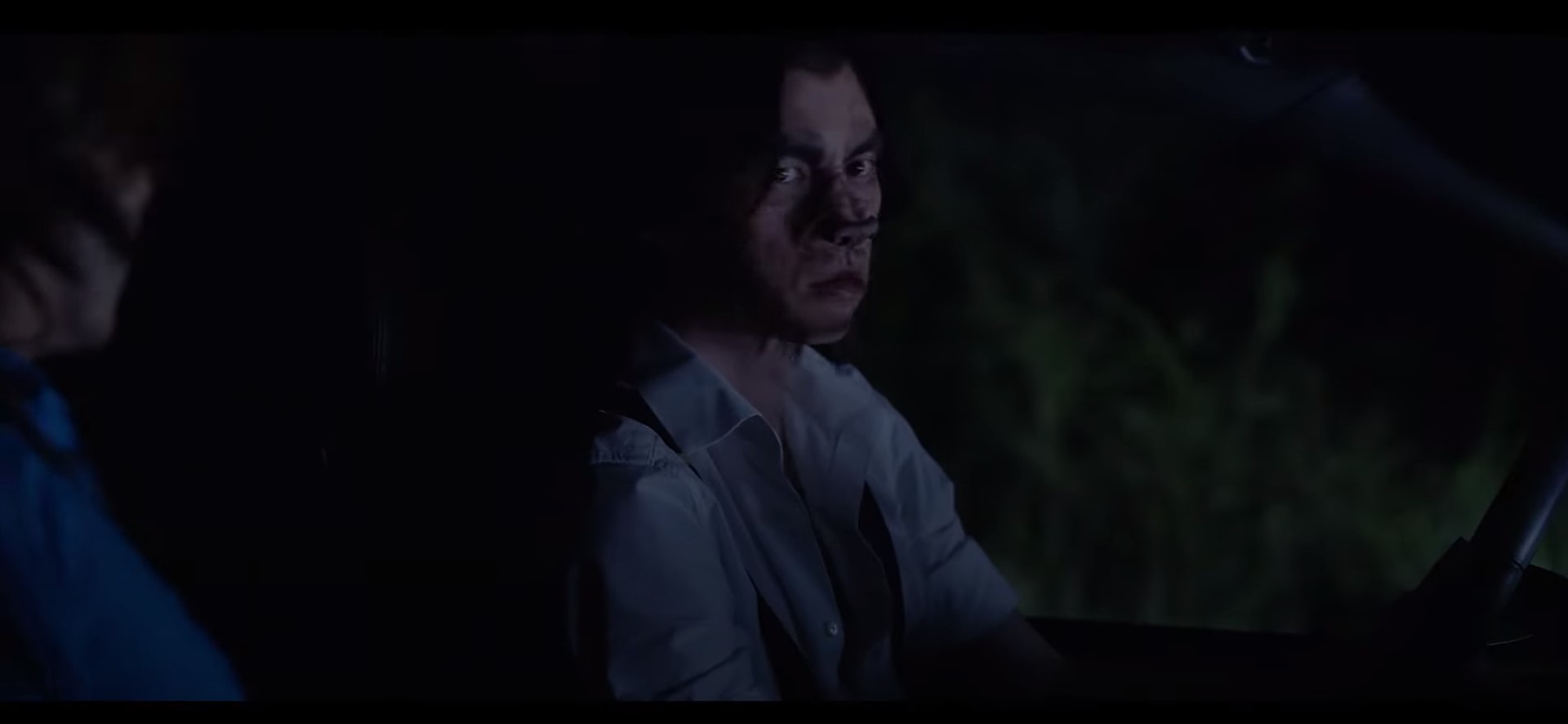
About as volatile as Mount Vesuvius wiping out Pompeii in 79 A.D. are the five, dynamically counterpoised ghost hunters driving toward their insensible doom at the Central Terminal.  Spearheading the venture is the most experienced investigator Rayna (Susan Andriensen, “The Blood Shed”) with the intention of reviving her dwindling career before becoming defunded by the grant investors.  Rayna is joined by her longtime tech assistant Jason (James Vaughn) looking to capture something, anything, supernatural with his homemade psychokinetic-detecting gear as he innocently enough flirts with the snarky unwilling participant Kansas (Melantha Blackthorne, “Bloody Slumber Party”) who finds herself on the brink of losing her funded wayward lifestyle if she doesn’t join Rayna’s expedition per her moneybag father’s direction.  The relation between Rayna and Kansas is being step daughters, but that connection isn’t made entirely clear with only one brief exchange regarding Kansas’s forced attendance.  While Kansas disparages much of the investigation, and many of its participants, she’s joined by fellow volunteers Nessie (Noel Francomano, “Kottentail”) and Aurora (Nemesis 5:  The New Model’s Daiane Azura, credited as Demona Bast) in their respective roles of Rayna’s geeky fanatic and go-to psychic.  The one aspect that really kills these characters (pen intended) for me, and probably the audiences, is the consistent, continuous, ceaseless contentiousness between them with a slew of nitpicking, name-calling, and verbal and physical abuse that makes you wonder why should we even care for a bunch of people who can’t get along.  Brief moments of reasoning flash between them that could end up turning the dynamic around, but the fleeting qualities subside to blunt anger and hate to the point they’re bashing each other’s heads with bricks and leaving each other to fend for themselves against a horde of surgery-conducting ghost-zombies with revoked medical licenses, played by Kidtee Hello, Terry Kimmel, Michael Ciesla, Kelly Budniewski, and Jessica Grangler rounding out the remaining cast list. 
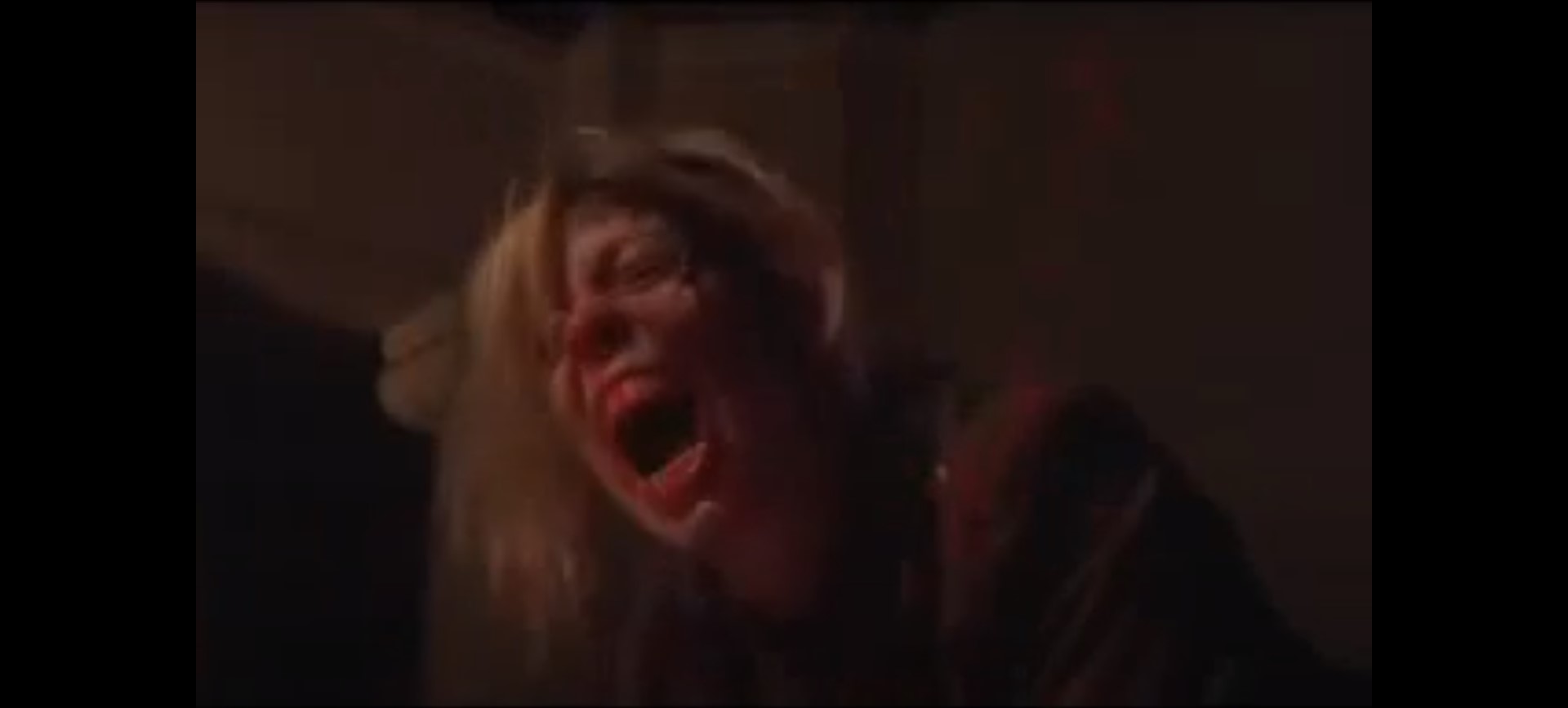
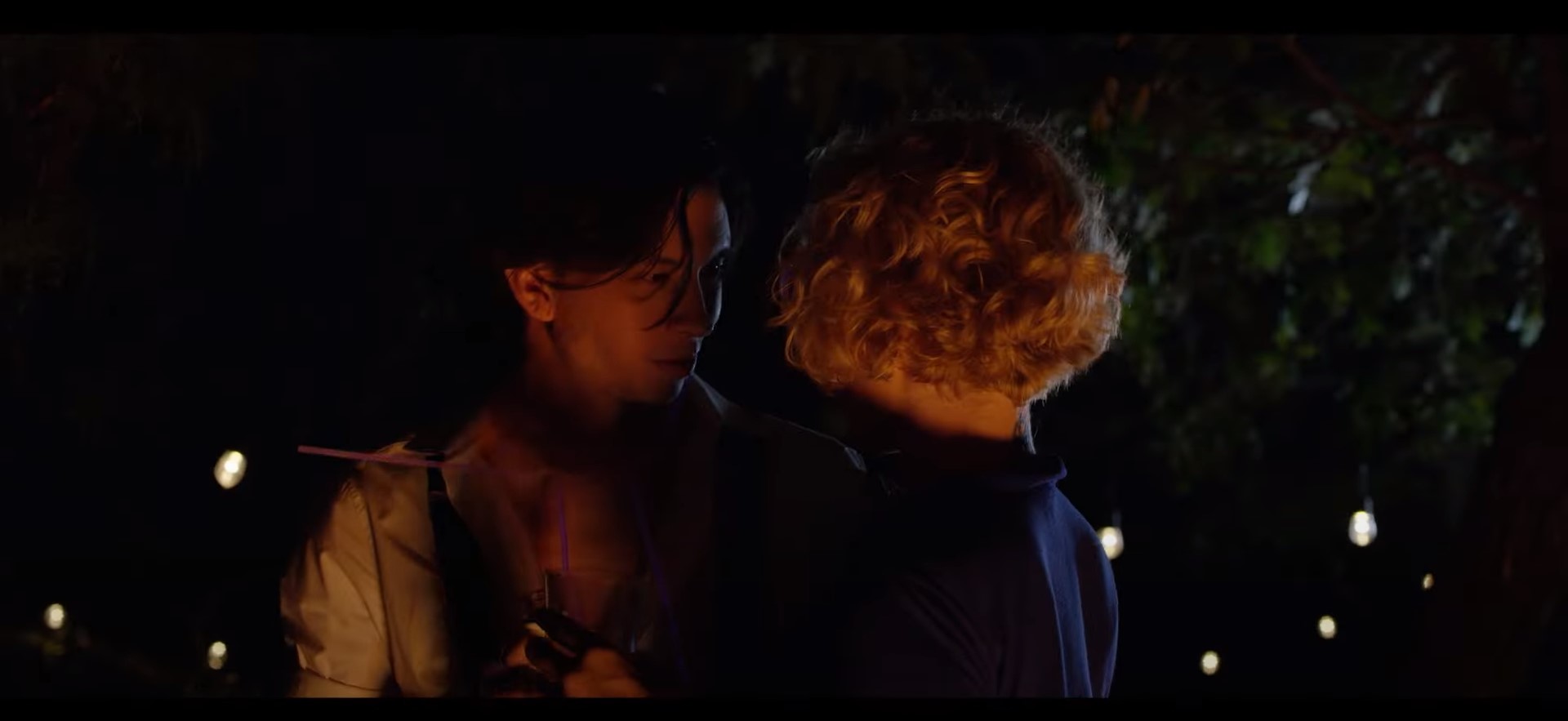
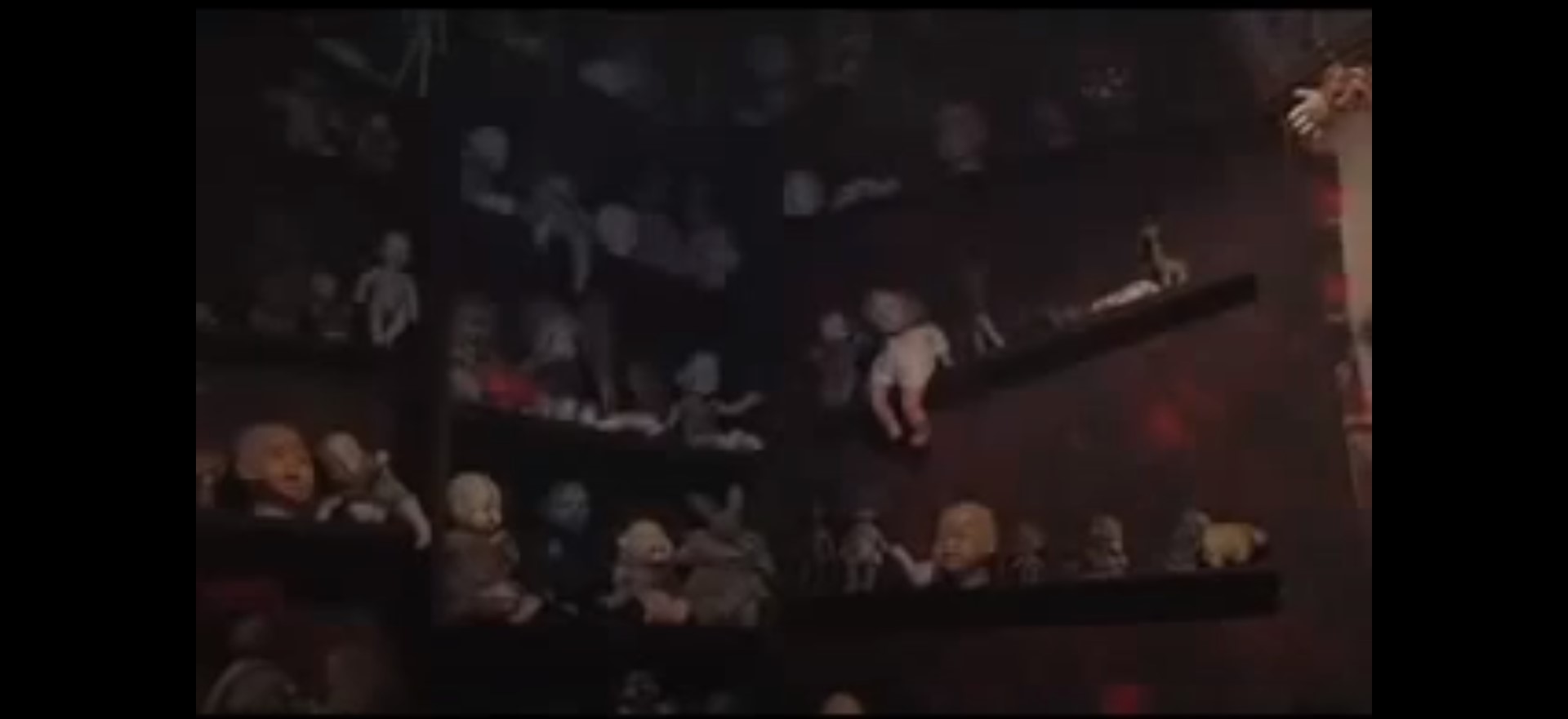
In what feels like the distant cousin, watered down version of “House on Haunted Hill” lite, Kann’s lowbrow, Digital8 shot film is a talkative spew of exposition that lends itself to pretentious prologue surrounding Kansas’s opening scenes of self-mutilation and prosaic nudity as if she’s on an unidentified narcotic.  What’s more confusing about the out of context opening scenes is we don’t really know it is Kansas alone in her apparent apartment.  The film begins with a woman slashing her wrist and licking the blood from her wound, before two medically masked men rush through apartment door and whisk her away.  Next scene, the same woman is back in perhaps her same dingy, dim lit apartment, but this time she’s spouting out philosophy and exposing her breasts by ripping her cheap cotton, tight white top before getting into a warm, steamy bath to stare at the candles at the other end of the tub.  Next thing we know post title creds, we’re riding in a van with the five paranormal investigators and Kansas, sitting in the back seat with Nessie and Aurora, doesn’t even look like the person we saw in the prologue as her hair is put up tight in a bun and she outfits more makeup and gothic drapery.  Once Rayna and Kansas have a sidebar chat and Kansas’s hair progressively loosens and falls, the pieces begin to fit together that Kansas’s disturbed impulses has forced her father’s hand to pair his errant daughter with Rayna for some extracurricular activities that maybe will do her some good…?  Ghost hunting must be the new vogue therapy the kids are into these days, or at least back in 2006.  Structurally, “Prison of the Psychotic Damned” runs faithfully the same obscured narrative course with Rayne expiating mouthfuls of the Terminal’s anecdotal infamy to build a dark dome above the longstanding history, but we rarely see any of the said mythos come for blood and get punted random glowing orbs, creepy doll room, and gloppy possession in return.  Along the way, Kann finds some ways to expose all but one of the actresses’ breasts in a gratuitous-laden attempt to advert our attention from the misaligned components like the story or the performances that just consist of ball-breaking personalities becoming trapped underground with killer spooks and have to duck and dodge the malevolent spirits to survive.  Though the gory bits sate nicely and David Williams erratic editing of eerie filler shots of the Terminal and surrounding area renders like a formidable damaged homemade movie on screen, “Prison of the Psychotic Damned” ultimately boils down to just more of the same rebranded indie slop we’ve all seen before.
Wild Eye’s DVD is released under the indie company’s Raw & Extreme sublabel and is the third physical release of “Prison of the Psychotic Damned” behind the cheap York Home Entertainment DVD and the SRS Cinema limited edition Blu-ray that was released approx. 2 years ago.  The DVD back cover lists the region free film as a widescreen presented transfer, unrated, and clocking in a 100 minutes.  Producer David R. Williams once noted that the surviving master transfer of a flood that destroyed nearly all material is the best there ever will be and with many dark areas shot on a Digital8 camcorder, the presentation is practically raw footage switching back and forth between digital third person and POV with ghosting and soft details amid the thick grain that collaborates the fact of a cruddy transfer. The lossy English 2.0 stereo sound mix toggles with the ears about as much as you have to toggle with the volume. From dialogue to score, insipid flat audio mix universally stiffens the Terminal urban legends Rayna rambles on about as well as extinguishing the score to a putter of insignificant industrial tones with a bookend and backup soundtrack by The Voodoo Dollies and actress Demona Bast serenating with the gothic-vamp vocals with Sonic 14 on an outro track. Among a static menu with scene selection, only Wild Eye trailers are included with the release. Buried beneath the torment of deranged souls, “Prison of the Psychotic Damned” sequesters itself from originality and from graspable, relatable, or even likeable characters in a vanilla story with decent gore effects.

Own “Prison of the Psychotic Damned” on DVD from Wild Eye!

Be Creative, Be EVIL! “Scare Me” reviewed! (Acorn Media / Blu-ray)

The down on luck Fred and a celebrated Fanny are both horror writers. Well, sort of. You see, Fred is an aspiring horror writer with unpretentious stories acted out by his creativity whereas Fanny is the hot, popular artist who just came out with an acclaimed novel everybody is talking about, even Fred. When their paths cross on a remote, snowy getaway during power outage, they consolidate to one cabin to stave off boredom by telling each other off the cuff scary stories, acting out every minor detail to flesh out the macabre tidbits in order for a good scare. As the night carries on and the stories become more involved, Fred’s night has been a rare highlight in recent days and now that day is on the brink of breaking, Fred has one more emotionally-driven scary story to tell the weary Fanny.

You wanna see something really scary? No, not the line from that wraparound story with Dan Aykroyd and Albert Brooks driving late a night in “The Twilight Zone: The Movie,” but rather really see a scary story come to life before your eyes with enthusiastic performances between two horror writers? Josh Ruben’s “Scare Me” does just that with the filmmakers’ 2020 horror-comedy hit. Ruben, whose latest comedy genre film, “Werewolves Within,” has been a critic success, writes and directs a petite cast packing a powerful punch pitched perfectly more so than this mouthful attempt at an awfully awkward alliteration. “Scare Me” is also produced by Ruben along with Alex Bach and Daniel Powell under a conglomerate of productions companies including Artists First (“Hell Baby”), Last Rodeo Studios (“Save Yourselves!), and Bach and Powell’s Irony Point with Shudder distributing.

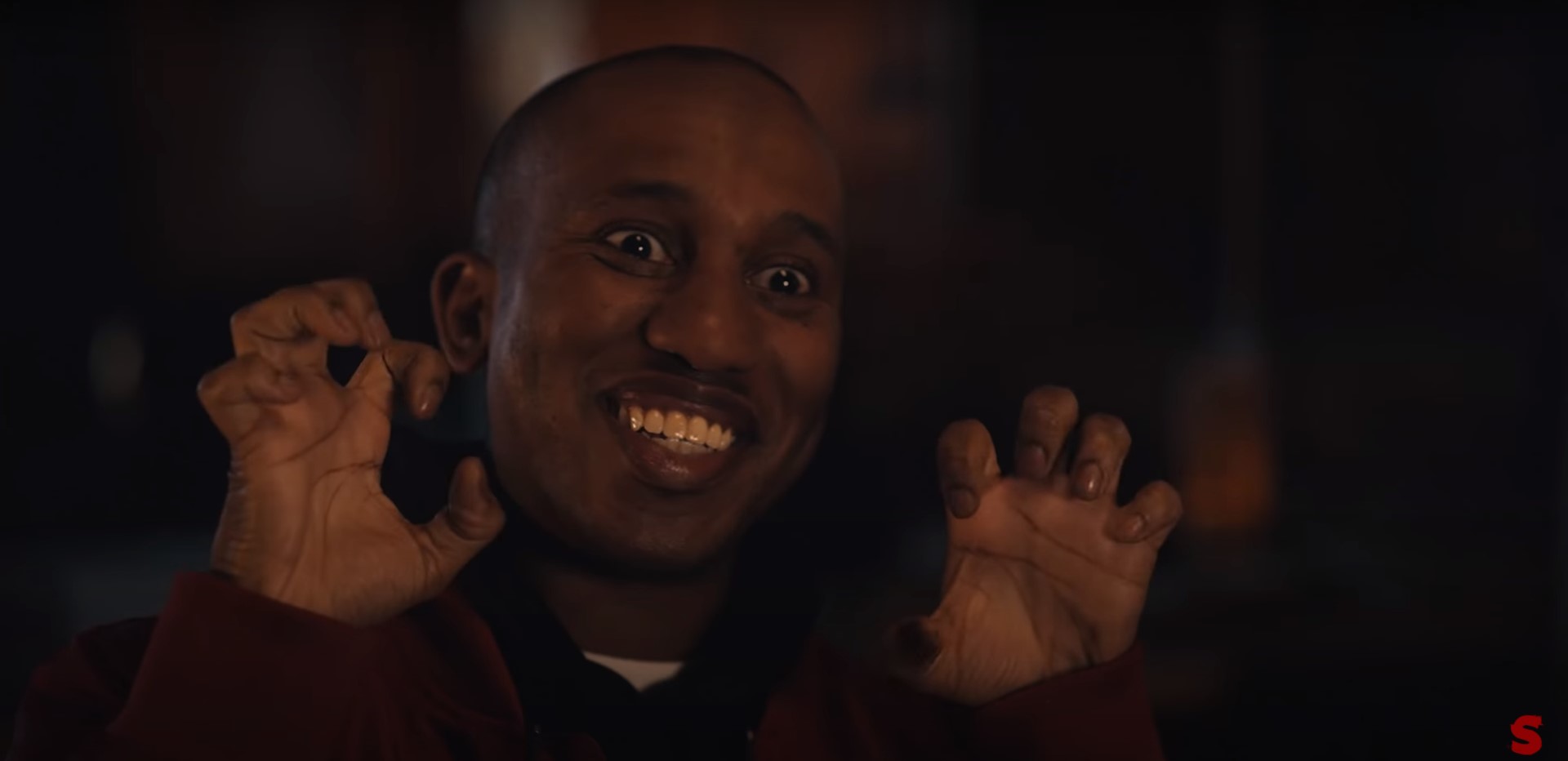
Ruben not only writes, directs, and produces his film, he also co-stars as Fred. With this Andy Serkis like looks, motions, and vocal talents, Ruben is a master at amplifying impressions and slapstick from the beginning as Fred using his unrestraint, and probably unstable, imagination to try and write a bestselling horror novel to help him get out of a life funk. Then, their is Aya Cash, who I have personally adored since her villainous role on Prime Video’s “The Boys.” Much like that role’s personality of the super-sadist Storm Front, Cash just dons snarky assertive woman to perfection as she continues the trend by embodying bestselling new age novelist Fanny with such. Fanny downright emancipates…I mean, emasculates…Fred at every chance and at every step along the way despite her warming up to Fred’s kooky lackadaisical first impressions with a side dish of caution for those who yearn for story ideas. Ruben and Cash bounce incredibly well off each other to the point of credibility between the dynamic and the dynamic is far from being a romantic love interest but more so an unlikely best friend; a best friend who constantly proclaims white male privilege whenever the opportunity presents itself. The funnies also keep on coming, especially mixed into the dialogue details, that are sharpened by Ruben and Cash’s timing and delivery telling their individual stories and the reactions each have during them, but then blend into that batter of bust-a-gut with comedian and “Vampires vs. the Bronx” actor Chris Redd, consider your every funny bone in your body rigged for explosion with the trio’s insanely charismatic skits and a musical number about a Devil possessed pop star to die for. Bringing up the rear of the comedic cast is “Key and Peele” writer Rebecca Drysdale.

If you had told me that “Scare Me’s” premise was two writers telling each other scary stories during a power outage, the film would have been near the forgotten bottom of my must-watch list with the inane dancing of “Orgy of the Dead” and the prosaic “Paranormal Activity 4.” After watching the film, all I have to say is this, Mr. Ruben, please accept my heartfelt apology for manifesting one single brain cell of doubt as “Scare Me” is the five-star movie everybody needs to see. I am not worthy. The idea behind the movie is simple, yet novel, that never ceases to peak as Ruben’s film perpetuates a steady incline of sharp-witty dialogue, an involved and spot-on sound design to create the stories’ allusions, and a trope-less ending that fits “Scare Me’s” unique, unbridles nature without being a grandiose end-all finale. Without the punctuating special effects, Ruben definitely curved a workaround with smart dialogue, entertaining writing, and with a cast who couldn’t sell the idea any better. The work lies severely on the shoulders of Cash, Redd, and Ruben and without them, “Scare Me” would probably been acerbically be retitled as “Bore Me” under the breath of many frustrated genre fans. Also, just because there isn’t knock-your-socks-off special effects, that doesn’t mean there was zilch as Fred, Fanny, and Carol (Redd) enact each stories, a slither of their dread-addicted imaginations comes to fruition like window glimpses into their minds and, damn, they can really sell their fear-stroking dark fantasies by telling classic tale spinoffs that could parallel cult favorites, many that were namedropped throughout the 104 minute runtime. “Scare Me” is without a doubt pure love of the genre and a tinseling homage to the macabre.

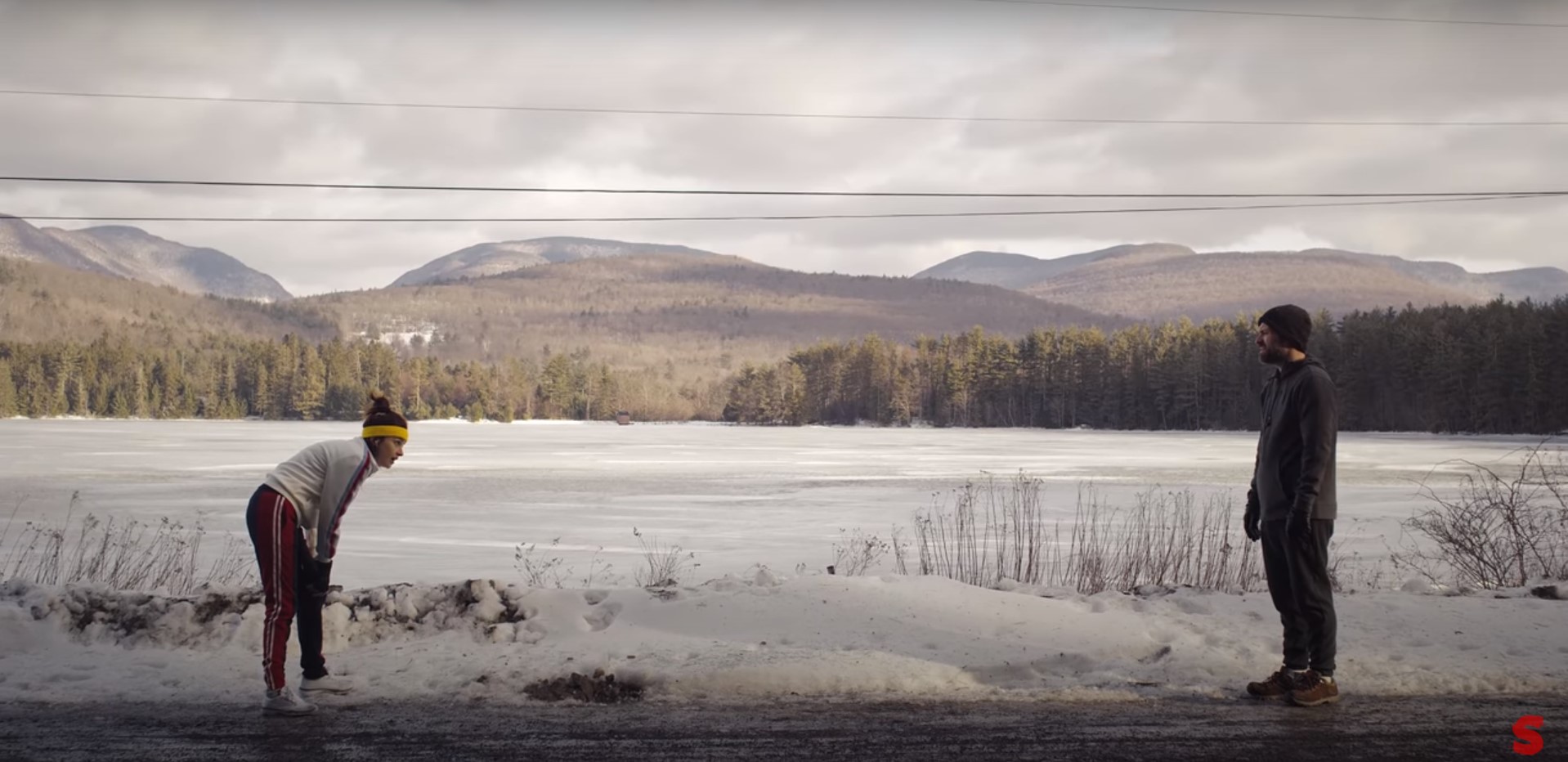
Better late than never, they say, in viewing Josh Ruben’s bewitching “Scare Me” on UK Blu-ray distributed by Acorn Media International. The region 2, PAL encoded BD25 presents the film in 1080p on a streaming platform dictated 2:1 aspect ratio. Aside from the bookend snowy landscapes and exteriors, much of the setting is located inside the compact two story cabin in the woods in which cinematographer Brandon H. Banks breaks into his debut feature with getting the precise angles to reassure and reaffirm Fred and Fanny’s telling of scary stories. As far as visuals go, the digital recording compression seems to hold up on the BD25 while still flaunting a good amount of bonus material and an English language Dolby Digital 5.1 surround sound. No issues here with the audio with phenomenally clarity in the diversity of sound bites and in dialogue even with Ruben and Cash’s modifying their voices for story characters. There isn’t a lot of actions to hone on and rein in the depth, but with this type of story inside, as aforementioned, a compact cabin, depth won’t make or break the audio report card. Special features include a director and cinematographer commentary, short interviews with the Ruben and Cash that run through their favorites things inside the horror genre, a behind the scenes photo gallery, a Make Cool Shit Podcast, outtakes, and “Feel the Music, Feel the Light” music video. I’m always up for a good tale of Fright and “Scare Me” slashes all the boxes with a traditional layout themed by envy and has a cast that illuminates each and every scene with funnies and fear.

That Little Strip of Tape Keeps EVIL From Spying On You! “Eye Without A Face” reviewed! (Gravitas Ventures / U.S. DVD and Miracle Media / UK Digital)


A lonely agoraphobic hacks into the laptop webcams of six beautiful women across the Los Angeles area, tapping into their lives as a compassionate friend from afar.  His voyeurism allows him interaction, even if it’s virtually, and to deal with his severe introverted panic attacks brought upon him by an extremely abusive father and an absent mother as a young boy.  As he continues to stare at the screen, watching the women’s every move, he becomes convinced that one of the women is drugging, killing, and cannibalizing her one night stands.  Trusting his struggling actor and eccentric Youtuber roommate with his secret, too much ambiguity divides their suspicions until the recorded videoclip files of the women’s death show up on the hacker’s computer one-by-one, leaving the hacker vulnerable to possibly someone watching him. 

Every time your laptop monitor is in the upright position, you’re face-to-face with the onboard camera reflecting every movement you take and everything that happens in the background.  Voyeurism is a powerful drug, a contactless addiction where the depraved eyes crave the lifestyles of others to either stimulate the opiate-secreting pleasure endorphins or for more nefarious reasons, such as obtaining sensitive information that can be used for blackmail or theft.  “Eye Without A Face” represents that all-seeing laptop camera lens peering into what should be a private space, quietly invading without making a sound, and possibly turning into the big brother you never wanted.  Ramin Niami’s written and director voyeuristic thriller plays into that unobstructed power over someone by an antisocial hermit and the more that hermit stays reclusive in his shell the more he feeds into his feed of women, becoming more delusional in his attachment for them.   The L.A. shot thriller is a production of the Iranian-born filmmaker’s Sideshow Films with leads Dakota Shapiro and Luke Cook co-executive producing alongside Karen Robsen and Somme Sahab.

Playing the agoraphobic, voyeuristic, hacker Henry is Dakota Shapiro making his feature film debut.  Henry on paper sounds like an oily and unscrupulous lowlife unable to fit as a piece inside society’s puzzle as he watches women from the comforts of his untidied home and unwashed sweatpants.  Niami saw Henry on the contrary as an abused loner seizing at the thought of being out in the world, being around people, and finding comfort incognito with being these women guardian angel.  Henry is empathetic, modest during more private acts, and speaks to them like an equal in a guiding, positive voice without a hint of aggression.  Dakota Shapiro accentuates Henry’s unthreatening existence with dopey eyes and a lethargic posture. Shapiro’s decelerates so slowly that he makes Luke Cook appear like Speedy Gonzales. “The Chilling Adventures of Sabrina” actor is Henry’s house tenant, Eric, an aspiration Aussie actor trying to land a gig, any gig, in Hollywood and his influencer status is an obsession in itself as he garnishes followers for his own path toward Tinseltown stardom. Eric’s intense self-arrogance can be a put off, but he’s oddly chumming with Henry even after Henry lets him in on his little watcher setup, buying his landlord breakfast nearly every morning, providing him drugs, advising him to stop taking prescription drugs, and trying to find a crack in Henry’s impervious shell as if it was a personal challenge extended to him undertake. Their relationship is night and day, hot and cold, and often splashed with awkward friction with Cook laying on the thick, goofy charm with great attention; yet despite Eric’s knack to have money for everything else but Henry’s rent, the struggling actor eagerly wants to befriend Henry in who might be considered Eric’s only friend as sad as that might sound. All of Henry’s other friends are unaware their performing for the all seeing webcam eye as the cast rounds out with Vlada Vereko, Rebecca Berg, Ashley Elyse Rogers, Evangeline Neuhart, Sarah Marie, Danielle Hope Abrom, and Shekaya Sky McCarthy.

There’s more to “Eye Without A Face” than what meets the…uh, well…eye. While the voyeurism isn’t sexually gratifying but the act itself certainly a core aspect, the blatancy of it is more a distraction to what’s really being conveyed by Niami’s script that’s more aligned with “Henry: A Portrait of a Serial Killer” as the film exhibits key homages to the Michael Rooker starring and John McNaughton directed film. Henry falls into the hazards of a blackhole by becoming entangled in a web of women, drugs, and mental illness without almost never leaving his chair.  Eric unintentionally perpetuates Henry’s reasoning for deviating from his straightened arrow path and constant routine.  In all fairness, that arrow was already severely bowed and wavy at best as the 30-something-year-old has more than definitely broken a few federal and local laws by spying on women through their hacked webcams.  Between the nightmares of an abusive father, memories recalled at Eric’s prying, and being fed the disillusion that the medication he’s taken for years is a figment of a society system trying to control him, Henry has to choose to stick with his current reality or try to be something more than a slug in his inherited home, going as far as to calling into one of the girl’s Onlyfans type website and striking up more of a branded I-am-a-stalker conversation than clearly expressing interest in just casual conversation that sends her into a panic defense mode.  From there, “Eye Without A Face” nearly resembles a theme of anti-confidence resulting in Henry blowing up his quaint and satisfying lifestyle when reaching for a little more that ends with disastrous consequences and becomes woke to his triggering of quelled past.  The surprise twist fails to hold water, making no splash when easily discerned, as it’s slathered way too thin and too revealing around Henry’s anxiety-riddled and panicked life.

The invasion of privacy leaves chills with an overwhelming uncomfortable take on the voyeur thriller while the shocking twist kicks around an underwhelming subplot too easy to spot in Ramin Niami’s “Eye Without A Face,” released on U.S. DVD on August 10th from Gravitas Ventures and on UK digital this coming Monday, August 23rd from Miracle Media. The region free Gravitas Ventures DVD is presented in a 16:9 widescreen aspect ratio on a DVD5 and is displayed with a healthy serving of natural digitally recorded coloring that only strays toward a yellow-mustard tint more noticeably whenever Henry dips into a tense or distressed state. The cinematography is the debut feature film work of Sideshow Films’ Tara Violet who has clever POV shots of characters in front of the camera and characters sitting in front of another camera while acting their individual personalities by a high resolution webcam. Among using different types of distortions to render Henry’s mindset, Violet also takes a page out of Terry Gilliam with a wide-angle lens and touch of a Dutch angle to compound the crazy factor. The Dolby Digital English language 5.1 surround on has prominent dialogue unimpeded by shoddy equipment or mic placement that renders good sound design with passable range and depth, especially during webcam dialogue and other miscellaneous sounds. DVD lacks special features aside from a static menu and, obviously, digital releases don’t usually come with any extras well. No bonus scenes during or after the credits. Despite some elements extracted respectfully from inspired classics, “Eye Without A Face” shares a troubling angle on creepy in a digital world and the calamitous ill-effects of ill-advised help that’s no more useful than saying to an uptight person with an anxiety disorder, “you just got to relax.”

“Eye Without A Face” available on DVD / Blu-ray / Prime Video!

After Death is When Things Get Really EVIL! “One Dark Night” reviewed! (MVD Visual / Blu-ray)

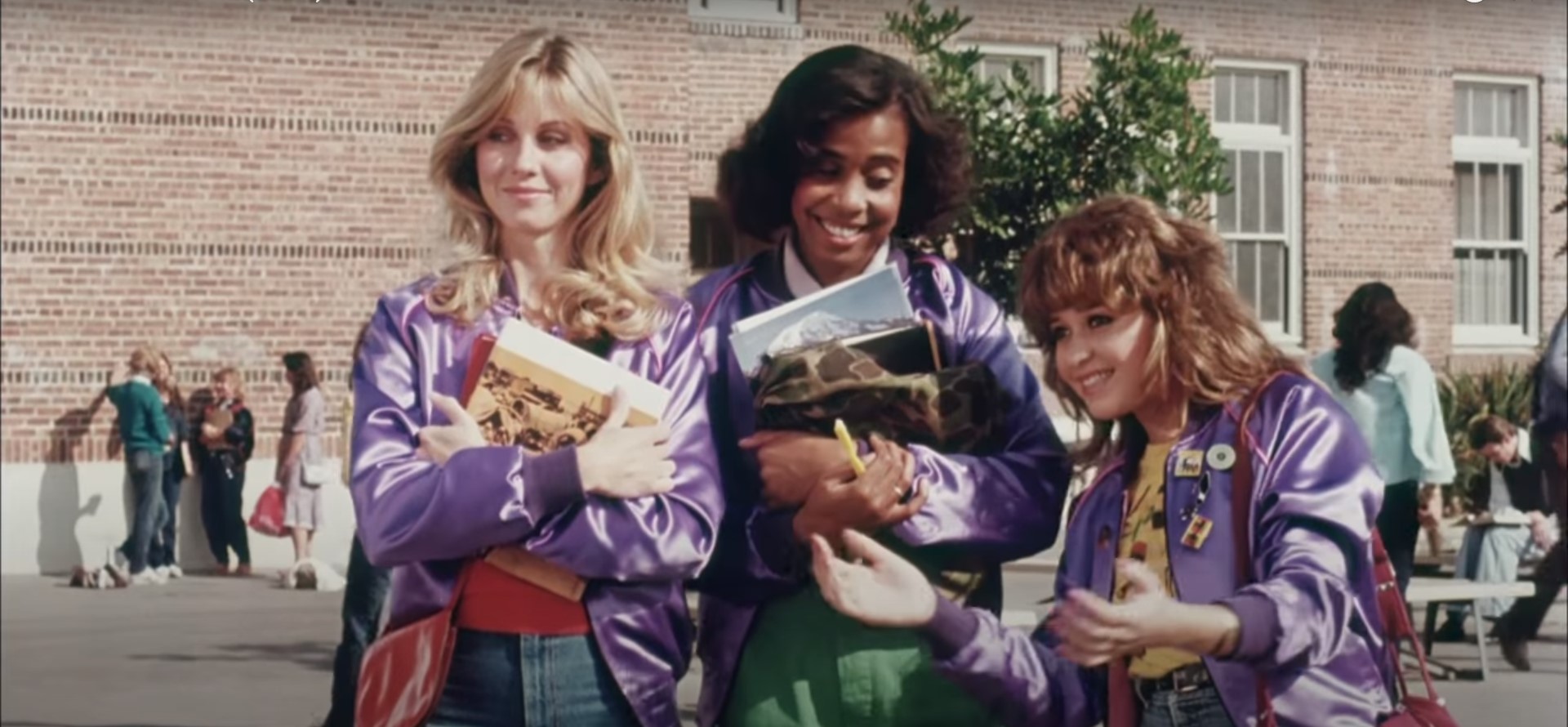
Good girl Julie wants to join a The Sisters, a small high school club ran by three girls, one of who is the ex of Julie’s boyfriend.  Out to prove to herself and to The Sisters she’s willing to go the distance being fun and reckless, Julie subjects herself to The Sisters’ initiations, even the more cruel ones set by her boyfriend’s spiteful ex.  When the last initiation involves staying locked in overnight at a mausoleum, The Sisters will go beyond the limits in trying to scare her out of pledging, but the death of a bio-energy telekinetic practitioner with a cryptic occult past is freshly stowed away in one of the mausoleum’s coffin crypts and in death, he is more powerful and dangerous than when alive.  Trapped, Julie and The Sisters are terrorized by his power as he seeks to transfer his malevolent energy into one their bodily vessels. 

A PG rating back in the pre-1990 was also an abstract concept.  “Clash of the Titans.” “It’s Alive.”  “Jaws. “ “Prophecy” (the one with the spirit bear, not the Christopher Walken film).  These are a handful of titles that were MPAA rated PG approved, but contained nudity, bloody kills, and not to forget to mention some terrifying visuals that’d make anyone piss their pants.  “One Dark Knight” also fits into that category as the 1982 teen horror from “Friday the 13th Part VI:  Jason Lives!” director Tom McLoughlin set his sights toward a R-rating with the mindset that his detailed scenes of decay and rotting corpses and a face blistering the flesh to the skull would surely be slapped with the 17 years or older rating.  Low and behold, the ratings board thought otherwise, surprising McLoughlin and his co-writer Michael Hawes (“Family Reunion”) with a parental guidance rating that my 7 and 4 year old could sit in on without me fearing theater security or, even worse, the mind control hypnosis and repetitive nurturing elements of today’s movies and shows that don’t make a lick of common sense or brandish any artistic heart. McLoughlin’s ‘One Dark Night” has plenty of heart and plenty of floating dead bodies in this Comworld International Pictures production with “Out of the Dark” director Michael Schroeder producing and Thomas P. Johnson as executive producer.

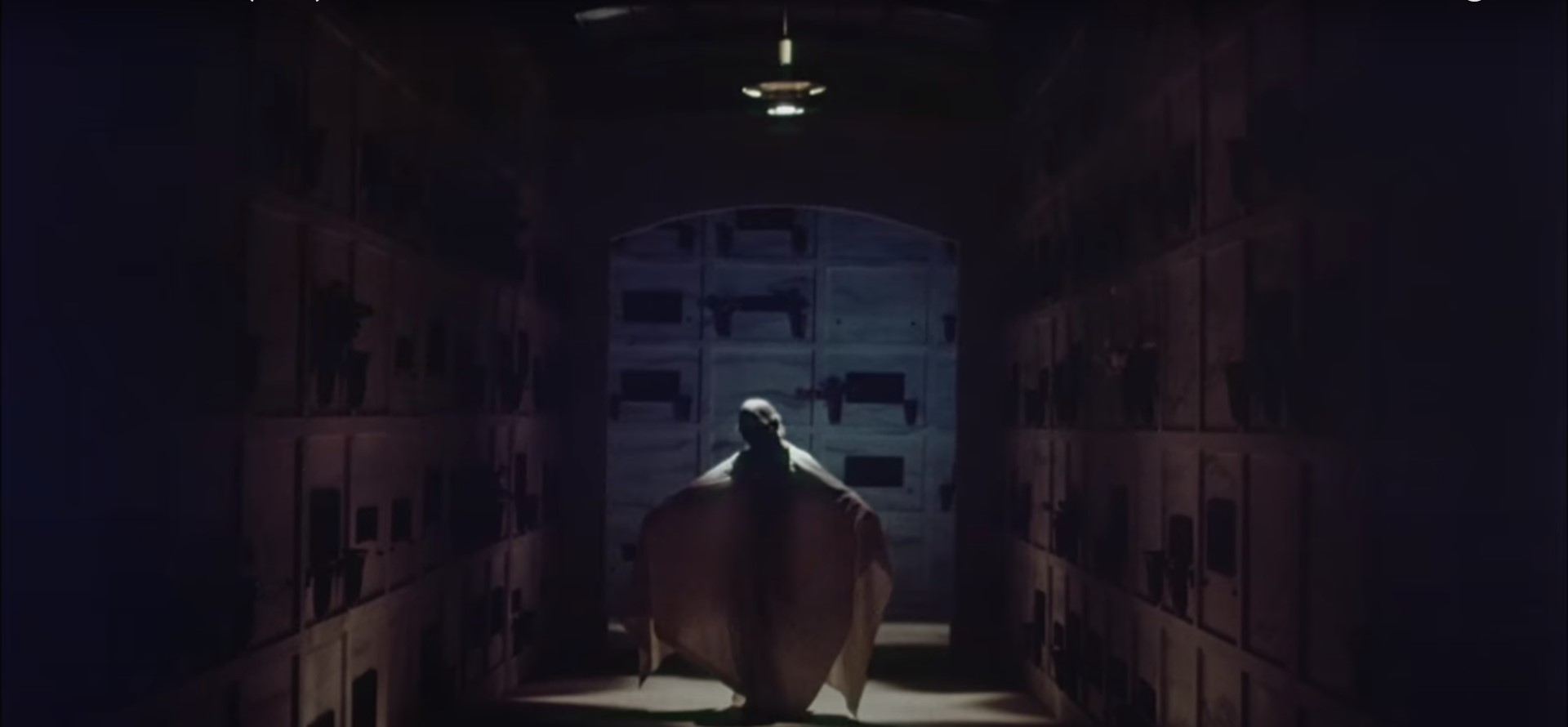
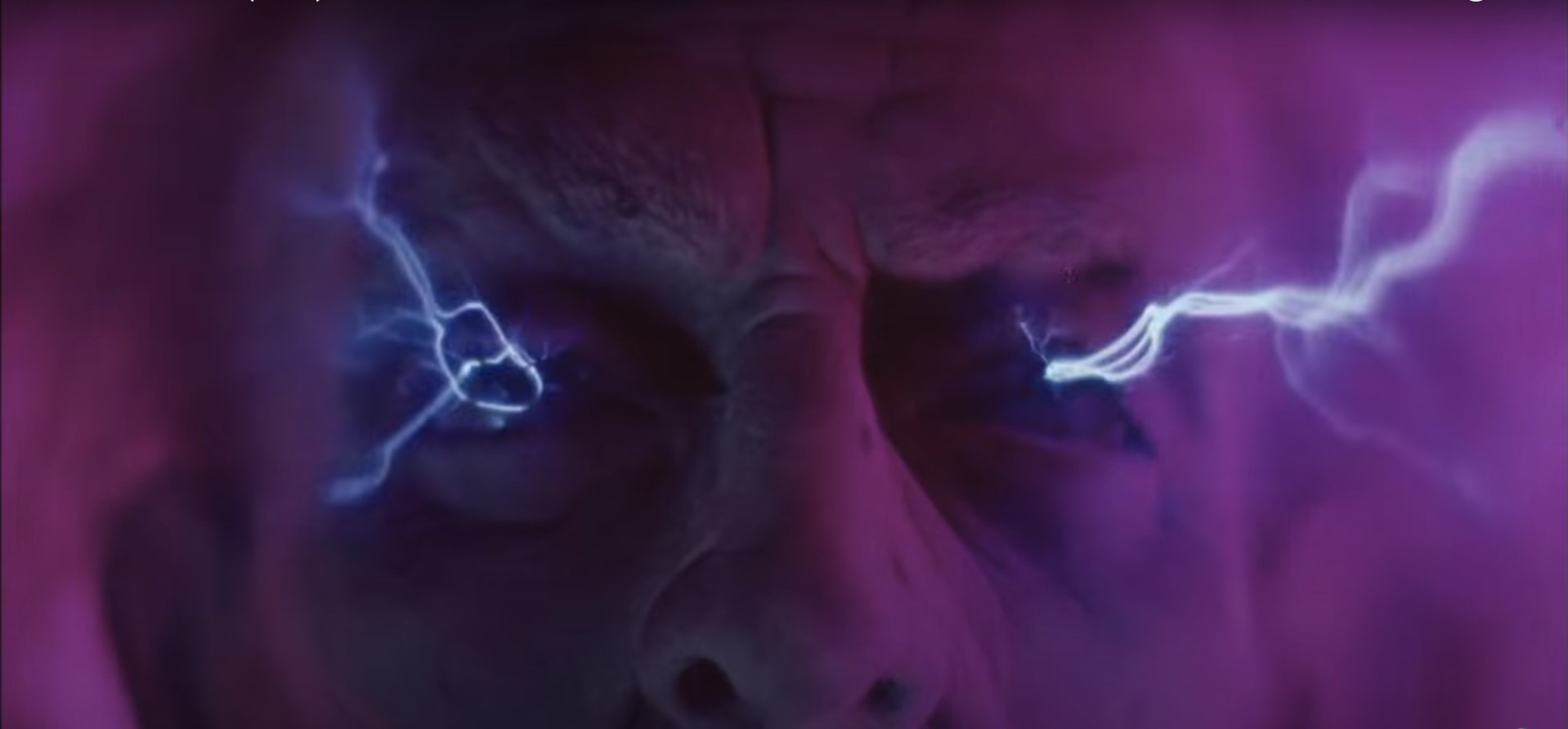
Before hitting the sequel and remake circuit with “Psycho II” and “Body Snatchers,” Meg Tilly broke onto the scene as “One Dark Night’s” leading lady as the amiable Julie whose looking to shake her good girl image. The little sister of “Seed of Chucky” and “Bound” star Jennifer Tilly takes the role by the reins by undulating her fear and determination to do what The Sisters initiate her into completing. The Sisters is comprised of renowned voice actress and “Pee-wee’s Big Adventure” costar Elizabeth Daily, Leslie Speights, and lead by Robin Evans as Carol, the spiteful and venomous ex-girlfriend of Julie’s now jock boyfriend (and Christopher Reeves lookalike in my opinion) in David Mason Daniels. You know what they say about love triangles they? They always lead to psychopathic, telekinetic psychics reeking havoc in a mortuary. Luckily for Tilly, Speight, Daily, Evans, and Daniels, psychopathic, telekinetic psychics are not real and neither is the person who plays the Karl Rhamarevich aka Raymar character! You see, the opening is the post-death scene of Raymar whose lying dead under a coroner’s white sheet along with six beautiful women stuffed into a corner closet in his oddly tatterdemalion apartment. The next time we see Raymar is in his casket, wide open, wide eyed with blue lightning summoning to animate the dead from the mortuary crypts; yet, Raymar is played by a dummy in the film created by Tom and Ellis Burman (“Star Trek” franchise in various capacity and “Scrooged”) and Bob Williams (“The Terminator”) who mold Raymar after the contours of Christopher Walken – second time Walken has popped up in this review! The more interesting casted parts, whose characters don’t do diddly squat in the film, is Adam West (“Batman”) as Raymar’s daughter (Melissa Newman) level-headed husband and The Predator himself, the late Kevin Peter Hall, in a minor appearance before becoming the man behind that one ugly son of a bitch mandible mask. You also actually get to see how tall Hall was in his prime.

“One Dark Night” flirts with being this strange horror that blends teen suspense and shenanigans with gothic horror with pseudo-science deviltry sushi wrapped into a Euro-horror roll. I kind of love it. I’m one of those horror fans who avoid trailers like the plague and try not to read synopses on the back cover, going into every viewing with complete ignorance, total unbias, and good attitude. I didn’t even know Meg Tilly was in “One Dark Night” for Christ sake! As the 90 minute runtime ticks down, I’m curious to where McLoughlin starts to take this film that doesn’t seem to quite get into the horror portion of Raymar’s show-stopping comeback. McLoughlin and Hawes hype up the love triangle with Carol’s bitter acrimony and Julie’s adolescent need to not be a one-note complexion all the while Steve desperately needs Carol to cease and desist any and all torturous hazing attempts, but there’s still this itty-bitty connection still tethered between the two that also causes Steve to two-time his new, more benevolent, girlfriend. In the end, I can confidently say that Steve is a good dude, a guy who double downs on a girl like Julie who can’t seem to get it through her thick skull that she doesn’t need to prove anything to three dimwits with sheeny club bomber jackets. I can tell you who isn’t a stand up guy – Raymar. Kudos to McLoughlin and his crew for creating one evil son of a bitch villain without there ever being a palpable proverbial man behind the mask to bounce off a projection of fear and contention. The evil Raymar practice was so intensely evil it was beyond our dimensional comprehension and broke the mold of death with the abilities to animating the dead among other things. “One Dark Night’s” slow start leads to a not to be forgotten survival terror against an army of the harnessed dead.

Raymar isn’t the only thing brought back from the dead, but also “One Dark Night” as MVD Visual, under the MVD Rewind Collection, strike a deal with Code Red to utilize their OOP transfer and bonus materials for a new re-release Blu-ray hitting retail shelves this Tuesday, August 24th! The 1080p high definition transfer is presented in a 1.78:1 aspect ratio speckled nicely with natural, pleasant looking reel grain. Like the Code Red special edition release, plenty of details shine through the delicate rendering that can be image wispy at times. Loads of superficial damage – frame scratches, edge flare ups, rough editing cuts, smudges – can’t go unnoticed, but these blemishes don’t hinder much as the scenes are more transitional during the setup to the big mortuary finale. What differs from Code Red’s DTS-HD 2.0 mix is thee English language LPCM 2.0 mono mix that still lightly treads with subdued effect, much like the Code Red release. Dialogue can sound muffled with popping landing just under the surface and bubbling up during dialogue scenes. Still, the audio track stands it’s ground by clearly rendering every dialogue, effect, and soundtrack without question. English subtitles are also available. You want bonus features? You got’em! Interviews with director Tom McLoughlin, actress Elizabeth Daily, actress Nancy Mott, cinematographer Hal Trussell, production designer Craig Stearns, producer Michael Schroeder, and special effects crew member Paul Clemens are all individualized for maximum recollection tidbits and factoids. There’s also audio commentaries by McLoughlin and Schroeder as well as McLoughlin and co-writer Michael Hawes. Plus, we also graced with McLoughlin’s director’s cut, a standard definition, unfinished, work print version in a 1.33:1 aspect ratio that shows the director’s true take on the narrative before producers ultimately decided to go another route…behind his back nonetheless. Behind-the-scenes footage, Paul Clemens photo gallery, and original theatrical trailer round out the disc bonus content while the physical release comes with a retro-take card board slipcover, reversible cover art, and a collectible mini poster inside the case liner. If you’re a fan of Euro-horror, “One Dark Night” embodies the very soul of the Lucio Fulci and Michele Saovi supernatural archetype sewn seamlessly into an inescapable and hopeless dance with the gnarly energies of the stoic dead.

Pre-order “One Dark Night” on Blu-ray at Amazon.com!

EVIL Lays All the Cards on the Table. “As the Village Sleeps” reviewed! (Indie Rights / Digital Screener)

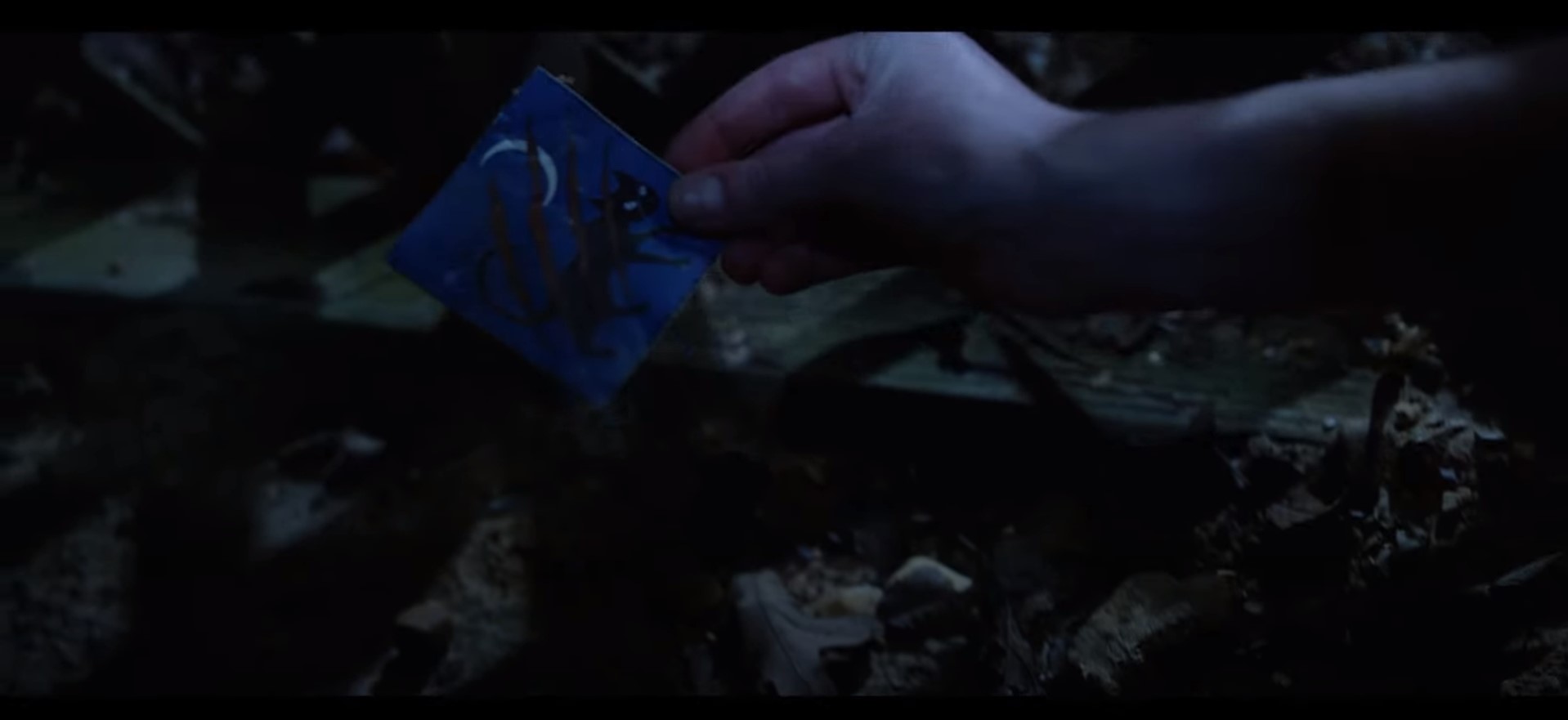
Sarah is throwing a birthday party at her stepdad’s large house on Indian reservation land.  What should have been a quiet, boozy night with a handful of close girlfriends turns into a bigger and tense shindig of drugs and alcohol when her ex-boyfriend’s band and her step brother and sister unexpectedly show up at her doorstep.  With them comes a game, called Lynched, her ex purchased at the nearby gas station, but after playing, then drinking, the night away, the quickly find out the game is far from being over.  The mysterious card game comes to life, pitting friend as foe, and Sarah’s friends disappear one-by-one in the order of their in game deaths.  Leveled heads tip in the balance of fear and loss as the game plays havoc on their psyche, creating nightmare visions and that feeling of being watched and hunted, and the rules are anything goes when the game goes halfheartedly unfinished.

Werewolves.  Witches.  Vindictive townsfolk.  Murder.  Lynched, the game, sounds like an intense and medieval whodunit that insidiously presents mistrust into who you think are your closest friends and allies.  An interesting setup for the Chloë Bellande penned and Terry Spears directed 2021 released horror-mystery thriller, “As the Village Sleeps.”  The feature is Bellande’s first produced script based off her short, “While the Village Sleeps,” she wrote and directed in 2012 and with a few tweaks to the characters and location, the “American Terror Story” and “Hell’s Belle” director Spears, whose career as a musician only recently sought expansion into filmmaking, depicts that some games should never be played.   The independent film is a production of Spears’ 19 Artists Development and is co-produced by Kris Young as well as award-winning producer Gray Frederickson of “Apocalypse Now” and “UHF.”

Starring in her first feature film, Eleonora Saravalle has to be puzzler piecing together the deadly mystery intruding upon her character’s remote birthday bash.  The rather tall Saravalle is paired up with a rekindling love interest in the rather short Oliver Rotunno in their respective roles of Sarah and Alex who hold onto a sparkle with a rough patch in a rocky relationship history that stays in the past never to be fleshed out from their backstory involving Sarah dumping Alex for unsaid reasons.  That dimly lit sparkle doesn’t really shine through much between Saravalle and Rotunno with a dynamic resembling more big sister and little brother than crisscrossed lovers.  More so than the sibling rivalry from Sarah’s stepsister Tala (Shiah Luna, “Age of the Living Dead”), and stepbrother Jacey (Daniel Olguin) with an uptight and contentious static background noise that, again, fails to come to ahead about why Tala is stubbornly irritated with Sarah; instead, the attempt at building something more between them during shared terror experience quickly fizzles out of complacency without so much as a hurdle to make their bond more impactful.  None of the characters are terribly impressive or worthy enough for sympathy, not even the flawed ones had any emotional weight when meeting their maker, falling into uncomplex tropes stapled to the genre such as with the naïve party girl Connie (Chloe Caemmerer), the immature rocker Matt (Rane Thomason), and the I-hate-city-slickers town cop (Mark Adam Goff).  The more interesting characters, like the old, long in the tooth, gas station attendant who sold the game and walks to work every early morning, doesn’t receive the time of day though very important to the plot.  “As the Village Sleeps” rounds out the cast with Michael Gum, Tyler Malinauskas, Kenzie Leigh Spears, Victoria Strange, Winnie Du, and Otis Watkins as the elusive Midnight.

“As the Village Sleeps” has too many strikes against it to ignore.  Between significant plot holes, underdeveloped characters, snuffed out offshoot side stories, and an arterial scenario struggling to stay cohesive by a bunch of no-named actors, who more or less do okay in their lackluster residing roles, the already low-budget production deserves every grain of a derisible reaction with its horrifying-veneered derivative hand at “Jumanji.”  Instead of a stampede of elephants, a ferocious crocodile, and a hairy Robin Williams being roused from out of the board game world by the roll of the dice, the card game Lynched barely rears itself back into the fold after the players supposedly don’t finish the game in order to drink themselves into a stupor.  Only just a handful of cards reappear on the spot where those disappeared, turning the game into a supernaturally present character without ever manifesting tangibility and that becomes a running motif for Spears’ film, that lack of finishing something to elicit a gratifying arc of completion.  We see fragmentary elements everywhere with the aforementioned character dynamics between Sarah and Alex and Sarah and Tala, the unresolved routes of unearthing the game’s racist atrocities against Native American origins by investigating the obvious gas station merchant Midnight who sold our protagonists the game, and the characters who don’t disappear at the game’s hands, but just vanish without so much of a word about their fate.  From what I’ve briefly watched, Bellande’s 2012 short would be a tad improvement over the 2021 release and might be more worthwhile with a mindful production value that’s more attuned to being budget friendly and a sound design that’s not a stock file folly with depthless growling wolves and overexaggerated footsteps.  The overall experience just might be more pleasant. 

Become lost and hunted down in the gameplay of “As the Village Sleeps” now available on Amazon, currently free with Prime Video, under the distribution of Indie Rights Movies with more streaming platforms to be announced.  Titus Fox serves as the film’s cinematographer whose most intriguing scenes are under the latticed deck.  Between the combination of steady and handheld camera work, Fox implements a voyeuristic and stalking POV of the shadowy werewolves coupled with the stark contrast between black negative space and sphere of torch light.  The scenes are brief but well-executed to drawn some visual aesthetic and sense of threat with the remaining cinematography reliant on common swivel panning and edited stationary positions.  There are no extras or bonus scenes accompanying this streaming release.  Whether be the filmmaking inexperience of Terry Spears, Bellande’s perforated story, or the limitations on the production and sound design, “As the Village Sleeps” should be slept through to not rouse exhaustion from consistent frustration. 

“As the Village Sleeps” is available on Prime Video!