The EVIL Peruvian Whistle of Death! “Face of the Devil” reviewed (MVD Visual / DVD)


Deep inside the Amazon jungle of Peru, seven friends getaway from university life by staying at a remote riverside resort.  No cell service.  No nearby towns.  The resort shelters an idyllic retreat for those looking to escape the mundane routine of the real world, but the jungle is also home to an indigenous evil entity, some may even label it the Devil.  Better known among the locals as el tunche, the trickster spirit prays on innocence and the naïve, psychologically tormenting with a foreboding whistle indicating it’s nearby presence.   With no help in sight and nowhere to hide, the jungle comes alive with an ear-piercing whistle that seeks to swallow the seven vacationers to their doom. 

To some extent, horror lives and dies by permanency of myth and legends, cultivating inspiration from ancient, as well as new, mythical beasts and spirits and spin them into entertainment macrocosm or, perhaps, even to just simply to share the rarity of knowledge and heritage surrounding the tales.  If in American mountaintop forests bigfoot roams inconspicuously around populated areas, breeding enigma and scaring children around campfire stories, then in South American, el tunche does much of the same instillations for the Peruvians who inhabit their legendary fiend, preying on delinquent youths, in the dense jungle.  Outside of Peru or maybe even South America, el tunche is not globally known, but for one Peruvian film from 2014, local lore becomes broaden beyond confining borders and creeps right into our home video media players.  Director Frank Pérez-Garland helms the maligning mythos with “La Care del Diablo,” aka “Face of the Devil,” from a Vanessa Saba screenplay set in the ominous jungles of Peru plagued by a wandering and whistling evil spirit searching for those lost among the tall trees and foliage.  Peruvian based Star Films and La Soga Producciones spearheads the production located on set of an ecolodge in the uncommercialized area of Tarapoto just North of Lima and serving as producers are Gustavo Sanchez (“The Green Inferno”) and Varun Kumar Kapur. 

“Face of the Devil” is a hyper localized narrative that’s fully contained inside the jungles of Peru as well as a casting all Peruvian actors with zero other nationalities appropriating roles for a mythological tall tale extension that rightfully needs to be expressed by native filmmakers.  As such, you won’t recognize a face amongst the cast unless you’re eyeballs deep into South American cinema.   The film opens with a dream sequence of a young girl staring at her towering mother’s weird, unholy behavior that ends with her mother, played by writer Saba, quickly reaching out for child and abruptly awakens from the dream is Lucero (Vania Accinelli).  Lucero’s nightmares become an important reoccurrence, like an omen, that doesn’t seem to upset the college freshman despite the nightly fright, but other aspects upset her father to the point where he yells at her for wanting to go on a trip with her friends, signifying a quick trip into unspoken complications sanctioning Lucero’s mother death that worries the same fate may also fall upon his daughter.  Before we know it, a reluctantly agreed to Lucero is river boating with her six friends:  couple Mateo (Nicolás Galindo) and Fabiola (Maria Fernanda Valera), Camila (Alexa Centurion), Paola (Carla Arriola), Pablo (Guillermo Castañeda), and new boyfriend Gabriel (Sergio Gjurinovic).  The friends are seemingly full of life, love, and fun but the dynamic turns only slightly complex with love triangles that only go as far as being the butt of the weekend’s jokes.  The characters do very little in the story, splashing around in what seems to be an unreasonable number of ecolodge pools for most of the time while playing spin the bottle, truth or dare, skinny dip, or just make fun of each other because, as a trope bylaw, that is what college-age kids do to spark tensions and cause divisions, and I find the characters and their portrayers to be uninspired to do or be more that invokes the frisky wrath of el tunche.  Javier Valdez and Ismael Contrearas bookend the cast of characters as two polarizing stances on dealing with otherworldly spirits by either being cautions and frightened as Valdez is with Lucero’s papa or embrace the spirits for self-purpose as it is with Contreras who plays the resort owner. 

“Face of the Devil” has all the properties of an European-fried and campy-peppered supernatural kill tally, drawing elements from the jungle cannibal subgenre sans the cannibals and the teen slashers sans the slasher.   Instead, el tunche is an all but forgotten myth lost over time through the generations until “Face of the Devil” calls to mind the cautionary dangers of cultural wise tales for naïve and disrespectful youth who wind up on the deadly end of el tunche’s mean streak.  Saba’s script incorporates more than just your average urban legend come to life tale with a Diablo-sized pretext to why el tunche all of the sudden decides to besiege upon this particular group of vacationers.  Per the legend, el tunche gobbles up those lost in the jungle thicket, but Saba and Pérez-Garland’s religious context direction, including the motifs of the trinity cross and bodily possession, has the good-natured Lucero, infected by her mother’s randomized demonical occurrence, be the proximity key to el tunche’s unleashing.  Good versus evil also becomes strongly painted in the latter half of the narrative and is affixed to the lore’s distinctive construct.  The further Lucero is led from a path of spotless geniality, from her overprotective father, the more she experiences nightmares and the closer she is coming face-to-face with the malevolent forest entity feeding off her tarnished past.  Sadly, “Face of the Devil” weans off from nurturing el tunche into a singular idea with the entity depicted as, but limited to, an invisible presence, a black oil spill in the water, a pulsating yellow glow, or as Anna Gonsalves says in “Predator,” the jungle came alive and took them.  Even the current DVD release represents el tunche as a Lovecraftian-like creature with tentacles coiling out of the jungle river water and enclosing around a bikini-cladded sex symbol with a tattooed vagina – provocative!  Yet, inaccurate.  There are no tentacles and no woman with vagina ink.  “Face of the Devil” struggles with character motivations, sending boyfriends off into the woods without tools or guidance to find help, leaving the story to fend for itself solely on a slap-dashed gory ending that’s a little too late in salvaging the ferocity of one of Peru’s most mythical phantasmas. 

Like aforementioned, the DVD cover is a tad misleading, enticing with sex and tentacles topped with DEVIL in a big red font.  Now, you can go in eyes wide open with your own copy of “Face of the Devil” distributed by MVD Visual in collaboration with Jinga Films and Danse Macabre.  The single layer, single sided, region free DVD5 is 77 minutes presented in a widescreen 1.78”1 aspect ratio. Reason behind discerning the storage format to be a DVD5 is evident in the compression issues that clutters the picture with artifacts, leaving highly noticeable splotches to shake details to the core. There’s also the use of the vapid gray tint insipidly squashing any color and life from the lush green jungle Pérez-Garland finds himself extremely lucky shooting inside. Watching “Face of the Devil” felt cinematography akin to an episode of “The Handsmaid Tale” or “The Walking Dead” where a bland overlay masks more than just brightness and beauty of natural hues and light. The Spanish audio mixes have two lossy options – a 5.1 surround and a 2.0 stereo. Switching between the two, the 5.1 obviously has a little more robust soundtrack during the cacophony of jungle augury. Snakes hissing, bat clicks, the comprehensive soundbites of other animals in audio vibrational flight combined with the intense whistle, like a diluted train whistle, has ambient staying power to be the most effective element to el tunche’s death harbinger presence. Dialogue is less robust but prevalent and the English subtitles synch well without error. As far as special features, nothing beyond that of the static menu and there are also no bonus scenes during or after the credits. The opening title card credit sequence is about as artistic as the film allows itself to be only to then dwindling into pedestrian territory. Set in the Peruvian jungle deemed to be a major waste of location perfection as much of “Face of the Devil” buoys chiefly poolside with the cheap Dollar Store adhesive tape barely coupling a connection between local legend and the Devil in this wet behind the ears teenager-in-danger yarn.

“Face of the Devil” available on DVD at Amazon.com

Don’t Be Fooled By the EVILs of Your Mind! “Open Your Eyes” reviewed! (Gravitas Ventures / Digital Screener)


Screenwriter Jason is on a deadline.  The producer is looking for his next script and soon.  The writer finds himself in a funk in not only fleshing out his script but also with his memories as a lingering sensation clings to him as flashes of moments that don’t seem quite right haunt his reality.  As he plugs along with his writing, other strange occurrences happen all around him:  a portion of his apartment wall is deteriorating from a leak in an adjacent upstairs unit, a cat has seemingly made it’s way into AC ducts, and objects disappear and reappear.  His dormant apartment complex is frustrating and lonely when he can’t reach the upstairs neighbor or the building manager about the leak that’s destroying his wall, but when he runs into Lisa, a neighbor from down the hall, many of his concerns fade away with her striking beauty and the two start up the beginnings of a possible relationship.  Yet, there’s still something amiss he can’t put his finger on and his newfound friend Lisa might just be the key to his awakening.   

Modest psychological horror has always been a tough one to pull off.  Instead of a straight forward zombie apocalypse or a killer behind a creepy mask slashing to bits half-naked teenagers, the psychological horror subgenre has to develop disintegration details and piece together fragmentations in a whirlwind character study that hopefully materializes into logical sense.  Writer-director Greg A. Sager tackles such threadbare cognizance with the filmmaker’s latest feature, “Open Your Eyes,” a Canadian psychological horror-thriller released this month.  Sager remains firmly in the horror realm with his fourth feature film behind 2012’s demon-seeding “The Devil in Me,” 2014’s supernatural penancing “Kingdom Come,” and 2018’s extraterrestrial thriller “Gray Matter.”  Continue the trend with all his independent productions, Sager self-produces alongside his co-founding Matchbox Pictures Inc., partner, Gary Elmer, who is also the cinematographer on the project.

“Open Your Eyes” is also modest in casting with two backbone characters keeping Sager’s narrative from being an bodiless work of art.  Doing much of the heavy lifting is the Toronto based Ry Barrett and with his close connection with filmmaker Chad Archibald, Barrett has had, in many different capacities, a role in a string of B-horror, including such films as “The Drownsman,” “Antisocial,” and “Neverlost” which are all tied to the Ontario director.  “Open Your Eyes” serves only as the second time Barrett and Sager team up following the release of “Kingdom Come.”   Barrett exudes an unconscious performance in Jason’s unravelling from crunch-time screenwriter to an unglued madman living in Jason’s version of a tenantable matrix.  Jason is almost sleepwalking through a lonely existence even before meeting his neighbor Lisa, a role played by Joanna Saul in her commencing feature film act, and the struggling to keep structural integrity writer hardly suspects and worries about strange manifestations that are happening all around him.  I don’t think Sager captures Jason’s full autonomy awareness that leaves the character more blank than bothered.  Barrett and Saul have adequate enough chemistry to make their barely a courtship romance intriguing, but her character’s implementation into restoring Jason’s vital grip on reality just kind of falls into his lap without a pinky being lifted on Jason’s part to assist in his own deliverance.   Heather May and Julianna Suzanne Bailey round out the small cast.

Aside from the nuisances with the character development, the sterilized comforts of Jason’s living conditions alone provide an unconventional chill.  Though living in an apartment complex is normally assumed chockablock with tenants living their lives, Jason’s apartment building is virtually vacant, void of the hustle and bustle of occupants, with not as much as a whisper from the exterior of Jason’s top-to-bottom, side-to-side walls.   What seems to be an idyllic environment for a concentrating writer becomes an oppressive variable that yet doesn’t seem to slow down or question Jason’s momentum or leave any kind of sense of threat along the way, leaving his what should be an ominous place of mind-bending confinement hanging out to whither and dry up .  I thought the plot twist to be shrouded enough to warrant a semi pleasantly surprised and unexpected ending that connects topically to today’s real-world climate.  Not to be riding a one trick themed pony, Sager also plays upon the themes of grief over loss and how the mind compensates with overactivity and gap fillers to avoid a complete mental system overload while also subtly adding a static charge of illusory sensations to make unsettling disturbances.  “Open Your Eyes” will not scare your socks off as it’s not that kind of film; instead, expect a slow-burn mystery more puzzling than panicky as the walls begin to crumble…literally. 

Okay, puzzlers.  Get puzzling on the new mystery horror-thriller, “Open Your Eyes,” that was distributed this past June by Gravitas Ventures on DVD, Blu-ray, and digital.  Producer Gary Elmer, as director of photography, paints the dark corners with softer figures that provides a really good shadowy contrast between character and background.  Elmer’s small use of the blue tint, his over-the-shoulder hallway delph, and shallow focus add tidbits of appeal without just “Open Your Eyes” seeming like another flat indie production.  Since I was provided with a digital screener, I can’t comment to confidently on the audio and video qualities of a physical release, but presented 2.35:1 widescreen was digitally shot on a CineAlta series Sony Venice camera that effectively provides a smoother grain, especially in the inky shadows, that transmit a really rich data scheme for post-production and offers that flexibility in producing range.  Another byproduct of the Venice camera is the natural looking skin tones seen with Elmer’s film when not under a tinted lens.  No bonus material offered with the digital screener and there were no bonus scenes during or after the credits.  Perhaps with a runtime a little longer than necessary, clocking in a 99 minutes, “Open Your Eyes” is a quaint terror touching the tattered strings of a mind, body, and soul pushed over the edge and into a falsehood bred by fear and loss.

Own “Open Your Eyes” on DVD or Watch on Prime Video!

EVIL Should Have Never Pissed Off One Uncontrollable, Raging Chick! “Jolt” reviewed! (Amazon Studios / Digital Screener)


Intermittent Explosive Disorder.  It’s an unstable condition Lindy Lewis has lived with her entire life where the little annoyance can set her into a murderous rage.  High levels of cortisone give her extra stamina, increased strength, and an endless stream of undaunted courage.  Mix all of that with her antisocial behavior and a variety of special, military grade, skillsets, Lindy can be one of the most deadliest humans if you happen to piss her off.  To control her temperament, an unorthodox psychiatrist designs an self-inducing electroshock harness that provides Lindy at jolt of electricity to snap her out of a potential bloodthirsty rampage, but when she finally finds a man pleasing in every way , a man who can keep the volatile emotions at bay, his sudden murder sends her into a vindictive slaughter of anyone involved with his death. 

“Shoot’em Up” meets “Crank” in Tanya Wexler’s unbridled tempest, “Jolt, that features an eclectically (and electrifying) international cast dropped into a graphic novel noir of femme fatales and organized crime.  The “Relative Evil,” aka “Ball in the House,” Wexler directs the 2021 released revenge narrative from a vivacious script penned by Scott Wascha as the writer’s debut feature length credit.  Filmed oversees in Bulgaria, “Jolt” is a melting pot of explosions, street fighting, and Hell hath no fury like a woman scorn under the production banner of Avi Lerner’s typically entertaining, yet hit-or-miss Millennium Films in collaboration with Busted Shark Productions, Eclectic Pictures, Nu Boyana Film Studios, and the “2001 Maniacs” series’ Christa Campbell and Lati Grobman company, Campbell-Grobman Films.

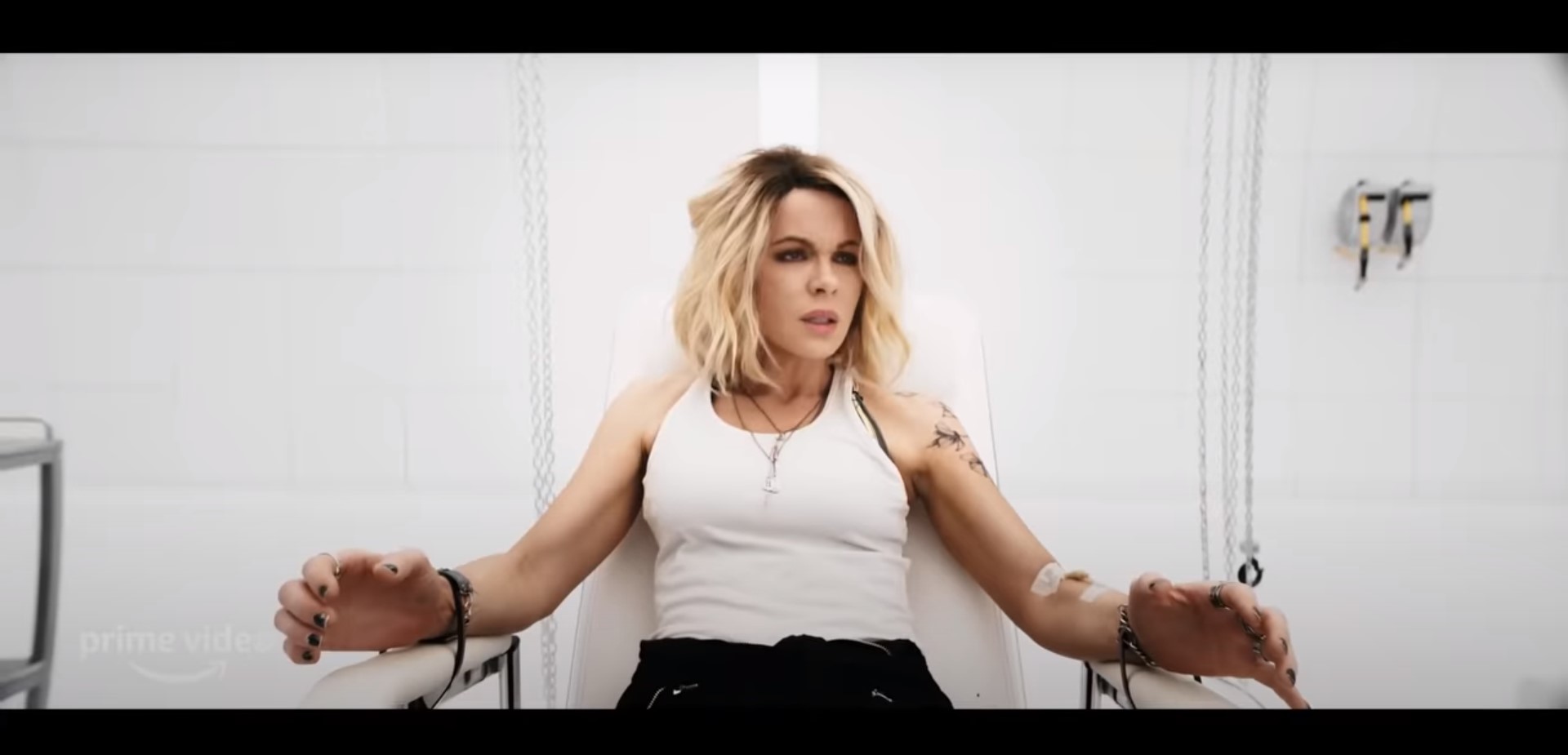
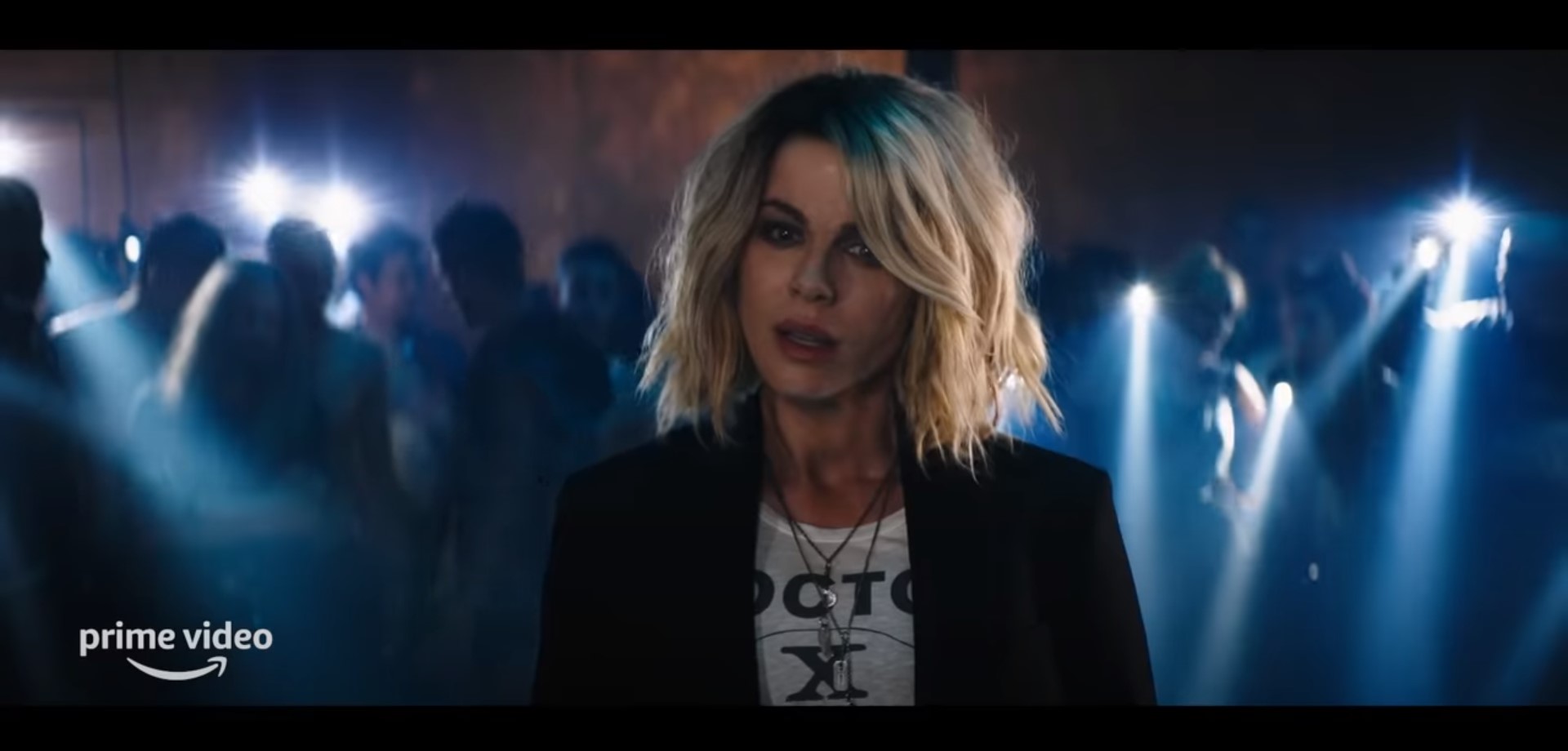
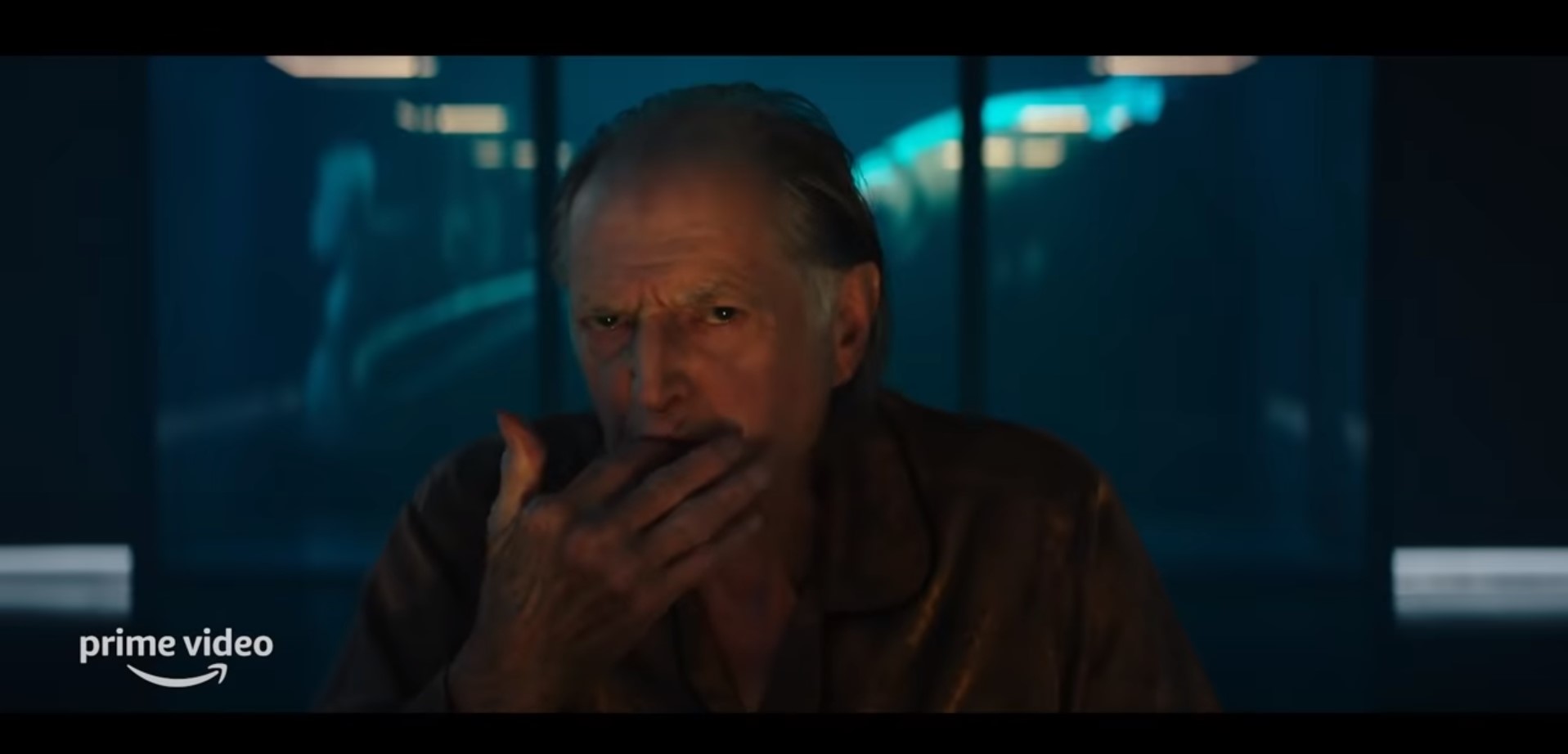
As if she never stopped playing the sleek vampiric werewolf huntress, Selene, of the “Underworld” franchise, Kate Beckinsale is stunning.  And I don’t just mean her timeless and ageless beauty as the English actress, who is living her best life at the latter half of her 40’s, proves that age is just a number in executing a physically demanding role with nearly every scene involving stunt work.  Unlike the gun-toting Selene, Lindy Lewis prefers her bareknuckle combat and a car battery alligator clipped to an old man’s genitals to get what she’s after.  Beckinsale plays the role beautifully equipped with a sharp, snarky tongue that’s pretty damn funny, well-timed, and consistently befitting to the Lindy’s personality.  “Jolt” has many colorful characters played by interestingly elected actors.  “Suicide Squad’s” Captain Boomerang himself, Jai Courtney, finds himself as the unlikely sedative lover, Justin, to counteract Lindy’s explosiveness.  The Australian actor, who is more than a decade junior to Beckinsale, fills in “Jolt’s” ranks alongside the gruffy-raspy voiced Argus Filtch, I mean David Bradley (“Harry Potter” franchise), as the top-tiered bad guy who stamp-approved the hit on Justin.  Along the way, a pair of tenacious detectives pursue the wrongly accused Lindy as a welcoming pair polarized on how to bring in their suspect that isn’t based off corruption with “Orange as the New Black’s” Laverne Cox as the by-the-book cop and “Snakes on a Plane’s” Bobby Cannavale as a cop with a softer side for the pursued.  “Jolt” rounds out with Ori Pfeffer (“Shallow Ground”), Sophie Sanderson, Susan Sarandon (“The Rocky Horror Picture Show”) in a minor role, and versatile Stanley Tucci (“The Lovely Bones”) as the electroshock harness inventor and psychiatrist, Dr. Munchin.

While it sounds like I’m singing high praises for Wexler’s film that does indeed have an amazing cast, quick wit performances, can be funny, and great action, I find “Jolt” to be lacking that little Je Ne Sais Quoi as the French would say.  Maybe the breakneck speed story that follows an illogical and nonsensical means of progression overloads the system to where you fry out your organic circuit boards trying to keep up with Lindy’s investigative warpath.  Aside from the fact that figuring out what happened to poor Justin is no mystery, an overexploited trope spanning from every era of cinema, our heroine also nonchalantly strolls right into the middle of crowded street fights, police stations, and in and out of explosions with every aspect of her hell hath no fury like a woman scorned purpose seeming too easy without anything rewarding stemming from difficulty that surrounded her, leaving no tension to salivating over or achieve relief from her impossible no way out scenarios.  Even when Lindy is easily captured, tied to a torture chair, and still mouthing off to her captor, the bad guys still let her go…on purpose!  (enter mind blowing up here)  Speaking of things going boom, the limited visual effects work renders like a cheaply made for television spectacular, especially with the explosive finale ofan inferior inferno ball of combustion and flames composited over top the endgame skyscraper locale.  I have never loved and hated a film as much as I do “Jolt” and will have to wait until the – assumed – pipelined sequel to break this torment of indecision.

What might be considered to be vague and entertaining euphemism for addiction, “Jolt’ is high powered narcotics injected right into the sensory nervous system.  The Millennium Films feature will broadband across Amazon’s Prime Video streaming service on July 23rd under the Amazon Studio’s banner.  “Krampus” director of photography, Jules O’Loughlin, brings a chic and symmetrical contemporary noir to the look, using a not so severe fisheye lens to emphasize centered characters while wrapping the fluorescently lit background ever so slightly around them. Best scene is the torch lit brawl, tinted in a blue-purple shade, that makes for a simple yet grander cockfight. The steadycam work anchors down more of the fast paced punch’em, kick’em fight sequences which is a credit to O’Loughlin in making the scenes work for the audiences instead of the audience working to make out the scenes. Dominic Lewis caters the soundtrack’s pulsing electro score that does the trick by keeping up with the whiplash pacing, but barely sneaks in there as Lindy’s anthem to clean house. “Jolt” leaves Lindy’s book entirely unfinished with a well-knowledgeable human wrangler in Susan Sarandon to segue audiences into a possible sequel that will start off looking not too promising for our asskickin’ heroine. While there are no post-credit scenes, there is a slightly humorous, slightly minor character fulfilling bonus scene to looking for mid-credits. “Jolt” needs a little jolt itself in some areas of considerable concern, but the fast paced action doesn’t bore, the clever wit has endless sardonic charm, and there’s a little something for everyone to enjoy.

Watch “Jolt” on Prime Video coming July 23rd!  Dropping This Thursday!

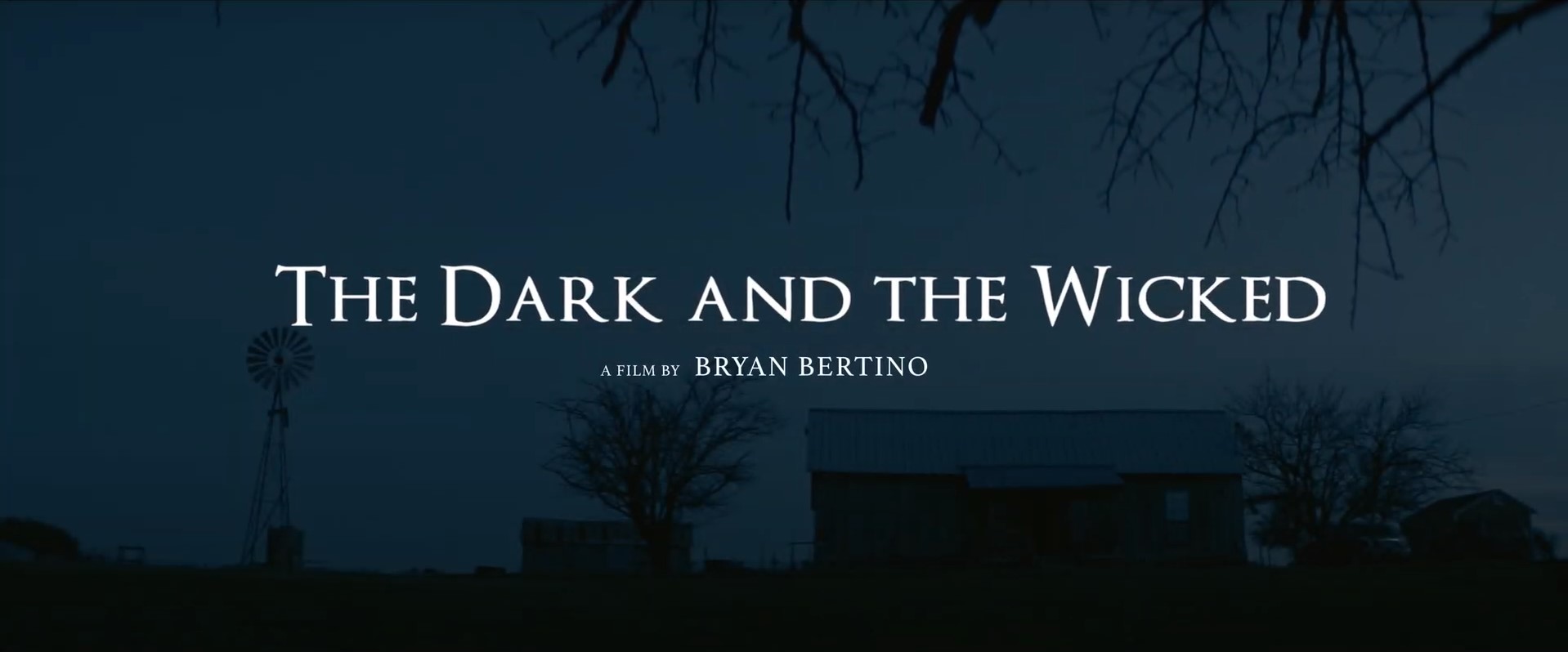
The Devil’s Tongue is a Powerful, Influencing EVIL. “The Dark and The Wicked” reviewed! (Acorn Media / Blu-ray)


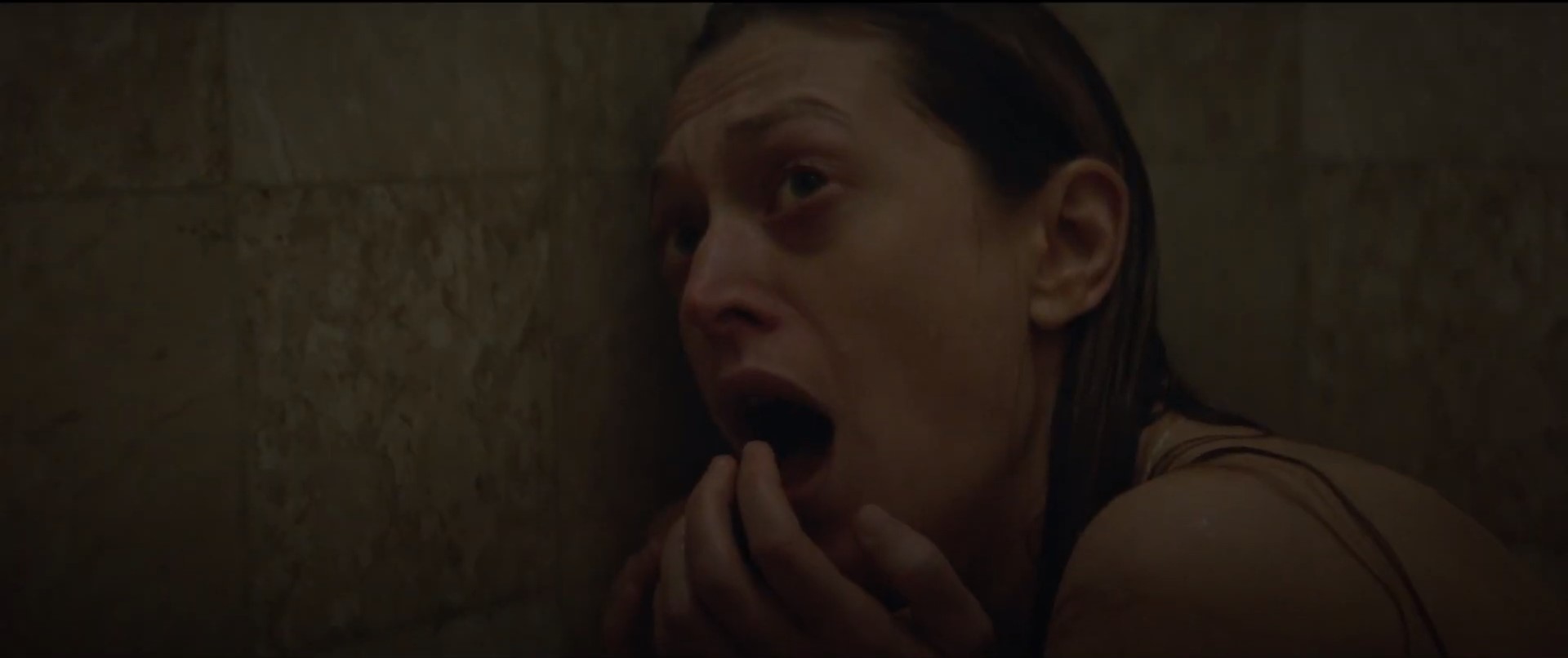
Siblings Louise and Michael Straker return home to their farmland house when their terminally ill father becomes bedridden.  A long time alone and isolated before her children arrived, Virginia provided suitable care for their father up until the voices started.  Lurking in between the shadows around the rural home, a menacing presence wedges itself into an already splintered family spirit as the harbinger of death coming for their father’s soul.  The influence of voices and grim visions tatter Louise and Michael resolve, testing their unconditional love for family and moral obligations, but evil can be very persuasive the closer their father comes to his end. 

The battle grounds of losing oneself during the verge of loss has commonly been a recurrent topic amongst indie films.  For filmmaker Bryan Bertino, the concept feels deeply personal.  “The Strangers” and “Monster” writer-director’s latest discomforting horror film, “The Dark and the Wicked,” uses Devil speak in mass, detrimental volumes as an allegoric device for the internal deconstruction of family, capitalizing for his tale the use of his family’s rural Texas farm house written as a threatening locale of isolation and the tenebrous unknown.  “The Dark and the Wicked’s” paganistic undertones heavily perceive a dissipating family structure’s disconnect from not only God but from the community who has been all but absent from coming to the fictional Straker family aid.  The 2020 released film is produced by Bertino’s production company, Unbroken Pictures, alongside Shotgun Shack Pictures (“Hurt”), Traveling Picture Show Company (“The Blackcoat’s Daughter’), and in association with Inwood Road Films.

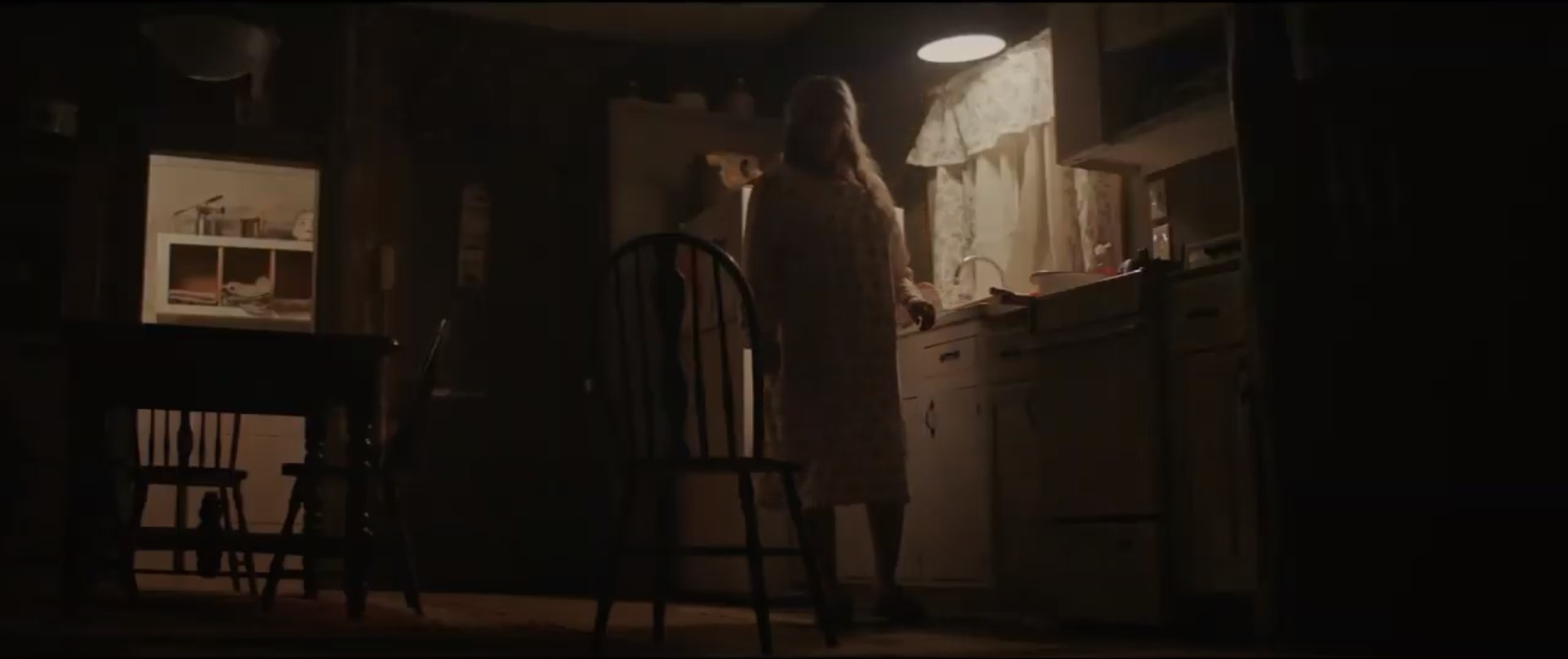
To play characters accustomed to the rural lands of the Texas outskirts, “The Dark and the Wicked” required a range submerged with leisurely movements, a Lonestar draw, and to, of course, look good in plaid and Wrangler jeans.  The cast that emerged was nothing short of spectacularly precise in fabricating the lives of remote lives rural Texans, opening with a Texas-born Julie Oliver-Touchstone (“Bounded by Evil”) sewing dresses in the barn, tending the farm’s goats, and chopping produced in her white nightgown as who will be the catalytic mother, Virginia Straker, that passes not only the 24-hour hospice care to her children but also all the beneath the light misery that drives her terrified.  The girth of the story revolves around, Louise, “The Umbrella Academy’s” Marin Ireland, and Michael, Michael Abbot Jr. from the upcoming “Hell House,” as sister and brother who return back home upon the news of their bedridden father (Michael Zagst).  At this point in the story, where we meet Louise and Michael for the first time, a shrouded background puts a delectable side dish of mystery into making them initially interesting, but over the course of the 96 minute runtime, the enigma dissolves around why Louise no longer works from the Postal Service and what’s stringently being shied away from the thick layered division between the siblings from being close to one another.  The impending standoffish goes unspoken, never comes to a head between them as like the unfolding of “The Strangers” where Liv Tyler and Scott Speedman unravel and expose their marital struggles with the invisible wall between them before, and even in the midst of, being terrorized.  There’s something there that isn’t being part of the exposition or coming back around when the Devil comes really calling for their father’s doomed soul.  Instead, Ireland and Abbot simply assimilate well enough into their falling into farm life dynamics as the sister who must shoulder the responsibility of hospice care and the brother overseeing what could be considered man’s work of handling the duties of raising livestock.   We also get some messed up supporting second fiddlers to execute Satan’s handywork with performances Lynn Andrews, Tom Nowicki (“Conjurer”), Mindy Raymond (“Bigfoot Wars”), and “The Walking Dead’s” Xander Berkeley channeling his best Julian Beck’s Kane performance as a sinister Priest making a house call.

Bryan Bertino has a stillness about his films. Their creepily quiet, stirred in a somber stew of macabre, and utterly deranged in a nihilist coating. What appeals to me about “The Dark and the Wicked,” as well as “The Strangers,” is Bertino’s gift to deliver powerful fatalist realism. His stories couple earthly family drama with otherworldly malevolence stemmed from the deeper affects of prolonged relationship breakdowns that literally assigns a demonizing blame on the supernatural for people’s own crumbling failings. Another aspect is the godless presence wholeheartedly felt throughout from the Straker’s loud and proud proclamation of atheism to the lack of religious artifacts. Michael nearly tosses the priest out of his keester just for making checking and noting his mother’s recent unbeknownst connection to God to which Michael took great offense. This leads into the Straker’s lack of community connection as they seemingly are adverse or are agonized by those who wish to help and those who rather seem them burn under the guise of the malice presence. Goats are thematically prevalent to the story, especially when the shadowy Wicked hides amongst the herd, like a wolf in sheep’s clothing. Goats are often associated with Pagan beliefs, such as with the deity Baphomet, and the evils marked upon them by cultures all around the world and by having the Straker farm be a goat farm is more than just coincidence. “The Dark and the Wicked” brings chaos and confusion much like any circumstances where one or both parents die and all the burdens, all the consequences, and all the pure emotional baggage that comes with death is passed to the children whether the Devil is involved or not. When broken down rudimentary that decline of hope and overwhelming grief can cause a great amount of destruction for any family and even extend to friends with suicide being heavily portrayed in the film. Bertino masterfully touches upon every collateral damage output leaving no one spared from death’s, the Devil’s, hopeless hold on them.

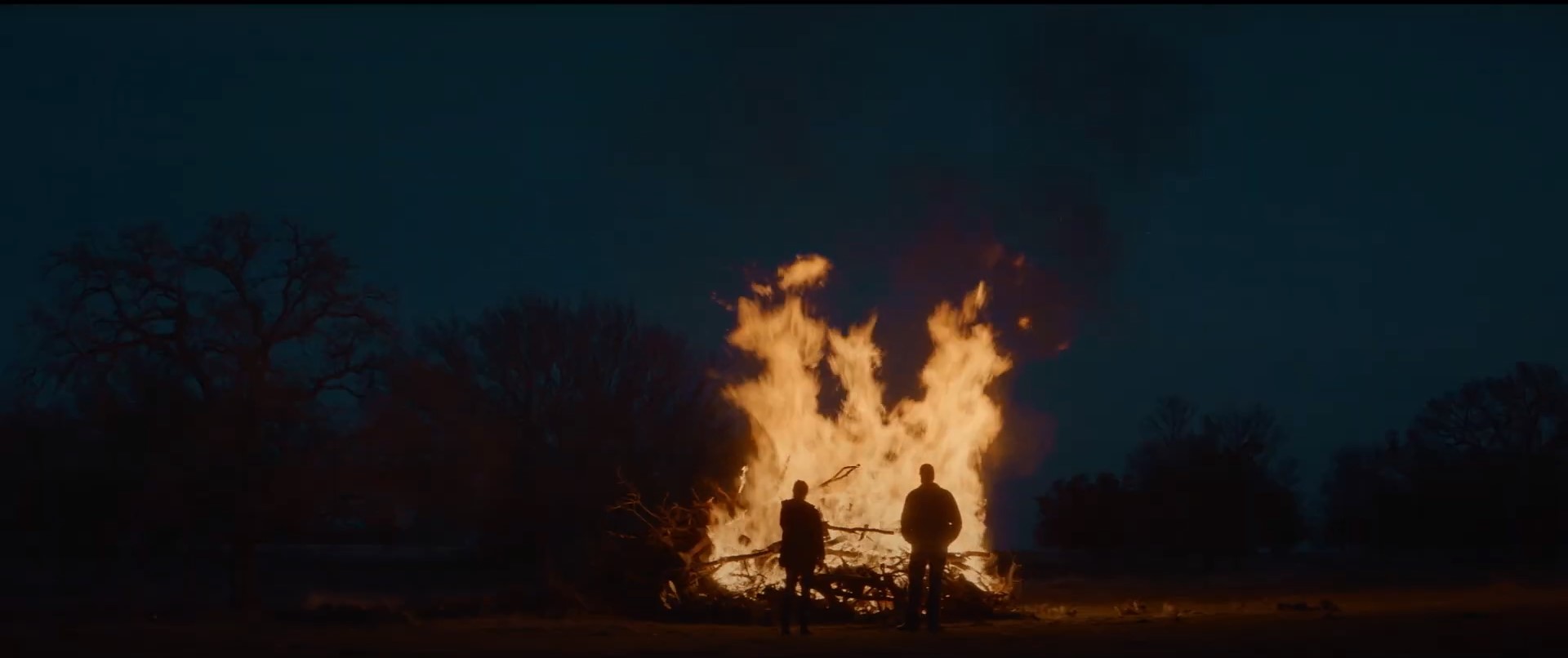
Filled with frightening imagery, plenty of toe-curling suspense, and a loud silence of utter despondency, “The Dark and the Wicked” is a must own for any horror fan and, luckily for you, Acorn Media International just released the Bryan Bertino film on Blu-ray in the UK in alliance with horror’s favorite streaming service, Shudder. Listed as region 2, but more accurately a region B in Blu-ray format, the PAL encoded release is presented in a widescreen 2.39:1 aspect ratio. If there was one word to describe the comprehensive picture that word would be dark. Bertino maintains an eclipsing cinematography through hard lighting, matted lifeless colors, and a reduction tint to give it that extra gloomy blackness. Cinematographer Tristan Nyby’s first collaboration with Bertino is also the first debut into the genre field and Nyby comes out on top with an ability to show just enough, whether through shallow focus or obscured wide shots to always keep the depth and range of the unknown factor alive and frightening. In regards to the Blu-ray quality, “The Dark and the Wicked” has little to offer in details not because of the lack there of but because much of the film is shot in the dark, a fine midnight black with little-to-no wish or noise, and dim lighting . Facial details do appear slightly soft as you can’t make out the blemishes or even skin pores, but the intentional flat coloring steers much of that away from the senses. The English language DTS-HD Master Audio 5.1 surround sound is a boost of jumpscare ambient effects. The range and depth finely pitch the position of well-timed scares, especially when the strung together bottles, glasses, and cans rattle in a discordance. Dialogue has lossy muster that makes discerning characters’, especially Michael or his mother, Virginia’s, Southern draw. English subtitles are optional. Special features include only a Fantasia Q&A with actors Merin Ireland and Michael Abbott Jr that dive into their characters quite a bit and into Bertino’s morose mindset. Bleak and genuinely personal on a whole other level, “The Dark and the Wicked” is quintessential truth when talking about the Bryan Bertino Americana horror film and, believe you me, expect more devilish descriptors that’ll shock you.

Tune Into EVIL’s Overnight Radio Programming! “Ten Minutes to Midnight” reviewed! (MVD Visual / Blu-ray)


Veteran night shift disc jockey, Amy Marlowe, has hosted her own renowned punk rock show for the last 30 years.  On the night of a major hurricane rolling through town, the broadcast must go on as radio never sleeps, but Amy is bitten on the neck by flying bat prior to arriving into the station.  If things couldn’t get any worse, she’s trapped inside the station with the sleazy station executive who surprisingly introduces the disc jockey’s much younger and beautiful replacement.  As Amy deals with the sudden aftershock of forced retirement, she slowly descends into a topsy-turvy reality full of unannounced secrets, movements through her own past and present, and the unusually strange staff transforming into monsters inside the station walls.  To top it off, Amy craves blood.  Between the possibilities of unexpected grief and anger, rabies, or becoming something far more evil, Amy Marlowe, either way, is losing her grip on the real world.

The amount of thought and expression on blunt force change, numb appreciation, and profound existentialism worked into the allegorical dark vampire comedy, “10 Minutes to Midnight,” never steals from the narrative’s basic element, a breed of classically fed undead horror.  Writer-director, Erik Bloomquist, helms his sophomore feature film directorial that is also the second film written collaboratively with brother, Carson Bloomquist, following their 2019 debut thriller, “Long Lost.”  The Connecticut based siblings shoot “!0 Minutes to Midnight” at the ABC affiliated WILI radio station in Willimantic over the course of seven week nights, self-producing under the Bloomquist Mainframe Pictures banner alongside the third “Long Lost” screenwriter-turned producer, Adam Weppler, who also has a major role in the film. 

A soulful, applause-all-around performance by headlining scream queen Caroline Williams who makes her return to the DJ booth 35-years later after going face-to-face with Leatherface’s chainsaw in “Texas Chainsaw Massacre 2” and, by God, Williams still has the cold-cocking charisma of her 1986 self.  Pinned to be discarded by station exec Robert (William Youmans), Amy Marlow loses control of her on-air persona for the first time in 30-years of broadcast radio.  Williams is on target with Marlow’s salacious-pointing meltdown rant with a viperous, quick-witted tongue spurred by the very news of her canning that started the hamster wheeling rolling, putting the pieces together of how much backstabbing, ungratefulness, and all-for-nothing hard work (and her younger days’ sexual servitude) becomes a deafening cacophony of noise before her Ten Minutes Before Midnight broadcast segment airtime.  Watching Williams work never gets dull from the one moment she’s rightfully screaming and ripping someone a new one to being overwhelmingly fractured by the venom that courses through her veins in a transformative and stunning performance.  Accompanying Marlow on her sudden career nosedive are a trio of dividing personalities that pull a different versions of the radio star.  Marlow’s seemingly only workplace friend and confidant, Aaron (Adam Weppler), has been a fan of hers ever since he was little, even providing a touching anecdote about him listening to her broadcast when he was a little boy, and there’s something between them, but teeters between admiration and desire that doesn’t flesh out because, again, it’s another problematic thematical item being circled around.  The other two characters rile up Marlow’s inner angst with their threatening postures or their maddening babble.  Nicole Kang (“Swallow”) and the late Nicholas Tucci (“You’re Next”), in their roles of hotshot millennial newcomer, Sienna, and the quirky and rambling security guard, Ernie, achieve just those respective levels of kicking someone when they’re already down with a flurry of annoyance.  Kang and Tucci deliver concentrated performances.  The acting is so entrenched into their characters, as well as with Weppler and Youmans’,” that when Marlow enters a status interchangeable, role-reversal, and nightmarish last stage of her existence coming to a conclusion, “Ten Minutes to Midnight” reups another thought-provoking scenario; one that has you frantically rewiring the tightly woven profiles your brain has determined about the characters to keep up with Bloomquist who is clearly three steps ahead.

Martin Scorsese once compared certain films to theme parks, noting their cinematic worth only in their high octane action entertainment and special effects that draw audiences in like moths to a flame and never letting the actors do the meaningful work themselves.  “Ten Minutes to Midnight” is a blue-chip, character driven vampire story rare to these parks.  Bloomquist’s themes on ageism, sexism, regret, change, grief, millennials, and more, snake through Marlow’s multifaceted transitional experience in a stylishly cynical fantasy.  Much of Marlowe’s perception isn’t tenaciously reliant on the consequences of the vampire bat bite to her neck.  Reoccurring as an example of perception throughout the film, whenever the camera hovers over a clock displaying 11:50 P.M., is the fading disc jockey finding herself stuck in a timeless rut, eternally clinging to her show in a disparate attempt to be relevant despite the inevitability of change as often noted by each idiosyncratic character – Aaron changing up her normal broadcast set start to call-ins, Robert axing her for younger talent, Ernie incessantly pointing out her symptomatic changes after the bite, and Sienna embodying the very epitome of change.  Marlow’s mind melds with her physical transformation as she goes through the seven stages of grief to at which one point she talks to who might be her younger self over the phone.  Marlow, initially hesitant, does not guide change, but to rather embrace it in a moment of accepting her own checkered past.  However, the dialogue I found to be most poignant was during the retirement party with sunken-eyed celebrators who just randomly show up for the event and Marlow turns to Aaron and comments on not exactly knowing who these people are.  There’s depth and soul in that comment for someone going through the process of retirement who sees unacquainted, new faces and perceiving them with only a tinge of familiarity and a lot of isolating loneliness.

If looking for wildly crafted and superbly acted vampire celluloid, I highly recommend Erik Bloomquist’s “Ten Minutes to Midnight” to sate your thirst now on Blu-ray home video from MVD Visual in associations with Jinga Films and Danse Macabre. The region free Hi-Def 1080p Blu-ray is presented in a widescreen 1.78:1 on a BD25 and has a runtime of 73 minutes. Shot in a shadows of hard lighting, the picture quality is relatively sharp in the lack of natural light, but that sharpness scatters like roaches when a spectrum wave of neon hues or a bathe of vivid tint casts a psychotomimetic inducing trip through Thomas Nguyen’s tightly quartered medium and close up angles. The overall coloring on the location and characters falls into a matte flatness that works to the lightings advantage when using rich exterior color sources. The atmospherics are Amsterdam sultry under the heat of a carnal fluorescent red and Nguyen’s lofty present steady cam endues a nostalgic flame of eerie dreamscapes similar to early John Carpenter, such as in “The Fog” or “Prince of Darkness.” The English language audio tracks come with two options, a 5.1 surround sound and a stereo 2.0. “Ten Minutes to Midnight” is an audio-visual probe into the mind and senses and so the obvious choice here is the 5.1 surround sound; however, the lossy dialogue track becomes quickly overwhelmed by the behemoth sound design and soundtrack, the latter being original music by Gyom Amphoux. Musically, not my cup of tea, but will find an audience and fits into the narrative perfectly. Bonus materials include a behind the scenes entitled “Take One,” audio commentaries by director Erik and Carson Bloomquist as well as star Caroline Williams, multiple featurettes, a Grimmfest interview with the Bloomquists, Williams, WIlliam Youmans, and Thomas Nguyen, Grimmoire Academy and Popcorn Frights intros, and a festival teaser trailer. “Ten Minutes to Midnight” is a dusk till dawn decimator of sanity, a wickedly fun vampire oddity, and has an unforgettable, batty performance from Caroline Williams.

Recommended!  “Ten Minutes to Midnight” now on Blu-ray!