Love to write? Love horror/exploitation/Sci-Fi movies? Especially B- or C- horror movies? Then, you’re in luck! It’s Bloggin’ Evil is in need of writers, no pressure part time writers, for online screeners.
The criteria for this position is as followed:
– Must be able to set aside a couple of hours to watch a movie (usually between 60 to 120 minutes) and set some time (pending on your writing skills, techniques, and interpretation of events) to write a review.
– Must be connected to the internet and able to stream movies through Vimeo, Youtube, etc.
– Able to write a 500+ word thoughtful and intelligent unbiased critique of each film screened.
– Must be able to download the film’s stock images or capture your own (or make gifs) to add a visual to the review.
***Bonus*** If you wish to post more content that is not provided by It’s Bloggin’ Evil, but relates to the content, we can do that too!
Again, this is solely a part time gig and content will trickle to you so this position won’t take up all your time. Also, did I mention there is no pay? Yeah, I’m shelling out my own money to run this site and companies/individuals are gracious enough to provide me screeners of their films, but, hey, in this volunteer service, you get access to a few upcoming releases that might not have yet to hit retail shelves or even Stateside for that matter.
Just shoot me an e-mail TheEvilBlogger@gmx.com or message me on twitter @itsblogginevil to apply!
Allister, Bubba, and Charlie are friends. They’re friends who do drugs together. They’re friends who do drugs together and steal from people. They’re friends who do drugs together, steal from people, and kill people. Allister, Bubba, and Charlie are serial killers. Serial killers on a drug fueled killing spree without limitations or exceptions, not even some of their closest drug distributing friends are exempt from their murderous wrath. Being serial killers isn’t their only disturbing hobby as they dig up the graves, lay torch to corpses, and torture-to-kill innocent, doughy eyed animals. Deep rooted depravities clutch so fiercely to the fragments of their tattered souls that the Devil himself can communicate to them through the hallucinations of a bad trip and, after that little glimpse of hell, hailing Satan and spilling blood feels too good to pass up on command.
Underground filmmaker Dakota Bailey helms a rough and insensitive “My Master Satan: 3 Tales of Drug Fueled Violence” that’s extremely gratuitous in it’s violence and purposefully plotless to be episodic in Allister’s and his ghastly friends’ grisly acts. Labeled as an anthology, “My Master Satan” is suppose to intertwine the individual stories of Bubba (Matt Marshall), Charlie, and Allister into a single entity, but the Bailey written story is more literal than described. The stories circle more around Allister, the glue that pieces the story together, and his interactions with Bubba and Charlie rather than with Bubba and Charlie saturating the scenes with their own segments. Allister is the kind of friend to have in your corner and not piss off; he’s merciless and nihilistic, burning to rip to shreds anyone and anything for the simple joy of delivering pain in the name of Satan. The supporting characters come and go in and out of the story, but seem to motivate Allister, Bubba, and Charlie with tasks of drug dealer’s assassinations and perversions along with conversing, briefly, with other just as insane homicidal friends.
Bailey intentionally downgrades the video quality to start the ambient hallmarks of an underground shock feature on a VHS format; a film we may experience and see from Unearthed Films distributed features similar, yet watered down versions, of “Slaughter Vomit Girls or the “Guinea Pig” installments or films that were shot by a Hi8 or VHS camcorder made gloriously from cult favorite directors like Brad Sykes, Donald Farmer, or Tim Ritter. Though the video quality purposefully sets the disconsolate tone, the two-third inaudible dialogue audio negates the desired brazen effect from the lack of good mic placement, leaving our ears more toward the screen than our eyes. However, Bailey surely epitomizes the film as a clandestine venture into shock horror that will only find a niche market for those who adore sadomasochistic ultra-violent behavior accompanied with a death metal soundtrack. Luciferian Insectus wasn’t affected by the audio and paired well with the scenes.
The real shocker to take away from “My Master Satan” is the lack of good practical effects that usually coincide with a micro-to-zero budget project. Underground movies usually require gallons of blood, mise-en-scene implemented extreme violence, or to somehow find a way to stand out amongst the herd of the countless independent filmmakers. A high school biology class skeleton and an actor having simulated sex with a blow up doll doesn’t speak highly of the film’s caliber and won’t cut the mustard. The editing techniques are shaky at best and, even sometimes, relied to heavily on the words on a screen exposition to help the viewer along.
“My Master Satan: 3 Tales of Drug Fueled Violence” feels like a labor of love from Dakota Bailey and his crew of supporters; however, the film staggers along with unoriginal content that just becomes part of the collective. The intention to unnerve is evident, but the execution didn’t connect nor could the story spark any interest. Not even the autoerotic scene aided in produced a jump to unsettle. The hindrance of dialogue audio loses much of the film’s plotted course, especially when Little Blunt sends Allister on death calls. Not even Bailey’s baritone and slightly raspy voice could be heard at times. Again, an underground feature from Denver, Colorado needs polishing, but shows heart and initiative to relay hurt and allegiance to the dark Lord.
Former pin-up model Virginia “Ginny” Smith lives a solitary life on the street of a quiet Buffalo, New York suburban neighborhood. Her modeling past was prosperous, posing erotically with curves similar to that of pin-up queen Bettie Page, up until a newer, thinner model named Chloe undermines Ginny’s magazine spread career. Feeling abandoned, physically tortured, and seeking revenge throughout the years, Ginny eats up the competition from thin, to the fake, and to the virginal…literally! Sal and his mentally instable wife Debbie move in next door to Ginny. Soon after, Debbie suspects that her elder neighbor might be up to no good as people go into Ginny’s house but never come out. Chalking up her suspicions to psychosis, Sal ignores Debbie’s accusations until he mysteriously perishes in a car accident. Now nothing can stop Debbie from investigating into Ginny’s cold blooded habits.
“Model Hunger” is the long awaited directorial debut from long time scream queen and B-movie horror icon Debbie Rochon that publicly displays the dementedness clinging to the inner walls of her brain. Helming from off the screenplay penned by “Seed 2” producer James Morgart, Rochon quickly denotes the position of anti-supermodel figure, turning the thin, the snooty, and those who encourage that sort of behavior into nothing more than a gloppy stew of human chow. “Model Hunger” parodies the serious nature of young women whom go to extreme lengths of imitating the model beauties of today, but the film isn’t a clear-cut horror-comedy per say; instead, the genre of a bizarre cannibalism life style or social commentary revenge film might better suite the self-centering tone.
The premise most definitely classifies as a film Debbie Rochon would personally headline; Rochon personalized “Model Hunger” to her taste, but this time, Rochon’s sister-in-horror, Lynn Lowry (George A. Romero’s “The Crazies”) headlines as the vengeful, cannibalistic Ginny Smith. Lowry puts the hot in psychotic with a Southern Belle twist, delivering a memorable performance as a cougar-gone-cannibal and her character scores much of the Morgart screenplay dialogue that is overwhelmingly philosophical and ranting compared to a more downplayed principal character in the film’s third horror star – the veteran Tiffany Shepis. Shepis is Debbie next door and though that sounds like a title of a boorish 70’s porn, Debbie struggles with being burned out from a psychosis state that results in plagues of nightmares and prescribed pills. Aside from maybe the pill popping, nothing about Debbie’s persona brings to mind a porn starlet.
Contrary to a pair prominent female actresses who bring talent and experience from cult films such as “Tromeo and Juliet” and “Shivers” and a highlight of co-stars including the wonderful Michael Thurber (“The Sins of Dracula”), Brian Fortune (“Game of Thrones”), Carmine Capobianco (Psychos in Love) and “Chainsaw Sally’s” Suzi Lorraine casted ironically as a voluptuously large television host of “Suzi’s Secret,” the James Morgart script just couldn’t pull all the talent together. Points of unfocused storytelling noticeably stemmed from the first few scenes involving uncouth and dolled up cheerleaders practicing their routine, receiving their fundraiser packet, and going door-to-door soliciting. These segments run a natural course of supposedly setting up Lisa Dee (cheerleader Missy in the film) and Samantha Hoy (cheerleader Katie in the film) as the film’s leads. The squad practice could have been completely omitted and the story would have worked just the same without bamboozling the main players Lowry and Shepis. The script drags to a slow drift during the second act by not proceeding with much character progression other than Ginny slaughtering snared victim-after-victim to fill her icebox of superficial-inspired characters.
Honestly, the expectation of graphic violence had a sky high bar set upon the shoulders of Debbie Rochon’s inaugural film, but the special effects violence was unusually tame to a point, containing nothing too new and too extreme until near the finale that involves a naked Jehovah Witness and a medical grade scalpel. Aside from the lack of gross gratuity, the effects were borderline choppy; a prime example to consider would be the obvious rubber baseball bat, wielded by Ginny, that sprung forward and backward, like something out Looney Toon’s ACME company, when striking against an object, but “Model Hunger” was riddled, subtly throughout, with equipment flaws such as equipment shadows in scenes and a continuously shaky camera.
Wild Eye Releasing’s unrated DVD is presented in a widescreen format with a Dolby Digital 2.0 audio mix. Aside from some awkward framing and a bitrate issue that causes a bit of blotchiness, the digital camera video looks good for the most part with an audio mix from “Friday the 13th” composer Harry Manfredini that’s well balanced. The director commentary, in the bonus features, is a highlight of the extras with Debbie Rochon letting you into her creative side of her film. The commentary is accompanied with deleted scenes, music video, an interview with Aurelio Voltaire, a Babette Bombshell short, trailers, and an Easter Egg! Overall, the underlining point is clear of reverse body-shaming in a very Hatfield versus McCoy scenario and Debbie Rochon, for her cherry-popping film, creates a solid horror entry that displays it’s quality scars and hiccups which the film, nor Rochon, apologizes for and that’s a filmmaker, and actress, I can get behind.
Buy Debbie Rochon’s first film “Model Hunger” at Amazon.com!
Unable to cope working as a hospice nurse, Danni begins a new life in a new apartment after separating herself from a server downhearted state while living with her uncle Gus. As Danni settles into her degrading new job involving saving the whales and into her small apartment, she begins to decorate her home, starting with hanging a simple shower curtain. However, as soon as she exits the bathroom, the shower curtain vanishes and so begins the mystery that leads to the discovery that she’s now part of secret order to protect The Gate, a passage way that can be used to give birth to the vilest evil. With the tireless help from her co-worker Tim, the two set off to stop The Gate from potentially destroying Dani’s life…or the world.
Movies like “Curtain” are the reason why I enjoy writing about them so very much. One tiny event, an event anyone would think couldn’t be turned into a full feature film, snowballs through the pages of a script and that script is presented to us by independent filmmakers Carys Edwards, writer, and Jaron Henri-McCrea, writer and director, of “Curtain.” The 74-minute film revolving around shower curtains being sucked into the bathroom tile opens with a seemingly distraught individual on an empty subway car, rambling and shaking after a reoccurring and thunderous dream that doesn’t make sense at that moment. The film’s hook comes early, sucking us into this man’s life when we learn he’s duck taped his bathroom door shut. He’s tensely afraid of the small enclosure to where one goes for unburdened release whether to drop a load or get cleaned up, but as the man decides to cut away the tape and opens the door to proceed in hanging a curtain, he unintentionally sets the stage for our heroine, Danni.
Solid performances all around by the cast. Danni Smith, portraying her namesake character, conveys a strong, defiant character even in the wake of her depressive struggle. Her characters goes through complete denial of the curtain eating bathroom, shutting down Tim, played by Tim Lueke, almost instantly when he’s curiously goes berserk of the possibilities of what to gain from this phenomenon. Tim Lueke does amazing work displaying a naïve activist and we discover the character’s humbleness through his naïveté, making him a likeable, standout character whose has motives that semi trump his passions when Danni is concerned. I really liked Martin Monahan and his Pale Man character, a blind gatekeeper, if you will, trying to protect the realms The Gateways portals. Monahan worked with director Jaron Henrie-McCrea previously, headlining Henrie-McCrea’s comedy-thriller “Pervertigo,” and the Indiana native takes a backseat, co-starring role that packs a memorable punch, leaving an everlasting mark of solemn and death.
If you haven’t noticed already, Henrie-McCrea has an affection for Alfred Hitchcock films. Between “Pervertigo,” a slight play of words from Hitchcock’s “Vertigo” starring James Stewart, to this film entitled “Curtain;” the shower curtain is an iconic set piece for Hitchcock’s more popular film “Psycho.” The Columbia University alumnus Henre-McCrea knits his own pattern into the Sci-Fi Horror film that is “Curtain,” subtly building-in comedy elements amongst the characters and not so much surrounding the situation. The young director has an eye for cinematography and bringing substance from the scene to the forefront as the director blends suspense, terror, comedy, and sadness, meshed together so intricately it’s seamlessly composites all genres that’s shot in some particular tight locations. The comedy stems from only certain characters such as the crass Preston The Super or Willy the homeless, paint can sniffer.
Much of Henrie-McCrea’s shock value spurs from intense close ups, as you’ll see in this articles screen shots. Quick, loud, and in your face scares or disturbances that’ll cause eye-popping jumps effectively note “Curtain’s” tone. This technique is very familiar with Evil Dead’s Sam Raimi and does bear a resemblance to a staple of 80’s horror with an Italian-like synth score by Adam Skerritt to match. Creature and special effects are briefly shown to obscure the possibility of detecting flaws (perhaps) and also to suggest that less is more, leaving more for the mind to fill out the horror’s of what you just saw. No scenes are left lingering on the horrific moments as much of “Curtain” is story centric, focusing on the mystery of The Gateway.
Frightfest presents the Icon Studio’s “Curtain” on DVD this July 18th in the UK. The DVD will be released in a gorgeous 2.35:1 anamorphic widescreen with a solid Dolby Digital 5.1 audio mix and an accompanying 2.0 stereo mix option. The DVD includes a film introduction, an presentation commentary, and an entertaining making-of featurette. I can’t comment too much on the audio and video since a DVD-R was available for screening. “Curtain” has a particular taste of comedy that’s favorably dry and on-point synced well to the horror mystery engulfing the genre. Director Jaron Henri-McCrea becomes a force to be reckoned with paired to the talented actors Danni Smith, Tim Lueke, and Michael Monahan. “Curtain” is everything that’s right with horror-comedies and nothing short of excellent independent filmmaking.
Fighter pilot Captain Glenn Edwards goes missing in the mysterious and off-limits Amarok Crater. After a month of speculation and military red tape, Glenn’s brother, Tom Edwards, and Glenn’s fiance, Samantha, take the high risk of hiring a washed up, drunkard Carlton Denning, a pilot dumb enough to fly under the radar and into the hidden entrance of the forbidden zone to locate Glenn. The trio find themselves in the company Riley, a henchmen for Denning’s unforgiving bookie, who tags along to ensure Denning returns safe and sound to repay his debt. Their crash landing in the middle of Amarok Crater gives them no choice but to search for the lost Glenn, but as their stay prolongs, ancient carnivorous creatures, mutated from the Crater’s radioactive meteorite, emerge from the Crater’s caverns and fissures, including a three-eyed giant hellbent on obtaining a lady friend.
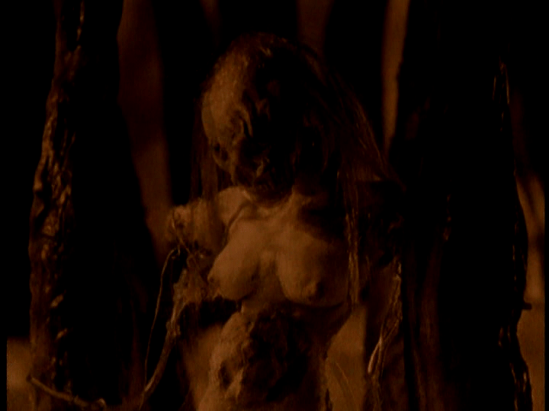
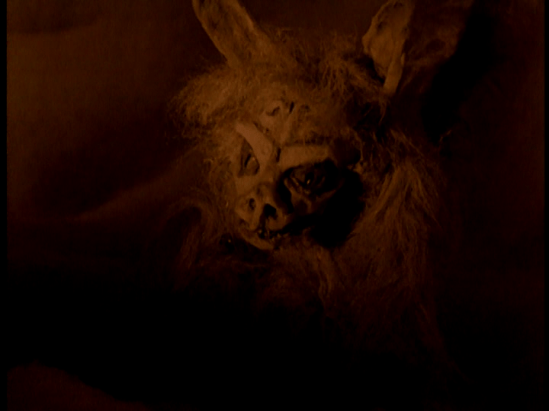
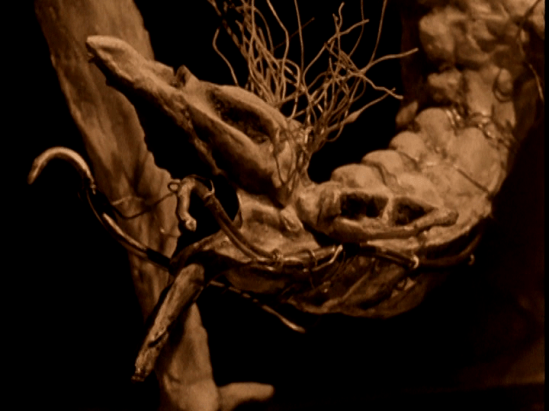
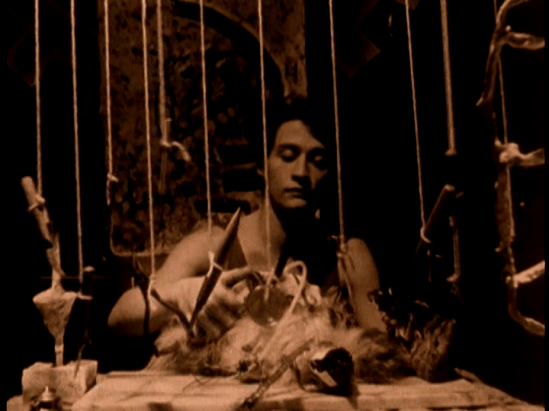
B-movie director Brett Piper is back with another outrageously entertaining drive-in theater film classically titled “Triclops.” Reusing props from the director’s last film, a monstrous crustacean rampage film titled “Queen Crab,” and casting familiar faces from the movie as well, Piper conjures-to-scribe a lost world, a concocted story of various films inspired by the gilded age marvels of movie magic. Practically funded with the quarter-sized lent in their cobwebbed lined pants pockets, Piper meticulously implements the nearly forgotten practice of blending mattes and composites with the strategic use of small-to-medium sized models in order to form a world based on a mutated genesis.
“Triclops” resembles 1966’s “One Million Years BC,” sans a stunning Raquel Welch, spliced brilliantly with the mythological appeal of Desmond Davis’s 1981 adventuring odyssey “Clash of the Titans” with a modern setting backdrop. Even though Welch is not in this particular stop-motion journey, a equally exquisite Erin Waterhouse takes center stage as the film’s protagonist Samantha whose on a quest to discover exactly what happened to her fiancé Glenn. Samantha’s determined to get to the crater, find Glenn, and get the hell out of Amarok Crater. What she didn’t plan on was her cohort, Glenn’s brother Tom, undermining her search and possible rescue for his own underlining intentions to become rich and famous off the unexplored and mysterious territory.
Waterhouse has a range that doesn’t wane, weaving through angst and fear without ever settling on a love interest. Waterhouse opposites Matthew Crawley in his first major role, a dual role, in Tom and Glenn. Did I mention that Tom and Glenn are twins? To round off the adventurous assemblage are Ken Van Sant and Richard Lounello whom are reunited as a team from Brett Piper’s “Queen Crab.” The cast’s dynamic attempts to homage the reactions of the classics; a long moment of shock and bewilderment glazes over the characters’ eyes as they stand in awe of the creatures before them. “Triclops” isn’t a vicious creature feature where a scantily cladded woman runs through the thicket, screaming her lungs out while a snaring beast ferociously tracks her down.
The script feels a bit loose with much of the dynamic between Glenn, Tom, and Samantha goes awkward into oblivion after many hints to outer-relationship throes. Ken Van Sant’s character, Dennings, portrays the unlikely hero. When we first meet Dennings, he’s a blackout drunk with a sarcastic pie hole who just happens to know how to fly a plane. His dealings with a money shark fizzles as badly as Samantha and Tom’s supposedly fling. Even when Riley, played by Richard Lounllo, tags along to keep an eye on Dennings, the animosity goes into flight and disappears into the lost land of Amarok Crater, or perhaps the ration from the Crater not only evolves the physical appearances, maybe their inner soul mutates into their antagonistic selves.
“Triclops” can be discovered on DVD-R courteously of Alpha New Cinema and purchasable at Oldies.com. The region free disc contains a runtime of 80 minutes with bonus features including outtakes and bloopers and fantastic commentary track with director Brett Piper, Ken Van Sant, Erin Waterhouse and producer Anthony Polonia that’s pure water cooler comedy as well as an inside the creation of his modern day classic. The DVD-R video aliases a fair amount with some blotchiness in more darker corners of film, but the sepia coloring feels natural due to the sci-fi tribute content and the soundtrack is clear with no pops or hissing in the dialogue, which prominently sets the stage in the forefront. Brett Piper has once again brought cinematic history back to a world filled with millennials with their noses-glued to iPhones screens and Playstation consoles. “Triclops” is a 50-ft tall film on a 5-ft tall budget and worth every penny of admission.