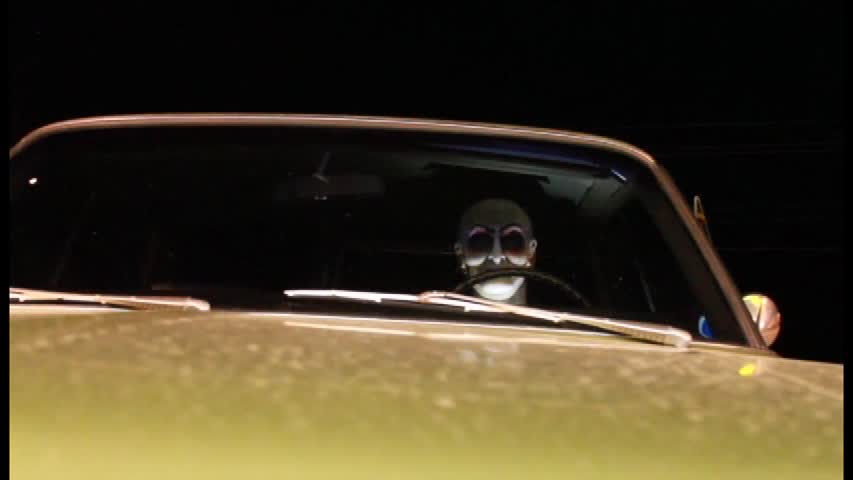
Jessica is plagued by recurring horrific and lucid nightmares of a horse-headed figure that brings death to her dreams. When she has a nightmare about her grandmother being impaled to death by the horsehead monster, she’s immediately phoned by her mother Catelyn informing Jessica that her grandmother has passed away. Jessica travels to the family’s countryside estate for the funeral and is welcomed by her stern mother. Jessica’s nightmares worsen the first night and she becomes trapped in her own dreams as she can feel the haunt of the horse-head figure in the corner’s of her mind. When Jessica soon realizes that her’s grandmother’s death and her mother’s cruelty might be more involved and connected with the horse-head creature, she attempts to stay in a semi-conscious sleep state to puzzle together the mysterious pieces and to control her nightmares once and for all.

The freshman feature film from Romain Basset contains such promise and maturity and Basset shows daring courage to create a horror-fantasy of this caliber thats very aesthetically symbolic and worthy of being awarded qualities of early Dario Argento’s films with intensive surreal and haunting facets. “Horsehead” embodies the character Jessica’s head in creating and blending an atmospheric jigsaw and visceral puzzle of a world while being a mirror in which you can glance back into time, far back beyond your own existence. “Horsehead’s” unique tribute blend contains the bizarre and frightening worlds of Tarsem Singh’s 2000 film “Cell” intertwined with one’s life story similar to the past and present tales of “A Christmas Carol” with Ebenezer Scrooge. However, Jessica’s past is much more dark and grim than Scrooge’s will ever be and her future won’t end in her being generous and kind to a crippled poor boy named Tiny Tim.

Certainly a visually stunning film, “Horsehead” tries turn the mind on it’s end, leaving the suspended muscle dangling near the edge of insanity. Jessica’s reality becomes no more real than her nightmares as the horse-headed monster is has comparable dream-bending qualities to the the same effect as Freddy Krueger of “A Nightmare on Elm Street” but “Horesehead” is a lot more gothic and whole lot less sarcastic than the fedora sporting child murderer. The creature has haunted Jessica’s lineage for at least three generations, presumably starting with her late grandmother and is a symbol of Jessica’s strict-bible-following grandfather who becomes the epicenter of all the family’s issues. Her dreams hold a dark mystery to her family’s continuous cycle of troubles and use horrific symbolism to express, in stages, the truth behind their ancestral secrets.

As much as I love the symbolism in this film, I’m worried about the psycho-sexual portion the film markets, splashed as a tagline right on the Blu-ray cover. Yes, the once little girl from Robert De Niro’s “Ronin” actress Lilly-Fleur Pointeaux does become involved briefly in highly sexual situations in her electric dance music soundtrack nightmares in a down the rabbit hole type of situation, but really serve no purpose to Pointeaux’s character in reality because no much is conveyed except for her profession as a dream psychologist and she has quarrels with her mother, especially on why her mother refuses to informer on the identity of her father. Gala Besson, who plays a younger version of Jessica’s grandmother, also briefly bares skin for a more gruesome and twisted scene that would make Pinhead smile with such pleasure. Perhaps the psycho-sexual scenes stem from the heavily implied incest relationships in the story between father and daughter, sister and sister, and mother and daughter. If incest is the answer to my question on why the film blatantly markets psycho-sexual, than the taboo subject matter makes “Horsehead” that much more risque and that more interestingly ambitious, creating a film that’s hard to swallow and shocking to behold when put into that perspective. Some dream interpreters believe that being chased by a white horse, in which case the horse-headed creature is of off-white color, may represent chaste or having issues with intimacy. This might explain some of Jessica’s unusual sexual scenes in her dream sequences involving relatives.

You might recognize a name from the past in the Italian horror genre: Catriona MacColl, an United Kingdom actress who portrays Jessica’s uptight mother Catelyn. MacColl is best known for her early 1980’s rolls in the Lucio Fulci films “The Beyond,” “City of the Living Dead,” and “House by the Cemetery.” With MacColl and Pointeaux’s as the overpowering female characters, “Horsehead” rounds out with weak male characters such as Jessica’s stepfather Jim, played by Murray Head, and an estate servant George, played by French acting vet Vernon Dobtcheff.

Overall, “Horsehead” delivers solid acting, dons great editing, and has better than average makeup and effects making “Horsehead” a winning release, yet again, for Artsploitation Films. The Blu-ray release is perfectly graced with a stunning 2.35:1 widescreen transfer with a 5.1 Dolby Digital mix, evenly balanced with appropriate LFE during the EDM nightmares. The picture is quite clear with some digital noise interference but only on some minor facial closeup scenes and no damage on the prints. Even though “Horsehead” is a French film and most of the cast is French, the movie is in English and it’s not dubbed English either. Bonus features also include “Inside Horsehead Making of” and four short films that have a total runtime of 81 minutes – a movie in itself.
Category Archives: Uncategorized
Satan’s Cult Seeks to Raise the Dead! “All Sinners Night” review!
An investigative reporter witnesses right in front of him his wife commit a gruesome suicide in their bedroom. Lana searches for her lost brother whose been missing for over a year. The two combine forces in Taylorsville believing their loved one were connected to a group of satanic followers led by the Reverend Hiram Graves. When the local authorities prematurely close the case on Lana’s missing brother, Lana and the reporter seek the truth and the truth might be more deadly than they’ve ever imagined. Halloween night brings the satanic sect to kidnap five innocent and random women, five sacrificial lambs, in order to bring death back to life.

As a little piece of Independent cinema from writer-director Bobby Easley, “All Sinners Night” comes from the production company Horror Wasteland Pictures and is brought to DVD by the multi-genre distributor World Wide Multi-Media. Now, if you haven’t heard of filmmaker Bobby Easley, the company Horror Wasteland Pictures, or the distributor World Wide Multi-Media, then now you’re one step closer to being caught up on micro-budget filmmaking and one step closer to viewing lesser known film titles that you won’t normally screen at a theater or even come across in a Redbox inventory. Now, while budget films aren’t necessarily for everyone, I have to say that “All Sinners Night” isn’t the best ease-into segue, but if your mind is open and your cinematic palate is vast then Easley’s film might be right up your alley.

Easley’s film involves a satanic cult collecting female sacrifices to raise the dead has a slow, unfocused beginning that slightly picks up and gains more focus a long the way, but the momentum begins a little too late to obtain entertainment value and much of the other sorts of value, such as the film’s budget, falls right onto the finale where characters die, faces explode, and blood spills when the black magic ritual begins. The bloodletting is creative, but various scenes, which could have been explored further with death exploitation, use editing techniques to convey and imply death when in reality there needs to be more visceral visual stimulants to show the brutality and mercilessness, especially for satanic cults because they’re one of the realistic forms of horror that exist in the world today and displaying the violence on screen, making it breathe on screen, would scare people more than implied violence.

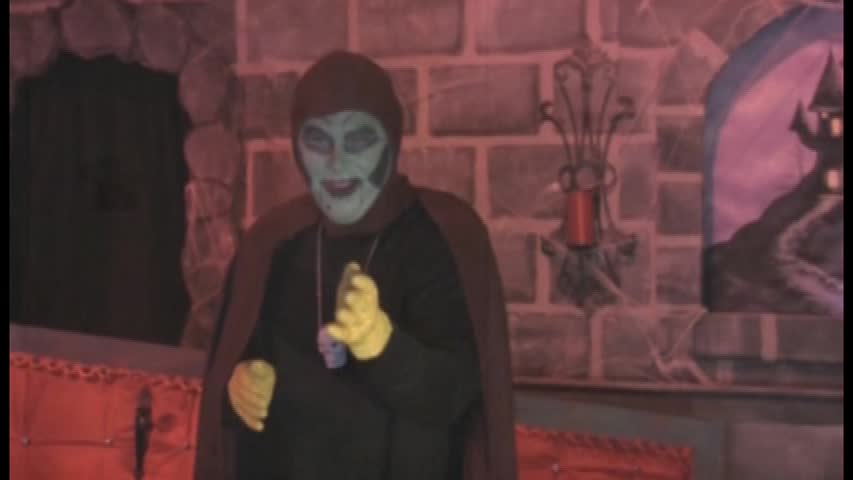
The acting is a bit clunky from the lead actors and that drag the story’s motivation down a bit. Brittany Jesse as Lana and Tom Sparx as the reporter try to build a dynamic duo that more or less fizzles and their characters are to partly to blame for their characters bring no real spark to their quest and cause of discovering the truth behind Taylorsville’s secrets. The evangelical preacher Hiram Graves played by Bill Levin has grand on screen physical characteristics to pull off a satan fanatical cult leader, but Levin’s acting doesn’t quite have the range of a twisted lord of darkness pastor and just stays on that horizontal plane throughout the film’s duration. The Texas Chainsaw Massacre’s original grandpa actor John Dugan and horror and sci-fi genre fanboy Sal Lizard headline “All Sinners Night” even though their cameo scenes are short and sweet. I found the one cameo of Indianapolis born and based horror host Sammy Terry, an Elvira type host of sorts, to be welcoming and well-fitting for the film’s gloomy nature and to be a nice shout out to the local Indianapolis horror scene. Lets not also forget about actress Sam Alford and her two courageous scenes of exploited nudity. Alford’s character is of generic and lesser value – like a Star Trek minor character labeled for certain death – and she is the sole kidnapped to bare her chest. I’m sure Easley didn’t mind shelling out a couple more bucks for the Alford’s assets.

After reading a number of reviews online about the film, the consensus on the Bobby Easley’s shooting style is that “All Sinners Night” resembles the visual stylistics of Italian directors such as Mario Bava or Dario Argento’s with their surrealistic or brooding atmospheres. I would venture more toward a duller hue with the right in your face shot-on-video style cinematography of those from such directors as Brad Sykes or Donald Farmer where as Bava or Argento focused more on vivid and popping colors and symbolic suggestions within their mise-en-scenes.

The DVD screener is presented in a 4:3 ratio with Dolby Digital 2.0 stereo mix and a 5.1 stereo mix. The full screen video, like I mentioned before as a shot-on-video style, has significant grainy interference, but the video is still watchable as if you’re watching straight from VHS quality. Not necessarily a bad thing but in today’s day and age or unless your intentions were to create a throwback, the video quality should be clean. The coloring is all off too with overused darks making certain scenes incomprehensible. The 2.0 mix and the 5.1 mix stiffens the unbalanced sound quality. Some dialogue emits too low of a range and then in the next scene the screaming is overbearing and crackling out of the speakers. The glam, goth rock or punk rock soundtrack is fairly decent, but the preference and priority should be on the dialogue or the story becomes lost without it. The disc did pack quite a few extras including a gag reel, music video from the band Dead Dick Hammer, interviews, and a trailer for the film and also :Atah Saia”.

Overall, “All Sinners Night” wears a lot of masks – literally, a large number of extras wear masks as if they raided a Halloween party store, but trying to piece together a story that tends to omit key elements or strays away from trunk of the plot is difficult and, basically, one would just need to take the film for what it’s worth, the epitome of independent filmmaking. The effort of introduce homage and the effort to construct a brooding atmosphere makes the Dr. Jekyll side of me admire this film, but the technical and educated Mr. Hyde side of me can’t ignore the obtrusive flaws. In short, rent this title to be adventurous on a forlorn night.
Evil Wears a Clown Mask! “Blood Slaughter Massacre” review!
The sleepy town of Havenwood becomes rocked by the mass murder of some of the town’s most prominent residents attending a joyous celebration. When two local cops, James Fincher and Walter Cobb, first arrive to investigate the horrendous massacre scene, Fincher comes face-to-face with the maniacal killer known by the moniker of The Ripper and barely survives the night. Ten years later, a string of new murders fall upon young high school girls of Havenwood and Detective Fincher starts to piece together that The Ripper might back. To unravel why The Ripper’s ten year hiatus, Fincher must look into his and Havenwood’s past in order to find the answer and stop The Ripper from killing.

“Blood Slaughter Massacre” is a nostalgia driven slasher film with a convoluted and murky plot, but the Manny Serrano directed film manages to rejuvenate the 80’s unstoppable killing machine character in The Ripper. Heavily inspired by the John Carpenter “Halloween” franchise when considering the gloomy atmosphere of the town and Michael Myers-esque antagonist, “Blood Slaughter Massacre” originality is certainly unoriginal, yet there’s something to be said about enjoying someone’s, like Serrano’s, tribute or admiration work that sparks a bit of excitement and allows entertainment to be let in to the soul, especially in the third act when The Ripper’s homicidal chaos ensues and he lays waste to teenagers left and right. Also, the title lacks creativity and doesn’t help build a case of separating itself from the pack. Maybe, a simple title such as “The Ripper” would have honed into that old saying “less is more.”

However, the blood and gore effects have sheer bite. The impressive effects for the budget give The Ripper character that desired aggressive murderer persona, warning all to stay the hell out of his way. Blood flies and flesh shreds created by buckets of bloods and well edited scenes. To showcase such effects you need a pile of bodies and “Blood Slaughter Massacre” piles high the corpses. With great kills, you need a great killer and the film’s “Shish-Kabober,” The Ripper, is a memorable slasher which can only be described as a giant fellow with an old man clown mask that displays no emotion in the hollow eyes, show’s no mercy when hovering above an easy kill, and owns a supernatural ability to be at the right place at the right time, ready to stick his blade right in the heart of his prey.

The rest of the characters didn’t stand out above The Ripper and emitted low caliber dialogue and persona all around. The acting becomes terribly melodramatic within serious and tense-filled toned scenes. Matt Cody as Fincher tried to embody a Donald Pleasence Dr. Loomis character, but Cody came off a bit to desperate in comparison and Fincher’s isn’t a strong male character able to pull off cutting down the brutal legacy that is so natural to The Ripper. The female characters with exploitive nudity, even if only for a few minutes, had more practicability because, while over stating the obvious, “Blood Slaughter Massacre” is a horror slasher movie making nudity a natural being or even a minor, disposable character. Also, many of the characters show up just to be filler for The Ripper to rip apart. Not a terrible thing, but it’s difficult to care about certain characters without being able to develop into a character we care about and in the end, all underdeveloped fillers must be six feet under ground in five or more pieces.

Technically, Serrano’s films suffers major obstacles. Scenes annoying go overboard on the grayscale with a heavy gray tint switching back-and-forth from scene to scene taking away the little coloring the film had and creating a haze blanket of the mise-en-scene as if in a dream. Continuously going in and out of focus and slight blotchy posterizing are also problematic during darker. Dark scenes and day scenes also suffer from heavy digital interference. The unbalanced audio in the 2.0 stereo mix doesn’t channel the dialogue very well, making it secondary to more inaudible parts of the film. What I can positively comment on about the DVD is the detailed cover art of The Ripper. The retro 1980s or early 1990’s feel of Wild Eye Releasing’s DVD release cover shows great promise for a film that flounders during the first two acts.
Earn Your Evil Badge at Fat Camp! “Camp Massacre” review!

Ten overly obese contestants compete on a boot camp type reality show to lose the extra pounds and have a chance at winning one million dollars in prize money. With intense health-crazed coaches, a strict unconventional exercise regiment, and a low-carb diet on the menu, things couldn’t be worse for the over weight competitors until people started to disappear and end up being murdered. Shedding the weight was literately the case as one-by-one a contestant’s eviscerated remains were discovered. Now the competition’s stakes have intensified and death is lurking around every corner. And we all thought fat shaming was worst that could happen to the weight challenged…

“Camp Massacre,” “Massacre Camp,” “Summer Camp Massacre,” Klown Kamp Massacre.” No matter how you jumble up these specific words, a generic title is still a generic title and the title “Camp Massacre” puts a pre-viewing damper on a long night of film watching along with a cover splayed with a former porn starlet and Charlie Sheen ex-“goddess” Bree Olson, semi-retired wrestler Al Snow, and, well, some unknown hot brunette chick with a bloodied chainsaw who doesn’t appear to be a part of the cast. Going into “Camp Massacre” knowing that this title considers itself a horror-comedy had helped push myself into popping in the disc and pressing the play button or else this title might still be collecting cobwebs on the nightstand.

The opening scene introduces the viewers to two young and attractive women and one large, unattractive woman in a hotel room discussing plans on what they’ll do tonight on a foreign island land which is undisclosed to us – looked like Key West, honestly. One of the women pondering going out on a night on the town is Bree Olson and before you know, Olson is fully and gratuitously nude in a sensual, extended shower scene and you all know what happens if you show your skin too soon in a horror movie! This ambiguously set and gratuitously shot segment proceeds into the main title and credits that slide right into the meat of the film that seemingly almost has nothing to do with the opener. The introductory scene barely hangs on even with the finale connection, but this thin connection creates an out of place awkward sequence that stands out like a sore thumb.

Connectivity and longevity of story remembrance sums up co-directors Daniel Emery Taylor and Jim O’Rear’s experience in filmmaking. The two filmmakers also produce and star in this collaborated effort to bring comedy and horror to a Biggest Loser reality show parody and to homage their love for certain horror icons. The hot topic of obesity is currently in a state of widespread prevalence making “Camp Massacre” relevant to the world’s personal and social problems that the media hops on, but the real question is did directors Taylor and O’Rear succeed in making a good comedic and horrifying quasi-film out of movie about obesity? That conclusion is all in the eye of the beholder and all in the interpretation of the viewer.

Is “Camp Massacre” a horror film? Yes. Is “Camp Massacre” a comedy movie? Yes. Is “Camp Massacre” a good horror-comedy? On a scale from one to ten, with ten being the highest – a three. Let me explain; the killer is written as a chubby villain with a “Six Pack, Abs” red apron and a Kentucky Fried Chicken family bucket on his head for a mask. If the killer’s looks intended to be a hoot, then there was a monumental failure. The killer’s arsenal is a collection of obviously off-colored prop knives and machetes that could be considered costume jewelry or packaged costume outfit accessories for party goers. The death effects are a bag of cheap tricks which are not sold convincingly and don’t bring the blood in which “Massacre” implies. The one single element going for “Camp Massacre” being a horror film – or even within the standards of a comedy – is the amount of nudity. Bree Olson, Megan Hunt, Amy Boyatt, and even Taylor’s wife, Ami Taylor, succumb to the conventions of a campy horror film and reveal the goods for the world to bear-witness. My only question is, where was Ava Cronin’s nude scene?

As far as the comedy side of this horror-comedy, “Camp Massacre” delivers on some levels mostly hanging around on a slapstick and immaturity elements. Daniel Emery Taylor’s character Greg paired with T.J. Moreschi’s Andy couldn’t ask for a better coupling as a budding duo who compliment each other’s wits with different character personalities. Add in a self absorbed narcissist body guard (who on the DVD cover looks like a coach with a whistle and clipboard) character named Ritz played by the bulky wrestler Al Snow and you’ll get a chuckle or two out of this feature. Ritz delivers quirky quips like “everything is good on top of a Ritz” during the scenes right moment. However, much of the comedy misses the mark and also just comes off as saying a lot of “fucks” in the dialogue which becomes stale after a first twenty. Simply put, the comedy is overly clichéd, but can still give you a half-assed tickling.

I’m not overtly excited about “Camp Massacre’s” characters either. Greg, Andy, and Ritz are fine and I’m found the homosexual Jarrod and the hispanic Josue to be entertaining. The rest of the cast seemed a bit tired. Actor William S. Tolliver was either sitting or laying flat the whole movie which was probably due to his weight, but the character became old as Tolliver didn’t express much versatility for an immobile character. Darc Ness, played by Ernest Douglas Nichols, didn’t bring the Goth attitude I had hoped. The character mixed Goth and serenity blending the persona into a off-key concoction. Most of the cast have worked with Taylor and O’Rear and have become their own heavy set version of entourage. What the film needed was more Michael Myers portrayer Dick Warlock, but that’s neither here nor there.

The MVDVisual DVD dons a 1.78:1 widescreen transfer that looks decent except for a bit of posterizing after the opening credits in the darker scenes. The Dolby Digital 2.0 mix does well channeling and prioritizing the dialogue, but some production issues weigh heavy on an uneven mic placements causing slight interference from scene to scene. For disc extras, there is solely the movie’s trailer. Overall, “Camp Massacre” doesn’t deserve to be completely passed over, but I wouldn’t expect instantaneous cult status or life changing acting nor an outer-body experience in filmmaking. Instead, take “Camp Massacre” for what it’s worth; a bunch of fat guys at boot camp being stalked by a bucket head killer with Al Snow and lots of nudity. Where can you go wrong with all that?
Cross-Dressing, Katana Wielding Evil! “Der Samurai” review!
In a small German village, Jakob, a police officer, encounters a blonde cross-dresser wielding a samurai sword who reeks havoc throughout the village. Before Jakob can make an arrest, the decapitating murderer quickly vanishes and reappears during random points of the night. Jakob soon realizes that this cross-dresser killer has more in store for Jakob who, before the strange encounter, struggled to remain above the water living in a town that doesn’t seem to want him there. Does this dangerous individual hold to key to the answers of Jakob’s questions or is he just a mental head case wielding a katana for the fun of it?

“Der Samurai” is certainly an interesting piece of German cinema that’s difficult to follow, but if you dig deep and look closely into the bones of the film, a glimpse into the personal life of our hero Jakob and his conquering of personal struggles is clear to the mind’s eye through the interpretation of writer and director Till Kleinert in his sophomore film. Jakob, portrayed by Michel Diercks, doesn’t quite fit in in his small hometown village; he has no outside life as he spends his every waking moment taking care of his grandmother when not on official police duty, his boss is constantly degrading him, and the town doesn’t respect his job given authority. While he struggles through these life issues, his work obsession becomes with a wolf that has been sited in the village. Since nothing ever happens his his small village, the wolf is the most interesting thing ever to happen as far as crime goes.

The wolf is hardly seen throughout the movie except for a few brief sightings and up until near the end and the reason for that is the katana wielding, cross-dressing maniac Jakob happens upon. The cross-dressing psychopath, played by Pit Bukowski, is a representation of the wolf and the wolf represents the epic struggle in Jakob’s pitiful life. If he can overcome the epic struggle, then he’ll be free of all the insecurities that have burdened to him and dished out by his insincere village folk. However, the quest to best the manic isn’t going to be easy and will be bloody.

With a title like “Der Samurai,” there will be blood, but the production crew had to use cheap tricks to make the realistic violence work and work well. These cheap tricks were very well done and certainly didn’t look phony or cheesy on screen. The effects are also very experimental and up for interpretation. At one point when a character is decapitated, a spectacular display of blood and fireworks skyrocket out of the neck as a sort of spirtual release for the poor headless character. Experimental and up for interpretation, just like the androgynous character that Pit Bukowski portrays. What kind of sexual desires are being explored here between Jakob and the maniac? At first, I thought maybe Jakob was the maniac due to his boss questioning Jakob on the phone that he might be dressed up and wielding a katana and when his grandmother, in a frightened state, claims that the person tending to her was not her grandson when clearly it was Jakob tending to her. This all changes when other police officers and town folk also see the cross-dresser, putting to defunct the speculation that Jakob was this cross-dresser.

Artsploitation Films brings to Blu-ray home video “Der Samurai” and we’re lucking to have a film like this to be available now in America. However, the 1080p widescreen 1.85:1 transfer isn’t up to the Blu-ray quality one would think. There lies a lot of grainy noise interference, perhaps to the low lighting provided for the film as much of duration is shot in the dark. Didn’t look like to me that there was any digital noise reduction used to smooth out the specks. The Dolby Digital 5.1 German dialogue with English subtitles is flawless and all the subtitles sync up well with the characters’ dialogue. Bonus features include a commentary with director Till Kleinert and Producer Linus de Paoli, a theatrical trailer, and a behind the scene featurette that is actually worth looking into as much of the background and backstory is explained. I’d recommend this German horror to all to experience and, to put the cherry on top, you’ll get to see an erect penis! Enjoy!