Making a Horror Movie can be EVIL on the Health! “Stoker Hills” reviewed! (101 Films / Digital Screener)

Three film studies college students are eager to win their class’s short film contest with story idea Street Walkers, a genre blending horror movie that crosses “Pretty Woman” with “The Walking Dead.” On their first night of shooting, isolated on the empty streets of Stoker Hills, their actress and friend is suddenly abducted right before their camera lens and instantly give chase without a second to call the authorities, falling right into the maniac’s nightmarish world. Left behind for two detectives is the students’ tell-all camera, leaving behind the recording as the only clue into tracking down their undisclosed whereabouts and stopping the kidnapping-killer. As the detectives home in on the killer’s lair, only hours are left before a determined and desperate madman drains every single drop of their youthful blood for a deadly selfish cause.

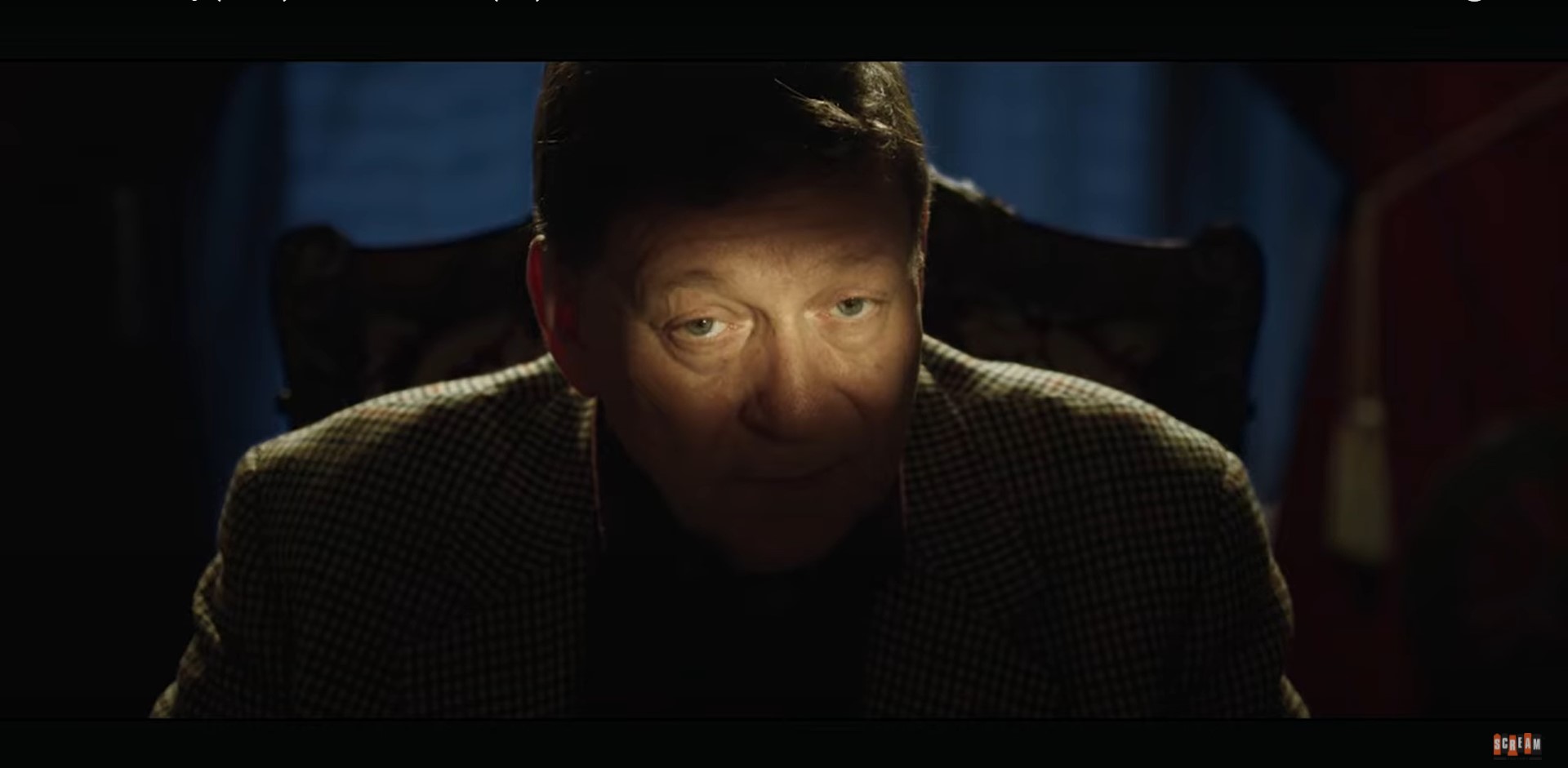
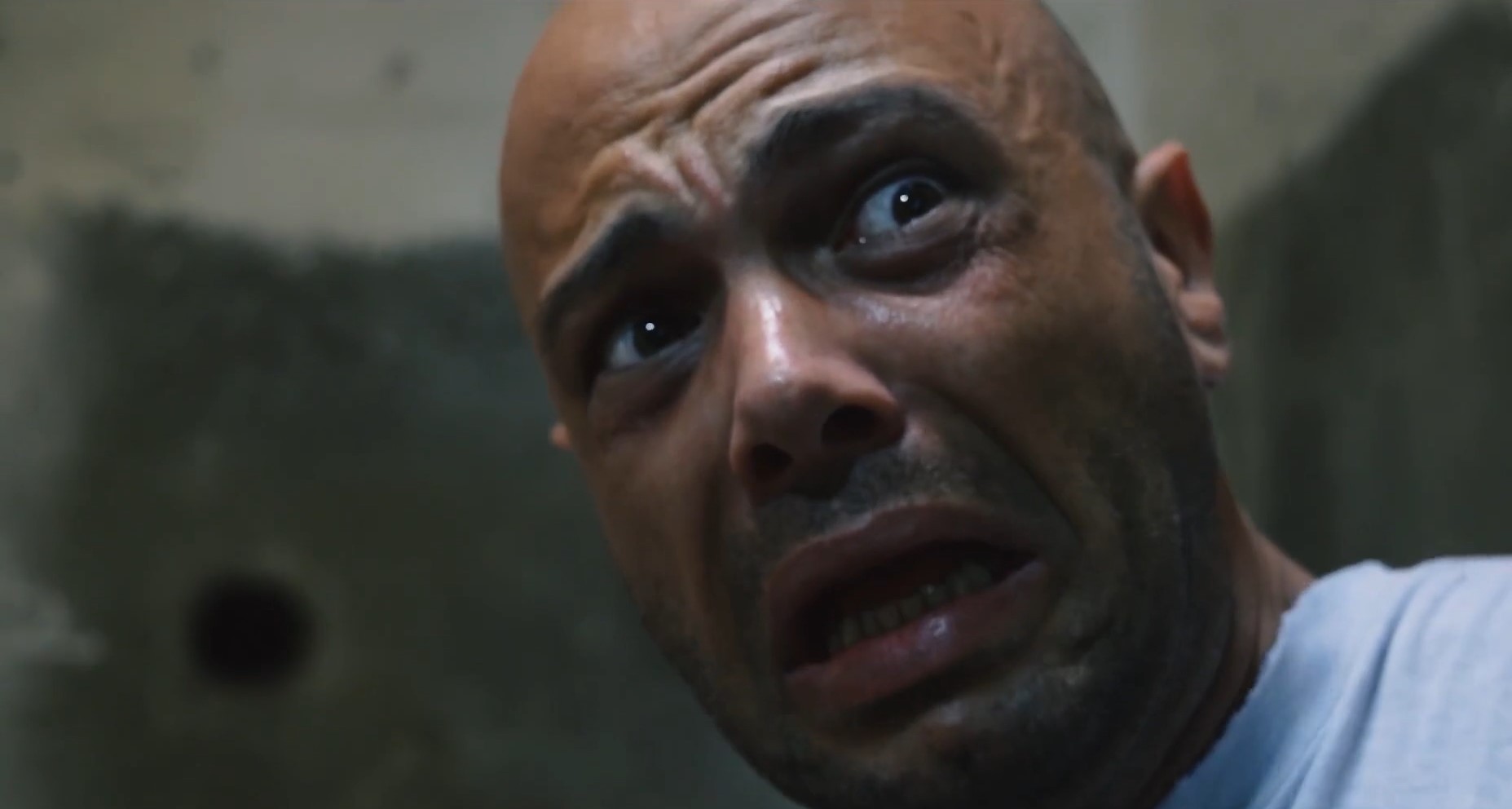
Director Benjamin Louis and “Stoker Hills” want you to believe in their compelling and bloody slasher narrative of periled college students fighting for their lives against a formidable, resilient killer while two resolute detectives sniff out the mystery of their disappearance before it’s too late. However, in “Stoker Hills,” nothing is as it appears to be. As the first feature script penned and produced by Jonah Kuehner, the “State’s Evidence” director, Benjamin Louis, coproduces the sheeny cinematic slasher that hits upon almost every known trope in the book by incorporating a backwoods nook, a torturous rec room, and foggy night underneath a vividly complete full moon into a story that’s one part found footage and one part cop thriller. Benjamin and cinematographer John Orphan (“The Black String”) do a phenomenal job crafting away from a Los Angeles look and into an unrecognizable, any-town-America by shooting at the dead of night in L.A.’s low-lit surrounding areas of Griffith Park and the Angeles National Forrest without focusing in on or revealing well-known landmarks. “Wildling’s” Rab Butler and Timothy Christian coproduces the 2020 teen-mystery slasher.

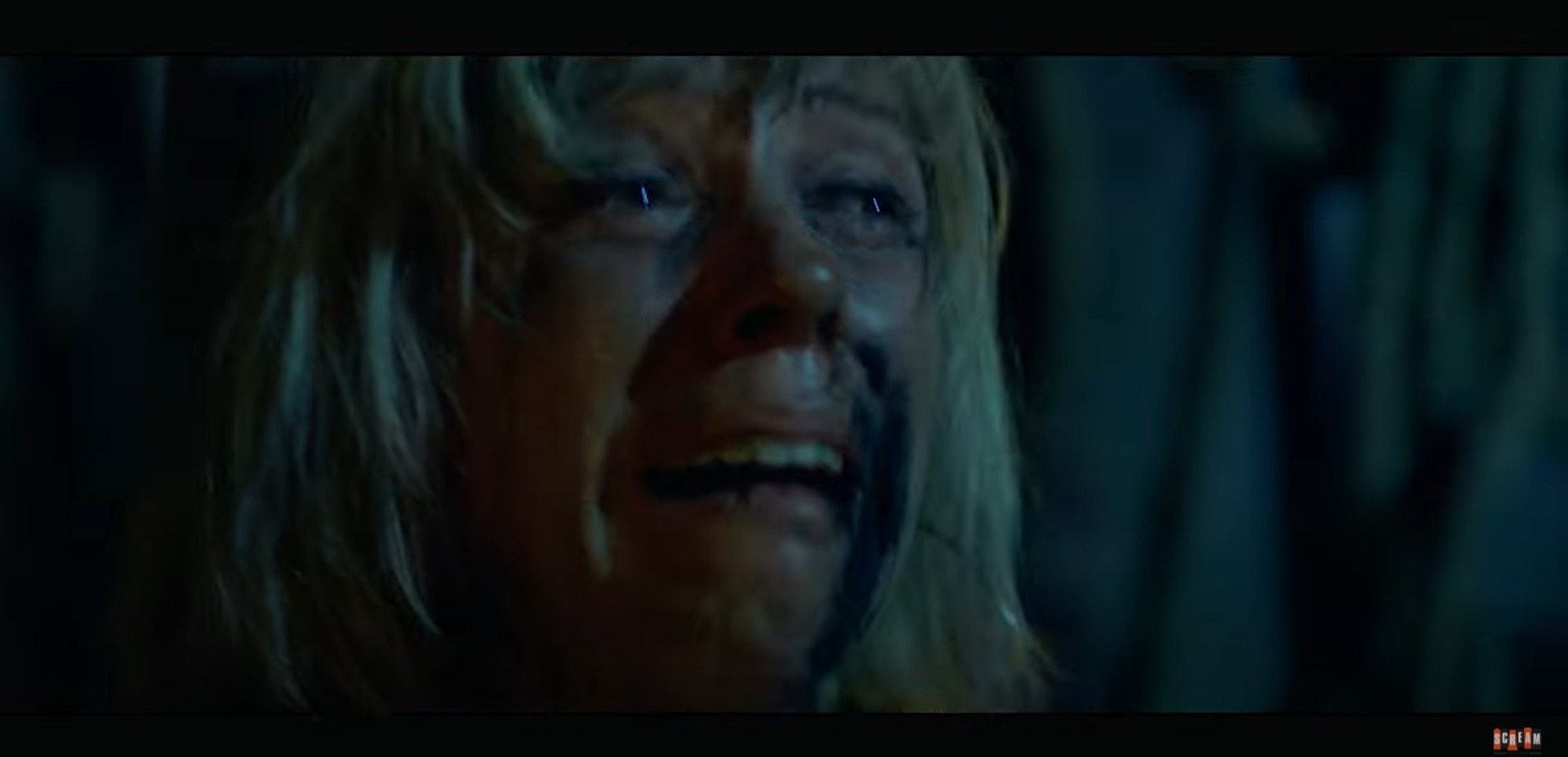
“Stoker Hills” begins very much in the same way as my last review of Seth Landau’s “Bryan Loves You” with a deep-in-character production by the great Tony Todd (“Candyman”) as a film studies professor. Instead of warning audiences to look away if frightened or to be ushered out of the theater when shocked beyond just stomaching the content, Todd’s professor of cinema is passionate and enthusiastic about what great filmmaking and the auteurs who wield their work upon the world. However, much like “Bryan Loves You,” Tony Todd only dabbles into the narrative with a superficial house role that opens the doors for Ryan (David Gridley, “The Unhealer”), Jake (Vince Hill-Bedford, “Sorority Slaughterhouse”), and Erica (Steffani Brass, “Ted Bundy”), three slackjaw, maybe even indolent, students eager to take “The Walking Dead” and turn it into a “Pretty Woman” romance comedy known as “Street Walkers.” The concept is no Guillermo del Toro or Martin Scorsese, but nonetheless barely sates the professor’s threadbare faith in the three’s semester-ending grade. Along the way, we’re introduced laterally to character who will eventually be integrated into the story later and at a state of prominence to the mystery, such as with fellow star student Dani Brooks (television actress Tyler Clark) and her university benefacting donor Dr. Jonathan Brooks (John Beasley, “The Purge: Anarchy”). “Stoker Hills” also isn’t entirely linear as the footage soon appears to be corrupted only to be on pause by two officers investigating the case and analyzing the video. William Lee Scott (“Identity”) and Eric Etebari (“Scream at the Devil”) play the high-blood pressure, blue collar, family-man Detective Bill Stafford and a sophisticated bachelor and quasi-Rain man Detective Adams respectively. The Scott and Etebari cop drama show entertains as less CSI and more NYPD Blue or Law & Order with a conspicuous partner correlation only to be separated by adding snippets of out of context humanity, such as why Adam’s is a loner and Stafford hates changing baby diapers. Powerful stuff. Each character is connected to “Stoker Hills'” antagonist, Charles Muyer (Jason Sweat), who’s been abducting young, healthy people off the streets and into his vacant buildings of intravenous drips of blood into a milk crate-based cylinder beaker tube. Thomas R. Martin, Joy McElveen, Maya Nucci, Michael Faulkner, and “Eraser’s” Danny Nucci round out the cast.

Director Benjamin Louis cherry picks the best traits from a triad of genres to smush together into one trope-tastic “Stoker Hills”  A lumbering mute killer bred to annihilate in his nihilism from the slasher genre, two dedicated detectives determined to catch a killer and able to snoop out clues out of nothing that’s familiar toward the cop drama genre, and a pair of brosefs, who dude each other in every other line of dialogue no matter if it’s joshing in film studies class or being chased harrowingly through the woods and having their foot snagged in the teeth of a beartrap, pulling from the pot-smoking and arrogant hijinks of two immature college aged guys usually hovering around the teen comedy category.  All the actors really get into their parts to the point of a fault in creating a bogus, simulated environment as if a knockoff matrix, coded by naive aliens who know nothing of the human race other than watching “American Pie,” “Law & Order,” and every Renaissance era slasher film, is being pulled over the eyes. The whole ordeal that has a context surrounding Charles Muyer’s bad pig heart is also grossly under kneaded and bordering nonsensical until the ending. That game changing ending spooled by meta wiring puts in perspective every last minute of the well-paced 91-minute film, and when the narrative quickly closes upon itself and fades to black into the credits, every scene previously pondered and examined, crisscrossed into a mental algorithm that breaks down character arcs and progression devices, and spits out answers like an Amazon Alexa has suddenly last all its calculated determination in a snap of a flash. Kudos to “Stoker Hills'” screenwriter Jonah Kuehner for conceiving an overtreated trope decoy story and kudos to director Benjamin Louis in pulling the wool over our eyes without flinching or showing his cards too early.

Everybody run for “Stoker Hills” and become caught up in a diabolical twist that’ll deflate the suspense out of you but also leave you pleasantly surprised. 101 Films released this film last month, March 28th, on digital platforms. Since “Stoker Hills” is solely a digital release from UK distributor, there are no audio or video specs to note or review. Aforementioned, John Orphan helms the “Stoker Hills” noir and no-nonsense veneer which is and also the minor league Jigsaw traps are very “Saw”-like, even down to peppering certain scenes with over illuminating primary color gels if by spotlight. Roc Chen, a profound composer for China over the last decade, notes a less than impactful score in what could be considered more run of the mill material, but that also could play into the whole narrative twist. There were no bonus features available with the film nor were there any bonus scenes during or after the credits. At first glance, “Stoker Hills” treads over the same worn trodden path of slasher predecessors, but then the finale hits like a five-finger slap in the face from Will Smith and, suddenly, everybody could be, should be, and will be talking about “Stoker Hills'” gripping gambit.

Even After Death, EVIL Fathers Can Still Be Punitive! “Daddy” reviewed! (SRS Cinema / DVD)

Come to “Daddy” now on DVD at Amazon.com

In a small lakeside, mountain town, a violent rape of a young woman paralyzes her into complete shock, shutting down her power to speak, and spiraling her into a withdraw.  Newly appointed Sheriff Sylvia Carlsen has a personal stake in the case as the woman is a close and dear childhood friend.  The nature of the rape puzzles law enforcement and frightens the small community after evidence of soil and worms are discovered around the scene of the crime and inside the victim.  When another of her close friends is violently rape the same way, Carlsen’s painful recollection of a dark secret involving her and her friends reagitates a dormant fear and familiarities between her past and the rapes appear to me more than just coincidences.  As the attacks continue, the toll on her mounds and a series of erratic behavior incidents put into question her judgement but that won’t stop her digging into her own case of issues.

Have you ever come across a zombie revenge thriller where the decomposing undead, recently fresh from a risen unmarked grave, stuck his worm (no, that isn’t an euphemism) into a hapless female victim?  While not explicitly depicted in what sounds like a niche fetish of the subfloor adult film industry, the image of soil and creepy crawlers inside the vaginal cavity is very real in director Michael P. DiPaolo’s “Daddy” where daddy issues can be extremely violating and gruesomely decaying all in the same rotten breath.  The “Requiem for a Whore” and “Transgression” filmmaker writes and directs the 2003 SOV-shot style, back from the grave indie production, at one point in time was called under the working title of “Rigor Mortis,” hailing from the Albany proximate Averill Park, New York and was self-funded and produced by DiPaolo and Christopher K. Philippo (“Motor Home Massacre”) under DiPaolo’s production label, Black Cat Cinema.

The actresses to be symbolically lubricated with the Earth’s muck are played by four friends, who just happen to be all blonde as if blondes run together like a pack of wino Golden Retrievers. In her first feature film, not a television role, is principal blonde number one Selia Hansen as the frequently boozing, causal sex engaging, newly appointed sheriff, Sylvia Carlsen. Hansen plays the hot-headed Sheriff eager to prove herself but is shredded emotionally by the violent sexual assault against her friends – Leslie (Katherine Petty), Jamie (Cynthia Polakovich, “Date with a Vampire”), and Allison (Bevin McGraw, “Arachnid”). Other than BFF Leslie, there isn’t too much discourse between the good friends and if is conversing between them, the topic of conversation is about the rapes, leaving the groups’ tightly knit friendship barely tethered to Carlsen’s burdened shoulders. Ravaging the community’s blond population is the titular rapist and to avoid obvious spoilers, I will refrain from divulging the attacker’s reason for stalking Sheriff Carlsen and her male unaccompanied friends. In what is perhaps the biggest role of his scarcely career, Aaron Renning lurks around like deviant, tongue-wagging Uncle Fester complete with chrome dome and a dirty dinner jacket grimed with earth and wiggly worms. Renning’s performance has it easy with zip for dialogue and a penchant for being a raving manic with a libido in hyperdrive. The performance bares no crass crudeness as it’s very to the point without revealing the point – if you get my point. Actors following up from Michael P. DiPaolo’s “Transgression” is David Shepherd as the town’s Doctor Vance and Marc St. Camille as the pushover Deputy Richie Dagg. Yet, the most interesting casted member is John Karyus. The “Poultrygeist: Night of the Chicken Dead” to “Big Freaking Rat” B-horror Karyus plays the Sheriff’s ex-husband who’s always peeping and is eager to inform his ex-wife something important but doesn’t ever receive the chance to, marking his scenes utterly pointless.

“Daddy” issues is right. DiPaolo strikes up grave retribution with a zombie degenerate harboring a message, one that I can only hope is accurate, is suppressed emotional trauma can be haunting, if not deadly, when not dealt with its beleaguering demons. However, “Daddy’s” undercurrent is more grossly sweeping and pungent with corrosive, misguided outcomes. Instead of battling trauma, DiPaolo’s depiction of Carlsen’s alcoholic abuse and fleeting affairs coupled with nightmares of the past also speaks illy toward guilt and feeling guilty over an irreversible criminal act done for the right reasons, in self-defense, nonetheless, sets the wrong tone. The finale also doesn’t set well with the fact that DiPaolo inflicts no escape from one’s rapist, no comfort in the knowledge of their death, and that their lives hang in the very balance, targeted by a demented vision. Demented, that’s definitely how I would describe DiPaolo’s serial rapist zombie flick that’s not terribly terrifying as it is one’s twisted filmic folly into incest and inevitable topple of repossession of oneself. “Daddy’s” acting is often stiff and forced, on the cheap effects offer up fake and live worms and a gray palette zombie perv, and the handheld SOV-style camera work from DiPaolo himself is like a fly buzzing around the room at times. “Daddy’s” beyond the dead vindictive nature is only abated by the number of topless blondes being subjected to dry humping in this ill-judged, undead-to-bed fiasco.

Of course, it only makes sense that SRS Cinema would release something to the likes of “Daddy” onto DVD home video. SRS Cinema loves nearly everything shot-on-video, nihilistic, zany, and unconscionable content. Sex and death sells and SRS Cinema has a long history of delivering good on that brand of promise while also luring unsuspected victims, I mean viewers, with exceptional retro-cover art that’s vibrant and detailed in all things macabre. The region free DVD has an aspect ratio of 4:3 and a runtime of 83-minutes. Shot with a videotape camcorder, image quality is about what you expect with an immense amount of interference during night shots and compression artefact issues rampant throughout, especially during black and white flashbacks, but the image is essentially discernible which makes DiPaolo’s use of only natural light more impressive. The English language mono track is hit-or-miss depending on the camcorder’s mic placement with faded hissing to throw another curve back at you. There are moments when the ambience is exquisitely sharp in fidelity and edit, such as the blaring police siren or a car suddenly passing into frame for jump scare effect. Bonus features include a commentary track with Michael P. DiPaolo, a behind-the-scenes featurette with DiPaolo narrating upon how he accomplished more of the difficult and complicated scenes, the feature trailer, and SRS film trailers. Interesting concept piledriven by its creepy subtext, “Daddy” continues to be aversive with a tagline “He comes after bad little girls!” splayed on the front cover that leaves cringed induced wrinkles on my face every time I cerebrate the underground film. In the same breath, I know and love SRS Cinema’s unwavering nihilism, standing admirably behind Michael DiPoalo’s incestuous and rapey, unfatherly film without second guessing commitment.

Come to “Daddy” now on DVD at Amazon.com

EVIL Comes Not on the 1st Day, or the 2nd Day, but “On the 3rd Day!” reviewed! (Scream Factory! / Blu-ray)

“On the 3rd Day” arrives onto Blu-ray on March 29th!

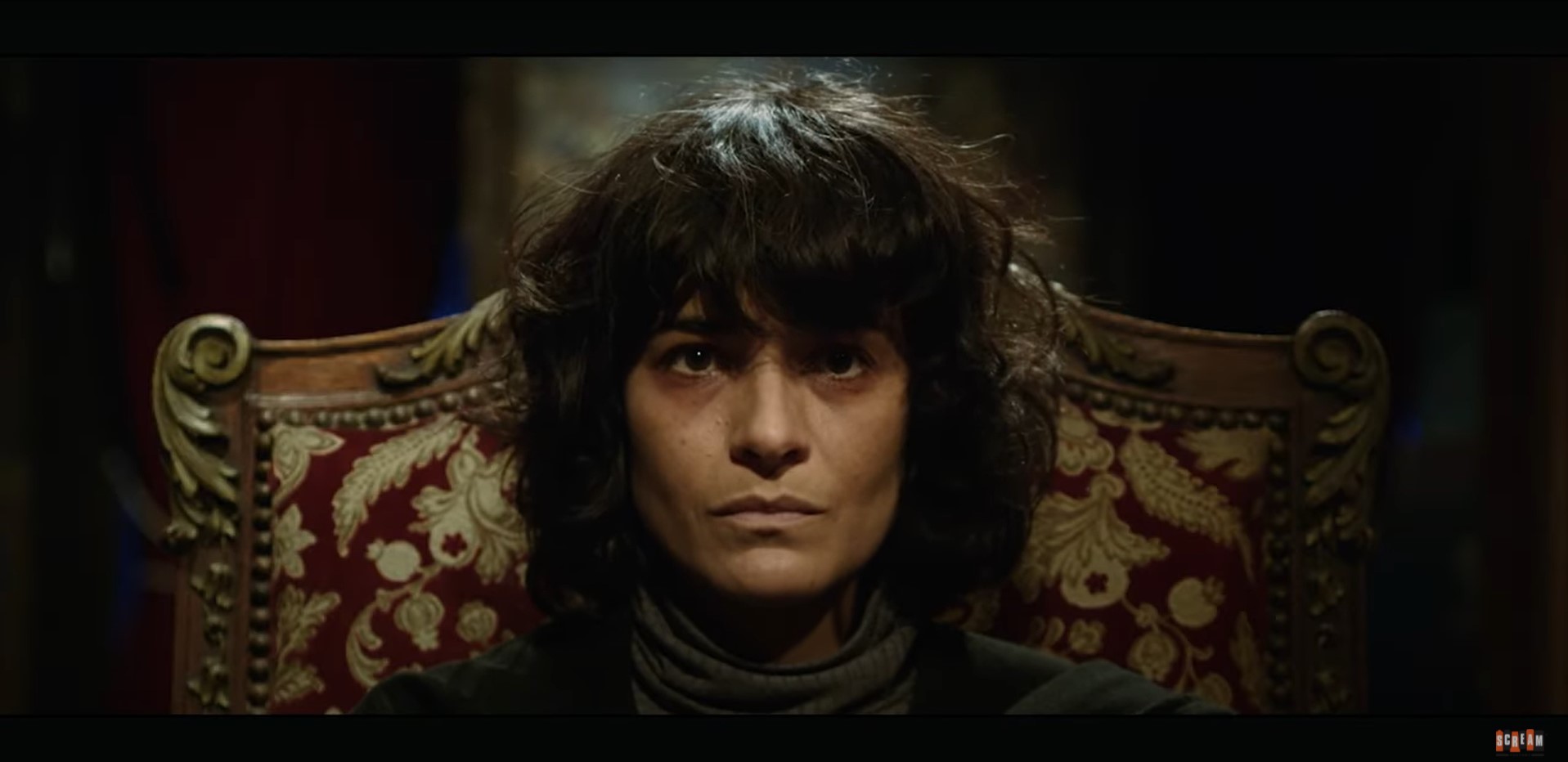
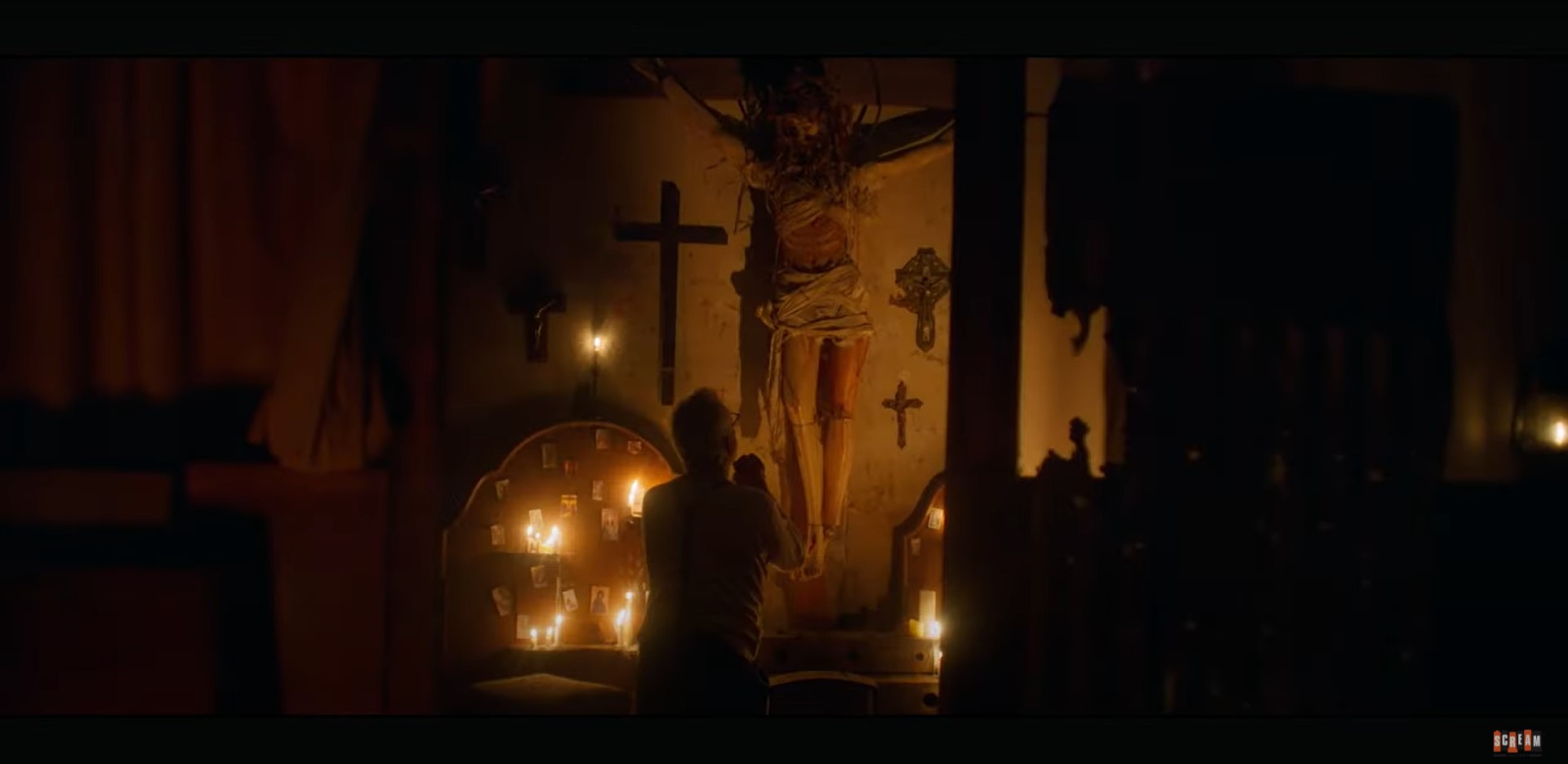
A car accident leaves Cecilia dazed and confused as she wakes up in an abandoned warehouse unsure of what crashed into her and how she arrived inside the vacant area.  Her son, Martin, who was also in the car with her, is missing.  Plagued by disturbing visions being reflected through mirrors, an agitated and frightened Cecilia escapes the hospital and with the help of an empathetic, young doctor, they employ a hypnotist to extract her post-accident whereabouts and possibly locate her missing son, but what is unleashed through hypnosis is more terrifying than imagined.  Meanwhile, the other crash victim, a hermit priest, sets forth to reclaim an ancient and deadly Catholic secret lost in the wreckage and will stop at nothing and do anything to get it.  When Cecilia and the priest converge, the truth of what really happened will be profanely revealed with spilled blood.

“On the 3rd Day” is one of those movies that needs tiptoeing around when reviewing it to not divulge spoilers.  The Daniel de la Vega mystifying horror hails from Argentina and is penned by the screenwriting duo of Alberto Fasce and Gonzalo Ventura, the latter of whom authored the 2017 novel “3 Days” (3 días) in which the film is adapted from.  What can be divulged about Vega’s film is that context revolves around a classical monster fans know and revere to be a staple of horror iconography but “The Chronicle of the Raven” director ventures deep into a disoriented mother’s puzzling gap in time, working backwards through her mind’s murky-dirty window to then make the picture wretchedly clear.  “On the 3rd Day” blends abusive relationships and ugly divorce with traditional and appreciable genre tropes to fully convey that those who are to be loved and protected the most out of dissolving unions are those who are ultimately the ones hurt most of all.  Del Toro Films’ Néstor Sánchez Sotelo, who produced Vega’s 2016 supernatural thriller, “White Coffin,” produces alongside the filmmaker in a coproduction with Furia Films.

“On the 3rd Day” pursues the storyline of two principal characters: Cecilia, a mother recouping her memories after a shocking car accident, and Padre Enrique, an off-the-grid priest guarding the Catholic Church’s dark secret. The Buenos Airos-native actress Mariana Anghileri becomes lost in Cecilia’s constant struggle against the forces guiding her down a subconscious alter ego path that’s unveiled at the tale-telling end while at the opposite end of the spectrum, Padre Enrique, played with a feverously somber faith from Gerardo Romano, who also had a role in Daniel de la Vega’s “Necrophobia 3D,” knows exactly what’s at stake after accidently crashing his truck into Cecilia’s car and the displaced crate he was hauling to Santa Cruz at the behest of the church opens and sets loose an unspeakable evil to lurk. Romano is purposeful in Padre Enrique’s mission with a scrap of uncertainty splayed on his face, but never discloses a sense of true concern or panic-stricken hopelessness which makes the character refreshing in his confidence rather than tense in his unwavering assurance. The same can’t be said about Cecilia who suffers a continuous reeling over the missing gap of time. However, locating the sincerity in Anghileri is difficult as the actress doesn’t convey that primo motherly instinct of a sudden and violent detachment from her child properly. Anghileri wonderfully denotes an obfuscate posture but condoning her as a loving parent just doesn’t seem justifiable, even in the finale that is while still impactfully poignant, misses utterly gutting audiences with Anghileri’s lukewarm care. “On the 3rd Day” rounds out the cast with Osvaldo Santoro, Mathias Domizi, Lautaro Delgado, Susana Beltrán, Octavio Belmonte, Sergio Boris, Rodolfo Ranni and Verónica Intile.

“On the 3rd Day’s” first act didn’t fill me with confidence. I was about as lost as Cecilia waking up disoriented in a vacant warehouse. Vega jumbles sequential order and interjects flashbacks into an already copiously edited narrative with a slither of surrealism to the style of early David Lynch or Terry Gilliam. We’re thrust into Cecilia’s post-crash nightmare, witnessing irrational visions through standing oval mirrors and departing characters who don’t come out alive on the other end of meeting her. Vega seldomly gives into definitive trope context as he reshapes with miniscule precision what we already know traditionally about this particular monster into seemingly something new. By the second and third act, Vega begins whittling down obscuring barriers, leaving more dead bodies in Cecilia’s wake although we definitely don’t ever see death by her hand as it’s always just implied between before and after cuts. The script also pieces in more clues with Padre Enrique’s razing of collateral damage stained with the blood that is not their own. I’m enamored by this phrase that embodies a mystery on the tip of the tongue hungry to be solved and as the padre proceeds to liquate an innocent bystander because of clues he only recognizes, his character, however vilified Vega makes him out to be, becomes far more interesting in a role as a priest with a less than a pastoral posture and as a persistent caretaker of an ominous being, cleaning up after whoopsie daisy incident in losing his oversight. What “On the 3rd Day” boils down to, thematically, is when the sight is lost on what is most important, there becomes an indefinite loss that can’t be put back safely into the box. Between Cecilia’s radical escape from an ex-husband and Padre Enrique’s hastiness, they both take their eye of the prize and ultimately suffer loss in the worst possible way, turning “On the 3rd Day” into a distilled gaslight of unquestionable terror.

Hopefully, to this point, I have not spoiled Daniel del la Vega’s “On the 3rd Day’s” elusive revelation. One of the only ways to see what happens, to see the shocking ending, check out “On the 3rd Day’s” on Blu-ray from Scream Factory arriving Tuesday, March 29th! The AVC encoded, region A Blu-ray is presented in 1080p high definition and in a widescreen 2.39:1 aspect ratio. Mariano Suárez carries over the tenebrous “Terrified” low lighting to provide a tonal dreary environment akin to noir, which “On the 3rd Day” fashions itself. Skin tones, practical effect textures, and even the retro-esque compositional special effect flush out nicely. What’s a little disappointing is the forced English dub track on both the audio options: DTS-HD Master Audio 5.1 and 2.0 stereo. With no alternative languages to opt into, even a native Spanish track, the English dub is obvious desynched between the speech and delivery. The ambient range and depth fairs better with adequate detail and an Italianomysterio soundtrack by Luciano Onetti, who worked on the modern giallo films “Francesca” and “Abrakadabra” with brother and co-founder of Black Mandala productions, Nicolás Onetti. English subtitles are available. The 85-minute film releases not rated and without extras other than the snapper case sheathed inside an image redundant cardboard slipcover and a wide still capture on the reverse Blu-ray cover. “On the 3rd Day” starts messy but ends in a gothic aghast that sets the seal on Daniel de la Vega’s slow burn evolution as a genre filmmaker.

“On the 3rd Day” arrives onto Blu-ray on March 29th!

EVIL Atones with Drugs and Torture! “Xpiation” reviewed! (Unearthed Films / Blu-ray)

Atone for Your Sins By Buying “Xpiation” on Blu-ray from Amazon!

An elegantly dressed woman thrones herself into the middle of a grungy corridor, pointing a video camera toward two unconscious men. One man lies face down on the floor while the other is gagged and bound naked to a chair. When both men awake from their slumber, the man from the floor continuously tortures the man confined the chair by beating him, slicing his face open with a knife, scraping his skin open with steel wool, bludgeoning him with a clothes iron, and hammering his scrotum all the while the mysterious woman videotapes. The woman coddles her delusional torturous goon with powerful narcotics and motherly affection to do her bidding. She also participates in a few pain inflicting activities that adds more insult to injury to the beaten to a pulp and humiliated young man hanging onto his life by a thread.

Italian gore and shock filmmaker Domiziano Cristopharo wanted to emulate the notoriously extreme and underground horror series Guinea Pig that originated in Japan and was westernized for North American audiences with their own version of American panorama of sadism. For Italy, Cristopharo set out to create his own compendium of starkly violent and gory films Cristopharo dubs the Trilogy of Death. All three films dealing with a theme of punitive suffering were produced in 2017, beginning with “Sacrifice” that written by Samuel Marolla and directed by Poison Rouge (“A Taste of Phobia”). “Sacrifice” was actually turn Cristopharo’s aspiration into reality when it was picked up by the American Guinea Pig series. The next film, “Torment,” was cowritten by Cristopharo and Likov Milotoskih and directed by Adam Ford (“XXX Dark Web”) that pulled inspiration from the infamous John Wayne Gacy murders. The third and last segment, “Xpiation, was helmed by Cristopharo himself from an Andrea Cavaletto (“Dark Waves”) script that finally placed Cristopharo personal touch upon the series he fully endorsed as creator and producer under his production company, Enchanted Architect.

The principal cast is tightly coiled around just the three individuals in the isolated corridor of a vacant, graffiti painted building.   Right away, we’re intrigued by the opening scene of a sophisticatedly dressed woman with blond hair draped over her left eye.  She’s sitting in an armchair with her exposed legs to the side.  She has forearm length black gloves, lushes red lipstick, a tightfitting low cut short skirt black dress slightly exposed by her short sleeve steel gray jacket with a matching pin hat with a clear veil over her face, a purse around her left forearm resting on her thigh, and a camera clutched in her right hand for viewing the spectacle before her.  The provocative Italian actress Chiara Pavoni is the sharply eye-catching center figure amongst the rumble she sits and the two disheveled men she videotapes. Having had roles in previous obscure horror, such as “Demonium,” “Bad Brains,” and VelvetMorgue,” Pavoni established herself as an Italian scream queen that suited her more domicile, yet underhandedly authoritative, role as the Lady in “Xpiation” that has since been a springboard for her career working with Cristopharo on a number of future projects.  We see what Cristopharo sees in the mature in age actress:  a commanding presence with range and willingness to absorb extreme content for the sake of art.  As the Lady, Pavoni orchestrates the drug-fueled violence of Simone Tolu’s character, the drug addict.   Tolu’s crazed approach to a hallucinating and aggressive, substance abusive druggie is more childlike that crosses the line into overzealous disability.  The addict is supposed to be under the Lady’s narcotic spell, bewitched by her motherly presence in feeding love to him by way of various powders, pills, and penetrating needles of unknown liquid matter and while that is certainly what’s on screen, Tolu oversteps his swiss-cheese child mind into more of just maniacal horseplay that cheapens the desired effect.  One of the easier performances in the film is from Emanuele Delia who has to sit naked in a chair, bound and gagged, and take Tolu’s manhandling beatings for most of the duration.  Delia has a handful of scenes where he’s engaged with the Lady in flashback and an existential representation finish but neither one of his three-sided role squeezes out a smidgen of dialogue, reducing his inked and pierced body to be a model of crime and punishment, or in this theme, sin and atonement.

Sin and atonement.  “Xpiation” is simply that.  A minor reconstructing toward a more panache play on the word expiation, the act of making right for wrongdoing, to home in on concluding Cristapharo’s Trilogy of Death.  “Xpiation” expresses this message in the form of vengeance in an exploitation playground of brutality where eye-for-an-eye is a steep slide toward grinding a sinner into the rubber mulch of penitence.  Cristpharo directs a straight up torture film that aims to avoid a fanciful apathetic and really divulges itself into humanizing the torturer with flashbacks of far-from-comfortable life.  Multitudes of abuse fester in the Lady’s past until it suppurates outward after one final act of transgression pushes the Lady beyond the point of enough-is-enough and every ounce of anger and hate that’s been bottled up tightly all the years is shook so hard the cap finally explodes into a meticulously premeditated plan for revenge and relief. Non-linear avant garde is Cristpharo’s go-to storytelling weapon, one that provides “Xpiation” with more layers than just surface level brutality as the director spoon feeds the audience with little bits and pieces of the Lady’s background. As he accomplished with his breakout film, “House of Flesh Mannequins,” the filmmaker is a master at commanding the pace, a maestro del ritmo!

You can now own a piece of the trinity or conclude Domiziano Cristopharo’s trilogy of death with a Blu-ray release of the last installment, “Xpiation,” as the director attempts to revive erotic-horror and institute extreme horror in his home country of Italy. Unearthed Films, a leading distributor in gore, arthouse, and horror films, releases an AVC encode full high definition, 1080p, Blu-ray in a standard widescreen 1.85:1 aspect ratio. Distributed by MVD Visual, I tested the Region A release on a Region B setting and was able to play the not rated film in its 73-minute entirety. Image looks consistently good and more gruesome with the closeup mauling of skin. Colors are vivid enough in the blood and in the contrast, through good lighting, of the lady’s aristocratically lush and starkly colored outfits compared to the bleak rubble that surrounds her. Often, during the flashbacks, does the coloring dull or reduce to indicate flashback. The English dubbed PCM 2.0 stereo is where most of the inconsistencies lie with an uneven dialogue track due to the forced English upon English dub, as the actors are basically whispering their lines in English, and “Sick Sock Monsters from Outer Space’s” Antony Cola’s industrial hum and brood soundtrack masks the dialogue to a muddled intelligibility. I wonder why if the plan was to always dub the film in English, why even bother with dense accents? The bonus features include a decent blooper reel that showcases a lot of the dubbed dialogue, an interview with director Domiziano Cristopharo as he goes into the construction and issues of his seeing his trilogy to fruition, a still gallery of the film, and trailers. With “Xpiation,” Cristopharo continues to amaze and impress with small bubble stories that seldomly traipse to new locations, sticking to a confinement and cruelty disposition, and still be able to build interesting, layered characters trounced in pain and dripping with blood.

Atone for Your Sins By Buying “Xpiation” on Blu-ray from Amazon!

You Must Put EVIL to Fire! “You Are Not My Mother” reviewed! (Magnet Releasing / Digital Screener)

Quiet and meek Charlotte lives with her granny and mother in Northern Dublin, Ireland. When Charlotte’s mother spirals into one of her depression fits after dropping off Charlotte at school, her mother disappears without a trace only to return a day later, wandering into their home in the middle of the night. Happy to see her mother acting jovial, the teen aims to reconnect the mother-daughter bridge that has long been under disrepair due to severe mental depression, but she then notices a string of fits, fits not concerning depression but of violent, erratic behavior too frightening for Charlotte to believe that this person who came back home in the middle of the night is the same person, her same mother. When her Granny suspects that mom has been replaced with a changeling, Charlotte and her new best friend Suzanne seek to uncover her mother’s true self on Halloween night when the barrier between our world and the spiritual world is at its thinnest.

There are many customs and cultures surrounding Halloween for various countries. Sometimes, the day that most of us horror fans look forward to every 31st day of October every year isn’t always about dressing up in costume, obtaining bags upon bags full of candy, doing mischievous pranks, or even sitting down to marathon the Michael Myers’ “Halloween” franchise. For UK, specifically in Northern Ireland, bonfires light up the land on Halloween,” or what is called Samhaim, for an array of reasons, one more traditionally being to keep evil spirits from crossing over from their dimension and into ours when the “All Hallow’s Eve” barrier between the two realms near kiss in proximity. Today’s Irelanders set ablaze bonfires more for an extravagant, beer-drinking party than to defensively thwart the uninvited spirits from gliding into our world and this becomes the Halloween backdrop for Kate Dolan’s written-and-directed, debut feature length folklore horror film, “You Are Not My Mother,” as a battle against the supernatural hidden in plain sight as one of us, a doppelganger. Dublin-based Fantastic Films (“Vivarium”) and the sweeping Screen Ireland compose as the film’s production companies with “Vivarium” and “Sea Fever’s” Deirdre Levins as producer.

The touch and go fragile battlegrounds of where children tiptoe on already severely fractured eggshells around their parents debilitating and volatile depression can be tough to capture on screen.  The voyeuristic hesitancy of sunken melancholy keeps the child around the fringes and ever guessing their parent’s rotating state of mind and “The Green Sea’s” Hazel Douple, as the teenage daughter Charlotte, nicknamed Char, and Carolyn Bracken (“The Dublin Murders”), as the unstable mother, connect strongly with that unnatural relationship imbalance.  Douple is perfectly reserved with Char’s mother’s erraticism, witnessing, and conveying a different response with just her eyes, every emotional stage washes over her mother from listlessness to jovial dancing to complete abusive rage, a range Bracken unnervingly does so frighteningly well.  Eventually, Char would need to realize the truth that her mother’s manic behavior is not solely due to a mental health issue but a malevolent fairy issue and need to break the chains of restraint to save the only parent she has left.  There’s no mention of a father figure throughout the narrative and could only speculate that the father either past or hightailed the relationship due an infinite amount of reasons with one being more prominent against mom’s harmful instability.  Amongst the multi-generational, female-driven, character story is the top matriarch in Granny, played by “Citadel’s” Ingrid Craigie, who is positioned awkwardly as a bypassed presence and not really substantial weight bearing down on the contentious tension in the house they all share together.  Granny’s off-putting and mysterious ever since the opening scene with a layer of understanding and occultism hardly tapped into or even with a slight of exposition as she builds talismans and goes off to visit a friend to discuss Char’s mother.  Paul Reid (“The Ritual”), Jordanne Jones, Katie White, Jade Jordan, and Florence Adebambo co-star.

“You Are Not My Mother” continues to be a tsunami of new wave UK horror washing onto the shores of theatrical, digital, and home video platforms and any film that starts with burning a baby just might be okay in my book.  No, I’m not a psychopath, I just like to be overcome by dreadful content; yet, though the Kate Dolan cinematic accession as a feature film writer-director doesn’t start with perfection with the story burdening more wrinkles than the direction  I’ve already touched upon the mishandling of Granny and her connection to a supernatural belief goes without say that her role as mediator falls severely short of development key to Char’s total comprehension of her mother not really being her mother due to XYZ reason.  The backstory also tries to reinstate itself into the present story but can’t shape up from its gelatinous yarn, giving little for Char and the audiences to work off of and take all that is happening with good faith on face value. There are continuous instances of this weak bridge connection between characters and events as we also see between Char and a school bully Suzanne who instantly become best friends after a single shared connection that’s not poignantly stabbing, but for the narrative, it’s enough for Suzanne, who wants chewed gum and stuck it on Char’s school notes or help set a photograph of her mother on fire, to open up a soft spot instantaneously without a hurtle to overcome.  Where “You Are Not My Mother” succeeds is in the character and story driven parameters without relying heavily on gratuitous special effects with enough practical to scare the wits out of you and firmly no CGI to supplement the creation of Carolyn Bracken’s facial dysmorphia, like a disturbing happy face emoji, as a replaced mother.

“You Are Not My Mother” is a Halloween movie, an Irish folklore Halloween movie, prickled with Samhain traditions at the very core of Kate Dolan’s story.  The film is slated for a March 25th release in theaters and on demand from Magnet Releasing. The 93-minute folklore horror is equally matched by its rifting, soul-stirring composition from the Belfast-based and worldly-sound of Die Hexen who also double-dips as sound designer, blending sometimes delicate but often jarring synthesized ensemble of sound. Narayan Van Maele’s cinematography has an overcast austere, almost icy, in the rendering of what is usually a lush in greenery and rich in historical, old-world place, but the Maele’s wide and long shots are engrossing accompanied by a tighter edge that often feels cramped when inside the house, good for close quartered domestic contention in the family drama parameter. There were no bonus scenes during or after the credits for this film. If not for Carolyn Bracken and Hazel Douple’s fiery and lucid performances to keep glued to, “You Are Not My Mother” would simply fall apart at the seams, squandering much of the Irish folklore that already hangs by a thread.