EVIL Bottled Up is EVIL That’s Life Ruining. “Repossession” reviewed! (Gravitas Ventures / Digital Screener)

“Repossession” Available on Amazon Prime Video!

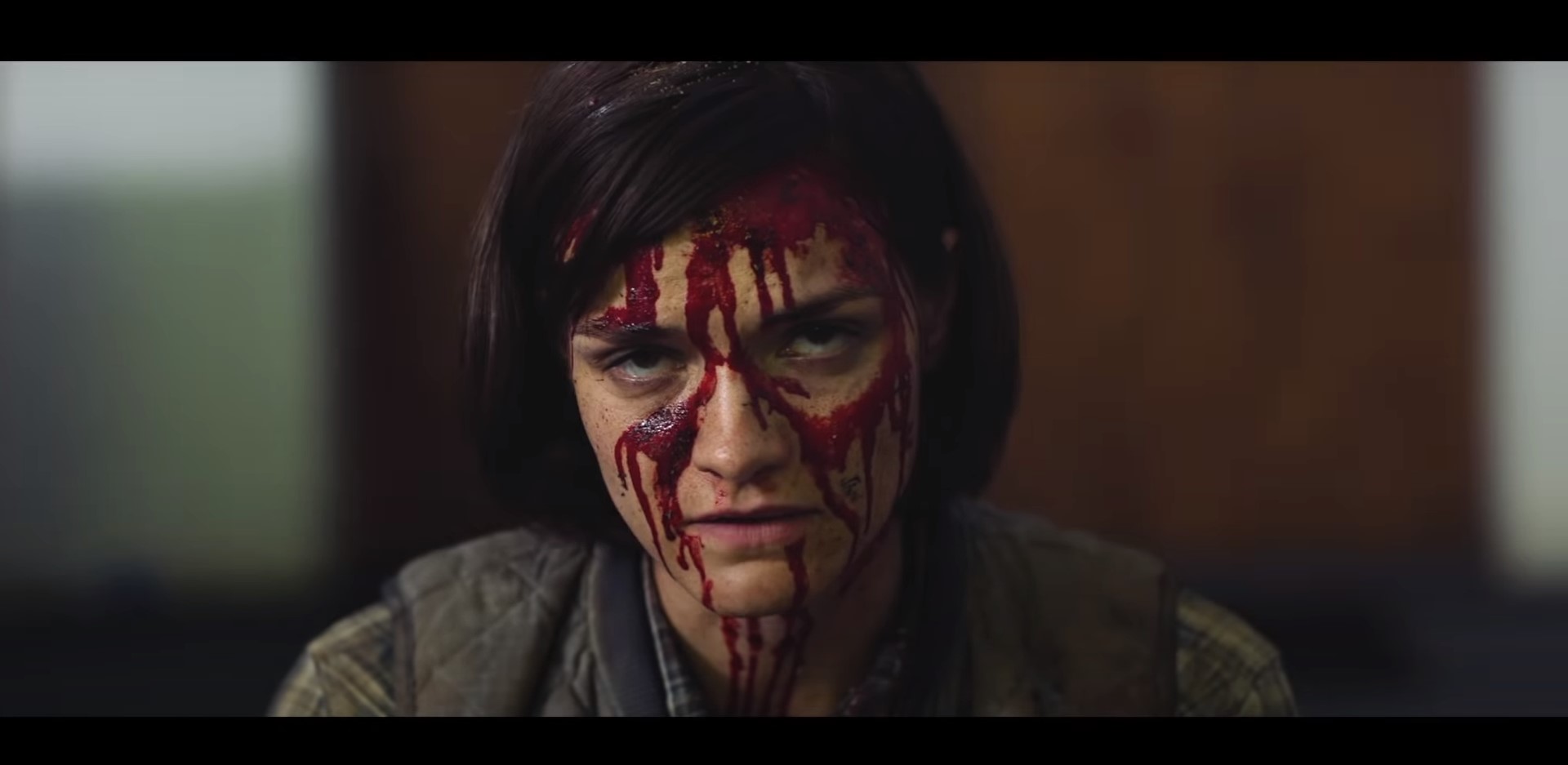
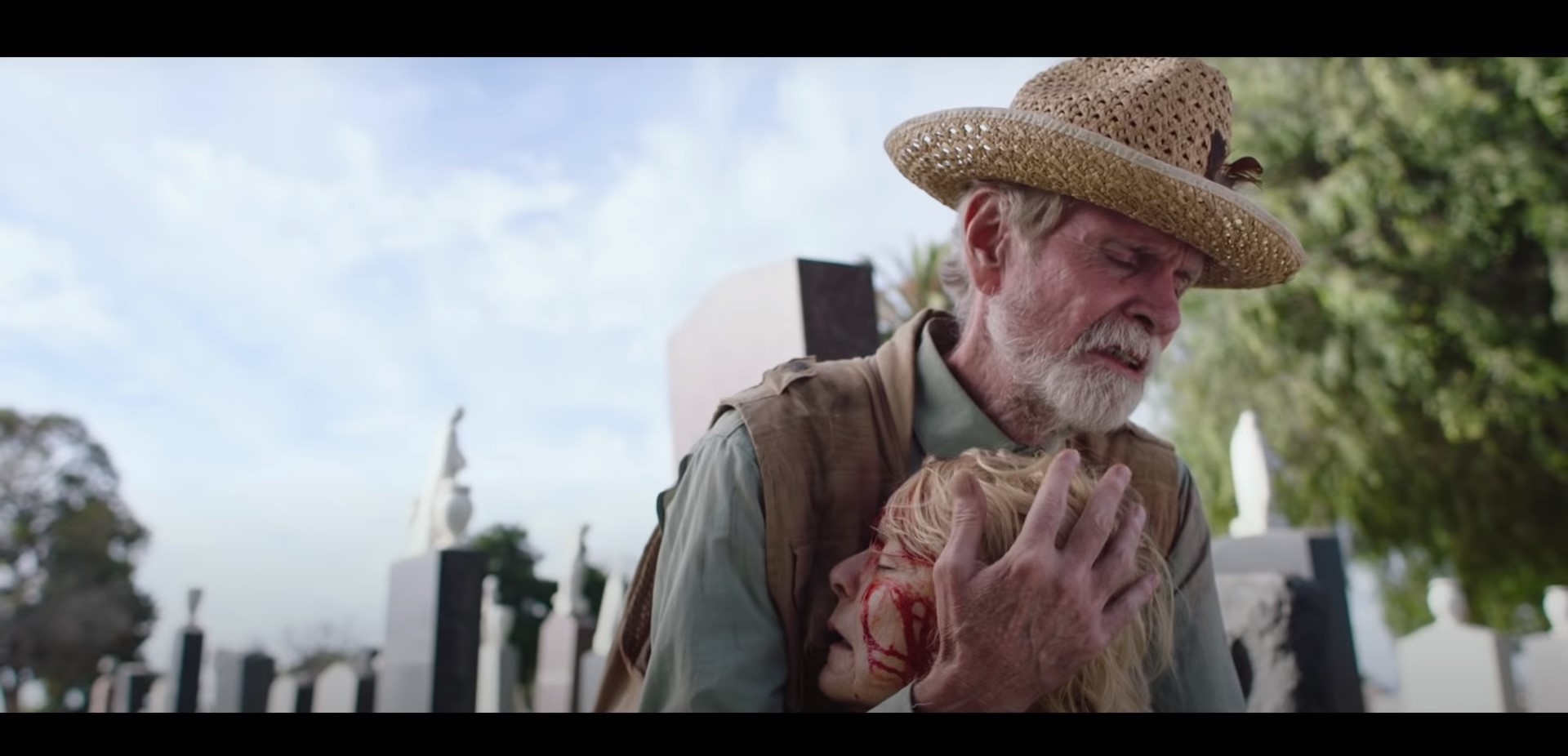
Jim Tan is a middle-aged engineer earning more than decent living for his luxurious lifestyle with a high-rise condo with private swimming pool, his daughter’s university tuition, and an insanely expensive car. When he is suddenly forced to leave his job after decades of service, Jim’s inability to face the truth and retain his pride results in not telling his family upfront. As his bank account dwindles but his family’s lavish spending continues, Jim’s drastic measures of gambling what he has left in the stock market trading goes against his best friend’s advice as he also submits to a meager income as a transportation driver, but as Jim sinks deeper into the red, the secret he keeps from his family eats more and more at psyche and his traumatic past, full of more secrets, leave the door open for a pernicious dark figure to infringe upon his crumbling reality.

Filmed and set in the multicultural, larger-than-life city of Singapore, “Repossession” is a transfixing cautionary tale of the grim side of pride, society’s devaluation of experience, and the return of past demons. Written and directed by the predominantly television producer, writer, and director, Goh Ming Siu, and Scott C. Hillyard, the 2019 thriller about the ugly failings of falling personal stature grace is the first feature length venture from Siu, a Northwestern University’s Communication’s graduate, and Hillyard, a Mass Media Management grad of Nanyang Polytechnic School of Business Management, that showcases not only his drive to create a structurally sound narrative, but also a vision of one man’s minimalistic mental terror backdropped inside a vibrant, heavily urban surrounding where madness can be lost and confused with the day-to-day hustle and bustle. Siu and Hillyard have tapped a handful of short comedy films over his career with “Repossession” being the directors’ first attempt at a fright film, even if it’s only a diluting portion of the considerable drama elements and is a production under their private limited company Monkey & Boar, operating out of Singapore.

“Repossession” revolves around the fall of a prideful patriarch performed by Gerald Chew (“The Tattooist”). Chew, who previously acted in one episode of Siu’s comedy series, “First Class,” has to enact a man torn from the breast of affluent society and forgo the weening process of learning how to manage life’s obstacles without a steady, lucrative income. As the corporate terminated Jim Tan, a middle-aged man forced back into the current job market after 20+ years at the same company, Chew reaches into our darkest corners for anxiety and panic when everything in Tan’s life that has felt secure and sustainable is now on the precipice of tumbling down into a heap of loss. Instead of coming forth with his mare’s nest of occupational troubles, Tan hides it away, keeps it a secret, and tries to maintain status quo from his wife, daughter, and friends, but the daily life of was once sustainable yesterday is not sustainable today and Chew does the immaculate reformulation of proud man who never needed to worry to now a man whose pride is getting in the way of his acceptance and progression. To add an extra little something to the narrative, Tan’s backstory creeps into the fold one flashback at a time to underline the bubbling trauma now aggravated by his newfound sense of desperation that leads him down a concealed path of disturbing distraught. The mostly all-Asian cast rounds out with principle actors in “Just Follow Law’s” Amy Cheng as Jim Tan’s wife Linda, Rachel Wan as his daughter, Jennifer Ebron as the condo-keeper, and Sivakumar Palakrishnan, as his confidant and common-sense life adviser he never thoughtfully considers, along with bit roles from Daniel Jenkins and Grace Chong.

Demonized as an inky black and towering dark figure with long, sharp hands is Jim Tan’s bottled-up trauma ready to pop like a screw loose on an airplane engine that’s flying 10,000 feet above a populated city. A catastrophe of psychological collapsing looms constantly around every corner when the figure first makes its presence known and only Jim experiences its menacing presence. Viewers won’t know if the glomming figure is a figment of Jim’s mounting pressure or a haunting dose of realism from his past. The otherworldly shadow is just that, a tenebrous shadow of Jim’s foreboding hesitancy in coming clean, and, just like most secrets some of which can be monstrous, harmful, and wicked, Jim’s withholding cleans house with his relationships, hurting everyone in his path from friends to family from his past and to his present. Siu and Hillyard offer a slow chug displeasure cruise of one man’s course through dormant madness, triggered after years of comfort and security, in repossessing a lifelong psychological issue thought long suppressed. The wordplay is clever in design with the character’s default on payments as well as defaulting on his own life and, thus, everything he ever owns falls onto the grounds repo-horror. What can be considered asymmetrical in Siu and Hillyard’s film is the concerting connection of the dots, through Jim’s sometimes off-topic flashbacks and startling visions of the dark figure, that lead up to, what I consider to be, one of the best simply shot and powerful climatic endings experienced to render a pitfall of rueful heartache with a gory final moment.

On December 21, “Repossession” came a-knockin’ on the North American market’s digital door with a multi-platform release from Gravitas Ventures in association with Kamikaze Dogfight. The film has a runtime of approx. 96 minutes and bares a not rated certification. Since “Repossession” is a digital release, the audio and video quality critiques will not be covered. However, I was impressed with cinematographer Chow Woon Seong’s wide lens celebration of Singapore by capture various sentimental landmarks in the area and establishing a contrasting space between the actors and the stunning visuals screen monolithic and serene, creating a conflicting blend between ominous and wonder that also translates into the film’s industrial-lite soundtrack by composer Teo Wei Yong with a brooding mechanical perfunctory to match Jim Tan’s hardly lifting a finger effort. There are no special features or bonus scenes included with the digital release. Powerfully relatable, the human condition for survival, despite the trivial circumstances surrounding one’s dignity, can turn deadly in the blink of an empty bank account.
“Repossession” Available on Amazon Prime Video!

EVIL Ditches Satan, Picks Up a Camcorder. “Midnight 2: Sex, Death, and Videotape” reviewed! (SRS Cinema / DVD)

“Midnight 2:  Sex, Death, and Videotape” now available on DVD!

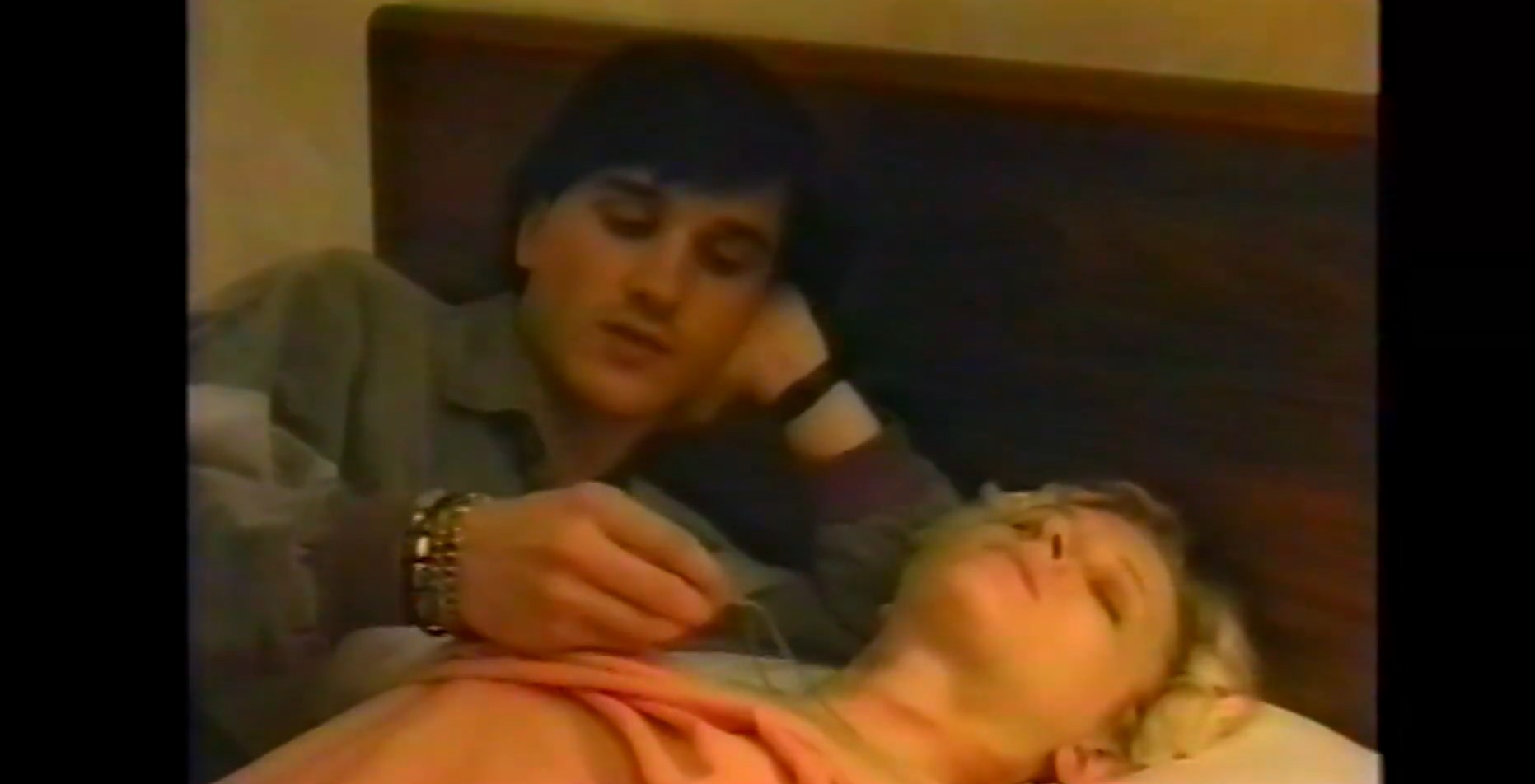
The sole survivor of the murderous, devil-worshipping cult family, Abraham Barnes, continues to kill under a new outward show as amateur videophile recording everything and everyone to gain their trust.   Instead of harboring his mother’s dark intentions of eternal life, Abraham simply thirsts for killing, documenting his premeditated methods using a camcorder.  When his latest victim goes missing, her friend initiates an investigation with a police detective, but Abraham is always recording, always one step ahead of them both, always on the hunt.  With the trap set and the play button pressed, the blood-lusting survivor of the maniacal, serial killing Barnes family preserves a lineage legacy of death. 

Screenshot from AGFA

Ten years after releasing his moderately successful All-American shocker, “Midnight,” John Russo returns with the Barnes family.  Well, at least one of them in the 1993 release of “Midnight 2:  Sex, Death, and Videotape.”  Also known as simply just “Midnight 2,” the secondary title references the widely popular 1989 Steven Soderbergh film of sexual testimonial video-tales in “Sex, Lies, and Videotape,” starring James Spader and Andie MacDowell.  The sequel gives way to a new motive and theme that’s very different from the satanic panic aspect of the original.  “Midnight 2” enters the mind of a serial murderer with every calculated and cold thought and whim that crosses the killer’s mind laid out in detail to paint a compulsive picture. Behind the scenes, conjuring up resources to make the sequel exist as it stands today, is “Dead Next Door” and “Robot Ninja’s” J.R. Bookwalter, the head-honcho in production and distribution of his own created company banner, Tempe Entertainment. Bookwalter, who also wears the director of photography and editor hat on this film amongst others, produces the Russo sequel that was shot on location in Bookwalter’s home city of Akron, Ohio.

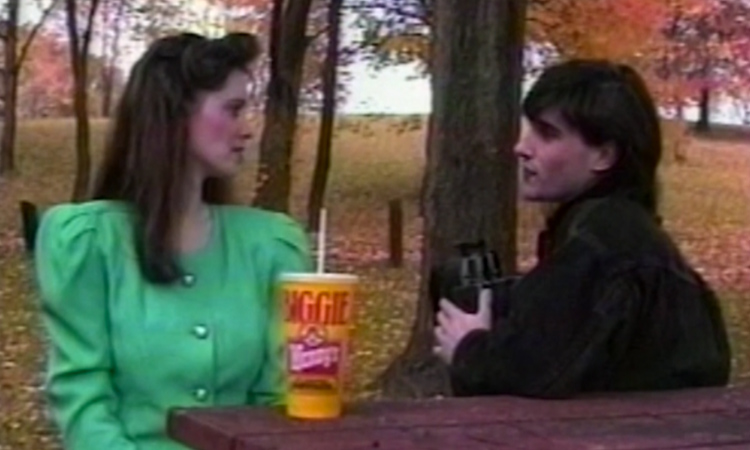
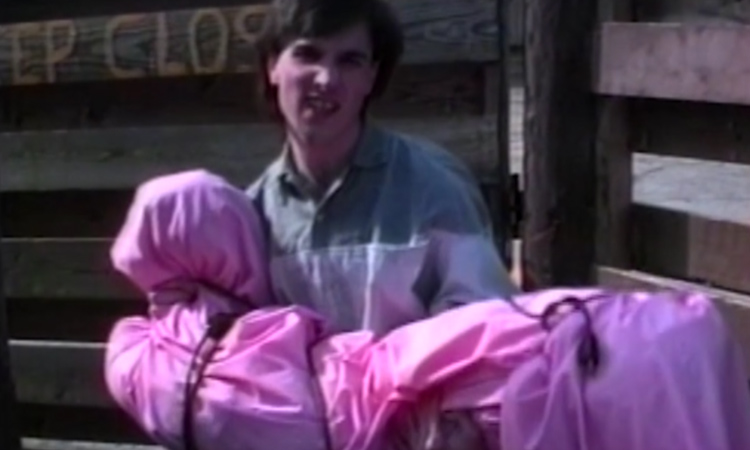
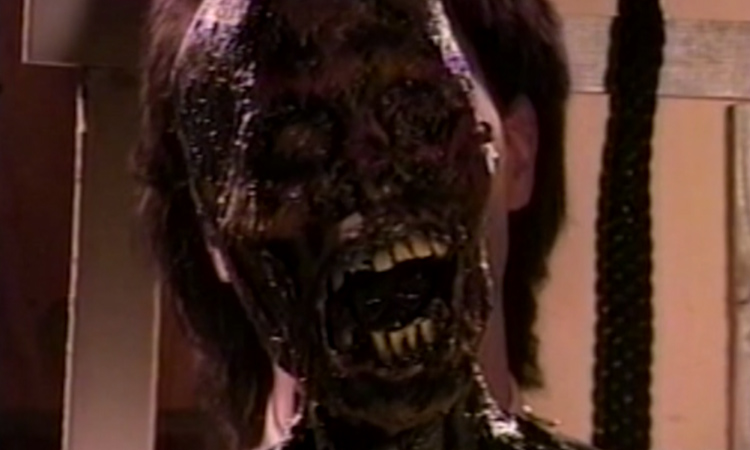
If you’re expecting or anticipating seeing John Amplas (“Martin,” “Day of the Dead”) return to the Abraham role 10 years later, be prepared to be severely let down as Amplas does not return for “Midnight 2.” Instead, profound schlock horror screenwriter and composer, Matthew Jason Walsh, brings a whole new peculiarity to Abraham Barnes and I’m not just talking about his face or mannerisms. Walsh, who penned such David DeCoteau C-list gems as “Witchouse,” “Young Blood, Fresh Meat,” and “The Killer Eye,” goes face-to-face with the camera in a hybrid performance as lead actor and lead narrator of his own exposition into his own executions. Being a sociopath is never fleeting from Walsh who can sink into the sardonicism of the Abraham character naturally as one of the two only traits to carryover from the original film with the other being a killer. Aside from a boat load of archival footage and a verbal recap of nearly the entire first film, the whole Devil-worshipping aspect of the Barness family is dropped in favor of a more undisclosed truth in the hidden agenda of a person who thrives off the hunt and the kill. Abraham goes through verbatim his daily, stalking routine in a publicized manner of videorecording everything and everyone to capture as much detail as possible as well as capture their last moments. Russo does throw in escape clause caveat for Abraham in that if he meets the right girl, the love for her will be strong enough to break him away from killing and possibly start a family and while Russo plays into that tangent a little with Jane (“Killer Nerd’s” Lori Scarlett), nothing much more materializes significantly as a romantic conflict that circles back to that subtheme. Russo ultimately gives in to a more cat-and-mouse game with Jane’s worried friend Rebecca (“Chickboxer’s” Jo Norcia) and the detective who rather slip into Rebecca’s pants than actually solve the case in a stiffer than roadkill performance by Chuck Pierce Jr. (“The Legend of Boggy Creek”).

Screencap from AGFA

I wonder how much ‘Midnight 2″ is actually from the mind of John Russo or if it’s more of the J.R. Bookwalter show in calling the shots from the producer’s director’s chair as the film feels very much like Bookwalter’s usual fare, a SOV, DIY, home brew production of local Ohioan talent. “Midnight 2” also goes from the backwoods suburbia of Pittsburgh to the concrete structures of Akron, leaving behind any remnants of Abraham’s satanic past in the ground along with his dead siblings, but the sequel very dutifully leans into us with a heavy archival footage recap with Walsh narrating the entire damn thing. I kid you not, the recap is approx. a third of the runtime and so essentially, “Midnight 2” is a two for one straight-to-video special. Granted, the archival footage remains in its untouched up state so don’t expect the Severin grade video quality. In one way “Midnight 2” is discerned to be more of a Russo film is the very hesitancy of graphic, blood-shedding violence. Bookwalter’s a bit of gorehound in making some gruesome grisliness out of the singles from a Podunk stripper’s Kmart thong. There’s none of that imaginative ingenuity here with a surprising severe lack of that adored shot-on-video nastiness common of its era, especially from the likes of John Russo in filing a rated 13 release according to the DVD back cover, enervating “Midnight 2” as a inferior sequel that tries on a new pair of shoes but ends up limping with a lame gait.

Screencap from AGFA

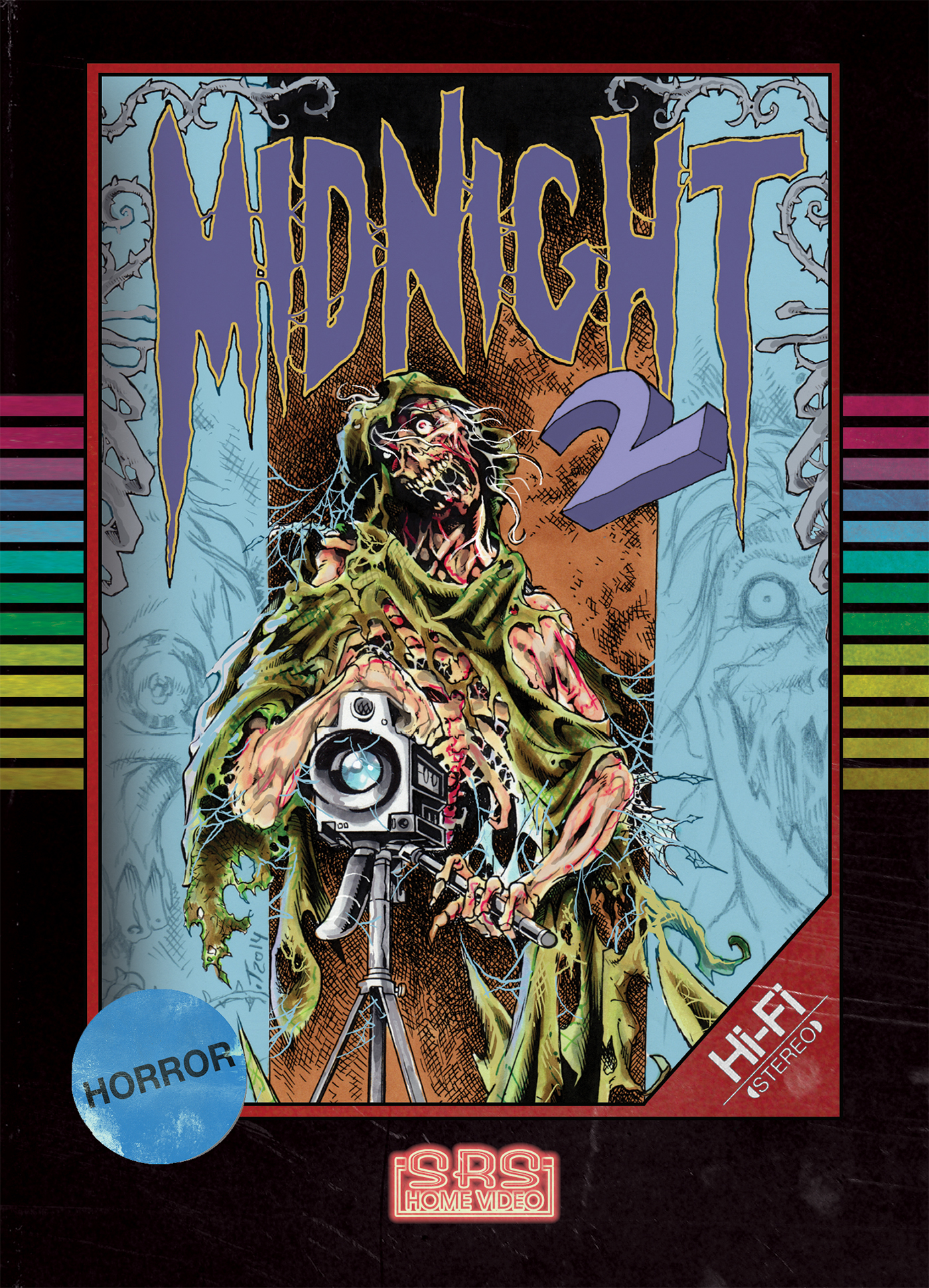
Russo might always be remembered for his contribution to the start of the “Living Dead” franchise. The cult legendary filmmaker surely found modest success with his first directorial run with “Midnight.” Yet, “Midnight 2” will have a tough time keeping out of the celebrated shadows of Russo’s credits, but the indie, underground horror label SRS Cinema pulls back the shrouding curtain with a newly released, MVD Visual distributed DVD featuring two cuts of the film. Fitted with a retro look and ghastly illustrated cover art, a superb upgrade from the VHS cover, the region free DVD is presented shot-on-video in a 4:3 aspect ratio on both cuts. Essentially, both cuts are the same with reworked scenes and narration with the except of the 90-minute rough cut having extended archival footage of the first film. The main version runs slimmer at 72-minutes. The lossy image quality abides within both versions with a flat color palette that, at times, had a singularity about its choice of unflattering hue, compression macroblocks consistently flare up, and dimly discernable innate tracking lines with video recording destabilize the image. The anemic English Language single channel mono mix is a bottom of the barrel budget sound design and that was to be expected. Dialogue does come over clear enough but lacks vigor and crispness as there is just too much electrical interference shushing in the background. Depth’s a bit awkward too with the actors conversing in the background but have foreground decibel levels. Aside from the two cuts of the feature, the only other bonus content is the theatrical trailer and other SRS home video trailers. “Midnight 2” works as a standalone in a different shot-on-video horror light but is crammed with unnecessary recapping on a story built around the destined, convoluted conjecture of a homicidal narcissist and his videotape addiction.

“Midnight 2:  Sex, Death, and Videotape” now available on DVD!

If EVIL Wanted Your Soul, Would You Choose An Eternal Damnation with the Promise of Having Everything You Ever Wanted, or Would You Simply Decline to Live What’s Left of Your Meager Existence? “Val” reviewed! (Epic Pictures / Blu-ray)

“Val” is now available on Blu-ray and Prime Video! Check it out on Amazon.com

When Fin, a criminal on the run after a misfortunate mishap of possibly having killed his boss, breaks into a high-end prostitute’s mansion home in an attempt to escape police pursuit, he finds himself struggling to stay in control when the wound on his head causes him dizziness, vomiting, and a thin thread of consciousness.  His whore hostage helps him evade police capture, conceals her dead client he inadvertently kills, and also dresses up his wounds after he passes out.  Confused by her benevolence, Fin attempts to regain control of his authority over the sexually elegant and smooth talking dressed woman, but as the night progresses and strange, unexplainable occurrences warp his reality, he quickly learns his hostage is more just a simple high class working girl and her house is her domain of deviltry. 

Not to be confused with the extraordinary life of actor Val Kilmer documentary of the same name also released in 2021, “Val” is the that other 2021 released film, an independent horror-comedy from writer-director Aaron Fradkin and co-written with writing partner and fiancé (or maybe wife now at this point), Victoria Fratz.  While one “Val” may be more of a commercial success than the other, Fradkin and Fratz’s “Val” still has equal parts charisma and style with solid performances in a “Bedazzled” like tale where a down on his luck Joe Schmo meets a sultry Netherworld deal maker dangling his very soul delicately in the balance of his existence  Shot in a supposed haunted, Gothically styled mansion located in Ojai, California, “Val” is produced by Jonathan Carkeek, Paul Kim, Jeremy Meyer, Kevin McDevitt, and Caitlin O’Connor with Victoria Fratz serving as executive producer under the couple’s Fradkin and Fratz production banner, Social House Films. 

The titular character Val is short for Valefor, the grand Duke of Hell with a penchant for collecting human souls to adorn as treasure, at least to the trolls scribing world wide web, underworld mythology. A trickster, a showboat, and a psychic-vampire, Valefor is characteristically mirrored to the milli-fiber of wickedness by actress Misha Reeves who’s able to adapt her demonic namesake for a new lease on celluloid life. However, one aspect of Valefor is quite different. Val’s appearance is anything but a monstrosity; instead, Reeves radiates beautiful as a pinup girl complete with stark colored makeup and professionally styled hair in victory rolls and soft curls for a throwback 1940’s impression in a complete about face of Valefor’s traditional animalistic Lion or Donkey head look. There’s also the fact that the cinematic Val bares no wings, no tail, no fur, and no scales as usually illustrated – again, by the dark forces of the internet’s most untanned. Reeves offers up, again, the pinup-esque sex symbol with high thigh stockings, garter, and all the vibrant trimmings that would turn heads and howl catcalls. Reeves is utterly wonderful riding the spectrum of Val’s multi-faceted manipulative personality to the point where feeling bad for Fin (Zachery Mooren, “Darkness Reigns”) becomes awkwardly odd since Fin is the wanted criminal here. Even though Mooren eventually sold the part of a wannabe tough guy, the actor looks more unsure of his performance than his most of the time scantily cladded costar, even with Mooren has dress down into just a kimono as well in a few tension-breaking scenes that didn’t really break the toned stride. Reeves and Mooren start up with ease, picking up where the pair of actors left off in Fradkin and Fratz’s 2018 “Electric Love,” joined by another fellow costar in Erik Griffin as a powerful mob boss with a kink for acting like a dog in one of Val’s masochistic whims. Along the line, other pivotal players associated with Fin and Val come into the mix, including John Kapelos (“The Shape of Water”), Sufe Bradshaw (“Star Trek”), Kyle Howard (“Robo Warriors”), and co-writer Victoria Fratz as Fin’s scheming girlfriend.

The idea of the playful, humanoid demon has always been more of an interesting concept for me personally because speaking frankly between man and demon, the two can be interchangeable.  Demons can con, pervert, steal, and kill under the will of their lordship and master or as a mere rogue still in servitude of doing evil bidding.  Man can accomplish very much the same malevolent behaviors and when you have a demon masquerading among mortals, what’s the difference?  Can one tell the difference? “Val” falls along the fringes of that same category except we’re not talking about any ordinary smooth talker with a devilish smile in human skin.  No.  We’re talking about the immense staying power of Misha Reeves’ slipping into something a little bit more comfortable and still be a force to be reckoned with as the blithefully frisky and seductive Val undercutting her prey’s sanity and soul.  Reeves carries the story up to the end as the titular character, but “Val” does downplay the question of Fin’s choice.  There’s a lack direct peril when the third act came down to brass tax and Fin had to make a decision. Fin was persuaded without a nail-biting ultimatum, a countdown, or a severe threat to him or someone he cares about and the motivation for the hapless lawbreaker to pave his own fate didn’t exact a sense of urgency. In fact, Val offers an unlimited number of perks with little risk and, I believe, we had to assume Fin was smart enough, a common motif throughout the film was Fin is this big, handsome chump, to understand giving up his soul would damn him for eternity. Though visually stimulating with a climax resembling The Last Supper with demons, the damned, and Fin all sitting at a table garnished with severed heads and an inferno hue, the culmination drops hard like a rock squashing that eager element of anticipation.

A bathing beauty of its genre, “Val” contends as a witty Mephistophelian comedy-horror. The demonic good time can now be enjoyed on a region free Blu-ray release from Dread Central’s home video label, Epic Pictures, distributed by MVD Visual. The not rated, 81-minute film is presented a widescreen 1.78:1 aspect ratio with not really much to negatively critique on the image quality that’s quite sharp from the compression of a BD50. Keelan Carothers’ hard lit and red-hot neon glow of warm red-light district-like colors inarguably defines the distinct worlds of Fin and Val while flashbacks denote a slightly softer color reduction as a third environment. There’s good camera work here between in camera foreground and background focusing as well as delectable key lighting on certain medium-closeup shots that pact a punch. The English language 5.1 Dolby Digital audio track has dialogue clarity palpable enough for Misha Reeves’ sharp tongue and quirky humor. Ambient track slips a little in the depth and can blur character spatial relations but there’s plenty of range for a story that’s pretty much sole-centric. Mike Tran, Eric Mitchen and Robot Disco Puma provide the eclectic, synth-rock soundtrack that overwhelms with a booming LFE that leads to a bit crackling distortion during the decimation of decibels of maximum speaker output if not lowered, which then affects the dialogue. Options subtitles include an English SDH and Spanish. Special features include a making of Val featurette narrated by the filmmaking due Aaron Fradkin and Victoria Fratz, two of the pair’s short films – “The Ballerina” and “Happy Birthday,” and a Q&A from Popcorn Frights. Well, here we are at the end of the review and the question still stands of what path would you choose? Personally, I’d go with the sexy, quick-witted, Duke of Hell for a good time, the soul be damned, and you should go with “Val” too for it’s all well-made, well-acted, and well-told story.

“Val” is now available on Blu-ray and Prime Video! Check it out on Amazon.com

Bestiality. Borowczyk Pushes the Boundaries with EVIL Themes. “The Beast” reviewed! (Blu-ray / Umbrella Entertainment)

“The Beast” Available on Umbrella Entertainment’s Beyond Genre label at Amazom.com

Marquis Pierre de l’Esperance, a French lord on the brink of financial ruin, is able to swing a deal before the death of the well-off English tycoon Philip Broadhurst. Under the conditions of Broadhurst’s will, his daughter Lucy must marry I’Esperance’s introverted, and equestrian obsessed son within six months after his death. Lucy, and her aunt Virginia, travel deep into the French forest to the deteriorating chateau to do a first ever meet and greet between the two soon-to-be married. Marred by centuries old local legend of a lustful beast who sexually defiled the Lady of the estate’s family lineage, I’Esperance aims to restore order by marrying into fortune and leave old cockamamie tales behind him. Yet, Lucy can’t shake vivid and stimulatingly graphic dreams of the romping woman and beast, leading to speculation whether the legends are true or not?

Certain types of filmmakers push the limits and exude their provocative talents to blur the lines between arthouse cinema and pornography. Those same filmmakers would argue that arthouse cinema and porn are, in fact, nearly one in the same if complimented with an intriguing story full of subversive subtext sure to outrage the status quo. Walerian Borowcyzk is one of those auteur artists basking in the absurdity and the arousing aspects of his films. The Polish writer and director wrote and helmed “The Beast,” aka “La Bête,” a one-part sex-comedy and one-part fantastical horror that is one-whole bizarre beyond our wildest dreams. “The Beast” was once considered to be a part of Borowcyzk’s short film collection of erotic stories known as “Immoral Tales;” however, the short film shot was scrapped from the project and then reimplemented into a full-length feature with outer rim narrative built around it’s very thematical essences of bestiality and the corruption of man due to woman’s virtue, the latter inspired by the French novella “Lokis” by Prosper Mérimée. The France originated film was produced by Anatole Dauman under the French studio, Argos Films, which produced much of Borowyczk’s work.

“The Beast’s” ensemble cast play intrinsic notes toward the fullest extent of the narrative’s shell machination as well as the saturation of eroticism from the grifting lord l’Esperance to the chateau’s only manservant, who when not answering his Lord’s beck and call, is fooling around secretively and lustfully with I’Esperance’s daughter. Veteran actor Guy Tréjan unearths the very ill-humored presence of a struggling lord seeking to reclaim fortune and glory to his estate and family. Most of the time, we feel sympathy for I’Esperance’s inability to catch a break, but on the deeper, darker scope, I’Esperance hides many truths, keeps many secrets, and even black mails his uncle, Duc Rammendelo de Balo, played by legendary actor Marcel Dalio (“Super Witch of Love Island”), making the lord a villain of his own haphazard design. I’Esperance’s nitwit and reclusive son Mathurin is played by Pierre Benedetti, who has worked with Borowcyzk later his career in “Immoral Woman.” Not much of Benedetti is profoundly showcased, leaving much of Mathurin in the dark despite being a principle figure in the plot as the husband-to-be for the aspiring romantic Lucy Broadhurst from “Le diaboliche’s” Lisbeth Hummel. Hummel, along with 1995 “Castle Freak’s” Elisabeth Kaza as Lucy’s aunt Virginia, are supposed to be affluent English women travelling to France in order to settle future marital affairs with the I’Esperances, but Hummel and Kaza have such thick accents that no matter how proper their English may be, there’s still present the French and Hungarian elocutions in their English dialogue. Hummel does capture Lucy’s free-spirited, free-form sexuality so inclined by Borowcyzk as the director envisions her as the clairvoyant trigger that unsheathes an age-old curse to light, but Hummel is not the only participant in “The Beast’s” amativeness with Hassane Fall, Pascale Rivault, Julien Hanany, and sex-symbol Sirpa Lane (“Nazi Love Camp 27,” “Papaya: Love Goddess of the Cannibals”) paving a more perverse course with illicit affairs, object sexuality, and, of course, bestiality. Though none of these aspects were more than disturbing in comparison to Roland Armontel’s version of a local priest setting an uncomfortably affectionate dynamic with two of his alter boys that Borowyczk focused and lingered on when the chief characters have left the scene.

Trying to understand Walerian Borowyczk’s “The Beast” is akin to trying to understand the wanton complexities of the human psyche. In all its whirlwind of implications, “The Beast” is heavily and artfully abstract in a non-abstaining manner as sultry desires, no matter how forbidden, are the superior playthings utilized for Borowyczk’s totality of storytelling. The uber-sexual graphic tale invests little into the imagination with vivid imagery of genitalia in all shapes and sizes in organic and mythical forms. Yes, there is a lengthy opening scene of horse copulation with emphasis on each of the bulbous male and female’s sexual organs. Yes, there is also a satirical creature chase that transforms into a frolicking romp between a human woman and a dog-bear creature with a miniature representation of an erect horse member ejaculating like a geyser without an end. The excessive vehemence towards sex is Borowyczk’s gift to the audience toward feeling a flurry of mixed emotions from being a little bit peed, to a little bit put off, to even a little bit strangely turned on all in one sitting. Though sex is unusually celebrated in “The Beast,” the beast itself is also the representation of perversion, an animalistic and libidinous savage horndog lusting after the chastity of virgin women that’s allegoric to spoiled bloodlines and cursed households in a path of ruinous destruction, especially in the downfall of a crumbling aristocracy. Borowyczk injects and interjects comedy to lighten the socially disturbing atmospherics of paraphilia and the social consequences that follow.

As part of their Worlds on Film:  Beyond Genres banner, Umbrella Entertainment releases Walerian Borowczk’s “The Beast” as volume #13 on a region free, 2K scanned Blu-ray in full 1080p High Definition.  Presented in the original aspect ratio of what once was the European theatrical standard widescreen 1.66:1 aspect ratio, the 35mm transfer provides a relatively clean viewing free of aging and blemishes albeit the innate agreement of healthy amount of grain that comes standard with celluloid film stock.  While color grading definitely looks non-existent in the release, a once over would have sharpened the image immensely from the slightly flat and natural color scheme.  The tri-lingual French, English, and Italian DTS-HD Master Audio 2.0 mono track is a compressed version from the 2015 Arrow Film’s Blu-ray release with an uncompressed LPCM 2.0 audio.  Virtually no difference in the lossless audio with also no difference in the synchronizing between visual and audio elements.  Dialogue runs smooth and clear with little-to-no hissing or pops and the same can be said about the more than adequate ambient track, the lively French Harpsichord piano soundtrack, and even the outlandish foley of beast sounds through the limited parameters of the two channeled output.  Special features pale in comparison to previous Blu releases, but are none-the-less impressive including 16mm behind-the-scenes, archival documentary footage in the making of “The Beast,” an introduction by film critic Peter Bradshaw, a featurette of Borowczyk’s beast sketches, letter of confidence to the producer, and a treatment to a potential sequel that never materialized The Frenzy of Ecstasy, an philosophical interview with the director Walerian Borowczyk, the director’s biography, a still gallery, and theatrical trailer.  Illustrator Simon Sherry designs new and exquisite cover art for the cardboard slipcover and snapcase cover that perfectly represents the tone of the story.  The cover art is also reversible with Hispanic poster art and praising critic reviews and quotes.  The release is certified R18+ for high level sexual themes and sex scenarios. “The Beast” is an upfront, artful, and confrontational film about bestiality and sexual corruption bred to challenge the formulaic narrative with a call of unbridled seduction and a flamboyant flare for a firm erect furry.

“The Beast” Available on Umbrella Entertainment’s Beyond Genre label at Amazom.com

Meir Zarchi Returns With Another Round of EVIL Exploitation! “I Spit On Your Grave Deja Vu” reviewed! (Ronin Flix / Blu-ray)

Forty long years have passed since the sexual assaulting atrocities of Johnny Stillman and his gang were committed on the young and beautiful Jennifer Hills.  Empowered by her horrific tale of survival with the release of a new tell all book of how she outwitted and took homicidal revenge on her rapists by luring them in with her sexual persuasions, Hills finds herself back in familiar terrorizing territory being kidnapped by Johnny’s devoutly vindictive widow and three living relatives of the gang that once ganged raped and brutally beat her, but she’s not alone.  Captive with her as collateral damage is her famous supermodel daughter, Christy.  Both are caught up in an eye-for-an-eye revenge plot where being lethal is the only means of survival and with a long history of resentment, rooted deep inside Johnny’s kin, fighting back will take every ounce of resilience and strength against a community of hellbent sociopaths. 

Circa 2005-2006 is around the time I first bared witness to Meir Zarchi’s 1978 controversial exploitation shocker, “I Spit on Your Grave.”  Popping in the DVD popped open my eyes to the world of graphic vengeance and the submission to primal, carnal whims inside the human-on-human violence context.  Before Zarchi’s film, which is also known as “Day of the Woman,” and even Wes Craven’s “The Last House on the Left,” this neophyte’s description and knowledge of horror was limited to the stymies of broadcast television that only aired edited and censored slashers like the “Friday the 13th” and “Halloween” series or supernatural presences of “A Nightmare on Elm Street” and “Poltergeist.”  Never has the likes of “I Spit on Your Grave” been a red pill option into the vast horror matrix for this then college kid who glazed over with the façade of sleeping through studies and worrying over trivial matters involving the opposite sex.  In a way, Zarchi was a kind of Morpheus to me when I started purchasing physical media that opened my eyes and my mind to the rape and revenge facet in horror hidden behind the commercial veil.  In 2010, a Zarchi produced reboot saw more light in the commerciality and spawned two sequels in its wake, but not until 2019 did Zarchi get back to writing and sit back in his director’s chair to helm an official, yet less commercial, sequel entitled “I Spit On Your Grave Déjà Vu” or “Day of the Woman Déjà vu” that was produced by his limited company banner, Déjà Vu LLC with son Terry Zarchi and Jan O’Connell producing.

The long-awaited sequel reteamed Zarchi with original lead actress, and also ex-wife, Camille Keaton, distant relative of the famed comedy and stunt actor, Buster Keaton.  Camille Keaton, who looks phenomenal in her 70s during production, steps back into the infamous Jennifer Mills role that made her a household name amongst grindhouse-horror community.  Though completely nude for most of the 1978 film, that part of her performance takes a step back for a new actress to pave a new path in the saga.  Obscure indie scream queen Jamie Bernadette (“Axeman,” “The Bunnyman Massacre”) is ceremoniously passed the torched as the new riches to ragdoll as the Jennifer Mill’s unhappy supermodel daughter, Christy, who becomes haplessly snagged into her mother’s unforgotten past.  Bernadette offers a variable beauty and a diverse poise that doesn’t make Christy a carbon copy of Jennifer Hills, but the actresses deliver the same apathetic venom of a woman scorn.  More of a carbon copy is the four backwoods bumpkins fuming over Jennifer Mills’ vindictive dissecting of their dead relatives.  The gang is spearheaded by Beck, played by Maria Olsen who, like Bernadette, has made a name for herself in low-budget horror having roles in films such as “To Jennifer,” “Starry Eyes,” and “Gore Orphanage.”  Olsen projects Becky as the gas station attendant from Hell, someone you don’t want to interact too long with as you’re pumping gas in the middle of nowhere, but Becky is not a woman of a few words who constantly has to remind us, to the blistering point of annoying, that she must avenge her late husband’s sinful murderess.  The rest of the gang didn’t impress much after that.  Jonathan Peacy has a chance to shine from out of the extra and bit part shadows as the crazed and hyperactive Kevin, brother of Stanley from the original film, and while Peacy channels his best Al Leong look, Kevin is ultimate a big detrimental goof with small dog syndrome than actual menace.    The last two aren’t any better with a lackluster act by Jeremy Ferdman as Andy’s cousin and “Tales of Frankenstein’s” Jim Tavaré’s rather befuddling downplay of Matthew’s mentally disordered father, Herman, who teeters back and forth between morals with a jumbled underlay of piety.  There are not many sane performances in a rather loose and unbridled Zarchi follow up with a cast that rounds out with Alexandra Kenworthy, Roy Allen III, and Holgie Forrester.

Performances aside, “I Spit on Your Grave Déjà vu” is also a cacophony of yelling as the script, from paper to pronunciation, reaches top of the lung levels with every bit of dialogue from every player in this tussle of who’s right and who’s wrong when it comes down to justifications of killing.  Zarchi’s sequel lacks the tact his first film achieves so delicately with Mills post-assault softer approach to lay waste her assailants.  “Déjà vu” satisfies its own revenge kicks with little subtly in trying to be outrageous, outlandish, and off its rocker as the confrontation between Christy and the gang becomes a rancorous grudge match.  What concerns me most about “Déjà vu” is the year in which this sequel takes place.  Between the 1978 original and the 2019 follow up, 40 years have passed, but the characters don’t fit any of Father Time’s natural aging characteristics on the surface.  Becky looks okay as an early to mid-60s woman despite Maria Olsen’s actual age being early 50s at the time of filming and release.  Herman is another one that sneaks into fathomable constructs as a character living a farmer’s life in the latter half of middle age, but I question whether Kevin and Scotty were even born yet.  The two youngsters barely seem to be out of their 30s and the same can be said for Christy where much more of her life is revealed as the story progresses.   If following the script logic, I would assume the story takes place in the 90s, but certain technologic advances, like modern day touchscreen phones, suggests no earlier than late 2000s.  As a whole, time and space don’t appear to exist on any reasonable plane for the film with characters able to bump into each at random intervals despite being a densely wooded and rural location and, for all you cinematographers out there, if your location is supposed to be rural, don’t shoot in at a cemetery with a massive grave footprint with a stream of cars speeding down a busy suburban street.  You instantly lose the illusion.  Zarchi’s intentions were clear to only echo the original while allowing for individuality with a brasher onslaught of right versus wrong, eye for an eye, and misguided righteousness for injustice, but the execution crumbles with excruciating results, never reaching the same poetic justice the first film accomplishes so graphically grafted. 

As far as rape and revenge exploitation is considered, “I Spit on Your Grave Déjà vu” gets about as down and dirty and ugly as they come.  Cult movie curator, Ronin Flix, delivers the Meir Zarchi sequel onto Blu-ray home video, presented in 1080p, full high definition, with a widescreen 2.39:1 aspect ratio.  A+ for natural lighting, skin tones, and overall appeal, Pedja Radenkovic’s cinematography is about as uninspiring as they come artistically, but, as a personal preference, the shots are more organic, raw, and less distracting from the content that’s much more abrasive and interesting.  A more natural framework also more time for Russell FX’s practical effects to be showcased without enhanced imagery.  As long as the details are there (they are), no damage is concerning (there wasn’t), and the framing made sense (for the most part), “Déjà vu” can be considered a win for Radenkovic.  The English language DTS-HD 5.1 Master Audio soundtrack for “Déjà vu” is a blessing and a curse.  Dialogue clarity is excellent and there’s a wide range to exploit, forgive the punned term, each channel with great balance, but remember what I said about all the character yelling?  Also, with the higher bitrate DTS, the quality is too good for some of the applied ambient effects like the exhaust sputtering of an old Ford pickup that sounds way too fake and way too close despite its positioning in the scene. The region A, not rated Blu-ray is stored on a BD50 due in part to the film’s massive 148 runtime and the inclusion of special features that include a new audio commentary with film critic and “The Last Drive-In” host Joe Bob Briggs, select cast interviews, the making of the film, behind the scenes footage from producer Terry Zarchi, and the theatrical trailer. Is “I Spit on Your Grave Deja Vu” the long-awaited sequel to Meir Zarchi’s first film? I’d say they’re two totally different exploitation entities cut from the same cloth with ties only in names and some flashbacks alone, but both films would make for a great double bill that starts with a harrowing, nothing-to-lose, woebegone toned, revenge thriller complimented with a lukewarm and unfocused follow up to help come down off the original’s gripping ultra-violence high.

Ronin Flix’s “I Spit on Your Grave Deja Vu” Blu-ray available at Amazon.com!