These EVIL Dollies Want to Kill You With Cuddles! “Baby Oopsie 2: Murder Dolls” and “Baby Oopsie 3: Burn Baby Burn” reviewed! (Full Moon Features / Blu-ray)

When we last left Sybil Pittman, her best friend Ray-Ray turned out to be possessed by a demon hellbent on making demonic, killer dolls like murderous Baby Oopsie.  Having her oppressive enemies terminated at the tiny porcelain hands of Baby Oopsie, a kindhearted and meek Sybil falls into an emotionally unstable pit and joins Ray-Ray on claiming souls, luring and hunting down unsuspecting strangers, neighbors, and friends into a fatal trap in which Baby Oopsie violently slays them down, but Sybil’s conscious nags at her as the bodies of those she likes begin to pile up and the ghost of her chain-smoking, foul mouthed stepmother implores her to stop the chaos before the release of the evil Toy Master that’ll seeks to end all human kind with an evil toy army.  With the help of a local priest, not only does Sybil have to battle against a possessed Ray-Ray, the demonic dolls Baby Oopsie and friends, and save the world from the Toy Master, she must also face corporate cyborgs looking to Chinese mass market her crafted creations and a detective pinning her as a suspect in a string of missing persons. 
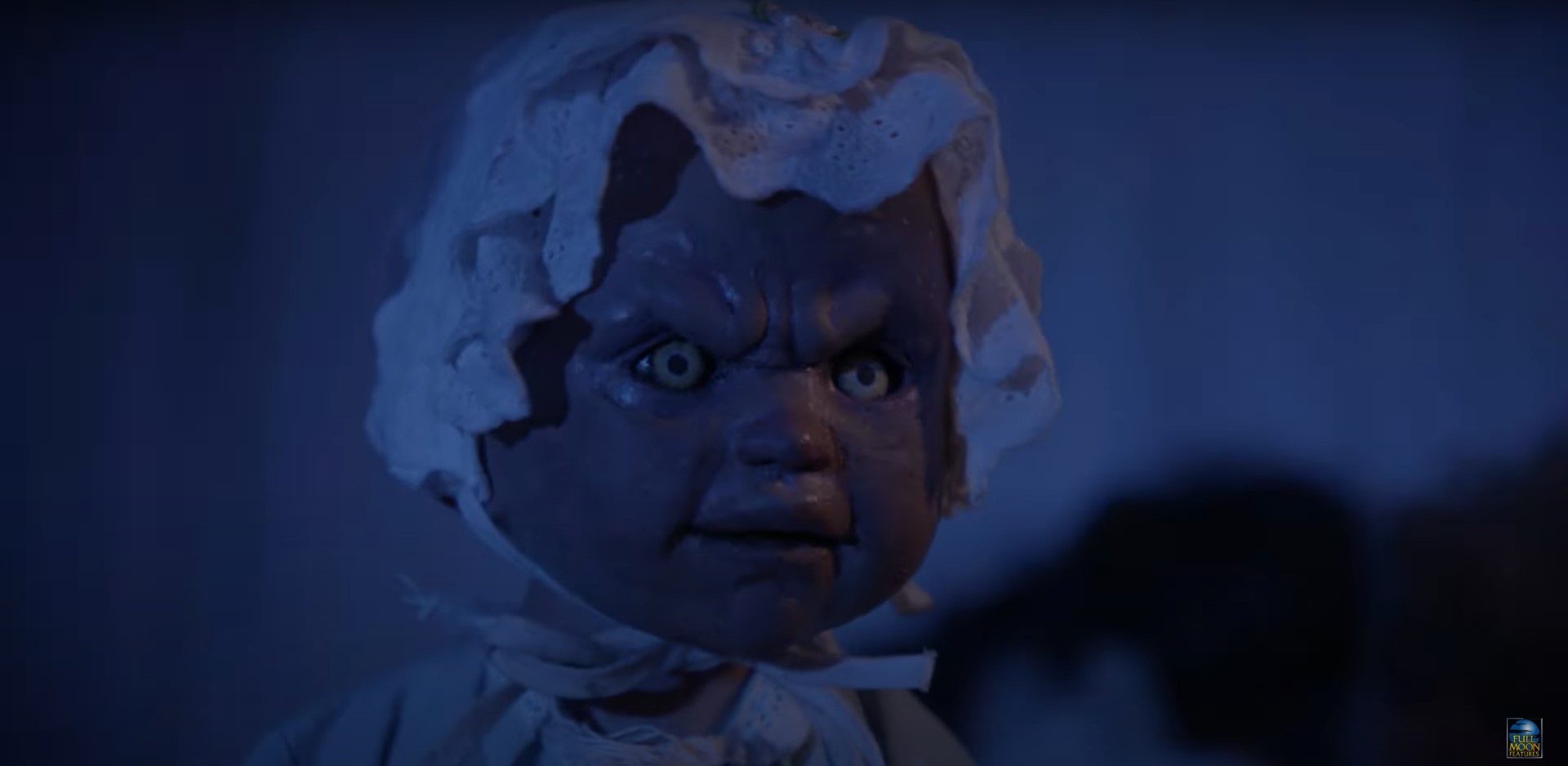
Hey, Honey!  The exciting conclusion to the spinoff “Baby Oopsie” trilogy is here but like all good demonic toys, or any iconic villain in general, evil can never ever die!  “Baby Oopsie” left us on a cliffhanger with Sybil Pittman, an underground social media influence with modest followers of her niche doll obsession, caught between playing mother and wife to Satanic worshipping baby dolls and a possessed best friend, who secretly supplied the easily gullible weblogger with the precious, one-of-a-kind Baby Oopsie doll in need of rehabilitation and a diabolical gear mechanism that spurs the doll to life in a fit of bloodthirst and a potty mouthed lexicon.  William Butler, who has directed of many previous Full Moon Features, including “Demonic Toys:  Personal Demons” and a pair of “Bunker of Blood” installments featuring little creepy killers, knows a thing or two about what the doll enthusiast Charles Band looks for and pens and helms all three “Baby Oopsie” films in back-to-back-to-back fashion with “Baby Oopsie 2:  Murder Dolls” and “Baby Oopsie 3:  Burn Baby Burn” following in tow and split into two parts as both films run under 60 minutes.  Charles Band returns as producer of the Full Moon Features film and, just like the first installment, remains at the Band-purchased Cleveland Heights house location.

Minus a few select killed off characters, ‘Baby Oopsie” parts 2 and 3 mark the return of numerous original film characters, including principal leads and off-camera best buds comedian Libbie Higgins as the easily docile loner Sybil Pittman, complete with square frames, a bob haircut, and bad cat themed shirts, and socialmedialite Justin Armistead as Hey, Honey Ray-Ray Dupree.  Before the sequels, Ray-Ray was seemingly around to support Sybil during the reconstructed Baby Oopsie rampage that beleaguers into too much, too late territory for the doll Youtuber, but the role for Armistead expands and grows into something far more sinister as the mastermind behind the grand scheme.  Armistead remains still very blank during routine converse but as a possessed soul, the social media personality reaches deep inside to pull out the demon within and taking his performance to the next step that coincides nicely with Higgin’s well-defined style of character acting the comedian translates from her web skits to movie parts.  Another returning cast member is Lynne Acton McPherson who was brutally de-nosed and dispatched in character by the titular tiny terror, but returns as a phantasmagorical, purgatorial spirit now aiding Sybil in the right direction, a complete about face from the character’s previous unabashed ugliness in being a version of the wicked stepmother.  While I can affirm Mitzi, McPherson’s wicked stepmother, is better in doses this time around, McPherson still manages to rouse a meanspirited and snarky broad we can all hate-to-love.  The sequels also come with exclusive new characters to toss into the mayhem of Toy Master magnitude aka more bodies for the fire, including LeJon Woods (“Movie Theater Massacre”) as the skeptical priest, Joe Kurak as the snooping detective, and Madison Pullins as the Barbie-esque pitch woman with a dark, cold side.  Tim Dorsey. Pakob Jarernpone (“Werewolves from Outer Space”), Shamecka Nelson, Oscar Mansky, Elissa Dowling, and Michael Carrino costar.

Baby Oopsie Daisy has been a fan favorite ever since the release of “Demonic Toys” (which is now 30 years old!) penned by the “Blade II” and “Man of Steel” writer David S. Goyer and helmed by the Full Moon fixture director Peter Manoogian, but even though Baby Oopsie’s smart aleck mouth and blood thirst has relatively remained constant throughout the different variations of the dastardly doll, the new Charlie Band produced and William Butler directed trilogy musters up a hyperdrive of new Baby Oopsie-isms.  Since the focus is obviously on the titular anthropomorphic doll, the attention is evidently prominent in much of the first film but for the sequels, Baby Oopsie begins to slack behind toward being a background character, more so in the part three than in part two but the story in both sequels relinquishes Baby Oopsie’s malevolent power for more bigger, badder malevolent powers to come.  With the introduction of two more dolls, a Cowbaby and a Clown, plus the Ray-Ray’s resurgence of the demon within and becoming the key master to the harbinger of killer toy death and destruction, Baby Oopsie no longer has an arc; in fact, Baby Oopsie ceases to be an impact overall with CowBaby and Clown taking on the killing heavy lifting with real toy guns and a giant mallet, which the kills themselves overall wander into bland territory full of run-of-the-mills and clichés concepts.  All of this waning from the lead character and the creative kills begs the question also why Full Moon decided to release the sequels individually?  “Murder Dolls” runtime is 56 minutes, and “Burn Baby Burn” is even shorter at 47 minutes that totals the runtime between the two films at 103 minutes, a doable and appropriate feature film length to finish out a tailored Baby Oopsie’s swan song of carnage.  However, the split feels completely unnecessary and skeptically rapacious for Baby Oopsie fans just to tune in to see how it all ends. 
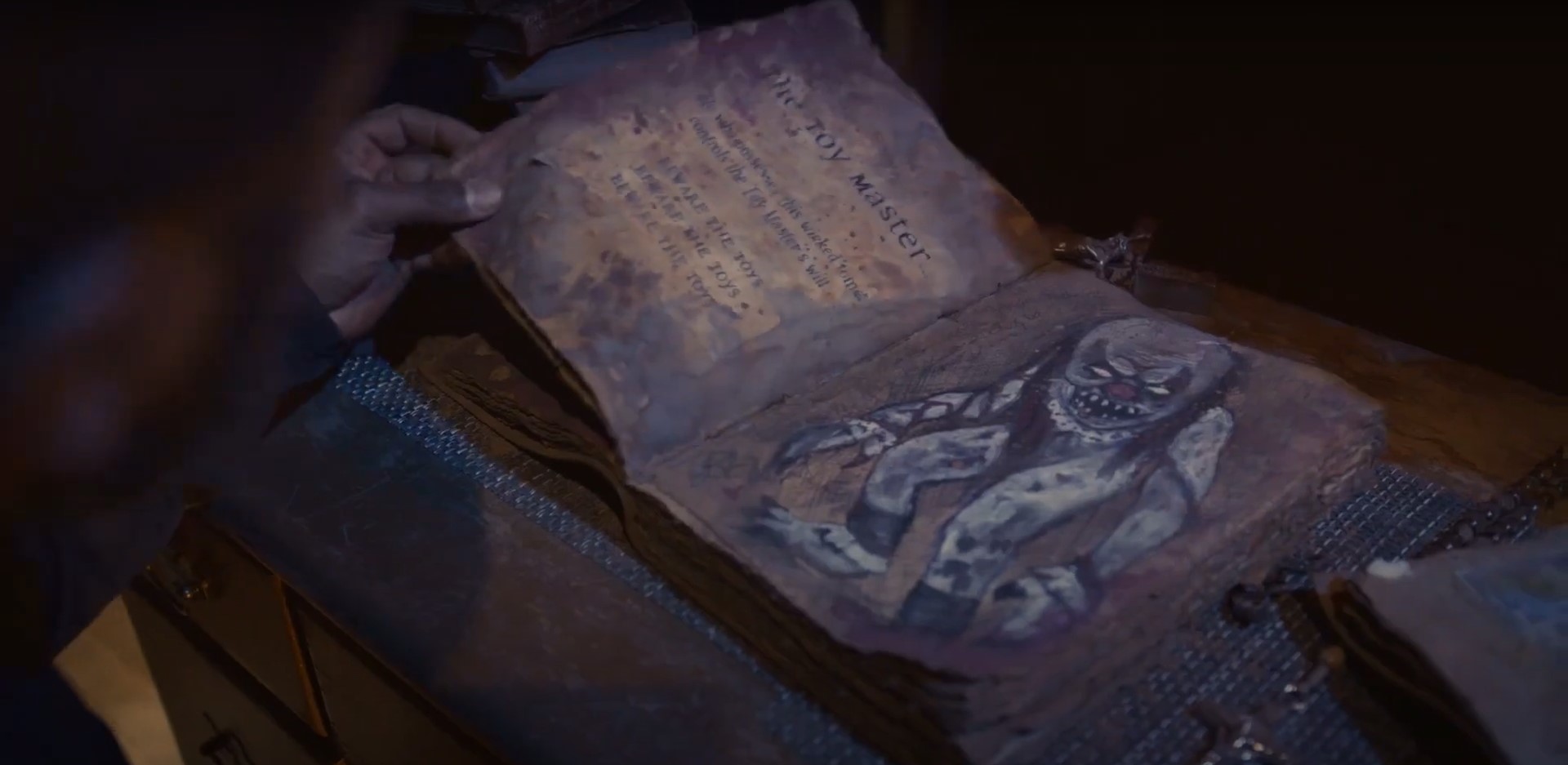
“Baby Oopsie 2:  Murder Dolls” and “Baby Oopsie 3:  Burn Baby Burn” arrive on Blu-ray home video from Full Moon features with an AVC encoded BD25, presented in high definition 1080p and widescreen 1.78:1 aspect ratio.  Generally, the picture quality is renders sharply on both releases and even looks better than other modern Full Moon titles due to chiefly a couple of factors, such a shorter runtime equals less storage stretching and not a ton of stylish scenes for a film that bathes in a more natural lighting.  The mechanical doll workings take the company away from stop motion and moves them into marionette mechanics, something that they’ve toyed with over the years, without losing any detail to the tangible textures of the doll(s).  Only when the visual effects come into play is when there’s an obvious sheen and unnatural quality to the image then presents itself more of a shoddy, low-budget production, which, let’s face it, Full Moon can do whatever they want with the previous success the company has had with multiple franchises and cult hit films.  There are two audio options on both releases that are available to select from, an English Dolby Digital 5.1 and a Dolby Digital 2.0.  Again, both releases offer identical results with the surround sound mix offers a more robust combustible, meaning that the added tracks of explosions and other ruckus noises full other the channel outputs at a greater, more discernible decibel.  Dialogue, free of all kinds of audio distortion, which there is none, comes over equal parts on both tracks but does slightly succumb to an unequal balance with the cheesy tromping generic score by Static Music’s Rick “dickiebones” Butler and Fred Rapoport that fits in tune with Full Moon’s lullaby clash array of soundtracks.  The special features have also dialed back from the first film with both releases offering only a revisiting of cliff notes from the afore film as well as a collection of Full Moon trailers. Housed in a traditional Blu-ray snapper case, the physical attributes for both releases are practically identical with all three of the dolls positioned with the same facial expressions and a looming Toy Master overhead on the front cover. The arrangement differs but the base layout follows much of Full Moon’s cache of releases. The back covers follow suit with each other, capturing idiosyncratic stills of the respective sequel. There are no inserts inside and the disc art are prints of half of the Toy Master’s face, a painted clown with maniacal, glowing eyes. Both region free releases come not rated. Libbie Higgins’s steady fantastic, odd bird performance and Justin Armistead’s fairish demon rage can’t save “Baby Oopsie” from coming off the rails with a slapdash and unglued finale, hurling Full Moon’s demon doll reputation back into the toy chest, and leaving us questioning the dubious split of the muffed-up mediocrity into an unnecessary two-part spinoff.

“Baby Oopsie 3:  Burn Baby Burn” now on Blu-ray Home Entertainment!  

“Baby Oopsie 2:  Murder Dolls” Now Available on Blu-ray Home Entertainment!

EVIL Follows the Virtuous. “Justine” reviewed! (Blue Underground / 4K UHD & Blu-ray)

Own Your Piece of Virtue with this 2-Disc “Justine” set from Blue Undergrounda and MVD Visual!  

Unable to continue their religious education, left with a meager currency to afford room, board and food, and holding no station or options for social pursuit, Justine and her sister Juliette are put out to the streets of 18th century France.  While Juliette recruits herself into a Madame’s established brothel for money, shelter, and sleight of hand opportunities, leading a life sinful in flesh, murder, and exploit that reaps luxurious benefits into high society, a more chaste Justine finds her path to be far less desirable.  Her virtue becomes the object of obsession, lust, and is taken advantage of for other’s personal gain.  No longer protected by her parents or the convent’s shelter, Justine is exposed to the wickedness of the world in every form and fashion with only slithers of bliss here and there as a reward of her decency only to be immediately snatched from her grasp before she can even enjoy a second.  Accused of stealing and murder, tortured and branded, imprisoned and convicted, labeled an escaped enemy of France, and with her virtue corrupted by a cult of pleasure seekers, Justine questions a life led in chastity and overall goodness that has brought her nothing but pain and strife. 

On the heels of my own personal overseas trip to France, a trip for pleasure if you must know, I found it timely and fitting that the Jess Franco directed film, the Marquis de Sade’s “Justine,” would be the next celluloid critique of enticing pulpy obscura.  A part of a pair of Marquis de Sade-themed productions from producer Harry Alan Towers, the other being “Eugenie,” the Eurotrash sexploitation is based off Marquis de Sade’s 1791 novel Justine, or The Misfortunes of Virtue and is adapted for screen by Towers from an original treatment penned by Arpad DeRiso (“Death Steps in the Dark”) and Erich Kronte. “Justine” is one of Franco’s most ambitious visual epics with ornate time period customers, elaborate and grand locations, and an anthology of sorts of the titular character’s misadventures through France that disenchant her chastity. Corona Filmproduktion and the Aica Cinematografica S.R.L. served as the co-productions of this Italian-Spanish 1969 film.

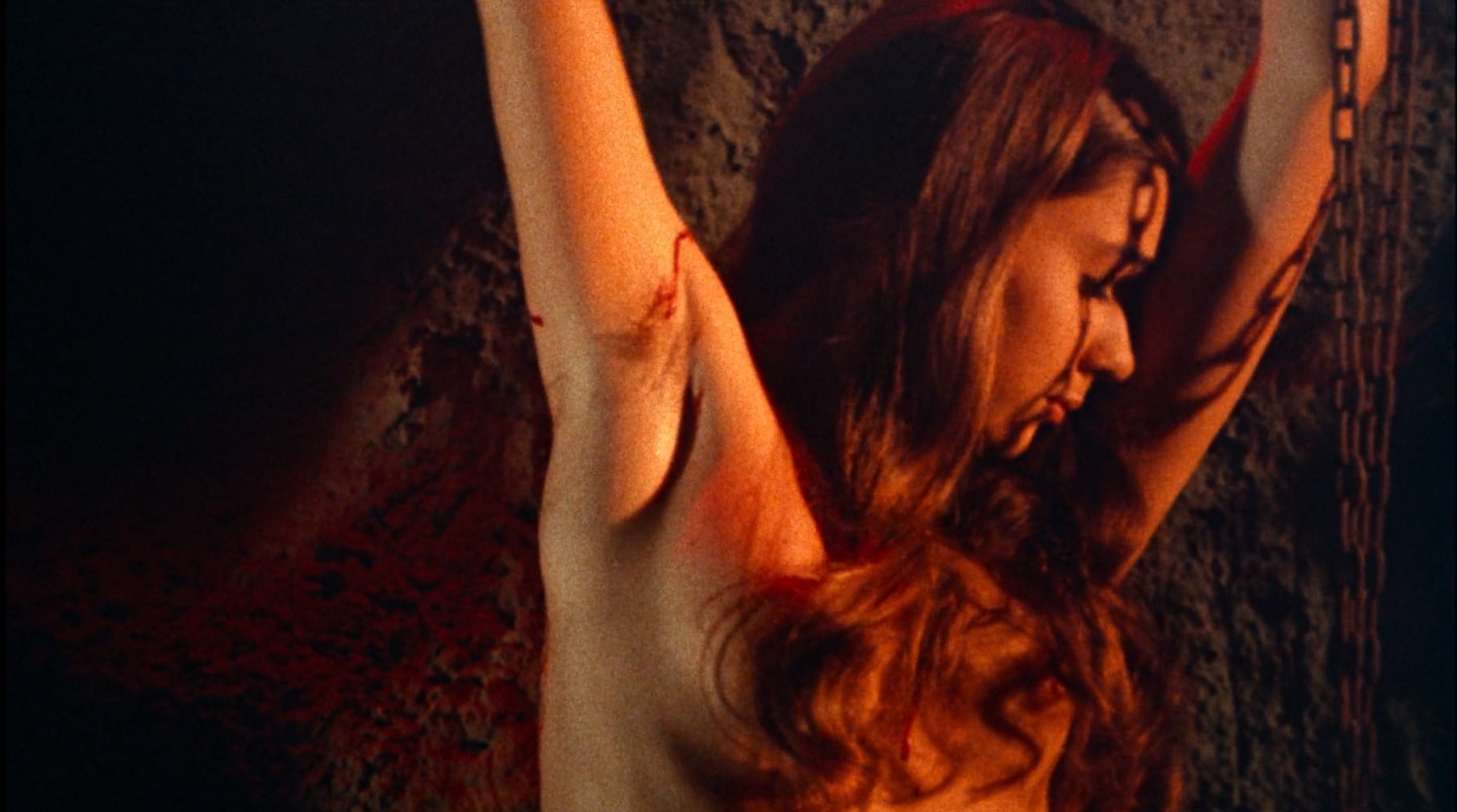
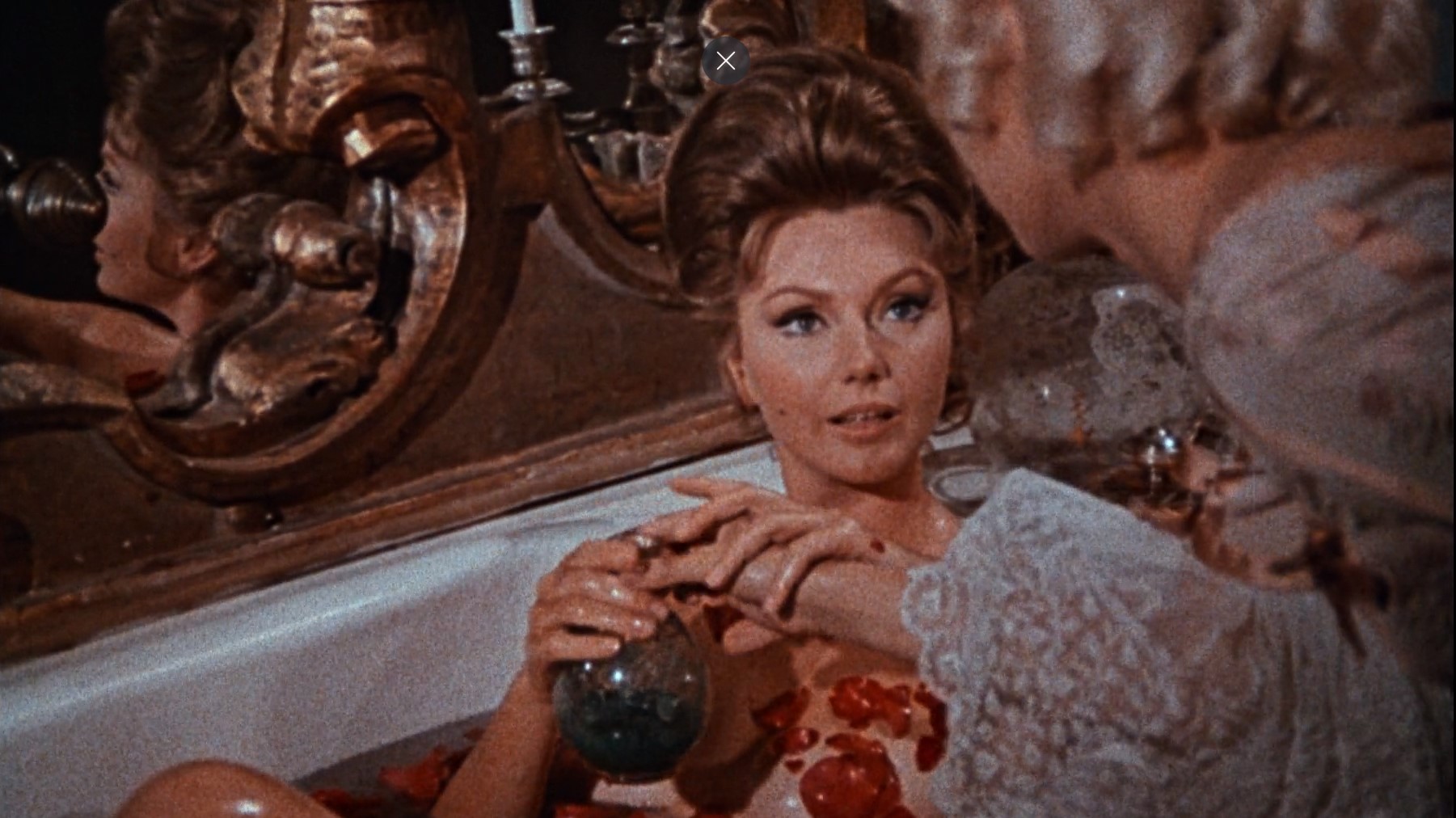
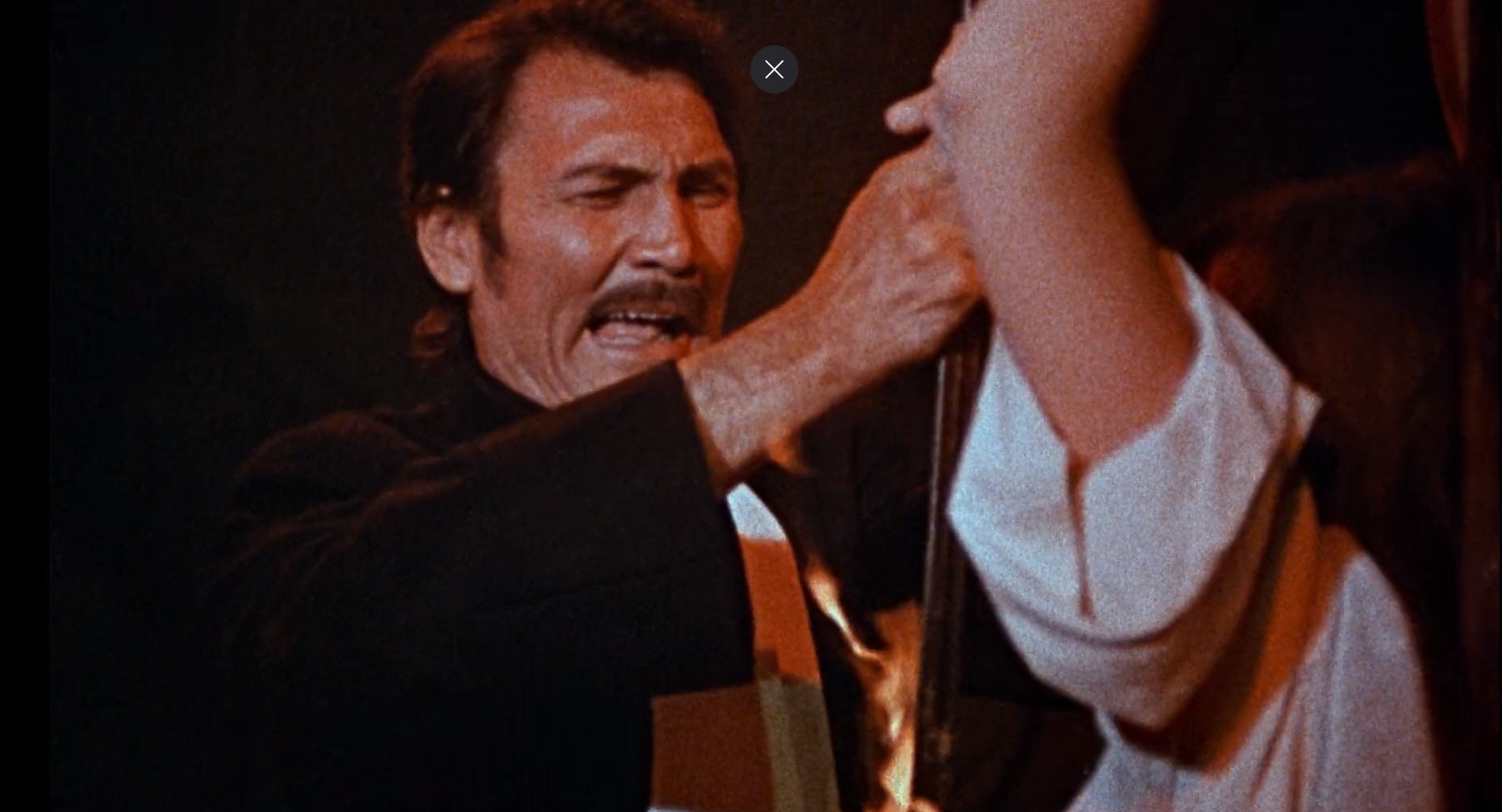
Perhaps the most recognizable and most notable adaptation of Marquis de Sade’s novel, “Justine” is also popularized by its identifiable cast with big names in not only Europe but also in America. The opening scenes with Klaus Kinski, in a wraparound narrative as the Marquis de Sade himself imprisoned and suffering visions of bloodied and bound naked women, immediately draws you into the “Nosferatu the Vampyre” and “Schizoid” actor’s character plight and muted damnation into writing about virtue, a misfortunate respectability. The other famous face in the film, one that spans from Europe to the U.S., is Romina Power as the titular “Justine.” Power, daughter of actor-songwriter Tyrone Power, was, in her own right, a well-known Eurovision singer after the release of the Franco film, but it was her father’s musical talents who landed the sweet-faced Romina into the denigrated young woman role. While Kinski acts on pure facial expression alone, using his iconic, distinct facial features, Power offered a more rigid approach like a child locked by confusion and while unintentional and usually not what any filmmaker wants in a devoid of relaying vicarious expressive emotions, Power naive innocence proves key to Justine’s, well dare I say it, naive innocence. Power’s beauty alone could have stood ground in making the attack from angles perversity film work like a charm. One of the more surprising casted members is Jack Palance. Yes, Curly from “City Slickers” or Jake Stone from “Cops and Robbersons” outlines the formidable pleasure-seeking cult leader Brother Antonin with such gusto flamboyance, the must-see and most-enjoyable performance seemingly feels alien to the usual stoic and stern typecasted actor who could rival Clint Eastwood with a fierce thousand-yard stare. Having co-starred in the Franco-de Sade film “Eugenie” a few years later, Maria Rohm, aka Harry Alan Towers wife, plays the role of Juliette and while the story is ultimately a dichotomy of virtue and sin, there’s an imbalance between the two characters for screen time. The Marquis de Sade’s novel was named “Justine” after all. For her alotted screen time, Rohm provides a suitable sinful scarlet woman climbing the aristocratic ladder by cheating, stealing, and killing her way to the top. The cast fills out with Harold Leiptnitz (“The Brides of Fu Manchu”), Horst Frank (“The Cat o’ Nine Tails”), Gustavo Re (“Horror Story”), Sylva Koscina (“Uncle was a Vampire”), Akim Tamiroff, Rosalba Neri (“The French Sex Murders”), and “99 Women’s” Mercedes McCambridge in an unforgettable role as a nasty gang-leading woman whose high-velocity cruelty rockets are so homed in on Justine it’s explosively devastating to watch.

Having seen the elegance of interior architectures inside Paris’s Opera house, walked the cobblestone streets surrounding the monumental Eiffel Tower, and taking in the laissez-faire of the French way of life, I can honestly say Jess Franco captures France impeccably well for an self-exiled Spaniard known more for his sleaziness and horror than his efforts in cinematic expressionism.   Arching with one big showcase revolving around the idea that virtue will get you nowhere and will be nothing but trouble, ultimately putting to question the validity of the decency concept, the narrative is broken up into a mini-scenarios, mostly of Justine being completely subjugated to the wicked whims of others and a handful of Juliette erecting a better life off the backs of others she’s duped or snuffed.  Franco mastered false hope and misconceptions with each of Justine’s encounters as they lure her in with promises of salvation to then only kick her when she’s down and reap full advantage of her inexperience and gullibility that the world is full of good people.  Sordid and cruel, “Justine” is a contradiction of actionable cynicism in the foreground of depicted magnificence in location, costume, and cinematography choices that hews into the coarse callousness; one particular scene comes to mind involves Jack Palance’s Antonin arranged with hand positioning that abbreviates the name Jesus Christ and as Antonin is holding this hand arrangement, he seemingly glides or floats down the stone corridors toward Justine, demonstrating religious imagery as a form of abusive power or corrupted guidance to serve one’s own deviant devices.  Though labeled in some circles a sexploitation film and certainly full of skin from Romina Power, Maria Rohm, and Rosalba Neri amongst others peekabooing their assets through cut potato sacks during the sex slave orientation scene, much of the sex is heavily implied with a limited gratuitous outcome.  Before going fully into an Eurotrash market by the late 70s and all the way through to the 90s, Franco made every effort to be a considerable filmmaker for a broad audience in numerous countries and his dislike for censorship shines through to his work, despite the likelihood of costing him acclaimed fame as a director. 

“Justine” arrives on 4K UHD in a Blu-ray combo set from Blue Underground.  The two disc set is AVC encoded Blu-ray 50gig and a triple layered Blu-ray 100gig with 1080p (standard BR) and 2160p (UHD) high-definition resolution, and presented in the original European widescreen aspect ratio of 1.66:1.  The brand new 4K restoration from the uncensored original camera negative of the 35mm film with Dolby Vision HDR is a foremost upgrade to the highest power, an ultra-balanced grading that reels in a wide variety of colors from interior to exterior that helps bring the ornamentation of 18th century France to a vivacious life on screen.  The saturation is enriched and finitely retuned to deliver the best and naturalistic grading as humanly possible, or as current technology allows.  The Blu-ray offers a just as reasonable presentation but does lack that high attention to detail because of the lower pixel count.  Bitrate decades are a comfortable average in the high 30s to low 40s.  The UHD and standard Blu-ray offer a clean and free from compression artifacts with immeasurable format capacity to render an unimpeachable picture. Both formats come with an English DTS-HD mono, dubbed in English by voice actors and not the original cast. No hissing, popping, and only a slight interference hum. Dialogue is dub boxy but clean, clear, and right forefront without question of what’s being discoursed and is well-folded into the ambient and Bruno Nicolai epic vein-coursing score that triumphs a military march over a classical base. English SDH are optional. In regard to special features, both formats include a new audio commentary with film historians Nathaniel Thompson and Troy Howarth and the French trailer, but the Blu-ray contains archive interviews with director Jess Franco and writer-producer Harry Alan Towers, an interview with author Stephen Thrower of Murderous Passions: The Delirious Cinema of Jesus Franco, a new interview with actress Rosalba Neri, in Italian with English subtitles, On Set With Jess, a newly expanded poster and still gallery, and a Jess Franco dreaded censored cut of the Americanized shorter version of the film under the “Deadly Sanctuary” title in HD and clocking in at 96 minutes, a nearly 30 minutes shorter. The physical features mirror the “Eugenie” 4k/Blu-ray release with a black Blu-ray snapper case with similar thickness. A shackled Justinne graces the front cover, as with the previous DVD Blue Underground release, and has the same cardboard slipcover with an oval shaped like mirror cutout to not block the half-naked Romina Power. Back covers are both the snapper case and cardboard cover have the same layout design but different still images on each. Inside, there is a disc on each side of the case held in by a push lock. The UHD is a sizzling infrared and sultrier posed version of the snapper cover while the Blu-ray, in the same red hue, is a composition of characters clustered together in a circular design. The film comes not rated, region free, and has the presentation feature with a runtime of 124 minutes. The Marquis de Sade divulges a sardonic, topsy-turvy belief that the more you stay virtuous, the more trouble follows as it’s the way of the world and the more you swindle, the more headway you make in life. Jess Franco brings the Marquis’s vision to cinematic life with a grand and sordid tale, dissevering the two ways toward their individual soul crushing path, and discovering morality within the immoral.

Own Your Piece of Virtue with this 2-Disc “Justine” set from Blue Undergrounda and MVD Visual!  

Cheez-Whiz and EVIL Go Together like Camping and Horror! “Black Holler” reviewed! (Wild Eye Releasing / Blu-ray)

“Black Holler” on Blu-ray Home Video from Wild Eye Releasing!  Available at MVDVisual and Amazon.com!

The Black Holler woods has a notorious reputation for being cursed by a lost ancient artifact that once broken into two would sic supernatural powers upon to anyone disturbing the grounds.  A class of half-witted community college Archepology students embark on a field trip to the very same Black Holler woods.  Among them is the rebellious yet grounded black belt Laquita Johnson forced to tagalong in order for a last ditch effort for an educational institution to accept a reformed her despite the refractory record.  As soon as the class steps foot into the woods, one-by-on they begin to disappear mysteriously as the area comes alive with the vengeful spirits of a long forgotten tribe that once inhabited the land.  Poor decisions, ultra-egos, and classic horror movie tropes amalgamate into a don’t go into the woods with white people scenario of the year 1989 proportions.

Let me set the scene for you:  Back in 2017, Jason Berg and his cast and crew set out to make and release a homage horror-comedy that wasn’t just bloody and supernatural but was also drenched in the broad quintessential tropes of 1980s horror film.  Berg directed and cowrote the U.S. film alongside Heidi Ervin and Rachel Ward Heggen on a modestly budgeted scale that relied mostly on slapstick wit rather than full blown genre makeup and effects but the comedic style also treads into the parody territory, reminiscent of the days of yore with “Airplane” or even the relatively more modern version, and related horror-themed, “Scary Movie” series, aiming to cast objectifying humor as well as generate other politically incorrect forms of laughter that many Hollywood studios and off-Hollywood indies are afraid to touch with a 50-foot pole today with the fear of being criticized, sued, or even worse, #cancelled.  “Black Holler” isn’t having none of that black listed nonsense in its Troma-transgressional fashion.  “Black Holler” is a crowdfunded, Kickstarter and Indiegogo campaign production with executive producers Jim and Phyllis Casebolt, Heidi Ervin, and Wesley Rutledge and is filmed in and around Nashville, Tennessee with sponsorship by the Nashville Film Festival and production credits under the banner of Grand Prize Studios.  

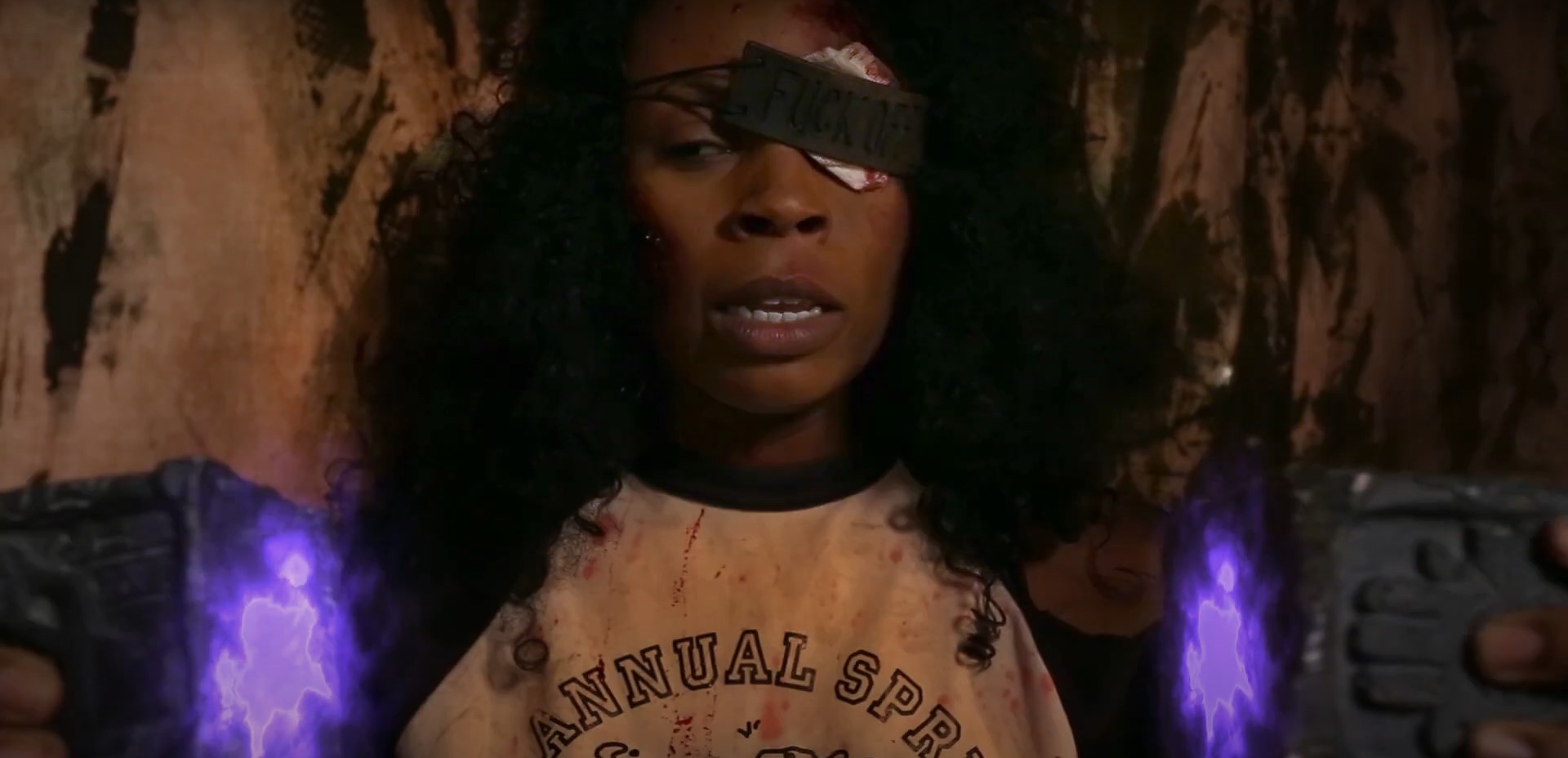
One thing to notice about the Tennessee-native Jason Berg’s obscure, campy, and modern-day slice and dice of satire is that “Black Holler” has a large, sprawling cast acting in different, diverse locations though ultimately winding up backdropped in the woods like most low-budget horror films do.  Numerous principal leads receive nearly equal screen time to follow individual storylines with predominately Tamiko Robinson Steele (if that isn’t a Blaxploitation name, I don’t know what is) being the empowered, karate-instructed, skateboarding, last minute addition, Laquita Johnson, to a predominately white class of vanilla misfits.  “The Dead Center” Steele rarely engages an interaction with fellow camping characters but eventually Laquita glues herself to the scrawny nerd Walter Love (TikTok influence Nicholas Hadden).  As Laquita and Walter work on Walter’s social awkwardness with a quick hip-throwing lesson, the other students, led by the overly pretentious assistant Professor Thompson in a wonderfully painful and zany performance by Jesse Perry (“Zombies vs Strippers”).  Perry’s know-it-all façade is complimented by his awkward hand gestures and ridiculous facial expressions to make Professor Thompson a full-bodied caricature.  Much of the cast are equally as lampooning the usually trope characters:  the stoners (Bruce Ervin and Betty Williams), the angsty goth (Sarah VanArsdal, “Chest”), the goody two-shoe (Heidi Ervin), the slutty hot girl (Rachel Ward Heggen), the over-sexing couple (C.J Stanley and Stacy Gazenski), and a self-serving and bullying handsome jock who is satirically played by numbers actors of all races and ages with the in-script context that shows and movies recast principal actors with other actors who look nothing like the original and that the general audiences won’t notice.  “Black Holler” rounds out the cast with Brad Edwards, Wesley Rutledge, Leah Helena Miller, Justin Terrants, Brian Russell, Miguel Otero, and Stayc Givhan as Laquita’s white, queer cousin and who outperforms with sass and confidence to the near point of stealing the entire movie. 

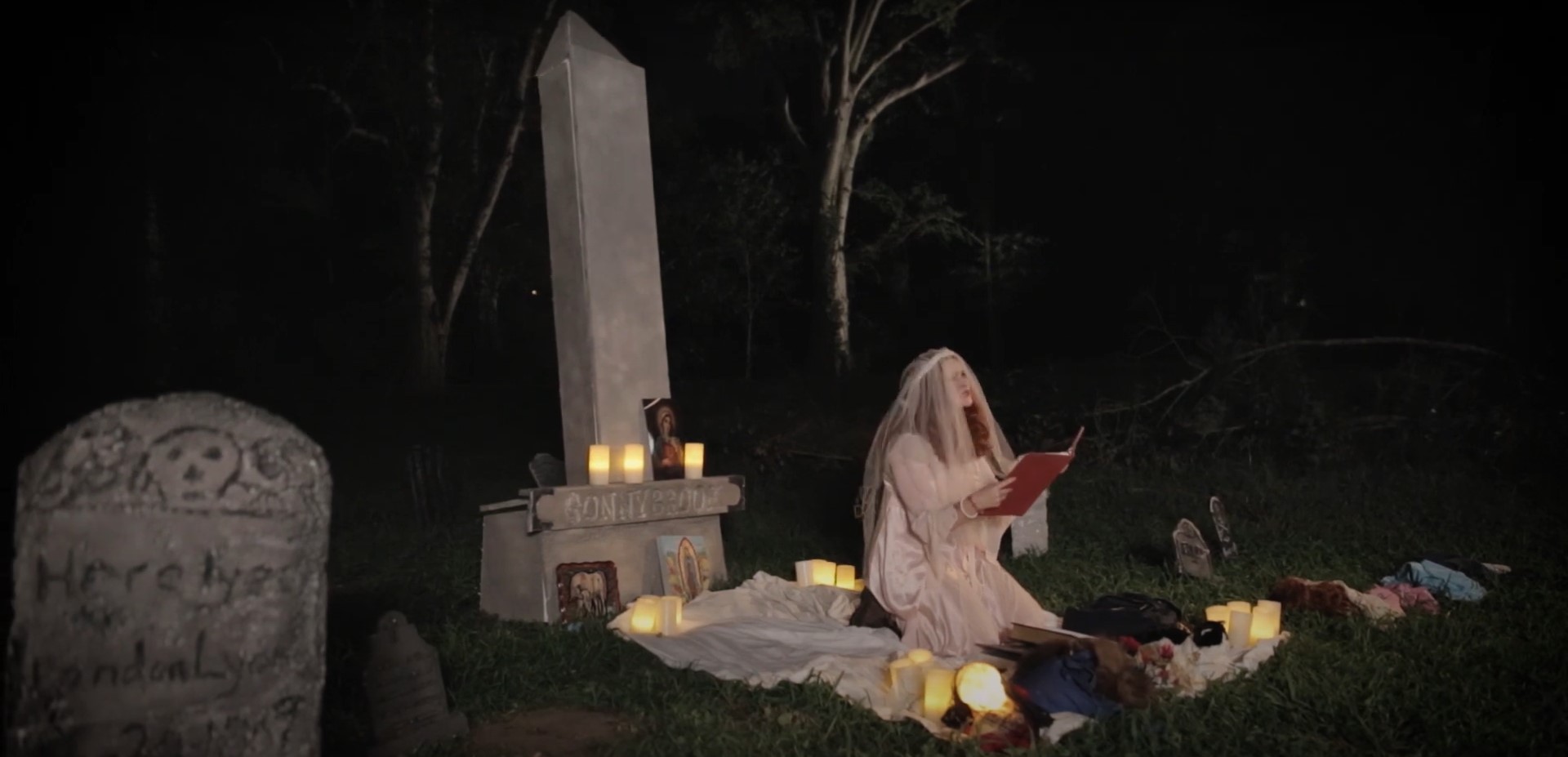
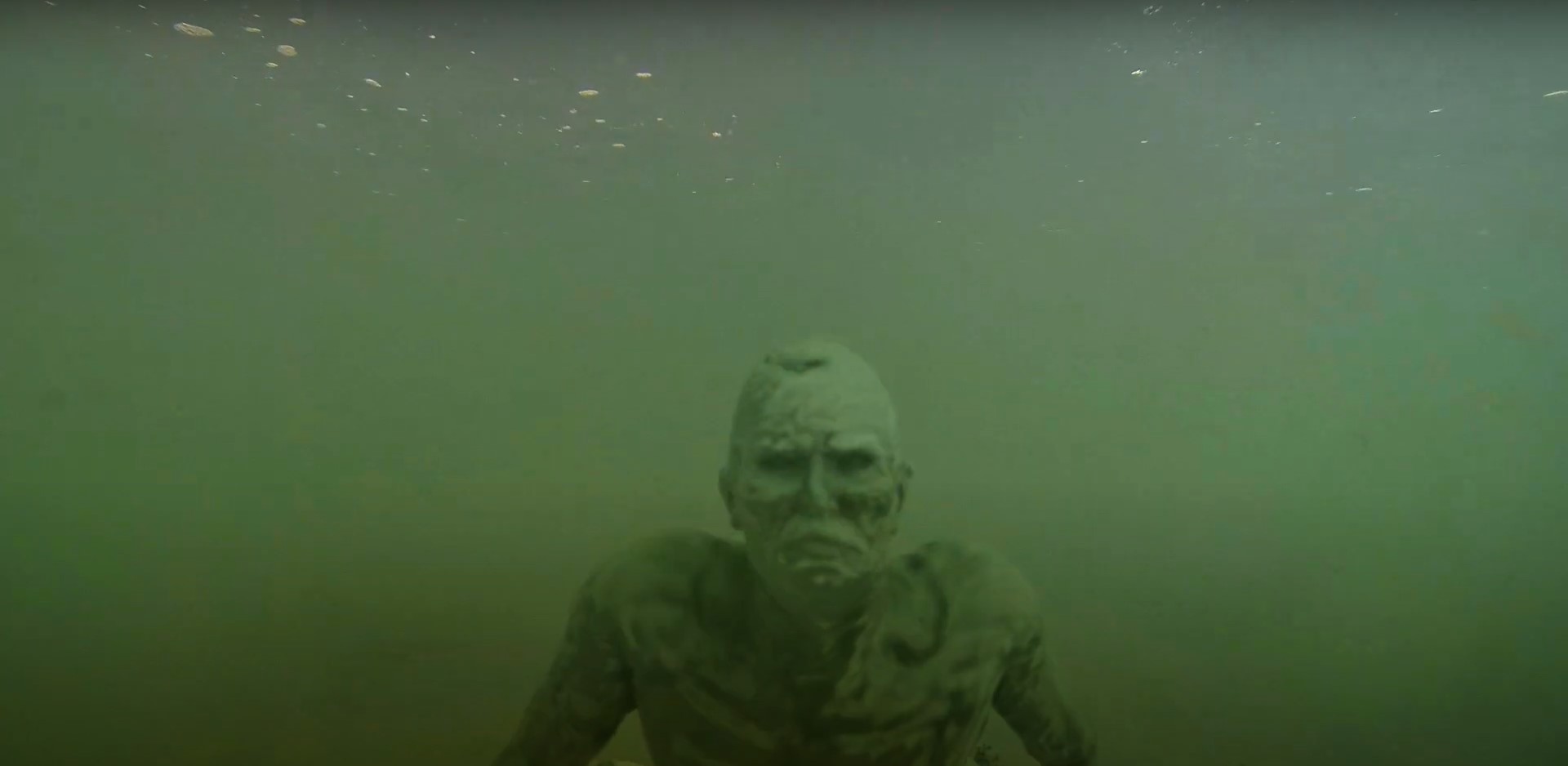
Director Jason Berg recreates the late 1980’s to early 1990’s milieu and very well I might add. “Black Holler” has the skater-grunge dress, early model cell phones that are the size of a football with an antenna, and crass, douchy attitudes that fit the period’s horror catalogue casting call. Not one to take itself seriously, at all, “Black Holler” just needs to be sat down with and watched for what Jason Berg intended his debut film to be – one big parody of paranormal patterns. Berg achieved the goal in depicting an outlandish ensemble of highly vain characters too entrenched in their own objectives of “Pet Semetary” resurrecting animal rituals, engaging in hot premarital sex, and smoking pot while swimming with sea-sludge covered dead. Aside from the little “Pet Semetary” nod that goes hand-in-hand with the sacred Indian ground, the film pulls in and ties together inspiration from other 80’s era classics like “Evil Dead” with the forest jetting out vines to snatch and grab as well as a compilation of every horror movie set on a camping ground with a nefariously spooky and anecdotally deadly past. Many of the gags and goofs land in a generic vane tapped too often to strike it rich but there are a few outliers, such as the seamless Brett bit that tackles trite truth with well devised humor or when Professor Thompson, in one of his many zany arbitrary acts, climbs a tree like a squirrel that does provide a good chuckle, but then there’s the whole systemic racism callout that flies over my head as, to my memory, wasn’t a big thing in the 80s or 90s. Perhaps, the concept plays into the whole token black trope that Laquita represents to the group, as in what the title alludes to in tribute and in theme.

“Black Holler” is receiving a re-release from Wild Eye Releasing but in a new special feature-laden Collector’s Edition!  Presented in a 1.78:1 aspect ratio on a AVC encoded, high definition, 1080p Blu-ray, “Black Holler” does have quality appeal despite various gradings and stylistic choices, such as color filtering to de-age into black and white. Compression appears stable with no noticeable ghosting, aliasing, blocking or banding.  Details and delineation are sharp enough for videophile nitpicking to be at a minimum.  Despite some use of a blue tint during a flashback, nighttime sequences convey just enough sparse lighting to not be overflooded and still maintain a sense of darkness in neutral contrast.  The English LPCM Stereo 2.0 audio tracks offers a crystal clear digitally recorded dialogue that’s free of obstruction and background noise.  If you watch the gag reel, the crew does a remarkable job holding action in place until the boom is free of all sorts of motors, planes, and other environmental sonances.  Depth works out mostly in the foreground amongst closeups and medium shots while range mostly revolves around quick whips of vines and the splatter of blood.  Special features include a director, cast, and crew commentary, deleted and extended scenes, a gag / blooper reel that consists mostly of the ambient noise holds, an alternate opening and ending scene, We Made Our Goal and Guns & Roses parody song tracks, a “Black Holler” Kickstarter promotional video as well as a faux promotional video with Professor Thompson as host and oozing with Archepology excitement, and Wild Eye Releasing trailers.  Collector’s Edition release is housed in a cardboard slipcover with what appears to be colored graphite art of some semblance of the colorful characters clumped together flaunting their idiosyncratic characteristics and personalities.  The clear Blu-ray case with snapper, which has become more and more common than a traditional blue hued snapper case, frames the original Wild Eye releasing cover art of Laquita holding up a machete in an ebony femme fatale pose.  Both slipcase and Blu-ray back covers have identical layout designs.  If you unlatch and open her up, the reversible cover art has a great group picture of the cast in character and there’s also a folded illustrated poster in the insert which you can see on the disc art without having to unfold the poster.  The unrated flick comes region free and has a runtime of 89 minutes.  “Black Holler” is a love it or hate it satirical salute to horror stereotypes forged from out of a screw loose admiration that can be, at times, too immature to find funny but the whole package functionally works as a comedy peppered with genre elements.

“Black Holler” on Blu-ray Home Video from Wild Eye Releasing!  Available at MVDVisual and Amazon.com!

Time Travelling Tourists Just Want to See the Spectacle of EVIL! “The Grand Tour” reviewed! (Unearthed Films / Blu-ray)

Unearthed Films Stopped a Disaster by Going Back in Time and Re-releasing “The Grand Tour” now on Blu-ray!

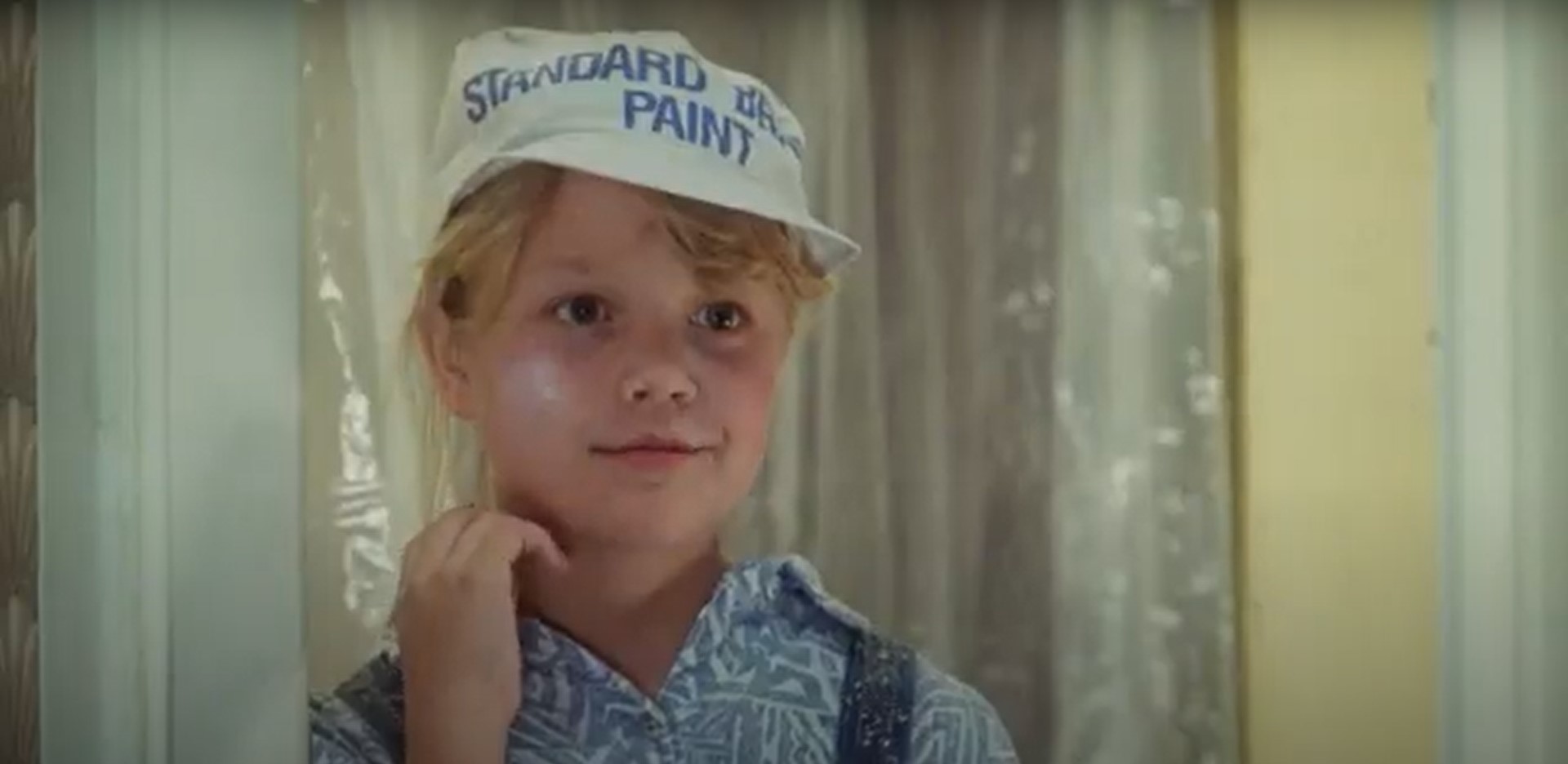
Widowed contractor Ben Wilson and his daughter, Hillary, are a many 2×4 and paint bucket deep into a renovation of a dilapidated inn on the outskirts of town. Haunted by his wife’s death violent death and reminded of it by an angry father-in-law, Ben tries his best to be the best father to Hillary that a single dad can be despite his urge to drink and forget about the horrors of that fateful day. Unexpected and eccentric guests arrive at his doorstep demanding to pay handsomely to stay at his unfinished inn, regardless of the condition, and eager to be present for the secret spectacle to come that makes his inn more desirable than all the amenities of the hotel in town. The guests’ odd behavior, strange belongings, and secret talk lead Ben to believe these so-called tourists are not from his time and that the spectacle their awaiting for is tragedy in the making.

For an extreme film label such as Unearthed Films, Jeff Daniels is not necessarily a headlined name I would see on the cover art. Nor, and more surprisingly so in this instance, would I ever have thought that a PG-13 rated film would be in the same assemblage of titles as “Slaughter Vomit Dolls,” “Philosophy of a Knife,” and “Christmas Cruelty.” Yet, here we are today, the year 2023, over two decades of extreme horror distribution, and David Twohy’s “The Grand Tour” has been released. The 1992 time-traveling clock-racer, that also went by other titles such as “The Grand Tour: A Disaster in Time” or “Timescape,” is written for filmic treatment by the “Riddick” franchise director, adapted from the novella “Vintage Season” by the husband and wife writing team, Henry Kuttner and C.L. Moore. “The Grand Tour” is a production of Channel Communications and Drury Lane Productions, the companies behind Brian Thompson starring “Nightwish” which became also another Unearthed Films’ vault release and is produced John A. O’Connor (“Steel Justice”) and Robert Warner (“The Return of Swamp Thing”).

“The Grand Tour” stars the aforementioned Jeff Daniels who at this point was coming off the phobic-inducing success of the itsy-bitsy film called “Arachnophobia.” Daniels brings the same family man charisma, sarcastic wit, and unnerved intensity to the widowed construction contractor Ben Wilson. The character of Ben Wilson is unbuttoned from the beginning with only nightmares of an accident involving a horse drawn sleigh and verbal tit-for-tats with his bristly former father-in-law concluding the death of his wife only a short time ago. Wilson’s marked as a drunk and a shirker though barely do we see only a slither of the former; instead, Wilson’s rather astute, loving, and fearless in his time of time designed duress. Perhaps, Wilson’s arc has already been puzzled together and Twohy only mirrors into his once shameful soul to showcase how much he’s learned and how far he’s come to be more than just an abashed single dad and though Wilson is unbuttoned from the beginning of the story, Daniels buttons up the role with nothing less of perfection. Wilson’s daughter Hillary is played by pre-“Jurassic Park” screamer Ariana Richards who solidified her round-eyed concerned, over-the-shoulder look first in “The Grand Tour.” Hillary becomes the crux torn between the loving father that Wilson’s portrayed to be and an overreaching grandfather, who’s also the town judge (George Murdock, “The Death Squad”), holding a longstanding and personal grudge with his daughter’s ambivalent death. The youngster is also the reason Wilson is willing to risk the perfect future to save an ill-fated past. “The Grand Tour” enlists a versed lot of talent to round out the cast with Marilyn Lightstone (“Heavy Metal”) as the voluble tour guide, David Wells (“Society”) as a tourist with a conscious, and Jim Hayne (“Sleepwalkers”) as a down-to-Earth bus driver caught in the middle just like Wilson. There’s also Nicholas Guest (“Dollman”), Time Winters (“Skinner”), and Anna Neill.

Temporal manipulating or time-travelling films will undoubtedly always have faults as time is a finicky thing, some films accomplish time loops better than others, but I personally feel that as long as the narrative is entertaining enough and the time theory isn’t ludicrously idiotic, all can be forgiven or overlooked on the stretched fabric of time and place concept that can have easily spotted loopholes.  “The Grand Tour” is one of those divertingly pleasurable narratives with calamity hanging in the balance, a central do-or-die performance, and theme that hits at the core of a numb human perspective when seemingly life is nothing less than perfect.  The script bypasses the whole negating physics of the narratives time-travelling and butterfly effect piece with Daniel’s character verbally damning the hypothetical’s inaccuracies in a fit of life- and time-saving panic to not hang up on the details and keep the story churning.  Twohy never offers too much too early when the intrusively eccentric inn guests appear without concern for their surroundings but are increasingly curious about minor, trivial things that when compared to the small town residents, people would take such things for granted, yet their curiosity isn’t exactly appreciation for the humbler things as it’s more of a naively morbid reflection on how who these well-dressed and fit-as-a-fiddle travelers call “bygoners” lived and died.  Historical catastrophes have become looking glass sideshows for the bored or how the event is termed as a spectacle is if the disaster is an extravagance performance for others to reap the benefit from its grim amusement.  Twohy pulls off the massive feat of catastrophe without the use of computer-generated imagery that we see heavily in his later films to create galactic worlds and creatures.  There’s composite motion paint work and diorama miniatures to create the illusion of a small town in turmoil that works just as well, if not better.  The whole “Grand Tour” package sells the sleight of hand devastation but also the intrinsic emotion and passion that follows it, or in this rewind the clock case, before it as well. 

Though I’m wigged out by the tame release from Unearthed Films, I’m still glad the out of print and sci-fi jarring “The Grand Tour” has booked an excursion back to the physical media outer rim!  A brand-new AVC encoded Blu-ray, released as the 11th cult classic under the Unearthed Classics sublabel, shepherds a new in-print North American option.  Sold as a Hi-Def release with 1080p, there’s honestly nothing that can be really done or to improve upon a Betamax 350 resolution by 480 pixels in a stretched 1.85:1 aspect ratio.  Certainly better video and audio quality compared to VHS, and likely the best quality “The Grand Tour” will ever be in to-date, the release remains a deficient for detail with blurry, soft-glowing traits.  The Blu-ray’s bitrate is also erratic, dipping as low as upper DVD, 8-11 Mbps, to shooting up as high as lower 20s which tells me the storage capacity of the BD25 likely isn’t enough to properly decode the film and, in certain frames, compression artifacts show with smooth surface, color blurring that eliminates sharper edges amongst other issues, such as faint banding and blocking nothing to really warrant discouragement. The English PCM 2.0 stereo mix is commensurable with the original Betamax audio recording and though soft around the audible gills, the dialogue, ambient, and soundtrack mixes satisfy the need but in case you need an English SDH option, the Unearthed Films’ Blu-ray has you covered with a well-synched and timed error-free translation. The special edition bonus features include the “Timescape” title sequence, production stills, various posters and one-sheet artworks, a new Lost in Time: Cannes promo discussion with Ed McNichol who worked on the pre-production Cannes promotional trailer with Jeff Daniels but isn’t available in the special features here, and Unearthed Classics trailers. The physical aspects of the release include a cardboard o-slip with a front image reminiscent of outside region 1 DVD covers of Jeff Daniels running between two periods in time. The slipcover sheaths a clear Blu-ray case with latch, the inserted cover art is the same slipcover but is reversible with a mockup of the Canadian released DVD cover. The disc print image echos the reversible cover art image. “The Grand Tour” is Blu-ray has a region A playback, clocks in at 99 minutes, and the film is rated PG-13. An obscure Jeff Daniels film lost in time, unable to reach back into the past for a new, refreshed release, is paradoxically meta in its own right but luckily for us, Unearthed Films has our best interests in mind while keeping the blood and guts at bay for only for a single, solitary stitch in time.

Unearthed Films Stopped a Disaster by Going Back in Time and Re-releasing “The Grand Tour” now on Blu-ray!

The Picked-On Runt Can Be EVIL Too. “Little Corey Gorey” reviewed! (SRS Cinema / DVD)

“Little Corey Gorey” Uncut and on DVD home Video at Amazon.com!

After losing his father to a fatal accident, little Corey Gorey is forced to relocate to a new home with his overweight, alcoholic, and verbally abusive stepmother and similarly so, racist brother-in-law, Biff.  Constantly receiving the short end of the stick, Corey tries to retain a normal life by buying Ozzy Osbourne concert tickets and meeting girls at high school, but when his bigger, older Biff raids Corey’s broom closet of a room searching for a pinup one-sheet, he discovers the concert tickets and hooks up with Corey’s dream girl from school.  In a fit of rage, Corey accidently kills Biff as the two scuffle and with that Corey sows the seeds of salvation as the teen who was constantly tormented and afraid to talk back now is eager to take his life back.  Keeping his stepmother tied to the couch and gagged from making noise, Corey dismembers what’s left of his brother into the storage freezer and includes the sociopathic girl of his dreams into the fold but when a nosy mail carriers begin to snoop around and a drug dealer is seeking payment for the cocaine he fronted Biff, the bodies begin to pile up and Corey finds himself over his head.

Talk about your unhappily ever after Cinderella story, “Little Corey Gorey” goes from rags to wreaking havoc by way of severing limbs and meat grinding body parts all the while trying to sweep a rebellious older high school girl off her feet in an attempt to run away from all the carnage and abusive adults.  Bill Morroni, credited as William Morroni in the film, wrote and directed his debut feature in sunny California that is anything but sunshine and good vibes in this 1993 released, dark horror comedy obscure to many horror fans. A real highlight of early 90’s low-budget horror done right with smartly placed and highly effective practical effects, “Little Corey Gorey” is a begrimed gem waiting to shine, produced solely by Morroni under his self-funded principal production over the course of a few weekends. 

What makes “Little Corey Gorey” half as enjoyable as it turns out to be is because of the cast.  Once plagued by unfortunate circumstances, such as an example with the untimely death Divine (“Multiple Maniacs,” “Pink Flamingos”) who was to have a lead role, that one might consider the film be cursed celluloid even before principal photography, Morroni was able to overcome with a perfectly suited set of talent to tackle Corey Gorey’s gruesome exploits of dysfunctional family survival.  The titular role was awarded to Todd Fortune whose diminutive size really plays against the larger and towering figures that make his life a living hell.  Divine would have stepped into the shoes of wicked stepmother Betty and even though Divine would have done phenomenally in a constant-drunk state of a barraging verbal abuse and torment, Pat Gallagher filled the cankerous role with despicable-inducing results and gives a real witch of a woman performance to not only Corey but also her actual on-screen son Biff.  Greg Sachs might be stiff as a board as the older brother with racist overtones and a compounding dislike for Corey, but Biff turns out twisted enough to be an antagonizing accomplice in building Corey’s pent-up survival garnished with ghastliness.  One of the more scene stealers is Brenda Pope as the bitchiest high school narcissist Jackie who has somehow swooned Corey’s rationality and has him hanging on her tongue with every lie.  From special feature commentary by Morroni, Pope was a real life true-to-form unpleasant person behind-the-scenes as well as in front of the camera but that doesn’t stop her good looks and devilishly delectable moodiness and conceitedness from drying out.   As a group, you can feel every resounding personality types and cluster of chaos that spits out sympathy for Corey despite the curated torture from those who are supposed to care for him and also feel not one ounce of pity for Corey’s tormentors turned minced meat at the hands of the water treading teen.  “Little Corey Gorey” has a neighborhood ensemble featuring parts by Edenia Scudder, Sabino Villa Lobos, Kristin Caruso, Bernice Smiley, John B. Tomlinson, and William Linehan has an escaped prisoner and mass murderer being built up by the news media with his convenient store killings only to be the only part of “Little Corey Gorey” to fizzle out in a subplot to nowhere. 

With a spiffy name, a thematically onboard cast, and some really good editing and camera work, “Little Corey Gorey” surprisingly has a lot going for it despite being shot on 16mm variational stock and using scratch audio, aka studio dubbing, that makes the 1993 feel and appear more rough and ready than necessary, like a wrinkled, toothless middle-aged man after smoking and drinking heavily for half his life, but in the grand scheme of things, “Little Gorey Corey” has held up moderately well in quality and in story.  Through the spikey colored wigs, cut off sleeve shirts, mullets running rampant, and good seat concert tickets with a price tag of $18 might have run their course over father time, bullying remains a hot topic to this day.  Dysfunctional family dynamics, blind and fatal obsession, drugs use, and being in the friend zone with a haughty hottie also hasn’t changed much.  You can’t help not feeling pity for Corey and the excruciating awkwardness of him pulling out all the stops in order for Jackie to notice his heartfelt, romantic gestures and advances only to be immediately blown out of the sky like a Chinese weather-spy balloon gliding over Montana.  Everything that happens to the thick-skinned kid culminates to a head, to a finale of penetrating his usually impenetrable, encrusted scar tissue of a shell that just seems right or justifiable that when the world pisses on you, you cut off its penis with a corded circular saw.   

“Little Corey Gorey” receives a new scan (upscaled?) of the 16mm source material and drops onto a re-release from SRS Cinema!  Though still framed in a full screen 1.33:1 letterboxed aspect ratio, the transfer looks much clearer than the original VHS release with brighter grading and an enriched image that delineates edges and some details.  The variation in 16mm stock is obvious, more so in only a handful of scenes in comparison to others, with only a very select few offering a shoddy, nearly obstructed view of focal objects.    One thing about the SRS Cinema DVD back cover is it lists a new HD transfer from original camera negative, but DVD can’t be high definition. Since the DVD and the limited-edition Blu-ray share the same cover, I assume this speck of information wasn’t removed, redacted, from the Blu-ray back cover. The English Dolby Digital 2.0 scratch track, aka dub track, is what it is – an on-budget audio format that has doesn’t quite run in the same space to the image but is still an impressive parallel audio track that synchs nearly identical to the actors’ mouths. There’s an obvious electronic hum throughout that never quits so the interference often drowns out slightly any ambient noise, if any, were added for depth and weakens the dialogue strength, which was not entirely robust at the beginning. Hair metal becomes “Little Corey Gorey’s” soundtrack to slashing with featured tracks from Creature because if you can’t hire Ozzy Osbourne to score your film, you get the 2nd, 3rd, or 10th best thing that brings the metal. The bonus features include a directory’s commentary, a 77-minute William Morroni interview that unboxes all the aspects of the film from individual cast bios to equipment availability and issues to marketing woes and to the whole kit and kaboodle in regard to his little movie, and SRS Cinema film trailers, including this “Little Corey Gory”. The DVD sports a beautifully grisly illustrated cover art, similar to what SRS Cinema accomplishes with all their other titles, with an accompaniment mustard yellow, retro-grading design. The disc art is duplication of the front cover art and there is no inserts inside the traditional DVD snapper case. The region free DVD comes with an uncut version of the film that has a total runtime of 91 minutes. “Little Corey Gorey” is a big gory lorry that drives a mean-spirited, misanthropic marvel right out of the 90’s and into our television sets as this forgotten film can no longer stay forgotten.

“Little Corey Gorey” Uncut and on DVD home Video at Amazon.com!