Taxi Driver by Day, EVIL Serial Killer by Night! “Dr. Lamb” reviewed! (Unearthed Films / Blu-ray)

“Dr. Lamb” is ready to operate.  See him in action on Blu-ray from Unearthed Films and MVD Visual!

Quiet as a boy verbally and physically abused by his stepmother yet laid to experience the adult perversities at the permission of his unconcerned father, Lam Gor-Yu, now as a man, is still quiet and still has unusual interests as an afterhours taxi driver.  Triggered by rainy nights when a torrent of verbal abuse by his female passengers send the usually reserved taxi driver into a homicidal fury, extending his lonely nights into straggling women, returning their bodies to his family homes, and video tapes his exploits within his fascination for amateur medical procedures.  When the police raid his family home after developed disturbing pictures were discovered at the local print shop, Lam’s entire family is hauled into questioning and it’s to Inspector Lee and his team to unearth exactly what transpired to the lifeless bodies seized by a notoriously sociopathic serial killer.

When you think of serial killers globally, Hong Kong isn’t the first place that comes to mind.  In fact, Hong Kong isn’t even a blip on the radar as the Pearl River Delta residence only has two known serial killers attributed to the city.  One of those killers is Lam Kor-wan – aka The Jars Murderer – aka the Rainy Night Butcher – who terrorized the then British territorialized Hong Kong in the early 80s, killing and post-mortem mutilating four young women.  La Kor-wan became the notorious inspirational material for the Danny Lee and Billy Tang (“Run and Kill”) co-directed Dr. Lamb that was released in 1992 and penned by Kam-Fai Law (“The Close Encounters of Vampire).  “The Killer’s” star Lee, who was more Chinese action star than filmmaker, developed the film, reluctantly at first, during the time when Hong Kong’s Category III classification rating was extending from solely high-end erotica and sleaze into extreme horror and thrillers.  Lee served as executive producer with Parkman Wong, who also worked alongside Danny Lee on “The Killer,” under Grand River Films Ltd.

To be portraying one of two Hong Kong’s serial killers feels like an unsurmountable responsibility burdening the actor’s shoulders in order to parallel the motivational intricacies and the mental mindset as accurate as possible knowing that the character can’t just blend into a vast serial killer fold where you can find multiple variations of John Wayne Gacy or Jeffrey Dahmer being grossly rendered for U.S. pop culture exploitation.  Yet, in steps in front of the camera Simon Yam, one of Hong Kong’s prolific action stars in the late 80s to early 90’s now stepping into the shoes of a real-life maniacal persona and relatively close to where all of Lam Kor-wan’s dirty-little-deeds took place.  Simon Yam could very well be the killer himself, that’s how brilliantly Yam’s performance is in what’s certainly a confident display of range in contrast within his acting opus.  Replacing a gun with a scalpel, Lee and Yam dig deep into the character’s psyche with an interpretation of why Lam Kor-wan did what he did and, frankly, Yam just went stoically wild to reach Lam’s staggering levels of crazy as he descends deeper into the retelling of his encounters with each victim. While “Dr Lamb” is a grim tale, there’s a comical side to it with the police force, supervised by Inspector Lee, played by Danny Lee himself in a duality position of cast and crew. More of the comic relief stems from Inspector Lee’s second-in-command, an experienced, yet overweight, cop who lets others handle his workload. Literally named Fat Bing, comedian and “Human Lanterns” actor Kent Cheng continues his whimsical routine in unvarnished subject matter revolving around separate bits and pieces of people’s tissue and organs for twisted pleasures. Collateral damage of Lam’s horrifying late-night exploratory surgery antics on women involve his family as they also become suspects. Lam’s father (Siu-Ming Lau, “A Chinese Ghost Story”) keeps his blinders on while the evidence piles only to be turned when his son’s transgressions include a minor family member does his own flesh and blood then cross a line of no return.

There are always two sides to every story. No, I’m not saying there are two repelling sides to The Rainy Night Butcher’s homicidal havoc. “Dr. Lamb,” as a film, has a dichotomy about it that’s half biographically true and grim while the other half is crime drama peppered with clownery. The combination is odd and equally as frustrating as the black tone of the historical background and the graphic nature of some authentical depicted acts of inhuman urges find their way weaved into the fabric of cavalier cop buffoonery who, on one hand, seem really good and really intense at their job while, on the other hand, lack the gumption for sobering behavior. Even when investigating Lam’s videotape (to which there is no way in Hell Lam videotaped that himself as the camera moves as he’s engrossed with necrophilia and removing body parts), the cops overact the disgust with what looks like chunky tuna being forced out of their mouth along the lines of appearing like vomit. The underplayed theme is anything but funny in its psychological context of misanthropy and misogyny. All of Lam’s scenes of cruelty are told in flashback through his perspective, molded by his undertone hate for women. “Dr. Lamb” is a misogynistic tale bred out of childhood abuse by a woman close to his family and unabashed and unattended by his lenient father’s lack of concern. Three out of the four women Lam taxis-to-taxidermy often verbally and physically assault him and plague his personal space with their awful behavior, setting a dial backwards in his battered brain that reminds him of the time his stepmother slapped him or forced him into a closet for hours. Is “Dr. Lamb” a Freudian lemma that Lam sees his ruthless stepmother in these women and turns on them to humiliate their corporeal existence? That’s a deep dive, but not as deep as “Dr. Lamb” cuts as a visceral experience based off of one of Hong Kong’s notorious serial killers.

Distributing in at number 8 on the spine of the Unearthed Films’ Unearthed Classics banner is “Dr. Lamb” on a new Blu-ray home video. The region A locked, AVC encoded, BD50 is slicked up with a 1080p high-definition upgrade presented in a widescreen 1.78:1 aspect ratio. As one of cinematographer Kin-Fai Mau’s first few pictures, the cool blue and misty has an interesting allure like a hazy bad dream subdued by an infusion of looking through blue glass with a prism of white light filtering through. Perhaps not as detailed as desired, the release does stand above the rest with low-level continuous speck blemishes that are only noticeable if you’re searching for them. Two audio options are available: a Cantonese LPCM 2.0 Mono and a Mandarin LPCM 2.0 Mono. Both tracks do come with well-sync and accurate English subtitles with the only downside is in their quick sojourning. There are a few instances where the subtitles pop up for literally a second as a result of quick nature of the dialect to get to the next set of text. While toggling between the two languages, my audio receptors really took to the Cantonese for a more natural flow and visually for unison between speech and speaking. The Mandarin is certainly more powerful but also too over-the-top as in watching I relate to watching old Japanese with English dub. The special features include an audio commentary by Ultra Violent’s Art Ettinger and Cinema Arcana’s Bruce Holecheck, a background interview about “Dr Lamb’s” genesis with the story producer Gilbert Po Lamb to the Slaughter, an interview with film critic James Mudge on the Golden Era of Cat III Three Times the Fear, a talking point conversation about “Dr Lamb” from film academic Sean Tierney, an Atomic TV interview with star Simon Yam, and trailers. The physical release itself comes with a 6-page, color booklet essay from cinema academic and author Calem Waddell (producer of “The Collingswood Story” and many horror-film related documentaries). A cardboard slipcover with one of the more provocative poster arts. Unearthed Films’ Blu-ray comes unrated with a runtime of 90 minutes. When perusing what to watch one night, be sure to hail down this cab of fact-based macabre driven by “Dr Lamb’s” psychological psychopathy and his pathologic urge for unnecessary medical procedures.

“Dr. Lamb” is ready to operate.  See him in action on Blu-ray from Unearthed Films and MVD Visual!

A Sleepover With More Pillow Fight Than EVIL. “Slumber Party Slasherthon” reviewed! (Wild Eye Releasing / DVD)

“Slumber Party Slasherthon” on DVD at Amazon.com

We all know the familiar stages of a slumber party. The pillow fights, the junk food, and the all-nighter horror movie marathon that elicits amongst the room a simmering suspense that boils to bubble-popping action when even just the lightest rap at the front door can make one jump out of their seat in fear that the monster on the screen is also the monster clawing its way inside. These are all classic campout characteristics of a well-organized slumber party for a group of young high school planning a night of fun. Immerse in a string of video thrillers and with their male friends having joined the party, all fells safe during their night of revelry. That is until a manic with a high-powered, industrial drill shows up uninvited and unhinged. A night of fun quickly spirals into a night of unescapable terror just like in the horror movie marathon as they become the lumped together prey of their very own horror movie.

Slumber parties with uninhibited and skimpy-dressed teenage girls and the bedlam brought to the party by the unstoppable and unglued serial killer are a winning combination that go hand-in-hand just as well as vanilla ice cream and chocolate syrup on a classic sundae dessert. For the unofficial king of direct-to-video sequel and the despot of campy, indie horror filmmaker, Dustin Ferguson shares that perspective with his very own unique spin on the slumber party horror subgenre with “Slumber Party Slasherthon” that showcases snippets from Ferguson’s earlier movies, as well as Abel Ferrera’s video nasty “Driller Killer,” spliced into the wraparound story in what could be considered an eclectic compilation of clip anthologies with one common theme – homicidal killers. The 2012 “Slumber Party Slasherthon” is one of a handful of Ferguson’s early feature submissions before he went on a marathon of his own in the DTV market with films including some of his more recognizable titles in “Die Sister, Die!,” “Camp Blood 4 & 5,” “RoboWoman,” “5G Zombies,” and “Ebola Rex.” Under his own production and distribution label of RHR (Retro Home Remix) Home Video, Ferguson self produces the film in Lincoln, Nebraska as a one-man operation who knows showing up to a slumber party with a blood thirsty drill is better than showing up to a slumber party empty handed.

If you’re in the mood for familiar faces or recognizable names in what could be an interesting slasher trope-laden production, well you won’t have that memory jogged I know that actress moment with a cast of unknowns beyond this credit and have securely hitched their body of work to the Dustin Ferguson business model. With a next-to-nothing on the dialogue outside the marathon showreel, the performances of Nina Colgan, Tara Hinkley, Kim Moser, and Jettie Sorensen-Sticka are left to defend their acting credentials with the dual variation of a pillow fight sequence and in which one of the arrangements, intercut with the opening title credits, is shot in negative image. The brief topless nudity of one of the actresses and the frolicking of soft pillow swings are all the girth given to the principal cast, providing no arcs, no substance, and no real chance to do anything but be bit part actors in what seems like a commercial or faux trailer for Ferguson’s other films. In fact, I did read that “Slumber Party Slasherthon” was originally intended to be a fake trailer for a sequel to the “Slumber Party Massacre” line, yet somehow the project became unbuttoned from that franchise and fashioned in a way that’s more Frankenstein’s Monster than feature file, turning “Slumber Party Slasherthon” into a demo reel for Furgeson and RHR Home Video’s DTV catalogue. I couldn’t tell you who Colgan, Hinkley, Moser, or Sorensen-Sticka played in the foursome, but Breana Michell’s is distinct from the others as the girl who arrives late only to get drilled later – offscreen, of course.

A muddied-up potpourri of RHR Home Video produced and distributed enumeration of slasher films, “Slumber Party Slasherthon” isn’t as gorily galvanizing as it sounds. From beginning to end, there’s not a single ounce of a story conveyed to lure in a potentially captivating audience wanting to bestowed upon highly sexualized girls in lingerie being ripped to shreds by a lunatic over a single night sleepover. Instead, Furgeson regurgitates clips of his schlocky direct-to-video titles from years’ past, such as “Terror at Black Tree Forest” and its sequel “Escape to Black Tree Forest,” which look just as cliched and trashy as the intended feature with an over enthusiastic use of primary color filters. Other features not directed by Furgeson but are a part of the RHR Home Video assemblage of titles is “7 Down” directed by Tyler L. Schmid and, perhaps the most buoyantly intelligible and substantial film of the whole grouping, “The Diller Killer” directed by Abel Ferrera, that ironically enough clearly partitions itself from the rest of the films as a completely deranged concept not borrowed from the canon like the rest.

A part of the Raw & Extreme label, “Slumber Party Slasherthon” comes to the masses unrated on a Wild Eye Releasing DVD. The region free releasing is presented in a stretched full screen 1.33:1 aspect ratio with a variety of video problem areas. Aside from the poor, commercial grade filmmaking equipment, likely a shot on a handheld digital camcorder with a max resolution output of 720p, compression artefacts run rampant with a blotchy, and often jittery with swelled pixels, image. Despite a flat hue palette for the main story, an assortment of color filters is placed on the 3rd party films showcased as horror movie marathon fodder, whether or not the “Escape to Black Tree Forest” or “Terror at Black Tree Forest” camp powwows and kill highlights are authentically presented or not in its rehashed integration into “Slumber Party Slasherthon,” I could not definitively know. The English Stereo 2.0 mono has little to offer in shepherding any kind of storytelling design nor is there an attempt at a clean sense of clarity around a dialogue track that’s poorly edited, plagued with electronic interference, and has about the sharpness of a butter knife. Levels vary wildly in the ambient and the soundtracks also. The single redeeming quality of “Slumber Party Slasherthon” is John Altyn’s “High Roller” single that leaned on to way too hard – being used in the opening credits, first act, and in the post-credits, and post-credits music video – to excel save a little change and give Ferguson’s film flashier audio tinsel with 80’s rock-n-rock. Bonus features are about the same as expected with A/V quality with a scene selection and Wild Eye trailers, plus RHR Home Video previews of “Scared Sillies 2,” “The Wanted,” “The Devil Times Five” and an awkward two-girl sway-your-hips-in-place dance party featuring Altyn’s – you guessed it – “High Roller” single (not the official music video by the way). “Slumber Party Slasherthon” is a sleeping bag full of disappointments and is the anti-scary story told that’ll lull teenage girls right to dreamland during the slumber party pajama party.

“Slumber Party Slasherthon” on DVD at Amazon.com

Fausto and His EVIL Queen Will Enslave You in the “Forbidden Zone” reviewed! (MVD Visual / Blu-ray)

Intestine to the “Forbidden Zone” on Bluray!

The Hercules family recently purchases a house from a drug dealer who warns them to never open the basement door that leads into, what he calls, the Forbidden Zone.  Curious about the secrets the Forbidden Zone holds, the beautiful daughter, Frenchy, accidently finds herself in the Sixth Dimension, a subterranean word ruled by King Fausto and his sadistic Queen Doris who superintends the torturing of half-naked prisoners. Having laid his eyes upon for Frenchy for the first time, Fausto is instantly enamored with her beauty and the Queen, jealous beyond reason, along with her sadistic daughter, Princess, seek to destroy Fausto’s newest concubine. Frenchy’s brother, Flash, and their mentally invalid grandfather dive into the “Forbidden Zone’s” gonzo world to try and save Frenchy only to find themselves in a labyrinth of skimpy-cladded slaves and nonchalant sex. All hope seems lost for the Hercules family until a deal with Satan might become their only way to salvation.

Remember that opening blurb in my recent review of Richard Elfman’s “Aliens, Clowns, and Geeks” where I state my only regret in watching Elfman’s zany 2019 sci-fi comedy was that I didn’t priorly and properly experience his cult classic, the “Forbidden Zone,” first? Everything makes sense now in regard to Elfman’s fascination with the harlequin, his esoteric humor, and a knack for ridiculously unconventional in a direct pull of inspiration from his and his brother’s, Danny Elfman’s, time performing with the musical stage troupe, the Mystic Knights of Oingo Boingo, which would later evolve, at the behest of Danny Elfman, into a popular 80’s ska-band with a reduced name simply known as Oingo Boingo. Richard Elfman wanted to take that stage presence of the Mystic Knights and transpose it to the silver screen, effectively doing by penning and helming a microbudget musical complete with series of extremely detailed and cockamamie cutout animation blended with morbid sideshow talent and performances tuned to the over-the-top theatrics of a well-oil, low-budget, far-out comedy. “Forbidden Zone” became the stepping-stone for script cowriters Matthew Bright (“Freeway”), Martin Nicholson (“House II: The Second Story”), and Nicholas James and was produced by Elfman and James along with executive product Gene Cunningham under the limited production of Hercules Films.

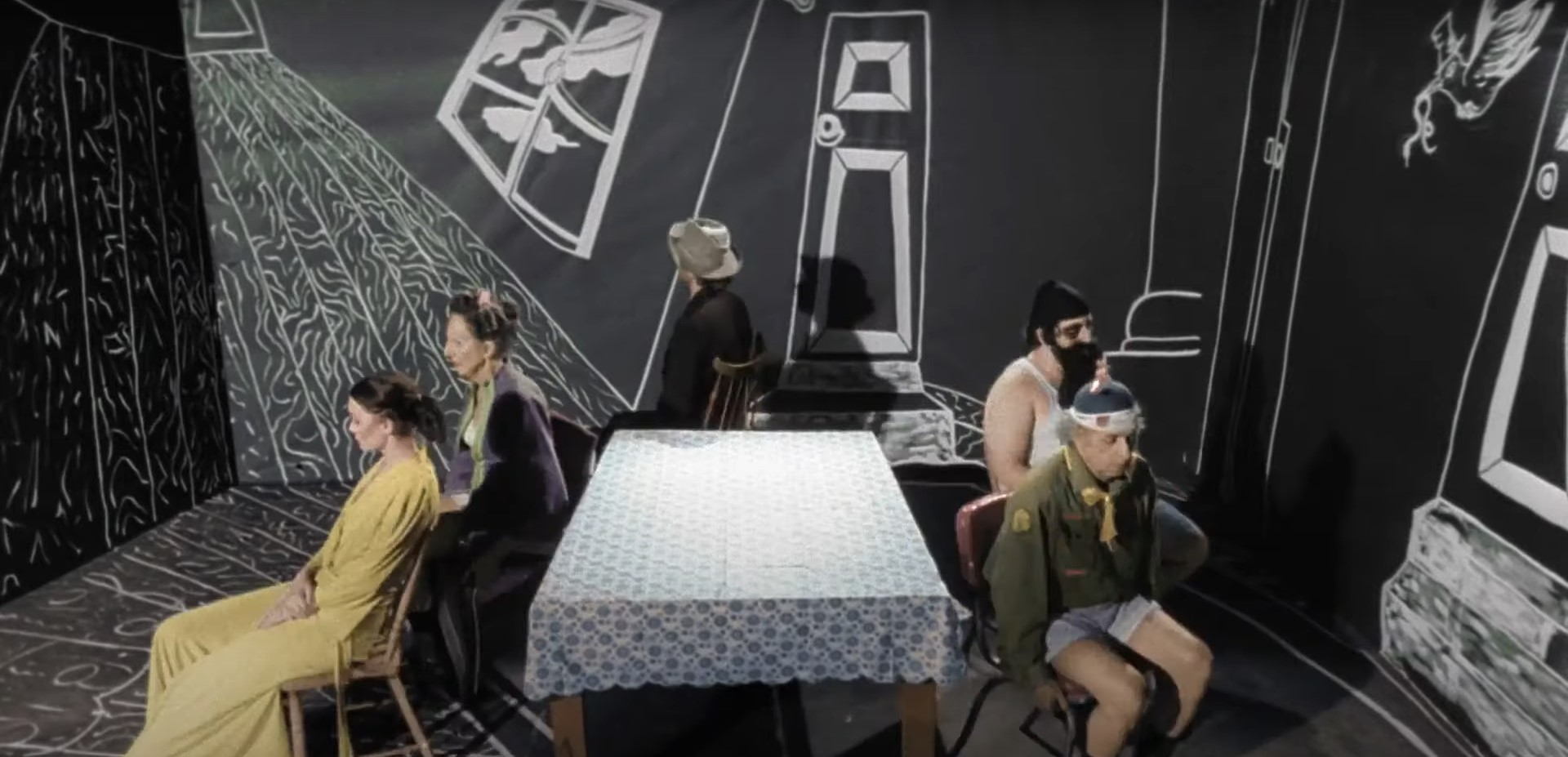
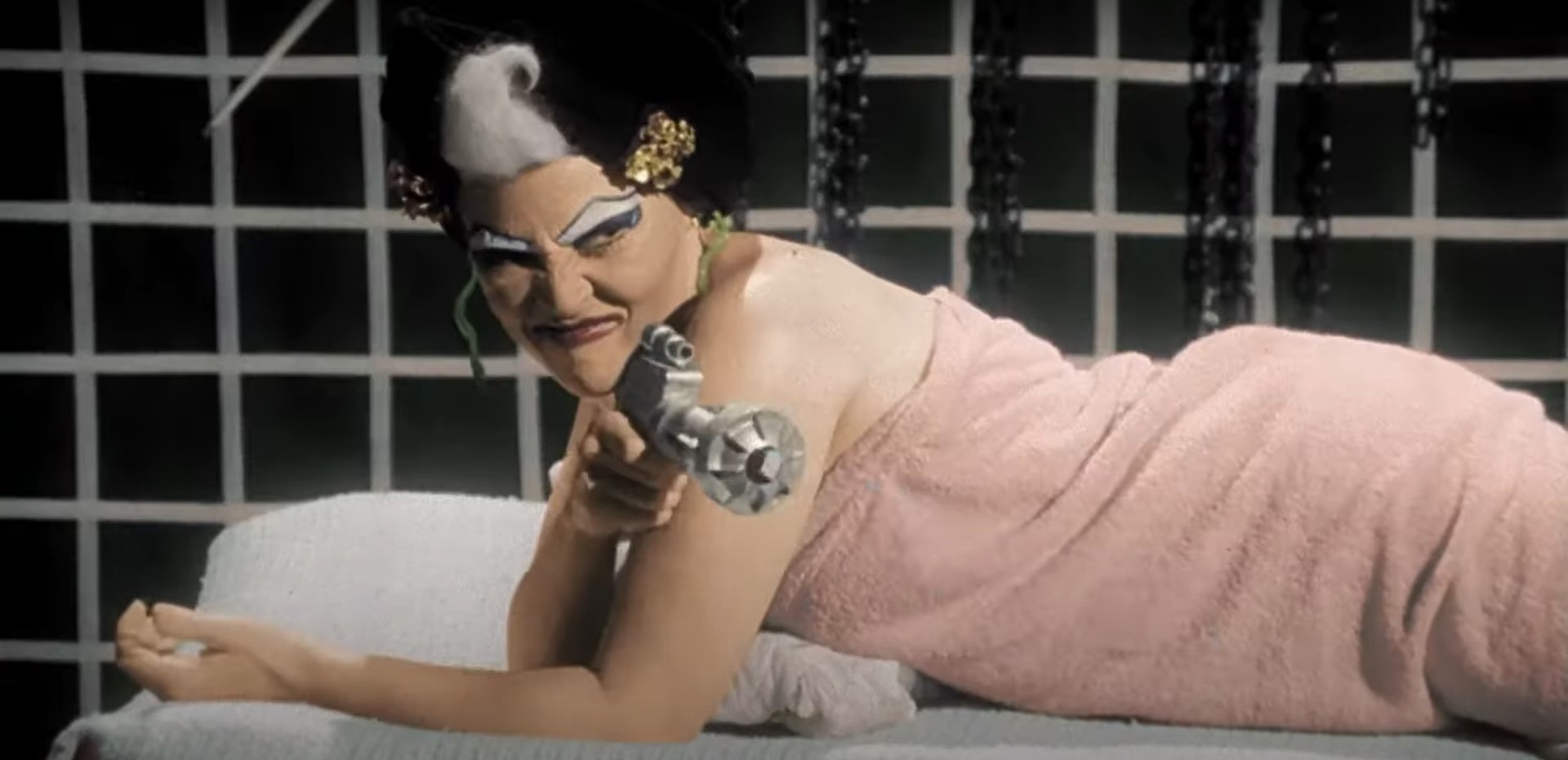
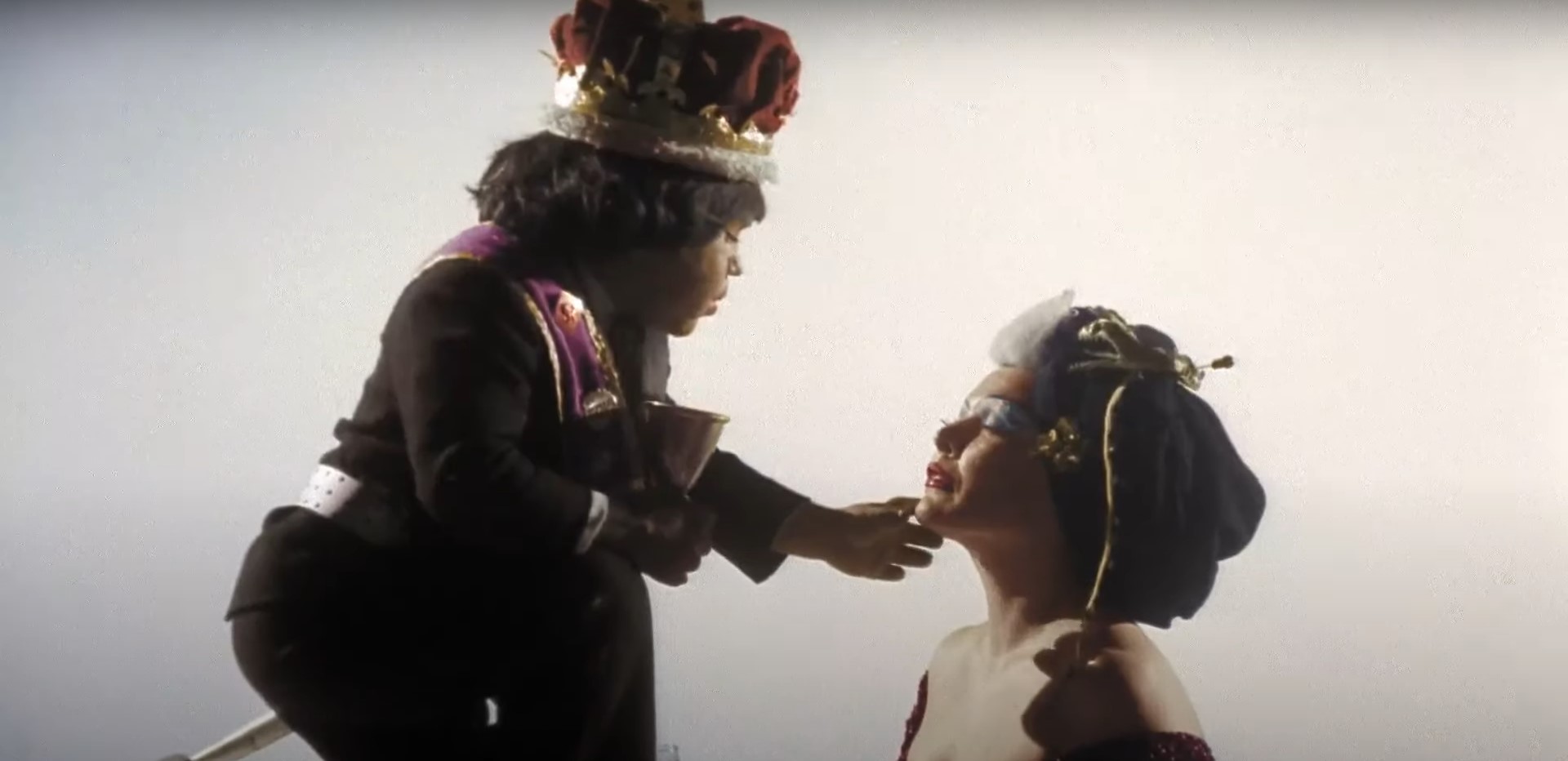
“Forbidden Zone” isn’t your normal run-of-the-mill musical feature as an assortment of styles coursing through what results as an eye-widening breach of political correctness. A smidgen of arthouse, a true to form vaudeville, and wall-to-wall crude comical carpeting would be a challenge to any actor set to play any role in this farcical natured fantasy, yet with the help of the Mystic Knights and Elfman’s madman charm, “Forbidden Zone” lands just the right cast to pull off a production this barking mad, beginning with the casting of Elfman’s then wife, Marie-Pascale Elfman, as the principal lead and anti-damsel in distress, Frenchy. Dredging for comprehension through Marie-Pascale’s thick French accent proved to frustratingly difficult to a linguistical layman’s ear, but her performance is light, fluffy, and defiant against the stark contrast of a brutish, no-nonsense Susan Tyrrell (“Butcher, Bake, Nightmare Maker”) as Queen Doris. Tyrrell is phenomenally “Rocky Horror” in prosaic seething and in dive-bar dress while having her Sixth Dimension King be played by her real-life lover off screen, “Fantasy Island’s” Hervé Villechaize. The chemistry between Tyrrell and Villechaize is more than natural even in Elfman’s pasquinade light. A few of my personally favorite performances are in the grandfather and grandson dynamic duo of Gramps and Flash. Phil Gordon wears a hilarious propeller hat and boy scout uniform overtop his older older-than-the-rest-of-the-cast body and though Hyman Diamond doesn’t say one single world in the entire film, as the former Jewish wrestler, Gramps, his antics are far funnier. Danny Elfman, undoubtedly, has a role in his brother’s debut feature, reprising himself in essentially a reoccurring role from his stage acts as Satan. His brief time on screen solidifies the presence of the Mystic Knights with the musicians taking bit parts playing instruments as Satan’s hooded minions. “Forbidden Zone” fills out the cast with executive producer Gene Cunningham as Pa Hercules, Jan Stuart Schwartz as the servant frog Bust Rod, writer-producer Matthew Bright playing twins Squeezeit, the chicken boy, and Rene, Squeezeit’s crossdressing brother, Gisele Lindley as the topless Princess, Kedric Wolfe as a crossdressing teacher and a chandelier (Yes, you heard right, he plays a chandelier), Virginia Rose as Ma Hercules, Viva as the former Sixth Dimension queen, Joe Spinell as a drunken sailor, and the performance artists Kipper Kids, who I remember seeing briefly from Weird Al Yankovic’s “UHF.”

Creative control is everything and with total control, total madness (or genius) can takeover to recreate a bastardized version of Lewis Carroll’s “Alice in Wonderland” that follows a young girl falling down into a curvy intestine chute and come face-to-face with anthropomorphic creatures, a dice-decorative land (parallel’s “Alice in Wonderland’s” playing card theme), and a Queen with a strict and haughty dominion over her terrified subjects.  I also wonder if the Mickey Mouse hats worn by many of the characters in the Sixth Dimension is also a direct connection or an Elfman homage to the Disney rendition of Carroll’s story.  The “Forbidden Zone” should be explored, should be experienced, and should be enamored as a cult favorite amongst fans of not only Through the Looking Glass but also of Terry Gilliam, “Rocky Horror Picture Show,” and Pee-wee’s Playhouse.  With a barebones production value but with immensely vigorous performances that bring to life the extraordinary and flamboyant in all walks of life characters, Richard Elfman materializes a vision, his own vision, of transpiring a feature length film platform for his founded street theatre group, the Mystic Knights of Oingo Boingo.  At the time, did the film change the troupe’s musical journey for the better or skyrocket Danny Elfman’s evolutionary, new wave band?  That remains ambiguously unclear, but the project certainly places Oingo Boingo, in all its moniker and various bandmember forms, on a pop culture map and on everyone’s weird science fiction radar with an unforgettable, unimaginable chthonic comedy spurring laughs and gasps of content. 

After watching “Aliens, Clowns, and Geeks,” we had an inkling that Richard Elfman was an ass man and looking back at “Forbidden Zone” only confirms our theory of a cutout animation poop-chute characters pass through entering the Sixth Dimension and the continuous Kipper Kids’ vocal raspberries and revealing jockstrap ass cheeks.  If you like big butts (and cannot lie), then you’ll like the weirdness of the “Forbidden Zone” on a new Blu-ray director’s cut from MVD Visual, presented in its more recently colorized version of its 35mm stock with a 1.78:1 widescreen aspect ratio.  Retouched with a few Richard Elfman enhancements to the video quality and special effects, the Blu-ray display a remarkable durability of film transfer that show no sign of deterioration or damage.  Natural grain goes unobtrusive and there are any detectable egregious enhancements to circumvent any flaws in the used film stock.  The audio is a slightly different story in the English language LPCM 2.0 stereo that often feels lossy, muted, and hissy at times.  The musical numbers are bore a static underlayer that’s faint but there.  This never inhibits the dialogue or other audio tracks in anyway but can be a nuisance.  English subtitles are an available option.  Special features include a new introduction from director Danny Elfman, a new music video of Richard Elfman beating a bongo drum to a tune to a Danny Elfman score with his wife, Anastasia, thrusting her daisy-duke clothed crotch, and a guised band playing behind them, the original audio commentary by Richard Elfman and writer-actor Matthew Bright, A Look into “Forbidden Zone” featurette from a few years back, prior to Susan Tyrrell’s death, that showcases interviews with the cast and crew looking back at the film, black and white outtakes and deleted scenes, and the theatrical trailer.  “Forbidden Zone” is an ostentatious ornament that’s larger than life in many regards and remains a cult classic to this day with a niche fanbase and tribute theatre productions still being done to this day.

Intestine to the “Forbidden Zone” on Bluray!

EVIL Packaged Fresh, Never Frozen. “Raw” reviewed! (Second Sight / Blu-ray)

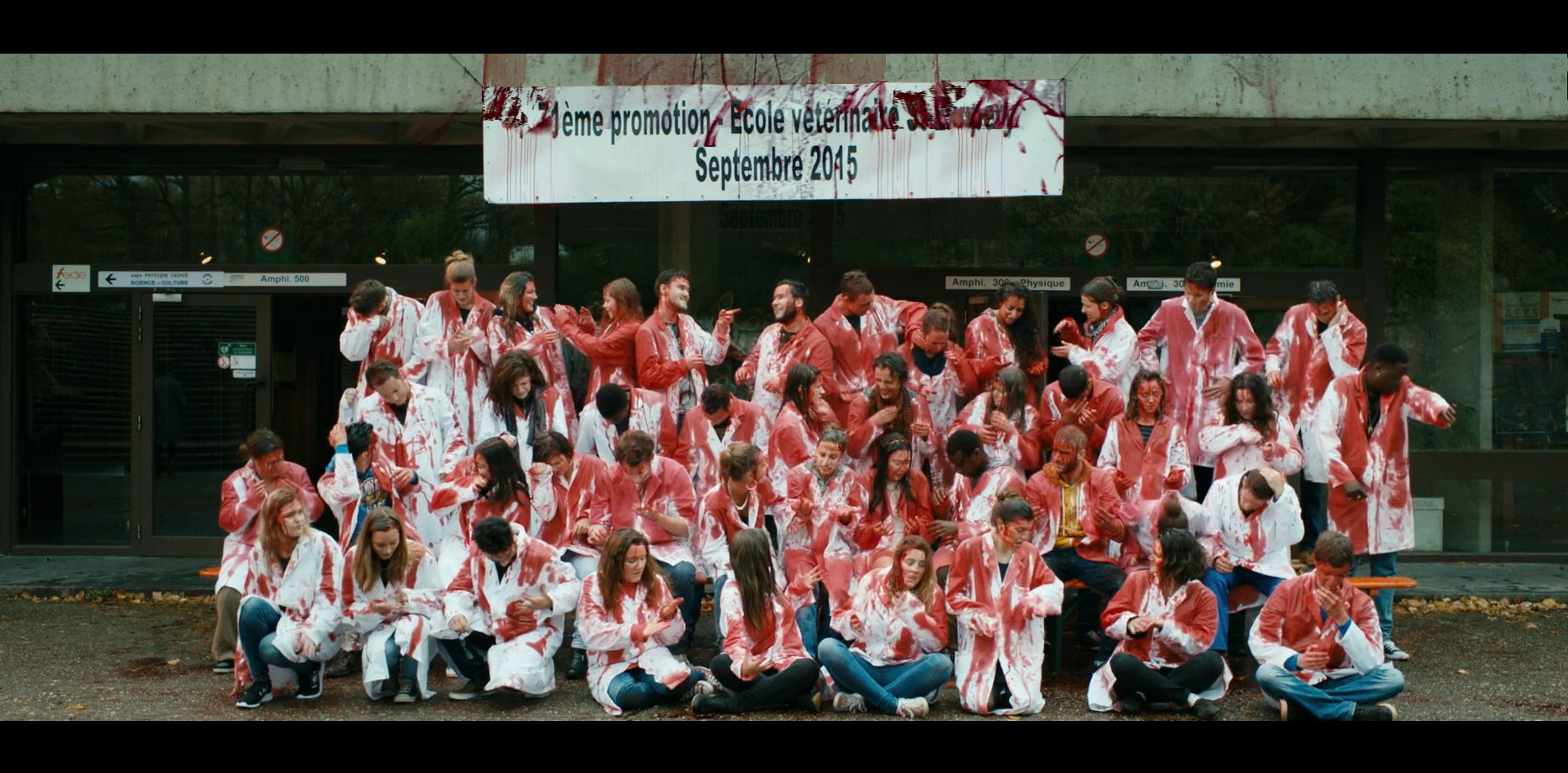
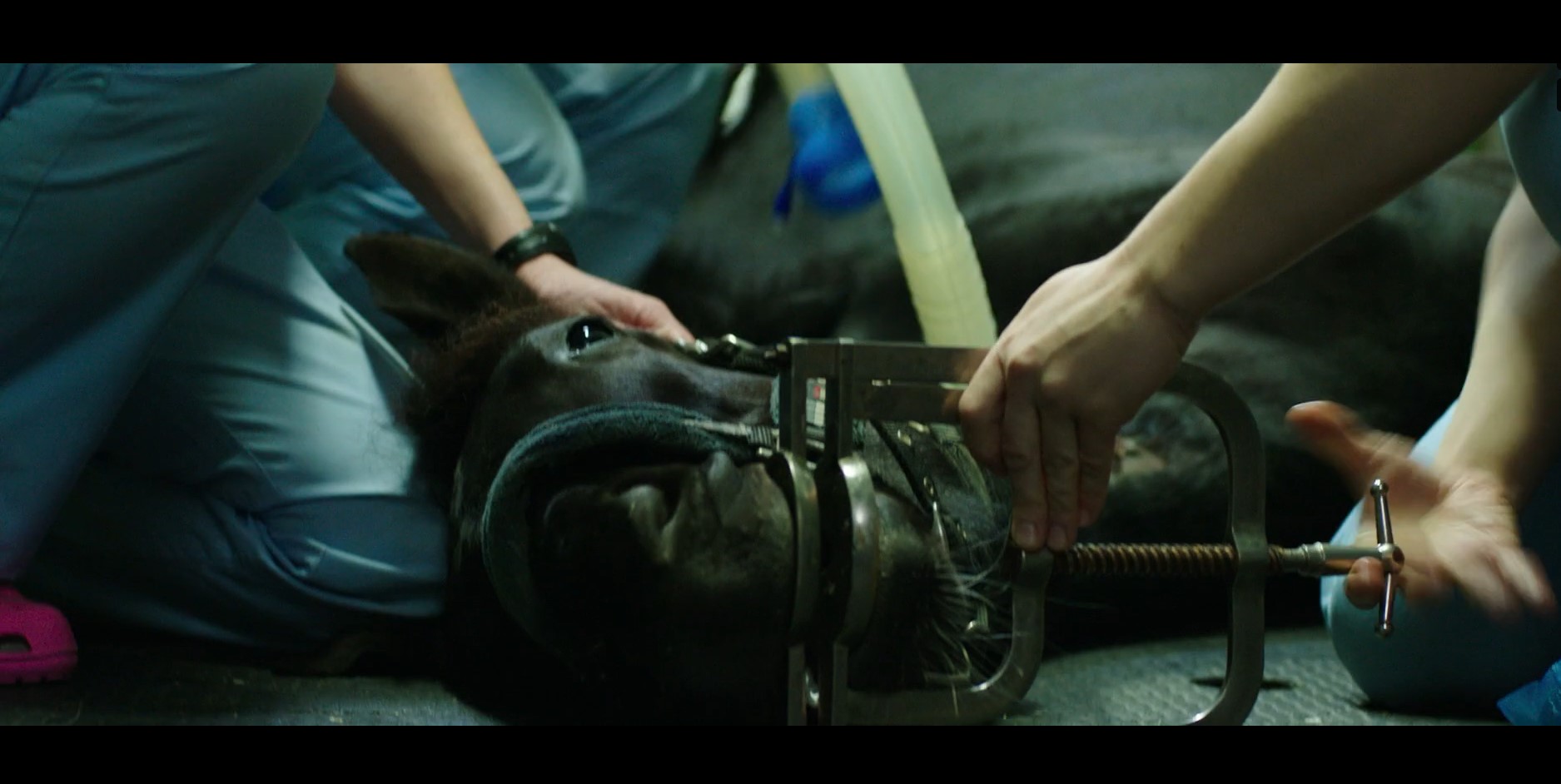
Brought up on a strict vegetarian diet by her parents, Justine became conscious that one swallow of meat down her gullet might start a chain reaction of life-threatening allergies. Her legacy acceptance into the prestigious Saint-Exupéry Veterinary School would have a set of challenges toward retaining that diet but her older sister, Alexia, who is still studying at the school and is also a vegetarian, would protect her from the intense hazing brought down upon the freshman class. When it turns out that Alexia gave into the temptations of peer pressure and egged her own to digest meat in a hazing ritual, Justine learns that her sister’s shielding won’t stand up against the forces of elder student pranks. From then on, a primordial animalistic behavior slowly transforms Justine from a quiet, awkward, and studious teenage girl into a party animal, an explorer of sexual awakening, and a herbivore whose slipping from her regime. Justine’s craving for raw meat digs deeper into the bone as the overwhelming need to consume human flesh spirals her down into an uncontrollable descent, turning the school’s exuberant hazing knaveries all the more dangerous.

Having been a meat eater all my life, the transition to vegetarian would be a hard-fought war that would likely shed years off my life just as much as eating a thick, juicy cut of a steak seasoned to perfection and medium cooked. After all, the human race is born with tapered canines that rip through the tough flesh and meat first and then pass along the now tendered feed to our molars, our mashers, that would handle the soft, chewy substance for an easy ride down toward our stomach. “Raw” takes that approach one step further, or maybe two or three steps further, by coupling the sudden discourse from meatless to meaty meals that expands into cannibalism with a coming of age and finding one’s place in life story that can be relatable to us all. The French film is written-and-directed by Julia Ducournau, who reprised herself with another body horror sensation with last year’s acclaimed “Titane,” and was shot at an actual veterinary school in Belgium, the University of Liège. Originally titled “Grave” before being upgraded to “Raw,” the film is a production from a conglomeration of studio labels, including the first horror production for Petit Film. Rouge International (“Murder Me, Monster”), Frakas Productions (“Sea Fever”), Ezekiel Film Production and Wild Bunch (“Martyr”) serve as a few of the film’s other coproduction companies with Jean des Forêts, Julie Gayet, Jean-Yves Roubin, Nadia Turincev, and Cassandre Warnauts as producers.

“Raw” is not your typical girl journeying through the trials and tribulations of normal self-discovery.  For this, you need not your typical girl to play centric character Justine.  Enters 16-17 year-old Garance Marillier, the Paris-born actress with an established bond on and off screen with director Julia Ducournau having debut her acting in Ducournau’s 2011 short film “Junior” as a tomboy going through a strange corporeal transformation.  Fun fact:  Marillier has been cast as a different Justine in all three of her collaborations with Julia Ducournau – “Junior,” “Raw,” and “Titane” since 2011.  Marillier soaks into “Raw’s” Justine with not only a transcending behavior pattern performance that takes the freshman from stifled to uninhibited, but the young actress also overhauls a complete body language transformation that sheds Justine’s meek skin, literally displayed on screen, for a more confident and abrasive veneer.  Ella Rumpf (“Tiger Girl”) receives Justine’s inexperienced blossom-hood with an the older, already initiated, sibling having been fostered by rambunctious peers to break the sheltering chains her parents had shackled with and just like true to life sisters, there’s contention.  The vehemence venom between them when they’re on bad terms on screen can stop one’s breath, you can hear a pin drop, yet you still understand their sisterly connection and love no matter how messed up a situation might be, especially when involving boys, such as the pansexual fluidity of Justine’s freshman roommate Adrien, played by Rabah Nait Oufella.  “Raw” rounds out the small cast surrounded by a slew of extras with Laurent Lucas and Joana Preiss as mom and dad.

Julia Ducournau has the body horror genre down to the molecular level.  It’s as if the filmmaker studied every film and playbook of David Cronenberg just from researching her various work credits that target to restructure and regress the human condition into something far worse and watching “Raw” unravel a symbiotic relationship between natural and unnatural human development blurs that line of what is considered to be normal so disturbingly good.  Exteriorly, we notice the changes and can almost set a clock to way our bodies react and change over time, biologically and socially, within the context of our environment.  Internally, a whole unexplored set of conditions apply to the unpredictable mindset of transfiguration and that’s where Justine paves an unfounded roadmap for her sudden kick from being a veggie lover to a flesh craver. “Raw’s” undoubtedly an allegory of a young girl’s pubescence and coming of age into her own from, essentially, being on her own exploring her sexuality and exploring new interests as is such with going into university. Ducournau casually strolls through Justine’s drama and tension as much of the body horror overwhelms our morbid curiosity but her angsty complications, still very much underlined even being overshadows, retain a constant line of parallelism in a symbolic reality. Delicate touches of indelicate gore really spice up “Raw’s” entrenching story not for the faint of heart as well as vegetarians.

Hot off the heels of their now out of print limited edition release of “Raw,” Second Sight Films offers a second, standard release on Blu-ray home video. The UK label offers a single disc packaged, region B encoded, BD-50 of a 1080p, high-definition, 2.40:1 aspect ratio presentation, listed at running an average frame bitrate of ~24Mbps. Highly accurate on its bitrate average, the image is well diverse in discerning details without an ambiguous scene or spot in sight. The color often feels muted, dreary, like one long continuous overclouded day that presents an everlasting feeling of dismay. Yet, that isn’t all cinematographer Ruben Impens has to offer with arthouse framing of disturbing imagery and an opening freshman party scene that takes us through the cramp pockets of sweaty, half-naked partygoers in one lengthy, single shot that expels just about everything Justine will face at her time in veterinary school. The French DTS-HD 5.1 master audio superbly distributes the audio tracks with just right levels to accommodate each scene. If there’s a noisy, bass blaring party, the score rightly takes over and the dialogue takes a muted backseat but still clear and intelligible – or so I believe since I don’t understand French, but I can make out the syllables and inflections. Otherwise, dialogue is king and clear alongside an eclectic soundtrack of English indie rock and experimental tracks as well as Jim Williams guitar and industrial synth trek across that’s beautiful and, simultaneously, disconcerting disharmonic. If you missed out on the limited edition, don’t bite yourself as the standard edition as plenty of extra features, including an interview with actress Garance Marillier The Girl Can’t Help It, an interview with producer Jean des Forêts Making Ends Meat, an audio commentary by film critic Alexander West, an audio commentary with director Julia Ducournau and critic Emma Westwood, an interview with Ducournau A Family Affair, the featurette Raw A Votre Gout with Ducournau and Emma Westwood, a conversation between Ducournau and critic Alexandra Heller-Nicholas Quick Bites, a genre matters panel discussion, an Australian premier introduction and post screen Q&A with Ducournau and Kier-La Janise, and a handful of deleted scenes. The film runs at 99 minutes, comes with well synced English subtitles, and is certified 18 for strong gory images and injury detail. Taste “Raw’s” unseasoned, unadulterated, pure and simple line of hidden truths and manifesting urges that once crossed there’s no turning back as the person you once were, is no longer akin to an impossible burger but a fully tendered hunk of mouthwatering meat freshly cut and ready to sink your teeth into.

The Elfmans’ EVIL Doomsday Droll! “Aliens, Clowns, and Geeks” reviewed! (MVD Visual / Blu-ray)


“Aliens, Clowns, and Geeks”, oh my, now on Bluray home video!

A struggling Los Angeles actor finds himself in an intergalactic dilemma when a interdimensional portal opens from his asshole and spits out the obelisk, a large, pointed top icon that holds the key to ruling the universe.  Evil space clowns and extraterrestrial beings rocket toward Earth to be the first to intercept the obelisk and remotely manipulate people to their way to try and snag the long-ago inseminated artefact.  In order to save the world, maybe even the universe, from the catastrophic misuse of the obelisk, the actor calls up on his transgendered brother – excuse me – his sister, a professor with expertise in interdimensional relics, and a pair of beautiful Swedish scientist assistants all the while avoiding biker space clowns, ditzy blonde sex bots, the Chinese mafia, and a secret U.S. government agency from getting their greedy hands on world-dominating or word-destroying ass statue. 

Having sat through and contemplated Richard Elfman’s bizarrely fascinating “Alien, Clowns, and Geeks,” I found myself washed over with deep regret. Regret is not in the one-sit watching of a 90-minute sci-fi comedy about a monolithic sphincter stone being a weapon for universal domination by space clowns and incorporated green men from outer space or the key for green, sustainable energy worth lucrative wealth for possible one out-of-work C-lister. The regret stems from not having watched beforehand Richard Elfman’s first experience with total creative control in his kaleidoscopic chaos a surreal fantasy “Forbidden Zone” from 1980 that has placed the filmmaker on the map as a cult director and the musical film itself retains breath and life through theatrical stage plays across the nation. Nearly 40 years later, the harebrained and mad genius mind of Richard Elfman churns a return to his unadulterated cinematic artform with no producers or studios to infringe upon his certifiable craft. Elfman writes and directs the Unfound Content (Bernie Stern, “What Josiah Saw”) and UnLtd Productions produced Elfmaniac Media production.

Who better to be your leading man of action versus the opposing forces of interplanetary evil than your own flesh and blood?  Richard Elfman casts his son, Bodhi, to take the lead as struggle actor Eddy Pine, crestfallen by his recent television series cancellation that derailed his promised financial success and famed lifestyle.  Bodhi Elfman plays to the tune of comic-action star fairly well, delivering perfectly timed high-pitched screams when prompted while still conveying a suave persona as a smooth-talking ladies’ man that bags one-half of the Swedish scientist twins, Helga Svenson (Rebecca Forsythe, “Replace”), to be the perfect combination of brains, beauty, and junkyard Kung-Fu.  Helga, and her sister Inga (Angeline-Rose Troy) are assistants to the great and all-power, well…not all power, (German?) Professor von Scheisenberg in a likeable, rememberable performance from “3rd Rock form the Sun” sitcom actor French Stewart.  In this favorable group of eclectics, world-saving heros, my personal favorite is Jumbo, the politically incorrect, yet well-represented, LBGTQ sister of Eddy Pine played the large frame build of Steve Agee (“Suicide Squad”) who, like a good chunk of Eflman’s cast for the film, takes on a dual role as a God-fearing goon dressed in a giant chicken suit for his boss Fritz the two-timing German clown (Nic Novicki, “The Sinners.”) The circus-esque troupe continues to careen toward Earth in a prototypical rocket ship full of clowns, literally, in what can be seen as an offshoot homage to “Killer Klowns from Outer Space”. The rocket is captained by “Pirates of the Caribbean” franchise actor Martin Klebba, but the boss in the big shoes, clown shoes that is, is worn by the late Vern Troyer (“Pinocchio’s Revenge”) in his last role, a role royal bestowed upon him as Emperor Beezel-Chugg. Granted, much of the emperor is played through Nick Novicki’s Fritz as Beezel-Chugg sends his conscious down to Earth to beat out the aliens from obtaining the obelisk. “Aliens, Clowns, and Geeks” has a monster supporting cast for an indie film that rounds out the list with Richard Elfman’s wife Anatasia Elfman in various roles, George Wendt (“King of the Ants”), Malcolm Foster Smith (“Parasomnia”), Marco Antonio Parra, Victor Chi, Andre Ing, Erwin Stone, and Raul Colon.

If “Aliens, Clowns, and Geeks” sounds to you like an unfurling Warner Bros. ACME production full of dropping anvils and pseudo-tunnels, you’re not alone. Elfman’s romping comedy is chockful of clowns, cigars, and sex tropes, mostly elements pulled from the director’s hyperactive brain and basking recreations that fit his outlandish selfhood. The film very much fits the man behind the camera as an off-color, atypical, crude humored, red-headed fireball zipping-and-zagging in a multitude of directions. Yet, despite the frantic antics and the crazy characters, “Aliens, Clowns, and Geeks” retains its composure as a three-act tale of redemption where one man can be the hero of his own destiny depending on the path he chooses in his seemingly despondent life where he’s lost his career, his mother’s a slutty crackwhore, and a large stone has expelled itself from his anus, creating a rift between a difficult decisive choice of short term wealth or long term doom. Pulling much of his science fiction inspiration from the 1957 “Plan 9 From Outer Space,” Elfman manages a vast, epic showdown of invading alien threats against an unsuspecting human contingent with very few locations, zipped to to-and-fro with comical orchestration, that usually fashions a feeble story structure of sitcom-syndrome weariness, but not with these colorful characters with their unconventional and unmethodical praxis that defy all logic and sensibility. Off the bat, “Aliens, Clowns, and Geeks” has menial building blocks but, if you stick with it, the film does grow on you, stimulates the endorphins of your inner child, as a live-action recollection of a Saturday morning cartoon but for adults.

Enter the maniacal mind of Richard Elfman with the MVD Visual Blu-ray release of “Aliens, Clowns, and Geeks.”  Presented in a widescreen, 16×9 aspect ratio, the digitally recorded video has no telling compression issues onto the AVC encoded pressing.  Most of the superimposed cartoony special effects are simply just that due to stylistic choices or budgetary constraints and, either way, add they greatly add to Elfman’s carnivalesque approach to clowning around.  The English 5.1 surround sound discerns no apparent issues other than a slight tuning leveling issue when someone screams as pitch level goes muted a bit.  Other than that, dialogue is clean and clear.  The music genius of Danny Elfman (“The Nightmare Before Christmas,” “Beetlejuice”) and newcomer Ego Plum, who brings with him a melody of cartoonish influences and unconventional inspirations, create a unique sound that attests to “Alien, Clowns, and Geek’s” upbeat and caricature antics.  Optional English subtitles are available.  Special features include behind-the-scenes interviews that give the cast and crew their 5 minutes recollecting works with castmates, Richard and Danny Elfman, and their total overall experience, a quick and fast-paced interview from Richard Elfman who quickly disgorges his ideas and desires, along with his heartful opinion, about the film, the music video for Ego Plum’s “Mambo Diabolico,” which you can see at the end credits, and the original theatrical trailer.  “Mambo Diabolico” is definitely a good description for Richard Elfman’s far side sci-fi comedy that’s too Ed Wood for even Ed Wood himself.

“Aliens, Clowns, and Geeks”, oh my, now on Bluray home video!