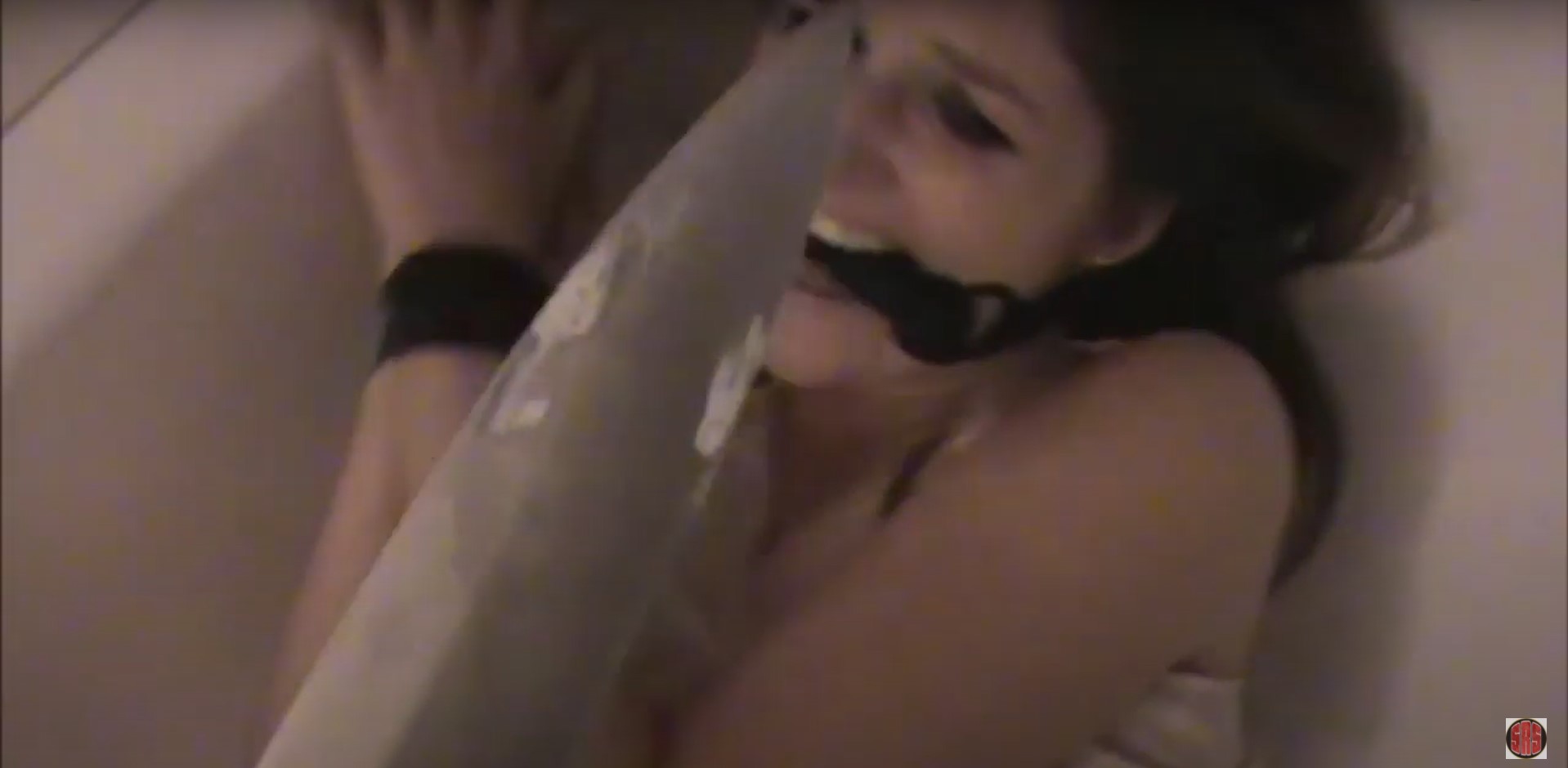
Sexual Asphyxiation is Just One of the Offered Services in EVIL’s Lavish S&M Prostitution Biz! “Tokyo Decadence” reviewed! (Unearthed Films / Blu-ray)


Own the new Unearthed Films Blu-ray of “Tokyo Decadeance” today!

Ai doesn’t believe she is not good at anything.  Her youth and beauty provide the early 20-year-old financial means of survival as a high class, Japanese prostitute with a fetish niche for clientele desiring sadism, masochism, or both.  Eccentrically demanding and various in age customers range their likes from total self-humiliation by pain and punishment to rape and necrophilia fantasies.  Unable to stop herself from accepting jobs because of her self-loathing cycle, Ai continues to endure most of the sexual whims no matter how outrageous or aggressive they may be during the sometimes hours long sessions.  What keeps her knocking on strangers’ doors is the pining for a former lover, a now famous celebrity she at one time dated pre-stardom, who has since married and left the memory of a fragile Ai in his life progressing wake.  After taking a gig alongside a fellow mistress in humiliating a real estate mogul like a dog, Ai’s invited back to the mistress’s elegant home where she’s exposed to a long night of unlabeled drugs that sends her into an uncontrollable high, looking for her former lover on the quiet streets of Japanese neighborhoods.

“Tokyo Decadence” makes “50 Shades of Gray” look like an inexperienced couple’s first time fumbling into cutesy foreplay.  Though both films are adapted literary works made into controversial features surrounding sultry nipple clips, whips, chains and other playthings, the 1992 Japanese psychosexual drama is the only one out of the two where the novel’s author, Ryu Murakami, has total creative control of his tale of one woman’s squirming through perversion land as the screenwriter and director.  Titled Topâzu in its originating country’s language, “Tokyo Decadence” opens up a carnalized world rarely seen amongst the daylighting fray and the price paying struggles of someone as meek as Ai in that position’s lustfully gripping vise that begs the question, is S&M obscurity an insatiable erotic hunger or is it a choking dangerous fantasy?  Shot mainly in the titular city of Tokyo, the film is a production of the JVD (Japan Video Distribution) with JVD’s Tadanobu Hirao (“High School Ghostbusters,” “Celluloid Nightmare”) as producer alongside Chosei Funahara, Yousuke Nagata, and Akiuh Suzuki.
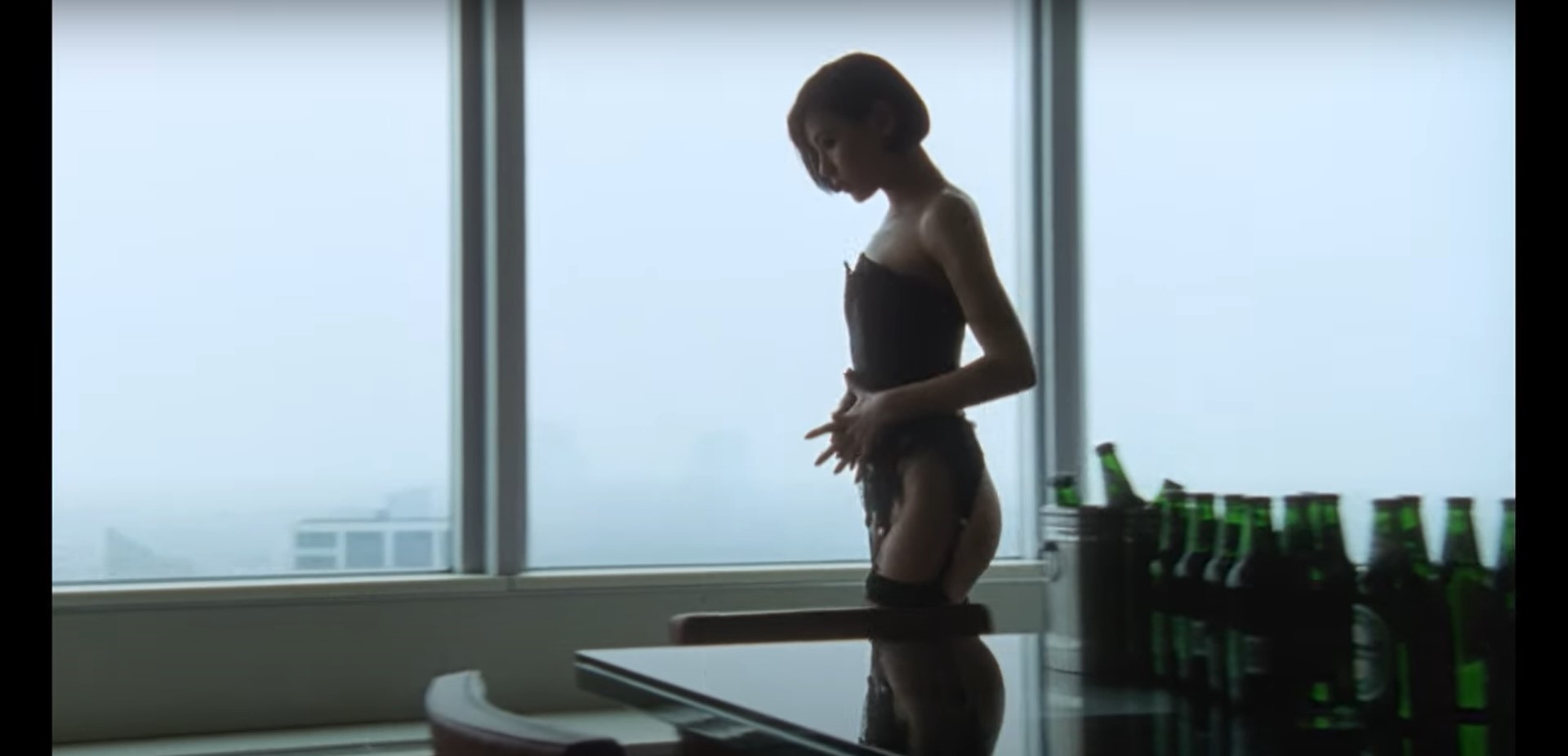
“Tokyo Decadence” is a sure-fire way to start the beginnings of an actress’s career with a rousingly provocative and difficult role that garners attention.  For Miho Nikaido at the very start of her career, the lead role looked like a Tuesday.  The then 26-year-old Nikaido, playing a 22-year-old Ai, stuns as a sympathetically shy S&M prostitute with underlining conflicting issues surrounding her social position, personal interests, and mental status.  The opening scene with her legs lifted and spread strapped into stirrups and her bold colored red lipstick mouth buckled with a black open mouth gag complete with matching blindfold diverts eyes away from the usual nudity focal point.  Instead, we’re more attuned to the happenings of a mild manner, smiling man, who we assume bound her down under professional servicing, as he stands over her, gently stroking her, and telling her to trust him and that he won’t hurt her.  Then, out comes the drug pouch and needle.  The jab sends shock waves of pleasure down Ai’s submissively fastened naked body, ending with Ryu Murakami’s extreme close up on Nikaido’s face after being released from the facial constraints.  Her slightly crooked teeth shiver just past her stark red lips, agape by ecstasy, and the single tear drops from her soft eyes express the gargantuan amount of pleasure coursing through her helpless corporeal temple in a look that says, I am in pure, undiluted heaven.  The opening sets the tone.  Funny enough, Nikaido would go on to have a role in another underground S&M inspired drama “Going Under,” but instead of acting like the subservient dog or humiliating customers by having them suck on her stiletto heels, Nikaido steps aside as the girlfriend to Geno Lechner’s dominatrix role. Sayoko Amano, Tenmei Kano, and Masahiko Shimada co-star.

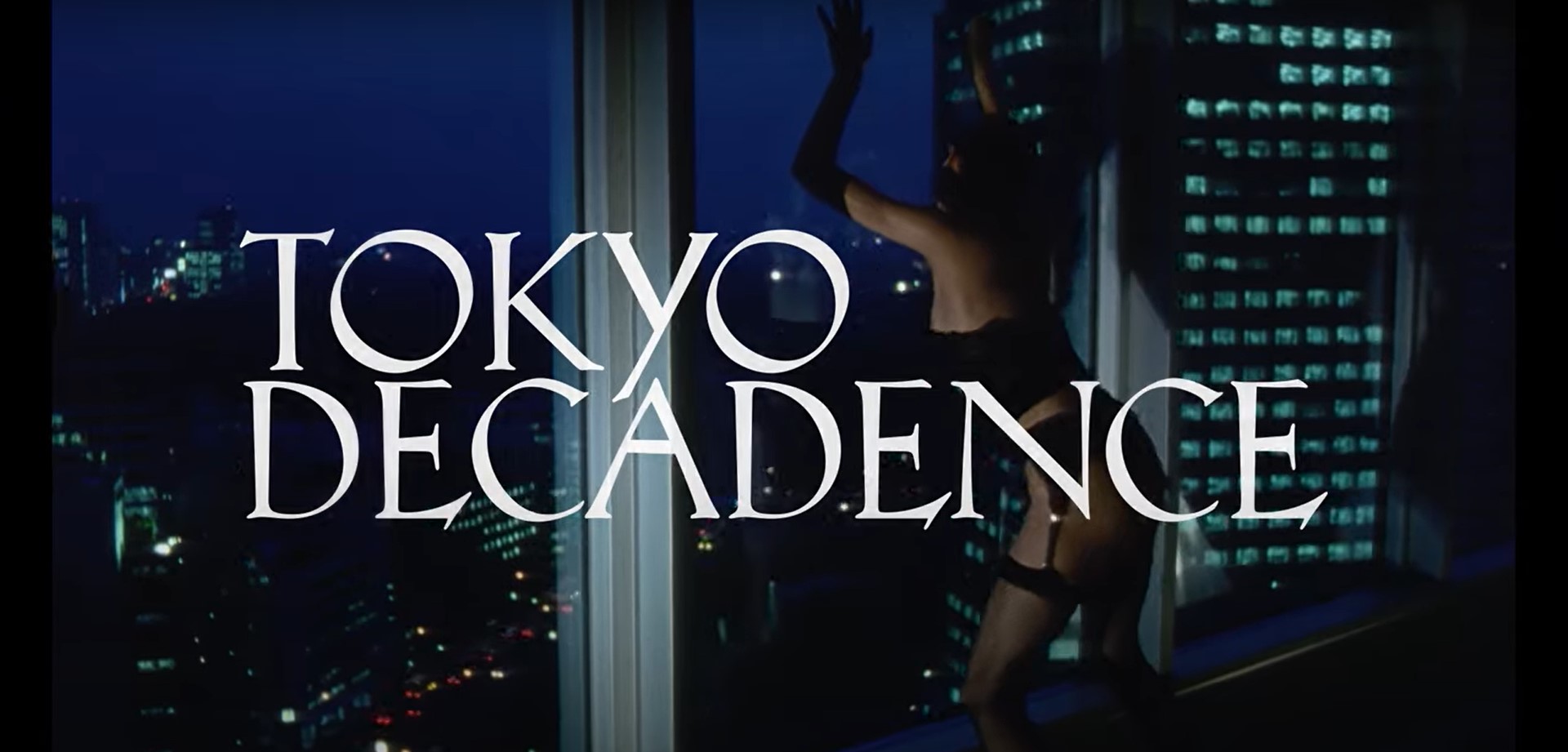
Perhaps one of the most noticeable or mainstream pink films from Japan because of its titillating and iconic cover art of Miho Nikaido arched forward and hands pressed high on the glass above her head, leaning against a tall and large window pane in a skimpy black lace and leather getup and overlooking the city lights and bustling residents,  The very image epitomizes erotica and taboo acts and the narrative itself is nothing short of that slight zing of sordid pleasure we all experience in our minds, bodies, and especially in our more private areas. Pulled straight from Ai’s first job encounter, post-opening credits, with a wealthy business type Mr. Satoh’s and his perversion in dominating and humiliating without much physically contact in the first few couple hours of their session. The long-standing stint pushes Ai’s sexual limits without breaking her spirit that solidifies a baseline for what’s to come and what came crushes Ai’s sexual stimulation beyond the means of pleasure with a petri dish of distinctive peculiarities outside her already fringed tastes. Ai’s self-dismissiveness keeps her plugging away at a profession that’s eating away her, coming close to death in many various forms involving clients’ perversions. When she’s hired by another mistress in a co-op of dominance on a client, an unveiling of empowerment and a lavish lifestyle promises potential happiness away from her fairytale dream of reconnecting with her former lover, but that ultimately becomes a hard pill to swallow after swallowing an unidentifiable pill popper provided by her newfound friend in the trade, a pill that inebriates her into wandering the streets in search for her ex-lover. “Toyko Decadence” is as somber as it is sexy with a paralleling dark trip down delusional happiness and demented fantasy for a young woman clinging onto a past that has completely forgotten her.

Landing in at number seven on the spine is the Unearthed Films release of Ryu Murakami’s “Tokyo Decadence,” receiving a Blu-ray release on the label’s Unearthed Classics line in a widescreen 1.66.1 aspect ratio. The region A release has a runtime of 112 minutes and is plainly evident in exhibiting no rating listed on neither the back of the Blu-ray case nor the cardboard slipcover. After doing some light digging, there is a longer cut of the film with more explicit scenes, especially with Mr. Satoh, that would have adorned the U.S. release with a X-rating. The Unearthed Films release is not that cut; nonetheless, the film before us is still just as decadently beautiful in content and in quality. Stable image and color under the 35mm stock, Tadashi Aoki flipflops between mood lighting and natural light, contrasting the duality of Ai’s worlds with a lightly softness reflecting off the focal subjects. Details extend the same softness as skin textures appear overly smooth most of the time albeit the design of natural color tones. One instance of continuation concern is a prominent scene miscut left in during post at the editing room table. Though the miscut, of a closeup on Miho Nikaido, doesn’t cause a continuity error in the narrative, it does break the integrity of the scene. The Japanese LPCM 2.0 mono sound has a phenomenal, 1920kps bitrate, sound design created around a lite soundtrack that doesn’t leave room for ambient and dialogue tracks to hide behind, as if this release needed to hide behind its brawny audio output. “Tokyo Decadence” is all about the experience and every breath and movement is as felt as it is heard with a discernible dialogue well synched with the English subtitles. An optional English dub track is also available. The Blu’s special features include a release-party featurette/promo trailer that has snippet interviews from the Ryu Murakami during the event, gallery stills, and trailers. An absolute ideal upgrade for one of the best pinksploitation films to ever walk that thin line between sadism and masochism; however, I do believe Unearthed Films insisted upon the safe word by not, whether by choice or other circumstances, retrieving, updating, and releasing the fully uncut and unedited “Toyko Decadence.”

Own the new Unearthed Films Blu-ray of “Tokyo Decadeance” today!

When the EVIL Hammer Strikes. “Student Body” reviewed! (1091 Pictures / Digital Screening)


“Student Body” now available on digital from Prime Video

Trying to integrate herself into a close group of slacker friends, high school genius Jane Shipley can’t seem to win with neither her friends nor her passionate for hard work teachers as she has a foot in both contrasting worlds. When peer pressure forces Jane to convince a stern calculus teacher into a re-test her friends had flunked and fails, Jane is forced into another uncomfortable and injustice situation by her friends with exploiting the teacher by turning their meeting into an overstepping of boundaries with a student. The administration, threatened with school board interference, dismisses the teacher that gives the five friends freedom to think they can do whatever they want, including sneaking around school at night and raiding the gym teacher’s liquor stash for some fun. The night not only strains close relationships within the group but also brings a reign of terror when a killer, dressed as the high school sledgehammer-carrying mascot, hunts them down one-by-one.

In her feature film directorial debut, writer-director Lee Ann Kurr hits the ground running with a subgenre all horror fans should be familiar with, the high school slasher. “Student Body” is led by a crew of female filmmakers telling female-driven story about two close, yet very different, best friends with diverging goals about their relationship, touching upon the fluid complexities of growing up and growing apart. Kurr’s classical acting trained background and her music video experience guides Kurr to develop an austere narrative with a sleek contemporary look while expressing relatable themes of school-aged fears, such as never meeting other’s expectations and envy driven intentions. “Student Body” is produced by Rachel Liu, whose comedy romance-horror “Bite Me” is currently on the press release circuit as it releases the same day as “Student Body,” under her Hyberbolic Media production company and Sandra Leviton in her first feature film product credit under her production company, Under the Stairs Entertainment.

In the role of the vacillating Jane Shipley is the Texas born Montse Hernandez. Jane, set sometime after the passing of her mother’s terminal illness, leans solely on her childhood best friend turned the snobbiest and most popular girl in school, Merritt Sinclair, on keeping up her personal upkeep and social connection to others. Played by Cheyenne Haynes, Merritt’s the most equivocal character with trust fund motivations that steer her decisions, gaining reluctant confidence by playing people against each other. Haynes is very tight on Merritt’s conceited and resentful green-eyed behavior that has been stowed away in hopes to keep her image above all else’s whereas Jane wears a few imperfections, and many perfections, on her shoulders. Hesitant in displaying her gifted talents, yet obliviously showy in her unkemptness, Jane submits to Merritt’s whims and plans based off what once was a longtime friendship. Through only a pair of Polaroids and a few lines of dialogue, we’re led to assume at one point in time, pre-high school perhaps, their bond was extremely close but since then, Merritt embroiders herself into high school popularity status that creates a wedge from being authentic to Jane. Hernandez plays well into being the agreeable patsy as she’s coerced throughout the story by not only Merritt but also by her daunting teacher (Christian Camargo, “Penny Dreadful“) with straining persuasion to show off her to intelligence and her other friends, the class clown (Austin Zajur, “Scary Stories to Tell in the Dark”), the brutish athletic competitor (Harley Quinn Smith, “Once Upon a Time….in Hollywood”), and the level-headed and confident hunk (Anthony Keyvan). While nothing to flaw with the cast performances, the characters themselves fall into tired tropes of the high school slasher with the token goof, the token jock, token good guy, and token self-centered snob that eats into any of the novelty Kurr attempts to put forth into her film.

“Student Body” is held back in after school detention by the very same stumbling blocks that trip up its banal and flat character body. The one-dimensional narrative hardly strains any effort into the possibility of other outcomes within its formulaic slasher design and even struggles with its own thematic voice of internalized growing pains in angsty youth that usually run the spectrum of emotions. Kurr cradles to cautiously Jane’s development from a smart, weak-minded follower to a smart, self-respecting person by thrusting the leading principal, who’s unable to bloom being stuck in tug-a-war limbo, into a do or die situation, hinging her growth solely on the masked killer to draw it out with a murderous spree that’s a metaphorical kick in the pants to unravel an undercurrent of problems. In other shades, the killer represents Jane’s subconscious desires for growth and confidence, eliminating the suppressing influences that serve as a roadblock against her ability to move forward and flourish naturally without social consequences and setbacks. The problem that plagues “Student Body’ boils simply down to fine tuning themes, especially revolving around sacrifice, as well as rounding the jagged edges of backstories and the hammering of disrespectful teenager’s heads to be not terribly black and white for Jane’s extrication into maturity.

When we use to get bad grades in school, the typical automatic response from most of us, usually in our heads, was the self-punitive expression, our parents are going to kill us! In Lee Ann Kurr’s “Student Body,” receiving a F can literally be deadly as the slasher arrives onto digital platforms today, February 8th. The independent film distributor 1091 Pictures, the company behind the releases of “What We Do in the Shadows,” “Verotika,” and “10 Minutes to Midnight,” distributes the film for purchase and rent on Apple TV and Amazon’s Prime Video. Since the release will be digital, the audio and video aspects will not be covered in this review; however, Luka Bazeli’s hard lit cinematography often times feels very soft while also commanding the space, providing a rich depth, especially in more confined hallway scenes, with a longer lens on the ARRI camera that encroach upon a constant sense of dread. Alex Liberatore’s score offers a low-toned and pulsating centric theme that sticks tension into you like a knife alongside a complimentary string instrument accompaniment piece in the overwrought buildup. There’s a bit of teen synthpop-rock to bring you down. If you’re looking for bonus scenes, in or after credits, there are none. “Student Body” has strong and arduous performances from Montse Hernandez, Cheyenne Haynes, Christian Camargo and among the others, but sleeps on its own message of growth and has a soporific slasher surface under its sleek cinematography and diverse soundtrack.

Rent or Purchase “Student Body” on Prime Video!

Mindy Robinson Takes on EVIL Strippers in “Brides of Satan” reviewed! (Dark Side Releasing / Blu-ray)


“Brides of Satan” available at Amazon.com!  DVD and Blu-ray!

Engaged happy couple Mary and Charlie want to dip their toes into debauchery before tying the knot.  When they patron a dive strip club, looking to unwind a nervous Charlie down a notch with a sultry, on-stage lap dance, the club is suddenly seized by three well-armed Satanist strippers looking for quick cash and a virtuous sacrifice to conjure a demon.  Kidnapped for the dark ceremony, Mary and Charlie find themselves in their grip with Charlie being murdered to complete half the ritual, but Mary is able to escape when a rival gang claims rights over the territory that sidetracks the Satanists summons.  Mourning over her fiancé’s death, Mary is taken under the wing of a junkyard sensei who trains her to fight and to be fearless against all those in her path for vengeance. 

From horror enthusiast Joe Bizarro comes the filmmaker’s first written and directed feature film, the pastiche grindhouse revenge-thriller “Brides of Satan.”  Bizarro, who co-produced “Another Plan from Outer Space,” the Lance Pollard offshoot homage to the Ed Wood Jr.’s iconic science fiction-horror “Plan 9 From Outer Space,” co-writes his 2021 exploitation with “Take Shelter” cinematographer and first time screenwriter Noel Maitland penned to be a wild-and-strange ride through the various territories of genre landscapes.  Film in and around the greater Los Angeles area, “Brides of Satan” stitches the perceived strange and unusual charisma of L.A.’s alt-scene offerings around a familiar framework with a few arbitrary bits of bizarre.  Along with Bizarro and Maitland is fellow executive financier Lance Pollard, who we mentioned had previous dealings with Bizarro, and the jacks of all trades Victor Formosa (“Iron Sky:  The Coming Race”) along with William Wulff, Celeste Octavia, Lisa Mason Lee, and Mike Ansbach serving as producers on the Joe Bizarro Studios labeled production. 

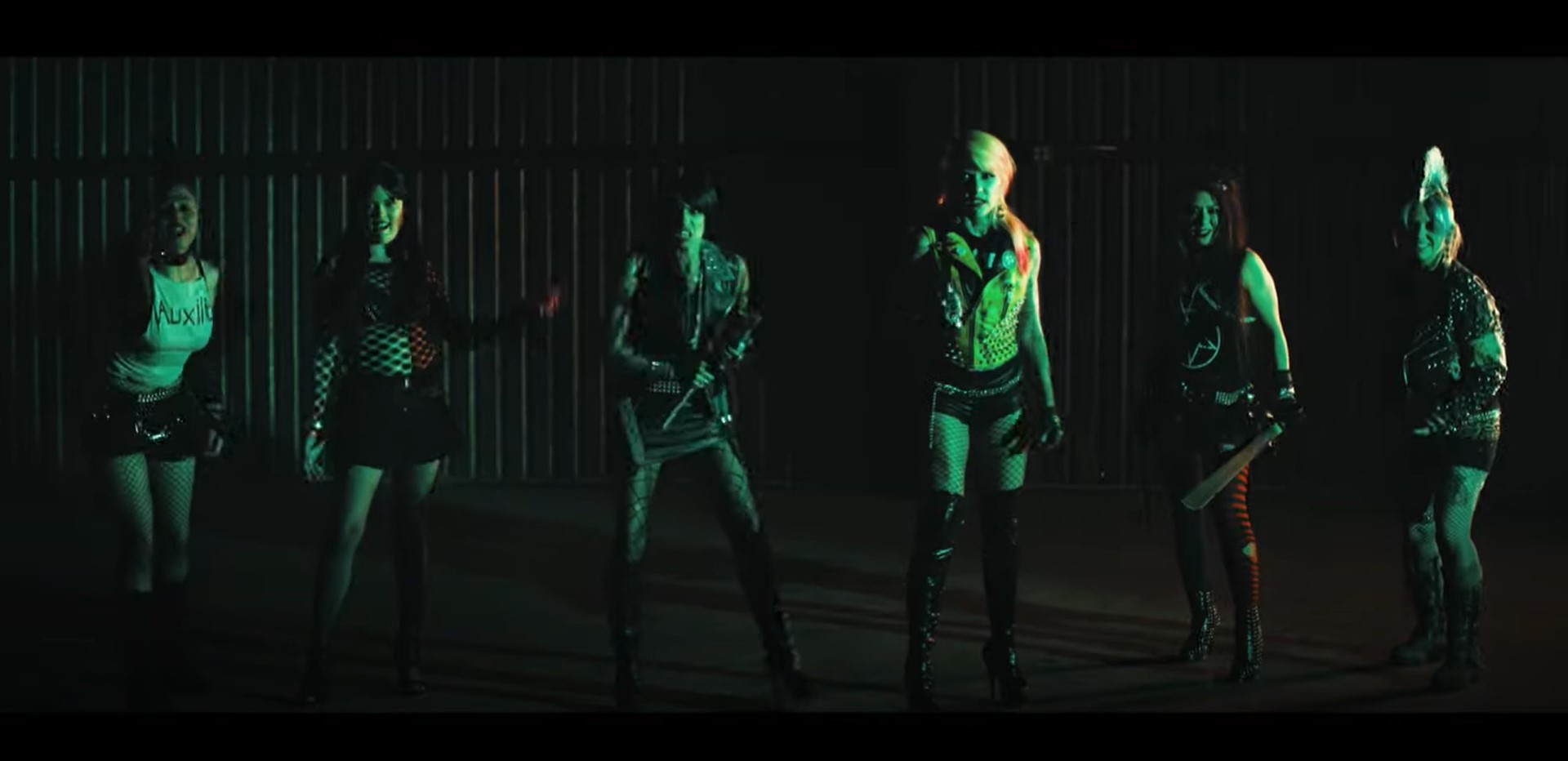
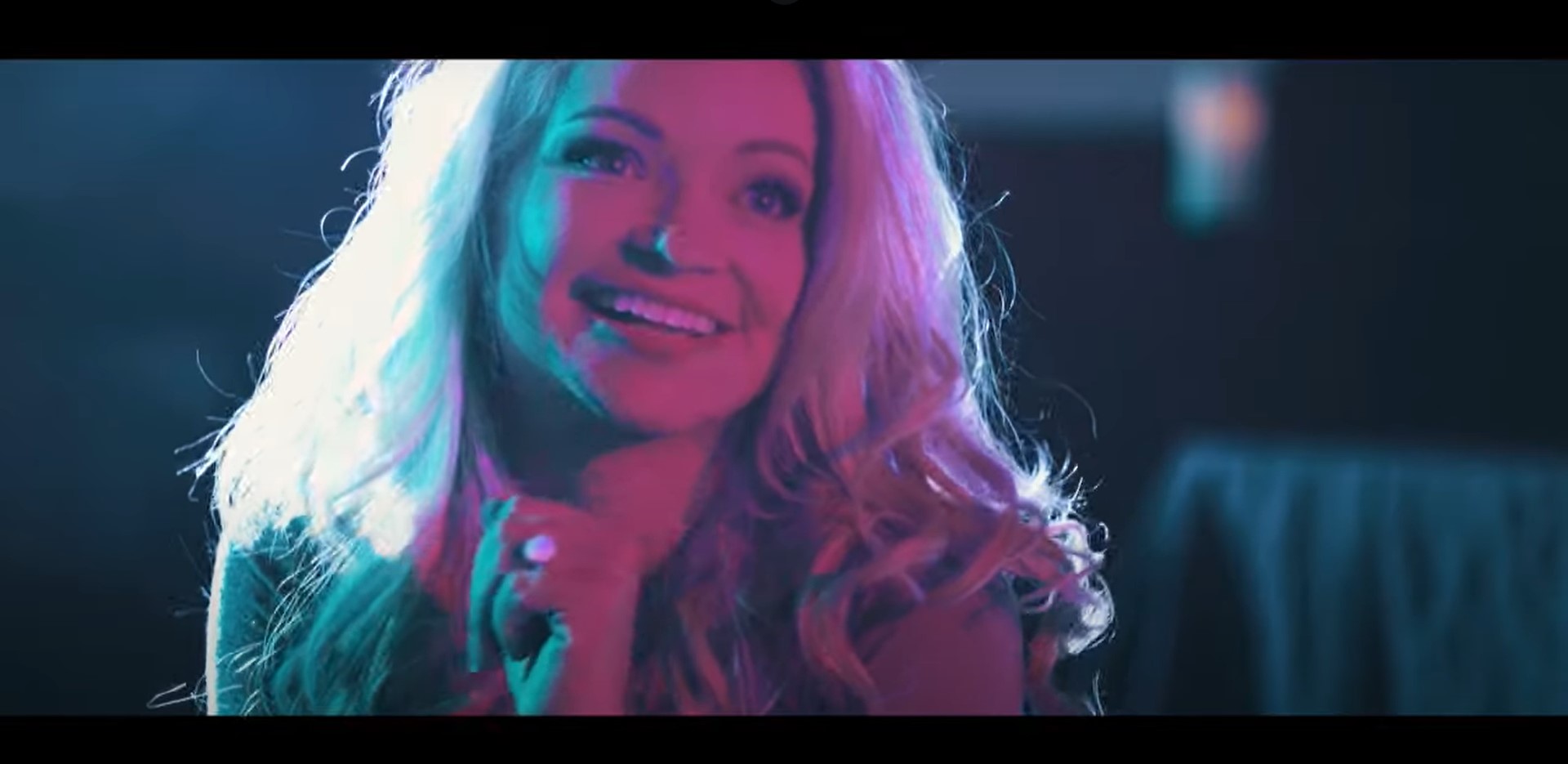
Right off the bat, the montage introduction of the tri-gang strippers, played by Alice McMunn, Joanna Angel, and Rachel Rampage, with sizzling eroticism and skin, seductively gazing into the camera and pole dancing captured in slow motion immediately sets the tone for the rest of the story. Laden from their colorfully neon-dyed hairstyles to their fishnet-led leathery platform heels with body ink, their focal opening is a bit of Joe Bizarro in a nutshell as well as an eclectic look into a cast comprised of goth, burlesque, body-mod, and fetish aficionados.  I was also hoping for a cameo from adult actress Joanna Angel’s husband Aaron ‘The Small hands’ Thompson, but alas, no such luck.  Though McMunn, Angel, and Rampage get the juices flowing and motivate the narrative into a plot point of character deconstruction, reconstruction, and revenge, neither of them are the top bill for lead role.  That responsibility falls solely on the “Evil Bong” franchise – wait, there’s an “Evil Bong” franchise? – actress Mindy Robinson that, through a (Joe) bizarro world, adds an interesting element of casting for the outspoken Republican commentator who happens to also be the girlfriend of former mixed martial artist and “Expendables” actor Randy Couture.  Robinson amiably plays a loving fiancé Mary to an equally amiably, yet unresolved, Charlie (Michael Reed, “The Disco Exorcist”). Eventually, Mary’s woman scorned vengeance becomes a juggernaut of kickass, learning geriatric kung-fu from a junkyard hobo, but Robinson disingenuously leaves her fluffy and bubbly self into a character who’s supposed to be this badass that beats half-naked Satan acolytes in one blow and can vanquish netherworld demons in the bat off an eyelash. Much of the film is Robinson promenading provocative and oddball locales, meeting more provocative and oddball characters, to track down her fiancé’s murderer in a forfeiture of commanding the scenes with scene-stealing presence. Though she bests an array of stud-cladded, garage punk baddies armed with arm drills, nail bats, and switchblades, their brief moments on screen leave more of an impact than the principal protagonist and much like the gang of three strippers, in which two-thirds of them cease to exist after approx. 15 minutes into the film, they’re built up as more prominent players in this psychos-ville showdown yet fizzle to literally just a passing moment in the narrative, giving way to a film full of nothing but near essentially cameos from Anatasia Elfman (“Shevenge”), Ellie Church (“Frankenstein Created Bikers”), Sarah French (“Art of the Dead”), and Damien D. Smith (“The Purge”). There are also true cameos from “Blood of the Tribades” filmmakers Sophia Cacciola and Michael J. Epstein, professional burlesquer Olivia Bellafontaine, and Madelyne Cruelly from the pirate punk band Yours Cruelly.

“Brides of Satan’s” gimmick is to live up to representing the yield of grindhouse cinema and for the most part, Joe Bizarro cultivates a passable resemblance by borrowing from the constructs and the ideals that came from them of the golden age of independent cinema decades between the 60’s and early 90’s and reworked them into his own passion project. “Brides of Satan” is undoubtedly derivative in most of designer elements, but I did find Bizarro’s concept of uniting the alternative network and B-movie troupers into a singular movement to be refreshing in it’s something you don’t regularly see or experience too often out of the shadows and living in the daylight. As disparaging as it may sound, the sensation becomes that carnival sideshow effect where the societal outcasted abnormalities entrance and pluck at your curiosity strings much to the same effect that ostentatious or surreal horror and sci-fi movies are a way to escape the harshness of one’s own bleak day-to-day reality. However, Bizarro didn’t quite achieve the paragon of his idea not because of his cast, who are mostly stupendously talented in their own rites, but rather more with a watery script barely sustaining flavor to its revenging aspects and supernatural rifts, the imbalance amongst characters, and a dialogue so intrusively oversaturated with hackneyed one-liners that the next words out of their mouths are predictable ones. That tiredness, that sparkless originality, that familiar taste again and again is what ultimately quells “Brides of Satan’s” fetching title and it’s weighted of promise.

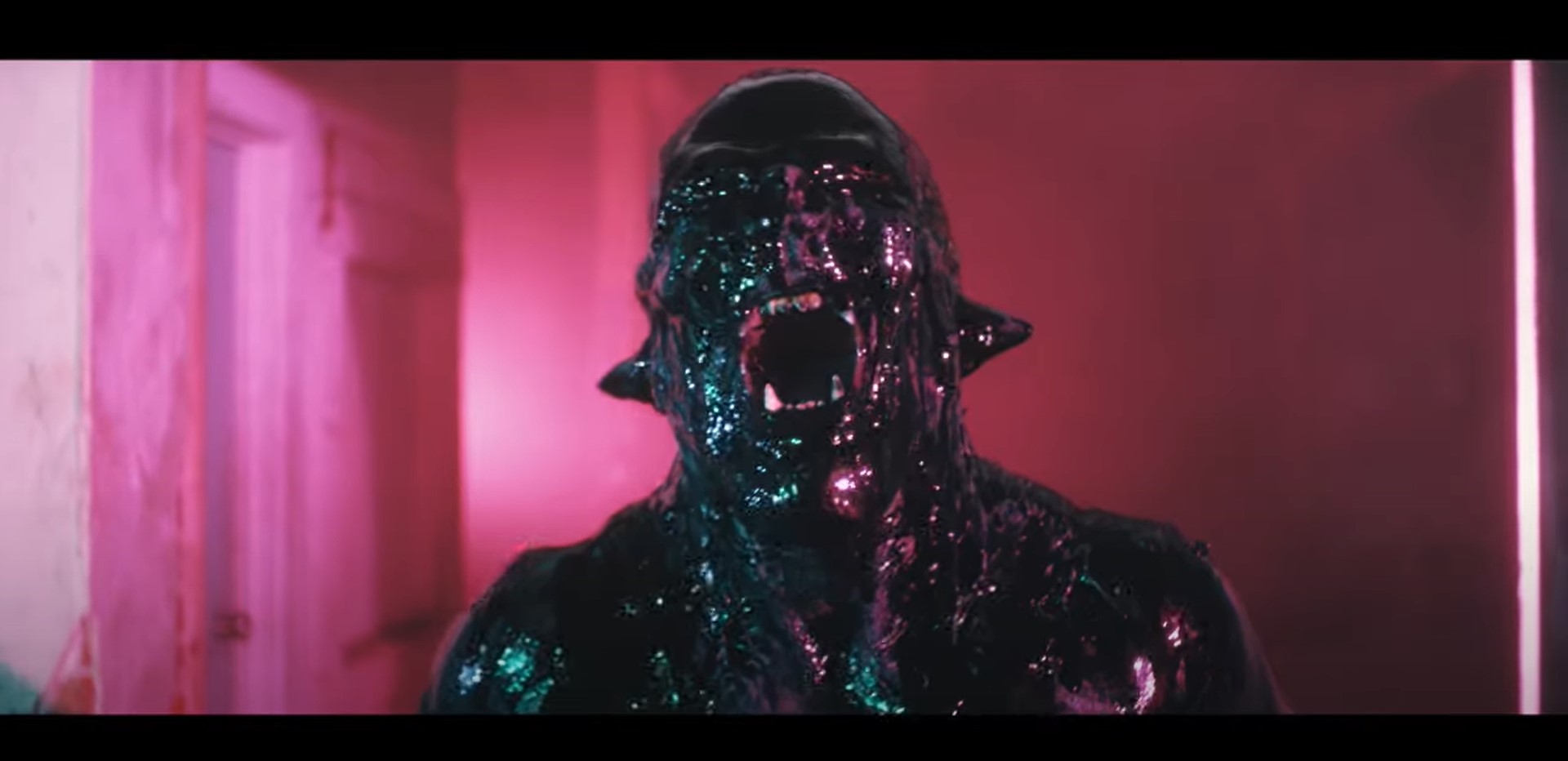
Rowdy and burning with streaks of fluorescent colors, “Brides of Satan” is a come Hell and high-water tribute for exploitation film lovers and the Joe Bizarro debut is now on high-definition Blu-ray home video from Dark Side Releasing.  Presented in a widescreen 2.39:1 aspect ratio on a BD25, Bizarro and Maitland, whose technical trade in director of photographer is implemented here, opt for a tenebrously smoky and shadowy obscured grindhouse-noir that innately secretes tactile details but do offer that sense of mystique danger and a carnivalesque veneer at times, using lighting techniques to accomplish the desired look.  The English language Dolby Digital stereo has lossless quality from a 384kps bitrate that, despite its dual channel limitations, outputs decent robust tracks.  Dialogue is crisp and clear, ambient background noise and ransacking has ample range and depth, and the original soundtrack from Ausie Jamie Coghill (Jimmy C) of The Jimmy C Band offers a lounge-grunge-like Rock and Roll score hitting all the right notes apt to the narrative.  The opening monologue from Rick Galiher doing his best Vincent Price vocals.  If you closed your eyes and just listened to the tracks, you can distinctly hear every tone and note in everything from a wonderfully broad audible spectrum. The special features include an audio commentary with the director Joe Bizarro, a handful of deleted scenes and bloopers, a photo gallery of stills and alternate posters (which there are a ton of), and a short skit entitled “Rad Roommates,” a pseudo-sitcom produced by Bizarro about a man and his monstrous hairball of a lowlife roommate.  If you’re lazy and don’t feel like navigating through the menu options to the special features, wait until after the feature’s credits roll through as the special features will follow, beginning with “Rad Roommates.” The Dark Lord takes a bemusing backseat that drives “Brides of Satan” more toward solely being a revenge thriller with few incomplete spidering out subplots that belly up by its own creator. 

“Brides of Satan” available at Amazon.com!  DVD and Blu-ray!

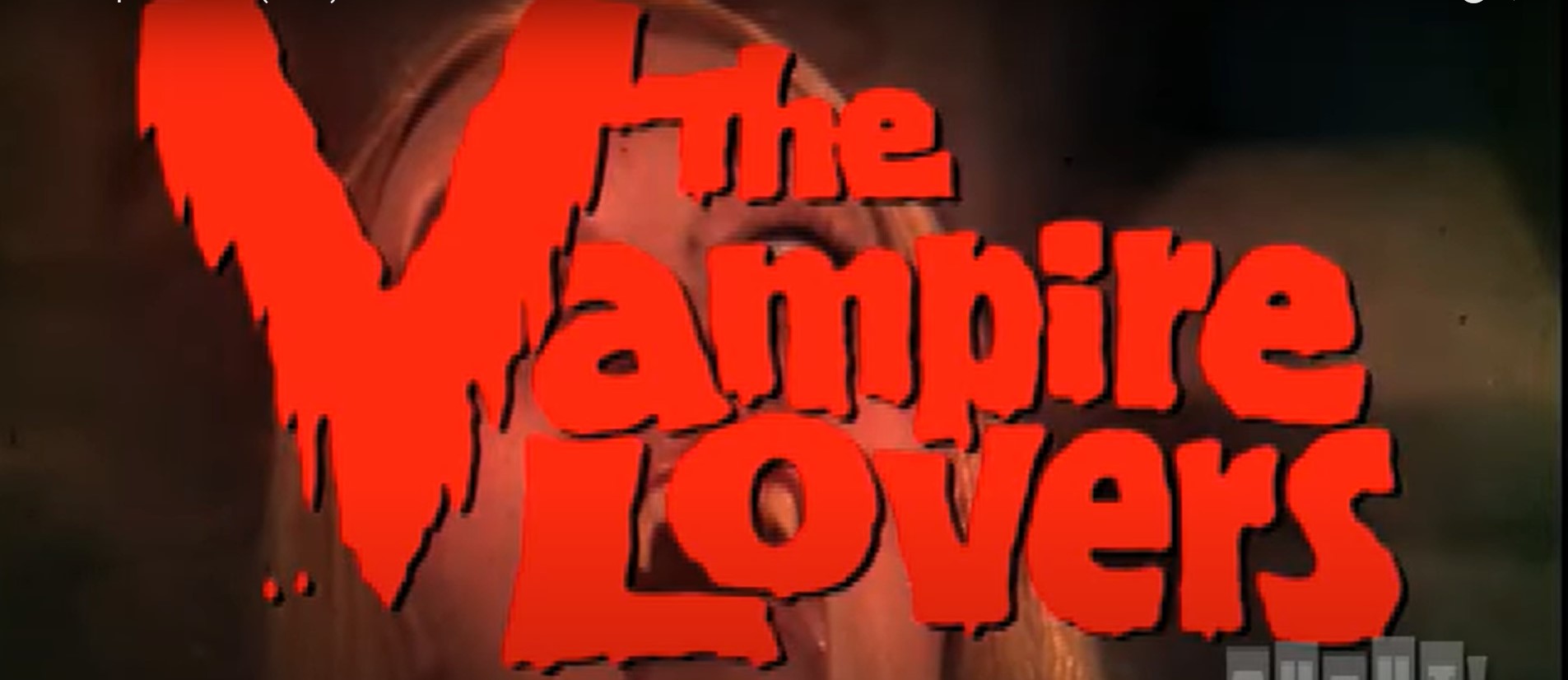
EVIL Infiltrates to Seduce All Your Women! “The Vampire Lovers” reviewed! (Scream Factory / Blu-ray)

“The Vampire Lovers” Now Available at Amazon.com!

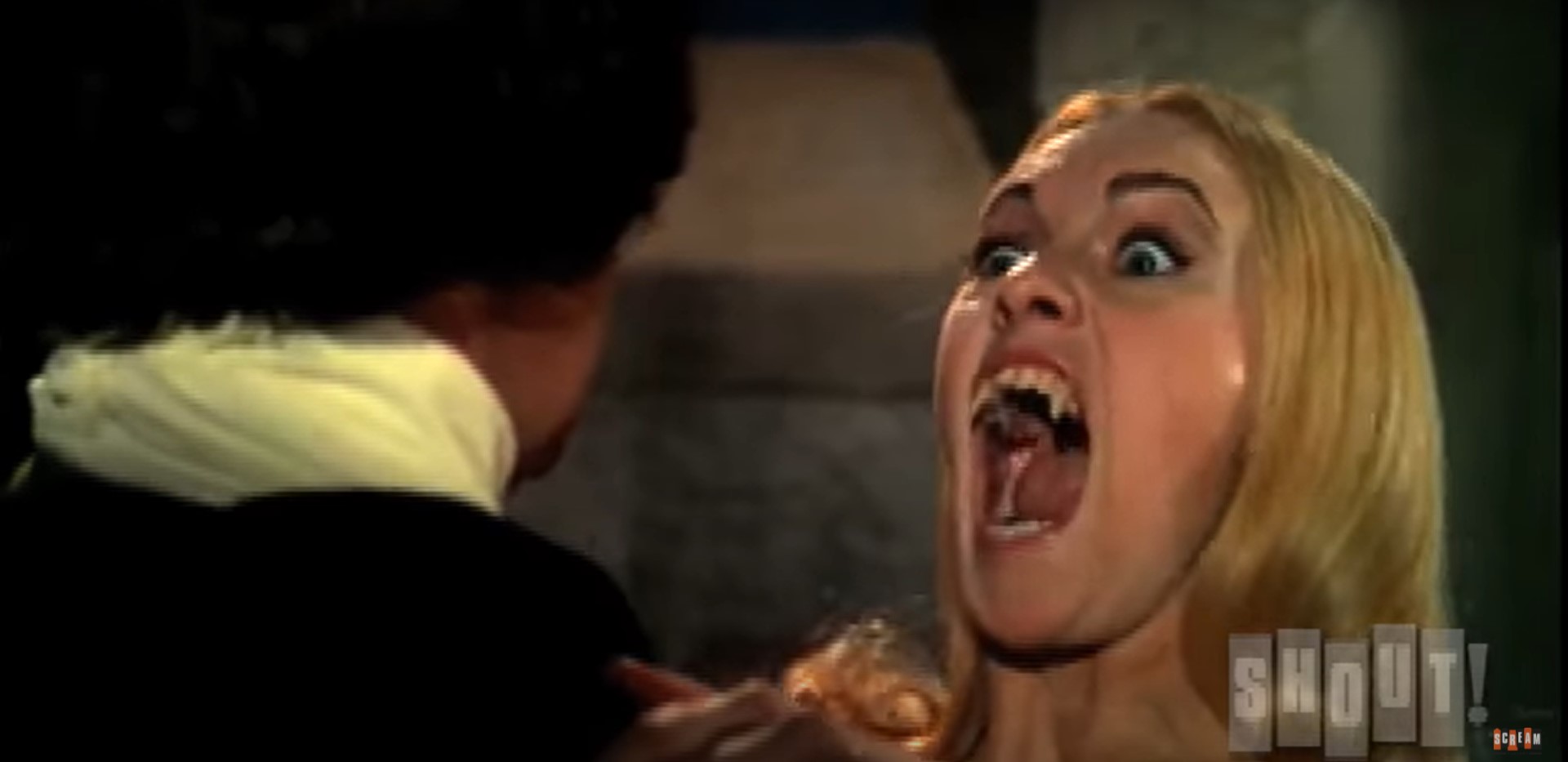
The Karnstein family’s notorious legends of evil spread vast throughout 18th century Germany. Once thought their wicked leeching of nearby villages exterminated after the Baron Joachim von Hartog dispatched all the villainous vampires after his sister fell victim to their seductive fangs. However, years later, the aristocratical General von Spielsdorf and his niece Laura find themselves in the unexpected company of a houseguest with Marcilla, the beautiful daughter of a new neighboring countess. Days later, Laura unexplainably dies from continuous nights that drain her of energy and flourish her mind full of nightmares of being strangled by a large wild animal. In the wake of her death, Marcilla also disappears. Sadden by the news of her friend’s death, Emma and her father take in the daughter of a travelling countess named Carmilla to provide Emma with cheery, distracting company in a time of distress, but the mysterious cycle of enervation and nightmares start back up all over again and it’s up to the survivals of Laura’s death to stop death before it’s too late.

Unlike any other Hammer horror film you’ve ever seen before prior to 1970, “The Vampire Lovers” blazed the trail for permissiveness of the era’s newly reformed certification system that moved the bar from 16 years order to 18 and kept in line with society’s leniencies toward the favoring sex and free love.  “The Vampire Lovers” opened up to not only a new line of exploitation and violence at the turn of the decade but also introduced the longtime fans to new faces, especially actresses, who would accumulate labels and prominence inside the genre that last until this day.  Based from the story of “Carmilla” from Irish writer Sheridan Le Fanu, relatively new at the time Hammer director Roy Ward Baker (“Scars of Dracula,” “Dr. Jekyll & Sister Hyde”) took the Harry fine and Michael Style adapted original story and ran the distance with the screenplay from Tudor Gates whose writing forte was not specifically well-known within horror genre nor was horror Gates’ personal interest, yet Gates tweaked the Le Fanu female vampire tale to accentuate more of lesbian themes in a very turmoiled time when lesbianism, or just being gay, was seen as a disease or an unstoppable influencing evil force amongst the young people.  Fine and Style serve as producers in this co-production between Hammer Films and American International Pictures.

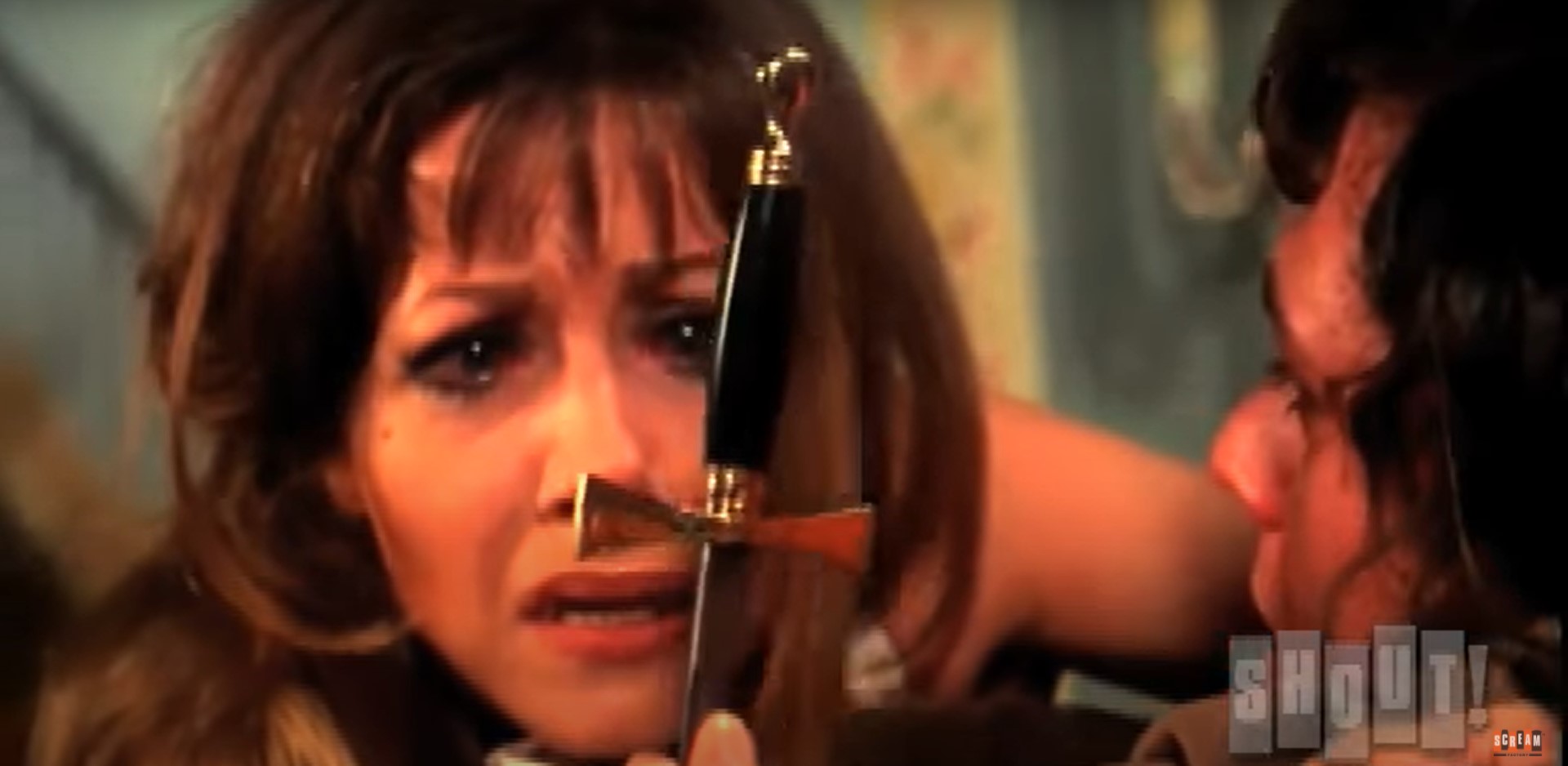
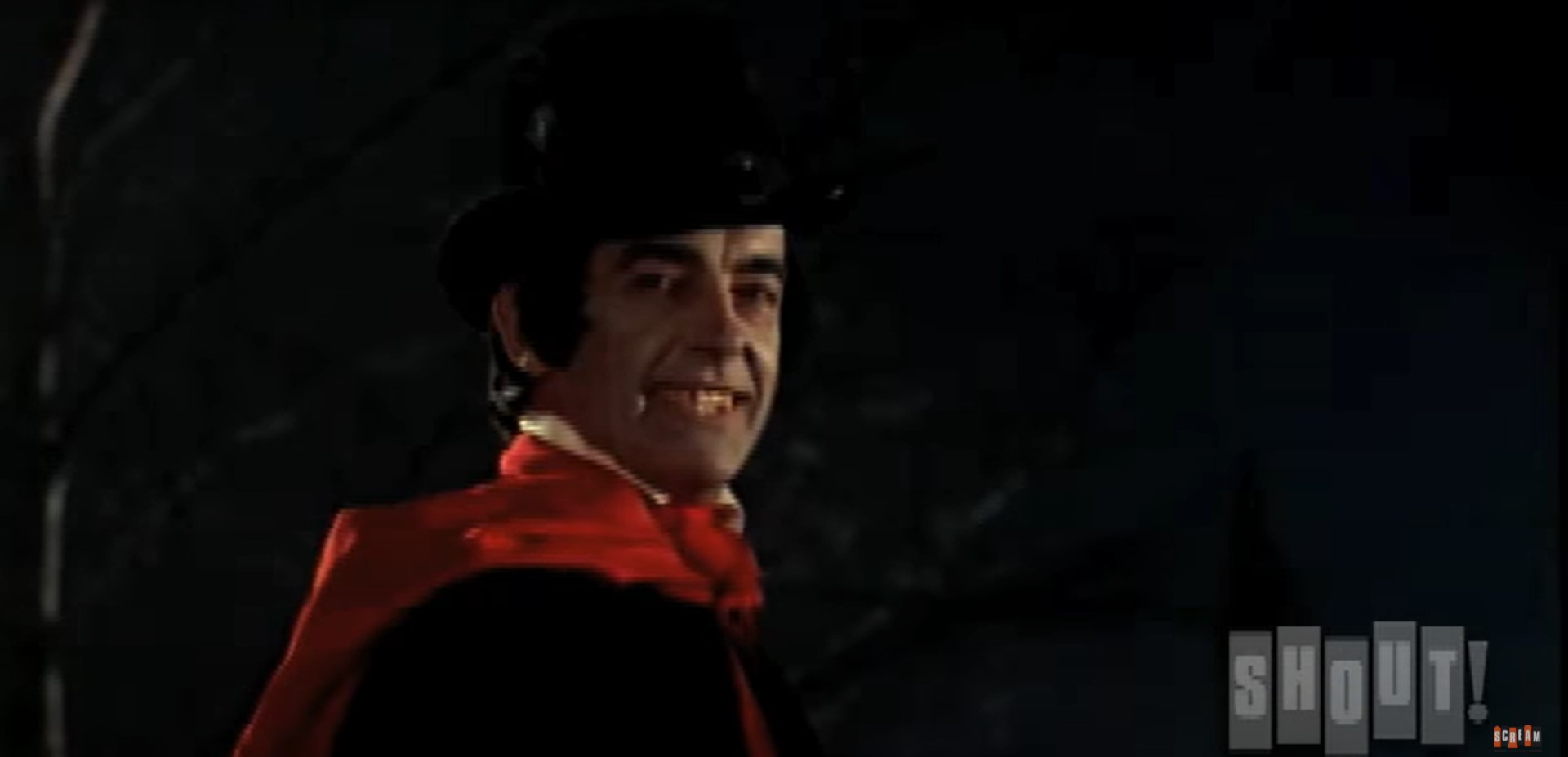
“The Vampire Lovers” comes under an atypical rule of the protagonist role or roles.  Previous Hammer films oriented themselves with a male lead from Christopher Lee’s domineering monster Dracula to the fearlessly courageous vampire hunter played by Peter Cushing, but “The Vampire Lovers” has Hammer trade in the masculinity presence for femme fatale with the introduction of Ingrid Pitt (“Wicker Man”) in the role of the hungry Karnstein vampire, Carmilla as well as Marcilla and Mircalla as the sneaky creature of the night infiltrates estates. Pitt’s exotic look and uninhibited attitude discerns obvious sex appeal for the Polish actress who can also act with gripping emotion that develops compassion for her malevolent facade. Add another pretty face and innocently sensuous woman arm-to-arm to Pitt with then 20-year-old Madeline Smith (“Frankenstein and the Monster from Hell”) and you have a two-front protagonist made up of women. Tack on the dark features and piercing blue eyes of Kate O’Mara (“The Horror of Frankenstein”) and “The Vampire Lovers” evolves into the something unlike anything we’ve ever seen from Hammer horror trifecta as once the scene settles into the narrative’s girth, the dynamic turns into a love triangle of unspoken women intimacies and jealousy, under the guise of supernatural persuasion, rears its ugly head. The menfolk really do feel absent from the excitement despite being pivotal pieces to the story and despite being the iconic representation in face and name of Hammer films. Peter Cushing’s longstanding work with the company has branded him forever legendary in the eyes of horror fans young and new. As the benevolent General von Spielsdorf, “The Horror of Dracula” Cushing looks wonderfully regal, gentlemanly dashing, and epitomizes the very essence of a strong male figure who also takes a very noticeable backseat for much of the second and into the third act. Same can be said for that other vampire portrayer who’s not Christopher Lee, Ferdy Mayne (“The Fearless Vampire Killers”) as the village doctor with a scene plopped here and there to inch the story along as a motivational vessel and another player caught in the Karnstein fang-game. “The Vampire Lovers” sees through to move plot significant characters, played by notable actors, to and from the storyline with performances from George Cole (“Fright”), Jon Finch (“Frenzy”), Dawn Addams (“The Two Faces of Dr. Jekyll”), Pippa Steel (“Lust for a Vampire”), Harvey Hall (“Twins of Evil”), and Douglas Wilmer as the Baron Joachim von Hartog who give a great opening expositional prologue that sets the background and tone of the film.

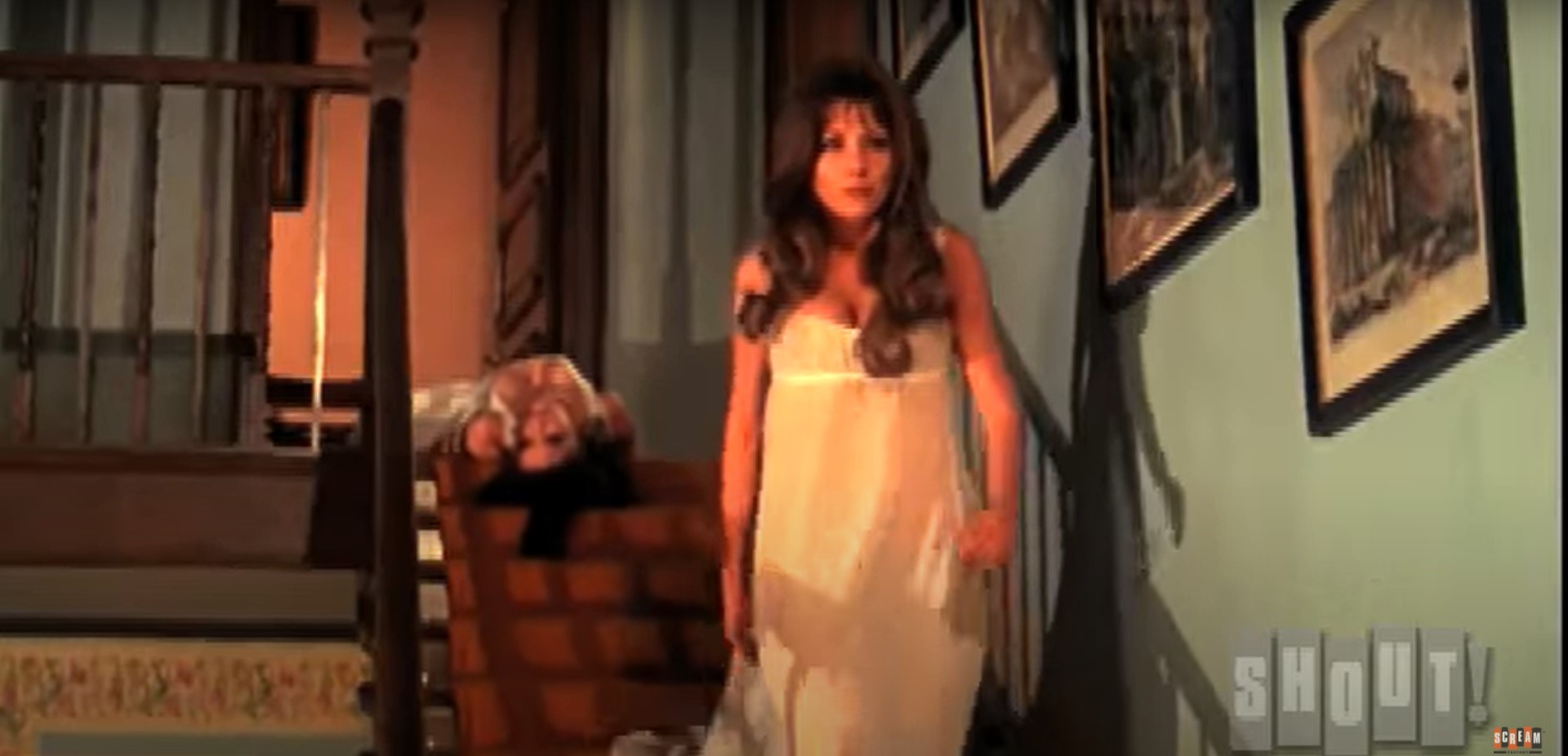
Laced in the traditional gothic style we all know and love from Hammer Films, “The Vampire Lovers” has grandiose late 19th century interiors and costumes with the latter gracing the starlets with strikingly bright tropical colored dresses that are elegant beyond the more stiff, and sometimes more imperialistic, outfits representing the period.  In a way, the outfits contrast against the brooding gothic prominence that speak of subversive liberation much paralleling the very thematic elements of lesbianism, sexual motifs, and a nearly an all-encompassing female lead.  If sex was ever a subtle insinuation in previous Hammer film it was not so subtle in “The Vampire Lovers” that consistently and constantly thickened the sexual tension and produced blunt scenes of eroticism between two or more women.  Even with the powerful commingle of womanhood desires, as much as it was depicted to be devasting to their lifeblood, Tudor Gates’ narrative still pit them up against nearly impossible odds when the male characters, no longer duped by the formalities of chivalrous intentions, figure out what’s really happening under their noses, in their households none the less, and band together to put a to a heart-staking stop to the macabre madness aka metaphorical lesbian evil.  The story has the women’s lusts and desires, whether their choosing or not, be an outlier from normalcy, yet on the other hand, nudity flourishes within the new laxed certification guidelines that see in some way, shape, and form four actresses baring skin in what what would have been considered risqué X-certificated scenes prior to 1970.  “The Vampire Lovers” is by far a perfect film with a lack of character context, such as with the male vampire on horseback indulging his penchant for observing Camilla’s attacks from afar and doesn’t proceed to explain further or with more insight to who he is and what his position may be within the Karnstein family ranks, as well as the narrative format with early on into the story being bit choppy and disorienting when Carmilla assaults nightly the General’s fair niece as a furry beast in the confines of a lurid nightmare.

Deserving of a collector’s edition, Shout Factory subsidiary horror label, Scream Factory, presents a new Blu-ray release of “The Vampire Lovers” scanned in 4K of the original camera negative.  Scream Factory should be extolled for their color grading toward Hammer transfers as the release looks stunning with quality stability and richness that brings the era alive.  Transfer also appears free from any kind of major blemishes and barely of any smaller ones. The English language DTS-HD Master Audio mono has resolute fidelity in the best possible audio offering “The Vampire Lovers” will likely see now and in future releases with a clear dialogue track and a Harry Robertson score that relives the classic studio orchestra in compelling fashion. The release comes with a slew of special features including an exclusive new interview with film historian Kim Newman, who also shows up again in archived interviews in the “Feminine Fantastique: Resurrecting ‘The Vampire Lovers'” (Scream Factory lists it as Femme Fantastique on the back cover) featurette commentary snippets from John-Paul Checkett and David Skal and other historians and collectors of Hammer Films. Audio commentaries with director Roy Ward Baker, star Ingrid Pitt, and Screenwriter Tudor Gates, audio commentary with film historians Marcus Hearn and Jonathan Rigby, two interviews, one of them new, with co-star Madeline Smith that span about 10-15 years apart, Trailers from Hell: Mick Garris on “The Vampire Lovers,” a reading of Carmilla by Ingrid Pitt, a single deleted scene of Baron von Hartog radio spot, still gallery, and the theatrical trailer round out the bonus material. The 89-minute, Region A encoded, R-rated version runs solo as the only main feature and the transfer Scream Factory uses, or licenses, is the edited version of Ingrid Pitt’s bath scene that cuts away to a medium closeup of Madeline Smith holding a towel for Pitt who’s standing up in the tub and then cuts back to Pitt’s bare backside. However, in the “Feminine Fantastique” featurette, you can experience the unedited brief full-frontal of Ingrid Pitt standing up in the tub if that tickles your fancy. The collector’s edition sports reversible cover art with original poster art on the inside and a newly illustrated, and superbly beautiful in its simplicity, front art by Mart Maddox sheathed inside a cardboard slipcover of the same Maddox art. Turning a corner into vast opportunities for more violence, explicit nudity, and unrestrained vampire gore became a new dawn for Hammer Films without entirely prostituting themselves with wayward tactics to the point of unrecognition as “The Vampire Lovers” still emitted gothic characteristics and a partial token cast and now made even more alluring with a feature packed collector’s edition from Scream Factory!

“The Vampire Lovers” Now Available at Amazon.com!

Prostitution Might Be the Oldest Profession but Killing People on Camera is the Evilest! “Snuff Tape Massacre” reviewed! (SRS Cinema / DVD)


Pick Up This Nightmare Fuel of “Snuff Tape Massacre” on DVD at Amazon!

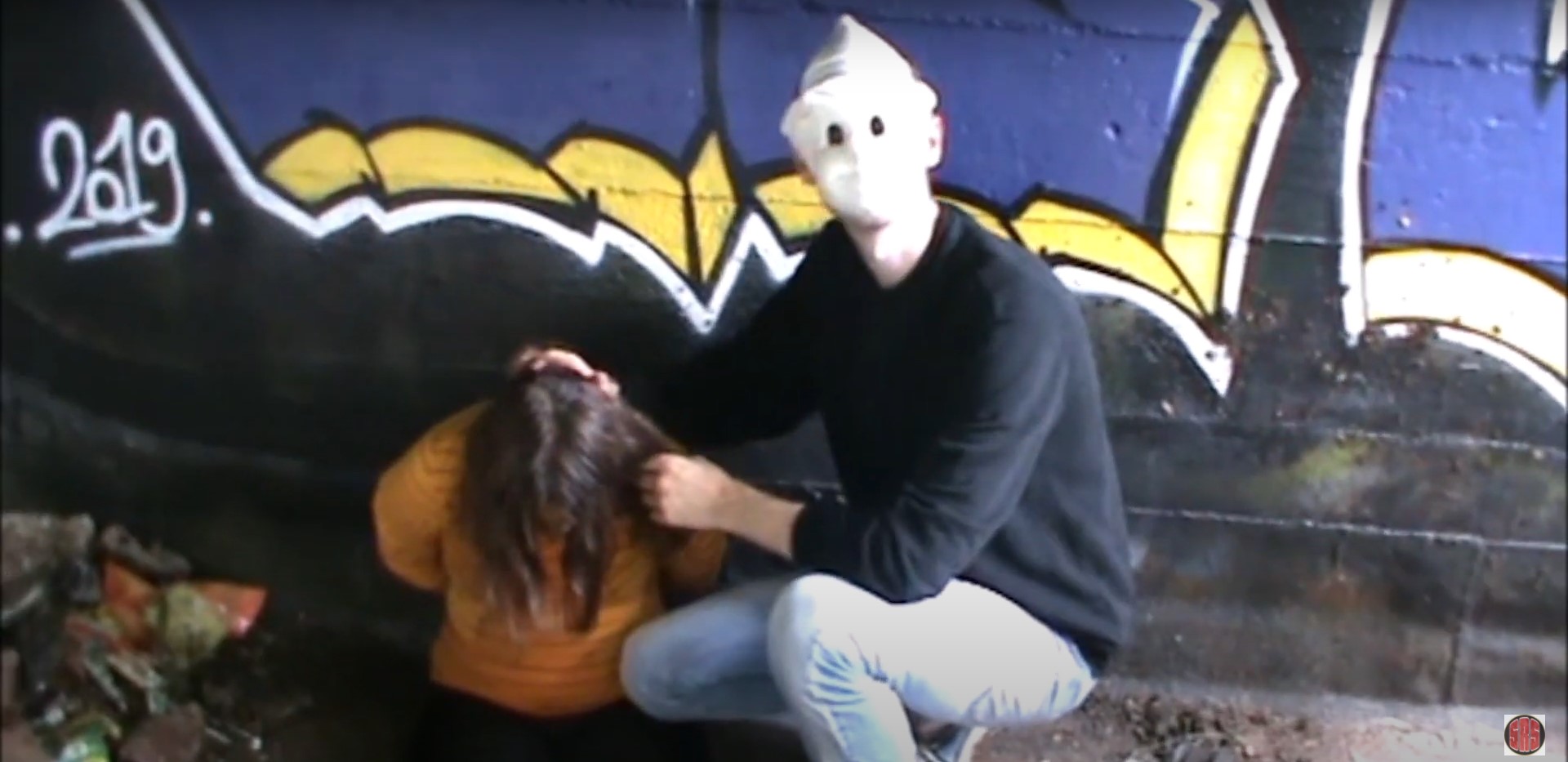
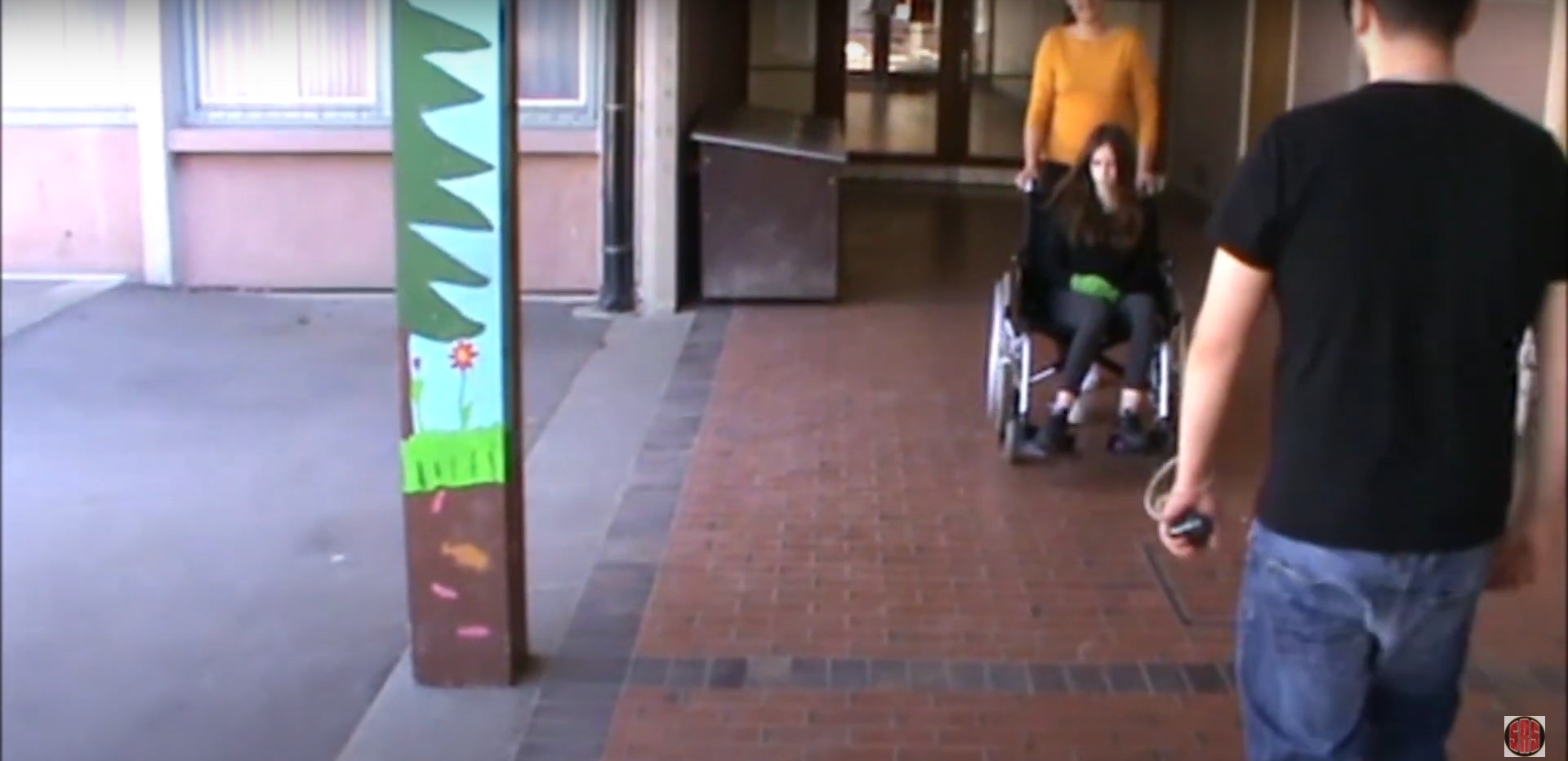
Two killers are employed to do what they do best, to make a snuff tape.  Brokering the deal is Brand, a middleman serving on the behalf of a unknown client and relaying the job’s details to his contracted filmmakers.  The casted stars of their next production is a young pregnant woman who works at the home for the disabled and one of the residents, a 15-year-old deaf-mute girl who can’t utter a single sound due to her extreme incapacitated condition.  Pretending to be making a documentary about the disabled, the two killers were able to gain the women’s trust, easily drug them, and move them to a secluded location where the sadistic torture and affectionless murder show begins.

Straight torture and gore with no cinematic style or undertone depth is not every moviegoers preferred cup of tea.  For this gore hound, I can take it or leave it but would enjoy the darkest recesses of human sadisms and fantasies more if something was more germane to the reason for gore, but as far as Juval Marlon’s “Snuff Tape Massacre” is concerned, what you receive is a single perspective propelled by unsympathetic maliciousness, nihilism, and a taste for that metallic sweetness of blood.  The Germans are fairly well known for their insensitive, uncouth, and extreme films from the likes of directors Olaf Ittanbach and Jörg Buttgereit.  Does Juval Marlon have the blood and guts to be on the same level?  His written and directed 60-minute independent feature, also known as “Stermgewehr,” (“rifle” in German), aims to be a gruesome shocker under Marlon’s own befitting Beheading Films banner.

Obviously, none of the following names will be a part of a familiar, household cast fixture.  These types of gorging gore films usually have a small and conversant with each other cast of at approximately a hand full of willing actors and actresses to possibly mar, or better yet castrate, their acting aspirations with needless disturbing content that’s ironically overstated as well as understated.  “Snuff Tape Massacre” has a total of five members in the cast and out of the five members, only one uses a first and last name. The others go essentially dark with their real or full names anonymous to the world because who would ever in their right mind want to be associated with a movie about a snuff film? Thomas Goersch is the only full name credited and the only actor who a respectable credit list. However, Goersch has had many publicly and critically panned low-rent features with “The Curse of the White Woman,” “Bloody Shadows,” and “Poltergeister Experiment” being just some of his most recent samples that fallen into the depths of unsalvageable dumpster fires (and this has perked my darkly morbid and unusual curiosity in bad, bad movies!). As businessman Brand, Goersch never gets his hands dirty, leaving the role and his name unscathed and to leave all death-dealings to his hired hands in a pair of automaton teenage terminators including the head Snuff Filmer (Navarro) and his unnamed companion on the trail of blood. At least Goersch has a bit of Bill Zebub underground star power in Germany, Navarro exists only in this film as the one of the two mostly shaded and masked killers who kidnap actresses Tanja and Maria V. to exploit. The ruse surrounding the kidnapping leaves what ever little effort there was to be, to make the ordeal more engaging and exciting, was left back on Brand’s phone call as the Snuff Filmer’s plan to be pseudo-interviewers for a documentary goes off without a hitch. Maria V. does find as an interviewee of a second-year social worker enthusiastic about helping but her fellow co-kidnappee in binds Tanja literally serves as a second body to humiliate, torture, and execute by two desensitized individuals that isn’t a far stretch from their rigid performances as high and tight killers.

The crux of the problem with “Snuff Tape Massacre” is that the movie is just too long. Right now, you’re sitting there, reading this, cross-eyed by confusion, and thinking to yourself, “Steven, didn’t you say this was a 60-minute movie?” The answer is, yes, I did say that, but Marlon’s previous work, of similar extreme fetishisms, have been short films and “Snuff Tape Massacre” feels very much like a short film that’s been mishappened by a rack, stretched beyond its limits to where the possibility of being recognized for what it is, an orthodox gore and shocker, no longer factors into the equation. Scenes run too long and are over kneaded to the point of losing its impactful rise. For instance, when the young 15-year-old mute-deaf girl is being threatened by the Snuff Filmer’s automatic rifle barrel as he stuffs it into her mouth in an unspoken, simulated act of fellatio, the scene drags on for minutes upon minutes. As aforementioned, “Stermgewehr” in Germain is rifle and so these scenes should have some significance importance but overall feels juvenile and executed with poor time management. Marlon obviously doesn’t have two Nickels to rub together to fund this film, using old compact, pocket-sized digital cameras to record the varying levels of video and audio quality, but the one thing us gore hunds can appreciate is the gore. We can certainly tell a fake leg, arm, and even penis when one comes on screen and “Snuff Tape Massacre” is not exempt from using more-so than obvious inner details with no arterial or vascular details whenever a leg or arm is chopped (or even sawed) off with a dull hatchet, but what can be admired is the seamless look of the leg and the arm to the actresses. We’re not talking about a mannequin’s appendages or a plastique digits here when the dragged-on interview has finally wrapped, and the real raw material begins with decent prosthetics and blood pumping mechanisms that squirt blood longer and for the duration. The most effective effect is dick-hole jab stuck on repeat until the snuffer hits what we all presume is the back off the prosthetic piece but in the back of our mind, we’re really thinking bone. It’s a crotch-grabbing, leg-crossing, dick mangling moment no guy will ever forget.

SRS Cinema is well-known for bringing schlocky shockers to the table under the guise of really fantastic and detailed artwork for the banner’s DVD covers. “Snuff Tape Massacre” is no exception here as Juval Marlon’s film is juicy enough to make the company’s Nightmare Fuel line with an unrated and extreme release presented in widescreen 1.85:1 (16:9) aspect ratio in a lower resolution of 720 pixels (due to the compact digital cameras). Though unable to tell what cameras are being utilized, there are two different cameras are being used based on the vast difference in picture compressions with one looking stronger and more detailed than the other. The onboard microphone for the English language dual channel stereo mix is a lossy MPEG audio format that really takes a hit with the inconsistent background noise and electronic interference with a straight hum throughout when Marlon’s industrial sampler score is not substituted for sole audio dominance. Like many other SRS titles, the only special features included are SRS trailers for their catalogue unless you count the aforesaid artwork design of an illustrated half-naked bathtub victim with eyes of kitchen knife-stricken terror as part of the special features package – see below. “Snuff Take Massacre” is considerably low for a repeat viewing, but there are enough scenes that will undoubtedly make you recoil and squirm and that, my gory compadres, is worth the sole price of admission.

Pick Up This Nightmare Fuel of “Snuff Tape Massacre” on DVD at Amazon!