Under Hypnosis, You’ll Do Anything For EVIL! “Vampire at Midnight” reviewed! (MVD Visual / DVD)

“Vampire at Midnight” is now on DVD!

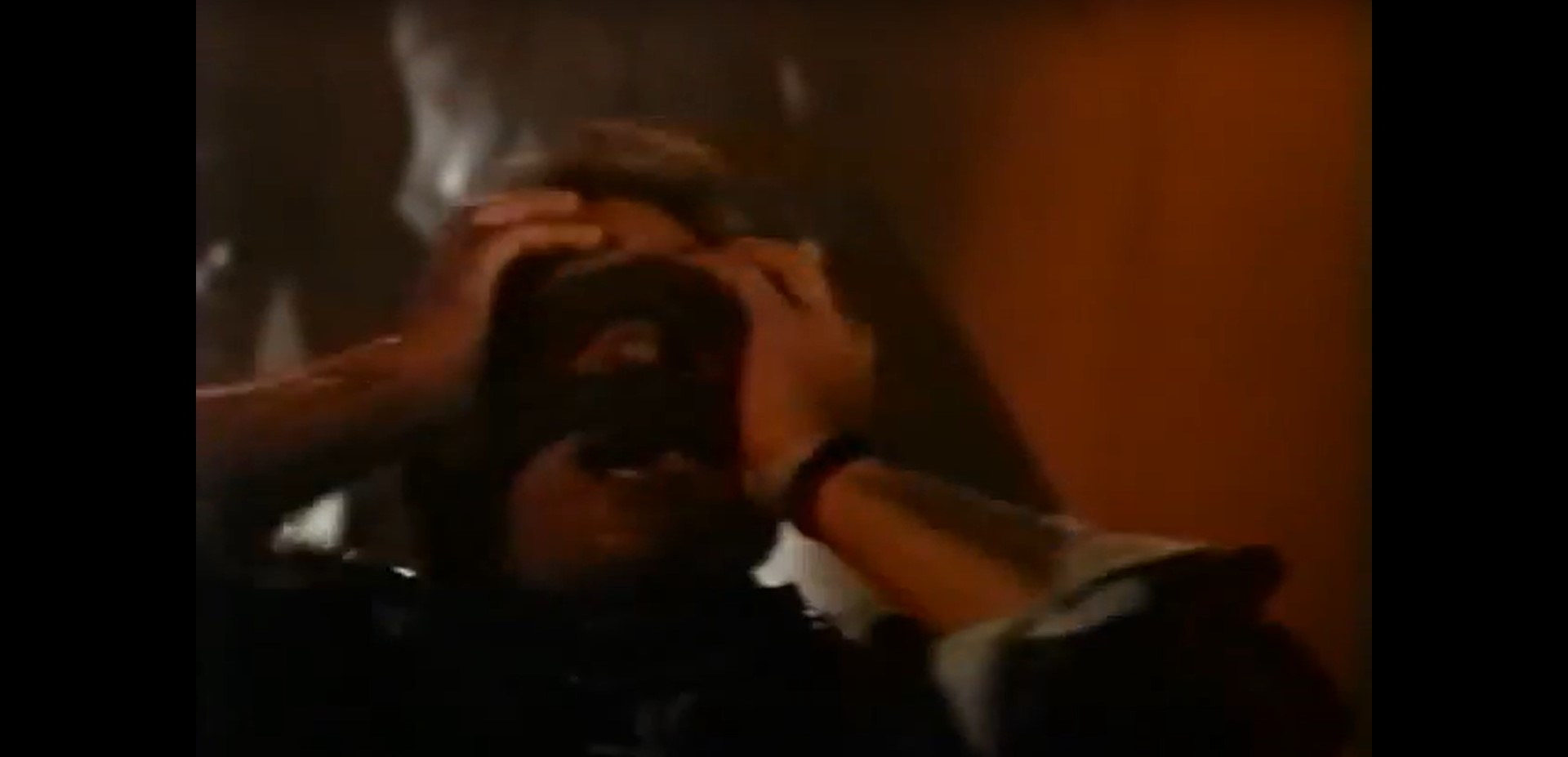
Gripped by a serial killer dubbed the Vampire Killer, Los Angeles is on high alert as not one single piece evidence could be recovered from the more than a dozen crime scenes where women’s’ necks are ripped to shreds, their bodies are drained of blood, and their corpses dumped for police to discover.  With detectives baffled, cowboy cop Roger Sutter is ordered by the reckless antics-frustrated Captain to stay away from case but when Roger follows a lead that lands in his lap, two people wind up dead and the killer slips through his grasp, the captain suspends him from the force.  Focusing all his energy into a newfound romance with apartment complex neighbor and aspiring pianist Jenny Carleton, Roger finds himself back onto the killer’s trail when his time with Jenny goes from special and exciting to acutely avoiding his every advance.  Roger suspects the Vampire Killer behind Jenny’s sudden change in behavior.  Unofficially back on the case, the off-duty Los Angeles homicide detective finds himself in the middle of the Vampire Killer’s ritual to seduce Jenny into his coven as one of his blood brides. 

The maverick cop versus the serial killer narrative “Vampire at Midnight” is the 1988 investigative thriller with a horror edge from editor-producer Gregory McClatchy (“The Great American Girl Robbery,” “Terror in the Aisles”) in his first, and only horror credited, feature length directorial.  Also, lesser known as “L.A. Midnight, “Hypnos” or “Murder at Midnight,” the entrancing, modern vampire script is penned by “Danger Zone II:  Reaper’s Revenge” writer Dulany Ross Clements from a story by fellow “Danger Zone II” collaborators Jason William (actor in “The Great American Girl Robbery” and “Flesh Gordon”) and Tom Friedman (“Time Walker”).  Skouras Pictures served as the production company and the theatrical distributor with Friedman and Williams also in a producing capacity.

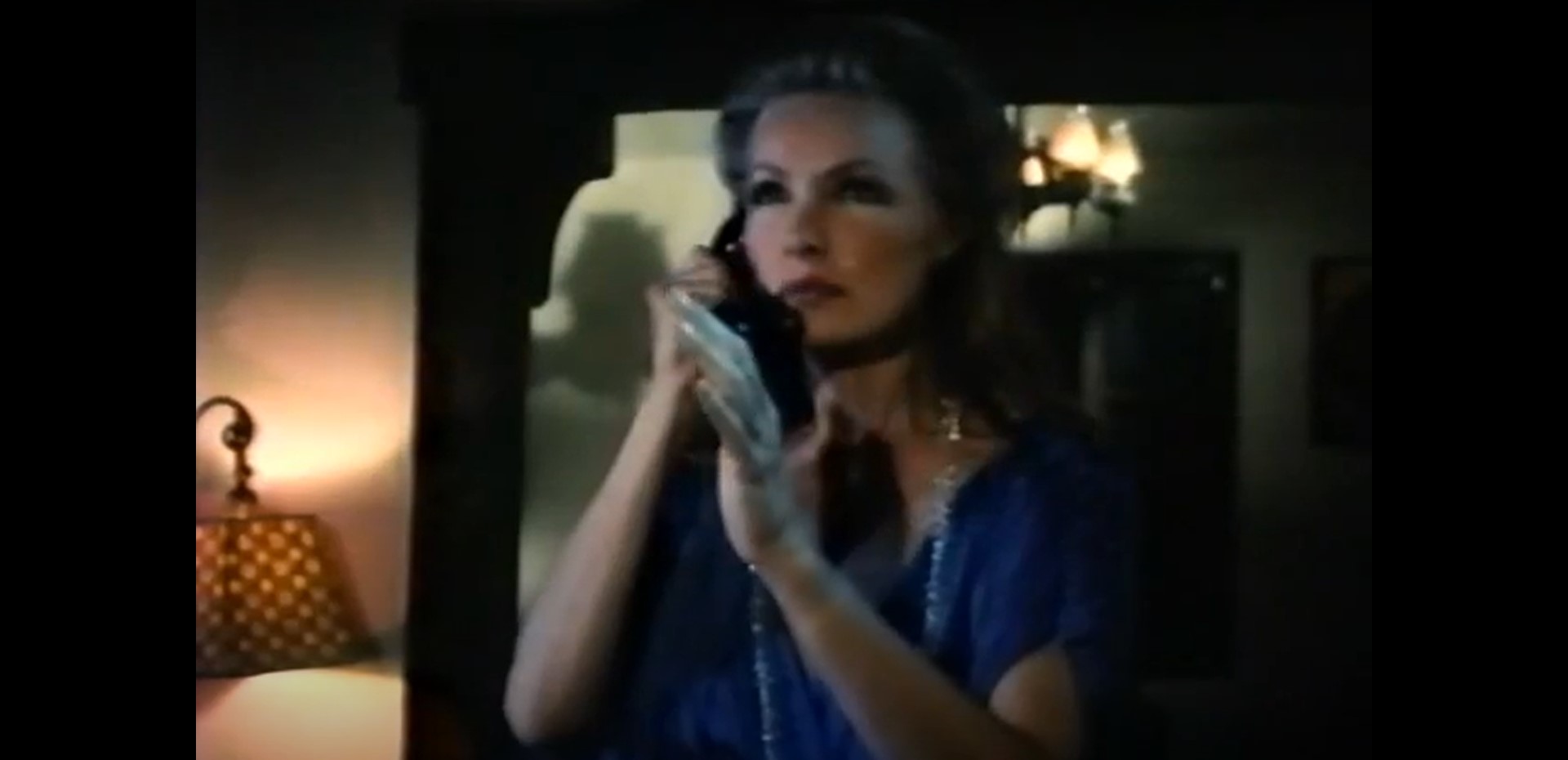
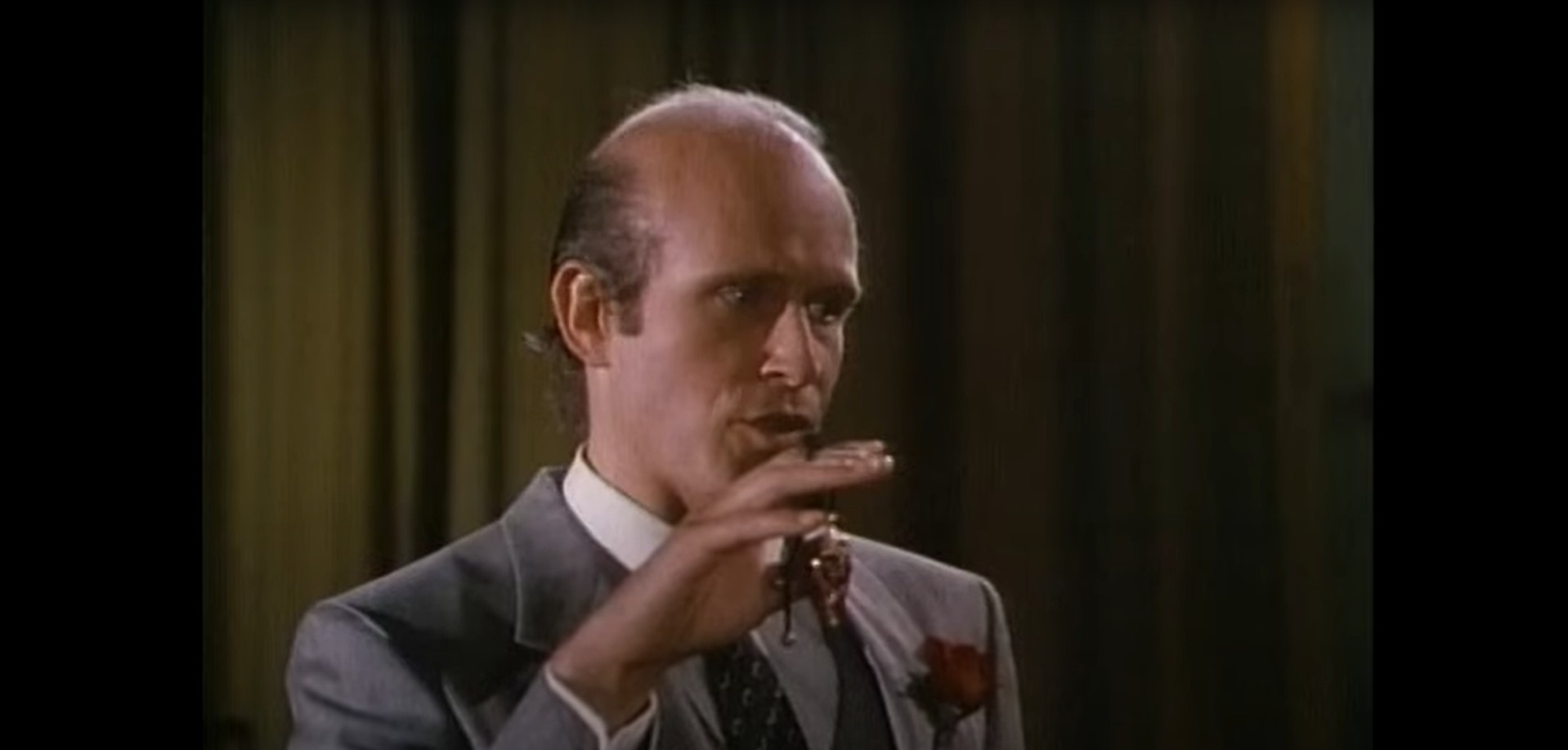
Much like with his lead kidnapper role in “The Great American Girl Robbery,” as well as other skin-a-matic films like “Alice in Wonderland:  An X-Rated Musical” or “Flesh Gordon,” producer, conceptual storyteller, and principal star Jason Williams puts himself into the rough-and-rugged hero to get the girl, or girls, half naked in his arms.  As unorthodox method cop bending procedure to get results, Williams molds handsome homicide detective Roger Sutter to the quintessential trope of a good cop doing everything he can to get the job done, even if that means skirting around lawlessness.  Roger is pitted up against pure vampiric evil who welcomes the lawlessness under the façade of a doctor of hypnotism specializing in unleashing clients’ frustrating mental blockages in their careers and goals.  Argentine-born Gustav Vintas has the physical look of a sophisticated villain (see “Lethal Weapon,” “Verne Miller,” and “Midnight”) with his stage 6 receding hairline and foreign accent and “Vampire at Midnight” also fits the bill with Dr. Victor Radikoff, a smooth talking and charming manipulator who can literally hypnotize his clients into anything, such as serving their necks up to his fangs or be beguiled assassins.  Caught in the middle is aspiring pianist Jenny Carlton, Roger’s beautiful blonde neighbor turned girlfriend turned slave to Radikoff’s hypnosis powers.  Jenny is played by the one-and-done feature film credited Lesley Milne in a rigid performance that’s critically subsided by her well-defined figure, one of several to go topless alongside “Saturday the 14th Strikes Back’s” Jeanie Moore, “Hollywood Chainsaw Hookers’” Esther Elise, and “Angel III:  The Final Chapter” Barbara Hammond.  The film rounds out with Christopher Nee, Robert Random (“Toke”), Jonny Solomon (“Peephole”), Ted Hamaguchi, Richmond Shepard (“Simon, King of the Witches”), and Ceclia Kaye (“Don’t Be Afraid of the Dark”).

“Vampire at Midnight” is the modern vampire film that tries to blend the old tropes with the new folds.  The malevolent Dr. Victor Radikoff has the menacingly creepy charm and suavity of Bram Stoker’s tale of Count Dracula flirting up against Max Schreck’s appearance as the horribly grotesque Count Orlok in the F.W. Murnau’s bastard film, “Nosferatu:  The Symphony of Horror.”  While the latter may just be an opinionated statement or judgement on Gustav Vintas’s physical naturality, not to say Vintas is grotesque or horrible looking at all, but rather his physical characteristics are atypical of the master vampire, resembling more closely to the baseline Nosferatu with a receding hairline, slender stature, and a uniquely contoured face. Being set in Los Angeles, the gothic qualities that instill fear, dread, and medieval facets from Dracula origins are all but lost, but you must remember, this isn’t Dracula.  This is Dr. Victor Radikoff, the prestigious hypnotist of the affluent, and that speaks true to the hip city of angels setting full of funky-sexualized interpretative dancing and late-night comedy standups as well as fitting into the budget to keep the indie film costs low for the sleek new take of the vampire trope to freshly entertain late 80s audiences.  However, “Vampire at Midnight” doesn’t go plot unscathed with the first act leaning heavily into L.A. paralyzed with Vampire Killer fear and the cops nervously on edge and disheartened by the lack of evidence and leads; the atmosphere felt more despairing and darker with the killer staying one step ahead and a body count slowly rises upward.  Then, the tone shifts slowly from a tough terrorizing case to crack to Roger’s incessant hard-on for a rather focused and naïve pianist.  The case only becomes interested in again when Roger receives a happenstance call in and he’s back in the saddle of his cowboy cop antics until he’s not again, being, in my opinion, unjustifiably suspended for shooting down a suspect trying to kill him and the suspected Killer getting away.  It’s as if the police, as well as the media and the public perception, left the case to fizzle out while the relationship between Roger and Jenny builds up for the sole purpose of being broken by, again, happenstance in Radikoff’s chance meeting with Jenny at a socialite party where she’s hired to play piano.
Arriving onto a MVDVisual DVD, this obscure hypno-vampire gem is entranced with new life.  Unfortunately, however, the new release is not a technically impressive one with its 720p resolution and pillar box 1.33:1 aspect ratio in regard to video.  The MPEG2 DVD5 handles the compression without a substantial hitch.  Other than the lower resolution that creates some blurry/fuzziness, here are no seemingly other issues in the codec, such as macroblocking, or banding.  Blacks retain its void inkiness even inside the confines of a lower contrast, but the grading is nonexistent that results in flat coloring and little life in the range spectrum.  The film has a shot-on-video look, but the transfer is rendered from a 35mm print digitized with little touchup for DVD.  The original print has only minor imperfections, a brief scratch here and there, but no major damage to note.  The English language Dolby Digital 2.0 Mono doesn’t elevate the new release either.  Dialogue isn’t terribly feeble, but it definitely isn’t robust through the single channel where depth doesn’t have an influence.  The overall quality of the recording is not bad with a clean presentation that’s layered in an expertly designed arrangement; big kudos should go to editor Kaye Davis and sound mixer Vic Carpenter who enrich “Vampire at Midnight’s” filmic posture as the two do competently dance together between the audio and video editing.  English subtitles are optionally available.  MVD’s standard release is bare bones without special features.  The standard DVD Amaray sports the beautiful gothic and blood dripping poster as the front cover; however, the backside contains three out of the five stills of Ester Alise, one involving Robert Random, and one with Random and Gustav Vintas and what makes the backside a curiously funny duck is the four blocked together stills are not from the film and were plucked directly from IMDB.com.  Instead, they are from different cult films starring Random and Alise, such as Alise’s “Hollywood Chainsaw Hookers.”  The disc is pressed with the same cover art image.  The rated R release is region free and has a runtime of 93 minutes.

Last Rites: Gregory McClatchy keeps this L.A. vampire picture in constant postulation with an unconscious red herring that’s stable until the very end, but the story pivot strains too far from its gritty and dark cop-chase-killer opening by focusing more on a love polygon of sex, deception, and true devotion, a swivel that puts a stake right in the heart of this 80’s exuberant story.
“Vampire at Midnight” is now on DVD!

EVIL Lies in Ancestral Ties! “Dogra Magra” reviewed! (Radiance Films / Limited-Edition Blu-ray)

“Dogra Magra” on Limited Edition Blu-ray! Purchase Here!

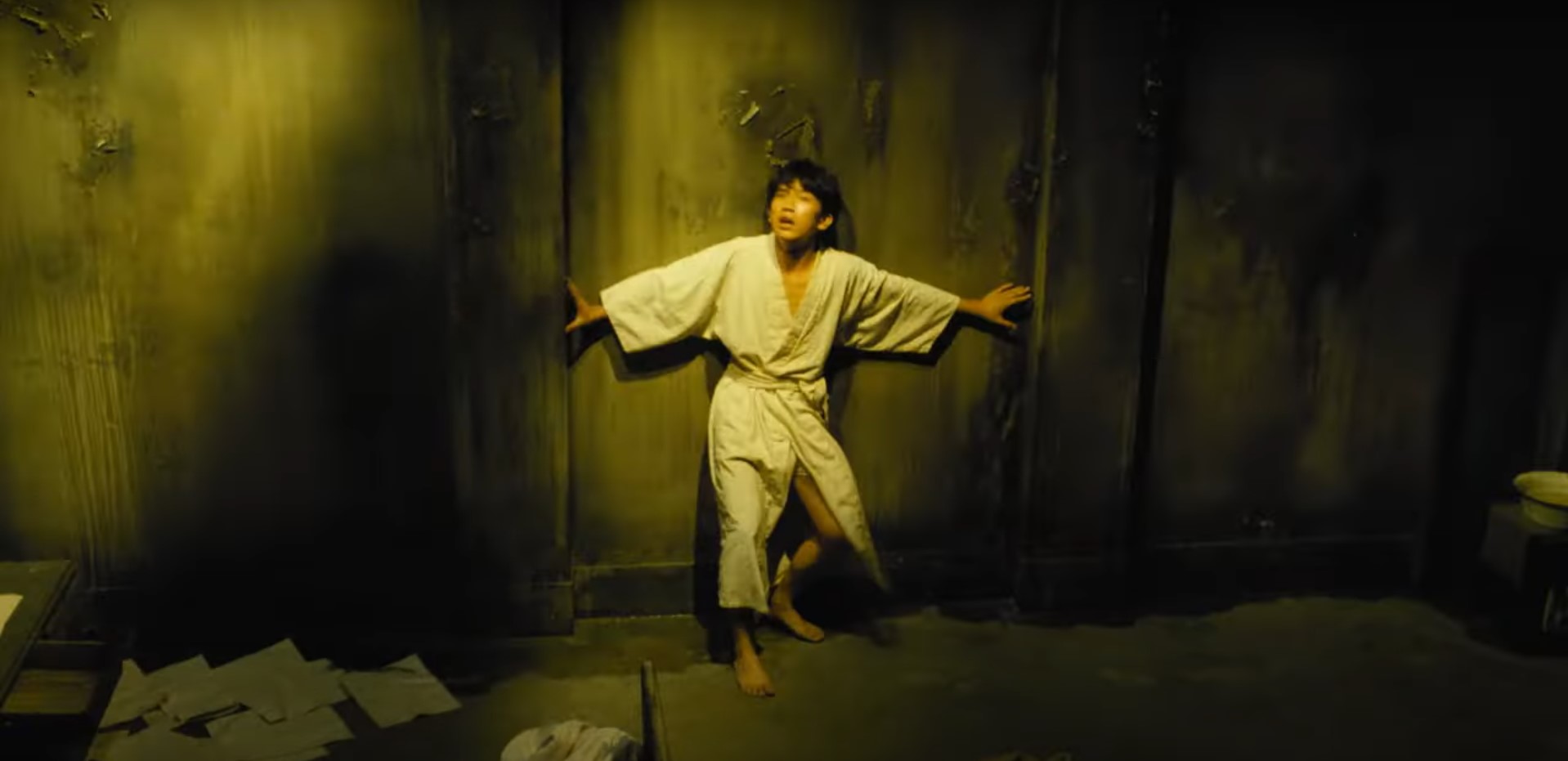
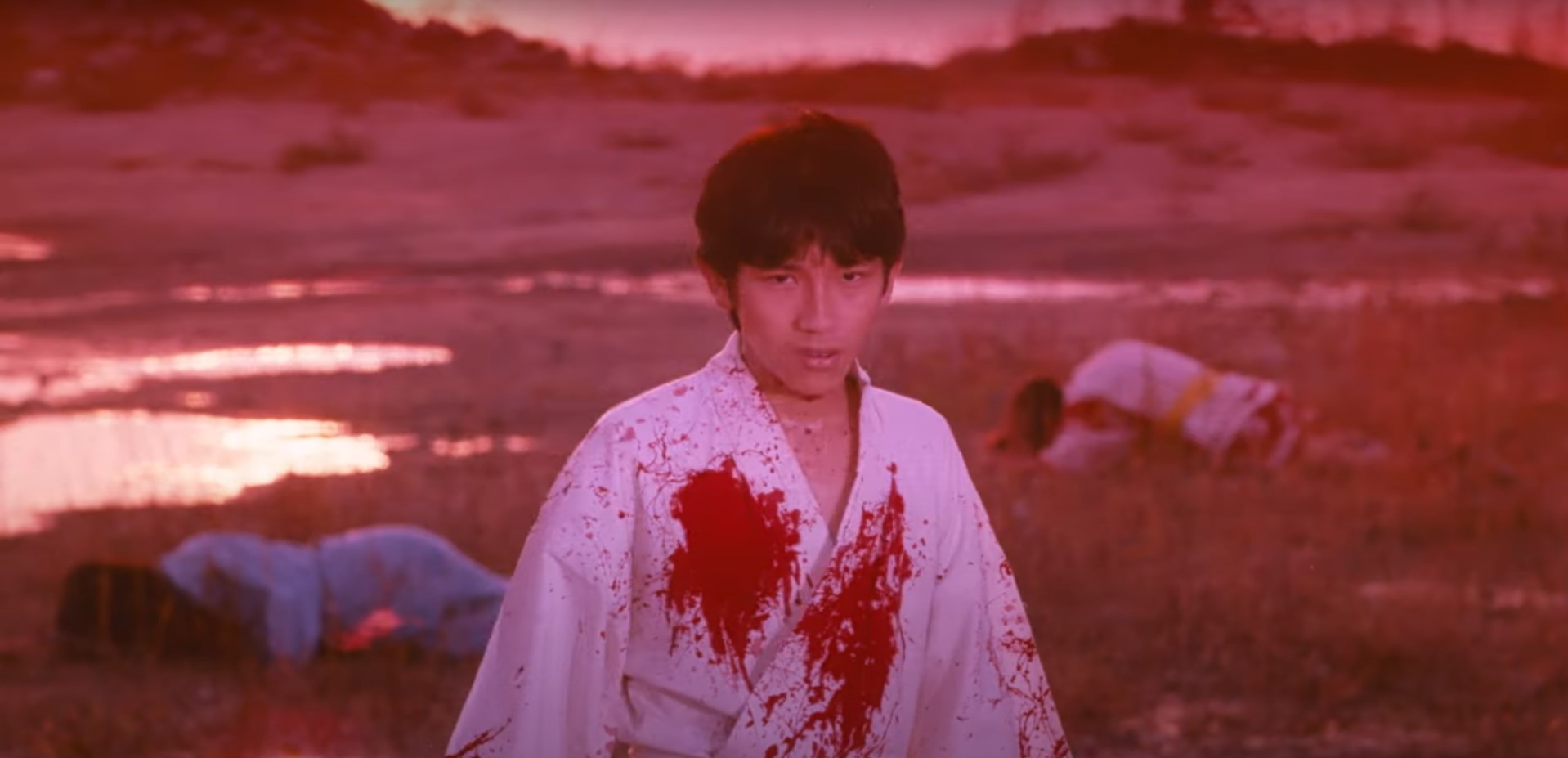
A young man wakes up in an asylum cell, unable to remember how he got there, his name, and doesn’t even recognize his face.  The asylum supervisor, Prof. Wakabayashi, has been overseeing his condition ever since the suicidal passing of former experimenting director, Dr. Masaki, nearly a month ago.  Disoriented, the young man is toured around the hospital grounds where Wakabayashi tells him the tragic tale of a 9th century man who kills his bride the day before their wedding day to capture the stages of her decomposition recorded onto a sacred scroll.  Distancing himself from the possibility of being murderous man, Wakabayashi informs him he is Kure Ichiro, the direct descendent of the groom and he enacted the very same events his ancestor committed long ago.  When the sudden reemergence of Dr. Masaki covertly corners Ichiro in his office, Masaki divulges his and Wakabayashi’s theories about Ichiro’s case but how the events came to fruition just may be plain and simple murder. 

Nature versus Nurture and the psychosis that ensues when discussing Pre-World War II context of Empirical Japan and their either inherent tendencies to repeat a violent past or to be triggered, poked, and prodded toward repeating history is the surmised and experimental plot of writer Yumeno Kyūsaku and his psychoanalytical novel “Dogura Magura.”  The title rearranged to “Dogra Mogra” is used for the film adaptation of Kyūsaku’s novel with the script written-and-directed by the avant-garde filmmaker Toshio Matsumoto (Japan’s “Demons” of 1971).  Matsumoto cowrites the script with Atsushi Yamatoya (“Story of David:  Hunting for Beautiful Girls”) written primarily from the distressed perspective of the protagonist Kure Ichiro only to switch hands when the experimenting Masaki enters the fold.  Shuji Shibata and Kazuo Shimizu inpendently produce the 1988 film under production companies Katsujindo Cinema and Toshykanky Kaihatsu AG.

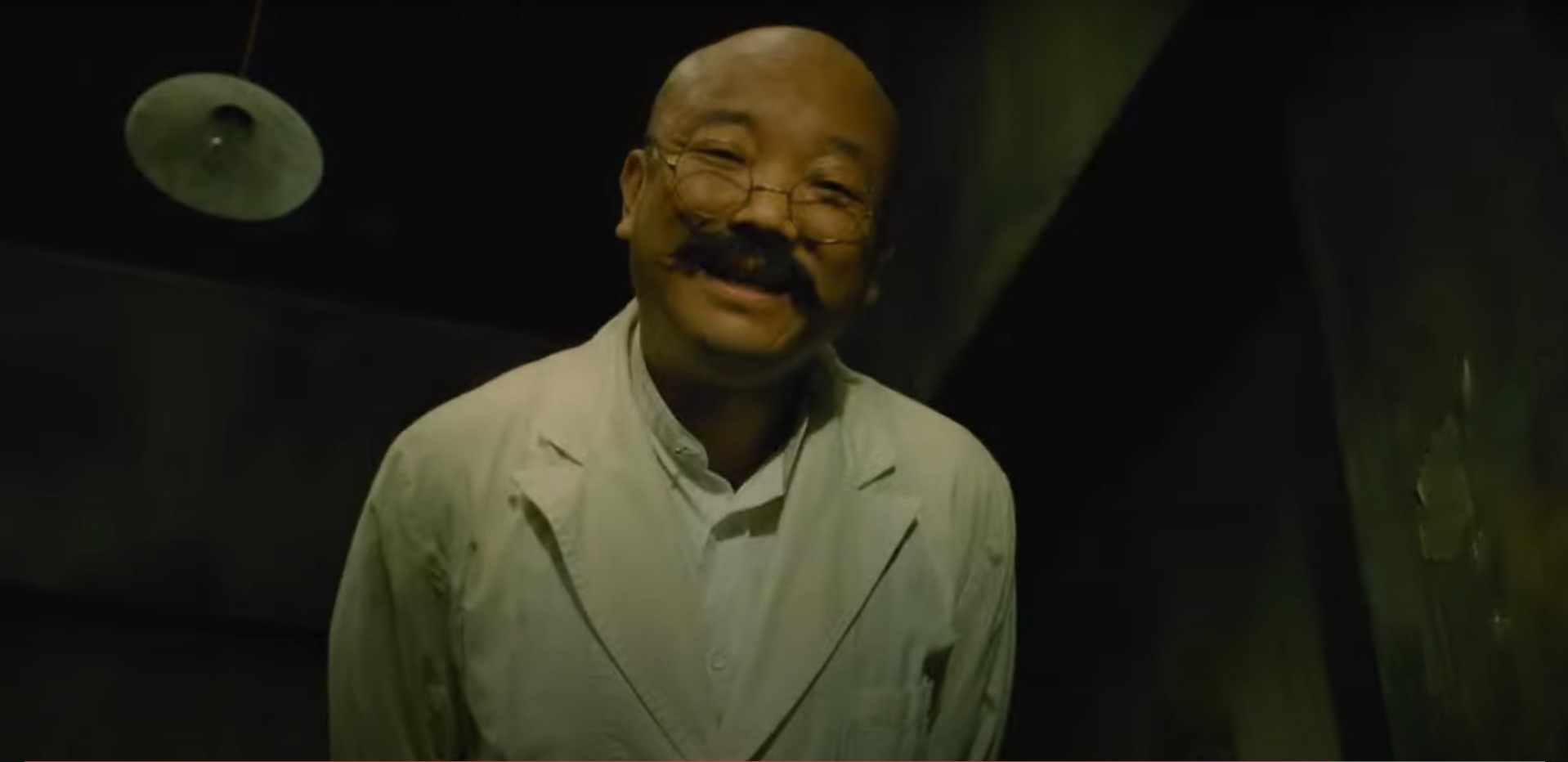
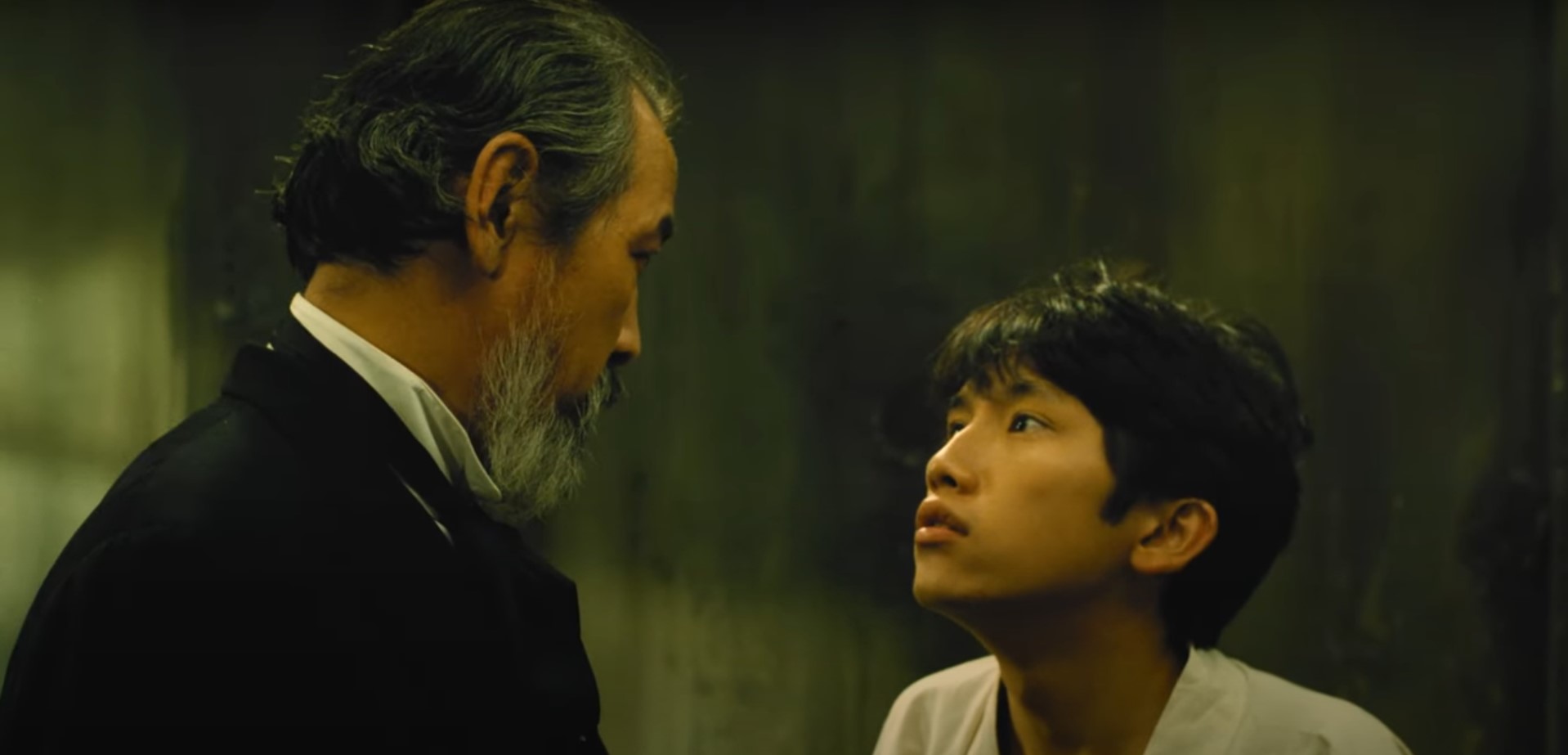
Principal players of “Dogra Magra” boil down to a three-prong outfit centered around Kure Ichiro and his theorized amnesia.  Before being the lead voice actor in “Prince Mononoke,” a decade earlier Yôji Matsuda was waking up with an inexplicable unawareness of who he was or what he had done as Kure Ichiro.  Matsuda feigns forgetfulness with shock and surprise, that will too place audiences in situational darkness, with the young Ichiro arousing in a powerful moment of unfamiliarity.  A shaken, discombobulated Ichiro becomes the object of obsessional mark between two theoretical and experimental-competing psychoanalysts in Prof. Wakabayashi and Dr. Masaki, played respectively by a collectively calm and bearded Hideo Murota (“Rape and Death of a Housewife,” “Original Sin”) that emits a sense of academia and medical security and reason and a hyenic-laughing, bald and glasses-wearing Eri Misawa who is more maniacal and unconventional to the likes of a mad-scientist   Yet both men have motivation that stirs the enigmatic pot of Kure Ichiro’s plight, stemmed from the very same source that drives the brutal murder of his beautiful bride one day before their wedding that eerily follows the footsteps of his macabre ancestral history.  There’s an inarguable difference between Wakabayashi and Masaki’s approach handling the curious case of Kure Ichiro; Wakabayashi’s hides in the clandestine shadows that aims to subvert the thought dead Masaki’s work whereas Masaki, under his blunt-force mania, is straight forward, almost apathetically.  In either case, both psychoanalytical professionals are indifferent to the crux of human life by focusing solely on whether either one of their theories is correct in an odd game of deception and death.  “Dogra Magra” rounds out the cast with Kyôko Enami (“Curse, Death & Spirit”) and Eri Misawa.

An attribute for audiences to become lost in “Dogra Magra’s” ethereal can be contributed by Toshio Matsumoto’s accosting avant-garde disorientation that swallows Kure Ichiro past, present, and future, plays tricks on his mind and eyes, and that also fishes patiently for a conclusion that rarely seems apparent.  The experimental qualities of “Dogra Magra” seep out of the tap of dark comedy and amnestic thriller and into a basin of spreading horror and exploitation.  “Dogra Magra’s” surreal storytelling and interesting, visceral visuals often reminds us of an old-dark house film a decade prior with the Nobuhiko Obayashi film, “Hausu,” and while not based in satirical foreplay like “Hausu,” “Dogra Magra” begins to unravel more questions than answers with a fleeting sense that nothing is real, nothing is as it seems, and maybe perhaps were all stuck in Kure Ichiro’s herded and scrambled mind that may or may not be his inherent, innate doing after all and that changes the narrative entirely.  Themes of historical repetition, ancestral culpability, forgetting the past, and empirical brainwashing are churned intrinsically into “Dogra Magra’s” constitution as well as within Japanese legacy with a formidable and prophetical proposition for no hope on horizon through a chimerical lens of learning and growing into the truth.

Radiance Films continues to starkly highlight underscored and wayward films from around the globe and “Dogra Magra” is no exception with a beautifully curated Blu-ray release.  The AVC encoded, 1080p high-definition, BD50 features the original widescreen aspect ratio of 1.85:1 filmed by cinematographer Tatsuo Suzuki.  The Radiance print for the limited-edition Blu-ray is pulled from the original 35mm elements and transferred in Hi-Def by producer Shuji Shibata and supervised by Tatsuo Suzuki.  The stunning upgrade leaves nothing to the imagination with a starkly harsh color grading that appears rawer than air or bright, leaning into grayscale more with darker tones of a greenish-yellow to accentuate the morbid, maybe even grittier, side of this tale, but often has naturally flourishing landscapes, such as the beach cove and the asylum yard that provides a good stretch of depth when not filtered through a POV celluloid handheld.  What’s a real winner here are the textural details that emerge through a blanket of consistent, healthy stock grain with dust and dirt retained to an extreme minimum.  The Japanese LPCM Mono mix disperse a sure-designed composition between natural audio elements layered upon or spliced with the incongruous tunes of one going through a hallucinogenic and dissociative state.  Dr. Masaki’s maniacal laughter has a sharp authoritarian jest that makes it even more frighteningly surreal.  Dialogue withholds that same sharpness and clarity throughout channeled through a single output, harnessing all the action into a funnel but clearly distinct.  English subtitles are optionally available.  The static menu’s special features store an achieved commentary track from late director Toshio Matsumoto, a 2003 interview with the director, programmer and curator Julian Ross’s visual essay on the cinematography Dogra Magra Through the Eyes of Tatsuo Suzuki, a featurette Instructions on Ahodara Sutra on the subject of the chant used in the story, a still gallery of production sketches, and the trailer.  A 51-page, color book weighs the Blu-ray package with contents that include a director’s statement from 1988, exclusive essays and an interview by Hirofumi Sakamoto Late-Period Toshio Matsumoto and Dogra Magra, Jasper Sharp The Pen is Mightier than the Sword:  The Life of Atsushi Yamatoya, and Alexander Fee and Karin Yamamoto Memory traces:  Interview with Producer Shuji Shibata, and rounding out with transfer credits and release acknowledgements.  The reversible sleeve is housed in a clear Blu-ray Amaray with new illustration compositional art and the original, more traditionally composed, Ukiyo-e artwork on the reverse.  Encoded only for regions A and B, Radiance Films’ limited-edition release to 3000 copies has a runtime of 109 minutes and is not rated. 

Last Rites: “Dogra Magra” psychosomatic surrealism is mind games on methamphetamines and Radiance Films does the 1988 Japanese picture justice rekindling its worth to the world of cinema.

“Dogra Magra” on Limited Edition Blu-ray! Purchase Here!

Cheese Isn’t the Only Snack on this EVIL Rodent’s Diet! “Rat Man” reviewed! (Cauldron Films / Blu-ray)

See Nelson de la Rosa as the “Rat Man” on Blu-ray!

On the Caribbean Island of Santo Domingo, a genetic fiend scampers on the streets.  By injecting the sperm of a rat into a Monkey embryo, one fervent geneticist’s desires to be globally renowned creates a small yet deadly human rat.  Intelligent, agile, and with a lethal poison under its fingernails that could kill a normal size human in a matter of seconds, the creature escapes confines and roams the streets looking for fresh meat to eat.  One of the victims is a photoshoot supermodel from New York City that prompts an unofficial investigation of the mistaken sister to the supermodel and a mystery writer who are now on the hunt for the whereabouts of the others from the photoshoot group.  As the bodies pile up, the rat man wreaks havoc on the small island villages where the survivors and investigators must fight for their life to avoid being gnawed upon.

“Rat Man,” aka “Quella villa in fondo al parco,” translated to “That Villa at the End of the Park,” is the 1988 the Italian-made, creature feature of predominant spaghetti western and poliziotteschi director Giuliano Carnimeo in what would become one of his last feature films  Credited as Anthony Ascot, the western “Sartana” franchise and “The Exterminators of the Year 3000” director tackles the horrors of genetic manipulation with survivalist rodent given primate intelligence, a far cry from Carnimeo’s usual genres.  The screenplay comes from “Demons” and “The Ogre” writer Dandano Sacchetti under the penname David Parker Jr.  Carnimeo and Sacchetti Americanize their credits to appeal more to western audiences who, in the late 80’s, were lapping up Italian horror and creature features starring known international actors in tropical republics and “Rat Man” falls perfectly into that category.  “Zombie” and “The Beyond” producer Fabrizio De Angelis produces the film from production companies Surf Film and Fulvia Film.

While usually Italian productions go after American names, like John Saxon, Christopher George, or Robert Vaughn, “Rat Man” looked elsewhere amongst the surrounding Anglo-Saxon countries and plucked a few names that lead the charge in what would become a cluster of principals to become ensnared by tropical bred, genetically tainted vermin standing just over 2-feet tall, with elongated sharp teeth, and poisonous fingernails.  Without a defined lead, the script swirls through possible hero and heroine tropes, such as the investigating team-up between New Zealand actor David Warbeck (“The Beyond”) and Swedish actress Janet Agren (“Eaten Alive”) who are no strangers starring Italian productions.  Agren plays Terry who flies into Santo Domingo under the impression her supermodel sister was brutally murdered, and she happenstance meets at the same hailed cab Warbeck’s character, work vacationing mystery writer Fred Williams, who for some reason, some how becomes involved in helping Terry without significant cause or benefit other than possibly the mysterious case being a good plot for his next book.  There’s also the case of the false hero and final girl with the pursuit of photoshop photographer Mark, played by Austrian actor Werner Pochath (“Devil in the Flesh”) and his hot model Marilyn, by Italian actress Eva Grimaldi (“Covent of Sinners”).  These intended, or perhaps not intended, red herrings do make “Rat Man” favorably unpredictable as well as grim in regard to centric characters.  Grimaldi becomes the object of obsession with gratuitous nudity and a showcase of her other assets.  In more forgiving times when the diverging physical differences subjected actors into selective roles, the film employed one of the shortest men in our lifetime with Nelson de la Rosa.  Standing all of 2’ 4 ¼” because of Seckel Syndrome, the Dominican Republic born actor donned the makeup, false teeth, glued-on nails, and the ratty clothes to be transformed into the titular villain.  Limited movements and with no dialogue, de la Rosa’s underrated, give-it-his-best performance reveals to be a bright spot in story about a rat spliced with a monkey with the assistance of some movie magic; that one scene where he climbs up the window drapes and looks over his shoulder at Eva Grimaldi as she sleeps in a dark room and he’s slipping into the shadows gives proper chills.  Cast rounds out with Anna Silvia Grullon, Luisa Menon, Pepito Guerra, and Franklin Dominguez. 

Out in the cinema land, there have been worse genetical abomination movies through the decades.  “Rat Man,” surprisingly enough, champions for the middle ground as a solid, campy, man-made creature-on-the-loose feature with, dare I say it, okay performances, competent camerawork, and a villain unlike any other scampering around.  Sure, there are cheesy moments, but rats do like cheese, or so the stereotype goes, and that adds a layer of relaxation and ease knowing Giuliano Carnimeo had a sense of acceptability rather than trying to make a absolute, serious horror movie.  The one aspect I will mention where there was difficulty in swallowing was the scattered story flow.  “Rat Man” seemed to be everywhere all at once from beaches to the jungle to the vacant streets of Santo Domingo without rhyme or reason.  For a while I ran with the theory the Rat Man followed the photoshoot group, targeting the eye candy for its own perverse desires, but that promising concept was blown to smithereens when the little village of St. Martin had been terrorized and abandoned in a moment of exposition awareness.  Carnimeo’s jump from out of the western pot and into the horror fire translates his eye for the lingering and peripheral dread, much like a showdown of glares that has revolutionized to the lie and wait of the rat man cometh but if only the director could yoke the loose story for a straighter edge, “Rat Man” would have been acute as pestilence in the Italian horror mercati.

The “Rat Man” chews its way onto a brand-new Blu-ray release from Cauldron Films.  The restored in 4K transfer is pulled from the 35mm original negative and presented on an AVC encoded, high-definition 1080p, dual-layered BD50, exhibited in the original European widescreen aspect ratio of 1.66:1.  Primarily in low key, shadows run the range of a creature lurking in every nook and cranny, turning “The Naked Doorwoman’s” Roberto Girometti’s, credited as Robert Gardner, cinematography from darkened eyesore to a penetrating thriller of what’s scuttering beneath the shadows.  Emerging from the color is the perfect diffusion of color and texture underneath the natural looking stock grain.  There also isn’t a compression blemish insight or any kind of unnecessary enhancements from this good-looking print.  The only audio optional available is an English dub 2.0 mono track.  Despite an assortment of nationalities, the English dub does make the distinct accents go away with language uniformity.  Foley strength lies principally in the forefront but does champion the beast with a low growl always at your feet, or face depending on the camera angle.   English subtitles are optionally available and synch well with no errors in spelling or in grammar. Cauldron Films exclusive bonus features include an audio commentary, also available on the audio setup portion of the fluid menu, with film historians Eugenio Ercolani, Troy Howarth, and Nathaniel Thompson, and three Italian language with English subtitles interviews with cinematographer Robert Girometti, camera operator Federico Del Zoppo, and post-production consultant Alberto De Martino. “Rat Man’s” trailer rounds out the special features encoded content. The standard release comes in a clear Amaray Blu-ray case with new illustrated artwork that gives a real sense of what to expect by Justin Coffee. The reverse has the original, and if I might add beautiful, poster art that’s less surmising but more intriguing. Authored for region free playback, Cauldron Films’ “Rat Man” scurries with an 82-minute runtime and is not rated.

Last Rites: Forget setting out the poison, “Rat Man” can’t be exterminated with a phenomenally invincible release from Cauldron Films. In the slim pickings of the killer rat subgenre, “Rat Man” leads the pack rats as one of the more bizarre, degrading, and omnipotent villains ever to be on prowl.

See Nelson de la Rosa as the “Rat Man” on Blu-ray!

In the Canals, An EVIL Lurks! “Amsterdamned” reviewed! (Blue Underground / Blu-ray)

The Horror of “Amsterdamned” Canals Are Now Available at Home!

A killer emerges out of the depths of an Amsterdam canal and mercilessly kills a prostitute, dragging her into the water, and suspends her lifeless, stabbed-riddled corpse over one of the canal bridges.  Detective Eric Visser is baffled by the canal killer’s unusual technique but aims to track down the bravado murderer while living the single dad life with daughter Anneke.  When another couple of heinous killings takes place out in the middle of the water and the mutilated bodies wash ashore, panic begins to creep into administrative officials with the thought of a scuba diving maniac swimming in the hundreds of Amsterdam canals.  Investigating the underwater hobby leads Visser to meet Laura, a diving enthusiast and museum tour guide who sparks instantly with the ruggedly handsome detective, but as the Visser gets closer to the truth and the killer, Laura becomes emmeshed in a crime that’s deadlier than an embolism. 

If scuba diving wasn’t already deadly enough, the murky waters of canal rivulets become the hunting grounds of a deranged, underwater killer in Dick Maas’s 1988 Dutch crime thriller “Amsterdamned.”   The elevator horror filmmaker of “The Lift” Maas wrote and directed the red-running canal of carnage with a fast-paced, action-packed, hard-boiled, giallo film outside the conventional Italia-construction.  Shot mostly in the red-light district capital of the world of Amsterdam, shooting locations also include Utrecht to accommodate additional speedboat scenes, plus studio work in Leiden and Heemstede, Netherland.  Maas self produces the action-horror alongside Lauren Geels, a longtime collaborator with Maas who’ve worked previously on comedies “Voyeur” and “Flodders” and subsequent projects, such as the English-dialogued apocalyptic drama “The Last Island” helmed by provocative feminist filmmaker Marleen Gorris and Maas’s own American remake of “The Lift,” known as “The Shaft” or “Down.”  “Amsterdamned” is distributed theatrically by First Floor Pictures.

Huub Stapel (“The Cool Lakes of Death,” “The Lift”) stars as the world-weary, tough as nails cop Eric Visser.  Also, as a single dad raising a small preteen and nearly self-independent child Anneke (Tatum Dagelet, ”Stuk!”), the setup doesn’t automatically constitute the detective as a cynically hardboiled man of the law but evokes more of a seasoned and skeptical vigilant persona of a man who is willing to leave circumspection at the door when duty calls.  Stapel wonderfully fits the bill of Eric Visser’s rugged and assured good looks with a force in tune with being a father and a police investigator when the occasion calls for it.  Being a single father also invites the opportunity to spark an exciting love interest to later put into danger.  The infectious smile of Monique van de Ven (“Turkish Delight,” “A Woman Like Eve”) fills that void as Stapel and Ven engage in teetering flirtation that makes us wonder how astute is Visser now on a case that’s causing havoc on the streets of, or rather the waterways of, Amsterdam.  Luckily, fellow police partners Vermeer (Serge-Henri Valcke, “Sl8n8”) and John van Meegeren (Wim Zomer), the latter a professional scuba diver and once jealous rival lover of Visser, keep the detective mostly focused with investigative conversation, joint crime scene speculation, and the gruesome death of one of them when they get too close.  That ancient rivalry between Visser and Meegeren stays put in the re-introduction of their assembly with no hard feelings and bygones will be bygones attitude, missing the change for any exterior or addition tension outside the murderer’s reign of terror.  “Amsterdamned” rounds out the cast with Lou Landré, Tanneke Hartzuiker, and Hidde Maas.

The fascinating aspect of Dick Maas’s “Amsterdamned” is taking the idyllic, ingrained, and utilitarian that is a cultural and landmark staple of Amsterdam and turning into an unpleasant gateway of fear and anxiety.  Transferring soundbite cues and following a storyline that’s not terribly too dissimilar from that of Steven Speilberg’s iconic oceanic death-dealing “Jaws,” and toss in Dick Maas’s enthusiastic fervor for a heart-racing effervescence, and you have the singular crime-thriller “Amsterdamned” in a nutshell that’s doesn’t deliver trite and uninspired horror or thrills but rather spoils the innate grandeur of a worldclass city that’s soaked in splendor as well as carnal sin; a fact lost upon espionage thrillers who overuse “Amsterdam” as an assembly of salvo and high-speed chases.  Maas does add his own variation of high-speed chase with a lengthy and complex speedboat pursuit through the on-site in Amsterdam and Utrecht canals with gripping and well edited ramp jumps and fiery explosions that predate some of the more renowned speedboat chases of modern cinema.  What’s also interesting about “Amsterdamned” is the adversary that doesn’t have a lot of bells and whistles to make a convoluted story stick; instead, the killer is rather simply pieced together but descriptively held at bay until the finale for maximum suspense on unveiling the identity. 

Surfacing just beneath the depths is a 2K restoration from the original 35mm negative, approved by Dick Maas, from Blue Underground; however, these Blu-ray specs mirror the 2017 Blu-ray and DVD combo set and is more than likely the same transfer but for this standard edition, also labeled special edition, release.  The single disc, AVC encoded, BD50 is presented in high-definition 1080p and in a widescreen 1.85:1 aspect ratio.  Color saturation stands out here with a specified density that results in a pop of color and a diffusion of light that’s brilliant and revealing in the day without a bleeding wash and cold, wet, and with a noir-like steeliness at night, accentuated by inky solid shadows.  The original 35mm print has flawless approach into the restoration that makes the 2K scan candid and, perhaps, a walk in the park for another Blue Underground upgrade to high-definition in their established genre catalogue.  The original Dutch soundtrack is presented in a 5.1 DTS-HD, greatly tightened around the milieu and dialogue to isolate each track for separation and clarity.  Dick Maas, a filmmaker of many talents, scores his own feature with an unintrusive and dynamic soundtrack that ebbs and flows with the trepidation terror and tension-riddled action.  Dialogue is clean and clear but does have that ADR artificiality to it.  English subtitles render over promptly and error free.  Two other soundtrack mixes are available on the dual layer disc:  a lossless hybrid English-Dutch 2.0 DTS-HD and a French dubbed and lossy Dolby Digital 2.0 Stereo.  English SHD and Spanish subtitles are also optionally available.  Extras are pulled from the previous Blue Underground release and are an audio commentary from writer/director/composer Dick Maas and editor Hans van Dungen, a making of “Amsterdamned,” an interview with star Huub Stapel Tales from the Canal, an interview with stunt coordinator Dickey Beer Damned Stuntwork, the Dutch and US trailer, the Lois Lane music video directed by Dick Maas, and poster and still galleries.  Behind the wild ride illustrated composition of the Blu-ray front cover, the reverse cover lists the encoded scene chapters on top of one of Huub Stapel’s stunt work performances. The disc is pressed with the masked scuba diver head holding a gleaming diver’s knife cover art from Blue Underground’s limited-edition Blu-ray and DVD combo set of 2017. The all region encoded disc holds a 113-minute feature and is rated R.

Last Rites: If looking to save a buck against purchasing the limited edition, dual format combo set, the standard special edition Blu-ray of “Amsterdamned” is worth it, especially since the film has been absent from U.S. home markets up until 2017. Dick Maas is a premier Dutch horror filmmaker with the ability to keep us engaged as well as on edge.

The Horror of “Amsterdamned” Canals Are Now Available at Home!

EVIL’s on the Shallow End of “Deep Space” reviewed! (Scorpion Releasing / Blu-ray)

“Deep Space” Invades Blu-ray on Amazon.com!

A government funded space craft containing a monstrous biological weapon crashes to Earth.  The organic creature is genetically coded to be a killing machine with a craving for eating it’s enemy and, now, it’s loose in the city and not responding to the scientists’ command self-destruct codes.  Tough and obstinate cop Ian McLemore and his partner, Jerry Merris, are ordered ot investigate the crash site before government agents take control of the case, even removing a pair of strange organic pods with them for further examination.  When a couple of close colleagues are shred to pieces at the hands of the creature, McLemore will stop at nothing to figure out what’s wreaking havoc in his city and blow it away.  

1988 – a weird, yet greatly satisfying transitional period of fading 80’s horror into nipping at the insanity of 90’s brazen prosthetic creature effects right before the turn of the computer generated decade.  Granted, Fred Olen Ray’s Sci-Fi horror “Deep Space,” which is ironically set on Earth, is very much an enamored 1980’s horror, but the Olen Ray film is where you can kind of see the turning of change on the horizon when the story’s ideas become too grandiose for tangibility alone, no matter how much us fans love to see practical effects over CGI.  The script, cowritten between Olen Ray and T.L. Lankford (“Hollywood Chainsaw Hookers,” “Fatal Passion”), is massive more expensive than anything the filmmaker’s had previously done and with a $2 million budget, “Deep Space” gets a giant explosion, high speed car scenes and wreckage, the iconic face and voice of Charles Napier, a Xenomorph-like creature, and a ultra-bloody chainsaw scene that could give “Evil Dead’s” Ash Williams a run for his money.  “Deep Space” is a production of Trans World Entertainment (no, not the same monikered company that sunk money into the bleeding financially physical media brick and mortar outlets like FYE, Camelot Music, or Suncoast) and shot in Los Angeles under producers Olen Ray, Alan Amiel (“Inner Sanctum”), and Herb Linsey (“Neon Maniacs”) with Yoram Pelman (“Commando Squad”) as executive producer.

At the center of the chaos is Ian McLemore, a hardnose and stubborn, harmlessly sarcastic detective who goes against the authoritative grain and cuts through bureaucratic tape to get the job done.  Playing McLemore is the unmistakable Charles Napier.  The “Rambo:  First Blood Part II” and “The Silence of the Lambs” actor, who is about as legendary as they come in supporting roles, lands his own lead man role with his own buxom beauty romantic leading lady in Ann Turkel {“Humanoids from the Deep”), as a new, but experienced, cop, Carla Sandbourn, on the L.A. force.  Experiencing Napier as an attractive male lead was a little more off-putting that initially thought.  The veteran actor, who began a career in the movie picture industry in his early 30s which was later than most of his counterparts, is hovering around early 50s in this role, middle of the ground with his physical appearance, and has a masculine square chin akin to Ron Pearlman with matching hair color to the “Hellboy” actor.  At an age gap of approx. 10 years between them at the time of filming, Napier and Turkel make their courtship appear easy; in fact, almost too easy as Turkel’s drops her shirt at the mere sight of McLemore dressed as a Scotsman blowing away at bagpipes for a gag effect in sleeping with him.  Both Napier and Sandbourn are charming enough to pull off a love affair without causing too much of a they’re so old stir.  “Serenity’s” Ron Glass plays the casual with the flow Partner Jerry Merris, “The Inglorious Bastards’” Bo Svenson is full of patience as the McLemore insubordination absorbing Captain Robertson, and the original Catwoman herself, from the Adam West “Batman” television series, Julie Newmar as a psychic who can clairvoyantly see the creature’s murderous mayhem.

The fact that “Deep Space” doesn’t take place at all in space is innately tongue in cheek to begin with, but that brand of flippancy courses through the film’s veins despite the blood splattering and semi-serious veneer, weaving between an action-horror and a horror-comedy during the entire 90-minutes.  Some of the comedy is intention, such as McLemore’s husky wit and sarcasm, but there’s also the extremely foggy campy side to this gem.  Some of these elements include the creature being hinted as a genetically mutated cockroach or the left field use of Julie Newmar’s psychic abilities that are randomly injected the storyline for the sole purpose of forewarning McLemore over the telephone rather being an intrinsic piece to stopping the creature.  The creature carnage would undoubtedly be investigated and exterminated without the psychic’s help, making her character farcical in futility.  “Deep Space” also pulls a little inspiration from “Alien,” maybe even the sequel, “Aliens,” with a toothy, long-headed, and eyeless black organism that resembles much like a Xenomorph or the Xenomorph queen and there’s also a near shot-for-shot sequence of a security guard whistling to and trying to persuade a cat to come to him while the monster rises from behind and strikes a fatal blow.  The scene is very reminiscent of Harry Dean Stanton’s death in “Alien.”  Being campy has it’s highlights but never can fully overshadow scenes that erect suspense or are saturated with gore which “Deep Space” has both with a combination of editing and piercingly sharp sound design and a rip-roaring, blood-splattering chainsaw kill that’s leaves that good metallic taste in your mouth.

There’s no escaping the blood-hungry tentacles of the “Deep Space” monster coming at you in a brand new 2018 high-definition master Blu-ray from Scorpion Releasing, leased from MGM, and distributed by Ronin Flix and MVD Visual. The hard-locked region A Blu-ray is presented in an anamorphic widescreen 1.85:1 aspect ratio and is rated R. Fred Olen Ray knew how to develop an eerie, twirling fog and wind atmosphere and this master crisps up that iconic trope image. Textural details and natural-appearing skin colors are delineated nicely throughout as you can make out every little blemish and hair on a shirtless Charles Napier as well as really getting into the slimy orifices of the creature and having a sense of its viscosity with a decisive sheen. Black areas are inky and dense with the right amount of grain in the overall picture and no obvious signs of image posterization, retaining the natural shadowing, along with no cropping or border enhancements. The English language DTS-HD master audio stereo finds common quality ground with a tidy dialogue track that does Napier’s resonating and recognizable jest justice. However, there is some hissing early on into the film, especially in the lab scenes in the contentious dialogue between the military general and the lead scientist. Omar Tal’s sound design proves vital to the story that relies on the screeching, the scuttling, the whooshing of tentacles, and the booming roars of the creatures, coinciding appropriately with Alan Oldfield and Robert O. Ragland’s rather run of the mill serrated and discordant electronic score. What “Deep Space” Blu-ray lacks is robust extras with only an audio commentary with director Fred Olen Ray and a scene selection index. “Deep Space” ages about as well as you expect over the last 35 years, but this Fred Olen Ray creature feature relic becomes rightfully preserved for being quintessential B-movie verve that no longer seems to exist in today’s age and also the fact that Charles Napier wears a kilt.

***Stills do not represent or were captured from the Blu-ray release

“Deep Space” Invades Blu-ray on Amazon.com!