Fausto and His EVIL Queen Will Enslave You in the “Forbidden Zone” reviewed! (MVD Visual / Blu-ray)

Intestine to the “Forbidden Zone” on Bluray!

The Hercules family recently purchases a house from a drug dealer who warns them to never open the basement door that leads into, what he calls, the Forbidden Zone.  Curious about the secrets the Forbidden Zone holds, the beautiful daughter, Frenchy, accidently finds herself in the Sixth Dimension, a subterranean word ruled by King Fausto and his sadistic Queen Doris who superintends the torturing of half-naked prisoners. Having laid his eyes upon for Frenchy for the first time, Fausto is instantly enamored with her beauty and the Queen, jealous beyond reason, along with her sadistic daughter, Princess, seek to destroy Fausto’s newest concubine. Frenchy’s brother, Flash, and their mentally invalid grandfather dive into the “Forbidden Zone’s” gonzo world to try and save Frenchy only to find themselves in a labyrinth of skimpy-cladded slaves and nonchalant sex. All hope seems lost for the Hercules family until a deal with Satan might become their only way to salvation.

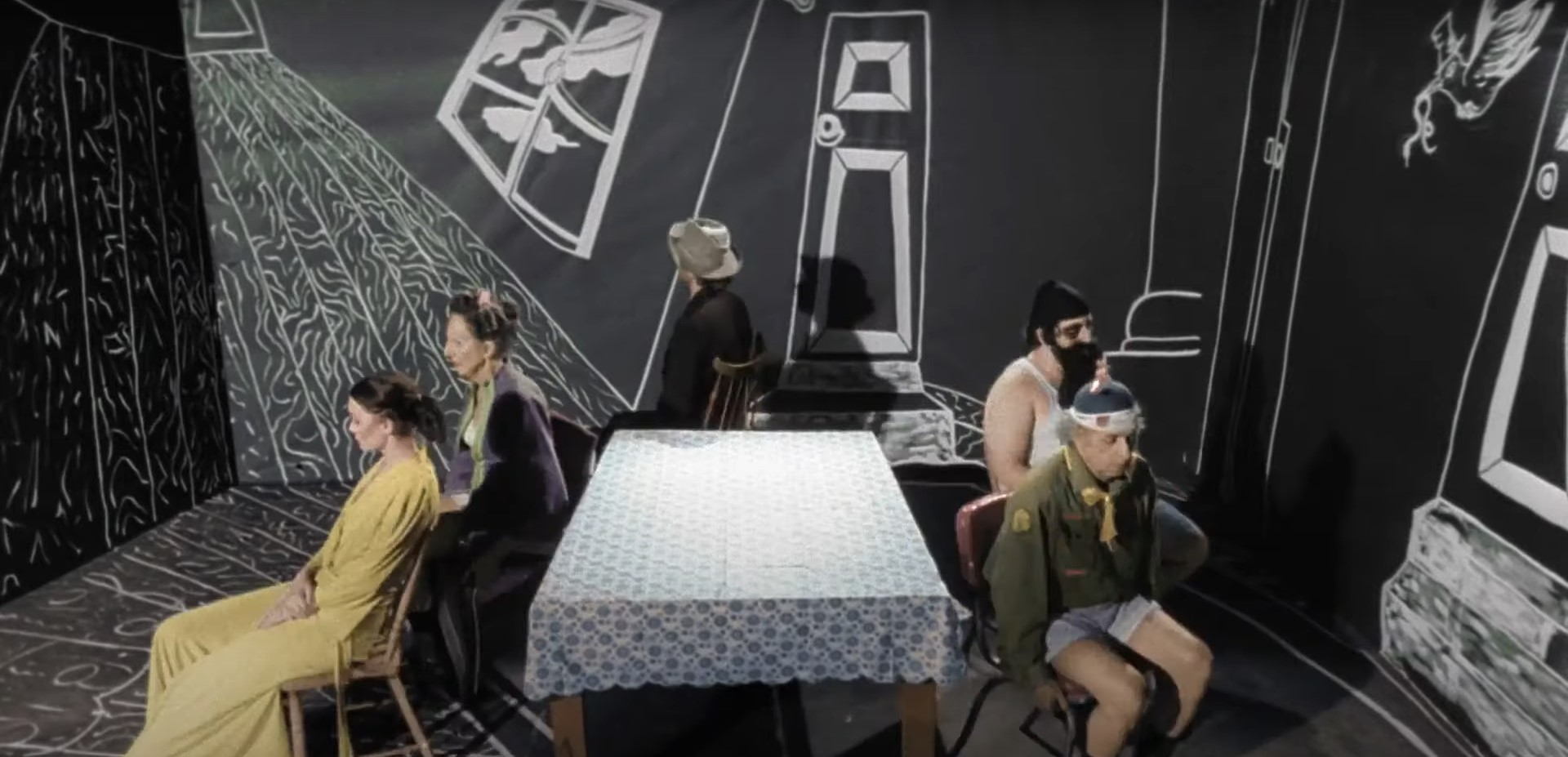
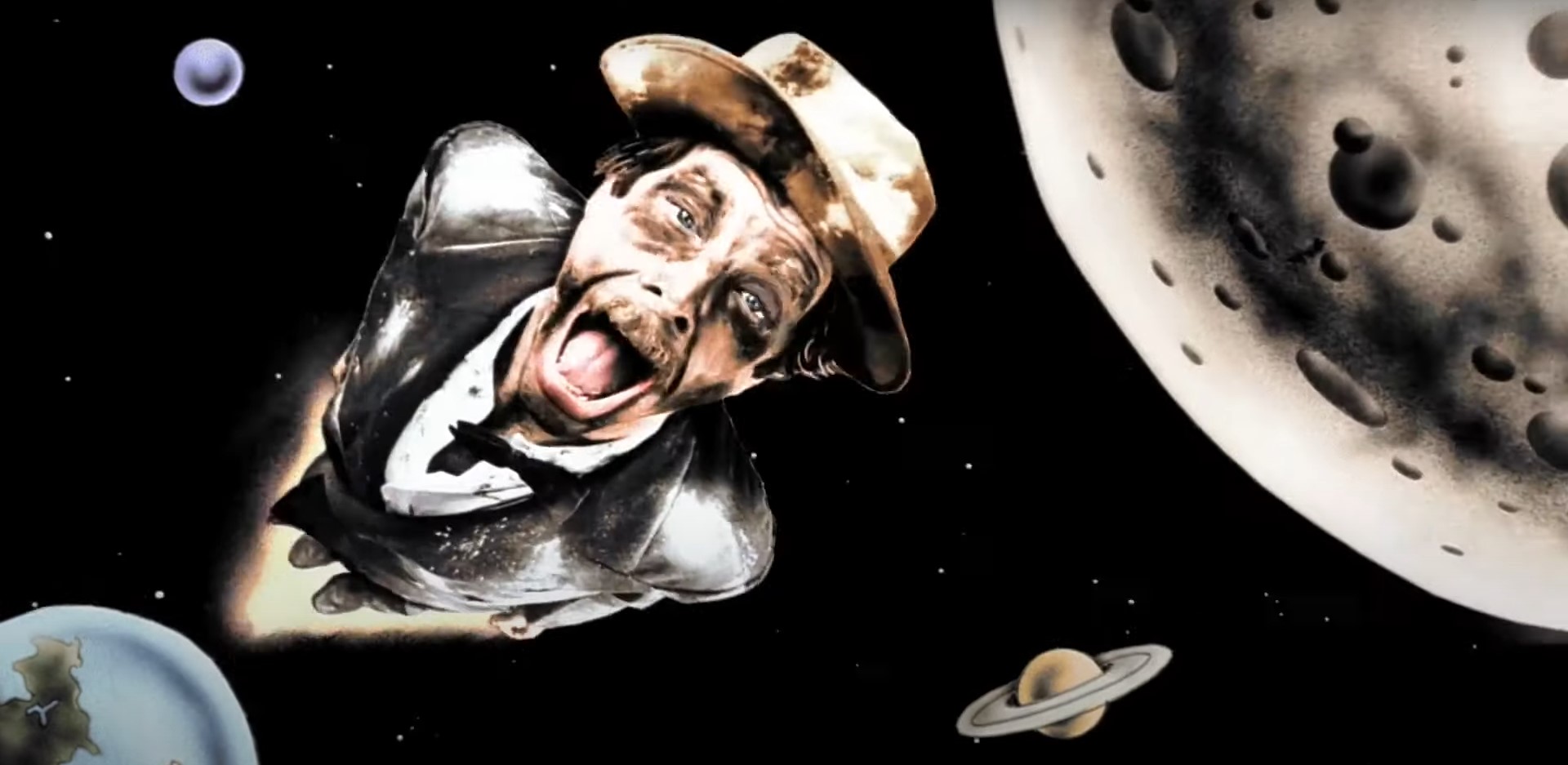
Remember that opening blurb in my recent review of Richard Elfman’s “Aliens, Clowns, and Geeks” where I state my only regret in watching Elfman’s zany 2019 sci-fi comedy was that I didn’t priorly and properly experience his cult classic, the “Forbidden Zone,” first? Everything makes sense now in regard to Elfman’s fascination with the harlequin, his esoteric humor, and a knack for ridiculously unconventional in a direct pull of inspiration from his and his brother’s, Danny Elfman’s, time performing with the musical stage troupe, the Mystic Knights of Oingo Boingo, which would later evolve, at the behest of Danny Elfman, into a popular 80’s ska-band with a reduced name simply known as Oingo Boingo. Richard Elfman wanted to take that stage presence of the Mystic Knights and transpose it to the silver screen, effectively doing by penning and helming a microbudget musical complete with series of extremely detailed and cockamamie cutout animation blended with morbid sideshow talent and performances tuned to the over-the-top theatrics of a well-oil, low-budget, far-out comedy. “Forbidden Zone” became the stepping-stone for script cowriters Matthew Bright (“Freeway”), Martin Nicholson (“House II: The Second Story”), and Nicholas James and was produced by Elfman and James along with executive product Gene Cunningham under the limited production of Hercules Films.

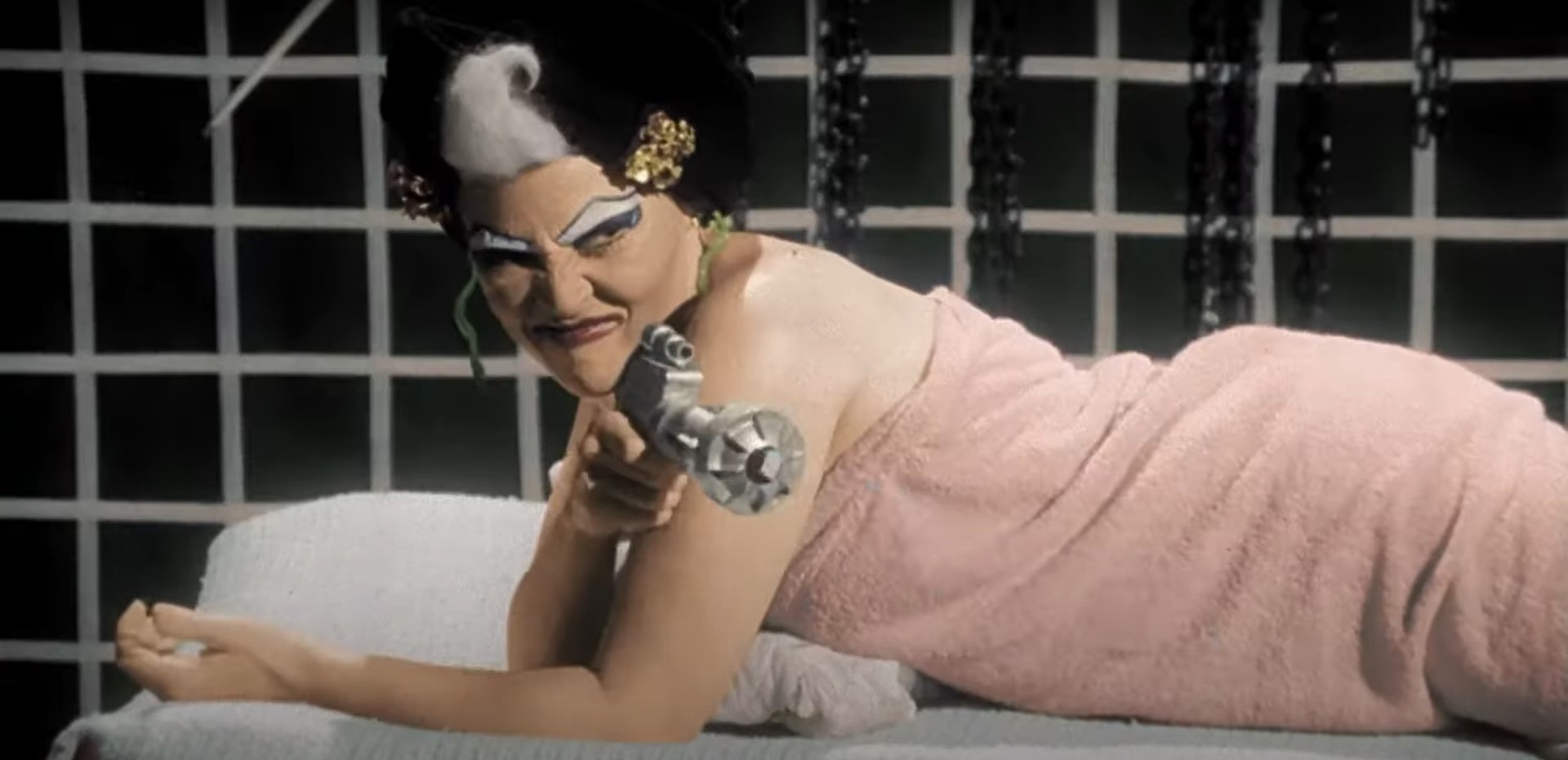
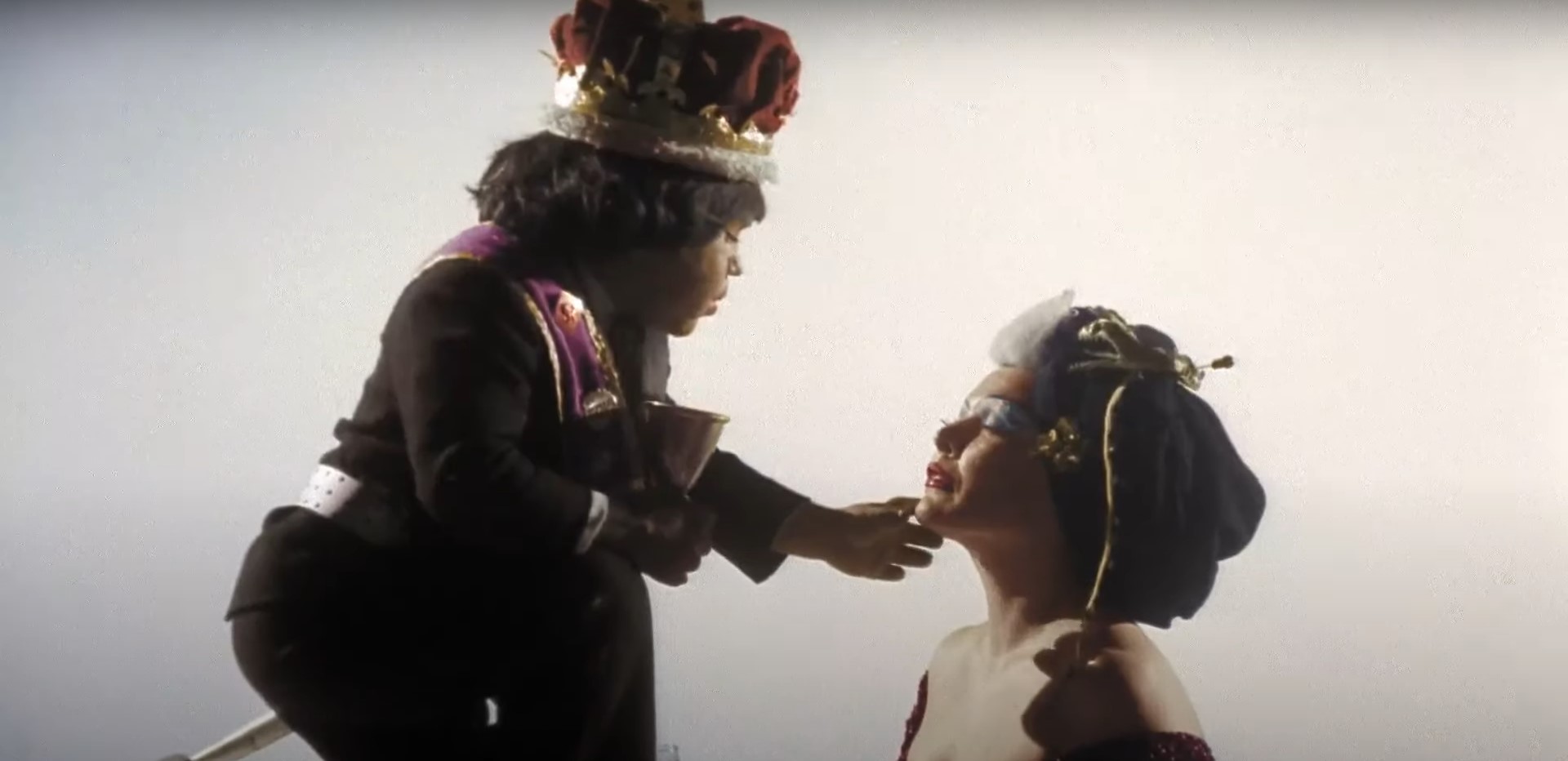
“Forbidden Zone” isn’t your normal run-of-the-mill musical feature as an assortment of styles coursing through what results as an eye-widening breach of political correctness. A smidgen of arthouse, a true to form vaudeville, and wall-to-wall crude comical carpeting would be a challenge to any actor set to play any role in this farcical natured fantasy, yet with the help of the Mystic Knights and Elfman’s madman charm, “Forbidden Zone” lands just the right cast to pull off a production this barking mad, beginning with the casting of Elfman’s then wife, Marie-Pascale Elfman, as the principal lead and anti-damsel in distress, Frenchy. Dredging for comprehension through Marie-Pascale’s thick French accent proved to frustratingly difficult to a linguistical layman’s ear, but her performance is light, fluffy, and defiant against the stark contrast of a brutish, no-nonsense Susan Tyrrell (“Butcher, Bake, Nightmare Maker”) as Queen Doris. Tyrrell is phenomenally “Rocky Horror” in prosaic seething and in dive-bar dress while having her Sixth Dimension King be played by her real-life lover off screen, “Fantasy Island’s” Hervé Villechaize. The chemistry between Tyrrell and Villechaize is more than natural even in Elfman’s pasquinade light. A few of my personally favorite performances are in the grandfather and grandson dynamic duo of Gramps and Flash. Phil Gordon wears a hilarious propeller hat and boy scout uniform overtop his older older-than-the-rest-of-the-cast body and though Hyman Diamond doesn’t say one single world in the entire film, as the former Jewish wrestler, Gramps, his antics are far funnier. Danny Elfman, undoubtedly, has a role in his brother’s debut feature, reprising himself in essentially a reoccurring role from his stage acts as Satan. His brief time on screen solidifies the presence of the Mystic Knights with the musicians taking bit parts playing instruments as Satan’s hooded minions. “Forbidden Zone” fills out the cast with executive producer Gene Cunningham as Pa Hercules, Jan Stuart Schwartz as the servant frog Bust Rod, writer-producer Matthew Bright playing twins Squeezeit, the chicken boy, and Rene, Squeezeit’s crossdressing brother, Gisele Lindley as the topless Princess, Kedric Wolfe as a crossdressing teacher and a chandelier (Yes, you heard right, he plays a chandelier), Virginia Rose as Ma Hercules, Viva as the former Sixth Dimension queen, Joe Spinell as a drunken sailor, and the performance artists Kipper Kids, who I remember seeing briefly from Weird Al Yankovic’s “UHF.”

Creative control is everything and with total control, total madness (or genius) can takeover to recreate a bastardized version of Lewis Carroll’s “Alice in Wonderland” that follows a young girl falling down into a curvy intestine chute and come face-to-face with anthropomorphic creatures, a dice-decorative land (parallel’s “Alice in Wonderland’s” playing card theme), and a Queen with a strict and haughty dominion over her terrified subjects.  I also wonder if the Mickey Mouse hats worn by many of the characters in the Sixth Dimension is also a direct connection or an Elfman homage to the Disney rendition of Carroll’s story.  The “Forbidden Zone” should be explored, should be experienced, and should be enamored as a cult favorite amongst fans of not only Through the Looking Glass but also of Terry Gilliam, “Rocky Horror Picture Show,” and Pee-wee’s Playhouse.  With a barebones production value but with immensely vigorous performances that bring to life the extraordinary and flamboyant in all walks of life characters, Richard Elfman materializes a vision, his own vision, of transpiring a feature length film platform for his founded street theatre group, the Mystic Knights of Oingo Boingo.  At the time, did the film change the troupe’s musical journey for the better or skyrocket Danny Elfman’s evolutionary, new wave band?  That remains ambiguously unclear, but the project certainly places Oingo Boingo, in all its moniker and various bandmember forms, on a pop culture map and on everyone’s weird science fiction radar with an unforgettable, unimaginable chthonic comedy spurring laughs and gasps of content. 

After watching “Aliens, Clowns, and Geeks,” we had an inkling that Richard Elfman was an ass man and looking back at “Forbidden Zone” only confirms our theory of a cutout animation poop-chute characters pass through entering the Sixth Dimension and the continuous Kipper Kids’ vocal raspberries and revealing jockstrap ass cheeks.  If you like big butts (and cannot lie), then you’ll like the weirdness of the “Forbidden Zone” on a new Blu-ray director’s cut from MVD Visual, presented in its more recently colorized version of its 35mm stock with a 1.78:1 widescreen aspect ratio.  Retouched with a few Richard Elfman enhancements to the video quality and special effects, the Blu-ray display a remarkable durability of film transfer that show no sign of deterioration or damage.  Natural grain goes unobtrusive and there are any detectable egregious enhancements to circumvent any flaws in the used film stock.  The audio is a slightly different story in the English language LPCM 2.0 stereo that often feels lossy, muted, and hissy at times.  The musical numbers are bore a static underlayer that’s faint but there.  This never inhibits the dialogue or other audio tracks in anyway but can be a nuisance.  English subtitles are an available option.  Special features include a new introduction from director Danny Elfman, a new music video of Richard Elfman beating a bongo drum to a tune to a Danny Elfman score with his wife, Anastasia, thrusting her daisy-duke clothed crotch, and a guised band playing behind them, the original audio commentary by Richard Elfman and writer-actor Matthew Bright, A Look into “Forbidden Zone” featurette from a few years back, prior to Susan Tyrrell’s death, that showcases interviews with the cast and crew looking back at the film, black and white outtakes and deleted scenes, and the theatrical trailer.  “Forbidden Zone” is an ostentatious ornament that’s larger than life in many regards and remains a cult classic to this day with a niche fanbase and tribute theatre productions still being done to this day.

Intestine to the “Forbidden Zone” on Bluray!

EVIL Begins With A Simple Pizza Delivery in “Chop Chop” reviewed! (Kamikaze Dogfight / Digital Screener)

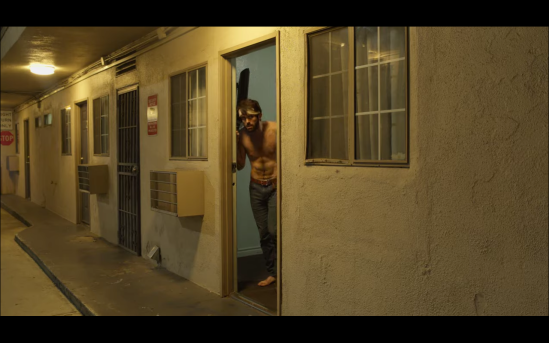
Married couple Liv and Chuck Matthews are enjoying a quiet and romantic night in at their apartment complex.  That is until a pizza delivering psychopath, who relishes chopping off the heads of his victims, knocks at their front door, interrupting the Matthews’ serenity with his own homicidal desires.  The skirmish puts forth the Matthews onto a series of misguided and bizarre encounters with an underground criminal syndicate that upends and jeopardizes their very lives, but the Matthews are not as innocent as they appear and harbor a dark secret of their own that just might get them out alive, barely. 

Flying under the October release radar this year, amongst a swarm of horror films that we thankfully have this unprecedented Halloween season, ekes in the debut feature film, a USA-made, independent horror-thriller entitled “Chop Chop,” from writer-director Rony Patel.  Co-written with Andrew Ericksen, the sleeper film echoes notes of Lynchian themes embroidered with idiosyncratic personas toiling uncomfortable tensions that are dryly humorous.  The Temple University educated in film studies Patel is no stranger to the metaphysics of the genre, pulling influences from and expanding upon his short film catalogue over the last decade with narratives that revolve around the dread of situational surrealism and detour from tropes of traditional tangible horror.  “Chop Chop” is a production of the Patel founded LA based company, Fairwolf Productions, LLC.

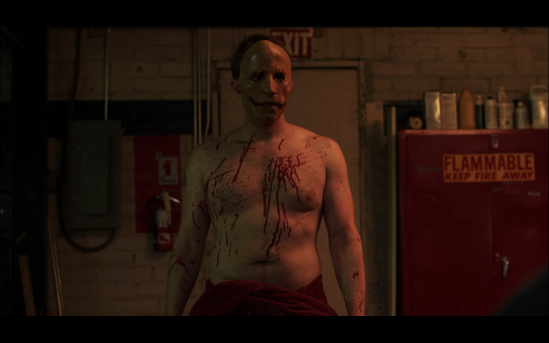
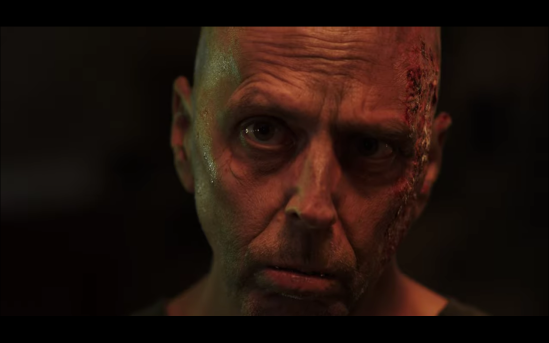
Jake Taylor and, the uncanny Zoe Saldana lookalike, Atala Arce, star in their first principle roles as a seemingly normal husband and wife, Chuck and Liv, who are introduced into the initial beginnings of date night that turns into a stay-at-home night of relationship bliss, but as the story progresses, even before the psychotic pizza boy’s entrance into their lives, setting off a string of deadly incidents, a latent secret itches within them as if toiling an escape plan from a previous unsavory life connected by the unexplained red spade symbol tattooed on both of their bodies.  Ambiguity fills the air between the mysterious tattoo and Taylor and Arce’s sanctum mind and side-eyed performances that convey very little of their unspoken plight and reveal very little about their existing purpose in an organization comprised of odd, but dangerous, jobs and dubiously offbeat and clandestine characters.  However, the face of “Chop Chop” draws an intense paroxysm of eye popping curiosity from the character actor David Harper (“Sick Boy”) in a dual performance as Teddy, the head chopping pizza delivery man, and Teddy’s mute twin brother who wields a samurai sword with a glaring look conveying malevolence.  Harper’s distinct face becomes transfixing when the scarred skin and bedecked with silvery braced teeth jut out from the bowed lips of a sinister smile.  To continue the trend of eccentric, quite rememberable, dark characters, Mikael Mattsson (“Scariest Night of Your Life”) and Nicholas Correnti contribute warped opposition encased inside an intermittent individual of horrid killer instincts reinforcing the already loaded with tension thriller.   “Chop Chop” rounds out with Jeremy Jordan, James McCabe (“Drifter”), Natasha Missick, and Lizzie Chaplin to wring Liv and Chuck’s out, whatever that might be from, even more life-and-death.

“Chop Chop’s” immensely cryptic diagram tones more evocatively by the uniquely rich characters planted from moment to moment inside Liv and Chuck’s inescapable conundrum of cascading misadventures.  Whereas Patel and Ericksen scribe persona diversity that’s interlinked to the fermenting innards of the scene, these characters would not be as fruitful if not exuberated by the actors who portray them, instilling a symbiotic coexistence of selling viperous rouges. Mysterious elements don’t solely lie with the veiled married couple, but also with Terry and his brother who are said, and is shown to an extent, to have powers with the abilities to walk through walls and be clairvoyant; yet, cliff notes of the beyond elemental are nixed and the omission of faculty talents are obliquely positive.  Where the characters flourish in a cesspool of strange and usual criminal activity, the story steps back as a murkier shadow game that’s about as translucent as pea soup and while understanding Liv and Chuck’s more exact role in the whole scheme of events isn’t a complete necessity, Patel and Ericksen’s narrative shell loses the cohesive glue to hold and sustain everything in into a diatonic cadence to the end.  Viewers will be kind of left stuck on the precipice by the finale led up by a perpetual tease of haphazard affairs thinly connected by one inexplicable common source that was surrounded by spies, murderers, and a malicious carcass disposer.  Evading a near total fumbling of the story, “Chop Chop” whips up fresh, new characters for the fray scattered throughout the playing field, keeping the loosely lassoed narrative structure from disastrously crumbling down into hollowed heap.

Ding, Dong! Pizza’s here! “Chop Chop” is a deliciously devilish dish from newcomer Rony Patel, landing onto Digital HD and Cable VOD on October 20th to rent or own on Amazon, iTunes, Comcast, Spectrum, Vudu and more, distributed by Kamikaze Dogfight in partnership with Gravitas Ventures. Since a digital screener was reviewed, critiquing the A/V aspects will not be covered. There was also no bonus material available and no bonus scenes during or after the credits. The cinematography scenes from Ryan Emanuel and Carter Fawcett produce striking setups that immediately dictate an artistry of vest-pocket anarchy that stick out gorgeously from the more darker laden respite between meetups. The English audio mix entangles the dialogue into murky territories underneath the swathed action, creating minor clarity issues to chase when trying to understand Liv and Chuck’s subdued spats that are telling of who they really are in “Chop Chop’s” lethal, but still trippy, Alice in Wonderland variation. Keep an eye on Rony Patel’s future cinematic endeavors as the young filmmaker’s tenebrous thriller, “Chop Chop,” has a meticulous sound design and a marvelously simple flare for character prototypes that energizes the rough enigmatic mystery.


EVIL’s Madcap and Meshuga Rabbit Hole! “Frankie in Blunderland” reviewed! (Wild Eye Releasing / DVD)


Frankie is the epitome of underachiever living in small, scummy, suburban house with an antagonistic and obtruding houseguest, Tommy Spioch, indisposed to ever new living accommodations and a brash Katie, Frankie’s wife, who loathes every fiber in his body, but reaps the benefits of his income. Fed up with how the way things are, Frankie impulsively decides to do something about by trying to kill Spioch, but when Spioch kidnaps Katie, Frankie wusses out on his freedom from their oppressors and pines to find Katie by hitting the streets. Frankie encounters the strange and unusual as well as the macho confrontational characters along the way, involving a spider with human face, a homeless man with paradoxical wisdom, naked fairies, Mormon aliens, and a hideous marionette-like boy.

In the midst of writing this review, Lewis Carroll is probably rolling over six feet underneath his English gravestone with the bastardized fantasy-comedy variation of his classic literary tale of “Alice in Wonderland with the 2011 released film, “Frankie in Blunderland,” from director Caleb Emerson (“Die You Zombie Bastards!”). Emerson, who is also a frequent editor for “Tosh.0,” helms the pretzeled script written by the late Marta Estirado, who passed away before the official release of the film, but “Frankie in Blunderland” is the Spanish-born writer’s debut screenplay twisted with browbeating cinema anarchism while juxtaposing circumstantial life defeat with an adventitious urge to be better despite the odds. Shot mainly in the greater Los Angeles area of Echo Park and Eagle Rock, “Frankie in Blunderland” is an Emerson funded, low-budget project that courses the weird and unnatural, a pair of descriptors that aren’t so abnormal on and off the streets of Los Angeles.

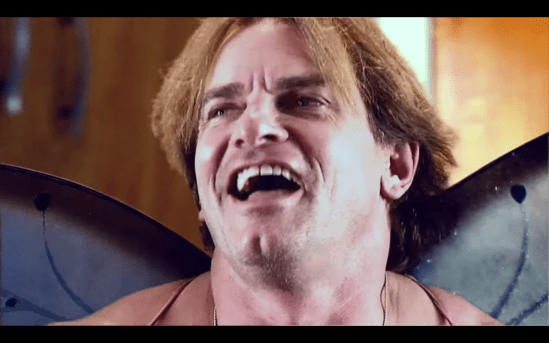
After assisting his editor skills with “The Gruesome Death of Tommy Pistol,” which was starred, produced, written, and directed by Tommy Pistol himself, Emerson locked down Pistol, whose credited under his real name of Aramis Sartorio, to be the titular character, Frank Bellini. If you’ve been audience to any of Tommy Pistol’s *cough cough* porn, you’re well aware of the male performer’s more-than-professional uninhibited nature to do anything on screen. The same uninhibited nature transcends out of adult industry and into the off-Hollywood narrative as Satorio unloads a wide array of unbridled range that allows Satorio to not only be a despondently enfeebled and sheepish Frankie, but also extend to his self-assured Tommy Pistol persona on the latter half of the character arc. Thea Martin and Brett Hundley (“The Trek”) play Katie and Tommy Spioch respectively as the adverse versions of Frankie’s wife and best friend. Katie and Tommy sincerely embark on the utmost effort in making Frankie feel like a worthless wanker by belittling him continuously on every whim he allows Katie and Tommy to get away with while they also stir the lobotomizing love triangle with their own sidebar skirmishes and much like the Lewis Carroll’s “Alice in Wonderland,” every character that shows up in “Frankie in Blunderland” is antagonistic to one and another in a bizarre battle royale of an irritational reality. The colorful characters continue with performances by David Reynolds (“House of 1000 Corpses”), John Karyus (“Poultrygeist: Night of the Chicken Dead”), Caleb Emerson, Gio Paloma (“Dawn of the Head”), John Christopher Morton (“Girls Against Boys”), Vincent Cusimano (“Blade the Iron Cross”), John Brookbank, Bryan Planer, Sadie Blades, and special appearances by “Slime City Massacre’s” Debbie Rochon as a human-spider and Evan Stone as a well-endowed fairy.

Like a full-feature skit from Eric Wareheim and Tim Heidecker, “Frankie in Blunderland” will activate your receptive inertia dampeners, slowing your comprehension down to the point of a snail’s speed on what exactly is going on with Frankie and his misadventures through an alternate reality of the real world all the while encountering the obscure and abnormal characters along the way, rekindling that trippy, if not hallucinogenic, sensation one gets when watching any other bizarre renditions more faithful to the Lewis Carroll’s classic but with more dry wit and blood. While I feign to know all the answers about the meaning behind Estirado’s outlandish script, I’m truly at a loss for words at understanding it, a feel much of the cast has also stated, and to interpret “Frankie in Blunderland” is to be a perceptive cinematic aficionado disconnected for reality, but from what themes I think I do perceive, Frankie reverses course on moral obligations for self-importance to become a quasi-anti-hero in bizarro world. For much of the film, Frankie is tormented, internally and externally, as he subsequently beats himself up over the abuse he meekly swallows from wife Katie and no-so-best friend Spioch and as act one continues to punish the mildly manner Frankie, there comes a point where Frankie is a glutton to own his maltreatment, learns to evolve from it, and becomes one with the disparaging masses in order to be part of the salt-in-the-wound collective that attempt to beat into submission or just downright destroy those unlike them, seen with characters like the loafer Mike West, the unsightly disjointed puppet boy, and a doughy-soft security guard named Peanutch, whereas a fem-bot, Maggie Robot, whose secretly a robot posing as a woman, can simulate into the natural order of the Blunderland society. When Frankie begins to thrash against and degrade these said characters is when he ascends beyond his suicidal thoughts and shoving aside his timid nice guy persona for more turbulent attitude toward life. If this speculation is anywhere near being accurate, then “Frankie in Blunderland” is a revolutionary view of unorthodox measures to rise up above despair in a day of stupidity enveloped by a ludicrous satire.

Perhaps not very extreme, but certainly raw, “Frankie in Blunderland” lands onto DVD under the Wild Eye Releasing sublabel, Raw and Extreme, and distributed by MVDVisual. The re-released Wild Eye Reelasing DVD is presented in a widescreen, 16:9 aspect ratio, housed with a new illustrated artwork liner that’s akin to the Ghana hand-drawn posters and, more than like, keeps with the first pressing’s lossy compressed image and spastic image jittering shifting between different levels of picture and detail degradation. The vapid coloring devours any story-telling vibrancy, leaving the scenes seemingly lifeless and aesthetically devoid, especially when Frankie has his loopy, unconscious discharge of repeated scenes and avant garde imagery after passing out thinking he killed Tommy Spioch. The visual effects are almost cut and paste crude, but add to the chaotic charm of Frankie’s living nightmare. The stereo dual channel audio mix is equally as lossy noticeably muffled by the compression, leaving also a faint and lingering hum through the 82 minute duration. The position of the dialogue remains even, if not behind, the ambient and soundtrack audiophiles and without any depth and range to compensate the lack of gusto, dialogue is lost in a lackluster limbo of lame and loitering linguistics. On a microbudget of this level, don’t expect in depth special features, but considering the content, I’m happily surprised of what’s available which includes a Caleb Emerson director’s commentary, cast and crew interviews with Aramis Sartorio, a peculiar interview with Thea Martin, and director Caleb Emerson, along with six teaserettes which are short clips from the film, and rounding out with Wild Eye Releasing trailers. “Frankie In Blunderland” is a labor of love for Marta Estirado and a sure fire way to kill a couple of brain cells in this degradingly funny demoralizing epic.

Purchase “Frankie in Blunderland” on DVD from Amazon!