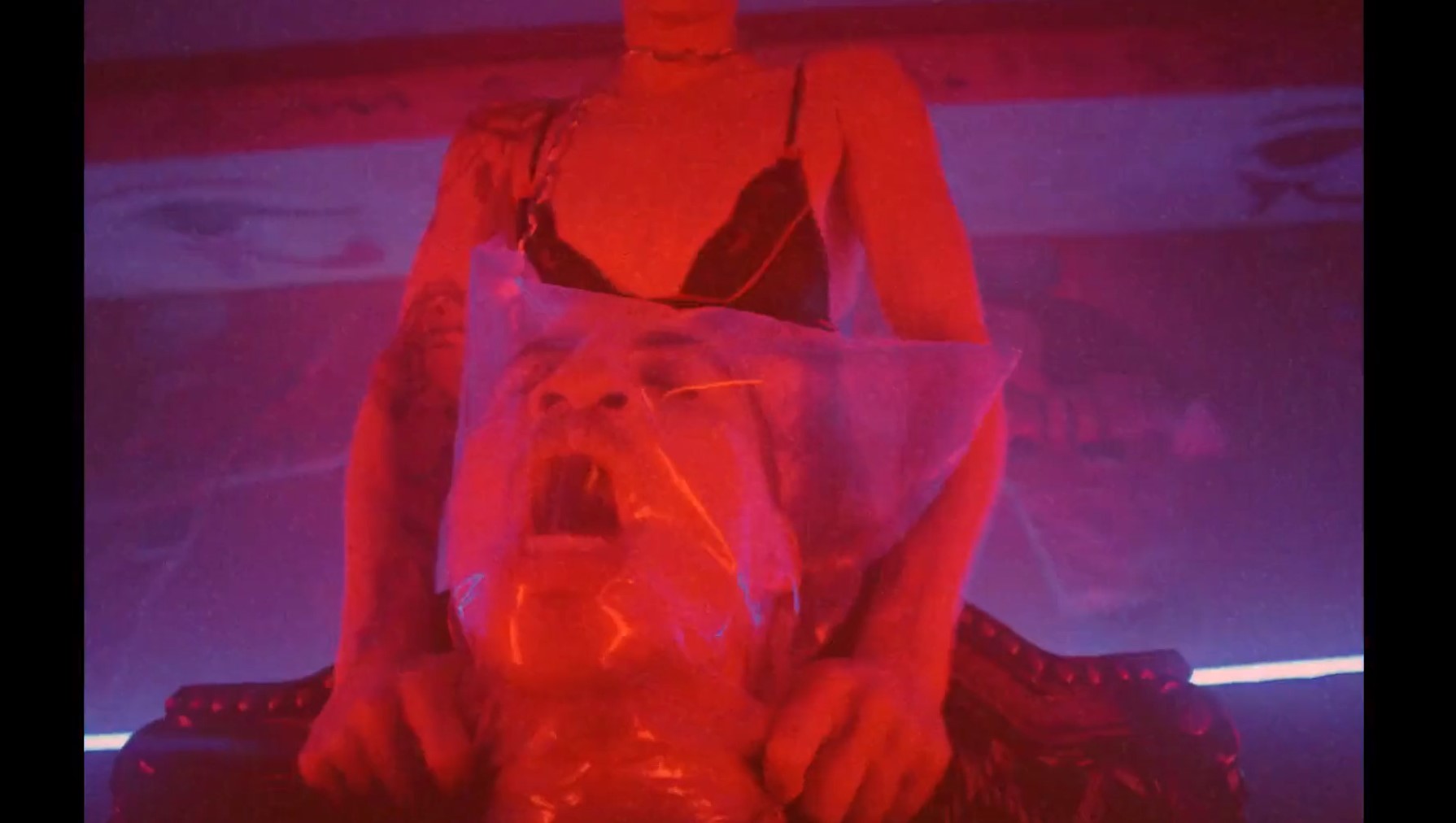
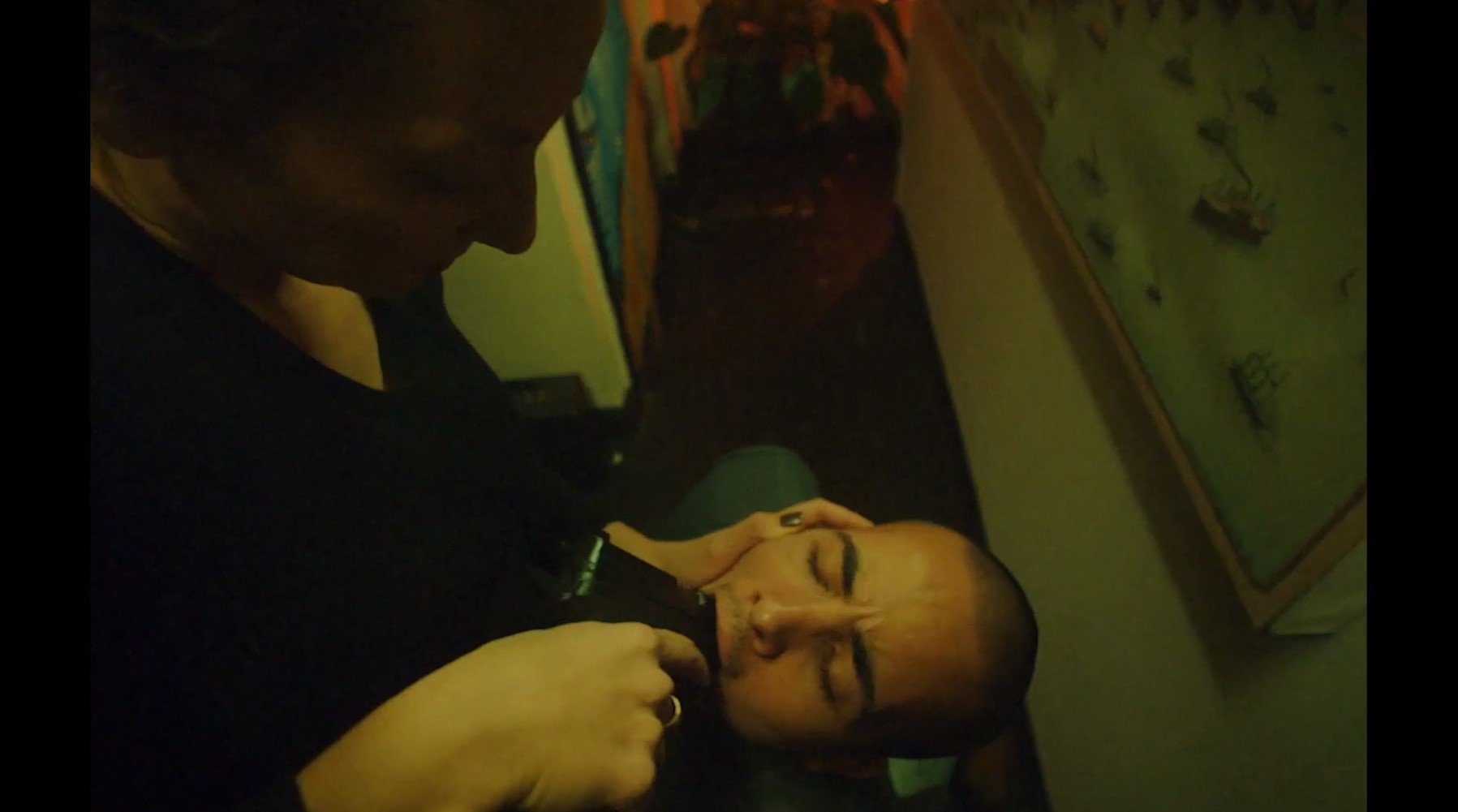
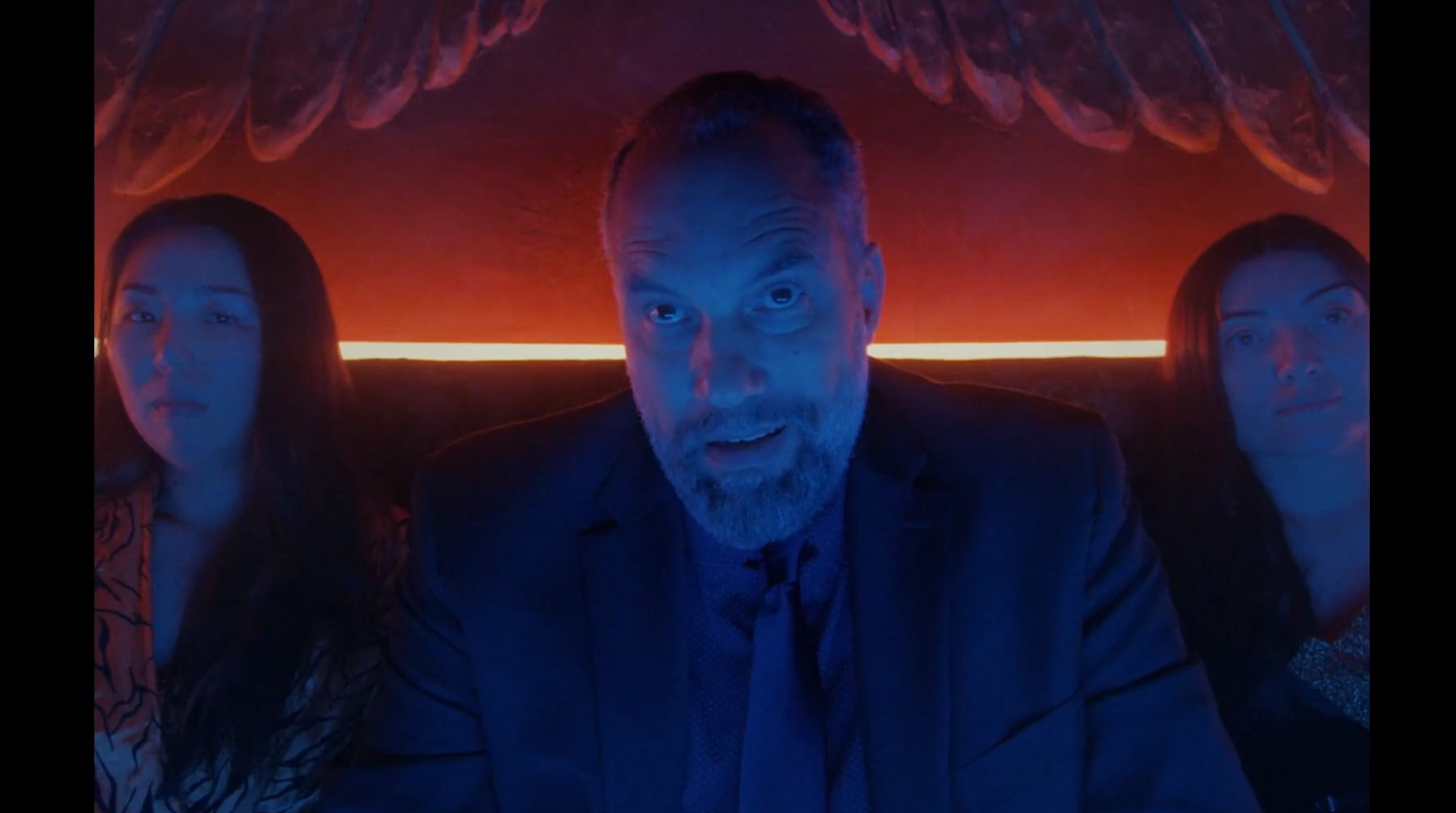
EVIL Chews Through Its Own Loved Ones as “The Vourdalak” reviewed! (Oscilloscope Laboratories / Blu-ray)

“The Vourdalak” Available Now at Amazon.com!

The special emissary of the King of France is ambushed by Turks in an isolated Slovic countryside.  With his carriage and clothes stolen and his driver-servant dead, Monseigneur Marquis Jacques Antoine Saturnin d’Urfé has nothing more than the clothes on his back.  He finds himself in the home of Gorcha, an enemy of the Turks, who resides with his three adult children, a daughter in law, and a grandson, but Gorcha was not presently there to greet his hapless visitor until his returns later that day from fighting the Turkish raiders.  Yet, aside from the oldest son Jegor, the family’s superstitious beliefs lead them to doubt Gorcha returning home human and instead has returned as vourdalak, or a blood hungry vampiric creature who feeds on his own loving family to turn them all into the same unnatural ilk.  From an outsider’s point of view, what Marquis d’Urfé witnesses initially is a strange peasant family’s irritational fear turn into a harrowing horror as one-by-one the family members reach an unfortunate end after the return of Gorcha.

Based off the gothic novella “La Famille du Vourdalak. Fragment inedit des Memoires d’un inconnu” from Russian author Aleksey Konstantinovic Tolstoy, a story that plays on the etymology of the Slavic folklore word Wurdulac, or a vampire-like creature, that exacts a similar transpiring fate as described in the above plotline of Adrien Beau’s “The Vourdalak.”   The writer-director fleshes out the 1839 Tolstoy story, one that’s predates Bram Stoker’s “Dracula” by nearly 60 years, for his own period set rendition created for modern times almost two centuries later in 2023 as his debut feature-length film.  The French film is cowritten alongside Hadrien Bouvier who doesn’t depict the vampiric creature as a nobleman, or even a man of wealth, but rather as a likely lowly serf of the countryside under a noble or lord.  Yet, the script, very much like Tolstoy’s novella, is contained within the family and their home rather than expanding across continents and seas, as in Stoker’s “Dracula.”  “The Vourdalak” is produced by “Alone in Berlin’s” Marco and Lola Pacchnioni and Judith Lou Lévy (“Zombie Child”) under the production banners of Les Films du Ball, Master Movies and, in association with, Cinemage 17 and Amazon. 

A period piece with an intimate cast brings closer together the targeted era of late 18th century to early 19th century costuming, articles, and, to extent, performances that sell the monarchial times of French aristocracy and Slavic provincials living humbly on the fringes of an everlasting Russo-Turkish war that spanned decades.  Leading the charge is the only French aristocrat portrayed character in the story played by Kacey Mottet Klein (“The Suicide Shop”).  Dressed in traditional Empiric style high collar shirt, petty coat, and a white wig and garishly garnished with white pale-looking makeup with mouche, an adhesive mole, to reflect their wealth and status, Klein’s prim-and-proper, yet prudish and prissy, Marquis Jacques Antoine Saturnin d’Urfé is finely out of his element with a satisfiable character arc that has the Monseigneur go from a squeamish snob to finding compassion, sympathy, and courage amongst darkness aimed to swallow a family whole as d’Urfé’s high society and fantastical life clashes with the real world with war, necessity, death, natural beauty, unconventionalities, and consideration through another type of fantasy lens, a troubling, insidious darkness that plagues and feeds on the blood from within a domestic design that’s ruthless as it is unfathomable.  Jegor (Grégoire Colin, “Bastards”) is the loyal eldest son, Piotr (Vassili Schneider, “The Demons”) is the sexual orient ambiguous second son with external emotions unlike his other brother, Sdenka (Ariane Labed, “The Brutalist”) is the free-spirited but melancholic beauty, Anja (Claire Duburcq, “She is Conann”) as Jegor’s more than practical and realistic wife and young Vlad (Gabriel Pavie) is Jegor and Anje’s preadolescent boy.  The aforenoted characters are all embodied by a physical, living person to play the role but Gorcha is a horse of another color.  In fact, Gorcha’s not a living thing at all and is actually a puppet personified by two puppeteers and voiced by director Adrien Beau.  The puppet has an emaciated appearance, resembling closely to those used in “Return of the Living Dead, and with the power of green screen, the animating arms and bodies are overlayed out and Gorcha lives and breathes with an animatism spirit that’s creepy as all Hell with an underscoring tow of vampirism. 

In its essence, “The Vourdalak” embraces the simplicity with a less-is-more atmosphere, a self-assured reliance in the palpable and practical, and a confidence in its cast to extract the drama and horror of a longstanding folklore and deliver its poignant potency with eccentric diversity and steady anxiety.  Beau drenches dread into every crevice that sticks like humidity to its subdued black comedy attire.  Yes, “The Vourdalak,” though grim and dark, has a sliver of comedy course through its bloodlet and lapped up veins from the main character’s perspective who, at first, is quite out of his comfortable, aristocracy element being wiggled into a lower-class family’s unusual dysfunctionality.  There’s also the puppet aspect integrated into living, breathing actors as if one of their own and that certainly as a basic layer of absurd surrealism, the French know a thing or two about liberal arts absurdism.  Beau’s shooting style resembles a blend between the fixed camera and low-key lit silent films, also implementing throwback spyglass shots that were widely used in the early cinematic period, and the Euro-horror movement of the 1960s to early 1980s with an ominous romanticism, a dark and creepy-fog environment, and tinged to cooler shades of soft blues and greens all the while lightly touching upon themes of sexuality, homosexuality, and family structures that often collide with one another to stir the pot and overshadows the imminent danger in front of them. 

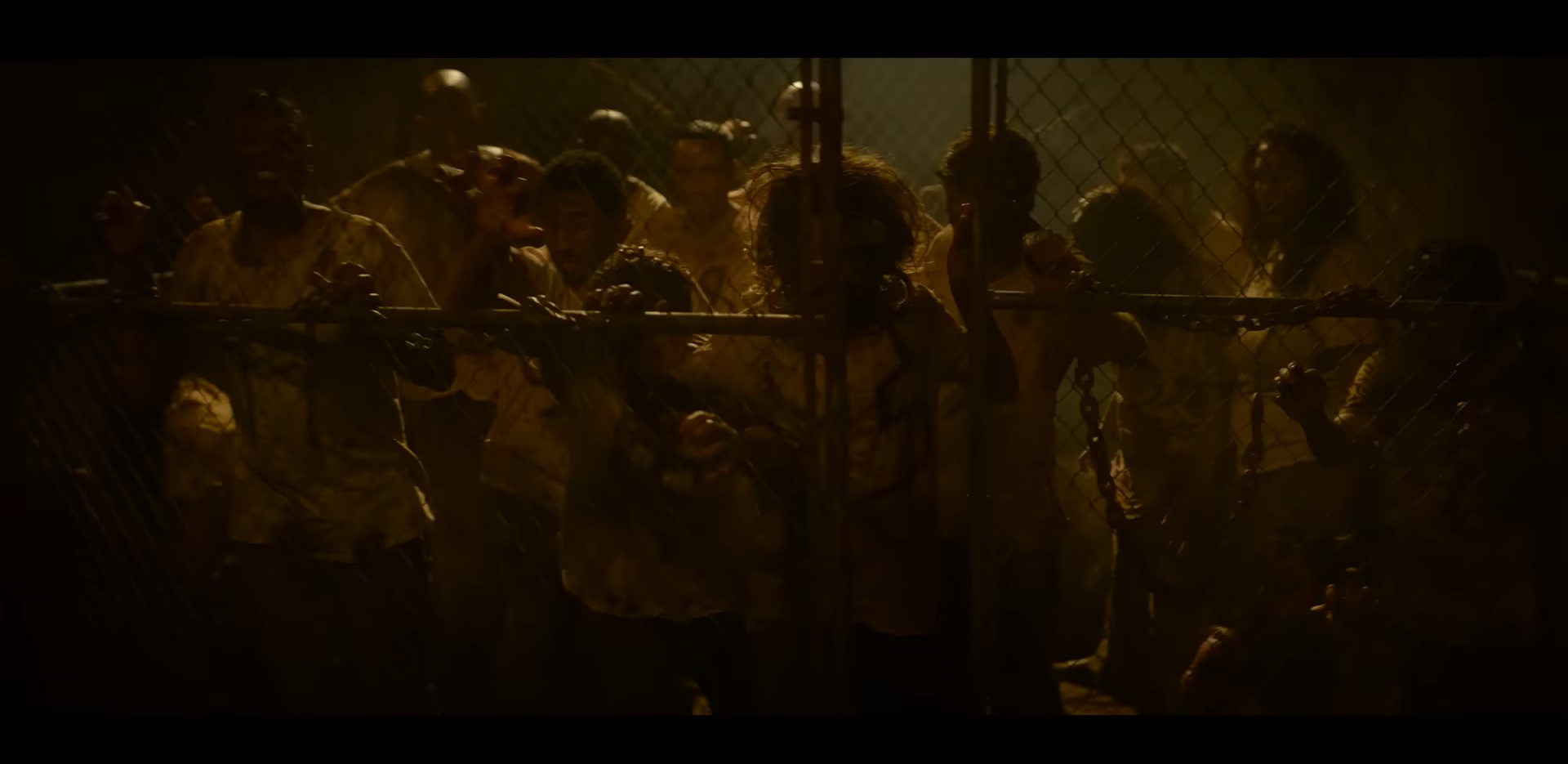
“The Vourdalak” is unpredictably grotesque in the most amusingly macabre way and is now on a region free Blu-ray release from our friends at Oscilloscope Laboratories.  AVC encoded onto the BD50, the high definition, 1080p resolution, might throw audiences and purveyors of physical media for a loop when the picture isn’t as fine as expected for a modern released picture.  That’s because Adrien Beau shot “The Dourdalak” in Super 16mm that enlivens a grainy and soft toned picture that can appear slightly blurry, resembling the ilk of European horror from the 1960s-1980s  Presented in an anamorphic widescreen 2.35:1 aspect ratio, Beau is very committed the coldness of bleak grays, blues, reds and the variant fused shades of purple, pink, and teals that sparingly envelope the entire frame with a lens tint in surreal moments, such as fever dreams or emulated night shots.  Though unfocused at times, plenty of distinction can still be rendered, such as the very stooge features and qualities of the Gorcha puppet.  The French DTS-HD Master Audio stereo track is an audio sensory mini-triumph.  In its modest sound design, minor qualitative sounds instill creepy atmospherics, especially the sound prominence of a raw chewing theme associated with the vourdalak creature’s folklore.  Adrien Beau also better animates and personifies his Gorcha puppet with a wheezy and struggling voice over for who is supposed to be a very elderly father-grandfather in an undernourished and skeletal appearance with sunken, bulging eyes and a near fully exposed teeth. The special features include two of Adrien Beau’s short films “Les Condiments Irreguliers” and “La Petite Sirene” as well as a behind-the-scenes featurette that’s more of the raw footage of animating and acting the Gorcha puppet without the visual effects removing the puppeteers. The Oscilloscope Laboratories Blu-ray comes in a clear Amaray case with soft, airbrushed quality composition artwork of a calm Marquis Jacques Antoine Saturnin d’Urfé being feasted upon around his neck by the vourdalak. The reverse side contains a still image of a medium-far shot of one of the more powerful images in the film of a graveyard d’Urfé passes through as if it was a revolving doorway in and out of death. A simple yellow title and label name are splayed across the disc, consistent and normal per the company’s design, and the film is not rated with a runtime of 90 minutes.

Last Rites: Rarely do I give a five-star review for a film but Adrien Beau’s “The Vourdalak” is a fascinating and frightening visualization of Aleksey Konstantinovic Tolstoy story that trades visceral images for palpable ones in a folkloric entrancement of unnatural beings disrupting the natural world, a concept worth chewing on the nape of the neck for.
“The Vourdalak” Available Now at Amazon.com!

Eventually, You’ll Have to Stand Up to EVIL. “The Retaliators” reviewed! (Quiver Distribution / Blu-ray)

Man Up and Take Back Your Life with “The Retaliators” on Blu-ray!  Click to Purchase from Amazon.

Having recently lost his wife, Pastor Bishop tries hard to keep his two school age daughters safe with an oversight thumb, but when his oldest daughter, Sarah, begs him for the car, God himself knows that the Pastor’s children can’t stay children forever. Bishop fears come reality when Sarah is chased by a sadistic man, ran off the road, and zip tied to her steering wheel as her car is pushed into a nearby ravine. Destroyed by another loss, there is seemingly no way out of the grief hole for the man of the cloth until a Detective, who once shared Bishop’s pain and suffering with a similar, personal experience, introduces him to his isolated former fallout bunker turned torture cabin in the woods with the man who killed Bishop’s daughter chained captive in the basement and next to him sits a variety of melee tools of affliction. Deeper into the Detective’s subterranean dwelling lies a more terrible, caged secret, one that is incidentally unleashed upon the world, and will wreak carnage upon the land and it’s up to the grin and bear it Pastor to take a stand against pure evil.

Frighting for yourself and for special persons in your life is crucial for any self-respecting person to be able to look at themselves in the mirror and say, “I did all I could.” Those who believe in understanding and forgiveness ultimately fall into being trampled on and biting the bullet because just surviving the other end of a contentious situation can be a false sense of security and an opaque veil to the ever-present dangers lurking in every crevice. The 2021 release of “The Retaliators” accouters that theme of following one’s combative conscious to protect what’s dear while also sporting a hefty amount of violence, blood, subhuman psychopaths, and a nearly all nu metal musician cast. Co-directed between from short and music video filmmaker, Samuel Gonzolas Jr., the film’s star and “Central Park” actor, Michael Lombardi, and music video director, Bridget Smith, “The Retaliators” aims to show an ugly, real truth that can affect and twist good men into the same abhorrence and villainy they’ve struggled to repel and resolve. “The Retaliators” mark the first screenplay from the Geare Brothers, Darren and Jeff Allen, is shot across various locations in the U.S., including states Nevada, New Jersey, and Connecticut, and is a production of Lombardi’s Better Noise Films with the company’s CEO, Allan Kovac, and Philly Born Film’s Mike Walsh also producing.

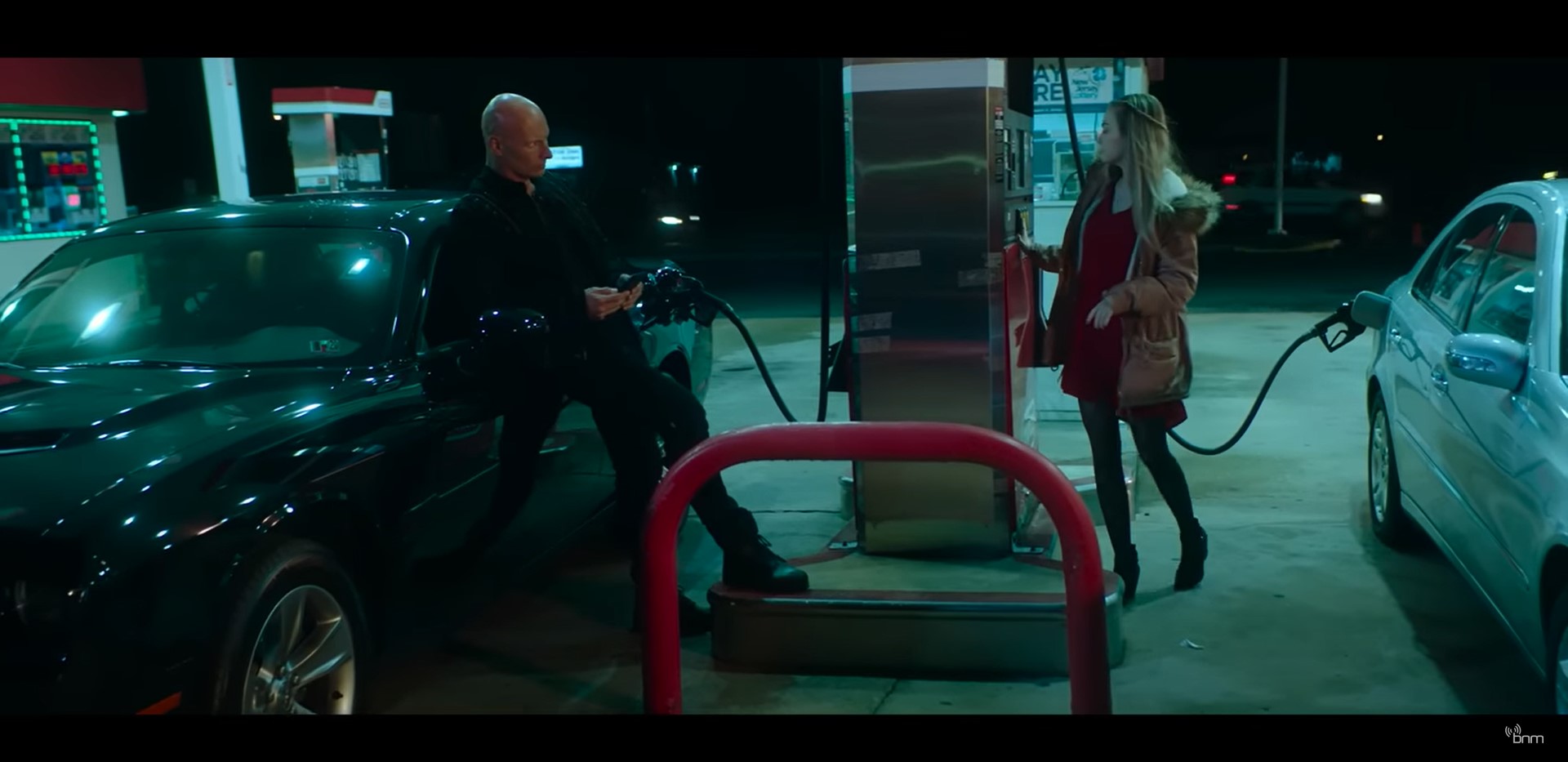
As a company that’s half part a music record label, the film was destined to showcase some of the independent rooted musical and elemental talent of the rock genre, but the narrative is convoyed by a fellow musician, who will humbly admit they are not trained or experienced actors, but rather actors who are rock artist sympathizers, in the case of principal leads Michael Lombardi and Marc Menchaca of Peacock’s new horror thriller “Sick” and who you may not have recognized in the third season of Amazon’s “Tom Clancy’s Jack Reason” as a high-and-tight, clean-cut naval captain. Menchaca is anything but burred cut as a bearded and wavy-haired, somber detective assigned to Pastor Bishop’s (Lombardi) case of his murdered daughter. Menchaca does his work in feeding off the dark energy cocktail of Lombardi’s grief, despair, and vengeance-stricken neo-pastor. Lombardi’s heartfelt performance definitely deserves praise for how one should react in losing a child and also reflects the helplessness that burdens the parent into a black hole of sorrow. As a character, Bishop struggles morally with seeping into and being swallowed by the grim circumstances gifted for him despite however the circumstances may seem to be in his favor. The gears Lombardi has to switch from a faithful person, to rancorous, to then finally a path of soul changing redemption goes smoothly enough to justify his position as principal lead. Menchaca’s demented detective almost feels left out to an extent, but the audience will get enough of a taste to satiate his unglued righteousness. While no love interest makes it into the fold of characters, the narrative does house spots for the nu metal and rock musicians in supporting or minor roles. Papa Roach’s Jacoby Shaddix, Mötley Crüe’s Tommy Lee, Ice Nine Kills Spencer Charnas, Escape the Fate’s Craig Mabbitt, From Ashes to New’s Matt Brandyberry, Lance Dowdle, Danny Case, and Matt Madiro, and Five Finger Death Punch’s Ivan L. Moody, Zoltan Bathory, and Chris Kael are just a select few of rockers you’ll see in “The Retaliator’s” lineup. Personally, I wanted to see more of Jacoby Shaddix as Quinn Brady, a homicidal madman in a horrific cat-and-mouse lark with the detective. Who knows, maybe we’ll see a prequel with Shaddix returning to the role. For the most part, like Shaddix, the musicians are well integrated with diverse roles that range from biker club, to strip club DJs, to bartenders, and to AA participants. “The Retaliators” round out the cast with Katie Kelly (“Deadly Seduction”), Abbey Hafer, Cree Kelly (“Aftermath”), and the massively built and scary-looking Joseph Gatt (“Titanic 666”) as the child-killer strapped and prepped for Pastor Bishop to physically and mentally break.

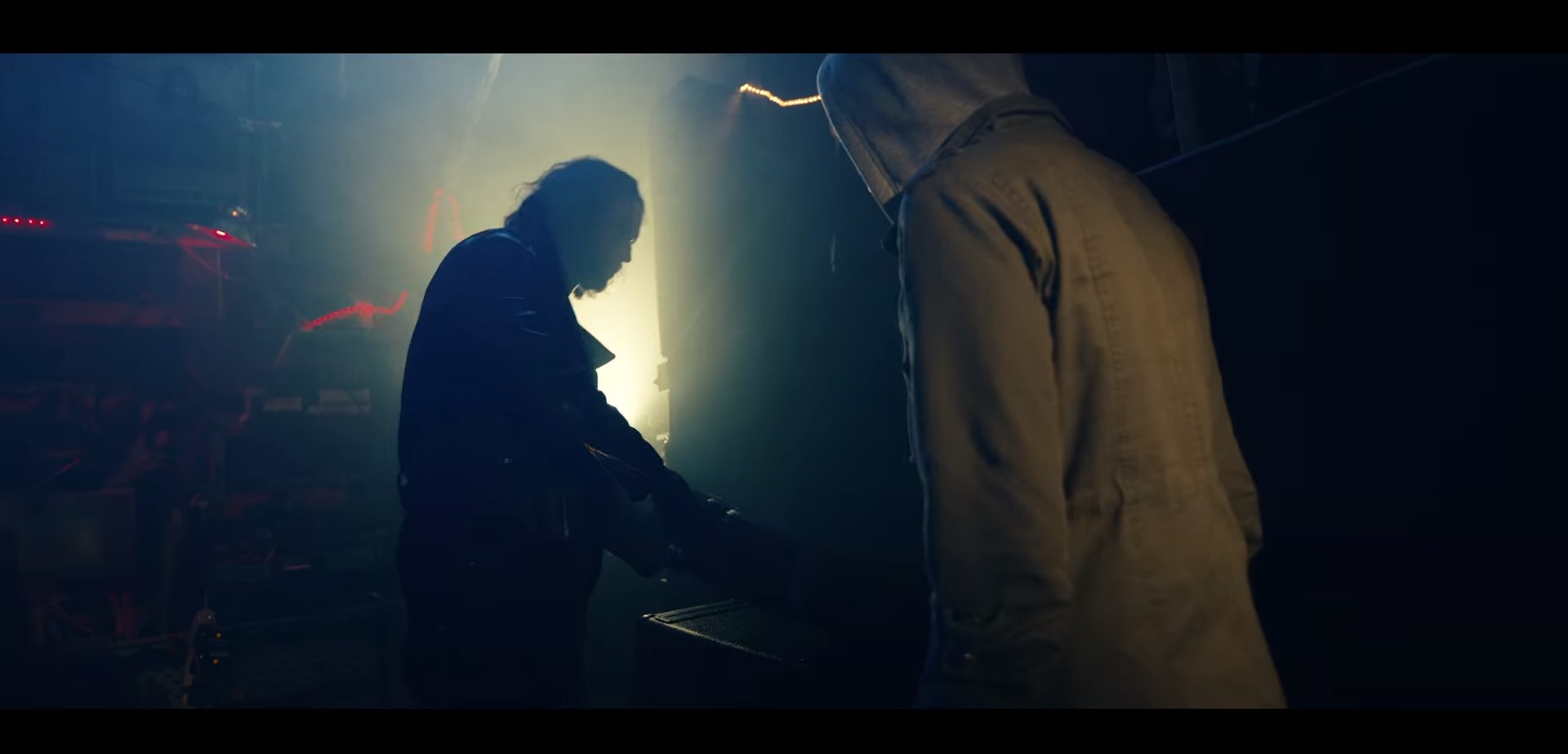
Better Noise Films is comparable to another divisional filmic offshoot of a larger parent music record label. Cleopatra Entertainment, of Cleopatra Records, often builds film structures and narrative plots around the company’s signed ensembles to promote and market their lyrical and thrash-heavy material as well as putting names to faces and thrusting them out into the world to those who may not have heard of their music. Aside from likely being a huge cost-savings benefit, these films are often scored by their artists, leading to a diverse sounding and electric soundtrack that typically works out less than desired. What the directors end up implementing, musically, yields result only half of the time while the other half is forced unto the audience for the sheer effect of promotion despite the off-putting composition. Not every intense scene needs a band backdrop to flourish raw emotion and pump up the blood but that’s what films, like “The Retaliator’s,” is bred to show off in a marbled genre that has categorical plot pivots all along the way to the grand finale of an all-out brawl, fight for your life skirmish with the criminally and tortured insane. That latter concept is perhaps one of the more interesting and original ideas of reinventing the psychopath that I’ve seen in a long time and the anticipatory excitement and thrills of their release to wreak havoc like barbaric rippers had found moments of great gore excess when Paster Bishop finds his divine strength to help the savage sadists meet their maker by way of machete, a shovel, and a woodchipper. “The Retaliators” make use of familiar horror tropes, such as the fog machine and a blend of lowkey and neon flushed lighting, to conjure an unconventional crypt of rock and homicide, putting its own unique stamp of indirect evil leading to up to another bigger, badder bedlam of things.

Chalked up to be an 80’s-stylized 90’s cinematic horror pulp, with early 2000’s soundtrack, “The Retaliators” arrives onto Blu-ray home video courtesy of Quiver Distribution. The AVC encoded, high definition, 1080p BD50 has a CinemaScope, aka anamorphic, widescreen 2.39:1 aspect ratio. The large storage formatted disc offers more variety as the capacity can handle the expansion of color and range of content. From complex, diversly lit, and heavily foot trafficked interiors to the great outdoors with trees fields, gravel terrain, and watery brooks, the quite a bit that’s going on looks pretty good on screen and the anamorphic widescreen doesn’t have that squeeze-it-in feel either but can’t escape a few scenes of lens flare. Details provide a tactile enamel, but the colors are quite soft with a lower dialed in color grading. The English DTS-HD 5.1 surround sound has more teeth in the soundtrack that overlaps and snuffs out any ambient sound design, essentially making “The Retaliators” a 96 minute, give-or-take a few scenes, music video. Dialogue doesn’t suffer the same backseat fate as the script-to-screen exchanges are in the forefront and though the soundtrack is a bit flat, the original, nebulous-electronic score in between by “Stranger Things” composers Kyle Dixon and Michel Stein does stand out to add a nice underlayer of questionability and suspense. Special features include cast interviews with actors and music artists speaking to their experience on the film, “The Retaliator’s” music video, and theatrical trailer. The physical release comes with a cardboard slipcover on the first pressing with a rendered pseudo-illustrated mockup of pyramid arranged character heads with Pastor Biship standing bloody and machete in hand right smack in the middle. The standard Blu-ray snapper includes the same cover arrangement art as the slipcover. Not listed on the back, the unrated film does support region A playback. “The Retaliators” pumps up the blood as well as the jams during an overhaul of one’s convictions in a baptism by hellfire.

Man Up and Take Back Your Life with “The Retaliators” on Blu-ray!  Click to Purchase from Amazon.

Beware the EVIL Bite of Silver Teeth! “The Cursed” reviewed! (LD Entertainment / Digital Screener)


Lord Seamus Laurent and the neighboring landowners show grave concern for the recent Gypsy encroachment upon their shared property.  In proactivity protecting the laboring residents and the pastoral farmland of the feudal system, Laurent and fellow landowners order the removal of the Gypsies by hiring ruthless mercenaries who slaughter every last Gypsy in cold blood and bury them in the land.  When every resident on the estate, from villagers to the lord’s family, share a common nightmare of silver teeth buried with the Gypsy corpses, an evil curse unleashes upon the farmland with a killer beast roaming, hunting every resident.  Gypsy chasing pathologist John McBride enlists himself helping Laurent and the villagers to not only relieve them of the cursed creature, but also face his own tragic past linked to the very same evil he pursues.  

Lycanthropy an allegory for the cholera outbreak in late 19th century Europe?  That’s the seemingly centric subject to Sean Ellis’s written-and-directed, folkloric supernaturally spun creature feature “The Cursed.”  Though narratively set and actually shot in France, “The Cursed,” or else better known internationally under the original title “Eight for Silver,” is comprised nearly of all English actors with very few from France and an American in the principal lead to wage war against a swift enemy that kills anyone without prejudice and without mercy.  No, I’m not talking about the wolfish creature that rips settlers and lords to shredded sacks of meat.  I’m speaking of the Cholera epidemics of the 19th century and while Ellis’s metaphoric intentions lean more toward the pains of broad-based additions, our modern pandemic plight felt more widespread linking both the past and present with an event that plagued countries like a curse with unsystematic cruelty and didn’t differentiate between the poor unfortunate and the opulent.  The Los Angeles based production company LD Entertainment finances and produces the feature under Mickey Liddell (“The Grey,” “Jacob’s Ladder” ’19) along with executive producers Alison Semenza (“Lost Boys:  The Tribe”) and Jacob and Joseph Yakob.

“The Predator’s” Boyd Holbrook walks the pathological shoes of John McBride, a man haunted by his past in his continuous pursuit of nomadic Gypsies, and it just so happens that McBride falls right into the thicket of, unknown at the time, Gypsy-made bedlam as missing children and ravaged dead bodies pop up.  Holbrook tries to corral in the pathologist’s inexplicable purpose as the character is often too withdrawn from his intent on what he’d actually do if he came across any Gypsies, which McBride never does.   Instead, McBride feels like a hero who’s dumped in the perfect place at the perfect time to be the hunter of what his pathological experience and instincts claim to be the death-dealings of a wolf while the village becomes the bewildered and unassuming hunted, led by the 2019 “Hellboy” actor Alistair Petrie as the noble estate lord Seamus Laurent stewing stoically in his own despair and desperate head space in search of his missing son (Max Mackintosh). The only character acting rationale in a conventionally proper manner in her reactions to the whole situation is Seamus’s wife Isabelle (Kelly Reilly, “Eden Lake”), with a blistering heartful longing for her son, and their daughter Charlotte (Amelia Crouch, “The Woman in Black 2: Angel of Death”), with a shock-induced and childlike response to her brother’s disappearance. Yet, Isabelle and Charlotte alter course. Isabelle weaves in and out of anguish to the point where her suffering is only implemented to benefit the story and Charlotte, well, Charlotte plainly disappears as a key supporting character who knows truly happened to her brother in the field and with a villager boy, Timmy (Tommy Rodge), who discovers the silver teeth etched with curse inducing rune symbols. The interactions between McBride, Seamus, and Isabelle never quite feel nature and complete, as if there’s an unspoken trust issue between McBride and Seamus or a mutual understanding or compassion between McBride and Isabelle that never leaves the hilt of the sword to see spark action. Nigel Betts, Roxane Doran, Richard Cunningham, Pascale Becouze, Simon Kunz, and Amazon’s “Hanna” star Áine Rose Daly, as farm hand girl turned white wolf, round out “The Cursed” cast.

Sean Elliss tweaks the werewolf mythos to try and shake up the genre, turning it up on its head to dust off a tired narrative of man bitten by wolf, man turns into wolf, wolf terrorizes villagers, and villagers kill wolf with silver bullet. Instead of silver weaponized for good, “The Cursed” weaponizes it as Gypsy revenge, a calling card that leaves bite marks with lasting impression until every single inhabitant, guilty or innocent in the crime against the Romanian wayfarers, is laid to waste by its transformative power. Though unexplained in why the Gypsies forge silver fangs etched with a curse other than a storm is coming, as if perhaps they’re clairvoyancy provided them with a disturbance in the air instinct rather than exactly what to expect, the teeth are a nice cinematic touch of menacing terror literally inscribed on each tooth. “The Cursed” atmospherics of folkloric superstitions blended into a broodingly dense landscape of low-lying fog and uncomfortably vast empty fields surrounded by a thickset of trees comes close to the likes of a Hammer horror setting, especially with the period of time in which “The Cursed” plays out in that has been Hammer’s niche era. The setting might be the only controlled aspect of Ellis’s take on the werewolf genre as the werewolf, if that is what we can even call the abomination of mutation, is written from out of our traditionally known contexts and into a new breed of metamorphism. Hairless, white, and somatically encasing, Ellis’s monsters radically redefine our expectations with a beast that literally consumes our very being and turns us into an unrecognizable fiend amongst the flock. Fast, agile, and ruthless, this newfangled fang-bearer up until the end never received any insularity resentment from me, but the ending abruptly diminishes the near mindless brute strength of a beast with a hint of intelligence in its ability to sound like person to draw the hapless into a trap and that’s where a line needs to be drawn, especially when the technique is used as an out of the blue device toward an endgame.

Whether be a narrative about an all-consuming addiction or about a precipitating plague of chaos in the time of cholera, the uniquity of “The Cursed,” semi-diverging from one of the most revered classic monsters in our history, may be an immediate turn off for many traditionalists, but the film does right by the savagery gore, the minatory threat that lingers in every scene, and that no one is immune from danger. LD Entertainment is set to release “The Cursed” this Friday, February 18th, in theaters. Since this was a digital screener, the audio and video will not be covered. No bonus mater or extra scenes during or after the credits were provided. Sean Ellis provides that creepy fog-laden and dense folky aesthetic of barnyard chic while still conditioning an upscale appearance of a beautifully crafted production from a native French crew of productions designers in Thierry Zemmour and Pascal de Guellec as well as costume designer Madeline Fountaine. “The Cursed” starts strong with visceral intent to be novel by offering callous over civility, a dysmorphic werewolf, and a new set of blingy chompers fit for Lil’ Wayne, but gaps riddle unignorable holes into the story and its characters that ultimately becomes the silver bullet obliterating the beastly nature this new breed of wolf desperately needed to survive unscathed.

EVIL is All in Your Head! “Implanted” reviewed! (Gravitas Ventures / Digital Screener)

Year 2023.  After a devastated global pandemic, health companies engineered an experimental personal diagnostic nanochip called LEXX that is surgically implanted into the a human’s spine.  For Sarah, a woman down on her luck living homelessly after being let go from her job and struggling to cope with her mother’s early stages of dementia, quick cash is essential for survival and this experimental program, that uses advanced AI technology, tempts a desperate Sarah into participating in human trial runs.  Initial implementation serves Sarah with quick vitals and healthy lifestyle recommendations articulated by an artificial voice in her mind, but when the AI has other plans for Sarah, such ordering the assassinations of the health startup’s top leadership and destroying all evidence of the program, Sarah has to either obey every lethal command or fight against the insidious tech that has complete control over her pain sensors as well as her mother’s life.

COVID-19 has been the baseline culprit for millions of deaths worldwide.  The impact of the pandemic has inspired filmmakers to a creative outlet of churning out stories surrounding a lifechanging and devasting virus.  Some are ridiculous, off-color, cash grabbers – “Corona Zombies” comes to mind – but there are a few out there that challenge the gratuitous advantage-taking by folding in more substance into the story.  Fabien Dufils attempts to go above and beyond the here and now with a post-pandemic, self-containing thriller entitled “Implanted” and is the first written and directed non-made for television feature length independent film for the once music video director set in the urban jungle of New York City.  “Implanted” spins A.I. tech horror with the whooshing fast track of the health care system to eagerly push experimental drugs, in this case a clinical artificial intelligent grafting, upon the desperate, often marginalized, public.  There’s also an allegorical smidgen of mental illness thrown in there as well.  Dufils co-writes the script with fellow Belgium screenwriter David Bourgie under Dufils’ Mad Street Pictures production company.

Making her lead performance debut, mentally wrestling an invasive cybernetic nanochip, is Michelle Girolami who also serves as associate producer.  We all have that little voice inside our heads, telling us what do and think to an inevitably end of accordance with that ever so delicate whisper of persuasion and that’s how Girolami has seemingly approached this role with that little suggestive presence cranked up to the level of full-fledged chaos on two-legs.   Girolami ultimately is a reverse mech with all the cold puppeteering directed shots directed by programmed software and so much of the actress’s performance is solo, feigning responses to a bodiless voice and reacting to pain generated from within whenever she doesn’t comply to the relentless LEXX.  Unable to bounce dialogue and reactions off of others can be a tough sell for most actors, but Girolami really slathers it on thick the vein-popping strain of integrated torture.  Opposite Sarah is Carl (Ivo Velon, “Salt”), another hapless experiment participant forced into assassination servitude, but Carl’s purpose isn’t exactly crystal clear.  His LEXX unit shepherds him down a collision path with Sarah, but the two separate LEXX units have no shared intentions and while that’s wonderfully niche to provide individual A.I. with their own personal liberties and schemes, Carl just wanders the city, sometimes murdering the program’s top leadership or doing something polar opposite of Sarah with no substantial collusion about their subversive attacks.  The what could have been interesting cat-and-mouse game tapers off and the story leads into more of characters trying to regain back their autonomy and this is where Dufils’ narrative shines using LEXX as a symbol for mental disorders and how those impoverished or distressed are struggling to cope can lose themselves and give in to the internalized madness slipping outward.  Parallelly, Sarah’s mother (Susan O’Doherty) suffers from dementia that reinforces the theme.  Martin Ewens, Shirley Huang, Sunny Koll, John Long, and David Dotterer wrap up the cast list.

“Implanted’s” sci-fi concept can be described as if Amazon’s Alexa, with all the internet connections and text-to-speech bells and whistles, suddenly became murderously woke inside your cerebral cortex.  “Implanted” relays humanity’s lopsided dependency on advanced technology that continues to make us even more less connected to each other and the possibility of a machine takeover just that more feasible.  However, much like when a software program crashes, a malfunctioning script error ravages the narrative for not being tight enough, leaving unaccompanied loose ends as devices that fail to progress the story along stemmed by sudden drop off character development and unknown, speculation at best, motivations.  There’s also no discernable backstory to the why LEXX’s A.I. has snafued.  At least with “Terminator,” Kyle Reese provides exposition about Skynet’s sudden upheaval and domination over the human race whereas “Implanted” dives into none of that rich framework and tossing it aside for the sake of just tormenting Sarah into being a killer pawn, moving her across the NYC chessboard with the intent of taking down the king, queen, and knights of LEXX’s program.  To what ends?  Explanation on the specified targeting isn’t made entirely clear as programmers to CEOs are solely liquidated for just being involved.  

“Implanted” is a warzone for headspace and there can be only one victor in this psychological, sci-fi thriller released now, digitally, from Gravitas Ventures.   The unrated, 93 minute film also showcases the various hats of director Fabien Dufils with one being cinematographer.  Dufils captures obscure, slightly neglected, areas of New York City that’s becomes refreshing to consume because even though the Big Apple is well known for glass and steel skyscrapers, the undergrowth locations ground “Implanted” as relatable without the monolithic structures and hustle and bustle tropes.  In juxtaposition to the down-to-Earth background, the decision to sprinkle in visual effect blood splatter taints “Implanted’s” realism.  Though not gory by any means, digitally added blood can’t be cleansed from the physical veneer and being an indie feature, I would have though a run to corner store for a bit of red food coloring would have been a cost saving measure.  “Implanted” adds another layer to the man versus machine subgenre with tinges of mental illness and too reliant on tech themes but undoubtedly leaves gaps in the narrative coding, racking strenuous mental effort without the egregious assistance of an A.I. nanochip.

EVIL Has an Unbreakable Glass Ceiling. “The Five Rules of Success” reviewed (Ambassador Film Group / Digital Screener)

Upon his release from a long prison stint, a man incarcerated into the system since a young boy tries his hand succeeding in the outside world.  Alone with no family or friends for support and looking to keep his nose clean, he designs his own set of rules for success, including responsibly checking in periodically with his hardnose parole officer and saving up enough money and knowledge working at a restaurant to open his own.  When the path seems clear and everything seems to be falling into place for his chances as success, societal temptations gnaw at him as negative influencers tempt to steer him astray and his own goals try to illicitly fast track his efforts.  Will he fall into crooked society’s trap or will he persevere to reach his aspirations? 

Hard knocks.  That’s the simple, raw core theme of Orson Oblowitz’s “The Five Rules of Success.”  The 2021 crime-thriller is the third directorial from the “Corbin Nash” co-producer, but the second penned script following his debut, a seedy L.A. underbelly thriller “The Queen of Hollywood Blvd” from 2017.  The story is the first for co-writer Christian de Gallego who steps out of his international sales executive role to put his ideas onto paper.  As compelling as any story could be mirroring the struggles of a downtrodden ex-con in a society that browbeats and takes advantage of those on good intentions to rebuild, “The Five Rules of Success” is also a visual quest of imagery and color, produced and distributed by the Ambassador Film Group with de Gallego producing and Apurva Patel as executive producer. 

Stepping into his lead man shoes debut is Santiago Segura (“47 Meters Down,” “Scream: The TV Series”) playing the mastermind behind the five rules of success as X, as in X could be anybody.  However, X couldn’t have been more invested into than what Segura put into the story’s character as a man left to his own devices, without support, without a comforting presence, and without much guidance.  Segura’s range is limited to a monotone stare and tough guy attitude that never wavers or breaks and you have to wonder what X is fighting for to make his ambitious dream a reality?  Where does his determination root?  The fact that there is an absence in a grounding, sobering symbol all the more makes X more susceptible to the deeper end of society’s morality pool.  Along his rise up from the ashes, X meets colorfully sordid individuals feeding off his vulnerability due to either being on probation or stereotyped as being inclined to be favorable toward criminal activity…you know, being released from prison and all.  He’s befriended by Danny (Jonathan Howard, “Godzilla:  King of the Monsters”), a drug using goon who works alongside X at his father’s restaurant.  “Crocodile 2:  Death Swamp’s” Jon Sklaroff plays the stark contrasted Greek immigrant father, restaurant owner, and disappointed father to Danny.  Sklaroff and Howard couldn’t be more adversarial as a hardworking immigrant father who struggled to get to where he is today and a silver spoon fed son throwing his life away with riffraff, drugs, and as the restaurant’s cook.  The relationship formed between X and Sklaroff’s character is the wishful dreaming that X couldn’t be the son he never had and all X has to do is be patient and listen to a little friendly advice.  A more brazen and mysterious obstacle in X’s path is his parole officer, Emma, whose uppity authority holds X’s freedom in the palm of her hand played by Isidora Goreshter.  The line is blurry whether Emma has either the hots for X or is secretly a sadist and Goreshter offers to uphold that inscrutable presence with unscrupulous tactics. 

One way to crave out the meaning behind Oblowitz’s film is to not be standing high-and-mighty on greener pastures.  “The Five Rules of Success” sensationalizes real time problems with our prison system and the after effects of walking out a free man after years, if not decades, from a life that’s all you know to a life you know nothing about.  X’s past burdens him immensely as flashbacks, denoted in literal quick flashed cuts, of the downward spiral turning point in his childhood find their way into his determined route to success.  Ultimately, the past and present are one in the same where society sees not a boy, not a man, not a person, but a criminal and how we as a society be contemptuous of former convicts released back into our soicalled perfect public community.  There’s parallelism between each chaptered rule and the downward progression he sustains in his associations with the wrong people that start to twist his mindset, his rules, into the very unlawful reprehensible activities he tries very hard to avoid. Oblowitz does a nice job detailing X’s habits as a loner, working out his pent up frustrations by exercising, shadow boxing, and refining his rules, but the root of all evil is hard to ignore as cold hard cash, easy money for one of Danny’s illicit jobs, begins to lay out the possible steps to skip in order to fulfill his own ambition.  Despite the momentary monotone mishandlings from Segura, the story is well-written and mostly well played out with some scenes more intense than others with the subject material as you begin finding yourself rooting for the ex-con and booing the very society you yourself live in scot-free. 

Clocking in with a runtime at 83 minutes, “The Five Rules of Success” symbolizes the ups and mostly downs in the here and now game of chutes and ladders.  Having been released last month, July 30, be sure to check out the unrated feature available for purchase on your preferred platform of either iTunes or Amazon released by the Ambassador Film Group.  Oblowitz doesn’t just write-and-direct the film, but he also serves as cinematographer dabbling in a Kafkaesque arranged world with hints of tint, hints of different lenses, hints at overexposures, hints at strobe, and more.  Nearly every scene is comprised of a different shooting technique or editing visual that may or may not possibly induce a seizure as forewarned during the preface.  Stylistically, I can only compare and describe “The Five Rules of Success” as this:  Stanley Kubrick’s “2001:  A Space Odyssey” meets Darren Aronofsky’s “Requiem for a Dream.”  As far as extras go, there’s a quaint, no major dialogue memorandum scene after the end credits that speaks to vicious circles and permanency.  For a L.A. shot film that has more technique than bite, “The Five Rule of Success” is a success of an auteur’s written storytelling as well as the visual understanding of just how to tell that story in a surrealistic context. 

Rent or Buy “The Five Rules of Success” on Prime Video!