A Fiasco of EVIL When Jobs Collide! “Punto Rojo” reviewed! (MVD Visual / Blu-ray)

“Punto Rojo” on MVD Visual Blu-ray!

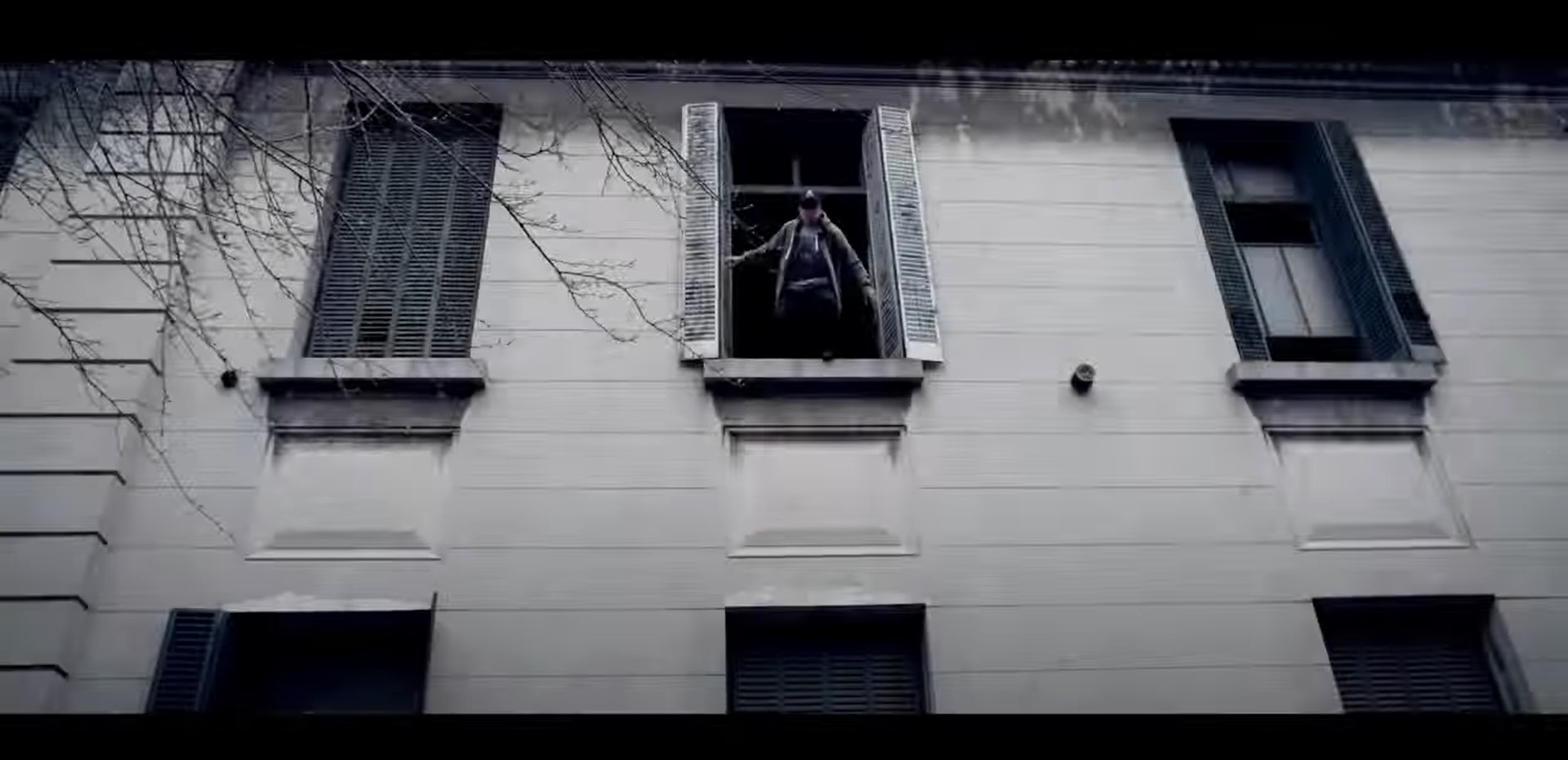
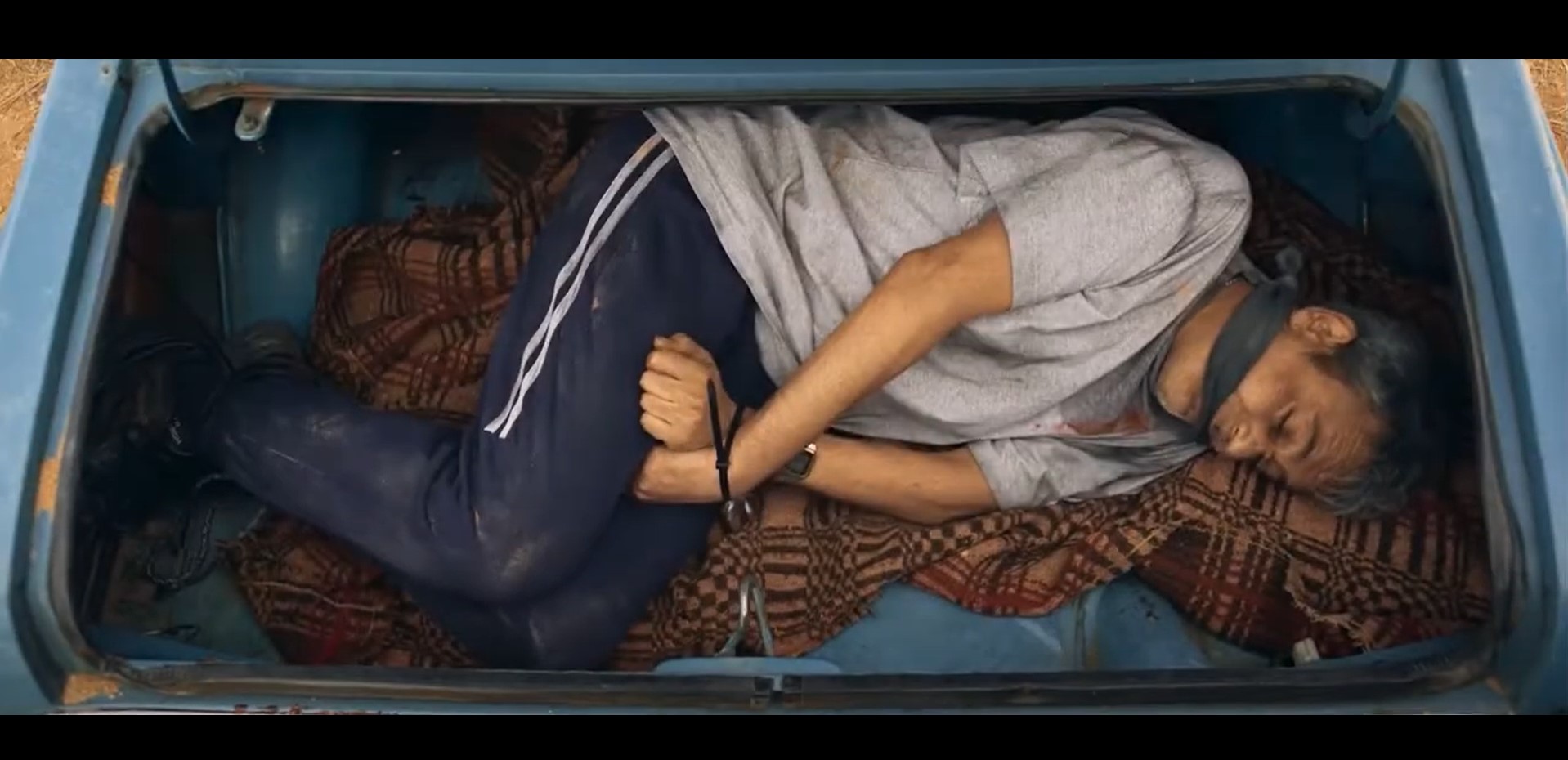
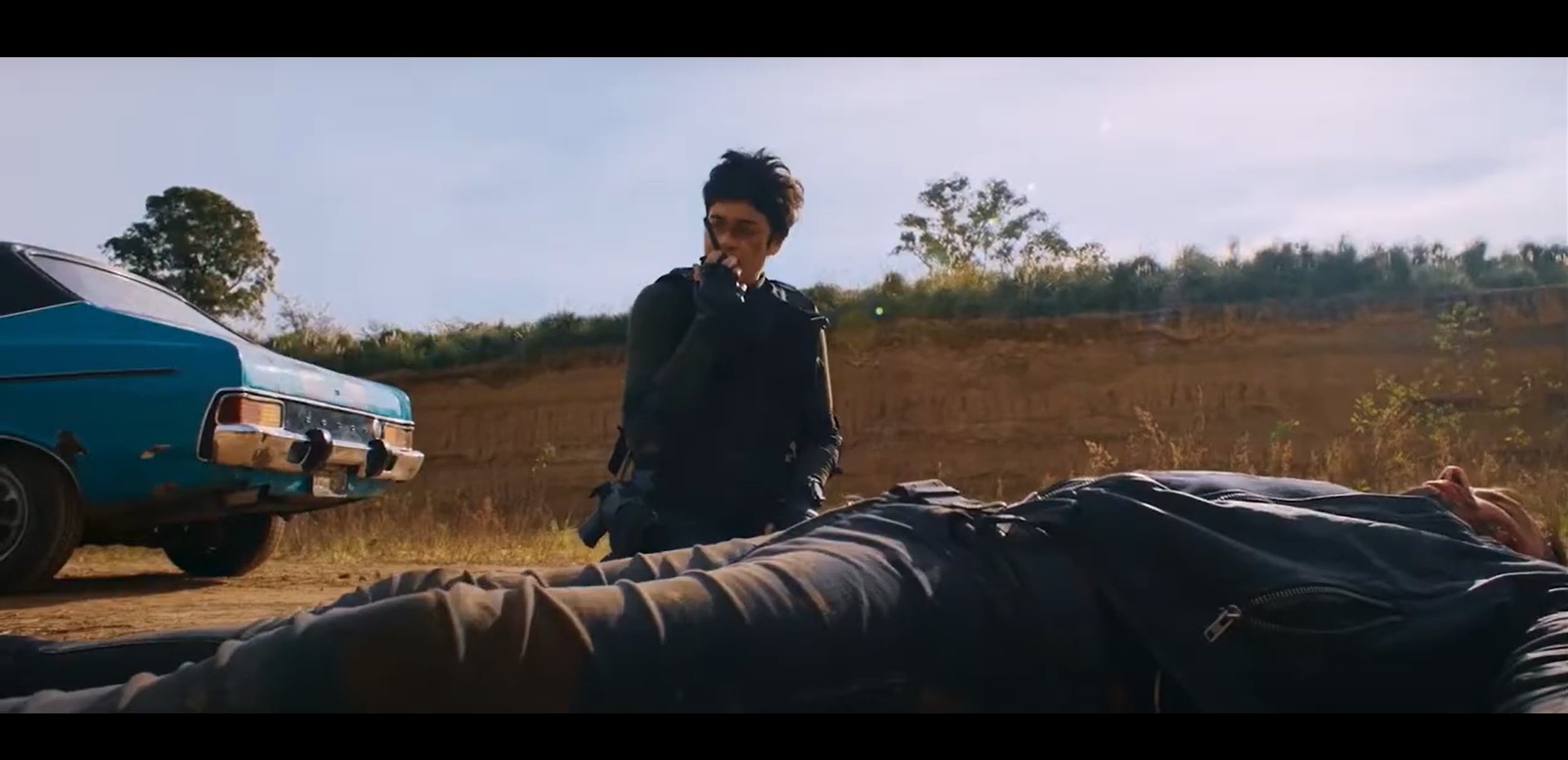
Diego, an imperial member of a hooligan gang dedicated to a fútbol club, sits and waits in a car in the middle of nowhere and listening in on a radio quiz show about his club’s sport where contestants can win $200,000 if they answer the questions correctly.  Having more knowledge than any run-of-the-mill caller, Diego rings up the radio station and passes easily to the next round, providing him a chance to win the jackpot once he passes the two more rounds he’ll be called upon to answer later in the day.  After hanging up, a man falls from the sky and lands dead on the hood of his car, a plane crashes in the distance, and a combat ready agent parachutes down and points a gun directly at him.  When brought around to his trunk, a tied-up man lies inside seemingly knowing the armed agent.  Two illegitimate jobs collide and go sideways when one faction underestimates the other in a fiery dance of fists, bullets, and explosions between hooligans, gangers, and law enforcement. 
A pulpy crime comedy-thriller tapped from the same snappy, vicious vein as such film as Guy Ritchie’s “Lock Stock and Two Smoking Barrels, David Fincher’s “Fight Club,” and Joe Canrnahan’s “Smokin’ Aces,” this Argentinian-produced, writhing black comedy titled “Punto Rojo,” translated to English to “Red Point,” is written-and-directed by “Necrophobia 3D” writer Nicanor Loreti, credited as Nic Loreti.  The 2023 film delivers eclectic, colorful characters, a contortioned, nonlinear narrative, and has knockaround and kick it in the teeth clout told partly in a violence-laden flashback fashion.  Loreti self produces the crassly club leitmotif and high level-level compositional film alongside Damian Loreti, Lucas Accardo, and Orlana Castro under the product flags of Boitkot Films, Otto Films, and the government nationalized INCAA, the National Institute of Film and Audiovisual Arts. 

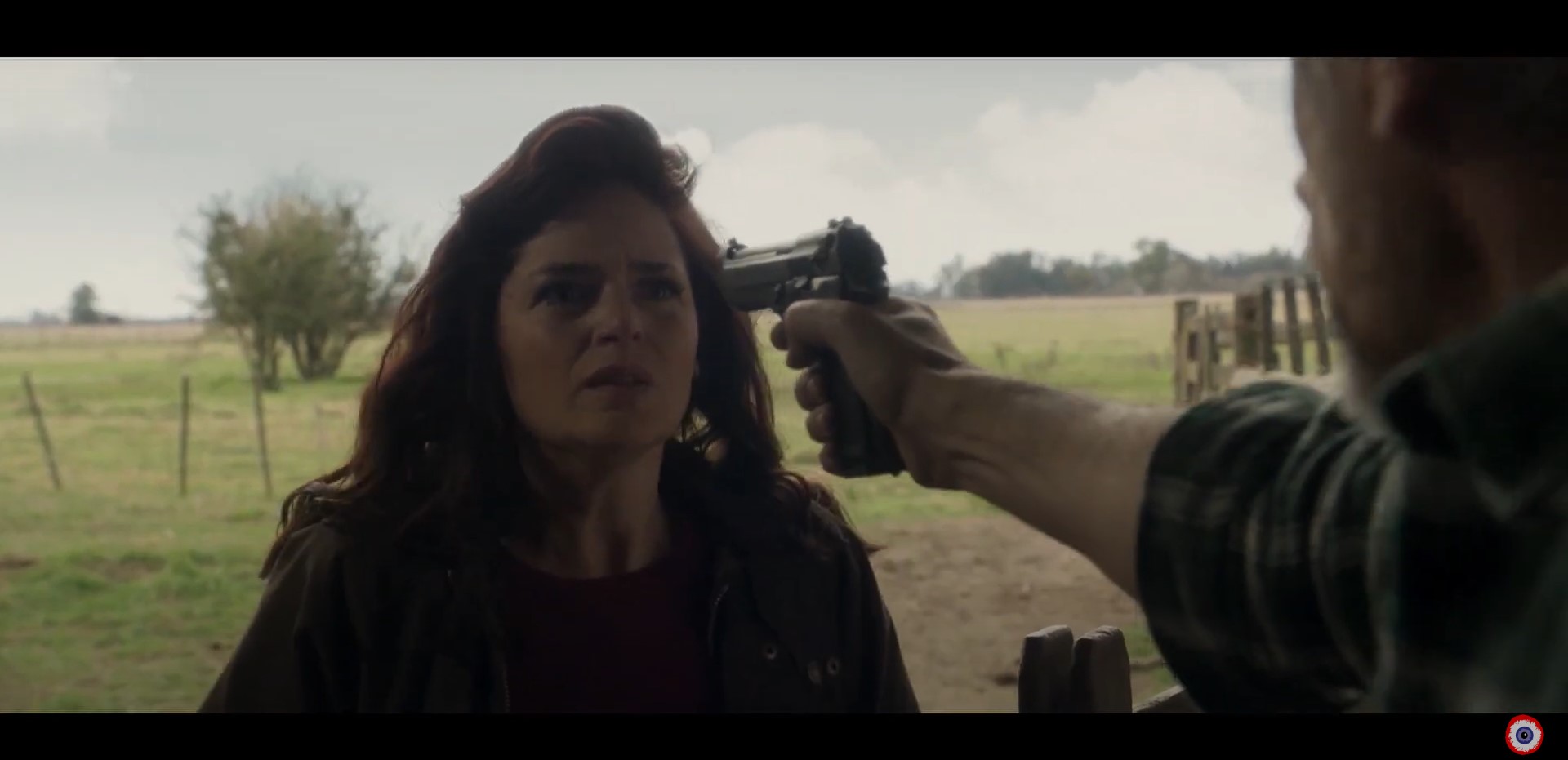
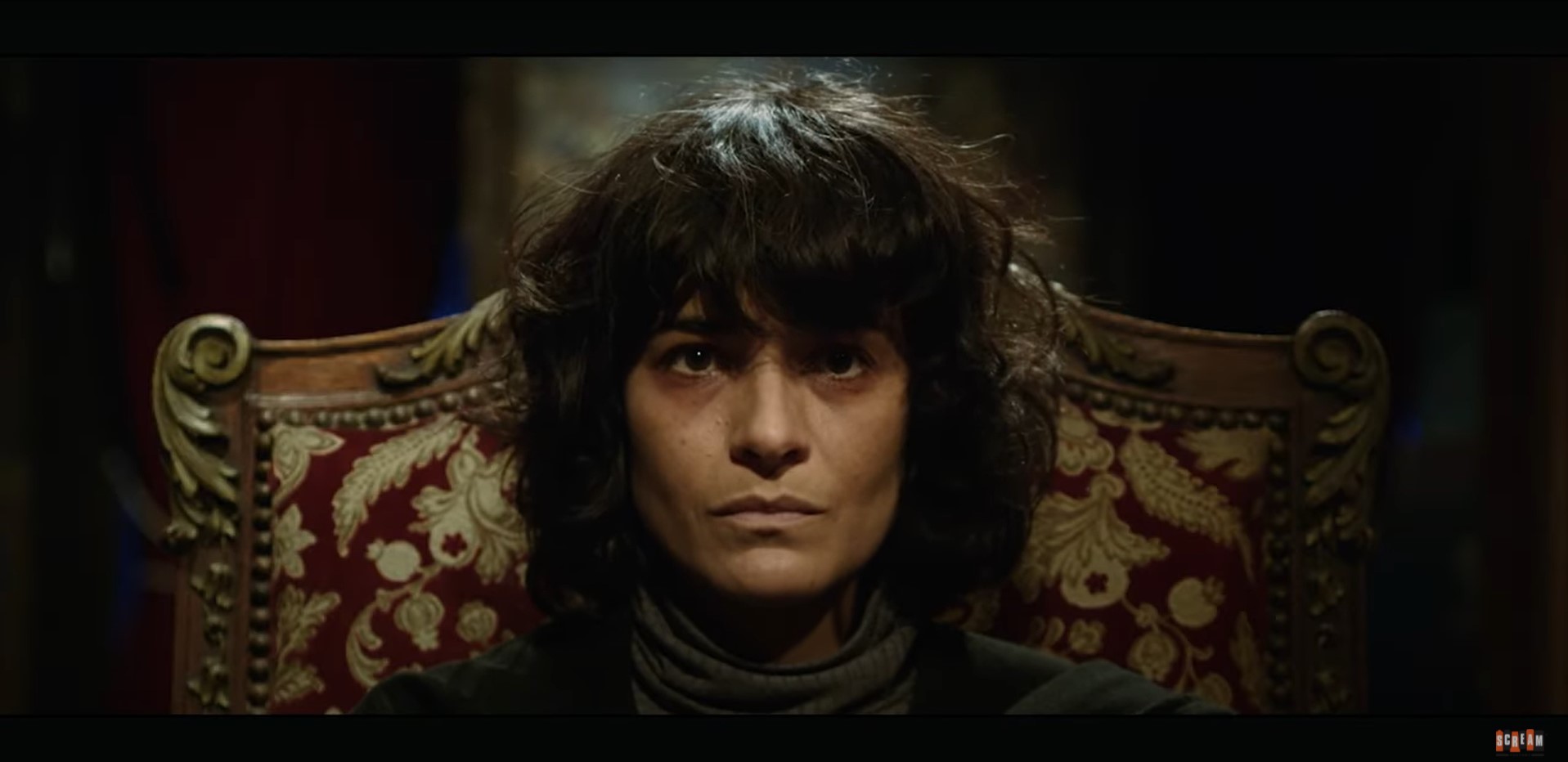
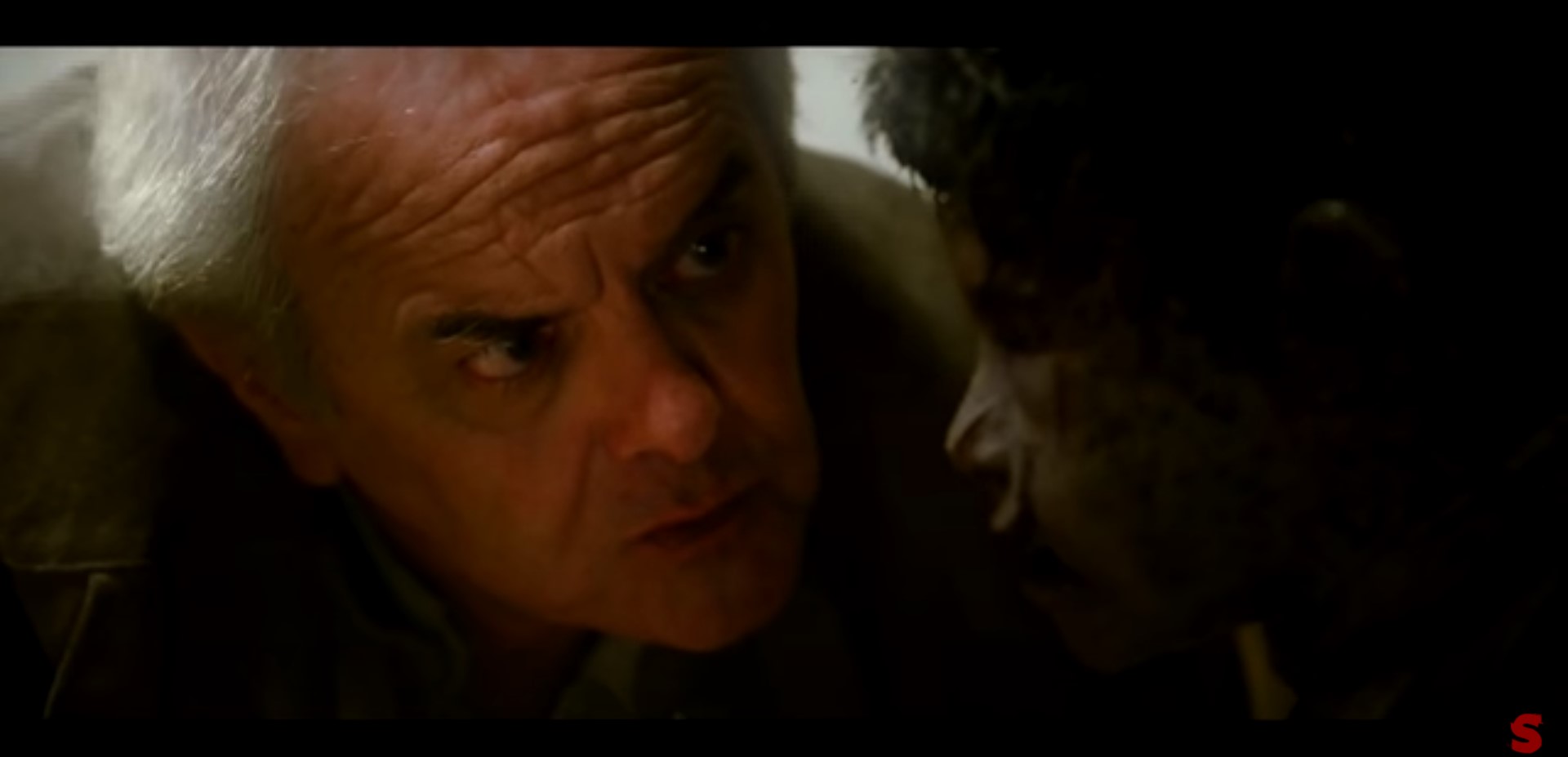
“Punto Rojo” begins quietly enough with Diego, played by the ruggedly intense features of Demián Salomón (“Terrified,” “Satanic Hispanics”), car sitting alone in, you guessed it, Red Point, a pediplain-esque area with not a soul surrounding him.  That is until a sleek, aero-suited skydiver crashes onto the hood ruins his euphoric fun of scoring first run success on-air of a radio quiz show.  Salomón dually presents the brutish outward appearing Diego as one-dimensional until he’s face-to-face with Paula, an Interpol officer also dressed in a sleek, skydiver area-suit and sporting a pixie cut from Mariana Anghileri (“On the 3rd Day”), then Diego’s simplicity turns complex in a more than meets the eye rough and tumble character pitted to hold his own in a brief cat-and-mouse game against an Interpol agent whose worked months, if not years, undercover to take down a high-powered criminal organization transporting a characterized atomic bomb.  Diego turns into one of those takes a hit and keeps on ticking tough guys as Paula has to work out and resolving the crumbling operation at hand.  Anghileri can act tough, be tough, and look tough during an operation gone awry and while both Diego and Paula square off in an advantage taking tit-for-tat, they’re unknowingly intertwined and sequestered by two different reasons that makes their fighting comically, and brutally, erroneous unfounded.   “Punto Rojo” fills out the cast with Juan Paolomino, Matías Lértora, Paula Manzone, and Pablo Sala.
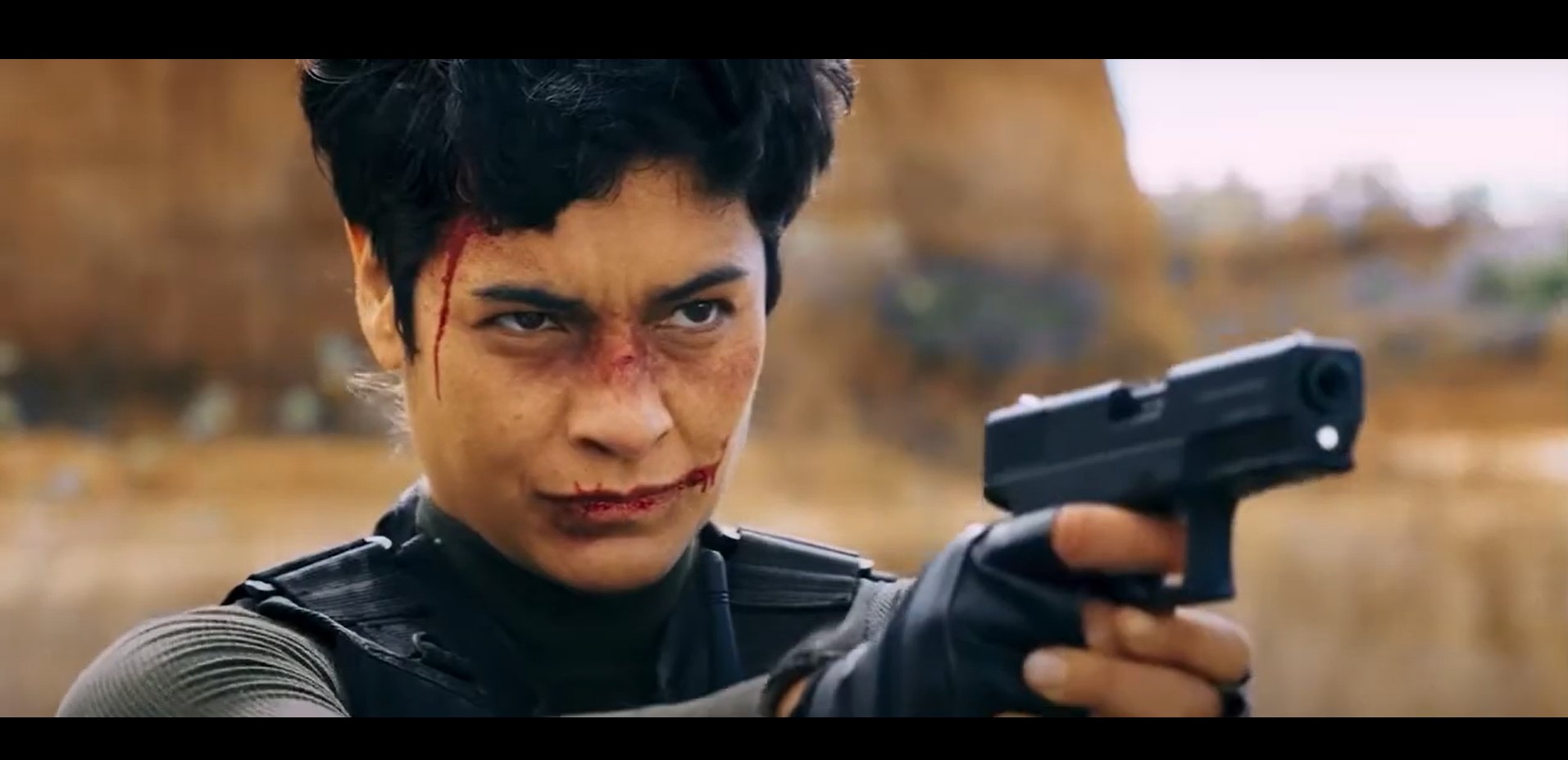
While not based on the Argentinian comic book series of the same name, penned by Fernando Calvi, and published by Totem Comics, one can’t help believe Calvi’s metaphysical superhero somehow slipped in and brushed a bit of influence upon Nic Loreti’s pulpy design that sees screen filling, voulou text, brief live scene-to-comic transformative illustration filters, and, of course, the absurd ultraviolence that allows for a great deal of forgiving punishment in the name of entertainment value.  The nonlinear narrative told through a couple of extended flashbacks fills in the first acts’ gaps mechanized by an all-in-one, up-to-speed process to fully explain how and when the two lead principals came to meet but then suddenly becomes muddled when the patiently and systematically cared for first two acts hastily unfolds by the rapid fire ending that doesn’t have an ounce, or even a chance for, coherency.  The ending almost resembles the unfortunate process of an unfinished film that is quickly cut for wrapping and presentation as a last-ditch effort to accrue a pocket change profit from the investment and the crude finale is cheaply glued together, pieced slapdashedly, and arranged with crisscross confusion.  The ending also drops that comic book style used early on, bringing the integrated audio score combined to flex with the enlarged, ostentatious text and vivid panache to a grinding halt against what could have been a stellar ending from the short-lived laid out and shocking material we do get to experience.  By no means is “Punto Rojo” a bad story, just mixed up technically and arranged, and that hurts the viewership the most when an intriguing, weaving concept falls short of expectations. 
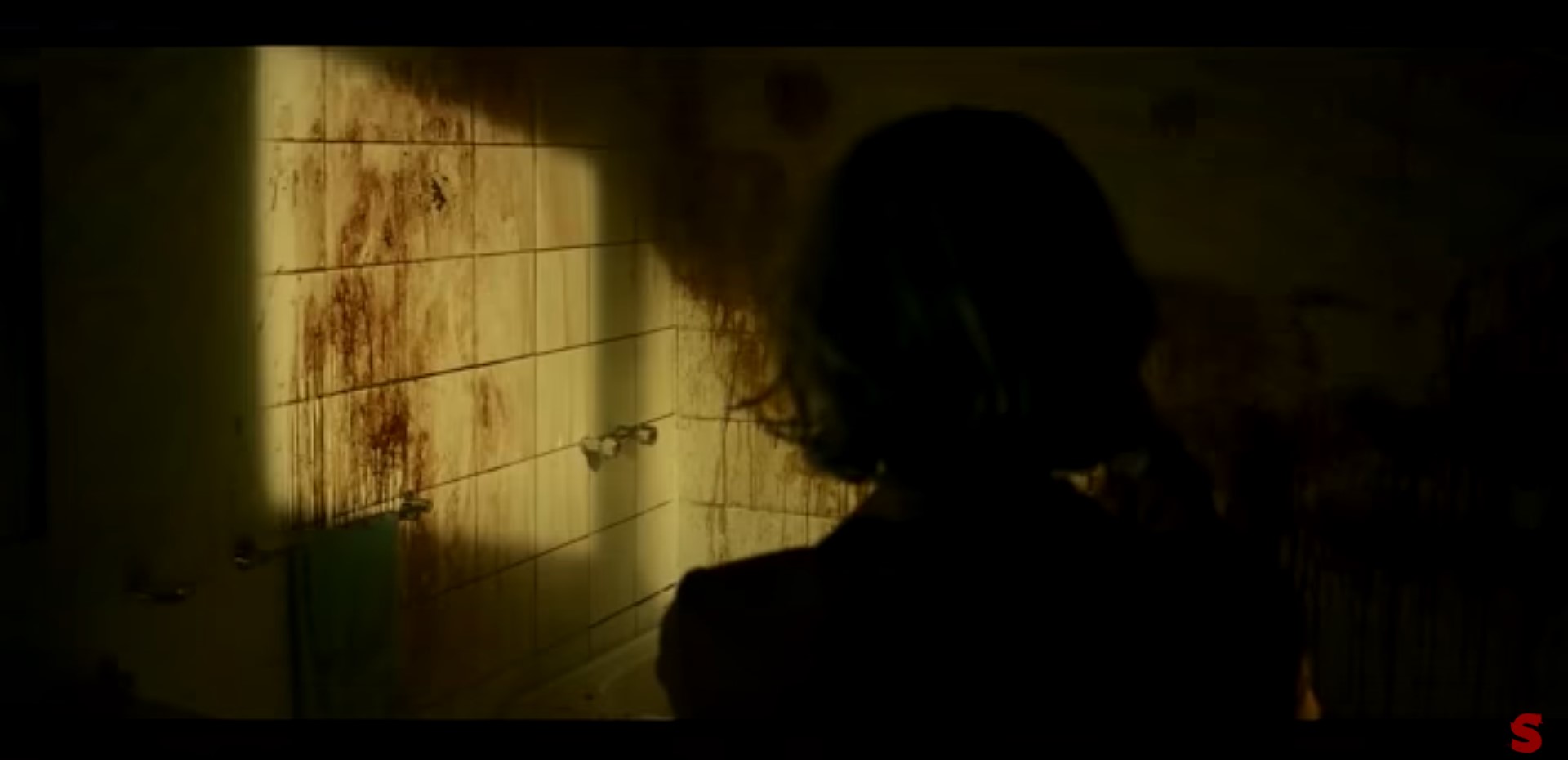
MVD Visual brings this South American quagmire of a story Stateside with a new Blu-ray release. The AVC encoded, 1080p high-definition, BD25, presented in an anamorphic 2.39:1 aspect ratio, captures in full frame Loreti’s long shots held in landscape view without a touch of grading to betone the natural exterior features. Mariano Suárez (“When Evil Lurks”) works the camera angles, dollies, cranes, and, I suspect, drones to blueprint and definition an extremely near sea of brown and tan around the more thrilling elements, such as the characters, that bring the drab set to life with a pop of color. No real issues with compression as the quality in color and, aside from the superimposed, gimcrack plane explosion, details remain unwavering, to which to also note that black levels, and there are many in flashbacks, render a solid inky darkness. The Spanish language audio options come in two lossless formats: a DTS-HD master audio 5.1 and a LPCM 2.0 stereo. The infusion of Pablo Sala’s (“Witch”) guttural guitar notes into the opening and closing credits, as well as isolated and detached to denote significant plot points, has potency inside the channels, as well as having a pleasantly diversifying grating of our ears, but never insidious replaces or missteps into the dialogue’s solid top track amongst the variable fray of explosions, skirmishes, and thematic atmospherics of the setting that do slither into the right auditory fields. Option subtitles are available and are timely moderately well with only a single mistake noted. Special features include Nic Loreti’s short film “Pinball” and the original theatrical trailer, both in high-definition. In the audio options, director Nic Loreti and producer Lucas Accardo’s English commentary can be sourced for more feature-length insight. Coming in a standard Blu-ray Amary case, the mesh screen-topped, blood red graded cover lacks that format fixation for marketability but gets the point across of the principal players involved in the fracas. The disc is pressed with a cropped version of the front cover and there is no insert included. The region free MVD Visual release comes not rated and has a runtime of 80 minutes.

Last Rites: Good start, bad finish. “Punto Rojo” lurid charisma out the gate lures audiences into a world of deceit, action, and violence that promises a backfill to fulfill a middle-of-the-story beginning; however, the climatic bomb dropped on us, or rather U.S., had no time to dissolve into our nervous system and what “Punto Rojo” greatly constructs with its economic desperation and black humor is quickly demolished in a blink of an eye in the sky.
“Punto Rojo” on MVD Visual Blu-ray!

A Teacher’s Raunchy Romance is Not the Only EVIL Being Committed! “Amor Bandido” reviewed! (Cinephobia Releasing / DVD)

Forbidden Love and Severe Malefactions in “Amor Bandido” on DVD July 18th!

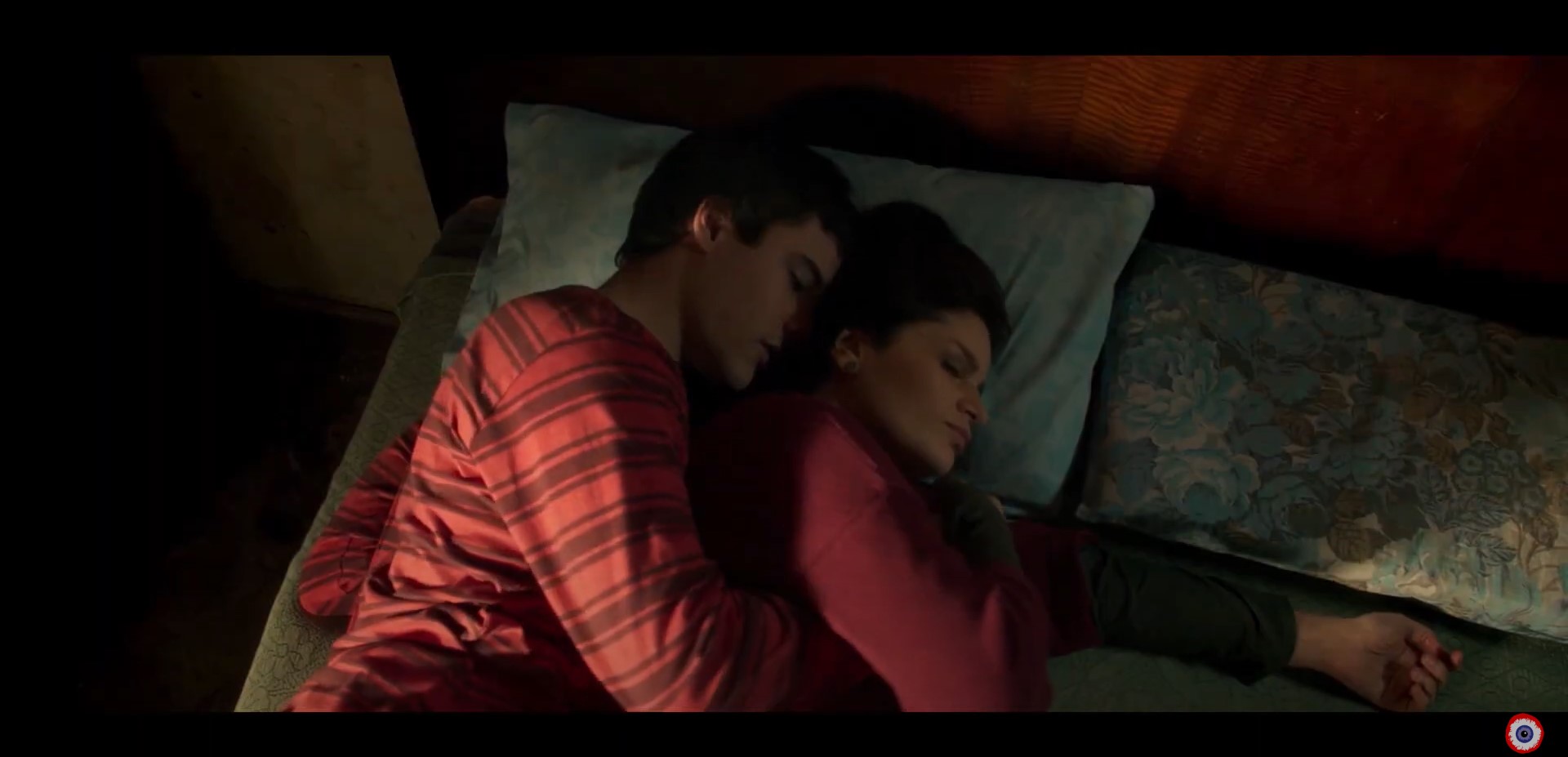
A remiss 16-year-old Joan is the son of a wealthy magistrate who doesn’t see eye-to-eye with his father’s wishes.  What was supposed to be the last day of school before Easter break turns into Joan’s most anxious day when he learns that his mistress, his teacher Luciana, is exiting her position at the school that very day.  Pleading to Luciana to take him with her, she reluctantly accepts his tagalong despite him being underage and her being more than double his age.  Their unlawful affair leads them to an isolated manor where they can romantically explore themselves in a paramour tour of passion.  A couple of days have past and Joan is completely smitten until Luciana’s brother arrives and the whole getaway has been a trick at Joan’s expense.  Now, the adolescent is being held captive and has to fight for his very life before he’s executed for being nothing more than a wealthy judge’s son and a naïve, jilted lover. 

More by more, news stories are printed of older women, specifically women in education, having intimate relations with a young, student boy – sometimes, another girl as well.  Men have always been the archetype of the infamously ugly term pedophilia, but women can be just as predatory despite the lack of widespread printed and televised attention.  Mostly, these new bites are mostly obscured in the newsfeed of an online aggregated newsreel, hyper-regionalized to the area where the crime was committed, but the story is nearly always the same – young (often good-looking) 20-30 year old teacher abuses young, under 18-year-old boy in the car, at her home, via text with lewd pictures, etc.  Honestly, boys have long been hot for teachers, but there is an inherent sliminess to the idea that has been rooted in steamy fantasy pubescent minds.  Iconic films like 1967 Mike Nichols’s “The Graduate” starring Dustin Hoffman aroused the notion of forbidden lust while others like George Bower’s 1983 “My Tutor” and even the more recent “No Hard Feelings” with Jennifer Lawrence, to an extent, makes light of the subject matter; however, no other filmmaker really captures the act’s grooming nature like director Daniel Werner.  Werner’s “Amor Bandido,” or “Bandit Love” depicts minor exploitation like never before with fellow screenwriter Diego Avalos in their feature film together after the production of their 2019 short, another contentious teacher-student relationship, entitled “Nadador.”  The Argentinian film is a co-production of The National Institute of Cinema and Audiovisual Arts (INCAA) and Werner Cine, produced by Werner and Nicolás Batlle.

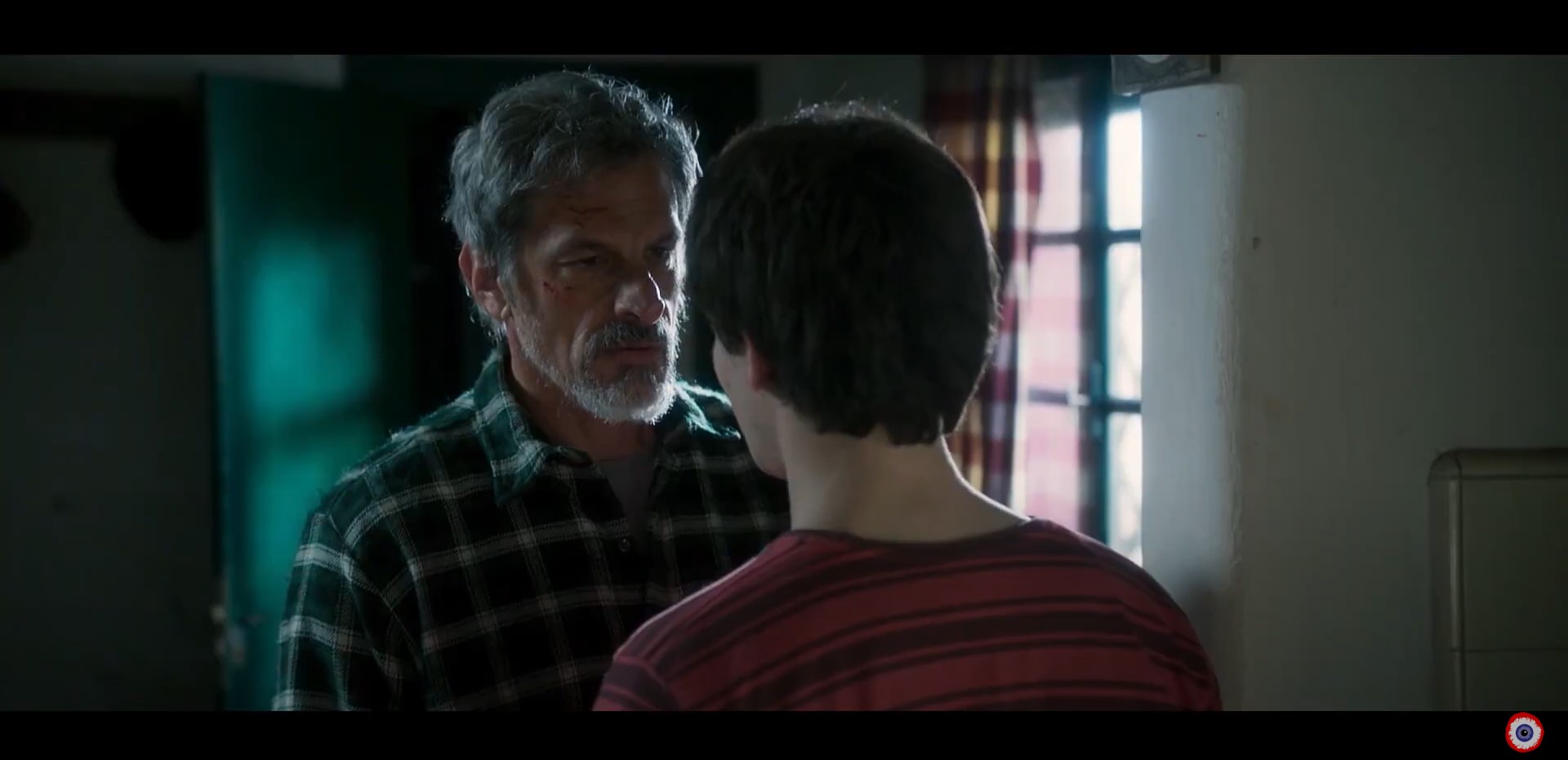
The film opens up to Joan, a 16-year-old student with a bit of a chip on his shoulder as he glues together a volcano-like model in slapdash fashion.  Spoiled further into his innate teenage angst by his own abundance of wealth, Joan is able to get away with essentially disrespecting his empty-threatening father and boozy mother.  The extent of his entitlement spills into the classroom when learns his teacher, Ms. Luciana, is leaving the school at the end of the day and this is where we learn that Luciana and Joan have been in a forbidden affair as they meet in a storage room where she caresses his crotch as they kiss.  Though looking very much like a 16-year-old brat, Renato Quattordio is actually in his early 20s when the Buenos Aires born actor becomes passionately intertwined on screen with early 40’s actress, Romina Ricci.  The noticeable age difference places a stamp of scuzzy approval as the principals really put on a show of sensuality that defies the numerical age gap while also defining the maturity and the experience of individuals.  Quattordio hits the mark as the naïve teen eager to jump at the behest of his older, curvaceous companion.  And, boy, is Romina Ricci curvaceous, luring Joan in as the wanton teacher cautious of their alluring affair.  The erotic thriller quickly turns into a survival thriller when Joan’s eagerness to grow up comes face-to-face with Luciana’s past, embodied by Rafael Ferro (“Terror 5,” “White Coffin”) and Sergio Prina as two money greedy thugs eager to milk Joan for all that he is worth.  “Amor Bandido” rounds out with a few more bandidos in Mónica Gonzaga, Carlos Mena, Jurge Prado, and Santigao Stieben.

“Amor Bandido” is a coming-of-age tale with a pair of dichotomizing facades strung together by opposing forces in choosing between love or money.  Essentially, those two driving forces boil down to the relationship’s core and that is what director Daniel Werner simmers on, a test of idolatry strength between two people.  Werner pretenses the narrative with a forbidden love escaping to the rurality to make passionate, unjudged lust in a love context, well, at least for one of them.  The absconding is only a diversion for another unlawful act and is palpable in the undertone that something isn’t quite right with Joan and Luciana’s relationship, something that you can’t quite put your finger on and it’s not the surface fact that she’s a mid-30 something-year-old teacher screwing her 16-year-old student.  Werner leaves a breadcrumb trail of concerning clues that make sense when all is exposed but keeps those hints closed to the chest, protected to not giveaway too much until the summiting turning point of the exiting passion and entering perpetration.  Yet, despite our intuitive inklings of the funky air, the pivot still hits hard like a blindsided punch to the jaw that dislodges the mandible and rattles the teeth when the two lovebirds are struck with one payday load.  The only aspect that could be narratively tweaked is the introduction of the wounded stranger whose motives are understood but not quite absolutely clear his connections and how he became wounded in the first place with a gnarly gash on the calf that looks like a Great White shark attack had a snack on.  Digressing to figure out where he fits into it all becomes a distraction and a divergence from the main story that has now snowballed into additional but unwanted molestation, possible incest, and a ransom deal that won’t be faithfully upheld. 

“Amor Bandido” is the first feature to be covered by us courteously supplied by our friends as Cinephobia Releasing, a new distribution label from original world-searching and independent cult worshipping cinephiles of Artsploitation Films.  Coming soon to home video on July 18th, the single-layer DVD is presented in a widescreen 1.85:1 aspect ratio from a digitally recorded print and renders an expected damage and dust/dirt free picture with nature, yet smoothed out detail, skin tones and natural coloring.  There’s not a ton of visual risk here from cinematographer Manuel Rebella (“A Taste of Blood”) with the stimulation coming strictly from performances and the erotic, forbidden spirit.  The DVD5 format falls below par for darker portions within the frame that are seen with splotchy banding as well as the aforementioned smoothness around facial features.  The Spanish Dolby Digital 5.1 surround sound and a Spanish Dolby Digital 2.0 are equally comparable with the focus primarily on the dialogue and less on the sound design to warrant extra channels so both tracks output relatively the same.  There are scenes or sequences all other tracks are muted or receded to make way for a vivacious musical soundtrack to accentuate the moment.  Dialogue comes across clean and clear without any interference in the balance of the little ambience of rustling leaves, water splashing, and gun shots.  Option English subtitles are available, but I did spot a pair of typographical errors.  Bonus features include a 3-minute sale and promotional make-of with director Daniel Werner, the original trailer – separated from the bonus features on the static menu – and trailers for future Cinephobia Releasing films, such as “Sublime,” “Emmanuelle’s Revenge,” “Brightwood,” “The Latent Image,” and “The Goldsmith.”   Pressed with the cropped but same image as the front cover, the DVD comes in a standard tall snapper with the front cover sporting that crotch-fondling moment of intimacy.  The Cinephobia Releasing title comes unrated, runs at 80 minutes, and is has region 1 playback.  The coming-of-age arc prevalently scores into the naïve, angsty adolescent tale but “Amor Bandido” also suggests that maybe maturing too quickly should be left off the table, keeping fantastical temptation at bay and keeping innocence intact for kids to be kids just a few years more.

Forbidden Love and Severe Malefactions in “Amor Bandido” on DVD July 18th!

We Are All Just Playing Characters in an EVIL Movie! “Virtual Reality” reviewed! (Artsploitation Films – Kino Lorber / Blu-ray)

Believe Everything You See.  “Virtual Reality” on Blu-ray at Amazon.com

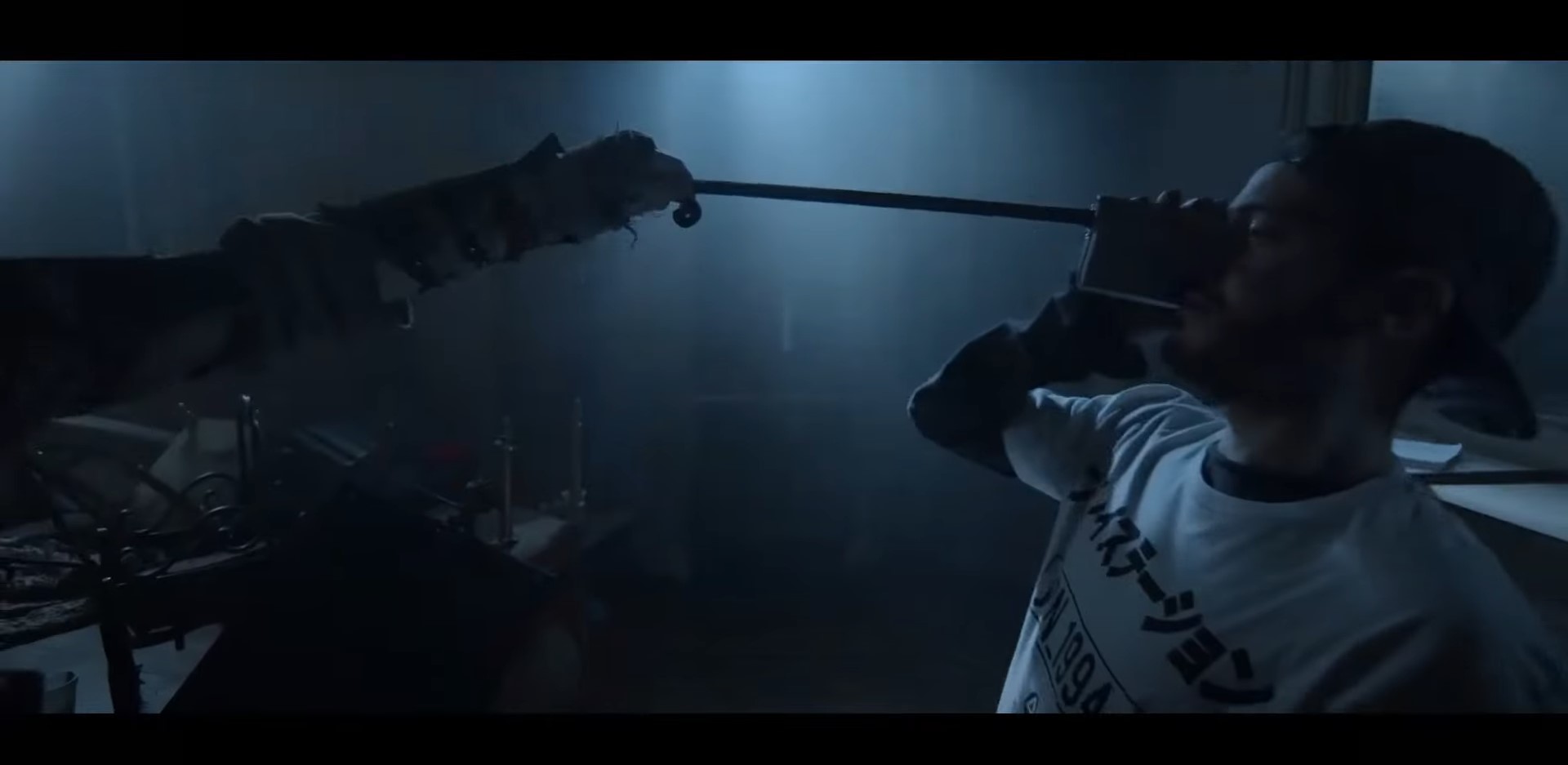
A horror movie about a supernatural Celtic killer has just wrapped production and goes into post.  The cast and crew what to succeed at all costs, not only in the movie but also in their stagnant careers.  However, the director, Matias, craves fame and legacy to the point of committing his soul to whatever it takes to cement his film in acclaimed success.  Matias and the arcane producer form a pact with a diabolical computer program and artificial intelligence that’ll bind their movie to esteemed infamy as well as bind their cast and crew to their characters.  When Matias invites select cast and crew to a private screening at his home, they realize the movie has scenes of their characters that weren’t shot during principal photography and that whatever happens to their characters in the movie, being chased by the Celtic killer, will happen to them in real life.  The only way to survive the movie is to last the full 90-minute runtime.

Hailing from Argentina, the South American country that brought us “Terrified” and the “Plaga Zombie” films, comes another tale of terror with the metaverse horror “Realidad Virtual,” aka “Virtual Reality.”  The 2006 “Director’s Cut” and 2009 “Breaking Nikki” shot caller Findling continues his traipse through psychotronic land with a story that couldn’t be more relevant today than if artificial intelligence synthesized the narrative itself out of binary ones and zeros.  The script comes from Findling and cowriter Lourdes Prado Méndez, an Argentinian romance novelist.  Having virtually no romance in “Virtual Reality” whatsoever, the 2021 film stretches Méndez’s range into crafting characters with a foot in two planes of existence while under immense fear and pressure to survive a supernatural slashening.  “Virtual Reality” is produced by Gabriel Lahaye under Lahaye Media, who has supported and collaborated on a number of Findling’s previous films, such as “Breaking Nikki” and “Impossible Crimes,” and is also a production of Wit Producciones, Cine Argentino, APIMA, FilmSharks, and INCAA of Argentina.

The story circles around a selectively small and independent film cast and crew finishing up a concluding scene of another to-be-forgotten horror movie by director, Matias (Guillermo Berthold), who has had multiple failed films before now.  Yet, the production team remains positive, hopefully the film with jumpstart careers as desperately expressed through the first act, especially with the film’s final girl star Guadalupe (Vanesa González, “Hypersomnia”), or Guad as she’s called by her friends, and her director’s assistant brother Pablo (Santiago Magariños).  Berthold plays the sneaky-sadistic director about as a well as most with a fervent penchant to do anything for his creative filmic art even if that means colluding with a shady, mysterious producer in César Bordón (“She Wolf”) whose performance’s obscured or lack of purpose is due in part to the character’s flimsy connection to the diabolical computer program.  Bordón can’t help but just be an inhuman human, violent by necessity instead of being violent with a purpose.  The producer seeks success for every single one of his films with a subsequent plotted course for the next idea – whether be a sequel or a brand new story – yet his connection to the network of evil of unexplained runes, sporadic pixilation, and artificial intelligent adaptations that can re-edit recordings into a new and inexplicable account of the story has been sorely severed in regard to understanding his background and his motivation of mortal sacrifice for movie fame.  Other connects that were left on the cutting room for, so to say, were between the siblings Guada and Pablo and their dying mother in what I suspect was an attempt to shove the sister and brother some sympathy, clearing the way for the two to be the unambiguously heroic duo, but the scene with their mother on her deathbed offered little-to-no compassion, producing a gelatinous lasting effect in what was a more visual one-off of two children spending the time they have left with their mother versus an incentive or arc scene that would hopefully rally up character expectations to look after each other.  “Virtual Reality” rounds out the cast with Frederico Bal (“Impossible Crimes”), Francisco González Gil (“El último zombi”), Sofia Del Tuffo (“Luciferina”), and Christian Sancho in a Johnny Depp inspired dressed part of a self-centered actor with a suspected pill addiction. 

As far as plot designs go, “Virtual Reality” has an interesting concept that involves filming two different harrowing situations and joining them into one parallel plight with the actors reacting more to the events happening on the television screen, which in itself becomes living, breathing character of sinisterism, rather than what’s happening outside the box in the present.  Both realities are virtually live and in play for their very being and whatever happens in one, affects the other.  “Virtual Reality’s” state of duality, not only in character, but also in linear lines of an alternate universe with lifeline connections, is smart, fresh, and terrorizing to know that your life depends on an A.I. created character coursing through a maze for their very lives.  This mirror-meta-effect continues to evolve as the story plays out that leave survivors questioning reality and questioning their individuality of some higher force that has used them like some free-thinking avatar for filmdom fame.  This is where “Virtual Reality” starts to become complicatedly crisscrossing as instances of a distorted reality spiral down a rabbit hole of what we thought was true.  Findling is nonapologetic for his layered universes that spins and wraps a narrative around another in what is a show of forced fantasy subsisting in that gray area of reality.  The Celtic slasher storyline is just a sublevel to the story’s higher level view that defines greed and worth amongst people longings for more and also models itself to reflect that thin line some people cross between reality and fantasy, as foreshadowed early on into the film during the shooting of the final girl scene when method actor Julian gets into the headspace of his Celtic killer character and really starts to strangle Guada in a climactic moment.  By the finale, you’re comprehensible pencil might have wandered off the connective dot trail in trying to see the bigger picture of Hindley’s meta-movie but “Virtual Reality” is innovative tech horror that just requires a smidgen of tweaking to be impeccable.

2020.  That was the last time I reviewed an Artsploitation Films title.  The long 3-year hiatus was due in part of King Lorber purchasing the boutique Philadelphia label that specialized in bringing independent global horror to the U.S.  Artsploitation Films and Kino Lorber continue that pursuit with Hernán Findling’s “Virtual Reality” from Argentinian now on a Stateside Blu-ray disc courtesy of the joint label.  The AVC encoded, 1080p High-Definition, BD25 is presented in a widescreen 1.85:1 aspect ratio.  Cinematically, the format storage is able to capture the true quality of the image with hardly any compression artefacts.  There’s not a ton of visual augmenting but what’s presented is a draining of color to a near black-and-white image with pigmented primary color lighting to give the scenes a dash of color that’s in contrast to the moderate-to-heavy in-movie, trope-heavy lack of lighting to create deeper shadows for that gloomy horror movie effect of interior trapped victims running for their lives in the dark.  Two Spanish language audio options are available on the release, a DTS-HD 5.1 Master Audio surround sound and a DTS-HD Master Audio 2.0. The 5.1 track has good balance between the ambient, soundtrack, and dialogue tracks albeit a little heavy on the score to clutter, at times, a clear exchange, especially when everyone’s yelling at the television set.  Other than that, no technical issues throughout the multi-channel output. English subtitles run at startup but can be turned off.  The unrated, region A encoded release has a runtime of 84 minutes but doesn’t come with a menu for special features; however, there is the film’s trailer and, if you stay tuned after the credits, there’s a bonus scene where you, the viewer, becomes the star of your own movie.  Artsploitation Films is back, baby!  Courtesy of Kino Lorber, “Virtual Reality” is barely tapped meta-horror, that has become all the craze nowadays, and Hernán Findling unboxes that fine line between real and unreal to only merge them together to be one and the same in a twisted interpretation of when art imitates life. 

Believe Everything You See.  “Virtual Reality” on Blu-ray at Amazon.com

EVIL Comes Not on the 1st Day, or the 2nd Day, but “On the 3rd Day!” reviewed! (Scream Factory! / Blu-ray)

“On the 3rd Day” arrives onto Blu-ray on March 29th!

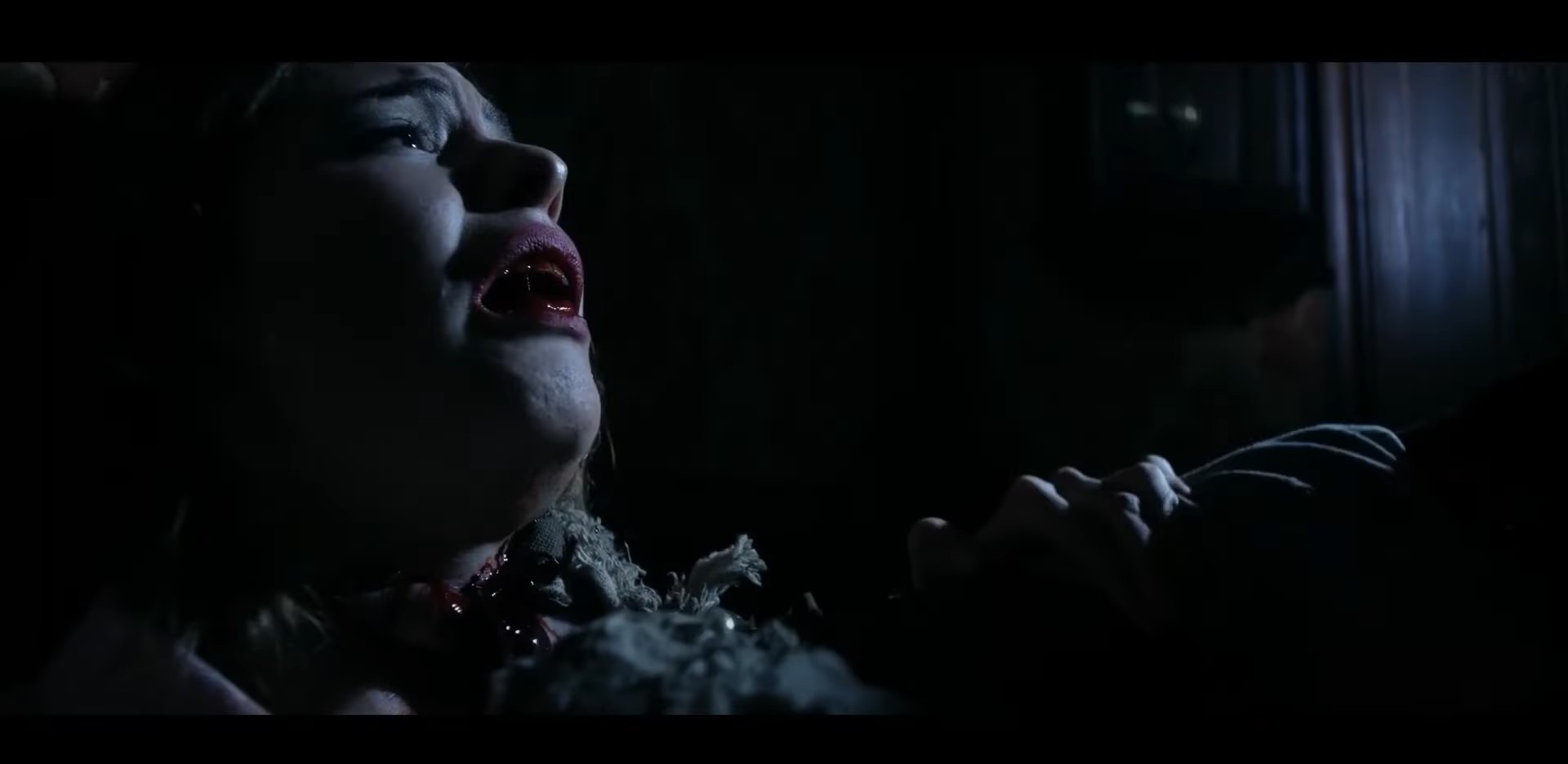
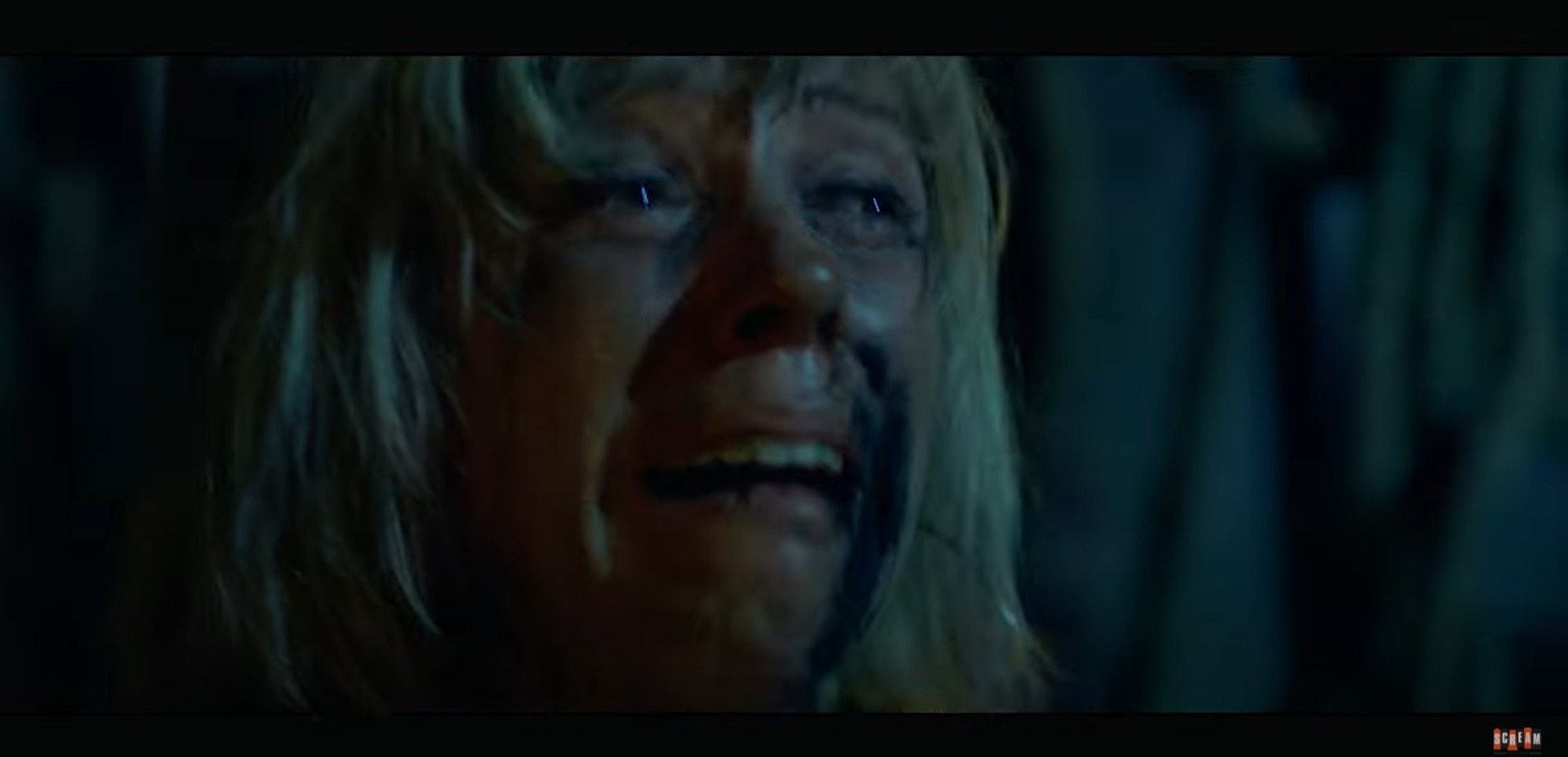
A car accident leaves Cecilia dazed and confused as she wakes up in an abandoned warehouse unsure of what crashed into her and how she arrived inside the vacant area.  Her son, Martin, who was also in the car with her, is missing.  Plagued by disturbing visions being reflected through mirrors, an agitated and frightened Cecilia escapes the hospital and with the help of an empathetic, young doctor, they employ a hypnotist to extract her post-accident whereabouts and possibly locate her missing son, but what is unleashed through hypnosis is more terrifying than imagined.  Meanwhile, the other crash victim, a hermit priest, sets forth to reclaim an ancient and deadly Catholic secret lost in the wreckage and will stop at nothing and do anything to get it.  When Cecilia and the priest converge, the truth of what really happened will be profanely revealed with spilled blood.

“On the 3rd Day” is one of those movies that needs tiptoeing around when reviewing it to not divulge spoilers.  The Daniel de la Vega mystifying horror hails from Argentina and is penned by the screenwriting duo of Alberto Fasce and Gonzalo Ventura, the latter of whom authored the 2017 novel “3 Days” (3 días) in which the film is adapted from.  What can be divulged about Vega’s film is that context revolves around a classical monster fans know and revere to be a staple of horror iconography but “The Chronicle of the Raven” director ventures deep into a disoriented mother’s puzzling gap in time, working backwards through her mind’s murky-dirty window to then make the picture wretchedly clear.  “On the 3rd Day” blends abusive relationships and ugly divorce with traditional and appreciable genre tropes to fully convey that those who are to be loved and protected the most out of dissolving unions are those who are ultimately the ones hurt most of all.  Del Toro Films’ Néstor Sánchez Sotelo, who produced Vega’s 2016 supernatural thriller, “White Coffin,” produces alongside the filmmaker in a coproduction with Furia Films.

“On the 3rd Day” pursues the storyline of two principal characters: Cecilia, a mother recouping her memories after a shocking car accident, and Padre Enrique, an off-the-grid priest guarding the Catholic Church’s dark secret. The Buenos Airos-native actress Mariana Anghileri becomes lost in Cecilia’s constant struggle against the forces guiding her down a subconscious alter ego path that’s unveiled at the tale-telling end while at the opposite end of the spectrum, Padre Enrique, played with a feverously somber faith from Gerardo Romano, who also had a role in Daniel de la Vega’s “Necrophobia 3D,” knows exactly what’s at stake after accidently crashing his truck into Cecilia’s car and the displaced crate he was hauling to Santa Cruz at the behest of the church opens and sets loose an unspeakable evil to lurk. Romano is purposeful in Padre Enrique’s mission with a scrap of uncertainty splayed on his face, but never discloses a sense of true concern or panic-stricken hopelessness which makes the character refreshing in his confidence rather than tense in his unwavering assurance. The same can’t be said about Cecilia who suffers a continuous reeling over the missing gap of time. However, locating the sincerity in Anghileri is difficult as the actress doesn’t convey that primo motherly instinct of a sudden and violent detachment from her child properly. Anghileri wonderfully denotes an obfuscate posture but condoning her as a loving parent just doesn’t seem justifiable, even in the finale that is while still impactfully poignant, misses utterly gutting audiences with Anghileri’s lukewarm care. “On the 3rd Day” rounds out the cast with Osvaldo Santoro, Mathias Domizi, Lautaro Delgado, Susana Beltrán, Octavio Belmonte, Sergio Boris, Rodolfo Ranni and Verónica Intile.

“On the 3rd Day’s” first act didn’t fill me with confidence. I was about as lost as Cecilia waking up disoriented in a vacant warehouse. Vega jumbles sequential order and interjects flashbacks into an already copiously edited narrative with a slither of surrealism to the style of early David Lynch or Terry Gilliam. We’re thrust into Cecilia’s post-crash nightmare, witnessing irrational visions through standing oval mirrors and departing characters who don’t come out alive on the other end of meeting her. Vega seldomly gives into definitive trope context as he reshapes with miniscule precision what we already know traditionally about this particular monster into seemingly something new. By the second and third act, Vega begins whittling down obscuring barriers, leaving more dead bodies in Cecilia’s wake although we definitely don’t ever see death by her hand as it’s always just implied between before and after cuts. The script also pieces in more clues with Padre Enrique’s razing of collateral damage stained with the blood that is not their own. I’m enamored by this phrase that embodies a mystery on the tip of the tongue hungry to be solved and as the padre proceeds to liquate an innocent bystander because of clues he only recognizes, his character, however vilified Vega makes him out to be, becomes far more interesting in a role as a priest with a less than a pastoral posture and as a persistent caretaker of an ominous being, cleaning up after whoopsie daisy incident in losing his oversight. What “On the 3rd Day” boils down to, thematically, is when the sight is lost on what is most important, there becomes an indefinite loss that can’t be put back safely into the box. Between Cecilia’s radical escape from an ex-husband and Padre Enrique’s hastiness, they both take their eye of the prize and ultimately suffer loss in the worst possible way, turning “On the 3rd Day” into a distilled gaslight of unquestionable terror.

Hopefully, to this point, I have not spoiled Daniel del la Vega’s “On the 3rd Day’s” elusive revelation. One of the only ways to see what happens, to see the shocking ending, check out “On the 3rd Day’s” on Blu-ray from Scream Factory arriving Tuesday, March 29th! The AVC encoded, region A Blu-ray is presented in 1080p high definition and in a widescreen 2.39:1 aspect ratio. Mariano Suárez carries over the tenebrous “Terrified” low lighting to provide a tonal dreary environment akin to noir, which “On the 3rd Day” fashions itself. Skin tones, practical effect textures, and even the retro-esque compositional special effect flush out nicely. What’s a little disappointing is the forced English dub track on both the audio options: DTS-HD Master Audio 5.1 and 2.0 stereo. With no alternative languages to opt into, even a native Spanish track, the English dub is obvious desynched between the speech and delivery. The ambient range and depth fairs better with adequate detail and an Italianomysterio soundtrack by Luciano Onetti, who worked on the modern giallo films “Francesca” and “Abrakadabra” with brother and co-founder of Black Mandala productions, Nicolás Onetti. English subtitles are available. The 85-minute film releases not rated and without extras other than the snapper case sheathed inside an image redundant cardboard slipcover and a wide still capture on the reverse Blu-ray cover. “On the 3rd Day” starts messy but ends in a gothic aghast that sets the seal on Daniel de la Vega’s slow burn evolution as a genre filmmaker.

“On the 3rd Day” arrives onto Blu-ray on March 29th!

The EVIL Next Door Invites the Urban Decay. “Terrified” reviewed (Acorn Media International / Blu-ray)


A young boy is hit and killed by a bus.  A housewife is found hung in her bathroom.  A man has disappeared in his home.  Three incidences, three houses, three souls have one thing in common.  They’re neighbors.  The unusualness surrounding each tragedy grabs the attention of former forensics investigator Jano who’s own experience with the paranormal thrusts an unquenchable desire to examine the supernatural.  In a matter of coincidence, Dr. Mora Albreck, a vocational psychokinetic researcher, follows up on the disappearance of the man who called her countless times for help, but then just vanishes.  Accompanied by Dr. Albreck’s assistant, Dr. Rosentock, and Detective Funes, a weary, on-the-edge officer with a bad heart, the divide themselves to stay the night in each house and experience the paranormal phenomena calling from the beyond, but the entities calling just might terrify them. 

Hailing from Argentina comes the shivering, cross dimensional unknown from writer-director Demián Rugna’s 2017 properly titled, “Terrified.”  Originally known as “Aterrados,” the Buenos Aires filmmaker, who’s helmed hell bound thresholds previously with his introductory feature film, “The Last Gateway,” remains inside the grindhouse and horror bubble with another slit between realities thriller.  This particular bubble bursts with a whirlwind of nebulous outbreak of terror while providing microbe commentary about the potential dangers of Latin America’s water system and a perspective theme that speaks volumes on the issues of duality in what really happened and what the general public is told. Don’t trust your eyes! Nothing is what it seems! That’s the whole premise of “Terrified’s” knee-quivering appall, produced by Fernando Díaz under Machaco Films and the Instituto Nacional de Cine y Artes Audiovisuales (INCAA).

Rugna’s paces “Terrified’s” entropic buildout near the edge of an anthology, ghosting us the one reason for a neighbor’s supernatural experience for the next to eventually bring the heart of the cast together as a motley group of paranormal investigators. Starting with retired forensic specialist Jano who has a morbid curiosity for the unknown that fascinates him more than the abnormal mortifies him with fear. In his first feature length performance outside of television, Norberto Gonzalo understudies the very concept of the character Jano with objective eye for curiosity and knowledge much like any scientist. Jano is invited by Detective Funes, played by another television regular, Maximiliano Ghione, to the investigation of a recently deceased boy’s corpse having returned to his childhood home and is now a rigor mortis statue sitting upright at the dining room table. Though through exposition about their training and partnership over the years, Jano and Funes sit on the opposite sides of the fear spectrum with Funes’s engendered nervousness to the whole uncanny event and mentioning his bad ticker which comes into play later on in the story. Opposite side of the street, in walks into frame Elvira Onetto, an appropriate name for the film at hand. The “Jennifer’s Shadow” actress is Dr. Mora Albreck, renowned paranormal psychologist checking in on a manic patient who recently disappeared. Rugna really appreciates the mindset of the kindred spirits in Jane and Dr. Albreck with their sense of childlike giddiness toward the whole matter while those around them – like Funes or the boy’s mother – shiver with fear or break psychologically. While Jano and Dr. Albreck naturally work their way into the story, Dr. Rosentock is left with being the odd eccentric out. While just as enthusiastic about the phenomena that’s swallowed souls around the neighbor, Rosentock just appears as Dr. Albreck’s assistant who has traveled from a great distance to study…something like what’s happening…so is said in the film. Played by George L. Lewis in his only credited role, Rosentock is as much as self-assured, unafraid, and matter-of-fact as he is a caricature of old Hammer Horror style scientists when dealing with otherworldly entities, imposing a need for a little weight to his story, but, unfortunately, his participation lives and breathes only as participate to Albreck’s project. There are many fine performances around with the ebb and flow of minor characters, played by a talented cast that includes Julieta Vallina, Demián Salomón, Agustín Rittano, and Natalia Señorales.

“Terrified” is one of those movies where the silence and the stillness can have a higher affect on the spine-prickles.  Rugna’s gold standard patience establishes a tense tone without the supplementary tumultuous, ear-splitting chaos that usually grinds teeth and curls toes as the sediment of panic begins to settle at the pit of the stomach.  Marcus Berta and Lionel Cornistein’s blend of practical and visual effect are near seamless, but ultimately land the one-two knockout punch of anxiety-riddled scares with tall, crumpled monsters skulking under the bed shadows, glowing eyes peering through wall cracks, and a the stiffly rotten decomposing boy popping into frame in a split second.  Cornistein’s composite designs are not too shabby for the editor and visual effects artist’s first feature rodeo let alone generated a complex olio of otherworld oddities.  In regards to “Terrified’s” themes, in my travels to Central and South America, I’ve been advised to be cautious in drinking the tap water that’s filtered differently compared to the U.S., leaving local microorganisms to swim in the guts of those unaccustomed to them, and Rugna points in that direction by consistently focusing on the water taps, drains, showers, the action of drinking water, and, also, literally spelling it out for us by Dr. Albreck to not drink the water in these spirit plagued houses due to microbes traversing from beyond through the water system.  Dual perspectives becomes important as well.  After the gruesome discovery of the boy corpse sitting at the dining table, Funes needs a rational explanation to report in contrast to the unexplained grisliness, something that makes sense and wouldn’t frighten the daylights out of him, his colleagues, or the general public.  Coincidingly, Rugna creatures also exist on two different planes, sliding between the panes, and not always visible; this is another verbally illustrated facet that unsuitably reaffirms the theme.

“Terrified” scales the expansion of dimensions with bottomless creepiness and shock value, rifting from Shudder’s streaming service and right onto a UK Blu-ray home disc distributed by Acorn Media International.  The region 2, PAL encoded, BD25 disc houses a presentation displayed in a widescreen, 2.35:1 aspect ratio, with a 15 rating for strong horror, bloody images, and language. The 1080p, HD resolution is an indifference concern with the already blemish free digitally shot film, but director of photography, Mariano Suárez, heeds every shot taking Rugna’s perspective theme to heart with lowlight and obscurities as fear-fodder. The Dolby Digital 5.1 surround sound mix flexes a full-bodied, channel defining muscle with clear, prominent dialogue, a diabolical range in sound design, good depth, and an off-key canorous soundtrack because every horror fan eats up an inharmonious and creep tunes. Unfortunately, much like the “Belzebuth” release, “Terrified” comes with no special features other than a menu with the animated trailer of the film. “Terrified” is the chef’s kiss of Latin American horror, an epitome of jaw-clenching terror that’ll have you sleeping with the lights on tonight.

Buy “Terrified” on Blu-ray (Region 2) from Acorn Media International!