When the Artist Becomes the Art, EVIL Takes Over Their Soul. “Stopmotion” reviewed! (Acorn Medial International / Blu-ray)

“Stopmotion” Available on Blu-ray!

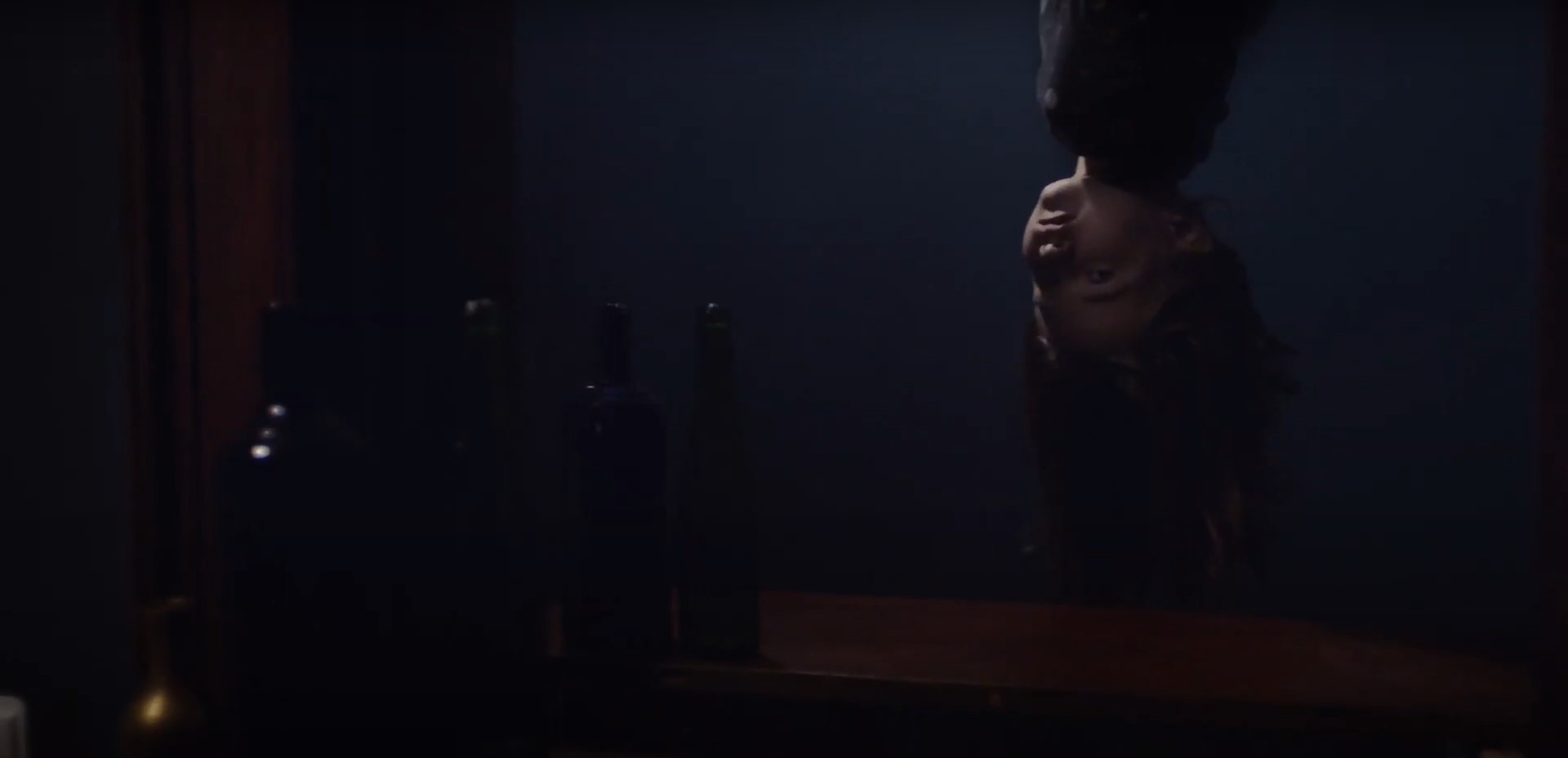
Living under her arthritis-enfeebled mother’s tremendous stop motion reputation and browbeaten into being the hands of completing her overbearing mother’s last film, Ella Blake can’t find her own voice in the animated art form.  During one already tension filled morning, Ella’s mother has a stroke and falls into a comatose state.  The unfortunate opportunity opens a door for Ella to complete her mother’s final masterpiece on her own as she moves out from the traumatic memories of her home and into a vacant high-rise apartment to be left in occupied solitude, but when a curious and brash little girl finds her mother’s story mundane and offers an alternative, more grotesque story, one which insidiously fascinates with disturbing themes and grisly creativity, Ella finds herself starting afresh, listening to the yarn of a young girl’s chilling vision, whole slowly cracking under the immense pressure of completing a film worth calling her own. 

With the timesaving, cost-efficient computer-generated imagery, many once popular animation techniques have nearly become a lost art in the recent feature film pool.  Stopmotion is one of those dangerously close to extinction animation styles, which has played a pivotal part in some of the most thrilling and magical films in history, such as, but not limited to, the live-action dominion of Desmond Davis’s “Clash of the Titans,” Sam Raimi’s “Evil Dead” films, and Tim Burton’s “Beetlejuice” to the fully animated features of Henry Celick’s “Caroline,” another Burton film in “A Nightmare Before Christmas,” and Phil Tippett’s “Mad God.”  Stopmotion animator and filmmaker Robert Morgan aims to add his entry to the dwindling, yet sustaining for now, artform with his 2023, debut full-length film “Stopmotion” co-written by Morgan and Robin King (“Mnemophrenia”).  The UK film is produced by Alain de la Mata and Christopher Granier-Deferrere under the French production company Blue Light and is presented by the UK’s British Film Institute, or BFI, with IFC Films and Shudder.

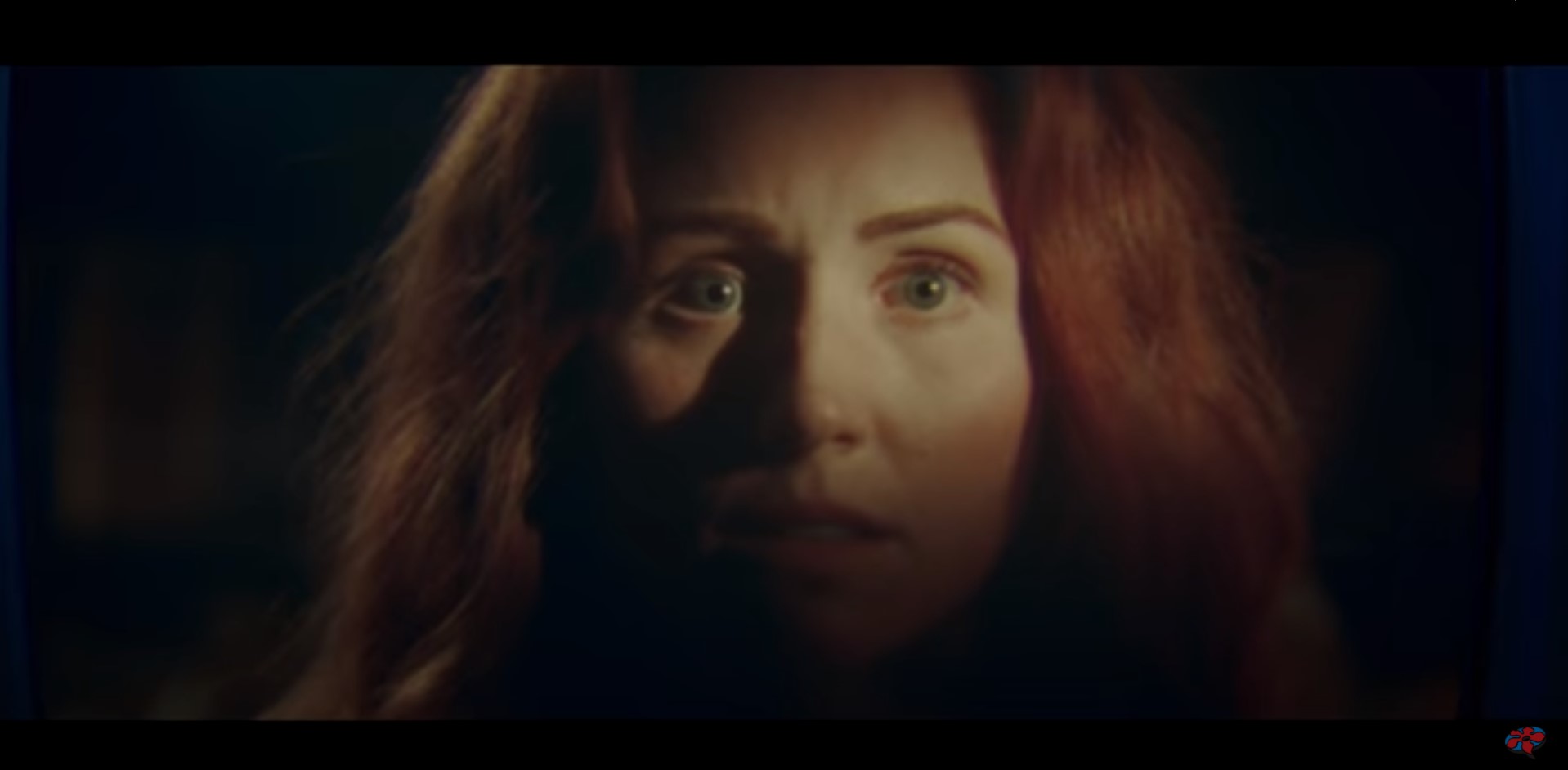
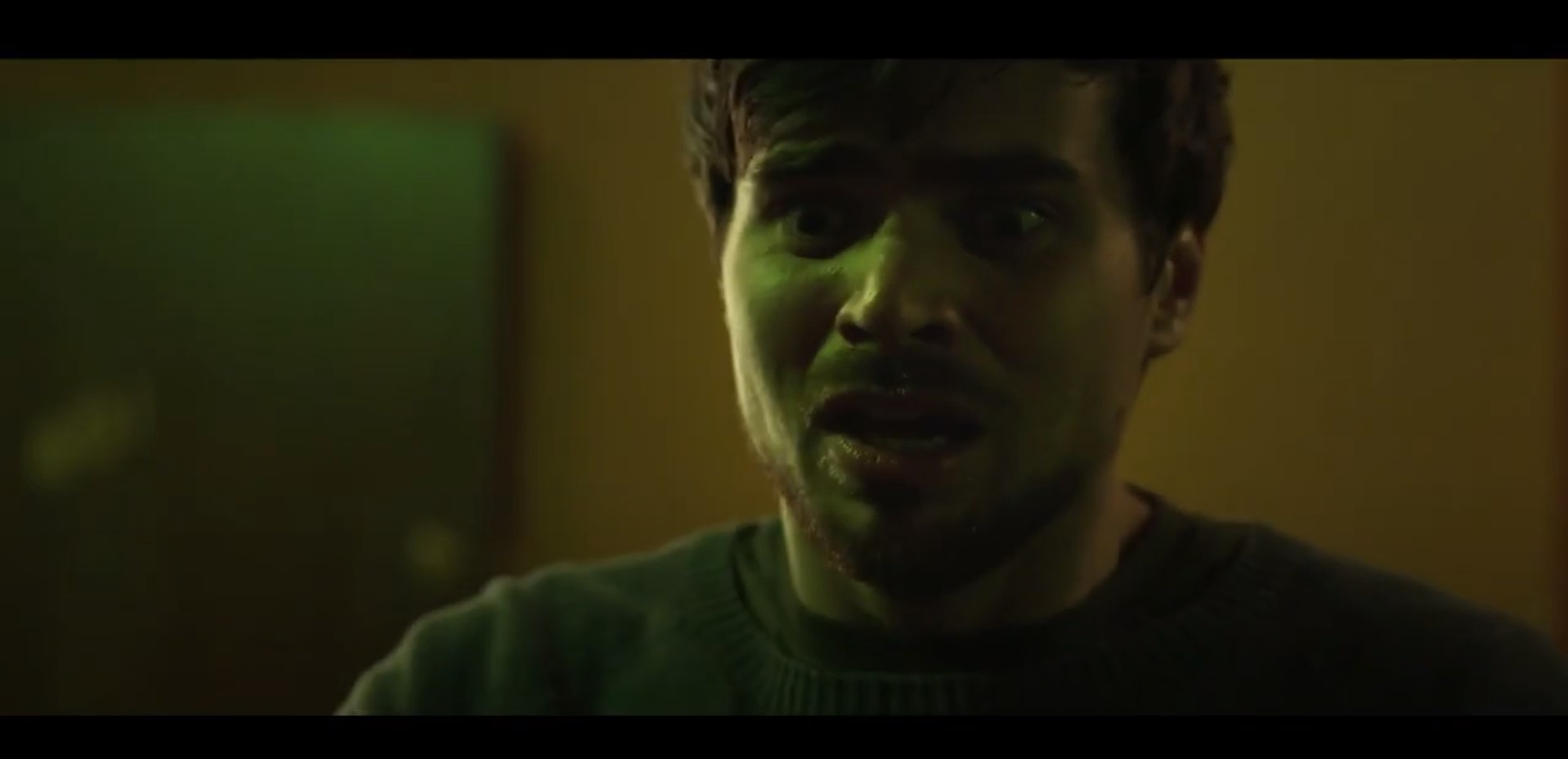
In the tragic lead role of spiraling down through pressurized suffering , trying to surface and take a breath from Ella Blake’s domineering mother’s shadow, is Aisling Franciosi, an Irish actress who also had a principal role in the segmented Dracula tale of “The Last Voyage of the Demeter” released the same year.  As Ella Blake, Franciosi plays into the young woman’s meek and submissive behavior as a subservient daughter to her conceited mother (Stella Gonet, “Spencer”).  All the while on the inside, Blake’s bottled voice contains lethal doses of self-destruction, barring her indefinitely inside the mental boundaries of her psyche, and never surfacing between the already emotional scarring and the grief for mother’s authoritarian parenting as Blake herself becomes very much like the armature puppet she manipulates into position for her film, needing that command structure to follow orders.  That need to be creative is so strong within Blake she fabricates another persona splitting soul into a dissociative disorder that takes the yoke and, ultimately, control over her and her project.  And, in some distressing and grim fairytale type of way, the voice recreates a story that parallels Ella’s life with the Ash Man (effects and prosthetic-cladded actor James Swanton, “Host”) chasing down and manipulating a wax puppet version of Ella in a grotesque mirror dynamic between Ella and her mother.  Tethering Ella ever so barely to reality is flexible boyfriend Tom (Tom York) and his flaunting animation corporate head Polly (Therica Wilson-Read, “Suicide Club”) to what’s in front of her rather to the voice inside of her but their truth is far too combative for Ella to stay fastened to a much strong influencing voice that’s far too close to her.   The upcoming “The Beast Within” actress, Caoilinn Springall, rounds out the cast as the little girl of the apartment building. 
As much as I wanted to seep and soak into “Stopmotion’s” one-frame-at-a-time madness, I couldn’t help but to think I’ve seen this story before.   A sort of déjà vu encircles me and hits me squarely in the gut as I lament over the possibility of feeling the same way I felt before with another film.  Then, it struck me like a bolt of lightning that this storyline shares similarities with the 2021, Prano Bailey-Bond film, “Censor.”  Now, I’m not saying “Stopmotion” is a direct carbon copy but follows a familiar pathway, a movie industry outlier forced by life and submersed under the weight to finishing what the heroines have started only to crack in deep obsession.  On a high level, character impetuses that lead to the same conclusion are in stark contrast and Ella Blake’s descent fathoms family trauma and fixation with trying to be an individual and not just a minor component of a bigger, more impressive, machine that overshadows the necessary cog that makes the whole operate.  Coupled with surreal imagery, otherworldly stopmotion animation, and physical effects that’ll make your skin crawl, or melt like wax, “Stopmotion” enlivens an animator filmmaker’s creativity outside the personifying vocation, blending genres and animations to exact a reality bending mania.  Morgan’s fragmented segues evoke an alternate reality that skips the portions where the audiences’ minds might fill in the gaps.  There is no gap filling, only essential, contextual moments, as if Morgan is the puppeteer to his story by arranging the movements one frame at a time reflect Ella’s poignant reminders and dour moments that mold her.
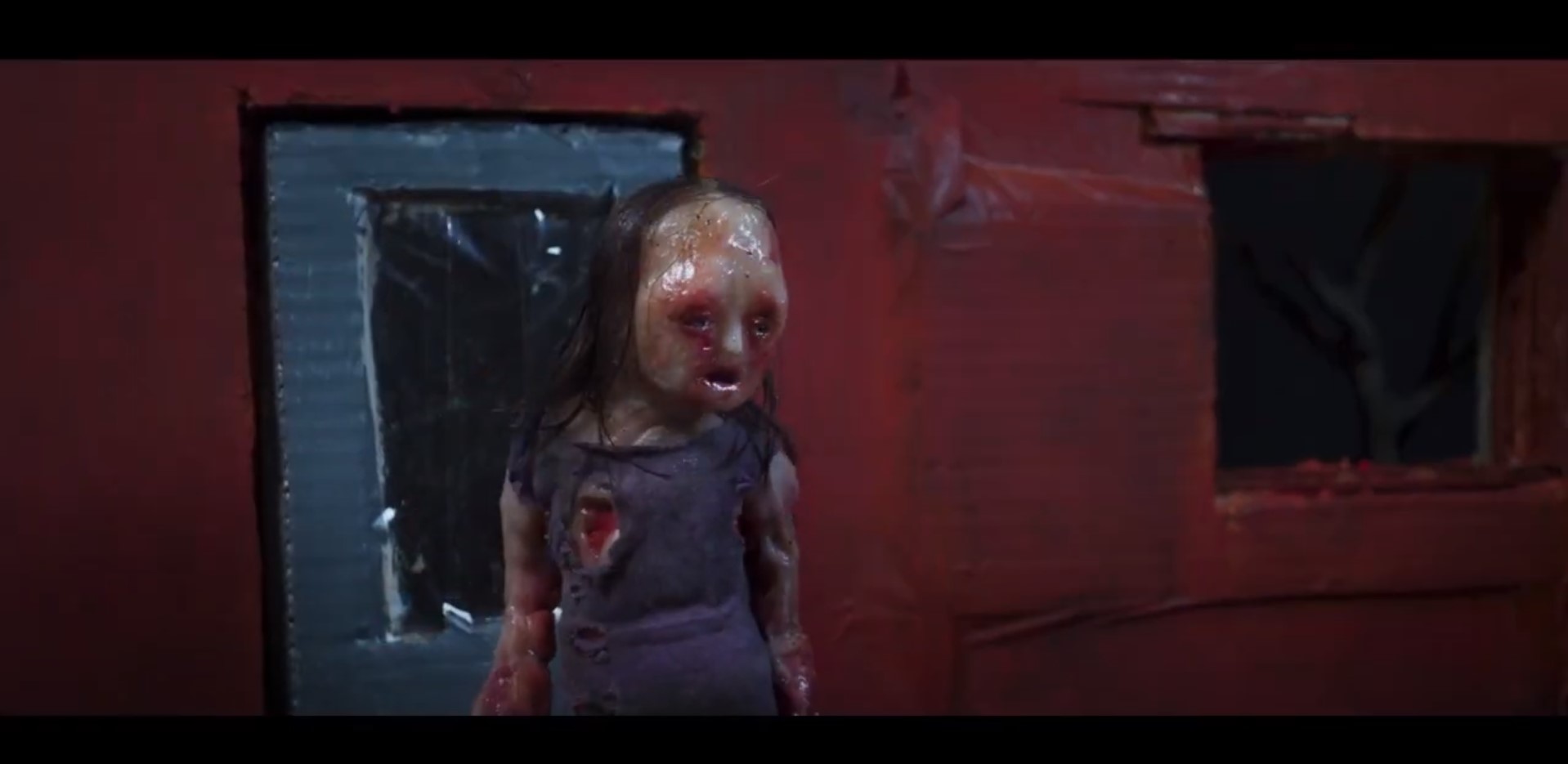
“Stopmotion” animates a living hell.  The Shudder exclusive lands onto a RLJ Entertainment subsidiary UK label, Acorn Media International, Blu-ray release.  The Blu-ray is presented in a widescreen 2.35:1 aspect ratio encoded with AVC, high definition 1080p, on a BD25.  Though in spartanly stark and gritty-glum set dressings, “Stopmotion’s” grading is on the lighter side of saturation diffusion, held mostly to a shade array of reds, greens, browns, and yellows.  There is numerous isolating, low key-lit scenes concentrated on the framed charactered and engulfing them in darkness but with that, there were no notifiable issues with posterization or banding.  Depth, especially in the stop-motion portion of reality, has spatial length and dimensional delineation, a testament to Morgan’s stop motion animator’s background and experience as some examples of the craft often look flat.  The English DTS-HD Master Audio 5.1 offers a lossless fidelity through the broodiness of Lola de la Mata’s compositional vocal and violin score, stringing through the surrealistic switch of cerebral crossfire.  Dialogue creates no challenges with a clear and clean presentation, range of effects heighten in animation’s Foley, and, again, depth creates that an enwreathed sound field through the back and side channels.  English subtitles are optionally available.  Special features include an interview with star Aisling Francosi, interview with writer-director Robert Morgan, and a behind-the-scenes featurette.  The Acorn Media release is rated 18 for Strong Bloody Violence and gore, has a runtime of 94 minutes, and, though not listed, played in region A playback so does seem to have at least dual-regional encoding between A and B.  The tangible Blu-ray comes in a standard Blu-ray case with a creepy, head-nesting puppet artwork.  The interior has standard appeal with just the disc inside, pressed with the same front cover art. 

Last Rites: “Stopmotion” depicts a tragic fall but not from grace in what is a more sad and sullen reality, and the escape is a freshly personified hell of one’s own making. 
“Stopmotion” Available on Blu-ray!

A 10-Year-Old Girl Pieces Together an EVIL Tragedy. “Martyrs Lane” reviewed! (DVD / Acorn Media International)

Purchase ACORN Release of “Martyrs Lane” on DVD

10-year-old Leah is a curious, quiet child, living in a vicarage household.  Her nightly nightmares surrounding her mother’s necklace locket and her mother’s stern conduct along with her constant obsession with her necklace locket leads Leah into an interest in the ornament’s contents.  Inside is a lock of hair and Leah takes it and loses a day later, sending her mother into a tailspin of anxiety.  That same night, a little girl knocks on Leah’s window and provides Leah momentary comfort and friendship until every visit after that, the little girl grows sicker and more ominously enigmatic in her play, providing clues and the whereabouts of thought-lost items that will open up the truth about the mystery girl’s identity as well as her family’s dark secret.

“Martyrs Lane” is a thoughtful and empathetic drama with supernatural delicacies surrounding complexities in loss and grief of bottled-up family secrets.  The British film is the third feature film, second in horror, for actress-writer-director Ruth Platt (“The Lesson”) who has commented that “Martyrs Lane” is a plucking of aggregated events from her own childhood woven into the very fabric of the story. Platt’s 2021 release is a fined tune extension upon her 2019 short of the same title that recasts the core principal roles from original actresses Indica Watson, Phoebe Lloyd, and the live action adaptation of “Beauty and The Beast’s” Hattie Morahan and turned the short into a 96 minute closed book feature about a scrutinized and consuming locket and a slowly decaying little girl playing two truths, one lie with the main character during bedtime hours who then has to unravel the mystery behind it all. Ipso Facto Productions’ Christine Alderson, who also produced “Valhalla Rising,” “Alpha Alert,” and even Platt’s original short film, produces “Martyrs Lane” alongside Katie Hodgkin and partly funded by the British Film Institute (BFI) in association with Sharp Films, Lypsync, and LevelK.

Recasting the short’s linchpin framework actresses took an audition to bring to light exactly the kind of talent Platt needed to express the different levels of somber ambivalence toward a family obviously struggling to deal with something more than just the day-to-day tasks. Kiere Thompson took over for Indica Watson as Leah in her feature performance debut and Thompson smashes a complex role and gains high marks on the voyeur scorecard as the youngest child who watches as her mother ebbs and flows in various states of anxiety while serving a milder, yet vastly different, dish of dynamics with the levity being around her vicar father and to be always primed to deal with her tormenting much older sister Bex (Hannah Rae). The best chemistry is between Thompson and age-appropriate counterpart Sienna Sayer, taking over Phoebe Lloyd’s role from the short as the strange visiting little girl. You can see two youngsters’ genuine play and natural innocence come through their smiling faces, wide eyes, and contagious giggles and when the winch of fear washes over them, called for by the story’s puzzling rising of events, mirthless moments are quickly produced, snapping us back into Platt’s eerie cold quandary. Hattie Morahan is replaced by Denise Gough as the mother Sarah and though her performance is fine, there just wasn’t enough of the mother’s side of the story to evoke a sense of empathy or sympathy and ultimately just falls into right into apathy even though Sarah is a pivotal piece to the theme. Catherine Terris, Charlie Rix, Donna Banya, Anastasia Hille, and Steven Cree as the vicar and Leah’s father rounds out the cast.

A blend between “Let the Right One In” and “The Babadook” but with less blood and less malevolent atmospherics, “Martyrs Lane” offers an imposing exhumation of a secret told in a way that doesn’t carry the sensation of something being hidden from Leah or even the audience in general.  Instead, Platt invests into the thematic subtleties with the bigger picture on the supernatural element of a strange, orphaned girl who knocks on the outside of Leah’s second story window, wearing dress up angel wings and is slowly deteriorating health wise with each passing night.  Yet, despite her appearance and reluctance at times, Leah’s peculiarly drawn to opening her window, letting her in, and even play childish games with her and tell jokes but soon those games become clues, near riddle-like, for Leah to push the envelope that link her mother, the locket, and this strange girl together.  Platt tacks on a silent and tenebrous after-hours backdrop during Leah’s sleepless nights and the stillness is greatly encroaching upon into the terror senses that you find yourself holding your breath and jumping at the breakneck editing aimed to momentarily scare you until a sigh of relief for when it’s over.  “Martyrs Lane” is externally melancholic and mood driven from outside Leah’s perspective as she, herself, internalizes and absorbs the emotions of others, studies them, and puts the pieces together to unravel the truth.

Ruth Platt’s “Martyrs Lane” is a wistful, and often eerie, entry into the creepy child subgenre. UK distributor, Acorn Media International, releases the Shudder exclusive-streaming film onto a PAL encoded region 2 DVD.  Presented in a widescreen 1.85:1 aspect ratio, there’s virtually no issues with the compression as even the night sequences retain the thick and obscuring black levels with almost unnoticeable banding, and it’s a clean dark too with balanced contrast to really home in on and define the shadows.  Details and textures are good for Platt’s dreamy-presented cinematic approach of slight overexposure and blur are more a stylistic attribute than an issue with the imagery.  I liked the tactile details in the loose strands of hair around Leah and the mystery girl that plays on their differences, and sometimes similarities, really well.  The English Dolby Digital 5.1 surround sound retains no significant issues.  Dialogue track perceives slightly muted or distant in some scenes and clarity, though free from audio blemishes, can be straining.  English subtitles are available.   Bonus features include a behind-the-scenes with snippets of interviews from Ruth Platt and the cast, an interview with Ruth Platt (which contains the same segments pulled for the behind-the-scenes), and a behind-the-scenes photo gallery.  The Acorn DVD is certified 15 for strong supernatural threat and injury detail.  In the end, “Martyrs Lane” is a dead-end road to melancholy, a family-affecting affair that peripherally chronicles not only one person’s struggle to maintain a slither of normalcy but also profoundly hits innocent youth who know nothing of the skeletons kept in the closet.

Purchase ACORN Release of “Martyrs Lane” on DVD

The Earth is Healing with EVIL Intentions. “The Feast” reviewed (IFC Midnight / Digital Screener)

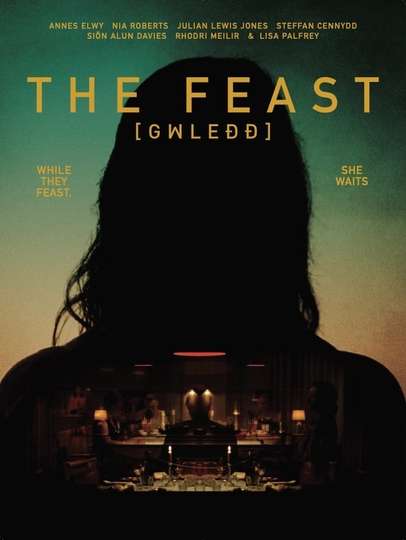
Glenda is frantically planning a dinner party for seven people at her newly constructed, modern rural home in the Welsh countryside. In order to quickly prepare, Glenda hires a young waitress, Cadi, from the local pub-restaurant as a pair of extra hands, but becomes intertwined with Glenda’s eccentric and dysfunctional family and friends who are drug addicts, sexual deviants, narcissists, and greedily apathetic in respecting local Welsh traditions and lands. However, Cadi keeps her own secret, one that’ll will transform the joyous dinner party into a night of deadly retribution for all their sins upon Earth.

For a language once on the brink of extinction and only spoken by less than a million people, probably even more less than that estimate, director Lee Haven Jones’ debut feature film, “The Feast,” reintroduces the language to many of us with revitalizing the Celtic-tradition Welsh tongue by implementing it as the entire dialect for his introductory from the United Kingdom. Jones’ eco-horror clashes archaic Welsh lore and traditions with the newfangled inattentive and neglectful modernism from a script by Roger Williams, a frequent collaborator with Jones on previous credits such as the split-heritage documentary “Galesa” and the short-lived drama series drama series, “Tir,” about foreign invaders intrusively adding financial hardships Welsh landowners. Also known as “Gwledd” on script in Wales, “The Feast” is executively produced by Jones and Williams as well as Gwenllian Gravelle, and Paul Higgins under an amass of production companies in the British Film Institute (with funds stemming from the national lottery), Ffilm Cymru Wales, S4C, Fields Park and, in association with, Great Point Media and Melville Media Limited.

THE FEAST Still 1

A dinner party fit for the scum of society comes to mind as Jones rounds the horn introducing Glenda’s passively confrontational family whom all are on display for having vices unsuitable for polite society. Beginning with her sons, two brothers shamed by their parents into hiding from out of the public eye by whisking them away to their rural abode, are portrayed by actors Steffan Cennydd as the drug addicted and party loafer Guto and Sion Alun Davies as the an intelligent and sterile sociopath with a sordid past involving accusing women. There’s also her husband Gwyn (Julian Lewis Jones, “Elfie Hopkins: Cannibal Hunter”) with a sleazy demeanor and an quenchable thirst for money. The family friend Euros (Rhodri Meilir) lives and breathes squeezing every ouch of worth from the dollar signs he envisions plastered on everything to the point that his pigheadedness will eventually get the better of him. Lastly, there is Glenda (Nia Roberts) herself who is a pursuer of the finer, material things eager to display them proudly no matter the cost of bloodshed. Roger Williams’ characters are written absolutely lush with cancerous class and a vague sense of their surroundings as they stew proudly being one boldly intense personality to the next; however, they become becomes cleaved by the house party help, Cadi, with a shark-circling simplicity by Annes Elwy. Elwy barely has any dialogue as she submerses Cadi, quietly like a submarine silently churning the waters, into the family’s eclectic affairs and studying their every movement with a naïve gaze, but there is nothing naïve about Cadi’s uncomfortable silence that becomes heedlessly unnoticed by, no surprise here, the group of narcissists. “The Feast” rounds out the cast with Lisa Palfrey, the only rational head with surprising little screen time after briefly unveiling a shocking revelation about just exactly who Glenda let in her home.

THE FEAST Still 2

2021 has been the year for under-the-radar, but oh so good, eco-horror.  Among the ranks following this years Ben Wheatley’s “In the Earth” and Jaco Bouwer’s “Gaia” comes the all-things-Welsh cautionary outlier that when pushed too far, when disturbed too much, and when reeking virally infused putrid, a vindictive reaper will come calling.  In this case, that harbinger of death takes the form of a landbound spirit rooted in lore with an insidiously coy wolf in sheep’s clothing mounting a strike with subtle, rancorous fangs by smothering them with their own debaucheries and vices.  “The Feast” will take a couple of viewings to fully digest the complete airy extent of Jones’ lax editing, under the cut and paste thumb of Kevin Jones, that can infrequently blur character timelines and presence in the story, as if plot points were forced into an unsure elucidation to connect the dots.  With a simmering horror on a spoke of unsettling imagery, the editing should have slightly been more binding to tighten gray areas; instead, “The Feast” has an abstract quality third act that not only chops up scenes, but also chops up bodies influentially consumed by the already self-destructing aspects. Some time must pass, a few days maybe, to let “The Feast” penetrate an understanding as it’s one of those flicks, wrapped loosely in cultural folklore or maybe told with the assumption non-Welsh viewers will grasp, the more thought about or written about, the more appreciation the film will disclose way after the credits roll.

THE FEAST Still 3

Funny how gravitating cultural folklore and nature grow an impeccable theme of doom as if shaping mythologies and a life-growing ecosystem equate to nothing more than a foreboding sense that one day mankind will become extinct at their own hand. “The Feast” portions a slice of that ominous pie, topped with Welsh lore and gore, coming to North America theaters and digital on-demand this November 19th, just in time for America’s feasting activities of Thanksgiving. The 93 minute, unrated film will be distributed by IFC Midnight, the sister label to IFC Films, owned and operated by AMC Networks Inc. Bjørn Ståle Bratberg serves as cinematographer who options to start with the fresh-air, blue-sky landscape of the Welsh countryside than slowly guide us, step-by-step into the character delinking from the natural, beautiful world into a more menacing night of harsh darkness and fervent flame to reveal true identities. Bratberg’s dim lighting seemingly imprisons the sordid family in the new and modern home that’s like a prison with a gray brick interior and has a room of relaxation for Glenda that is noted by a guest in resembling a prison cell. The message of revenge resounded loud and clear; “The Feast” lays down coruscating repercussions in reaping the land for one’s own benefit and Lee Haven Jones’ wayward timebomb evokes an upsetting fear and tension for a dinner party finale that is surely to go way-wrong in this different kind of revenge thriller.

Censorship is the Very Definition of EVIL! “Censor” reviewed! (Magnet Releasing / Digital Screener)


British film censor, Enid, views video nasty after video nasty day in and day out, certifying ratings based on the realism of the violence, and receiving public hellfire when a gruesome murder is vilifies her approval of a film.  After viewing one in particular that strikes a familiar nerve, one involving around the circumstances of her little sister’s disappearance from years ago, she digs deeper into the filmmaker’s background, piecing together a puzzle that her sister may still be alive.  With her parents given up hope declaring their youngest deceased and under mounds of criticism pressure from inside and outside of work, Enid’s lone rove through distasteful filmic horror and probing the crew involved sends the censor into a frantic frenzy between what’s real and what’s not. 

For the record, just so we’re clear between you and I, film censoring is a complete crock that limits artist expression and can negatively alter the tone of work far from the original message or effect.  I can see where censorship is necessary for the greater good when considering public television that aims to evade young eyes from extreme violence, gore, nudity, and harsh language while still appeasing adults with a semi-intelligible cut of the film, but to have the MPAA, or any censor board for that matter, do what they do in order to classify and certify a rating to meet a criteria is a slap in the face of personal responsibility.  Yes, some individuals need a rigorous structure to tell them what to do, but you know comical and asinine when there are three different cuts of a film in the U.S. market, not to forget to mention all the various versions around the globe to sate countries distinct regulations and requirements.  Luckily, Prano Bailey-Bond’s immersive reality checking horror, “Censor,” makes no assumptions on the matter and we can just enjoy the dark side of story based off the UK filmmaker’s 2015 short entitled “Nasty.”  The story, set in the 1980’s at the height of violent and gory VHS movies known as video nasties, is co-written by fellow “Nasty” writer Anthony Fletcher and is produced by the London based, female operated and story-driven Silver Salt Films as the company’s first feature credit and is financially supported by the Film4, Ffilm Cymru Wales, and BFI.

If not for Irish actress Niamh Algar in an virtuous cyclone encompassing lead of Enid, a stern censor agent, the dismal atmospherics whirling around Enid’s processing of possible new evidence in her sister’s vanishing wouldn’t be as timorously potent.  The “From the Dark” and “Raised by Wolves” actress embodies a strong stoic stance of not only a censor with a target on her back every time the public blames her for ill-fated news involving the extreme films she approves, but also as a woman in the workplace who is subjected to subtle objectifying by male coworkers, in which some are more privately outspoken than others, and male film producers with a diminutive eyesight of her professional demeanor by making unwanted advances in lieu offering their support to make their films depicting rape and murder of usually female victims more approachable and marketable to the censor board.  Algar perfectly poises Enid in her ticks, the abrasive fidgeting of her nails against each other or the slight rolling back of her shoulders that makes an awful, unnatural cracking sound, sharpen Enid’s complexion.  Even Enid’s hard gulping is felt in unison of the tension of a woman on a verge of sudden collapse.  Clearly the film’s one and only frontrunner as we dine off Enid’s sole perspective, Algar runs off with “Censor’s” gloomy tone by her performance of unwavering convictions blended with throbbing agitation in her character’s repressed explosion trajectory.  Supporting players do their part living in Enid’s unique vision with Sophia La Porta, Adrian Schiller, Clare Homan (“Afraid of the Dark”), Andrew Havill, Guillaume Delaunay (“Victor Frankenstein”), Richard Glover, Clare Perkins, Danny Lee Wyner, Vince Franklin, Nicholas Burns, and Michael Smiley (“The Nun”) as a topnotch sleazy extreme film producer rounding out the cast.

Performances all around are stellar and the idea is sound as I can see a video nasty censor of the 1980’s fall victim to the job because of an unclear and checkered past, but problems with pacing jet Enid from composed posture to immediate wreck in a blink of an eye without much of a fundamental development for unravelling being greatly depicted other than the jarring movie that sends her spiraling for answers.  This doesn’t hurt “Censor’s” main theme of the inconclusions of what really drives the murderous animalistic qualities in all of us regarding nature versus nurture.  The longstanding idea that video nasties promote influential violence and sordid behaviors has been the talk of controversy for decades and science, at least none of that I’ve read, hasn’t 100% proven that extreme films dictates the mind’s will other than those impressionable in the sponge-like children.  Bailey-Bond decides not take a stance in declaring a clear cut opinion, merging both assumptions together in a mesh of madness still leaving the theorists spinning their notions and evangelical nuts spewing their anti-liberal arts sermons.  What really sells “Censor” for me personally is the tell all climatic finale of Enid’s disturbing outcome in a warped contraview, flipping back and forth through the static of the back button during the times of higher numeral, unsubscribed pay-per-view channels where glimpses of picture pop into the frame for a split second.

“Censor” is nowhere near what’s consider a video nasty, but the Prano Bailey-Bond psychological thriller still has the grip of an inexorable depth for what’s to come, for violence, far from hitting the cutting room floor as the film heads to theaters June 11th and on demand one week later June 18th from Magnet Releasing. Shot in two aspect ratios, more so in a widescreen 2.39:1 aspect ratio than in the pillarbox 1:33:1 to reflect the video nasty format in the time period, Bailey-Bond and director of photography, Annika Summerson, continue to stay as true as possible to the Golden Age of 80’s horror by shooting in 35mm in a handful of various style to blend Enid’s reality with the fiction of lurid dreams and the daily grind of workplace hazards (which, to me, watching horror movies all day long sounds like a dream job! The censoring part, no so much). Runtime clocks in at 84 minutes with no wiggle room for bonus scenes during or after the credits. The Brits have always had a hell of a go with film censorship, weaponizing and vilifying for political gain, as films become the lamb for the slaughter for public outcry against social-economical woes, even arts bedeviled by the harsh censors of it’s own country, and “Censor” aims to be the carrier wave of that historical downspout of misguided judgement while also shredded the thin moral fabric of one woman’s reality into tiny bits of off the rocker guilt.

Evil Knievel Eat Your Heart Out! “Psychomania” review!

9ao8mll
A terrorizing motorcycle gang named The Living Dead wreak mischief and murderous havoc amongst the local residents. When Tom, the gang’s leader, learns of his family’s dark agreement with the devil, he seeks to reap the benefits of the agreement’s eternal life bestowed upon his family, but before claiming a long-life of unstoppable hog-wild carnage, Tom must die first and truly believe he’ll return from the afterlife. Convincing the rest of the gang to kill themselves in order to return from the grave and live forever was easy, except his girlfriend Abby who wants to actually be alive. As the torment rips through Abby involving the man she loves, not all satanic bound agreements can last forever and Tom, Abby, and the rest of the gang are caught in a contract that’s all but binding.
vlcsnap-00001
“Psyhomania,” also known as “The Death Wheelers,” is a stunt-heavy horror film from “Kiss the Vampire” and “The Face of Fu Manchu” director Don Sharp and written by “Horror Express’” Julian Zimet and Arnaud d’Usseau. “Psychomania” is a fun, b-horror feature from the swinging London era of the 1970s and rosters a young cast of some seriously talented actors in Nicky Henson as Tom, Mary Larkin as Abby, and Ann Michelle as Jane Pettibone while also being graced with two veterans, George Sanders, who voiced Shere Khan in “The Jungle Book,” and Beryl Reid from “Dr. Phibes Rises Again,” and were most likely the most expensive actors on set, being well worth the cash to balance out a relative unknown cast at the time.
vlcsnap-00003
Yes, this film is British. Yes, this film is horror. But, no, “Pyschomania” is not a Hammer Horror film. The Don Sharp film lightly tip-toes through being a horror film with only the supernatural element placing the feature in the thriller category, but the PG-rated horror has other admirable qualities that certainly differentiates itself from the blood-heavy, frighten laden Hammer films. For instance, a story about an undead motorcycle gang should obviously entail motorcycle stunts and “Psychomania” delivers with surprisingly various top-notch stunts with, and without, motorcycles, involving dedicated stunt men and women challenged to be engaged in nearly all stunts, and whereas the blood does not run thick and heavy like with many fright flicks, the bikes certainly do and revs a different, yet welcomed, change of pace.
vlcsnap-00004
If the intent here was to make a serious film, the mark was missed by a good margin. Outdated and obsolete, “Psychomania” is the epitome of aging with dated hairstyles, dated clothing, and dated dialogue. If the intent was to be campy, Sharp and his team of willing participants hit the center of the bulls eye. The premise of a motorcycle gang committing themselves to a suicide pact only to come back and continue their barrage amongst humane society while choking out nearly everybody they feel tramples upon their aimless and ferocious cause seems like an outright folly. Who knew that in forty years time that “Psychomania” would be a British cult favorite, sparking a well-deserved upgrade Blu-ray and DVD combo release from the British Film Institute, also known by as the BFI.
vlcsnap-00006
BFI Flipside presents “Psychomania” on a Blu-ray and DVD combo presented in the original aspect ratio 1.66:1 and scanned and restored in 2k from preservation negatives. The 1080p Hi-Def Blu-ray runs on a BD50 gigabyte at 24 frames per second with a PCM mono audio mix. The PAL DVD runs about the same, near 25fps, and sports a Dolby Digital 1.0 mono audio mix. I was presented the DVD version for review and I must say the original print looks immaculate. The lens flares in the corner from previous releases have been extinguished. The colors and skin tones have never been more vibrant through the three layers of the black and white master copies containing yellow, blue, and cyan. The mono mix clearly states a purpose and goes through the ears without muddling and much defect. The BFI have also spared no expense on the bonus features that include various interviews with Nicky Henson and other cast, an interview with Harvey Andrews on the “Riding Free” single, a Hell for Leather documentary about the company who supplied the leather for the cast, a short remastering “Psychomania” segment, and other various extras that dive into British culture. I was a bit disappointed with the Sound of “Psychomania” segment as the track portion in the interview with film composer John Cameron seems to be overlaid by something totally off-the-wall and we’re unable to get the full 9 minute audio from the interview. The bonus material rounds out with original theatrical trailer and a nice, vividly colored illustrated booklet with new writing by Vic Pratt, William Folwer, and Andrew Roberts. BFI’s “Psyhomania” release is one of the best re-releases to hit the region 2 market and will re-hit the youth once again on it’s climbing cult success that branches off far from the bloodlust of 1970’s British horror.