
“Garden of Love” on Blu-ray from Unearthed Films!
Rebecca Verlaine is the sole surviving child of a brutal massacre of her family and fellow amity commune by masked killer. Years later, attending university and in a relationship with a professor named David, Rebecca has not been affected by the tragedy because of her post-traumatic amnesia induced response, a protective reaction by her mind. When Rebecca begins to see grotesque images and corpses talk to her through the television, to the point of being frozen in fear, her adopted Uncle and Aunt, acting in the role of her real parents, along with David divulge the horrible truth about her father’s slaying. Unable to shake the feeling she must visit the site of the massacre; Rebecca is escorted by police to the building where the ghosts of the television physically manifest and will slaughter all those Rebecca brings to them in retribution of their unpleasant death. Rebecca must somehow unearth and bring to post-humorous justice their killer, but little does she know those responsible are already closely intertwined into her life.
Director and special effects artist Olaf Ittenbach is one of the few kings of independent splatter horror between mid-1990s to present. The German-born, “Premutos: The Fallen Angel” and “Dard Divorce” filmmaker has accumulated gorehounds over last two and half decades with outrageous gore effects to the likes of early days Sam Raimi and Peter Jackson and subtle comedic gags inside the ghastliness of bodies being literally ripped to shreds. The 2003 released “Garden of Love,” aka “The Haunting of Rebecca Verlaine,” is a pure example of Ittenbach never letting loose the reins of cathartic, blood-soaked chaos with a simple tale of supernatural revenge. Ittenbach cowrites the script with Thomas Reitmair, the third writer-director collaboration behind “Riverplay” and “Beyond the Limits,” and the director has total control over his production by serving as the executive producer financier under his studio company IMAS Filmproduktion in association with Benfeghoul Goldberg Filmproduktion and producers Yazid Benfeghoul (“Sky Sharks”) and Ricky Golderg (“Beyond the Limits”).
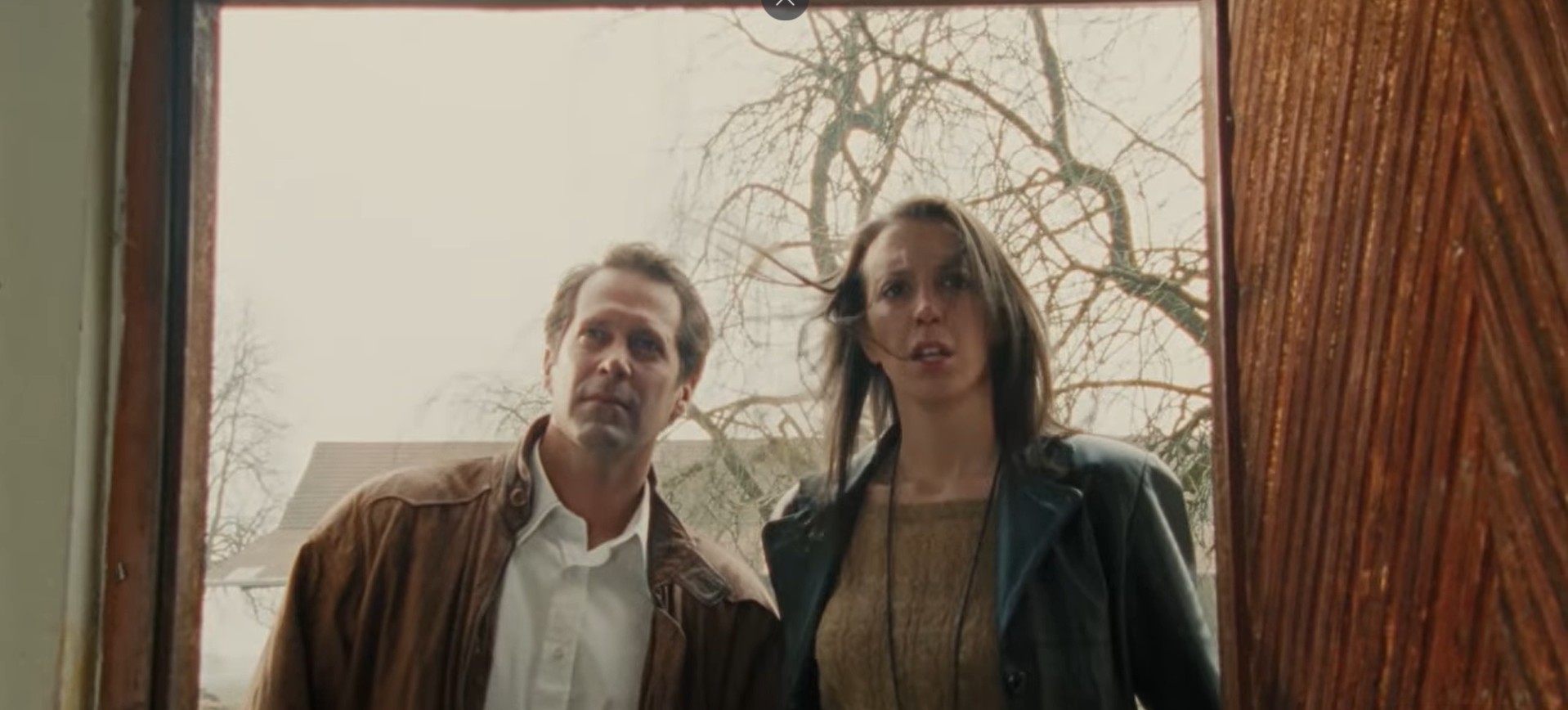
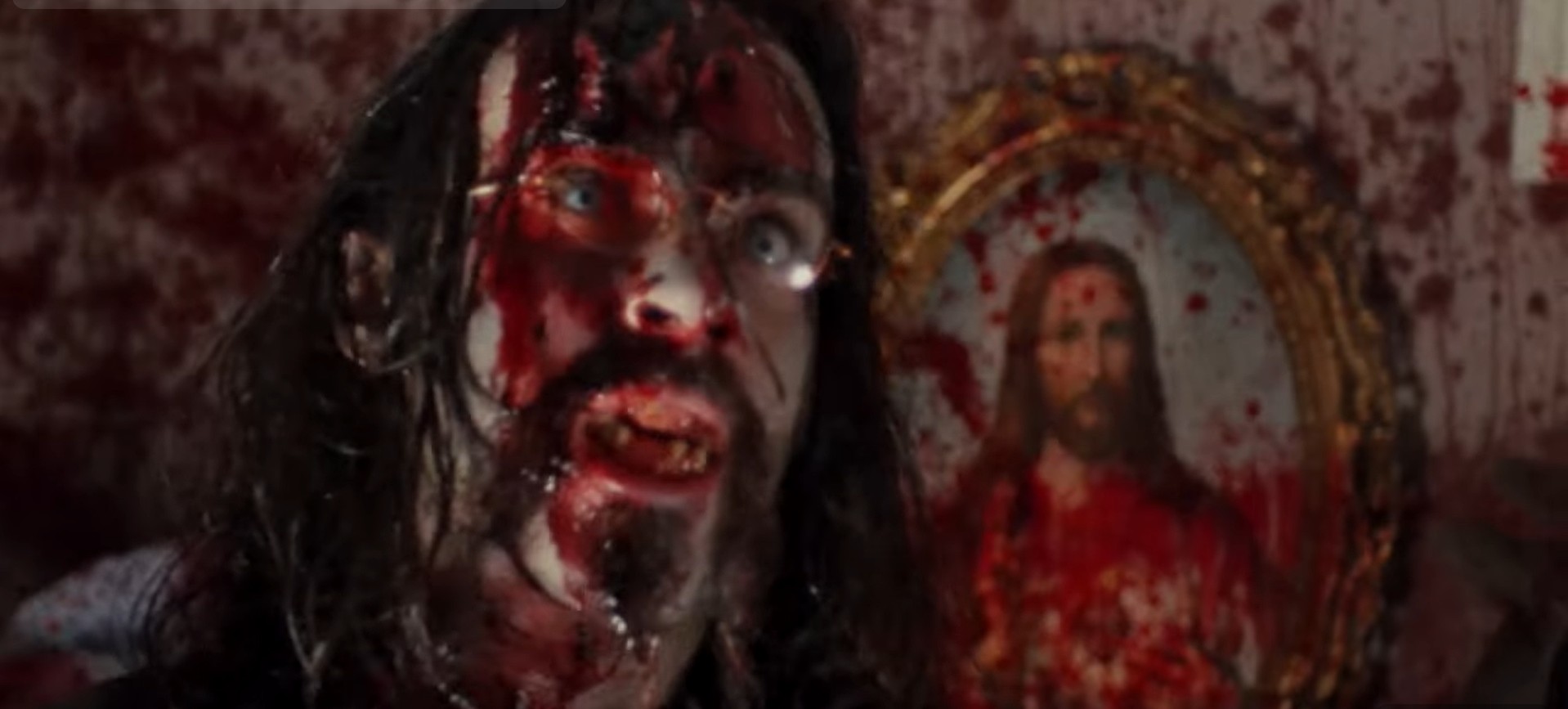
Natacza Boon, the English actress behind acting in a parallel Ittanbach production “Beyond the Limits” the same year, stars the adult version of Rebecca Verlaine bewildered by the truth be told after learning of her amnesia and once ghastly ghosts begin to talk to her through television sets. Boon does a good job selling the initial fear and then transitioning into acceptance that was she’s visioning is real, real enough to absolute slaughter anyone in a spray of blood spatter when crossing its path. While Boon is English born, the rest of the cast also includes more Ittenbach entourage American with Daryl Jackson (“Beyond the Limits,” “Dard Divorce”) playing Rebecca’s secret-holding lover David and the German native James Matthews-Pyecka (“Beyond the Limits,” “Legend of Hell”) as the initial inspector on the Verlaine massacre returning to the cold case to assist Rebecca’s need to explore her forgotten history. Through the differing nationalities and styles each performer brings to the this splatter film, their dynamics have synergy having worked in tandem with another and despite their difference languages there is no language barrier to be broken as the film is written and shot in English with Mattehws-Pyecka, and the rest of the living principal cast of Rebecca’s adopted parents in Uncle Don and Aunt Barbara (Donald Stewart and Alexandra Thom-Heinrich), communicating with clear pronunciation. German musician and actor, Bela B., a stage name as the punk rock drummer and vocalist for Die Ärzte, has an equally primary role that opposites Boon in portraying her murdered father’s vengeful spirit. Real name Dirk Albert Felsenheimer, he’s depicted mostly in gruesome face-wounded makeup and ghostly milky white eyes that haunt his onscreen daughter Rebecca from beyond the grave and manifest only in the building where he died (much like that BBC show “Ghosts” but Ittenbach did it first). Felsenhaimer’s unique facial contours make for good prosthetic balefulness and frightful fear being the head ghost who doesn’t necessarily go for the throat right away like the others.
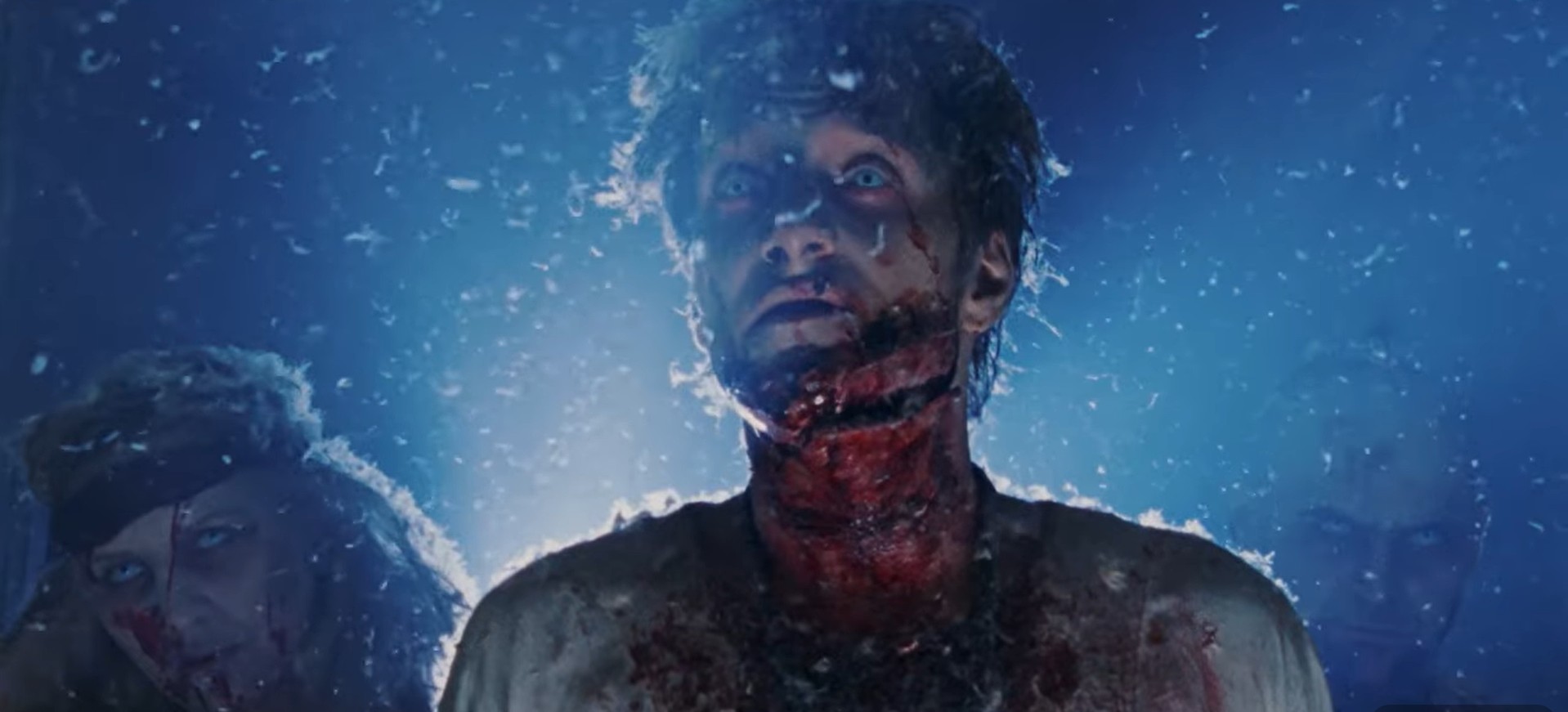
“Garden of Love” is a cut-and-dry revenge film from the other side with not just a touch of but a full five-finger death punch of gory exaggerated explosion from Olaf Ittenbach. Gabe Verlaine, his daughter, and his commune of bohemians have their harmony violently stolen from them, creating disharmony in the afterlife. Their unrest is stretched outward into the corporeal world as love and peace is replaced with hate and spite in stark contrast. Yet, and this where the little things become lost to the ridiculously entertaining blood splatter, the reason why their group returns to take vengeance is far from being elucidated. Apparently, Gabe is also sitting on a fortune for his…well…we don’t know. He plays the guitar but there are hints of him being a talented musician, but it’s never explained on why he’s sitting on a nest egg that’s the overarching theme of greed ingrained into the “Garden of Love” story. What’s not ambiguous is the practical effects done with complete care in all fields from Olaf Ittenbach and Tommy Opatz (“BloodRayne,” “Black Death”) special makeup and prosthetic effects to the flawless editing work of Eckart Zeraway to piece the components of a sequence together for seamless quality and relayed purpose, such as pulling out comedy from the slapstick splatter of bodies literally being torn apart. Let’s not forget to mention Holger Fleig’s cinematography as he captures eldritch supernaturality to emphasize the undead commune in an European, specifically Italian, way with a glowingly colorful, backlit haze that’s denotes an otherworldly tone, a tinged musing of Michael Müller’s work in “Premutos, compared to the modernist and contemporary arrangements of a clean and minimalism look with the living done without specialized lighting.
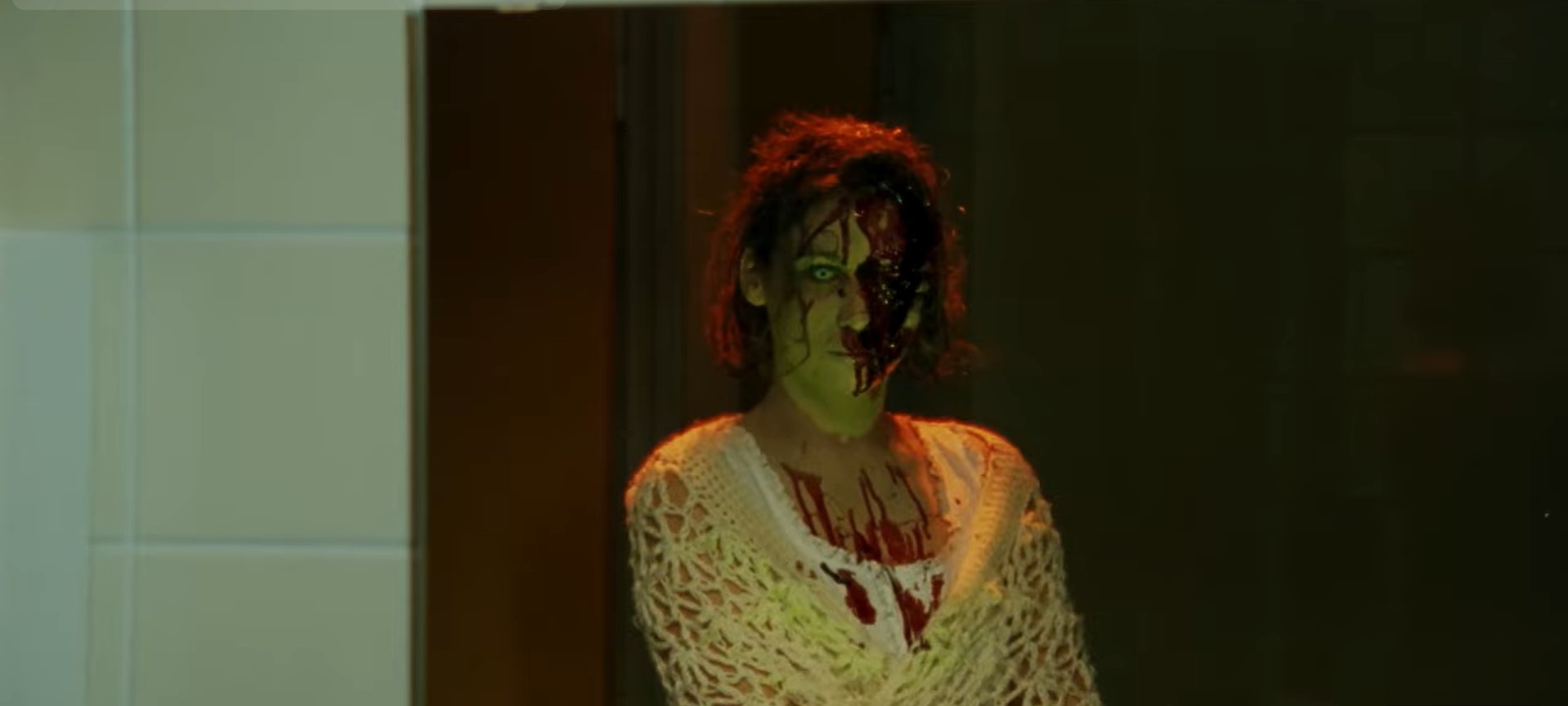
Unearthed Films delivers more Olaf Ittenbach to a 1080p high definition transfer, AVC encoded, Collector’s Limited-Edition Blu-ray, a BD50 disc. Plenty of storage capacity to handle Fleig’s aura lighting aesthetic that’s show pristine saturation inside the 35mm stock, a format departure for Ittenbach who regularly use of video was an antithesis to pinnacle quality. With an aspect ratio of 1.77.1 widescreen, “Garden of Love’s” imagery looks good albeit some of its sterile mise-en-scene layering of a production set, colors are touched up nicely to provide a supernatural backlit of purple and blue gel lighting, diffused through a smoke machine that greatly cues the in-and-outs of Gabe Verlaine’s crew of the vengeful dead with an accompanying gore with a stark tone of red and black, and the compression coding is easily digestible on the extended capacity disc with no signs of artefact interference to note and no interruption from a preserved early 2000’s print. Aforementioned, this German product is entirely shot in English, recorded during principal photography, and can be presented in either an uncompressed PCM 2.0 or an uncompressed DTS-HD 5.1 surround mix depending on your setup. Dialogue can be a bit boxy, leans little toward overexertion within the scope of the production setup, and is not the native language of a few actors but through the release encoding the mix comes out nicely balanced and clear without any distortion. Same can be said for the milieu and the action Foley, especially during the carnage of spirits versus the coppers that highlights the perforation of body, the squish and thwack from pulverizing, and the spray of the blood, resulting in a range of onomatopoeia that too includes gun shots and atmospheric reverberate. English subtitles are available. Extras include a making-of featurette that provides raw footage from behind-the-scene of principal photography and the special effects gags, a second behind-the-scenes featurette with cast-and-crew clipped interviews, an Unearthed Films exclusive outtake reel that runs without audio for much of it, a new photo gallery, and the original trailer. The first Blu-ray pressings include a limited O-slip cover with a new illustrated composition artwork on the front cover of the slip and inside the Amaray sleeve that showcases exactly what you’re getting – gore, ghosts, and an otherworldly glow – presented in a dark and soul peering artistic rendition. I did find the slipcover to be annoying too tight around the case, making it difficult to remove the Blu-ray to the point of damaging the product. The disc is pressed to resemble a vinyl, like the one used in the film to signal the arrival of the spirits’ malevolence. The region A locked Blu-ray comes not rated and has a runtime of 89 minutes.
Last Rites: Fans of absurd violence and gore need to see Olaf Ittenbach’s “Garden of Love” that’s not colorfully rich in all its limbs and viscera, as well as an ethereal lighting, on a new Blu-ray release from Unearthed Films!

 It's Bloggin Evil!