
A remote Canadian science team is under the threat of a Graboid situation, hunting drill parties through the ice and ripping them to shreds with their snake-like mouth tentacles. The team phones the only known Graboid hunter, the legendary outdoor sportsman Burt Gummer, who flies from Perfection, New Mexico to the North of the border with his son Travis Welker to terminator their subterranean predator problem. Graboids aren’t the only problem as nasty Ass-Blasters also roam the sky. Stranded on a remote research station and stuck with non-combative administrative researchers, Gummer’s shoulders bare much of the battlefield burden, but the long time Graboid ass-kicker comes face-to-face with an internal Graboid stemmed disease that sidelines his ability to finish the campaign. Travis must pick up the reigns and band together a ragtag team of scientists to not only save Canada from a being swallowed from below, but also to save his father’s life by obtaining antibodies from a live Graboid.

Michael Gross is back! Reprising his role of Burt Gummer, the gung-ho military nut with a penchant for hunting down and killing Graboids, Gross straps on the HK-91 assault rifle once more for Universal’s “Tremors: A Cold Day in Hell,” the sixth installment to the “Tremors” franchise that began 27-years-old in 1990! The PG-13 creature feature is helmed by direct-to-video sequel director Don Michael Paul (“Tremors: Bloodlines”), written by two-time “Tremors” sequel writer John Whelpley, and release appropriately enough on Universal’s 1440 Entertainment label. Whelpley relocates the franchise away from the blistering heat, the scorching sand, and the denim-camo-plaid sporting bedrock to cooler climate of the Canada’s 49th parallel north. Under the ice and the chilled soil are pre-pre-cana Graboids awakened by the ever looming effects of global warming. Al Gore was right; Global warming will kill us all…by rousing the underground beasts who’ve been dormant for thousands of years! The very one aspect the filmmakers wanted shiplap together for this next chapter is to perilously put the invincible Burt through a taste of own mortality, plaguing him with a symbiotic Graboid worm that puts him on the edge of death, and introducing a worthy replacement, or perhaps a legacy, in his son, Travis Welker.
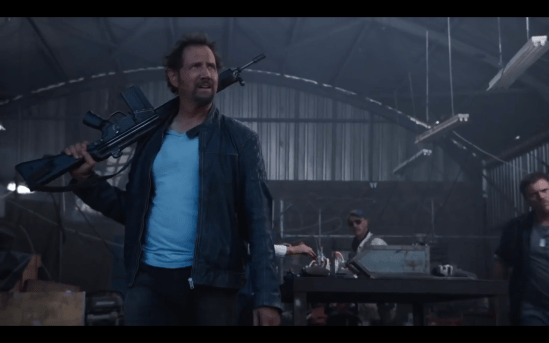
Welker is a returning character from “Tremors: Bloodlines” portrayed by comedian Jamie Kennedy. His role as Brad “B-rad” Gluckman from “Malibu’s Most Wanted” has been forcibly seared in many of our minds and his horror enthusiasm captured our black hearts as the lovable Randy Meeks in Scream, but being Travis Welker nearly upends those personas and transform him into a smooth talking, fast thinking, son of a gun whose perfect to match wits with his on-screen old man, Burt. “Tremors 6” is essentially the Burt and Travis show, leaving many other characters up as red shirts, but waver a handful as potential love interests and bone headed comedic reliefs. Starting with South African Tanya van Graan (“Starship Troopers 3: Marauder”) as the kinda kooky Jamie Kennedy love interest in Dr. Rita Sims. Sims is nearly all over the board being the lead scientist on the research expedition to a complete bad ass with a rifle to being a sultry fox who goes commando with no underpants in the arctic. Then there’s Jamie-Lee Money, just on the cusp of her career, plays Valerie McKee, the offspring of “Tremors'” Valentine McKee (Kevin Bacon) and Rhonda LeBeck (Finn Carter). Money looks the part, but the character is severely downplayed and lifeless that mistreats the legacy of Val who was spontaneous, inventive, and naively charming. Other characters come off goofy, oddball, and arbitrary or insignificantly used played by Greg Kriek (“Lake Placid: Legacy”), Stephanie Schildknecht (“Accident”), and Kiroshan Naidoo.

The entire Tremors franchise has been through a wringer of changes over the last 27-years that has really stretched the incredible substratum monster thinner and thinner. Reducing the physical formidability down to a visual effects monstrosity that still preserves a somewhat tongue-and-cheek campiness, “Tremors: A Cold Day in Hell” doesn’t quite have the “Tremors” flavor. Perhaps it’s the arctic setting. Perhaps it’s the inane special effects. Perhaps it both, but one thing is certain and that is Michael Gross being solidified as the unwavering face of the franchise, but even with that constant variable, this sixth installment attempts to lure back in the original fan base by referencing the original film in numerous instances, such as with Valentine’s daughter, Valerie, or even with Burt’s famous one-liner when he shot-to-death the basement crashing Graboid from the first film, but instead of saying “rec room,” he yells “airplane hangar” as the Graboid explodes in a gush of orange blood as it rams into an underground electrical barrier. It’s a bit of a farce. Yet, there’s still an immense amount of enjoy-ability, energy, and Graboid fun to be had.

Universal releases the PG-13 “Tremors: A Cold Day in Hell” on the home video, 1440 Entertainment label, with a combo Blu-ray + DVD + Digital disc. The 1080p High Definition Blu-ray was viewed for this review which is presented in a widescreen 178:1 aspect ratio and the image quality is deep with details. The terrains absolutely come alive to the screen and, at the same time, expose the visual effects work. No matter how much the visual effects team tries to create an Canadian arctic atmosphere, the sands of the South African landscape couldn’t be optically opaqued. Nonetheless, facial features, character attire, and even the explosions, cascading, and orange Graboid blood gooing is sharp with precision definition. As far as audio, the English DTS-HD Master Audio 5.1 surround sound caters to every audible fissure with an attractive ambiance track (ass)blasting with baritone and ripping semi-automatic fire cues. Dialogue comes over clean and the soundtrack has healthy bones, aside from it’s generic, low-budget assortment. Extras include a making of “Tremors: A Cold Day in Hell” that’s broken down into multiple, short chapters, the anatomy of a scene, and inside Walter Chang’s kitschy market. Since the breaking news that SyFy will not longer move forward with the anticipating Tremors television series with Kevin Bacon, “”Tremors: A Cold Day in Hell” signifies that the withering franchise will not stray from Burt Gummer’s one-man show anytime soon; still, the sixth installment provides a healthy amounts of witty banter and a swimming pool full of Graboid gore, two foundational motifs still vibrant in the Tremors universe.
Tag Archives: blu-ray
Returning Home to Unroot Evil! “Insidious: The Last Key” review!

Hot off the Quinn Brenner case, parapsychologist Elise Rainier receives a phone call from Ted Garza regarding paranormal activity at his house in Four Keys, New Mexico. The location happens to be the childhood home of Elise, where her father viciously abused Elise to stop her supernatural gifts and also where her mother was brutally murdered by a fearsome and hatred-energized demon known as KeyFace. Reluctant to return where memories revel in persistent and continuous nightmares, Elise and her two eager assistances, Tucker and Specs, take the case to aid the Garza’s request for a cleanse and to conclude the haunting and scarring chapter in Elise’s life, but the demon yearns power by luring Elise back to where it all began. With the help of her brother and two nieces, Elise’s family and friends aim to be a force against pure and undiluted evil hidden in the further.

Full disclosure….Insidious: Chapters 2 and 3 is not in my well versed cache of watched movies. I thoroughly enjoyed the atmospheric hit that is James Wan’s 2011 “Insidious” film starring Patrick Wilson, Rose Byrne, and the incredible Lin Shaye, but since that time, neither of the sequels have wandered into my unsystematic path. Except now. “Insidious: The Last Key” is the latest installment to the “Insidious” franchise and universe that’s directed by Adam Robitel, screenwriter of “Paranormal Activity: The Ghost Dimension” and written by franchise writer Leigh Whannell. In the grand scheme of chronological viewing, catching “The Last Key” first won’t divert and confuse too much from those on a methodical storyline timeline. Robitel’s chapter is a sequel to the prequel, “Insidious: Chapter 3,” and aside from an Easter egg here and there, there’s little reference and nothing substantial bonding to the next two films that are in sequential order.
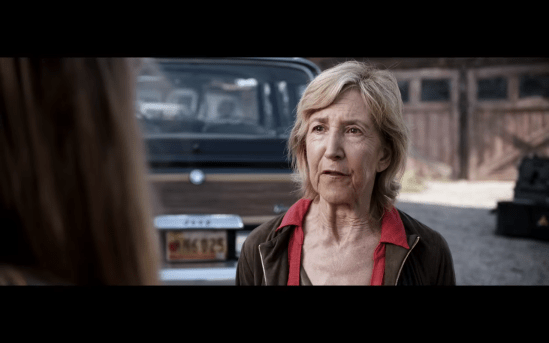
Lin Shaye returns to reprise her role as parapsychologist Elise Rainier for the fourth time, picking up her character’s telepathic shtick like it was yesterday. Shaye’s one of acting talents that just flourishes like wild fire no matter what the type of role or movie she’s in or even affiliated with. Her ability to adapt and to get down and dirty with her characters proves why we love her thespian range from bust-a-gut comedies like “There’s Something About Mary” to indie horrors like “Dead End.” The now 74-year-old actress is more red hot now than ever as Elise Rainier whose even more popularized by her co-stars, writer, Leigh Whannell and and Angus Sampson as Specs and Tucker, whom like Shaye have reprised their roles for a fourth time. The comedic duo lighten up the dark toned premise, offering up dad jokes and snickering hairdos to offset to jump scares and gnarly KeyFace. Spencer Locke (“Resident Evil: Extinction”), Caitlin Gerard (“Smiley”), and the original 1971 Willard, Bruce Davison, play the supporting cast of Rainiers long lost, reunited family members caught in the middle of her quest for conclusion. Rounding out the cast is Kirk Acevedo (“Dawn of the Planet of the Apes”), Tessa Ferrer, Josh Stewart (“The Collector”), and contortionist, and Doug Jones’ Spanish rival, Javier Botet as KeyFace.

“Insidious: The Last Key” works on many positive levels: has a solid premise with Elise burning to finish the nightmare she had unleashed many years ago, subplots involving Ted Garza’s role and Elise’s abusive father, a dysfunctional family relationship between all the Rainiers, and some serious eye-popping scares throughout. The further also opens up more and becomes a vast area for exploration into all the creatures, ghosts, and demons that lurk in the otherworldly dimension, setting up future sequels and/or spinoffs. What doesn’t work as well is the rather anemic and lackluster climatic finale that took KeyFace from an extremely high frightfully monstrous pedastal, continuously building up the character to be the most powerful antagonist Elise has yet to encounter, and have the rug pulled right from under it’s horrid feet by squandering it formidability, flattening it with the single uppercut swing of a… lantern.

Adam Robitel’s “Insidious: The Last Key” finds a home on a Blu-ray plus Digital HD combo release by Sony Pictures and Universal Home Entertainment. The release is presented in high definition 1080p with a widescreen, 2.39:1 aspect ratio. The image quality just tops out with overly spooky cool blue hue that’s gloomy, dark, and ominous, all the attributes perfect for a supernatural thriller, while managing to sharply define the details on the actors and their surroundings. The English 5.1 DTS-HD track stings where jump scares are prevalent and appropriate. Dialogue has clarity with mild ambiance supporting the localized and conventional horror audible moments while brawny LFE bursts on-screen in a bombardment of scare tactics whenever KeyFace suddenly shows face. Bonus features include an alternate ending (complete with cheesy one-liner from Lin Shaye), eight deleted scenes, a look into the “Insidious” universe, going into The Further, Lin Shaye becoming parapsychologist Elise Rainier, and a segment entitled “Meet the New Demon – Unlocking the Keys” to KeyFace. Perhaps not the epitome of the franchise, but “Insidious: The Last Key” absolutely fits into the franchise’s ever expanding universe and unlocks more of the spine-tingling backstory to one of horror’s contemporary and unremitting heroines ready to confront evil.

“Insidious: The Last Key” purchase at Amazon!

Become Evil’s Best Bud in “My Friend Dahmer” review!

Senior year 1978, right before the start of his 13 year killing spree, Jeffrey Dahmer struggled to fit into the high school equation. Spending much of the time in his makeshift laboratory, dipping roadkill into jars of acid to retrieve the bones that were still intact, Dahmer didn’t have many friends to socialize his unbalanced behavior. His interest in dissecting animals and an unearthed fascination with the same sex drove him to stay in serene isolation, but when his parents, between the marital spouts and his father’s projections, pressure him to make friends, to live an active lifestyle, Dahmer reduces himself to being the class clown for acceptance, catching the attention of three students who befriend him because of his classless antics. Just as his life begins to form something that similar normalcy, the familiar urges overwhelm when he fantasizes about a young male doctor of sleeping with his fresh corpse. With the inkling to kill creeping to ahead, Dahmer drowns himself in alcohol while still maintaining what’s left of his friendship that suddenly feels more like his exploitation for the benefit of others.

What a hell of an origins story! “My Friend Dahmer” is the 2017 biographical docudrama from writer-director Marc Meyers that becomes the looking glass into the catalytic events, or even last moments of hope to reform, infamous serial killer Jeffrey Dahmer. The film is a visual adaptation of John “Derf” Backderf’s graphic novel of the title. Backderf was also one of Dahmer’s only friends in high school and relates his experiences through exaggerated illustrations of his graphic novel. With in the film, Meyers notably recounts the pages of the Backderf’s novel with a story that puts Dahmer justifiably at the epicenter that focuses almost entirely from Dahmer’s disturbed and warped point of view of inner body interest, homosexuality, and standards of social acceptance. Rarely, does Meyers stray from that structure in obtaining the external thoughts and opinions of Dahmer’s friends, and perhaps even enemies, who’ve made some sort of interaction, but being that the novel is a work of someone else’s non-fictional perceptions and not of Dahmer’s, Meyers puts weight forthright with Backderf’s opinion with the characterized Backderf interjecting here-and-there on accounts that significantly courses Dahmer’s actions.
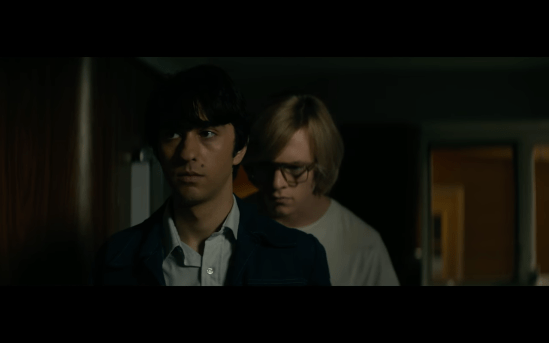
Surely an eye brow raising casting choice, Disney Channel actor and Kids’ Choice Award winner Ross Lynch enters into a polarizing role that is the pre-monster of Jeffrey Dahmer and creepily channels in a powerful performance the embattled younger image of the soon-to-be murderer, cannibal, and necrophiliac. Lynch portrays Dahmer as a rare emission of emotion and almost frighteningly stiff or mechanically with hunched shoulders just below his wavy blonde hair that wrap around the large and rounded rectangle glasses. New York City born actor Alex Wolff picks up the graphite pencil to spun out probably Dahmer’s closest friend John “Derf” Backderf. Perhaps in a way, Backderf had manufactured a piece of Dahmer’s destined genetic makeup and Wolff lays in the guilt, and the fear, thick when around Dahmer near the end. Anne Heche (“Psycho” remake) and Dallas Roberts (“The Walking Dead” and “Mayhem”) become Joyce and Lionel Dahmer, Jeffrey’s parents. Heche and Roberts seize every on screen opportunity to lay into one another, a persistent and regular difficulty that stemmed between Joyce’s mental and physical heath and Lionel’s withering patience for his anxiety riddled wife. The cast rounds out with Vincent Kartheiser Liam Koeth, Tommy Nelson, and Harrison Holzer.

Aside from the retelling of Backderf’s recollections, “My Friend Dahmer” shoots scenes right inside what was once Dahmer’s actual home in Ohio. That bit of realism adds monumental flavor to enrich the inherently dark subject matter of how a young Dahmer was subjected to compounding blows to his psyche in the short timespan that was his senior year. From his father tearing down his makeshift laboratory and junking his precious dead animal experiments, to his mother’s divorce inducing schizophrenia, and to being the class clown in order to make friends, Dahmer couldn’t maintain control over his ebb and flow urges and Meyer effectively highlights these chapters in Dahmer’s frayed playbook of life that tipped the scales of unfavorable malice.
FilmRise and MVDVisual present “My Friend Dahmer” on a AVC encoded 1080p High Definition Blu-ray with a 2.40:1, widescreen presentation. Through a vista of small town quaintness, picture quality immensely defines a cold embrace of a softer, fluffier effect. The color palette strongly reflects the whitewashed and faded of the era. The English Dolby Digital 5.1 stretches the ambient with a film that doesn’t necessary pack an audio punch. The dialogue is rendered cleanly and the retro soundtrack is a boost to docudrama with clarity and pace. Bonus features are a bit thin for a non-fictional individual with humungous notoriety and they include a brief interview with star Ross Lynch, Behind-the-Scenes slide show, and a theatrical trailer. “My Friend Dahmer” revitalizes the feelings and the chills that washed over us who are old enough to remember Jeffrey Dahmer’s grim-storied apprehension and, yet, director Marc Meyers is able to strip Dahmer of his monstrosity for 107 minutes and make him simply human as a young man with everyday problems without a ounce of parental, professional, or friendship guidance, funneling to the notion that we all have a little Jeffrey Dahmer in us.

“My Friend Dahmer” is on the Amazon today!

Young Girl Gets Her Insides Shattered by a Large, Evil….Dildo?

Inspector Gianni Di Salvo is called in to investigate the discovery of a wrapped in plastic nude body of a young girl, located and waterlogged at the base of a dam. Her death was ruled a homicide after the coroner discovers her insides ripped apart from the blunt trauma of an extremely large dildo. The case leads the detective to an all-girl private school that aims to keep it’s pristine reputation, but with many suspects at hand, Inspector Di Salvo has no choice but to play the wildcard in tracking down a killer and breaking all the rules handed down to him by his superior, Chief Inspector Louis Roccaglio. The deeper he digs into the case, his long list of suspects shortens when they turn up murdered themselves, but the inspector’s key to solving this case lies with the young girl’s inseparable friends, Franca, Paola, and Virginia, whom frantically try to keep their secret under a tight lip.

“Someone with a cock this big raped Angela Russo and threw her in the river!” Trust me, thats not a line from a porn, but spoken by popular lead actor Fabio Tetsi is the ultimate hook. The long, hard, veiny lure that sucks you deep into this 1978 giallo known as “Enigma Rosso,” the first feature film by television director Alberto Negrin. Also known as “Red Rings of Fear” or just simply “Rings of Fear,” a plethora of screenwriters penned the uber-sleazy murder mystery, including Marcello Coscia (“The Living Dead at Manchester Morgue”), Massimo Dallamano (“What Have They Done to Your Daughters?”), Franco Ferrini (“Demons 2”), Peter Berling, Stefano Ubezio, and, the director as well, Alberto Negrin. “Enigma Rosso” completes the “school girl in peril” trilogy, following director Massimo Dallamano’s two films, “What Have You Done to Solange?” and “What Have They Done to Your Daughters?”, that don’t connect via a storyline but the reigns were unfortunately handed to Negrin to finish the task after tragedy struck Dallamano that rendered him deceased before production.

Lucio Fulci’s “Contraband” star Fabio Tetsi sizes up as the determined Inspector Gianni Di Salvo with a penchant for his kleptomaniac girlfriend. Tetsi’s a handsome, rugged actor with a defined jawline, dark and thick features, and a dimpled chin when he’s not sporting a beard or a goatee, such as in “Enigma Rosso.” Di Salvo goes from suspect-to-suspect with his equally eager assistant Bruno Allessandra. The two cops report to the off hands Chief Inspector played by a very worldly Ivan Desny and Desny’s casual style is polar opposite of the act first, look later of Tetsi. The officers go through a slew of suspects, including one played by American actor Jack Taylor (“Pieces”) as a very wealthy and scandalous shop owner who likes young women and three lovelies, Silvia Aguilar, Taida Urruzola, and Carolin Ohrner as “The Inseparables” form a forbidden click of girls who know what has transpired but are too scared to say a word. Tony Isbert (“Tragic Ceremony”) also has a role of a German teacher whose too involved with one female student in particular. Rounding out the cast is Helga Liné, from the sexploitation “Madame Olga’s Pupils,” María Asquerino, and Christine Kaufman as the Inspector’s love interest with a insatiable habit for stealing, but that romance fizzles in a matter of two scenes that don’t quite build up the tension between them.

“Enigma Rosso” puts the school girl in obscene peril, for sure. And, also, puts the school girl full frontal in various scenes ranging from desire to showers and in such scenes that exhibit the exploits of a large dildo being used during a sex party to pave the way for a crime, giving the film a perverseness air about it that glorifies the giallo that it embodies and embraces. Complete with the killer’s first person point of view, ominous gloved murderous hands, and the mysterious allure of an elaborate reason behind the murder, “Enigma Rosso” has everything a thirsty giallo drinker would gulp down. However, with the long list of writers, Negrin’s film partakes in a nonconformist pattern from intriguing and intricate mystery to wild hair hunches and scattered brain antics that jive about as a well as grape jam on a hot dog. the finale also wraps up too easily that Inspect Di Salvo doesn’t even break a sweat figuring out the whodunit aspect and more goes in line with a talking head scene that’s an exposition of events rendering a lackluster finale. However, the ending does wrap up the story nicely, leaving no unanswered or unsolved enigmas about the crime.

Scorpion Releasing and Doppelgänger Releasing present “Enigma Rosso,” also known as “Trauma” or “Virgin Terror,” onto a not rated 1080p High-Definition Blu-ray in a widescreen 2.35:1 aspect ratio. From brand new scans of the original negatives with extensive color correction, noted as done in The States, this is, and will ever be, the best version of the Negrin’s giallo. For instance, the coloring vastly outscores any other version with natural skin tones and in the brilliancy of conventional giallo color palettes. Some issue still surface to rear the unfortunate blemishes from the original negatives, such as vertical (blue) scratches that poison a couple of scenes. Also, there’s also a color correctness issue far right of the screen through the entire 85 minute duration, showing an fault in the scan with the unintentional exhibition of the untouched negative. Two audio versions exist on the static menu: an Italian language with English Subtitles and an English dubbed. The mono track has no real serious issues other than a slight static during more high frequency effects. “Don’t Torture a Duckling’s” Riz Ortolani furnished score has a robust quality that highlights the upbeat swanky tones of a 1970’s Italian crime film. Only an audio commentary with historian and author of the Mondo Digital website Nathaniel Thompson. Sizzlingly laced with casual nudity, glued together by elaborate criminal coverup, “Enigma Rosso” is one of Alberto Negrin’s most memorable shiplapped pieces of work in the most polished impressions of the original negative.
The Evil That Doesn’t Kill You Makes You Stronger! “Jungle” review!

Yossi Ghinsberg yearned for more than the comfy, cushy life he was born into and being young and adventurous, Yossi travels abroad to backpack in Bolivia to pursue self-discovery and beauty in places far less travelled despite his father’s wishes. He quickly befriends fellow backpackers Marcus and Kevin and together, they lay tracks through the eclectic terrain of the breathtaking Bolivian landscape, but wasn’t until an Austrian geologist named Karl approached Yossi about a promise of unearthing gold and experiencing hidden tribes deep inside the lush jungle. After some convincing, the three friends venture into the jungle with only Karl to guide them and, at first glance, the wilderness is an escape from the noise and pollution of human corrupted inhabitations, but a drastic realization quickly washes over them when they’re force to separate and that the jungle is a cauldron of constant survival. Along with captivating beauty, fire ants, poisonous snakes, symbiotic organisms, jaguars, and torrential rains tip the iceberg of everything that embodies the sequestered jungle and Yossi must endure the trials and tribulations alone in order to make it out alive.

Based off the book of true events from Yossi Ghinsberg comes the motion picture retelling of Ghinsberg harrowing tale of survival in “Jungle.” The 2017 biographical adventure-thriller is penned by Justin Monjo (teleplay writer for TV hits like the sci-fi odyssey “Farscape”) and directed by “Rogue” and “Wolf Creek” director Greg McLean. “Jungle” showcases the night and day environment of one of the world’s most beautiful, yet deadliest locations, cascaded with awesome uncharted landscapes with an augmentation of great mortality once man is introduced. However, the thing with the jungle is that no matter what man’s objectives may be with the rainforest, whether it’s to destroy it or to embrace it as were Yossi’s intentions, nature treats all with the same merciless brutal as it’s kill or be killed. Yossi is in the midst of a man versus nature thematic element where Darwin’s survival of the fittest lays all well true and from his book, Yossi Ghinsberg went through a nearly three weeks of severe isolation, stomach-devouring starvation, and vigilant hyperawareness against the local wildlife. Yet, somehow, he survived.

To play such as downtrodden character needed an actor committed wholeheartedly to the story and, luckily for McLean and the rest of the crew, Daniel Radcliffe encompassed Yossi Ghinsberg and his plight with passion and dedication. So much dedication that the Harry Potter famed actor lost about 14 to 15 pounds in order to mimic starvation and really put his body close to the hazards Yossi had faced. “Jungle” has certainly solidified his range as an actor inside the genre of not only fantasy films, but also thrillers as well. From “Horns” to “Imperium,” the English-born, 5’5”, 28-year-old actor has placed a major footprint in the industry that stretched from low-budget to Hollywood stardom and doesn’t seek to stop in the near future. Radcliffe is joined by a pair of Australian actors in Alex Russell (“Chronicle” and “Bait”) as American photographer Kevin Gale and Joel Jackson as Swiss teacher Marcus Stamm on sabbatical. A standout performance, one that really rivals Radcliffe in cliffhanging suspense with cryptic intentions, is that of Thomas Kretschmann (“Blade II”) playing the Austrian geologist Karl Ruprecther. Fantastic chemistry between all four men with spot-on performances, especially not portraying their native heritage.

While Greg McLeans has no fear in getting gritty where gritty needs to be get, “Jungle” has a tame nature about it for a director well-known for Outback cruelty. McLean doesn’t exact the right amount of perilous attitude that was unfortunately bestow upon Yossi. Much of Yossi Ghinsberg’s book was not translated to screen such as his rectum being impaled by a large stick when he falls down a slope. The hard stop editing and pivot bounces the viewer around being out of control on a trampoline. When we meet Yossi for the first time and he encounters Marcus Stamm, a cascading event of one jointly pursuit with another that string along and attach Kevin Gale to a web of awkwardly editing scenes of traveling through Bolivia in what felt like a slapdash montage with the sole purpose of setting up the trio’s friendship in an unsympathetic way. Another issue with the editing was that the film had to keep reminding the viewers about previous events, such as when Yossi was bitten by a fire ant, and those scenes ended up being a redundant time filler that points audiences to being naive and inattentive to cherry pick previous actions.

Umbrella Entertainment releases “Jungle” on a rated mature, region B Blu-ray with crystal clear full high definition, 1080p presented in a widescreen 2.35:1 aspect ratio. Image quality bares no marks of compression issues nor any flagrant fouls in the coloring, whether natural or generated. Aliasing is also a non-issue. The 5.1 DTS-HD English soundtrack has moments of low fidelity at the beginning of the film where making out the dialogue can be challenge, but the jungle ambiance and the Johnny Klimek (“Land of the Dead”) score bring alive the eclectic atmospherics of the wild, wildlife. Bonus features include a featurette that extends up Danial Radcliffe becoming Yossi Ghinsberg, the making of the Yossi Ghinsberg story, cast and crew interviews, and the theatrical trailer. “Jungle’s” adventurous first half sets up the catalytic downfall into desperation and despair of a man versus nature thriller in the latter half, splitting Daniel Radcliffe into two auspicious roles of enchanting self-discovery and a fight for survival. The movie most certainly encourages one to read the book of Yossi Ghisbergs edge of death misadventure.
 It's Bloggin Evil!