EVIL Doesn’t Care For Your Fame and Fortune! “The Lingering” review!


Young Dawa Wang and his mother live in a rundown mansion in 1980’s China. Dawa’s father labored in a wood factory over the course of a year, away from his family, and was supposed to return to celebrate in the New Year, but when he didn’t arrive, Dawa’s mother phones the factory to only find out that there was a landslide at the factory that drowned many of the workers. Not only does Dawa’s mother fear his father is dead, she suspects the house is haunted by his spirit on that very New Year’s Eve night. However, the presence was much more malevolent. Years later, Dawa, a young man, leaves home against his mother’s desperate wishes as their life of poverty drives him to seek solace in wealth, but when the news of his estranged mother’s demise, the now upcoming restaurant entrepreneur returns home to identify her body and to collect on a wealthy realtor offer on his childhood home. Dawa again comes face-to-face with the baleful presence, sparking the unravelling of a 30 year mystery.

Derrick Tao and Mak Ho Pong’s “The Lingering” is a Cantonese Hong Kong ghost story written by Edmond Wong {“Ip Man” franchise screenwriter) and the first penned worked by Zheng Dong. Originally titled “Ku Zak,” “The Lingering” marks a freshman film under the directorial duo of Pong and Tao who manage to scare up a rich atmospheric supernatural fright. Laced with Chinese traditions and catered to retain a more modernized kitsch, Tao and Pong have rendered great fluidity through the decades without the realization of a massive time gap between the two first and second acts; a relatively tough obstacle for any first time directors and the filmmakers manage to pull it off seemingly with ease and poise under Mandarin Motion Pictures productions, the company behind the money aggregating “Ip Man” flicks so there was money to toss at the ambitious auteurs.

“Keeper of Darkness” star Kai-Chung Cheung stars as the grown up and successful Dawa who salivates at the prospect of fame and with a lucrative restaurant franchise as his finger tips, Dawa will go as low to ignore his mother and sell her willed estate to further his prosperous image. Perfect for his role, Cheung challenges himself to be the arrogant and thoughtless whippersnapper many elderly quip about while they throw an angry fist in the air in some kind of protest. The character arch feels deserved with Dawa, going from a young innocent boy, to a bratty teen and young adult, to a successful and negligent son, and then reverting back to being the loving boy he once was; the stages were pleasant to behold and both performances, Cheung and the young child actor, did an excellent job at their respective roles. Cheung’s love interest counterpart is played by Anthena Chu, whose previous films included a couple of sequels, that must be mentioned here, were in the series realm of “Raped by an Angel.” Chu, a complete angel in “The Lingering” dons the role of Dawa’s well-off wife with well-off friends who offer well-off contracts to fund a well-off life for Dawa. While Anthena’s role is rather complimentary to Dawa that symbolizes poor and wealthy children can unite as one, her character flounders the rest of the way and becomes a hapless, if not second string, catalyst in Dawa’s rediscovery of love for his mother. Completing the cast around Cheung and Chu is Bob Yin-Pok Cheung, Fung Lee, Yao Tong, and Terry Zou.

From out the gate, “The Lingering” amps up the shadowy, spine-tingling specter action with an ominous roaming presence, a creepy kid, and a surplus of jump scares complete with an equal amount of braised pork dishes. The first act, set 30 years prior, is all about the pseudo scare with mounting music to, low-and-behind, nothing actually there to frighten the Cantonese out of you Westerners and, to give credit to Edmond Wong and Zheng Dong, a developing mystery enshrouds this mother and son of who exactly looms around the rustic Wang mansion. However, as the narrative progresses into Dawa’s older self, a man desperate to forget his roots, the mystery becomes a mystery more so when his family home becomes haunted by his own mother. At this point in the second act, “The Lingering” is up to two different spooks circulating the grounds like illuminating ghosts in Pac Man. By the third act, the whole haunt falls to pieces and an overwhelmingly forced theme is stuff down our throats about how us children should never forget about the sacrifices of our parents and how their love sustains them despite our affectionate inadequacies and equal rights – Dawa’s equal right to be rich – yeah, it’s a stretch, I know. The philosophy is sound but the execution irreverently chokes out the ghostly atmospherics in baffling fashion and a, for a comical effect, blue balls moment.

Sticking around on Blu-ray home video is “The Lingering” courtesy of Well Go USA Entertainment. The region A and widescreen, 16:9 aspect ratio, release teeters heavily on the tint scale with a over-saturating bluish hue, especially during night scenes or darker moments of plight, making defining the object in the mirror or in a brief photo capture difficult to define. Blue for sad as it’s saddening to lose a chunk of that goose bump atmosphere to over tinging. The Cantonese language 5.1 DTS-HD Master Audio is by far the reigning attribute of unfiltered bite tracks including a sparkly clear dialogue track, a formidable LFE score that’ll get the blood pressure up, and simple, yet effective, range and depth with the ghost house antics. Available are English subtitles that sync well, yet are more on the kindergarten-ish side of interpretation; almost as if audiences couldn’t comprehend comprehensive and/or complex sentence structures. Bonus features include the trailer and other Well Go USA Entertainment preview trailers. Clocking in at 87 minutes and more of an ode to parental sacrifices, “The Lingering” doesn’t stick around to neatly gift package to it’s audience an eloquent evil apparition feature as promised in the beginning that saw a 100 meter sprint into a tormenting zone that harrows a mother and son by a bloodied soul aimless in disposition, yet compelled to crucify the family.

[YOUTUBE=https://www.youtube.com/watch?v=AJhtkX0AyZI]

Own The Lingering on Blu-ray!

EVIL Expressionism in “The House That Jack Built” reviewed!


Over the span of 12 years from the 1970’s to the 1980’s, wannabe architect Jack is an accomplished engineer living in serene of the Pacific Northwest and with a lack of empathy and an internal repository of compulsive and narcissistic traits, Jack is able to be a highly successful and intelligent serial killer who seeks mastering his craft as highly artistic and divine. Over the same period of time while butchering nearly countless people, including his own family, Jack obsessive compulsive disorder not only assists his longevity of his creative expression, but also dwindles down another social expected goal of designing and engineering his own home isolated at the edge of a lake. As the body count rises, Jack compulsive restrictions loosen and he begins taking greater and greater risks of being caught. Jack narrates his voyage of viscera and macabre to a literary listener in a back-and-forth to explain and justify his murderous methods and craft.

Unlike anything you’ve ever seen before, auteur writer-director Lars Von Trier (“Antichrist” and Nymphomaniac Vol. 1 and 2″) crafts his very own artistic expression delineation with the 2018 “The House That Jack Built,” a two and half hour venture into the deconstruction of a serial killer’s personality traits as well as the flourishing experience of murder through years of repetitive brush stroke practice and self-preservation knowledge done in a self-portrait form. Graphically violent and supercharged with coarse and visually stimulating visual effects and editing, all the hallmarks of a Von Trier film, “The House That Jack Built” blends an abundance of fine arts with religion and mythology that develops into a soaring renaissance piece of art in the modern times and would inspire the most closeted psychopath to revel themselves in a heap of aesthetic and picturesque horror.

As if Matt Dillion isn’t already an entertaining and diverse actor, the “Wild Things” and “Crash” star excavates a vile and dumb luck Jack from deep within, crafting the character as so smart, he’s sometimes stupid, but with each murder subsequently gone scot-free, the confidence builds, the trade becomes tangible, and the narcism washes over ever so slightly. Dillion arcs Jack so well that the character no longer becomes the villain but an anti-hero of sorts as rooting for the slaughtering of innocents becomes a painful necessity rather than an empty desire. The titular character converses with a mysterious companion named Vergel in a way as if Jack was anecdotally telling his own biopic. Vergel symbols multiple conceptual and tangible beings, from Jack’s moral conscious to Vergil, the Augustan period Roman poet, Vergel, or Verge as Jack simple calls him, crudely interviews and thoroughly analyzes Jack’s so-called art. Verge’s off-screen presence is heartily brought to life by Bruno Ganz, an actor who once portrayed Adolf Hitler in 2004’s Academy Award nominated film, “Downfall.” Ganz takes an expected backseat to the title carrying Jack, but doesn’t succumb to being underneath’s Jack’s critical and narcissistic viewpoints, making Verge a level playing field character alongside Jack. Ganz, who passed earlier this year, is equally masterful under a relatively underwhelming role paired with pure evil and while the contrast’s magnitude should be starkly poignant, Jack and Verge are equals in the eye of the viewers and that’s how powerful Lars Von Trier’s filmmaking can really be. Jack’s chaptering stories include co-stars such as “Kill Bill’s” Uma Thurman, Siobhan Fallon Hogan (“Men in Black”), Sofie Gråbøl (“Nightwatch”), Riley Keough (“It Comes At Night”), Jeremy Davies (“Ravenous”), and David Bailie of “Pirates of the Caribbean” franchise.

In my experience with film from Lars Von Trier is that those who patron his films have polarizing affections; you either love his work or you absolutely loath his style of film. My experience consists of only one, yes one, of projects and that being “Antichrist,” and while I was not entirely enthralled with the film’s sexual themes, “The House That Jack Built” provided a plethora of philosophies to pick apart and to continue to digest even way after viewing. For those who might forego themes, philosophies, and theologies, many will bore themselves through the filmmaker’s American serial killer thriller for over two hours long, clocking in a 153 minutes, and finding themselves disoriented in a segmented tale that’s chaptered by five incidents and an epilogue over a 12 year span. Others will bang their hands over Trier’s use of repeat scenes, purposefully rolling them slow and in a calm disposition, allowing Jack to deliberate how and why he does what he does in his discussions with Verge, but these soft touches are nice pillow talk touches to the main, punchy action of Jack’s self imposed duresses under his murdering moniker, Mr. Sophistication, that palpably places the narcissistic cherry on top of misanthropic persona. The devil in the details are punchy themselves and a keystone to Trier’s overall narrative to explore the impulses of a killer’s mind. “The House That Jack Built” is a great accompaniment to shows like “Mindhunter” on Netflix or other films like “Silence of the Lambs” where serial killers vocalizes intricacies of their niche trade is very fascinating for morbid loving sympathizers.

Umbrella Entertainment releases “The House That Jack Built” onto Blu-ray home video. The full HD, 1080p, region B, uncut disc is presented in a widescreen, 2.35:1 aspect ratio, and is fully operational in all sense of the phrase with a generous color palate lacing through more natural lighting than assumed there would be in comparison to “Antichrist,” but the raw tone by Manuel Alberto Claro debases the stylized techniques of “Antichrist’s” Anthony Dod Mantle to virtually a hardline and graphic depiction of reality in the 1970’s. The English language 5.1 DTS-HD Master Audio is respectfully verbose and robust. Trier’s loquacious exposition is actually great exposition of the crystal clear kind and the director shows off his depth and range, splicing edits together like a madman that still convey the overall theme without disregarding audio accounts. While technically sound, the Umbrella release comes regretfully with no bonus features. Brilliant, musing, and intense, “The House That Jack Built” is a Lars Von Trier legacy film breathed with unadulterated violence and sharp with superb writing potent that’s potent on every level. Trier just gets better and better with every film and look forward to his next project!

The House That Jack Built on Blu-ray!

When the EVIL in Your Dreams Terrorizes You…”Nightwish” Reviewed!


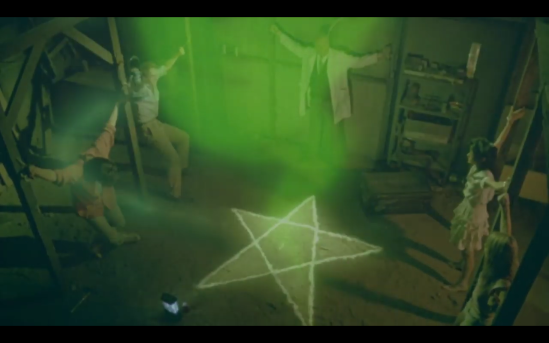
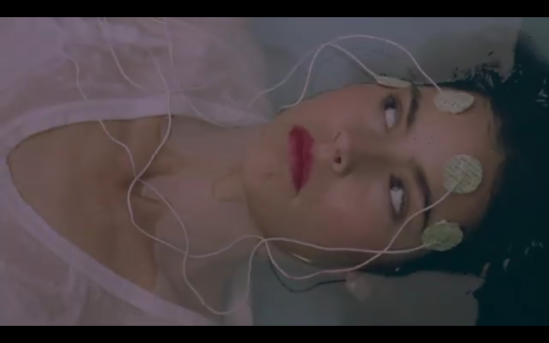
A graduate dream research group experiment on paranormal and sensory deprivation sleep patterns involving controlling their own dreams, even if their terrifying, and examining their own deaths but when they pivot to investigate supernatural activity inside an isolated compound mansion in the midst of an arid desert, the four students and their eccentric teacher conjure malevolencies that include satanic rituals and alien encounters. With their professor spearheading an underlying motive to use them for his diabolical plans, the hesitant and scared group must decide to either force their participation or try and escape their instructors madness, but when the lines of reality blur, friend becomes foe and foe becomes friend with casualties in the middle on all sides as grisly depictions of death and suffering question whether their nightmares are spilling into reality.

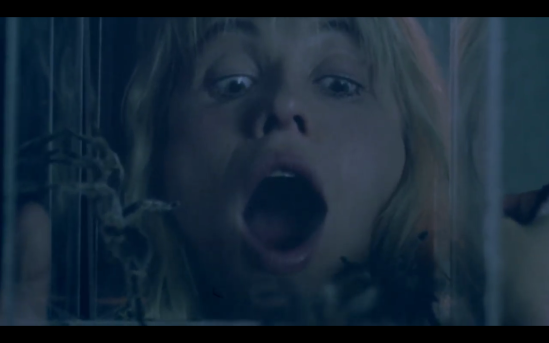
Subconscious surrealism on an ultimate terror coaster from writer-director Bruce R. Cook with an unspeakable horror in every corner, from flesh eating extraterrestrials to disillusioned Mad Doctors, in the nightmare-inducing “Nightwish!” The 1989 made and 1990 released “Nightwish” is produced by Paul White and Keith Walley, both of whom collaboratively funded through their Wild Street Pictures production company the early 1990s horror which included another Unearthed Classics release, spine #2, “The Dark Side of the Moon” and, also, put a little cash into the Jeffrey Combs cult favorite, the Brian Yuzna sequel of “Re-Animator,” “Bride of Re-Animator.” However, the real star of the filming crew is none other than Sean McLin. Before going full fledge into being a camera operator, especially around the early days of Power Rangers’ television series, McLin had a short stint as director of photography and his cinematography beyond divine that engrossed to draw audiences into odd angles, mind-boggling depth play, and just colors after colors of spectre ghoulishness. McLin provided a pure motley of mental macabre of the Gregory Nicotero (“Day of the Dead”), Robert Kurtzman (“Lord of Illusions”), and Howard Berger (“In The Mouth of Madness”) powerhouse effects team.

The central characters essentially encompass four graduate students – Bill (Artur Cybulski), Jack (“April Fools’s Day’s” Clayton Rohner), Donna (“Friday the 13th Part VII: The New Blood’s” Elizabeth Kaitan), and Kim (Alisha Das) – along with their stern professor played by the solemn faced Jack Starrett (“Grizzly II: The Concert”). Relatively low on the totem poll names when considering a main cast; hell, I only know Clayton Rohner from his role in the mid-80’s teen transgender appropriation film, “Just One of the Guys” as well as being Admiral Jameson on one episode of Star Trek: TNG. Yet, the combination of crew talent along with the chiseled define facial features of a one Brian Thompson (“Cobra”), the meshed cast suffer no visible calamities or outright fumbles of performance as they each carrier about equal weight into a floating, weightless, construct of boiling human antagonizing fear. The cast rounds out with colorful supporting performances of a muscle head henchmen by Robert Tessier (“The Sword and the Sorcerer”) and the nitwit gate keeper, also animal feeder, Wendall played by Tom Dugan. Yet, Thompson tops the more colorful performances as Dean whose Kim’s ruggedly, manly boyfriend that’s more confident jock without the loss of brain cells. Thompson’s at the height of career, sporing a tank top for most of the film that puts his muscular form on display, but he isn’t the only actor to bare skin as Elizabeth Kaitan and, especially, Alisha Das bare a bit of flesh for the sake of providing a sexual desire to story.

“Nightwish” understandably has a hard chronicle to follow because any film, regardless of genre, incorporating dreams or delving into the state of madness is definitively ambiguous at best, hard to follow, and puts minds into high gear to either understand the just what the hell is going on or to make sense of the chain of events to deduct a reasonable explanation. Sure, over thinking “Nightwish” as a complex construct can be dead wrong. There could be simplicity strewn about and, maybe, we’re too dense or too complicated ourself be aware of the obvious, but Cook certainly knew how to piece together a disjointed storyline that distinctly defines part A of the plot, but parts B and C are so well blend together that the clarity of part A starts to disintegrate and more questions than answers starting whizzing through our think box. “Nightwish” epitomizes the resemblance of nightmare residue and is best left open for personal interpretation.

Spine #3 from Unearthed Films Classics label comes “Nightwish” onto Blu-ray distributed by MVD Visual. The Blu-ray is presented 1080p in a widescreen 1.85:1 aspect ratio through a newly restored 4k transfer, but the transfer, perhaps from the best negative possible, has some minuscule wear with faint scratches and dirt impressions; however, the definition and the color palette ultimately overrun the set hard grain with the minor damage also being an after thought. The uncompressed English 2.0 PCM has a better grade in comparison to the video with clear dialogue and a robust soundtrack throughout to which the ambience is nearly overshadows by but does present itself despite the lack of inertia to progress. Special features include a commentary track with Wild Street Pictures producer Paul White and the president and founder of Unearthed Films Stephen Biro. Also available is a photo gallery, trailers, and an extensive cast and crew bio booklet filled also with production notes and a slew of high resolution stills that’s great to flip through. As another judiciously placed classic for Unearthed Films, “Nightwish” is a dream come true for viewers that combines the effects talents of Nicotero, Kurtzman, and Berger with the terrifying ferocity of facing death through in the dark subconsciousness.

Nightwish available on Blu-ray!

One Subway Car, Two EVIL Thugs, And An Eclectic Group of Passengers in “The Incident” reviewed!


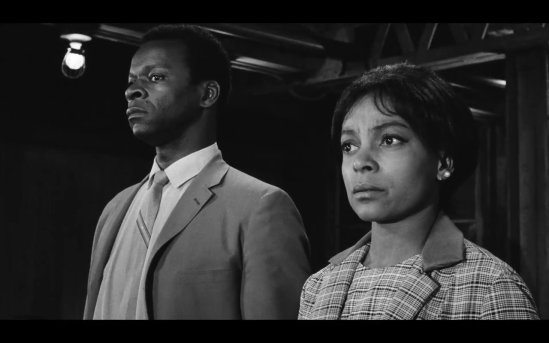
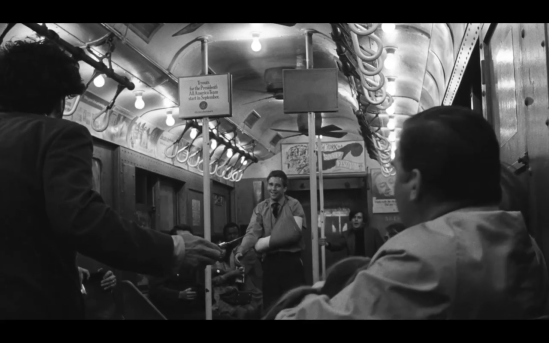
On the early morning streets of New York City, a drunken Artie and Joe delinquently roam the stillness of the Bronx after hours. After joyfully mugging an old man for a measly eight dollars and his wristwatch, their night leads them heading to the subway platform for more so called fun. A riotous Artie and Joe hop inside a railcar full of passengers that consists of two army privates on leave, a young couple on a date, an elderly Jewish couple, a young family with their 4-year-old daughter, an in recovery alcoholic, a passed out homeless man, a bigoted African-American and his wife, and a nervous gay. The passengers’ delineated diversity doesn’t thwart the two thugs’ harassment that holds the riders, in fear and in obstruction, from leaving the railcar and as personal limits are pushed to the edge, moral courage is effectively choked down by the helpless riders until one of them can’t take the bombardment of the perpetual daunting intimidation.

“The Incident’s” in your face, tell it as it is, hostage style dramatic thriller from 1967 barrels down an endless track of relevance and suspense inside the idealistic perception of New York City’s culture in the mid-20th century. Director Larry Peerce (“One Potato, Two Potato”) helms a masterpiece of a film that not only defied cinematic character standards but also defied the NYC transit authority who denied Peerce, along with cinematographer Gerald Hirschfeld (“Young Frankenstein”) to shoot in and on the NYC subway system. Taking a relatively guerrilla filmmaking approach to achieve railcar and platform exteriors, Peerce also managed to construct a true to size, if not larger, railcar to get the drama unfolding between the harmless transit riders and their two terrorizers. “The Incident” was the first feature film penned by teleplay screenwriter Nicholas E. Baehr whom also wrote the television movie version of the story entitled “Ride with Terror” a few years prior, but Larry Peerce clawed, scraped, and held together a cast and a crew that nearly dismantled due to funding and production issues until ultimately being saved by 20th Century Fox.

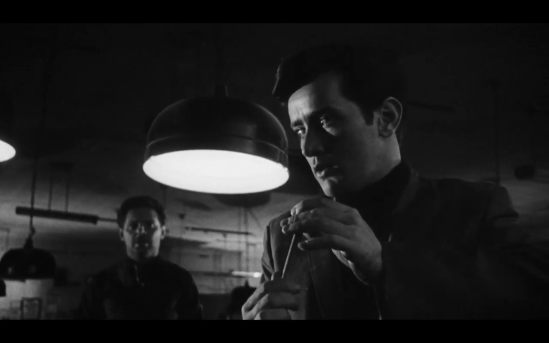
“The Incident” has such an ensemble cast that it’s difficult to even know where to begin. Two introductory feature film performances from Martin Sheen (“Apocalypse Now”) and Tony Musante (“The Bird with the Crystal Plumage”) as the errant ruffians is unequivocally good at being bad. Musante, especially, leaves a lasting impression as Joe Ferrone who oozes with slimy browbeating tactics by plucking that one sensitive nerve in each of the riders. As equally as good in comparison is in the injured Army private from Oklahoma, played humbly and genuinely by the baby-faced Beau Bridges (“Max Payne”), with a gosh-golly grin and a peacemaker wit about him that makes the private a prime target. Sheen, Musante, and Bridges are only the caboose when considering the train of highly trained styled actors that also include Thelma Ritter (“Rear Window”), Donna Mills (“Play Misty for Me”), Brock Peters (“Soylent Green”), Jack Gilford (“Cocoon”), Ruby Dee (“Jungle Fever”), Diana Van der Vlis (“X: The Man with the X-Ray Eyes”), Mike Kellin (“Sleepaway Camp”), Jan Sterling (“Women’s Prison”), Gary Merrill (“The Woman Who Wouldn’t Die”), and Victor Arnold (“Wolfen”). Ed McMahon makes his feature film debut as well! As an ensemble unit, the interactions evoke immense tensions and passion inside that railcar and from our very own couches.

Everything about Larry Peerce’s “The Incident” capitalizes on being nearly flawless. From the construction of the last act railcar set to the flash of urban realism, “The Incident” is high level on the suspense thriller hierarchy, but the characters and their personal baggage egregiously forced to the surface is utterly captivating and refreshingly cathartic to simultaneously showcase adult bullying engage enragement while also bubbling and bursting through thin layered passive aggressive convictions and attitudes. Joe Ferrone is symbolically a catalyst for the majority of riders, exposing internal loathsome, sham friendships, and tough guy personas, that naturally shreds down their ghastly facades and revealing their true, if not unpleasant, selves. Equally as compelling is the one scene with racial profiling and prosecution by the law enforcement that is heavily journaled in the today’s media and Peerce clearly believes in this injustice and adds the brief, yet powerful, moment at the tail end of the film that involves Brock Peters’ character.

Eureka Entertainment proudly presents the 20th Century Fox raw and intense New York based thriller, “The Incident,” onto a dual formatted, Blu-ray and DVD, home video as part as Eureka Classic sub-label, marking the first time on Blu-ray in the United Kingdom. Unfortunately, a DVD-R screener was provided for coverage so a review of the video and audio will not be covered, but from the spec information provided, the transfer is a 1080p high definition digital transfer with uncompressed monaural soundtrack on the Blu-ray. There are optional English subtitles available. What can be said about Gerald Hirschfeld cinematography is this, it’s a complete mastery of the trade with a penchant for black and white and seamless edited camera cuts. Bonus features listed are a brand new and exclusive audio commentary by film critic and writer Alexandra Heller-Nicholas, author of Rape-Revenge Films: A Critical Study, a post-screen Q&A session with director Larry Peerce from the 2017 Wisconsin Film Festival, the original trailer, and a collector’s booklet feature new writing by film writer Sam Deighan and critic Barry Forshaw. “The Incident” is searingly powerful and a societal wake up call of we’re all in this together or we’re all a part of the problem.\

The Only Way EVIL Would Go Out With a Virgin! “Double Date” review!


Recently dumped and severely panicked around women, the prospect of ever dating again seems like a long shot to Jim. Self-assured Alex sees the opposite for his best mate as a golden opportunity for him to get Jim laid before his 30th birthday. When Alex finally coerces and assists Jim on scoring a double date with two sisters, Jim can’t believe his stuttering awkwardness actually proved fruitful, but little do Jim and Alex know that the sisters, Kitty and Lulu, are out for blood. The sisters seek a virgin to sacrifice to bring their long deceased father back from the dead and to complete their trio-family once again at the expense of Jim’s involuntary celibate lifestyle. Night clubs, fast cars, and visits to the parents take the four through a series of dark and drug fueled misadventures and the unexpected moment of falling love that makes this double date one to die for!

First dates are always inherently frightening. The idea of being alone with a stranger, who you’re kind of attractive to and trying to impress, yet don’t really know a single thing about them, can be daunting, if not paralyzing. First date in a double date is supposed to ease that overwhelming fear and take the strain off from the lack of possible interest in the other person, but for director Benjamin Barfoot’s amusing horror-comedy, “Double Date,” all bets are off and all tensions are on edge when dating goal sights are deadly different. Danny Morgan pens a comedic gem in which he stars as the bumbling virgin, Jim, joining his long time collaborating partner, Barfoot, to complete their first feature film together. The British made and produced film gives glimpses of London’s fung shui through the pubs, clubs, and overall eclectic nightlife to the aristocratic mansion homes to the likes of “Downton Abbey” resulting in a slight blend of the past and present into a well-oiled story embodied with terror and fun.

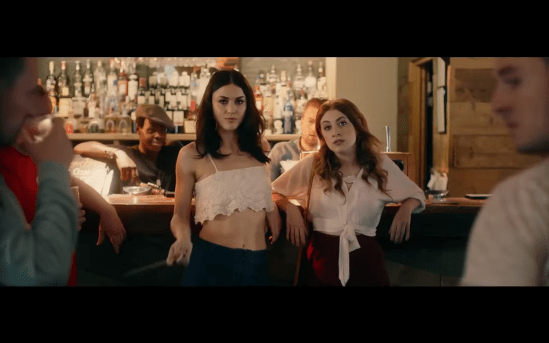
Funny man Danny Morgan stars as the awkward and blundering Jim whose plagued with fumbling qualities around women that usually leaves him somewhere in the inner circle of the friend zone. Morgan brilliant showcases Jim’s stunting inadequacies that eventually come to flower while maintaining a solid naturally slapstick presence of self-deprecation that turns into a full-blown bull in a china shop. The scene with his parents and himself singing his birthday song in front Lulu in audience, while tripping on drugs, is cathartically enjoyable and a riot of inner laughter. Morgan’s joined by “Being Human” actor, Michael Socha, as Jim’s very good friend, but all talk confident friend, Alex. Alex is certainly the yang to Jim’s yin on screen and off screen as Morgan and Socha have a certifiably fresh dynamic that makes them very entertaining to digest. Socha brings a different kind of comical energy that compliments Morgan’s dry humor that diversifies the content. In fact, all the characters bring a little something different to the table, such as with the sisters, Kitty and Lulu, played respectively by Kelly Wenham (“Dracula: The Dark Prince”) and Georgia Groome (“The Cottage”). Training like an elite athlete, Wenham takes the role to heart being a dark and beautiful villain that’s inarguably alluring as she’s cold and deadly. The Cheshire born actress, whom hands down can be the next Megan Fox, sinks her teeth into the performance and excels in the physical role that’s showcases her range of talent. Then, there’s Georgie Groome as Lulu, the timid opposite of Kitty. Also known as the girlfriend of Harry Potter’s Rupert Grint, she nails being the one in the shadows, relinquishing control mostly to Wenham for most of the film, and then slowly build character confidence and strength.

“Double Date” is a great blend of horror and comedy. The climax has this satirical and retro quality about that seems unfitting, but is stitched carefully to fit without bursting and popping a seam (or scene?) to the point of overly obtrusive. Benjamin Barfoot also has a keen eye to capture the pivotal and incandescent moments that make scenarios have more an impact, whether that being a facial expression, an awkward dance, or any kind of verbal or action exchange between characters. Doesn’t hurt that Barfoot’s rapport with Danny Morgan is a relationship riding the same director-actor level plane, similar to the dynamics between Adam McKay and Will Ferrell, with a synonymous cerebral synergy that clicks well for the silver screen.

From the independent film company who delivered “The Man Who Killed Hitler and then the Bigfoot,” Sparky Pictures releases the Screen International/FrighFest awarding winning horror-comedy, “Double Date”, onto digital, DVD, and Blu-ray come September 9th in the United Kingdom. Unfortunately, an in-depth review of the video and audio specifications will not be covered as a BD screener disc was provided, but what can be said about the soundtrack, performed by GOAT, is pure primitive gold and the appearance by Big Narstie is equally solid. Bonus material, on this check disc, included an extensive behind-the-scenes, from conception to wrap, of Danny Morgan and Benjamin Barfoot’s roller-coasting adventure on getting their film made. There’s also a commentary with cast and crew, deleted scenes, photo gallery, and trailers. “Double Date” is a true black comedy and a whole lot of fun that should skyrocket filmmakers Danny Morgan and Benjamin Barfoot toward future endeavors as a rising, powerhouse duo, contending to be the next hit in the satirical category.

Amazon has Double Date! Own it today!