EVIL Just Wants Their Heads Back! “The House of Lost Souls” reviewed! (Cauldron Films / Standard Edition Blu-ray)

Don’t Lose Your Head in “The House of Lost Souls” on Blu-ray!

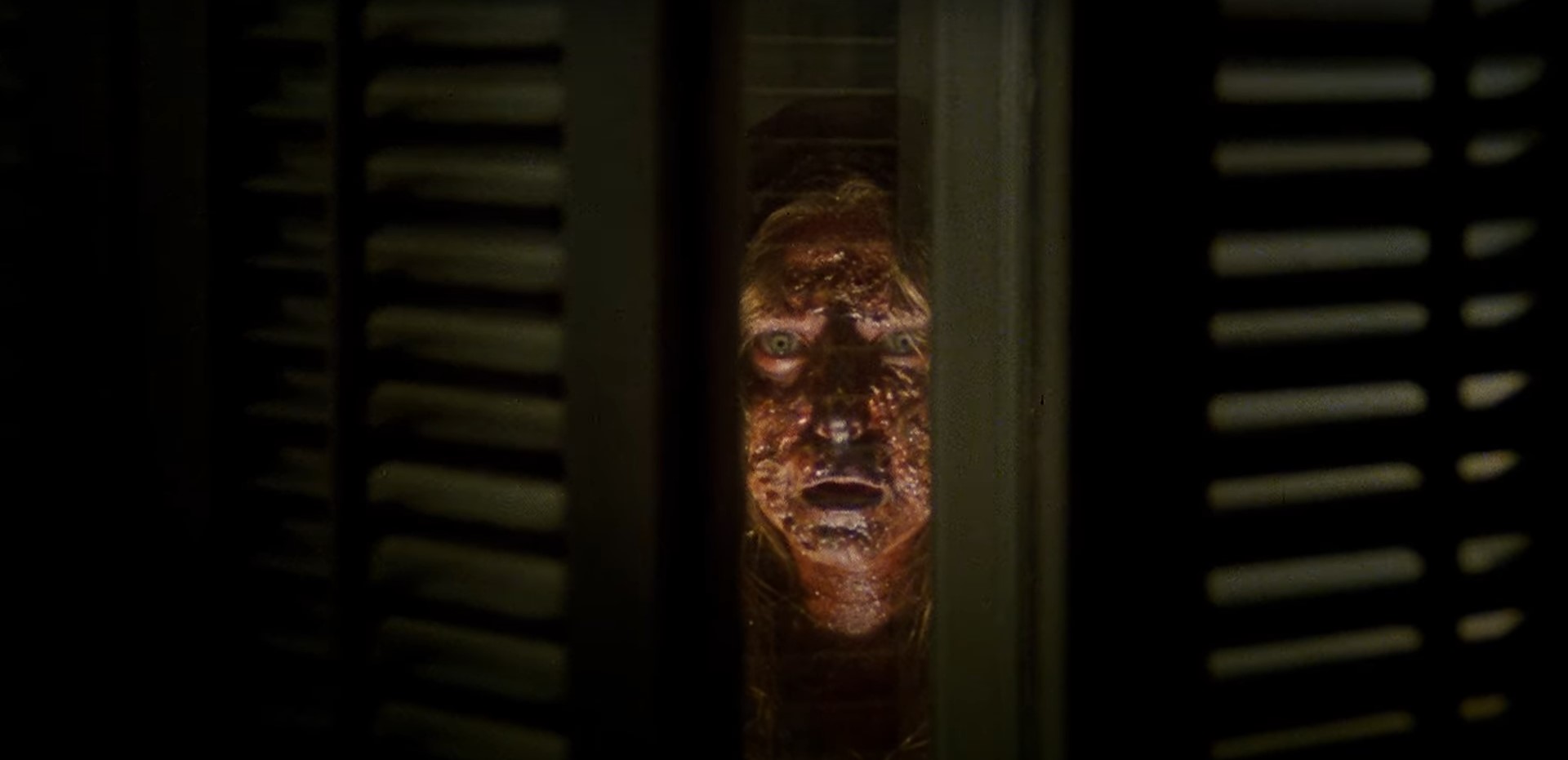
A group of geological fossil hunters spend their time researching in what is supposed to be the ideal climate of the Italian mountains but inclement, rainy weather has produced all kinds of inconvenient havoc and challenges that have slowed down their darting research.  Mudslides caused by the constant rain makes mountain roads impassable.  They encounter such a mudslide impasse on the way to their next research grounds and do an emergency detour to a remote, vacant hotel to spend the night out of the cold damp night.  Greeted without a single word from their unusual host, they’re given room keys get some rest before the next day’s hike up the cleared mountain road, resuming course toward the fossil hunt, but the geologists quickly discover something isn’t right with the hotel that has a dark history.  Trapped inside the abandoned hotel, murderous spirits appear and aggressively seek more souls to fill the hotel’s vacancy.
The fourth and final entry in The Houses of Doom series produced from Italian television in 1989, “The House of Lost Souls” is the second Umberto Lenzi (“Nightmare City,” “Ghosthouse”) film of the Lucio Fucli and Lenzi stint from the coproduction of Dania Film and Reteitalia with producers Massimo Manasee and Marco Grillo Spina, behind Lenzi’s “The House of Witchcraft” and Fucli’s “The House of Clocks” and “The Sweet House of Horrors.”  Lenzi also created the story concept and wrote the script that feels like a blend of the American-produced, supernatural thrillers “House on Haunted Hill” and “13 Ghosts” but with more bloodshed, color encoded and has that Italian violence flair too graphic for public television.  Italian-titled “La casa delle anime errant,” the film is also a production of the National Cinematografica that produced other Italian Umberto Lenzi cult classics “Seven Bloodstained Orchids,” “Eaten Alive,” and “Cannibal Ferox.” 

Trapped inside the gruesome lore of the hotel’s deadly history and as the focus of the overall dilemma is the group of geology students and friends, plus one adolescent boy tagging along with his older brother.  Further more concentrated on inside the group is Carla who’s been diagnosed, yes – medically identified, as having clairvoyancy with her psychic nightmare visions, sporadic and jumbled frightening images that yet don’t make sense, but guess what?  To no surprise, they will soon! Stefania Orsola Garello, who went on to have a role in the Antoine Fuqua’s period epic “King Arthur,” played the third eye sensorial Carla investigating the hotel’s sordid past along with quasi-boyfriend Kevin, donned by “The Slumber Party Massacre” American actor Joseph Alan Johnson.  Johnson is the extent of international casting, unless you count the hotel host, or rather head ghost who we’ll touch upon later, and the distinct facial features and the significant height of Japan-born Hal Yamanouchi (“2019:  After the Fall of New York,” “The Wolverine”) as a zombified Hare Krishna ghost, one of his many Italian roles while residing within the country since mid-1970s.  The remaining fill out with Garello countrymen counterparts with Matteo Gazzolo (“Specters”) as the group leader, Constantino Melon (“Who Killed Pasolin?”i as the leader’s little brother Giancarlo, and young lovers Guido and Mary, played by Gianluigi Fogacci and Laurentina Guidotti (“Dark Glasses”), as the victimized geologists being hunted down and tricked into slaughter by, too, victims of a hotel proprietor madman, the key perpetrator to all this madness but reduced to only a reflected role through Carla’s flashbacks.  Aside from Yamanochi, there are a handful of former guests and voiceless ghosts, some stuck in a bloodied stasis at the time of their death, some pristine as if nothing happened at all, haunting and hunting down the warm bodies, including Scottish actor Charles Borromel (“Absurd”), Marina Reiner, Dino Jaksic (“Little Flames”), and Beni Cardoso (“Barbed Wire Dolls”).
A different ghost house picture than Lucio Fulci’s “The Sweet House of Horrors’ but still contributes the same inhuman intensity of one person (or one ghost person) can against another person.  Yet, for Umberto Lenzi, his story thrives through the house’s, or rather hotel’s, ability to dispatch the innocent with household items.  Decapitating dumbbell waiters, a cabinet with a ripping chainsaw blade, a head-eating washing machine, and almost even a walk-in freezer become the tools of fatal terror.  Lenzi depicts little in the way of person-on-person violence with only implied deaths at the hands of another person; instead, the personification of ghost house miscellany is definitely more exciting, very unexpected, and a lot of fun to watch the hapless have their heads fall prey to household items that are supposed to be helpful, not hurtful.  Perhaps, Lenzi’s intentions were to explore the negative dependency of gadgets or appliances and how easily we’re allured by their safe nature marketing and profound assistance to our daily lives that it makes us easy targets with our guard down.  Lenzi also doesn’t believe in nepotism when casting young actors as the two child characters become fair game for the house’s thirst for slaughtered souls, dooming them with an equal risk to a brutal death.  The storied hotel’s notoriety serves as the vessel that drives ghosts to go berserk but the story’s miss is bringing back to the killer hotel owner who chopped the heads off of his guests to rob them, stowing them away to hide his transgressions, only for them to be the root of the ghosts’ reason for revenge against any and all who trespass through the lobby.  As the origin of the ordeal, the omitted owner serves as just flashback fodder that fuels the floor-by-floor fiends. 
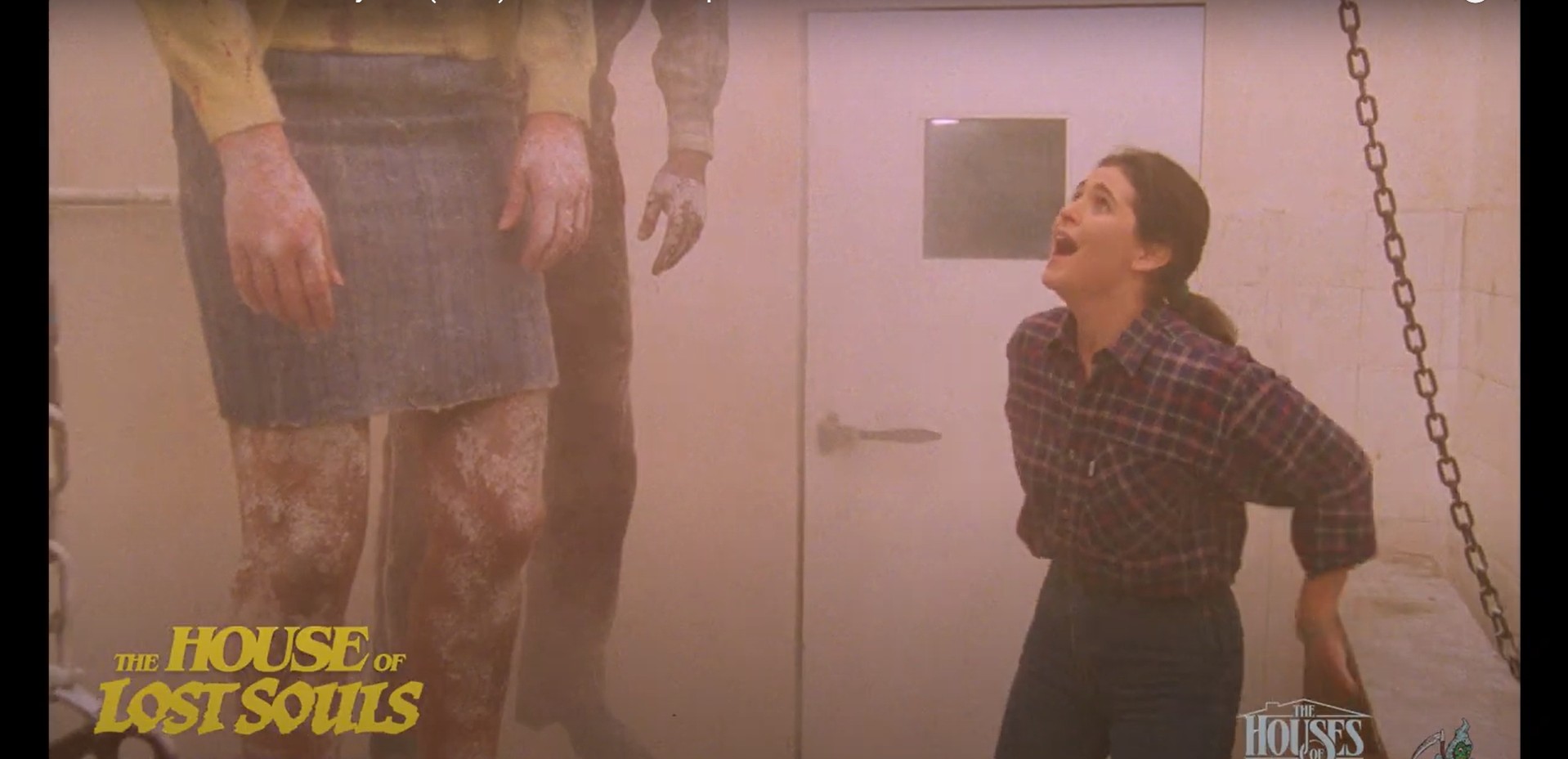
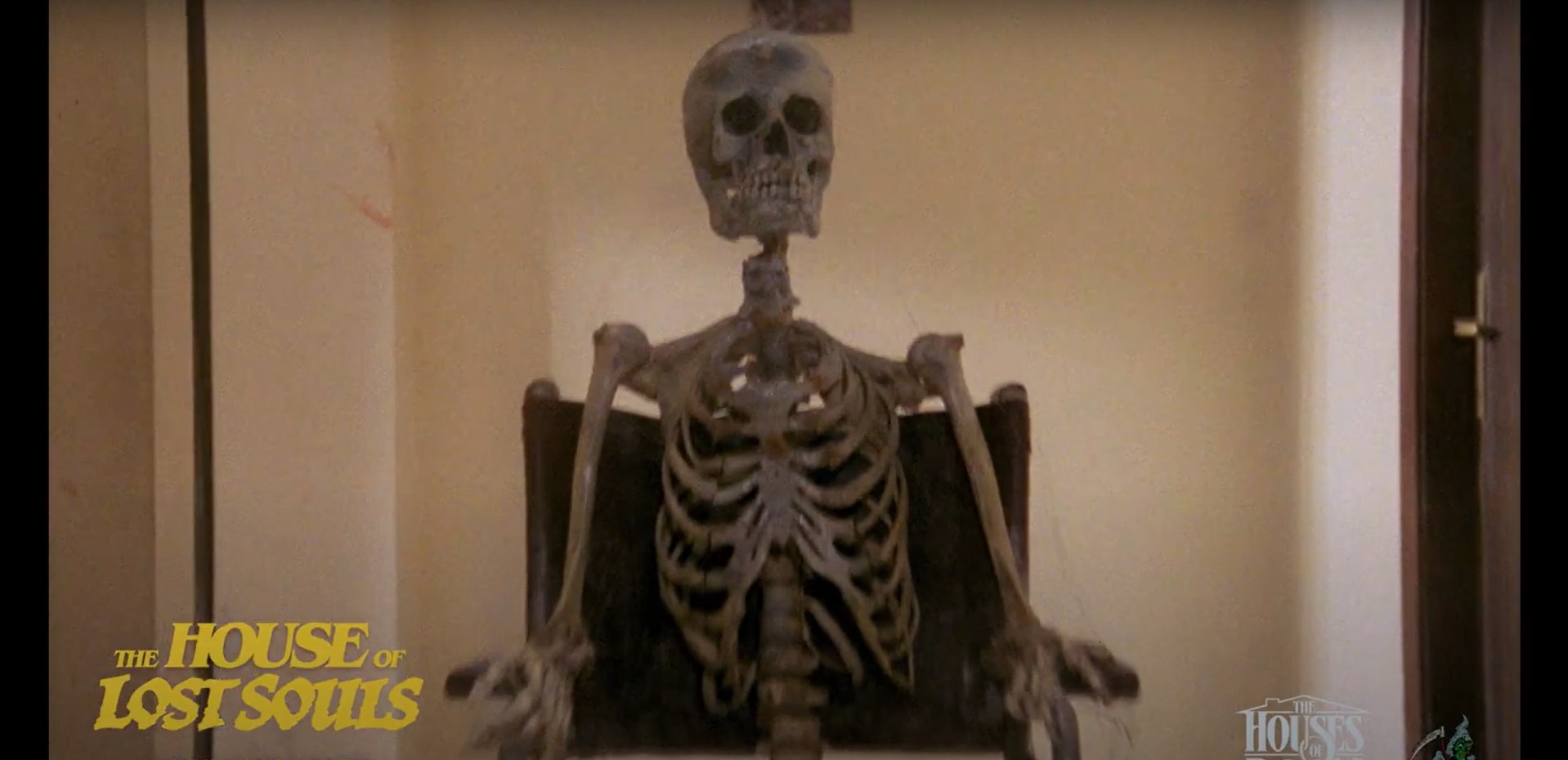
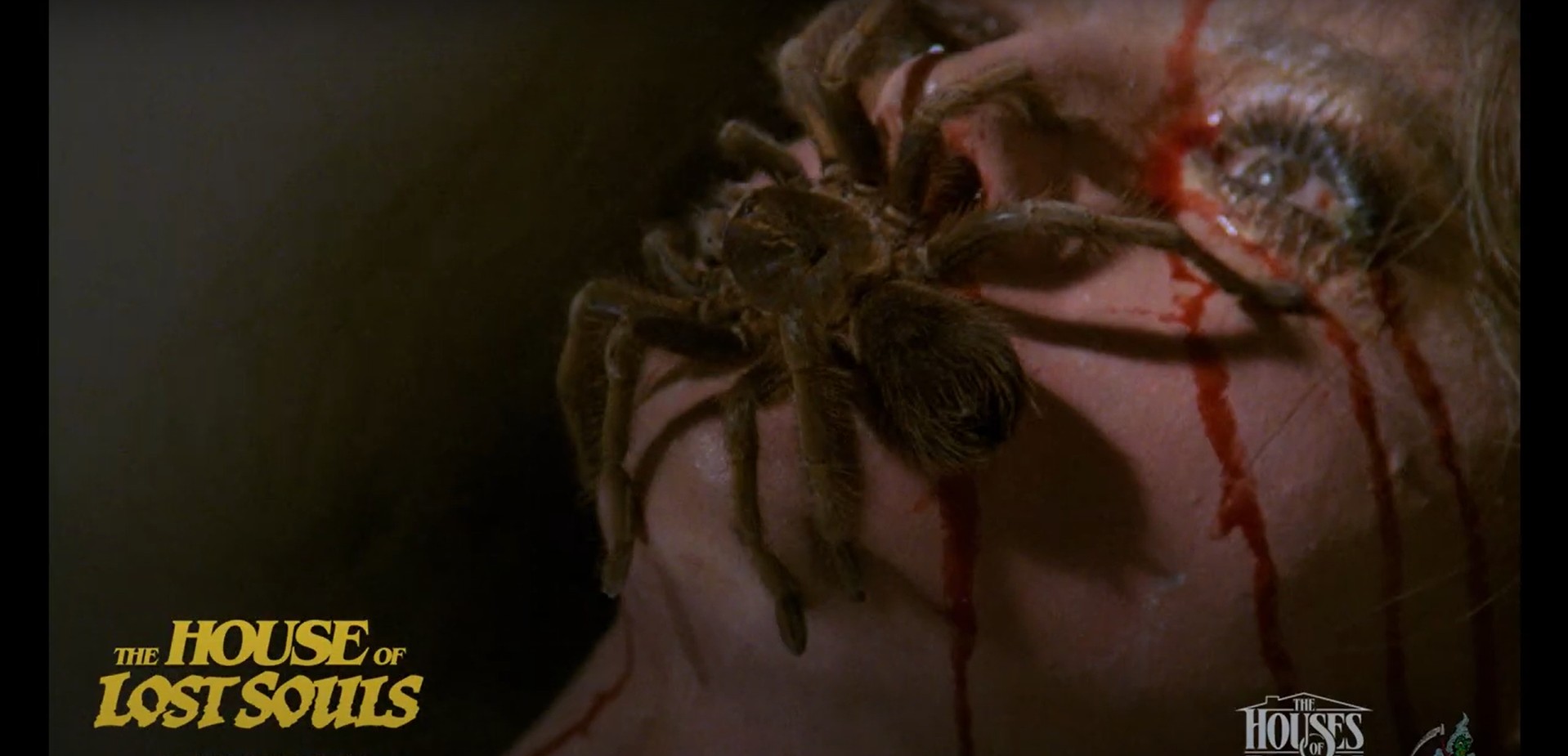
Spiders, skeletons, and severed heads make up, but are not limited to, Umbero Lenzi’s “The House of Lost Souls” now on Blu-ray as the last The Houses of Doom release from Cauldron Films.  Presented in the European widescreen aspect ratio 1.66:1, the new 2K scan was restored and released uncut from the original film negative, inviting a clean and beautifully vibrant pictures for a dark, haunted hotel feature.  However, like with many Lenzi pictures of the time, the final product has softer image detail that’s brilliant for producing color but relaxes the stringent textures to a still better than mild palpability that’s more than enough beyond the bar of image quality.  There are no compression anomalies to speak of as Cauldron Films, again, produces an excellent high-definition encoding, much like with the other three Houses of Doom installments.  Audio setup includes an encoded English and Italian 2.0 mono with optional English subtitles for the English track and forced English subtitles on the Italian.  The ADR hits and misses the mark with vocal ranges seemingly too mismatch with the actors, such as with Massimo who looks like a tenor but has a bass voice, or the boy Giancarlo with an unsettling falsetto and you can lipread those who are actually speaking English compared to those who are not native English speakers.  The overall track has no compression issues with a powerful dialogue projection and an adequate ambience that hits every keynote to bring the composition together.  “Demons” and “Tenebrae” composer Claudio Simonetti produces a charming little synch rock trap-threat and of a score that becomes essential to “The House of Lost Souls” snare and stalk of the geologists caught in the wrong place at the wrong time.  Special features include Cauldron Films’ exclusive interviews with FX artist Elio Terribili Working with Umberto and composer Claudio Simonetti The House of Rock along with two audio commentaries, one with Samm Deighan and the second with Rod Barnett and Adrian Smith, and bringing up the rear is a 2001 interview with Lenzi going through points in his lustrous independent career of exploitation, poliziotteschi, and giallo contributions to Italian cinema in The Criminal Cinema of Umberto Lenzi.  The not rated, region free Cauldron Films standard Blu-ray release, encased in a clear Scanova Blu-ray case with original Matthew Therrien and Eric Lee illustration cover art and logo design, has a runtime of 87 minutes.

Last Rites: That’s a wrap on the fourth and last film on The Houses of Doom collection from Cauldron Films and it’s a beauty scanned onto a new high-definition transfer that brings doomed television features back to life, to live again, to breathe its hot breath of death all over a new generation of viewer unfamiliar to Lucio Fulci, Umberto Lenzi, and even Italian horror!

Don’t Lose Your Head in “The House of Lost Souls” on Blu-ray!

EVIL’s Brew Just Needs a Severed Head! “The House of Witchcraft” reviewed! (Cauldron Films / Blu-ray)

“The House of Witchcraft,” a part of The Houses oof Doom series, Now on Blu-ray!

Luca Palmer has experienced the same reoccurring nightmare for months of him finding shelter from being chased inside a large countryside house with an ugly hag boiling his severed head in a large cauldron.  The dreams have required him to find professional help in a psychiatric ward but without any real mental or physical health concerns, he’s released to his incompatible, witchcraft practicing wife Martha who sets up a country house getaway in a last ditch effort to save their dwindling marriage.  When they pull up to the house, Luca immediately recognizes it from his nightmares.  From then on Luca believe he’s seeing the malicious old woman from his dreams around on the estate grounds and urges his psychiatrist, who is also his late brother’s wife, to visit him to assess his state of mind, but the visions keep coming and those around him keep dying a horrible death with his wife being the key suspect of witchcraft related deaths.

“La casa del sortilegio,” aka “The House of Witchcraft” is a made-for-television, witch-centric movie for the four-film series The Houses of Doom concept created under the companies of Dania Films and Reteitalia’s producing team Massimo Manasse and Marco Grillo Spina.  The 1989 witchy-slasher hybrid and the third film of the series is helmed by another notable Italian schlock and shock director, Umberto Lenzi (“Seven Blood-Stained Orchids,” Cannibal Ferox”), as well as Lenzi writing the script from the story of The Houses of Doom envisaging duo Gianfranco Clerici and Daniele Stroppa.  “The House of Witchcraft” speaks the very essence of what to expect in a traditional sense regarding witches while really stepping up with Italian nastiness inside the slasher principles, filmed in the heart of Italy in the popular Chianti wine municipality of Rufina where the landscape is lined with vineyards, churches, and castles.

Luca Palmer is committed to his mental health by committing himself to his sister-in-law’s psychiatric hospital after months of nightmares involving a witch and his severed head as the main ingredient for her boiling stew.  Perhaps, because of his rocky relationship with wife Martha, played by French actress Sonia Petrovna (“Flashing Lights”), Luca just needed a break from her witchcraft obsession and loveless aloofness to clear his head.  Either way, the American-born and ‘Naked Rage” actor Andy J. Forest is one of Umberto Lenzi’s go-to action stars, of such Lenzi’s war films “Bridge to Hell” and “The Kiss of the Cobra”, whose taken off the film battlefield and positioned as the confounded centerpiece of a cackling witch tale, completing his task as a the tall, handsome, and flawed hero of a man haunted and driven by unpleasant night terrors of the long face, broad features of the fittingly named Maria Cumani Qausimodo as the dolled-down witch.  Quasimodo is no stranger to the filth and frights of Italian schlock with roles in “Behind Convent Walls,” “Five Women for the Killer,” and even the notoriously porn augmented “Caligula” and her physical traits, long stare of blue eyes, and pandering of character’s wickedness transform her into an ideal archetype of the original folk-acholic Brewmeisters.  Characters for the slaughter tin this supernatural slasher and to be intertwined into the suspect and innocent pool are played by Paul Muller (“Lady Frankenstein”), as the sixth sense blind homeowner Andrew Mason, Marina Giulia Cavalli (“Alien from the Deep”) as Andrew’s visiting niece Sharon, Susanna Martinkova (“Fracchia Vs. Dracula”) as the psychiatrist sister-in-law Dr. Elsa Palmer, and Maria Stella Musy as the doctor’s daughter Debra tagging along with her mother to visit the barely mentally managing Luca. 

Umberto Lenzi’s rollercoaster career has seen its fair share of misses overtop what are today considered trashy, cult triumphs that lure fans to seek out his even lesser known, poorly critiqued titles more often than required for any more than the casual horror moviegoer. However, “The House of Witchcraft” is not one of those latter, threadbare produced pictures as Lenzi instills more aesthetic style and cinematic substance of searing phantasmic enthrall and danger with an unwavering villainess vile down to her very rotten teeth and scraggly, gray hair.  Offing houseguests left and right is the witch’s supernatural birthright but why exactly Luca Palmer, a stressed out journalist, to be the target of precognitive events is more opaque than it is clairvoyantly evident but we get some great malevolent manipulation and sleight of hand with black cat familiars, bulgy maggot-infested corpses, unusual indoor freezing precipitation, severed heads, and a face transfiguration that’s pretty damn good that has no right to be in a Lenzi film, mostly in part to special f/x and makeup artist Giuseppe Ferranti (“Anthropophagus,” “Nightmare City’), his favorable, collaborative relationship with Lenzi, and the fact he’s locked into the 4-part film series The Houses of Doom provides him creative freedom, flexibility, and fluctuation in diversity.  “The House of Witchcraft” is not the one-all, be-all witch story but does scratch that warty itch in the foulest of cloak-wearing evils without flying a broomstick! 

The second of four Blu-rays for The Houses of Doom lineup produced by Cauldron Films, “The House of Witchcraft” is an AVC encoded, 1080p high-definition, BD50 with a transfer scanned into 2K, uncut and restored, from the original film negative.  Very similar to Lucio Fulci’s “The House of Clocks,” Cauldron Films scan is quite impeccable.  A pristine picture with no wear or tear and age deterioration, “The House of Witchcraft” is deep and rich with immense coloring timing efforts, defining an authentic look without overcorrecting to a fault.  There’s no perfunctory enhancing or extreme variability with contrasting, retaining a smooth, consistent picture quality throughout its European aspect 1.66:1 presentation.  Even in the more stylistic lighting work that creates clear tone of how the indoor snow should feel cold or the lightning strikes and wind brings a chill of ominous doom, there’s plenty of delineation to provide space and demarcations of depth between objects.  There are two DTS-HD 2.0 mono mixes with an ADR Italian and an ADR English dialogue.  Synchronously smooth, a noticeable dialogue separation between audio and video is not easily perceptible, which is kudos to the post work on the post-crew efforts, and Cauldron’s mixes have clarity without a fault in the compression means.  The two channel funneling of the mono output separates the dialogue and ambience/score.  Backing of the boiling cauldron stew or the knife swipes that severe heads and stab fleshy trunks, leaving impacting thuds and thwacks, are good examples of the conveyed foley audio that leaves a lasting impression through component construction in the audio design.  There are optional English subtitles on both language tracks.  Special features include Cauldron Films’ produced interviews with FX artist Elio Terribili Artisan of Mayhem, cinematographer Nino Celeste The House of Professionals, and a commentary track with Eugenio Erolani, Nathaniel Thompson, and Troy Howarth.  Also like “The House of Clocks” release, Matthew Therrien and Eric Lee compose a composition of illustrative graphic artistry of film’s decomposing and maniacally laughing madness and logo design for The Houses of Doom series on the front cover inside the clear Scanavo case.  Reverse cover has a still image of the black cat and the disc is pressed with the same front cover artwork but cropped to focus primarily of the witch with title and company logos at the bottom half.  The region free release has a runtime of 89 minutes.

Last Rites: Umberto Lenzi’s “The House of Witchcraft” casts a spell over the hex canon, beguiling it with mystery, enchanting it with surrealism, and bewitching it with blood. Cauldron Films’ Blu-ray is topnotch for an obscure made-for-TV Lenzi production.

“The House of Witchcraft,” a part of The Houses oof Doom series, Now on Blu-ray!

The Gates Are Opening and The EVIL Wants to Squish Your Brains! “City of the Living Dead” reviewed! (Cauldron Films / 4K UHD – Blu-ray)

Cauldron Films’ “City of the Living Dead” on 4K and Blu-ray 3-disc Release!

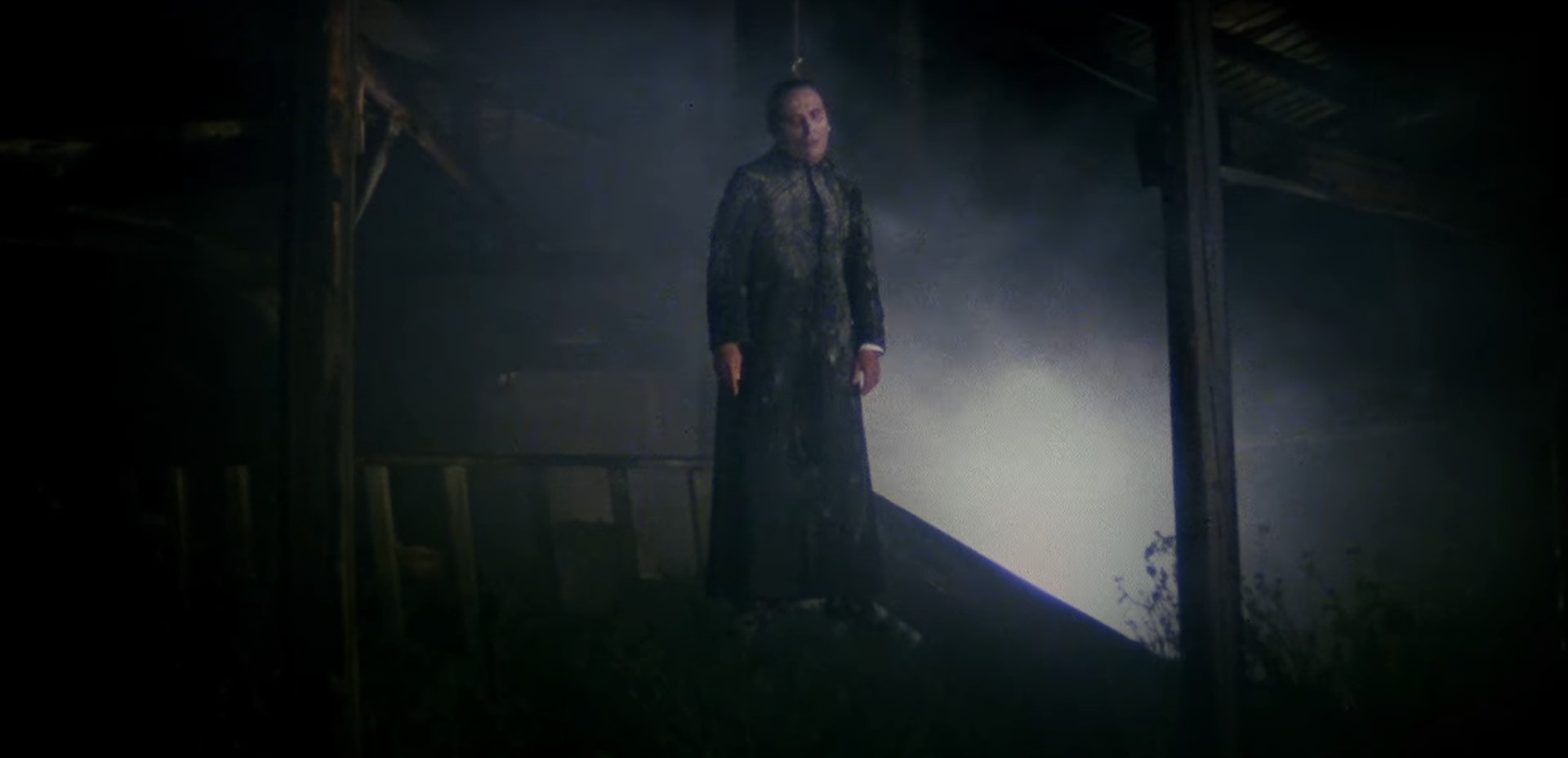
In the Dunwich, a priest commits suicide by hanging himself in the Church’s graveyard.  In the same instance, a psychic based in New York City holds a séance where she witnesses the beginning of the gates of hell opening.  The order sends the psychic into sheer fright that nearly kills her.  A reporter digging deep into the near death of the young woman also buried alive and befriends the psychic, following his nose for a good lead despite its absurd sounding hoodooism of death apocalypse in less than 72 hours.  The psychic and reporter travel to the hard-to-find Dunwich town where the residents have been mysteriously vanishing or discovered dead of curious causes.   Baffled by all the strange occurrences is the town psychiatrist who witnesses first hand the troubles that stir fear into those close to him.  When the psychiatrist teams up with psychic and reporter, they must venture to the very depths of crypt Hell to close the gates and stop the dead for rising before All Saints Day.

The Godfather of Gore Lucio Fulci undoubtedly lives up to his title, establishing himself as one of Italy’s more profound and substantial horror filmmakers before his death in 1996.  “City of the Living Dead” came at the height of Fulci’s success after his breakout into the American market with “Zombie” or “Zombi 2,” an unofficial sequel to George A. Romero’s superb “Dawn of the Dead.”  Yet, Fulci didn’t follow suit with “Dawn’s” social commentary and pale-faced flesh eaters; instead, the writer-director stemmed his undead creatures from black magic hoodooism set in the sunny and sandy Caribbean islands with just as much visceral violence as his inspiring mostly Pittsburgh-based counterpart.  Alternatively known as “The Gates of Hell,” the Italian production of “City of the Living Dead” remains set in the U.S., filmed in New York and the surrounding metropolitan northeast, as the first part of the Gates of Hell trilogy that coincided with “The Beyond” and “The House by the Cemetery,” both of which were released approx. a year later.  “City of the Living Dead” is a Dania Film, Medusa Distribuzione, and National Cinematografica production with Fulci producing as well as the American Robert E. Warner (“Return of the Swamp Thing”) as executive producer.

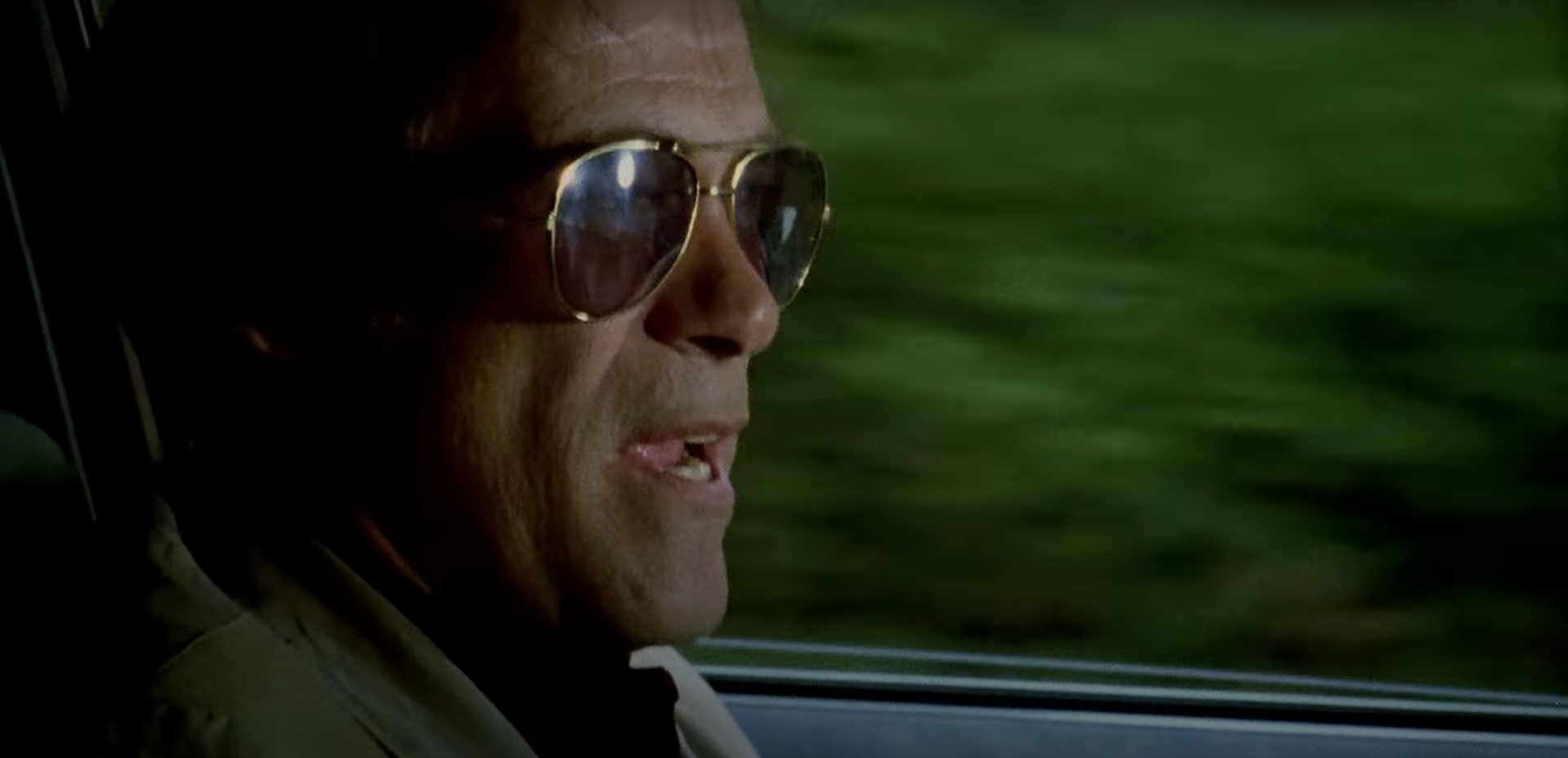
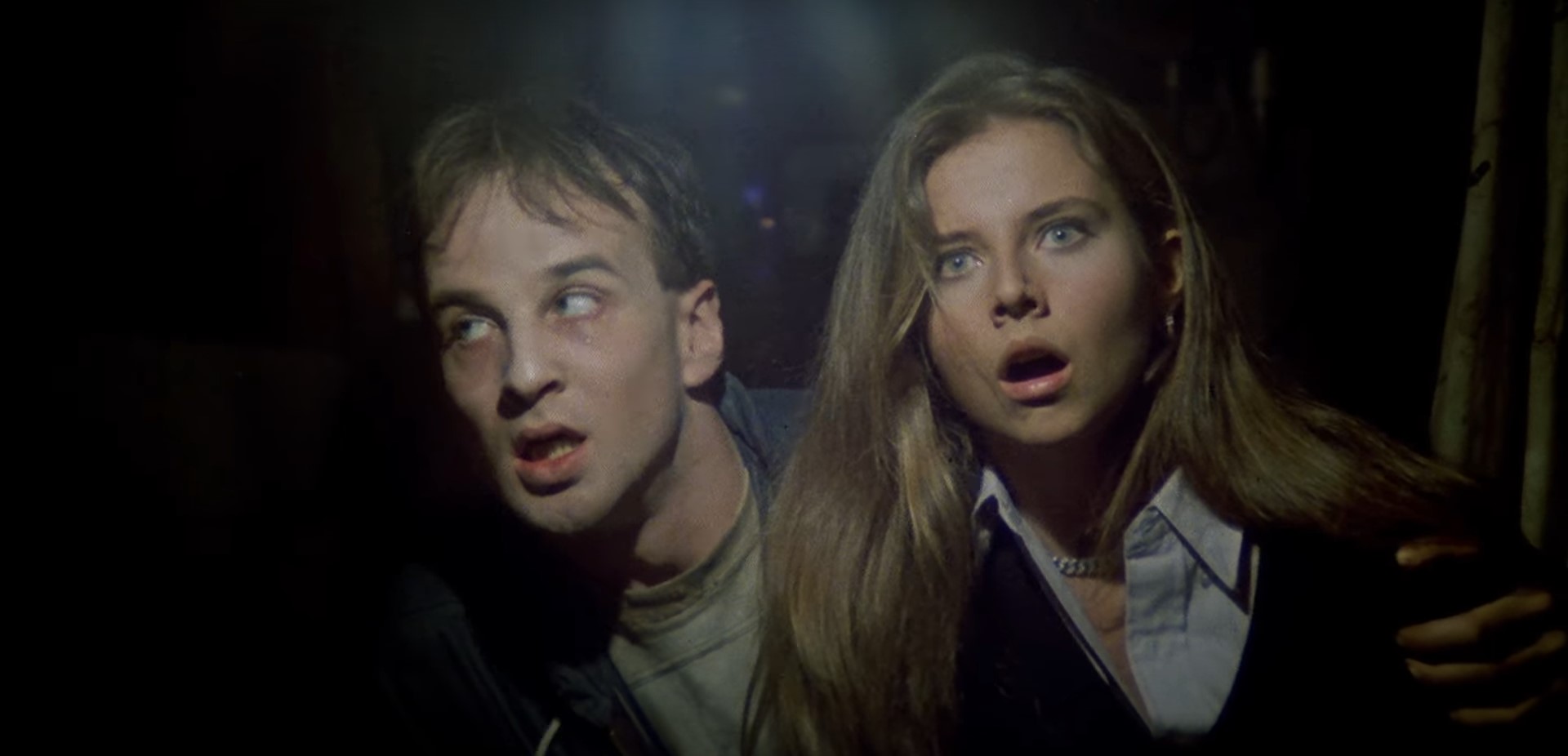
A medley of nationalities make up “City of the Living Dead’s” who either are or are playing American characters.  Comprised mostly of Italian actors Antonella Interlenghi (“Yeti: Giant of the 20th Century”) as one of the first doomed Dunwich victims, Michele Soavi (director of “The Church”) as a canoodler with his brains being squished, Daniela Doria (“New York Riper”) as the other canoodler having her innards become outers, Fabrizio Jovine (“The Psychic”) as the hung priest who started all this mess and as the harbinger of the living dead, and Carlo de Mejo (“Women’s Prison Massacre”) in the psychiatric lead.  There’s an abundancy of diverse Italian flavor that definitely grounds “City of the Living Dead” as an Italian production, but a minor chunk of the cast are Americans with co-principal Christopher George (“Graduation Day,” “Pieces”) as a rakish NYC reporter forcing his way into a minor lead turned major forthcoming day of reckoning and Robert Sampson (“Re-Animator”) in a minor law enforcement role that bears little significance.  Sprinkled in the cast is also the Swedish-born-turned-Italian actress Janet Argen (“Eaten Alive”) as the psychiatrist patient and UK actress Catriona MacColl rounding out the principal cohort as the psychic.  MacColl is the only actress to have a role in all three of Fulci’s Beyond the Gates films, playing different characters in each.  Between Christopher George’s skeptic playfulness, Janet Argen’s uncontrollable hysterics, and in the unmalleable wrought shock of fear, the sundry cast doesn’t hinder the performances that mesh well under the greater air of portent and the hours leading up to end of days.  Giovanni Lombardo Radice (“Cannibal Ferox”), Luca Venantini (“The Exterminators of the Year 3000”), Adelaide Aste, Venantino Venantini (“Cannibal Ferox”), Robert Spafford, James Edward Sampson (“StageFright”), Perry Pirkanen (“Cannibal Holocaust”), Michael Gaunt (“Forced Entry 2”), and filmmakers Robert E. Warner and Lucio Fulci costar.

Through an unexplained mysticism and preformed stipulations on why the priest was the be all end all gatekeeper to the dead’s awakening on Earth other than Dunwich was original built upon the ruins of a witch-burning Salem, Massachusetts or why the day after the unmentioned Halloween season (likely because Italians do not celebrate Halloween with an abundance of candy and custome), All Saints Day, becomes the zero hour date when clearly the dead are already fatally impacting lives in the corporeal realm, Lucio Fulci masterful magician qualities diverts attention away from seemingly crucial elements of the plot toward a complete and total elemental atmosphere of fear, using eerie fog, whipping wind, and phantasmagoria imagery of the macabre to implant chthonic horror slowly rising above ground.  Makeup artist Franco Rufini recesses the sight sockets with deep, infraorbital darkening under the eyes in stark contrast with the pale shade skin, creating that classic yet effective zombified corpse casing in conjunction with special effects artists Gino de Rossi (“Burial Ground:  The Nights of Terror,” “Cannibal Ferox”) use of ground raw meat or whatever the gushy material used to construct the cerebrum contents that just squishes to a pulp between the fingers of the undead when they grab a fist full of hair, skin, and brains from behind an unlucky left living.  There’s quite nothing like a Lucio Fulci film where the ghouls knock on the door from the other side, threatening the land of the living, the world even, with a sound and steady ghoulish malevolence and death in a well-lit and framed Fulci-scope to hammer down defined purpose that drives a penetrating stake through the chest bone and into a chilled soul.

“City of the Living Dead” goes beyond the format gates and arrives onto a 3-disc 4K/Blu-ray release from Cauldron Films.  2160p Dolby Vision 4K and a 1080p AVC encoded high-definition options really put this Fulci classic back on the map, unlike the small, forsaken city of Dunwich. The 4K UHD is an HEVC encoded, 2160p Dolby Vision ultra high-definition resolution while the AVC encoded Blu-ray sports 1080p high-definition, presented in a widescreen 1.85:1 aspect ratio. Through the translucent mist of natural, good-looking grain, Cauldron Films have hyper-accentuated the atmospherics with a clean rendering of the innate cooler-to-warner photography grades of blue-to-yellow with creating a harsh contrast transition. The encoding never shows an ounce of detail distress to keep textured and palpable image of the darkened crypt or the thick fog exteriors that often would degrade decoding with omitted data. The Cauldron Films release retains and sustains bitrate that fastens the dark levels to a robust and effective pitch black. What’s neat about this release is the ability to toggle between the English DTS-HD 2.0 Mono and the Italian DTS-HD 2.0 mono, both post-recorded in standard with Italian productions. Both tracks are comprehensibly sound with a clear and clean dubbing with the only detailed differences being one in English language and the other in Italian and the title card switched out for the each. Between the two, range is exact on both with not a lot of superfluous ambient sound and both tracks offer a near blemish free experience in a robust context of atmosphere. Disc 1 and 2, 4K UHD and Blu-ray respectively, come with new audio commentaries, including with cult film critic Samm Deighan, author of Italian horror cinema Troy Howarth and film critic Nathaniel Thompson, as well as individual archival commentaries with actors Catriona MacColl and Giovanni Lombardo Radice. Disc 3 includes an interview with production Massimo Antonello Geleng, actor Giovanni Lombardo Radice, and on-stage Q&A with Venantino Venantini and Ruggero Deodata (“Cannibal Holocaust”), a Q&A with Catriona MacColl, a Q&A with composer Fabio Frizzi, interviews with special effects artist Gino de Rossi and principal actor Carlo de Mejo, A Trip Through Bonaventure Cemetary – an explorational and historical account on the main cemetery where the priest in the film hangs himself, trailers, an image gallery, and other archival interviews in a near feature-length collection of conversations with cast and crew reminiscing about Lucio Fulci during filming. The 4K UHD and third disc packed with special features are region free while the Blu-ray remains region A locked in licensed playback on the format. Both features have a runtime of 93 minutes and the release is unrated. Emerging from the gates of standard definition hell, Cauldron Films tempers Lucio Fulci’s “City of the Living Dead” to a foreboding crust, burgeoning with ominous clout the undead’s underscoring resurrection.

Cauldron Films’ “City of the Living Dead” on 4K and Blu-ray 3-disc Release!