Prudish EVIL Takes on the Arcade in “Joysticks!” reviewed! (MVD Visual Rewind Collection / Blu-ray)

Get Your Herky-Jerkey Hands on “Joysticks’ on MVD Blu-ray!

Arcade manager Jefferson Bailey runs his grandfather’s business like a nonstop party lined with token-operated video game machines, stocked with a complete concession counter, and welcoming beautiful women to enjoy not only the endless entertainment of the arcade machines at all hours but also to gush over his handsome, easygoing demeanor. With an expert gamer and a newly hired dweeb helping to run the arcade, Bailey has a lot of free time to enjoy the perks of popularity until a wealthy businessman, Joseph Rutter, continues to have a hard time keeping his entitled daughter away from the arcade and Bailey which he considers both to be corrupting the town’s youth. Rutter, his two bumbling nephews, and a peevish gamer try everything in their power to shut down the arcade but Bailey, the employees, and the lucrative patronages won’t subside without a fight, even if that means settling everything on a single video game battle.

An obscure and forgotten teen sex comedy from the early 1980s, “Joysticks” is a celebration of the coin-operated video game at the height of the arcade’s heyday. Director Greydon Clark (“Satan’s Cheerleaders,” “Without Warning”) helms the Al Gomez, Mickey Epps, and Curtis Burch screenplay with ton of sex appeal, a display of 8-bit gaming graphics, and a cheesy, chunky storyline of big, bad entitlement versus the small, teen-run business of fun, sex, and videogames. The 1983 film was shot in Los Angeles and had introduced to the big screen not only a few of the more popular game titles – Pac-Man, Millipede, Pole Position, Naughty Boy, and Defender 2 – of the period but also introduced a new game with Midway’s Satan’s Hollow. “Joysticks” is a Greydon Park Production with associate producers in Curtis Burch, Daryl Kass (“Darkman”), and George Perkins (“Teen Wolf”) with also Clair Farley and Raylan D. Jensen serving as executive producers.

Headlining “Joysticks” is legendary, recognizable actor of “Walking Tall” and “The Shadow of Chikara,” Joe Don Baker, as the gruffly, arrogant suit Joseph Rutter going up against the then arcading-entrenched youth, represented primarily by actor-turned-director Scott McGinnis (“Last Gasp”) as the fun-loving arcade manager Jefferson Bailey. Baker fits into that stereotypical group of the out of touch older generation who doesn’t understand new and fascinating entertainment technology that attracts young people and, as he would understand it, these arcades are nothing more than the exterminating flame that attracts the unsuspecting moth. Bailey makes for a good fun while upholding certain convictions that doesn’t entail him being the villain of the story; those attributes fall not only into Baker’s lap but also Jonathan Gries as the eccentric gothic gang-leader King Vidiot. The “Fright Night 2” and “TerrorVision” actor, who outside the horror realm is well known for being Uncle Rico to the titular “Napolean Dynamite,” sports blue-red hair, cladded in leather, and has a hold over four equally garbed and dyed-colored women as his subjects to his peculiar behavior around the arcade. Initially Gries felt like an integrated part of the clientry until miffed by the arcade’s resident joystick and buttons master of gameplay, Dorfus (Jim Greenleaf, “Evil Speak”) in a one-on-one challenge. If “Joysticks” is a film about the joys of an arcade hall that’s precious to protect from overly concerned parents, the Dorfus character is pretty much the antithesis of that theme having once been the high school thin valedictorian now a sloppy, flatulating, and overweight gamer. Another character that doesn’t quite fit into the equation is the nerdy Eugene (Leif Green) whose character predates “Revenge of the Nerds” that released a year later but didn’t quite absorb into the fold of the only other companioning misfit in Dorfus. Where Eugene succeeds, with the help of Green’s performance, is the bumbling dumb-smart guy whose innocence instills more trouble for himself than anything else, especially with the braless women around him with Kym Malin (“Weird Science”), Kim G. Michel, Becky LeBleau (“School Spirit”), Lynda Wiesmeier (“Avenging Angel”), Morgan Lofting, and Corinne Bohrer (“Zapped!”). The supporting cast fills out with John Diehl (“Stargate”), John Voldstad (“Leprechaun”), and Logan Ramsey (“Doctor Hackenstein”).

As far as in the canon of 80’s teen sex comedies, “Joysticks” fits the bill as a nonpolitically correct cinematic lark with all the goofy and raunchy bells and whistles that come standard with these types of movies but there’s something missing from the ’83 feature that doesn’t quite put the categorical entry at the same quintessential high level as “Revenge of the Nerds,” “Private School,” or “Porky’s.” The narrative trajectory often stays in stagnant territory, or in more detailed terms a lopsidedness, instead of a back-and-forth, tit-for-tat jostling contest that hardly challenges the opposition to face dire straits. Also, too often does “Joysticks’s” jokes fall flat, perhaps the lost in flavor is due in part to the film’s 40-year-old comedic gags, that mostly reoccurs with Dorfus passing horrible gas or Eugene stumbling into an unlikely sexpot to his disadvantage. There is substance in a deeply rooted character arc with the once pro-level Jefferson Bailey unable to play his beloved coin-operated machines because of a traumatic event involving a past love of his life that results in him trembling, sweating, and getting into his own headspace but that, too, is obstructed by the warmed-over objective that generally has a loveless love-interest in a mostly male dominated principal cast, a short-fused motivation reasoning for most characters, and a rough patch polish, such as with that ear-throbbing main theme song, that tries to compensate with wacky situational and sexual archetypes which are not unpalatable to say the least but can’t keep “Joysticks” from respawning after all its lives have been used up.

Catalogued as number 58th on the MVD Rewind Collection banner, in conjunction with the Multicom Entertainment Group, “Joysticks” receives special package design that will surely please fans of older video game consoles and cartridges, but the packaging keeps with the Rewind Collection overall theme that is a testament to its label.  The AVC encoded, single-layer BD25 presents the fill in full 1080p HD and in an anamorphic widescreen aspect ratio of 1.78:1, based off a 2015 2K scan and restoration of the 25mm film elements.  This 2015 transfer is likely from the Scorpion Releasing limited number release from nearly a decade ago, licensed to MVD for broader and more easily accessible distribution.  Though an older transfer, the color saturation still pops albeit some heftier grainy frames that stumbles the overall consistency from time-to-time.  This ultimately also affects the details to an extent, especially on medium shots where the action is pulled away from the camera to get a wider view.  Closeups and extreme closeups look better with tighter detail and better contrast.  The English LPCM 2.0 mono is the only available audio track.  The lossless format provides ample volume and is a real pedigree of the original audio recording.  Dialogue has most a firm grasp on the layer design with no inaudible inadequacies but can often be anemic in more noisy settings, such as the arcade where bleeps, bloops, and other video game noises invade the audio field and dilute distinction and depth.  Legion’s “Joysticks” theme track also renders palely in his cheesy metaphorical lyrics that mix sex with video game playing, even if as appropriate as it may be to the context.  English subtitles are available for selection.  Special features include an archival feature length commentary and interview with director Greydon Clark but also has a brand-new roundtable commentary with MVD’s director of acquisition Eric D. Wilkinson, Cereal at Midnight host Heath Holland, and Diabolik DVD’s Jesse Nelson.  There’s a short film “Coin Slots” which is a faux “Joysticks” trailer that costars Eric D. Wilkinson and directed by Youtuber and producer Newt Wallen.  MVD’s physical presence of “Joysticks” is where the fun is at with an Atari themed orange slipcover with boxed in picture of sex-comedy appeal poster art, a more slimdown version design that’s more attuned to the MVD Rewind Collection look for the cover art in the clear Blu-ray Amaray case, and a Blu-ray disc pressed with the coloring and markings of an Atari game cartridge.  A more complete version of the cartridge look is on the reverse side of the reverse cover art, preferably for this reviewer to mix up the designs between slipcover and cover art.  A folded, back-and-front illustrated mini-poster of both cover arts is housed in the inside the case insert.  The region free release has a runtime of 88 minutes and is rated R. 

Last Rites: The packaging alone is worth the cost of this inexplicably obscure and quaintly waxen teen sex-comedy that now breathes new life on a more accessible high-definition Blu-ray release from MVD Visual!
Get Your Herky-Jerkey Hands on “Joysticks’ on MVD Blu-ray!

DCU Can’t Handle this EVIL! “Swamp Thing” reviewed! (MVD Visual / 4K & Blu-ray)

“Swamp Thing” on 4k / Blu-ray Combo!  Now Available on Amazon.com!

A top-secret government project in the Louisiana swamps concern the combination of aggressive animal genes into plant DNA to result in creating super food for the potential famine and overpopulated future.  Agent Alice Cable becomes assigned to the project when her predecessor is unexpectedly devoured by a gator and becomes acquainted with the passionate head scientist, Dr. Alec Holland.  However, the government isn’t the only interested party in obtaining a formula when a faction of cutthroat mercenaries invade the swampy compound in the name of Arcane, a mastermind sociopath looking to hold the fate of the world in his hands.  Storming the compound with force, all the government agents are slaughtered except for Cable who managed to escape while Dr. Holland suffers a tragic accident of combusting with his volatile formula during the attack.  Believed to be dead, Dr. Holland returns transformed into a half-man, half-vegetal thing with superhuman abilities.  Now, Arcane is after him with Cable trapped in the middle. 

Having success in the grisly rape-revengers and mutant-cannibals section of his career in the 1970s, Wes Craven tussled with creating and securing another hit film to pay the ever mounting bills.  Before “A Nightmare on the Elm Street,” one of two biggest titles that have gone synonymous with the director’s name, the other being “Scream,” Craven dived into a DC Universe project before the DC Universe ever existed as such with the script adaptation and the helming of “Swamp Thing,” a vegetational anthropomorphic superhero inhabiting elemental powers, such as regrowth and superhuman strength.  What Craven originally scripted may not have been the same as the finished product on screen but the 1982 captured audiences attention and created lifelong fans of an underappreciated hero still germane to what is now a large universe of revitalized superheroes films and television shows.  Film in and around Charleston, South Carolina in the Cypress Gardens doubling as deep South everglades, “Swamp Thing” is produced by long time DC films coproducers Benjamin Meiniker and Michael E. Uslan as their first DC superhero venture as a Melinker-Uslan production and distributed by Embassy Pictures and United Artists.

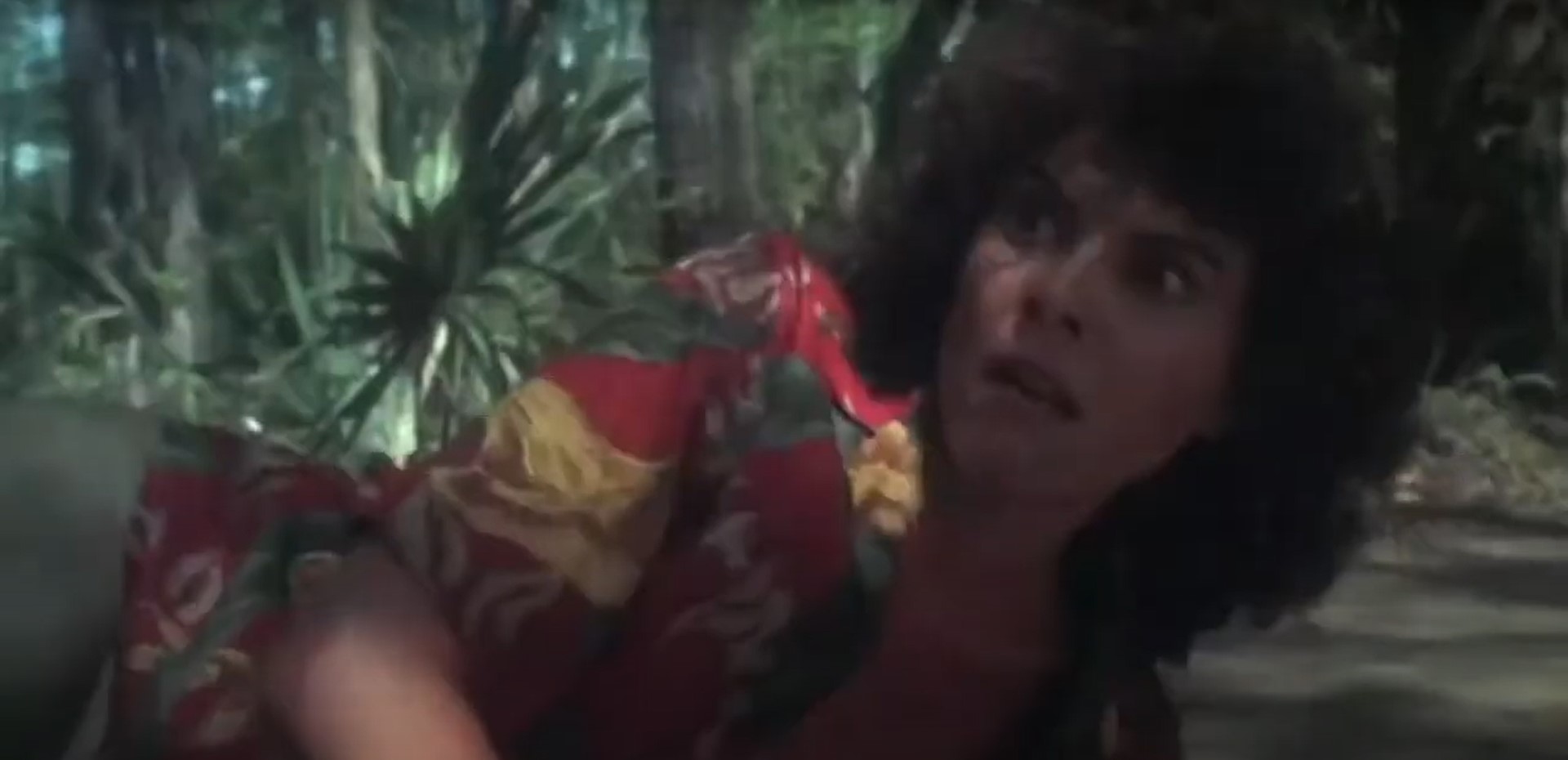
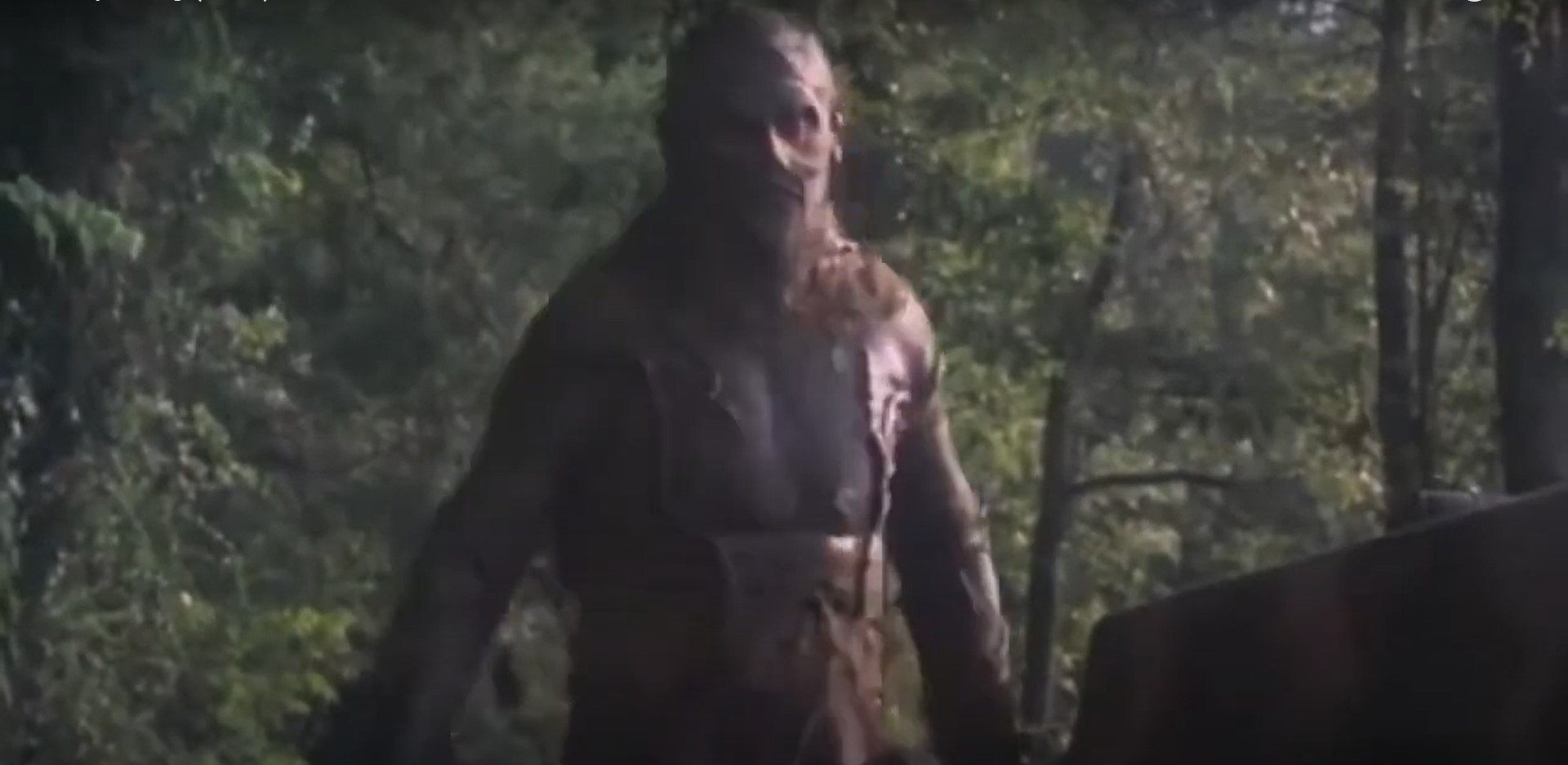
The question of who would bring this monolithic human-hydrangea?  Answer:  Dick Durock.  The 6’5” former Marine Durock was not afraid to jump into character skin, no matter how hairy, tight, or otherwise uncomfortable it might have been.  Durock may not have been the face of Dr. Alec Holland, played by genre cult actor Ray Wise (“Robocop,” “Twin Peaks”) before succumbing to transformational injury and rebirth, but the Indiana born actor certainly became the face of “Swamp Thing” throughout a decade with the sequel and the subsequent television show.  Durock captures not only the strength but also the humanity of the superhero in this origin story, a feat hard to accomplish for a man in a skin-clinging green and bulky suit.  Not to diminish Ray Wise’s performance by any means as the charismatic Wise is charming, passionate, and invested into making his Dr. Jekyll jive with the soon permanent Mr. Hyde to come, but as titular principal, Durock becomes the face of foliage on steroids.  Before solidifying herself as a scream queen, a young Adrienne Barbeau would have more difficulty in her Alice Cable role reflected in having some kind of feelings for essentially the same character in two versions played by different actors.  Yet, Barbeau beats the buggy Carolina heat as well as the differentiate obstacles by being a kickass government agent able to handle herself around the frighteningly new swamp creature and Arcane’s goon squad.  Before he was a James Bond villain in “Octopussy,” Louise Jordan donned the arrogancy of a tyrannical thinker yearning for the unique powers of others.  Jordan’s quite pretentious as the unrelentless Arcane and that makes the actor be the quintessential antagonist but I would not say his performance places his character in complete rivalry as “Swamp Thing’s” archnemesis.  Something is missing from their dynamics within their broad encounters that make the struggle appear impersonal and distant.  Even when Arcane ingests the formula and turns into a werewolf-like beast and the two superpowers clash, I wouldn’t label their conflict personally intertwined.  Perhaps Alec Holland and Alice Cable’s pre-mutation passion wasn’t strong enough or Swamp Thing’s deep-seeded desire for Alice wasn’t rooted well that makes Arcane just whither like a sun-beaten plant without water.  Another character that’s beaten into the ground is Ferret played by David Hess (“The Last House on the Left”) as head mercenary without any real power or absolute authority over his men, turning Hess more into like Tracey Walter in Tim Burton’s “Batman” but not as cool or as likeable.  “Swamp Thing” cast rounds out with Nicholas Worth (“Darkman”), Don Knight (“Death in Space”), Nannette Brown (“My Boyfriend’s Back”), Al Ruban (“1,000 Shapes of a Female”), Mimi Craven (“Last Gasp”), Karen Price, and Reggie Batts as the unlikely best child character in all of the film as an interesting and lone gas station attendant with hilarious, deadpan wisecracks. 

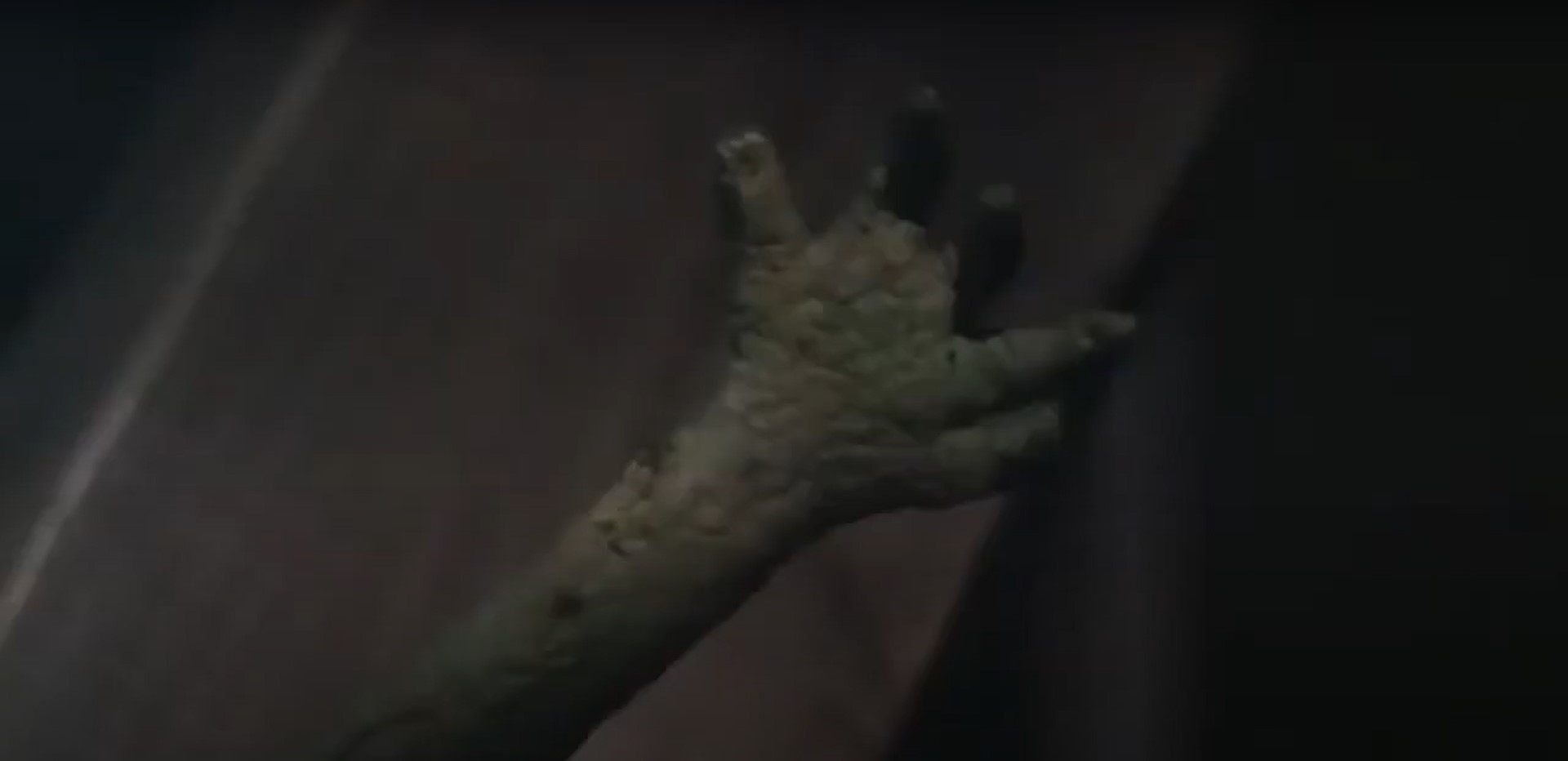
“Swamp Thing” may not be the first comic book superhero to be pulled from the DC lined colorfully illustrated and action-packed pages and adapted to the big screen but what separates the mucky-dwelling plant hero from the other is he’s cape-less, without ray guns and jetpacks, and appears as a monstrous humanoid rather than a regarded normal looking servant of justice as with Superman, Batman, or Wonder Woman.  “Swamp Thing” intrigues viewers with their own internal conflict stemmed from a foundationally laid idea that mutant creatures or unnatural monsters are inherently bad guys.  “Swamp Thing” becomes a part of that trailblazing group of grotesque good guys with hearts of gold.  Yes, the 1982 feature hasn’t held up over time with some of the low on the totem pole creatures suits and makeup I’ve seen, even with the agreeable Swamp Thing suit showing the rubbery creases and fold overs when Dirk Durock has to hold an object; however, to balance out the cut-rate features, special features picks up the tab with stunt boat chases, invisible pull wires, and a man set on fire that’s intense.  With a slashed budget, Wes Craven scripts on the fly to churn out a watered down but still flavorful cinematic origin story that’s full of heart and humanity and partly carried by the sweat and endurances of an eclectic cast and a handful of popcorn action patches.

“Swamp Thing” emerges from out of the muck yet again and onto a 2-Disc 4K/Blu-ray combo set from MVD Visual’s Rewind Collection label, specially marked as the first release on the LaserVision Collection.  The restored 4K UHD Dolby Vision is presented in 2160p and in a 1.85:1 widescreen aspect ratio on a BD100 while the Blu-ray is presented in 1080p high definition with the same aspect ratio on a BD50.  Each format presents two cuts of the film – a PG version and an international Unrated version – both of which have collated from various cuts of the film, resulting in some impressively rich grading that offers refreshed saturation levels of a lusher swamp environment.  More of that richness is conveyed through the UHD with providing deeper tones to make the swamps isolate and swallow characters while also have a sense of being alive amongst the hazy, knee-high fog, opaque waters, and thick vegetation.  Black levels look fine with the amount of grain that can vary from scene-to-scene but not compression issues to talk about on both spectacular approached formats.  The 4K offers a remastered DTS-HD MA 2.0 mono, which is same as on the Blu-ray, that unjustly limits “Swamp Thing’s” audible potential.  Dialogue has some deficiency projecting with all the tracks transmitting through a single channel that’ll force the up arrow on the volume setting or require a punchy soundbar or headphones to get to a clearer understanding of what characters are conversing.  The intrinsic ambience would have been better suited for multi-channel network to extract everything the swampy milieu had to offer, plus punchier fights, but if not an audiophile, these tracks will ultimately sate a viewer’s goal.  Range decently enough limps through despite the surround sound as we receive enough explosions and barrages of bullets to check that box, but depth struggles through the audio layers.  Both formats also include a Spanish language mono track and optional English subtitles.  Special features vary across the two releases with the UHD having limited extras due to storage but what is included is the PG version, the Unrated International version that includes Adrienne Barbeau’s topless scenes, an archive commentary with writer-director Wes Craven moderated by commentary director Sean Clark on both versions of the film, commentary with makeup artist William Munns moderated by Michael Felsher of the commentary/documentary conducting Red Shirt Pictures, also on both versions.  The Blu-ray contains the same extras above plus another Red Shirt Pictures’ interview with Adrienne Barbeau Tales from the Swamp, an interview with Reggie Batts Hey Jude, a discussion with Len Wein, the creator of “Swamp Thing,” the featurette Swamp Screen:  Designing DC’s Main Monster, the featurette From Krug to Comics:  How the Mainstream Shaped a Radical Genre Voice, photo galleries, and theatrical trailer. This must-own set, that caters to paying homage to the Laserdisc, comes retail green 4K Ultra HD snapper that in holds the 4K and Blu-ray on each side of the interior wall. The exterior features an illustrated encirclement of the main players – Dirk Durock and Andrienne Barbeau in comic character – on a single-sided front cover, sheathed inside a cardboard O-slip cover with the same cover art. Both disc presses also represent the original Laserdisc art. The insert contains a folded mini poster of the slipcover design. Two version, one release headline both the 91-minute PG and 93-minute Unrated version of the film with the entire package region locked in A. I may have finally watched Wes Craven’s “Swamp Thing,” but I won’t be the last as I highly recommend this stellar launch into ultra high-definition territory with the original quagmire superhero.

“Swamp Thing” on 4k / Blu-ray Combo!  Now Available on Amazon.com!

The EVIL Gutierrez Family Accommodations are to Die For! “Fucking Bastards” reviewed! (Wild Eye Releasing / DVD)

Those “F**king Bastards” on DVD at Amazon.com

On the walk path to Santiago, on an isolated stretch of the trail, hikers Richie and Lucia run into a bit of bad luck when Richie’s foot is severely injured by a speeding car driving recklessly on what’s typically a walking path.  Needing immediate aid, they’re forced down a offshoot path to the isolated Hotel Gutierrez, a local hostel ran by the eccentric manager, Arturo Gutierrez, and his family.  Unsure about the odd hostel manager and even more unsure about the temperamental cook serving questionable, gloopy slop but continue to entertain their hosts’ hospitality to not offend or make upset, Richie and Lucia quickly realize they’ve made a grave mistake in staying when the Gutierrezes are actually a deranged family of cannibals exploiting their guests for the one thing, to be the main course on the Gutierrez menu.  The path trekkers find themselves on the receiving end of a butcher’s block that might not have been an accident after all.

“Jordidos Kabrones” aka “Fucking Bastards” is the 2012 precursor film to Manolito Motosierra’s “Spanish Chainsaw Massacre” from 2017, introducing viewers to the morbid-madcap antics of the Gutierrez family. The comedy-horror uses the Camino de Santiago, or the walk to St. James, as the backdrop that ultimately leads to an unprovoked massacre of the pilgrims traversing to the shrine of the first martyred apostle St. James at the cathedral of Santiago de Compostela in Spain. Some believe that walking the trail is a part of a sinner’s expiation toward God. In Motosierra’s case, as seen in “Fucking Bastards,” the seemingly normal hiking trail is a gateway to Hell for all when a local family exploits the pilgrimage as a source of unconventional comestibles that has been a tradition passed down from generation to generation. Over-the-top with nauseating ordure and gore, Motosierra refuses to hold back in the mire situation that leaves Richie and Lucia being the unfortunate guests of the Gutierrez hostel. The feature is produced by Motosierra and Kiko Navarro, who’ve went on to collaborate on “The Corpse Grinders 3” and “Spanish Chainsaw Massacre,” assistant producers Santi Banjo and Fernando Montano Galvañ, and is a Spanish conglomerate production of AGP Productions in association with Olga Underground, Yosoyfande Reanaimator Association, Dark Times Visual, Esquizoide Productions, San Jorge School of Film and Audio, and the Alcoi Film Office.

If you’re like me and ended up watching the follow up film, “Spanish Chainsaw Massacre,” first, then you may recognize a couple of familiar faces in “Fucking Bastards” of the atrocity paving duo of Arturo and Guti Gutierrez, played by José Luís Tolosa and Manuel Rodriguez. Tolosa tall stature, wide, sinister grin, and antsy movements perfects Arturo’s wildly tormenting behavior as the collected, but not also cool and calm, head of the family. Then, there’s Guty, the clearly deranged imbecile delighted to follow Arturo’s direction and take verbal abuse times infinite as long as he gets to tenderize, fillet, and serve up guests for breakfast, lunch, dinner, and dessert. Rodriguez plays a derived goof that’s nothing really to note and write home about in his goon and goof performance that does support Arturo’s more sophisticated role as a deviant duo. While “Spanish Chainsaw Massacre” inundated viewers with extended family member of maniacs, “Fucking Bastards” starts out with slow with select immediate relations, such as their veiled and grunting grandmother played by Motosierra himself. The Gutierrez family’s pilgrim victims come in pairs. The main hapless marks are Richie and Lucia, played by Ricardo Pastor and Miriam Larragay and who both went on to have a new role in Motosierra’s “Spanish Chainsaw Massacre,” are suitable enough saps to be slaughtered by their own dimwittedness by ignoring that little voice inside their heads screaming at them to run for the hills upon meeting Arturo and Guti. Pastor and Larragay, compared to Tolosa and Rodriguez, are satisfying normal pilgrims without life infractions, without ulterior motives, and with nothing other than the backpacks on their back on what should have been a simple hike to pay respects to St. James and God, making their detour-to-death that much more nihilistic and grotesque. Sonia Ayala, Pedro García Oliva, Xima Perpinyá Mira, Marino, Yolanda Berenguer, Raúl Darío Gandoy, Jaime Martínez Moltó, and Jaime Martínez Moltó round out the cast.

By all means, “Fucking Bastards” is no great cinematic masterpiece. With an offensive title, not one person should expect it to be a great Spanish cine, but what should be expected from the Manolito Motosierra picture is a ton of gore and a load more of offensive and garbage slopped material to flaunt to shock the casual cinema consumer or speak the niche lurid language of gore film fiends around the world. Motosierra accomplishes both as “Fucking Bastards” will disgust the weakest of stomachs and will galvanize others to glue themselves to the story to see what happens next. Those viewers excited for the kills will find the gore effects to be inconstant at best from special effects artist Ruben Vallés Guerrero who has worked the movie grade gamut from the micro-indies, such as “Fresh Flesh,” to moderately budgeted films like “Down a Dark Path,” starring Uma Thurman (“Kill Bill”), and “A Monster Calls” with Sigourney Weaver (“Alien”) and Liam Neeson (“Darkman”). The Motosierra picture became a jumping point for Guerrero to show off his effects skills and delivers on some Tom Savini-inspired hand chopping and leg slicing but in the same breath also approves the use of an augmented plastic baby, with non-lifelike stiff arms and legs, in the bashing of a pregnant woman to force deliver. Whether due to limited funds, or the content was too shocking overall, or out of respect for depicting infant children in hugely Catholic culture, the scene sorely cheapens the already shoddy, low-budget production with artificial appearances. Refreshing is not a term I would say defines Manolito Motosierra’s “Fucking Bastards” but there’s a sense of unassuming relief from the lack of pretense because from front cover to end credits, you know exactly what type of vulgarity to expect.

Coming right in as spine number 69 on Wild Eye Releasing’s Wild & Extreme label, “Fucking Bastards” offers its sadistic viewing pleasure onto DVD home video. Presented in an open matte widescreen 1.78:1 aspect ratio, the feature is housed on a lower storage format, likely a DVD 5, that suffers tremendous compression pockmarks, such as smoothed out textures, blotchy-pixelated patches, banding, and contrast issues. Video presentation is watchable and not a terrible eyesore but definitely not the pretty picture around with a good portion of the issues stemming from commercial grade equipment. The Spanish language Stereo 2.0 audio tracks varies in dialogue levels, leaving depth unaccounted for and very little in range value as there’s not much of an ambient arrangement. Though varied, dialogue is clean and clear with English subtitles that have some synch/timing issues. There were a few occurrences where the subtitles on flashed and vanished in an instant. The English subs are also severely consolidated with characters’ throwing out much more than what is being translated…trust me, I know enough Spanish to tell. Bonus features only included the theatrical trailer plus other Wild Eye previews which, in my opinion, are worth checking out. No dialogue, just impressively edited, impressively scored, make-you-want-to-check-it-out handful of trailers that include “Death to the Ten Commandments,” “Gore Grind,” and “The Thrill of a Kill.” Stay tuned for an after credits bonus scene that displays the horrors of the Gutierrez children. The exterior features include a clear DVD snapper with a photoshop filtered act of asphyxiation on the front cover while the inside reveals a reverse cover of a screen grab of one of torturous moments of the story. The Wild Eye release of the film is unrated, has a runtime of just over an hour at 63 minutes, and is region free. Get your gonzo gore on with Manolito Motosierra’s humble beginnings in “Fucking Bastards” that could be considered the Rob Zombie’s Firefly family of Spain.

Those “F**king Bastards” on DVD at Amazon.com

Crawldaddy and Her Two EVIL, Incestual Kids in “Skinned Alive” reviewed! (Tempe Digital and Makeflix / Blu-ray UE)


Crawldaddy and her two children, Violet and Phink, are psychopathic makers and sellers of fine leather apparel right off the backs of, well, literally ripped right off the fleshy backs of anyone they come across! When their van breaks down in a small, dumpy, low-bred Ohio town, Crawldaddy is forced to play nice with the town’s only mechanic, Tom, who offers a complete line of unreciprocated hospitality to the strange out-of-towners, but that doesn’t stop her and her children from committing slice and dicing of the local residents while bunkering in Tom and wife’s basement spare room. When Tom’s neighbor, Paul, an alcohol abusing ex-cop on the edge as a result of a brutal divorce, senses trouble and discovers Crawldaddy’s den of skin, the quiet small town explodes with bullets and blades in a macabre showdown.

Forget the Firefly family that has brought backwoods kin-in-arms killers to the masses in vogue fashion. Otis, Baby, and Captain Spaulding have nothing on Crawldaddy’s foul-mouth, foul-smelling skinner family who ranks as the top trash, living the nomad lifestyle with all the depraved trimmings of the criminally insane. Written and directed by Jon Killough, who after working on J.K. Bookwalter’s “The Dead Next Door” and “Robot Ninja” in multi-hat roles, “Skinned Alive” was bestowed a greenlight by Bookwalter to explore the creative side of Killough’s vile and offensive laden hillbilly horror that was released in 1990, before that very subgenre was coined and monetized years later. David DeCoutea, who envisioned the eviscerated virtuoso of the gruesome filmmaking talents from Todd Sheets to J.R. Bookwalter, served as executive producer and Bookwalter’s The Tempe Suburban Company tackled “Skinned Alive” with all the ingenious bloody pizzazz and outlandish death set financier and production company while filming the project in Ohio.

Since The Suburban Tempe Company is a tight-knit production company, familiar faces from Bookwalter’s previous films have been cast, beginning with Paul Hickox, the ex-cop with a drinking and ex-wife problem, played by Floyd Ewing Jr. The Hickox character crosses over from “Robot Ninja” into “Skinned Alive,” but exhibited in a dichotomous life position. While Ewing nails being a man dragged through the pig slop of divorce, Paul feels cut short with the amount of buildup written for the character that’s centered around ex-wife woes of losing his house and kids, depressed into drinking, and has to deal with a sleazy lawyer whose also litigating his former wife in a court of a sex. However, “Skinned Alive” is all about the bad guys.  In the majority of horror films, the bad guys are always the most interesting because of their rancid flavored persona and for our culturally-collective love of the eccentric, the offbeat, and the grim of villainy.  Crawldaddy embodies those despicable characteristics without so much of breaking a sweat with a abhorrent-welcoming performance by the late Mary Jackson.  Jackson, who went on later to work Bookwalter again in a minor role in “Ozone,” is transformed from a singing beauty to a basket case of a wretched, wheelchair bound hag, unearthing her uncouth Hyde at the flip of a switch.  Jackson is complimented by Susan Rothacker as the alluring-but-deadly Violent, a roll filled in the last minute by the film’s makeup artist when things didn’t work with Jackson’s daughter Lorie, and the one and only Scott Spiegel as Phink.  The energetic Spiegel has been a part of the longstanding Sam Raimi entourage, having minor roles in Raimi films, such as “The Evil Dead,” “Darkman,” and “Drag Me to Hell,” and when “Skinned Alive” became in need of a Phink, Spiegel may have just saved the film by his presence alone as the “Intruder” and “Dusk Till Dawn 2:  Texas Blood Money” director brings the manic ticks and callous charisma to Phink’s traits.  Rothacker ups the character dynamics with Phink as the pair’s love-hate relationship is a slap-stick of incest and homicidal cravings that fits right into the vile veneer of the story.  “Skinned Alive’s” cast rounds out with Lester Clark (“The Dead Next Door”), Barbara Katz-Norrod (“Kingdom of the Vampire”), Mike Shea (“Robot Ninja”), Mike Render (“Robot Ninia”), J.R. Bookwalter as a tortured Jehovah’s witness, and Jon Killough as an unlucky the hitchhiker.

As Killough’s indirect byproduct of Tobe Hooper’s “The Texas Chainsaw Massacre,” “Skinned Alive” is the skewed, bad dream version of the devious Sawyer family with heavy notes of black comedy chucked into the fold for an all-out odious assault on all fronts, but Killough’s first and only feature didn’t come out totally unscathed as a harmonious horror-comedy.  With little film stock left to shoot with and production controversial new scenes written by Killough and then altered by Bookwalter without consent, “Skinned Alive” became a rapid fire production of short shots compiled together that resulted in a choppy flow.  You could also discern which filmmaker wrote which dialogue in the filler scene between ex-cop Paul and his ex-wife with her sidepiece arrogant lawyer; Bookwalter adds witty, if not smart, dialogue to reinforce Paul’s degrading life while Killough’s dialogue for the rest of the feature is an expletive warzone without much of a strategy.  Both discourses work for the benefit “Skinned Alive,” but do cause a blatant, patchwork barrier between the conversing styles.  David Lange and Bill Morrison’s special effect makeup work is a complete continuation from “The Dead Next Door” and “Robot Ninja” of rendering gooey, gory visuals on a budget.  Sometimes, yes, you can see how unflattering the realism can be and easily securitize the flaws, but at the same time, the ingenuity trumps over cost and that elevates the effects beyond any dollar figure the film might cost.  That partial prosthetic of ripped flesh on Spiegel’s Phink when he’s hot in the face is one my favorite effects not only for the gruesome details, but for also its versatility.  It could easily be a bear claw swipe or a flesh eating bacteria, making the possibilities endless for Lange and Morrison.  Thirty-years later, “Skinned Alive” has preserved a rightful staunch cult following for it’s unparalleled grotesque veneer that will endure to linger for another 30 years plus thanks to technological advances and vehement filmmakers who are also filmic preservationist like J.R. Bookwalter.

Speaking of which, J.R. Bookwalter and his company, Tempe Digital, has painstakingly restored “Skinned Alive” and released it on a region free ultimate edition, dual-format Blu-ray/DVD, distributed by Makeflix.  The original 16mm A/B roll cut negative was scanned in 2K and is presented in the retained 1.33:1 aspect ratio.  The scan brought the transfer int a low-contrast in order to color correct and bring more life into the presentation from previous untouched versions and removed all of the white speckled dirt and scratches from nearly much of movie; a silver-lining made possible by COVID-19 quarantine that allotted the time to do so.   The color grading now has a much more vibrant appeal though slightly losing details from the high contrast with some of the more brilliant red glowing scenes in Tom and Whinnie’s basement.  Limited to 1000 pressings, “Skinned Alive,” the 30th Anniversary ultimate edition, by visuals alone, should be blipping frantically on any avid collector’s radar and sought by all genre aficionados.   The English 5.1 DTS-HD Master Audio surround sound stem from the DA-88 tape archives of the original 16-track audio masters and while much of the dialogue and musical score remained, a good chunk of the ambience and effects were rebuilt and remixed, defining a clearer, cleaner audio track presentation of balanced levels from all different file sets.  Aside from some small synchronization issues between the dialogue and the scenes, the range is pitch perfect and the depth is excellent.  There are optional English and Spanish subtitles included.  Bonus features, you say?  The ultimate edition has you covered with the BR disc one containing a 2020 commentary with writer/director Jon Killough and moderated by Tempe historian Ross Snyder of Saturn’s Core Audio and Video as well as a 2002 audio commentary with producer J.R. Bookwalter and makeup effects artist David Lange.  Other new material includes a 16 minute featurette entitled “Carving Up 30 Years of ‘Skinned Alive,'” featuring a number of interviews with the cast and crew recollecting good times on set, a remembering Mary Jackson featurette that includes Jackson’s son and daughter, among cast and crew, commemorating the Crawldaddy actress, an interview with Scott Spiegel, 2020 location tour, artwork and promotional gallery, behind the scenes gallery, production stills, and, my personal favorite, J.R. Bookwalter walking through the restoration process step-by-step giving insight on the time and effort into restoring the films such as “Skinned Alive.”  Disc 2, the DVD, includes a 2002 audio commentary with Doug Tilley and Moe Porne of The No-Budget Nightmares Podcast, the 1987 and 1988 “roommates” TV sitcom episode featuring the “Skinned Alive” cast and crew, the Joy Circuit “Love Turns to Darkness” music video, a making off featurette of “Skinned Alive,” behind the scenes, Camera and wardrobe tests, a short 2 minute segment about the 2002 remastering and the original DVD release trailer.  That’s not all!  Let’s not forget to mention the equally packed release package that includes a reversible wrap featuring original 1990 VHS artwork in the casing and new cover art by Alex Sarabia on the slip cover, plus an eight-page color booklet with liner notes by Ross Snyder.  The only thing missing is a soundtrack CD compact…wait, there is one!  Come September 18, the original motion picture soundtrack, featuring 29 tracks, will be released with scores composed and performed by J.R. Bookwalter, songs by Hang Dangle, Foxx, Virgil Pittman, Joy Circuit, Dave Jackson and Kenny Boyd, Seven Sez U, The Ninja Sequencers, and Willie and the Wagon Wheels.  This 2-disc set is the holy grail for die hard “Skinned Alive” fans who know and appreciate the unique, second to none hillbilly horror that’s flagrant on every level.

Pre-order the soundtrack!!! Click to go to Amazon.com

Evil Killers Don’t Always Lurk Below Water! “Shark Killer” review!

output_b5Mcds

Shark tracker Chase Hunter has been employed by his estranged brother-by-adoption Jake to hunt down a black-finned great white shark off the shores of South Africa. Jake, the head of a South African crime ring, has interest in the shark due to the very large and rather valuable diamond the shark swallowed after a botched meeting between rival gangs. Jake lends his brother his beautiful lawyer Jasmine as a guide who is familiar with the South African waters and has diving experience with sharks. Things become even more convoluted when Chase becomes involved with the ever dangerous and hard to kill Nix, a competing crime lord with a severe diamond obsession, and Nix uses every means of persuasion to motivate Chase in finding this priceless, shark-ingested diamond even if the persuasion is to kidnap Jasmine. Chase and Jake must put their differences aside and use their respectful talents to save Jasmine from a deranged killer that doesn’t lurk under the glassy South African waters.
vlcsnap-2015-06-26-17h31m56s251
Sheldon Wilson was once a director I tried to keep my all seeing eye on over a decade ago after the release of one of his earlier films, a ghost film entitled “Shallow Ground,” which I reviewed (not for Its Bloggin’ Evil) very positively with haunting attributes and a hint of foreshadowing of horror integrity from an upcoming director. Eleven years later and after viewing his latest release “Shark Killer” which he co-wrote with “Prom Night IV” penner Richard Beattie, I’ve come to the conclusion that the foreshadowing I thought I saw within “Shallow Ground” and within a promising young director didn’t quite take and didn’t live up to the expectations of continuing a film legacy or even a cult following. “Shark Killer,” like most films involving the underwater apex predators, doesn’t make the cut of being a cinematic masterpiece, but turns out to be similar to other certain frenzy-feasting films, such as “Sharknado,” “Deep Blue Sea,” and “Shark Night,” and all of which contain charming entertainment qualities in their own right from whether being absolute ridiculous where sharks fly through the air and attack their prey, or where sharks viciously rip apart and devour famous celebrities, or where sharks swim and stalk in unsuspecting places like at an isolated lake resort.
vlcsnap-2015-06-26-17h30m37s234
Here’s what little I liked about “Shark Killer:” I liked the film’s budget which allowed for some decent shark special effects which in any other Syfy channel case would be unbearable. The effects are great, but not great white great and are just barely digestible with a slightly bad after taste. Another positive aspect of “Shark Killer” is the scripted dialogue. A witty dynamic between estranged brothers Chase (Derek Theler) and Jake (Paul du Toit) made for some quaint comedic relief in the second and third acts where the two had to work their way through an army of henchmen to rescue Jasmine (Erica Cerra). Derek Theler has potential to be the next Chris Pratt with a dimwitted charm, a handsome face, and a tall and bulky build. Theler’s acting also flows finely and is well-timed, but he does need to expand his range as his character Chase becomes tiresome and predictable, especially for a character torn between a dwindling family relationship with his brother Jake and a new love interest in Jasmine.
vlcsnap-2015-06-26-17h30m06s174
In hindsight, “Shark Killer” should have never been titled “Shark Killer.” Much of the film rarely involves Black Fin, the diamond eating great white shark, and, instead, “Shark Killer” comes off as more of an action thriller between shark hunter Chase and a criminal warlord over a diamond with such importance that is never actually explained from either of the battling criminals Jake and Nix with the exception that it’s a priceless gem. What’s also not explained is Jake and Chase’s past as we’re given only minute information such as their not actually brothers by blood, but for some reason Chase owes Jake for saving his life from presumably a instance with shark. Again, an important explanation should be provided to give us more reason to believe the Chase needs to do Jake this dangerous and pointless venture. Great white Black Fin swims silently in the background caught in the middle of this diamond war. What’s more interesting are some of Black Finn’s murderous scenes where Chase explains that the giant shark follows them to the harbor and leaves the hunters fatal calling cards; regardless of how mysterious this shark becomes from these scenes, they all become pointless when compared to the foreground story.
vlcsnap-2015-06-26-17h34m21s162
Also, I was expecting a bloody good show from director Sheldon Wilson and a film called “Shark Killer.” What I witness was a tame and timid PG-13 action thriller with witty banter which makes “Jaws: The Revenge” look like a hardcore bloody snuff movie. All the shark kills are off screen and implied leaving everything to imagination, but where is the visual visceral nature of being an apex predator? There should be flesh shredding, vein puncturing, and blood squirting violence whenever sharks are supposedly the main focus. South African native and the film’s most recognizable actor, “Darkman” portrayer Arnold Vosloo had the most violent scene where he executes one of his bumbling henchmen with a bullet to the head. Chase Walker mainly just beats people up, Jake shoots a couple of guys, and a shark becomes stab multiple times, but you don’t really see that part and, instead, just get a a couple of close up scenes of a determined eye of the shark being stabbed to death.
vlcsnap-2015-06-26-17h32m37s152
Overall, “Shark Killer” has classic PG-13 entertainment value, but doesn’t bring any new material to the deep trenches of a vast cinematic ocean. A disappointing creature-feature and action-adventure thriller entry from director/writer Sheldon Wilson who has taken a step in the wrong direction, away from the intense and jarring “Shallow Ground” that gave me hope for new blood in the water. “Shark Killer” incorporates too many variables and just chums the water with useless scenes where only a little simplicity and focus to a film could have been more beneficial for the Blue Ice Pictures production, who gave us “Fido” and “Alien Outpost,” and the RLJ Entertainment home entertainment release.